
Description
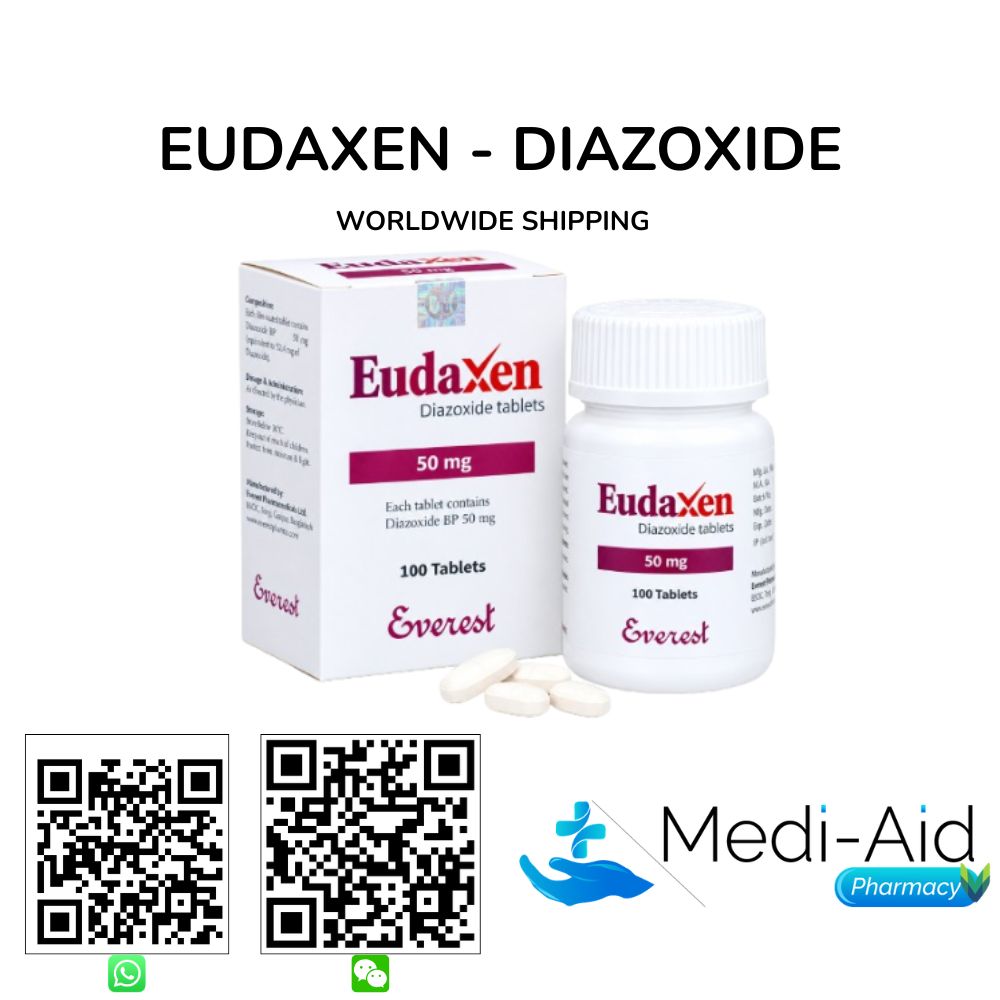
Eudaxen 50 MG (Diazoxide BP) is an oral ATP-sensitive potassium channel opener and insulin secretion inhibitor manufactured by Everest Pharmaceuticals Ltd. in Bangladesh and supplied as 100 tablets per pot. Diazoxide is the established pharmacological treatment for hypoglycemia arising from hyperinsulinism a group of conditions in which pathologically elevated insulin secretion from pancreatic beta cells drives blood glucose to dangerously low concentrations, placing patients at risk of seizures, neuroglycopenia, and irreversible neurological injury.
Diazoxide acts by opening the SUR1/Kir6.2 ATP-sensitive potassium channels (KATP channels) in the plasma membrane of pancreatic beta cells, hyperpolarizing the membrane, blocking the voltage-gated calcium channel activation that triggers insulin-granule exocytosis, and thereby suppressing pathologically elevated insulin secretion at its source. Eudaxen 50 MG (Diazoxide BP) is indicated for the management of hypoglycemia due to inoperable insulinoma, congenital hyperinsulinism (CHI) including both diffuse and focal KATP-responsive forms, nesidioblastosis, and leucine-sensitive hypoglycemia in adults, children, and neonates.
The standard adult oral dose is 3 to 8 mg/kg/day in two or three divided doses; neonatal and pediatric doses range from 5 to 20 mg/kg/day in divided doses, individualized by clinical blood glucose response. Diazoxide has a plasma half-life of approximately 28 hours and greater than 90 percent plasma protein binding, supporting predictable twice- or three-times-daily oral dosing at the 50 mg tablet strength. The 100-tablet pot of Eudaxen 50 MG is a substantial supply covering several weeks of therapy at standard adult maintenance doses. Searching for Eudaxen 50 MG Diazoxide? Mediaid Pharmacy lists Eudaxen within its hypoglycemia medicines and Everest Pharmaceuticals medicines portfolios and ships it worldwide.
Basic Product Information of Eudaxen 50 MG (Diazoxide BP)
| Brand Name | Eudaxen 50 MG (Diazoxide BP) |
| Product Name | Eudaxen |
| Generic Name | Diazoxide BP (British Pharmacopoeia standard; International Nonproprietary Name, INN: Diazoxide) |
| Drug Class | Benzothiadiazine Derivative; ATP-Sensitive Potassium Channel Opener (KATP Channel Activator); Insulin Secretion Inhibitor; Hyperglycemic Agent; Antihypoglycemic Agent |
| Formulation | Tablet (Oral) |
| Available Strength | 50 mg Diazoxide BP per tablet |
| Available Pack Size | 100 Tablets per Pot (providing approximately 4 to 8 weeks of therapy at standard adult maintenance doses of 150 to 400 mg/day) |
| Therapeutic Category | Hypoglycemia Medicines; Antihypoglycemic Agents; KATP Channel Openers; Insulin Secretion Inhibitors; Everest Pharmaceuticals Medicines |
| Approved Indication | Hypoglycemia due to Hyperinsulinism: Management of hypoglycemia associated with inoperable, malignant, or extra-pancreatic insulinoma; congenital hyperinsulinism (CHI) including diffuse and focal KATP-responsive forms; nesidioblastosis; and leucine-sensitive hypoglycemia in adults, children, and neonates. Diazoxide is used when surgical resection is not possible, not indicated, or as a bridging therapy prior to surgery. |
| Dosing | Adults: 3 to 8 mg/kg/day orally in 2 to 3 equally divided doses every 8 to 12 hours, with food. Children and Infants: 5 to 15 mg/kg/day in 2 to 3 divided doses. Neonates: 5 to 20 mg/kg/day in 2 to 3 divided doses, individualized by blood glucose response. Use the lowest effective dose. Co-administer with a thiazide diuretic to manage fluid retention. Monitor blood glucose before and during treatment. |
| Manufacturer | Everest Pharmaceuticals Ltd., Bangladesh |
| Country of Origin | Bangladesh |
| Originator Reference Brand | Proglycem (Diazoxide 50 mg capsules and 50 mg/mL oral suspension, Baker Norton Pharmaceuticals / Par Pharmaceutical), approved by the U.S. FDA for the treatment of hypoglycemia due to hyperinsulinism in inoperable insulinoma and related hyperinsulinemic conditions. Eudaxen contains Diazoxide BP at the same standard pharmacopoeial strength of 50 mg per oral unit, manufactured to British Pharmacopoeia specification by Everest Pharmaceuticals Ltd. in Bangladesh. |
| Global Supplier | Mediaid Pharmacy, Worldwide Shipping Available |
| Storage Conditions | Store at controlled room temperature (20°C to 25°C); excursions permitted between 15°C and 30°C. Keep in the original pot with the lid tightly closed. Protect from moisture and direct light. Keep out of the reach of children. |
What Is Eudaxen 50 MG (Diazoxide BP)?
Eudaxen 50 MG (Diazoxide BP) is an oral benzothiadiazine derivative tablet indicated for the management of hypoglycemia caused by hyperinsulinism, manufactured by Everest Pharmaceuticals Ltd. in Bangladesh. Each Eudaxen tablet contains 50 mg of Diazoxide to British Pharmacopoeia (BP) specification a potent, orally bioavailable KATP channel opener that inhibits insulin secretion from pancreatic beta cells by binding to the SUR1 (sulfonylurea receptor 1) regulatory subunit of the ATP-sensitive potassium channel (KATP channel) and holding the channel in its open, potassium-conducting conformation.
Pathological hyperinsulinism the excessive, dysregulated secretion of insulin from the pancreas is the underlying mechanism of several clinically distinct disorders, including inoperable insulinoma (an insulin-secreting tumor of the pancreatic islet cells), congenital hyperinsulinism (CHI, the most common cause of persistent neonatal and infantile hypoglycemia), nesidioblastosis (diffuse islet cell hyperplasia), and leucine-sensitive hypoglycemia. All of these conditions share the final common pathway of inappropriately elevated insulin concentrations driving blood glucose below the neuroglycopenic threshold, producing symptoms ranging from diaphoresis, tremor, and confusion to seizures, coma, and permanent neurological damage if uncorrected. Diazoxide directly antagonizes the insulin secretion step at the KATP channel and is the established pharmacological intervention for hyperinsulinism when surgical resection is incomplete, not feasible, or contraindicated.
Eudaxen represents the Everest Pharmaceuticals Ltd. formulation of Diazoxide BP the same active pharmaceutical ingredient as the originator brand Proglycem (Baker Norton Pharmaceuticals / Par Pharmaceutical), manufactured to British Pharmacopoeia standards in Bangladesh. The Eudaxen 50 mg tablet strength is the standard unit dose for diazoxide therapy, enabling precise titration of dose across the recommended adult range of 3 to 8 mg/kg/day at a typical adult weight of 70 kg, this corresponds to 210 to 560 mg/day, administered in two or three daily doses of 1 to 4 tablets per dose.
The 100-tablet pot of Eudaxen 50 MG provides a supply covering approximately 4 to 8 weeks of therapy at standard adult maintenance doses (150 to 400 mg/day), directly matching the typical monthly dispensing and refill cycle for a chronically managed metabolic condition. Diazoxide is typically co-prescribed with a thiazide diuretic (hydrochlorothiazide or chlorothiazide) to counteract diazoxide-induced renal sodium and water retention, which would otherwise produce dose-limiting peripheral edema and fluid overload in most patients. Eudaxen 50 MG (Diazoxide BP) is available globally through Mediaid Pharmacy’s hypoglycemia medicines portfolio with worldwide shipping.
Mechanism of Action of Eudaxen: KATP Channel Opening, Insulin Secretion Inhibition, and Hepatic Glycogenolysis
Eudaxen 50 MG (Diazoxide BP) exerts its antihypoglycemic effect through two complementary mechanisms: direct inhibition of pancreatic beta cell insulin secretion via KATP channel activation, and stimulation of hepatic glycogenolysis. Together, these actions raise fasting blood glucose concentrations in patients whose hypoglycemia is driven by pathologically elevated insulin secretion.
Mechanism 1 KATP Channel Opening and Inhibition of Insulin Secretion: Insulin secretion from pancreatic beta cells is regulated by a tightly coupled electromechanical sequence initiated by intracellular glucose metabolism. Under normal physiological conditions, glucose enters the beta cell via GLUT2 transporters, is phosphorylated by glucokinase, and enters glycolysis and oxidative phosphorylation, generating ATP. The rise in the intracellular ATP:ADP ratio closes the ATP-sensitive potassium channel (KATP channel) a heterooctameric complex composed of four pore-forming Kir6.2 subunits (encoded by KCNJ11) and four regulatory SUR1 subunits (encoded by ABCC8).
KATP channel closure reduces potassium efflux from the beta cell, depolarizing the plasma membrane to approximately –40 mV, activating voltage-gated L-type calcium channels (CaV1.2), and allowing a surge of calcium (Ca²⁺) influx that triggers the fusion of insulin-containing secretory granules with the plasma membrane and the exocytosis of insulin. Diazoxide binds to the SUR1 regulatory subunit of the KATP channel at the nucleotide-binding domain (NBD2) a site distinct from the sulfonylurea binding site and stabilizes the channel in its open, potassium-conducting state by promoting Mg-ADP binding and preventing ATP-induced channel closure.
By holding the KATP channel open, diazoxide prevents beta cell membrane depolarization, blocks L-type calcium channel activation, eliminates the calcium influx that triggers exocytosis, and thereby directly suppresses insulin secretion regardless of the ambient glucose concentration. This mechanism explains both the therapeutic utility of diazoxide in hyperinsulinism and its molecular selectivity: it acts directly at the secretory switch that all insulin secretagogues converge upon, upstream of all other steps in the secretory cascade. Sulfonylureas (glibenclamide, glipizide) work by closing the same KATP channel through the SUR1 binding site and are pharmacological antagonists of diazoxide at the same target which is why concurrent sulfonylurea and diazoxide administration is counterproductive and must be avoided.
Mechanism 2 Stimulation of Hepatic Glycogenolysis: Diazoxide independently stimulates hepatic glycogenolysis the enzymatic breakdown of stored glycogen to glucose-1-phosphate and subsequently to free glucose, which is released into the portal circulation and raises blood glucose concentrations. This effect is mediated through stimulation of hepatic beta-2-adrenergic receptors and catecholamine-sensitizing properties of diazoxide rather than through direct glycogen phosphorylase activation. The hepatic glycogenolytic contribution of diazoxide adds to its blood-glucose-raising effect beyond what can be achieved through insulin secretion inhibition alone, providing an additional therapeutic dimension in patients with severe fasting hypoglycemia who require rapid blood glucose correction alongside suppression of insulin release.
Pharmacokinetic Profile Supporting Twice- or Three-Times-Daily Oral Dosing: Diazoxide is well absorbed orally, reaching peak plasma concentrations (Cmax) approximately 3 to 8 hours after an oral dose. It is extensively bound to plasma proteins primarily albumin at greater than 90 percent, which limits its volume of distribution to approximately 0.21 L/kg and contributes to its displacement interactions with warfarin and other highly albumin-bound drugs. The plasma elimination half-life is approximately 28 hours (range 20 to 45 hours), supporting pharmacokinetically stable steady-state concentrations with twice-daily or three-times-daily dosing at the 50 mg tablet unit strength. Approximately 50 percent of an administered dose is excreted unchanged in urine, with the remainder undergoing hepatic metabolism to inactive metabolites; renal impairment therefore substantially affects diazoxide elimination and requires dose adjustment in patients with reduced creatinine clearance.
Eudaxen 50 MG (Diazoxide BP): Dosing by Patient Population and Clinical Indication
| Patient Population | Eudaxen (Diazoxide) Regimen | Monitoring / Clinical Target |
| Adults with insulinoma or other hyperinsulinemic hypoglycemia | 3 to 8 mg/kg/day orally in 2 to 3 equally divided doses every 8 to 12 hours with food. Starting dose: 3 mg/kg/day (e.g., 100 mg every 8 hours for a 70 kg adult = 4.3 mg/kg/day); titrate upward in increments of 1 to 2 mg/kg/day at weekly intervals based on fasting blood glucose response. Maximum dose: 8 mg/kg/day. At 50 mg per tablet, a typical adult dose of 150 to 400 mg/day requires 3 to 8 tablets per day divided across doses. Co-administer with a thiazide diuretic throughout treatment to manage sodium and water retention. | Fasting blood glucose target: ≥70 mg/dL (3.9 mmol/L); monitor blood glucose before each meal and at fasting; monitor for edema, weight gain, and hyperglycemia |
| Children (1 month to 12 years) with congenital hyperinsulinism (CHI) or nesidioblastosis | 5 to 15 mg/kg/day orally in 2 to 3 divided doses every 8 to 12 hours with food or formula feeds. Start at 5 mg/kg/day; titrate upward based on fasting glucose monitoring at 1 to 2 week intervals. The 50 mg Eudaxen tablet can be halved or crushed for younger children if necessary. Co-administer with chlorothiazide or hydrochlorothiazide throughout diazoxide therapy in all pediatric patients to prevent fluid retention. Assess for hirsutism (hypertrichosis) at each clinic visit; this is an expected, dose-dependent, reversible adverse effect in children on long-term diazoxide. | Pre-feed and fasting blood glucose ≥70 mg/dL; monitor complete blood count, uric acid, electrolytes, and renal function every 3 to 6 months during maintenance |
| Neonates (<28 days) with persistent hyperinsulinemic hypoglycemia of infancy (PHHI / CHI) | 5 to 20 mg/kg/day orally in 2 to 3 divided doses every 8 to 12 hours with feeds. Begin at 5 to 10 mg/kg/day; increase cautiously based on blood glucose response. Co-administer with chlorothiazide. Mandatory pre-treatment echocardiography or cardiac assessment is recommended in all neonates before initiating diazoxide to detect pulmonary hypertension, which has been reported as a serious adverse effect associated with neonatal diazoxide use. Discontinue diazoxide and evaluate immediately if clinical or echocardiographic signs of pulmonary hypertension emerge during therapy. | Blood glucose ≥70 mg/dL; mandatory cardiac monitoring for pulmonary hypertension in neonates; monitor weight, respiratory status, electrolytes, and platelet count |
| Patients with renal impairment (eGFR below 50 mL/min/1.73m²) | Start at the lower end of the dose range (3 mg/kg/day in adults; 5 mg/kg/day in children) and extend dosing intervals where possible. Titrate more slowly no more frequently than every 2 weeks with close blood glucose and electrolyte monitoring between adjustments. The prolonged half-life from impaired renal elimination of diazoxide significantly increases accumulation risk; avoid rapid dose escalation. Not removed by hemodialysis (high protein binding); standard dosing adjustments without supplemental doses after dialysis sessions. | Closer blood glucose, electrolyte, fluid balance, and renal function monitoring required; monitor for excessive hyperglycemia and fluid overload |
| General Dosing Notes | Administer Eudaxen tablets with food at each dose to reduce gastrointestinal adverse effects (nausea, vomiting, abdominal discomfort). Do not exceed the maximum recommended dose without specialist review. Co-administration with a thiazide diuretic is standard practice for all patients receiving diazoxide, regardless of age, to counteract diazoxide-induced renal sodium retention and prevent fluid overload; monitor electrolytes (particularly serum potassium and sodium) during combined diazoxide-thiazide therapy. The 100-tablet pot of Eudaxen 50 MG provides sufficient supply for approximately 1 to 2 months of adult maintenance therapy or 2 to 3 months of pediatric maintenance therapy at typical doses, reducing the frequency of re-ordering. Diazoxide therapy is typically long-term in congenital hyperinsulinism and inoperable insulinoma patients; consistent adherence to prescribed doses and scheduled laboratory monitoring is essential. The treating endocrinologist or specialist physician determines Eudaxen suitability, reviews the drug interaction profile with concurrent medications, and establishes the blood glucose and safety monitoring schedule before initiating treatment. | |
Eudaxen 50 MG (Diazoxide BP): Drug Interactions, Special Populations, and Important Safety Warnings
| Drug Interactions | Diazoxide is extensively bound to plasma proteins (>90%) and undergoes partial hepatic metabolism alongside renal excretion of approximately 50% as unchanged drug. These pharmacokinetic properties underlie its clinically significant protein-binding displacement and pharmacodynamic drug interactions.
Thiazide diuretics (hydrochlorothiazide, chlorothiazide): Routinely co-prescribed with Eudaxen as standard of care to counteract diazoxide-induced sodium and water retention. Thiazide diuretics potentiate the hyperglycemic effect of diazoxide; the combined regimen produces greater blood glucose elevation than either agent alone. Monitor blood glucose closely when initiating or adjusting thiazide co-therapy; reduce the diazoxide dose if excessive hyperglycemia develops. Also monitor serum potassium both agents independently cause hypokalemia, and the combined hypokalemic effect is additive. Warfarin and coumarin anticoagulants: Diazoxide displaces warfarin from albumin binding sites, increasing free (pharmacologically active) warfarin plasma concentrations and the anticoagulant effect. INR increases significantly when diazoxide is initiated in warfarinized patients; INR must be monitored closely within the first 1 to 2 weeks of co-administration and after any dose adjustment of either agent. Reduce the warfarin dose as needed to maintain the target INR range. Sulfonylureas (glibenclamide/glyburide, glipizide, gliclazide, glimepiride): Sulfonylureas close KATP channels through the SUR1 binding site and are direct pharmacological antagonists of diazoxide’s insulin-secretion-inhibiting mechanism. Co-administration of a sulfonylurea with Eudaxen directly antagonizes its therapeutic effect and is pharmacologically counterproductive; avoid concurrent use in hyperinsulinism management. Phenytoin (fosphenytoin): Diazoxide may reduce phenytoin plasma concentrations, presumably by increasing its hepatic metabolism; reduced seizure control may result. Monitor phenytoin plasma concentrations and clinical seizure activity when initiating diazoxide in epileptic patients receiving phenytoin. Phenytoin also independently inhibits insulin secretion, which may produce additive blood glucose elevation when co-administered with diazoxide; monitor for excessive hyperglycemia. Antihypertensive agents (beta-blockers, calcium channel blockers, ACE inhibitors, ARBs): Diazoxide has mild vasodilatory activity at standard oral doses; combined with antihypertensive agents, additive hypotensive effects may occur, particularly at the start of therapy or after dose increases. Monitor blood pressure when initiating Eudaxen in patients on antihypertensive therapy. Phenothiazines (chlorpromazine, prochlorperazine, thioridazine): Phenothiazines independently suppress insulin secretion via dopamine D2 receptor-mediated mechanisms and may potentiate the hyperglycemic effect of diazoxide; combined use may produce unexpectedly high blood glucose concentrations, requiring blood glucose monitoring and possible dose reduction of Eudaxen. Alpha-methyldopa and peripheral alpha-adrenergic agents: These agents may additively suppress pancreatic insulin secretion by catecholamine receptor-mediated mechanisms, potentiating diazoxide’s hyperglycemic effect. Disclose all prescription medicines, non-prescription drugs, herbal supplements, and nutritional products to the treating physician before initiating Eudaxen. |
| Renal Impairment | Diazoxide is approximately 50 percent renally excreted as unchanged drug; renal impairment significantly prolongs diazoxide plasma half-life and increases drug accumulation at standard doses. Patients with moderate renal impairment (eGFR 30 to 60 mL/min/1.73m²) should start at the lowest effective dose and titrate cautiously, with extended dosing intervals, guided by frequent blood glucose and safety monitoring. Patients with severe renal impairment (eGFR below 30 mL/min/1.73m²) or end-stage renal disease (ESRD) on hemodialysis require significant dose reduction, extended intervals, and intensive clinical monitoring; diazoxide is not removed effectively by hemodialysis due to its high plasma protein binding, so supplemental post-dialysis dosing is not required or appropriate. The combination of diazoxide-induced sodium retention and the sodium- and water-retaining consequences of renal insufficiency may produce compounding fluid overload in patients with reduced renal function; concurrent thiazide diuretic therapy and close fluid balance monitoring are essential in this population. |
| Hepatic Impairment | Formal pharmacokinetic studies in patients with hepatic impairment are limited for diazoxide. Since approximately 50 percent of diazoxide is cleared by renal excretion and the remainder by hepatic metabolism, moderate to severe hepatic impairment (Child-Pugh B or C) may impair the metabolic clearance pathway and increase diazoxide plasma exposure. Additionally, hypoalbuminemia associated with chronic liver disease reduces diazoxide plasma protein binding, increasing the free fraction of the drug and potentially amplifying both therapeutic and adverse effects at standard doses. In patients with hepatic impairment particularly those with coexisting hypoalbuminemia, coagulopathy, or hepatorenal syndrome initiate Eudaxen at the lowest dose in the recommended range, monitor hepatic and renal function parameters at baseline and regularly during treatment, and titrate cautiously with close clinical surveillance for adverse effects including excessive hyperglycemia, edema, and thrombocytopenia. |
| Neonatal Use and Pulmonary Hypertension Warning | Pulmonary hypertension including severe, potentially life-threatening pulmonary hypertension has been reported in neonates and infants receiving diazoxide, with cases documented in patients receiving doses within the standard recommended neonatal range (5 to 20 mg/kg/day). The precise mechanism of diazoxide-associated neonatal pulmonary hypertension is not fully established but is thought to involve KATP channel opening in pulmonary vascular smooth muscle, relaxing pulmonary arterial tone in a way that may interfere with the normal postnatal transition from fetal to neonatal pulmonary circulation. Before initiating diazoxide therapy in any neonate, an echocardiogram should be performed to establish baseline pulmonary artery pressure and to identify any structural cardiac anomaly that could elevate the risk. During therapy, neonates must be monitored clinically for signs of pulmonary hypertension: tachypnea, cyanosis, decreased oxygen saturation, poor feeding, and increasing oxygen requirements. If pulmonary hypertension is suspected or confirmed by echocardiography during diazoxide therapy, the drug should be discontinued immediately and appropriate pulmonary hypertension management initiated by the treating neonatologist. |
| Pregnancy and Lactation | Diazoxide crosses the placenta and has been associated with neonatal hyperglycemia, thrombocytopenia, hyperbilirubinemia, and alopecia when administered to pregnant women near term. Diazoxide may also inhibit uterine contractions (tocolytic effect) via smooth muscle KATP channel opening, which may prolong labor if administered during the peripartum period. Due to these risks, Eudaxen is generally avoided during pregnancy unless the clinical benefit specifically the prevention of severe, refractory maternal hypoglycemia from insulinoma or CHI during pregnancy outweighs the potential fetal and neonatal risks. The decision to initiate or continue diazoxide during pregnancy must be made jointly by the treating endocrinologist, maternal-fetal medicine specialist, and neonatologist, with close monitoring of fetal growth, maternal blood glucose, and neonatal blood glucose and platelet count at delivery. Regarding lactation: it is not known whether diazoxide is excreted in human breast milk; given the potential for adverse effects on the breastfeeding infant (hyperglycemia, thrombocytopenia), breastfeeding is generally not recommended during Eudaxen therapy. Consult the treating endocrinologist and obstetrician before initiating, continuing, or modifying Eudaxen during pregnancy or the periconception period. |
Who Should Use Eudaxen 50 MG (Diazoxide BP)?
Eudaxen 50 MG (Diazoxide BP) is indicated for patients of all ages from neonates to adults who have hypoglycemia caused by pathological hyperinsulinism and who require pharmacological suppression of insulin secretion to maintain safe fasting blood glucose concentrations. Hyperinsulinemic hypoglycemia is a spectrum of disorders sharing the common feature of dysregulated, insulin secretion driving blood glucose below the symptomatic or neuroglycopenic threshold (typically below 50 to 70 mg/dL); left untreated or inadequately managed, recurrent severe hypoglycemia causes progressive neuroglycopenic injury, developmental delay in infants and children, cognitive impairment, seizure disorders, and death.
Adults with inoperable, malignant, or extra-pancreatic insulinoma represent the classical adult indication for Eudaxen. Insulinoma is the most common functional endocrine tumor of the pancreas, affecting approximately 1 to 4 persons per million per year; surgical resection is curative in the majority of cases, but in patients with metastatic malignant insulinoma, unresectable multifocal disease, or high surgical risk, long-term medical management of hypoglycemia with diazoxide is the standard of care. Eudaxen controls the fasting hypoglycemic episodes associated with insulinoma in the majority of patients, improving quality of life, reducing emergency hypoglycemic events, and allowing patients to maintain caloric balance without constant carbohydrate supplementation.
Neonates and infants with congenital hyperinsulinism (CHI) are the primary pediatric population for Eudaxen. CHI is the most common cause of persistent neonatal hypoglycemia, with an estimated incidence of 1 in 25,000 to 1 in 50,000 live births globally; in communities with high consanguinity rates, incidence may reach 1 in 2,500. Diazoxide is the first-line pharmacological treatment for CHI in all current international clinical guidelines, including those of the Pediatric Endocrine Society (PES) and the European Society for Paediatric Endocrinology (ESPE). In CHI caused by gain-of-function mutations in GCK (glucokinase) or loss-of-function mutations in ABCC8/KCNJ11 that preserve residual KATP channel function, diazoxide responsiveness rates reach 50 to 60 percent of patients.
Children and adults with nesidioblastosis and leucine-sensitive hypoglycemia also benefit from Eudaxen as a maintenance treatment when dietary management alone (low-leucine diet, frequent feeds) is insufficient to maintain euglycemia. Patients who are NOT appropriate for Eudaxen include: those with hypoglycemia due to non-hyperinsulinemic causes (adrenal insufficiency, growth hormone deficiency, glycogen storage disease diazoxide addresses hyperinsulinism specifically and is ineffective in these conditions); those with known hypersensitivity to diazoxide, thiazide diuretics (structural cross-reactivity exists), or sulfonamide derivatives; neonates with clinically significant pulmonary hypertension or unrepaired structural cardiac lesions; and those on sulfonylurea therapy (pharmacological antagonism).
Endocrinologists, pediatricians, neonatologists, and rare disease treatment centers sourcing Eudaxen for their patient population can explore the complete diazoxide and hypoglycemia medicines collection and the full Everest Pharmaceuticals medicines portfolio at Mediaid Pharmacy before requesting a supply quotation.
Global Supplier: Mediaid Pharmacy Worldwide Shipping for Eudaxen 50 MG (Diazoxide BP)
Mediaid Pharmacy is a Dhaka-based specialty medicines supplier with worldwide shipping capability serving patients, endocrinology clinics, pediatric hospitals, rare disease treatment centers, neonatal intensive care units, NGO programs, and international healthcare providers across all regions. Eudaxen 50 MG (Diazoxide BP), manufactured by Everest Pharmaceuticals Ltd. in Bangladesh, is supplied as tablets in a 100-tablet pot with pricing quotations, stock availability confirmation, full product documentation, certificate of analysis, and end-to-end international delivery tracking for every order.
The 100-tablet pot of Eudaxen 50 MG provides approximately 4 to 8 weeks of adult maintenance therapy at standard doses (150 to 400 mg/day), aligning with standard monthly to bi-monthly prescribing cycles for chronic endocrine conditions managed in specialist outpatient clinics. For pediatric patients with congenital hyperinsulinism receiving diazoxide at doses of 5 to 15 mg/kg/day over the long term, the 100-tablet pot provides a 2 to 3-month supply at typical childhood maintenance doses, supporting quarterly procurement planning for families and treatment programs. Individual patients, endocrinologists, pediatric metabolic specialists, neonatology units, hospital pharmacy departments, rare disease treatment programs, and international distributors can contact Mediaid Pharmacy through WhatsApp, phone, or WeChat for all inquiries regarding Eudaxen 50 MG Diazoxide stock availability, current pricing, and international delivery timelines to specific destination countries.
Procurement teams co-sourcing Eudaxen with other endocrine, metabolic, or Everest Pharmaceuticals specialty medicines can browse the complete hypoglycemia medicines portfolio and the Everest Pharmaceuticals medicines collection at Mediaid Pharmacy before requesting a combined quotation.
Why Choose Eudaxen 50 MG (Diazoxide BP) from Mediaid Pharmacy?
Eudaxen 50 MG (Diazoxide BP) gives endocrinologists, pediatricians, neonatologists, rare disease specialists, and patients with hyperinsulinemic hypoglycemia access to the first-line pharmacological treatment for hyperinsulinism the KATP channel opener diazoxide manufactured to British Pharmacopoeia specification by Everest Pharmaceuticals Ltd. in Bangladesh and available globally through Mediaid Pharmacy. The four clinical and practical attributes that distinguish Eudaxen (Diazoxide BP) as the treatment of choice for hyperinsulinemic hypoglycemia are its direct, mechanism-specific suppression of insulin secretion at the KATP channel, its well-characterized efficacy across all age groups from neonates to adults, its flexible oral tablet formulation enabling precise dose titration at the 50 mg unit strength, and the substantial 100-tablet pot size that reduces dispensing frequency for chronically managed patients.
Mechanism-specific KATP channel-targeted suppression of insulin secretion is the defining clinical attribute of diazoxide and the reason it remains the first-line pharmacological treatment for all forms of KATP-responsive hyperinsulinism. By binding to the SUR1 subunit of the beta cell KATP channel and holding it in the open state, diazoxide directly prevents the membrane depolarization and calcium influx that drive insulin granule exocytosis acting at the exact molecular switch that is dysregulated in KATP channel-based congenital hyperinsulinism (ABCC8/KCNJ11 mutations with residual channel function) and in the autonomous insulin secretion of insulinoma cells. No other orally available agent provides this degree of mechanistic specificity at the KATP channel in clinical practice.
Efficacy across neonates, infants, children, and adults is established across decades of clinical use and documented in the Pediatric Endocrine Society Guidelines for CHI, the European Society for Paediatric Endocrinology guidelines, and the endocrinology literature for insulinoma management: diazoxide achieves glycemic control and reduces or eliminates severe hypoglycemic episodes in 50 to 60 percent of CHI patients with KATP-responsive mutations and in the majority of adults with inoperable insulinoma.
The oral 50 mg tablet formulation of Eudaxen enables individualized, weight-based dose titration across the full recommended dosing range (3 to 20 mg/kg/day) without the limitations of suspension formulation stability, refrigeration requirements, or preparation complexity; the 50 mg tablet unit dose is the standard building block for diazoxide titration in both adult and pediatric protocols and is directly compatible with the dose escalation increments (50 to 100 mg/day in adults) typically used in clinical practice.
The 100-tablet-per-pot pack format of Eudaxen 50 MG provides a substantial, convenient supply that reduces dispensing frequency for patients and families managing a chronic metabolic condition requiring consistent daily dosing minimizing supply gaps and supporting adherence in long-term hyperinsulinism management. Eudaxen is manufactured by Everest Pharmaceuticals Ltd. in Bangladesh to British Pharmacopoeia specification and is available through Mediaid Pharmacy with full product documentation, specialist supply coordination, and worldwide shipping. To source additional Everest Pharmaceuticals medicines or to review the complete range of metabolic and endocrine medicines available at Mediaid Pharmacy, visit the Everest Pharmaceuticals medicines section and the hypoglycemia medicines portfolio, and contact the Mediaid Pharmacy team for a personalized quotation.
Frequently Asked Questions About Eudaxen 50 MG (Diazoxide BP)
What is Eudaxen 50 MG (Diazoxide) used for?
Eudaxen 50 MG (Diazoxide BP) is an ATP-sensitive potassium channel opener used for the management of hypoglycemia caused by hyperinsulinism. Approved indications include inoperable, malignant, or extra-pancreatic insulinoma; congenital hyperinsulinism (CHI) in neonates, infants, and children with KATP-responsive mutations; nesidioblastosis; and leucine-sensitive hypoglycemia. Diazoxide inhibits insulin secretion from pancreatic beta cells by opening the SUR1/Kir6.2 KATP channel, hyperpolarizing the beta cell membrane, and blocking the calcium influx required for insulin exocytosis. Diazoxide also stimulates hepatic glycogenolysis, raising blood glucose through a complementary mechanism. The standard adult dose is 3 to 8 mg/kg/day in two or three divided doses; pediatric and neonatal doses range from 5 to 20 mg/kg/day in divided doses. Eudaxen 50 MG is manufactured by Everest Pharmaceuticals Ltd. in Bangladesh and is available through Mediaid Pharmacy with worldwide shipping to patients, hospitals, endocrinology clinics, and rare disease treatment centers globally.
What is the generic name of Eudaxen?
The generic name of Eudaxen is Diazoxide (British Pharmacopoeia standard, BP; International Nonproprietary Name, INN). Eudaxen is the brand name registered by Everest Pharmaceuticals Ltd. for the Diazoxide BP 50 mg tablet manufactured in Bangladesh, supplied as 100 tablets per pot. The principal originator reference brand for oral diazoxide is Proglycem (Diazoxide 50 mg capsules and oral suspension, Baker Norton Pharmaceuticals / Par Pharmaceutical), approved by the U.S. FDA for the treatment of hypoglycemia due to hyperinsulinism. For the complete range of Everest Pharmaceuticals medicines available at Mediaid Pharmacy, explore the Everest Pharmaceuticals product collection.
What is the dose of Eudaxen 50 MG (Diazoxide)?
The standard adult oral dose of Eudaxen 50 MG (Diazoxide BP) is 3 to 8 mg/kg/day administered in 2 to 3 equally divided doses every 8 to 12 hours with food, individualized to the lowest dose that maintains fasting blood glucose above 70 mg/dL. In infants and children with congenital hyperinsulinism, the dose is 5 to 15 mg/kg/day in 2 to 3 divided doses; in neonates, doses of 5 to 20 mg/kg/day in divided doses may be required. The 100-tablet pot of Eudaxen 50 MG provides approximately 4 to 8 weeks of adult maintenance therapy at typical daily doses of 150 to 400 mg. Always co-administer with a thiazide diuretic to manage sodium and water retention. Confirm the appropriate dose with the treating endocrinologist or pediatric metabolic specialist before initiating Eudaxen.
What are the side effects of Eudaxen 50 MG (Diazoxide)?
The most clinically significant adverse effects of Eudaxen (Diazoxide BP) are sodium and water retention (peripheral edema, weight gain, fluid overload) occurring in most patients and managed with concurrent thiazide diuretic therapy and excessive hyperglycemia (blood glucose above euglycemia, requiring dose reduction or blood glucose monitoring adjustment). Hirsutism (hypertrichosis) is common with long-term pediatric use and is dose-dependent and reversible upon discontinuation. Additional adverse effects include tachycardia, palpitations, nausea, vomiting, abdominal discomfort (especially when taken without food), hyperuricemia, thrombocytopenia (reduced platelet count), neutropenia (rare), and headache. A critical warning specific to neonates: pulmonary hypertension has been reported in neonates receiving diazoxide a potentially life-threatening complication requiring echocardiographic surveillance and immediate discontinuation if diagnosed. For the full range of hypoglycemia treatment medicines at Mediaid Pharmacy, explore the complete hypoglycemia medicines collection.
Can Eudaxen 50 MG (Diazoxide) be used in patients with renal impairment?
Eudaxen 50 MG (Diazoxide BP) requires dose adjustment and close monitoring in patients with renal impairment because approximately 50% of an administered dose is excreted unchanged in urine. In moderate renal impairment (eGFR 30 to 60 mL/min/1.73m²), start at the lowest dose and titrate slowly, extending dosing intervals, with frequent blood glucose and electrolyte monitoring. In severe renal impairment (eGFR below 30 mL/min/1.73m²) or ESRD, significant dose reduction is required due to substantially prolonged diazoxide half-life and accumulation risk; additionally, diazoxide is not removed by hemodialysis (due to high protein binding), so standard dosing adjustments without supplemental post-dialysis doses apply. The compounding risk of diazoxide-induced sodium retention alongside renal impairment increases the likelihood of fluid overload; close fluid balance, renal function, and electrolyte monitoring is essential. For additional metabolic and rare disease medicine options, explore the hypoglycemia medicines portfolio at Mediaid Pharmacy.
What drugs interact with Eudaxen 50 MG (Diazoxide)?
Key drug interactions with Eudaxen (Diazoxide BP): Thiazide diuretics potentiate both the hyperglycemic effect and the diuretic correction of diazoxide-induced fluid retention; monitor blood glucose and electrolytes closely during combined therapy. Warfarin and coumarin anticoagulants diazoxide displaces warfarin from albumin, increasing free warfarin and INR; monitor INR closely when initiating or adjusting Eudaxen in anticoagulated patients. Sulfonylureas (glibenclamide, glipizide, gliclazide) directly antagonize diazoxide’s KATP channel-opening mechanism; co-administration negates the therapeutic effect of Eudaxen and must be avoided. Phenytoin co-administration may reduce phenytoin plasma concentrations and also produces additive hyperglycemia; monitor seizure control and blood glucose. Antihypertensive agents additive hypotensive effects possible at initiation or after dose increases; monitor blood pressure. Phenothiazines (chlorpromazine) independently suppress insulin secretion and may potentiate diazoxide’s hyperglycemic effect; monitor blood glucose. Disclose all medications to the treating physician before initiating Eudaxen. For additional Everest Pharmaceuticals medicines, visit the Everest Pharmaceuticals medicines collection.
Can I order Eudaxen 50 MG (Diazoxide) online with worldwide shipping?
Yes. Mediaid Pharmacy supplies Eudaxen 50 MG (Diazoxide BP) by Everest Pharmaceuticals Ltd. to patients, endocrinology clinics, pediatric hospitals, neonatal intensive care units, rare disease treatment centers, NGO treatment programs, and healthcare providers globally. Contact Mediaid Pharmacy via WhatsApp, phone, or WeChat at +8801773428128, or email info@mediaidpharmacy.com for pricing, current stock availability, and international delivery details for your country.
Order Eudaxen 50 MG (Diazoxide BP) with Worldwide Shipping
Phone / WhatsApp / WeChat: +8801773428128 | Email: info@mediaidpharmacy.com

Reviews
There are no reviews yet.