
Description
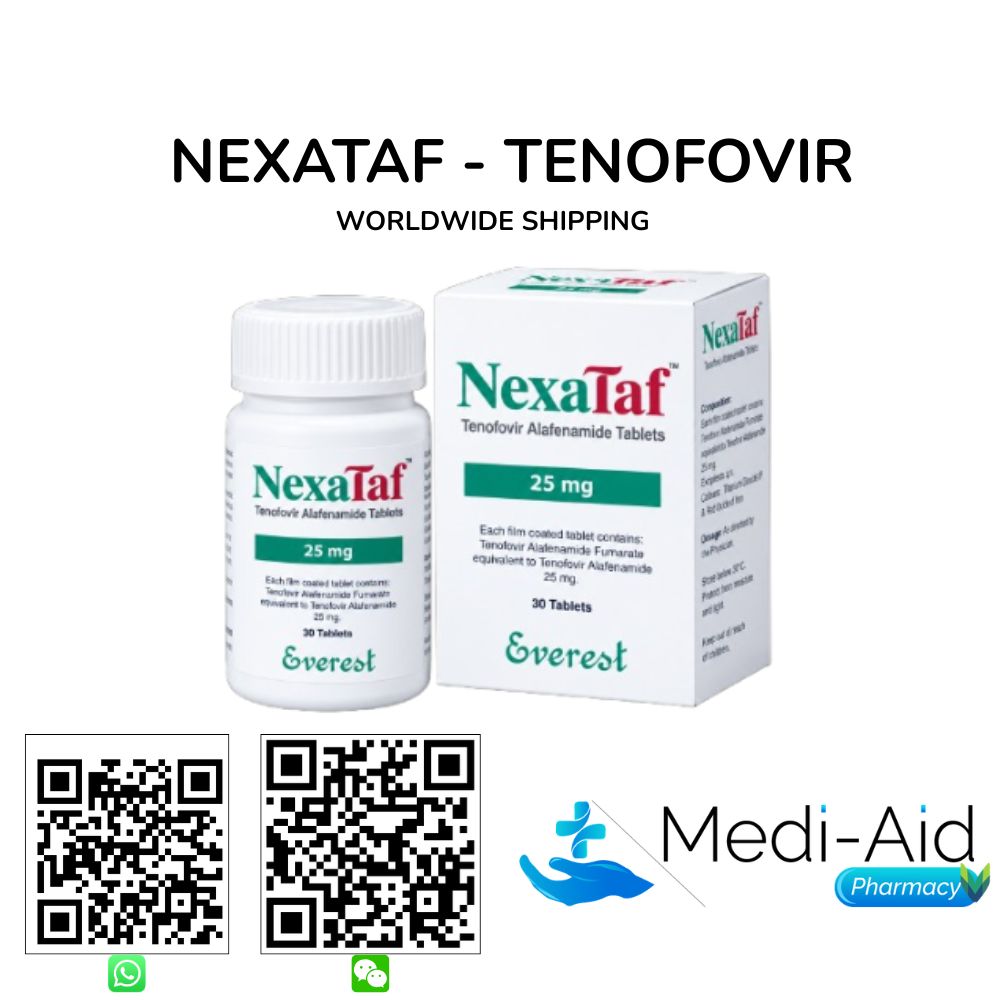
Nexataf 25 MG (Tenofovir Alafenamide) is a nucleotide reverse transcriptase inhibitor (NtRTI) and anti-hepatitis B antiviral agent containing Tenofovir Alafenamide (TAF), a lipophilic phosphonamidate prodrug that delivers high intracellular concentrations of the active metabolite tenofovir diphosphate (TFV-DP) within hepatocytes at approximately 91% lower plasma tenofovir exposure compared to Tenofovir Disoproxil Fumarate (TDF), supplied as film-coated tablets, 25 mg strength, in a 30-tablet container and manufactured by Everest Pharmaceuticals Ltd. in Bangladesh.
Its active ingredient, Tenofovir Alafenamide (TAF) INN, inhibits HBV reverse transcriptase (polymerase) by competing with the natural substrate deoxyadenosine 5′-triphosphate and causing DNA chain termination after incorporation into viral DNA, thereby blocking HBV DNA replication at the hepatocyte level while substantially reducing systemic tenofovir exposure and the renal and bone toxicity historically associated with TDF 300 mg. Nexataf 25 MG is indicated for chronic hepatitis B virus (HBV) infection in adults and pediatric patients aged 12 years and older weighing at least 35 kg, administered as a fixed once-daily oral dose of 25 mg with or without food.
In the pivotal Phase 3 trials (GS-US-320-0108 and GS-US-320-0110), TAF 25 mg demonstrated non-inferior virologic suppression to TDF 300 mg with HBV DNA below 29 IU/mL in approximately 94% of HBeAg-negative and 64% of HBeAg-positive patients at week 48, alongside statistically significant improvements in renal and bone safety markers through week 96. Searching for Nexataf 25 MG Tenofovir? Mediaid Pharmacy lists this product across its hepatitis B medicines, antiviral medicines, and Everest Pharmaceuticals portfolios and ships it worldwide.
Basic Product Information of Nexataf 25 MG (Tenofovir Alafenamide)
| Brand Name | Nexataf 25 MG (Tenofovir Alafenamide) |
| Product Name | Nexataf |
| Generic Name | Tenofovir Alafenamide (TAF) INN |
| Drug Class | Nucleotide Reverse Transcriptase Inhibitor (NtRTI); Hepatitis B Antiviral Agent; Tenofovir Prodrug; Nucleotide Analog; HBV Polymerase Inhibitor; Anti-HBV Antiviral |
| Formulation | Film-Coated Tablet (Oral) |
| Available Strength | 25 mg per tablet |
| Available Pack Size | 30 Tablets per Container |
| Dosing | Chronic Hepatitis B (Adults and Pediatric Patients aged 12 years and older, weight 35 kg or more): 25 mg orally once daily with or without food. Administer at the same time each day to maintain consistent plasma and intracellular drug levels. |
| Manufacturer | Everest Pharmaceuticals Ltd., Bangladesh |
| Country of Origin | Bangladesh |
| Originator Reference Brand | Vemlidy (Tenofovir Alafenamide 25 mg tablets, by Gilead Sciences, Inc., approved by the U.S. FDA on November 10, 2016, for chronic hepatitis B virus infection). Vemlidy contains Tenofovir Alafenamide INN as the active pharmaceutical ingredient in the same NtRTI drug class. Nexataf is manufactured by Everest Pharmaceuticals Ltd. in Bangladesh and is supplied through Mediaid Pharmacy for international procurement. |
| Global Supplier | Mediaid Pharmacy, Worldwide Shipping Available |
| Storage Conditions | Store at room temperature (20 degrees C to 25 degrees C); excursions permitted between 15 degrees C and 30 degrees C. Keep in the original packaging and protect from moisture. Keep out of the reach of children. |
How Nexataf (Tenofovir Alafenamide) Works: Intracellular Prodrug Activation and HBV Reverse Transcriptase Inhibition
Tenofovir Alafenamide (TAF) is an orally bioavailable, lipophilic phosphonamidate prodrug of tenofovir and a nucleotide analog reverse transcriptase inhibitor (NtRTI). Chronic hepatitis B virus (HBV) infection persists through continuous viral replication within hepatocytes, driven by the HBV polymerase enzyme, which functions as a reverse transcriptase converting pregenomic RNA (pgRNA) into new HBV DNA molecules. TAF targets this replication cycle directly at the hepatocyte level: after oral administration, TAF circulates intact in plasma due to its plasma stability, is preferentially taken up by hepatocytes via hepatic transporters, and undergoes intracellular hydrolysis primarily by cathepsin A to generate tenofovir.
Intracellular tenofovir is then phosphorylated in two sequential steps to form the active metabolite tenofovir diphosphate (TFV-DP). TFV-DP acts as a competitive inhibitor of HBV reverse transcriptase (polymerase), competing with the natural substrate deoxyadenosine 5′-triphosphate (dATP) for incorporation into the growing viral DNA strand. After TFV-DP is incorporated into HBV DNA, the absence of a 3′-hydroxyl group causes obligate DNA chain termination, halting HBV DNA synthesis at the intracellular level and reducing circulating HBV DNA to undetectable or significantly suppressed levels in the majority of treated patients.
The pharmacokinetic advantage of TAF over TDF is rooted in its superior intracellular activation efficiency within hepatocytes. TDF (Tenofovir Disoproxil Fumarate), the predecessor prodrug of tenofovir, is cleaved in the plasma and delivers tenofovir systemically before hepatocyte uptake, resulting in high circulating plasma tenofovir concentrations that drive dose-dependent renal tubular toxicity and bone mineral density (BMD) loss. TAF, by contrast, is stable in plasma and is cleaved predominantly after hepatocyte uptake, achieving intracellular TFV-DP concentrations in hepatocytes approximately 5.7-fold higher than TDF 300 mg while producing approximately 91% lower plasma tenofovir concentrations.
This pharmacokinetic differentiation directly translates to clinical benefit: in the pivotal Phase 3 trials (GS-US-320-0108 in HBeAg-negative patients and GS-US-320-0110 in HBeAg-positive patients), TAF 25 mg achieved equivalent or superior virologic suppression compared to TDF 300 mg while producing statistically significant improvements in eGFR, urinary protein and retinol-binding protein markers of tubular function, and hip and lumbar spine bone mineral density through 96 weeks of follow-up. Pharmacokinetically, TAF reaches peak plasma concentrations (Tmax) approximately 0.5 hours post-dose; it does not require food for adequate bioavailability. TAF is metabolized primarily by cathepsin A in hepatocytes and peripheral blood mononuclear cells; CYP3A plays a minor metabolic role. Co-administration with combined P-gp and strong CYP3A inducers (rifampin, St. John’s Wort) may reduce TAF plasma exposure and should be avoided. For a full selection of targeted hepatitis B antivirals and complementary hepatology medicines, visit the hepatitis B medicines collection at Mediaid Pharmacy.
Nexataf 25 MG (Tenofovir Alafenamide): Indications, Dosing, and Key Safety Information
| Approved Indication | Chronic Hepatitis B Virus (HBV) Infection: Nexataf (Tenofovir Alafenamide) is indicated for the treatment of chronic hepatitis B in adults and pediatric patients aged 12 years and older weighing at least 35 kg, including both HBeAg-positive (immune-active) and HBeAg-negative (inactive chronic or immune-escape) phases of HBV infection. |
| Recommended Dose | Chronic Hepatitis B: 25 mg orally once daily with or without food (1 x Nexataf 25 MG film-coated tablet once daily). Swallow tablets whole with water. Administer Nexataf at the same time each day to maintain consistent plasma and intracellular TFV-DP levels. |
| Dose Modification | No dose adjustment is required for mild, moderate, or severe renal impairment (eGFR 15 mL/min or above) or mild to severe hepatic impairment (Child-Pugh A, B, or C). Nexataf is not recommended in patients with end-stage renal disease (eGFR below 15 mL/min) not receiving dialysis, due to insufficient clinical data. For patients on chronic hemodialysis, administer Nexataf after each dialysis session on dialysis days. Co-administration with combined P-gp and strong CYP3A inducers (rifampin, carbamazepine, phenobarbital) may reduce TAF plasma concentrations and antiviral efficacy; consult the treating hepatologist for individualized guidance if concomitant use is unavoidable. |
| Missed Dose | If a Nexataf dose is missed, take the missed dose as soon as possible on the same day it is remembered. If it is not remembered until the following day, skip the missed dose and resume the next dose at the regularly scheduled time. Do not take 2 doses of Nexataf on the same day to compensate for a missed dose. |
| Key Warnings and Precautions | Severe Acute Exacerbations of Hepatitis B After Discontinuation: Severe acute exacerbations of hepatitis B, including cases with fatal outcomes, have been reported following discontinuation of anti-HBV therapy including TAF-containing regimens. Monitor hepatic function closely with clinical and laboratory follow-up for at least several months after stopping Nexataf. Resumption of anti-HBV therapy may be warranted if hepatic decompensation develops after discontinuation.
HIV-1 Pre-Treatment Testing: In patients with unknown or positive HIV-1 status, test for HIV-1 infection before initiating Nexataf. Nexataf used as monotherapy in HIV-1/HBV co-infected patients is not recommended, as the TAF dose of 25 mg is insufficient for HIV-1 treatment and may select for HIV-1 resistance mutations. Co-infected patients require a complete HIV-1 treatment regimen that includes appropriate TAF or TDF dosing at HIV-indicated doses alongside other antiretrovirals. Lactic Acidosis and Severe Hepatomegaly with Steatosis: Lactic acidosis and severe hepatomegaly with steatosis, including fatal cases, have been reported with nucleoside and nucleotide analog therapy. Suspend Nexataf in any patient who develops clinical or laboratory findings suggestive of lactic acidosis or pronounced hepatotoxicity, even in the absence of marked transaminase elevations. Drug Interactions (P-gp and CYP3A Inducers): Co-administration of Nexataf with rifampin or other combined P-gp and strong CYP3A inducers significantly reduces TAF plasma concentrations and may compromise antiviral efficacy. Avoid co-administration with rifampin; consult a hepatologist for rifamycin alternatives if anti-tuberculosis therapy is required during Nexataf treatment. Renal Monitoring: Although TAF 25 mg carries a substantially lower renal risk than TDF 300 mg, periodic monitoring of serum creatinine, eGFR, urine glucose, and urine protein is recommended throughout Nexataf treatment, particularly in patients with pre-existing renal impairment or concomitant nephrotoxic agents. |
| Common Adverse Reactions | The most commonly reported adverse reactions of Tenofovir Alafenamide (TAF) in the Phase 3 hepatitis B clinical trials (occurring in 5% or more of patients) include headache, abdominal pain, fatigue, cough, nausea, and back pain. Laboratory abnormalities include elevated ALT (alanine aminotransferase) and AST (aspartate aminotransferase), particularly in the first 12 weeks of therapy, as immune reconstitution-related ALT flares may occur after initiation of antiviral suppression. TAF 25 mg produced significantly smaller mean declines in eGFR and significantly lower rates of tubular proteinuria compared to TDF 300 mg across the Phase 3 program through 96 weeks. Hip and lumbar spine bone mineral density changes were also substantially smaller with TAF than TDF, confirming the improved long-term renal and skeletal safety profile of Nexataf for patients requiring indefinite anti-HBV therapy. Monitor complete metabolic panels, renal function, and liver function at baseline and periodically throughout Nexataf treatment. |
| Drug Interactions | TAF is a substrate of P-glycoprotein (P-gp) and breast cancer resistance protein (BCRP); CYP3A plays a minor metabolic role. Combined P-gp and strong CYP3A inducers (rifampin, rifabutin, carbamazepine, phenobarbital, phenytoin, oxcarbazepine, St. John’s Wort) significantly reduce TAF plasma exposure and may reduce hepatocyte TFV-DP concentrations and antiviral efficacy; avoid co-administration. P-gp inhibitors (including cobicistat and ritonavir, commonly used in HIV antiretroviral regimens) may increase TAF plasma concentrations; refer to the full prescribing information for combination guidance. Nexataf does not meaningfully inhibit or induce major CYP enzymes and is not expected to cause clinically significant pharmacokinetic interactions with most hepatology co-medications, including corticosteroids, diuretics, and standard immunosuppressants. Disclose all medications, supplements, and anti-tuberculosis agents to the treating hepatologist before initiating Nexataf 25 MG (Tenofovir Alafenamide). |
| Renal Impairment | No dose adjustment is required for mild (eGFR 60-89 mL/min/1.73 m2), moderate (eGFR 30-59 mL/min/1.73 m2), or severe (eGFR 15-29 mL/min/1.73 m2) renal impairment. For patients on chronic hemodialysis, administer Nexataf after the dialysis session on dialysis days. Nexataf is not recommended for patients with eGFR below 15 mL/min not receiving hemodialysis, due to insufficient safety and efficacy data. The substantially improved renal safety profile of TAF 25 mg compared to TDF 300 mg makes Nexataf a preferred option for chronic HBV patients with pre-existing renal impairment or those at elevated renal risk. Consult the treating nephrologist and hepatologist for individualized guidance. |
| Pregnancy and Lactation | Available human data on the use of TAF during pregnancy are limited. Animal reproductive toxicity studies with TAF did not reveal evidence of fetal harm at clinically relevant exposures; however, adequate and well-controlled human pregnancy data are not available. For pregnant patients with chronic HBV requiring antiviral therapy to prevent maternal liver disease progression or perinatal HBV transmission, the treating hepatologist and obstetrician must conduct an individualized benefit-risk assessment before initiating or continuing Nexataf. Tenofovir is detectable in human breast milk; breastfeeding is generally not recommended during Nexataf treatment unless the treating physician determines the benefit clearly outweighs the potential risk to the nursing infant. Consult the treating hepatologist and obstetrician before starting, continuing, or stopping Nexataf during pregnancy or breastfeeding. |
Who Should Use Nexataf 25 MG (Tenofovir Alafenamide)?
Nexataf 25 MG (Tenofovir Alafenamide) is indicated for a precisely defined patient population: adults and pediatric patients aged 12 years and older weighing at least 35 kg with chronic hepatitis B virus (HBV) infection, encompassing both HBeAg-positive (immune-active) and HBeAg-negative (inactive chronic or immune-escape) disease phases. Chronic HBV infection is a major global public health burden, affecting an estimated 296 million people worldwide and accounting for approximately 820,000 deaths annually from cirrhosis and hepatocellular carcinoma (HCC) according to the World Health Organization (WHO). Long-term antiviral suppression of HBV DNA with a potent, renal-safe, and bone-safe nucleotide analog is the cornerstone of chronic HBV management for patients who meet treatment criteria, and Nexataf delivers TAF’s established Phase 3 efficacy and safety profile in this indication at a dose of 25 mg once daily.
Patient selection by HBV disease phase: In the pivotal GS-US-320-0108 trial (HBeAg-negative patients), TAF 25 mg achieved HBV DNA below 29 IU/mL in 94% of patients at week 48, with efficacy sustained at 90% through week 96, confirming durable virologic suppression in the immune-escape and inactive-carrier phases. In the GS-US-320-0110 trial (HBeAg-positive patients), TAF 25 mg achieved HBV DNA below 29 IU/mL in 64% of patients at week 48, with comparable week 96 outcomes, and produced higher rates of ALT normalization than TDF across both trials at both time points. TAF 25 mg is therefore appropriate as initial antiviral therapy for treatment-naive chronic HBV patients meeting guideline criteria (elevated ALT plus HBV DNA above thresholds, or significant fibrosis on biopsy or non-invasive markers), and for patients being transitioned from TDF 300 mg due to evidence of renal toxicity, declining eGFR, osteopenia or osteoporosis, or elevated baseline risk for these complications.
Patient groups particularly suited for TAF-based therapy include elderly patients, those with pre-existing stage 1 or 2 chronic kidney disease, patients with osteoporosis or low BMD, post-transplant patients receiving calcineurin inhibitors or other nephrotoxic agents, and any patient requiring indefinite antiviral therapy in whom long-term renal and bone outcomes are clinically significant considerations. Contraindication and patient selection considerations: Nexataf 25 mg is not appropriate as the sole anti-HBV agent in HIV-1/HBV co-infected patients, as the 25 mg TAF dose is insufficient for HIV-1 treatment and risks selecting HIV-1 resistance mutations; co-infected patients require a complete HIV-1 regimen that includes an appropriate TAF-containing or TDF-containing combination product. Hepatology centers and hospital formulary teams sourcing Nexataf for treatment-naive or TDF-switch chronic HBV patients can explore the complete hepatitis B medicines portfolio and antiviral medicines range at Mediaid Pharmacy before requesting a consolidated supply quotation.
Global Supplier: Mediaid Pharmacy Worldwide Shipping for Nexataf 25 MG (Tenofovir Alafenamide)
Mediaid Pharmacy is a Dhaka-based supplier of specialty antiviral and hepatology medicines with worldwide shipping to patients, hepatology clinics, hospitals, international distributors, and healthcare providers across all regions. Nexataf 25 MG (Tenofovir Alafenamide), manufactured by Everest Pharmaceuticals Ltd. in Bangladesh, is supplied as film-coated tablets, 25 mg per tablet, 30 tablets per container, with pricing quotations, stock confirmation, full product documentation, and end-to-end international delivery tracking for every order. The 30-tablet monthly container aligns directly with the once-daily dosing schedule of Nexataf (25 mg once daily), providing hepatology clinics, hospital pharmacies, and individual chronic HBV patients with a single-container 30-day supply that simplifies inventory management, prescription refill scheduling, and procurement planning for programs operating on monthly ordering cycles.
Hepatologists, gastroenterologists, and liver specialists treating chronic HBV patients; hospital formulary and procurement teams; international distributors; and individual patients can contact the Mediaid Pharmacy team through WhatsApp, phone, or WeChat for all inquiries regarding Nexataf Tenofovir Alafenamide stock availability, current pricing, and international delivery timelines. Procurement teams co-sourcing Nexataf 25 MG with other hepatology or antiviral medicines can browse the complete hepatitis B medicines collection and the Everest Pharmaceuticals medicines portfolio at Mediaid Pharmacy before requesting a consolidated quotation for the full order.
Why Choose Nexataf 25 MG (Tenofovir Alafenamide) from Mediaid Pharmacy?
Nexataf 25 MG (Tenofovir Alafenamide) provides hepatologists, gastroenterologists, liver transplant specialists, and chronic hepatitis B patients with a pharmacokinetically optimized NtRTI that delivers equivalent or superior virologic suppression to TDF 300 mg while producing approximately 91% lower plasma tenofovir concentrations, translating to a clinically and statistically significant improvement in renal and bone safety for patients who require indefinite antiviral therapy. TAF’s mechanism of hepatocyte-targeted intracellular activation delivers approximately 5.7-fold higher TFV-DP concentrations within hepatocytes at the 25 mg dose compared to TDF 300 mg, while dramatically reducing systemic tenofovir exposure, demonstrating that Nexataf achieves higher hepatocyte-targeted antiviral activity at a fraction of the systemic exposure burden of the prior TDF standard of care.
This pharmacokinetic advantage translated directly to the Phase 3 trial outcomes: across both the GS-US-320-0108 and GS-US-320-0110 studies, TAF produced non-inferior or superior HBV DNA suppression, a smaller mean eGFR decline (-0.5 vs -4.8 mL/min/1.73 m2 at week 96), and significantly smaller reductions in hip and lumbar spine bone mineral density at week 96 (hip: -0.10% vs -2.51%; spine: -0.32% vs -2.65%) compared to TDF, outcomes that are clinically material for the millions of patients worldwide who require antiviral therapy for years or even decades to prevent cirrhosis and hepatocellular carcinoma. The simple, dose-fixed, food-independent dosing of Nexataf (25 mg once daily with or without food, no food requirement for bioavailability, no renal-function-based dose titration for eGFR above 15 mL/min) minimizes prescription complexity and reduces adherence barriers for the chronic HBV patient population that may already manage comorbid conditions and complex medication schedules.
The 30-tablet-per-container pack format of Nexataf directly corresponds to a standard 30-day monthly supply at the approved once-daily dose, streamlining pharmacy dispensing, prescription refill cycles, and monthly procurement planning for hepatology programs. Nexataf is manufactured by Everest Pharmaceuticals Ltd. in Bangladesh and is available through Mediaid Pharmacy with full product documentation, specialist supply coordination, and worldwide shipping. To source additional Everest pharma hepatology and antiviral medicines, visit the Mediaid Pharmacy Everest Pharmaceuticals medicines section and the hepatitis B medicines portfolio, and contact the team for a personalized quotation.
Frequently Asked Questions About Nexataf 25 MG (Tenofovir Alafenamide)
What is Nexataf 25 MG (Tenofovir Alafenamide) used for?
Nexataf 25 MG (Tenofovir Alafenamide) is a nucleotide reverse transcriptase inhibitor (NtRTI) used for the treatment of chronic hepatitis B virus (HBV) infection in adults and pediatric patients aged 12 years and older weighing at least 35 kg, covering both HBeAg-positive (immune-active) and HBeAg-negative (inactive chronic or immune-escape) phases of chronic HBV disease. Tenofovir Alafenamide (TAF) is converted intracellularly within hepatocytes to the active metabolite tenofovir diphosphate (TFV-DP), which competitively inhibits HBV reverse transcriptase (polymerase) and causes obligate DNA chain termination, blocking HBV DNA replication and suppressing circulating HBV DNA to undetectable levels in the majority of treated patients. Nexataf is manufactured by Everest Pharmaceuticals Ltd. in Bangladesh and is available through Mediaid Pharmacy with worldwide shipping to patients, hepatology centers, and hospital pharmacies globally.
What is the generic name of Nexataf?
The generic name of Nexataf is Tenofovir Alafenamide (TAF) INN. Nexataf is the brand name registered by Everest Pharmaceuticals Ltd. for Tenofovir Alafenamide manufactured in Bangladesh. Nexataf is formulated as film-coated tablets in a single strength of 25 mg, supplied in a 30-tablet container corresponding to a standard 30-day monthly treatment supply at the approved once-daily dose of 25 mg. The originator reference brand is Vemlidy (Gilead Sciences, Inc.), approved by the U.S. FDA on November 10, 2016, for chronic hepatitis B infection. Mediaid Pharmacy distributes Nexataf globally with worldwide shipping to patients, hepatology centers, hospitals, gastroenterology clinics, and specialist practices.
What is the difference between Tenofovir Alafenamide (TAF) and Tenofovir Disoproxil Fumarate (TDF)?
TAF (Tenofovir Alafenamide, 25 mg) and TDF (Tenofovir Disoproxil Fumarate, 300 mg) are both oral prodrugs of tenofovir and share the same mechanism of action as nucleotide reverse transcriptase inhibitors targeting HBV polymerase. The critical pharmacokinetic difference is that TAF is plasma-stable and undergoes preferential intracellular activation within hepatocytes via cathepsin A, generating approximately 5.7-fold higher hepatocyte TFV-DP concentrations than TDF 300 mg while producing approximately 91% lower plasma tenofovir concentrations. This results in equivalent or superior antiviral efficacy at the hepatocyte level while dramatically reducing systemic tenofovir exposure, leading to statistically and clinically significantly smaller eGFR declines, lower tubular proteinuria, and smaller reductions in hip and lumbar spine bone mineral density compared to TDF over 96 weeks of Phase 3 follow-up. Nexataf (TAF 25 mg) is preferred over TDF-based regimens for patients with pre-existing renal impairment, low bone mineral density, osteoporosis, or those requiring long-term indefinite anti-HBV therapy. For the full range of hepatitis B treatment medicines at Mediaid Pharmacy, explore the complete HBV medicines collection.
How is Nexataf 25 MG (Tenofovir Alafenamide) administered?
Nexataf (Tenofovir Alafenamide) is administered orally once daily at a fixed dose of 25 mg, with or without food. Unlike TDF, TAF does not require co-administration with food to achieve adequate bioavailability, providing patients with greater flexibility in their daily dosing routine. Swallow Nexataf film-coated tablets whole with water; do not crush, split, or chew the tablets. Take Nexataf at the same time each day to maintain consistent plasma and intracellular TFV-DP levels and minimize the risk of drug-level fluctuations. If a dose is missed on the same day it is remembered, take it as soon as possible. If it is not remembered until the following day, skip the missed dose and resume the regular schedule. Do not double up doses. No food requirement, no dose titration, and no renal-function-based dose stratification are needed for patients with eGFR above 15 mL/min, making Nexataf one of the most straightforward nucleotide analog regimens to initiate and maintain in chronic hepatitis B management.
What are the side effects of Nexataf 25 MG (Tenofovir Alafenamide)?
The most commonly reported adverse reactions of Tenofovir Alafenamide (TAF) in Phase 3 clinical trials for chronic hepatitis B include headache, abdominal pain, fatigue, cough, nausea, and back pain. Laboratory abnormalities include elevated ALT and AST, particularly in the first 12 weeks of therapy, as immune reconstitution-related ALT flares may occur after initiating antiviral suppression. Critically, TAF 25 mg produced substantially smaller mean declines in estimated glomerular filtration rate (eGFR) and significantly lower rates of tubular proteinuria compared to TDF 300 mg through 96 weeks of the Phase 3 program, confirming a materially improved renal safety profile. Bone mineral density reductions at the hip and lumbar spine were also significantly smaller with TAF than with TDF at weeks 48 and 96. Serious cases of lactic acidosis and severe hepatomegaly with steatosis have been reported with nucleotide analogs and require prompt discontinuation if suspected. Always discuss the complete safety profile and individual patient risk factors with the treating hepatologist before and throughout Nexataf treatment.
How effective is Tenofovir Alafenamide (Nexataf) for chronic hepatitis B?
Tenofovir Alafenamide (TAF) has demonstrated robust and durable virologic efficacy in the pivotal Phase 3 program for chronic hepatitis B. In the GS-US-320-0108 trial (HBeAg-negative patients), TAF 25 mg achieved HBV DNA below 29 IU/mL in 94% of patients at week 48, equivalent to TDF 300 mg (93%), with sustained efficacy through week 96. In the GS-US-320-0110 trial (HBeAg-positive patients), TAF 25 mg achieved HBV DNA below 29 IU/mL in 64% of patients at week 48, non-inferior to TDF (67%), with comparable week 96 suppression rates. ALT normalization rates were consistently higher with TAF than TDF at both weeks 48 and 96 across both trials. Most critically, TAF produced statistically significant improvements in eGFR, urinary tubular biomarkers, and hip and lumbar spine bone mineral density compared to TDF at weeks 48 and 96, establishing that Nexataf delivers equivalent antiviral efficacy with a materially improved long-term safety profile suited to the indefinite-duration therapy that chronic HBV management requires. For the complete Everest pharma product range at Mediaid Pharmacy, visit the Everest Pharmaceuticals medicines collection.
Is Nexataf 25 MG (Tenofovir Alafenamide) safe during pregnancy or while breastfeeding?
Available human data on TAF use during pregnancy are limited. Animal reproductive toxicity studies with Tenofovir Alafenamide did not show evidence of fetal harm at clinically relevant exposures; however, adequate and well-controlled human pregnancy data are not yet available. For pregnant patients with chronic HBV who require antiviral therapy to prevent maternal liver disease progression or mother-to-child HBV transmission, the treating hepatologist and obstetrician must conduct an individualized benefit-risk assessment specific to the patient’s disease status, viral load, and gestational stage before initiating or continuing Nexataf. Tenofovir is detectable in human breast milk; breastfeeding is generally not recommended during Nexataf treatment unless the treating physician determines the benefit clearly outweighs the potential risk to the nursing infant. Consult the treating hepatologist and obstetrician before starting, continuing, or stopping Nexataf in pregnant patients or those planning a pregnancy or breastfeeding.
Can I order Nexataf 25 MG (Tenofovir Alafenamide) online with worldwide shipping?
Yes. Mediaid Pharmacy supplies Nexataf 25 MG (Tenofovir Alafenamide) to patients, hepatology centers, cancer hospitals, gastroenterology clinics, and healthcare providers globally. Contact Mediaid Pharmacy via WhatsApp, phone, or WeChat at +8801773428128, or email info@mediaidpharmacy.com for pricing, current stock availability, and international delivery details for your country.
Order Nexataf 25 MG (Tenofovir Alafenamide) with Worldwide Shipping
Phone / WhatsApp / WeChat: +8801773428128 | Email: info@mediaidpharmacy.com



Reviews
There are no reviews yet.