
Description
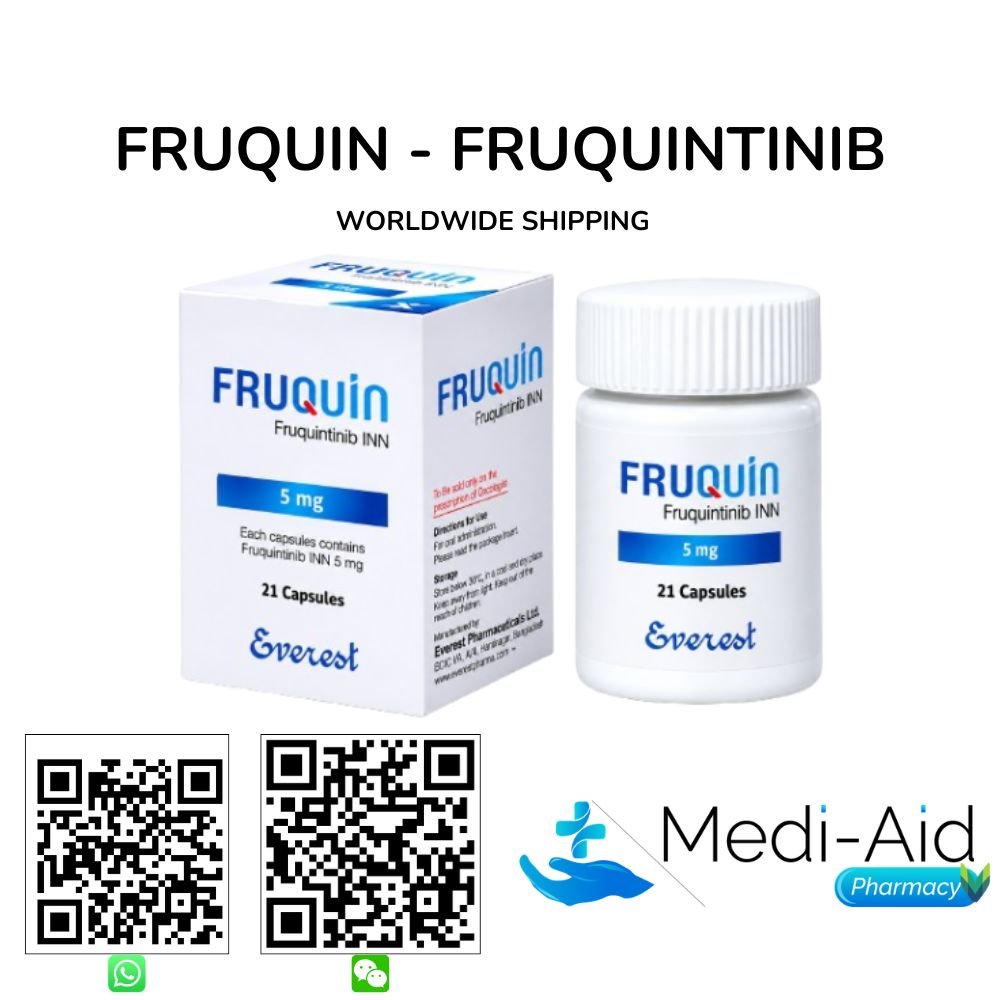
Fruquin 5 MG (Fruquintinib) is a highly selective, potent, orally bioavailable, small-molecule tyrosine kinase inhibitor (TKI) of all three vascular endothelial growth factor receptors VEGFR-1 (Flt-1), VEGFR-2 (KDR/Flk-1), and VEGFR-3 a targeted anti-angiogenic oral precision oncology agent that inhibits VEGFR autophosphorylation and downstream kinase signaling (including PI3K-AKT and RAS-MAPK pathways) driven by VEGFR-1, -2, and -3 activation, thereby suppressing tumor-induced angiogenesis and lymphangiogenesis essential for tumor vascularization, growth, and metastatic dissemination, with high selectivity for the three VEGFR subtypes and minimal clinically significant off-target kinase inhibition distinguishing fruquintinib from less selective multi-kinase inhibitors such as regorafenib supplied as hard capsules of 5 mg strength in a pack of 21 capsules per pot, manufactured and marketed under the brand name Fruquin by Everest Pharmaceuticals Ltd., Bangladesh.
Fruquintinib, the active pharmaceutical ingredient of Fruquin, is a selective pan-VEGFR TKI approved for the treatment of adult patients with previously treated metastatic colorectal cancer (mCRC) who have received prior fluoropyrimidine-, oxaliplatin-, and irinotecan-based chemotherapy, an anti-VEGF therapy, and, if RAS wild-type and medically appropriate, an anti-EGFR therapy establishing fruquintinib as the first and only selective inhibitor of all three VEGFR subtypes (VEGFR-1, -2, and -3) approved for mCRC, the first novel targeted therapy for mCRC regardless of biomarker status approved in the United States (November 2023 as Fruzaqla® by Takeda), the European Union (June 2024 as Fruzaqla®), and China (September 4, 2018 as Elunate® by HUTCHMED and Eli Lilly the first global approval for fruquintinib) a treatment milestone that has benefited more than 80,000 colorectal cancer patients in China alone since its 2018 launch.
The recommended dose of Fruquin (Fruquintinib) is 5 mg orally once daily (days 1–21 of each 28-day cycle; 3 weeks on, 1 week off) plus best supportive care (BSC), administered continuously until disease progression or unacceptable toxicity; at the 5 mg capsule strength, one capsule of Fruquin 5 MG is taken once daily for 21 consecutive days per cycle; capsules should be swallowed whole and may be taken with or without food; if a dose is missed, do not take a double dose on the same day resume at the next scheduled dose time; dose reductions are implemented for toxicity management: first dose reduction to 4 mg once daily and second dose reduction to 3 mg once daily (the 1 mg capsule strength is required for dose reductions and is available separately).
The pivotal Phase 3 FRESCO trial (NCT02314819; published in JAMA 2018), a randomized, double-blind, placebo-controlled, multicenter study at 28 hospitals in China, evaluated fruquintinib 5 mg orally once daily (3 weeks on, 1 week off) versus placebo in 416 patients with mCRC who had progressed after at least two prior lines of chemotherapy, achieving a statistically significant improvement in the primary endpoint of median overall survival (OS) of 9.3 months (95% CI, 8.2–10.5) versus 6.6 months (95% CI, 5.9–8.1) in the placebo arm (HR 0.65; 95% CI, 0.51–0.83; p<0.001), and a statistically significant improvement in the key secondary endpoint of median progression-free survival (PFS) of 3.7 months (95% CI, 3.7–4.6) versus 1.8 months (95% CI, 1.8–1.8) with placebo (HR 0.26; 95% CI, 0.21–0.34; p<0.001); the global confirmatory Phase 3 FRESCO-2 trial (NCT04322539; n=691; 14 countries; published in The Lancet 2023) confirmed fruquintinib’s survival benefit in a heavily pretreated, globally representative mCRC population (median OS 7.4 months vs. 4.8 months; HR 0.66; p<0.0001; median PFS 3.7 months vs. 1.8 months; HR 0.32; p<0.0001; DCR 55.5% vs. 16.1%), with both FRESCO and FRESCO-2 meeting their primary and all key secondary endpoints with consistent safety profiles.
Important: The most clinically significant adverse reactions of fruquintinib are hypertension, palmar-plantar erythrodysesthesia (PPE/hand-foot syndrome), proteinuria, GI perforation and fistula, hemorrhage, hepatotoxicity, and reversible posterior leukoencephalopathy syndrome (RPLS/PRES). Blood pressure must be monitored before initiating fruquintinib and regularly during treatment; antihypertensive therapy should be initiated for fruquintinib-associated hypertension; withhold fruquintinib for uncontrolled hypertension; Grade 3 hypertension occurred in 14% of patients in FRESCO-2.
Monitor for PPE (hand-foot syndrome) and initiate supportive care with urea-based creams; withhold or reduce dose for Grade 2 or 3 PPE. Monitor urine protein; withhold fruquintinib for 24-hour urine protein ≥2 g; permanently discontinue for nephrotic syndrome. Permanently discontinue fruquintinib for GI perforation, fistula, Grade 3–4 hemorrhage, RPLS, or any adverse reaction that cannot be managed with dose modification. Thyroid function should be monitored at baseline and periodically during treatment; initiate thyroid replacement therapy for fruquintinib-induced hypothyroidism.
Liver function tests (ALT, AST, bilirubin) should be monitored before initiation and regularly during treatment; withhold or dose-reduce for Grade 3 or 4 hepatotoxicity. Fruquintinib is a substrate and inhibitor of CYP3A4; avoid strong CYP3A4 inducers; use caution with strong CYP3A4 inhibitors and narrow-therapeutic-index CYP3A4 substrates. No companion diagnostic or biomarker testing is required before initiating fruquintinib the indication is biomarker-agnostic.
Do not substitute Fruquin 5 MG Fruquintinib for regorafenib, trifluridine/tipiracil, bevacizumab, or other oncology agents without confirmed indication-specific prescribing and benefit-risk assessment by the treating oncologist. Searching for Fruquin 5 MG Fruquintinib? Mediaid Pharmacy lists this product across its oncology medicines, colorectal cancer medicines, and Everest Pharmaceuticals medicines portfolios and ships it worldwide.
Basic Product Information of Fruquin 5 MG (Fruquintinib)
| Brand Name | Fruquin manufactured and marketed by Everest Pharmaceuticals Ltd., Bangladesh; fruquintinib is also marketed internationally under the brand name Fruzaqla® (fruquintinib) by Takeda Pharmaceutical Company Limited in the United States (FDA approval November 2023) and the European Union (EMA approval June 2024), and under the brand name Elunate® (爱优特) in China and Hong Kong by HUTCHMED (China) Limited and Eli Lilly and Company (China NMPA approval September 4, 2018 the first global regulatory approval for fruquintinib); Fruquin by Everest Pharmaceuticals Ltd. is a branded generic formulation of fruquintinib hard capsules (5 mg), manufactured in Bangladesh under GMP-compliant conditions and supplied through authorized international pharmaceutical distribution channels, providing accessible oral pan-VEGFR TKI therapy for previously treated metastatic colorectal cancer patients globally who require fruquintinib at the standard 5 mg once-daily dose for 21 days per 28-day treatment cycle |
| Product Name | Fruquin (branded fruquintinib hard capsules, 5 mg, manufactured by Everest Pharmaceuticals Ltd., Bangladesh; supplied in pots of 21 capsules precisely sized for one complete 21-day on-treatment period of a 28-day fruquintinib dosing cycle) |
| Generic Name | Fruquintinib (INN; also designated HMPL-013 during preclinical and early clinical development by Hutchison MediPharma, the research and development subsidiary of HUTCHMED; a highly selective, potent, orally bioavailable, small-molecule tyrosine kinase inhibitor of VEGFR-1 [Flt-1], VEGFR-2 [KDR/Flk-1], and VEGFR-3; fruquintinib binds to and inhibits the intracellular kinase domain of all three VEGFR subtypes, preventing receptor autophosphorylation and downstream PI3K-AKT and RAS-MAPK signaling cascades that drive VEGFR-dependent tumor angiogenesis, neovascularization, and vascular permeability; fruquintinib demonstrates high kinase selectivity in kinase profiling assays, fruquintinib showed potent inhibition specifically against VEGFR-1, -2, and -3 with minimal significant inhibitory activity against a broad panel of off-target kinases, distinguishing it pharmacologically from multi-kinase inhibitors such as regorafenib that inhibit VEGFR, PDGFR, FGFR, TIE-2, RAF, RET, and KIT simultaneously; fruquintinib PK: mean steady-state Cmax of 383 ng/mL and mean average plasma concentration of 295 ng/mL at Day 21 on 5 mg once daily; plasma concentration falls progressively during the 1-week off period, reaching <25 ng/mL by Day 28; dose-proportional PK from 1 mg to 6 mg; developed by Hutchison MediPharma [HUTCHMED]; co-developed and commercialized in China under a licensing agreement with Eli Lilly and Company in October 2013; first global regulatory approval [China NMPA]: September 4, 2018; FDA approval as Fruzaqla [Takeda]: November 2023; EMA approval as Fruzaqla [Takeda]: June 2024; added to China National Reimbursement Drug List [NRDL]: January 2020; included in NCCN Clinical Practice Guidelines for colon cancer and rectal cancer: following FDA approval, November 2023; Everest Pharmaceuticals Ltd. manufactures and markets the branded generic formulation Fruquin under GMP conditions in Bangladesh) |
| Drug Class | Selective Pan-VEGFR Tyrosine Kinase Inhibitor (TKI); Highly Selective Oral VEGFR-1, VEGFR-2, and VEGFR-3 Inhibitor; Anti-Angiogenic Small-Molecule Oral TKI; Anti-Tumor Angiogenesis Targeted Oral Therapy; Oral Precision Oncology Agent for Refractory Metastatic Colorectal Cancer; Anti-VEGFR Small Molecule (Distinct from Anti-VEGF Monoclonal Antibodies such as Bevacizumab, Ramucirumab, and Ziv-Aflibercept); VEGF Pathway Kinase Inhibitor; Biomarker-Agnostic Oral Targeted Therapy for Previously Treated mCRC; Third-Line (or Later) Refractory mCRC Oral Targeted Agent; PI3K-AKT and RAS-MAPK Pathway Inhibitor (via VEGFR-1/-2/-3 kinase blockade); Tumor Vascularization Inhibitor; Lymphangiogenesis Suppressor (via VEGFR-3 inhibition) |
| Formulation | Hard capsules for oral administration may be taken with or without food; swallow capsules whole; do not open, crush, or chew capsules; take at approximately the same time each day; the dosing schedule is 3 weeks on (days 1–21), 1 week off (days 22–28) in repeating 28-day cycles; Fruquin 5 MG capsules deliver the standard recommended fruquintinib dose of 5 mg once daily one capsule per day on days 1 through 21 of each cycle; if a dose is missed, skip the missed dose and resume at the next scheduled time do not take a double dose to make up for a missed dose; if vomiting occurs after taking a dose, do not repeat the dose; resume at the next scheduled time; administer fruquintinib continuously on the 3-weeks-on/1-week-off schedule until disease progression or unacceptable toxicity; no requirement for IV infusion infrastructure oral self-administration provides patients with the ability to continue treatment at home during cycles; store Fruquin 5 MG capsules at room temperature as directed per product labeling |
| Available Strengths | 5 mg hard capsule the 5 mg strength is the standard treatment-initiation capsule that delivers the full approved fruquintinib dose of 5 mg once daily for previously treated mCRC, identical to the standard starting dose used in both the FRESCO (China; n=416; JAMA 2018) and FRESCO-2 (global; n=691; The Lancet 2023) pivotal Phase 3 trials; the 5 mg capsule provides the complete recommended daily dose in a single capsule, maximizing simplicity for once-daily outpatient oral administration; for dose reductions required by toxicity management first dose reduction to 4 mg once daily (four 1 mg capsules) and second dose reduction to 3 mg once daily (three 1 mg capsules) the 1 mg fruquintinib capsule strength is required separately and is available as a distinct product; permanently discontinue fruquintinib if the patient cannot tolerate the 3 mg once-daily dose; no body-weight-based dose adjustment is required fruquintinib is dosed as a fixed daily oral dose regardless of patient weight; special populations: no dose adjustments are required for mild to moderate hepatic or renal impairment; use with caution in patients with severe hepatic impairment; pharmacokinetic data confirm dose-proportional exposure across the clinical dose range (1 mg to 6 mg) |
| Available Pack Size | 21 capsules per pot the pack size of 21 capsules is precisely calibrated to match one complete on-treatment period of the fruquintinib 3-weeks-on/1-week-off dosing cycle: at the standard dose of 5 mg once daily for 21 days (days 1–21), one pot of 21 capsules of Fruquin 5 MG provides the full on-treatment capsule supply for a single 28-day treatment cycle, with the 7-day off period (days 22–28) requiring no capsules; patients stable on the standard 5 mg dose require one pot of Fruquin 5 MG per 28-day cycle; hospital formulary procurement teams and oncology programs typically calculate monthly procurement on the basis of one pot per active fruquintinib-receiving patient per treatment cycle at the 5 mg standard dose level; patients who have undergone dose reduction below 5 mg require the 1 mg fruquintinib capsule strength (available separately) for precise dose management; contact Mediaid Pharmacy for pack-size-specific stock availability confirmation and procurement guidance for Fruquin 5 MG, including options for multi-cycle bulk ordering to ensure uninterrupted treatment supply for patients on ongoing fruquintinib therapy |
| Dosing Schedule | Previously Treated Metastatic Colorectal Cancer (mCRC) Standard Dosing: Fruquintinib 5 mg orally once daily on days 1–21 of each 28-day cycle (3 weeks on, 1 week off) plus best supportive care; one capsule of Fruquin 5 MG per day for 21 days, followed by 7 days off; continue until disease progression or unacceptable toxicity. No Companion Diagnostic Required: Fruquintinib is a biomarker-agnostic therapy no KRAS, RAS, BRAF, MSI, or other molecular companion diagnostic testing is required before initiating treatment; indicated regardless of RAS mutation status, prior anti-VEGF therapy type, or other tumor biomarker profile. Prerequisite Treatment History (FDA/EMA-Approved Indication): Patients must have received prior fluoropyrimidine-, oxaliplatin-, and irinotecan-based chemotherapy; prior anti-VEGF therapy; and, if RAS wild-type and medically appropriate, prior anti-EGFR therapy before initiating fruquintinib. Dose Reduction Schedule for Toxicity (1 mg capsule strength required for dose reductions): First dose reduction: 4 mg once daily (four 1 mg fruquintinib capsules the 1 mg strength is available separately); second dose reduction: 3 mg once daily (three 1 mg fruquintinib capsules); permanently discontinue fruquintinib in patients unable to tolerate 3 mg once daily. Dose Reduction Triggers (per NCI CTCAE v5.0): Withhold fruquintinib and reduce dose for Grade 3 hypertension persisting after antihypertensive therapy; Grade 2 or 3 palmar-plantar erythrodysesthesia (hand-foot syndrome); Grade 3 proteinuria (24-hour urine protein ≥2 g); Grade 3 or 4 hepatotoxicity; other Grade 3 or 4 adverse reactions not manageable with supportive care alone. Permanent Discontinuation Criteria: GI perforation or fistula; Grade 3 or 4 hemorrhage; Grade 4 hypertension (hypertensive crisis); confirmed RPLS/PRES; nephrotic syndrome; Grade 4 hepatotoxicity. Mandatory Safety Monitoring: Blood pressure monitoring before each dose and regularly during treatment; urine protein monitoring by dipstick or 24-hour urine collection before each cycle; liver function tests (ALT, AST, bilirubin) at baseline and periodically during treatment; thyroid function (TSH) at baseline and every 4–8 weeks during treatment; CBC and electrolytes periodically. Surgical Hold: Withhold fruquintinib for at least 28 days prior to elective surgery and until the surgical incision is fully healed; do not resume fruquintinib until wound healing is confirmed. Drug Interactions: Avoid concomitant strong CYP3A4 inducers (rifampicin, phenytoin, carbamazepine, St. John’s Wort) these significantly reduce fruquintinib plasma concentrations; use caution with strong CYP3A4 inhibitors and narrow-therapeutic-index CYP3A4 substrates; fruquintinib is a CYP3A4 substrate and inhibitor. |
| Primary Indication | PREVIOUSLY TREATED METASTATIC COLORECTAL CANCER (mCRC) THIRD-LINE AND LATER:
Fruquintinib Monotherapy Previously Treated Refractory mCRC, Chinese Population (FRESCO; JAMA 2018): Fruquintinib 5 mg orally once daily (3 weeks on, 1 week off) plus best supportive care for the treatment of adult patients with mCRC who had progressed after at least two prior lines of chemotherapy (Phase 3; NCT02314819; randomized, double-blind, placebo-controlled; 28 hospitals in China; n=416; fruquintinib n=278; placebo n=138; randomization 2:1; stratification by prior anti-VEGF therapy use and K-ras status): median OS 9.3 months (95% CI, 8.2–10.5) vs. 6.6 months (95% CI, 5.9–8.1) with placebo (HR 0.65; 95% CI, 0.51–0.83; p<0.001); median PFS 3.7 months (95% CI, 3.7–4.6) vs. 1.8 months (95% CI, 1.8–1.8) with placebo (HR 0.26; 95% CI, 0.21–0.34; p<0.001); Grade 3–4 treatment-emergent adverse events: 61.2% fruquintinib vs. 19.7% placebo; China NMPA approval: September 4, 2018 the first global regulatory approval for fruquintinib and the first approval of the class of selective pan-VEGFR TKIs in colorectal cancer. Fruquintinib Monotherapy Refractory mCRC, Global Population (FRESCO-2; The Lancet 2023): Fruquintinib 5 mg orally once daily (3 weeks on, 1 week off) plus best supportive care in a heavily pretreated globally representative mCRC population (Phase 3 Multi-Regional Clinical Trial [MRCT]; NCT04322539; international, multicenter [124 hospitals/cancer centers], randomized, double-blind, placebo-controlled; 14 countries across the United States, Europe, Japan, and Australia; n=691; fruquintinib n=461; placebo n=230; randomization 2:1; stratification by prior therapy type [trifluridine/tipiracil, regorafenib, or both], RAS mutation status [WT, MT], and duration of metastatic disease [≤18 or >18 months]; primary endpoint OS; final analysis after 480 OS events): median OS 7.4 months (95% CI, 6.7–8.2) vs. 4.8 months (95% CI, 4.0–5.8) with placebo (HR 0.66; 95% CI, 0.55–0.80; p<0.0001); fruquintinib reduced the risk of death by 34%; median PFS 3.7 months vs. 1.8 months (HR 0.32; 95% CI, 0.27–0.39; p<0.0001); PFS at 6 months: 24% fruquintinib vs. 1% placebo; DCR 55.5% vs. 16.1% (adjusted difference 39%; 95% CI, 32.8–46.0; p<0.0001); ORR 1.5% vs. 0%; OS benefit consistent across all pre-specified subgroups including RAS mutation status, geographic region, prior therapy type, and duration of metastatic disease; quality of life formally confirmed as preserved overall; FDA approval of fruquintinib (as Fruzaqla by Takeda): November 2023; EMA approval (as Fruzaqla by Takeda): June 2024. FRESCO-2 specifically enrolled patients who had received all prior standard therapies approved globally including anti-VEGF therapy, anti-EGFR therapy (if RAS wild-type), regorafenib, trifluridine/tipiracil (or combination), making it the most broadly applicable dataset for real-world refractory mCRC treatment decision-making. |
| Manufacturer / Brand | Everest Pharmaceuticals Ltd. (manufacturer and brand owner of Fruquin 5 MG); Country of Origin: Bangladesh; Fruquin is manufactured by Everest Pharmaceuticals Ltd. and distributed internationally through authorized pharmaceutical distribution channels; SKU: everest-fruquin; Categories: Colorectal Cancer Medicines, Everest Pharmaceuticals Medicines, Oncology Medicines; Brand: Everest Pharma |
Global Supplier: Mediaid Pharmacy Worldwide Shipping for Fruquin 5 MG (Fruquintinib)
Mediaid Pharmacy is a Dhaka-based supplier of specialty oral targeted oncology agents, colorectal cancer precision medicines, anti-VEGFR oral TKIs, and original molecule and branded generic oncology drugs with worldwide shipping to patients, oncology departments, colorectal cancer treatment programs, hospital pharmacies, oncology day units, patient access programs, and international distributors across all regions. Fruquin 5 MG (Fruquintinib), manufactured by Everest Pharmaceuticals Ltd., Bangladesh, is supplied in pots of 21 capsules each pot aligned to one complete 21-day on-treatment cycle period with pricing quotations, stock confirmation, full product documentation, shipping arrangements, and end-to-end international delivery tracking for every order.
As an oral capsule formulation stored at room temperature, Fruquin does not require cold-chain refrigerated shipping unlike IV biologic agents (bevacizumab, cetuximab, panitumumab) simplifying international logistics and reducing shipping costs for fruquintinib orders to any destination country globally. Colorectal cancer treatment programs procuring fruquintinib for third-line and later refractory mCRC treatment protocols; hospital formulary procurement departments sourcing Fruquin as part of targeted oncology medicines and oral precision oncology portfolios; individual patients and families sourcing fruquintinib for refractory metastatic colorectal cancer; and oncology programs requiring sustained cycle-by-cycle supply of Fruquin 5 MG with one pot per patient per cycle providing a clean, cycle-aligned procurement unit can contact the Mediaid Pharmacy team through WhatsApp, phone, or email for Fruquin 5 MG stock availability, current pricing, shipping options, and international delivery timelines. Prescription documentation is required for fruquintinib dispensing in accordance with applicable regulatory requirements.
Why Choose Fruquin 5 MG (Fruquintinib) from Mediaid Pharmacy?
Fruquin 5 MG (Fruquintinib) from Everest Pharmaceuticals Ltd. delivers the validated selective pan-VEGFR TKI mechanism of the only highly selective VEGFR-1/-2/-3 inhibitor with proven Phase 3 survival benefits in both Chinese (FRESCO; JAMA) and global (FRESCO-2; The Lancet) refractory mCRC populations supplied as a convenient oral hard capsule of 5 mg strength in a cycle-matched pot of 21 capsules, enabling once-daily home-based oral administration without IV infusion infrastructure requirements, targeting the VEGF-driven angiogenic signaling that remains active in colorectal cancer cells even after multiple prior chemotherapy, anti-VEGF, and anti-EGFR treatment lines. Fruquintinib is pharmacologically and clinically distinguished across the refractory mCRC targeted therapy landscape by four evidence-based attributes.
First, fruquintinib is the first and only highly selective inhibitor of all three VEGFR subtypes (VEGFR-1, VEGFR-2, and VEGFR-3) approved for mCRC in the United States, the European Union, and China a pharmacologically critical differentiation from regorafenib (Stivarga), which inhibits a broader spectrum of kinases including VEGFR, PDGFR, FGFR, TIE-2, RAF, RET, and KIT simultaneously and carries a correspondingly broader off-target toxicity burden; fruquintinib’s high kinase selectivity for VEGFRs is designed to maintain anti-angiogenic efficacy while minimizing off-target kinase inhibition, with Grade 3 or higher treatment-related adverse events occurring in 36.0% of patients in FRESCO-2 versus approximately 54% reported in comparative regorafenib trials in similar settings; this selectivity profile may translate to a clinically differentiated tolerability profile in a heavily pretreated mCRC patient population with limited functional reserve.
Second, fruquintinib’s survival benefit is backed by the most statistically consistent dual-population Phase 3 dataset in refractory mCRC both FRESCO (China; n=416; published in JAMA) and FRESCO-2 (global; n=691; 14 countries; published in The Lancet) met their primary (OS) and all key secondary (PFS, DCR) endpoints with virtually identical hazard ratios for OS (HR 0.65 vs. HR 0.66, respectively) and PFS values (3.7 months vs. 1.8 months in both trials), demonstrating a reproducibility of clinical benefit across geographically, ethnically, and therapeutically distinct patient populations that strengthens the external validity of fruquintinib’s efficacy evidence beyond what a single-region trial can establish; this dual-population evidence base directly supported FDA, EMA, and China NMPA approvals and NCCN Guideline inclusion.
Third, fruquintinib is the first targeted therapy for refractory mCRC approved regardless of biomarker status no KRAS, NRAS, BRAF, RAS, microsatellite instability (MSI), or other molecular companion diagnostic testing is required before initiating fruquintinib, eliminating biomarker-driven patient selection barriers and enabling all previously treated mCRC patients meeting the prior-therapy criteria (fluoropyrimidine, oxaliplatin, irinotecan, anti-VEGF, and if RAS WT, anti-EGFR) to access fruquintinib regardless of tumor molecular profile; this biomarker-agnostic approval makes Fruquin 5 MG (Fruquintinib) a broadly applicable treatment option in the refractory mCRC setting, contrasting with biomarker-restricted therapies such as pembrolizumab (MSI-H/dMMR), entrectinib/larotrectinib (NTRK fusions), or encorafenib + cetuximab (BRAF V600E mutation) that benefit only molecularly defined subpopulations.
Fourth, Fruquin 5 MG’s cycle-matched pack of 21 capsules one capsule per day × 21 days on-treatment provides an operationally precise procurement and dispensing unit that eliminates partial-pack waste and simplifies cycle-by-cycle reordering for patients, oncology nurses, and hospital pharmacy teams managing fruquintinib treatment programs: each pot of Fruquin 5 MG aligns exactly to one 21-day on-treatment period of the 28-day dosing cycle, allowing oncology programs to procure one pot per patient per cycle without recounting, recalculating, or managing split packs; combined with fruquintinib’s formally confirmed preservation of quality of life throughout FRESCO-2, the once-daily oral capsule schedule (5 mg QD, days 1–21 of each 28-day cycle) with less than 1% of patients in FRESCO-2 withdrawing due to any toxicity, and the absence of cold-chain shipping requirements that add logistical complexity and cost to IV biologic regimens, Fruquin 5 MG positions itself as a clinically rigorous and operationally practical first-pot fruquintinib supply for patients initiating or continuing standard-dose refractory mCRC treatment.
To source the complete range of oral colorectal cancer targeted therapies, pan-VEGFR precision oncology medicines, and Everest Pharmaceuticals oncology products, visit the Mediaid Pharmacy colorectal cancer medicines portfolio, the oncology medicines collection, and the Everest Pharmaceuticals medicines range, and contact the team for a personalized quotation and international shipping confirmation.
Frequently Asked Questions About Fruquin 5 MG (Fruquintinib)
What is Fruquin 5 MG (Fruquintinib) used for?
Fruquin 5 MG (Fruquintinib) is an oral selective pan-VEGFR tyrosine kinase inhibitor (TKI) indicated for the treatment of adult patients with previously treated metastatic colorectal cancer (mCRC). Fruquintinib is indicated as a monotherapy, in combination with best supportive care, for adult mCRC patients who have been previously treated with fluoropyrimidine-, oxaliplatin-, and irinotecan-based chemotherapy, an anti-VEGF therapy, and, if RAS wild-type and medically appropriate, an anti-EGFR therapy representing a third-line and later (refractory) mCRC population for whom currently available standard systemic therapies have been exhausted. Fruquintinib does not require biomarker testing before initiation the indication is approved regardless of RAS mutation status, BRAF status, or prior therapy type (trifluridine/tipiracil, regorafenib, or both). FRESCO (China; n=416; JAMA 2018): median OS 9.3 months vs. 6.6 months (HR 0.65; p<0.001); median PFS 3.7 months vs. 1.8 months (HR 0.26; p<0.001); first global approval China NMPA September 4, 2018. FRESCO-2 (Global; n=691; The Lancet 2023): median OS 7.4 months vs. 4.8 months (HR 0.66; p<0.0001); median PFS 3.7 months vs. 1.8 months (HR 0.32; p<0.0001); DCR 55.5% vs. 16.1%; FDA approval November 2023; EMA approval June 2024. Fruquintinib is a biomarker-agnostic, once-daily oral capsule therapy for the third-line and later refractory mCRC setting, with >80,000 Chinese patients treated since launch. Fruquin 5 MG (Fruquintinib) is available through Mediaid Pharmacy with worldwide shipping to patients and refractory metastatic colorectal cancer treatment programs globally.
What is the generic name of Fruquin?
The generic name (International Nonproprietary Name, INN) of Fruquin is fruquintinib (also designated HMPL-013 during preclinical and early clinical development by HUTCHMED). Fruquintinib is a highly selective, potent, orally bioavailable, small-molecule tyrosine kinase inhibitor (TKI) of VEGFR-1, VEGFR-2, and VEGFR-3. Its mechanism intracellular inhibition of VEGFR kinase domain autophosphorylation, suppressing downstream PI3K-AKT and RAS-MAPK signaling cascades that drive VEGFR-dependent tumor angiogenesis targets the vascular supply mechanism that enables colorectal cancer cells to continue growing after multiple prior systemic therapy lines. Fruquintinib is mechanistically distinct from anti-VEGF ligand antibodies (bevacizumab, which neutralizes the extracellular VEGF-A ligand), multi-kinase TKIs (regorafenib, which inhibits VEGFR, PDGFR, FGFR, TIE-2, RAF, RET, KIT, and others simultaneously), EGFR inhibitors (cetuximab, panitumumab), and chemotherapy agents fruquintinib’s defining pharmacological property is its high selectivity specifically for VEGFR-1, -2, and -3 with minimal significant off-target kinase activity. Fruquintinib was originated and developed by Hutchison MediPharma (HUTCHMED’s R&D subsidiary); it is co-commercialized in China with Eli Lilly under the brand name Elunate (爱优特), marketed globally (outside mainland China, Hong Kong, and Macau) by Takeda as Fruzaqla, and manufactured in Bangladesh under the brand name Fruquin by Everest Pharmaceuticals Ltd. Mediaid Pharmacy distributes Fruquin 5 MG Fruquintinib by Everest Pharmaceuticals globally with worldwide shipping to patients, oncology programs, and hospital pharmacies.
What are the side effects of Fruquin (Fruquintinib)?
The most clinically significant adverse reactions of fruquintinib are hypertension, palmar-plantar erythrodysesthesia (PPE/hand-foot syndrome), proteinuria, GI perforation and fistula, hemorrhage, hepatotoxicity, and reversible posterior leukoencephalopathy syndrome (RPLS/PRES). Hypertension: the most common Grade 3 or higher adverse reaction in FRESCO-2, occurring in 14% of fruquintinib-treated patients; monitor blood pressure before each dose and regularly during treatment; initiate or intensify antihypertensive therapy; withhold fruquintinib for uncontrolled hypertension; permanently discontinue for hypertensive crisis (Grade 4 hypertension). Palmar-Plantar Erythrodysesthesia (PPE / Hand-Foot Syndrome): a characteristic class-effect toxicity of VEGFR TKIs; manage with urea-based moisturizing creams, dose interruption for Grade 2 or 3 PPE, and dose reduction as needed; permanently discontinue for recurrent Grade 3 PPE not resolving with dose modification. Proteinuria: monitor by urinalysis before each cycle; withhold fruquintinib for 24-hour urine protein ≥2 g; permanently discontinue for nephrotic syndrome. GI Perforation and Fistula: permanently discontinue fruquintinib. Hemorrhage: permanently discontinue for Grade 3 or 4 hemorrhage. Hepatotoxicity: monitor liver function tests (ALT, AST, bilirubin) at baseline and periodically; withhold or reduce dose for Grade 3 hepatotoxicity; permanently discontinue for Grade 4 hepatotoxicity. RPLS/PRES: permanently discontinue fruquintinib. Hypothyroidism: monitor TSH at baseline and every 4–8 weeks; initiate thyroid replacement therapy as indicated. Most Common Any-Grade Adverse Reactions (≥20% in FRESCO or FRESCO-2): hypertension, palmar-plantar erythrodysesthesia (hand-foot syndrome), proteinuria, dysphonia (voice changes/hoarseness), diarrhea, asthenia (weakness), decreased appetite, hypothyroidism, and fatigue. Overall Grade 3+ AEs in FRESCO-2: 63% fruquintinib vs. 50% placebo; treatment-related Grade 3+ AEs: 36.0% fruquintinib vs. 11.3% placebo; less than 1% of patients in FRESCO-2 withdrew from treatment due to any potential toxicity, confirming the overall manageability of fruquintinib’s adverse event profile with proactive monitoring and dose modification. All patients initiating Fruquin 5 MG (Fruquintinib) should have baseline blood pressure, liver function tests, TSH, urinalysis, and CBC assessed, with treatment initiated under the supervision of a qualified oncologist experienced in managing VEGFR TKI toxicities.
How effective is Fruquin (Fruquintinib) for refractory metastatic colorectal cancer?
Fruquintinib demonstrated clinically meaningful and statistically significant improvements in overall survival and progression-free survival in both the pivotal Chinese Phase 3 FRESCO trial and the global confirmatory Phase 3 FRESCO-2 trial in previously treated refractory metastatic colorectal cancer. FRESCO (Phase 3; NCT02314819; China; n=416; published in JAMA 2018): fruquintinib 5 mg once daily (3 weeks on, 1 week off) vs. placebo in patients with mCRC who had progressed after ≥2 prior chemotherapy lines: median OS 9.3 months (95% CI, 8.2–10.5) vs. 6.6 months (95% CI, 5.9–8.1) (HR 0.65; 95% CI, 0.51–0.83; p<0.001); median PFS 3.7 months (95% CI, 3.7–4.6) vs. 1.8 months (95% CI, 1.8–1.8) (HR 0.26; 95% CI, 0.21–0.34; p<0.001); first global approval China NMPA September 4, 2018. FRESCO-2 (Phase 3 MRCT; NCT04322539; global; n=691; 14 countries; published in The Lancet 2023): fruquintinib 5 mg once daily (3 weeks on, 1 week off) vs. placebo in heavily pretreated patients who had received all prior standard therapies globally (fluoropyrimidine, oxaliplatin, irinotecan, anti-VEGF, anti-EGFR if RAS WT): median OS 7.4 months (95% CI, 6.7–8.2) vs. 4.8 months (95% CI, 4.0–5.8) (HR 0.66; 95% CI, 0.55–0.80; p<0.0001); fruquintinib reduced the risk of death by 34%; median PFS 3.7 months vs. 1.8 months (HR 0.32; 95% CI, 0.27–0.39; p<0.0001); PFS at 6 months: 24% vs. 1%; DCR 55.5% vs. 16.1%; ORR 1.5% vs. 0%; OS benefit consistent across all pre-specified subgroups including RAS mutation status, geographic region, prior therapy type, and duration of metastatic disease; quality of life formally confirmed as preserved overall in FRESCO-2. Combined FRESCO + FRESCO-2 Dataset (n=734 fruquintinib-treated patients): both studies met all primary and key secondary endpoints; safety profiles consistent across both trials; the virtually identical OS hazard ratios (0.65 vs. 0.66) across Chinese-only and global trial populations represents an extraordinary degree of cross-population reproducibility rare in oncology Phase 3 trial design. Fruquin 5 MG (Fruquintinib) is available through Mediaid Pharmacy; visit the colorectal cancer medicines collection and oncology medicines collection for the complete oral anti-VEGFR targeted therapy portfolio.
What is the difference between Fruquin (Fruquintinib) and regorafenib (Stivarga) for refractory colorectal cancer?
Fruquintinib (Fruquin) and regorafenib (Stivarga) are both oral small-molecule kinase inhibitors approved for previously treated refractory metastatic colorectal cancer, but they differ in clinically significant pharmacological and tolerability characteristics. Kinase Selectivity and Off-Target Profile: Fruquintinib is a highly selective inhibitor of VEGFR-1, -2, and -3 with minimal significant off-target kinase activity it is the first and only selective pan-VEGFR TKI approved for mCRC; regorafenib is a multi-kinase inhibitor that inhibits VEGFR, PDGFR, FGFR, TIE-2, RAF, RET, KIT, and other kinases simultaneously, resulting in a broader spectrum of both anti-tumor activity and off-target toxicity. Tolerability Comparison: In FRESCO-2, treatment-related Grade 3+ AEs were 36.0% in the fruquintinib group vs. approximately 54% reported in the pivotal CORRECT trial for regorafenib in a comparable setting; less than 1% of patients in FRESCO-2 withdrew due to fruquintinib toxicity; regorafenib is associated with a higher rate of Grade 3+ hand-foot-skin reactions and fatigue. Activity After Regorafenib Failure: FRESCO-2 specifically enrolled patients who had received or failed regorafenib fruquintinib demonstrated survival benefit (median OS 7.4 vs. 4.8 months; HR 0.66) even in patients previously treated with regorafenib, establishing fruquintinib as an active post-regorafenib treatment option. Dosing Schedule: Fruquintinib: 5 mg once daily (3 weeks on, 1 week off in 28-day cycles); regorafenib: 160 mg once daily (3 weeks on, 1 week off in 28-day cycles) same schedule but higher dose and broader kinase target profile. Approval Basis: Fruquintinib is backed by two independent Phase 3 trials (FRESCO and FRESCO-2) published in JAMA and The Lancet, with virtually identical OS HRs (0.65 and 0.66) across different geographic and therapeutic populations; regorafenib is backed by the CORRECT (Phase 3; NCT01103323) and CONCUR (Phase 3; China) trials. Visit the Mediaid Pharmacy oncology medicines collection for the complete refractory colorectal cancer targeted therapy portfolio, including Fruquin 5 MG Fruquintinib and other colorectal cancer medicines available with worldwide shipping.
Is Fruquin (Fruquintinib) safe during pregnancy or while breastfeeding?
Fruquin (Fruquintinib) can cause fetal harm based on its mechanism of action and nonclinical animal reproductive toxicology findings fruquintinib should not be used during pregnancy. VEGFR-1, -2, and -3 inhibition and suppression of angiogenic signaling is expected to disrupt critical embryonic and fetal developmental processes dependent on vascular development, placentation, and organogenesis; nonclinical animal reproductive toxicology studies demonstrated fetal malformations at fruquintinib exposures in animals, confirming the embryotoxic and fetotoxic potential of fruquintinib. Contraception requirement: women of childbearing potential must use highly effective contraception during fruquintinib treatment and for a defined period after the last dose (refer to the product prescribing information or treating physician for the specific post-treatment contraception duration, based on fruquintinib’s plasma elimination half-life); verify pregnancy status with a pregnancy test before initiating Fruquin in all women of childbearing potential; males with female partners of reproductive potential should also use effective contraception during fruquintinib treatment and for a defined period after the final dose. Breastfeeding: it is unknown whether fruquintinib or its metabolites are present in human breast milk, affect milk production, or affect the breastfed infant; because of the potential for serious adverse reactions from VEGFR inhibition in breastfed infants, breastfeeding is not recommended during fruquintinib treatment and for a defined period after the last dose. Fertility: nonclinical studies indicate that fruquintinib may affect fertility based on the role of VEGFR signaling in reproductive organ function; fertility implications and reversibility have not been fully established clinically; discuss fertility preservation options with the treating oncologist prior to initiating fruquintinib. All aspects of reproductive planning, contraception requirements, and fertility counseling should be discussed with the treating oncologist before starting fruquintinib therapy.
Can I order Fruquin 5 MG (Fruquintinib) online with worldwide shipping?
Yes. Mediaid Pharmacy supplies Fruquin 5 MG (Fruquintinib), hard capsules of 5 mg strength in pots of 21 capsules, manufactured by Everest Pharmaceuticals Ltd., Bangladesh, to patients, refractory metastatic colorectal cancer oncology departments, oral targeted therapy treatment programs, hospital pharmacies, oncology day units, patient access programs, and healthcare providers globally. As an oral capsule formulation stored at room temperature, Fruquin does not require cold-chain refrigerated shipping, allowing straightforward international logistics with standard secure pharmaceutical packaging appropriate for the destination country’s transit conditions and regulatory requirements. Contact Mediaid Pharmacy via WhatsApp, phone, or email at +8801773428128, or email info@mediaidpharmacy.com for pricing, current stock availability for Fruquin 5 MG, shipping options, and international delivery details for your country. Prescription documentation is required for fruquintinib dispensing in accordance with applicable regulatory requirements. For the complete portfolio of Everest Pharmaceuticals medicines and oncology medicines available with worldwide shipping, visit the respective collection pages on the Mediaid Pharmacy website.
Order Fruquin 5 MG (Fruquintinib) with Worldwide Shipping
Phone / WhatsApp: +8801773428128 | Email: info@mediaidpharmacy.com
Reviews
There are no reviews yet.