
Description
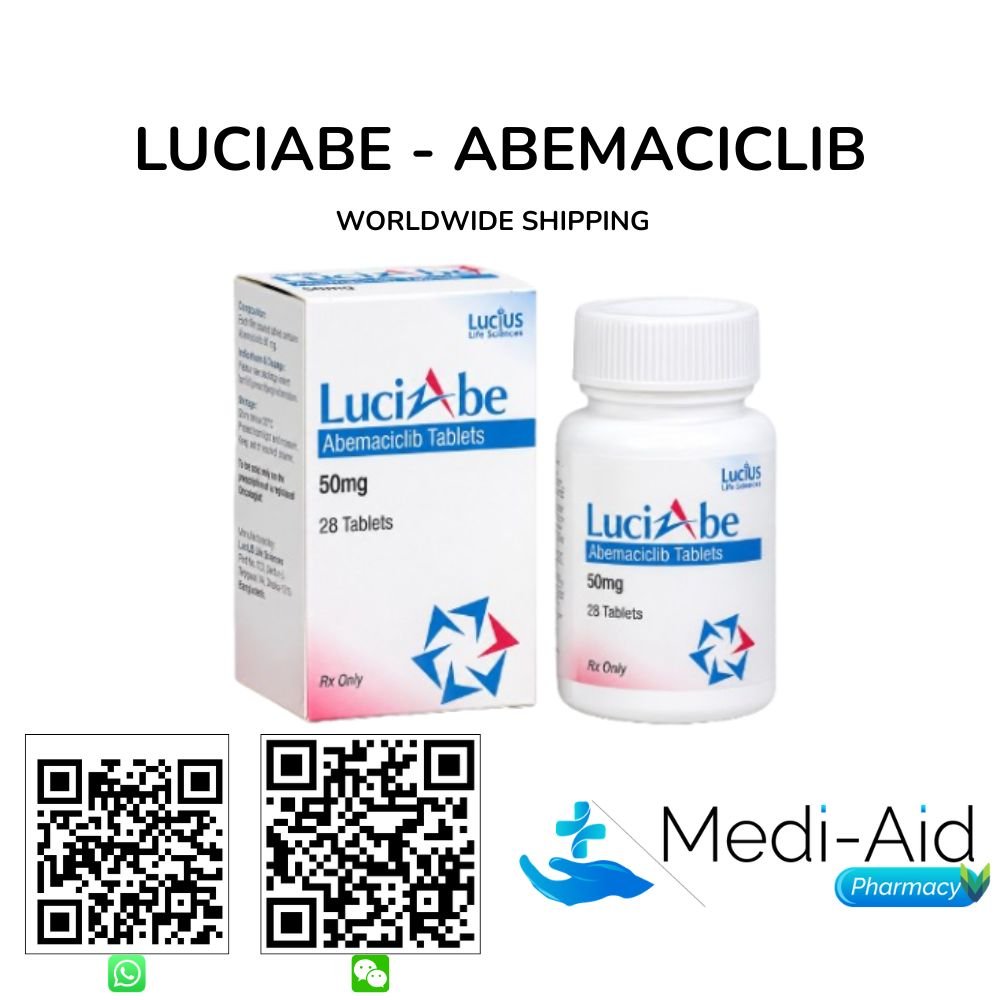
LuciAbe 50 MG (Abemaciclib) is a third-generation, orally bioavailable CDK4/6 inhibitor (cyclin-dependent kinase 4 and 6 inhibitor) and targeted oncology agent a small-molecule, ATP-competitive kinase inhibitor that selectively and reversibly blocks the activity of cyclin-dependent kinase 4 (CDK4) and cyclin-dependent kinase 6 (CDK6), two serine/threonine kinases whose hyperactivation drives aberrant G1-to-S phase cell cycle progression in hormone receptor-positive (HR+) breast cancer cells, thereby preventing retinoblastoma protein (Rb) phosphorylation, arresting tumour cells in G1 phase, suppressing E2F-dependent transcription of proliferative genes, inducing cellular senescence, and inhibiting the uncontrolled proliferation that characterises HR+/HER2-negative breast cancers supplied as film-coated tablets in 50 mg strength, 28 tablets per pot, and manufactured by Lucius Pharmaceuticals (Lao) Co., Ltd. in Laos.
Abemaciclib, the active pharmaceutical ingredient (API) of LuciAbe 50 MG, is indicated in combination with endocrine therapy (aromatase inhibitors or fulvestrant) for hormone receptor-positive, HER2-negative advanced or metastatic breast cancer, and as adjuvant treatment in combination with endocrine therapy for HR+, HER2-negative, node-positive early breast cancer at high risk of recurrence with Ki-67 ≥20%. The Phase 3 MONARCH 2 trial demonstrated that abemaciclib plus fulvestrant delivered a median progression-free survival (PFS) of 16.4 months versus 9.3 months with placebo plus fulvestrant (HR 0.553; p<0.0001) in patients with HR+/HER2-negative advanced breast cancer who had progressed on prior endocrine therapy.
The Phase 3 MONARCH 3 trial showed abemaciclib plus a non-steroidal aromatase inhibitor (anastrozole or letrozole) achieved a median PFS of 28.18 months versus 14.76 months (HR 0.540; p=0.000002) as initial endocrine-based therapy for HR+/HER2-negative advanced breast cancer. The Phase 3 monarchE trial established abemaciclib plus endocrine therapy as the first and only CDK4/6 inhibitor regimen approved in the adjuvant setting for high-risk HR+/HER2-negative early breast cancer, reducing the risk of invasive disease recurrence or death by 35.7% (HR 0.643; p<0.0001 at pre-specified interim analysis).
Important: Abemaciclib carries warnings for severe diarrhoea (occurring in up to 90% of patients), myelosuppression (neutropenia in 37–46% of patients), hepatotoxicity (elevated transaminases), interstitial lung disease/pneumonitis (ILD/pneumonitis in 3.3% of patients across MONARCH trials), venous thromboembolic events, and embryo-foetal toxicity. Prompt management of diarrhoea at first sign of loose stools is essential to prevent dehydration, dose interruption, and treatment discontinuation. Searching for LuciAbe 50 MG Abemaciclib? Mediaid Pharmacy lists this product across its oncology medicines, breast cancer medicines, and Lucius Pharmaceuticals medicines portfolios and ships it worldwide.
Basic Product Information of LuciAbe 50 MG (Abemaciclib)
| Brand Name | LuciAbe 50 MG (Abemaciclib) |
| Product Name | LuciAbe |
| Generic Name | Abemaciclib (also referred to by its developmental code LY2835219; the originator brand is Verzenio / Verzenios, developed by Eli Lilly and Company) |
| Drug Class | CDK4/6 Inhibitor (Cyclin-Dependent Kinase 4 and 6 Inhibitor); Small-Molecule Targeted Kinase Inhibitor; Cell Cycle Inhibitor; Antineoplastic Agent; Targeted Oncology Agent; Oral Breast Cancer Medicine |
| Formulation | Film-Coated Tablet (oral administration; taken with or without food; swallow whole do not crush, chew, or split) |
| Available Strengths | 50 mg per tablet (LuciAbe 50 MG; used for dose reduction from 100 mg twice daily to 50 mg twice daily when required for toxicity management see dosing schedule) |
| Available Pack Size | 28 tablets per pot (a 14-day supply at the 50 mg twice-daily dosing schedule, or a 28-day supply at the 50 mg once-daily schedule as required by dose modification guidance) |
| Dosing Schedule | Metastatic / Advanced Breast Cancer (in combination with an aromatase inhibitor or fulvestrant): Abemaciclib 150 mg orally twice daily (BID), taken continuously without a scheduled rest period, administered in combination with the selected endocrine therapy partner at its approved dose. Early Breast Cancer / Adjuvant (in combination with endocrine therapy, monarchE indication): Abemaciclib 150 mg orally twice daily, continuously, in combination with endocrine therapy, for up to 2 years. Single-Agent (prior endocrine therapy and chemotherapy in metastatic setting): Abemaciclib 200 mg orally twice daily continuously. Dose Reduction for Toxicity: First dose reduction to 100 mg BID; second dose reduction to 50 mg BID (LuciAbe 50 MG). The 50 mg tablet strength is specifically engineered to enable precise second-level dose reduction under oncologist supervision. Do not re-escalate after dose reduction. Consult the treating oncologist for all dose modification decisions. |
| Primary Indications | (1) HR+/HER2-Negative Advanced or Metastatic Breast Cancer Combination with Aromatase Inhibitor (First-Line): Abemaciclib in combination with a non-steroidal aromatase inhibitor (anastrozole or letrozole) as initial endocrine-based therapy for HR-positive, HER2-negative advanced or metastatic breast cancer in postmenopausal women. Based on Phase 3 MONARCH 3 trial (mPFS 28.18 months vs 14.76 months; HR 0.540).
(2) HR+/HER2-Negative Advanced or Metastatic Breast Cancer Combination with Fulvestrant (Second-Line): Abemaciclib in combination with fulvestrant for women with HR+/HER2-negative advanced or metastatic breast cancer whose disease progressed while receiving endocrine therapy. Based on Phase 3 MONARCH 2 trial (mPFS 16.4 months vs 9.3 months; HR 0.553). (3) HR+/HER2-Negative Metastatic Breast Cancer Single Agent (Third-Line): Abemaciclib as monotherapy for adult patients with disease progression after prior endocrine therapy and prior chemotherapy in the metastatic setting. Based on Phase 2 MONARCH 1 trial (ORR 19.7%). (4) HR+/HER2-Negative Node-Positive Early Breast Cancer Adjuvant (monarchE): Abemaciclib in combination with endocrine therapy (tamoxifen or an aromatase inhibitor) for the adjuvant treatment of adult patients with HR+, HER2-negative, node-positive early breast cancer at high risk of recurrence with Ki-67 ≥20%. First and only CDK4/6 inhibitor FDA-approved in the adjuvant early breast cancer setting (FDA approval: October 12, 2021; full approval March 2023). |
| Manufacturer / Brand | Lucius Pharmaceuticals (Lao) Co., Ltd., Country of Origin: Laos (originator molecule developed by Eli Lilly and Company; first FDA approval for abemaciclib as single agent: September 28, 2017; combination approvals subsequently for MONARCH 3 and monarchE indications) |
| Global Supplier | Mediaid Pharmacy, Worldwide Shipping Available |
| Storage Conditions | Store at room temperature, 20°C to 25°C (68°F to 77°F); excursions permitted to 15°C to 30°C (59°F to 86°F). Store in the original pot with the lid tightly closed. Keep away from moisture. Keep out of the reach of children. |
How LuciAbe (Abemaciclib) Works: CDK4/6 Inhibition, Rb Pathway Arrest, and Cell Cycle Blockade in HR+/HER2-Negative Breast Cancer
Abemaciclib (LuciAbe 50 MG) is an orally administered, ATP-competitive, reversible inhibitor of cyclin-dependent kinases 4 and 6 (CDK4 and CDK6), two serine/threonine protein kinases that function as master regulators of the G1-to-S phase transition in the eukaryotic cell cycle. In normal cell physiology, the CDK4/6-cyclin D1 complex becomes activated during G1 phase in response to mitogenic signals (including oestrogen receptor [ER] signalling, a dominant proliferative driver in HR+ breast cancer), catalysing the phosphorylation of the retinoblastoma protein (Rb) at multiple serine and threonine residues.
When Rb is hyperphosphorylated, the transcription factor E2F is released from its repressive Rb complex, enabling E2F to activate transcription of genes required for S phase entry (including cyclin E, CDC6, and thymidine kinase), thereby committing the cell to DNA replication and mitosis. In HR-positive breast cancer, CDK4 and CDK6 are frequently overactivated driven by cyclin D1 amplification, loss of the endogenous CDK inhibitor p16/CDKN2A (occurring in approximately 50% of invasive breast cancers), and sustained ER-mediated mitogenic signalling resulting in constitutive Rb phosphorylation and unchecked cell cycle progression that renders endocrine therapy alone insufficient as a long-term growth suppression strategy.
Abemaciclib occupies the ATP-binding pocket of CDK4 and CDK6 with high affinity and selectivity, competitively preventing ATP from phosphorylating Rb. Biochemical data characterise abemaciclib as a more potent inhibitor of CDK4 (IC₅₀ approximately 2 nM) than of CDK6 (IC₅₀ approximately 10 nM), with 14-fold greater selectivity for CDK4 over CDK6, distinguishing abemaciclib pharmacologically from palbociclib and ribociclib the other approved CDK4/6 inhibitors which inhibit CDK4 and CDK6 with roughly equipotent activity. By preventing Rb phosphorylation, abemaciclib maintains Rb in its hypophosphorylated, growth-suppressive state: hypophosphorylated Rb sequesters E2F transcription factors, blocks transcription of S-phase entry genes, and arrests HR+ breast cancer cells in G1 phase.
Prolonged CDK4/6 inhibition by abemaciclib induces cellular senescence a permanent, irreversible cell cycle arrest state with distinct secretory phenotype in addition to cell cycle arrest, which may contribute to durable tumour growth control beyond the immediate cytostatic effect. Importantly, abemaciclib is the only CDK4/6 inhibitor approved for continuous twice-daily dosing without the 7-day rest period required for palbociclib and ribociclib, reflecting its differentiated tolerability profile across cycles and its unique pharmacological and pharmacokinetic characteristics including a half-life supporting continuous-exposure scheduling.
Abemaciclib’s antitumour activity is potentiated by concurrent endocrine therapy (aromatase inhibitors or fulvestrant): while abemaciclib blocks CDK4/6-mediated Rb phosphorylation downstream, endocrine therapy eliminates or antagonises the ER-mediated upstream mitogenic signalling (cyclin D1 transcriptional induction) that drives CDK4/6 activation, creating a complementary dual-mechanism blockade of the ER-CDK4/6-Rb proliferative axis and producing greater growth suppression than either agent alone. This mechanistic synergy underpins the design and clinical results of the MONARCH 2, MONARCH 3, and monarchE trials. In preclinical xenograft models of ER+ breast cancer, abemaciclib monotherapy caused tumour regression not merely tumour growth stabilisation distinguishing its in vivo activity profile from agents that achieve only cytostatic effects. The broad clinical relevance of CDK4/6 inhibition across HR+/HER2-negative breast cancer covering approximately 70% of all breast cancers means that abemaciclib’s mechanism of action translates into one of the most widely applicable targeted oncology approaches currently in routine clinical practice.
Clinical Data, Safety Profile, and Drug Interactions of LuciAbe (Abemaciclib 50 MG)
| Key Clinical Trials | MONARCH 1 (Phase 2; single agent, ≥3 prior therapies): Abemaciclib monotherapy in heavily pre-treated HR+/HER2-negative mBC; ORR 19.7%; clinical benefit rate 42.4%; median PFS 6.0 months.
MONARCH 2 (Phase 3; abemaciclib + fulvestrant): HR+/HER2-negative mBC post endocrine therapy; mPFS 16.4 months vs 9.3 months (HR 0.553; p<0.0001); median OS 46.7 months vs 37.3 months (HR 0.757; p=0.0094). MONARCH 3 (Phase 3; abemaciclib + AI, first-line): HR+/HER2-negative advanced/metastatic BC; mPFS 28.18 months vs 14.76 months (HR 0.540; p=0.000002); ORR 61% vs 46%. monarchE (Phase 3; adjuvant, high-risk early BC): HR+/HER2-negative, node-positive EBC at high risk, Ki-67 ≥20%; abemaciclib + ET vs ET alone; 4-year IDFS 85.8% vs 79.4% (HR 0.643; p<0.0001); first and only CDK4/6 inhibitor approved in the adjuvant EBC setting. |
| Common Adverse Reactions | The most common adverse reactions across MONARCH 1, 2, and 3 trials (all grades, ≥20%) are: diarrhoea (81–90% of patients across trials; Grade 3 in 8–20%); neutropenia (37–46% of patients across trials; Grade ≥3 in 27–32%); nausea; fatigue; anaemia; leukopenia; abdominal pain; infections; decreased appetite; vomiting; headache; and alopecia. Diarrhoea incidence is highest during the first month of abemaciclib dosing; begin antidiarrhoeal therapy (loperamide) at the first sign of loose stools. Venous thromboembolic events reported in 5% of MONARCH 2 patients receiving abemaciclib plus fulvestrant. ILD/pneumonitis of any grade reported in 3.3% of patients across MONARCH trials. Hepatotoxicity (Grade ≥3 ALT elevation in 4–6%; Grade ≥3 AST elevation in 2–3%). Embryo-foetal toxicity: abemaciclib can cause foetal harm contraindicated in pregnancy. |
| Drug Interactions | Abemaciclib is primarily metabolised by CYP3A4 and is a CYP3A4 substrate. Strong CYP3A4 inhibitors (ketoconazole, itraconazole, clarithromycin, ritonavir, grapefruit products): may increase abemaciclib plasma concentrations substantially ketoconazole predicted to increase abemaciclib AUC by up to 16-fold; avoid concurrent use. If co-administration is unavoidable, reduce abemaciclib dose and monitor closely. Strong CYP3A4 inducers (rifampicin, carbamazepine, phenytoin, phenobarbital, St John’s Wort): reduce abemaciclib plasma concentrations and may compromise efficacy avoid concurrent use. Disclose all concomitant medications, herbal supplements, and grapefruit-containing foods to the treating oncologist before initiating abemaciclib therapy. |
| Pregnancy & Lactation | Abemaciclib can cause embryo-foetal harm. Animal reproduction studies demonstrated teratogenicity and decreased foetal weight at maternal exposures similar to human clinical exposures. LuciAbe (Abemaciclib) is contraindicated in pregnancy. Females of reproductive potential must use effective contraception during abemaciclib treatment and for at least 3 weeks after the last dose. Males with female partners of reproductive potential should use effective contraception during abemaciclib treatment and for at least 3 weeks after the last dose. Based on animal findings, abemaciclib may impair fertility in males of reproductive potential. There are no data on the presence of abemaciclib in human milk; breastfeeding is not recommended during abemaciclib treatment and for 3 weeks after the last dose. Verify pregnancy status before initiating abemaciclib in females of reproductive potential. Discuss all aspects of reproductive counselling with the treating oncologist before starting LuciAbe therapy. |
Who Should Use LuciAbe 50 MG (Abemaciclib)?
LuciAbe 50 MG (Abemaciclib) is a dose-reduction tablet specifically designed for patients currently receiving abemaciclib-based therapy whose treating oncologist has determined that a downward dose adjustment from 100 mg twice daily to 50 mg twice daily is required to manage treatment-related toxicity most commonly Grade 2 or Grade 3 diarrhoea, neutropenia, hepatic enzyme elevation, or other adverse reactions while preserving the continuous twice-daily dosing schedule that defines abemaciclib’s clinical administration regimen. The broader patient population eligible for abemaciclib therapy, across whose treatment course LuciAbe 50 MG may be required as a dose-management tool, spans four distinct clinically defined indications.
First, postmenopausal women with HR-positive, HER2-negative advanced or metastatic breast cancer receiving abemaciclib as initial endocrine-based therapy in combination with a non-steroidal aromatase inhibitor (anastrozole or letrozole) represent the MONARCH 3-based first-line metastatic indication: the Phase 3 MONARCH 3 trial demonstrated a median PFS of 28.18 months with abemaciclib plus an aromatase inhibitor versus 14.76 months with placebo plus an aromatase inhibitor (HR 0.540; p=0.000002), establishing abemaciclib as a first-line standard of care in HR+/HER2-negative advanced breast cancer.
Second, women with HR+/HER2-negative advanced or metastatic breast cancer whose disease progressed during prior endocrine therapy, now receiving abemaciclib in combination with fulvestrant, represent the MONARCH 2-based second-line indication: the MONARCH 2 Phase 3 trial demonstrated a median PFS of 16.4 months with abemaciclib plus fulvestrant versus 9.3 months with placebo plus fulvestrant (HR 0.553; p<0.0001) and a statistically significant overall survival benefit of 46.7 months versus 37.3 months (HR 0.757; p=0.0094).
Third, adult patients with HR+/HER2-negative metastatic breast cancer who have received prior endocrine therapy and prior chemotherapy in the metastatic setting are eligible for abemaciclib monotherapy, the MONARCH 1-based single-agent indication, at a starting dose of 200 mg twice daily (with 50 mg tablets available for second-step dose reduction).
Fourth, adult patients with HR+, HER2-negative, node-positive early breast cancer at high risk of recurrence with Ki-67 score ≥20%, receiving adjuvant abemaciclib in combination with endocrine therapy (tamoxifen or an aromatase inhibitor) for up to 2 years the monarchE-based adjuvant indication that established abemaciclib as the first and only CDK4/6 inhibitor approved in the adjuvant early breast cancer setting. LuciAbe 50 MG is not intended as a starting-dose tablet; the approved starting doses of abemaciclib are 150 mg BID (combination indications) and 200 mg BID (single-agent indication).
The 50 mg strength tablet enables the second-step dose reduction stipulated in abemaciclib prescribing information when toxicity requires reduction below 100 mg BID. HR+ breast cancer clinical teams, oncology pharmacists, hospital formulary procurement departments, and patients currently receiving abemaciclib-based regimens and requiring access to the 50 mg dose-reduction strength can browse the Mediaid Pharmacy breast cancer medicines portfolio, the oncology medicines collection, and the Lucius Pharmaceuticals medicines range for the complete selection available with worldwide delivery.
Global Supplier: Mediaid Pharmacy Worldwide Shipping for LuciAbe 50 MG (Abemaciclib)
Mediaid Pharmacy is a Dhaka-based supplier of specialty targeted oncology, breast cancer, and rare disease medicines with worldwide shipping to patients, breast oncology departments, HR+/HER2-negative breast cancer treatment programmes (both early-stage adjuvant and metastatic disease settings), hospital pharmacies, oncology day units, and international distributors across all regions. LuciAbe (Abemaciclib) 50 MG, manufactured by Lucius Pharmaceuticals (Lao) Co., Ltd. in Laos, is supplied as film-coated tablets in 28-tablet pots, with pricing quotations, stock confirmation, full product documentation, and end-to-end international delivery tracking for every order.
The availability of the 50 mg tablet strength is clinically significant: abemaciclib’s prescribing information defines a two-step dose-reduction pathway from the starting 150 mg BID (or 200 mg BID single agent) to 100 mg BID (first reduction) and then to 50 mg BID (second reduction), and LuciAbe 50 MG provides the specific tablet strength required for that final dose level without the need to split or manipulate higher-strength tablets. HR+ breast cancer oncology departments managing patients across the MONARCH 2, MONARCH 3, and monarchE-based treatment regimens; hospital oncology formulary and procurement teams sourcing the complete range of abemaciclib tablet strengths; and individual patients and families accessing abemaciclib for breast cancer in regions where availability or cost presents barriers can contact the Mediaid Pharmacy team through WhatsApp, phone, or WeChat for all enquiries regarding LuciAbe 50 MG stock availability, current pricing, and international delivery timelines.
Procurement teams co-sourcing LuciAbe with other oral targeted oncology medicines can browse the complete Mediaid Pharmacy portfolio before requesting a consolidated quotation.
Why Choose LuciAbe 50 MG (Abemaciclib) from Mediaid Pharmacy?
LuciAbe (Abemaciclib) from Lucius Pharmaceuticals (Lao) Co., Ltd. delivers the validated CDK4/6 inhibitory mechanism of abemaciclib a molecule with four approved indications across the HR+/HER2-negative breast cancer treatment continuum, spanning first-line metastatic, second-line metastatic, single-agent third-line metastatic, and now the adjuvant early breast cancer setting in a precisely formulated 50 mg film-coated tablet that fulfils a specific and essential clinical need: enabling the second-step dose reduction that abemaciclib’s toxicity management protocol requires. Abemaciclib is pharmacologically distinctive within the CDK4/6 inhibitor class for three evidence-based reasons.
First, abemaciclib is the only CDK4/6 inhibitor approved as a single agent without a combination partner for the monotherapy setting a distinction reflecting its single-agent clinical activity demonstrated in MONARCH 1 (ORR 19.7% in heavily pre-treated HR+/HER2-negative mBC), setting it apart from palbociclib and ribociclib which are approved only in combination regimens.
Second, abemaciclib is the only CDK4/6 inhibitor dosed on a continuous, uninterrupted schedule twice daily unlike palbociclib (3 weeks on / 1 week off) and ribociclib (3 weeks on / 1 week off) reflecting its unique pharmacological and tolerability profile and enabling sustained, uninterrupted CDK4/6 pathway suppression.
Third, abemaciclib is the first and only CDK4/6 inhibitor approved in the adjuvant early breast cancer setting the monarchE trial approval covering HR+, HER2-negative, node-positive EBC at high risk with Ki-67 ≥20% representing an entirely new curative-intent clinical domain that palbociclib and ribociclib have not penetrated with regulatory approval. The Phase 3 MONARCH 2 trial additionally demonstrated a statistically significant overall survival benefit for abemaciclib plus fulvestrant versus placebo plus fulvestrant (median OS 46.7 months vs 37.3 months; HR 0.757; p=0.0094) a clinically meaningful 9.4-month absolute median OS improvement that validates abemaciclib’s enduring antitumour activity in the HR+/HER2-negative metastatic setting.
LuciAbe 50 MG is manufactured by Lucius Pharmaceuticals (Lao) Co., Ltd. and is available through Mediaid Pharmacy as 28-tablet film-coated tablet pots. To source the complete range of CDK4/6 inhibitors and HR+ breast cancer medicines, visit the Mediaid Pharmacy breast cancer medicines portfolio and the Lucius Pharmaceuticals medicines collection, and contact the team for a personalised quotation.
Frequently Asked Questions About LuciAbe 50 MG (Abemaciclib)
What is LuciAbe 50 MG (Abemaciclib) used for?
LuciAbe 50 MG (Abemaciclib) is the 50 mg tablet strength of abemaciclib, a CDK4/6 inhibitor (cyclin-dependent kinase 4 and 6 inhibitor) indicated for HR-positive, HER2-negative breast cancer across multiple settings: (1) in combination with a non-steroidal aromatase inhibitor as initial endocrine-based therapy for HR+/HER2-negative advanced or metastatic breast cancer (MONARCH 3; mPFS 28.18 vs 14.76 months); (2) in combination with fulvestrant for HR+/HER2-negative advanced breast cancer following progression on endocrine therapy (MONARCH 2; mPFS 16.4 vs 9.3 months; OS benefit confirmed); (3) as single-agent monotherapy for HR+/HER2-negative mBC following prior endocrine therapy and chemotherapy (MONARCH 1; ORR 19.7%); and (4) in combination with endocrine therapy as adjuvant treatment for HR+, HER2-negative, node-positive high-risk early breast cancer with Ki-67 ≥20% (monarchE; 4-year IDFS 85.8% vs 79.4%). The 50 mg tablet is specifically the second-step dose-reduction strength used when toxicity requires reduction below 100 mg twice daily during ongoing abemaciclib treatment. LuciAbe is manufactured by Lucius Pharmaceuticals (Lao) Co., Ltd. in Laos and is available through Mediaid Pharmacy with worldwide shipping.
What is the generic name of LuciAbe?
The generic name of LuciAbe is abemaciclib, also known by its developmental code LY2835219. Abemaciclib is an orally bioavailable, ATP-competitive, reversible CDK4/6 inhibitor belonging to the small-molecule kinase inhibitor class. The originator brand of abemaciclib is Verzenio (marketed as Verzenios in the UK and the EU), developed and manufactured by Eli Lilly and Company, with first FDA approval on September 28, 2017, for single-agent use in pre-treated HR+/HER2-negative metastatic breast cancer. LuciAbe 50 MG is a brand manufactured by Lucius Pharmaceuticals (Lao) Co., Ltd. in Laos, offering the 50 mg tablet strength of abemaciclib in 28-tablet pots. Unlike biologic antibody-drug conjugates, abemaciclib is a synthetic small-molecule compound, and generic equivalents can in principle be developed, though any generic must demonstrate bioequivalence through regulatory review. Mediaid Pharmacy distributes LuciAbe (Abemaciclib) globally with worldwide shipping to patients, breast oncology departments, hospital pharmacies, and HR+ breast cancer treatment programmes.
What is the difference between abemaciclib, palbociclib, and ribociclib?
Abemaciclib (LuciAbe), palbociclib (Ibrance), and ribociclib (Kisqali) are all CDK4/6 inhibitors approved for HR+/HER2-negative breast cancer, but they differ in several clinically important ways. Abemaciclib is the only CDK4/6 inhibitor approved for use as a single agent without a combination partner (MONARCH 1 indication), the only one dosed continuously twice daily without a scheduled 7-day rest period (palbociclib and ribociclib use a 3-weeks-on/1-week-off cycle), the only one to demonstrate a statistically significant overall survival benefit in the metastatic setting (MONARCH 2: median OS 46.7 months vs 37.3 months; HR 0.757; p=0.0094), and critically the first and only CDK4/6 inhibitor approved in the adjuvant early breast cancer setting (monarchE). Biochemically, abemaciclib has greater selectivity for CDK4 (approximately 14-fold over CDK6) compared with palbociclib and ribociclib, which inhibit CDK4 and CDK6 with more balanced potency. Clinically, diarrhoea is the predominant dose-limiting toxicity of abemaciclib (occurring in 81–90% of patients), whereas neutropenia is the primary dose-limiting toxicity of palbociclib and ribociclib. The QT-prolongation risk associated with ribociclib (requiring ECG monitoring) is not a clinical concern with abemaciclib. Visit the Mediaid Pharmacy breast cancer medicines collection for the full range of HR+ breast cancer treatment options.
How is LuciAbe 50 MG (Abemaciclib) administered?
Abemaciclib film-coated tablets are administered orally, with or without food, at approximately the same times each day the twice-daily (BID) schedule maintains consistent plasma drug exposure through the continuous dosing design. The approved starting dose for abemaciclib in combination indications (with aromatase inhibitor or fulvestrant) is 150 mg orally twice daily; for single-agent use, the starting dose is 200 mg orally twice daily. Dose reductions are applied in the following sequence when toxicity requires: from 150 mg BID to 100 mg BID (first reduction), then from 100 mg BID to 50 mg BID (second reduction where LuciAbe 50 MG tablets are prescribed). Do not re-escalate dose after reduction. Swallow tablets whole; do not crush, chew, or split. If vomiting occurs after a dose, the patient should not take an additional dose for that scheduled time and should resume at the next scheduled dose time. Abemaciclib should be taken on a continuous, uninterrupted schedule do not introduce treatment breaks unless directed by the treating oncologist for toxicity management. For adjuvant early breast cancer (monarchE indication), abemaciclib is administered for up to 2 years in combination with endocrine therapy. All dose modification decisions must be directed by the treating oncologist.
What are the side effects of LuciAbe (Abemaciclib)?
The most clinically significant adverse effects of abemaciclib are diarrhoea, myelosuppression (neutropenia and anaemia), hepatotoxicity, interstitial lung disease/pneumonitis, and venous thromboembolic events. Diarrhoea is the most common adverse effect, occurring in 81–90% of patients across MONARCH trials; Grade 3 diarrhoea occurred in 8–20% of patients. Diarrhoea incidence is highest during the first month of treatment: the median time to first diarrhoea episode is 6 days in MONARCH 2. Prompt initiation of antidiarrhoeal therapy (loperamide at first sign of loose stools) and adequate oral hydration are critical management steps to prevent severe dehydration. Neutropenia occurred in 37–46% of patients across trials; Grade ≥3 neutropenia in 27–32%; the median time to first episode of Grade ≥3 neutropenia ranged from 29 to 33 days, with median duration 11 to 16 days. Hepatotoxicity (Grade ≥3 ALT elevation in 4–6%; Grade ≥3 AST elevation in 2–3%) was observed across MONARCH 3 and MONARCH 2 trials; monitor liver function tests before initiating each cycle. ILD/Pneumonitis of any grade occurred in 3.3% of patients across MONARCH clinical trials; 0.4% had fatal outcomes interrupt abemaciclib for Grade 2 ILD/pneumonitis and permanently discontinue for Grade 3 or 4. Venous thromboembolic events (VTE) were reported in 5% of MONARCH 2 patients receiving abemaciclib plus fulvestrant; monitor for signs and symptoms of deep vein thrombosis and pulmonary embolism. Always establish baseline complete blood count, liver function tests, and creatinine before initiating abemaciclib and monitor throughout treatment under supervision of an experienced oncologist.
How effective is abemaciclib for HR+/HER2-negative breast cancer?
Abemaciclib has demonstrated robust, statistically significant, and clinically meaningful efficacy across four Phase 2/3 trials spanning both the metastatic and early breast cancer settings in HR+/HER2-negative disease. The Phase 3 MONARCH 3 trial (n=493) established abemaciclib plus a non-steroidal aromatase inhibitor as a first-line metastatic standard of care with a median PFS of 28.18 months versus 14.76 months (HR 0.540; p=0.000002) and an ORR of 61% versus 46%. The Phase 3 MONARCH 2 trial (n=669) demonstrated abemaciclib plus fulvestrant in the post-endocrine therapy second-line metastatic setting achieved median PFS of 16.4 months versus 9.3 months (HR 0.553; p<0.0001) and, critically, a confirmed overall survival benefit of 46.7 months versus 37.3 months (HR 0.757; p=0.0094) a 9.4-month absolute OS improvement. The Phase 3 monarchE trial (n=5,637) in high-risk HR+, HER2-negative, node-positive early breast cancer with Ki-67 ≥20% demonstrated that adjuvant abemaciclib plus endocrine therapy versus endocrine therapy alone achieved 4-year invasive disease-free survival (IDFS) of 85.8% versus 79.4% (HR 0.643; p<0.0001) a 6.4 percentage-point absolute improvement establishing abemaciclib as the first CDK4/6 inhibitor to demonstrate statistically significant benefit in the curative adjuvant setting. These results collectively establish abemaciclib as one of the most comprehensively evidenced targeted agents across the HR+/HER2-negative breast cancer treatment landscape. LuciAbe (Abemaciclib) is available through Mediaid Pharmacy with worldwide shipping; visit the oncology medicines collection for the full targeted therapy portfolio.
Is LuciAbe (Abemaciclib) safe during pregnancy or while breastfeeding?
LuciAbe (Abemaciclib) is contraindicated during pregnancy. Animal reproduction studies administered abemaciclib to pregnant rats during the period of organogenesis and demonstrated teratogenicity and decreased foetal weight at maternal exposures similar to human clinical exposures at the approved 150 mg twice-daily dose. The CDK4/6 inhibitory mechanism of abemaciclib blocking cell cycle progression in proliferating cells poses inherent risk to rapidly dividing foetal cells throughout gestation. Females of reproductive potential must use effective contraception during abemaciclib treatment and for at least 3 weeks after the last dose. Males with female partners of reproductive potential should use effective contraception during abemaciclib treatment and for at least 3 weeks after the last dose. Based on animal findings, abemaciclib may impair fertility in males of reproductive potential; advise male patients of this risk before initiating therapy. There are no data on the presence of abemaciclib or its metabolites in human breast milk; because of the potential for serious adverse reactions in the breastfed infant, breastfeeding is not recommended during abemaciclib treatment and for 3 weeks after the last dose. Verify pregnancy status with a serum or urine pregnancy test before initiating LuciAbe in females of reproductive potential. Discuss all aspects of reproductive planning, fertility preservation, and contraceptive requirements with the treating oncologist before starting abemaciclib therapy.
Can I order LuciAbe 50 MG (Abemaciclib) online with worldwide shipping?
Yes. Mediaid Pharmacy supplies LuciAbe 50 MG (Abemaciclib), film-coated tablets, 28 tablets per pot, manufactured by Lucius Pharmaceuticals (Lao) Co., Ltd. in Laos, to patients, HR+/HER2-negative breast oncology and medical oncology departments, early-stage and metastatic breast cancer treatment centres, hospital pharmacies and oncology day units, patient access programmes, and healthcare providers globally. Contact Mediaid Pharmacy via WhatsApp, phone, or WeChat at +8801773428128, or email info@mediaidpharmacy.com for pricing, current stock availability, shipping options, and international delivery details for your country.
Order LuciAbe 50 MG (Abemaciclib) with Worldwide Shipping
Phone / WhatsApp / WeChat: +8801773428128 | Email: info@mediaidpharmacy.com



Reviews
There are no reviews yet.