
Description
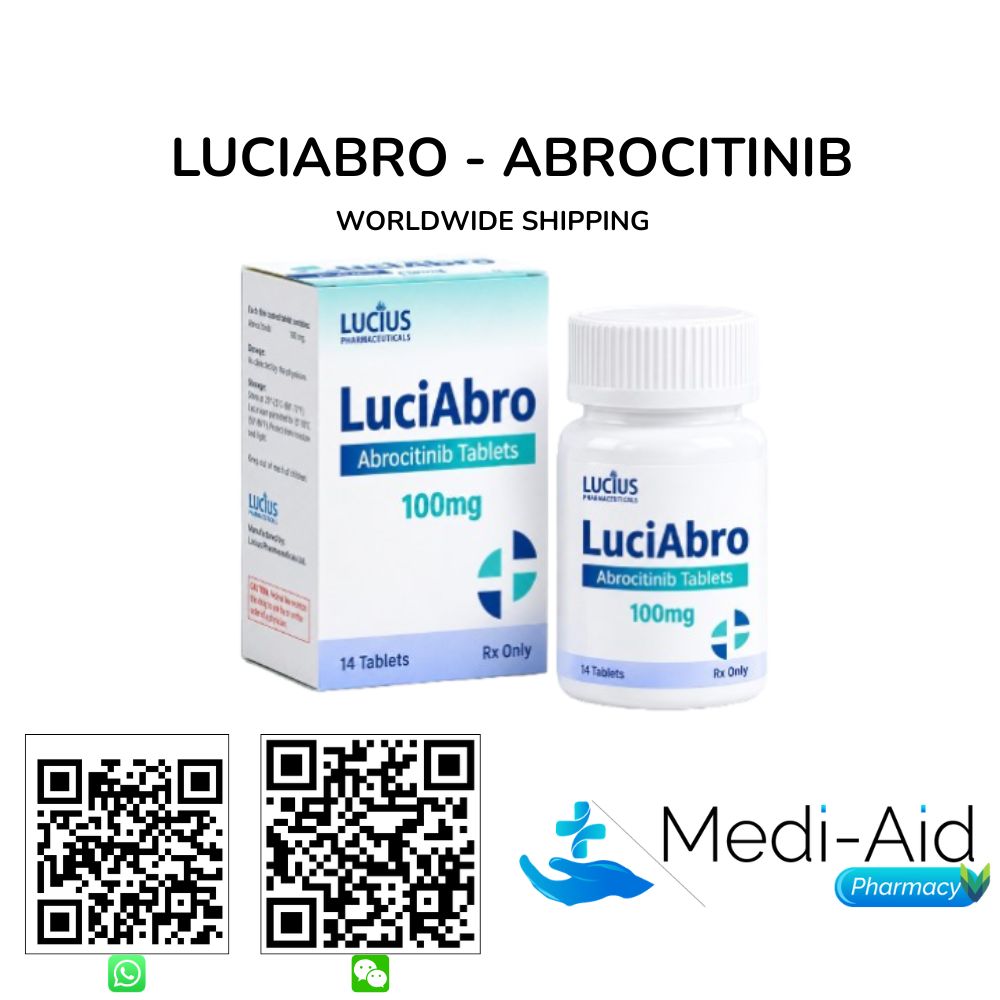
LuciAbro 100 MG (Abrocitinib) is a selective Janus kinase 1 inhibitor (JAK1 inhibitor) an orally bioavailable, small-molecule targeted immunomodulatory agent that blocks JAK1-mediated signalling of key type 2 inflammatory cytokines including interleukin-4 (IL-4), IL-13, IL-31, IL-33, and thymic stromal lymphopoietin (TSLP) that drive atopic dermatitis (AD) skin inflammation, barrier dysfunction, and pruritus supplied as tablets in 100 mg strength in a 14-tablet pack and manufactured by Lucius Pharmaceuticals (Lao) Co., Ltd. in Laos.
Its active ingredient, abrocitinib INN, selectively inhibits JAK1 over JAK2, JAK3, and TYK2, blocking STAT (signal transducer and activator of transcription) phosphorylation downstream of the IL-4 receptor alpha (IL-4Rα) and common gamma chain (γc) signalling complexes that are central to Th2-driven atopic inflammation. In the pivotal Phase 3 JADE MONO-1 trial, abrocitinib 100 mg once daily achieved an Investigator Global Assessment (IGA) score of 0 or 1 (clear or almost clear skin) in 24% of patients versus 8% with placebo at week 12 (p<0.001), with significant improvement in Eczema Area and Severity Index (EASI-75) response rate of 40% versus 11% (p<0.001). In the Phase 3 JADE COMPARE trial versus dupilumab and placebo, abrocitinib 200 mg demonstrated superior itch response (PP-NRS4) at week 2 versus dupilumab 300 mg every two weeks (44% vs 28%; p<0.001), establishing the fastest clinically validated onset of anti-pruritic action among approved systemic biologics and oral targeted therapies for moderate-to-severe AD.
Searching for LuciAbro 100 MG Abrocitinib? Mediaid Pharmacy lists this product across its dermatology medicines and Lucius Pharmaceuticals portfolios and ships it worldwide.
Basic Product Information of LuciAbro 100 MG (Abrocitinib)
| Brand Name | LuciAbro 100 MG (Abrocitinib) |
| Product Name | LuciAbro |
| Generic Name | Abrocitinib INN |
| Drug Class | Selective Janus Kinase 1 Inhibitor (JAK1 Inhibitor); JAK Inhibitor; Atopic Dermatitis (AD) Agent; Oral Targeted Immunomodulatory Agent; Dermatology Agent; Kinase Inhibitor; Cytokine Signalling Inhibitor |
| Formulation | Tablet (Oral) |
| Available Strengths | 100 mg per tablet |
| Available Pack Size | 14 Tablets per Pack |
| Dosing & Dose Modification | Adult starting dose: 100 mg once daily orally, with or without food; may be increased to 200 mg once daily based on clinical response and tolerability. Adolescents (12–17 years, ≥25 kg): 100 mg once daily; dose may be increased to 200 mg once daily if needed. Severe renal impairment (eGFR 15–29 mL/min/1.73m²): Reduce dose to 50 mg once daily (requires 50 mg tablet strength). Strong CYP2C19 inhibitors or combined moderate CYP2C19 + moderate CYP3A4 inhibitors: Reduce abrocitinib dose by 50%. Strong CYP2C19 or CYP3A4 inducers: Avoid co-administration concomitant use markedly reduces abrocitinib exposure. Swallow LuciAbro tablets whole do not crush, split, or chew. Discontinue LuciAbro if platelet count falls below 50,000/mm³ or if absolute lymphocyte count falls below 500 cells/mm³. |
| Primary Indications | Moderate-to-severe atopic dermatitis (AD) in adults and adolescents aged 12 years and older (weighing ≥25 kg) whose disease is not adequately controlled with topical therapies or when those therapies are not advisable. LuciAbro (Abrocitinib) may be used as monotherapy or in combination with topical corticosteroids. Each treatment decision must account for disease severity, prior treatment history, renal function, CYP2C19 metaboliser status, infection risk, and concomitant medications always consult the full prescribing information and the treating dermatologist. |
| Manufacturer | Lucius Pharmaceuticals (Lao) Co., Ltd., Laos |
| Country of Origin | Laos |
| Originator Reference Brand | CIBINQO® (abrocitinib tablets, by Pfizer Inc. approved by the FDA in January 2022 for moderate-to-severe atopic dermatitis in adults; approved by the EMA and other regulatory authorities in additional markets). CIBINQO® contains abrocitinib INN as the active pharmaceutical ingredient in the same selective JAK1 inhibitor drug class. LuciAbro is manufactured by Lucius Pharmaceuticals (Lao) Co., Ltd. in Laos and is supplied through Mediaid Pharmacy for international procurement. |
| Global Supplier | Mediaid Pharmacy, Worldwide Shipping Available |
| Storage Conditions | Store at room temperature (20°C to 25°C; excursions permitted 15°C to 30°C). Keep in the original packaging and protect from moisture. Keep out of the reach of children. |
How LuciAbro (Abrocitinib) Works: Selective JAK1 Inhibition in Moderate-to-Severe Atopic Dermatitis
Abrocitinib INN is an orally bioavailable, small-molecule, selective inhibitor of Janus kinase 1 (JAK1) a cytoplasmic tyrosine kinase that functions as a critical intracellular signal transducer for multiple pro-inflammatory cytokine receptors implicated in the pathogenesis of atopic dermatitis (AD). The Janus kinase (JAK) family comprises four members JAK1, JAK2, JAK3, and TYK2 each of which pairs with specific cytokine receptor subunits to form functional kinase dimers that phosphorylate STAT (signal transducer and activator of transcription) proteins upon cytokine binding, initiating gene transcription programmes that drive inflammatory cell recruitment, skin barrier gene dysregulation, and pruritus. In atopic dermatitis, JAK1 acts as the obligate signalling partner for the IL-4 receptor alpha subunit (IL-4Rα) shared by the IL-4 receptor type I (IL-4Rα/γc) and type II (IL-4Rα/IL-13Rα1) complexes making JAK1 the central kinase through which both IL-4 and IL-13, the dominant Th2 cytokines driving AD pathology, transduce their pro-inflammatory signals.
JAK1 additionally mediates signalling of IL-31 (a primary pruritogenic cytokine in AD), IL-33, and thymic stromal lymphopoietin (TSLP) all of which contribute to AD itch, Th2 cell activation, and epithelial barrier dysfunction. By selectively inhibiting JAK1 with greater than 28-fold selectivity over JAK2, greater than 43-fold over JAK3, and greater than 8-fold over TYK2 (based on biochemical enzyme assays), abrocitinib blocks STAT3 and STAT6 phosphorylation downstream of these AD-relevant cytokine receptors, attenuating the transcriptional programmes that sustain chronic skin inflammation, epidermal barrier disruption, keratinocyte hyperactivation, and neuronal sensitisation producing itch in moderate-to-severe AD.
The clinical consequence of selective JAK1 blockade in moderate-to-severe AD is a rapid, dose-dependent reduction in pruritus (itch) typically within 2 weeks of initiating therapy followed by progressive improvement in skin clearance measured by IGA (Investigator Global Assessment), EASI (Eczema Area and Severity Index), and patient-reported outcomes including DLQI (Dermatology Life Quality Index) and POEM (Patient-Oriented Eczema Measure). The speed of itch relief with abrocitinib is a pharmacodynamically distinctive feature: in the JADE COMPARE Phase 3 trial, abrocitinib 200 mg achieved a statistically superior PP-NRS4 itch response at week 2 versus dupilumab 300 mg every two weeks (44% vs 28%; p<0.001), reflecting the rapid JAK1-mediated blockade of IL-31 and TSLP pruritogenic signalling.
Pharmacokinetically, abrocitinib is rapidly absorbed with a median time to peak plasma concentration (Tmax) of approximately 1 hour, with a mean elimination half-life (t½) of approximately 3–5 hours, supporting once-daily oral dosing with stable drug exposure across the 24-hour dosing interval. Abrocitinib is predominantly metabolised by CYP2C19 (53%), CYP2C9 (30%), CYP3A4 (11%), and CYP2B6 (6%); CYP2C19 poor metabolisers and patients receiving strong CYP2C19 inhibitors exhibit meaningfully higher abrocitinib exposure, requiring dose reduction by 50%. For the complete range of dermatology medicines available at Mediaid Pharmacy, visit the dermatology medicines collection.
LuciAbro 100 MG (Abrocitinib): Indications, Dosing, and Key Safety Information
| Approved Indications | Moderate-to-Severe Atopic Dermatitis (AD): Treatment of adults and adolescents aged 12 years and older (weighing ≥25 kg) with moderate-to-severe atopic dermatitis whose disease is not adequately controlled with topical therapies or when those therapies are not advisable. LuciAbro is used as monotherapy or in combination with topical corticosteroids. |
| Recommended Starting Dose | Adults (standard initiation): 100 mg once daily orally, with or without food (1× LuciAbro 100 MG tablet once daily); may be increased to 200 mg once daily based on clinical response and tolerability. Adolescents (12–17 years, ≥25 kg): 100 mg once daily; dose increase to 200 mg once daily may be considered. Severe renal impairment (eGFR 15–29 mL/min/1.73m²): Reduce to 50 mg once daily (requires 50 mg tablet). With strong CYP2C19 inhibitors: Reduce abrocitinib dose by 50%. Swallow LuciAbro tablets whole do not crush, split, or chew. |
| Dose Escalation & Modification | Dose may be escalated from 100 mg to 200 mg once daily based on clinical response and tolerability. Dose interruption or reduction is required for: platelet count below 50,000/mm³ (interrupt until recovery to ≥100,000/mm³); absolute lymphocyte count (ALC) below 500 cells/mm³ (interrupt until recovery to ≥800 cells/mm³); absolute neutrophil count (ANC) below 500 cells/mm³ (interrupt until recovery to ≥1,000 cells/mm³); haemoglobin below 8 g/dL (interrupt until recovery). Interrupt LuciAbro during active serious infections until the infection is controlled. Avoid abrupt discontinuation without dermatologist guidance rapid relapse of atopic dermatitis symptoms may occur following cessation of JAK1 inhibitor therapy. |
| Missed Dose | If a dose of LuciAbro (Abrocitinib) is missed, take it as soon as remembered on the same day. If it is not remembered until the next day, skip the missed dose and resume with the next scheduled once-daily dose. Do not take two doses in one day to compensate for a missed dose. Take LuciAbro at the same time each day to maintain consistent plasma concentrations and sustained JAK1 inhibition. |
| Key Warnings & Precautions | Serious Infections: Abrocitinib increases the risk of serious and opportunistic infections including bacterial, viral, fungal, and mycobacterial infections. Active tuberculosis (TB) must be excluded before initiating LuciAbro. Herpes zoster reactivation has been reported. Interrupt LuciAbro if a patient develops a serious infection and do not restart until the infection is resolved.
Malignancy and Lymphoma: Malignancies, including lymphoma and solid tumours, have been reported with JAK inhibitors. Abrocitinib should be used with caution in patients with a history of malignancy or known malignancy risk factors. Consider the risks and benefits prior to initiating LuciAbro in patients with a prior malignancy or those at increased risk. Major Adverse Cardiovascular Events (MACE): MACE (cardiovascular death, myocardial infarction, stroke) have been reported with JAK inhibitors. LuciAbro should be used with caution in patients with known cardiovascular risk factors, particularly current or past smokers and patients over 65 years. Consider the benefit-risk profile in patients with high cardiovascular risk. Thrombosis (DVT, PE, Arterial Thrombosis): Deep vein thrombosis (DVT), pulmonary embolism (PE), and arterial thrombosis have been reported with JAK inhibitors at approved doses. Avoid abrocitinib in patients with known thrombophilia or at high thrombotic risk. Interrupt LuciAbro and evaluate promptly if symptoms of thrombosis develop. Thrombocytopenia: Platelet count decreases have been reported with abrocitinib; a dose-dependent decrease in platelet count has been observed in clinical trials. Monitor complete blood count (CBC) including platelet count at baseline and during treatment. Interrupt or reduce the dose if platelets fall below 50,000/mm³. Embryo-Fetal Toxicity: Abrocitinib may cause fetal harm. LuciAbro is contraindicated in pregnancy. Females of reproductive potential must use effective contraception during LuciAbro treatment and for at least 4 weeks after the final dose. Conduct a pregnancy test before initiating therapy. Breastfeeding is not recommended during LuciAbro treatment. Live Vaccines: Avoid administration of live or live-attenuated vaccines during and immediately prior to LuciAbro treatment. Prior to initiating LuciAbro, all recommended vaccinations (including herpes zoster vaccine) should be completed as early as possible. |
| Common Adverse Reactions (≥5%) | Nasopharyngitis, nausea, headache, herpes simplex (including oro-labial herpes), upper respiratory tract infection, urinary tract infection, acne, herpes zoster, thrombocytopenia, abdominal pain, and dizziness. Nausea is among the most frequently reported adverse effects and is typically dose-dependent, transient, and manageable. Herpes simplex reactivation is more common at the 200 mg dose. Platelet count decreases (thrombocytopenia) are dose-dependent and require CBC monitoring. These reactions are generally manageable with dose monitoring and supportive care under the treating dermatologist’s guidance. |
| Drug Interactions | Abrocitinib is a substrate of CYP2C19 (major), CYP2C9, CYP3A4, and CYP2B6. Strong CYP2C19 inhibitors (fluconazole, fluvoxamine): markedly increase abrocitinib AUC reduce LuciAbro dose by 50%. Combined moderate CYP2C19 + moderate CYP3A4 inhibitors: significantly increase abrocitinib exposure reduce LuciAbro dose by 50%. Strong CYP2C19 or CYP3A4 inducers (rifampin, carbamazepine, phenytoin, St. John’s Wort): markedly reduce abrocitinib plasma concentrations avoid co-administration. Anticoagulants and antiplatelet agents: Use with caution given thrombocytopenia risk with abrocitinib; monitor platelet counts more frequently. Immunosuppressants: Avoid concomitant use of LuciAbro with other potent immunosuppressants (azathioprine, ciclosporin, tacrolimus systemically) given additive immunosuppression risk. Disclose all concomitant medications, supplements, antifungals, and immunosuppressants to the treating dermatologist before initiating LuciAbro. |
| Renal Impairment | No dose adjustment is required for mild (eGFR 60–89 mL/min/1.73m²) or moderate (eGFR 30–59 mL/min/1.73m²) renal impairment. Reduce abrocitinib dose to 50 mg once daily in patients with severe renal impairment (eGFR 15–29 mL/min/1.73m²). LuciAbro is not recommended in patients with end-stage renal disease (ESRD; eGFR <15 mL/min/1.73m²) as pharmacokinetic data in this population are limited. Confirm eGFR before initiating LuciAbro and monitor renal function throughout treatment in patients with renal impairment. |
| Hepatic Impairment | No dose adjustment is required for mild (Child-Pugh Class A) or moderate (Child-Pugh Class B) hepatic impairment. LuciAbro is not recommended in patients with severe hepatic impairment (Child-Pugh Class C) as pharmacokinetic data in this population are limited. Monitor liver function tests (LFTs) at baseline and periodically throughout treatment. Consult the treating hepatologist and dermatologist for individualised guidance in patients with hepatic comorbidities. |
| Pregnancy & Lactation | Abrocitinib may cause fetal harm based on animal reproductive toxicity studies. LuciAbro is contraindicated in pregnancy. Females of reproductive potential must use effective contraception during LuciAbro treatment and for at least 4 weeks after the final dose. A pregnancy test must be performed before initiating LuciAbro and periodically during treatment as appropriate. Breastfeeding is not recommended during LuciAbro treatment and for at least 4 weeks after the final dose because of the potential for serious adverse effects in the breastfed infant. Notify the treating dermatologist immediately if pregnancy occurs during abrocitinib treatment. |
Who Should Use LuciAbro 100 MG (Abrocitinib)?
LuciAbro 100 MG (Abrocitinib) is indicated for adults and adolescents aged 12 years and older (weighing ≥25 kg) with moderate-to-severe atopic dermatitis (AD) a chronic, relapsing, type 2 inflammatory skin disease characterised by pruritic eczematous lesions, skin barrier dysfunction driven by deficient filaggrin and ceramide expression, Th2-predominant immune skewing mediated by IL-4, IL-13, IL-31, and TSLP, and significantly impaired health-related quality of life whose disease is not adequately controlled with topical therapies (topical corticosteroids, topical calcineurin inhibitors, topical PDE4 inhibitors) or when those therapies are not advisable due to tolerability, site of involvement, or disease extent.
First, adult and adolescent moderate-to-severe AD patients who have failed or are intolerant of adequate trials of potent topical corticosteroids constitute the primary indication population for LuciAbro (Abrocitinib). The JADE MONO-1 Phase 3 trial (387 patients) demonstrated that abrocitinib 100 mg once daily as monotherapy (without background topical corticosteroids) achieved IGA 0 or 1 (clear or almost clear skin) in 24% of patients versus 8% with placebo at week 12 (p<0.001), and EASI-75 response in 40% versus 11% (p<0.001), confirming meaningful skin clearance in a treatment-refractory population on oral monotherapy alone.
Second, moderate-to-severe AD patients who are candidates for systemic therapy and for whom the speed of itch relief is a primary clinical priority particularly those with severe baseline pruritus (Peak Pruritus Numerical Rating Scale [PP-NRS] ≥4) may receive particular benefit from abrocitinib, given that the JADE COMPARE Phase 3 trial (837 patients) demonstrated superior itch response at week 2 with abrocitinib 200 mg versus dupilumab 300 mg every two weeks (44.6% vs 27.9%; p<0.001), reflecting the fastest clinically validated anti-pruritic onset among approved systemic AD therapies.
Third, adolescent patients aged 12 to 17 years with moderate-to-severe AD inadequately controlled by topical therapies may receive LuciAbro 100 mg once daily, as established by the JADE TEEN Phase 3 trial (285 patients aged 12–17 years), in which abrocitinib 100 mg plus rescue topical corticosteroids achieved IGA 0/1 in 26% versus 11% placebo (p<0.01) and EASI-75 in 51% versus 24% (p<0.001). LuciAbro is contraindicated in pregnancy; not recommended in patients with ESRD (eGFR <15 mL/min/1.73m²), severe hepatic impairment (Child-Pugh C), active serious infections, or known active tuberculosis; and requires dose reduction in severe renal impairment and with strong CYP2C19 inhibitors. All patients must have a complete blood count (including platelet count), renal function, and hepatic function assessed at baseline.
Specialist dermatology centres and clinics co-sourcing LuciAbro alongside other systemic or biological medicines for atopic dermatitis and inflammatory skin diseases can browse the Mediaid Pharmacy dermatology medicines portfolio for the full selection available for international delivery.
Global Supplier: Mediaid Pharmacy Worldwide Shipping for LuciAbro 100 MG (Abrocitinib)
Mediaid Pharmacy is a Dhaka-based supplier of specialty dermatology and immunology medicines with worldwide shipping to patients, dermatology clinics, allergy and immunology centres, hospital pharmacy departments, and international distributors across all regions. LuciAbro 100 MG (Abrocitinib), manufactured by Lucius Pharmaceuticals (Lao) Co., Ltd. in Laos, is supplied as 14 tablets per pack in 100 mg strength with pricing quotations, stock confirmation, full product documentation, and end-to-end international delivery tracking for every order.
The 100 mg strength covers the recommended starting dose for abrocitinib across its approved moderate-to-severe atopic dermatitis indication in both adults and adolescents, enabling dermatology clinics and specialist AD programmes to initiate abrocitinib therapy and titrate to 200 mg as clinically indicated from a single supplier relationship. Dermatology programmes managing moderate-to-severe AD, allergy and clinical immunology clinics, paediatric and adolescent dermatology services, hospital pharmacy departments co-sourcing oral targeted therapies, international distributors, and individual patients can contact the Mediaid Pharmacy team through WhatsApp, phone, or WeChat for all inquiries regarding LuciAbro Abrocitinib stock availability, current pricing, and international delivery timelines to their country.
Procurement teams co-sourcing LuciAbro with other specialty dermatology or systemic immunomodulatory medicines can browse the complete Mediaid Pharmacy dermatology medicines collection and the Lucius Pharmaceuticals medicines portfolio before requesting a consolidated quotation.
Why Choose LuciAbro 100 MG (Abrocitinib) from Mediaid Pharmacy?
LuciAbro 100 MG (Abrocitinib) delivers a first-in-class oral JAK1-selective inhibitor for moderate-to-severe atopic dermatitis backed by a comprehensive Phase 3 JADE clinical trial programme JADE MONO-1, JADE MONO-2, JADE COMPARE, JADE TEEN, and JADE EXTEND that collectively establishes abrocitinib as a clinically validated, guideline-relevant oral targeted therapy for adults and adolescents with moderate-to-severe AD. In the JADE MONO-1 Phase 3 trial (387 patients), abrocitinib 100 mg once daily monotherapy achieved IGA 0/1 in 24% versus 8% with placebo (p<0.001) and EASI-75 in 40% versus 11% (p<0.001) at week 12, confirming meaningful skin clearance without background topical corticosteroids.
JADE MONO-2 (391 patients) independently replicated these findings, with abrocitinib 100 mg achieving IGA 0/1 in 28% versus 9% placebo (p<0.001) and EASI-75 in 44% versus 10% (p<0.001). In the landmark JADE COMPARE Phase 3 head-to-head trial (837 treatment-refractory adults), abrocitinib 200 mg demonstrated superior itch response at week 2 versus dupilumab 300 mg every two weeks (PP-NRS4: 44.6% vs 27.9%; p<0.001) establishing the fastest validated onset of pruritus relief among approved systemic AD therapies. In the JADE TEEN Phase 3 trial (285 adolescents aged 12–17 years), abrocitinib 100 mg plus rescue topical corticosteroids achieved IGA 0/1 in 26% versus 11% placebo (p<0.01) and EASI-75 in 51% versus 24% (p<0.001), confirming efficacy in the adolescent AD population.
Abrocitinib’s selective JAK1 mechanism differentiates it from non-selective JAK inhibitors JAK1 selectivity over JAK2 reduces the theoretical risk of JAK2-mediated haematological adverse effects (erythropoietin and thrombopoietin signalling suppression) relative to less selective JAK inhibitors while its oral once-daily tablet formulation offers a practical alternative to subcutaneous biological injections for patients preferring oral therapy or those with injection-site concerns. LuciAbro is manufactured by Lucius Pharmaceuticals (Lao) Co., Ltd. in Laos and is available through Mediaid Pharmacy with full product documentation, specialist supply coordination, and worldwide shipping from Dhaka. To source additional Lucius Pharmaceuticals dermatology and specialty medicines, visit the Mediaid Pharmacy Lucius Pharmaceuticals medicines section and the dermatology medicines portfolio, and contact the team for a personalised quotation.
Frequently Asked Questions About LuciAbro 100 MG (Abrocitinib)
What is LuciAbro 100 MG (Abrocitinib) used for?
LuciAbro 100 MG (Abrocitinib) is a selective JAK1 inhibitor used for the treatment of moderate-to-severe atopic dermatitis (AD) in adults and adolescents aged 12 years and older (weighing ≥25 kg) whose disease is not adequately controlled with topical therapies or when those therapies are not advisable. LuciAbro targets the upstream Th2 cytokine signalling cascade driving AD by blocking JAK1-mediated IL-4, IL-13, IL-31, IL-33, and TSLP receptor signalling, rapidly reducing itch and progressively improving skin clearance. The originator brand for abrocitinib is CIBINQO® (Pfizer, FDA-approved January 2022). LuciAbro, manufactured by Lucius Pharmaceuticals (Lao) Co., Ltd. in Laos, is available through Mediaid Pharmacy with worldwide shipping to patients, dermatology clinics, and specialist centres.
What is the generic name of LuciAbro?
The generic name of LuciAbro is abrocitinib INN. LuciAbro is the brand name registered by Lucius Pharmaceuticals (Lao) Co., Ltd. for abrocitinib manufactured in Laos. LuciAbro is formulated as oral tablets in 100 mg strength, supplied in a 14-tablet pack. The 100 mg strength is the recommended starting dose for abrocitinib in moderate-to-severe atopic dermatitis in both adults and adolescents (12–17 years, ≥25 kg), with the option to escalate to 200 mg once daily based on clinical response. The originator reference brand is CIBINQO® (Pfizer). Mediaid Pharmacy distributes LuciAbro globally with worldwide shipping to patients, dermatology centres, allergy clinics, and specialist AD programmes.
What is the difference between LuciAbro (Abrocitinib) and CIBINQO (Abrocitinib)?
LuciAbro and CIBINQO® both contain abrocitinib INN as the active pharmaceutical ingredient and share the same selective JAK1 inhibitor mechanism of action in moderate-to-severe atopic dermatitis. CIBINQO® is the originator brand developed and marketed by Pfizer Inc., approved by the FDA in January 2022 in 50 mg, 100 mg, and 200 mg tablet strengths for adults with moderate-to-severe AD inadequately controlled by topical therapies; the EMA and other regulatory authorities have also approved CIBINQO® in their respective jurisdictions. LuciAbro is manufactured by Lucius Pharmaceuticals (Lao) Co., Ltd. in Laos and is supplied in the 100 mg tablet strength covering the established starting dose for abrocitinib in adults and adolescents available through Mediaid Pharmacy for international procurement by specialist centres and patients in regions where CIBINQO® may be unavailable or cost-prohibitive. For the full range of dermatology medicines at Mediaid Pharmacy, visit the Mediaid Pharmacy dermatology medicines collection.
How is LuciAbro 100 MG (Abrocitinib) administered?
LuciAbro (Abrocitinib) is administered orally once daily (at the same time each day), with or without food. The standard starting dose is 100 mg once daily; the dose may be increased to 200 mg once daily if 100 mg is well tolerated and additional clinical benefit is needed. Swallow LuciAbro tablets whole with water do not crush, split, or chew the tablets. If a dose is missed, take it as soon as remembered on the same day; if not remembered until the next day, skip the missed dose and continue with the next regularly scheduled dose. Do not take two doses in one day. If co-administering with a strong CYP2C19 inhibitor, reduce the LuciAbro dose by 50% and monitor for adverse reactions. Do not abruptly discontinue LuciAbro without consulting the treating dermatologist, as AD symptoms may relapse rapidly following cessation of JAK1 inhibitor therapy.
What are the side effects of LuciAbro 100 MG (Abrocitinib)?
The most commonly reported adverse reactions of abrocitinib in clinical trials include nasopharyngitis, nausea, headache, herpes simplex (including oral herpes reactivation), upper respiratory tract infection, urinary tract infection, acne, herpes zoster, thrombocytopenia, abdominal pain, and dizziness. Nausea is dose-dependent, typically mild-to-moderate, and often transient, occurring most commonly in the first weeks of treatment. Thrombocytopenia (platelet count decrease) is a dose-dependent laboratory abnormality requiring CBC monitoring at baseline and during treatment; interrupt LuciAbro if platelet count falls below 50,000/mm³. Serious infections including herpes zoster reactivation, pneumonia, and opportunistic infections represent the most clinically significant risk category and require prompt evaluation. The most serious long-term risks malignancy, MACE, and thrombosis are class effects of JAK inhibitors and require benefit-risk assessment, particularly in patients with cardiovascular risk factors or a history of malignancy. Always discuss the complete safety profile, infection risk, vaccination status, and laboratory monitoring requirements with the treating dermatologist before and throughout LuciAbro treatment.
How effective is Abrocitinib (LuciAbro) for atopic dermatitis?
Abrocitinib has demonstrated statistically significant and clinically meaningful efficacy in moderate-to-severe AD across a comprehensive Phase 3 JADE clinical trial programme. In JADE MONO-1 (387 patients), abrocitinib 100 mg monotherapy achieved IGA 0/1 in 24% versus 8% placebo (p<0.001) and EASI-75 in 40% versus 11% (p<0.001) at week 12. In JADE MONO-2 (391 patients), abrocitinib 100 mg achieved IGA 0/1 in 28% versus 9% placebo (p<0.001) and EASI-75 in 44% versus 10% (p<0.001). In the JADE COMPARE head-to-head trial (837 adults), abrocitinib 200 mg demonstrated superior itch response at week 2 versus dupilumab (PP-NRS4: 44.6% vs 27.9%; p<0.001) with non-inferior IGA 0/1 response at week 12 versus dupilumab. In JADE TEEN (285 adolescents), abrocitinib 100 mg plus rescue TCS achieved IGA 0/1 in 26% versus 11% placebo (p<0.01) and EASI-75 in 51% versus 24% (p<0.001). LuciAbro delivers the same active ingredient abrocitinib INN at the approved 100 mg tablet dose, sourced through Mediaid Pharmacy with worldwide shipping. For the complete dermatology medicines range at Mediaid Pharmacy, visit the dermatology medicines collection.
Is LuciAbro 100 MG (Abrocitinib) safe during pregnancy or while breastfeeding?
No. Abrocitinib may cause fetal harm based on animal reproductive toxicity studies, which demonstrated embryotoxicity and fetotoxicity at exposures greater than the maximum recommended human dose. LuciAbro must not be used during pregnancy. Females of reproductive potential must use effective contraception during LuciAbro treatment and for at least 4 weeks after the final dose. A pregnancy test must be performed before initiating LuciAbro treatment. Breastfeeding is not recommended during LuciAbro treatment and for at least 4 weeks after the final dose because of the potential for serious adverse effects in the breastfed infant. If pregnancy occurs during abrocitinib treatment, the treating dermatologist must be notified immediately and LuciAbro discontinued promptly. Consult the treating specialist before starting LuciAbro in patients of reproductive potential.
Can I order LuciAbro 100 MG (Abrocitinib) online with worldwide shipping?
Yes. Mediaid Pharmacy supplies LuciAbro 100 MG (Abrocitinib) to patients, dermatology clinics, allergy and immunology centres, hospital pharmacy departments, and healthcare providers globally. Contact Mediaid Pharmacy via WhatsApp, phone, or WeChat at +8801773428128, or email info@mediaidpharmacy.com for pricing, current stock availability, and international delivery details for your country.
Order LuciAbro 100 MG (Abrocitinib) with Worldwide Shipping
Phone / WhatsApp / WeChat: +8801773428128 | Email: info@mediaidpharmacy.com

Reviews
There are no reviews yet.