
Description
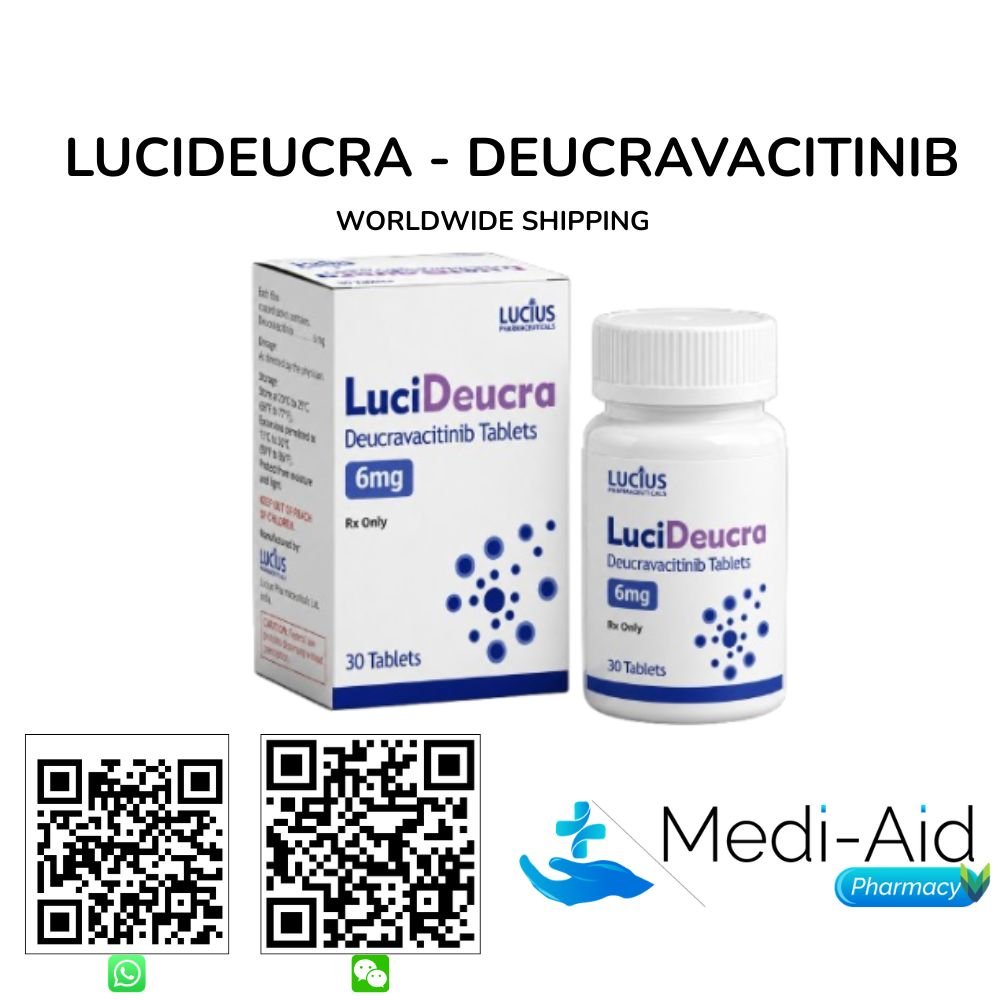
LuciDeucra 6 MG (Deucravacitinib) is a first-in-class selective, allosteric tyrosine kinase 2 inhibitor (TYK2 inhibitor) an orally bioavailable, small-molecule targeted immunomodulatory agent that uniquely binds the regulatory pseudokinase domain (JH2) of TYK2 rather than the catalytic kinase domain (JH1) to block TYK2-mediated signalling of the IL-12, IL-23, and type I interferon cytokine pathways that drive plaque psoriasis skin inflammation, keratinocyte hyperproliferation, and systemic immune dysregulation supplied as tablets in 6 mg strength in a 30-tablet pack and manufactured by Lucius Pharmaceuticals (Lao) Co., Ltd. in Laos.
Its active ingredient, deucravacitinib INN, selectively inhibits TYK2 with greater than 100-fold selectivity over JAK1, JAK2, and JAK3 by stabilising TYK2 in an autoinhibited conformation through allosteric pseudokinase domain binding, blocking downstream STAT phosphorylation and transcription of IL-12- and IL-23-driven Th1 and Th17 inflammatory programmes central to chronic plaque psoriasis pathogenesis. In the pivotal Phase 3 POETYK PSO-1 trial, deucravacitinib 6 mg once daily achieved a PASI 75 response in 58.7% of patients versus 35.1% with apremilast and 12.7% with placebo at week 16 (p<0.0001 versus both active comparator and placebo), demonstrating both superiority over placebo and superiority over the established oral PDE4 inhibitor apremilast in the first head-to-head Phase 3 trial comparing an oral targeted psoriasis therapy against an active comparator. In the confirmatory Phase 3 POETYK PSO-2 trial, deucravacitinib achieved PASI 75 in 53.0% versus 40.2% apremilast and 9.4% placebo at week 16 (p<0.0001 versus both), independently replicating and reinforcing the clinical benefit of TYK2-selective allosteric inhibition in moderate-to-severe plaque psoriasis. Searching for LuciDeucra 6 MG Deucravacitinib? Mediaid Pharmacy lists this product across its dermatology medicines and Lucius Pharmaceuticals portfolios and ships it worldwide.
Basic Product Information of LuciDeucra 6 MG (Deucravacitinib)
| Brand Name | LuciDeucra 6 MG (Deucravacitinib) |
| Product Name | LuciDeucra |
| Generic Name | Deucravacitinib INN |
| Drug Class | First-in-Class Selective Allosteric Tyrosine Kinase 2 Inhibitor (TYK2 Inhibitor); Pseudokinase Domain (JH2) Inhibitor; Plaque Psoriasis Agent; Oral Targeted Immunomodulatory Agent; Dermatology Agent; IL-12/IL-23 Signalling Inhibitor; Th17 Pathway Inhibitor |
| Formulation | Tablet (Oral) |
| Available Strengths | 6 mg per tablet |
| Available Pack Size | 30 Tablets per Pack |
| Dosing & Dose Modification | Recommended dose: 6 mg once daily orally, with or without food. No dose titration is required 6 mg once daily is the sole approved therapeutic dose for moderate-to-severe plaque psoriasis. Renal impairment: No dose adjustment is required for mild or moderate renal impairment; deucravacitinib has not been adequately studied in severe renal impairment or end-stage renal disease use with caution. Hepatic impairment: No dose adjustment is required for mild or moderate hepatic impairment (Child-Pugh A or B); not recommended in severe hepatic impairment (Child-Pugh C). Strong CYP3A4 inducers (e.g., rifampin, carbamazepine): avoid co-administration concomitant use significantly reduces deucravacitinib exposure and may impair efficacy. Swallow LuciDeucra tablets whole do not crush, split, or chew. No mandatory complete blood count (CBC) or lipid panel monitoring is required at baseline or during treatment, distinguishing deucravacitinib from JAK inhibitor class drugs. |
| Primary Indications | Moderate-to-severe plaque psoriasis in adults who are candidates for systemic therapy or phototherapy. LuciDeucra (Deucravacitinib) is used as a once-daily oral monotherapy. Each treatment decision must account for disease severity, body surface area involvement, prior systemic therapy history, psoriatic arthritis comorbidity, infection risk, pregnancy status, and concomitant medications always consult the full prescribing information and the treating dermatologist or rheumatologist. |
| Manufacturer | Lucius Pharmaceuticals (Lao) Co., Ltd., Laos |
| Country of Origin | Laos |
| Originator Reference Brand | SOTYKTU® (deucravacitinib tablets, by Bristol-Myers Squibb approved by the FDA in September 2022 for moderate-to-severe plaque psoriasis in adults who are candidates for systemic therapy or phototherapy). SOTYKTU® contains deucravacitinib INN as the active pharmaceutical ingredient in the same first-in-class selective TYK2 inhibitor drug class. LuciDeucra is manufactured by Lucius Pharmaceuticals (Lao) Co., Ltd. in Laos and is supplied through Mediaid Pharmacy for international procurement. |
| Global Supplier | Mediaid Pharmacy, Worldwide Shipping Available |
| Storage Conditions | Store at room temperature (20°C to 25°C; excursions permitted 15°C to 30°C). Keep in the original packaging and protect from moisture. Keep out of the reach of children. |
How LuciDeucra (Deucravacitinib) Works: First-in-Class Allosteric TYK2 Inhibition in Moderate-to-Severe Plaque Psoriasis
Deucravacitinib INN is the world’s first approved oral selective allosteric inhibitor of tyrosine kinase 2 (TYK2) a non-receptor cytoplasmic tyrosine kinase and member of the Janus kinase (JAK) family that serves as an obligate signalling partner for the receptors of IL-12, IL-23, and type I interferons (IFN-α, IFN-β). TYK2 like all JAK family members comprises a catalytic kinase domain (JH1) and a regulatory pseudokinase domain (JH2). In the basal, unstimulated state, the JH2 pseudokinase domain physically interacts with the JH1 catalytic domain and maintains TYK2 in an autoinhibited conformation that limits spontaneous kinase activity.
Upon cytokine binding to the shared IL-12Rβ1 or IL-23R receptor subunits, this autoinhibition is relieved, TYK2 becomes catalytically active, transphosphorylates the associated JAK2 kinase, and initiates downstream STAT4 (for IL-12) and STAT3 (for IL-23) phosphorylation and nuclear translocation driving transcription of IFN-γ (Th1 programme) and IL-17A, IL-17F, and IL-22 (Th17 programme) that constitute the dominant inflammatory axes sustaining chronic plaque psoriasis. Deucravacitinib exploits a pharmacologically novel strategy: rather than competitively inhibiting the ATP-binding site of the JH1 catalytic domain (as conventional kinase inhibitors and first-generation JAK inhibitors do), deucravacitinib binds selectively and with high affinity to the JH2 regulatory pseudokinase domain of TYK2, locking TYK2 in its autoinhibited conformation, preventing the conformational activation triggered by cytokine receptor engagement, and thereby blocking TYK2-dependent STAT phosphorylation and downstream IL-12/IL-23/type I IFN signalling without directly engaging the JAK1, JAK2, or JAK3 catalytic domains associated with adverse effects on haematopoiesis, lipid metabolism, and thrombopoiesis.
The clinical consequence of selective TYK2 pseudokinase domain inhibition in moderate-to-severe plaque psoriasis is dose-dependent suppression of the IL-23/Th17 axis the central immunological driver of psoriatic skin inflammation producing progressive improvement in psoriasis plaque area and severity (PASI), static Physician Global Assessment (sPGA), Dermatology Life Quality Index (DLQI), and scalp, nail, and palmoplantar psoriasis subscores over the 16-week to 52-week treatment horizon. In the POETYK PSO-1 Phase 3 trial, deucravacitinib 6 mg once daily produced PASI 75 in 58.7% of patients at week 16 versus 35.1% with apremilast and 12.7% with placebo and sustained PASI 75 in 49.5% at week 52 in the continuous deucravacitinib arm.
The key pharmacological differentiator of deucravacitinib versus all approved JAK1/2/3 inhibitors is its mechanism-driven selectivity: because the JH2 pseudokinase domain of TYK2 has a distinct amino-acid composition and conformational architecture compared with the corresponding regulatory domains of JAK1, JAK2, and JAK3, deucravacitinib achieves greater than 100-fold selectivity for TYK2 over JAK1, JAK2, and JAK3. This selectivity spares JAK1 (erythropoietin, thrombopoietin, and innate immune signalling), JAK2 (erythropoiesis and myelopoiesis), and JAK3 (lymphocyte development) translating into a safety and monitoring profile that does not carry the black box warning for major adverse cardiovascular events (MACE), malignancy, thrombosis, and serious infections mandated for pan-JAK and JAK1/2-selective inhibitors by regulators.
Pharmacokinetically, deucravacitinib is well absorbed after oral administration, with a mean terminal elimination half-life (t½) of approximately 10 hours, supporting once-daily oral dosing. Deucravacitinib is metabolised primarily by CYP1A2 and to a lesser extent CYP2D6 and multiple other pathways; it inhibits CYP3A4 and increases exposure of sensitive CYP3A4 substrates. For the complete range of dermatology medicines at Mediaid Pharmacy, visit the dermatology medicines collection.
LuciDeucra 6 MG (Deucravacitinib): Indications, Dosing, and Key Safety Information
| Approved Indications | Moderate-to-Severe Plaque Psoriasis: Treatment of adults with moderate-to-severe plaque psoriasis who are candidates for systemic therapy or phototherapy. LuciDeucra (Deucravacitinib) is administered as oral once-daily monotherapy. |
| Recommended Dose | All adults: 6 mg once daily orally, with or without food (1× LuciDeucra 6 MG tablet once daily). No dose titration is required. The 6 mg once-daily dose is the sole approved therapeutic dose for deucravacitinib in moderate-to-severe plaque psoriasis. Swallow LuciDeucra tablets whole do not crush, split, or chew. Take at the same time each day to maintain consistent plasma concentrations and sustained TYK2 inhibition. No CBC, lipid panel, or liver function test monitoring is mandated at baseline or during treatment per prescribing information. |
| Dose Modification | No dose modification is required for mild or moderate renal impairment (eGFR ≥30 mL/min/1.73m²) or mild or moderate hepatic impairment (Child-Pugh A or B). Deucravacitinib has not been adequately studied in severe renal impairment (eGFR <30 mL/min/1.73m²) or severe hepatic impairment (Child-Pugh C) use with caution in these populations and consult the treating specialist. Avoid co-administration of LuciDeucra with strong CYP3A4 inducers (rifampin, carbamazepine, phenytoin, St. John’s Wort) as these markedly reduce deucravacitinib exposure and may substantially compromise clinical efficacy. Monitor CYP3A4-sensitive substrates with narrow therapeutic indices (e.g., cyclosporine, certain statins) when used concomitantly with LuciDeucra. |
| Missed Dose | If a dose of LuciDeucra (Deucravacitinib) is missed, take it as soon as remembered on the same day. If it is not remembered until the next day, skip the missed dose and resume with the next scheduled once-daily dose. Do not take two doses in one day to compensate for a missed dose. Take LuciDeucra at the same time each day to maintain consistent plasma concentrations and stable TYK2 inhibition. |
| Key Warnings & Precautions | Infections: Deucravacitinib may increase the risk of infections. Upper respiratory tract infections, herpes simplex, folliculitis, and urinary tract infections have been reported in clinical trials. Evaluate and treat active infections before initiating LuciDeucra. Interrupt treatment if a patient develops a serious or opportunistic infection. Screen for latent tuberculosis (TB) before initiating LuciDeucra and treat latent TB prior to starting therapy.
Malignancy: Deucravacitinib may increase the risk of malignancy. The overall malignancy risk profile of deucravacitinib has not been definitively established across long-term follow-up in the same way as JAK inhibitors. Consider the benefit-risk profile in patients with a prior or current malignancy before initiating LuciDeucra. Embryo-Fetal Toxicity: Deucravacitinib may cause fetal harm. LuciDeucra is contraindicated in pregnancy. Females of reproductive potential must use effective contraception during LuciDeucra treatment and for at least 4 weeks after the final dose. A pregnancy test must be performed before initiating therapy. Breastfeeding is not recommended during LuciDeucra treatment. Live Vaccines: Avoid administration of live or live-attenuated vaccines during LuciDeucra treatment and immediately prior to initiating therapy. Complete all recommended immunisations including age-appropriate vaccinations before starting LuciDeucra. Inactivated vaccines may be used during treatment. CYP3A4 Drug Interactions: LuciDeucra inhibits CYP3A4 and may increase systemic exposure of sensitive CYP3A4 substrates. Avoid strong CYP3A4 inducers (rifampin, carbamazepine, phenytoin, St. John’s Wort) as these substantially reduce deucravacitinib plasma concentrations. Monitor patients on narrow therapeutic index CYP3A4 substrates concomitantly with LuciDeucra. Important Safety Distinction: Unlike JAK1/2/3 inhibitors, deucravacitinib does not carry a black box warning for major adverse cardiovascular events (MACE), thrombosis, lymphoma, or serious infections as of its initial regulatory approval, attributable to its high TYK2 selectivity over JAK1, JAK2, and JAK3. Consult the current full prescribing information for the complete and updated safety profile. |
| Common Adverse Reactions (≥1%) | Upper respiratory tract infection, herpes simplex (including folliculitis and oral herpes reactivation), acne, mouth sores (aphthous stomatitis), urinary tract infection, and rash. Most adverse reactions with deucravacitinib in the POETYK PSO Phase 3 trials were mild-to-moderate in severity and did not result in treatment discontinuation. Herpes simplex reactivation (predominantly oral herpes and folliculitis) was among the most commonly reported infections but was generally low-grade and manageable. No clinically significant changes in haemoglobin, platelet count, white blood cell count, lipids, or liver function tests were observed in the Phase 3 programme that required mandatory laboratory monitoring as a prescribing condition a meaningful differentiator from JAK inhibitor class drugs. Always discuss the complete safety profile with the treating dermatologist before and throughout LuciDeucra treatment. |
| Drug Interactions | Deucravacitinib is primarily metabolised by CYP1A2, with minor contributions from CYP2D6 and other pathways. It is an inhibitor of CYP3A4. Strong CYP3A4 inducers (rifampin, carbamazepine, phenobarbital, phenytoin, St. John’s Wort): markedly reduce deucravacitinib AUC avoid co-administration to prevent loss of efficacy. Sensitive CYP3A4 substrates with narrow therapeutic indices (e.g., certain statins, cyclosporine, tacrolimus, calcineurin inhibitors): deucravacitinib inhibits CYP3A4 and may increase plasma concentrations monitor for increased substrate effects and toxicity; dose adjustment of the CYP3A4 substrate may be required. CYP1A2 inhibitors (e.g., fluvoxamine, ciprofloxacin): may increase deucravacitinib exposure use with caution. Immunosuppressants: Avoid concomitant use of LuciDeucra with other potent systemic immunosuppressants unless clinically justified and monitored. Disclose all medications, supplements, antifungals, and immunosuppressants to the treating dermatologist before initiating LuciDeucra. |
| Renal Impairment | No dose adjustment is required for mild (eGFR 60–89 mL/min/1.73m²) or moderate (eGFR 30–59 mL/min/1.73m²) renal impairment. Deucravacitinib has not been adequately studied in patients with severe renal impairment (eGFR <30 mL/min/1.73m²) or end-stage renal disease use with caution and under the guidance of the treating specialist in this population. Confirm eGFR before initiating LuciDeucra in patients with known or suspected renal impairment. |
| Hepatic Impairment | No dose adjustment is required for mild (Child-Pugh Class A) or moderate (Child-Pugh Class B) hepatic impairment. LuciDeucra is not recommended in patients with severe hepatic impairment (Child-Pugh Class C) as pharmacokinetic data in this population are limited. Consult the treating hepatologist and dermatologist for individualised guidance in patients with hepatic comorbidities before initiating LuciDeucra. |
| Pregnancy & Lactation | Deucravacitinib may cause fetal harm based on animal reproductive toxicity studies, which demonstrated adverse developmental outcomes at exposures exceeding the maximum recommended human dose. LuciDeucra is contraindicated in pregnancy. Females of reproductive potential must use effective contraception during LuciDeucra treatment and for at least 4 weeks after the final dose. A pregnancy test must be performed before initiating LuciDeucra. Breastfeeding is not recommended during LuciDeucra treatment and for at least 4 weeks after the final dose because of the potential for serious adverse reactions in the breastfed infant. Notify the treating dermatologist immediately if pregnancy occurs during deucravacitinib treatment and discontinue LuciDeucra promptly. |
Who Should Use LuciDeucra 6 MG (Deucravacitinib)?
LuciDeucra 6 MG (Deucravacitinib) is indicated for adults with moderate-to-severe plaque psoriasis who are candidates for systemic therapy or phototherapy a chronic, immune-mediated inflammatory skin disease characterised by erythematous, indurated, scaly plaques distributed symmetrically across the body surface, driven at the molecular level by the IL-23/Th17 cytokine axis in which TYK2-mediated IL-23 receptor signalling drives pathological IL-17A, IL-17F, and IL-22 production from Th17 and innate lymphoid cells, sustaining the keratinocyte hyperproliferation, aberrant differentiation, and cutaneous neutrophilic and lymphocytic infiltration that define psoriatic plaques.
First, adults with moderate-to-severe plaque psoriasis defined by body surface area (BSA) involvement ≥10%, Psoriasis Area and Severity Index (PASI) ≥12, or DLQI ≥10, or with disease inadequately controlled by topical corticosteroids, topical vitamin D analogues, or topical calcineurin inhibitors who are candidates for systemic or phototherapy constitute the primary indication population for LuciDeucra. In the pivotal POETYK PSO-1 Phase 3 trial (666 patients), deucravacitinib 6 mg once daily achieved PASI 75 in 58.7% versus 35.1% apremilast and 12.7% placebo at week 16 (p<0.0001 versus both); sPGA 0/1 in 53.6% versus 32.1% apremilast and 7.2% placebo (p<0.0001 versus both); and PASI 90 in 36.1% versus 19.1% apremilast (p<0.0001) establishing superiority over both placebo and the active comparator oral agent apremilast.
Second, psoriasis patients for whom systemic immunosuppression with methotrexate, ciclosporin, or acitretin has proven inadequate or intolerable, and for whom an oral targeted therapy is preferred over subcutaneous biological injections (anti-IL-17A, anti-IL-23, anti-IL-12/23 biologics), may receive LuciDeucra as a once-daily oral TYK2 inhibitor with a differentiated safety monitoring profile since deucravacitinib does not carry the JAK inhibitor class black box warning for MACE, thrombosis, malignancy, and serious infections.
Third, psoriasis patients with coexisting cardiovascular risk factors, history of thrombosis, or conditions that increase the safety risk of JAK1/2/3-class immunomodulation may represent a population for whom deucravacitinib’s TYK2-selective mechanism and associated JAK-sparing safety profile is particularly relevant to the prescriber’s benefit-risk evaluation.
Fourth, the confirmatory POETYK PSO-2 Phase 3 trial (1,020 patients) independently replicated the efficacy signal, with deucravacitinib achieving PASI 75 in 53.0% versus 40.2% apremilast and 9.4% placebo (p<0.0001 versus both) at week 16 and demonstrating maintained skin clearance through week 52 in the continuous treatment arm. LuciDeucra is contraindicated in pregnancy; not recommended in severe hepatic impairment; requires co-administration avoidance with strong CYP3A4 inducers; and necessitates TB screening before initiation.
Specialist dermatology centres and psoriasis clinics co-sourcing LuciDeucra alongside other systemic psoriasis medicines can browse the Mediaid Pharmacy dermatology medicines portfolio for the full selection available for international delivery.
Global Supplier: Mediaid Pharmacy Worldwide Shipping for LuciDeucra 6 MG (Deucravacitinib)
Mediaid Pharmacy is a Dhaka-based supplier of specialty dermatology and immunology medicines with worldwide shipping to patients, dermatology clinics, psoriasis specialist centres, hospital pharmacy departments, rheumatology clinics managing psoriatic arthritis, and international distributors across all regions. LuciDeucra 6 MG (Deucravacitinib), manufactured by Lucius Pharmaceuticals (Lao) Co., Ltd. in Laos, is supplied as 30 tablets per pack in 6 mg strength delivering the full approved therapeutic dose for one month’s treatment per pack with pricing quotations, stock confirmation, full product documentation, and end-to-end international delivery tracking for every order.
The 30-tablet monthly pack format of LuciDeucra aligns directly with the once-daily, fixed-dose 6 mg regimen for deucravacitinib, simplifying procurement planning for dermatology programmes and individual patients requiring continuous therapy. Psoriasis specialist centres, dermatology programmes managing moderate-to-severe plaque psoriasis, rheumatology units co-managing psoriatic arthritis, hospital pharmacy departments co-sourcing oral targeted therapies, international distributors, and individual patients can contact the Mediaid Pharmacy team through WhatsApp, phone, or WeChat for all inquiries regarding LuciDeucra Deucravacitinib stock availability, current pricing, and international delivery timelines to their country. Procurement teams co-sourcing LuciDeucra with other specialty dermatology or systemic immunomodulatory medicines can browse the complete Mediaid Pharmacy dermatology medicines collection and the Lucius Pharmaceuticals medicines portfolio before requesting a consolidated quotation.
Why Choose LuciDeucra 6 MG (Deucravacitinib) from Mediaid Pharmacy?
LuciDeucra 6 MG (Deucravacitinib) delivers the world’s first approved oral selective TYK2 inhibitor for moderate-to-severe plaque psoriasis a first-in-class allosteric pseudokinase domain inhibitor backed by two landmark Phase 3 POETYK PSO trials that together establish deucravacitinib as a clinically superior oral therapy to apremilast with a differentiated safety monitoring profile versus the JAK inhibitor class. In POETYK PSO-1 (666 patients), deucravacitinib 6 mg once daily achieved PASI 75 in 58.7% versus 35.1% apremilast (p<0.0001), sPGA 0/1 in 53.6% versus 32.1% apremilast (p<0.0001), and PASI 90 in 36.1% versus 19.1% apremilast (p<0.0001) at week 16 representing the first Phase 3 clinical trial in moderate-to-severe psoriasis to demonstrate statistically significant superiority of an oral targeted small molecule over an active oral comparator rather than just placebo. POETYK PSO-2 (1,020 patients) independently confirmed PASI 75 of 53.0% versus 40.2% apremilast (p<0.0001) at week 16, with durable maintained response through week 52.
Deucravacitinib’s allosteric TYK2 pseudokinase domain mechanism is fundamentally distinct from both conventional JAK inhibitors (which target the JH1 ATP-binding catalytic domain of JAK1/2/3/TYK2) and biological IL-12/23 antibodies (which neutralise circulating cytokines) delivering selective IL-12/IL-23/type I IFN pathway blockade with greater than 100-fold TYK2 selectivity over JAK1, JAK2, and JAK3, without the mandatory CBC, lipid, and liver monitoring requirements or the cardiovascular, thrombotic, and malignancy black box warnings associated with JAK inhibitor class therapy. The 30-tablet monthly pack of LuciDeucra precisely matching the once-daily fixed-dose 6 mg regimen with no titration required simplifies dispensing, patient education, and procurement for psoriasis programmes worldwide. LuciDeucra is manufactured by Lucius Pharmaceuticals (Lao) Co., Ltd. in Laos and is available through Mediaid Pharmacy with full product documentation, specialist supply coordination, and worldwide shipping from Dhaka. To source additional Lucius Pharmaceuticals dermatology and specialty medicines, visit the Mediaid Pharmacy Lucius Pharmaceuticals medicines section and the dermatology medicines portfolio, and contact the team for a personalised quotation.
Frequently Asked Questions About LuciDeucra 6 MG (Deucravacitinib)
What is LuciDeucra 6 MG (Deucravacitinib) used for?
LuciDeucra 6 MG (Deucravacitinib) is the world’s first approved oral selective TYK2 inhibitor, used for the treatment of moderate-to-severe plaque psoriasis in adults who are candidates for systemic therapy or phototherapy. LuciDeucra selectively inhibits TYK2 by binding the regulatory pseudokinase domain (JH2) locking TYK2 in an autoinhibited conformation blocking IL-12, IL-23, and type I interferon signalling that drives Th1 and Th17 inflammatory programmes in psoriatic skin. The originator brand for deucravacitinib is SOTYKTU® (Bristol-Myers Squibb, FDA-approved September 2022). LuciDeucra, manufactured by Lucius Pharmaceuticals (Lao) Co., Ltd. in Laos, is available through Mediaid Pharmacy with worldwide shipping to patients, psoriasis specialist centres, and dermatology clinics.
What is the generic name of LuciDeucra?
The generic name of LuciDeucra is deucravacitinib INN. LuciDeucra is the brand name registered by Lucius Pharmaceuticals (Lao) Co., Ltd. for deucravacitinib manufactured in Laos. LuciDeucra is formulated as oral tablets in 6 mg strength, supplied in a 30-tablet pack precisely corresponding to one month of the approved once-daily fixed-dose regimen with no dose titration required. The originator reference brand is SOTYKTU® (Bristol-Myers Squibb). Mediaid Pharmacy distributes LuciDeucra globally with worldwide shipping to patients, dermatology centres, psoriasis clinics, and hospital pharmacy departments.
What is the difference between LuciDeucra (Deucravacitinib) and SOTYKTU (Deucravacitinib)?
LuciDeucra and SOTYKTU® both contain deucravacitinib INN as the active pharmaceutical ingredient and share the same first-in-class selective allosteric TYK2 pseudokinase domain inhibitor mechanism of action in moderate-to-severe plaque psoriasis. SOTYKTU® is the originator brand developed and marketed by Bristol-Myers Squibb, approved by the FDA in September 2022 in the 6 mg tablet strength for adults with moderate-to-severe plaque psoriasis who are candidates for systemic therapy or phototherapy; additional regulatory approvals have been granted by the EMA and other authorities in subsequent years. LuciDeucra is manufactured by Lucius Pharmaceuticals (Lao) Co., Ltd. in Laos and is supplied in the 6 mg tablet strength the sole approved therapeutic dose in a 30-tablet monthly pack, available through Mediaid Pharmacy for international procurement by specialist psoriasis centres and patients in regions where SOTYKTU® may be unavailable or cost-prohibitive. For the full range of dermatology medicines at Mediaid Pharmacy, visit the Mediaid Pharmacy dermatology medicines collection.
How is LuciDeucra 6 MG (Deucravacitinib) administered?
LuciDeucra (Deucravacitinib) is administered orally once daily at the same time each day, with or without food. The dose is 6 mg once daily no titration is needed. Swallow LuciDeucra tablets whole with water do not crush, split, or chew. If a dose is missed, take it as soon as remembered on the same day; if not remembered until the next day, skip the missed dose and continue with the next scheduled dose. Do not take two doses in one day. No mandatory laboratory monitoring (CBC, lipids, LFTs) is required as a prescribing condition, distinguishing LuciDeucra from JAK inhibitor class drugs. Do not abruptly discontinue LuciDeucra without consulting the treating dermatologist, as psoriasis symptoms may relapse following cessation of TYK2 inhibitor therapy.
What are the side effects of LuciDeucra 6 MG (Deucravacitinib)?
The most commonly reported adverse reactions of deucravacitinib in the POETYK PSO Phase 3 trials include upper respiratory tract infection, herpes simplex (folliculitis and oral herpes reactivation), acne, mouth sores (aphthous stomatitis), urinary tract infection, and rash. Most adverse reactions were mild-to-moderate in severity and did not require treatment discontinuation. Unlike JAK inhibitors, deucravacitinib did not produce clinically significant changes in platelet counts, haemoglobin, white blood cell count, or lipid panels that necessitate mandatory monitoring per prescribing information, consistent with its TYK2-selective mechanism that spares JAK1, JAK2, and JAK3 pathways involved in haematopoiesis and lipid metabolism. The most serious risks associated with deucravacitinib include opportunistic infections and the theoretical malignancy risk associated with immunomodulation; TB screening before initiation and avoidance of live vaccines during treatment are required. Always discuss the complete safety profile, infection risk, vaccination status, pregnancy risk, and drug interaction potential with the treating dermatologist before and throughout LuciDeucra treatment.
How effective is Deucravacitinib (LuciDeucra) for plaque psoriasis?
Deucravacitinib has demonstrated statistically significant and clinically meaningful efficacy in moderate-to-severe plaque psoriasis across two Phase 3 POETYK PSO trials, with superiority demonstrated against both placebo and active comparator apremilast. In POETYK PSO-1 (666 patients), deucravacitinib 6 mg once daily achieved PASI 75 in 58.7% versus 35.1% apremilast (p<0.0001) and sPGA 0/1 in 53.6% versus 32.1% apremilast (p<0.0001) at week 16. In POETYK PSO-2 (1,020 patients), deucravacitinib achieved PASI 75 in 53.0% versus 40.2% apremilast (p<0.0001) and sPGA 0/1 in 49.5% versus 34.0% apremilast (p<0.0001) at week 16. Durable skin clearance was maintained through week 52 in both trials in the continuous deucravacitinib arm, with no new safety signals emerging on long-term follow-up. LuciDeucra delivers the same active ingredient deucravacitinib INN at the approved 6 mg once-daily tablet dose, sourced through Mediaid Pharmacy with worldwide shipping. For the complete dermatology medicines range at Mediaid Pharmacy, visit the dermatology medicines collection.
Is LuciDeucra 6 MG (Deucravacitinib) safe during pregnancy or while breastfeeding?
No. Deucravacitinib may cause fetal harm based on animal reproductive toxicity studies demonstrating adverse developmental effects. LuciDeucra is contraindicated in pregnancy. Females of reproductive potential must use effective contraception during LuciDeucra treatment and for at least 4 weeks after the final dose. A pregnancy test must be performed before initiating LuciDeucra treatment. Breastfeeding is not recommended during LuciDeucra treatment and for at least 4 weeks after the final dose because of the potential for serious adverse reactions in the breastfed infant. If pregnancy occurs during deucravacitinib treatment, the treating dermatologist must be notified immediately and LuciDeucra discontinued promptly. Consult the treating specialist before starting LuciDeucra in any patient of reproductive potential.
Can I order LuciDeucra 6 MG (Deucravacitinib) online with worldwide shipping?
Yes. Mediaid Pharmacy supplies LuciDeucra 6 MG (Deucravacitinib) to patients, dermatology clinics, psoriasis specialist centres, rheumatology units managing psoriatic arthritis, hospital pharmacy departments, and healthcare providers globally. Contact Mediaid Pharmacy via WhatsApp, phone, or WeChat at +8801773428128, or email info@mediaidpharmacy.com for pricing, current stock availability, and international delivery details for your country.
Order LuciDeucra 6 MG (Deucravacitinib) with Worldwide Shipping
Phone / WhatsApp / WeChat: +8801773428128 | Email: info@mediaidpharmacy.com

Reviews
There are no reviews yet.