
Description
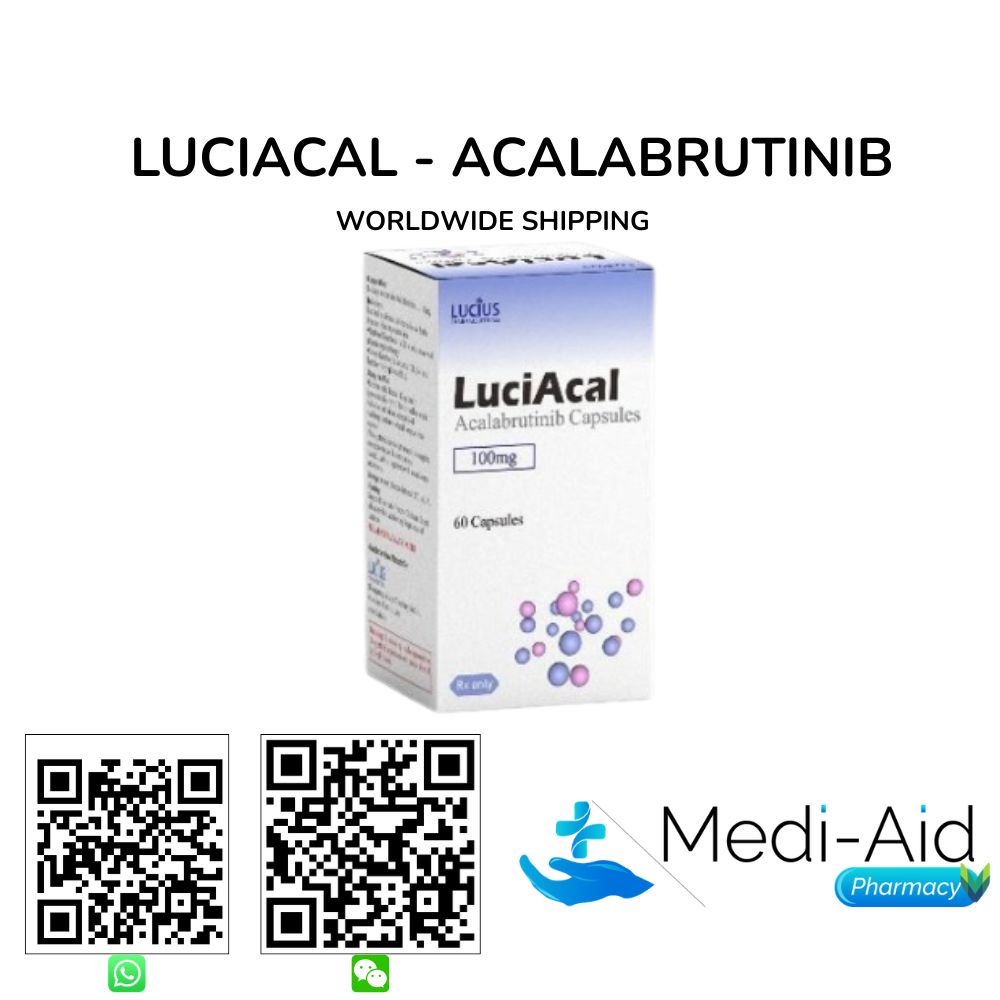
LuciAcal 100 MG (Acalabrutinib) is a second-generation, highly selective, covalent Bruton’s tyrosine kinase (BTK) inhibitor a precision oral B-cell-targeted therapy designed to block aberrant BTK-driven B-cell receptor (BCR) signaling with substantially greater kinase selectivity than the first-generation BTK inhibitor ibrutinib supplied as 100 mg hard capsules in a pack of 60 capsules and manufactured by Lucius Pharmaceuticals (Lao) Co., Ltd. in Laos. Its active ingredient, acalabrutinib INN, forms an irreversible covalent bond with cysteine 481 (Cys481) in the kinase domain of BTK, permanently silencing BTK-mediated downstream signaling through PLCγ2, PI3K/AKT, and NF-κB the survival and proliferation pathways on which B-cell malignancies critically depend.
LuciAcal 100 MG is prescribed at the standard therapeutic dose of 100 mg orally every 12 hours (two capsules per day, taken approximately 12 hours apart), which is the approved reference-label dosing for acalabrutinib in adult patients with chronic lymphocytic leukemia (CLL), small lymphocytic lymphoma (SLL), and relapsed or refractory mantle cell lymphoma (MCL). Each 60-capsule pack supplies a full 30-day treatment course at the standard twice-daily dosing schedule. In the pivotal Phase 3 ELEVATE-TN trial in 535 treatment-naïve CLL patients, acalabrutinib plus obinutuzumab and acalabrutinib monotherapy reduced the risk of disease progression or death by 90% (HR 0.10; p<0.0001) and 80% (HR 0.20; p<0.0001) respectively versus chlorambucil plus obinutuzumab with median PFS not reached in either acalabrutinib arm at 28.3 months’ follow-up.
In the Phase 3 ASCEND trial in relapsed/refractory CLL, acalabrutinib monotherapy reduced the risk of progression or death by 69% (HR 0.31; p<0.0001) versus investigator’s choice of chemoimmunotherapy. Searching for LuciAcal 100 MG Acalabrutinib? Mediaid Pharmacy lists this product within its comprehensive leukemia medicines portfolio and lymphoma medicines collection and ships it worldwide.
Basic Product Information of LuciAcal 100 MG (Acalabrutinib)
| Brand Name | LuciAcal 100 MG (Acalabrutinib) |
| Product Name | LuciAcal |
| Generic Name | Acalabrutinib INN |
| Drug Class | Second-Generation Selective Covalent Bruton’s Tyrosine Kinase (BTK) Inhibitor; B-Cell Receptor (BCR) Signaling Inhibitor; Kinase Inhibitor; Targeted B-Cell Malignancy Agent; Antineoplastic Agent |
| Formulation | Hard Capsule (Oral) |
| Available Strength | 100 mg per capsule |
| Available Pack Size | 60 Capsules per Pack (30-day supply at the standard 100 mg twice-daily dose of two capsules per day) |
| Therapeutic Dose | 100 mg orally approximately every 12 hours (two LuciAcal 100 MG capsules per day, taken approximately 12 hours apart), with or without food, until disease progression or unacceptable toxicity. Each 60-capsule pack supplies a complete 30-day treatment course at the approved twice-daily dosing schedule. |
| Primary Indications | Treatment of adult patients with chronic lymphocytic leukemia (CLL) or small lymphocytic lymphoma (SLL) both previously untreated and relapsed or refractory; treatment of adult patients with mantle cell lymphoma (MCL) who have received at least one prior therapy (accelerated approval, subject to verification of clinical benefit). |
| Manufacturer | Lucius Pharmaceuticals (Lao) Co., Ltd., Laos |
| Country of Origin | Laos |
| Originator Reference Brand | Calquence® (acalabrutinib) by AstraZeneca FDA-approved October 2017 (accelerated approval for MCL) and November 2019 (CLL/SLL), available as both capsule and tablet formulations. LuciAcal 100 MG is the capsule formulation aligned to the Calquence® 100 mg capsule reference. |
| Global Supplier | Mediaid Pharmacy, Worldwide Shipping Available |
| Storage Conditions | Store below 30°C. Keep in the original packaging to protect from moisture and light. Keep out of the reach of children. |
How LuciAcal 100 MG (Acalabrutinib) Works: Selective Covalent BTK Inhibition and Second-Generation Superiority Over Ibrutinib
Acalabrutinib INN is an orally bioavailable, second-generation, highly selective, irreversible (covalent) inhibitor of Bruton’s tyrosine kinase (BTK) a non-receptor tyrosine kinase that functions as the critical signaling node in the B-cell receptor (BCR) pathway. BTK is expressed exclusively in B-cells and is constitutively active in the malignant B-cells of chronic lymphocytic leukemia (CLL), small lymphocytic lymphoma (SLL), and mantle cell lymphoma (MCL), where it drives uncontrolled B-cell proliferation, survival, homing to lymphoid niches, and resistance to apoptosis through downstream activation of PLCγ2, PI3K/AKT, MAPK/ERK, and NF-κB signaling cascades.
Acalabrutinib forms an irreversible covalent bond with a specific cysteine residue (Cys481) located in the ATP-binding pocket of the BTK kinase domain permanently blocking ATP access to the kinase active site, preventing BTK autophosphorylation at tyrosine 223 and tyrosine 551, and thereby silencing the entire downstream BCR signaling network that malignant B-cells rely on for growth signals and survival instructions. At the approved dose of 100 mg twice daily, acalabrutinib achieves greater than 99% BTK occupancy at steady state, providing near-complete and sustained BTK inhibition throughout the twice-daily dosing interval.
The defining clinical advantage of acalabrutinib over first-generation ibrutinib is its dramatically improved kinase selectivity. Ibrutinib, the first approved BTK inhibitor, also covalently inhibits multiple off-target kinases at clinical doses including EGFR, ITK (interleukin-2-inducible T-cell kinase), TEC, and CSK producing a portfolio of mechanism-based non-BTK toxicities: EGFR inhibition causes diarrhea, rash, stomatitis, and GI symptoms; ITK inhibition impairs NK cell function and drives atrial fibrillation; TEC inhibition disrupts platelet aggregation pathways, contributing to major hemorrhagic events. Acalabrutinib was engineered through structural optimization of the BTK binding pharmacophore to bind Cys481 with high potency while minimally engaging EGFR, ITK, and TEC a selectivity profile confirmed in head-to-head in vitro kinase panel comparisons, where acalabrutinib’s IC50 for BTK (5.1 nM) versus EGFR (>100-fold selectivity window) was substantially improved over ibrutinib.
This improved selectivity translates clinically into a lower incidence of atrial fibrillation, lower rates of major hemorrhage, and reduced GI toxicity compared with ibrutinib enabling sustained once-continuous treatment with fewer dose modifications and treatment discontinuations, which is particularly important in CLL and MCL where maintenance therapy is required indefinitely until progression or toxicity. For the complete hematologic oncology portfolio at Mediaid Pharmacy, visit the oncology medicines collection.
Acalabrutinib is metabolized primarily by CYP3A4 to its active metabolite ACP-5862, which itself demonstrates BTK inhibitory activity and contributes meaningfully to the overall pharmacodynamic effect. The half-life of acalabrutinib is approximately 0.9 hours (capsule formulation) with a peak-to-trough active metabolite (ACP-5862) half-life of approximately 6.6 hours necessitating twice-daily dosing to maintain continuous BTK occupancy above the therapeutic threshold throughout the 24-hour dosing period. Plasma protein binding is 97.5% for acalabrutinib and 98.6% for ACP-5862.
A pharmacokinetically important interaction unique to the capsule formulation: proton pump inhibitors (PPIs) and antacids reduce the gastrointestinal absorption of acalabrutinib capsules by raising gastric pH (acalabrutinib capsule solubility is pH-dependent), a drug-drug interaction that requires either switching to the tablet formulation, using H2-receptor antagonists with appropriate timing separation, or antacid use 2 hours before or after the capsule dose where PPI co-administration cannot be avoided. LuciAcal 100 MG capsules are therefore contraindicated with concurrent PPI use unless the formulation context and alternative acid-suppression strategies have been addressed with the treating hematologist or oncologist.
LuciAcal 100 MG (Acalabrutinib): Indications, Dosing, and Key Safety Information
| Approved Indications | CLL / SLL: Treatment of adult patients with chronic lymphocytic leukemia (CLL) or small lymphocytic lymphoma (SLL) both in the first-line treatment-naïve setting (as monotherapy or in combination with obinutuzumab) and in the relapsed or refractory setting (as monotherapy). MCL: Treatment of adult patients with mantle cell lymphoma (MCL) who have received at least one prior therapy (accelerated approval based on ORR; continued approval contingent on verification of clinical benefit in confirmatory trials). |
| Recommended Dose | 100 mg orally approximately every 12 hours one LuciAcal 100 MG capsule twice daily, with or without food until disease progression or unacceptable toxicity. Swallow capsules whole with water; do not open, crush, or chew LuciAcal 100 MG capsules. When taken in combination with obinutuzumab for treatment-naïve CLL, administer acalabrutinib per the same 100 mg twice-daily schedule alongside the obinutuzumab infusion per its approved dosing schedule. |
| Dose Modifications | Dose reductions are structured in a stepwise manner for adverse reactions: interrupt treatment, reduce the dose, or discontinue as warranted by toxicity grade and type per the full prescribing information. Dose reductions led to LuciAcal 100 MG treatment modification in approximately 7% of patients in the combination arm and 4% of patients in the monotherapy arm of ELEVATE-TN. For hepatic impairment, reduce the dose for severe hepatic impairment (Child-Pugh C). For co-administration with moderate CYP3A inhibitors, reduce acalabrutinib to 100 mg once daily; avoid strong CYP3A inhibitors; increase dose to 200 mg twice daily (if tolerated) if co-administration with a strong CYP3A inducer cannot be avoided. |
| Missed Dose | If a dose is missed and it is within 3 hours of the usual dosing time, take the missed dose as soon as possible and resume the normal twice-daily schedule. If more than 3 hours have passed since the usual dosing time, skip the missed dose and resume at the next regularly scheduled dose. Never take two doses at the same time to make up for a missed dose. |
| Key Warnings & Precautions | Hemorrhage: Serious and fatal bleeding events have been reported. Major hemorrhagic events (Grade ≥3) have occurred in patients receiving acalabrutinib. Monitor for bleeding. Withold or discontinue for Grade ≥3 hemorrhage. Exercise caution when co-administering with anticoagulants or antiplatelet agents. Avoid co-administration with vitamin K antagonists.
Infections: Serious, including fatal, bacterial, viral, and fungal infections have occurred. Prophylactic antimicrobials should be considered per local guidelines. Monitor patients for signs and symptoms of infection during treatment. Cytopenias: Grade 3 and 4 neutropenia, anemia, and thrombocytopenia have been reported. Monitor complete blood counts (CBC) regularly during treatment. Withhold LuciAcal 100 MG for Grade 4 neutropenia and dose-modify per the prescribing information. Atrial Fibrillation / Flutter: Cardiac arrhythmias including atrial fibrillation and flutter have occurred, at a lower rate than with ibrutinib. Monitor patients for symptoms (palpitations, dizziness, dyspnea, chest pain) and manage appropriately. Second Primary Malignancies: Non-melanoma skin cancers and other malignancies have occurred. Advise patients to use sun protection and report any new skin lesions during treatment. Tumor Lysis Syndrome (TLS): TLS has been observed in patients with CLL/SLL initiating acalabrutinib. Assess baseline TLS risk; consider prophylaxis and monitor electrolytes and renal function at initiation, particularly in the first treatment cycle in CLL patients. Embryo-Fetal Toxicity: Acalabrutinib can cause fetal harm. Females of reproductive potential must use effective contraception during LuciAcal 100 MG treatment and for at least 1 week after the final dose. |
| Common Adverse Reactions (≥20%) | Headache (particularly in the first weeks of treatment a frequent early adverse event that is typically mild-to-moderate and self-limiting), diarrhea, fatigue, myalgia, upper respiratory tract infection, nausea, bruising/contusion, and musculoskeletal pain. Grade ≥3 adverse reactions include neutropenia, anemia, lymphocytosis (especially in CLL, a pharmacodynamic effect of BTK-inhibited lymphocyte redistribution from lymph nodes into peripheral blood rather than a sign of disease progression), and infections. The headache characteristic of acalabrutinib initiation often responds to caffeinated beverages or standard analgesics and typically resolves within the first 1–2 months of treatment. |
| Drug Interactions | Acalabrutinib is a CYP3A4 substrate and the active metabolite ACP-5862 is a weak CYP3A4 inhibitor. Strong CYP3A4 inhibitors (itraconazole, ketoconazole, clarithromycin, ritonavir) significantly increase acalabrutinib exposure avoid co-administration. If unavoidable, reduce LuciAcal 100 MG to 100 mg once daily. Strong CYP3A4 inducers (rifampin, phenytoin, carbamazepine, St. John’s Wort) significantly reduce acalabrutinib exposure avoid co-administration. Gastric acid-reducing agents (proton pump inhibitors, H2-receptor antagonists, antacids) reduce absorption of acalabrutinib capsules avoid PPIs with the capsule formulation; separate H2-antagonist from LuciAcal 100 MG by at least 2 hours; take antacids at least 2 hours before or after the capsule dose. Caution with anticoagulants and antiplatelet agents due to additive hemorrhagic risk. Disclose all medications, supplements, and gastric acid-reducing agents to the treating hematologist before initiating LuciAcal 100 MG. |
| Pregnancy & Lactation | Acalabrutinib may cause embryo-fetal harm and is not recommended during pregnancy. Females of reproductive potential must use effective contraception during LuciAcal 100 MG treatment and for at least 1 week after the final dose. Males with female partners of reproductive potential should use contraception during treatment. Breastfeeding is not recommended during LuciAcal 100 MG treatment and for at least 2 weeks after the final dose. Consult the treating oncologist or hematologist before initiating LuciAcal 100 MG if pregnant, planning a pregnancy, or breastfeeding. |
Who Should Use LuciAcal 100 MG (Acalabrutinib)?
LuciAcal 100 MG (Acalabrutinib) is indicated for two distinct hematologic oncology patient populations spanning both the leukemia and lymphoma disease settings.
First and most broadly, adult patients with chronic lymphocytic leukemia (CLL) or small lymphocytic lymphoma (SLL) the most common adult leukemia in the Western world represent the primary indication, across both the first-line and relapsed/refractory treatment settings. In treatment-naïve CLL, LuciAcal 100 MG is prescribed as monotherapy or in combination with the anti-CD20 monoclonal antibody obinutuzumab (Gazyva), where the ELEVATE-TN Phase 3 trial demonstrated that both approaches achieve landmark PFS improvements of 80–90% risk reduction versus the prior standard of chlorambucil plus obinutuzumab with median PFS remaining not reached in either acalabrutinib arm at 28 months’ follow-up, including across high-risk genomic subgroups such as del(17p) and TP53 mutations where chemoimmunotherapy has historically failed. In relapsed or refractory CLL (patients who have progressed after at least one prior systemic therapy), LuciAcal 100 MG monotherapy at 100 mg twice daily is indicated based on the ASCEND Phase 3 trial, where acalabrutinib reduced the risk of disease progression or death by 69% versus investigator’s choice of idelalisib plus rituximab or bendamustine plus rituximab.
Second, adult patients with relapsed or refractory mantle cell lymphoma (MCL) who have received at least one prior line of therapy are eligible for LuciAcal 100 MG monotherapy, based on the ACE-LY-004 Phase 2 trial that demonstrated an overall response rate of 80% (complete response rate 40%) in heavily pretreated MCL patients outcomes that supported FDA accelerated approval in October 2017 and established acalabrutinib as the preferred second-generation BTK inhibitor option for patients with MCL who require a more tolerable alternative to ibrutinib, particularly those with ibrutinib intolerance or who are at higher cardiovascular risk where ibrutinib’s off-target ITK and TEC inhibition-driven atrial fibrillation risk is a clinical concern. LuciAcal 100 MG requires careful baseline assessment: CBC monitoring for cytopenias, tumor lysis syndrome (TLS) risk stratification before initiation in CLL, baseline cardiac rhythm evaluation, and a thorough medication review for PPI co-administration (which reduces capsule absorption) and CYP3A4 inhibitor/inducer interactions.
The treating hematologist or hematologic oncologist must confirm CLL/SLL or MCL diagnosis and staging before initiating LuciAcal 100 MG. For the complete blood cancer medicine portfolio at Mediaid Pharmacy, visit the leukemia medicines portfolio and lymphoma medicines collection.
Global Supplier: Mediaid Pharmacy Worldwide Shipping for LuciAcal 100 MG (Acalabrutinib)
Mediaid Pharmacy is a Dhaka-based supplier of specialty oncology, hematology, and precision medicine products with worldwide shipping to patients, oncology clinics, cancer hospitals, hematology centers, and international distributors across all regions. LuciAcal 100 MG (Acalabrutinib), manufactured by Lucius Pharmaceuticals (Lao) Co., Ltd. in Laos, is supplied as 60 hard capsules of 100 mg per pack a complete 30-day supply at the standard 100 mg twice-daily dose with full product documentation, pricing quotations, stock confirmation, and end-to-end international delivery tracking for every order.
CLL and SLL treatment programs, MCL oncology centers, hematology clinics, hospital formulary teams, oncology pharmacies, international distributors, and individual patients can contact the Mediaid Pharmacy team through WhatsApp, phone, or WeChat for all inquiries regarding LuciAcal 100 MG Acalabrutinib stock availability, current pricing, and international delivery timelines. Procurement teams co-sourcing LuciAcal 100 MG Acalabrutinib with obinutuzumab combination partners, supportive oncology medications, or a broader hematology and blood cancer formulary can browse the comprehensive Mediaid Pharmacy oncology medicines collection and the Lucius Pharmaceuticals medicines portfolio for all available hematologic oncology agents before requesting a consolidated international quotation.
Why Choose LuciAcal 100 MG (Acalabrutinib) from Mediaid Pharmacy?
LuciAcal 100 MG (Acalabrutinib) offers hematologists, hematologic oncologists, and oncology pharmacists a second-generation BTK inhibitor with a superior kinase selectivity profile compared with first-generation ibrutinib a clinical distinction that translates directly into a more favorable tolerability profile during the long-duration continuous treatment that CLL and MCL require. The rationale for prescribing acalabrutinib over ibrutinib in appropriate patients is mechanistically grounded: ibrutinib’s off-target inhibition of EGFR, ITK, TEC, and CSK generates a toxicity burden atrial fibrillation, major hemorrhage, diarrhea, rash that drives 24% or more of patients in real-world practice to discontinue ibrutinib before disease progression, sacrificing the BTK-inhibition-mediated disease control that would otherwise be sustained.
Acalabrutinib’s engineered selectivity for BTK over these off-target kinases maintains the full clinical efficacy of BTK inhibition 90% and 80% PFS risk reductions in treatment-naïve CLL in ELEVATE-TN, 69% PFS risk reduction in relapsed/refractory CLL in ASCEND, and 80% ORR in relapsed/refractory MCL in ACE-LY-004 while substantially reducing the off-target toxicity burden that limits treatment continuity with ibrutinib. The 100 mg capsule formulation of LuciAcal 100 MG aligns precisely to the approved reference twice-daily dosing schedule, and the 60-capsule pack size delivers exactly a 30-day continuous treatment supply a procurement unit optimized for monthly ordering cycles by oncology centers, hospital pharmacies, and international patients requiring consistent monthly shipments.
LuciAcal 100 MG is manufactured by Lucius Pharmaceuticals (Lao) Co., Ltd. in Laos and is available through Mediaid Pharmacy with full product documentation, specialist supply coordination, and worldwide shipping from Dhaka. To source the complete Lucius Pharmaceuticals oncology portfolio or additional leukemia and lymphoma targeted therapies, visit the Mediaid Pharmacy Lucius Pharmaceuticals medicines section and the lymphoma medicines portfolio, and contact the team for a personalized quotation.
Frequently Asked Questions About LuciAcal 100 MG (Acalabrutinib)
What is LuciAcal 100 MG (Acalabrutinib) used for?
LuciAcal 100 MG (Acalabrutinib) is a second-generation, highly selective, covalent BTK inhibitor used for the treatment of adult patients with chronic lymphocytic leukemia (CLL) or small lymphocytic lymphoma (SLL) both in the treatment-naïve setting (as monotherapy or in combination with obinutuzumab) and in the relapsed or refractory setting and for adult patients with relapsed or refractory mantle cell lymphoma (MCL) who have received at least one prior therapy. Acalabrutinib irreversibly binds BTK at Cys481 in the kinase domain, blocking the B-cell receptor (BCR) signaling pathway that malignant B-cells in CLL, SLL, and MCL depend on for proliferation and survival. The originator brand for acalabrutinib is Calquence® by AstraZeneca, FDA-approved in 2017 (MCL) and 2019 (CLL/SLL). LuciAcal 100 MG, manufactured by Lucius Pharmaceuticals (Lao) Co., Ltd. in Laos, is available at Mediaid Pharmacy with worldwide shipping.
What is the generic name of LuciAcal 100 MG?
The generic name of LuciAcal 100 MG is acalabrutinib INN. LuciAcal is the brand name registered by Lucius Pharmaceuticals (Lao) Co., Ltd. for acalabrutinib manufactured in Laos. LuciAcal 100 MG is formulated as 100 mg hard capsules in a 60-capsule pack, taken at the approved therapeutic dose of 100 mg orally approximately every 12 hours (twice daily) one capsule per dose. The 60-capsule pack provides a full 30-day treatment supply at this standard twice-daily schedule. The originator reference brand for acalabrutinib is Calquence® by AstraZeneca, approved by the FDA for treatment of adult patients with CLL, SLL, and relapsed or refractory MCL. Mediaid Pharmacy distributes LuciAcal 100 MG globally with worldwide shipping to patients, hematology centers, oncology clinics, cancer hospitals, and specialist oncologists.
What is the difference between LuciAcal 100 MG (Acalabrutinib) and Calquence (Acalabrutinib)?
LuciAcal 100 MG and Calquence® both contain acalabrutinib INN as the active pharmaceutical ingredient and both deliver the same covalent BTK inhibition at the same approved reference dose of 100 mg twice daily. The primary differences are commercial origin and market availability: Calquence® is the originator brand manufactured by AstraZeneca and marketed primarily in North America, Europe, Japan, and other major regulated markets where AstraZeneca holds registration available in both capsule and tablet formulations. LuciAcal 100 MG is manufactured by Lucius Pharmaceuticals (Lao) Co., Ltd. in Laos as the 100 mg capsule formulation and is available through Mediaid Pharmacy for international procurement by hematology centers, oncology hospitals, and patients in regions where Calquence® may be unavailable, prohibitively priced, or where a globally supplied alternative is required. Each 60-capsule pack of LuciAcal 100 MG provides a full 30-day treatment course a convenient monthly procurement unit for continuous-therapy blood cancer patients. For the complete acalabrutinib and blood cancer therapy range at Mediaid Pharmacy, visit the leukemia medicines collection.
What is the difference between Acalabrutinib and Ibrutinib?
Acalabrutinib and ibrutinib are both covalent (irreversible) BTK inhibitors that bind Cys481 in the BTK kinase domain and block B-cell receptor signaling in CLL, MCL, and related B-cell malignancies but they differ fundamentally in kinase selectivity and the tolerability consequences of that selectivity. Ibrutinib, the first-generation BTK inhibitor, also inhibits EGFR, ITK, TEC, CSK, and other off-target kinases at clinical doses, producing mechanism-based toxicities including atrial fibrillation (ITK-mediated), diarrhea and rash (EGFR-mediated), and elevated bleeding risk (TEC-mediated platelet dysfunction). Acalabrutinib was second-generation engineered to bind BTK with high potency while dramatically reducing off-target kinase inhibition confirmed in head-to-head kinase selectivity panels resulting in lower rates of atrial fibrillation and major hemorrhage compared with ibrutinib in clinical practice. At 100 mg twice daily, acalabrutinib achieves greater than 99% BTK occupancy, delivering full on-target BTK inhibition with a reduced off-target toxicity profile. The most common acalabrutinib-specific early adverse event headache in the first weeks of treatment is typically mild and self-limiting, and is substantially less clinically impactful than the cardiovascular risks associated with long-term ibrutinib. Acalabrutinib is preferred over ibrutinib for patients with pre-existing atrial fibrillation risk factors, prior cardiac history, or those who discontinued ibrutinib due to cardiovascular or GI intolerance.
How is LuciAcal 100 MG (Acalabrutinib) administered?
LuciAcal 100 MG (Acalabrutinib) is administered orally at a dose of 100 mg approximately every 12 hours one 100 mg capsule taken twice daily, approximately 12 hours apart, with or without food. Swallow capsules whole with water; do not open, crush, dissolve, or chew LuciAcal 100 MG capsules. Treatment continues until disease progression or unacceptable toxicity. If a dose is missed and fewer than 3 hours have passed since the usual dose time, take the missed dose immediately and continue the regular twice-daily schedule; if more than 3 hours have passed, skip the missed dose and resume at the next scheduled time. Never double-dose. Do not take LuciAcal 100 MG capsules with proton pump inhibitors (PPIs) PPIs reduce acalabrutinib capsule absorption by raising gastric pH, a unique pharmacokinetic interaction with the capsule formulation. If acid suppression is required, use an H2-receptor antagonist at least 2 hours before or after LuciAcal 100 MG, or antacids at least 2 hours before or after the dose. Avoid co-administration with strong CYP3A4 inhibitors or inducers; use prophylactic sunscreen and protective clothing due to the elevated risk of non-melanoma skin cancers during treatment.
How effective is Acalabrutinib (LuciAcal 100 MG) for CLL and MCL?
Acalabrutinib has demonstrated landmark efficacy in both CLL/SLL and MCL across multiple Phase 3 and Phase 2 trials. In the Phase 3 ELEVATE-TN trial of 535 treatment-naïve CLL patients, acalabrutinib plus obinutuzumab reduced the risk of disease progression or death by 90% (HR 0.10; p<0.0001) and acalabrutinib monotherapy reduced the risk by 80% (HR 0.20; p<0.0001), both versus chlorambucil plus obinutuzumab with median PFS not reached in either acalabrutinib arm at 28.3 months’ follow-up. Updated 5-year data from ELEVATE-TN showed 90% of patients in the combination arm surviving at five years. In the Phase 3 ASCEND trial of 310 relapsed/refractory CLL patients, acalabrutinib monotherapy reduced the risk of progression or death by 69% (HR 0.31; p<0.0001) versus investigator’s choice chemoimmunotherapy, with median PFS not reached in the acalabrutinib arm at 16.1 months. In the Phase 2 ACE-LY-004 trial in relapsed/refractory MCL, acalabrutinib monotherapy achieved an overall response rate of 80% with a complete response rate of 40% responses that supported FDA accelerated approval in October 2017. LuciAcal 100 MG delivers the same active ingredient acalabrutinib INN at the same 100 mg twice-daily therapeutic dose, available through Mediaid Pharmacy with worldwide shipping.
Is LuciAcal 100 MG (Acalabrutinib) safe during pregnancy or while breastfeeding?
No. Acalabrutinib may cause embryo-fetal harm based on its mechanism of action as a BTK inhibitor BTK signaling has a documented role in normal embryonic development and hematopoiesis. LuciAcal 100 MG is not recommended for use during pregnancy. Females of reproductive potential must use effective contraception during treatment and for at least 1 week after the final dose. Males with female partners of reproductive potential should use contraception during treatment. Breastfeeding is not recommended during LuciAcal 100 MG treatment and for at least 2 weeks after the final dose. If pregnancy occurs during acalabrutinib treatment, the treating hematologist or oncologist should be notified immediately. Consult the treating oncologist or hematologist before starting LuciAcal 100 MG if pregnant, planning a pregnancy, or breastfeeding.
Can I order LuciAcal 100 MG (Acalabrutinib) online with worldwide shipping?
Yes. Mediaid Pharmacy supplies LuciAcal 100 MG (Acalabrutinib) to patients, hematology centers, oncology hospitals, and healthcare providers globally. Contact Mediaid Pharmacy via WhatsApp, phone, or WeChat at +8801773428128, or email info@mediaidpharmacy.com for pricing, current stock availability, and international delivery details for your country.
Order LuciAcal 100 MG (Acalabrutinib) with Worldwide Shipping
Phone / WhatsApp / WeChat: +8801773428128 | Email: info@mediaidpharmacy.com

Reviews
There are no reviews yet.