
Description
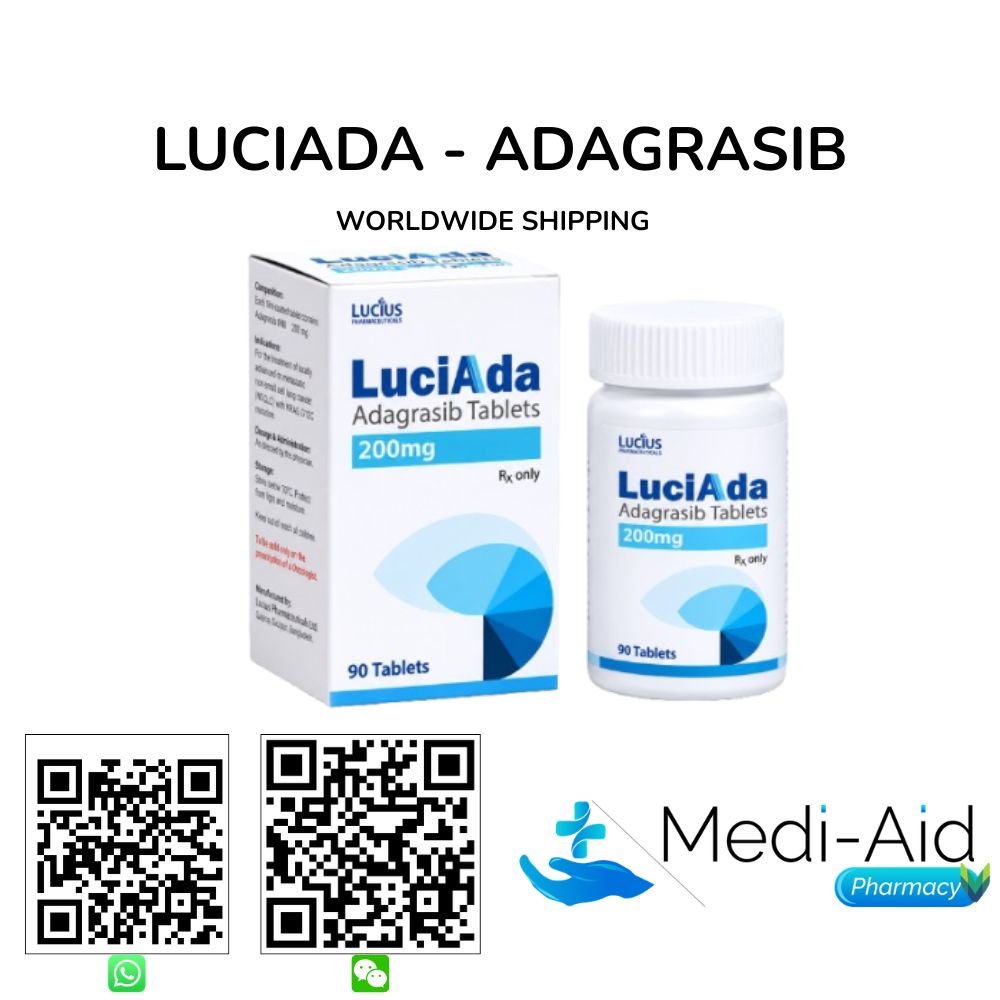
LuciAda 200 MG (Adagrasib) is a highly selective, potent, orally bioavailable, irreversible covalent small-molecule inhibitor of KRAS G12C (Kirsten Rat Sarcoma Viral Proto-Oncogene, GTPase 12th-position cysteine substitution mutant) a targeted oral precision oncology agent that selectively binds covalently to the mutant cysteine-12 residue of KRAS G12C in its inactive GDP-bound conformation, trapping KRAS G12C in the inactive state and preventing GDP-to-GTP nucleotide exchange, thereby blocking downstream RAS/MAPK effector signaling (RAF→MEK→ERK pathway) and PI3K→AKT→mTOR pathway activation that drives oncogenic proliferation, survival, and metastatic progression in KRAS G12C-mutated tumors supplied as film-coated tablets of 200 mg strength in a pack of 90 tablets per pot, manufactured and marketed under the brand name LuciAda by Lucius Pharmaceuticals (Lao) Co., Ltd., Laos.
Adagrasib, the active pharmaceutical ingredient of LuciAda, is a selective KRAS G12C inhibitor approved for the treatment of adult patients with KRAS G12C mutation-positive locally advanced or metastatic non-small cell lung cancer (NSCLC) who have received at least one prior systemic therapy, and for adult patients with KRAS G12C mutation-positive metastatic colorectal cancer (mCRC) in combination with cetuximab after prior chemotherapy establishing adagrasib as a cornerstone oral KRAS G12C-targeted therapy across two oncology indications driven by the KRAS G12C oncogenic driver mutation, one of the most prevalent and historically undruggable oncogenic mutations in human cancer.
The recommended dose of LuciAda (Adagrasib) is 400 mg orally twice daily (BID) administered continuously until disease progression or unacceptable toxicity; at the 200 mg tablet strength, the 400 mg twice-daily dose requires two tablets of LuciAda 200 MG taken twice daily (four tablets per day total); tablets may be taken with or without food; if a dose is missed and the next scheduled dose is more than 6 hours away, take the missed dose as soon as remembered; if the next scheduled dose is within 6 hours, skip the missed dose and resume at the next scheduled time; do not take a double dose; dose reductions are implemented in steps for toxicity management: first dose reduction to 400 mg once daily (two 200 mg tablets once daily) and second dose reduction to 200 mg once daily (one 200 mg tablet once daily); permanently discontinue adagrasib if the patient cannot tolerate 200 mg once daily.
The pivotal Phase 1b/2 KRYSTAL-1 trial (NCT03785249; published in The New England Journal of Medicine 2022), a multicenter, open-label study, evaluated adagrasib 400 mg orally twice daily in 116 evaluable patients with previously treated KRAS G12C mutation-positive NSCLC, achieving a confirmed objective response rate (ORR) of 42.9% (95% CI, 33.8–52.3), a median duration of response (DOR) of 8.5 months (95% CI, 6.9–13.8), a median progression-free survival (PFS) of 6.5 months (95% CI, 4.7–8.4), and a median overall survival (OS) of 12.6 months (95% CI, 9.2–19.2); the confirmatory Phase 3 KRYSTAL-12 trial (NCT04685135; published in The New England Journal of Medicine 2024) confirmed superiority of adagrasib over docetaxel in previously treated KRAS G12C NSCLC with a median PFS of 5.5 months versus 3.8 months (HR 0.58; 95% CI, 0.45–0.76; p<0.001) and ORR 32% versus 9%; for KRAS G12C mCRC, the KRYSTAL-1 mCRC cohort (published in NEJM Evidence 2023) demonstrated adagrasib plus cetuximab achieving an ORR of 34% (95% CI, 22–48), a median PFS of 5.6 months (95% CI, 4.1–8.3), and a median OS of 15.1 months in KRAS G12C-mutated mCRC patients.
Important: The most clinically significant adverse reactions of adagrasib are hepatotoxicity, QTc interval prolongation, interstitial lung disease (ILD)/pneumonitis, and embryo-fetal toxicity. Hepatotoxicity occurred in 15% of patients at Grade 3 or higher in KRYSTAL-1; monitor liver function tests (ALT, AST, bilirubin, alkaline phosphatase) before initiating adagrasib and at least every 3 weeks during the first 3 months, then periodically; withhold, dose-reduce, or permanently discontinue adagrasib for hepatotoxicity per NCI CTCAE severity grading.
QTc prolongation: perform ECG and correct electrolyte abnormalities before initiating adagrasib; monitor ECG and electrolytes periodically during treatment; Grade 3 QTc prolongation occurred in 5% of patients; avoid concomitant use of drugs known to prolong QTc when possible; permanently discontinue adagrasib for life-threatening arrhythmias or QTc >500 ms with signs/symptoms. ILD/Pneumonitis: occurred in 3% of KRYSTAL-1 patients (Grade 3: 1%); withhold adagrasib for Grade 1 or 2 ILD/pneumonitis and permanently discontinue for Grade 3 or 4.
Diarrhea occurred in 87% of patients (Grade 3: 10%); initiate antidiarrheal therapy at onset, ensure adequate hydration, and dose-modify as needed. Nausea occurred in 69% (Grade 3: 4%); administer antiemetic prophylaxis. Avoid concomitant strong CYP3A4 inducers (rifampin, phenytoin, carbamazepine, St. John’s Wort) these significantly reduce adagrasib plasma concentrations; avoid concomitant strong or moderate CYP3A4 inhibitors if possible; adagrasib is a moderate CYP3A4 inhibitor and P-gp inhibitor and may increase concentrations of CYP3A4 and P-gp substrates.
KRAS G12C mutation status must be confirmed by an FDA-approved or validated companion diagnostic test before initiating adagrasib for NSCLC or mCRC. Do not substitute LuciAda 200 MG Adagrasib for sotorasib (Lumakras), pembrolizumab, docetaxel, cetuximab, or other oncology agents without confirmed indication-specific prescribing and benefit-risk assessment by the treating oncologist. Searching for LuciAda 200 MG Adagrasib? Mediaid Pharmacy lists this product across its oncology medicines, lung cancer medicines, colorectal cancer medicines, and Lucius Pharmaceuticals medicines portfolios and ships it worldwide.
Basic Product Information of LuciAda 200 MG (Adagrasib)
| Brand Name | LuciAda manufactured and marketed by Lucius Pharmaceuticals (Lao) Co., Ltd., Laos; adagrasib is also marketed internationally under the brand name Krazati® (adagrasib) by Bristol-Myers Squibb (BMS) / Mirati Therapeutics in the United States (FDA accelerated approval December 12, 2022 for KRAS G12C NSCLC; regular approval upon KRYSTAL-12 data; FDA approval June 21, 2024 for KRAS G12C mCRC in combination with cetuximab) and the European Union (EMA conditional marketing authorization August 2023 for KRAS G12C NSCLC); LuciAda by Lucius Pharmaceuticals (Lao) Co., Ltd. is a branded generic formulation of adagrasib film-coated tablets (200 mg), manufactured in Laos under GMP-compliant pharmaceutical manufacturing standards and supplied through authorized international pharmaceutical distribution channels, providing accessible oral KRAS G12C-targeted therapy for KRAS G12C mutation-positive NSCLC and colorectal cancer patients globally who require adagrasib at the standard 400 mg twice-daily continuous oral dosing schedule |
| Product Name | LuciAda (branded adagrasib film-coated tablets, 200 mg, manufactured by Lucius Pharmaceuticals (Lao) Co., Ltd., Laos; supplied in pots of 90 tablets; SKU: everest-fruquin equivalent LuciAda 200 MG) |
| Generic Name | Adagrasib (INN; also designated MRTX849 during preclinical and clinical development by Mirati Therapeutics; a highly selective, potent, orally bioavailable, irreversible covalent small-molecule inhibitor of KRAS G12C; adagrasib selectively and irreversibly binds to the mutant cysteine-12 residue (Cys-12) of the KRAS G12C protein in its inactive GDP-bound conformation via a covalent bond, locking KRAS G12C in the inactive state and preventing SOS1-catalyzed GDP-to-GTP exchange that would activate KRAS G12C; by maintaining KRAS G12C in the GDP-bound inactive state, adagrasib blocks downstream effector signaling through the RAS/MAPK pathway (RAF→MEK→ERK) and PI3K→AKT→mTOR pathway that drive oncogenic cell proliferation, survival, differentiation block, and metastatic behavior in KRAS G12C-mutated tumor cells; adagrasib is structurally and pharmacologically distinct from sotorasib (the first-approved KRAS G12C inhibitor) in its chemical scaffold, covalent binding mechanism, CNS penetration (adagrasib penetrates the blood-brain barrier, with intracranial activity demonstrated in KRYSTAL-1 CNS cohort), and activity in sotorasib-resistant KRAS G12C tumor models; adagrasib PK: mean steady-state Cmax approximately 1,180 ng/mL at 400 mg BID; median Tmax approximately 2–4 hours; plasma half-life approximately 23 hours enabling twice-daily dosing; protein binding approximately 99.6%; primarily metabolized by CYP3A4 (major); also a moderate CYP3A4 inhibitor and P-glycoprotein (P-gp) inhibitor; originated and developed by Mirati Therapeutics (acquired by Bristol-Myers Squibb [BMS] in January 2024); first global regulatory approval [FDA accelerated approval, NSCLC]: December 12, 2022; EMA conditional marketing authorization [NSCLC]: August 2023; FDA approval for KRAS G12C mCRC [with cetuximab]: June 21, 2024; KRAS G12C mutation occurs in approximately 13% of NSCLC cases [predominantly lung adenocarcinoma] and approximately 3–4% of colorectal cancer cases; Lucius Pharmaceuticals (Lao) Co., Ltd. manufactures and markets the branded generic formulation LuciAda 200 MG under GMP conditions in Laos) |
| Drug Class | KRAS G12C Inhibitor (Covalent, Irreversible); Selective KRAS G12C-Targeted Oral Precision Oncology Agent; RAS GTPase Oncogene Inhibitor; Small-Molecule Covalent KRAS Inhibitor (GDP-State Trapping Mechanism); RAS/MAPK Pathway Inhibitor (via KRAS G12C kinase blockade); PI3K-AKT-mTOR Pathway Inhibitor (via KRAS G12C signal suppression); Second-Generation KRAS G12C Inhibitor (CNS-penetrant; active post-sotorasib); Oral Targeted Therapy for KRAS G12C Mutation-Positive NSCLC and Colorectal Cancer; Companion Diagnostic-Required Biomarker-Selected Targeted Therapy (KRAS G12C mutation testing mandatory); Oral Precision Oncology Agent for Previously Treated KRAS G12C-Mutated Solid Tumors; SOS1-Mediated GTP Loading Inhibitor (via GDP-bound KRAS G12C trapping) |
| Formulation | Film-coated tablets for oral administration may be taken with or without food; swallow tablets whole; do not crush, split, or chew tablets; take at approximately the same time each day for both doses (morning and evening), approximately 12 hours apart; adagrasib is administered continuously (without scheduled treatment breaks) on a twice-daily dosing schedule until disease progression or unacceptable toxicity; at the standard dose of 400 mg orally twice daily, two tablets of LuciAda 200 MG are taken twice daily (morning dose: two tablets; evening dose: two tablets; total: four tablets per day); if a dose is missed and the next scheduled dose is more than 6 hours away, take the missed dose as soon as it is remembered; if the next scheduled dose is within 6 hours, skip the missed dose and resume at the next scheduled time do not take two doses at the same time; if vomiting occurs after taking a dose, do not repeat the dose resume the next scheduled dose at the usual time; store LuciAda 200 MG tablets at room temperature as directed per product labeling |
| Available Strengths | 200 mg film-coated tablet the 200 mg tablet strength is the standard dispensing unit for adagrasib, enabling the full FDA- and EMA-approved 400 mg twice-daily dose and both dose reduction levels in straightforward multiples of one tablet: standard dose: 400 mg twice daily = two 200 mg tablets twice daily (four tablets per day); first dose reduction: 400 mg once daily = two 200 mg tablets once daily; second dose reduction: 200 mg once daily = one 200 mg tablet once daily; permanently discontinue adagrasib if the patient cannot tolerate 200 mg once daily; dose reductions are triggered by Grade 3 or 4 adverse events including hepatotoxicity, QTc prolongation, ILD/pneumonitis, severe diarrhea (Grade 3), severe nausea/vomiting (Grade 3), and other clinically significant Grade 3 or 4 adverse reactions per NCI CTCAE v5.0; no body-weight-based dose adjustment is required adagrasib is administered as a fixed oral dose; special populations: use with caution in patients with severe hepatic impairment (Child-Pugh C); no initial dose adjustment required for renal impairment or mild-to-moderate hepatic impairment; the 200 mg strength covers the full dosing spectrum from the 400 mg BID standard dose through both dose reductions in clean, whole-tablet increments without requiring tablet splitting |
| Available Pack Size | 90 tablets per pot at the standard adagrasib dose of 400 mg twice daily (four 200 mg tablets per day on a continuous schedule), one pot of 90 tablets of LuciAda 200 MG provides approximately 22.5 days of treatment supply; at the first dose reduction level (400 mg once daily = two 200 mg tablets per day), one pot provides approximately 45 days of treatment supply; at the second dose reduction level (200 mg once daily = one 200 mg tablet per day), one pot provides a full 90-day supply; hospital formulary procurement teams and oncology programs typically calculate monthly procurement on the basis of the patient’s current active dose level and the number of adagrasib-receiving patients in the program; patients stable on the standard 400 mg BID dose require approximately four pots of LuciAda 200 MG per 28-day procurement cycle (4 tablets/day × 28 days = 112 tablets ≈ 1.25 pots per 28 days; ordering by 28-day cycle requires approximately 2 pots every 45 days at standard dose); contact Mediaid Pharmacy for pack-size-specific stock availability confirmation, dose-level procurement calculations, and multi-pot bulk ordering guidance to ensure uninterrupted adagrasib supply for patients on ongoing continuous-dosing regimens |
| Dosing Schedule | KRAS G12C Mutation-Positive NSCLC and mCRC Standard Dosing (Both Indications): Adagrasib 400 mg orally twice daily (BID) on a continuous dosing schedule (two 200 mg tablets of LuciAda twice daily, approximately 12 hours apart) until disease progression or unacceptable toxicity; for the KRAS G12C mCRC indication, adagrasib 400 mg twice daily is administered in combination with cetuximab (400 mg/m² IV on Day 1, then 250 mg/m² IV weekly). Companion Diagnostic Required: KRAS G12C mutation status must be confirmed by an FDA-approved companion diagnostic test (e.g., Qiagen therascreen KRAS RGQ PCR Kit or equivalent validated KRAS G12C mutation assay) before initiating adagrasib in both NSCLC and mCRC; adagrasib is not indicated for treatment of patients with KRAS wild-type or non-G12C KRAS-mutated tumors. Prior Therapy Requirements: For NSCLC: patients must have received at least one prior systemic therapy before initiating adagrasib; for mCRC: patients must have received prior fluoropyrimidine-, oxaliplatin-, and irinotecan-based chemotherapy before initiating adagrasib + cetuximab. Dose Reduction Schedule for Toxicity: First dose reduction: 400 mg orally once daily (two 200 mg tablets once daily); second dose reduction: 200 mg orally once daily (one 200 mg tablet once daily); permanently discontinue adagrasib in patients unable to tolerate 200 mg once daily. Dose Reduction Triggers (per NCI CTCAE v5.0): Withhold adagrasib and reduce dose for: QTc interval >500 ms (withhold until QTc ≤480 ms, then resume at reduced dose); Grade 3 or recurrent Grade 2 hepatotoxicity; Grade 3 diarrhea not responding to antidiarrheal therapy; Grade 3 nausea/vomiting not controlled by antiemetics; Grade 1 or 2 ILD/pneumonitis (withhold; re-evaluate before re-initiation); other Grade 3 adverse reactions. Permanent Discontinuation Criteria: Grade 4 hepatotoxicity; Grade 3 or 4 ILD/pneumonitis; Grade 4 QTc prolongation or life-threatening arrhythmia; any adverse reaction that cannot be managed with supportive care and two levels of dose reduction; inability to tolerate 200 mg once daily. Mandatory Safety Monitoring: Liver function tests (ALT, AST, total bilirubin, alkaline phosphatase) before initiation and at least every 3 weeks during the first 3 months of treatment, then periodically; ECG and electrolytes (potassium, magnesium, calcium) before initiation, after 1 week, and periodically thereafter; monitor for symptoms of ILD/pneumonitis; monitor for signs of gastrointestinal toxicity. Drug Interactions: Avoid concomitant use of strong CYP3A4 inducers (rifampin, phenytoin, carbamazepine, enzalutamide, St. John’s Wort) adagrasib is a CYP3A4 substrate and strong inducers significantly reduce adagrasib plasma concentrations; avoid concomitant use of strong or moderate CYP3A4 inhibitors (ketoconazole, itraconazole, clarithromycin, diltiazem, verapamil) where possible these increase adagrasib exposure; adagrasib is a moderate CYP3A4 inhibitor it may increase concentrations of sensitive CYP3A4 substrates; adagrasib is a P-gp inhibitor monitor for increased toxicity of narrow-therapeutic-index P-gp substrates; avoid concomitant use of drugs known to prolong QTc when possible due to additive QTc prolongation risk. |
| Primary Indication | INDICATION 1 KRAS G12C MUTATION-POSITIVE NON-SMALL CELL LUNG CANCER (NSCLC):
Adagrasib Monotherapy KRAS G12C NSCLC, Previously Treated (KRYSTAL-1; NEJM 2022 / KRYSTAL-12; NEJM 2024): Adagrasib 400 mg orally twice daily for the treatment of adult patients with KRAS G12C mutation-positive locally advanced or metastatic NSCLC who have received at least one prior systemic therapy; KRAS G12C mutation occurs in approximately 13% of NSCLC cases (predominantly lung adenocarcinoma; less common in squamous cell carcinoma); KRAS G12C-mutated NSCLC was historically classified as undruggable until the development of covalent GDP-state KRAS G12C inhibitors. KRYSTAL-1 (Phase 1b/2; NCT03785249; multicenter, open-label; n=116 evaluable NSCLC patients; NEJM 2022): adagrasib 400 mg twice daily in previously treated KRAS G12C NSCLC (all patients had received prior platinum-based chemotherapy and immunotherapy): confirmed ORR 42.9% (95% CI, 33.8–52.3); median DOR 8.5 months (95% CI, 6.9–13.8); median PFS 6.5 months (95% CI, 4.7–8.4); median OS 12.6 months (95% CI, 9.2–19.2); intracranial ORR 33.3% in patients with active untreated brain metastases (n=33); FDA accelerated approval: December 12, 2022; EMA conditional marketing authorization: August 2023. KRYSTAL-12 (Phase 3; NCT04685135; randomized, open-label, active-controlled; n=453; adagrasib n=228 vs. docetaxel n=225; NEJM 2024): adagrasib 400 mg twice daily vs. docetaxel 75 mg/m² IV every 3 weeks in previously treated KRAS G12C NSCLC (all patients had received prior platinum-based chemotherapy and immunotherapy); primary endpoint: PFS; median PFS 5.5 months (95% CI, 4.2–6.8) for adagrasib vs. 3.8 months (95% CI, 2.9–4.3) for docetaxel (HR 0.58; 95% CI, 0.45–0.76; p<0.001); ORR 32% (adagrasib) vs. 9% (docetaxel); confirmed adagrasib’s superiority over standard second-line chemotherapy; regulatory agencies converted accelerated approval to regular approval based on KRYSTAL-12 data. INDICATION 2 KRAS G12C MUTATION-POSITIVE METASTATIC COLORECTAL CANCER (mCRC): Adagrasib + Cetuximab KRAS G12C mCRC (KRYSTAL-1 mCRC Cohort; NEJM Evidence 2023): Adagrasib 400 mg orally twice daily in combination with cetuximab (400 mg/m² IV on Day 1, then 250 mg/m² IV weekly) for the treatment of adult patients with KRAS G12C mutation-positive mCRC who have been previously treated with fluoropyrimidine-, oxaliplatin-, and irinotecan-based chemotherapy (Phase 1b/2; NCT03785249 Cohort D; n=43; NEJM Evidence 2023 Fakih et al.): confirmed ORR 34% (95% CI, 22–48); median DOR 6.9 months (95% CI, 4.0–8.3); median PFS 5.6 months (95% CI, 4.1–8.3); median OS 15.1 months (95% CI, 9.5–not reached); DCR 86%; FDA approval of adagrasib + cetuximab for KRAS G12C mCRC: June 21, 2024; KRAS G12C mutation occurs in approximately 3–4% of colorectal cancers; prior to adagrasib + cetuximab approval, KRAS G12C-mutated mCRC patients derived limited benefit from anti-EGFR antibody monotherapy; combined KRAS G12C + EGFR blockade with adagrasib + cetuximab addresses feedback EGFR reactivation that limits single-agent KRAS G12C inhibitor activity in colorectal cancer, explaining the superior activity of the combination over adagrasib monotherapy in mCRC (mCRC cohort ORR 34% with combination vs. approximately 19% with adagrasib monotherapy); KRAS G12C mutation status must be confirmed by validated KRAS G12C testing before initiating adagrasib for mCRC. |
| Manufacturer / Brand | Lucius Pharmaceuticals (Lao) Co., Ltd. (manufacturer and brand owner of LuciAda 200 MG); Country of Origin: Laos; LuciAda is manufactured by Lucius Pharmaceuticals (Lao) Co., Ltd. and distributed internationally through authorized pharmaceutical distribution channels; Categories: Colorectal Cancer Medicines, Lung Cancer Medicines, Oncology Medicines; Brand: Lucius Pharmaceuticals |
Global Supplier: Mediaid Pharmacy Worldwide Shipping for LuciAda 200 MG (Adagrasib)
Mediaid Pharmacy is a Dhaka-based supplier of specialty oral targeted oncology agents, KRAS G12C-targeted precision medicines, lung cancer and colorectal cancer medicines, and original molecule and branded generic oncology drugs with worldwide shipping to patients, oncology departments, KRAS G12C mutation-positive cancer treatment programs, hospital pharmacies, oncology day units, patient access programs, and international distributors across all regions. LuciAda 200 MG (Adagrasib), manufactured by Lucius Pharmaceuticals (Lao) Co., Ltd., Laos, is supplied in pots of 90 film-coated tablets, with pricing quotations, stock confirmation, full product documentation, shipping arrangements, and end-to-end international delivery tracking for every order.
As an oral tablet formulation stored at room temperature, LuciAda does not require cold-chain refrigerated shipping unlike IV biologic agents (cetuximab requires refrigeration as the partner agent in the adagrasib + cetuximab mCRC regimen; LuciAda tablets as the oral component do not) simplifying international logistics and reducing shipping costs for adagrasib orders to any destination country globally.
KRAS G12C mutation-positive NSCLC treatment programs procuring adagrasib for previously treated patients progressing on or after platinum-based chemotherapy and immunotherapy; KRAS G12C mCRC treatment teams managing patients on the adagrasib + cetuximab regimen; individual patients and families sourcing adagrasib for KRAS G12C non-small cell lung cancer or adagrasib plus cetuximab for KRAS G12C colorectal cancer; hospital formulary procurement departments sourcing LuciAda 200 MG as part of targeted oncology medicines portfolios; and oncology programs requiring sustained supply of adagrasib film-coated tablets can contact the Mediaid Pharmacy team through WhatsApp, phone, or email for LuciAda 200 MG stock availability, current pricing, shipping options, and international delivery timelines. KRAS G12C mutation documentation and prescription are required for adagrasib dispensing in accordance with applicable regulatory requirements.
Why Choose LuciAda 200 MG (Adagrasib) from Mediaid Pharmacy?
LuciAda 200 MG (Adagrasib) from Lucius Pharmaceuticals (Lao) Co., Ltd. delivers the validated covalent KRAS G12C inhibitor mechanism the oral component of two FDA-approved adagrasib-based regimens with proven clinical efficacy in both KRAS G12C mutation-positive NSCLC (KRYSTAL-1; NEJM 2022 / KRYSTAL-12; NEJM 2024) and KRAS G12C mutation-positive mCRC (KRYSTAL-1 mCRC cohort; NEJM Evidence 2023) supplied as a convenient oral film-coated tablet of 200 mg strength, enabling twice-daily home-based oral administration without IV infusion infrastructure requirements, targeting the KRAS G12C oncogenic driver that has historically represented the single most common undruggable oncogenic mutation in human solid tumors. Adagrasib is pharmacologically and clinically distinguished across the KRAS G12C-targeted therapy landscape by four evidence-based attributes.
First, adagrasib is the only KRAS G12C inhibitor with demonstrated central nervous system (CNS) penetration and documented intracranial activity in KRAS G12C mutation-positive NSCLC patients with brain metastases a clinically critical differentiator because brain metastases occur in approximately 20–40% of advanced NSCLC patients and represent a major unmet treatment need; in KRYSTAL-1, adagrasib achieved an intracranial ORR of 33.3% (95% CI, 17.3–52.8) in 33 evaluable patients with active untreated brain metastases and KRAS G12C NSCLC, with a median intracranial DOR of 5.5 months a mechanistic and clinical property attributable to adagrasib’s physicochemical and pharmacokinetic profile enabling meaningful blood-brain barrier penetration, distinguishing adagrasib from sotorasib (the first KRAS G12C inhibitor approved, with limited CNS data) in the management of KRAS G12C NSCLC patients with concurrent brain metastases.
Second, adagrasib’s dual-indication FDA approval across two histologically distinct solid tumor types driven by the KRAS G12C oncogenic driver (NSCLC and colorectal cancer) is supported by a mechanistically coherent rationale for indication expansion that reflects KRAS G12C oncogene addiction regardless of tumor histology the KRYSTAL-1 NSCLC cohort (ORR 42.9%; median PFS 6.5 months; median OS 12.6 months; NEJM 2022) and KRYSTAL-12 Phase 3 trial (median PFS 5.5 months vs. 3.8 months with docetaxel; HR 0.58; p<0.001; NEJM 2024) established adagrasib as the first KRAS G12C inhibitor with Phase 3 superiority data versus standard chemotherapy in NSCLC, while KRYSTAL-1 mCRC (ORR 34%; median PFS 5.6 months; median OS 15.1 months; NEJM Evidence 2023) established adagrasib + cetuximab as the first regulatory-approved KRAS G12C-targeted regimen in colorectal cancer a dual solid tumor indication footprint not achieved by any other KRAS G12C inhibitor and directly relevant to oncology programs managing patients with multi-site disease across both indications.
Third, the 200 mg film-coated tablet strength of LuciAda provides clean whole-tablet dose management across the full adagrasib dosing spectrum without tablet splitting the standard 400 mg BID dose (two tablets twice daily), first dose reduction to 400 mg once daily (two tablets once daily), and second dose reduction to 200 mg once daily (one tablet once daily) all correspond to whole-tablet multiples of the 200 mg strength, eliminating the need for tablet scoring, splitting, or compound pharmacist dose preparation at any approved dose level; this whole-tablet dose management profile simplifies dispensing, patient education, and adherence verification for oncology nurses and pharmacists managing adagrasib dose modification protocols in clinical practice.
Fourth, adagrasib’s post-sotorasib activity in KRAS G12C-resistant tumors expands the treatment options available to oncology programs managing patients with acquired resistance to first-line KRAS G12C inhibition preclinical and emerging clinical data demonstrate adagrasib activity in sotorasib-pretreated KRAS G12C-mutated tumors through partially non-overlapping resistance mechanisms, and the KRYSTAL-1 trial enrolled patients regardless of prior KRAS G12C inhibitor exposure in some expansion cohorts, supporting adagrasib as a potential treatment option in patients who have progressed on sotorasib (Lumakras) in clinical practice, subject to oncologist assessment of individual patient benefit-risk; combined with Mediaid Pharmacy’s commitment to reliable stock continuity of LuciAda 200 MG for uninterrupted continuous-dosing treatment protocols, this clinical flexibility makes LuciAda 200 MG a comprehensive adagrasib sourcing option for oncology programs across both KRAS G12C NSCLC and KRAS G12C mCRC treatment settings.
To source the complete range of KRAS G12C-targeted therapies, oral lung cancer precision medicines, colorectal cancer targeted agents, and Lucius Pharmaceuticals oncology products, visit the Mediaid Pharmacy lung cancer medicines portfolio, the colorectal cancer medicines collection, the oncology medicines collection, and the Lucius Pharmaceuticals medicines range, and contact the team for a personalized quotation and international shipping confirmation.
Frequently Asked Questions About LuciAda 200 MG (Adagrasib)
What is LuciAda 200 MG (Adagrasib) used for?
LuciAda 200 MG (Adagrasib) is an oral, selective, irreversible covalent KRAS G12C inhibitor with two FDA-approved oncology indications. Indication 1 KRAS G12C Mutation-Positive NSCLC: Adagrasib 400 mg twice daily as monotherapy for the treatment of adult patients with KRAS G12C mutation-positive locally advanced or metastatic non-small cell lung cancer (NSCLC) who have received at least one prior systemic therapy; KRAS G12C mutations occur in approximately 13% of NSCLC cases; KRYSTAL-1 (n=116; NEJM 2022) demonstrated ORR 42.9%, median PFS 6.5 months, and median OS 12.6 months; KRYSTAL-12 (Phase 3; NEJM 2024) confirmed superiority over docetaxel (median PFS 5.5 vs. 3.8 months; HR 0.58; p<0.001); FDA accelerated approval December 2022; regular approval based on KRYSTAL-12. Indication 2 KRAS G12C Mutation-Positive mCRC: Adagrasib 400 mg twice daily in combination with cetuximab for the treatment of adult patients with KRAS G12C mutation-positive mCRC who have been previously treated with fluoropyrimidine-, oxaliplatin-, and irinotecan-based chemotherapy; KRAS G12C mutations occur in approximately 3–4% of colorectal cancers; KRYSTAL-1 mCRC cohort (n=43; NEJM Evidence 2023) demonstrated ORR 34%, median PFS 5.6 months, and median OS 15.1 months with adagrasib + cetuximab; FDA approved June 21, 2024. KRAS G12C mutation status must be confirmed by a validated companion diagnostic test before initiating LuciAda (Adagrasib) for either indication. LuciAda 200 MG (Adagrasib) is available through Mediaid Pharmacy with worldwide shipping to patients and KRAS G12C NSCLC treatment programs and KRAS G12C colorectal cancer treatment programs globally.
What is the generic name of LuciAda?
The generic name (International Nonproprietary Name, INN) of LuciAda is adagrasib (also designated MRTX849 during development by Mirati Therapeutics). Adagrasib is a highly selective, potent, orally bioavailable, irreversible covalent small-molecule inhibitor of KRAS G12C. Its mechanism selective covalent binding to the mutant cysteine-12 residue of KRAS G12C in the GDP-bound inactive conformation, trapping KRAS G12C in the inactive state and blocking GDP-to-GTP exchange, thereby suppressing downstream RAF→MEK→ERK and PI3K→AKT→mTOR signaling cascades that drive KRAS G12C-oncogene-dependent tumor cell proliferation and survival targets the specific mutant oncogene driver that constitutively activates RAS signaling in KRAS G12C-mutated cancer cells independently of upstream growth factor receptor input. Adagrasib is mechanistically distinct from anti-EGFR antibodies (cetuximab, panitumumab, used in combination with adagrasib for mCRC, not as KRAS inhibitors), MEK inhibitors (trametinib, binimetinib, cobimetinib, which inhibit MEK1/2 downstream of RAS), anti-VEGF agents (bevacizumab), immune checkpoint inhibitors (pembrolizumab, nivolumab), and chemotherapy agents adagrasib’s defining pharmacological property is its irreversible covalent bond formation with KRAS G12C Cys-12, combined with extended binding residence time and CNS penetration. Adagrasib was originated and developed by Mirati Therapeutics (acquired by Bristol-Myers Squibb [BMS] in January 2024) and is marketed globally as Krazati® by BMS; LuciAda is the branded generic formulation manufactured by Lucius Pharmaceuticals (Lao) Co., Ltd., Laos. Mediaid Pharmacy distributes LuciAda 200 MG Adagrasib by Lucius Pharmaceuticals globally with worldwide shipping to patients, oncology programs, and hospital pharmacies.
What are the side effects of LuciAda (Adagrasib)?
The most clinically significant adverse reactions of adagrasib are hepatotoxicity, QTc prolongation, interstitial lung disease (ILD)/pneumonitis, and embryo-fetal toxicity. Diarrhea: the most common adverse reaction in KRYSTAL-1, occurring in 87% of patients (Grade 3: 10%); initiate antidiarrheal therapy (loperamide) at onset of diarrhea; ensure adequate oral hydration; withhold adagrasib for Grade 3 diarrhea not controlled by antidiarrheal therapy; dose-modify as needed. Nausea and Vomiting: nausea occurred in 69% (Grade 3: 4%); vomiting in 49% (Grade 3: 4%); administer prophylactic antiemetic therapy before initiating adagrasib; use 5-HT3 antagonists or other appropriate antiemetics; dose-modify for Grade 3 nausea/vomiting not controlled by antiemetics. Hepatotoxicity: Grade 3 or higher ALT/AST elevations occurred in 15% of KRYSTAL-1 patients; monitor LFTs at baseline and at least every 3 weeks during the first 3 months, then periodically; withhold adagrasib for Grade 3 hepatotoxicity; dose-reduce upon recovery; permanently discontinue for Grade 4 hepatotoxicity. QTc Prolongation: Grade 3 QTc prolongation occurred in 5% of KRYSTAL-1 patients; perform ECG and correct electrolyte abnormalities (potassium, magnesium, calcium) before initiating; monitor ECG and electrolytes periodically; withhold for QTc >500 ms; permanently discontinue for life-threatening arrhythmias. ILD/Pneumonitis: occurred in 3% of KRYSTAL-1 patients (Grade 3: 1%); withhold adagrasib for Grade 1 or 2 ILD/pneumonitis and permanently discontinue for Grade 3 or 4. Fatigue: occurred in 51% (Grade 3: 7%). Musculoskeletal Pain: occurred in 27% (Grade 3: 2%). Most Common Any-Grade Adverse Reactions (≥25% in KRYSTAL-1): diarrhea (87%), nausea (69%), fatigue (51%), vomiting (49%), musculoskeletal pain (27%). All patients initiating LuciAda 200 MG (Adagrasib) should have baseline liver function tests, ECG, and electrolytes assessed before treatment initiation, with ongoing monitoring per the adagrasib prescribing schedule, under the supervision of a qualified oncologist experienced in managing KRAS-targeted therapy toxicities.
How effective is LuciAda (Adagrasib) for KRAS G12C non-small cell lung cancer?
Adagrasib demonstrated meaningful clinical activity in KRAS G12C mutation-positive previously treated NSCLC across two clinical trials, with Phase 3 confirmation of superiority over standard chemotherapy. KRYSTAL-1 (Phase 1b/2; NCT03785249; n=116 evaluable NSCLC patients; published in NEJM 2022): adagrasib 400 mg twice daily in previously treated KRAS G12C NSCLC: confirmed ORR 42.9% (95% CI, 33.8–52.3); median DOR 8.5 months (95% CI, 6.9–13.8); median PFS 6.5 months (95% CI, 4.7–8.4); median OS 12.6 months (95% CI, 9.2–19.2); intracranial ORR 33.3% (95% CI, 17.3–52.8) in patients with active brain metastases (n=33); DCR 79.4%; all patients had received prior platinum-based chemotherapy and immunotherapy; FDA accelerated approval December 12, 2022. KRYSTAL-12 (Phase 3; NCT04685135; n=453; adagrasib n=228 vs. docetaxel n=225; published in NEJM 2024): adagrasib 400 mg twice daily vs. docetaxel 75 mg/m² IV every 3 weeks in previously treated KRAS G12C NSCLC: median PFS 5.5 months (95% CI, 4.2–6.8) vs. 3.8 months (95% CI, 2.9–4.3) (HR 0.58; 95% CI, 0.45–0.76; p<0.001); adagrasib reduced the risk of disease progression or death by 42% versus docetaxel; ORR 32% (adagrasib) vs. 9% (docetaxel); KRYSTAL-12 was the first Phase 3 trial to demonstrate superiority of a KRAS G12C inhibitor over standard second-line chemotherapy in NSCLC, establishing adagrasib as the preferred treatment for previously treated KRAS G12C-mutated NSCLC per NCCN and international oncology guidelines. LuciAda 200 MG (Adagrasib) is available through Mediaid Pharmacy; visit the lung cancer medicines collection and oncology medicines collection for the complete KRAS G12C-targeted therapy portfolio.
What is the difference between adagrasib (LuciAda) and sotorasib for KRAS G12C cancer?
Adagrasib (LuciAda / Krazati) and sotorasib (Lumakras / AMG 510) are both oral, covalent, irreversible KRAS G12C inhibitors, but they differ in several clinically significant pharmacological and clinical characteristics. Chemical Scaffold and Binding Mechanism: Both agents covalently bind to KRAS G12C Cys-12 in the GDP-bound inactive state, but adagrasib and sotorasib have structurally distinct chemical scaffolds with different binding geometries in the Switch II Pocket (S-IIP) of KRAS G12C, resulting in partially non-overlapping resistance mutation profiles a critical consideration for sequential KRAS G12C inhibitor therapy decisions. CNS Penetration: Adagrasib demonstrates meaningful CNS penetration with documented intracranial ORR of 33.3% in KRYSTAL-1 NSCLC patients with brain metastases; sotorasib has limited CNS penetration data, and brain metastases management with sotorasib remains an area of clinical uncertainty compared to adagrasib’s established intracranial activity. Colorectal Cancer Approval: Adagrasib + cetuximab received FDA approval for KRAS G12C mCRC (June 2024); sotorasib does not currently hold an FDA or EMA approval for colorectal cancer, though clinical trials have evaluated sotorasib combinations in mCRC with limited activity as monotherapy the superior activity of adagrasib + cetuximab over adagrasib monotherapy in mCRC (ORR 34% vs. approximately 19%) directly informed the regulatory approval of the combination. Phase 3 Data in NSCLC: Adagrasib is the only KRAS G12C inhibitor with published Phase 3 trial data demonstrating superiority over docetaxel in NSCLC (KRYSTAL-12; NEJM 2024); sotorasib was compared with docetaxel in the CodeBreaK 200 Phase 3 trial with a reported numerical improvement in PFS but a p-value that was at the boundary of statistical significance by pre-specified analysis thresholds adagrasib’s KRYSTAL-12 data provide a more definitive Phase 3 evidence base. Dosing: Adagrasib: 400 mg twice daily (continuous); sotorasib: 960 mg once daily (continuous). Visit the Mediaid Pharmacy oncology medicines collection for the complete KRAS-targeted and oral precision oncology portfolio, including LuciAda 200 MG Adagrasib for KRAS G12C NSCLC and other KRAS G12C-targeted cancer medicines available with worldwide shipping.
Is LuciAda (Adagrasib) safe during pregnancy or while breastfeeding?
LuciAda (Adagrasib) can cause fetal harm based on its mechanism of action and nonclinical animal reproductive toxicology findings adagrasib should not be used during pregnancy. KRAS G12C inhibition and suppression of RAS/MAPK and PI3K/AKT/mTOR signaling cascades is expected to disrupt critical embryonic and fetal developmental processes dependent on MAPK-regulated cell proliferation, differentiation, organogenesis, and vascular development; nonclinical animal reproductive and developmental toxicology studies demonstrated embryotoxic and fetotoxic effects at adagrasib exposures in animals at clinically relevant doses, confirming the reproductive toxicity potential of adagrasib. Contraception requirement: women of reproductive potential must use effective contraception during adagrasib treatment and for 6 months after the last dose; verify pregnancy status with a serum pregnancy test before initiating LuciAda in all women of reproductive potential; male patients with female partners of reproductive potential must use effective contraception (including a condom) during adagrasib treatment and for 3 months after the final dose, due to potential presence of adagrasib in semen; note that adagrasib may reduce the efficacy of hormonal contraceptives due to CYP3A4 induction at certain exposures use alternative or additional contraceptive measures. Breastfeeding: it is unknown whether adagrasib or its metabolites are present in human breast milk, affect milk production, or affect the breastfed infant; because of the potential for serious adverse reactions from KRAS G12C inhibition in breastfed infants, breastfeeding is not recommended during adagrasib treatment and for 1 week after the last dose. Fertility: nonclinical studies indicate that adagrasib may affect fertility based on the role of KRAS/MAPK signaling in reproductive organ function; discuss fertility preservation options with the treating oncologist prior to initiating adagrasib. All aspects of reproductive planning, contraception requirements, and fertility counseling should be discussed with the treating oncologist before starting adagrasib therapy.
Can I order LuciAda 200 MG (Adagrasib) online with worldwide shipping?
Yes. Mediaid Pharmacy supplies LuciAda 200 MG (Adagrasib), film-coated tablets of 200 mg strength in pots of 90 tablets, manufactured by Lucius Pharmaceuticals (Lao) Co., Ltd., Laos, to patients, KRAS G12C mutation-positive NSCLC treatment programs, KRAS G12C mCRC oncology departments, oral targeted therapy treatment protocols, hospital pharmacies, oncology day units, patient access programs, and healthcare providers globally. As an oral tablet formulation stored at room temperature, LuciAda does not require cold-chain refrigerated shipping, allowing straightforward international logistics with standard secure pharmaceutical packaging appropriate for the destination country’s transit conditions and regulatory requirements. Contact Mediaid Pharmacy via WhatsApp, phone, or email at +8801773428128, or email info@mediaidpharmacy.com for pricing, current stock availability for LuciAda 200 MG, shipping options, and international delivery details for your country. KRAS G12C mutation documentation and prescription are required for adagrasib dispensing in accordance with applicable regulatory requirements. For the complete portfolio of Lucius Pharmaceuticals medicines and oncology medicines available with worldwide shipping, visit the respective collection pages on the Mediaid Pharmacy website.
Order LuciAda 200 MG (Adagrasib) with Worldwide Shipping
Phone / WhatsApp: +8801773428128 | Email: info@mediaidpharmacy.com
Reviews
There are no reviews yet.