
Description
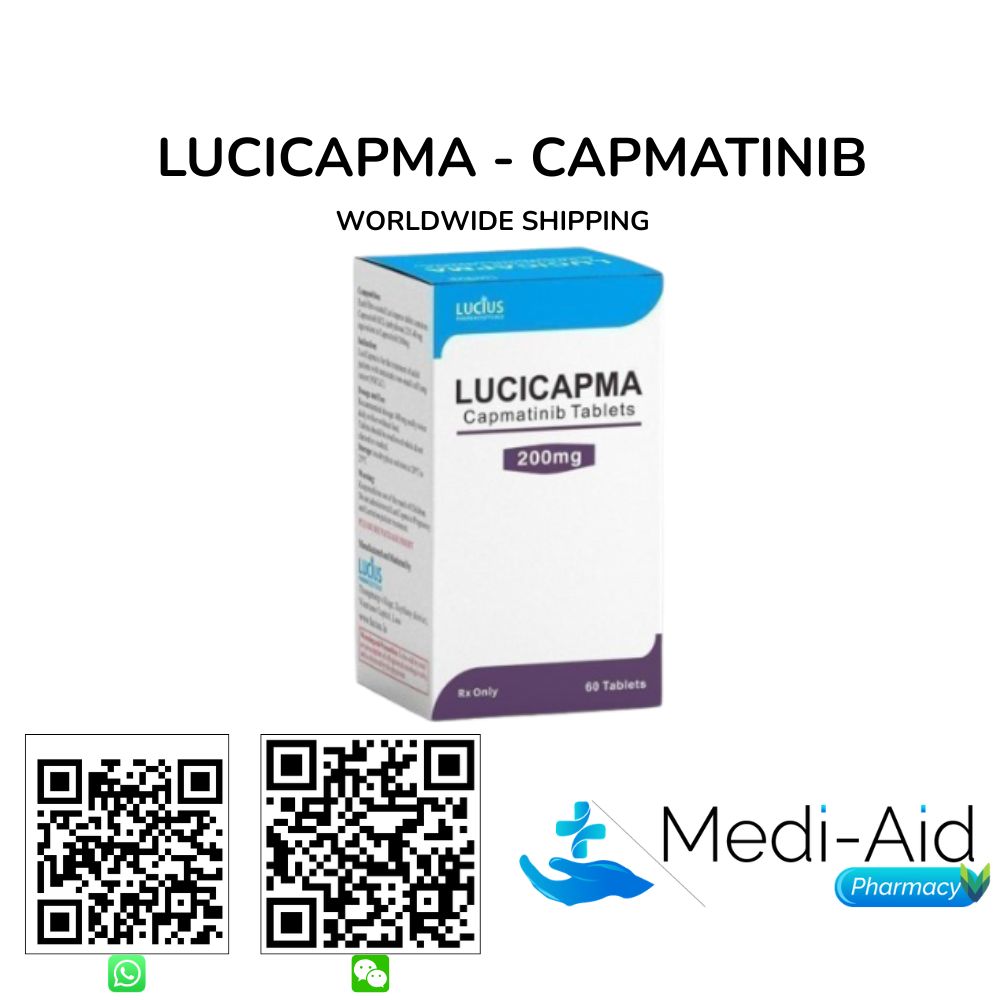
LuciCapma 200 MG (Capmatinib) is a selective MET (mesenchymal-epithelial transition) tyrosine kinase inhibitor a precision oral targeted therapy engineered to block aberrant c-MET signaling supplied as 200 mg film-coated tablets in a pack of 60 tablets and manufactured by Lucius Pharmaceuticals (Lao) Co., Ltd. in Laos. Its active ingredient, capmatinib INN, selectively binds to and inhibits the proto-oncogene c-MET receptor, blocking phosphorylation and disrupting downstream MET signal transduction pathways that drive cancer cell proliferation, survival, and metastasis in tumors with defined MET genomic alterations.
LuciCapma 200 MG is prescribed at the standard therapeutic dose of 400 mg twice daily (two 200 mg tablets taken orally twice daily, approximately 12 hours apart), which is the approved reference-label dosing for capmatinib in adult patients with metastatic non-small cell lung cancer (NSCLC) whose tumors harbor a variant causing mesenchymal-epithelial transition (MET) exon 14 skipping, as confirmed by an approved molecular diagnostic test.
In the pivotal Phase 2 GEOMETRY mono-1 trial, capmatinib demonstrated an overall response rate (ORR) of 68% in treatment-naïve patients and 41% in previously treated patients with MET exon 14–mutated metastatic NSCLC, with a median duration of response of 12.6 months and 9.7 months respectively outcomes that established capmatinib as the first approved targeted therapy for this molecularly defined NSCLC subtype. Searching for LuciCapma 200 MG Capmatinib? Mediaid Pharmacy lists this product within its comprehensive lung cancer medicines portfolio and ships it worldwide.
Basic Product Information of LuciCapma 200 MG (Capmatinib)
| Brand Name | LuciCapma 200 MG (Capmatinib) |
| Product Name | LuciCapma |
| Generic Name | Capmatinib INN |
| Drug Class | Selective MET (Mesenchymal-Epithelial Transition) Tyrosine Kinase Inhibitor; c-MET Inhibitor; Kinase Inhibitor; Targeted Oncology Agent; Antineoplastic Agent |
| Formulation | Film-Coated Tablet (Oral) |
| Available Strength | 200 mg |
| Available Pack Size | 60 Tablets per Pack |
| Therapeutic Dose | 400 mg twice daily (two 200 mg tablets orally twice daily, approximately 12 hours apart), with or without food, until disease progression or unacceptable toxicity. Each 60-tablet pack supplies a 15-day course at the standard twice-daily dosing schedule. |
| Primary Indication | Treatment of adult patients with metastatic non-small cell lung cancer (NSCLC) whose tumors have a variant that leads to mesenchymal-epithelial transition (MET) exon 14 skipping, as detected by an approved diagnostic test. Indicated for both treatment-naïve and previously treated patients with MET exon 14–mutated metastatic NSCLC. |
| Manufacturer | Lucius Pharmaceuticals (Lao) Co., Ltd., Laos |
| Country of Origin | Laos |
| Originator Reference Brand | Tabrecta® (capmatinib) by Novartis FDA-approved May 2020 (accelerated) and August 2022 (regular approval) for adult patients with metastatic NSCLC with MET exon 14 skipping mutations |
| Global Supplier | Mediaid Pharmacy, Worldwide Shipping Available |
| Storage Conditions | Store below 30°C. Keep in the original packaging to protect from moisture. Keep out of the reach of children. |
How LuciCapma 200 MG (Capmatinib) Works: Selective c-MET Tyrosine Kinase Inhibition in MET-Dysregulated NSCLC
Capmatinib INN is an orally bioavailable, highly selective small-molecule inhibitor of the c-MET receptor tyrosine kinase the protein product of the proto-oncogene MET (also designated HGFR, or hepatocyte growth factor receptor). c-MET is a transmembrane receptor that, under normal physiological conditions, is activated by its sole high-affinity ligand, hepatocyte growth factor (HGF), to regulate cell growth, survival, motility, and morphogenesis. Aberrant activation of c-MET through genomic mechanisms including MET exon 14 skipping mutations, MET gene amplification, MET protein overexpression, or autocrine HGF-MET signaling loops transforms c-MET into a constitutively active oncogenic driver that signals continuously through the downstream RAS/MAPK, PI3K/AKT, and STAT3 pathways, driving unchecked cancer cell proliferation, resistance to apoptosis, and invasive tumor spread.
MET exon 14 skipping the primary genomic alteration targeted by LuciCapma 200 MG is a somatic mutation in which the genomic sequence encoding exon 14 of the MET gene is deleted from the expressed messenger RNA. Exon 14 encodes the juxtamembrane domain of the c-MET protein, which contains the E3 ubiquitin ligase binding sites (CBL) responsible for receptor ubiquitination and subsequent proteasomal degradation. Deletion of this regulatory domain produces a mutant c-MET protein that lacks its primary negative feedback mechanism: the receptor accumulates on the tumor cell surface, persists in an active phosphorylated state without undergoing normal ligand-stimulated degradation, and delivers constitutive pro-survival and pro-proliferative signals to the tumor cell regardless of HGF availability. MET exon 14 skipping mutations occur in approximately 3% to 4% of all NSCLC cases a molecularly defined subpopulation associated with advanced age at diagnosis, predominantly adenocarcinoma histology, and a poor prognosis on conventional platinum-based chemotherapy and immunotherapy when administered without biomarker-directed targeted therapy.
Capmatinib selectively binds to the ATP-binding pocket of the c-MET kinase domain, competitively blocking ATP access, preventing autophosphorylation of the receptor’s activation loop at tyrosines Y1234 and Y1235, and thereby abrogating downstream signaling through RAS/ERK, PI3K/AKT, and STAT3. In MET exon 14–skipping tumor models, capmatinib-mediated inhibition of c-MET phosphorylation arrests cancer cell cycle progression, restores normal apoptotic sensitivity, and suppresses tumor cell invasion and migration the cellular consequences that translate clinically into tumor shrinkage and disease control. Capmatinib was demonstrated preclinically to retain activity against the MET exon 14–skipping mutant specifically because its inhibitory potency operates at the kinase level rather than through blockade of the deleted regulatory domain, meaning the absence of exon 14 does not attenuate capmatinib’s binding affinity or on-target inhibitory efficacy. For a comprehensive range of precision oncology medicines that target defined molecular drivers across lung cancer subtypes, visit the Mediaid Pharmacy oncology medicines collection.
LuciCapma 200 MG (Capmatinib): Indications, Dosing, and Key Safety Information
| Approved Indication | Treatment of adult patients with metastatic non-small cell lung cancer (NSCLC) whose tumors have a mutation that leads to mesenchymal-epithelial transition (MET) exon 14 skipping, confirmed by an approved molecular diagnostic test. Both treatment-naïve and previously treated patients are eligible. |
| Recommended Dose | 400 mg orally twice daily (two LuciCapma 200 MG tablets per dose, taken approximately 12 hours apart), with or without food, until disease progression or unacceptable toxicity. Do not crush, split, or chew tablets swallow whole with water. |
| Dose Modifications | First dose reduction: 300 mg twice daily. Second dose reduction: 200 mg twice daily. Permanently discontinue if the patient cannot tolerate 200 mg twice daily. Dose reductions are mandated for Grade ≥3 interstitial lung disease (ILD)/pneumonitis, Grade ≥3 hepatotoxicity, Grade ≥3 photosensitivity, and other severe or intolerable adverse reactions per treating oncologist’s assessment. |
| Missed Dose | If a dose is missed or vomiting occurs after taking a dose, do not take an extra dose take the next scheduled dose at the regular time. Never double-dose to compensate for a missed dose. |
| Key Warnings | Interstitial Lung Disease (ILD) / Pneumonitis: Potentially fatal ILD/pneumonitis has occurred. Withhold LuciCapma 200 MG immediately for any new or worsening respiratory symptoms (dyspnea, cough, fever) and permanently discontinue if no other feasible cause is identified.
Hepatotoxicity: ALT and AST elevations, including Grade 3/4 elevations, have been reported. Monitor liver function tests (LFTs) before initiating treatment, every 2 weeks for the first 3 months, then monthly thereafter. Withhold or permanently discontinue based on severity. Photosensitivity: Patients must avoid ultraviolet (UV) light exposure and sunlamps during treatment. Apply broad-spectrum sunscreen (SPF ≥50) and wear protective clothing and UV-blocking eyewear when outdoors. Embryo-Fetal Toxicity: Capmatinib may cause fetal harm. Females of reproductive potential must use effective contraception during LuciCapma 200 MG treatment and for at least 1 week after the final dose. Males with female partners of reproductive potential must use effective contraception during treatment and for 1 week after the final dose. |
| Common Adverse Reactions (≥20%) | Peripheral edema, nausea, musculoskeletal pain, fatigue, vomiting, dyspnea, cough, decreased appetite. Peripheral edema is the most frequently reported adverse event with capmatinib and is managed with dose modification and supportive care as needed. |
| Drug Interactions | Capmatinib is a CYP1A2 inhibitor, P-glycoprotein (P-gp) inhibitor, BCRP inhibitor, and MATE1/MATE2-K inhibitor. Capmatinib inhibits CYP1A2-mediated caffeine metabolism patients should limit caffeine intake during treatment. Capmatinib may increase plasma concentrations of co-administered CYP1A2 substrates (e.g., theophylline, tizanidine), P-gp substrates (e.g., digoxin), and metformin (via MATE1/MATE2-K inhibition). CYP3A4 strong inducers may reduce capmatinib exposure. Disclose all medications, supplements, and caffeine intake to the treating oncologist before initiating LuciCapma 200 MG. |
| Pregnancy & Lactation | Capmatinib may cause embryo-fetal harm and is not recommended during pregnancy. Breastfeeding is not recommended during LuciCapma 200 MG treatment and for at least 1 week after the final dose. Females of reproductive potential must confirm they are not pregnant prior to initiating therapy and must use effective contraception throughout treatment. Consult your treating oncologist before initiating LuciCapma 200 MG if pregnant, planning a pregnancy, or breastfeeding. |
Who Should Use LuciCapma 200 MG (Capmatinib)?
LuciCapma 200 MG (Capmatinib) is indicated for a precisely defined molecular subpopulation of adult lung cancer patients: those with metastatic non-small cell lung cancer (NSCLC) whose tumors carry a variant causing MET exon 14 skipping, confirmed through an approved diagnostic test a tissue-based next-generation sequencing (NGS) panel or a validated liquid biopsy assay. MET exon 14 skipping mutations represent approximately 3% to 4% of all NSCLC cases and constitute a clinically distinct molecular subtype associated with older patient age (median age at diagnosis typically over 70 years), predominantly adenocarcinoma or adenosquamous histology, and a poor prognosis on standard chemotherapy and checkpoint immunotherapy without targeted MET inhibition.
Both treatment-naïve patients those receiving capmatinib as their first systemic therapy for MET exon 14–mutated metastatic NSCLC and previously treated patients who have progressed on prior platinum-based chemotherapy or immunotherapy are eligible candidates for LuciCapma 200 MG based on the GEOMETRY mono-1 Phase 2 trial evidence that supported regulatory approval. Treatment-naïve patients derive the greatest magnitude of benefit: the GEOMETRY mono-1 trial demonstrated an ORR of 68% and a median duration of response of 12.6 months in this group, establishing LuciCapma 200 MG as an appropriate first-line targeted therapy choice for newly diagnosed patients with confirmed MET exon 14–mutated metastatic NSCLC where MET is the dominant oncogenic driver. Previously treated patients who have progressed on prior therapies and whose tumors retain or re-confirm MET exon 14 skipping on rebiopsy or liquid biopsy also constitute an indicated population: capmatinib demonstrated an ORR of 41% with a median duration of response of 9.7 months in this pre-treated cohort.
LuciCapma 200 MG is not appropriate for patients with NSCLC that lacks confirmed MET exon 14 skipping or defined MET amplification, for patients with type 1 or type 2 alveolar proteinosis, for patients with active or a history of ILD or pneumonitis requiring systemic corticosteroid treatment, or for patients with confirmed hypersensitivity to capmatinib or any component of the LuciCapma 200 MG tablet formulation. The treating thoracic oncologist or pulmonary oncologist must assess baseline liver function, baseline pulmonary reserve, current co-medication burden (particularly CYP1A2 substrates and caffeine intake), and confirm molecular eligibility via an approved MET exon 14 diagnostic test before initiating LuciCapma 200 MG. For institutions, oncology programs, and pharmacies sourcing capmatinib alongside additional targeted therapies for metastatic NSCLC or a comprehensive oncology formulary, the complete Mediaid Pharmacy lung cancer medicines portfolio and the broader oncology medicines collection provide a wide selection of precision oncology agents available for international delivery.
Global Supplier: Mediaid Pharmacy Worldwide Shipping for LuciCapma 200 MG (Capmatinib)
Mediaid Pharmacy is a Dhaka-based supplier of specialty oncology and precision medicine products with worldwide shipping to patients, oncology clinics, hospitals, cancer centers, and international distributors across all regions. LuciCapma 200 MG (Capmatinib), manufactured by Lucius Pharmaceuticals (Lao) Co., Ltd. in Laos, is supplied as a 60-tablet pack of 200 mg film-coated tablets a 15-day supply at the standard therapeutic dose of 400 mg twice daily with pricing quotations, stock confirmation, full product documentation, and end-to-end international delivery tracking for every order.
Thoracic oncology centers, pulmonary oncology programs, cancer hospitals, hospital formulary teams, oncology pharmacies, international distributors, and individual patients can contact the Mediaid Pharmacy team through WhatsApp, phone, or WeChat for all inquiries regarding LuciCapma 200 MG Capmatinib stock availability, current pricing, and international delivery timelines to their country. Procurement teams co-sourcing LuciCapma 200 MG Capmatinib with other targeted NSCLC therapies, MET inhibitors, immunotherapy agents, or a comprehensive lung cancer formulary in a single consolidated international shipment can browse the complete Mediaid Pharmacy lung cancer medicines range and the Lucius Pharmaceuticals medicines portfolio before requesting a consolidated quotation.
Why Choose LuciCapma 200 MG (Capmatinib) from Mediaid Pharmacy?
LuciCapma 200 MG (Capmatinib) provides thoracic oncologists, pulmonary oncologists, and oncology pharmacists with a precision MET-targeted therapy for the treatment of MET exon 14–mutated metastatic NSCLC a biomarker-selected indication where capmatinib delivers an ORR of 68% in treatment-naïve patients and 41% in previously treated patients, with a manageable and well-characterized safety profile that allows sustained outpatient treatment without the systemic toxicity associated with conventional cytotoxic chemotherapy. The clinical significance of capmatinib in this molecular subtype derives directly from the biology of MET exon 14 skipping: by removing the juxtamembrane regulatory domain that triggers receptor degradation, MET exon 14–skipping tumors become constitutively dependent on continuous c-MET signaling for survival a dependency that capmatinib exploits with high selectivity, sparing normal tissues that do not rely on aberrant MET signaling as their primary survival driver.
This tumor-intrinsic MET dependency translates into the high response rates and durable responses observed in GEOMETRY mono-1, making LuciCapma 200 MG the rationally indicated treatment of choice rather than an empiric option in this biomarker-defined population. The 200 mg tablet formulation packaged as 60 tablets per pack is precisely aligned to the approved 400 mg twice-daily dosing schedule, with each pack supplying a convenient 15-day treatment supply that simplifies monthly international procurement logistics for oncology centers and patients receiving treatment outside the originator brand’s distribution network.
LuciCapma 200 MG is manufactured by Lucius Pharmaceuticals (Lao) Co., Ltd., a pharmaceutical manufacturer based in Laos, and is available through Mediaid Pharmacy with full product documentation, specialist supply coordination, and worldwide shipping from Dhaka. To source additional Lucius Pharmaceuticals oncology products, complementary lung cancer targeted therapies, or a full precision oncology formulary alongside LuciCapma 200 MG, visit the Mediaid Pharmacy Lucius Pharmaceuticals medicines section and contact the team for a personalized quotation covering all required strengths and quantities.
Frequently Asked Questions About LuciCapma 200 MG (Capmatinib)
What is LuciCapma 200 MG (Capmatinib) used for?
LuciCapma 200 MG (Capmatinib) is a selective MET tyrosine kinase inhibitor (c-MET inhibitor) used for the treatment of adult patients with metastatic non-small cell lung cancer (NSCLC) whose tumors harbor a mutation causing mesenchymal-epithelial transition (MET) exon 14 skipping, as confirmed by an approved diagnostic test. MET exon 14 skipping mutations occur in approximately 3% to 4% of NSCLC patients and define a molecularly distinct subtype associated with poor outcomes on standard chemotherapy without targeted MET inhibition. Capmatinib is the active ingredient of the originator brand Tabrecta® (by Novartis), which received FDA accelerated approval in May 2020 and regular approval in August 2022 for this indication. LuciCapma 200 MG, manufactured by Lucius Pharmaceuticals (Lao) Co., Ltd., is available at Mediaid Pharmacy with worldwide shipping.
What is the generic name of LuciCapma 200 MG?
The generic name of LuciCapma 200 MG is capmatinib INN. LuciCapma is the brand name registered by Lucius Pharmaceuticals (Lao) Co., Ltd. for capmatinib manufactured in Laos. LuciCapma is formulated as 200 mg film-coated tablets in a 60-tablet pack, taken at the approved therapeutic dose of 400 mg twice daily (two 200 mg tablets per dose). The originator reference brand for capmatinib is Tabrecta® by Novartis, approved by the FDA for the treatment of adult patients with metastatic NSCLC with MET exon 14 skipping mutations. Mediaid Pharmacy distributes LuciCapma 200 MG globally with worldwide shipping to patients, healthcare providers, cancer centers, hospitals, and specialist oncology clinics.
What is the difference between LuciCapma 200 MG and Tabrecta (Capmatinib)?
LuciCapma 200 MG and Tabrecta® both contain capmatinib INN as the active pharmaceutical ingredient and both target the same molecular indication metastatic NSCLC with MET exon 14 skipping mutations at the same approved reference dose of 400 mg capmatinib twice daily. The primary differences are in their commercial origin and pack configuration: Tabrecta® is the originator brand manufactured by Novartis and is marketed primarily in North America, Europe, Japan, and other major regulated markets where Novartis holds registration. LuciCapma 200 MG is manufactured by Lucius Pharmaceuticals (Lao) Co., Ltd. in Laos and is available through Mediaid Pharmacy for international procurement by oncology centers, hospitals, and patients in regions where Tabrecta® may be unavailable, prohibitively priced, or where a globally supplied alternative is required. LuciCapma 200 MG’s 60-tablet pack size supplies a 15-day treatment course at 400 mg twice daily a procurement-friendly unit aligned to monthly ordering cycles. For the full range of capmatinib and lung cancer targeted therapies available from Mediaid Pharmacy, visit the lung cancer medicines collection.
How is LuciCapma 200 MG (Capmatinib) administered?
LuciCapma 200 MG (Capmatinib) is administered orally at a dose of 400 mg twice daily two 200 mg tablets per dose, taken approximately 12 hours apart, with or without food. Tablets must be swallowed whole with water; do not crush, split, dissolve, or chew LuciCapma 200 MG tablets. Treatment continues until disease progression or unacceptable toxicity. If a dose is missed or vomiting occurs immediately after a dose, do not take an additional dose resume at the next regularly scheduled dose time. If twice-daily dosing presents tolerability challenges, dose modifications are structured in stepwise reductions: first to 300 mg twice daily, then to 200 mg twice daily (one LuciCapma 200 MG tablet twice daily), as directed by the treating oncologist. Capmatinib inhibits CYP1A2 and increases circulating caffeine concentrations patients must limit or eliminate caffeine during treatment, as directed by their oncologist. Avoid UV light and sunlamp exposure throughout treatment and apply broad-spectrum sunscreen daily due to capmatinib-associated photosensitivity risk.
What are the side effects of LuciCapma 200 MG (Capmatinib)?
The most common adverse reactions of capmatinib occurring in more than 20% of patients in clinical trials are peripheral edema, nausea, musculoskeletal pain (including back pain, arthralgia, and myalgia), fatigue, vomiting, dyspnea, cough, and decreased appetite. Peripheral edema is the single most frequently reported adverse event; it is typically managed with dose modification or supportive care (compression garments, diuretics) and resolves or stabilizes in most patients. Serious but less common adverse reactions include interstitial lung disease (ILD) and pneumonitis (which can be fatal and requires immediate dose interruption upon onset of any new respiratory symptoms), hepatotoxicity (Grade 3/4 ALT/AST elevations requiring liver function monitoring every 2 weeks for the first 3 months), photosensitivity reactions (managed through UV avoidance and sunscreen), and hypersensitivity reactions. Embryo-fetal toxicity is an established reproductive risk. Patients on concomitant metformin should be monitored for increased metformin plasma levels due to MATE1/MATE2-K inhibition by capmatinib. Always discuss your individual risk-benefit profile, current co-medications, and baseline organ function with your treating thoracic oncologist before and throughout LuciCapma 200 MG treatment.
How effective is Capmatinib (LuciCapma 200 MG) for MET exon 14 skipping NSCLC?
Capmatinib demonstrated clinically meaningful and durable efficacy in the pivotal Phase 2 GEOMETRY mono-1 trial the multicenter, open-label study of 97 patients with metastatic NSCLC harboring confirmed MET exon 14 skipping mutations who received capmatinib 400 mg twice daily. In treatment-naïve patients (Cohort 5b, n=28), the overall response rate (ORR) was 68% with a median duration of response (DOR) of 12.6 months. In previously treated patients (Cohort 4, n=69) who had progressed on prior platinum-based chemotherapy or immunotherapy, the ORR was 41% with a median DOR of 9.7 months. These response rates are substantially higher than those observed with conventional chemotherapy or immunotherapy monotherapy in unselected or MET-mutated NSCLC populations, establishing capmatinib as a preferred targeted therapy option when MET exon 14 skipping is the confirmed oncogenic driver. The GEOMETRY mono-1 data supported the FDA’s May 2020 accelerated approval and August 2022 regular approval of capmatinib for this indication. LuciCapma 200 MG delivers the same active ingredient capmatinib INN at the same approved 400 mg twice-daily therapeutic dose, sourced through Mediaid Pharmacy with worldwide shipping.
Is LuciCapma 200 MG (Capmatinib) safe during pregnancy or while breastfeeding?
No. Capmatinib may cause embryo-fetal harm based on its mechanism of action as a MET tyrosine kinase inhibitor MET signaling plays a documented role in normal embryonic development and organogenesis, making inhibition during pregnancy a risk for fetal toxicity. LuciCapma 200 MG is not recommended for use during pregnancy. Females of reproductive potential must use effective contraception during treatment and for at least 1 week after the final dose of capmatinib, given its pharmacokinetic elimination half-life. Males with female partners of reproductive potential must also use effective contraception during LuciCapma 200 MG treatment and for 1 week after the final dose. Breastfeeding is not recommended during treatment and for at least 1 week after the final dose. If pregnancy occurs during capmatinib treatment, the treating oncologist should be notified immediately. Consult your treating oncologist or oncology pharmacist before starting LuciCapma 200 MG if pregnant, planning a pregnancy, or breastfeeding.
Can I order LuciCapma 200 MG (Capmatinib) online with worldwide shipping?
Yes. Mediaid Pharmacy supplies LuciCapma 200 MG (Capmatinib) to patients, oncology centers, cancer hospitals, and healthcare providers globally. Contact Mediaid Pharmacy via WhatsApp, phone, or WeChat at +8801773428128, or email info@mediaidpharmacy.com for pricing, current stock availability, and international delivery details for your country.
Order LuciCapma 200 MG (Capmatinib) with Worldwide Shipping
Phone / WhatsApp / WeChat: +8801773428128 | Email: info@mediaidpharmacy.com

Reviews
There are no reviews yet.