
Description
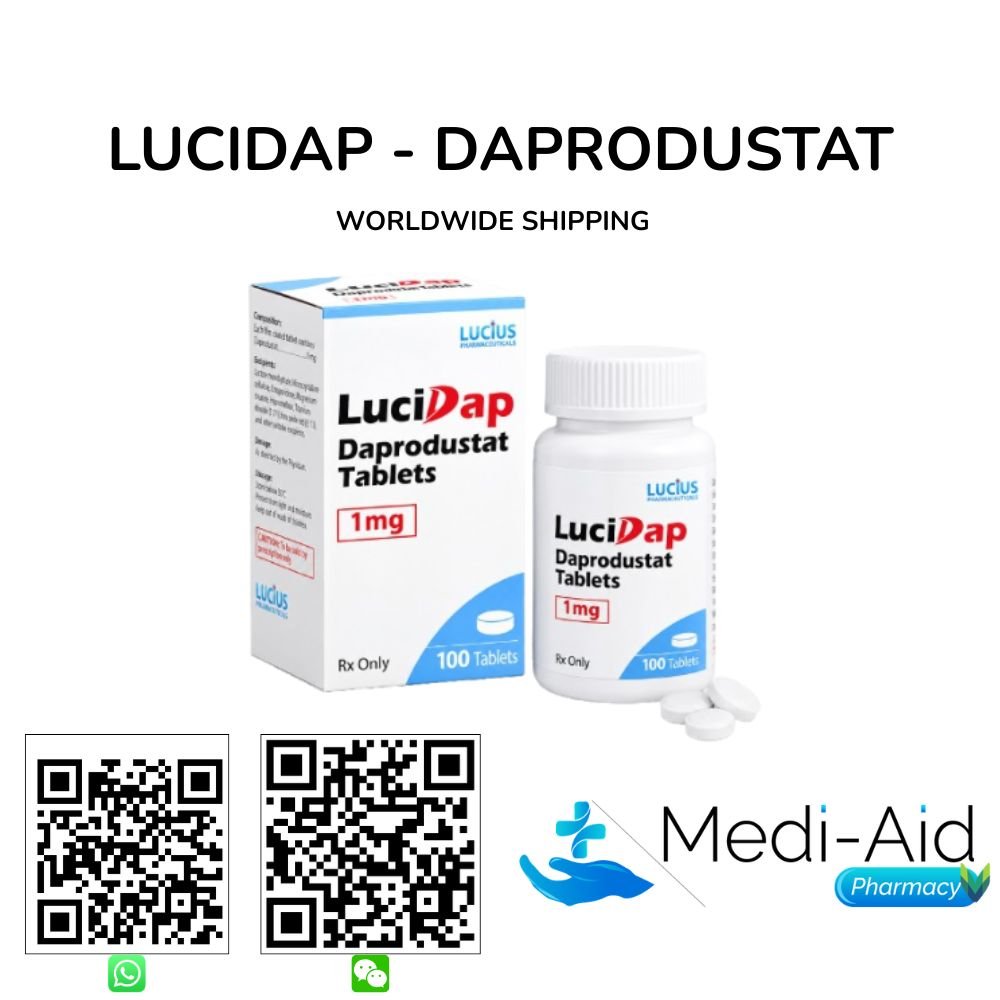
LuciDap 1 MG (Daprodustat) is an oral hypoxia-inducible factor prolyl hydroxylase inhibitor (HIF-PHI) indicated for the treatment of anemia due to chronic kidney disease (CKD) in adult patients on dialysis a once-daily, small-molecule oral agent that stimulates endogenous erythropoietin (EPO) production by inhibiting the HIF prolyl hydroxylase (HIF-PH) enzyme, thereby stabilizing hypoxia-inducible factor alpha (HIF-1α and HIF-2α) subunits, upregulating HIF-responsive gene transcription including the EPO gene, suppressing hepcidin to improve iron availability, and driving erythropoiesis to correct anemia without the injection burden of conventional erythropoiesis-stimulating agents (ESAs) a mechanism of action grounded in Nobel Prize-winning science on cellular oxygen sensing that is pharmacologically and mechanistically distinct from recombinant human erythropoietin analogs (epoetin alfa, darbepoetin alfa), with the advantage of oral administration, endogenous EPO stimulation within physiological ranges, and simultaneous upregulation of iron utilization pathways that ESAs do not directly address supplied as film-coated tablets in 1 mg strength in a 30-tablet pot and manufactured by Lucius Pharmaceuticals (Lao) Co., Ltd. in Laos.
Its active ingredient, daprodustat INN, is the first oral HIF-PHI approved by the United States Food and Drug Administration (FDA) on February 1, 2023, under the brand name Jesduvroq (developed by GlaxoSmithKline; GSK), for the treatment of anemia due to chronic kidney disease in adults who have been receiving dialysis for at least four months. Daprodustat (as Duvroq) is also approved in Japan, where it holds leading HIF-PHI market share. In the pivotal Phase 3 cardiovascular outcomes trial ASCEND-D (Anemia Studies in CKD: Erythropoiesis via a Novel PHI Daprodustat-Dialysis; 2,964 dialysis patients), daprodustat demonstrated non-inferior hemoglobin control versus ESA (mean Hgb change difference 0.18 g/dL; 95% CI 0.12–0.24) and non-inferior MACE safety versus ESA (first MACE: 25.5% daprodustat vs 26.7% ESA; HR 0.93; 95% CI 0.81–1.07) establishing daprodustat as the first oral small-molecule anemia treatment proven non-inferior to injectable ESAs in both hemoglobin efficacy and cardiovascular safety in CKD dialysis patients.
Searching for LuciDap 1 MG Daprodustat? Mediaid Pharmacy lists this product across its kidney disease medicines, dialysis anemia treatment medicines, and Lucius Pharmaceuticals portfolios and ships it worldwide.
Basic Product Information of LuciDap 1 MG (Daprodustat)
| Brand Name | LuciDap 1 MG (Daprodustat) |
| Product Name | LuciDap |
| Generic Name | Daprodustat INN (oral hypoxia-inducible factor prolyl hydroxylase inhibitor; HIF-PHI) |
| Drug Class | Oral Hypoxia-Inducible Factor Prolyl Hydroxylase Inhibitor (HIF-PHI); HIF-1α and HIF-2α Stabilizer; Endogenous Erythropoietin (EPO) Stimulator; Hepcidin Suppressor and Iron Utilization Upregulator; First FDA-Approved Oral Treatment for Anemia Due to CKD in Dialysis Patients; ASCEND-D Phase 3 Validated Oral Erythropoiesis Agent Non-Inferior to Injectable ESAs; Nobel Prize Science-Grounded HIF Oxygen-Sensing Pathway Activator |
| Formulation | Film-Coated Tablet (Oral) |
| Available Strength | 1 mg per tablet |
| Available Pack Size | 30 Tablets per pot (a standard 30-day month of once-daily daprodustat therapy at the 1 mg dose requires one pot of LuciDap 1 MG; the 30-tablet pot format aligns with monthly prescription cycles and facilitates consistent supply for dialysis patients on ongoing anemia management programs) |
| Dosing Schedule | General principle: Daprodustat is administered orally once daily, with or without food. The dose is individualized based on hemoglobin (Hgb) level at initiation, prior ESA dose (if converting from ESA), and ongoing Hgb response during therapy, with the goal of maintaining Hgb in the target range of 10 to 11 g/dL. The overall daprodustat dose range is 1 mg to 24 mg once daily. LuciDap 1 MG (1 mg tablet) represents the lowest available dose unit and is used for patients requiring the minimum therapeutic dose either during downward dose titration when Hgb rises above target range, or as a starting dose for ESA-naive patients with baseline Hgb at or above 10 g/dL. Monitor hemoglobin levels every 2 weeks for the first month of therapy and monthly thereafter. Adjust the dose upward if Hgb falls below 10 g/dL or downward (toward or to 1 mg) if Hgb exceeds 11 g/dL or rises more than 1 g/dL over any 2-week period. Do not use daprodustat in patients with uncontrolled hypertension; control blood pressure before and during therapy. Consult the treating nephrologist for individualized dose selection, conversion protocols from ESA, and Hgb monitoring schedules. |
| Primary Indication | Treatment of anemia due to chronic kidney disease (CKD) in adult patients who have been receiving dialysis for at least 4 months. LuciDap (Daprodustat) is not indicated for patients with uncontrolled hypertension. Daprodustat is contraindicated in patients receiving concomitant strong inhibitors of CYP2C8 due to substantially increased daprodustat exposure. LuciDap carries a Boxed Warning for increased risk of thrombotic events, including mortality. The lowest effective dose should be used to maintain hemoglobin sufficient to avoid the need for red blood cell (RBC) transfusion. |
| Manufacturer | Lucius Pharmaceuticals (Lao) Co., Ltd., Laos |
| Country of Origin | Laos |
| Originator Reference Brand | Jesduvroq (daprodustat tablets, 1 mg, 2 mg, 4 mg, 6 mg, and 8 mg, developed by GlaxoSmithKline [GSK]; FDA-approved February 1, 2023 for the treatment of anemia due to CKD in adults on dialysis for at least 4 months; the first and only oral HIF-PHI approved in the United States). Daprodustat is also approved in Japan as Duvroq (GSK), where it is the leading HIF-PHI. Both LuciDap and Jesduvroq contain daprodustat INN as the active pharmaceutical ingredient in the same HIF prolyl hydroxylase inhibitor drug class. LuciDap is manufactured by Lucius Pharmaceuticals (Lao) Co., Ltd. in Laos and supplied through Mediaid Pharmacy for international procurement. |
| Distributor / Online Supplier | Mediaid Pharmacy (mediaidpharmacy.com) worldwide shipping to patients, nephrology clinics, dialysis centers, hematology departments, hospital pharmacies, and healthcare providers globally. Contact: +8801773428128 (WhatsApp / Phone / WeChat) | info@mediaidpharmacy.com |
Drug Class and Mechanism of Action: LuciDap 1 MG (Daprodustat)
Daprodustat (INN) is classified as an oral hypoxia-inducible factor prolyl hydroxylase inhibitor (HIF-PHI) a first-in-class mechanistic category for oral anemia treatment that is pharmacologically and structurally distinct from all injectable erythropoiesis-stimulating agents (ESAs), including epoetin alfa, darbepoetin alfa, and methoxy polyethylene glycol-epoetin beta. The mechanism of action of daprodustat is grounded in the Nobel Prize-winning science of cellular oxygen sensing, specifically the HIF–prolyl hydroxylase (HIF-PH) pathway discovered by William Kaelin Jr., Sir Peter Ratcliffe, and Gregg Semenza, which earned the 2019 Nobel Prize in Physiology or Medicine.
HIF-PH pathway biology and pathophysiology of CKD anemia: Under normal oxygen conditions, hypoxia-inducible factor alpha subunits (HIF-1α and HIF-2α) are continuously hydroxylated on conserved prolyl residues (Pro402, Pro564 on HIF-1α; Pro405, Pro531 on HIF-2α) by a family of oxygen-sensing enzymes the HIF prolyl hydroxylase domain-containing proteins (PHD1/EGLN2, PHD2/EGLN1, PHD3/EGLN3). Hydroxylation of these prolyl residues creates binding sites for the von Hippel-Lindau (VHL) E3 ubiquitin ligase complex, which ubiquitinates HIF-α and targets it for rapid proteasomal degradation, keeping HIF-α at near-undetectable levels in normoxic cells.
Under hypoxia or pharmacological HIF-PH inhibition by daprodustat these enzymes are inhibited, prolyl hydroxylation of HIF-α is blocked, VHL-mediated ubiquitination does not occur, and HIF-α subunits accumulate and translocate to the nucleus. In the nucleus, HIF-α dimerizes with the constitutively expressed HIF-1β subunit to form the active HIF transcription factor complex, which binds to hypoxia-response elements (HREs) in the promoters and enhancers of HIF-target genes and upregulates their transcription.
In chronic kidney disease (CKD), progressive nephron loss reduces EPO-producing interstitial fibroblast cell mass in the renal cortex, causing a relative EPO deficiency that is the primary driver of CKD-associated anemia. Intravenous or subcutaneous ESA administration replaces EPO protein externally but does not restore the physiological EPO-producing capacity of the kidney; furthermore, ESA-hyporesponsiveness defined as inadequate Hgb response to ESA doses above 300 IU/kg/week for epoetin or 1.5 mcg/kg/week for darbepoetin occurs in a clinically significant subset of dialysis patients, driven by iron deficiency, inflammation-mediated hepcidin elevation (which blocks iron release from macrophages and intestinal absorption), and shortened red blood cell survival in the uremic environment.
Daprodustat’s HIF-PH inhibition mechanism EPO, hepcidin, and iron upregulation: Daprodustat competitively inhibits the catalytic site of PHD1, PHD2, and PHD3 enzymes by chelating the active-site Fe(II) cofactor and competing with 2-oxoglutarate, the co-substrate required for hydroxylation activity. This inhibition is reversible and concentration-dependent. By stabilizing HIF-1α and HIF-2α, daprodustat drives transcription of the EPO gene (located on chromosome 7q22), producing a rise in endogenous serum EPO that stimulates bone marrow erythroid progenitor differentiation, proliferation, and maturation to generate new red blood cells (RBCs).
The EPO rise induced by daprodustat is characteristically within a more physiological range compared to the supraphysiological EPO spikes generated by high-dose injectable ESAs, which may contribute to differences in cardiovascular and thrombotic risk profiles. In addition to EPO upregulation, the activated HIF transcription factor complex simultaneously upregulates multiple iron utilization genes: transferrin receptor 1 (TfR1, encoding the primary cellular iron uptake receptor), ceruloplasmin (enabling ferroportin-mediated iron export from macrophages), and duodenal cytochrome B (DCYTB) and divalent metal transporter 1 (DMT1) in intestinal enterocytes (enhancing dietary iron absorption).
Critically, HIF activation also suppresses hepatocyte hepcidin gene (HAMP) transcription; hepcidin is the master iron regulatory hormone that, when elevated (as in CKD-associated inflammation), blocks ferroportin-mediated iron release from macrophage stores and reduces intestinal iron absorption, creating functional iron deficiency that limits ESA responsiveness. By suppressing hepcidin while stimulating EPO and iron uptake simultaneously, daprodustat addresses multiple drivers of CKD anemia in a single oral mechanism an integrated approach that injectable ESAs, which act solely on EPO receptor signaling, do not provide. For the complete range of CKD and dialysis anemia treatment medicines available through Mediaid Pharmacy, visit the kidney disease medicines portfolio.
Pharmacological Properties of Daprodustat (LuciDap 1 MG)
The pharmacokinetic and pharmacodynamic profile of daprodustat delivered as LuciDap 1 MG is characterized by the following clinically validated properties.
Absorption and bioavailability: Daprodustat is rapidly absorbed after oral administration. Peak plasma concentrations (Cmax) are reached within approximately 1 to 2 hours post-dose, supporting fast onset of HIF-PH inhibition and EPO gene activation following each once-daily dose. Food may reduce the rate but not the total extent of daprodustat absorption; LuciDap 1 MG can be administered with or without food, providing dosing flexibility for dialysis patients.
Distribution: Daprodustat is highly bound to plasma proteins (primarily albumin), with a protein binding of approximately 99%. Despite high protein binding, daprodustat achieves effective intracellular HIF-PH enzyme inhibition in EPO-producing renal interstitial fibroblasts, hepatocytes (a secondary EPO-production site activated by HIF), bone marrow erythroid precursors (for direct erythroid differentiation effects), and duodenal enterocytes (for iron absorption upregulation).
Metabolism: Daprodustat is metabolized primarily by CYP2C8, the cytochrome P450 enzyme responsible for the majority of its oxidative metabolism. This is a clinically important distinction from finerenone (CYP3A4-metabolized) and from most other oral specialty drugs in CKD management the CYP2C8 primary metabolic pathway means that CYP3A4 inhibitors (such as itraconazole, ritonavir, clarithromycin, grapefruit) do not meaningfully alter daprodustat exposure, but CYP2C8 inhibitors specifically (gemfibrozil being the most potent clinically encountered strong CYP2C8 inhibitor) substantially increase daprodustat AUC and are contraindicated with daprodustat.
Elimination: Daprodustat and its metabolites are excreted primarily in urine and feces. The elimination half-life is relatively short, consistent with once-daily dosing pharmacology that relies on intermittent HIF-PH inhibition rather than continuous drug presence. Once-daily oral administration produces a cycle of HIF stabilization, HIF-responsive gene activation (including EPO and iron-pathway genes), and subsequent protein synthesis that collectively drives erythropoiesis throughout the 24-hour dosing interval.
Clinically significant drug interactions CYP2C8 pathway (critical): Daprodustat is a CYP2C8 substrate, making CYP2C8 modulator interactions clinically critical. Strong CYP2C8 inhibitors (gemfibrozil, clopidogrel, trimethoprim at high doses): these agents substantially increase daprodustat AUC gemfibrozil, a potent CYP2C8 inhibitor used as a fibrate lipid-lowering agent, increases daprodustat exposure to levels that could significantly elevate erythropoiesis and thrombotic risk CONCOMITANT USE IS CONTRAINDICATED with LuciDap.
Clinicians managing dialysis patients frequently prescribe gemfibrozil for hypertriglyceridemia, making awareness of this interaction clinically critical; gemfibrozil should be switched to an alternative lipid-lowering agent (such as fenofibrate, which does not inhibit CYP2C8 significantly) before initiating daprodustat. Moderate CYP2C8 inhibitors: monitor for increased daprodustat-related adverse effects including excessive Hgb rise, hypertension, and thrombotic events. CYP2C8 inducers (rifampicin): strong CYP2C8 inducers reduce daprodustat exposure and may compromise hemoglobin efficacy; avoid concomitant use or monitor Hgb response closely and titrate daprodustat dose accordingly.
Hyperkalemia and hypertension interactions: Daprodustat does not directly cause hyperkalemia (unlike finerenone and RAAS inhibitors). The primary pharmacodynamic safety interaction unique to daprodustat is hypertension risk amplification daprodustat increases EPO and stimulates erythropoiesis, and elevated EPO and rising Hgb/hematocrit are associated with increased blood pressure, increased peripheral vascular resistance, and platelet activation, all of which can elevate hypertension risk.
Patients with CKD on dialysis are already at elevated hypertension risk; daprodustat is contraindicated in patients with uncontrolled hypertension, and blood pressure must be monitored and controlled before and throughout LuciDap therapy. The Boxed Warning on daprodustat (reflected in the Jesduvroq label) covers increased risk of death, myocardial infarction, stroke, venous thromboembolism, and thrombosis of vascular access sites a class warning for all erythropoiesis-stimulating agents and HIF-PHIs driven by excessive erythropoiesis; use of the lowest effective daprodustat dose to maintain Hgb in the 10–11 g/dL target range and avoidance of Hgb above 11 g/dL are central to minimizing thrombotic risk. For the complete range of Lucius Pharmaceuticals medicines available at Mediaid Pharmacy with worldwide shipping, visit the Lucius Pharmaceuticals brand page.
Who Is LuciDap 1 MG (Daprodustat) Indicated For?
LuciDap 1 MG (Daprodustat) is indicated for adult patients with anemia due to chronic kidney disease (CKD) who have been receiving dialysis for at least 4 months. The clinical indication is defined and supported by the Phase 3 ASCEND program five pivotal clinical trials enrolling over 8,000 patients with the FDA approval of daprodustat specifically grounded in the ASCEND-D trial evidence.
First, the ASCEND-D trial (Anemia Studies in CKD: Erythropoiesis via a Novel PHI Daprodustat-Dialysis; NEJM 2021; doi:10.1056/NEJMoa2113379) enrolled 2,964 dialysis-dependent patients with anemia of CKD who were switched to receive daprodustat or continue injectable ESA therapy (epoetin alfa or darbepoetin alfa). The trial targeted hemoglobin maintenance in the range of 10 to 11 g/dL. The co-primary endpoints were: (1) mean change in hemoglobin from baseline to the evaluation period (weeks 28–52), and (2) the time to first occurrence of a major adverse cardiovascular event (MACE), defined as all-cause mortality, non-fatal myocardial infarction, or non-fatal stroke, in the intention-to-treat population.
On both co-primary endpoints, ASCEND-D demonstrated non-inferiority of daprodustat to injectable ESA: the mean Hgb change difference was 0.18 g/dL (95% CI 0.12–0.24), within the non-inferiority margin, confirming equivalent hemoglobin efficacy; and the time-to-first-MACE hazard ratio was HR 0.93 (95% CI 0.81–1.07), with daprodustat MACE rate 25.5% versus ESA 26.7%, meeting non-inferiority for cardiovascular safety over a median follow-up of 2.5 years. ASCEND-D enrolled patients across a broad ESA-dose range, including both well-controlled and ESA-hyporesponsive patients, demonstrating daprodustat’s hemoglobin efficacy in a clinically representative dialysis population.
Second, the ASCEND-D trial evidence is reinforced by three additional ASCEND program studies: ASCEND-TD (efficacy of three-times-weekly daprodustat dosing in dialysis patients positive primary endpoint, supporting dosing flexibility); ASCEND-ID (hemoglobin maintenance in incident dialysis patients newly starting renal replacement therapy positive primary endpoint); and ASCEND-NHQ (patient-reported outcomes and quality-of-life measures in non-dialysis CKD patients positive primary endpoint). Together, these five trials constitute the most comprehensive oral HIF-PHI clinical development program completed to date.
Third, the ASCEND-ND trial (non-dialysis CKD; 3,872 patients) confirmed non-inferior hemoglobin efficacy and non-inferior MACE rates (HR 1.03) for daprodustat versus darbepoetin alfa in non-dialysis CKD patients. However, the FDA approval of daprodustat is specifically restricted to dialysis-dependent patients, reflecting the regulatory position that the benefit-risk profile is best established in the dialysis population; LuciDap 1 MG should be used according to the approved dialysis indication.
LuciDap 1 MG is not appropriate for patients with uncontrolled hypertension (contraindicated; blood pressure must be controlled before initiating daprodustat); patients receiving concomitant strong CYP2C8 inhibitors, especially gemfibrozil (contraindicated due to multi-fold increase in daprodustat exposure); patients on dialysis for fewer than 4 months (insufficient clinical data for this early dialysis period); patients with hemoglobin above 11 g/dL at initiation (dose reduction or withholding is required before starting); patients who have experienced thrombotic events or who are at high thrombotic risk without adequate risk mitigation; and patients with known hypersensitivity to daprodustat or any excipient of LuciDap tablets.
The lowest effective dose of LuciDap including the 1 mg tablet should always be used to maintain Hgb sufficient to reduce the need for RBC transfusion while avoiding Hgb levels above 11 g/dL, which are associated with increased thrombotic risk. Nephrology clinics, dialysis centers, and hospital pharmacies sourcing daprodustat 1 mg tablets for dialysis anemia patients can contact Mediaid Pharmacy for international procurement, stock availability, and worldwide delivery coordination.
Global Supplier: Mediaid Pharmacy Worldwide Shipping for LuciDap 1 MG (Daprodustat)
Mediaid Pharmacy is a Dhaka-based supplier of specialty nephrology, hematology, and targeted-therapy medicines with worldwide shipping to patients, dialysis centers, nephrology clinics, hematology departments, hospital pharmacies, and international distributors across all regions including high-burden countries in South Asia, Southeast Asia, the Middle East, and Sub-Saharan Africa where the prevalence of CKD-associated anemia in dialysis patients is growing rapidly and access to oral HIF-PHI therapy represents a critical clinical gap for patients unable or unwilling to use injectable ESAs.
LuciDap 1 MG (Daprodustat), manufactured by Lucius Pharmaceuticals (Lao) Co., Ltd. in Laos, is supplied as 30 tablets per pot a full 30-day supply of once-daily daprodustat at the 1 mg dose with pricing quotations, stock confirmation, full product documentation, and end-to-end international delivery tracking for every order. Dialysis center pharmacy teams and nephrologists calculating supply requirements for patients on LuciDap 1 MG therapy can use the following reference: one 30-tablet pot of LuciDap 1 MG per patient per month for patients maintained at the 1 mg once-daily dose; for patients requiring multiple tablets per day to achieve higher doses (e.g., four 1 mg tablets to approximate a 4 mg dose if higher-strength tablets are not available separately), supply requirements increase proportionally contact Mediaid Pharmacy for a tailored supply quotation for your patient cohort and dose requirements.
Nephrology and dialysis departments managing dialysis patients on daprodustat therapy can contact the Mediaid Pharmacy team through WhatsApp, phone, or WeChat for program-level supply agreements, consolidated quotations, and logistics coordination for multi-patient dialysis center procurement. Procurement teams can browse the complete Mediaid Pharmacy kidney disease and dialysis anemia medicines collection and the Lucius Pharmaceuticals medicines portfolio before requesting a consolidated supply quotation.
Why Choose LuciDap 1 MG (Daprodustat) from Mediaid Pharmacy?
LuciDap 1 MG (Daprodustat) provides nephrologists, dialysis center pharmacists, hematologists, and hospital pharmacy directors with a Phase 3-validated, FDA-approved, oral HIF prolyl hydroxylase inhibitor that is the first oral small-molecule treatment demonstrated non-inferior to injectable ESAs in both hemoglobin efficacy and cardiovascular safety in dialysis patients transforming anemia management for dialysis patients by eliminating the burden of weekly or thrice-weekly subcutaneous or intravenous ESA injections and replacing them with a single once-daily oral tablet.
The ASCEND-D trial delivered the quantitative clinical evidence base for LuciDap’s dialysis anemia indication: a mean Hgb maintenance difference of only 0.18 g/dL (95% CI 0.12–0.24) compared to ESA, confirming hemoglobin equivalence; and a MACE hazard ratio of 0.93 (95% CI 0.81–1.07), confirming non-inferior cardiovascular safety versus injectable ESA therapy over 2.5 years of median follow-up across 2,964 dialysis patients outcomes that formed the basis for FDA approval on February 1, 2023, making daprodustat the first and only oral HIF-PHI approved in the United States for this indication.
The oral mechanism of daprodustat inhibiting HIF-PH enzymes to stimulate endogenous EPO production within a physiologically relevant range, while simultaneously suppressing hepcidin and upregulating iron absorption and utilization genes addresses multiple pathophysiological drivers of dialysis anemia in a single once-daily oral dose that ESAs cannot replicate: injectable ESAs provide exogenous EPO protein only, without directly addressing the iron availability and hepcidin-mediated iron restriction that limit ESA responsiveness in a significant proportion of dialysis patients. The simultaneous EPO and iron-pathway upregulation by daprodustat may offer clinically meaningful advantages in ESA-hyporesponsive patients, though comparative head-to-head trials specifically in this subgroup remain an active area of investigation.
The 1 mg tablet format of LuciDap the lowest available dose unit in the daprodustat dosing range of 1 mg to 24 mg once daily enables precise downward dose titration for patients whose hemoglobin rises above the 10–11 g/dL target range, and provides the minimum therapeutic dose option for ESA-naive patients with baseline Hgb at or above 10 g/dL. In routine dialysis anemia management, the ability to step down to 1 mg is clinically important for preventing Hgb overshoot above 11 g/dL the level at which thrombotic risk increases and the 30-tablet pot format of LuciDap 1 MG aligns seamlessly with monthly dialysis prescription cycles, simplifying pharmacy dispensing and patient supply management.
LuciDap is manufactured by Lucius Pharmaceuticals (Lao) Co., Ltd. in Laos and is available through Mediaid Pharmacy with full product documentation, specialist supply coordination, and worldwide shipping. To source additional Lucius Pharmaceuticals specialty medicines, visit the Mediaid Pharmacy Lucius Pharmaceuticals medicines section and the kidney disease medicines portfolio, and contact the Mediaid Pharmacy team for a personalized quotation and worldwide delivery arrangements.
Frequently Asked Questions About LuciDap 1 MG (Daprodustat)
What is LuciDap 1 MG (Daprodustat) used for?
LuciDap 1 MG (Daprodustat) is an oral hypoxia-inducible factor prolyl hydroxylase inhibitor (HIF-PHI) used for the treatment of anemia due to chronic kidney disease (CKD) in adult patients who have been receiving dialysis for at least 4 months. Daprodustat works by inhibiting the HIF-PH enzyme, which stabilizes HIF-1α and HIF-2α transcription factors, driving endogenous EPO production in the kidney and liver, suppressing hepcidin to improve iron availability, and upregulating iron absorption and utilization collectively stimulating red blood cell production to correct CKD-related anemia without the need for injectable ESAs. LuciDap 1 MG is the lowest-dose tablet in the daprodustat dose range (1 mg to 24 mg once daily) and is used for precise downward titration or as the minimum starting dose in select ESA-naive dialysis patients. LuciDap, manufactured by Lucius Pharmaceuticals (Lao) Co., Ltd. in Laos, is available through Mediaid Pharmacy with worldwide shipping.
What is the generic name of LuciDap?
The generic name of LuciDap is daprodustat INN an oral hypoxia-inducible factor prolyl hydroxylase inhibitor (HIF-PHI). LuciDap is the brand name registered by Lucius Pharmaceuticals (Lao) Co., Ltd. for daprodustat manufactured in Laos. LuciDap is formulated as oral film-coated tablets in 1 mg strength, supplied in a 30-tablet pot a full 30-day supply of once-daily therapy at the 1 mg dose. The originator reference brand is Jesduvroq (GlaxoSmithKline; FDA-approved February 1, 2023; the first oral HIF-PHI approved in the United States). Daprodustat is also marketed as Duvroq in Japan. Mediaid Pharmacy distributes LuciDap globally with worldwide shipping to dialysis centers, nephrology clinics, and hospital pharmacies.
What is the difference between LuciDap (Daprodustat) and Jesduvroq?
LuciDap and Jesduvroq both contain daprodustat INN as the active pharmaceutical ingredient and share the same mechanism of action oral HIF prolyl hydroxylase inhibition that stabilizes HIF-α, drives endogenous EPO production, suppresses hepcidin, and stimulates erythropoiesis to correct anemia due to CKD in dialysis patients. Jesduvroq (daprodustat tablets, 1 mg, 2 mg, 4 mg, 6 mg, and 8 mg) is the originator brand developed by GlaxoSmithKline (GSK), FDA-approved on February 1, 2023 the first oral HIF-PHI approved in the United States for dialysis anemia. LuciDap is manufactured by Lucius Pharmaceuticals (Lao) Co., Ltd. in Laos and supplied through Mediaid Pharmacy for international procurement by nephrology clinics, dialysis centers, hospital pharmacies, and patients in regions where Jesduvroq may be unavailable or cost-prohibitive. For the full range of kidney disease and dialysis anemia medicines at Mediaid Pharmacy, visit the kidney disease medicines collection.
How is LuciDap 1 MG (Daprodustat) administered?
LuciDap (Daprodustat) is administered orally as a film-coated tablet once daily, with or without food. The dose is individually determined based on the patient’s baseline hemoglobin level, prior ESA therapy, and ongoing Hgb response, with the goal of maintaining Hgb in the range of 10 to 11 g/dL. The overall dose range for daprodustat is 1 mg to 24 mg once daily; LuciDap 1 MG is the minimum dose unit. Hemoglobin levels should be monitored every 2 weeks during the first month of therapy and monthly thereafter; the dose is increased if Hgb falls below 10 g/dL, decreased toward 1 mg if Hgb exceeds 11 g/dL, and temporarily withheld if Hgb rises rapidly (greater than 1 g/dL over 2 weeks). Do not use LuciDap with strong CYP2C8 inhibitors (particularly gemfibrozil) this combination is contraindicated. Do not initiate LuciDap in patients with uncontrolled hypertension. Monitor and control blood pressure throughout therapy. Consult the treating nephrologist for the individualized dosing, ESA conversion protocol, and hemoglobin monitoring schedule.
What are the side effects of LuciDap 1 MG (Daprodustat)?
Daprodustat carries a Boxed Warning for an increased risk of death, myocardial infarction, stroke, venous thromboembolism, and thrombosis of vascular access sites a class warning for all erythropoiesis-stimulating agents and HIF-PHIs associated with excessive erythropoiesis; this risk is minimized by using the lowest effective LuciDap dose to maintain Hgb in the 10–11 g/dL range and by avoiding Hgb levels above 11 g/dL. In the ASCEND-D trial, 19% of patients in the daprodustat group discontinued treatment due to adverse reactions. The most frequently reported adverse events across the ASCEND program for patients receiving daprodustat included hypertension, diarrhea, dialysis hypotension (intradialytic hypotension), peripheral edema, and urinary tract infections adverse events broadly consistent with the background event rates seen in the dialysis patient population. Hypertension is a clinically important daprodustat-related adverse effect; EPO-mediated erythropoiesis elevates blood pressure through increased red cell mass, peripheral vascular resistance, and platelet activation, and daprodustat is specifically contraindicated in patients with uncontrolled hypertension at initiation. Blood pressure should be monitored and antihypertensive therapy adjusted as needed throughout LuciDap treatment. Unlike steroidal mineralocorticoid receptor antagonists (spironolactone), daprodustat does not cause hyperkalemia, gynecomastia, or sexual dysfunction. Unlike injectable ESAs requiring injection site reactions management, LuciDap’s oral administration eliminates injection-related adverse events. Always discuss the full daprodustat safety profile, Boxed Warning implications, and blood pressure monitoring plan with the treating nephrologist before initiating LuciDap.
How does Daprodustat (LuciDap) differ from injectable ESAs like Epoetin and Darbepoetin?
Daprodustat (LuciDap) and injectable ESAs (epoetin alfa, darbepoetin alfa, methoxy polyethylene glycol-epoetin beta) all stimulate red blood cell production to correct CKD-associated anemia, but differ fundamentally in mechanism, route of administration, iron pathway effects, and EPO response characteristics. Injectable ESAs are exogenous recombinant EPO proteins administered subcutaneously or intravenously (typically weekly or thrice-weekly for dialysis patients); they act directly on EPO receptors on erythroid progenitors but do not address hepcidin-mediated iron restriction or iron absorption a major driver of ESA hyporesponsiveness in CKD patients; supraphysiological EPO spikes following high-dose ESA injection may contribute to thrombotic risk; injection site reactions, injection burden, and supply chain requirements for refrigerated ESA storage add to practical management challenges. Daprodustat (LuciDap) is a once-daily oral small molecule that stimulates endogenous EPO production within a more physiological range by inhibiting HIF-PH enzymes, simultaneously suppresses hepcidin to mobilize iron stores, and upregulates intestinal iron absorption and cellular iron uptake addressing three interdependent anemia drivers in one mechanism; oral administration eliminates injection burden and cold-chain requirements; the ASCEND-D trial confirmed non-inferior hemoglobin efficacy and non-inferior MACE safety versus injectable ESA in dialysis patients. For the complete portfolio of oral and injectable anemia medicines for kidney disease patients available at Mediaid Pharmacy, visit the kidney disease medicines collection.
Can I order LuciDap 1 MG (Daprodustat) online with worldwide shipping?
Yes. Mediaid Pharmacy supplies LuciDap 1 MG (Daprodustat) to patients, nephrology clinics, dialysis centers, hematology departments, hospital pharmacies, and healthcare providers globally. Contact Mediaid Pharmacy via WhatsApp, phone, or WeChat at +8801773428128, or email info@mediaidpharmacy.com for pricing, current stock availability, and international delivery details for your country.
Order LuciDap 1 MG (Daprodustat) with Worldwide Shipping
Phone / WhatsApp / WeChat: +8801773428128 | Email: info@mediaidpharmacy.com


Reviews
There are no reviews yet.