
Description
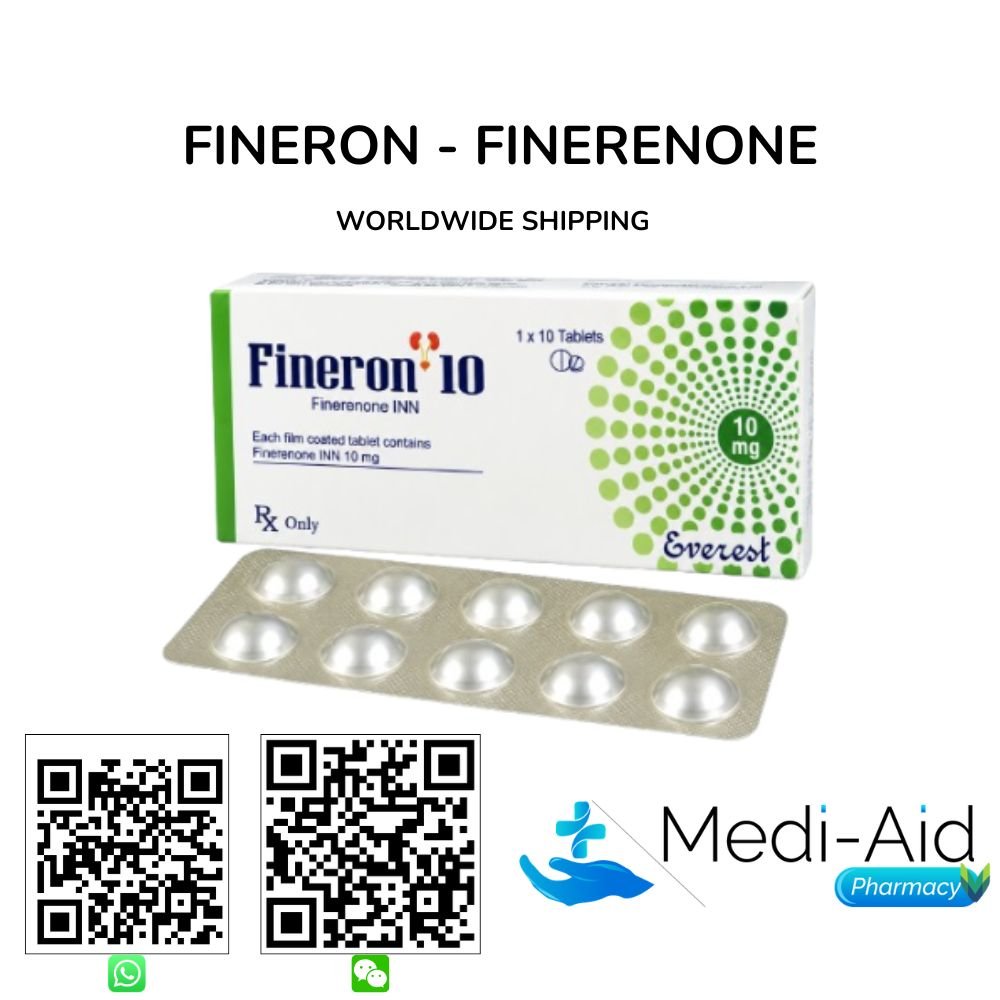
Fineron 10 MG (Finerenone) is a third-generation, non-steroidal, selective mineralocorticoid receptor antagonist (MRA) with dual cardiorenal protective activity in chronic kidney disease (CKD) associated with type 2 diabetes (T2D) – an orally administered, non-steroidal selective mineralocorticoid receptor (MR) ligand that blocks MR activation by both aldosterone and cortisol, inhibiting MR-mediated transcription of pro-inflammatory and pro-fibrotic gene programs in the kidney and cardiovascular system, thereby reducing CKD progression, kidney failure, and cardiovascular events simultaneously in patients with CKD-T2D – a mechanism and receptor selectivity profile fundamentally distinct from first-generation steroidal MRAs (spironolactone) and second-generation steroidal MRAs (eplerenone), with higher MR selectivity over androgen, glucocorticoid, and progesterone receptors and a different MR binding conformation providing more complete cofactor recruitment inhibition – supplied as film-coated tablets in 10 mg strength in a 10-tablet box and manufactured by Everest Pharmaceuticals Ltd. in Bangladesh.
Its active ingredient, finerenone INN, is the non-steroidal selective MRA approved by the FDA on July 9, 2021 and by the European Medicines Agency (EMA) in February 2022 for reducing the risk of sustained eGFR decline, end-stage kidney disease, cardiovascular death, non-fatal myocardial infarction, and hospitalization for heart failure in adults with CKD associated with type 2 diabetes. In the FIDELITY pooled analysis of the landmark Phase 3 trials FIDELIO-DKD and FIGARO-DKD (13,026 patients combined), finerenone reduced the kidney composite outcome by 23% versus placebo (HR 0.77; 95% CI 0.67-0.88) and the cardiovascular composite outcome by 14% versus placebo (HR 0.86; 95% CI 0.78-0.95) – establishing finerenone as the first non-steroidal MRA proven to deliver statistically significant, simultaneous cardiorenal risk reduction in CKD-T2D on top of maximally tolerated renin-angiotensin-aldosterone system (RAAS) inhibition.
Searching for Fineron 10 MG Finerenone? Mediaid Pharmacy lists this product across its kidney disease medicines, CKD treatment medicines, and Everest Pharmaceuticals portfolios and ships it worldwide.
Basic Product Information of Fineron 10 MG (Finerenone)
| Brand Name | Fineron 10 MG (Finerenone) |
| Product Name | Fineron |
| Generic Name | Finerenone INN (non-steroidal selective mineralocorticoid receptor antagonist) |
| Drug Class | Third-Generation Non-Steroidal Selective Mineralocorticoid Receptor Antagonist (MRA); Non-Steroidal MR Ligand Distinct from Steroidal MRAs (Spironolactone, Eplerenone); Aldosterone and Cortisol-Mediated MR Pathway Inhibitor; Pro-Inflammatory and Pro-Fibrotic Gene Transcription Blocker; CKD-Associated Type 2 Diabetes Cardiorenal Risk Reduction Agent; FIDELIO-DKD and FIGARO-DKD Validated Kidney and Cardiovascular Protective Agent |
| Formulation | Film-Coated Tablet (Oral) |
| Available Strength | 10 mg per tablet |
| Available Pack Size | 10 Tablets per Box (approximately 10 days of supply at the 10 mg once-daily dosing schedule; a standard 30-day month of Fineron 10 MG therapy requires approximately 3 boxes; the 10-tablet box format allows flexible dispensing for patients initiating therapy, allowing reassessment of serum potassium and eGFR at the 4-week mark before prescribing the next month of supply) |
| Dosing Schedule | Starting dose for patients with eGFR 25 to below 60 mL/min/1.73m2: 10 mg (one Fineron 10 MG tablet) orally once daily, with or without food. Confirm serum potassium is at or below 5.0 mEq/L before initiating. Dose uptitration at 4 weeks: If serum potassium is at or below 4.8 mEq/L and eGFR has not declined more than 30% from baseline, increase Fineron to 20 mg once daily (using the 20 mg strength tablet). If serum potassium is above 4.8 mEq/L and at or below 5.5 mEq/L at 4 weeks, continue Fineron 10 MG once daily without uptitration. If serum potassium is above 5.5 mEq/L at any time, withhold Fineron until serum potassium returns to 5.0 mEq/L or below, then restart at 10 mg once daily. Patients with eGFR at or above 60 mL/min/1.73m2: The recommended starting dose is 20 mg once daily (the 20 mg tablet strength). Fineron 10 MG is the appropriate starting dose for patients with eGFR below 60 mL/min/1.73m2, or as a continued maintenance dose when uptitration to 20 mg is not supported by serum potassium monitoring. Fineron can be taken with or without food. Consult the treating nephrologist, endocrinologist, or cardiologist for individualized dosing and serum potassium monitoring protocols. |
| Primary Indication | To reduce the risk of sustained eGFR decline, end-stage kidney disease (ESKD), cardiovascular death, non-fatal myocardial infarction, and hospitalization for heart failure in adults with chronic kidney disease (CKD) associated with type 2 diabetes mellitus (T2D). Fineron is used as add-on therapy in patients already receiving maximally tolerated doses of an ACE inhibitor or angiotensin receptor blocker (ARB). Confirm serum potassium at or below 5.0 mEq/L and eGFR at or above 25 mL/min/1.73m2 before initiating Fineron. Finerenone is not indicated for patients with adrenal insufficiency, patients receiving concomitant strong CYP3A4 inhibitors, or patients with serum potassium above 5.0 mEq/L at treatment initiation. |
| Manufacturer | Everest Pharmaceuticals Ltd., Bangladesh |
| Country of Origin | Bangladesh |
| Originator Reference Brand | Kerendia (finerenone tablets, 10 mg and 20 mg, developed by Bayer AG; FDA-approved July 9, 2021 for reducing cardiorenal risk in adults with CKD associated with type 2 diabetes; approved by the European Medicines Agency [EMA] in February 2022). Both Fineron and Kerendia contain finerenone INN as the active pharmaceutical ingredient in the same non-steroidal selective mineralocorticoid receptor antagonist drug class. Fineron is manufactured by Everest Pharmaceuticals Ltd. in Bangladesh and supplied through Mediaid Pharmacy for international procurement. |
| Distributor / Online Supplier | Mediaid Pharmacy (mediaidpharmacy.com) – worldwide shipping to patients, nephrology clinics, endocrinology departments, cardiology centers, hospital pharmacies, and healthcare providers globally. Contact: +8801773428128 (WhatsApp / Phone / WeChat) | info@mediaidpharmacy.com |
Drug Class and Mechanism of Action: Fineron 10 MG (Finerenone)
Finerenone (INN) is classified as a third-generation, non-steroidal, selective mineralocorticoid receptor antagonist (MRA) and represents a structurally and pharmacologically distinct class from first-generation steroidal MRAs (spironolactone) and second-generation steroidal MRAs (eplerenone). The antifibrotic and anti-inflammatory mechanism of action of finerenone operates through direct, high-affinity blockade of the mineralocorticoid receptor (MR) in target tissues – primarily the kidney and heart – preventing both aldosterone-mediated and cortisol-mediated MR activation, and thereby interrupting the downstream transcriptional programs that drive CKD progression and cardiovascular organ damage.
Mineralocorticoid receptor (MR) biology and pathophysiology: The mineralocorticoid receptor (MR, encoded by NR3C2) is a nuclear hormone receptor expressed in the kidney (distal nephron, collecting duct), heart (cardiomyocytes, fibroblasts), vasculature (endothelial and smooth muscle cells), and macrophages. Physiologically, MR activation by aldosterone regulates sodium reabsorption and potassium excretion in the kidney. In the pathological context of CKD associated with type 2 diabetes, elevated circulating aldosterone and inappropriately high local cortisol levels (the latter amplified in the kidney by reduced 11-beta-hydroxysteroid dehydrogenase type 2 [11beta-HSD2] activity in injured tubular cells) cause sustained, maladaptive MR activation in renal and cardiac tissues, driving transcription of pro-inflammatory genes (NF-kappaB pathway targets including interleukin-6, tumor necrosis factor-alpha, monocyte chemoattractant protein-1 [MCP-1]) and pro-fibrotic genes (connective tissue growth factor [CTGF], transforming growth factor-beta [TGF-beta], plasminogen activator inhibitor-1 [PAI-1]), resulting in glomerulosclerosis, tubular atrophy, interstitial fibrosis, and podocyte injury in the kidney, and myocardial fibrosis and cardiac hypertrophy in the heart.
Finerenone’s non-steroidal MR blockade mechanism: Finerenone competitively and selectively binds to the mineralocorticoid receptor ligand-binding domain with high affinity, displacing both aldosterone and cortisol and preventing MR conformational changes required for nuclear translocation, MR-coactivator complex assembly, and MR-response element-driven pro-inflammatory and pro-fibrotic gene transcription. The non-steroidal dihydropyridine structure of finerenone induces a distinct MR-bound conformation compared to steroidal MRAs (spironolactone and eplerenone), providing more complete inhibition of coactivator recruitment to the MR-transcription complex – an effect that translates to greater anti-fibrotic and anti-inflammatory potency per unit MR occupancy compared to steroidal competitors.
Critically, finerenone does NOT possess agonist activity at the MR (partial agonism observed with some steroidal MRAs in certain tissues is absent), and finerenone does NOT meaningfully bind to androgen receptor (AR), glucocorticoid receptor (GR), or progesterone receptor (PR) at therapeutic plasma concentrations, explaining the absence of sex hormone-related adverse effects (gynecomastia, sexual dysfunction, menstrual irregularities) associated with spironolactone’s AR antagonism. Tissue distribution and the kidney-heart ratio: A clinically important pharmacodynamic property of finerenone is its approximately balanced tissue distribution between the kidney and heart (heart-to-kidney distribution ratio approximately 1:1), contrasting with spironolactone and eplerenone which distribute preferentially to the kidney.
This balanced cardiorenal distribution provides a mechanistic basis for finerenone’s dual cardioprotective and renoprotective clinical outcomes in CKD-T2D patients, as finerenone achieves therapeutically relevant MR blockade in both the kidney (reducing glomerular hypertension, tubular inflammation, and interstitial fibrosis) and the heart (reducing myocardial fibrosis and cardiac hypertrophy) simultaneously at the approved once-daily oral dose. For the complete range of CKD and diabetic kidney disease treatment medicines available through Mediaid Pharmacy, visit the kidney disease medicines portfolio.
Pharmacological Properties of Finerenone (Fineron 10 MG)
The pharmacokinetic and pharmacodynamic profile of finerenone delivered as Fineron 10 MG is characterized by the following clinically validated properties. Absorption and bioavailability: Finerenone is absorbed after oral administration with an absolute oral bioavailability of approximately 44%. Peak plasma concentrations (Cmax) are reached rapidly at approximately 0.5 to 1.25 hours post-dose, indicating fast absorption. Food does not significantly alter finerenone AUC; however, a high-fat, high-calorie meal may increase Cmax by approximately 34% without meaningful change in overall AUC. Fineron 10 MG can therefore be administered with or without food, providing dosing flexibility for patients. The rapid Tmax of finerenone (under 1.5 hours) ensures fast onset of MR occupancy in kidney and cardiac tissues after each once-daily dose.
Distribution: Finerenone is extensively bound to plasma proteins at approximately 91-93%, predominantly to albumin and alpha-1-acid glycoprotein. The volume of distribution at steady state is approximately 52 liters, indicating tissue penetration beyond plasma. The balanced kidney-to-heart tissue distribution ratio (approximately 1:1) is a distinctive pharmacological property of finerenone compared with steroidal MRAs, supporting simultaneous cardiorenal MR blockade at the approved dose.
Metabolism: Finerenone is metabolized primarily by CYP3A4 (approximately 90% of oxidative metabolism) and to a minor extent by CYP2C8 (approximately 10%). All finerenone metabolites are pharmacologically inactive at therapeutic concentrations, meaning the parent compound (finerenone) is solely responsible for clinical MR antagonism – a clinically significant advantage over spironolactone, which generates multiple pharmacologically active steroidal metabolites (including canrenone) with different receptor binding profiles and longer half-lives that complicate dose-response relationships and contribute to spironolactone’s sex hormone-related adverse effects.
Elimination: Finerenone and its inactive metabolites are excreted approximately 79-80% in urine and approximately 20% in feces. The elimination half-life of finerenone is approximately 2-3 hours. Despite this relatively short plasma half-life, once-daily dosing is clinically effective because MR occupancy in target tissues is sustained through tight receptor binding that persists beyond the plasma elimination phase. Mild to moderate renal impairment (eGFR 25-59 mL/min/1.73m2) increases finerenone AUC by approximately 36-62% compared to normal renal function; no additional dose adjustment beyond the baseline eGFR-stratified starting dose selection (10 mg for eGFR below 60; 20 mg for eGFR at or above 60) is required because the 10 mg starting dose in the lower eGFR stratum accounts for this increased exposure. Finerenone has not been studied in patients with severe hepatic impairment (Child-Pugh C); use in this population is not recommended.
Clinically significant drug interactions – CYP3A4 pathway (critical): Finerenone is a CYP3A4 substrate, making CYP3A4 modulator interactions clinically critical. Strong CYP3A4 inhibitors (ketoconazole, itraconazole, voriconazole, ritonavir, clarithromycin, grapefruit and grapefruit juice, nefazodone): these agents substantially increase finerenone AUC (ketoconazole increases finerenone AUC approximately 7-fold) – CONCOMITANT USE IS CONTRAINDICATED with Fineron. Moderate CYP3A4 inhibitors (verapamil, diltiazem, fluconazole, erythromycin, cyclosporine, dronedarone): these agents increase finerenone AUC and require clinical monitoring for finerenone-related adverse effects including hyperkalemia; dose adjustment or avoidance may be warranted per clinical judgment. Strong CYP3A4 inducers (rifampicin, carbamazepine, phenytoin, phenobarbital, St. John’s Wort): these agents substantially reduce finerenone AUC (rifampicin decreases finerenone AUC approximately 88%) – CONCOMITANT USE SHOULD BE AVOIDED with Fineron, as therapeutic MR blockade cannot be reliably maintained.
Hyperkalemia risk determinants: The primary clinically significant pharmacodynamic drug interaction with Fineron is additive hyperkalemia risk with agents that raise serum potassium, including potassium supplements, potassium-containing salt substitutes, and potassium-sparing diuretics (amiloride, triamterene, other MRAs); concomitant use increases hyperkalemia risk and requires intensified potassium monitoring. ACE inhibitors and ARBs (already required in finerenone-eligible patients) also contribute to baseline hyperkalemia risk. For the complete Everest Pharmaceuticals medicines portfolio available at Mediaid Pharmacy with worldwide shipping, including Fineron and other Everest specialty medicines, visit the Everest Pharmaceuticals brand page.
Who Is Fineron 10 MG (Finerenone) Indicated For?
Fineron 10 MG (Finerenone) is indicated for adult patients with chronic kidney disease (CKD) associated with type 2 diabetes mellitus (T2D) who require additional cardiorenal risk reduction on top of maximally tolerated ACE inhibitor or ARB therapy. The clinical indication is defined by two landmark Phase 3 trials and their pooled FIDELITY analysis, which collectively enrolled 13,026 patients and established the magnitude of finerenone’s cardiorenal benefit across a broad spectrum of CKD severity in T2D.
First, patients enrolled in the FIDELIO-DKD trial (5,674 patients) represent the primary kidney-protection indication population for Fineron. FIDELIO-DKD enrolled adults with CKD associated with T2D meeting one of the following criteria: urinary albumin-to-creatinine ratio (UACR) 30 to 300 mg/g with eGFR 25 to below 60 mL/min/1.73m2, or UACR above 300 mg/g with eGFR 25 to below 75 mL/min/1.73m2, in all cases on maximally tolerated ACE inhibitor or ARB with serum potassium at or below 4.8 mEq/L at randomization. In this population, finerenone 10 mg or 20 mg once daily (uptitrated based on 4-week potassium monitoring) reduced the primary composite kidney endpoint – kidney failure (sustained eGFR below 15 mL/min/1.73m2, initiation of dialysis, or kidney transplantation), sustained 40% or greater decrease in eGFR from baseline, or death from renal causes – by 18% versus placebo (HR 0.82; 95% CI 0.73-0.93; p=0.0014), representing an absolute risk reduction of approximately 4% (17.8% finerenone vs 21.1% placebo) over a median follow-up of 2.6 years. The key secondary cardiovascular endpoint in FIDELIO-DKD (composite of CV death, nonfatal MI, nonfatal stroke, or hospitalization for heart failure) was also significantly reduced by 14% (HR 0.86; 95% CI 0.75-0.99; p=0.0339), confirming simultaneous cardiovascular protection in a trial powered for kidney outcomes.
Second, patients enrolled in the FIGARO-DKD trial (7,437 patients) represent the primary cardiovascular-protection indication population for Fineron. FIGARO-DKD enrolled a broader CKD-T2D population with a wider range of CKD severity (including patients with UACR 30-300 mg/g and eGFR at or above 60 mL/min/1.73m2, representing earlier CKD stages), all on maximally tolerated ACE inhibitor or ARB. Finerenone reduced the primary cardiovascular composite endpoint (CV death, nonfatal MI, nonfatal stroke, or hospitalization for heart failure) by 13% versus placebo (HR 0.87; 95% CI 0.76-0.98; p=0.0264) over a median follow-up of 3.4 years, driven primarily by a 29% reduction in hospitalization for heart failure (HR 0.71; 95% CI 0.56-0.90). The FIGARO-DKD kidney secondary endpoint (composite of kidney failure, sustained 40% or greater eGFR decrease, or death from renal causes) showed a numerically but not statistically significant reduction versus placebo in this trial.
Third, the FIDELITY pooled analysis (13,026 patients from FIDELIO-DKD and FIGARO-DKD combined) provides the highest-powered cardiorenal outcome evidence for finerenone: the kidney composite outcome was reduced by 23% (HR 0.77; 95% CI 0.67-0.88) and the cardiovascular composite outcome was reduced by 14% (HR 0.86; 95% CI 0.78-0.95) versus placebo, with consistent effects across subgroups stratified by eGFR, UACR severity, diabetes duration, baseline SGLT2 inhibitor use, and geographic region. The 10 mg once-daily starting dose of Fineron is appropriate for patients with eGFR 25 to below 60 mL/min/1.73m2, with uptitration to 20 mg once daily at 4 weeks guided by serum potassium monitoring.
Fineron is not appropriate for patients with adrenal insufficiency (MR blockade in this context risks adrenal crisis), patients receiving concomitant strong CYP3A4 inhibitors (contraindicated due to multi-fold increase in finerenone AUC and corresponding hyperkalemia and hypotension risk), patients with serum potassium above 5.0 mEq/L at initiation (hyperkalemia risk), patients with eGFR below 25 mL/min/1.73m2 (insufficient clinical data in this population), or patients not already receiving maximally tolerated RAAS inhibitor therapy.
Use of finerenone with other MRAs (spironolactone, eplerenone), dual RAAS blockade (ACE inhibitor plus ARB), or direct renin inhibitors alongside Fineron increases hyperkalemia risk and is generally avoided. Nephrology clinics, endocrinology departments, primary care physicians, and hospital pharmacies sourcing finerenone 10 mg tablets for CKD-T2D patients can contact Mediaid Pharmacy for international procurement, stock availability, and worldwide delivery coordination.
Global Supplier: Mediaid Pharmacy Worldwide Shipping for Fineron 10 MG (Finerenone)
Mediaid Pharmacy is a Dhaka-based supplier of specialty cardiorenal, nephrology, and targeted-therapy medicines with worldwide shipping to patients, nephrology clinics, endocrinology and diabetes departments, cardiology centers, hospital pharmacies, and international distributors across all regions, including high-burden countries in South Asia, Southeast Asia, the Middle East, and Sub-Saharan Africa where the prevalence of CKD associated with type 2 diabetes is rapidly growing and access to novel cardiorenal protective agents such as finerenone represents a critical clinical gap.
Fineron 10 MG (Finerenone), manufactured by Everest Pharmaceuticals Ltd. in Bangladesh, is supplied as 10 tablets per box – approximately 10 days of supply at once-daily dosing – with pricing quotations, stock confirmation, full product documentation, and end-to-end international delivery tracking for every order. Clinicians prescribing Fineron can calculate monthly supply requirements as follows: a standard 30-day month of Fineron 10 MG therapy requires approximately 3 boxes per patient; the initial 4-week monitoring period before uptitration decision requires approximately 3 boxes of Fineron 10 MG; patients remaining on 10 mg maintenance dosing require approximately 3 boxes per month for ongoing chronic therapy.
Nephrology and endocrinology departments managing CKD-T2D patient cohorts on finerenone therapy can contact the Mediaid Pharmacy team through WhatsApp, phone, or WeChat for program-level supply agreements, consolidated quotations, and logistics coordination for multi-patient CKD program procurement. Procurement teams can browse the complete Mediaid Pharmacy kidney disease medicines collection and the Everest Pharmaceuticals medicines portfolio before requesting a consolidated supply quotation.
Why Choose Fineron 10 MG (Finerenone) from Mediaid Pharmacy?
Fineron 10 MG (Finerenone) provides nephrologists, endocrinologists, cardiologists, primary care physicians, and hospital pharmacists with a Phase 3-validated, FDA-approved, EMA-approved non-steroidal mineralocorticoid receptor antagonist that is the only approved MRA with demonstrated statistically significant simultaneous reduction in both kidney failure progression and major cardiovascular events in CKD-T2D – the largest and most clinically urgent cardiorenal risk reduction opportunity in chronic disease medicine, affecting an estimated 40% of patients with type 2 diabetes who develop CKD during the course of their disease.
The FIDELITY pooled analysis (13,026 patients from FIDELIO-DKD and FIGARO-DKD) delivered the quantitative clinical evidence base for Fineron’s dual indication: a 23% reduction in kidney composite outcomes (HR 0.77; 95% CI 0.67-0.88) and a 14% reduction in cardiovascular composite outcomes (HR 0.86; 95% CI 0.78-0.95) versus placebo on top of maximally tolerated RAAS inhibitor therapy – outcomes achieved with a favorable tolerability profile dominated by manageable, predictable, and monitorable hyperkalemia as the primary clinically significant adverse event. The non-steroidal structure of finerenone – a dihydropyridine scaffold entirely distinct from the pregnane steroidal backbone of spironolactone and eplerenone – is the pharmacological basis for finerenone’s three key clinical differentiators from steroidal MRAs: (1) higher mineralocorticoid receptor selectivity over androgen receptor (AR), glucocorticoid receptor (GR), and progesterone receptor (PR), eliminating the gynecomastia, sexual dysfunction, and menstrual irregularity seen in up to 10% of spironolactone-treated patients; (2) exclusive use of a single, pharmacologically inactive metabolite profile (no active steroidal metabolites with independent AR-binding activity, unlike spironolactone’s canrenone and other active steroidal metabolite cascade); and (3) a distinct MR-bound receptor conformation that more completely blocks cofactor recruitment to the MR-transcription complex, potentially explaining finerenone’s superior anti-fibrotic and anti-inflammatory efficacy per unit of MR occupancy compared to eplerenone in preclinical models.
The once-daily oral dosing design of Fineron 10 MG – one film-coated tablet taken once daily with or without food, with a straightforward 4-week serum potassium-guided uptitration algorithm to 20 mg once daily for eligible patients – provides a practical, low-burden dosing regimen compatible with the complex polypharmacy typical of CKD-T2D patients already receiving antidiabetic agents (SGLT2 inhibitors, GLP-1 receptor agonists, metformin), RAAS inhibitors (ACE inhibitor or ARB), and often statins, calcium channel blockers, and antiplatelet agents. Importantly, finerenone and SGLT2 inhibitors (empagliflozin, dapagliflozin, canagliflozin) have complementary, non-overlapping cardiorenal mechanisms and have been used together in clinical trials with additive cardiorenal benefit signals and no significant safety interaction, supporting Fineron’s use as part of a comprehensive CKD-T2D treatment regimen alongside SGLT2 inhibitor therapy.
Fineron is manufactured by Everest Pharmaceuticals Ltd. in Bangladesh and is available through Mediaid Pharmacy with full product documentation, specialist supply coordination, and worldwide shipping from Dhaka. To source additional Everest Pharmaceuticals specialty medicines, visit the Mediaid Pharmacy Everest Pharmaceuticals medicines section and the kidney disease medicines portfolio, and contact the Mediaid Pharmacy team for a personalized quotation and worldwide delivery arrangements.
Frequently Asked Questions About Fineron 10 MG (Finerenone)
What is Fineron 10 MG (Finerenone) used for?
Fineron 10 MG (Finerenone) is a non-steroidal selective mineralocorticoid receptor antagonist (MRA) used to reduce the risk of sustained eGFR decline, end-stage kidney disease, cardiovascular death, non-fatal myocardial infarction, and hospitalization for heart failure in adults with chronic kidney disease (CKD) associated with type 2 diabetes (T2D). Finerenone works by blocking mineralocorticoid receptor (MR) activation by aldosterone and cortisol in the kidney and heart, inhibiting the pro-inflammatory and pro-fibrotic gene transcription programs that drive CKD progression and cardiovascular organ damage in T2D. Fineron is used as add-on therapy in patients already receiving maximally tolerated ACE inhibitor or angiotensin receptor blocker (ARB) therapy, with serum potassium at or below 5.0 mEq/L and eGFR at or above 25 mL/min/1.73m2 before starting. The 10 mg starting dose is appropriate for patients with eGFR 25 to below 60 mL/min/1.73m2. Fineron, manufactured by Everest Pharmaceuticals Ltd. in Bangladesh, is available through Mediaid Pharmacy with worldwide shipping.
What is the generic name of Fineron?
The generic name of Fineron is finerenone INN (a non-steroidal selective mineralocorticoid receptor antagonist). Fineron is the brand name registered by Everest Pharmaceuticals Ltd. for finerenone manufactured in Bangladesh. Fineron is formulated as oral film-coated tablets in 10 mg strength, supplied in a 10-tablet box – approximately 10 days of supply at once-daily dosing. A 30-day monthly supply of Fineron 10 MG requires approximately 3 boxes. The originator reference brand is Kerendia (Bayer AG, FDA-approved July 9, 2021). Mediaid Pharmacy distributes Fineron globally with worldwide shipping to patients, nephrology clinics, endocrinology departments, and hospital pharmacies.
What is the difference between Fineron (Finerenone) and Kerendia?
Fineron and Kerendia both contain finerenone INN as the active pharmaceutical ingredient and share the same mechanism of action – non-steroidal selective mineralocorticoid receptor (MR) blockade inhibiting aldosterone and cortisol-mediated pro-inflammatory and pro-fibrotic transcription in the kidney and heart. Kerendia (finerenone tablets, 10 mg and 20 mg) is the originator brand developed by Bayer AG, FDA-approved on July 9, 2021 for reducing cardiorenal risk in adults with CKD associated with T2D, and subsequently approved by the European Medicines Agency (EMA) in February 2022. Fineron is manufactured by Everest Pharmaceuticals Ltd. in Bangladesh and supplied through Mediaid Pharmacy for international procurement by nephrology clinics, endocrinology departments, hospital pharmacies, and patients in regions where Kerendia may be unavailable or cost-prohibitive. For the full range of kidney disease and cardiorenal medicines at Mediaid Pharmacy, visit the kidney disease medicines collection.
How is Fineron 10 MG (Finerenone) administered?
Fineron (Finerenone) is administered orally as one film-coated tablet once daily, with or without food – food does not significantly alter finerenone AUC, giving patients flexibility in timing relative to meals. Before starting Fineron 10 MG, confirm serum potassium is at or below 5.0 mEq/L and eGFR is at or above 25 mL/min/1.73m2. The starting dose of 10 mg once daily is appropriate for patients with eGFR 25 to below 60 mL/min/1.73m2. At 4 weeks after initiation, measure serum potassium and eGFR: if serum potassium is at or below 4.8 mEq/L and eGFR has not decreased more than 30% from baseline, uptitrate to 20 mg once daily (the 20 mg tablet strength). If potassium at 4 weeks is above 4.8 mEq/L and at or below 5.5 mEq/L, continue Fineron 10 MG without uptitration and reassess. If serum potassium rises above 5.5 mEq/L at any time during therapy, withhold Fineron until potassium returns to 5.0 mEq/L or below, then restart at 10 mg once daily. Swallow Fineron tablets whole. Do not administer Fineron with grapefruit juice or other strong CYP3A4 inhibitors. Consult the treating nephrologist or cardiologist for the individualized dosing, uptitration, and serum potassium monitoring protocol.
What are the side effects of Fineron 10 MG (Finerenone)?
The most clinically significant adverse reaction of finerenone is hyperkalemia (elevated serum potassium). In the FIDELIO-DKD trial, hyperkalemia leading to dose reduction or temporary interruption occurred in approximately 14.7% of finerenone-treated patients versus 6.9% in the placebo group; hyperkalemia leading to permanent discontinuation occurred in approximately 2.3% of finerenone patients versus 0.9% with placebo; serious hyperkalemia requiring hospitalization occurred in approximately 1.0% of finerenone patients versus 0.3% with placebo. Hyperkalemia risk is highest in patients with lower baseline eGFR, higher baseline serum potassium (above 4.5 mEq/L), higher baseline UACR, concomitant potassium-raising agents (potassium supplements, potassium-sparing diuretics), and reduced kidney function impairing urinary potassium excretion. Other reported adverse events include hypotension (dizziness or lightheadedness from blood pressure reduction) and hyponatremia. Because finerenone is non-steroidal with high MR selectivity over androgen and progesterone receptors, it does NOT cause gynecomastia, sexual dysfunction, or menstrual irregularities – adverse effects that complicate steroidal MRA (spironolactone) therapy in a meaningful proportion of patients. Mandatory monitoring throughout Fineron therapy includes serum potassium at baseline, at 4 weeks after initiation, at 4 weeks after any dose change, and at regular intervals as clinically indicated for ongoing chronic therapy. Always discuss the full finerenone safety profile and serum potassium monitoring plan with the treating nephrologist, endocrinologist, or cardiologist before initiating Fineron.
How does Finerenone (Fineron) differ from Spironolactone and Eplerenone?
Finerenone (Fineron), spironolactone, and eplerenone all block the mineralocorticoid receptor (MR) but differ substantially in selectivity, receptor binding conformation, active metabolite profiles, tissue distribution, and clinical applications. Spironolactone (first-generation steroidal MRA): significant off-target binding to androgen receptor (AR) causes gynecomastia in approximately 9-10% and sexual dysfunction in a similar proportion of treated males; generates multiple pharmacologically active steroidal metabolites (canrenone, 7-alpha-thiomethylspironolactone) with varying receptor affinities and half-lives that complicate dose-response relationships; distributes preferentially to the kidney; approved for heart failure with reduced ejection fraction (HFrEF), primary hyperaldosteronism, edematous conditions, and hypertension. Eplerenone (second-generation steroidal MRA): higher MR selectivity over AR than spironolactone, reducing (but not eliminating) sex hormone-related adverse effects; lower MR binding affinity than spironolactone or finerenone; approved for HFrEF and hypertension. Finerenone (third-generation non-steroidal MRA): highest MR selectivity over AR, GR, and PR of the three; non-steroidal structure produces no active metabolites; balanced kidney-to-heart distribution (approximately 1:1) supporting simultaneous cardiorenal protection; no gynecomastia or sexual dysfunction at approved doses; only MRA with Phase 3 evidence specifically in CKD-T2D for simultaneous kidney and cardiovascular risk reduction. For the complete portfolio of mineralocorticoid receptor antagonist and kidney disease medicines available at Mediaid Pharmacy, visit the kidney disease medicines collection.
Is Fineron 10 MG (Finerenone) safe during pregnancy or while breastfeeding?
Fineron (Finerenone) is not recommended during pregnancy. Based on the mechanism of action of mineralocorticoid receptor antagonists (which affect aldosterone-regulated renal sodium and potassium handling), and on animal reproductive toxicology studies that demonstrated fetal harm at doses below the human therapeutic dose, finerenone has the potential to cause fetal harm when administered to a pregnant woman. Advise patients of reproductive potential to use effective contraception during Fineron therapy. No adequate and well-controlled studies of finerenone have been conducted in pregnant women. The ACE inhibitors and ARBs used concomitantly with Fineron are themselves contraindicated in pregnancy (both drug classes cause fetal renal toxicity, oligohydramnios, and fetal death in the second and third trimesters), reinforcing that the overall CKD-T2D regimen including Fineron is not appropriate in pregnant patients. The potential excretion of finerenone in human breast milk is unknown; because of the potential for serious adverse reactions in the nursing infant from MR blockade, breastfeeding is not recommended during Fineron therapy. If pregnancy occurs during Fineron treatment, notify the treating physician immediately to discuss treatment modification and fetal risk assessment. Consult the treating nephrologist or specialist before starting Fineron in any patient of reproductive potential.
Can I order Fineron 10 MG (Finerenone) online with worldwide shipping?
Yes. Mediaid Pharmacy supplies Fineron 10 MG (Finerenone) to patients, nephrology clinics, endocrinology and diabetes departments, cardiology centers, hospital pharmacies, and healthcare providers globally. Contact Mediaid Pharmacy via WhatsApp, phone, or WeChat at +8801773428128, or email info@mediaidpharmacy.com for pricing, current stock availability, and international delivery details for your country.
Order Fineron 10 MG (Finerenone) with Worldwide Shipping
Phone / WhatsApp / WeChat: +8801773428128 | Email: info@mediaidpharmacy.com
Reviews
There are no reviews yet.