
Description
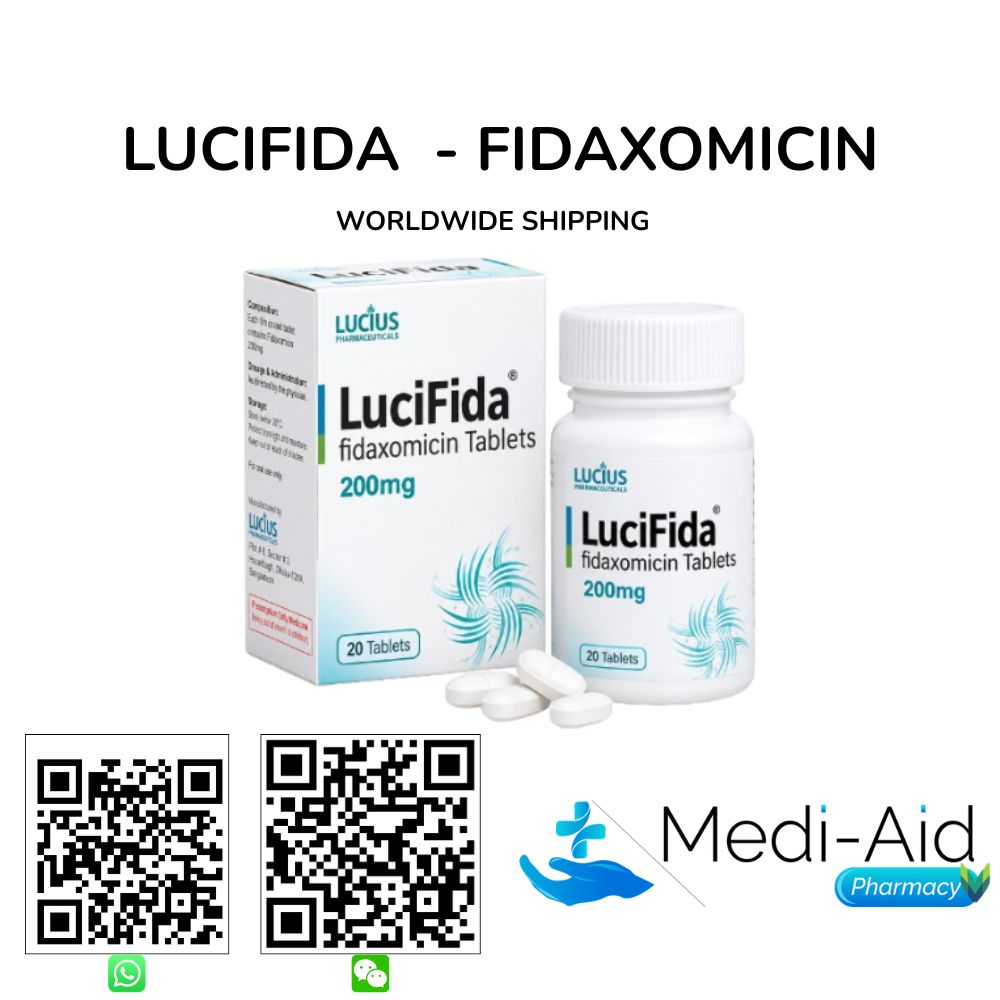
LuciFida 200 MG (Fidaxomicin) is a selective macrolide antibiotic and bacterial RNA polymerase inhibitor an orally administered, minimally systemically absorbed, narrow-spectrum antibacterial agent that targets the sigma subunit of bacterial RNA polymerase to achieve bactericidal activity against Clostridioides difficile within the gastrointestinal lumen supplied as film-coated tablets in 200 mg strength in a 20-tablet pot and manufactured by Lucius Pharmaceuticals (Lao) Co., Ltd. in Laos. Its active ingredient, fidaxomicin INN, inhibits the initiation phase of bacterial RNA transcription by binding selectively to the switch region of the C. difficile RNA polymerase sigma subunit, an action that is mechanistically distinct from rifamycins and vancomycin, conferring bactericidal activity against both vegetative cells and sporulating forms of Clostridioides difficile.
LuciFida 200 MG is formulated as a film-coated tablet taken orally twice daily for a standard 10-day treatment course one pot of 20 tablets constitutes a complete course with minimal systemic absorption confirmed in pharmacokinetic studies (<1% systemic bioavailability), ensuring that therapeutic drug concentrations are maintained exclusively within the colonic lumen where C. difficile colonizes and produces its toxins. In the pivotal Phase 3 Study 003 evaluating fidaxomicin against vancomycin in Clostridioides difficile infection (CDI), fidaxomicin demonstrated non-inferior clinical cure rates (88.2% versus 85.8% for vancomycin) while achieving a statistically significant reduction in CDI recurrence 12.7% recurrence with fidaxomicin versus 26.9% with vancomycin (p<0.001) representing a 52.8% relative reduction in recurrence risk that defines fidaxomicin’s clinical differentiation from vancomycin as the gold-standard endpoint in CDI management.
In the Phase 3 OPTiC trial targeting patients with at least one CDI recurrence risk factor, fidaxomicin achieved a sustained clinical cure (SCC) rate of 40.7% versus 26.5% for vancomycin (p=0.003), confirming superior protection against recurrence specifically in the high-risk CDI population most likely to experience treatment failure. Searching for LuciFida 200 MG Fidaxomicin? Mediaid Pharmacy lists this product across its infectious disease medicines, antibiotic medicines, and Lucius Pharmaceuticals portfolios and ships it worldwide.
Basic Product Information of LuciFida 200 MG (Fidaxomicin)
| Brand Name | LuciFida 200 MG (Fidaxomicin) |
| Product Name | LuciFida |
| Generic Name | Fidaxomicin INN |
| Drug Class | Macrolide Antibiotic; Bacterial RNA Polymerase Inhibitor (Sigma Subunit); Narrow-Spectrum Clostridioides difficile Antibiotic; Minimally Absorbed Gastrointestinal Antibacterial Agent; CDI Treatment Agent |
| Formulation | Film-Coated Tablet (Oral) |
| Available Strengths | 200 mg per tablet |
| Available Pack Size | 20 Tablets per Pot (one complete 10-day treatment course) |
| Dosing Schedule | Standard CDI dosing: 200 mg orally twice daily (every 12 hours) for 10 days one LuciFida 200 MG film-coated tablet in the morning and one in the evening. Administer with or without food. Swallow tablets whole. One 20-tablet pot of LuciFida 200 MG contains the complete 10-day treatment course. No dose adjustment is established for renal impairment; use with caution in severe hepatic impairment. Consult the treating infectious disease specialist or gastroenterologist for dose guidance in specific patient populations. |
| Primary Indication | Treatment of Clostridioides difficile infection (CDI), also referred to as Clostridioides difficile-associated diarrhea (CDAD), in adults and pediatric patients aged 18 years and older. Fidaxomicin is indicated for first episodes and recurrent CDI. It is not indicated for systemic infections and is not absorbed to a clinically meaningful extent; therapeutic action is limited to the colonic lumen. Always confirm the CDI diagnosis with stool toxin testing before initiating LuciFida. |
| Manufacturer | Lucius Pharmaceuticals (Lao) Co., Ltd., Laos |
| Country of Origin | Laos |
| Originator Reference Brand | Dificid® (fidaxomicin tablets, 200 mg, by Merck & Co. / Astellas Pharma approved in the United States, European Union, and other major markets). Both LuciFida and Dificid® contain fidaxomicin INN as the active pharmaceutical ingredient in the same macrolide RNA polymerase inhibitor drug class. LuciFida is manufactured by Lucius Pharmaceuticals (Lao) Co., Ltd. in Laos and is supplied through Mediaid Pharmacy for international procurement. |
| Global Supplier | Mediaid Pharmacy, Worldwide Shipping Available |
| Storage Conditions | Store at room temperature (15°C to 30°C). Keep in the original packaging and protect from moisture. Keep out of the reach of children. |
How LuciFida (Fidaxomicin) Works: Selective Bacterial RNA Polymerase Inhibition Against Clostridioides difficile in the Gastrointestinal Lumen
Fidaxomicin INN is an orally administered, minimally systemically absorbed, macrolide-class antibacterial agent that exerts bactericidal activity against Clostridioides difficile (formerly Clostridium difficile) through a mechanism of action mechanistically distinct from all other agents used in CDI treatment. Fidaxomicin selectively inhibits bacterial RNA polymerase by binding to the switch region of the sigma subunit specifically the switch 2 and switch 3 regions blocking the initiation phase of RNA transcription. This mechanism differs fundamentally from rifamycin-class antibiotics (such as rifaximin), which target the beta subunit of RNA polymerase at the rifamycin-binding pocket: fidaxomicin binds a distinct site on the sigma subunit, meaning that fidaxomicin retains bactericidal activity against rifamycin-resistant C. difficile strains and is not cross-resistant with rifamycins.
Fidaxomicin’s RNA polymerase inhibition is bactericidal against Clostridioides difficile vegetative cells, with a minimum inhibitory concentration (MIC90) of ≤0.25 µg/mL against clinical C. difficile isolates, including the hypervirulent ribotype 027 (BI/NAP1/027) strain. Critically, fidaxomicin’s inhibition of RNA polymerase also suppresses the production of C. difficile toxins (toxin A and toxin B) and spore formation two biological events that directly drive CDI pathogenesis and recurrence which is the biochemical basis for fidaxomicin’s demonstrated clinical superiority over vancomycin in reducing recurrence rates in landmark Phase 3 trials.
The pharmacokinetic profile of fidaxomicin is defined by its deliberate minimal systemic absorption: oral bioavailability is less than 1%, with plasma concentrations of fidaxomicin and its active metabolite OP-1118 (formed by intestinal hydrolysis) remaining below the limit of quantification in most patients following standard 200 mg twice-daily dosing. This near-complete confinement to the gastrointestinal lumen achieves two clinically essential outcomes: first, fecal concentrations of fidaxomicin exceed the MIC90 of C. difficile by several hundredfold throughout the 10-day treatment course, maintaining robust bactericidal activity throughout the entire colon; and second, fidaxomicin causes minimal disruption to the commensal colonic microbiome because systemic exposure which drives off-target systemic antimicrobial effects is negligible.
In contrast, oral vancomycin, while also minimally absorbed, exhibits a broader spectrum of antibacterial activity against commensal intestinal bacteria, particularly against Enterococcus and other Gram-positive flora; this broader microbiome disruption is considered a contributing factor to the higher post-treatment CDI recurrence rates observed with vancomycin compared with fidaxomicin in Phase 3 trials. Fidaxomicin has a narrow antimicrobial spectrum: it is active against Clostridioides difficile and most Gram-positive anaerobes but has negligible activity against the aerobic and facultatively anaerobic Gram-negative organisms and the commensal Bacteroides species that form the protective colonic microbiota preserving gut microbiome integrity and colonization resistance against C. difficile re-establishment after treatment completion. For the complete range of anti-infective and antibiotic medicines available through Mediaid Pharmacy, visit the antibiotic medicines collection.
LuciFida 200 MG (Fidaxomicin): Indications, Dosing, and Key Safety Information
| Approved Indication | Clostridioides difficile Infection (CDI) / C. difficile-Associated Diarrhea (CDAD): Treatment of CDI in adults aged 18 years and older, including first-episode CDI and recurrent CDI. Fidaxomicin is not indicated for the treatment of systemic infections. Confirm CDI diagnosis by stool testing for C. difficile toxin or toxigenic C. difficile before initiating LuciFida. |
| Recommended Dose | Adults (≥18 years): 200 mg orally twice daily (every 12 hours) for 10 days. One LuciFida 200 MG film-coated tablet in the morning and one LuciFida 200 MG film-coated tablet in the evening. One 20-tablet pot of LuciFida 200 MG covers the complete standard treatment course. Administer with or without food. Swallow tablets whole with water. |
| Missed Dose | If a dose is missed, the patient should take it as soon as remembered on the same day. If it is nearly time for the next scheduled dose, skip the missed dose and resume the regular twice-daily schedule. Do not double the dose to compensate for a missed dose. Complete the full 10-day course of LuciFida even if symptoms improve before the course is finished. |
| Special Populations | Renal Impairment: No dose adjustment is required in patients with renal impairment, as fidaxomicin is minimally absorbed systemically. Hepatic Impairment: No dose adjustment is formally established; use with caution in severe hepatic impairment consult the treating specialist. Elderly Patients: No dose adjustment required based on age alone; pharmacokinetics are not materially altered in elderly patients. Pediatric Patients: Safety and efficacy in patients under 18 years have not been fully established for standard formulations consult current prescribing information and the treating clinician. |
| Key Warnings & Precautions | Not for Systemic Infections: Fidaxomicin is minimally absorbed from the gastrointestinal tract (<1% systemic bioavailability) and is not effective against bloodstream infections, bacteremia, intra-abdominal infections outside the colonic lumen, or any infection requiring systemic antibiotic exposure. Do not use LuciFida for indications other than CDI.
Confirm CDI Diagnosis Before Initiation: LuciFida should only be prescribed following laboratory confirmation of Clostridioides difficile infection by stool toxin testing (EIA or NAAT/PCR). Empiric use without confirmed diagnosis risks unnecessary antibiotic exposure and potential masking of alternative diagnoses causing diarrhea. Complete the Full Course: Do not discontinue LuciFida prematurely upon symptom improvement. Incomplete treatment courses are associated with CDI treatment failure, persistence of viable C. difficile spores, and higher recurrence risk. Hypersensitivity Reactions: Discontinue LuciFida immediately in patients developing signs or symptoms of a hypersensitivity reaction (rash, urticaria, angioedema, or anaphylaxis) and institute appropriate management. Fidaxomicin belongs to the macrolide antibiotic class inform prescribers of any prior macrolide hypersensitivity. Superinfection: The use of antibiotics, including fidaxomicin, may promote overgrowth of non-susceptible organisms. Monitor patients throughout the treatment course for signs of superinfection and manage accordingly. Embryo-Fetal Considerations: No adequate and well-controlled studies of fidaxomicin in pregnant women are available. Given minimal systemic absorption, fetal exposure is expected to be negligible; however, consult the treating physician before administering LuciFida during pregnancy or breastfeeding. |
| Common Adverse Reactions (≥2%) | Nausea, vomiting, abdominal pain, gastrointestinal hemorrhage (in hospitalized CDI patients with significant comorbidities), and anemia. Because fidaxomicin is minimally absorbed, most adverse reactions are gastrointestinal in nature and are often attributable to the underlying CDI rather than the drug itself. Serious adverse reactions are infrequent; the overall safety profile of fidaxomicin in Phase 3 trials was comparable to vancomycin. Discontinue LuciFida and seek medical attention for signs of a hypersensitivity reaction. |
| Drug Interactions | Fidaxomicin is a substrate of P-glycoprotein (P-gp). Strong P-gp inhibitors (such as cyclosporine, amiodarone, dronedarone, and verapamil) may increase plasma concentrations of fidaxomicin and its active metabolite OP-1118 exercise caution and monitor for adverse reactions during co-administration. Cyclosporine specifically increased fidaxomicin Cmax by approximately 4-fold and AUC by approximately 2-fold in pharmacokinetic interaction studies use with caution in organ transplant recipients receiving cyclosporine. Because systemic absorption is otherwise very low, the clinical drug interaction risk for most co-medications is minimal. Disclose all immunosuppressant and P-gp inhibitor medications to the treating physician before initiating LuciFida. |
| Pregnancy & Lactation | Adequate and well-controlled studies of fidaxomicin in pregnant women are not available. Animal reproduction studies have not demonstrated evidence of embryo-fetal harm; however, given the absence of clinical data, LuciFida should be used during pregnancy only if the potential benefit justifies the potential risk to the fetus. Because systemic absorption of fidaxomicin is less than 1%, breast milk exposure is expected to be negligible however, caution is advised during breastfeeding. Consult the treating infectious disease specialist or obstetrician before initiating LuciFida in pregnant or breastfeeding patients. |
Who Should Use LuciFida 200 MG (Fidaxomicin)?
LuciFida 200 MG (Fidaxomicin) is indicated for adult patients with confirmed Clostridioides difficile infection (CDI) a spectrum of clinical disease ranging from mild-to-moderate antibiotic-associated diarrhea to severe, fulminant, life-threatening colitis in whom oral antibiotic therapy is appropriate and CDI has been confirmed by stool toxin testing.
First, patients experiencing a first episode of CDI constitute the primary indication: fidaxomicin is appropriate as a first-line treatment option for non-severe, non-fulminant CDI in adults, including patients who develop CDI in the community or hospital setting following antibiotic exposure that disrupts normal colonic flora and permits C. difficile spore germination, toxin production, and intestinal inflammation. The 10-day, 200 mg twice-daily dosing course with LuciFida provides complete treatment with a single 20-tablet pot.
Second, patients with recurrent CDI (rCDI) represent the population in which fidaxomicin’s clinical advantage over vancomycin is most clearly demonstrated: because fidaxomicin achieves bactericidal colonic lumen concentrations while preserving commensal microbiota and suppressing C. difficile sporulation, it reduces the residual spore burden that drives re-infection after treatment ends. In the pivotal Phase 3 Study 003, fidaxomicin reduced CDI recurrence from 26.9% with vancomycin to 12.7% a statistically significant 52.8% relative risk reduction (p<0.001). In the OPTiC Phase 3 trial conducted in patients with at least one CDI recurrence risk factor (age ≥65, prior CDI episode, severe CDI at enrollment, or concomitant proton pump inhibitor use), fidaxomicin achieved a sustained clinical cure rate of 40.7% versus 26.5% for vancomycin (p=0.003), confirming its superiority specifically in the high-risk recurrent CDI population.
Third, patients at elevated recurrence risk including elderly patients (aged ≥65 years), immunocompromised patients (transplant recipients, patients receiving immunosuppressive therapy, patients with hematologic malignancies), patients on concomitant antibiotics that cannot be discontinued, and patients with hypervirulent ribotype 027 CDI represent the population most likely to derive the greatest clinical benefit from LuciFida relative to vancomycin, as these risk factors directly amplify the recurrence probability that fidaxomicin’s mechanism of spore suppression and microbiome preservation is designed to mitigate.
LuciFida is not appropriate for patients with systemic infections requiring parenteral or systemically bioavailable antibiotics, patients with confirmed ileus or toxic megacolon who cannot absorb oral medications into the colonic lumen, patients with known hypersensitivity to fidaxomicin or any macrolide antibiotic, or patients whose diarrheal illness has not been confirmed as CDI by laboratory testing. Infectious disease centers, gastroenterology clinics, and hospital pharmacy teams sourcing LuciFida alongside complementary anti-infective agents can browse the Mediaid Pharmacy infectious disease medicines and antibiotic medicines portfolios for the full selection available for international delivery.
Global Supplier: Mediaid Pharmacy Worldwide Shipping for LuciFida 200 MG (Fidaxomicin)
Mediaid Pharmacy is a Dhaka-based supplier of specialty anti-infective, oncology, and targeted-therapy medicines with worldwide shipping to patients, infectious disease clinics, gastroenterology departments, hospital pharmacies, transplant programs, and international distributors across all regions. LuciFida 200 MG (Fidaxomicin), manufactured by Lucius Pharmaceuticals (Lao) Co., Ltd. in Laos, is supplied as a 20-tablet pot one pot constituting a complete 10-day treatment course with pricing quotations, stock confirmation, full product documentation, and end-to-end international delivery tracking for every order. The 20-tablet pot format precisely matches the standard CDI treatment duration (200 mg twice daily × 10 days = 20 tablets), eliminating the need for partial-pack dispensing and simplifying pharmacy inventory management for CDI treatment programs.
Infectious disease departments treating CDI patients in community hospitals, tertiary referral centers, and long-term care facilities; hospital formulary and antimicrobial stewardship teams; transplant programs requiring fidaxomicin for immunocompromised CDI patients; international distributors; and individual patients can contact the Mediaid Pharmacy team through WhatsApp, phone, or WeChat for all inquiries regarding LuciFida Fidaxomicin stock availability, current pricing, and international delivery timelines. Procurement teams co-sourcing LuciFida with other infectious disease or anti-infective agents can browse the complete Mediaid Pharmacy infectious disease medicines collection and the Lucius Pharmaceuticals medicines portfolio before requesting a consolidated quotation.
Why Choose LuciFida 200 MG (Fidaxomicin) from Mediaid Pharmacy?
LuciFida 200 MG (Fidaxomicin) provides infectious disease physicians, gastroenterologists, hospital pharmacists, and antimicrobial stewardship programs with a mechanistically differentiated, Phase 3-validated CDI antibiotic whose clinical evidence base demonstrates a statistically significant and clinically meaningful reduction in CDI recurrence rates compared with vancomycin the most consequential outcome metric in CDI management given that recurrent CDI affects 20–30% of patients treated with older agents and carries substantially higher morbidity, hospitalization risk, and healthcare costs per episode.
The pivotal Phase 3 Study 003 (596 patients) established fidaxomicin’s non-inferiority to vancomycin in clinical cure (88.2% versus 85.8%, p<0.001 for non-inferiority) while simultaneously demonstrating statistically superior recurrence reduction 12.7% recurrence with fidaxomicin versus 26.9% with vancomycin (p<0.001) a 52.8% relative reduction in recurrence risk that was not observed in the non-ribotype 027 strain subgroup and was most pronounced in patients infected with non-hypervirulent strains, confirming that the benefit extends across the broad CDI clinical population encountered in routine practice.
The Phase 3 Study 004 (509 patients) independently replicated these findings, showing fidaxomicin recurrence rates of 13.3% versus 24.0% with vancomycin in the microbiologically evaluable population. The Phase 3 OPTiC trial specifically designed in the high-risk recurrent CDI population demonstrated that fidaxomicin achieved a sustained clinical cure (SCC) rate of 40.7% versus 26.5% for vancomycin (p=0.003) in patients with at least one recurrence risk factor, providing direct Phase 3 evidence for fidaxomicin’s preferred use in the elderly, immunocompromised, and previously relapsed CDI patients who represent the highest-burden clinical need.
The narrow-spectrum, gut-restricted pharmacology of LuciFida with <1% systemic bioavailability, fecal concentrations exceeding the MIC90 of C. difficile by orders of magnitude, and negligible systemic off-target antimicrobial effects constitutes both a clinical differentiator and an antimicrobial stewardship asset: LuciFida kills C. difficile with maximal local potency while sparing the commensal microbiome that protects against CDI recurrence and minimizing systemic antibiotic side effects.
LuciFida is manufactured by Lucius Pharmaceuticals (Lao) Co., Ltd. in Laos and is available through Mediaid Pharmacy with full product documentation, specialist supply coordination, and worldwide shipping from Dhaka. To source additional Lucius Pharmaceuticals infectious disease and specialty medicines, visit the Mediaid Pharmacy Lucius Pharmaceuticals medicines section and the infectious disease medicines portfolio, and contact the team for a personalized quotation.
Frequently Asked Questions About LuciFida 200 MG (Fidaxomicin)
What is LuciFida 200 MG (Fidaxomicin) used for?
LuciFida 200 MG (Fidaxomicin) is a selective macrolide antibiotic and bacterial RNA polymerase inhibitor used for the treatment of Clostridioides difficile infection (CDI), also known as C. difficile-associated diarrhea (CDAD), in adults aged 18 years and older. CDI is a toxin-mediated infectious colitis caused by the anaerobic spore-forming bacterium Clostridioides difficile, most commonly arising after antibiotic-induced disruption of the normal colonic microbiota. LuciFida is indicated for both first-episode CDI and recurrent CDI. Fidaxomicin works by inhibiting bacterial RNA polymerase specifically in the colonic lumen, killing C. difficile while preserving the commensal gut microbiota an attribute that distinguishes it from vancomycin and contributes to its clinically demonstrated lower recurrence rates. The originator brand for fidaxomicin is Dificid® (Merck/Astellas). LuciFida, manufactured by Lucius Pharmaceuticals (Lao) Co., Ltd. in Laos, is available through Mediaid Pharmacy with worldwide shipping.
What is the generic name of LuciFida?
The generic name of LuciFida is fidaxomicin INN. LuciFida is the brand name registered by Lucius Pharmaceuticals (Lao) Co., Ltd. for fidaxomicin manufactured in Laos. LuciFida is formulated as oral film-coated tablets in 200 mg strength, supplied in a 20-tablet pot one complete 10-day treatment course per pot. The standard fidaxomicin dosing regimen is 200 mg twice daily for 10 days, making one pot of LuciFida 200 MG exactly equivalent to a full treatment course. The originator reference brand is Dificid® (Merck & Co./Astellas Pharma). Mediaid Pharmacy distributes LuciFida globally with worldwide shipping to patients, infectious disease centers, hospital pharmacies, and specialist clinics.
What is the difference between LuciFida (Fidaxomicin) and Dificid® (Fidaxomicin)?
LuciFida and Dificid® both contain fidaxomicin INN as the active pharmaceutical ingredient and share the same macrolide antibiotic, RNA polymerase sigma-subunit inhibitor mechanism of action against Clostridioides difficile. Dificid® is the originator brand developed by Optimer Pharmaceuticals (now marketed by Merck & Co. in the United States and Astellas Pharma in the European Union and other markets), available as 200 mg film-coated tablets. LuciFida is manufactured by Lucius Pharmaceuticals (Lao) Co., Ltd. in Laos and is available through Mediaid Pharmacy for international procurement by hospitals, infectious disease programs, and patients in regions where Dificid® may be unavailable or cost-prohibitive. For the full range of infectious disease medicines at Mediaid Pharmacy, visit the infectious disease medicines collection.
How is LuciFida 200 MG (Fidaxomicin) administered?
LuciFida (Fidaxomicin) is administered orally as one 200 mg film-coated tablet twice daily (every 12 hours once in the morning and once in the evening) for 10 days. It may be taken with or without food. Swallow each LuciFida tablet whole with water do not crush, split, or chew the film-coated tablet. Take LuciFida at the same times each day to maintain consistent fecal drug concentrations throughout the colon. Complete the entire 10-day course even if diarrhea symptoms resolve earlier premature discontinuation risks treatment failure and CDI recurrence. One 20-tablet pot of LuciFida 200 MG provides the exact number of tablets required to complete the standard treatment course. Do not use LuciFida for indications other than confirmed Clostridioides difficile infection.
What are the side effects of LuciFida 200 MG (Fidaxomicin)?
The most common adverse reactions of fidaxomicin reported in Phase 3 clinical trials include nausea, vomiting, abdominal pain, and gastrointestinal hemorrhage. Because fidaxomicin is minimally absorbed systemically (<1% bioavailability), the majority of adverse events are gastrointestinal and are frequently attributable to the underlying Clostridioides difficile infection rather than the drug itself. The overall safety profile of fidaxomicin in Phase 3 Studies 003 and 004 was comparable to oral vancomycin. Hypersensitivity reactions including rash, urticaria, and angioedema have been reported rarely; discontinue LuciFida immediately if a hypersensitivity reaction occurs. Anemia was reported in hospitalized CDI patients with significant comorbidities. As with all antibiotics, LuciFida may promote overgrowth of non-susceptible organisms. Always discuss the complete safety profile and individual risk factors with the treating physician before and throughout LuciFida treatment.
How effective is Fidaxomicin (LuciFida) for C. difficile infection compared to vancomycin?
Fidaxomicin has demonstrated clinically superior recurrence reduction compared with oral vancomycin in two independent Phase 3 trials and a dedicated high-risk population trial. Phase 3 Study 003 (596 evaluable patients) showed fidaxomicin achieved non-inferior clinical cure rates (88.2% versus 85.8% for vancomycin) with a statistically significant reduction in CDI recurrence 12.7% with fidaxomicin versus 26.9% with vancomycin (p<0.001), a 52.8% relative risk reduction. Phase 3 Study 004 (509 evaluable patients) independently replicated these findings with recurrence rates of 13.3% (fidaxomicin) versus 24.0% (vancomycin). In the Phase 3 OPTiC trial which specifically enrolled CDI patients with at least one risk factor for recurrence fidaxomicin achieved a sustained clinical cure rate of 40.7% versus 26.5% for vancomycin (p=0.003), confirming its clinical advantage in the elderly, immunocompromised, and previously relapsed CDI patient populations. LuciFida delivers the same active ingredient fidaxomicin INN at the same reference tablet dose (200 mg), sourced through Mediaid Pharmacy with worldwide shipping. For the complete antibiotic medicines range at Mediaid Pharmacy, visit the antibiotic medicines collection.
Is LuciFida 200 MG (Fidaxomicin) safe during pregnancy or while breastfeeding?
Adequate and well-controlled studies of fidaxomicin in pregnant women are not available. Because fidaxomicin is minimally absorbed systemically (less than 1% systemic bioavailability), fetal exposure through the maternal bloodstream is expected to be negligible. Animal reproduction studies have not demonstrated embryo-fetal harm. LuciFida should be used during pregnancy only when the potential benefit to the mother clearly justifies the potential risk, under close supervision of the treating infectious disease specialist or obstetrician. Breastfeeding: because systemic absorption is minimal, passage of fidaxomicin into breast milk is expected to be negligible; however, caution is advised and the decision to breastfeed during LuciFida treatment should be made in consultation with the treating physician. Consult the treating specialist before starting LuciFida if pregnant, planning a pregnancy, or breastfeeding.
Can I order LuciFida 200 MG (Fidaxomicin) online with worldwide shipping?
Yes. Mediaid Pharmacy supplies LuciFida 200 MG (Fidaxomicin) to patients, infectious disease departments, gastroenterology centers, hospital pharmacies, transplant programs, and healthcare providers globally. Contact Mediaid Pharmacy via WhatsApp, phone, or WeChat at +8801773428128, or email info@mediaidpharmacy.com for pricing, current stock availability, and international delivery details for your country.
Order LuciFida 200 MG (Fidaxomicin) with Worldwide Shipping
Phone / WhatsApp / WeChat: +8801773428128 | Email: info@mediaidpharmacy.com

Reviews
There are no reviews yet.