
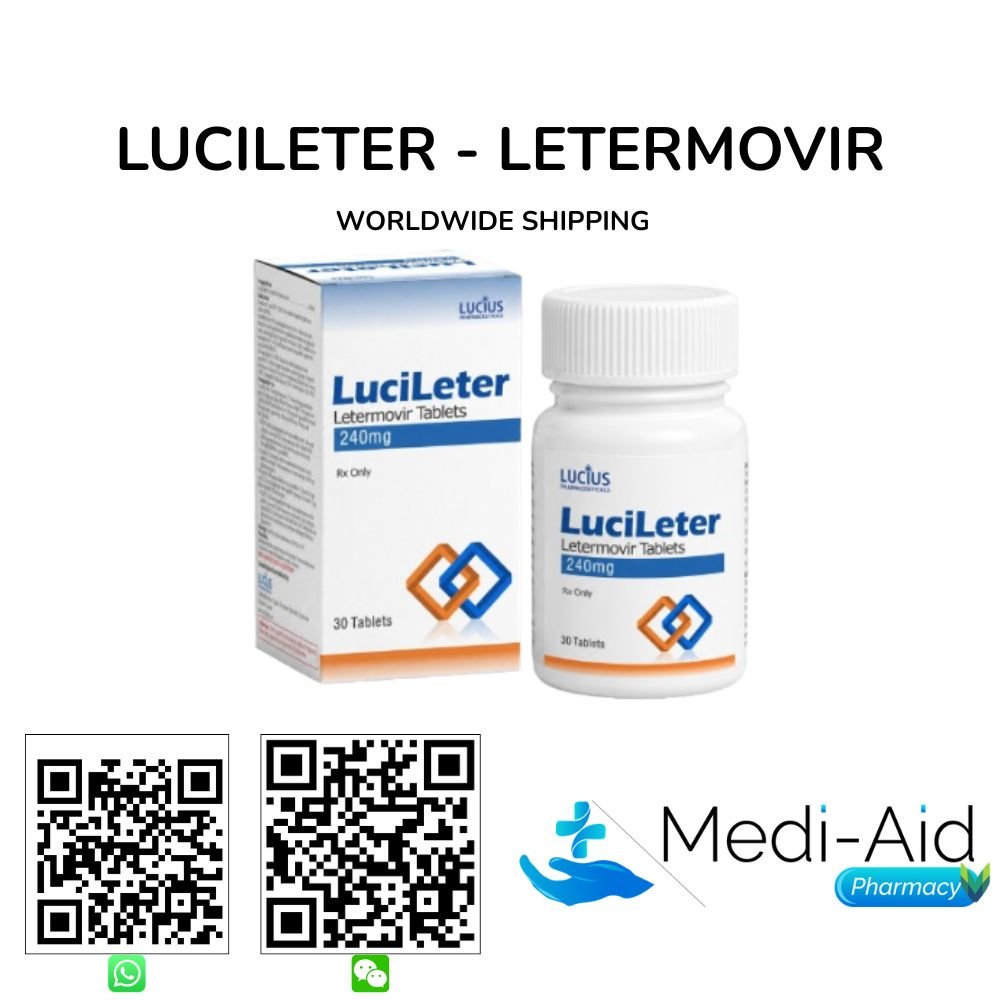
Description
LuciLeter 240 MG (Letermovir) is a first-in-class human cytomegalovirus (CMV) terminase complex inhibitor an orally bioavailable, targeted antiviral agent that blocks viral DNA cleavage and packaging by selectively inhibiting the pUL56 subunit of the CMV terminase complex, preventing productive CMV replication through a mechanism of action entirely distinct from all DNA polymerase-targeting antivirals supplied as film-coated tablets in 240 mg and 480 mg strengths in a 30-tablet box and manufactured by Lucius Pharmaceuticals (Lao) Co., Ltd. in Laos.
Its active ingredient, letermovir INN, targets the CMV terminase complex rather than the viral DNA polymerase (UL54), conferring antiviral activity against CMV strains harboring UL97 and UL54 resistance mutations that render ganciclovir, valganciclovir, foscarnet, and cidofovir ineffective the defining pharmacological differentiation of letermovir in the CMV antiviral landscape. LuciLeter is available in two strengths 240 mg and 480 mg film-coated tablets in a 30-tablet box enabling transplant specialists to implement both the standard letermovir prophylaxis dose (480 mg once daily orally) and the cyclosporine-adjusted dose (240 mg once daily when co-administered with cyclosporine, which inhibits OATP1B1/B3 hepatic transporters and approximately doubles letermovir plasma exposure) from a single-supplier relationship.
In the pivotal Phase 3 trial evaluating letermovir prophylaxis in CMV-seropositive allogeneic hematopoietic stem cell transplant (HSCT) recipients, letermovir reduced the proportion of patients with clinically significant CMV infection through Week 24 to 37.5% versus 60.6% with placebo (p<0.001), with all-cause mortality through Week 48 of 20.9% (letermovir) versus 25.5% (placebo) a survival signal that established letermovir as the standard of care for CMV prophylaxis in high-risk allogeneic HSCT. Searching for LuciLeter 240 MG Letermovir? Mediaid Pharmacy lists this product across its infectious disease medicines, antiviral medicines, and Lucius Pharmaceuticals portfolios and ships it worldwide.
Basic Product Information of LuciLeter 240 MG (Letermovir)
| Brand Name | LuciLeter 240 MG & 480 MG (Letermovir) |
| Product Name | LuciLeter |
| Generic Name | Letermovir INN |
| Drug Class | Human Cytomegalovirus (CMV) Terminase Complex Inhibitor (pUL56 Subunit); First-in-Class CMV Antiviral; Non-Nucleoside Anti-CMV Agent; CMV Prophylaxis Agent; Transplant Antiviral; Anti-Herpesvirus Agent |
| Formulation | Film-Coated Tablet (Oral) |
| Available Strengths | 240 mg per tablet and 480 mg per tablet |
| Available Pack Size | 30 Tablets per Box (approximately one month’s supply per box) |
| Dosing & Dose Adjustment | Standard CMV prophylaxis dose (allogeneic HSCT): 480 mg orally once daily (1× LuciLeter 480 MG tablet once daily) initiated between Day 0 and Day 28 post-transplant, continued through Day 100 post-transplant. Cyclosporine-adjusted dose: 240 mg orally once daily (1× LuciLeter 240 MG tablet once daily) required when co-administered with cyclosporine (a potent OATP1B1/B3 inhibitor that approximately doubles letermovir plasma exposure). The dual-strength supply of LuciLeter (240 mg and 480 mg tablets) enables transplant pharmacists to implement both the standard dose and the cyclosporine-adjusted dose without stocking multiple separate products. No dose adjustment required for renal impairment. Use with caution in moderate-to-severe hepatic impairment. Consult the treating transplant specialist for full dose guidance. |
| Primary Indication | Prophylaxis of cytomegalovirus (CMV) infection and disease in adult CMV-seropositive recipients [R+] of an allogeneic hematopoietic stem cell transplant (HSCT). Letermovir is indicated as CMV prophylaxis in adult allogeneic HSCT recipients who are CMV-seropositive, irrespective of donor CMV serostatus. It is not indicated for treatment of established CMV disease. Always confirm CMV seropositivity (R+) by laboratory testing before initiating LuciLeter prophylaxis. |
| Manufacturer | Lucius Pharmaceuticals (Lao) Co., Ltd., Laos |
| Country of Origin | Laos |
| Originator Reference Brand | Prevymis® (letermovir tablets and intravenous solution, 240 mg and 480 mg, by Merck & Co., Inc. / MSD approved in the United States, European Union, Japan, and other major markets). Both LuciLeter and Prevymis® contain letermovir INN as the active pharmaceutical ingredient in the same CMV terminase complex inhibitor drug class. LuciLeter is manufactured by Lucius Pharmaceuticals (Lao) Co., Ltd. in Laos and is supplied through Mediaid Pharmacy for international procurement. |
| Global Supplier | Mediaid Pharmacy, Worldwide Shipping Available |
| Storage Conditions | Store at room temperature (15°C to 30°C). Keep in the original packaging and protect from moisture and light. Keep out of the reach of children. |
How LuciLeter (Letermovir) Works: First-in-Class CMV Terminase Complex Inhibition A Mechanism Distinct from All Existing Anti-CMV Antivirals
Letermovir INN is an orally bioavailable, non-nucleoside antiviral agent that inhibits human cytomegalovirus (HCMV) replication by targeting the viral terminase complex a multi-subunit enzymatic machinery encoded by the CMV genome that is essential for cleaving concatemeric CMV DNA into unit-length genomes and packaging them into viral capsids during the late stages of CMV replication. The CMV terminase complex is composed of three subunits encoded by viral genes UL51, UL56, and UL89; letermovir binds selectively to the pUL56 subunit, blocking the cleavage and packaging activity of the terminase complex and preventing the formation of infectious viral particles.
This mechanism of action is entirely distinct from and does not overlap with the mechanism of every other approved anti-CMV antiviral in clinical use: ganciclovir (GCV), valganciclovir (VGCV), foscarnet (FOS), and cidofovir (CDV) all act by inhibiting the CMV DNA polymerase encoded by the UL54 gene, either directly (foscarnet, cidofovir) or after phosphorylation by the CMV-encoded UL97 kinase (ganciclovir, valganciclovir). The clinical consequence of this mechanistic differentiation is profound: letermovir retains full antiviral activity against CMV strains carrying UL97 kinase mutations (the most common mechanism of ganciclovir resistance, occurring in 5–10% of allogeneic HSCT recipients receiving prolonged ganciclovir or valganciclovir exposure) and against UL54 DNA polymerase mutations (the basis for foscarnet and cidofovir resistance), because letermovir’s target pUL56 of the terminase complex is genetically unrelated to UL97 and UL54.
Letermovir’s selective inhibition constant (IC50) against HCMV is approximately 2.1 nM in cell culture, with a selectivity index exceeding 100,000-fold against human host cell kinases and polymerases, confirming the absence of the on-target host toxicity (myelosuppression, nephrotoxicity) that limits the dosing and duration of ganciclovir, valganciclovir, foscarnet, and cidofovir in the immunocompromised transplant population.
The pharmacokinetic profile of letermovir supports once-daily oral dosing with predictable exposure across the CMV-seropositive allogeneic HSCT population. Oral bioavailability of letermovir tablets is approximately 35% under fasted conditions; the absolute bioavailability and maximum plasma concentration (Cmax) are modestly increased when letermovir is taken with a high-fat meal, although the tablet may be taken with or without food without dose adjustment. The terminal elimination half-life (t½) of letermovir is approximately 12 hours, supporting once-daily dosing with trough plasma concentrations that maintain antiviral suppression of CMV replication throughout the 24-hour dosing interval.
Letermovir is eliminated primarily as unchanged drug via biliary/fecal excretion; renal clearance accounts for less than 2% of total clearance, explaining why no dose adjustment is required in patients with any degree of renal impairment a clinically significant advantage in the HSCT population where calcineurin inhibitor-associated nephrotoxicity and conditioning-regimen-related renal injury are prevalent. The critical drug interaction with cyclosporine a bidirectional interaction mediated by OATP1B1/B3 hepatic uptake transporter inhibition increases letermovir plasma exposure approximately 2-fold when co-administered with cyclosporine; accordingly, the LuciLeter dose must be reduced from 480 mg once daily to 240 mg once daily in all patients receiving concomitant cyclosporine throughout prophylaxis.
The dual-strength supply of LuciLeter (240 mg and 480 mg tablets in 30-tablet boxes) directly addresses this clinical requirement, enabling transplant centers to manage both cyclosporine-containing and cyclosporine-free immunosuppression regimens from a single product range. For the complete range of antiviral and transplant medicines available through Mediaid Pharmacy, visit the antiviral medicines collection.
LuciLeter 240 MG (Letermovir): Indications, Dosing, and Key Safety Information
| Approved Indication | CMV Prophylaxis in Allogeneic HSCT: Prophylaxis of cytomegalovirus (CMV) infection and disease in adult CMV-seropositive recipients [R+] of an allogeneic hematopoietic stem cell transplant (HSCT). LuciLeter is indicated irrespective of donor CMV serostatus (D+/R+ or D−/R+). Letermovir is not indicated for the treatment of established CMV disease or CMV retinitis; it is a prophylaxis agent only. Confirm CMV seropositivity [R+] by pre-transplant serological testing before initiating LuciLeter. |
| Recommended Dose & Timing | Without cyclosporine: 480 mg orally once daily (1× LuciLeter 480 MG tablet once daily). With cyclosporine: 240 mg orally once daily (1× LuciLeter 240 MG tablet once daily mandatory dose reduction due to OATP1B1/B3 inhibition by cyclosporine approximately doubling letermovir AUC). Initiation: Begin LuciLeter between Day 0 (day of transplant) and Day 28 post-transplant. Duration: Continue through Day 100 post-transplant. Administer orally with or without food. Swallow tablets whole with water. |
| Dose Adjustment | Cyclosporine co-administration (mandatory): Reduce LuciLeter from 480 mg to 240 mg once daily when cyclosporine is started during letermovir prophylaxis; increase back to 480 mg once daily within 2 days of cyclosporine discontinuation. Renal impairment: No dose adjustment required at any level of renal impairment, including patients on dialysis. Hepatic impairment: No dose adjustment required for mild hepatic impairment (Child-Pugh A); LuciLeter is not recommended in patients with moderate or severe hepatic impairment (Child-Pugh B or C) consult the treating specialist. Switching between oral and IV: LuciLeter oral tablets and IV formulation are interchangeable at the same daily dose without adjustment. |
| Missed Dose | If a dose of LuciLeter is missed and it is within 8 hours of the scheduled dose time, take it as soon as remembered. If more than 8 hours have passed, skip the missed dose and resume the regular once-daily schedule at the next scheduled time. Do not take two doses on the same day to compensate for a missed dose. Maintaining daily CMV suppression throughout the prophylaxis window (Day 0 to Day 100 post-transplant) is essential; contact the treating transplant team if multiple doses are missed. |
| Key Warnings & Precautions | Not for Treatment of CMV Disease: LuciLeter (letermovir) is approved for CMV prophylaxis only. It is not indicated for the treatment of established CMV end-organ disease (CMV pneumonitis, colitis, retinitis, encephalitis). Patients who develop clinically significant CMV disease during or after prophylaxis require treatment with appropriate CMV therapeutics (ganciclovir, valganciclovir, foscarnet, or maribavir as clinically indicated).
Mandatory Dose Reduction with Cyclosporine: Co-administration of letermovir with cyclosporine increases letermovir exposure approximately 2-fold via OATP1B1/B3 inhibition. Always use LuciLeter 240 MG (240 mg once daily) not 480 mg when cyclosporine is part of the immunosuppression regimen. Failure to reduce the dose in the presence of cyclosporine results in supratherapeutic letermovir exposure with unpredictable tolerability implications. CYP3A and CYP2C19 Inhibition Immunosuppressant Drug Interactions: Letermovir is a moderate inhibitor of CYP3A and CYP2C19. In allogeneic HSCT recipients, tacrolimus (a CYP3A substrate) plasma concentrations increase significantly during letermovir co-administration tacrolimus dose reductions and intensive therapeutic drug monitoring (TDM) are required to prevent calcineurin inhibitor toxicity. Sirolimus and everolimus (CYP3A substrates) are similarly affected. Monitor immunosuppressant trough levels closely throughout LuciLeter prophylaxis and for at least 2 weeks after discontinuation, as CYP3A inhibition resolves with a lag following letermovir cessation. Contraindicated Co-medications: LuciLeter is contraindicated with pitavastatin and simvastatin (risk of severe myopathy/rhabdomyolysis due to CYP3A inhibition increasing statin exposure); ergot alkaloids (ergotamine, dihydroergotamine risk of acute ergotism); and pimozide (risk of QT prolongation via CYP3A inhibition). Review and reconcile all concomitant medications against the full letermovir drug interaction profile before initiating LuciLeter. Embryo-Fetal Toxicity: Letermovir caused embryo-fetal toxicity in animal reproduction studies. LuciLeter is not recommended during pregnancy. Females of reproductive potential must use effective contraception during LuciLeter treatment. Breastfeeding is not recommended during LuciLeter prophylaxis consult the treating specialist for individualized guidance. |
| Common Adverse Reactions (≥10%) | Nausea, diarrhea, vomiting, peripheral edema, cough, headache, fatigue, and abdominal pain. Notably, the adverse reaction profile of letermovir in the pivotal Phase 3 trial was comparable to placebo a profile attributable to letermovir’s lack of activity against human host enzymes, in contrast to ganciclovir and valganciclovir (which cause myelosuppression, including neutropenia requiring dose reduction or G-CSF support in 15–40% of patients) and foscarnet and cidofovir (which cause nephrotoxicity requiring aggressive IV hydration and dose modification). The myelosuppression-free and nephrotoxicity-free tolerability profile of letermovir is a primary clinical advantage over DNA polymerase-targeting CMV antivirals in the already immunocompromised and renally vulnerable allogeneic HSCT population. |
| Drug Interactions | Letermovir is an OATP1B1/B3 substrate, a moderate CYP3A inhibitor, a moderate CYP2C19 inhibitor, and a P-glycoprotein (P-gp) inducer. Cyclosporine (OATP inhibitor): Increases letermovir AUC ~2-fold → mandatory dose reduction from 480 mg to 240 mg once daily. Tacrolimus and sirolimus (CYP3A substrates): Letermovir increases their exposure → reduce immunosuppressant dose with intensive TDM. Voriconazole and omeprazole (CYP2C19 substrates): Letermovir increases exposure → monitor for adverse effects. Pitavastatin and simvastatin: Contraindicated significantly increased statin exposure via CYP3A inhibition. Pimozide: Contraindicated QT prolongation risk. Ergot alkaloids: Contraindicated acute ergotism risk. Rifampin (P-gp inducer / OATP inducer): Substantially decreases letermovir exposure co-administration with LuciLeter is not recommended. Disclose all medications and supplements to the treating transplant team before initiating LuciLeter. |
| Pregnancy & Lactation | Letermovir caused embryo-fetal toxicity in animal studies at exposures relevant to the clinical dose. Adequate and well-controlled studies of LuciLeter in pregnant women are not available. LuciLeter is not recommended during pregnancy. Females of reproductive potential must use effective contraception during LuciLeter prophylaxis and for the period advised by the treating specialist after the final dose. It is not known whether letermovir is excreted in human breast milk breastfeeding is not recommended during LuciLeter prophylaxis. Consult the treating transplant specialist or obstetrician before initiating LuciLeter in patients who are pregnant, planning a pregnancy, or breastfeeding. |
Who Should Use LuciLeter 240 MG (Letermovir)?
LuciLeter 240 MG (Letermovir) is indicated for adult CMV-seropositive recipients [R+] of an allogeneic hematopoietic stem cell transplant (HSCT) who require antiviral prophylaxis to prevent cytomegalovirus (CMV) infection and CMV end-organ disease during the critical early post-transplant immunocompromised window a period during which CMV reactivation from latent viral reservoirs is the most frequent and clinically consequential opportunistic viral infection in allogeneic HSCT.
First, all CMV-seropositive allogeneic HSCT recipients including recipients of matched unrelated donor (MUD) transplants, mismatched unrelated donor (MMUD) transplants, haploidentical transplants, and umbilical cord blood transplants constitute the primary indication population, because these patients carry latent CMV prior to transplantation and are at risk for CMV reactivation as soon as the conditioning regimen-induced immunosuppression begins. The pivotal Phase 3 trial enrolled both standard-risk and high-risk HSCT recipients across all donor types and conditioning regimen intensities, and letermovir prophylaxis significantly reduced clinically significant CMV infection at Week 24 across all prespecified subgroups.
Second, allogeneic HSCT recipients receiving cyclosporine-containing immunosuppression regimens the most common calcineurin inhibitor used for graft-versus-host disease (GvHD) prophylaxis after HSCT require the 240 mg once-daily dose of LuciLeter rather than the standard 480 mg dose, due to the clinically important OATP1B1/B3-mediated drug interaction that doubles letermovir plasma exposure during cyclosporine co-administration. The availability of LuciLeter in 240 mg tablet strength in the same 30-tablet box format directly enables transplant pharmacists to supply the correct cyclosporine-adjusted dose without additional dispensing complexity.
Third, HSCT recipients at elevated CMV disease risk including those receiving T-cell depleted grafts, anti-thymocyte globulin (ATG)-containing conditioning or GvHD prophylaxis regimens, haploidentical transplants with post-transplant cyclophosphamide, high-risk donor-recipient CMV serostatus combinations (D−/R+, in which the recipient receives no CMV immunity from the graft), and patients with a history of CMV reactivation in prior treatment courses represent the highest-benefit subpopulation for LuciLeter prophylaxis, as these risk factors independently amplify CMV reactivation probability and the severity of CMV-associated immunosuppression (CMV-induced immunomodulation, graft failure, secondary bacterial and fungal infections) that drives CMV-related morbidity and mortality in the post-HSCT period.
LuciLeter is not appropriate for CMV-seronegative HSCT recipients [R−] (in whom CMV reactivation from endogenous latent virus cannot occur), for patients with established CMV end-organ disease requiring therapeutic-intent anti-CMV regimens, or for patients receiving solid organ transplants in jurisdictions where letermovir prophylaxis has not been approved for that indication the treating transplant specialist must confirm eligibility and indication before prescribing LuciLeter. Transplant centers and hospital pharmacies sourcing LuciLeter alongside complementary antiviral and infectious disease agents can browse the Mediaid Pharmacy infectious disease medicines and antiviral medicines portfolios for the full selection available for international delivery.
Global Supplier: Mediaid Pharmacy Worldwide Shipping for LuciLeter 240 MG (Letermovir)
Mediaid Pharmacy is a Dhaka-based supplier of specialty antiviral, infectious disease, and transplant medicines with worldwide shipping to patients, bone marrow transplant programs, hematology-oncology departments, hospital pharmacies, infectious disease clinics, and international distributors across all regions. LuciLeter 240 MG & 480 MG (Letermovir), manufactured by Lucius Pharmaceuticals (Lao) Co., Ltd. in Laos, is supplied as 30 tablets per box available in both 240 mg and 480 mg tablet strengths with pricing quotations, stock confirmation, full product documentation, and end-to-end international delivery tracking for every order.
The dual-strength, 30-tablet-box format provides approximately one month’s supply per box at the once-daily dosing schedule, enabling transplant programs to plan prophylaxis procurement across the full Day 0 to Day 100 post-transplant window (approximately 3–4 boxes per patient per prophylaxis course) with streamlined reorder cycles. Bone marrow and stem cell transplant programs, hematology departments performing allogeneic HSCT, hospital formulary and antimicrobial stewardship teams, infectious disease consultants managing post-transplant CMV, and individual patients can contact the Mediaid Pharmacy team through WhatsApp, phone, or WeChat for all inquiries regarding LuciLeter Letermovir stock availability, current pricing, and international delivery timelines.
Procurement teams co-sourcing LuciLeter with other transplant antivirals, antifungals, or specialty infectious disease agents can browse the complete Mediaid Pharmacy infectious disease medicines collection and the Lucius Pharmaceuticals medicines portfolio before requesting a consolidated quotation.
Why Choose LuciLeter 240 MG (Letermovir) from Mediaid Pharmacy?
LuciLeter 240 MG (Letermovir) provides transplant hematologists, infectious disease specialists, bone marrow transplant coordinators, and hospital pharmacists with a first-in-class, Phase 3-validated CMV prophylaxis agent whose clinical evidence base delivers what no prior antiviral prophylaxis strategy achieved: a statistically significant reduction in clinically significant CMV infection with a tolerability profile comparable to placebo.
In the pivotal randomized, double-blind, placebo-controlled Phase 3 trial (565 CMV-seropositive adult allogeneic HSCT recipients, 17 countries), letermovir 480 mg once daily (or 240 mg once daily with cyclosporine) reduced the primary endpoint proportion of patients with clinically significant CMV infection through Week 24 post-transplant to 37.5% versus 60.6% with placebo (p<0.001; risk difference −23.5 percentage points), a clinically transformative reduction that translates directly to fewer CMV pre-emptive therapy courses, fewer episodes of CMV end-organ disease, and reduced exposure to the nephrotoxic and myelosuppressive anti-CMV treatment agents (ganciclovir, foscarnet) that impose dose-limiting toxicity in the already fragile early post-HSCT period.
All-cause mortality through Week 48 was 20.9% (letermovir) versus 25.5% (placebo) a mortality signal consistent with the morbidity and mortality burden directly attributable to CMV reactivation and its secondary immunological consequences (CMV-induced immunosuppression, CMV-associated bacterial and fungal co-infections, and CMV-related graft dysfunction) in the allogeneic HSCT population. The mechanistic differentiation of letermovir inhibiting the CMV terminase complex pUL56 subunit rather than the viral DNA polymerase confers three operationally important advantages for transplant programs using LuciLeter: (1) activity against ganciclovir-resistant CMV strains carrying UL97 and UL54 mutations, enabling prophylaxis continuation in patients with prior ganciclovir resistance exposure; (2) the absence of myelosuppression (neutropenia, thrombocytopenia) that limits ganciclovir and valganciclovir prophylaxis in thrombocytopenic early post-engraftment HSCT recipients; and (3) no nephrotoxicity letermovir does not require IV hydration protocols, electrolyte monitoring, or renal dose adjustments in a population in which renal function is routinely compromised by conditioning regimens and calcineurin inhibitor toxicity.
The dual-strength design of LuciLeter supplied as both 240 mg and 480 mg tablets in a 30-tablet box is a clinically rational formulary solution: the 240 mg strength precisely covers the mandatory cyclosporine-adjusted dose, and the 480 mg strength covers the standard dose, eliminating the need for tablet splitting or multi-tablet combinations that introduce dispensing errors in complex transplant pharmacy environments. LuciLeter is manufactured by Lucius Pharmaceuticals (Lao) Co., Ltd. in Laos and is available through Mediaid Pharmacy with full product documentation, specialist supply coordination, and worldwide shipping from Dhaka. To source additional Lucius Pharmaceuticals antiviral and specialty medicines, visit the Mediaid Pharmacy Lucius Pharmaceuticals medicines section and the antiviral medicines portfolio, and contact the team for a personalized quotation.
Frequently Asked Questions About LuciLeter 240 MG (Letermovir)
What is LuciLeter 240 MG (Letermovir) used for?
LuciLeter 240 MG (Letermovir) is a first-in-class CMV terminase complex inhibitor used for the prophylaxis of cytomegalovirus (CMV) infection and disease in adult CMV-seropositive recipients [R+] of an allogeneic hematopoietic stem cell transplant (HSCT), irrespective of donor CMV serostatus. CMV is the most common and clinically significant opportunistic viral pathogen in allogeneic HSCT, with reactivation from pre-existing latent infection occurring in 40–70% of CMV-seropositive recipients absent prophylaxis and causing life-threatening end-organ disease including CMV pneumonitis, colitis, encephalitis, and retinitis. LuciLeter prevents CMV replication by blocking the pUL56 subunit of the viral terminase complex a mechanism entirely distinct from ganciclovir, valganciclovir, foscarnet, and cidofovir, which all target the CMV DNA polymerase. The originator brand for letermovir is Prevymis® (Merck & Co./MSD). LuciLeter, manufactured by Lucius Pharmaceuticals (Lao) Co., Ltd. in Laos, is available through Mediaid Pharmacy with worldwide shipping.
What is the generic name of LuciLeter?
The generic name of LuciLeter is letermovir INN. LuciLeter is the brand name registered by Lucius Pharmaceuticals (Lao) Co., Ltd. for letermovir manufactured in Laos. LuciLeter is formulated as oral film-coated tablets in two strengths 240 mg and 480 mg supplied in a 30-tablet box. The dual-strength format allows transplant pharmacists to cover both the standard letermovir prophylaxis dose (480 mg once daily) and the mandatory cyclosporine-adjusted dose (240 mg once daily) from a single supplier. The originator reference brand is Prevymis® (Merck & Co., Inc./MSD). Mediaid Pharmacy distributes LuciLeter globally with worldwide shipping to patients, transplant centers, hospital pharmacies, and specialist clinics.
What is the difference between LuciLeter (Letermovir) and Prevymis® (Letermovir)?
LuciLeter and Prevymis® both contain letermovir INN as the active pharmaceutical ingredient and share the same CMV terminase complex inhibitor mechanism of action selective inhibition of the pUL56 subunit to prevent viral DNA packaging and cleavage. Prevymis® is the originator brand developed and marketed by Merck & Co., Inc. (MSD outside the United States), available as 240 mg and 480 mg film-coated tablets and as an intravenous solution, approved in the United States, European Union, Japan, and other major markets. LuciLeter is manufactured by Lucius Pharmaceuticals (Lao) Co., Ltd. in Laos and is supplied in 240 mg and 480 mg tablet strengths through Mediaid Pharmacy for international procurement by transplant programs, hospital pharmacies, and patients in regions where Prevymis® may be unavailable or cost-prohibitive. For the full range of antiviral medicines at Mediaid Pharmacy, visit the antiviral medicines collection.
How is LuciLeter 240 MG (Letermovir) administered?
LuciLeter (Letermovir) is administered orally once daily one tablet at the same time each day beginning between Day 0 and Day 28 post-allogeneic HSCT and continuing through Day 100 post-transplant. The dose is 480 mg once daily (one LuciLeter 480 MG tablet) without cyclosporine, or 240 mg once daily (one LuciLeter 240 MG tablet) when co-administered with cyclosporine. Tablets may be taken with or without food. Swallow each LuciLeter tablet whole with water do not crush, split, or chew the film-coated tablet. Take LuciLeter at the same time every day to maintain consistent CMV suppression throughout the prophylaxis window. If cyclosporine is started or stopped during LuciLeter prophylaxis, adjust the dose accordingly switch to 240 mg if cyclosporine is initiated, and return to 480 mg within 2 days of cyclosporine discontinuation. Do not use LuciLeter for indications other than approved CMV prophylaxis.
What are the side effects of LuciLeter 240 MG (Letermovir)?
The most common adverse reactions of letermovir reported in the pivotal Phase 3 trial include nausea, diarrhea, vomiting, peripheral edema, cough, headache, fatigue, and abdominal pain. The overall adverse event profile of letermovir was comparable to placebo in the Phase 3 trial a favorable tolerability profile attributable to letermovir’s selectivity for the CMV terminase complex and its lack of activity against human cellular enzymes, in contrast to ganciclovir and valganciclovir (which cause dose-limiting neutropenia and thrombocytopenia in 15–40% of patients) and foscarnet (which causes nephrotoxicity, electrolyte wasting, and genital ulceration). Serious adverse events of hepatic transaminase elevations have been reported rarely; monitor liver function in patients with pre-existing hepatic conditions. The absence of myelosuppression is a clinically significant safety advantage for early post-HSCT patients who are thrombocytopenic and neutropenic from conditioning. Always discuss the full safety profile with the treating transplant specialist before and throughout LuciLeter prophylaxis.
How effective is Letermovir (LuciLeter) for CMV prophylaxis after bone marrow transplant?
Letermovir has demonstrated highly significant and clinically transformative efficacy in CMV prophylaxis in allogeneic HSCT in a landmark randomized, placebo-controlled Phase 3 trial. The pivotal trial (565 CMV-seropositive adult allogeneic HSCT recipients across 17 countries) showed letermovir 480 mg once daily (or 240 mg once daily with cyclosporine) reduced the primary endpoint clinically significant CMV infection through Week 24 to 37.5% versus 60.6% with placebo (p<0.001), a 23.5 percentage-point absolute risk reduction representing a 38.2% relative risk reduction. All-cause mortality through Week 48 was 20.9% (letermovir) versus 25.5% (placebo), reflecting the downstream mortality benefit of preventing CMV reactivation-associated complications. In the letermovir group, the median time to clinically significant CMV infection was not reached during the Week 24 observation window, compared with Day 48 post-transplant in the placebo group demonstrating sustained CMV suppression throughout the highest-risk prophylaxis period. LuciLeter delivers the same active ingredient letermovir INN at the same reference tablet doses (240 mg and 480 mg), sourced through Mediaid Pharmacy with worldwide shipping. For the complete infectious disease medicines range at Mediaid Pharmacy, visit the infectious disease medicines collection.
Is LuciLeter 240 MG (Letermovir) safe during pregnancy or while breastfeeding?
No. Letermovir caused embryo-fetal toxicity in animal studies at doses relevant to the clinical therapeutic dose letermovir is not recommended during pregnancy. Adequate and well-controlled studies in pregnant women are not available. Females of reproductive potential must use effective contraception during LuciLeter prophylaxis and for the period recommended by the treating specialist after the final dose. Breastfeeding is not recommended during LuciLeter prophylaxis, as it is not known whether letermovir is excreted in human breast milk. If pregnancy occurs during LuciLeter prophylaxis, notify the treating transplant specialist immediately. Consult the treating specialist before starting LuciLeter if pregnant, planning a pregnancy, or breastfeeding.
Can I order LuciLeter 240 MG (Letermovir) online with worldwide shipping?
Yes. Mediaid Pharmacy supplies LuciLeter 240 MG & 480 MG (Letermovir) to patients, bone marrow and stem cell transplant programs, hematology-oncology centers, hospital pharmacies, infectious disease departments, and healthcare providers globally. Contact Mediaid Pharmacy via WhatsApp, phone, or WeChat at +8801773428128, or email info@mediaidpharmacy.com for pricing, current stock availability, and international delivery details for your country.
Order LuciLeter 240 MG (Letermovir) with Worldwide Shipping
Phone / WhatsApp / WeChat: +8801773428128 | Email: info@mediaidpharmacy.com

Reviews
There are no reviews yet.