
Description
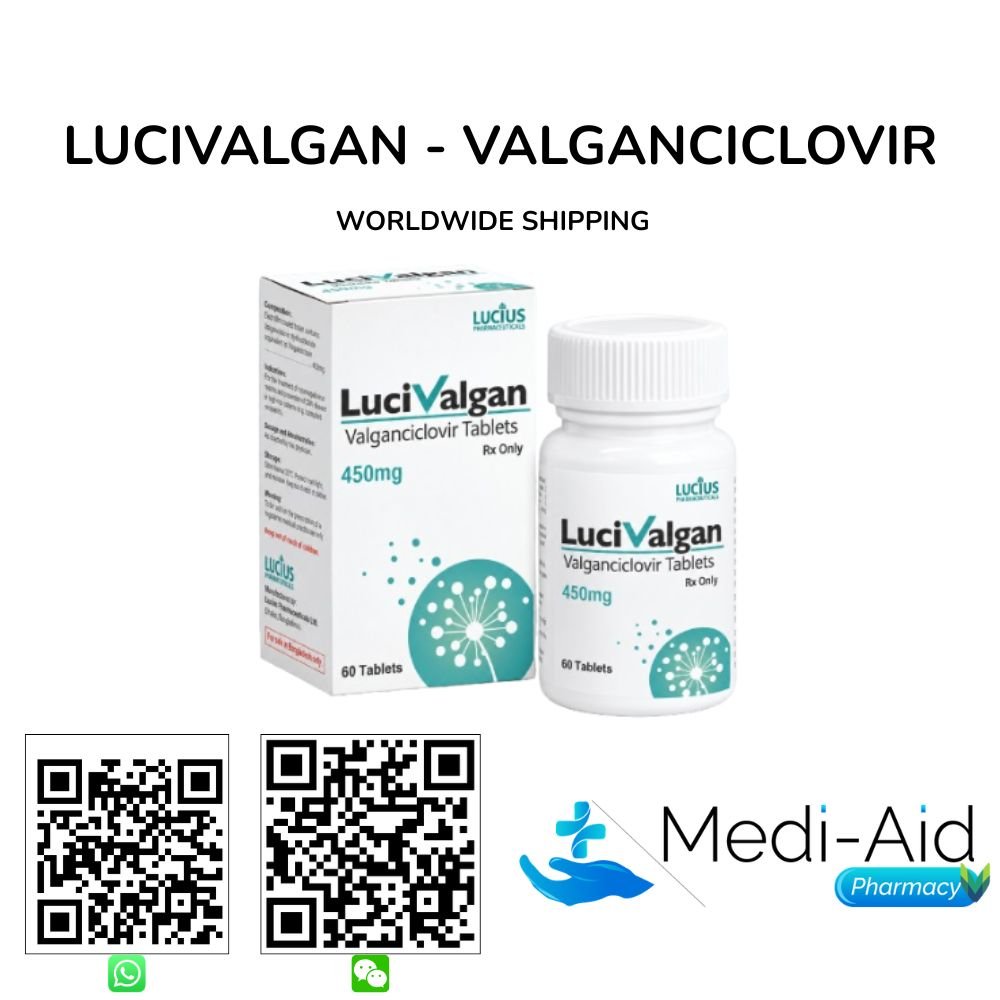
LuciValgan 450 MG (Valganciclovir) is an orally bioavailable L-valyl ester prodrug of ganciclovir with potent, selective antiviral activity against human cytomegalovirus (CMV) and other herpesviruses – an orally administered, CMV UL97 protein kinase-activated nucleoside analogue antiviral that competitively inhibits CMV DNA polymerase (UL54) through ganciclovir triphosphate, achieving systemic ganciclovir AUC0-24 exposure equivalent to intravenous ganciclovir 5 mg/kg with approximately 60% oral bioavailability as ganciclovir after intestinal and hepatic esterase-mediated hydrolysis, representing a 10-fold bioavailability advantage over oral ganciclovir capsules (approximately 6% oral bioavailability) that converts an IV-equivalent antiviral into a fully oral outpatient-compatible tablet regimen – supplied as film-coated tablets in 450 mg strength in a 60-tablet pot and manufactured by Lucius Pharmaceuticals (Lao) Co., Ltd. in Laos.
Its active ingredient, valganciclovir INN (the L-valyl ester prodrug of ganciclovir), is approved for two distinct antiviral indications: treatment of cytomegalovirus (CMV) retinitis in adult patients with acquired immunodeficiency syndrome (AIDS), and prevention of CMV disease in adult kidney, heart, and kidney-pancreas transplant patients at high risk for CMV disease. The pivotal Phase 3 valganciclovir CMV retinitis trial (WV15376) demonstrated that valganciclovir 900 mg twice daily (induction) achieved retinitis progression rates statistically equivalent to IV ganciclovir 5 mg/kg twice daily with comparable systemic ganciclovir exposure – validating valganciclovir as the first oral agent to deliver IV-equivalent ganciclovir AUC for CMV retinitis management.
Searching for LuciValgan 450 MG Valganciclovir? Mediaid Pharmacy lists this product across its infectious disease medicines, antiviral medicines, and Lucius Pharmaceuticals portfolios and ships it worldwide.
Basic Product Information of LuciValgan 450 MG (Valganciclovir)
| Brand Name | LuciValgan 450 MG (Valganciclovir) |
| Product Name | LuciValgan |
| Generic Name | Valganciclovir INN (L-valyl ester prodrug of ganciclovir) |
| Drug Class | L-Valyl Ester Prodrug of Ganciclovir; CMV UL97 Protein Kinase-Activated Nucleoside Analogue Antiviral; CMV DNA Polymerase (UL54) Competitive Inhibitor; Ganciclovir Triphosphate-Mediated Viral DNA Chain Terminator; Anti-CMV Agent; Transplant CMV Prophylaxis Agent; AIDS-Related CMV Retinitis Treatment Agent |
| Formulation | Film-Coated Tablet (Oral) |
| Available Strength | 450 mg per tablet |
| Available Pack Size | 60 Tablets per Pot (approximately 30 days of supply at the 900 mg once-daily maintenance or CMV prevention dose; the standard 21-day CMV retinitis induction course at 900 mg twice daily [4 tablets per day] requires approximately 84 tablets; the 200-day kidney transplant CMV prevention course at 900 mg once daily requires approximately 7 pots of LuciValgan 450 MG) |
| Dosing Schedule | CMV Retinitis Treatment (AIDS patients): Induction phase: 900 mg (two LuciValgan 450 MG tablets) orally twice daily with food for 21 days. Maintenance phase: 900 mg (two LuciValgan 450 MG tablets) orally once daily with food. CMV Disease Prevention in Transplant Patients: 900 mg (two LuciValgan 450 MG tablets) orally once daily with food, starting within 10 days of transplantation; continue for 100 days post-transplant (heart and kidney-pancreas transplant recipients) or 200 days post-transplant (kidney transplant recipients at high risk, including CMV D+/R- serostatus). Renal dosage adjustment (mandatory): CrCl 40-59 mL/min: 450 mg twice daily (induction) / 450 mg once daily (maintenance or prevention); CrCl 25-39 mL/min: 450 mg once daily (induction) / 450 mg every 2 days (maintenance or prevention); CrCl 10-24 mL/min: 450 mg every 2 days (induction) / 450 mg twice weekly (maintenance or prevention); CrCl below 10 mL/min: LuciValgan is not recommended. Always administer LuciValgan with food; food co-administration increases ganciclovir AUC by approximately 30%. Consult the treating infectious disease specialist or transplant physician for the full dosing protocol and renal adjustment schedule. |
| Primary Indication | Treatment of cytomegalovirus (CMV) retinitis in adults with acquired immunodeficiency syndrome (AIDS); Prevention of CMV disease in adult kidney, heart, and kidney-pancreas transplant patients at high risk (including CMV seropositive donor / seronegative recipient [D+/R-] status). LuciValgan is not indicated for liver transplant patients, for CMV in non-transplant immunocompromised patients without a specific approved indication, or for treatment of congenital CMV (which requires a separate weight-based pediatric dosing calculation). Confirm CMV retinitis by ophthalmological examination and confirm CMV high-risk transplant status before initiating LuciValgan. Valganciclovir is not active against ganciclovir-resistant CMV strains harboring UL97 or UL54 resistance mutations. |
| Manufacturer | Lucius Pharmaceuticals (Lao) Co., Ltd., Laos |
| Country of Origin | Laos |
| Originator Reference Brand | Valcyte (valganciclovir hydrochloride tablets, 450 mg, developed by Roche/Genentech; FDA-approved March 29, 2001 for CMV retinitis in AIDS patients and CMV disease prevention in kidney, heart, and kidney-pancreas transplant recipients; approved by the European Medicines Agency [EMA]). Both LuciValgan and Valcyte contain valganciclovir INN as the active pharmaceutical ingredient in the same L-valyl ester prodrug antiviral class. LuciValgan is manufactured by Lucius Pharmaceuticals (Lao) Co., Ltd. in Laos and is supplied through Mediaid Pharmacy for international procurement. |
| Distributor / Online Supplier | Mediaid Pharmacy (mediaidpharmacy.com) – worldwide shipping to patients, transplant centers, infectious disease departments, HIV clinics, hospital pharmacies, and healthcare providers globally. Contact: +8801773428128 (WhatsApp / Phone / WeChat) | info@mediaidpharmacy.com |
Drug Class and Mechanism of Action: LuciValgan 450 MG (Valganciclovir)
Valganciclovir (INN) is classified as an L-valyl ester prodrug of ganciclovir and belongs to the nucleoside analogue antiviral drug class. The antiviral mechanism of action operates through a four-step enzymatic activation cascade that converts the inactive oral prodrug into a potent, CMV-selective inhibitor of viral DNA replication, with each step conferring progressively greater CMV selectivity over host cell processes.
Step 1 – Prodrug hydrolysis to ganciclovir: After oral absorption, valganciclovir is rapidly and extensively hydrolyzed to ganciclovir and L-valine by intestinal wall and hepatic esterases during first-pass metabolism. The L-valyl ester structural modification on the ganciclovir molecule dramatically increases intestinal absorption by engaging peptide transporter-mediated active transport (PEPT1 and PEPT2 transporters in the intestinal mucosa), achieving approximately 60% oral bioavailability as ganciclovir compared with approximately 6% oral bioavailability for oral ganciclovir capsules. This 10-fold bioavailability improvement is the pharmacological rationale for LuciValgan replacing IV ganciclovir in patients who can absorb oral medication.
Step 2 – UL97 kinase-mediated monophosphorylation (selectivity determinant): Inside CMV-infected cells, ganciclovir is preferentially phosphorylated to ganciclovir monophosphate by the CMV-encoded UL97 protein kinase (a serine-threonine protein kinase encoded by the UL97 open reading frame of the CMV genome). This initial phosphorylation step is the critical selectivity determinant of the entire antiviral mechanism: the CMV UL97 kinase phosphorylates ganciclovir at approximately 1,000-fold greater efficiency than do cellular kinases, ensuring that therapeutically active ganciclovir monophosphate accumulates selectively and preferentially in CMV-infected cells rather than in uninfected host cells.
Step 3 – Cellular kinase-mediated triphosphorylation: Cellular guanylate kinase and nucleoside diphosphate kinase sequentially convert ganciclovir monophosphate to ganciclovir diphosphate and then to ganciclovir triphosphate. Ganciclovir triphosphate accumulates to concentrations 10 to 100 times higher in CMV-infected cells than in uninfected cells, providing the cell-selective antiviral concentration gradient essential for therapeutic efficacy with manageable host toxicity.
Step 4 – CMV DNA polymerase (UL54) inhibition and viral DNA chain termination: Ganciclovir triphosphate competitively inhibits CMV DNA polymerase (UL54) – the viral enzyme responsible for CMV DNA replication – by competing with the natural substrate deoxyguanosine triphosphate (dGTP) for incorporation into the growing viral DNA chain. Once incorporated into the elongating viral DNA, ganciclovir triphosphate causes a dramatic slowing of chain elongation, functionally terminating CMV DNA synthesis.
The net pharmacological result is specific inhibition of CMV DNA replication and suppression of CMV viral load in infected cells and tissues. Valganciclovir also inhibits other herpesviruses in vitro including herpes simplex virus types 1 and 2 (HSV-1, HSV-2), Epstein-Barr virus (EBV), and human herpesvirus 6 (HHV-6), though its approved clinical use is restricted to CMV indications. CMV resistance to valganciclovir and ganciclovir arises primarily through mutations in UL97 (reducing initial ganciclovir monophosphorylation efficiency) and less commonly through mutations in UL54 (reducing DNA polymerase binding affinity or chain termination sensitivity); critically, UL97 mutations conferring ganciclovir resistance do not confer cross-resistance to foscarnet or cidofovir, preserving antiviral rescue options for resistant CMV.
For the complete range of antiviral and infectious disease medicines available through Mediaid Pharmacy, including CMV treatment agents and anti-infective combination medicines, visit the infectious disease medicines portfolio.
Pharmacological Properties of Valganciclovir (LuciValgan 450 MG)
The pharmacokinetic profile of valganciclovir delivered as LuciValgan 450 MG is characterized by the following clinically validated properties. Absorption and bioavailability: Valganciclovir is well absorbed after oral administration with food, with peak valganciclovir plasma concentrations occurring approximately 1-2 hours post-dose; valganciclovir is so rapidly hydrolyzed to ganciclovir that peak valganciclovir plasma levels account for less than 1% of peak ganciclovir plasma levels.
Ganciclovir Cmax after valganciclovir 900 mg administered with food is approximately 5.6 micrograms/mL, statistically comparable to IV ganciclovir 5 mg/kg (Cmax approximately 8-9 micrograms/mL). Food co-administration is mandatory: food increases ganciclovir AUC by approximately 30% and Cmax by approximately 14%; LuciValgan taken without food produces sub-therapeutic ganciclovir plasma levels and must never be administered on an empty stomach. The absolute oral bioavailability of valganciclovir as ganciclovir is approximately 60%, compared with approximately 6% for oral ganciclovir capsules at equivalent ganciclovir doses, confirming the pharmacokinetic rationale for the prodrug design.
Distribution: Ganciclovir distributes widely throughout the body to CMV-infected target organs including the retina, lung, gastrointestinal tract, and central nervous system. Ganciclovir penetrates the blood-brain barrier; cerebrospinal fluid (CSF) ganciclovir concentrations are approximately 24-67% of simultaneous plasma concentrations. The volume of distribution of ganciclovir is approximately 0.74 L/kg. Plasma protein binding of ganciclovir is low at 1-2%, indicating broad unbound tissue penetration and negligible protein binding-related drug interactions.
Metabolism: Valganciclovir is rapidly and completely hydrolyzed to ganciclovir and L-valine during intestinal and hepatic first-pass metabolism; no other metabolites are detected in plasma or urine. Ganciclovir undergoes no significant further hepatic metabolism and does not induce or inhibit hepatic CYP450 enzymes.
Elimination: Ganciclovir is eliminated primarily by renal excretion as unchanged drug via glomerular filtration and active tubular secretion. The elimination half-life of ganciclovir after oral valganciclovir is approximately 4.1 hours in subjects with normal renal function. Renal impairment substantially prolongs ganciclovir half-life and increases AUC, requiring mandatory dose reduction to prevent life-threatening myelosuppression: refer to the dosing schedule table above for CrCl-stratified dose adjustments. Ganciclovir is removed by hemodialysis to a clinically significant extent (approximately 50% per session); consult the treating specialist for dosing guidance in patients on hemodialysis.
Clinically significant drug interactions: Didanosine (ddI): co-administration with valganciclovir/ganciclovir increases steady-state ddI AUC by approximately 111%, increasing the risk of ddI-associated toxicities (pancreatitis, peripheral neuropathy); clinical monitoring is required or combination should be avoided. Probenecid: reduces renal tubular secretion of ganciclovir, increasing ganciclovir AUC by approximately 53% and decreasing renal clearance by approximately 22%; ganciclovir toxicity monitoring is required. Zidovudine (AZT): a pharmacodynamic interaction producing additive or synergistic myelosuppression; concurrent use requires intensive CBC monitoring and is generally avoided when clinically possible. Mycophenolate mofetil (MMF): no clinically significant pharmacokinetic interaction established, but concurrent use in transplant patients produces additive myelosuppressive risk; CBC monitoring frequency should be increased.
Antiviral activity spectrum: Valganciclovir/ganciclovir inhibits human CMV with in vitro IC50 values typically ranging from 0.08 to 14 micromolar (mean approximately 2.0 micromolar against laboratory reference strains), depending on assay methodology and viral strain. CMV ganciclovir resistance is defined as a ganciclovir IC50 above 6 micromolar by phenotypic susceptibility testing or the presence of confirmed UL97 or UL54 resistance mutations by genotypic sequencing. For the complete Lucius Pharmaceuticals medicines portfolio available at Mediaid Pharmacy with worldwide shipping, including valganciclovir and other anti-infective agents, visit the Lucius Pharmaceuticals brand page.
Who Is LuciValgan 450 MG (Valganciclovir) Indicated For?
LuciValgan 450 MG (Valganciclovir) is indicated for two distinct, FDA-approved and EMA-approved patient populations with demonstrated clinical benefit from valganciclovir therapy.
First, adult patients (aged 18 years and older) with ophthalmologically confirmed cytomegalovirus (CMV) retinitis as a complication of acquired immunodeficiency syndrome (AIDS) represent the primary CMV treatment indication for LuciValgan. CMV retinitis is a sight-threatening, potentially blinding opportunistic infection that occurs in severely immunocompromised HIV-positive patients with CD4+ T-cell counts typically below 50 cells/mm3; without effective antiviral treatment, CMV retinitis progresses to involve the entire retinal surface and causes permanent vision loss or complete bilateral blindness within weeks to months of untreated disease. Prior to the approval of valganciclovir, treatment of active CMV retinitis required intravenous ganciclovir (5 mg/kg twice daily for induction) administered via central venous catheter in hospital or outpatient infusion settings – a logistically complex, infection-prone, and resource-intensive approach that was particularly burdensome in resource-limited settings where CMV retinitis burden among AIDS patients is highest. Valganciclovir, by delivering IV-equivalent ganciclovir systemic exposure through an oral film-coated tablet taken twice daily with food during the 21-day induction phase and once daily during maintenance, eliminates the need for intravenous access and hospital-based administration while maintaining equivalent CMV retinitis control. The Phase 3 WV15376 trial confirmed statistical equivalence between valganciclovir 900 mg twice daily (oral) and IV ganciclovir 5 mg/kg twice daily for induction of CMV retinitis in AIDS patients, with comparable retinitis progression rates and ganciclovir systemic AUC. Patients receiving LuciValgan for CMV retinitis require baseline ophthalmological examination with fundus photography or indirect ophthalmoscopy, followed by surveillance examinations approximately every 4-6 weeks during maintenance therapy to detect retinitis progression (which may indicate ganciclovir resistance requiring genotypic resistance testing and regimen modification) and immune recovery uveitis in patients simultaneously receiving effective antiretroviral therapy (ART).
Second, adult kidney, heart, and kidney-pancreas transplant patients at high risk for CMV disease represent the transplant CMV prevention indication for LuciValgan. High-risk CMV transplant status is primarily defined by the CMV serostatus combination of seropositive donor and seronegative recipient (D+/R-) – the highest-risk CMV transmission scenario in solid organ transplantation, in which a CMV-naive recipient receives an organ carrying latent CMV from a CMV-seropositive donor and faces a primary CMV infection during the highest-intensity immunosuppression period post-transplant. CMV disease in transplant recipients presents clinically as either CMV syndrome (fever, malaise, leukopenia, thrombocytopenia) or tissue-invasive CMV disease affecting specific organs (CMV pneumonitis in lung and heart transplants, CMV colitis, CMV hepatitis, CMV retinitis, or CMV encephalitis) and is independently associated with allograft rejection, secondary opportunistic infections, graft loss, and increased transplant-related mortality. LuciValgan 900 mg once daily, initiated within 10 days of transplantation and continued for 100 days post-transplant in heart and kidney-pancreas recipients, or 200 days post-transplant in high-risk kidney transplant recipients (D+/R-), provides prophylactic antiviral suppression of CMV replication throughout the highest-risk immunosuppression window. Controlled clinical trials demonstrated non-inferiority of valganciclovir versus oral ganciclovir for transplant CMV prevention, with valganciclovir’s superior bioavailability providing the same or greater ganciclovir exposure at the standard once-daily 900 mg dose.
LuciValgan is not appropriate for liver transplant patients (the PV16000 trial reported higher rates of tissue-invasive CMV disease with valganciclovir 900 mg compared with oral ganciclovir 1,000 mg three times daily in liver transplant recipients; valganciclovir does not carry an approved indication for liver transplant CMV prophylaxis), for congenital CMV infection in neonates or pediatric patients (pediatric valganciclovir dosing uses a separate body surface area and renal function-based formula not applicable to the 450 mg tablet formulation of LuciValgan), for CMV in immunocompetent hosts, for asymptomatic CMV viremia without confirmed end-organ disease in non-transplant settings, or for patients with CrCl below 10 mL/min. Infectious disease departments, transplant medicine centers, HIV clinics, hospital pharmacies, and specialist CMV treatment programs sourcing valganciclovir 450 mg tablets online with worldwide delivery can contact Mediaid Pharmacy for consolidated procurement, stock availability confirmation, and end-to-end international logistics coordination.
Global Supplier: Mediaid Pharmacy Worldwide Shipping for LuciValgan 450 MG (Valganciclovir)
Mediaid Pharmacy is a Dhaka-based supplier of specialty anti-infective, antiviral, and targeted-therapy medicines with worldwide shipping to patients, transplant centers, infectious disease departments, HIV and AIDS clinics, hospital pharmacies, and international distributors across all regions, including high-burden countries in Sub-Saharan Africa, South and Southeast Asia, Eastern Europe, and the Middle East where CMV disease in AIDS patients and solid organ transplant recipients represents a critical unmet access need for affordable, high-quality valganciclovir.
LuciValgan 450 MG (Valganciclovir), manufactured by Lucius Pharmaceuticals (Lao) Co., Ltd. in Laos, is supplied as 60 tablets per pot – approximately 30 days of supply at the 900 mg once-daily maintenance or transplant prevention dose – with pricing quotations, stock confirmation, full product documentation, and end-to-end international delivery tracking for every order. Transplant centers planning CMV prevention procurement can calculate supply requirements as follows: the 200-day kidney transplant CMV prevention course at 900 mg once daily (two 450 mg tablets per day) requires approximately 400 tablets, or approximately 7 pots of LuciValgan 450 MG; the 100-day heart or kidney-pancreas transplant prevention course requires approximately 200 tablets, or approximately 3.5 pots; the 21-day CMV retinitis induction course at 900 mg twice daily (four tablets per day) requires approximately 84 tablets or approximately 1.5 pots, followed by ongoing maintenance at 900 mg once daily requiring approximately 2 pots per month.
Transplant programs, infectious disease departments, and HIV clinics co-sourcing complete CMV management regimens can contact the Mediaid Pharmacy team through WhatsApp, phone, or WeChat for consolidated quotations, bulk supply agreements, and logistics coordination for multi-patient program supply. Procurement teams can browse the complete Mediaid Pharmacy infectious disease medicines collection and the Lucius Pharmaceuticals medicines portfolio before requesting a consolidated supply quotation.
Why Choose LuciValgan 450 MG (Valganciclovir) from Mediaid Pharmacy?
LuciValgan 450 MG (Valganciclovir) provides infectious disease physicians, transplant physicians, HIV specialists, hospital pharmacists, and transplant program directors with a fully oral, IV-equivalent anti-CMV antiviral agent delivering systemic ganciclovir AUC comparable to intravenous ganciclovir 5 mg/kg through the 10-fold bioavailability advantage of the L-valyl ester prodrug strategy – the defining pharmacological innovation that converted an exclusively IV-administered antiviral into a convenient, outpatient-compatible oral tablet regimen. The pharmacokinetic equivalence between oral valganciclovir and IV ganciclovir is quantitatively validated: valganciclovir 900 mg oral with food generates a ganciclovir AUC0-24 of approximately 29 micrograms x hour/mL, statistically equivalent to the AUC0-24 of IV ganciclovir 5 mg/kg (approximately 25-28 micrograms x hour/mL) – the reference standard for systemic CMV antiviral exposure.
This means LuciValgan replaces IV ganciclovir for CMV retinitis induction and maintenance in AIDS patients who can absorb oral medication, eliminating the need for intravenous catheter placement, infusion center access, hospital-based drug administration, and IV-associated bloodstream infection risk, directly improving patient quality of life, reducing healthcare resource utilization, and extending access to effective CMV antiviral therapy in settings where IV ganciclovir infrastructure is unavailable or unaffordable. For transplant CMV prophylaxis, LuciValgan 900 mg once daily demonstrated non-inferiority to oral ganciclovir in controlled Phase 3 trials in kidney, heart, and kidney-pancreas transplant recipients across 100-200 days of post-transplant prophylaxis, with established efficacy in both D+/R- high-risk serostatus combinations and other transplant-specific risk groups.
The unique pharmacokinetic basis of the valganciclovir prodrug strategy – rapid intestinal absorption via PEPT1 and PEPT2 peptide transporter-mediated active uptake (circumventing the passive diffusion limitation of oral ganciclovir), complete esterase-mediated first-pass hydrolysis to ganciclovir with no toxic prodrug-specific metabolites, and preferential CMV-cell-selective ganciclovir triphosphate accumulation through UL97 kinase activation (10- to 100-fold higher concentrations in infected versus uninfected cells) – is the mechanistic foundation for the 60% oral bioavailability of valganciclovir that makes LuciValgan a clinically validated, pharmacokinetically robust oral alternative to IV ganciclovir in both CMV retinitis treatment and transplant CMV prevention.
The fully oral, once- or twice-daily administration design of LuciValgan – two 450 mg film-coated tablets swallowed whole with a meal, once daily for maintenance and prevention or twice daily for the 21-day retinitis induction course – eliminates IV catheter complications, infusion center logistics, hospital admission requirements, and the healthcare infrastructure burden associated with IV ganciclovir administration, directly improving CMV treatment completion rates and long-term patient adherence in outpatient-managed AIDS and transplant populations. LuciValgan is manufactured by Lucius Pharmaceuticals (Lao) Co., Ltd. in Laos and is available through Mediaid Pharmacy with full product documentation, specialist supply coordination, and worldwide shipping from Dhaka.
To source additional Lucius Pharmaceuticals anti-infective and specialty medicines, visit the Mediaid Pharmacy Lucius Pharmaceuticals medicines section and the infectious disease medicines portfolio, and contact the Mediaid Pharmacy team for a personalized quotation and worldwide delivery arrangements.
Frequently Asked Questions About LuciValgan 450 MG (Valganciclovir)
What is LuciValgan 450 MG (Valganciclovir) used for?
LuciValgan 450 MG (Valganciclovir) is an oral antiviral medicine used for two approved indications: (1) treatment of cytomegalovirus (CMV) retinitis in adult patients with acquired immunodeficiency syndrome (AIDS), administered as 900 mg (two 450 mg tablets) twice daily with food for 21 days induction followed by 900 mg once daily maintenance; and (2) prevention of CMV disease in adult kidney, heart, and kidney-pancreas transplant patients at high risk, administered as 900 mg once daily with food for 100-200 days post-transplant depending on organ type. Valganciclovir works by being hydrolyzed to ganciclovir after oral absorption, which is then activated by CMV UL97 protein kinase to ganciclovir triphosphate, a competitive inhibitor of CMV DNA polymerase UL54 that halts CMV viral DNA synthesis. LuciValgan is not indicated for liver transplant patients, for CMV in immunocompetent patients, or for treatment of congenital CMV in neonates. LuciValgan, manufactured by Lucius Pharmaceuticals (Lao) Co., Ltd. in Laos, is available through Mediaid Pharmacy with worldwide shipping.
What is the generic name of LuciValgan?
The generic name of LuciValgan is valganciclovir INN (the L-valyl ester prodrug of ganciclovir). LuciValgan is the brand name registered by Lucius Pharmaceuticals (Lao) Co., Ltd. for valganciclovir manufactured in Laos. LuciValgan is formulated as oral film-coated tablets in 450 mg strength, supplied in a 60-tablet pot – approximately 30 days of supply at the 900 mg once-daily maintenance or CMV prevention dose (two tablets per day). The originator reference brand is Valcyte (Roche/Genentech, FDA-approved 2001). Mediaid Pharmacy distributes LuciValgan globally with worldwide shipping to patients, transplant centers, infectious disease departments, and HIV clinics.
What is the difference between LuciValgan (Valganciclovir) and Valcyte?
LuciValgan and Valcyte both contain valganciclovir INN as the active pharmaceutical ingredient and share the same antiviral mechanism of action – UL97 kinase-activated, ganciclovir triphosphate-mediated CMV DNA polymerase (UL54) inhibition and viral DNA chain termination. Valcyte (valganciclovir hydrochloride tablets, 450 mg) is the originator brand developed by Roche/Genentech, FDA-approved on March 29, 2001 for CMV retinitis in AIDS patients and CMV disease prevention in kidney, heart, and kidney-pancreas transplant recipients, and subsequently approved by the European Medicines Agency (EMA). LuciValgan is manufactured by Lucius Pharmaceuticals (Lao) Co., Ltd. in Laos and supplied through Mediaid Pharmacy for international procurement by transplant centers, HIV clinics, hospital pharmacies, and patients in regions where Valcyte may be unavailable or cost-prohibitive. For the full range of antiviral and anti-infective medicines at Mediaid Pharmacy, visit the infectious disease medicines collection.
How is LuciValgan 450 MG (Valganciclovir) administered?
LuciValgan (Valganciclovir) is administered orally as film-coated tablets with food. For CMV retinitis treatment in AIDS patients: take 900 mg (two 450 mg LuciValgan tablets) twice daily with food for 21 days as the induction phase, then transition to 900 mg (two tablets) once daily with food as maintenance therapy. For CMV prevention in transplant recipients: take 900 mg (two tablets) once daily with food starting within 10 days of transplantation, continuing for 100 days post-transplant (heart or kidney-pancreas transplant) or 200 days post-transplant (kidney transplant). Always take LuciValgan with a meal; food co-administration is essential as it increases ganciclovir bioavailability by approximately 30% and Cmax by 14%. Swallow LuciValgan tablets whole with water; do not break, crush, or chew the tablets, as valganciclovir is a potential carcinogen and teratogen and direct skin or mucous membrane contact with tablet contents must be avoided. If a broken tablet is handled, wash skin thoroughly with soap and water; rinse eyes with plain water if tablet contents contact the eyes. Mandatory dose reduction applies for renal impairment (CrCl below 60 mL/min); do not initiate LuciValgan in patients with CrCl below 10 mL/min. Consult the treating infectious disease specialist or transplant physician for the full dosing protocol, CrCl-based renal adjustment schedule, and CBC monitoring plan.
What are the side effects of LuciValgan 450 MG (Valganciclovir)?
The most clinically significant adverse reactions of valganciclovir are hematologic toxicities and gastrointestinal effects. Hematologic toxicities are the most serious dose-limiting adverse events: neutropenia (the most common serious adverse reaction, occurring in approximately 11-27% of transplant patients and AIDS patients receiving valganciclovir; ANC monitoring is mandatory throughout therapy), anemia (occurring in approximately 8-26% of patients), and thrombocytopenia (less frequent but clinically important). These myelosuppressive effects arise from ganciclovir inhibiting rapidly proliferating bone marrow progenitor cells and are dose-dependent and generally reversible upon dose reduction or temporary discontinuation. Neutropenia grade 3-4 (ANC below 500 cells/mm3) requires dose interruption or granulocyte colony-stimulating factor (G-CSF) support per clinical judgment. Gastrointestinal effects are the most common adverse events overall: diarrhea (approximately 41% of patients), nausea (approximately 30%), vomiting (approximately 21%), and abdominal pain. CNS and systemic effects include headache (approximately 22%), insomnia (approximately 16%), peripheral neuropathy, paresthesias, pyrexia, and fatigue. Renal effects include decreased creatinine clearance, particularly in transplant patients co-receiving nephrotoxic calcineurin inhibitors or other nephrotoxic agents. Valganciclovir is a potential carcinogen in humans based on animal data and a reproductive and developmental toxin; handle LuciValgan tablets with care. Mandatory monitoring throughout LuciValgan therapy includes CBC with differential and platelet count at baseline, weekly during induction, at minimum every 2 weeks during maintenance, and with every dose adjustment or intercurrent illness. Always discuss the full valganciclovir safety profile and monitoring requirements with the treating infectious disease or transplant physician before initiating LuciValgan.
How does Valganciclovir (LuciValgan) differ from oral Ganciclovir?
Valganciclovir (LuciValgan) and oral ganciclovir capsules generate the same active antiviral metabolite (ganciclovir triphosphate) and share identical CMV DNA polymerase inhibition mechanisms, but differ fundamentally in oral bioavailability and resulting systemic ganciclovir exposure. Oral ganciclovir capsules achieve only approximately 6% oral bioavailability as ganciclovir – insufficient to replicate systemic ganciclovir concentrations achieved by IV ganciclovir 5 mg/kg. Valganciclovir achieves approximately 60% oral bioavailability as ganciclovir – a 10-fold improvement over oral ganciclovir capsules attributable to L-valyl ester modification and active peptide transporter-mediated intestinal absorption. Valganciclovir 900 mg oral achieves ganciclovir AUC equivalent to IV ganciclovir 5 mg/kg, which oral ganciclovir capsules cannot achieve at any practical dose. Valganciclovir has therefore clinically replaced oral ganciclovir for CMV retinitis treatment and transplant CMV prophylaxis in all settings where oral bioavailability is adequate. The safety profiles are qualitatively similar (both drugs produce myelosuppression as the primary toxicity), but valganciclovir’s superior bioavailability yields substantially higher systemic ganciclovir exposures per oral dose, requiring equivalent diligence in CBC monitoring as IV ganciclovir. For the complete portfolio of cytomegalovirus treatment and antiviral medicines available at Mediaid Pharmacy with worldwide shipping, visit the infectious disease medicines collection.
Is LuciValgan 450 MG (Valganciclovir) safe during pregnancy or while breastfeeding?
LuciValgan (Valganciclovir) is not recommended during pregnancy and is classified as a reproductive toxin and potential teratogen. Valganciclovir/ganciclovir caused embryo-fetal toxicity, fetal resorptions, reduced fetal body weight, and structural abnormalities (external, visceral, and skeletal malformations) in animal reproductive toxicology studies at doses producing ganciclovir exposures within or below the human therapeutic range; no adequate and well-controlled studies of LuciValgan in pregnant women are available. Women of reproductive potential must use effective contraception during LuciValgan therapy and for at least 30 days after the final dose. Male patients with female partners of reproductive potential should use barrier contraceptive methods during LuciValgan therapy and for at least 90 days following the final dose, as valganciclovir/ganciclovir may cause temporary or permanent inhibition of spermatogenesis in males based on animal data. Breastfeeding is not recommended during LuciValgan therapy; ganciclovir may be excreted in human breast milk and could cause serious adverse reactions in the nursing infant. If pregnancy occurs during LuciValgan treatment, notify the treating specialist immediately. Consult the treating infectious disease physician or transplant specialist before starting LuciValgan in any patient of reproductive potential.
Can I order LuciValgan 450 MG (Valganciclovir) online with worldwide shipping?
Yes. Mediaid Pharmacy supplies LuciValgan 450 MG (Valganciclovir) to patients, transplant centers, infectious disease departments, HIV and AIDS clinics, hospital pharmacies, and healthcare providers globally. Contact Mediaid Pharmacy via WhatsApp, phone, or WeChat at +8801773428128, or email info@mediaidpharmacy.com for pricing, current stock availability, and international delivery details for your country.
Order LuciValgan 450 MG (Valganciclovir) with Worldwide Shipping
Phone / WhatsApp / WeChat: +8801773428128 | Email: info@mediaidpharmacy.com


Reviews
There are no reviews yet.