
Description
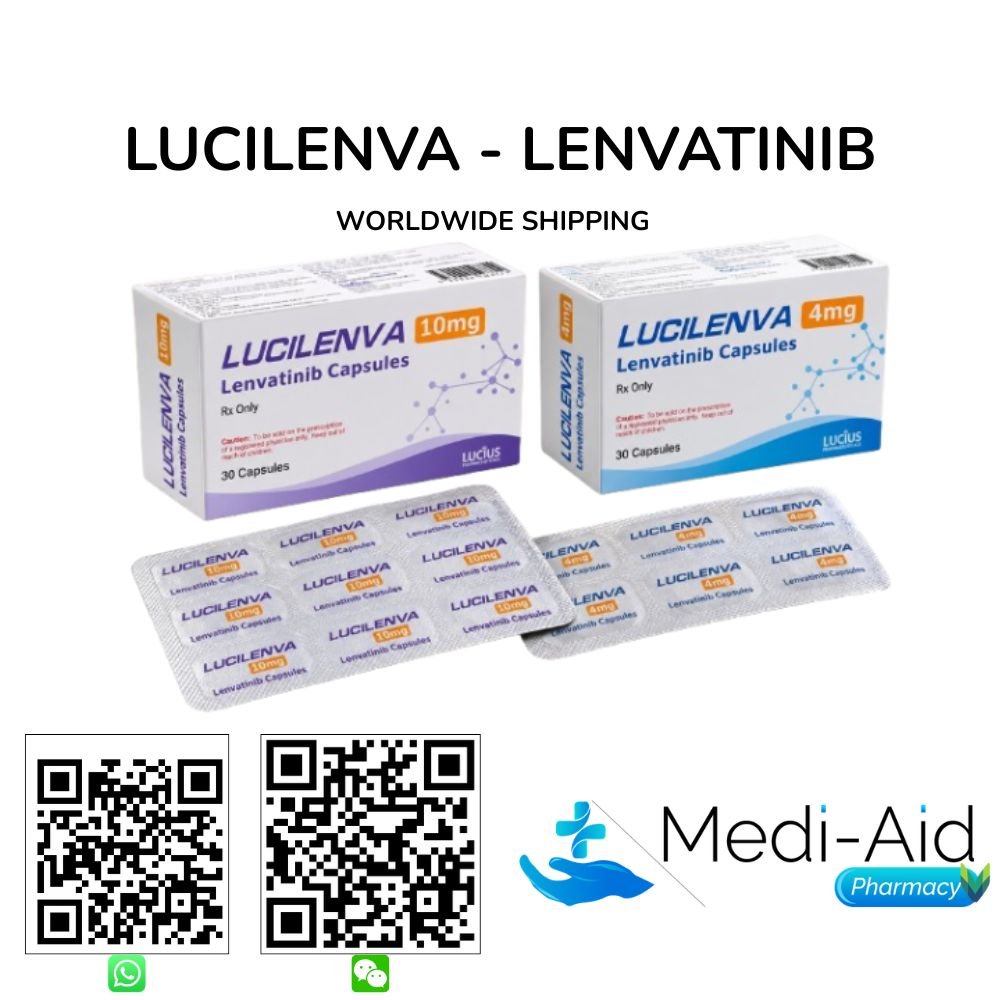
LuciLenva 4 MG & 10 MG (Lenvatinib) is an oral, multi-targeted receptor tyrosine kinase inhibitor (TKI) supplied as hard capsules in both 4 mg and 10 mg strengths, each in a pack of 30 capsules per pot, manufactured by Lucius Pharmaceuticals (Lao) Co., Ltd. of Laos. Its active ingredient, lenvatinib, potently inhibits vascular endothelial growth factor receptors (VEGFR1, VEGFR2, VEGFR3), fibroblast growth factor receptors (FGFR1–4), platelet-derived growth factor receptor alpha (PDGFRα), RET, and KIT a unique multi-kinase inhibition profile that simultaneously suppresses pathogenic tumour angiogenesis, direct tumour cell proliferation, and immunomodulatory escape mechanisms driving cancer progression.
The dual-strength availability of LuciLenva (4 mg and 10 mg capsules) enables oncologists to construct all clinically mandated lenvatinib dose levels precisely including 24 mg/day for radioiodine-refractory differentiated thyroid cancer (DTC), 12 mg or 8 mg/day for hepatocellular carcinoma (HCC), 20 mg/day for renal cell carcinoma (RCC) in combination with pembrolizumab, and stepwise dose reductions without requiring additional capsule strengths.
In the pivotal Phase III SELECT trial the global registration study for lenvatinib in radioiodine-refractory DTC lenvatinib 24 mg once daily delivered a median progression-free survival (PFS) of 18.3 months versus 3.6 months with placebo (HR 0.21; 99% CI 0.14–0.31; P<0.001), representing a 79% reduction in the risk of disease progression or death and establishing lenvatinib as a standard-of-care option in its approved oncology indications.
Searching for LuciLenva 4 MG & 10 MG Lenvatinib? Mediaid Pharmacy lists this product within its comprehensive oncology medicines portfolio, and ships it worldwide.
Basic Product Information of LuciLenva 4 MG & 10 MG (Lenvatinib)
| Brand Name | LuciLenva 4 MG & 10 MG (Lenvatinib) |
| Product Name | LuciLenva |
| Generic Name | Lenvatinib |
| Drug Class | Multi-Targeted Receptor Tyrosine Kinase Inhibitor (VEGFR1–3, FGFR1–4, PDGFRα, RET, KIT); Antiangiogenic Targeted Oncology Agent |
| Formulation | Hard Capsule |
| Available Strengths | 4 mg and 10 mg |
| Available Pack Size | 30 Capsules per pot |
| Primary Indications | Radioiodine-refractory Differentiated Thyroid Cancer (DTC); Unresectable Hepatocellular Carcinoma (HCC, first-line); Advanced Renal Cell Carcinoma (RCC) |
| Manufacturer / Brand | Lucius Pharmaceuticals (Lao) Co., Ltd. |
| Country of Origin | Laos |
| Categories | Kidney Cancer Medicines, Liver Cancer Medicines, Oncology Medicines, Thyroid Cancer Medicines |
| Storage Conditions | Store below 25°C in a dry place, protected from light and moisture. Keep out of the reach of children. |
| Global Supplier | Mediaid Pharmacy, Worldwide Shipping Available |
How LuciLenva (Lenvatinib) Works: Multi-Kinase Inhibition of Tumour Angiogenesis and Proliferation
Lenvatinib, the active ingredient in LuciLenva 4 MG and 10 MG, is a novel, orally bioavailable, multi-targeted receptor tyrosine kinase (RTK) inhibitor that simultaneously blocks vascular endothelial growth factor receptors (VEGFR1, VEGFR2, VEGFR3), fibroblast growth factor receptors (FGFR1, FGFR2, FGFR3, FGFR4), platelet-derived growth factor receptor alpha (PDGFRα), rearranged during transfection (RET) kinase, and stem cell factor receptor (KIT) a mechanistically differentiated inhibition profile that distinguishes lenvatinib from pure VEGFR-targeted agents such as sorafenib.
A receptor tyrosine kinase inhibitor refers to a class of small-molecule targeted oncology drugs that competitively block the adenosine triphosphate (ATP)-binding domain of receptor kinases, preventing their autophosphorylation and downstream signal transduction. By simultaneously suppressing VEGFR1–3 and FGFR1–4 both primary angiogenic signalling axes that tumours exploit to recruit and maintain a tumour vasculature supply lenvatinib delivers a dual-angiogenic blockade not achievable with VEGFR-selective agents alone. Lenvatinib inhibits VEGFR2 kinase with an IC₅₀ of 4.0 nM, VEGFR3 with IC₅₀ 2.3 nM, VEGFR1 with IC₅₀ 4.7 nM, and FGFR1–4 with IC₅₀ values of 61 nM, 27 nM, 52 nM, and 43 nM, respectively confirming potent, selective multi-receptor suppression across the full spectrum of pro-angiogenic targets.
The oncological significance of FGFR co-inhibition is particularly important in radioiodine-refractory differentiated thyroid cancer (DTC): FGFR-driven signalling represents a primary mechanism of acquired resistance to pure VEGFR inhibitors in DTC, and lenvatinib’s concurrent FGFR1–4 blockade directly addresses this resistance pathway, delivering durable disease control beyond the scope of single-axis angiogenesis inhibitors. Lenvatinib’s inhibition of RET kinase which drives oncogenic signalling in RET-rearranged DTC subtypes adds a third mechanistic dimension to its antitumour activity in thyroid malignancies.
In addition to its antiangiogenic effects, lenvatinib exerts direct antitumour activity by inhibiting tumour cell proliferation and survival signalling through FGFR- and KIT-dependent pathways in hepatocellular carcinoma (HCC) and renal cell carcinoma (RCC). Oncologists building comprehensive thyroid and liver cancer treatment programmes can review the complete range of thyroid cancer medicines at Mediaid Pharmacy for companion and supportive therapies.
In the pivotal Phase III SELECT trial the global registration study for lenvatinib in radioiodine-refractory DTC lenvatinib 24 mg once daily delivered a median progression-free survival of 18.3 months versus 3.6 months with placebo (HR 0.21; 99% CI 0.14–0.31; P<0.001), representing a 79% reduction in the risk of disease progression or death and an objective response rate (ORR) of 64.8% establishing lenvatinib as the global first-line standard of care in radioiodine-refractory progressive DTC.
In the Phase III REFLECT trial in unresectable HCC, lenvatinib demonstrated non-inferiority to sorafenib for overall survival (median OS: 13.6 vs 12.3 months; HR 0.92; 95% CI 0.79–1.06) with significantly superior PFS (7.4 vs 3.7 months; HR 0.66; 95% CI 0.57–0.77; P<0.001) and ORR (40.6% vs 12.4%), establishing lenvatinib as the first approved first-line alternative to sorafenib in unresectable HCC in over a decade.
The dual-strength design of LuciLenva available as both 4 mg and 10 mg hard capsules from Lucius Pharmaceuticals (Lao) Co., Ltd. allows the full 24 mg daily DTC dose (2 × 10 mg + 1 × 4 mg), the 20 mg RCC combination dose (2 × 10 mg), the 12 mg HCC dose for body weight ≥60 kg (3 × 4 mg), and the 8 mg HCC dose for body weight <60 kg (2 × 4 mg) to all be constructed from capsules within the same product range.
Approved Indications of Lenvatinib (Reference Label for LuciLenva 4 MG & 10 MG)
Lenvatinib, the active ingredient in LuciLenva 4 MG and 10 MG, is approved internationally across three primary oncology indications in adult patients. Prescribers should confirm the exact locally approved indications on the lenvatinib product label before initiating therapy, as labelling specifics may vary by regulatory jurisdiction.
|
Radioiodine-Refractory Differentiated Thyroid Cancer (DTC) Monotherapy Lenvatinib is indicated as monotherapy for adult patients with locally recurrent or metastatic, progressive radioiodine-refractory differentiated thyroid cancer (RAI-refractory DTC). In the SELECT Phase III trial, lenvatinib 24 mg once daily achievable with LuciLenva as 2 × 10 mg + 1 × 4 mg capsules reduced the risk of disease progression or death by 79% versus placebo (median PFS 18.3 vs 3.6 months; HR 0.21; 99% CI 0.14–0.31; P<0.001) with an ORR of 64.8%, establishing lenvatinib as the global standard of care for progressive RAI-refractory DTC. Patients seeking lenvatinib capsules for thyroid cancer treatment can explore Mediaid Pharmacy’s full range. |
Unresectable Hepatocellular Carcinoma (HCC) First-Line Monotherapy Lenvatinib is indicated as first-line monotherapy for adults with unresectable hepatocellular carcinoma (HCC) who have not received prior systemic therapy. In the REFLECT Phase III trial, lenvatinib demonstrated non-inferiority to sorafenib for overall survival (median OS 13.6 vs 12.3 months; HR 0.92) with a statistically significant improvement in PFS (7.4 vs 3.7 months; HR 0.66; P<0.001) and ORR (40.6% vs 12.4%), making lenvatinib the first approved first-line systemic alternative to sorafenib for unresectable HCC in over ten years. Liver cancer medicines including LuciLenva Lenvatinib are available at Mediaid Pharmacy with worldwide shipping. |
Advanced Renal Cell Carcinoma (RCC) Monotherapy or Combination Therapy Lenvatinib is indicated for adult patients with advanced renal cell carcinoma (RCC): as a first-line treatment in combination with pembrolizumab, and in combination with everolimus for adult patients following one prior anti-angiogenic therapy. In the Phase Ib/II study of lenvatinib plus everolimus in previously treated RCC, the combination delivered a median PFS of 14.6 months versus 5.5 months with everolimus alone (HR 0.40; 95% CI 0.24–0.68; P=0.0005). Oncologists can review the complete range of kidney cancer medicines at Mediaid Pharmacy for comprehensive RCC treatment support. |
Key Clinical Benefits of LuciLenva 4 MG & 10 MG (Lenvatinib)
|
79% Reduction in Risk of Progression or Death vs Placebo in Radioiodine-Refractory DTC (SELECT Trial) The SELECT Phase III trial demonstrated that lenvatinib 24 mg once daily achieved with LuciLenva as 2 × 10 mg + 1 × 4 mg hard capsules per day reduced the risk of disease progression or death by 79% versus placebo in progressive radioiodine-refractory DTC (median PFS 18.3 vs 3.6 months; HR 0.21; 99% CI 0.14–0.31; P<0.001) a more than five-fold improvement in median PFS with an ORR of 64.8%, establishing lenvatinib as the reference standard for multi-kinase inhibition in RAI-refractory thyroid malignancy. The SELECT trial enrolled 392 patients across 21 countries with progressive, radioiodine-refractory DTC, and the magnitude of PFS benefit was consistent across all pre-specified subgroups including histological DTC subtypes. |
Superior PFS and ORR vs Sorafenib as First-Line HCC Therapy (REFLECT Trial) In the REFLECT Phase III trial of 954 patients with unresectable HCC, lenvatinib (12 mg/day for ≥60 kg or 8 mg/day for <60 kg both doses achievable with LuciLenva 4 mg capsules as 3 × 4 mg or 2 × 4 mg, respectively) demonstrated statistically significant superiority over sorafenib in PFS (median 7.4 vs 3.7 months; HR 0.66; 95% CI 0.57–0.77; P<0.001) and ORR (40.6% vs 12.4% by mRECIST; P<0.0001), with non-inferior overall survival (median OS 13.6 vs 12.3 months; HR 0.92). Lenvatinib became the first systemic agent to demonstrate PFS and ORR superiority over sorafenib in first-line unresectable HCC, confirming its position as a preferred first-line HCC option. |
Dual-Strength Precision Dosing: 4 mg + 10 mg Capsules Cover All Lenvatinib Dose Levels LuciLenva’s availability in both 4 mg and 10 mg hard capsule strengths from Lucius Pharmaceuticals (Lao) Co., Ltd. is a clinically meaningful advantage. All reference-label lenvatinib doses across approved indications can be constructed from LuciLenva capsules alone: 24 mg DTC dose (2 × 10 mg + 1 × 4 mg), 20 mg RCC dose (2 × 10 mg), 18 mg RCC + everolimus dose (1 × 10 mg + 2 × 4 mg), 14 mg step-down dose (1 × 10 mg + 1 × 4 mg), 12 mg HCC ≥60 kg dose (3 × 4 mg), and 8 mg HCC <60 kg dose (2 × 4 mg). This eliminates the need for a third capsule strength and simplifies pharmacy dispensing and patient adherence. |
Monitoring Requirements During LuciLenva (Lenvatinib) Treatment
Blood pressure monitoring is the most critical and frequent monitoring requirement during lenvatinib therapy. The reference label mandates baseline blood pressure measurement with pre-existing hypertension optimised before initiating LuciLenva and regular BP monitoring throughout treatment. Blood pressure must be assessed every week for the first two months of treatment, then at least monthly thereafter, or more frequently when clinically indicated. Grade 2 hypertension (140–159/90–99 mmHg) requires initiation or intensification of anti-hypertensive therapy. Grade 3 hypertension (≥160/100 mmHg despite anti-hypertensive therapy) requires lenvatinib dose interruption. Grade 4 hypertensive crisis requires permanent discontinuation.
Hepatic function monitoring is mandated throughout lenvatinib treatment, with particular vigilance required for patients with underlying hepatic impairment or pre-existing HCC, in whom lenvatinib’s hepatotoxic potential overlaps with ongoing liver disease. The reference label requires liver function test (LFT) assessment specifically ALT, AST, alkaline phosphatase, and total bilirubin at baseline, every 2 weeks during the first 2 months of treatment, and then monthly thereafter. Grade 3 or 4 hepatotoxicity requires treatment interruption and assessment; permanent discontinuation is required for Grade 4 hepatic failure.
Renal function and urinary protein monitoring are also required: proteinuria has been reported in approximately 34% of lenvatinib-treated patients and urine protein should be monitored regularly by urine dipstick; ≥2+ proteinuria on dipstick requires 24-hour urine protein assessment, and lenvatinib should be interrupted if 24-hour urine protein is ≥2 g. Thyroid function monitoring (TSH) is recommended for all patients at baseline and periodically during treatment, as lenvatinib-associated hypothyroidism occurs in 14–57% of patients depending on the indication most prominently in RCC patients who have intact thyroid glands prior to treatment.
ECG and cardiac function monitoring are indicated for patients with risk factors for QTc prolongation, pre-existing cardiac disease, or concurrent use of QTc-prolonging medications, as lenvatinib may prolong the QT interval. Oncologists managing patients receiving LuciLenva alongside other targeted agents or systemic therapies can review the full range of oncology medicines available at Mediaid Pharmacy for companion therapy support.
Drug Interactions and Important Safety Information for LuciLenva (Lenvatinib)
The most clinically relevant drug interactions for lenvatinib involve agents that prolong the QT interval. Lenvatinib itself may prolong QTc, and concurrent use of antiarrhythmic drugs (amiodarone, sotalol, dronedarone), fluoroquinolone or macrolide antibiotics, antipsychotics, or other QTc-prolonging agents further increases this risk; ECG monitoring and electrolyte correction (particularly potassium, magnesium, and calcium) are required before and during concurrent use.
Strong CYP3A4 inhibitors including ketoconazole, itraconazole, clarithromycin, and ritonavir-boosted antiretroviral regimens may increase lenvatinib systemic exposure; although no specific dose modification is mandated in the reference label, close monitoring for treatment-related toxicities including hypertension, proteinuria, and hepatotoxicity is required when these agents are co-administered. Strong CYP3A4 inducers including rifampicin, carbamazepine, phenytoin, and St John’s Wort may substantially reduce lenvatinib plasma concentrations, potentially compromising therapeutic drug levels; avoidance of strong inducers is preferred where clinically feasible.
Lenvatinib is primarily metabolised by aldehyde oxidase and CYP3A4, with elimination occurring mainly via the faecal route (approximately 64–69% of dose). Lenvatinib is a substrate of P-glycoprotein (P-gp) but is not a clinically significant inhibitor or inducer of major CYP enzymes at therapeutic doses, minimising direct pharmacokinetic interaction risk with co-administered substrates of CYP1A2, CYP2C9, CYP2D6, and CYP3A4. Anti-hypertensive drug interactions are particularly clinically relevant given lenvatinib’s high incidence of treatment-emergent hypertension (up to 73% of patients in some trials): dose adjustments of concomitant anti-hypertensive agents are frequently required during LuciLenva therapy, and certain anti-hypertensives particularly non-dihydropyridine calcium channel blockers also carry QTc prolongation risk, necessitating careful selection.
Anticoagulation interactions require clinical awareness: lenvatinib increases the risk of arterial thromboembolic events (grade 3–4 rate approximately 2–3%) and haemorrhage, and concurrent use of anticoagulants or antiplatelet agents must be monitored carefully; INR should be monitored more frequently in patients receiving warfarin. Patients must disclose all concomitant medications including herbal preparations and over-the-counter supplements to their treating oncologist before and during LuciLenva 4 MG and 10 MG therapy. Those requiring supportive or concurrent oncology agents can contact the Mediaid Pharmacy team for sourcing; the full range of liver cancer medicines available for worldwide dispatch is listed on the Mediaid Pharmacy website.
Side Effects and Precautions of LuciLenva 4 MG & 10 MG (Lenvatinib)
|
Common Side Effects Hypertension (approximately 42–73% of patients across all indications; the most frequently reported adverse event with lenvatinib; requires blood pressure monitoring before and throughout treatment) Diarrhoea (approximately 42–67% of patients; most common gastrointestinal adverse event; typically managed with anti-diarrhoeal agents and dose modification as required) Fatigue and asthenia (approximately 36–67% of patients, often associated with other adverse events including anaemia, hypothyroidism, and decreased appetite) Decreased appetite and weight loss (approximately 34–54%) Nausea (~24–47%) and vomiting (~16–36%) Proteinuria (approximately 34%; requires regular urine dipstick monitoring and 24-hour urine protein assessment if ≥2+ dipstick result) Stomatitis and oral mucositis (approximately 36–41%) Hypothyroidism (approximately 14–57% depending on indication; TSH monitoring throughout treatment required) Palmar-plantar erythrodysaesthesia syndrome (hand-foot skin reaction; ~27–32%) |
Serious Warnings and Precautions Severe hypertension and hypertensive crisis: Grade 3 hypertension (≥160/100 mmHg despite anti-hypertensive therapy) requires lenvatinib dose interruption. Grade 4 hypertensive crisis with life-threatening consequences requires permanent discontinuation. Mandatory baseline and ongoing blood pressure monitoring is required throughout treatment. Hepatotoxicity and hepatic failure: Grade 3–4 liver enzyme elevations and cases of hepatic failure including fatal outcomes have been reported, particularly in HCC patients with underlying hepatic impairment. LFT monitoring every 2 weeks for the first 2 months, then monthly, is mandatory. Permanent discontinuation is required for Grade 4 hepatic failure. Arterial thromboembolic events (ATE): serious ATEs including myocardial infarction and cerebrovascular accident (Grade 3–4 rate ~2–3%) have been reported with lenvatinib. Lenvatinib should be permanently discontinued in patients who develop ATEs during treatment. Prior history of ATE within the preceding 6 months was an exclusion criterion in pivotal trials. Haemorrhage: serious and potentially fatal haemorrhagic events have been reported across all lenvatinib-treated tumour types, including tumour-related haemorrhage in patients with HCC. Grade 3–4 haemorrhage requires immediate treatment interruption; Grade 4 or life-threatening haemorrhage requires permanent discontinuation. Renal failure and impairment: lenvatinib can cause renal failure, which may lead to death. Creatinine and renal function monitoring are required at baseline and periodically throughout treatment. Grade 3 or higher renal impairment requires dose interruption or discontinuation based on severity and reversibility. Gastrointestinal perforation and fistula formation: serious gastrointestinal perforation events and fistulae have been reported; lenvatinib should be permanently discontinued if gastrointestinal perforation or life-threatening fistula occurs. Embryo-fetal toxicity: lenvatinib can cause fetal harm based on its mechanism of action and animal study data. Females of reproductive potential must use effective contraception during treatment and for at least 30 days after the final dose. Males with female partners of reproductive potential must use contraception during treatment and for at least 30 days after the last dose. Breastfeeding is not recommended during treatment or for 1 week after the final dose. |
Who Should Use LuciLenva 4 MG & 10 MG (Lenvatinib)?
LuciLenva 4 MG and 10 MG (Lenvatinib) is indicated for adult patients across three oncology settings: (1) locally recurrent or metastatic, progressive radioiodine-refractory differentiated thyroid cancer (RAI-refractory DTC) as monotherapy; (2) unresectable hepatocellular carcinoma (HCC) as first-line monotherapy; and (3) advanced renal cell carcinoma (RCC) in combination with pembrolizumab as first-line therapy or in combination with everolimus following one prior anti-angiogenic therapy.
For DTC, lenvatinib must only be initiated in patients whose disease has been confirmed to be refractory to radioiodine (RAI) treatment defined as one or more of: measurable disease that does not concentrate RAI; RAI-avid metastatic lesions with disease progression within 12 months of RAI therapy; cumulative RAI dose >600 mCi; or prior RAI treatment with no clinical benefit. For HCC, lenvatinib must only be initiated in patients with Child-Pugh A hepatic function; patients with Child-Pugh B or C hepatic impairment were excluded from REFLECT and have insufficient efficacy and safety data to support use. Oncologists and treating physicians assess baseline cardiovascular function, blood pressure, hepatic and renal function, urine protein, thyroid function (TSH), and all concomitant QTc-prolonging medications before initiating LuciLenva.
Patients with a history of arterial thromboembolic events within 6 months, uncontrolled hypertension, significant active bleeding, poorly healed surgical wounds, active gastrointestinal conditions with high perforation risk, or who are pregnant, breastfeeding, or of reproductive potential without adequate contraception require individualised risk counselling before therapy begins. For patients requiring complementary targeted therapies or supportive oncology treatments alongside lenvatinib, Mediaid Pharmacy’s kidney cancer medicine range provides a broad selection of targeted agents available for global delivery.
Global Supplier: Mediaid Pharmacy Worldwide Shipping for LuciLenva 4 MG & 10 MG (Lenvatinib)
Mediaid Pharmacy is a Dhaka-based supplier of oncology and specialty medicines with worldwide shipping. LuciLenva 4 MG and 10 MG (Lenvatinib) manufactured by Lucius Pharmaceuticals (Lao) Co., Ltd. of Laos, formulated as hard capsules in a 30-capsule pot per strength are stocked and available for international supply. All orders are supported by pricing quotations, stock confirmation, and end-to-end delivery tracking. Hospitals, specialist oncology clinics, distributors, and patients can contact the Mediaid Pharmacy team through WhatsApp, phone, or WeChat for all enquiries about lenvatinib capsules for thyroid, liver, and kidney cancer treatment including current stock availability, pricing, and international delivery timelines. Buyers sourcing multiple oncology or cancer medicines in a single consolidated shipment can browse the complete Mediaid Pharmacy catalogue before requesting a combined quotation.
Why Choose LuciLenva 4 MG & 10 MG (Lenvatinib) from Mediaid Pharmacy?
LuciLenva (Lenvatinib) is manufactured by Lucius Pharmaceuticals (Lao) Co., Ltd., a pharmaceutical manufacturer based in Laos, and delivers the active ingredient lenvatinib the same multi-kinase inhibitor whose 24 mg once-daily regimen anchored the SELECT Phase III trial (79% reduction in risk of disease progression or death versus placebo in RAI-refractory DTC; median PFS 18.3 vs 3.6 months; HR 0.21; P<0.001) and the REFLECT Phase III trial (superior PFS and ORR vs sorafenib as first-line HCC therapy; median PFS 7.4 vs 3.7 months; HR 0.66; P<0.001).
The dual-strength capsule format 4 mg and 10 mg hard capsules enables prescribing oncologists to construct all clinically mandated lenvatinib dose levels across all three approved indications precisely, without requiring a third capsule strength: 24 mg DTC dose (2 × 10 mg + 1 × 4 mg), 20 mg RCC combination dose (2 × 10 mg), 18 mg step-down (1 × 10 mg + 2 × 4 mg), 14 mg step-down (1 × 10 mg + 1 × 4 mg), 12 mg HCC ≥60 kg dose (3 × 4 mg), and 8 mg HCC <60 kg dose (2 × 4 mg).
Mediaid Pharmacy supplies LuciLenva 4 MG and 10 MG in their respective 30-capsule pot formats with specialist supply support and worldwide shipping. Every order begins with a prescription-based enquiry that maintains supply aligned with clinical need. To compare lenvatinib with other targeted agents for thyroid, liver, or kidney cancer, or to source additional oncology medicines, visit the Mediaid Pharmacy Lucius Pharmaceuticals oncology medicines section and contact the team for a personalised quotation.
Frequently Asked Questions About LuciLenva 4 MG & 10 MG (Lenvatinib)
What is LuciLenva 4 MG & 10 MG (Lenvatinib) used for?
LuciLenva 4 MG and 10 MG (Lenvatinib) is an oral multi-targeted receptor tyrosine kinase inhibitor (TKI) used to treat adults with radioiodine-refractory differentiated thyroid cancer (RAI-refractory DTC), unresectable hepatocellular carcinoma (HCC) as first-line therapy, and advanced renal cell carcinoma (RCC) either in combination with pembrolizumab as first-line treatment or in combination with everolimus following one prior anti-angiogenic therapy. Lenvatinib works by simultaneously blocking VEGFR1–3, FGFR1–4, PDGFRα, RET, and KIT receptor tyrosine kinases disrupting tumour angiogenesis, direct tumour cell proliferation, and immune escape mechanisms across all three approved tumour types. The SELECT Phase III trial demonstrated an 18.3-month median PFS with lenvatinib versus 3.6 months with placebo in RAI-refractory DTC (HR 0.21; P<0.001), and the REFLECT Phase III trial confirmed lenvatinib’s superiority over sorafenib in PFS and ORR as first-line HCC therapy.
What is the generic name of LuciLenva?
The generic name of LuciLenva is lenvatinib. LuciLenva is a hard capsule formulation containing either 4 mg or 10 mg of lenvatinib per capsule, available in a 30-capsule pot per strength, manufactured by Lucius Pharmaceuticals (Lao) Co., Ltd. of Laos. LuciLenva is Lucius Pharmaceuticals’ branded generic formulation of lenvatinib the same active ingredient found in the originator medicine Lenvima (lenvatinib), developed by Eisai Co., Ltd. and approved by the FDA, EMA, and other major regulatory agencies for radioiodine-refractory DTC, unresectable HCC, and advanced RCC. The dual 4 mg and 10 mg capsule strengths of LuciLenva enable oncologists to prescribe the full range of lenvatinib doses used in clinical practice from 8 mg/day to 24 mg/day through precise combination of capsule units as directed by the treating specialist.
What is the standard dosing of LuciLenva (Lenvatinib) across its approved indications?
The dose must always be determined and adjusted by the treating oncologist based on the patient’s indication, body weight, renal and hepatic function, and tolerability. The reference label for lenvatinib specifies the following indication-specific starting doses: 24 mg once daily as monotherapy for radioiodine-refractory DTC (achievable with LuciLenva as 2 × 10 mg + 1 × 4 mg capsules); 12 mg once daily (for body weight ≥60 kg, achievable as 3 × 4 mg) or 8 mg once daily (for body weight <60 kg, achievable as 2 × 4 mg) as monotherapy for first-line unresectable HCC; 20 mg once daily in combination with pembrolizumab for first-line advanced RCC (achievable as 2 × 10 mg); and 18 mg once daily in combination with everolimus 5 mg for previously treated advanced RCC (achievable as 1 × 10 mg + 2 × 4 mg). Lenvatinib is taken orally once daily at the same time each day, with or without food, as a continuous schedule. Stepwise dose reductions to manage treatment-related toxicities should follow the reference label dose modification guidelines; never reduce or stop the dose without explicit direction from the prescribing oncologist.
What are the side effects of LuciLenva (Lenvatinib)?
Common side effects of lenvatinib include hypertension (the most frequent adverse event, occurring in approximately 42–73% of patients across indications), diarrhoea (~42–67%), fatigue and asthenia (~36–67%), decreased appetite and weight loss (~34–54%), nausea (~24–47%), stomatitis (~36–41%), proteinuria (~34%), hypothyroidism (~14–57% depending on indication), palmar-plantar erythrodysaesthesia syndrome (hand-foot skin reaction; ~27–32%), and voice changes (dysphonia). Serious but less frequent adverse effects include severe or life-threatening hypertension, hepatic failure (particularly in HCC patients with underlying liver impairment), arterial thromboembolic events (myocardial infarction, cerebrovascular accident; Grade 3–4 rate ~2–3%), haemorrhage (including tumour-related haemorrhage), renal failure, and gastrointestinal perforation or fistula formation. Mandatory blood pressure monitoring, LFT assessment, urine protein testing, TSH measurement, and cardiac function surveillance are required throughout the LuciLenva treatment period. Consult your prescribing oncologist regarding your individual risk profile before and during treatment.
Does LuciLenva (Lenvatinib) need to be taken with food?
Lenvatinib capsules (LuciLenva 4 MG and 10 MG) may be taken with or without food, as food does not significantly alter the pharmacokinetic profile of lenvatinib. However, patients should take lenvatinib at the same time each day on a consistent schedule either consistently with food or consistently without to maintain stable daily drug exposure. If a dose is missed by 12 hours or more, it should be skipped and the next scheduled dose taken at the usual time; patients must not take two doses at the same time to compensate for a missed dose. Difficulty maintaining adequate oral intake due to treatment-related nausea, vomiting, stomatitis, diarrhoea, or reduced appetite should be reported to the treating oncologist promptly, as these may necessitate anti-emetic support, mucositis management, or dose modification to avoid cumulative under-dosing.
How is blood pressure managed during LuciLenva (Lenvatinib) treatment?
Hypertension is the most common treatment-emergent adverse event with lenvatinib, occurring in up to 73% of patients in some trials and requiring anti-hypertensive initiation or dose adjustment in the majority. The reference label mandates blood pressure measurement at baseline with optimisation of any pre-existing hypertension before initiating LuciLenva and regular monitoring throughout treatment. Grade 2 hypertension (140–159/90–99 mmHg) can be managed with initiation or intensification of anti-hypertensive therapy while continuing lenvatinib at the same dose. Grade 3 hypertension (≥160/100 mmHg despite anti-hypertensive therapy, or medically significant) requires lenvatinib dose interruption until hypertension is controlled to ≤Grade 2, followed by dose resumption at a reduced level. Grade 4 hypertensive crisis (systolic >180 or life-threatening consequences) requires permanent discontinuation of lenvatinib. Preferred anti-hypertensive agents during lenvatinib therapy include ACE inhibitors, ARBs, and amlodipine; non-dihydropyridine CCBs (verapamil, diltiazem) carry additional QTc prolongation risk and should be used with caution.
Is LuciLenva (Lenvatinib) safe during pregnancy or while breastfeeding?
No. Lenvatinib can cause fetal harm based on its mechanism of action combined inhibition of VEGFR, FGFR, PDGFRα, RET, and KIT disrupts developmental signalling pathways essential for normal fetal organogenesis and vascular development and animal reproduction studies have confirmed dose-dependent embryotoxicity, fetotoxicity, and teratogenicity at clinically relevant exposures. Females of reproductive potential must use effective contraception during lenvatinib treatment and for at least 30 days after the final dose. Males with female partners of reproductive potential must also use effective contraception during treatment and for at least 30 days after the last dose, as animal data indicate potential genotoxicity. Breastfeeding is not recommended during treatment and for at least 1 week after the final dose, as it is not known whether lenvatinib or its metabolites are present in human breast milk; however, lenvatinib is excreted in the milk of lactating rats. Patients who are pregnant, planning a pregnancy, or currently breastfeeding must discuss their individual risk with their treating oncologist before initiating therapy.
Can I order LuciLenva 4 MG & 10 MG (Lenvatinib) online with worldwide shipping?
Yes. Mediaid Pharmacy supplies LuciLenva 4 MG and 10 MG (Lenvatinib) manufactured by Lucius Pharmaceuticals (Lao) Co., Ltd. of Laos, hard capsules in 30-capsule pots per strength to patients and healthcare providers globally. Contact Mediaid Pharmacy via WhatsApp, phone, or WeChat at +8801773428128, or email info@mediaidpharmacy.com for pricing, current stock availability, and international delivery details for your country. Oncology teams sourcing multiple targeted agents can browse the complete selection of Lucius Pharmaceuticals lenvatinib and oncology medicines at Mediaid Pharmacy.
Order LuciLenva 4 MG & 10 MG (Lenvatinib) with Worldwide Shipping
Phone / WhatsApp / WeChat: +8801773428128 | Email: info@mediaidpharmacy.com
Reviews
There are no reviews yet.