
Description
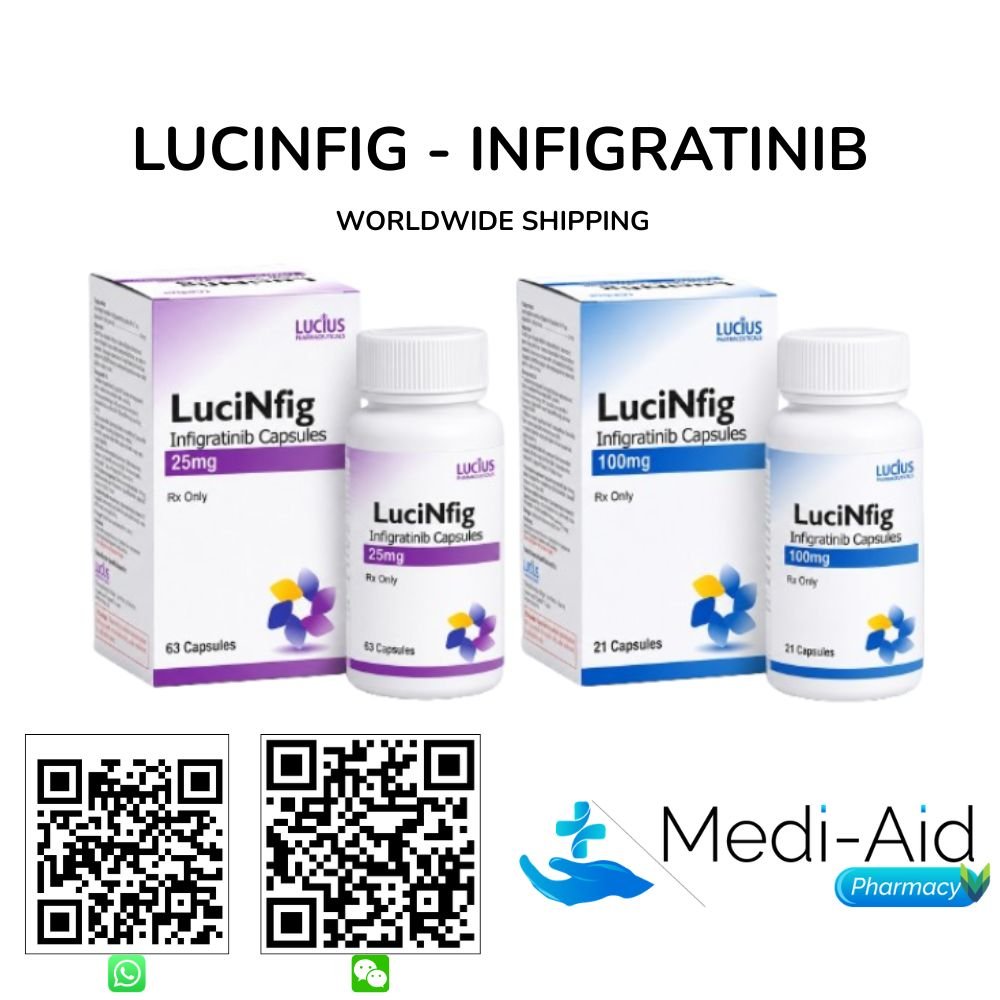
LuciNfig 25 MG & 100 MG (Infigratinib) is a selective, reversible, ATP-competitive pan-FGFR1-3 inhibitor hard capsule manufactured by Lucius Pharmaceuticals (Lao) Co., Ltd. in Laos, supplied as 63 capsules (25 mg) or 21 capsules (100 mg) per pot. Infigratinib is indicated for previously treated, unresectable, locally advanced or metastatic cholangiocarcinoma with FGFR2 gene fusions or rearrangements. The recommended dose is 125 mg orally once daily for 21 consecutive days of a 28-day cycle in a fasting state. Available globally through Mediaid Pharmacy with worldwide shipping. Contact: +8801773428128 (WhatsApp/Phone/WeChat) | info@mediaidpharmacy.com.
| Brand Name | LuciNfig 25 MG & 100 MG (Infigratinib) |
| Product Name | LuciNfig |
| Generic Name | Infigratinib (International Nonproprietary Name, INN); also known by the investigational designation BGJ398 in preclinical and early-phase clinical literature |
| Drug Class | Selective Reversible ATP-Competitive Pan-FGFR1-3 Inhibitor; Targeted Oral Oncology Agent; FGFR2 Fusion-Directed Biliary Tract Cancer Therapy; Kinase Inhibitor |
| Formulation | Hard Capsule (Oral; taken fasting at least 1 hour before or at least 2 hours after a meal for 21 consecutive days of a 28-day cycle, followed by a 7-day off period, until disease progression or unacceptable toxicity) |
| Available Strengths | 25 mg Infigratinib per hard capsule; 100 mg Infigratinib per hard capsule |
| Available Pack Sizes | 63 Capsules per Pot (25 mg strength 21-day cycle supply for the 25 mg component of the standard 125 mg daily dose); 21 Capsules per Pot (100 mg strength 21-day cycle supply for the 100 mg component of the standard 125 mg daily dose) |
| Therapeutic Category | Bile Duct Cancer Medicines; Oncology Medicines; FGFR Inhibitors; Targeted Biliary Tract Cancer Therapies; Lucius Pharmaceuticals Medicines |
| Approved Indication | Cholangiocarcinoma with FGFR2 Gene Fusions or Rearrangements: Treatment of adults with previously treated, unresectable, locally advanced or metastatic cholangiocarcinoma harboring FGFR2 gene fusions or other rearrangements, as detected by an approved companion diagnostic test. Infigratinib requires prior FGFR2 biomarker testing and at least one prior line of systemic therapy (typically gemcitabine plus cisplatin). Infigratinib is a clinically active selective FGFR1-3 kinase inhibitor validated in a biomarker-selected cholangiocarcinoma population. |
| Recommended Dose | Standard Dose: 125 mg orally once daily for 21 consecutive days of a 28-day cycle (1 × LuciNfig 100 mg capsule plus 1 × LuciNfig 25 mg capsule simultaneously), taken in a fasting state (at least 1 hour before or 2 hours after a meal) at approximately the same time each day. First Dose Reduction: 100 mg once daily (1 × LuciNfig 100 mg capsule). Second Dose Reduction: 75 mg once daily (3 × LuciNfig 25 mg capsules). Permanently discontinue if 75 mg is not tolerated. |
| Manufacturer | Lucius Pharmaceuticals (Lao) Co., Ltd., Laos |
| Country of Origin | Laos (Lao People’s Democratic Republic) |
| Originator Reference Brand | Truseltiq (Infigratinib capsules, QED Therapeutics / BridgeBio Pharma), which received accelerated U.S. FDA approval on May 28, 2021, as the first selective FGFR1-3 inhibitor for previously treated FGFR2 fusion/rearrangement-positive cholangiocarcinoma. LuciNfig contains Infigratinib INN at the same clinically validated 25 mg and 100 mg oral capsule strengths as the Truseltiq originator formulation, manufactured by Lucius Pharmaceuticals (Lao) Co., Ltd. in Laos and supplied through Mediaid Pharmacy for international procurement. |
| Global Supplier | Mediaid Pharmacy, Worldwide Shipping Available |
| Storage Conditions | Store at controlled room temperature (20°C to 25°C); excursions permitted between 15°C and 30°C. Keep in the original pot with the lid tightly closed. Protect from moisture and light. Keep out of the reach of children. |
What Is LuciNfig 25 MG & 100 MG (Infigratinib)?
LuciNfig 25 MG & 100 MG (Infigratinib) is a selective, reversible, ATP-competitive pan-FGFR1-3 (fibroblast growth factor receptor 1, 2, and 3) inhibitor hard capsule for the treatment of adults with previously treated, unresectable, locally advanced or metastatic cholangiocarcinoma harboring FGFR2 gene fusions or other rearrangements, manufactured by Lucius Pharmaceuticals (Lao) Co., Ltd. in Laos. LuciNfig capsules contain Infigratinib a potent, selective small-molecule kinase inhibitor that occupies the ATP-binding pocket of FGFR1, FGFR2, and FGFR3 kinase domains through reversible competitive inhibition, blocking constitutive FGFR2 fusion-driven kinase activity and suppressing downstream RAS–MEK–ERK (MAPK) and PI3K–AKT–mTOR oncogenic signaling cascades in FGFR2 gene fusion-positive cholangiocarcinoma cells. Infigratinib’s high selectivity for FGFR1-3 over FGFR4 distinguishes it pharmacologically from pan-FGFR1-4 inhibitors and is associated with a differentiated toxicity profile that notably excludes the FGFR4-mediated steatohepatitis and cholestasis risk associated with broader-spectrum FGFR inhibition.
LuciNfig capsules represent the Lucius Pharmaceuticals (Lao) formulation of infigratinib the same active ingredient as the originator brand Truseltiq (QED Therapeutics / BridgeBio Pharma, U.S. FDA accelerated approval May 28, 2021) at the same clinically validated 25 mg and 100 mg oral capsule strengths. The recommended therapeutic dose is 125 mg orally once daily for 21 consecutive days of a 28-day treatment cycle (1 × LuciNfig 100 mg capsule plus 1 × LuciNfig 25 mg capsule taken simultaneously) in a fasting state at least 1 hour before or at least 2 hours after a meal at approximately the same time each day, followed by a mandatory 7-day off period. The 7-day off period serves a critical pharmacodynamic purpose: FGFR inhibition suppresses FGF23-mediated renal phosphate excretion, causing hyperphosphatemia; the 7-day rest period allows serum phosphate levels to normalize before the next 21-day treatment cycle commences.
In the pivotal Phase 2 trial CBGJ398X2204, infigratinib achieved a confirmed objective response rate (ORR) of 23.1% in previously treated FGFR2 fusion/rearrangement-positive cholangiocarcinoma patients, a disease control rate (DCR) of 84.3%, a median duration of response of 5.0 months, a median PFS of 7.3 months, and a median OS of 12.2 months results that established infigratinib as a clinically active targeted therapy for this biomarker-selected biliary tract cancer population. LuciNfig is available globally through Mediaid Pharmacy’s bile duct cancer medicines portfolio with worldwide shipping.
Mechanism of Action of LuciNfig: Selective Reversible ATP-Competitive Pan-FGFR1-3 Inhibition
LuciNfig (Infigratinib) exerts its antitumor activity through selective, reversible, competitive inhibition of fibroblast growth factor receptor 1 (FGFR1), FGFR2, and FGFR3 kinase isoforms with particular clinical relevance in cholangiocarcinoma driven by constitutively activating FGFR2 gene fusions or rearrangements. Infigratinib’s high selectivity for FGFR1, FGFR2, and FGFR3 over FGFR4 and other kinase families distinguishes it mechanistically from broader-spectrum FGFR inhibitors and is the molecular basis for its favorable hepatic safety profile relative to pan-FGFR1-4 agents.
FGFR Signaling Biology The Oncogenic Pathway Targeted by Infigratinib: The fibroblast growth factor receptors (FGFR1–4) are receptor tyrosine kinases (RTKs) that, upon ligand (FGF1–23) binding and receptor dimerization, activate intracellular kinase domains through trans-autophosphorylation and initiate downstream signal transduction through the RAS–MEK–ERK (MAPK) cascade, the PI3K–AKT–mTOR pathway, the STAT3 pathway, and the PLC-γ pathway collectively promoting tumor cell proliferation, survival, angiogenesis, invasion, and epithelial-to-mesenchymal transition. In FGFR2 gene fusion-positive intrahepatic cholangiocarcinoma, chromosomal rearrangements fuse the FGFR2 kinase domain-encoding sequence to a partner gene (the most common partner is BICC1; over 100 distinct fusion partners have been identified, including AHCYL1, CCDC6, PPHLN1, and TACC3), producing a chimeric FGFR2 fusion oncoprotein that dimerizes constitutively through its partner domain activating FGFR2 kinase independently of FGF ligand binding and driving continuous, unrestrained RAS-MAPK and PI3K-AKT-mTOR oncogenic signaling in iCCA cells. FGFR2 fusions occur in approximately 10–16% of intrahepatic cholangiocarcinoma cases, establishing FGFR2 as the most actionable oncogenic driver in iCCA and the defining molecular target for infigratinib therapy.
Infigratinib’s Reversible ATP-Competitive Binding Mechanism How It Suppresses FGFR2 Fusion Signaling: Infigratinib (BGJ398) is a tricyclic, pyrimidine-based, small-molecule inhibitor that occupies the ATP-binding site of the FGFR1, FGFR2, and FGFR3 kinase domains through reversible, non-covalent binding interactions including hydrogen bonding with the kinase hinge region and hydrophobic interactions with the ATP-pocket hydrophobic spine competitively displacing ATP from the catalytic site and preventing the FGFR kinase-mediated phosphoryl transfer reaction that initiates downstream signaling.
By occupying the FGFR2 ATP pocket in FGFR2 gene fusion-positive cholangiocarcinoma cells, infigratinib blocks the constitutive autophosphorylation and transphosphorylation events that sustain ligand-independent FGFR2 kinase activity, thereby suppressing RAS-MEK-ERK and PI3K-AKT-mTOR pathway activation and reducing cholangiocarcinoma cell proliferation, survival, and invasion. Infigratinib’s IC50 values of approximately 0.9 nM for FGFR1, 1.4 nM for FGFR2, and 1.0 nM for FGFR3 compared to an IC50 of approximately 60 nM for FGFR4 demonstrate more than 40-fold kinase selectivity for FGFR1-3 over FGFR4 at clinically relevant concentrations. This FGFR4 selectivity gap is pharmacologically significant: FGFR4 inhibition is mechanistically implicated in the bile acid synthesis dysregulation and FGFR4-mediated hepatocellular injury observed with pan-FGFR1-4 inhibitors, and infigratinib’s relative FGFR4 sparing is directly associated with its favorable hepatic safety data in clinical trials.
The 21/7-Day Intermittent Dosing Cycle Pharmacodynamic Rationale for the Rest Period: The standard infigratinib dosing schedule of 21 consecutive days on followed by 7 days off in each 28-day cycle was designed to manage the on-target pharmacodynamic consequence of FGFR inhibition on renal phosphate homeostasis. FGFR1 signaling in the renal proximal tubule mediates FGF23-dependent suppression of sodium-phosphate cotransporter (NaPi-IIa/NaPi-IIc) expression, enabling renal phosphate excretion; FGFR1-3 inhibition by infigratinib blocks this FGF23-FGFR1 axis, reducing renal phosphate excretion and causing pharmacodynamically predictable hyperphosphatemia that is directly proportional to FGFR inhibitory drug exposure.
The 7-day off period within each 28-day cycle allows the reversible infigratinib–FGFR binding interaction to dissipate, FGFR kinase activity to recover, FGF23-FGFR1-mediated phosphate excretion to resume, and serum phosphate levels to normalize toward baseline before the next 21-day active treatment period creating a pharmacodynamically self-correcting cycle that reduces the cumulative Grade 3+ hyperphosphatemia burden compared to continuous daily dosing. This intermittent dosing design is a clinically rational approach that distinguishes infigratinib’s dosing schedule from the continuous daily administration of other FGFR inhibitors and enables sustained long-term FGFR-targeted therapy with manageable cumulative phosphate toxicity.
LuciNfig (Infigratinib): Dosing by Patient Setting and Clinical Situation
| Clinical Setting / Parameter | Recommended Infigratinib (LuciNfig) Dosing |
|---|---|
| Standard Recommended Dose | 125 mg orally once daily for 21 consecutive days of a 28-day treatment cycle (1 × LuciNfig 100 mg capsule + 1 × LuciNfig 25 mg capsule taken simultaneously), taken fasting (at least 1 hour before or at least 2 hours after a meal), followed by a 7-day off period. Continue until disease progression or unacceptable toxicity. |
| First Dose Reduction | 100 mg orally once daily for 21 days of a 28-day cycle (1 × LuciNfig 100 mg capsule), taken fasting, followed by 7-day off. Indicated for Grade 3 or intolerable Grade 2 adverse reactions that do not resolve to ≤Grade 1 with supportive care. |
| Second Dose Reduction | 75 mg orally once daily for 21 days of a 28-day cycle (3 × LuciNfig 25 mg capsules taken simultaneously), taken fasting, followed by 7-day off. Applied for recurrent Grade 3 or Grade 4 adverse reactions at the 100 mg dose level. |
| Permanent Discontinuation | Permanently discontinue LuciNfig if 75 mg is not tolerated, or for: Grade 4 RPED, Grade 4 non-hematologic toxicity, Grade 4 hyperphosphatemia unresponsive to management, or recurrent Grade 3+ toxicity after maximum dose reductions. |
| Missed Dose | If a dose is missed, take it as soon as remembered on the same day. Do not take two doses on the same day to make up for a missed dose. Resume the regular dosing schedule the following day. |
| Renal Impairment | No dose adjustment required for mild or moderate renal impairment. Infigratinib pharmacokinetics in severe renal impairment (eGFR <30 mL/min/1.73 m²) are not fully established; monitor renal function and serum phosphate closely throughout LuciNfig treatment in patients with pre-existing renal disease. |
| Hepatic Impairment | No dose adjustment required for mild hepatic impairment (Child-Pugh A). Use with caution in moderate hepatic impairment (Child-Pugh B) with intensified hepatic monitoring. Severe hepatic impairment (Child-Pugh C): infigratinib pharmacokinetics are not established consult the treating hepatobiliary oncologist before initiating LuciNfig in this setting. |
LuciNfig (Infigratinib): Safety Profile, Adverse Reactions, and Clinical Management
| Adverse Reaction / Safety Concern | Clinical Frequency, Mechanism, and Management |
|---|---|
| Hyperphosphatemia | Hyperphosphatemia is the most frequent adverse reaction with LuciNfig (Infigratinib), occurring in approximately 77% of patients (Grade 3 in approximately 30%), and is a direct on-target consequence of FGFR1 inhibition disrupting FGF23-mediated renal phosphate excretion via suppression of renal sodium-phosphate cotransporter expression. The 7-day off period built into each 28-day LuciNfig cycle is specifically designed to allow serum phosphate to normalize between treatment periods, reducing cumulative hyperphosphatemia burden. Management during the 21-day on period: implement low-phosphate diet (target dietary phosphate intake <800 mg/day), administer oral phosphate binders (sevelamer carbonate, lanthanum carbonate, or calcium carbonate) with phosphate-containing meals and snacks, monitor serum phosphate weekly during the first cycle and at the start of each subsequent cycle, and withhold LuciNfig for Grade 3+ hyperphosphatemia unresponsive to dietary restriction and phosphate binder optimization until resolution to ≤Grade 1 before resuming at a reduced dose. |
| Stomatitis and Oral Mucositis | Stomatitis (oral mucositis, mouth sores) is the second most frequent adverse reaction with LuciNfig, occurring in approximately 64% of patients (Grade 3 in approximately 13%), manifesting as painful ulceration of the oral mucosa, buccal mucosa, tongue, gingiva, and palate that can significantly impair oral intake, nutrition, and quality of life if not proactively managed. Stomatitis is a class effect of FGFR1-3 inhibition on mucosal epithelial cell FGFR signaling. Prevention and management: Implement oral hygiene prophylaxis before initiating LuciNfig (dental cleaning, elimination of pre-existing dental pathology); use a non-alcohol-based antimicrobial mouthwash (chlorhexidine 0.12%) twice daily throughout the 21-day treatment period; apply topical corticosteroid mouthwash (dexamethasone 0.5 mg/5 mL) or viscous lidocaine for symptomatic Grade 1-2 stomatitis; avoid mouthwashes containing alcohol, hydrogen peroxide, iodine, or thyme derivatives; for Grade 3 stomatitis (severe pain, inability to eat), withhold LuciNfig until improvement to ≤Grade 1, then resume at a reduced dose. Nutritional support (protein-enriched liquid supplements, soft diet) is recommended for any patient with Grade 2+ stomatitis to preserve nutrition during LuciNfig treatment. |
| Retinal Pigment Epithelial Detachment (RPED) | Retinal pigment epithelial detachment (RPED), also termed central serous retinopathy in the context of FGFR inhibitor toxicity, is a recognized ocular adverse reaction of FGFR inhibitors including infigratinib, caused by accumulation of subretinal fluid beneath the retinal pigment epithelium (RPE) due to FGFR inhibition of RPE tight junction integrity and fluid transport. Ophthalmologic assessment (dilated fundus examination and optical coherence tomography, OCT) is required at baseline before initiating LuciNfig, monthly during the first 3 months of treatment, and every 3 months thereafter. For asymptomatic Grade 1 RPED: continue LuciNfig at the same dose with monthly ophthalmologic monitoring. For symptomatic or Grade 2+ RPED: withhold LuciNfig, perform urgent ophthalmologic evaluation, and resume at a reduced dose upon improvement to ≤Grade 1. For Grade 4 RPED (best corrected visual acuity worse than 20/200 in the affected eye): permanently discontinue LuciNfig. Dry eye (approximately 34% of patients) is a distinct and more common ocular adverse reaction managed with preservative-free artificial tear eye drops; contact lens wear should be avoided during LuciNfig therapy. |
| Palmar-Plantar Erythrodysesthesia (PPE) | Palmar-plantar erythrodysesthesia (PPE, hand-foot syndrome) occurs in approximately 23% of patients receiving LuciNfig, manifesting as symmetric erythema, swelling, dysesthesia, and painful desquamation of the palms and soles, caused by FGFR inhibitor-mediated disruption of epidermal keratinocyte FGFR signaling and eccrine sweat gland function. Preventive measures: use urea-containing (10–20%) or lactic acid-containing emollient creams on palms and soles twice daily throughout LuciNfig treatment; avoid pressure, friction, constricting footwear, and heat exposure to the hands and feet; wear padded gloves and cushioned footwear. Grade 1–2 PPE: continue LuciNfig with intensified emollient care, topical corticosteroid (betamethasone 0.05%) cream for Grade 2 erythema, and pain management with non-opioid analgesics as needed. Grade 3 PPE (severe desquamation, blistering, or pain limiting self-care activities): withhold LuciNfig until improvement to ≤Grade 1, then resume at a reduced dose level. Permanent discontinuation is warranted for intolerable Grade 3 PPE at the lowest dose level (75 mg). |
| Drug Interactions PPIs, CYP3A4 Inhibitors/Inducers | Proton pump inhibitors (PPIs omeprazole, pantoprazole, esomeprazole, lansoprazole, rabeprazole) are not recommended for co-administration with LuciNfig: PPIs raise gastric pH and substantially reduce infigratinib solubility and absorption, decreasing therapeutic drug exposure. If acid suppression is medically required, substitute an H2 receptor antagonist (famotidine) and administer LuciNfig at least 2 hours before the H2 blocker dose; if a short-acting antacid is required, administer LuciNfig at least 2 hours before or after the antacid. Strong CYP3A4 inhibitors (azole antifungals itraconazole, voriconazole, posaconazole; clarithromycin; ritonavir; cobicistat) may significantly increase infigratinib systemic plasma exposure via CYP3A4 enzyme inhibition monitor for increased adverse reactions, particularly hyperphosphatemia and stomatitis severity. Strong and moderate CYP3A4 inducers (rifampin, carbamazepine, phenytoin, enzalutamide, St. John’s Wort) may substantially reduce infigratinib plasma concentrations avoid co-administration and substitute non-inducing alternatives where clinically feasible. Infigratinib is a CYP3A4 substrate and at clinical concentrations may inhibit CYP1A2, CYP2C9, and CYP2C19 disclose all medications, herbal products, and acid-suppression products to the treating oncologist before initiating LuciNfig. |
| Hepatotoxicity and Liver Function Monitoring | Hepatotoxicity elevations of ALT, AST, alkaline phosphatase (ALP), and total bilirubin has been reported in patients receiving LuciNfig (Infigratinib). In patients with FGFR2 fusion-positive cholangiocarcinoma, distinguishing infigratinib-induced hepatotoxicity from disease progression-related hepatic involvement or concurrent biliary obstruction requires careful clinical assessment and cross-sectional imaging. Monitor hepatic function (ALT, AST, total bilirubin, ALP) at baseline and at the start of each LuciNfig treatment cycle; more frequent monitoring is warranted in patients with pre-existing hepatic dysfunction, concurrent biliary disease, or co-administration of hepatotoxic medications. Infigratinib’s relative FGFR4 selectivity sparing is associated with a favorable hepatic safety profile compared to pan-FGFR1-4 inhibitors; however, hepatic monitoring remains mandatory given cholangiocarcinoma’s direct hepatobiliary involvement. For Grade 3+ transaminase elevation: withhold LuciNfig until resolution to ≤Grade 1, then resume at a reduced dose level. |
| Nail and Cutaneous Toxicity | Nail toxicity (onycholysis detachment of the nail plate from the nail bed and paronychia periungual inflammation with or without secondary infection) occurs in approximately 25% of infigratinib-treated patients and is a class effect of FGFR inhibition on nail matrix keratinocyte FGFR-mediated proliferation and differentiation. Preventive nail care includes daily nail soaks in dilute white vinegar solution (1 tablespoon in 1 quart of warm water), regular gentle nail trimming, application of petroleum jelly (Vaseline) to nail folds twice daily, and avoidance of pressure trauma, constricting footwear, nail cosmetics, and acrylic nail products. Grade 1–2 nail toxicity: continue LuciNfig at the same dose with supportive nail care; for paronychia with secondary bacterial superinfection, add topical mupirocin or oral antibiotics (doxycycline, clindamycin) as appropriate. Grade 3 nail toxicity limiting self-care activities: withhold LuciNfig until improvement to ≤Grade 2, then resume at a reduced dose level. Alopecia (hair loss) occurs in approximately 25% of patients; it does not require LuciNfig dose modification and is managed with supportive counseling, gentle hair care, and scalp sun protection. |
| Pregnancy and Contraception | Infigratinib (LuciNfig) can cause fetal harm when administered to a pregnant person. Verify pregnancy status by serum or urine pregnancy test before initiating LuciNfig in patients of reproductive potential. Advise patients of reproductive potential to use effective non-hormonal contraception during LuciNfig treatment and for an appropriate interval after the last dose. Male patients with female partners of reproductive potential should use barrier contraception (condoms) during LuciNfig treatment and after the last dose. Whether infigratinib or its metabolites are present in human breast milk is unknown; given the potential for serious adverse reactions in nursing infants, advise patients not to breastfeed during LuciNfig treatment and for an appropriate interval after the last dose. Consult the treating oncologist and obstetrician before initiating LuciNfig in patients of reproductive potential or those who are breastfeeding. |
Who Should Use LuciNfig 25 MG & 100 MG (Infigratinib)?
LuciNfig 25 MG & 100 MG (Infigratinib) is indicated for adults with previously treated, unresectable, locally advanced or metastatic cholangiocarcinoma harboring FGFR2 gene fusions or other rearrangements, as confirmed by an approved companion diagnostic test. FGFR2 gene fusions occur in approximately 10–16% of intrahepatic cholangiocarcinoma cases representing the most common targetable oncogenic driver in iCCA and are highly enriched in younger patients, those without alcohol-related liver disease risk factors, and those with well-differentiated iCCA histology. Globally, cholangiocarcinoma affects approximately 215,000 patients annually; the FGFR2 fusion-positive subset constitutes an estimated 3,000–7,000 new patients annually across major oncology markets a well-defined biomarker-selected population for whom FGFR-targeted therapy with infigratinib represents a clinically validated treatment option.
Adults with previously treated FGFR2 fusion-positive cholangiocarcinoma who have received at least one prior systemic therapy most commonly gemcitabine plus cisplatin (GemCis) as the standard first-line regimen represent the primary LuciNfig target population. This is the indication validated in the pivotal Phase 2 trial CBGJ398X2204, in which infigratinib delivered a confirmed ORR of 23.1% and a disease control rate of 84.3% in post-chemotherapy FGFR2 fusion-positive cholangiocarcinoma, compared to historical second-line chemotherapy response rates of 5–10% and median OS of 7–10 months in unselected biliary tract cancer. Patients with FGFR2 fusion-positive cholangiocarcinoma requiring an orally administered, once-daily capsule-based FGFR inhibitor with a clinically well-characterized tolerability profile and a structured 21/7-day dosing cycle that facilitates hyperphosphatemia management represent a specific clinical group for whom LuciNfig’s formulation and dosing design are particularly well-suited.
Patients who are NOT appropriate for LuciNfig include: those whose cholangiocarcinoma does not harbor a confirmed FGFR2 gene fusion or rearrangement on an approved companion diagnostic test; those with inadequately controlled severe hyperphosphatemia at baseline refractory to dietary and pharmacologic management; those requiring mandatory co-administration of proton pump inhibitors that cannot be substituted with H2 receptor antagonists; pregnant patients; and those with severe hepatic impairment (Child-Pugh C) where infigratinib pharmacokinetics and safety are not established. Oncology centers and procurement programs sourcing LuciNfig for their patient population can explore the complete bile duct cancer medicines portfolio and the full Lucius Pharmaceuticals medicines collection at Mediaid Pharmacy before requesting a consolidated supply quotation.
Global Supplier: Mediaid Pharmacy Worldwide Shipping for LuciNfig 25 MG & 100 MG (Infigratinib)
Mediaid Pharmacy is a Dhaka-based specialty oncology medicines supplier with worldwide shipping capability, serving patients, hepatobiliary oncology centers, gastrointestinal cancer programs, hospitals, NGO treatment programs, and international healthcare providers across all regions. LuciNfig 25 MG & 100 MG (Infigratinib), manufactured by Lucius Pharmaceuticals (Lao) Co., Ltd. in Laos, is supplied as hard capsules in two strength configurations 25 mg capsules (63 per pot, providing a full 21-day supply of the 25 mg component of the 125 mg standard daily dose) and 100 mg capsules (21 per pot, providing a full 21-day supply of the 100 mg component of the 125 mg standard daily dose) with pricing quotations, stock availability confirmation, full product documentation, certificate of analysis, and end-to-end international delivery tracking for every order.
Individual patients with FGFR2 fusion-positive cholangiocarcinoma, hepatobiliary oncologists and gastrointestinal cancer specialists managing FGFR2-altered iCCA caseloads, hospital formulary and pharmacy departments managing infigratinib access programs, NGO oncology program procurement coordinators, and international distributors can contact Mediaid Pharmacy through WhatsApp, phone, or WeChat for all inquiries regarding LuciNfig stock availability, current pricing, and international delivery timelines to specific destination countries. Procurement teams co-sourcing LuciNfig with other oncology medicines or the full range of Lucius Pharmaceuticals medicines can browse both portfolios at Mediaid Pharmacy before requesting a combined quotation.
Why Choose LuciNfig 25 MG & 100 MG (Infigratinib) from Mediaid Pharmacy?
LuciNfig 25 MG & 100 MG (Infigratinib) gives hepatobiliary oncologists, gastrointestinal cancer specialists, and FGFR2 fusion-positive cholangiocarcinoma patients access to a clinically validated selective FGFR1-3 inhibitor for bile duct cancer an agent whose reversible ATP-competitive mechanism, high FGFR1-3 selectivity over FGFR4, and structured 21/7-day intermittent dosing cycle represent a pharmacologically distinct and clinically optimized approach to FGFR2-targeted therapy in biliary tract cancer manufactured by Lucius Pharmaceuticals (Lao) Co., Ltd. in Laos and available globally through Mediaid Pharmacy.
The four clinical attributes that distinguish LuciNfig (Infigratinib) are its selective FGFR1-3 mechanism with relative FGFR4 sparing (associated with a favorable hepatic safety profile), its Phase 2 validated efficacy (23.1% ORR, 84.3% DCR, 12.2-month median OS) in the CBGJ398X2204 pivotal trial, its structured 21/7-day intermittent dosing cycle designed to manage FGFR inhibitor-class hyperphosphatemia, and its oral once-daily capsule formulation enabling outpatient management.
Selective FGFR1-3 inhibition with relative FGFR4 sparing is the defining pharmacological attribute of infigratinib (LuciNfig). Infigratinib’s IC50 values of 0.9 nM (FGFR1), 1.4 nM (FGFR2), and 1.0 nM (FGFR3) versus approximately 60 nM for FGFR4 establish more than 40-fold kinase selectivity for FGFR1-3 over FGFR4 at clinically relevant plasma concentrations. This FGFR4 selectivity gap carries direct clinical significance: FGFR4 inhibition is mechanistically linked to disruption of FGF19-FGFR4-SHP2 hepatic bile acid homeostasis, FGFR4-mediated hepatocellular injury (steatohepatitis, cholestasis), and hepatotoxicity signals observed with pan-FGFR1-4 inhibitors. Infigratinib’s relative FGFR4 sparing translates to a favorable hepatic safety profile that is particularly relevant in cholangiocarcinoma, a biliary cancer in which patients already carry elevated baseline hepatic vulnerability from biliary obstruction, portal hypertension, and hepatic parenchymal involvement.
Clinically validated efficacy in the CBGJ398X2204 pivotal Phase 2 trial confirmed ORR 23.1% (95% CI: 15.6–32.3%), DCR 84.3%, median DoR 5.0 months, median PFS 7.3 months, and median OS 12.2 months in previously treated FGFR2 fusion/rearrangement-positive cholangiocarcinoma established infigratinib as a clinically active FGFR-targeted agent for this biomarker-selected biliary tract cancer population, in a patient group for which second-line chemotherapy delivers response rates of 5–10% and median OS of 7–10 months. Structured 21-day on/7-day off intermittent dosing cycle is a clinically rational pharmacodynamic design that builds hyperphosphatemia management directly into the LuciNfig treatment schedule. The 7-day rest period enables serum phosphate normalization between 21-day treatment periods without requiring continuous escalating phosphate binder doses, reducing cumulative Grade 3 hyperphosphatemia burden and enabling sustained long-term FGFR-targeted treatment with manageable pharmacodynamic toxicity.
Oral once-daily hard capsule administration at 125 mg (1 × LuciNfig 100 mg capsule plus 1 × LuciNfig 25 mg capsule) allows fully outpatient management of FGFR2 fusion-positive cholangiocarcinoma without IV infusion center visits. Lucius Pharmaceuticals (Lao) Co., Ltd. manufactures LuciNfig in Laos at the same clinically validated 25 mg and 100 mg oral capsule strengths as the Truseltiq originator formulation, and LuciNfig is available through Mediaid Pharmacy with full product documentation, specialist supply coordination, and worldwide shipping. To source additional Lucius Pharmaceuticals oncology medicines or to review the complete range of bile duct cancer treatment medicines at Mediaid Pharmacy, visit the Lucius Pharmaceuticals oncology medicines collection and contact the Mediaid Pharmacy team for a personalized quotation.
Frequently Asked Questions About LuciNfig 25 MG & 100 MG (Infigratinib)
What is LuciNfig 25 MG & 100 MG (Infigratinib) used for?
LuciNfig 25 MG & 100 MG (Infigratinib) is a selective, reversible, ATP-competitive pan-FGFR1-3 inhibitor indicated for the treatment of adults with previously treated, unresectable, locally advanced or metastatic cholangiocarcinoma harboring FGFR2 gene fusions or other rearrangements, as confirmed by an approved companion diagnostic test. Infigratinib blocks the ATP-binding site of FGFR1, FGFR2, and FGFR3 kinase domains, suppressing constitutive FGFR2 fusion-driven RAS-MAPK and PI3K-AKT-mTOR oncogenic signaling in cholangiocarcinoma cells. In the pivotal Phase 2 trial CBGJ398X2204 (N=108), infigratinib achieved a confirmed ORR of 23.1% (95% CI: 15.6–32.3%), a disease control rate of 84.3%, a median PFS of 7.3 months, and a median OS of 12.2 months in previously treated FGFR2 fusion/rearrangement-positive cholangiocarcinoma. The recommended dose is 125 mg orally once daily for 21 consecutive days of a 28-day cycle in a fasting state. LuciNfig is manufactured by Lucius Pharmaceuticals (Lao) Co., Ltd. in Laos and is available through Mediaid Pharmacy with worldwide shipping to patients, oncology centers, hospitals, and healthcare providers globally.
What is the generic name of LuciNfig?
The generic name of LuciNfig is Infigratinib (International Nonproprietary Name, INN); also known by the investigational designation BGJ398 in preclinical and early-phase clinical literature. LuciNfig is the brand name registered by Lucius Pharmaceuticals (Lao) Co., Ltd. for the Infigratinib 25 mg and 100 mg hard capsules manufactured in Laos, supplied as 63 capsules (25 mg) or 21 capsules (100 mg) per pot. The originator reference brand is Truseltiq (Infigratinib capsules, QED Therapeutics / BridgeBio Pharma), which received accelerated U.S. FDA approval on May 28, 2021, as the first selective FGFR1-3 inhibitor for previously treated FGFR2 fusion/rearrangement-positive cholangiocarcinoma. LuciNfig contains Infigratinib INN at the same clinically validated 25 mg and 100 mg oral capsule strengths as the Truseltiq originator formulation. For the complete range of Lucius Pharmaceuticals medicines available at Mediaid Pharmacy, explore the Lucius Pharmaceuticals product collection.
What is the recommended dose of LuciNfig 25 MG & 100 MG (Infigratinib)?
The recommended dose of LuciNfig (Infigratinib) is 125 mg orally once daily for 21 consecutive days taken as 1 × LuciNfig 100 mg capsule plus 1 × LuciNfig 25 mg capsule simultaneously in a fasting state (at least 1 hour before or at least 2 hours after a meal) at approximately the same time each day, followed by a 7-day off period in each 28-day treatment cycle. The fasting requirement is pharmacokinetically critical: food reduces infigratinib absorption and lowers therapeutic drug exposure below the target therapeutic range. The 7-day off period is pharmacodynamically mandatory: it allows serum phosphate levels to normalize between 21-day treatment periods by restoring FGFR1-mediated FGF23-dependent renal phosphate excretion. The 63-capsule pot of LuciNfig 25 MG and the 21-capsule pot of LuciNfig 100 MG each provide one complete 21-day cycle supply of their respective strength. Dose reductions: 100 mg once daily (1 × LuciNfig 100 mg) for first reduction; 75 mg once daily (3 × LuciNfig 25 mg) for second reduction; permanently discontinue if 75 mg is not tolerated. Always confirm the complete Infigratinib dosing and management schedule with the treating oncologist before initiating LuciNfig. For the full range of bile duct cancer medicines at Mediaid Pharmacy, explore the complete biliary tract cancer medicines collection.
What are the side effects of LuciNfig 25 MG & 100 MG (Infigratinib)?
The most common adverse reactions with Infigratinib (LuciNfig) include: hyperphosphatemia (approximately 77%; the most frequent, directly caused by FGFR1 inhibition of FGF23-mediated renal phosphate excretion; managed with low-phosphate diet, phosphate binders, and the 7-day off period per cycle), stomatitis and oral mucositis (approximately 64%; requiring proactive oral hygiene, alcohol-free antimicrobial mouthwash, and topical corticosteroid mouthwash for Grade 2+ lesions), fatigue (approximately 40%), constipation (approximately 37%), dry eye (approximately 34%), nausea (approximately 32%), decreased appetite (approximately 27%), diarrhea (approximately 26%), palmar-plantar erythrodysesthesia (PPE; approximately 23%), alopecia (approximately 25%), nail toxicity (onycholysis, paronychia; approximately 25%), and elevated liver enzymes (ALT/AST). The two most clinically significant safety concerns requiring active proactive monitoring are: (1) Hyperphosphatemia (Grade 3 in approximately 30%) managed with the strategies above and dose modification for Grade 3+ cases unresponsive to maximal dietary and pharmacologic management; (2) Retinal Pigment Epithelial Detachment (RPED) requiring ophthalmologic assessment (OCT) at baseline, monthly for 3 months, then every 3 months. For the full range of oncology medicines available at Mediaid Pharmacy, explore the complete oncology medicines collection.
What is FGFR2 gene fusion and why is it required for LuciNfig (Infigratinib) eligibility?
FGFR2 (fibroblast growth factor receptor 2) gene fusions are somatic chromosomal rearrangements that fuse the FGFR2 kinase domain-encoding sequence to a partner gene (most commonly BICC1; over 100 distinct partners identified), producing a constitutively active FGFR2 fusion oncoprotein that drives continuous, ligand-independent FGFR2 kinase activity and downstream RAS-MAPK and PI3K-AKT-mTOR oncogenic signaling in cholangiocarcinoma cells. FGFR2 fusions occur in approximately 10–16% of intrahepatic cholangiocarcinoma cases and are the most common targetable oncogenic alteration in this cancer type. FGFR2 gene fusion testing by an approved companion diagnostic on archival or fresh tumor tissue is mandatory before initiating LuciNfig. Infigratinib is not indicated for FGFR2 amplification or point mutations without a confirmed fusion; only FGFR2 gene fusions and rearrangements qualify a patient for LuciNfig therapy. For FGFR2 fusion-positive cholangiocarcinoma treatment options, explore bile duct cancer medicines available at Mediaid Pharmacy.
What drugs interact with LuciNfig 25 MG & 100 MG (Infigratinib)?
Proton pump inhibitors (PPIs omeprazole, pantoprazole, esomeprazole, lansoprazole) are not recommended with LuciNfig: PPIs raise gastric pH and substantially reduce infigratinib dissolution and absorption, decreasing therapeutic drug exposure; substitute with an H2 receptor antagonist (famotidine) administered at least 2 hours after LuciNfig if acid suppression is required, or a short-acting antacid taken at least 2 hours before or after LuciNfig. Strong CYP3A4 inhibitors (azole antifungals, clarithromycin, ritonavir) may significantly increase infigratinib plasma exposure monitor closely for increased adverse reactions. Strong and moderate CYP3A4 inducers (rifampin, carbamazepine, phenytoin, St. John’s Wort) may substantially reduce infigratinib plasma concentrations avoid co-administration. Infigratinib is a CYP3A4 substrate and may inhibit CYP1A2, CYP2C9, and CYP2C19 at clinical concentrations monitor for interactions with narrow-therapeutic-index co-medications. Food reduces infigratinib absorption LuciNfig must be taken strictly fasting. Disclose all medications, supplements, and acid-suppression products to the treating oncologist before initiating LuciNfig. For additional Lucius Pharmaceuticals oncology products, visit the Lucius Pharmaceuticals medicines collection.
Can I order LuciNfig 25 MG & 100 MG (Infigratinib) online with worldwide shipping?
Yes. Mediaid Pharmacy supplies LuciNfig 25 MG & 100 MG (Infigratinib) by Lucius Pharmaceuticals (Lao) Co., Ltd. to patients, hepatobiliary oncology centers, gastrointestinal cancer programs, hospitals, NGO treatment programs, and healthcare providers globally. Contact Mediaid Pharmacy via WhatsApp, phone, or WeChat at +8801773428128, or email info@mediaidpharmacy.com for pricing, current stock availability, and international delivery details for your country.
Order LuciNfig 25 MG & 100 MG (Infigratinib) with Worldwide Shipping
Phone / WhatsApp / WeChat: +8801773428128 | Email: info@mediaidpharmacy.com
Reviews
There are no reviews yet.