
Description
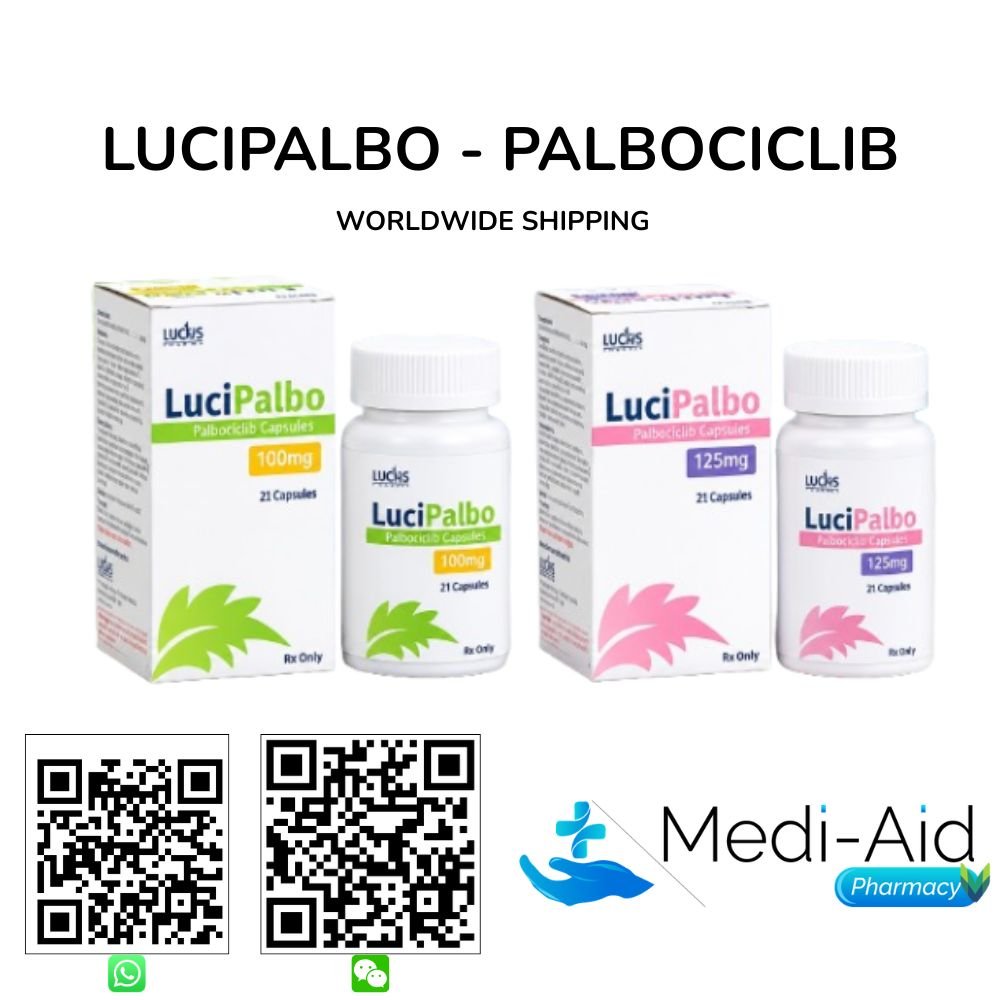
LuciPalbo 100 MG & 125 MG (Palbociclib) is a first-in-class, orally bioavailable, selective cyclin-dependent kinase 4 and 6 (CDK4/6) inhibitor a small-molecule antineoplastic agent that reversibly inhibits CDK4 (in complex with cyclin D1) and CDK6 (in complex with cyclin D3), preventing phosphorylation of the retinoblastoma tumor suppressor protein (Rb), maintaining Rb in its active hypophosphorylated state, blocking E2F-dependent transcription required for S-phase entry, and inducing cell cycle arrest in the G1 phase, thereby suppressing proliferation in hormone receptor-positive (HR+), HER2-negative breast cancer cells where CDK4/6-cyclin D complexes are pathologically overactivated supplied as hard capsules in 21 capsules per pot, available in 100 mg and 125 mg strengths, and manufactured by Lucius Pharmaceuticals (Lao) Co., Ltd. in Laos.
Palbociclib, the active pharmaceutical ingredient (API) of LuciPalbo, carries FDA-approved indications for HR-positive, HER2-negative advanced or metastatic breast cancer in adult patients, in combination with an aromatase inhibitor as initial endocrine-based therapy or in combination with fulvestrant following disease progression on endocrine therapy. The Phase 3 PALOMA-2 trial demonstrated that palbociclib 125 mg/day (21-day on/7-day off schedule) plus letrozole versus placebo plus letrozole achieved a median progression-free survival (PFS) of 24.8 months versus 14.5 months (HR 0.58; 95% CI 0.46–0.72; p<0.001) in postmenopausal women with ER-positive, HER2-negative advanced breast cancer not previously treated in the metastatic setting. The Phase 3 PALOMA-3 trial demonstrated a median PFS of 9.5 months versus 4.6 months (HR 0.46; 95% CI 0.36–0.59; p<0.0001) for palbociclib plus fulvestrant versus placebo plus fulvestrant in pre- and postmenopausal patients with HR+/HER2- advanced breast cancer with disease progression on prior endocrine therapy.
Important: Neutropenia is the primary and most frequent dose-limiting toxicity of palbociclib, occurring as Grade 3–4 neutropenia in approximately 66% of patients in PALOMA-2; complete blood count (CBC) with differential monitoring is mandatory before the start of every cycle and on Day 15 of Cycles 1 and 2, with dose interruption, reduction, or delay for Grade 3–4 hematologic toxicity. Additional important risks include infections (including fatal cases), pulmonary embolism, and embryo-fetal toxicity (contraindicated in pregnancy; females of reproductive potential must use effective contraception during treatment and for 3 weeks after the last dose; males with female partners of reproductive potential must use contraception during treatment and for 3 months after the last dose).
Palbociclib is a sensitive CYP3A substrate; avoid co-administration with strong CYP3A inhibitors (itraconazole, ketoconazole, clarithromycin, ritonavir) and strong CYP3A inducers (rifampin, carbamazepine, phenytoin, St. John’s Wort); avoid grapefruit and grapefruit juice throughout therapy. Searching for LuciPalbo 100 MG & 125 MG Palbociclib? Mediaid Pharmacy lists this product across its oncology medicines, breast cancer medicines, and Lucius Pharmaceuticals medicines portfolios and ships it worldwide.
Basic Product Information of LuciPalbo 100 MG & 125 MG (Palbociclib)
| Brand Name | LuciPalbo 100 MG / LuciPalbo 125 MG (Palbociclib) |
| Product Name | LuciPalbo |
| Generic Name | Palbociclib (also identified by its developmental code PD-0332991; a selective, reversible CDK4/6 inhibitor and first-in-class oral cyclin-dependent kinase inhibitor approved in HR+/HER2- advanced breast cancer; the originator brand is Ibrance, developed and commercialized by Pfizer Inc.; first FDA accelerated approval for HR+/HER2- advanced breast cancer in combination with letrozole: 3 February 2015; converted to regular FDA approval: 19 March 2019; second FDA approval in combination with fulvestrant: 31 March 2016, extended to all patients regardless of menopausal status: 4 April 2019) |
| Drug Class | Selective CDK4/6 Inhibitor (Cyclin-Dependent Kinase 4 and 6 Inhibitor); First-in-Class Oral CDK Inhibitor; Cell Cycle Inhibitor; Antineoplastic Agent; Targeted Oncology Agent; Endocrine-Sensitizing Agent; HR+/HER2-Negative Breast Cancer Therapy; Oral Cancer Medicine; Small-Molecule Kinase Inhibitor; Retinoblastoma Pathway Modulator; G1/S Cell Cycle Phase Blocker |
| Formulation | Hard Capsule (oral administration; must be taken with food co-administration with food increases palbociclib Cmax and AUC and reduces pharmacokinetic variability; swallow capsules whole, do not chew, crush, or open capsules; if a capsule is damaged, broken, or not intact, do not take that capsule; if vomiting occurs after taking a dose, do not take an additional dose that day take the next dose at the regularly scheduled time the following day) |
| Available Strengths | 100 mg and 125 mg hard capsules per pot (LuciPalbo 125 MG is the recommended starting dose for all patients; dose reduction from 125 mg to 100 mg is the first reduction level required for Grade 3 or 4 hematologic toxicity that does not resolve to Grade ≤2 within 1 week or for Grade 3 non-hematologic toxicity that recurs or persists after dose interruption; further reduction to 75 mg is the second and lowest recommended dose reduction level; permanently discontinue palbociclib if unable to tolerate 75 mg once daily; LuciPalbo 100 MG is used specifically for patients requiring the first dose reduction from 125 mg) |
| Available Pack Size | 21 capsules per pot (the 21-capsule pot format is precisely calibrated to the palbociclib dosing schedule: palbociclib is administered for 21 consecutive days of treatment followed by 7 days off, constituting one complete 28-day cycle; one pot of 21 capsules provides exactly the on-treatment supply for one full 28-day cycle at any dose level 125 mg, 100 mg, or 75 mg with the 7-day off period requiring no capsules; procurement teams planning multi-cycle CDK4/6 inhibitor programs can source LuciPalbo on a pot-per-cycle basis aligned with standard monthly oncology dispensing protocols) |
| Dosing Schedule | Recommended Starting Dose: Palbociclib 125 mg (one LuciPalbo 125 MG hard capsule) orally once daily with food for 21 consecutive days, followed by 7 days off treatment (21/7 schedule), constituting one complete 28-day cycle. Taken at approximately the same time each day throughout the 21-day treatment period. Combination Partner Dosing: With letrozole 2.5 mg once daily continuously (Days 1–28); with fulvestrant 500 mg administered intramuscularly on Days 1 and 15 of Cycle 1, then once monthly thereafter (with an appropriate GnRH agonist in pre- or perimenopausal women). CBC Monitoring Schedule (Mandatory): Before the start of palbociclib therapy; on Day 15 of Cycle 1; on Day 1 of each subsequent cycle; and as clinically indicated. Dose modification for hematologic toxicity is based on the following: Grade 1–2 neutropenia no dose adjustment required; Grade 3 neutropenia (ANC 500–<1,000/mm³) without fever interrupt dose until recovery to Grade ≤2, then resume at same dose; Grade 3 neutropenia with fever or Grade 4 neutropenia interrupt dose until recovery to Grade ≤2, then resume at next lower dose; Recurrent Grade 3 or 4 neutropenia interrupt until recovery, resume at next lower dose level. First Dose Reduction: 100 mg once daily (one LuciPalbo 100 MG capsule). Second Dose Reduction: 75 mg once daily (three LuciPalbo 25 MG capsules or appropriate available formulation at that strength). Permanently discontinue if unable to tolerate 75 mg/day. Hepatic Impairment Adjustment: Reduce starting dose to 75 mg once daily in patients with severe hepatic impairment (Child-Pugh C). No adjustment required for mild or moderate hepatic impairment. All dose modification decisions must be directed by the treating oncologist. |
| Primary Indications | (1) HR+/HER2-Negative Advanced or Metastatic Breast Cancer Initial Endocrine-Based Therapy in Combination with an Aromatase Inhibitor: Palbociclib 125 mg/day (21/7 schedule) in combination with an aromatase inhibitor (letrozole 2.5 mg once daily continuously) as initial endocrine-based therapy in adult patients with HR-positive, HER2-negative advanced or metastatic breast cancer. Based on Phase 3 PALOMA-2 trial (NCT01740427; n=666): median PFS 24.8 months (palbociclib + letrozole) versus 14.5 months (placebo + letrozole); HR 0.58; 95% CI 0.46–0.72; p<0.001. FDA approval: 3 February 2015 (accelerated), confirmed regular approval 19 March 2019.
(2) HR+/HER2-Negative Advanced or Metastatic Breast Cancer Disease Progression on Prior Endocrine Therapy, in Combination with Fulvestrant: Palbociclib 125 mg/day (21/7 schedule) in combination with fulvestrant 500 mg (plus GnRH agonist in pre- or perimenopausal women) for adult patients with HR-positive, HER2-negative advanced or metastatic breast cancer with disease progression following endocrine therapy. Based on Phase 3 PALOMA-3 trial (NCT01942135; n=521): median PFS 9.5 months (palbociclib + fulvestrant) versus 4.6 months (placebo + fulvestrant); HR 0.46; 95% CI 0.36–0.59; p<0.0001. FDA approval: 31 March 2016 (postmenopausal), extended to all patients 4 April 2019. |
| Manufacturer / Brand | Lucius Pharmaceuticals (Lao) Co., Ltd., Country of Origin: Laos (originator molecule and brand Ibrance developed and commercialized by Pfizer Inc.; first FDA accelerated approval for HR+/HER2- advanced breast cancer in combination with letrozole: 3 February 2015; first-in-class CDK4/6 inhibitor designation; regular FDA approval: 19 March 2019; fulvestrant combination FDA approval: 31 March 2016, extended to all menopausal status patients: 4 April 2019) |
| Global Supplier | Mediaid Pharmacy, Worldwide Shipping Available |
| Storage Conditions | Store at room temperature, 20°C to 25°C (68°F to 77°F); excursions permitted to 15°C to 30°C (59°F to 86°F). Store in the original container with the lid tightly closed. Protect from light and moisture. Keep out of the reach of children and pets. |
How LuciPalbo (Palbociclib) Works: Selective CDK4/6 Inhibition, Retinoblastoma Pathway Blockade, and G1 Cell Cycle Arrest in HR+/HER2-Negative Breast Cancer
LuciPalbo (Palbociclib) is a selective, reversible inhibitor of cyclin-dependent kinase 4 (CDK4) and cyclin-dependent kinase 6 (CDK6) two structurally related serine/threonine kinases that function as the master regulatory gate-keepers of the mammalian G1-to-S phase cell cycle transition. In normal breast epithelial cells, CDK4 and CDK6 are activated by binding to D-type cyclins (primarily cyclin D1) in response to mitogenic growth factor signals; the resulting CDK4–cyclin D1 and CDK6–cyclin D3 complexes phosphorylate the retinoblastoma tumor suppressor protein (Rb) at multiple serine and threonine residues.
Rb phosphorylation releases E2F transcription factors from their inactive Rb-bound state, enabling E2F-dependent transcription of genes encoding proteins required for DNA replication, deoxyribonucleotide biosynthesis, and S-phase entry including dihydrofolate reductase (DHFR), thymidylate synthase (TS), and proliferating cell nuclear antigen (PCNA). This CDK4/6 → Rb phosphorylation → E2F release → S-phase entry cascade constitutes the central proliferative checkpoint of the early cell cycle and is the direct molecular target of palbociclib.
In HR-positive breast cancer, this CDK4/6–Rb–E2F pathway is pathologically hyperactivated through multiple converging mechanisms: (1) estrogen receptor (ER) signaling directly induces transcription of the CCND1 gene encoding cyclin D1, producing constitutive CDK4/6 complex formation and sustained Rb hyperphosphorylation independent of exogenous growth factor stimulation; (2) CCND1 gene amplification, present in approximately 16–20% of HR+/HER2- breast cancers, further elevates cyclin D1 protein levels above those achievable by ER-driven transcription alone; (3) co-occurring loss of CDKN2A (encoding the endogenous CDK4/6 inhibitor p16INK4a) through deletion, methylation, or mutation eliminates the primary physiological brake on CDK4/6 activity; and (4) activation of PI3K/AKT/mTOR signaling downstream of common PI3K pathway mutations (PIK3CA, PTEN loss) promotes cyclin D1 translation and inhibits its proteasomal degradation, further amplifying CDK4/6–cyclin D complex availability.
The convergence of these mechanisms in HR+/HER2- breast cancer creates a cellular context in which CDK4/6–cyclin D signaling drives continuous Rb phosphorylation, constitutive E2F activation, and unrestrained proliferation precisely the setting where pharmacological CDK4/6 inhibition by palbociclib produces maximal antiproliferative effect.
Palbociclib occupies the ATP-binding cleft of CDK4 and CDK6 through a series of hydrogen bond interactions and hydrophobic contacts with conserved kinase domain residues, functioning as a reversible, ATP-competitive kinase inhibitor. By blocking ATP binding to CDK4–cyclin D and CDK6–cyclin D complexes, palbociclib prevents substrate Rb phosphorylation. The resulting accumulation of hypophosphorylated (active) Rb protein re-engages E2F transcription factors, reinstating the G1 checkpoint and preventing progression to S phase.
Palbociclib-treated HR+ breast cancer cells accumulate in G1 phase, exhibit reduced DNA synthesis as measured by BrdU incorporation and Ki-67 proliferation index, and undergo a transcriptomic state resembling senescence-like growth arrest rather than apoptosis a mechanistic profile consistent with cytostatic rather than cytotoxic activity. The reversibility of palbociclib’s CDK4/6 binding is pharmacologically significant: it enables hematopoietic progenitor cell recovery during the 7-day off-treatment period (Days 22–28 of each 28-day cycle), which is the pharmacological rationale for the 21/7 intermittent dosing schedule that substantially reduces the depth and duration of neutropenia compared to continuous daily dosing.
The mechanistic synergy between palbociclib and endocrine therapy letrozole or fulvestrant is rooted in the convergent regulation of cyclin D1 expression by ER signaling and CDK4/6 kinase activity. Aromatase inhibitors (letrozole, anastrozole, exemestane) suppress estrogen biosynthesis, reducing ER ligand availability and decreasing ER-driven CCND1 transcription; fulvestrant degrades the ER protein itself, eliminating ER-driven gene expression including cyclin D1 induction. Palbociclib acts downstream of these endocrine mechanisms by directly inhibiting the CDK4/6–cyclin D kinase complexes that remain the effectors of cell cycle progression regardless of how cyclin D1 is regulated.
This dual blockade upstream ER suppression reducing cyclin D1 production, combined with downstream CDK4/6 inhibition preventing remaining cyclin D1-CDK complexes from phosphorylating Rb explains the marked PFS improvement observed in PALOMA-2 (palbociclib + letrozole: 24.8 months vs 14.5 months; HR 0.58; p<0.001) and PALOMA-3 (palbociclib + fulvestrant: 9.5 months vs 4.6 months; HR 0.46; p<0.0001) compared to endocrine monotherapy. LuciPalbo (Palbociclib), manufactured by Lucius Pharmaceuticals (Lao) Co., Ltd., is available through Mediaid Pharmacy as 100 mg and 125 mg hard capsules, 21 capsules per pot, for patients with HR-positive HER2-negative advanced breast cancer requiring CDK4/6 inhibitor therapy.
Who Should Use LuciPalbo 100 MG & 125 MG (Palbociclib)?
LuciPalbo 100 MG & 125 MG (Palbociclib) is indicated for adult patients with hormone receptor-positive (HR+), HER2-negative advanced or metastatic breast cancer the most prevalent subtype of breast cancer, representing approximately 70% of all breast cancer diagnoses in two distinct FDA-approved clinical contexts differentiated by prior treatment status. Both indications require confirmed ER positivity and/or PR positivity by standard immunohistochemistry (IHC) and confirmed HER2 negativity (IHC 0 or IHC 1+, or FISH/ISH non-amplified with HER2/CEP17 ratio <2.0) by an approved companion diagnostic before initiating LuciPalbo therapy.
First, adult patients with HR-positive, HER2-negative advanced or metastatic breast cancer who have not previously received systemic therapy in the metastatic setting and are appropriate candidates for initial endocrine-based therapy with an aromatase inhibitor represent the PALOMA-2-defined first-line indication for palbociclib plus letrozole. The Phase 3 PALOMA-2 trial (NCT01740427) enrolled 666 postmenopausal women with ER+/HER2- advanced breast cancer not previously treated with systemic therapy in the metastatic setting and randomized them 2:1 to palbociclib 125 mg/day (21/7 schedule) plus letrozole 2.5 mg once daily continuously versus placebo plus letrozole. At the primary analysis, the primary endpoint of investigator-assessed PFS was met: median PFS 24.8 months in the palbociclib arm versus 14.5 months in the placebo arm (HR 0.58; 95% CI 0.46–0.72; p<0.001) a 10.3-month absolute improvement and a 42% relative reduction in the risk of disease progression or death.
The PFS benefit of palbociclib plus letrozole was consistently observed across all pre-specified subgroups including patients with visceral metastases (HR 0.64), patients with bone-only disease (HR 0.46), patients with measurable disease (HR 0.53), and patients who had received prior adjuvant or neoadjuvant chemotherapy (HR 0.57). The objective response rate (ORR) was 42.1% in the palbociclib arm versus 34.7% in the placebo arm in patients with measurable disease. Clinical benefit rate (CBR; complete response + partial response + stable disease ≥24 weeks) was 84.9% versus 70.3%, respectively. This PALOMA-2 benefit positions palbociclib plus letrozole as the most extensively validated CDK4/6 inhibitor plus aromatase inhibitor regimen in first-line HR+/HER2- metastatic breast cancer, with the longest median follow-up of any CDK4/6 inhibitor Phase 3 trial at time of primary analysis.
Second, adult patients with HR-positive, HER2-negative advanced or metastatic breast cancer with disease progression following prior endocrine therapy representing the PALOMA-3-defined second-line indication for palbociclib plus fulvestrant. The Phase 3 PALOMA-3 trial (NCT01942135) enrolled 521 pre- and postmenopausal women with HR+/HER2- advanced breast cancer with disease progression on or after prior endocrine therapy (including prior aromatase inhibitor therapy) and randomized them 2:1 to palbociclib 125 mg/day plus fulvestrant 500 mg (plus GnRH agonist goserelin in pre-/perimenopausal patients) versus placebo plus fulvestrant.
Median PFS was 9.5 months versus 4.6 months (HR 0.46; 95% CI 0.36–0.59; p<0.0001) a 4.9-month absolute improvement and a 54% relative reduction in risk of progression or death. The PFS benefit extended across pre- and postmenopausal patients, patients with prior sensitivity or resistance to endocrine therapy (including patients with primary endocrine resistance defined as relapse <24 months on adjuvant endocrine therapy), and patients with ESR1-mutant tumors an increasingly prevalent resistance mechanism following aromatase inhibitor therapy. ORR was 10.4% versus 6.3% (p=0.16; non-significant in this predominantly stable disease population); CBR was 34.0% versus 19.0% (p<0.001). Updated overall survival (OS) analysis from PALOMA-3 demonstrated a median OS of 34.9 months versus 28.0 months (HR 0.81; 95% CI 0.64–1.03; p=0.09) a 6.9-month numerical improvement that did not reach statistical significance at the pre-specified boundary, consistent with the substantial post-progression treatment crossover (75% of placebo patients received subsequent CDK4/6 inhibitor-containing therapy) that is expected to attenuate OS signal detection in metastatic breast cancer CDK4/6 inhibitor trials.
LuciPalbo is not indicated for: HER2-positive breast cancer (CDK4/6 inhibition does not demonstrate the same efficacy signal in HER2-positive disease, where HER2 amplification can bypass Rb-pathway growth suppression); triple-negative breast cancer (ER/PR-negative tumors lack the ER–cyclin D1–CDK4/6 pathway dependence that underlies palbociclib’s mechanism); patients who are pregnant; or patients with severe hepatic impairment without specialist-directed dose reduction to 75 mg/day. HR-positive, HER2-negative advanced breast cancer oncology departments, metastatic breast cancer treatment units, hospital pharmacies sourcing CDK4/6 inhibitor programs, and patients or families accessing oral breast cancer targeted therapy can contact Mediaid Pharmacy directly for LuciPalbo 100 MG and 125 MG availability, current pricing, and worldwide shipping arrangements.
Global Supplier: Mediaid Pharmacy Worldwide Shipping for LuciPalbo 100 MG & 125 MG (Palbociclib)
Mediaid Pharmacy is a Dhaka-based supplier of specialty targeted oncology, breast cancer, and rare disease medicines with worldwide shipping to patients, HR+/HER2- breast cancer oncology departments, metastatic breast cancer treatment units, CDK4/6 inhibitor treatment programs, hospital pharmacies, oncology day units, patient access programs, and international distributors across all regions. LuciPalbo 100 MG and 125 MG (Palbociclib), manufactured by Lucius Pharmaceuticals (Lao) Co., Ltd. in Laos, is supplied as hard capsules in 21-capsule pots across both strength tiers, with pricing quotations, stock confirmation, full product documentation, and end-to-end international delivery tracking for every order.
The clinical and procurement significance of the 21-capsule pot format is directly tied to palbociclib’s 21/7 dosing architecture: at any dose level 125 mg, 100 mg, or 75 mg one pot of 21 capsules provides exactly the complete on-treatment supply for one 28-day cycle, aligning precisely with standard monthly oncology prescription dispensing cycles used by hospital formularies, oncology pharmacies, and patient access programs globally. Procurement teams planning long-term CDK4/6 inhibitor therapy programs typically continuous until disease progression or unacceptable toxicity source LuciPalbo on a pot-per-cycle basis, and Mediaid Pharmacy supports multi-cycle advance procurement with volume pricing arrangements for oncology departments managing cohorts of HR+/HER2- metastatic breast cancer patients on palbociclib-containing regimens.
HR-positive, HER2-negative advanced breast cancer oncology departments managing first-line CDK4/6 inhibitor plus aromatase inhibitor programs; second-line oncology teams sourcing palbociclib plus fulvestrant for endocrine-pretreated metastatic breast cancer; hospital formulary procurement departments co-sourcing LuciPalbo with other oral targeted oncology medicines; and individual patients and families accessing palbociclib for HR-positive metastatic breast cancer treatment can contact the Mediaid Pharmacy team through WhatsApp, phone, or WeChat for LuciPalbo 100 MG and 125 MG stock availability, current pricing, and international delivery timelines.
Why Choose LuciPalbo 100 MG & 125 MG (Palbociclib) from Mediaid Pharmacy?
LuciPalbo (Palbociclib) from Lucius Pharmaceuticals (Lao) Co., Ltd. delivers the validated first-in-class selective CDK4/6 inhibition mechanism of palbociclib a molecule with two distinct FDA-approved indications spanning first-line HR+/HER2- advanced breast cancer in combination with letrozole (PALOMA-2; FDA 2015) and second-line HR+/HER2- advanced breast cancer in combination with fulvestrant (PALOMA-3; FDA 2016) as precisely formulated 100 mg and 125 mg oral hard capsules in a clinically aligned 21-capsule pot providing a complete per-cycle supply at the 21/7 palbociclib treatment schedule. Palbociclib is pharmacologically and clinically distinguished within the CDK4/6 inhibitor therapeutic class and the broader HR+/HER2- breast cancer treatment landscape by four evidence-based attributes.
First, palbociclib is the first CDK4/6 inhibitor to demonstrate a statistically significant PFS benefit in HR+/HER2- advanced breast cancer in a Phase 3 trial and to receive FDA approval in this indication establishing the CDK4/6 inhibitor plus endocrine therapy combination as the standard of care in HR+/HER2- advanced breast cancer with the most extensive clinical validation dataset of any agent in its class. The PALOMA-2 trial (n=666; median PFS 24.8 vs 14.5 months; HR 0.58; p<0.001) and PALOMA-3 trial (n=521; median PFS 9.5 vs 4.6 months; HR 0.46; p<0.0001) together represent the foundational Phase 3 evidence base that established the CDK4/6 inhibitor plus endocrine therapy paradigm adopted globally in metastatic breast cancer guidelines, with palbociclib’s clinical data set spanning both first-line and second-line settings across both aromatase inhibitor and fulvestrant combinations and across pre- and postmenopausal patient populations.
Second, palbociclib’s 21/7 intermittent dosing schedule provides a pharmacologically designed recovery window for hematopoietic progenitor cells during the 7-day off-treatment period the reversibility of palbociclib’s CDK4/6 binding enables bone marrow recovery during the off-treatment week, explaining why Grade 3–4 febrile neutropenia occurred in only 1.8% of palbociclib-treated patients in PALOMA-2 despite the high rate of Grade 3–4 ANC decline (66%), and why clinically significant neutropenic infections requiring hospitalization remain uncommon with appropriate CBC monitoring and dose modification. This safety profile high laboratory neutropenia incidence but low clinical febrile neutropenia rate distinguishes CDK4/6 inhibitor-related neutropenia from cytotoxic chemotherapy-related neutropenia and supports the outpatient management approach standard in all palbociclib clinical trials and real-world practice.
Third, palbociclib’s mechanism of action produces durable disease control through cytostatic G1 arrest rather than cytotoxic cell death a property that explains the high CBR of 84.9% observed in PALOMA-2 and 34.0% in PALOMA-3, where stable disease ≥24 weeks was the predominant clinical response category and represents clinically meaningful benefit in the advanced breast cancer setting where prolonged stable disease translates directly into preserved quality of life, maintained functional status, and deferred need for cytotoxic chemotherapy. The CDK4/6 inhibitor mechanism delays the transition from endocrine-sensitive to endocrine-resistant disease and has been shown to resensitize endocrine-refractory tumors to fulvestrant in the PALOMA-3 population, extending the duration of endocrine therapy utility in the metastatic setting.
Fourth, palbociclib is an oral, self-administered capsule taken once daily at home, enabling complete outpatient management of advanced breast cancer without scheduled infusion clinic visits for drug administration the 125 mg once-daily oral regimen (one LuciPalbo 125 MG capsule taken with food for 21 consecutive days, then 7 days off) allows patients to continue treatment at home with periodic clinic visits for toxicity assessment, CBC monitoring, and imaging, preserving functional independence and quality of life over what is typically a continuous treatment course of many cycles. LuciPalbo 100 MG and 125 MG are manufactured by Lucius Pharmaceuticals (Lao) Co., Ltd. and are available through Mediaid Pharmacy as 21-capsule pots.
To source the complete range of CDK4/6 inhibitors, breast cancer medicines, and oncology medicines, visit the Mediaid Pharmacy breast cancer medicines portfolio, the oncology medicines collection, and the Lucius Pharmaceuticals medicines range, and contact the team for a personalized quotation.
Frequently Asked Questions About LuciPalbo 100 MG & 125 MG (Palbociclib)
What is LuciPalbo 100 MG & 125 MG (Palbociclib) used for?
LuciPalbo 100 MG and 125 MG (Palbociclib) is an oral selective CDK4/6 inhibitor with two FDA-approved indications in HR-positive, HER2-negative advanced or metastatic breast cancer: (1) in combination with an aromatase inhibitor (letrozole) as initial endocrine-based therapy for adult patients with HR+/HER2- advanced or metastatic breast cancer based on Phase 3 PALOMA-2 trial (n=666; median PFS 24.8 vs 14.5 months; HR 0.58; p<0.001) FDA approval 3 February 2015; and (2) in combination with fulvestrant for adult patients with HR+/HER2- advanced or metastatic breast cancer with disease progression following prior endocrine therapy (including pre- and perimenopausal patients with GnRH agonist) based on Phase 3 PALOMA-3 trial (n=521; median PFS 9.5 vs 4.6 months; HR 0.46; p<0.0001) FDA approval 31 March 2016, extended to all menopausal status patients 4 April 2019. The recommended starting dose is palbociclib 125 mg (one LuciPalbo 125 MG capsule) once daily for 21 consecutive days followed by 7 days off (21/7 schedule, 28-day cycle), taken with food. LuciPalbo 100 MG and 125 MG, 21 capsules per pot, is manufactured by Lucius Pharmaceuticals (Lao) Co., Ltd. in Laos and is available through Mediaid Pharmacy with worldwide shipping.
What is the generic name of LuciPalbo?
The generic name of LuciPalbo is palbociclib (developmental code PD-0332991). Palbociclib is an orally bioavailable, selective, reversible inhibitor of cyclin-dependent kinase 4 (CDK4) and cyclin-dependent kinase 6 (CDK6) belonging to the CDK4/6 inhibitor class of antineoplastic agents. Palbociclib is the first-in-class CDK4/6 inhibitor, preceding ribociclib and abemaciclib in regulatory approval, and is structurally distinguished within the class by its pyrido[2,3-d]pyrimidine scaffold and its high selectivity for CDK4 (IC50 approximately 11 nM) and CDK6 (IC50 approximately 16 nM) with minimal activity against CDK1 and CDK2. The originator brand of palbociclib is Ibrance, developed and commercialized by Pfizer Inc., with first FDA accelerated approval on 3 February 2015. LuciPalbo is manufactured by Lucius Pharmaceuticals (Lao) Co., Ltd. in Laos and is available as 100 mg and 125 mg hard capsules in 21-capsule pots. Mediaid Pharmacy distributes LuciPalbo (Palbociclib) globally with worldwide shipping to patients, breast cancer oncology departments, hospital pharmacies, and HR+/HER2- metastatic breast cancer treatment programs worldwide.
What is the difference between palbociclib, ribociclib, and abemaciclib as CDK4/6 inhibitors for HR+/HER2- breast cancer?
Palbociclib (LuciPalbo), ribociclib (Kisqali), and abemaciclib (Verzenio) are all approved oral CDK4/6 inhibitors for HR+/HER2- advanced breast cancer but differ in molecular selectivity, dosing schedule, key toxicity profiles, available combination data, and indications in the early breast cancer setting. Palbociclib is a highly selective CDK4/6 inhibitor with minimal CDK1/CDK2 activity, administered on a 21/7 intermittent schedule (21 days on, 7 days off); its primary dose-limiting toxicity is neutropenia (Grade 3–4 in ~66% of PALOMA-2 patients), and its clinical validation spans the PALOMA-2 (first-line plus letrozole) and PALOMA-3 (second-line plus fulvestrant) Phase 3 trials; palbociclib does not currently hold an FDA approval in the early (adjuvant) breast cancer setting based on the PALLAS trial results. Ribociclib is also a selective CDK4/6 inhibitor but with demonstrated overall survival benefit in the MONALEESA-2 (first-line, postmenopausal), MONALEESA-3 (first-line and second-line plus fulvestrant), and MONALEESA-7 (first-line, pre-/perimenopausal) Phase 3 trials; ribociclib carries a QTc prolongation risk requiring baseline ECG monitoring a monitoring requirement not applicable to palbociclib or abemaciclib. Abemaciclib is less selective for CDK4/6 and is administered continuously without a 7-day break (continuous dosing); its primary toxicity is diarrhea rather than neutropenia; abemaciclib holds an additional FDA approval in the adjuvant setting for early HR+/HER2- node-positive breast cancer with high-risk features (monarchE trial). Visit the Mediaid Pharmacy breast cancer medicines collection for the complete range of HR-positive breast cancer targeted agents available with worldwide shipping.
What are the side effects of LuciPalbo (Palbociclib)?
The most clinically significant adverse effects of palbociclib are neutropenia, leukopenia, infections, fatigue, nausea, alopecia, and anemia. Neutropenia is the primary and most frequent toxicity, with Grade 3–4 neutropenia (ANC <1,000/mm³) occurring in approximately 66% of patients in PALOMA-2; however, the incidence of Grade 3–4 febrile neutropenia is low (1.8% in PALOMA-2) because palbociclib produces a reversible, CDK4/6-mediated cytostatic suppression of neutrophil precursor proliferation rather than the direct cytotoxic hematopoietic stem cell damage caused by conventional chemotherapy and the 7-day off-treatment period enables ANC recovery before the next cycle. Leukopenia (all grades: ~95%; Grade 3–4: ~62%) occurs at similarly high rates and for the same mechanistic reason as neutropenia. Infections of all grades occurred in 55% of palbociclib-treated patients (vs 36% placebo) in PALOMA-2, with Grade 3–4 infections in 5% vs 2%; prophylactic antibiotics are not routinely required but clinical vigilance for infection during the on-treatment phase is essential, particularly in patients with ANC <500/mm³. Fatigue (all grades: 37–41%) and asthenia are common; nausea (35%) is typically mild-to-moderate and manageable with standard antiemetics; alopecia occurs in approximately 33% of patients (partial alopecia is most common; complete alopecia is uncommon); anemia (all grades: 24–26%; Grade 3–4: 5%) and thrombocytopenia (all grades: 16–17%; Grade 3–4: 1–2%) occur at clinically lower rates than neutropenia and rarely require dose modification. Diarrhea (all grades: 21%; Grade 3: 1%), stomatitis (25–27%), and peripheral neuropathy (13%) are additional adverse events reported in clinical trials. Rare but serious risks include pulmonary embolism (occurring in approximately 1–5% of patients across trials; monitor for signs and symptoms of thromboembolism) and interstitial lung disease/pneumonitis (rare; reported in post-marketing experience). Mandatory CBC monitoring before Cycle 1 Day 1, Day 15 of Cycles 1 and 2, Day 1 of every subsequent cycle, and as clinically indicated is non-negotiable and must be established before initiating LuciPalbo under the supervision of an experienced oncologist.
How effective is palbociclib plus letrozole compared to letrozole alone in first-line HR+/HER2- advanced breast cancer?
Palbociclib plus letrozole demonstrated a clinically and statistically significant PFS benefit over letrozole monotherapy in the Phase 3 PALOMA-2 trial (NCT01740427) the definitive Phase 3 study establishing CDK4/6 inhibitor plus aromatase inhibitor as the first-line standard of care in HR+/HER2- advanced breast cancer. PALOMA-2 enrolled 666 postmenopausal women with ER+/HER2- advanced breast cancer not previously treated with systemic therapy in the metastatic setting and randomized them 2:1 to palbociclib 125 mg/day (21/7 schedule) plus letrozole 2.5 mg once daily versus placebo plus letrozole. At the primary analysis, the primary endpoint of investigator-assessed PFS was met: median PFS 24.8 months in the palbociclib arm versus 14.5 months in the placebo arm (HR 0.58; 95% CI 0.46–0.72; p<0.001) a 10.3-month absolute PFS improvement and a 42% relative reduction in the hazard of disease progression or death. The clinical benefit rate (CBR; CR + PR + SD ≥24 weeks) was 84.9% versus 70.3%. The PFS benefit was consistent across patients with visceral metastases (HR 0.64), patients with de novo metastatic disease (HR 0.58), patients with prior chemotherapy (HR 0.57), and patients with measurable disease (HR 0.53). LuciPalbo 100 MG and 125 MG (Palbociclib) is available through Mediaid Pharmacy with worldwide shipping; visit the breast cancer medicines collection for the complete HR-positive targeted therapy portfolio.
Is LuciPalbo (Palbociclib) safe during pregnancy or while breastfeeding?
LuciPalbo (Palbociclib) can cause fetal harm and must not be used during pregnancy. Palbociclib inhibits CDK4 and CDK6 kinases whose activity is essential for normal embryonic cell cycle progression, organ morphogenesis, placental development, and hematopoietic lineage specification throughout all trimesters of gestation. Animal reproductive toxicology studies demonstrated fetal growth retardation, skeletal malformations, and increased embryo-fetal lethality at exposures below the recommended human clinical dose. Females of reproductive potential must use effective non-hormonal contraception during palbociclib treatment and for at least 3 weeks after the last dose. Males with female partners of reproductive potential should use effective contraception during palbociclib treatment and for at least 3 months after the last dose; palbociclib may impair male fertility based on animal reproductive toxicology findings (testicular atrophy and decreased sperm counts observed in repeat-dose toxicology studies), and male patients should discuss fertility preservation options including sperm banking with the treating oncologist before initiating therapy. There are no data on the presence of palbociclib in human breast milk; given the potential for serious adverse reactions in breastfed infants from CDK4/6 inhibition during postnatal organ development, breastfeeding is not recommended during palbociclib treatment and for at least 3 weeks after the last dose. Verify pregnancy status with a serum or urine pregnancy test in all females of reproductive potential before initiating LuciPalbo. Discuss all aspects of reproductive planning, fertility counseling, and contraceptive requirements with the treating oncologist before starting palbociclib therapy.
What drug interactions should be avoided with LuciPalbo (Palbociclib)?
Palbociclib is primarily metabolized by CYP3A and is also a substrate of SULT2A1. The most clinically significant drug interactions involve CYP3A modulators. Strong CYP3A inhibitors including itraconazole, ketoconazole, voriconazole, posaconazole, clarithromycin, telithromycin, nefazodone, and ritonavir (and other HIV protease inhibitors) substantially increase palbociclib plasma exposure (itraconazole increased palbociclib AUC by approximately 87% in a drug interaction study); concomitant use of strong CYP3A inhibitors with palbociclib must be avoided. If a strong CYP3A inhibitor cannot be avoided, reduce the palbociclib dose to 75 mg once daily. Strong CYP3A inducers including rifampin, rifabutin, rifapentine, carbamazepine, phenytoin, phenobarbital, and St. John’s Wort substantially decrease palbociclib plasma exposure (rifampin decreased palbociclib AUC by approximately 85%); concomitant use must be avoided as palbociclib will not achieve therapeutic plasma concentrations needed for CDK4/6 inhibition at approved doses. Grapefruit and grapefruit juice must be avoided throughout palbociclib therapy as they contain furanocoumarins that inhibit intestinal CYP3A4, increasing palbociclib exposure unpredictably. Palbociclib may also inhibit CYP3A and P-glycoprotein (P-gp) in the intestinal lumen; concomitant administration with sensitive CYP3A substrates or P-gp substrates with a narrow therapeutic index (including certain immunosuppressants such as cyclosporine, tacrolimus, and sirolimus) requires monitoring and potential dose adjustment of the substrate. Review all concomitant medications including over-the-counter supplements and herbal products with the treating oncologist and clinical pharmacist before and during LuciPalbo therapy.
Can I order LuciPalbo 100 MG & 125 MG (Palbociclib) online with worldwide shipping?
Yes. Mediaid Pharmacy supplies LuciPalbo 100 MG and 125 MG (Palbociclib), hard capsules, 21 capsules per pot, manufactured by Lucius Pharmaceuticals (Lao) Co., Ltd. in Laos, to patients, HR+/HER2-negative breast cancer oncology departments, CDK4/6 inhibitor treatment programs, metastatic breast cancer treatment units, hospital pharmacies, oncology day units, patient access programs, and healthcare providers globally. Contact Mediaid Pharmacy via WhatsApp, phone, or WeChat at +8801773428128, or email info@mediaidpharmacy.com for pricing, current stock availability for both 100 mg and 125 mg strengths, shipping options, and international delivery details for your country.
Order LuciPalbo 100 MG & 125 MG (Palbociclib) with Worldwide Shipping
Phone / WhatsApp / WeChat: +8801773428128 | Email: info@mediaidpharmacy.com
Reviews
There are no reviews yet.