
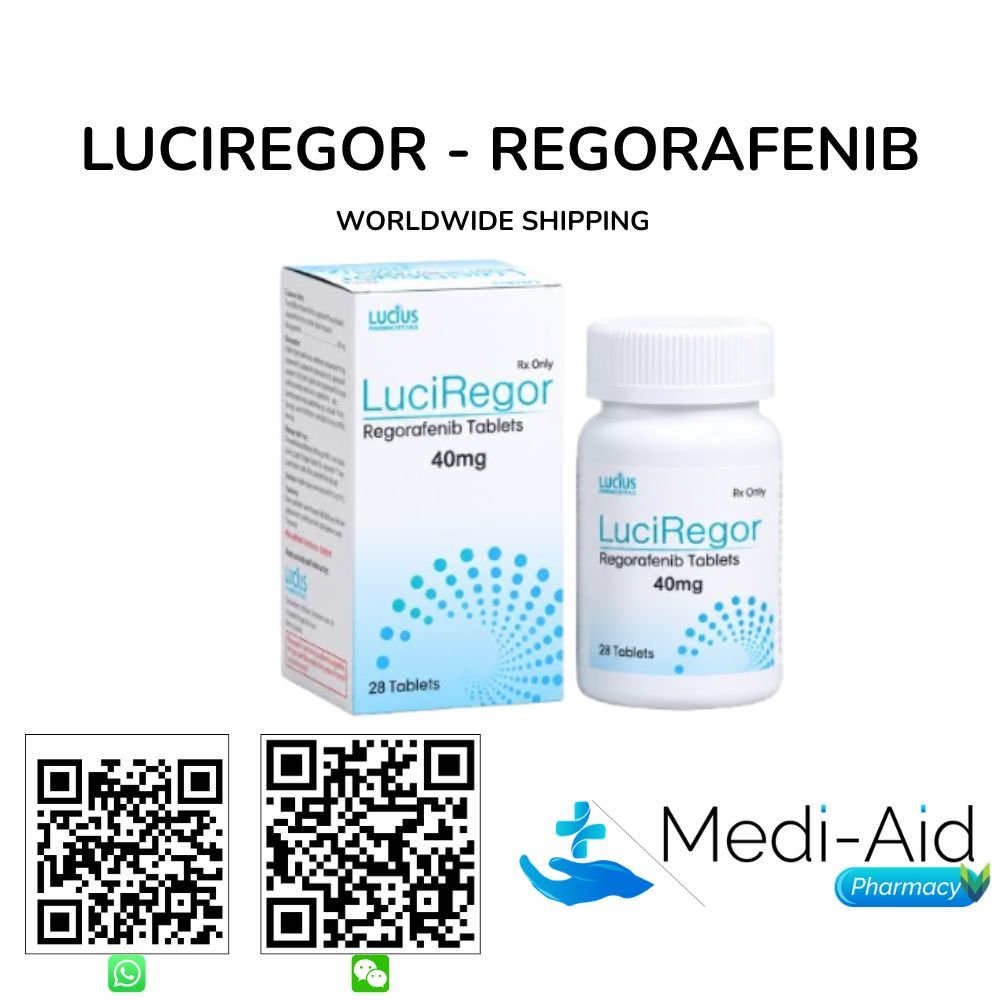
Description
LuciRegor 40 MG (Regorafenib) is an oral multikinase inhibitor (MKI) that blocks multiple protein kinases involved in tumor angiogenesis (VEGFR-1 [FLT1], VEGFR-2 [KDR], VEGFR-3 [FLT4], and TIE-2 [TEK]), oncogenesis (KIT, RET, RAF-1, wild-type BRAF, and mutant BRAF V600E), and the tumor microenvironment (PDGFR-α, PDGFR-β, and FGFR) a broad-spectrum, orally bioavailable, targeted anti-tumor and anti-angiogenic precision oncology agent supplied as film-coated tablets of 40 mg strength in packs of 28 tablets per pot, manufactured and marketed under the brand name LuciRegor by Lucius Pharmaceuticals (Lao) Co., Ltd., Laos.
Regorafenib, the active pharmaceutical ingredient of LuciRegor, is an oral multikinase inhibitor with three distinct, globally approved oncology indications: the treatment of adult patients with previously treated metastatic colorectal cancer (mCRC) who have been previously treated with fluoropyrimidine-, oxaliplatin-, and irinotecan-based chemotherapy, an anti-VEGF therapy, and, if RAS wild-type, an anti-EGFR therapy approved based on the pivotal Phase 3 CORRECT trial published in The Lancet (2013) demonstrating a statistically significant overall survival benefit (median OS 6.4 months vs. 5.0 months; HR 0.77; 95% CI, 0.64–0.94; p=0.0052) and earning FDA approval in September 2012 as the first oral targeted therapy for refractory mCRC; the treatment of adult patients with locally advanced, unresectable, or metastatic gastrointestinal stromal tumor (GIST) previously treated with imatinib and sunitinib approved based on the Phase 3 GRID trial published in The Lancet (2013) demonstrating a statistically significant progression-free survival benefit (median PFS 4.8 months vs. 0.9 months; HR 0.27; 95% CI, 0.19–0.39; p<0.0001) and earning FDA approval in February 2013; and the treatment of adult patients with hepatocellular carcinoma (HCC) previously treated with sorafenib approved based on the Phase 3 RESORCE trial published in The Lancet (2017) demonstrating a statistically significant overall survival benefit (median OS 10.6 months vs. 7.8 months; HR 0.63; 95% CI, 0.50–0.79; p<0.0001) and earning FDA approval in April 2017 establishing regorafenib as one of only a small number of small-molecule kinase inhibitors approved across three distinct solid tumor types in oncology.
The recommended dose of LuciRegor (Regorafenib) is 160 mg orally once daily for the first 21 days of each 28-day cycle (3 weeks on, 1 week off); at the 40 mg tablet strength, the standard 160 mg daily dose requires four tablets of LuciRegor 40 MG taken simultaneously once daily on days 1 through 21 of each cycle; tablets must be taken at the same time each day with a low-fat breakfast containing less than 30% fat (as defined in the clinical pharmacology studies: a breakfast consisting of approximately 319–636 calories with 8.2–19.4 g of fat); if a dose is missed, do not take a double dose on the same day skip the missed dose and resume at the next scheduled time; dose reductions are implemented in 40 mg decrements for toxicity management: first dose reduction to 120 mg once daily (three 40 mg tablets) and second dose reduction to 80 mg once daily (two 40 mg tablets); permanently discontinue regorafenib if patients cannot tolerate the 80 mg dose.
Important: The most clinically significant adverse reactions of regorafenib are hepatotoxicity (including fatal cases), hemorrhage, GI perforation and fistula, dermatological toxicity (hand-foot skin reaction [HFSR] and severe cutaneous reactions including Stevens-Johnson syndrome [SJS] and toxic epidermal necrolysis [TEN]), hypertension, cardiac ischemia and infarction, reversible posterior leukoencephalopathy syndrome (RPLS/PRES), and impaired wound healing.
Monitor liver function tests (ALT, AST, and bilirubin) before initiating regorafenib, at least every 2 weeks during the first 2 months of treatment, and at least monthly thereafter or as clinically indicated; withhold regorafenib for Grade 2 hepatotoxicity persisting more than 2 weeks; permanently discontinue for Grade 3 or 4 hepatotoxicity or any AST/ALT elevation concurrent with bilirubin elevation exceeding 2 times the upper limit of normal (ULN).
Monitor blood pressure weekly for the first 6 weeks and then as clinically indicated; withhold regorafenib for severe or uncontrolled hypertension; permanently discontinue for hypertensive crisis. Monitor for HFSR (palmar-plantar erythrodysesthesia); initiate urea-based moisturizing creams and supportive management; withhold or reduce dose for Grade 2 HFSR persisting more than 7 days or Grade 3 HFSR.
Regorafenib is a substrate of CYP3A4 and UGT1A9; strong CYP3A4 inducers (rifampin) significantly reduce regorafenib plasma exposure; strong CYP3A4 inhibitors significantly increase regorafenib plasma exposure; avoid concurrent use with strong CYP3A4 inducers or inhibitors; regorafenib inhibits UGT1A1 and UGT1A9. Do not substitute LuciRegor 40 MG Regorafenib for fruquintinib, sorafenib, imatinib, sunitinib, cabozantinib, or other oncology agents without confirmed indication-specific prescribing and benefit-risk assessment by the treating oncologist.
Searching for LuciRegor 40 MG Regorafenib? Mediaid Pharmacy lists this product across its oncology medicines, colorectal cancer medicines, liver cancer medicines, GIST medicines, and Lucius Pharmaceuticals medicines portfolios and ships it worldwide.
Basic Product Information of LuciRegor 40 MG (Regorafenib)
| Brand Name | LuciRegor manufactured and marketed by Lucius Pharmaceuticals (Lao) Co., Ltd., Laos; regorafenib is also marketed internationally under the innovator brand name Stivarga® (regorafenib) by Bayer AG, with FDA approvals for metastatic colorectal cancer (September 2012), gastrointestinal stromal tumor GIST (February 2013), and hepatocellular carcinoma HCC (April 2017); LuciRegor by Lucius Pharmaceuticals (Lao) Co., Ltd. is a branded generic formulation of regorafenib film-coated tablets (40 mg), manufactured in Laos under GMP-compliant conditions and supplied through authorized international pharmaceutical distribution channels, providing accessible oral multikinase inhibitor therapy for previously treated metastatic colorectal cancer, imatinib- and sunitinib-refractory GIST, and sorafenib-refractory hepatocellular carcinoma patients globally who require regorafenib at the standard 160 mg once-daily dose (four 40 mg tablets) for 21 days of each 28-day treatment cycle |
| Product Name | LuciRegor (branded regorafenib film-coated tablets, 40 mg, manufactured by Lucius Pharmaceuticals (Lao) Co., Ltd.; supplied in pots of 28 tablets providing one week of full 160 mg/day dosing at four 40 mg tablets per day, as part of the 3-weeks-on/1-week-off regorafenib dosing cycle) |
| Generic Name | Regorafenib (INN; CAS No. 755037-03-7; molecular formula C₃₂H₁₁ClF₄N₄O₄; molecular weight 482.82 g/mol; also designated BAY 73-4506 during preclinical and early clinical development by Bayer; a diphenylurea multikinase inhibitor that blocks multiple protein kinases critical to both tumor angiogenesis and oncogenesis: VEGFR-1, VEGFR-2, VEGFR-3, TIE-2, PDGFR-α, PDGFR-β, FGFR, RAF-1, wild-type BRAF, mutant BRAF V600E, KIT, and RET; regorafenib’s pan-kinase inhibition differentiates it from more selective anti-VEGFR agents such as fruquintinib, which targets only VEGFR-1, -2, and -3, by simultaneously targeting angiogenic (VEGFR/TIE-2/PDGFR), oncogenic (RAF/KIT/RET), and tumor microenvironment (PDGFR/FGFR) kinase pathways; regorafenib PK at steady state (160 mg once daily): mean Cmax approximately 2.5 mg/L; mean AUC₀–₄hours approximately 70.4 mg·h/L; plasma half-life of regorafenib: approximately 20–30 hours; major active metabolites M-2 and M-5 (M-5 demonstrating similar potency to parent regorafenib in kinase inhibition assays); highly protein-bound (>99.5%); metabolized primarily by CYP3A4 and UGT1A9; approved by the FDA for mCRC: September 27, 2012; for GIST: February 25, 2013; for HCC: April 27, 2017; developed and originally marketed by Bayer AG as Stivarga®; Lucius Pharmaceuticals (Lao) Co., Ltd. manufactures and markets the branded generic formulation LuciRegor as regorafenib film-coated tablets 40 mg) |
| Drug Class | Oral Multikinase Inhibitor (MKI); Anti-Angiogenic and Anti-Oncogenic Oral Targeted Therapy; Pan-VEGFR and Multi-Target Kinase Inhibitor (VEGFR-1, -2, -3 / TIE-2 / PDGFR / FGFR / RAF / KIT / RET); Diphenylurea Oral Kinase Inhibitor; Anti-Tumor Angiogenesis Targeted Oral Therapy; Oral Precision Oncology Agent for Refractory mCRC, GIST, and HCC; Anti-VEGFR Small Molecule (Distinct from Anti-VEGF Monoclonal Antibodies Bevacizumab, Ramucirumab, and Ziv-Aflibercept); VEGF Pathway, RAF-RAS-MAPK Pathway, PDGF Pathway, and Tumor Microenvironment Kinase Inhibitor; Third-Line (or Later) Refractory mCRC Oral Targeted Agent; Third-Line (or Later) Refractory GIST Oral Targeted Agent; Second-Line Sorafenib-Refractory HCC Oral Targeted Agent; Biomarker-Agnostic Oral Targeted Therapy Across Three Solid Tumor Types |
| Formulation | Film-coated tablets for oral administration must be taken with a low-fat breakfast (less than 30% fat content; total calories approximately 319–636 kcal, fat approximately 8.2–19.4 g); swallow tablets whole; do not crush, chew, or split the tablets; take four tablets (each 40 mg) simultaneously once daily to deliver the 160 mg standard recommended dose; take at approximately the same time each day during the 21-day on-treatment period; the dosing schedule is 3 weeks on (days 1–21), 1 week off (days 22–28) in repeating 28-day cycles; LuciRegor 40 MG tablets deliver the 40 mg per tablet unit dose required to achieve the standard 160 mg regorafenib daily dose (four tablets per day on days 1–21 of each cycle); if a dose is missed, skip the missed dose and resume at the next scheduled time do not take a double dose to make up for a missed dose; if vomiting occurs after taking the dose, do not repeat the dose resume at the next scheduled time; administer regorafenib continuously on the 3-weeks-on/1-week-off schedule until disease progression or unacceptable toxicity; no requirement for IV infusion infrastructure oral tablet self-administration provides patients with the ability to continue treatment at home during cycles; store LuciRegor 40 MG tablets at room temperature as directed per product labeling; keep the bottle tightly closed after each use tablets are sensitive to moisture |
| Available Strengths | 40 mg film-coated tablet the 40 mg tablet is the standard unit dose of LuciRegor that allows precise implementation of the full approved regorafenib dose of 160 mg once daily (four 40 mg tablets taken together) as well as both dose reduction levels: first dose reduction to 120 mg once daily (three 40 mg tablets) and second dose reduction to 80 mg once daily (two 40 mg tablets); the 40 mg unit tablet design ensures exact dose titration in 40 mg increments without requiring multiple tablet strengths a single tablet strength covers the full dosing range from 80 mg to 160 mg; no body-weight-based dose adjustment is required regorafenib is administered at a fixed daily oral dose regardless of patient weight (body weight was not found to have a clinically meaningful effect on regorafenib pharmacokinetics); no dose adjustments are required for mild or moderate renal impairment or mild hepatic impairment; regorafenib has not been studied in patients with severe renal impairment or severe hepatic impairment and should be used with caution in these populations; pharmacokinetic data confirm dose-proportional exposure from 60 mg to 220 mg once daily |
| Available Pack Size | 28 tablets per pot at the standard dose of 160 mg once daily (four 40 mg tablets per day), one pot of 28 tablets of LuciRegor 40 MG provides a 7-day on-treatment tablet supply; the complete 21-day on-treatment period of a regorafenib 28-day cycle requires 84 tablets total (21 days × 4 tablets/day × 40 mg = 3,360 mg regorafenib), corresponding to 3 pots of LuciRegor 40 MG per 28-day treatment cycle at the full 160 mg dose; hospital formulary procurement teams and oncology programs typically calculate monthly procurement on the basis of approximately 3 pots per active regorafenib-receiving patient per treatment cycle at the standard 160 mg dose level; patients on dose reductions (120 mg or 80 mg) will require proportionally fewer tablets per cycle; contact Mediaid Pharmacy for pack-size-specific stock availability confirmation and procurement guidance for LuciRegor 40 MG, including options for multi-cycle bulk ordering to ensure uninterrupted treatment supply for patients on ongoing regorafenib therapy across all three approved indications |
| Dosing Schedule | Standard Dosing (All Three Approved Indications mCRC, GIST, HCC): Regorafenib 160 mg orally once daily (four LuciRegor 40 MG tablets taken simultaneously) on days 1–21 of each 28-day cycle (3 weeks on, 1 week off) with a low-fat breakfast; continue until disease progression or unacceptable toxicity. No Companion Diagnostic Required: Regorafenib is a biomarker-agnostic therapy across all three indications no KRAS, RAS, BRAF, MSI, cKIT mutation, or other molecular companion diagnostic testing is required before initiating treatment. Prerequisite Treatment History (mCRC FDA/EMA-Approved Indication): Patients must have received prior fluoropyrimidine-, oxaliplatin-, and irinotecan-based chemotherapy; prior anti-VEGF therapy; and, if RAS wild-type and medically appropriate, prior anti-EGFR therapy before initiating regorafenib for mCRC. Prerequisite Treatment History (GIST Indication): Patients must have been previously treated with imatinib and sunitinib before initiating regorafenib for GIST. Prerequisite Treatment History (HCC Indication): Patients must have been previously treated with sorafenib before initiating regorafenib for HCC (Child-Pugh A liver function required at initiation). Dose Reduction Schedule for Toxicity: First dose reduction: 120 mg once daily (three 40 mg tablets of LuciRegor); second dose reduction: 80 mg once daily (two 40 mg tablets of LuciRegor); permanently discontinue regorafenib in patients unable to tolerate 80 mg once daily. Dose Reduction Triggers (per NCI CTCAE): Withhold regorafenib and reduce dose for Grade 2 HFSR persisting more than 7 days or any occurrence of Grade 3 HFSR; Grade 2 hepatotoxicity (ALT/AST >3× ULN) persisting more than 2 weeks despite dose reduction; recurrent Grade 2 hepatotoxicity; Grade 3 or 4 hypertension; other Grade 3 or 4 adverse reactions not manageable with supportive care alone. Permanent Discontinuation Criteria: Grade 3 or 4 hepatotoxicity; AST or ALT >3× ULN with concurrent bilirubin >2× ULN; GI perforation or fistula; Grade 3–4 hemorrhage; hypertensive crisis; confirmed RPLS/PRES; recurrent Grade 3 HFSR not responding to dose modification; severe or life-threatening cardiac ischemia or infarction; SJS or TEN. Mandatory Safety Monitoring: Liver function tests (ALT, AST, bilirubin) before initiation, every 2 weeks during the first 2 months, and monthly thereafter; blood pressure monitoring weekly for the first 6 weeks; urine protein monitoring by dipstick before each cycle; CBC and electrolytes periodically; thyroid function monitoring as clinically indicated. Surgical Hold: Withhold regorafenib for at least 2 weeks prior to elective surgery; do not resume until wound healing is confirmed regorafenib impairs wound healing. Drug Interactions: Avoid concomitant strong CYP3A4 inducers (rifampin, phenytoin, carbamazepine, St. John’s Wort) these significantly reduce regorafenib and active metabolite plasma concentrations; avoid strong CYP3A4 inhibitors (ketoconazole, itraconazole, clarithromycin, nefazodone) these significantly increase regorafenib exposure; regorafenib inhibits UGT1A1 and UGT1A9 use caution with UGT1A1 substrates (irinotecan) or UGT1A9 substrates; regorafenib may inhibit BCRP and P-glycoprotein transporters. |
| Primary Indication | INDICATION 1 PREVIOUSLY TREATED METASTATIC COLORECTAL CANCER (mCRC) THIRD-LINE AND LATER:
Regorafenib Monotherapy Previously Treated Refractory mCRC (CORRECT; The Lancet 2013): Regorafenib 160 mg orally once daily (3 weeks on, 1 week off) plus best supportive care (BSC) for the treatment of adult patients with mCRC previously treated with fluoropyrimidine-, oxaliplatin-, and irinotecan-based chemotherapy, an anti-VEGF therapy, and, if RAS wild-type, an anti-EGFR therapy (Phase 3; NCT01103323; randomized, double-blind, placebo-controlled; multicenter, international; n=760; regorafenib n=505; placebo n=255; randomization 2:1): median OS 6.4 months (95% CI, 5.9–7.3) vs. 5.0 months (95% CI, 4.4–5.8) with placebo (HR 0.77; 95% CI, 0.64–0.94; p=0.0052); median PFS 1.9 months vs. 1.7 months (HR 0.49; p<0.0001); DCR 44% vs. 15%; FDA approval: September 27, 2012 the first oral targeted therapy approved for refractory mCRC. INDICATION 2 PREVIOUSLY TREATED GIST (THIRD-LINE AND LATER): Regorafenib Monotherapy Imatinib- and Sunitinib-Refractory GIST (GRID; The Lancet 2013): Regorafenib 160 mg orally once daily (3 weeks on, 1 week off) plus BSC in GIST patients previously treated with imatinib and sunitinib (Phase 3; NCT01271712; randomized, double-blind, placebo-controlled; n=199; regorafenib n=133; placebo n=66; randomization 2:1): median PFS 4.8 months (95% CI, 4.0–5.7) vs. 0.9 months (95% CI, 0.9–1.8) with placebo (HR 0.27; 95% CI, 0.19–0.39; p<0.0001); DCR 52.6% vs. 9.1%; FDA approval: February 25, 2013. INDICATION 3 SORAFENIB-REFRACTORY HEPATOCELLULAR CARCINOMA (HCC): Regorafenib Monotherapy Sorafenib-Refractory HCC (RESORCE; The Lancet 2017): Regorafenib 160 mg orally once daily (3 weeks on, 1 week off) in patients with HCC previously treated with sorafenib who tolerated sorafenib (≥400 mg/day for ≥20 of the last 28 days of sorafenib treatment) and progressed on sorafenib (Phase 3; NCT01774344; randomized, double-blind, placebo-controlled; n=573; regorafenib n=379; placebo n=194; randomization 2:1): median OS 10.6 months (95% CI, 9.1–12.1) vs. 7.8 months (95% CI, 6.3–8.8) with placebo (HR 0.63; 95% CI, 0.50–0.79; p<0.0001); median PFS 3.1 months vs. 1.5 months (HR 0.46; p<0.0001); median TTP 3.2 months vs. 1.5 months (HR 0.44; p<0.0001); FDA approval: April 27, 2017. |
| Manufacturer / Brand | Lucius Pharmaceuticals (Lao) Co., Ltd. (manufacturer and brand owner of LuciRegor 40 MG); Country of Origin: Laos; LuciRegor is manufactured by Lucius Pharmaceuticals (Lao) Co., Ltd. and distributed internationally through authorized pharmaceutical distribution channels; Categories: Colorectal Cancer Medicines, GIST Medicines, Liver Cancer Medicines, Oncology Medicines; Brand: Lucius Pharmaceuticals |
Global Supplier: Mediaid Pharmacy Worldwide Shipping for LuciRegor 40 MG (Regorafenib)
Mediaid Pharmacy is a Dhaka-based supplier of specialty oral targeted oncology agents, colorectal cancer precision medicines, GIST-targeted therapies, hepatocellular carcinoma medicines, oral multikinase inhibitors, and original molecule and branded generic oncology drugs with worldwide shipping to patients, oncology departments, colorectal cancer treatment programs, GIST treatment centers, hepatology-oncology departments, hospital pharmacies, oncology day units, patient access programs, and international distributors across all regions.
LuciRegor 40 MG (Regorafenib), manufactured by Lucius Pharmaceuticals (Lao) Co., Ltd., is supplied in pots of 28 tablets with pricing quotations, stock confirmation, full product documentation, shipping arrangements, and end-to-end international delivery tracking for every order. As an oral tablet formulation stored at room temperature, LuciRegor does not require cold-chain refrigerated shipping unlike IV biologic agents (bevacizumab, ramucirumab, cetuximab, panitumumab) simplifying international logistics and reducing shipping costs for regorafenib orders to any destination country globally.
Colorectal cancer treatment programs procuring regorafenib for third-line and later refractory mCRC treatment protocols; GIST treatment centers sourcing LuciRegor as a third-line targeted therapy for imatinib- and sunitinib-refractory gastrointestinal stromal tumor; hepatology-oncology departments procuring regorafenib as a sorafenib-refractory second-line HCC treatment; hospital formulary procurement departments sourcing LuciRegor 40 MG as part of targeted oncology medicines and oral precision oncology portfolios; individual patients and families sourcing regorafenib for previously treated metastatic colorectal cancer, regorafenib for treatment-refractory GIST, or regorafenib for sorafenib-refractory hepatocellular carcinoma can contact the Mediaid Pharmacy team through WhatsApp, phone, or email for LuciRegor 40 MG stock availability, current pricing, shipping options, and international delivery timelines. Prescription documentation is required for regorafenib dispensing in accordance with applicable regulatory requirements.
Why Choose LuciRegor 40 MG (Regorafenib) from Mediaid Pharmacy?
LuciRegor 40 MG (Regorafenib) from Lucius Pharmaceuticals (Lao) Co., Ltd. delivers the validated broad-spectrum multikinase inhibitor mechanism of regorafenib the only oral small-molecule kinase inhibitor with Phase 3-proven survival benefits across three distinct solid tumor types (mCRC, GIST, and HCC) supplied as a convenient oral film-coated tablet of 40 mg strength in a pot of 28 tablets, enabling once-daily home-based oral administration without IV infusion infrastructure requirements, targeting the VEGF-driven angiogenic signaling, oncogenic RAF/KIT/RET pathway activation, and tumor microenvironment PDGFR/FGFR kinase activity that remain active in colorectal cancer cells, GIST cells, and hepatocellular carcinoma cells even after multiple prior systemic therapy lines. LuciRegor (Regorafenib) is pharmacologically and clinically distinguished across the refractory solid tumor targeted therapy landscape by four evidence-based attributes.
First, regorafenib is the only oral small-molecule inhibitor with regulatory approvals across three distinct solid tumor types metastatic colorectal cancer, gastrointestinal stromal tumor, and hepatocellular carcinoma based on three independent Phase 3 trials (CORRECT, GRID, and RESORCE), all published in The Lancet a unique multi-indication evidence base that distinguishes regorafenib from single-indication agents such as fruquintinib (VEGFR-selective, mCRC only), cabozantinib (HCC only), or ripretinib (GIST only); this multi-indication approval profile means that oncology programs that treat patients across colorectal cancer, GIST, and hepatocellular carcinoma disease areas can source a single oral oncology agent (LuciRegor 40 MG) covering all three refractory-line indications, simplifying procurement and formulary management across multidisciplinary GI oncology programs; the breadth of regorafenib’s kinase inhibition profile targeting angiogenic (VEGFR1–3, TIE-2), oncogenic (RAF, KIT, RET), and stromal (PDGFR, FGFR) kinase pathways simultaneously provides a mechanistic rationale for its activity across multiple solid tumor histologies whose growth depends on these distinct kinase-driven signaling networks.
Second, LuciRegor 40 MG’s 40 mg tablet unit strength enables precise, flexible dose management across the full approved dose range from the standard 160 mg (four tablets) to the first dose reduction at 120 mg (three tablets) and second dose reduction at 80 mg (two tablets) using a single tablet strength without requiring multiple pack configurations: this single-strength dose flexibility eliminates the need for separate tablet strengths to implement toxicity-driven dose reductions, reduces formulary complexity for oncology pharmacies managing regorafenib dose titration, and provides a clinically practical dose management solution for the 40%–60% of real-world patients who require at least one dose reduction during regorafenib treatment as reported across CORRECT, GRID, and RESORCE trial safety datasets; the START approach (Stivarga Tolerability Optimization: a RAndomized Trial), which evaluated a dose-escalation strategy starting at 80 mg and escalating to 120 mg then 160 mg, demonstrated comparable OS with significantly better tolerability (less Grade 3+ HFSR at week 4: 11.5% vs. 23.1% with standard 160 mg initiation), suggesting that the 40 mg unit dose of LuciRegor provides the incremental dosing flexibility needed to implement evidence-based dose optimization strategies in clinical practice.
Third, regorafenib’s clinical benefits across three indications are validated by the highest-tier oncology trial evidence randomized, double-blind, placebo-controlled Phase 3 trials published in The Lancet: the CORRECT trial (n=760; OS HR 0.77; p=0.0052), GRID trial (n=199; PFS HR 0.27; p<0.0001), and RESORCE trial (n=573; OS HR 0.63; p<0.0001) each met their primary endpoints with high statistical significance; the RESORCE trial demonstrated an exceptionally strong 37% reduction in the risk of death (HR 0.63) in sorafenib-refractory HCC one of the strongest OS hazard ratios reported in second-line HCC trials; the GRID trial demonstrated a PFS hazard ratio of 0.27 (73% reduction in the risk of progression or death) in imatinib- and sunitinib-refractory GIST among the most robust PFS benefits recorded for a third-line GIST therapy; together, the three trials represent the most comprehensive multi-tumor-type clinical validation of any single oral multikinase inhibitor in the refractory solid tumor treatment landscape.
Fourth, LuciRegor 40 MG provides access to regorafenib’s triple-indication clinical benefits through a Laos-manufactured branded generic formulation by Lucius Pharmaceuticals, available through Mediaid Pharmacy with worldwide shipping ensuring that patients, oncology programs, and hospital pharmacies in all regions can access regorafenib tablets independent of originator-brand availability or pricing constraints: unlike Stivarga® (Bayer’s originator regorafenib brand), which may have limited availability or prohibitive pricing in certain markets, LuciRegor 40 MG by Lucius Pharmaceuticals (Lao) Co., Ltd. is manufactured under GMP-compliant conditions and distributed internationally through Mediaid Pharmacy, with no cold-chain shipping requirements, transparent quotation processes, and direct-contact procurement support via WhatsApp, phone, and email for patients, oncology departments, and hospital formulary teams globally.
To source the complete range of oral colorectal cancer targeted therapies, GIST medicines, liver cancer medicines, multikinase inhibitor-based precision oncology agents, and Lucius Pharmaceuticals oncology products, visit the Mediaid Pharmacy colorectal cancer medicines portfolio, the GIST medicines collection, the liver cancer medicines range, the oncology medicines collection, and the Lucius Pharmaceuticals medicines range, and contact the Mediaid Pharmacy team for a personalized quotation and international shipping confirmation.
Frequently Asked Questions About LuciRegor 40 MG (Regorafenib)
What is LuciRegor 40 MG (Regorafenib) used for?
LuciRegor 40 MG (Regorafenib) is an oral multikinase inhibitor indicated for three distinct oncology indications. Metastatic Colorectal Cancer (mCRC): treatment of adult patients with previously treated mCRC who have received prior fluoropyrimidine-, oxaliplatin-, and irinotecan-based chemotherapy, an anti-VEGF therapy, and, if RAS wild-type and medically appropriate, an anti-EGFR therapy approved based on the Phase 3 CORRECT trial (n=760; The Lancet 2013): median OS 6.4 months vs. 5.0 months (HR 0.77; p=0.0052); FDA approval September 2012 as the first oral targeted therapy for refractory mCRC. Gastrointestinal Stromal Tumor (GIST): treatment of adult patients with locally advanced, unresectable, or metastatic GIST previously treated with imatinib and sunitinib approved based on the Phase 3 GRID trial (n=199; The Lancet 2013): median PFS 4.8 months vs. 0.9 months (HR 0.27; p<0.0001); FDA approval February 2013. Hepatocellular Carcinoma (HCC): treatment of adult patients with HCC previously treated with sorafenib approved based on the Phase 3 RESORCE trial (n=573; The Lancet 2017): median OS 10.6 months vs. 7.8 months (HR 0.63; p<0.0001); FDA approval April 2017. Regorafenib does not require biomarker testing before initiation across any of its three approved indications it is a biomarker-agnostic, once-daily oral tablet therapy available through Mediaid Pharmacy with worldwide shipping to patients and refractory metastatic colorectal cancer treatment programs globally.
What is the generic name of LuciRegor?
The generic name (International Nonproprietary Name, INN) of LuciRegor is regorafenib (also designated BAY 73-4506 during preclinical and early clinical development by Bayer AG). Regorafenib is an orally bioavailable, small-molecule diphenylurea multikinase inhibitor (MKI) that blocks multiple protein kinases critical to tumor angiogenesis (VEGFR-1, VEGFR-2, VEGFR-3, TIE-2), oncogenesis (RAF-1, wild-type BRAF, mutant BRAF V600E, KIT, RET), and the tumor stromal microenvironment (PDGFR-α, PDGFR-β, FGFR). Its broad-spectrum mechanism simultaneous inhibition of angiogenic, oncogenic, and stromal kinase signaling targets multiple tumor-promoting pathways at once, distinguishing regorafenib mechanistically from more selective anti-angiogenic agents such as fruquintinib (VEGFR-1/-2/-3 selective only) and sorafenib (VEGFR/RAF/PDGFR, without FGFR or TIE-2 inhibition). Regorafenib’s major active metabolites M-2 and M-5 demonstrate comparable kinase inhibition potency to the parent compound in preclinical assays, contributing to the sustained pharmacological activity of regorafenib during the 3-weeks-on dosing period. Regorafenib was developed by Bayer AG and is marketed globally as Stivarga® (the originator brand); LuciRegor by Lucius Pharmaceuticals (Lao) Co., Ltd. is a branded generic formulation of regorafenib film-coated tablets 40 mg. Mediaid Pharmacy distributes LuciRegor 40 MG Regorafenib by Lucius Pharmaceuticals globally with worldwide shipping to patients, oncology programs, and hospital pharmacies.
What are the side effects of LuciRegor (Regorafenib)?
The most clinically significant adverse reactions of regorafenib are hepatotoxicity, hand-foot skin reaction (HFSR), hypertension, hemorrhage, GI perforation and fistula, cardiac ischemia and infarction, RPLS/PRES, and impaired wound healing. Hepatotoxicity: the most serious adverse reaction of regorafenib; fatal hepatic failure occurred in 0.3% of CORRECT trial patients; monitor LFTs (ALT, AST, bilirubin) every 2 weeks during the first 2 months and monthly thereafter; withhold for Grade 2 hepatotoxicity persisting >2 weeks; permanently discontinue for Grade 3 or 4 hepatotoxicity or any AST/ALT elevation with concurrent bilirubin >2× ULN. Hand-Foot Skin Reaction (HFSR/Palmar-Plantar Erythrodysesthesia): the most common class-effect toxicity; occurred in 47% of patients in CORRECT (Grade 3: 17%); manage with urea-based moisturizing creams, dose interruption for Grade 2 persisting >7 days, and dose reduction for recurrent Grade 2 or any Grade 3 HFSR; the START trial demonstrated that initiating regorafenib at 80 mg (with planned escalation) significantly reduced Grade 3+ HFSR at week 4 (11.5% vs. 23.1%) compared to standard 160 mg initiation. Hypertension: monitor blood pressure weekly during the first 6 weeks; initiate or intensify antihypertensive therapy; withhold for severe or uncontrolled hypertension; permanently discontinue for hypertensive crisis. Hemorrhage: permanently discontinue for Grade 3 or 4 hemorrhage. GI Perforation and Fistula: permanently discontinue regorafenib. RPLS/PRES: permanently discontinue. Cardiac Ischemia and Infarction: withhold regorafenib in patients who develop new or acute onset cardiac ischemia or infarction; resume only if the potential benefit outweighs the cardiac risk as assessed by the treating oncologist. Most Common Any-Grade Adverse Reactions (≥30% in CORRECT): asthenia/fatigue (64%), HFSR (47%), diarrhea (43%), anorexia/decreased appetite (47%), hypertension (30%), and mucositis/stomatitis (33%). Grade 3+ AEs in CORRECT: occurred in 54% of regorafenib-treated patients vs. 14% placebo; Grade 3+ treatment-related HFSR: 17%; Grade 3+ hypertension: 7%; overall, dose reductions were required in 38% of regorafenib-treated patients in CORRECT due to adverse events, emphasizing the importance of proactive monitoring and evidence-based dose titration (including the START approach) to optimize patient tolerability and treatment adherence on regorafenib therapy. All patients initiating LuciRegor 40 MG (Regorafenib) should have baseline liver function tests, blood pressure, urine protein, CBC, and electrolytes assessed, with treatment initiated under the supervision of a qualified oncologist experienced in managing oral multikinase inhibitor toxicities.
How effective is LuciRegor (Regorafenib) for previously treated colorectal cancer, GIST, and hepatocellular carcinoma?
Regorafenib demonstrated clinically meaningful and statistically significant improvements in survival endpoints across three independent Phase 3 trials in three solid tumor types, all published in The Lancet. CORRECT (Phase 3; NCT01103323; global; n=760; The Lancet 2013): regorafenib 160 mg once daily (3 weeks on, 1 week off) vs. placebo in previously treated mCRC: median OS 6.4 months (95% CI, 5.9–7.3) vs. 5.0 months (95% CI, 4.4–5.8) (HR 0.77; 95% CI, 0.64–0.94; p=0.0052); median PFS 1.9 months vs. 1.7 months (HR 0.49; p<0.0001); DCR 44.0% vs. 15.0%; first FDA approval September 27, 2012. GRID (Phase 3; NCT01271712; global; n=199; The Lancet 2013): regorafenib 160 mg once daily vs. placebo in imatinib- and sunitinib-refractory GIST: median PFS 4.8 months (95% CI, 4.0–5.7) vs. 0.9 months (95% CI, 0.9–1.8) (HR 0.27; 95% CI, 0.19–0.39; p<0.0001); a 73% reduction in the risk of progression or death; DCR 52.6% vs. 9.1%; FDA approval February 25, 2013. RESORCE (Phase 3; NCT01774344; global; n=573; The Lancet 2017): regorafenib 160 mg once daily vs. placebo in sorafenib-refractory HCC: median OS 10.6 months (95% CI, 9.1–12.1) vs. 7.8 months (95% CI, 6.3–8.8) (HR 0.63; 95% CI, 0.50–0.79; p<0.0001); a 37% reduction in the risk of death; median PFS 3.1 months vs. 1.5 months (HR 0.46; p<0.0001); DCR 65.2% vs. 36.1%; OS benefit consistent across all pre-specified subgroups including geographic region, ECOG PS, viral etiology, AFP level, macrovascular invasion, and extrahepatic spread; FDA approval April 27, 2017. Post-RESORCE Sequential Therapy Analysis (sorafenib → regorafenib): exploratory data from RESORCE patients who had received sorafenib as first-line treatment showed a combined median OS of approximately 26 months from sorafenib initiation to regorafenib end of treatment, establishing the sorafenib–regorafenib sequential therapy sequence as a standard treatment continuum for HCC. LuciRegor 40 MG (Regorafenib) is available through Mediaid Pharmacy; visit the colorectal cancer medicines collection, the GIST medicines collection, and the liver cancer medicines collection for the complete oral multikinase inhibitor portfolio.
What is the difference between regorafenib (LuciRegor) and fruquintinib for refractory colorectal cancer?
Regorafenib (LuciRegor) and fruquintinib are both oral small-molecule kinase inhibitors approved for previously treated refractory metastatic colorectal cancer, but they differ in clinically significant ways across kinase selectivity, tolerability, indications, and evidence base. Kinase Selectivity and Off-Target Profile: Regorafenib is a broad-spectrum multikinase inhibitor that simultaneously inhibits VEGFR-1/-2/-3, TIE-2, PDGFR-α/β, FGFR, RAF-1, wild-type BRAF, mutant BRAF V600E, KIT, and RET; fruquintinib is a highly selective inhibitor of VEGFR-1, -2, and -3 only, with minimal significant off-target kinase activity designed to deliver anti-angiogenic VEGFR blockade with a narrower kinase inhibition profile than regorafenib. Tolerability Comparison: In CORRECT, Grade 3+ treatment-related AEs occurred in approximately 54% of regorafenib-treated patients; in FRESCO-2, Grade 3+ treatment-related AEs occurred in 36.0% of fruquintinib-treated patients; Grade 3+ HFSR was 17% with regorafenib in CORRECT vs. lower rates with fruquintinib in FRESCO-2; the START trial confirmed that dose-escalation initiation at 80 mg regorafenib reduces early Grade 3+ HFSR significantly. Indications Beyond mCRC: Regorafenib holds FDA approvals across mCRC, GIST, and HCC three separate solid tumor types; fruquintinib is approved exclusively for previously treated mCRC. Regorafenib Activity After Regorafenib Failure: Fruquintinib’s FRESCO-2 trial specifically enrolled patients who had previously received regorafenib demonstrating that fruquintinib provides survival benefit (OS HR 0.66) even after regorafenib treatment, suggesting non-overlapping mechanisms between selective VEGFR inhibition (fruquintinib) and broad multikinase inhibition (regorafenib). Approval Timeline: Regorafenib (Stivarga®): FDA approval for mCRC September 2012 the first oral targeted therapy for refractory mCRC, predating fruquintinib’s FDA approval (Fruzaqla®: November 2023) by over a decade; regorafenib has the longer real-world clinical experience and is embedded in a larger body of NCCN, ESMO, and JSMO guideline recommendations across its three indications. Visit the Mediaid Pharmacy oncology medicines collection for the complete refractory colorectal cancer targeted therapy portfolio, including LuciRegor 40 MG Regorafenib and other colorectal cancer medicines available with worldwide shipping.
Is LuciRegor (Regorafenib) safe during pregnancy or while breastfeeding?
LuciRegor (Regorafenib) can cause fetal harm based on its mechanism of action and nonclinical animal reproductive toxicology findings regorafenib should not be used during pregnancy. VEGFR inhibition and suppression of angiogenic signaling is expected to disrupt critical embryonic and fetal developmental processes dependent on vascular development, placentation, and organogenesis; nonclinical animal reproductive toxicology studies demonstrated embryotoxicity and fetotoxicity at regorafenib exposures below the clinical dose. Contraception requirement: women of childbearing potential must use highly effective contraception during regorafenib treatment and for 2 months after the last dose; verify pregnancy status with a pregnancy test before initiating LuciRegor in all women of childbearing potential; males with female partners of reproductive potential should also use effective contraception during regorafenib treatment and for 2 months after the final dose due to the potential for regorafenib exposure through semen. Breastfeeding: it is unknown whether regorafenib or its active metabolites (M-2 and M-5) are present in human breast milk, affect milk production, or affect the breastfed infant; because of the potential for serious adverse reactions from broad multikinase inhibition in breastfed infants, breastfeeding is not recommended during regorafenib treatment and for 2 weeks after the last dose. Fertility: nonclinical studies indicate that regorafenib may affect fertility based on the role of VEGFR and PDGFR signaling in reproductive organ function; discuss fertility preservation options with the treating oncologist prior to initiating regorafenib. All aspects of reproductive planning, contraception requirements, and fertility counseling should be discussed with the treating oncologist before starting regorafenib therapy.
Can I order LuciRegor 40 MG (Regorafenib) online with worldwide shipping?
Yes. Mediaid Pharmacy supplies LuciRegor 40 MG (Regorafenib), film-coated tablets of 40 mg strength in pots of 28 tablets, manufactured by Lucius Pharmaceuticals (Lao) Co., Ltd., to patients, refractory colorectal cancer oncology departments, imatinib- and sunitinib-refractory GIST treatment centers, sorafenib-refractory HCC hepatology-oncology departments, oral targeted therapy treatment programs, hospital pharmacies, oncology day units, patient access programs, and healthcare providers globally. As an oral tablet formulation stored at room temperature, LuciRegor does not require cold-chain refrigerated shipping, allowing straightforward international logistics with standard secure pharmaceutical packaging appropriate for the destination country’s transit conditions and regulatory requirements. Contact Mediaid Pharmacy via WhatsApp, phone, or email at +8801773428128, or email info@mediaidpharmacy.com for pricing, current stock availability for LuciRegor 40 MG, shipping options, and international delivery details for your country. Prescription documentation is required for regorafenib dispensing in accordance with applicable regulatory requirements. For the complete portfolio of Lucius Pharmaceuticals medicines and oncology medicines available with worldwide shipping, visit the respective collection pages on the Mediaid Pharmacy website.
Order LuciRegor 40 MG (Regorafenib) with Worldwide Shipping
Phone / WhatsApp: +8801773428128 | Email: info@mediaidpharmacy.com
Reviews
There are no reviews yet.