
Description
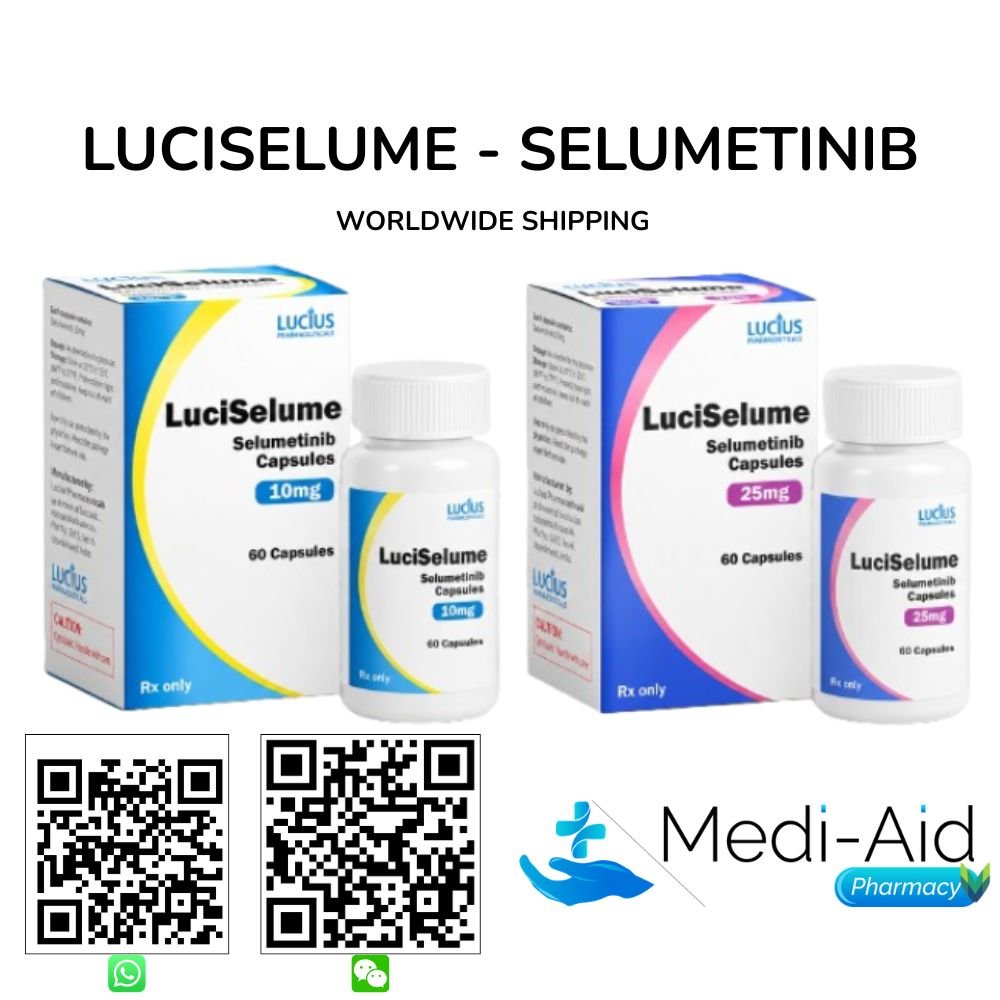
LuciSelume 10 MG & 25 MG (Selumetinib) is an orally bioavailable MEK1 and MEK2 inhibitor a targeted kinase inhibitor that suppresses the RAS/MAPK signalling pathway to arrest plexiform neurofibroma growth in patients with neurofibromatosis type 1 (NF1) supplied as hard capsules in 10 mg and 25 mg strengths in 60-capsule bottles/boxes and manufactured by Lucius Pharmaceuticals (Lao) Co., Ltd. in Laos. Its active pharmaceutical ingredient, selumetinib INN, selectively inhibits mitogen-activated protein kinase kinases 1 and 2 (MEK1/2), the obligate downstream effectors of RAS oncoproteins, blocking ERK1/2 phosphorylation and arresting the aberrant MAPK cascade that drives uncontrolled plexiform neurofibroma proliferation in NF1 patients carrying loss-of-function mutations of the NF1 tumour suppressor gene on chromosome 17.
LuciSelume is formulated as hard capsules dosed according to body surface area (BSA) at 25 mg/m² twice daily, with each dose rounded to the nearest achievable 5 mg or 10 mg increment using a combination of 10 mg and 25 mg capsules 60 capsules per bottle providing adequate supply for continuous BSA-based dosing cycles. In the pivotal Phase II SPRINT Stratum 1 trial (NCT01362803) the landmark single-arm, open-label, multicentre study that supported global regulatory approvals of selumetinib 66% of 50 evaluable paediatric NF1 patients (33/50) achieved a confirmed partial response with selumetinib 25 mg/m² twice daily, representing the first objective evidence of tumour shrinkage from any systemic therapy in inoperable plexiform neurofibromas and establishing selumetinib as the first FDA-approved medicine for NF1 (April 10, 2020).
In the Phase III KOMET trial, selumetinib further demonstrated efficacy in adult NF1 patients with symptomatic, inoperable plexiform neurofibromas, leading to expanded approvals by the European Commission (October 2025) and the US FDA (November 2025). Searching for LuciSelume 10 MG & 25 MG Selumetinib? Mediaid Pharmacy lists this product across its neurology medicines and Lucius Pharmaceuticals portfolios and ships it worldwide.
Basic Product Information of LuciSelume 10 MG & 25 MG (Selumetinib)
| Brand Name | LuciSelume 10 MG & 25 MG (Selumetinib) |
| Product Name | LuciSelume |
| Generic Name | Selumetinib INN |
| Drug Class | Kinase Inhibitor; MEK1/2 Inhibitor (Mitogen-Activated Protein Kinase Kinase 1 and 2 Inhibitor); RAS/MAPK Pathway Inhibitor; Targeted NF1 Therapy; Plexiform Neurofibroma Treatment Agent |
| Formulation | Hard Capsule (Oral) |
| Available Strengths | 10 mg per capsule; 25 mg per capsule |
| Available Pack Size | 60 Capsules per bottle/box (each strength supplied separately) |
| Dosing Schedule | Standard NF1 dosing: 25 mg/m² body surface area (BSA) orally twice daily (approximately every 12 hours), with each dose rounded to the nearest achievable 5 mg or 10 mg increment using a combination of 10 mg and 25 mg LuciSelume capsules. Administer on an empty stomach at least 1 hour before or 2 hours after food. Swallow capsules whole. Dose modifications apply for toxicity-related events; consult the treating specialist for BSA-specific dose calculations and reduction schedules. |
| Primary Indication | Treatment of neurofibromatosis type 1 (NF1) in paediatric patients aged 2 years and older with symptomatic, inoperable plexiform neurofibromas (PN); also approved in adults with symptomatic, inoperable PN following the Phase III KOMET trial. Selumetinib is not indicated for NF1-associated conditions other than symptomatic, inoperable plexiform neurofibromas, nor for NF2 or other neurofibromatosis subtypes. Confirm NF1 diagnosis with established clinical or genetic criteria before initiating LuciSelume. |
| Manufacturer | Lucius Pharmaceuticals (Lao) Co., Ltd., Laos |
| Country of Origin | Laos |
| Originator Reference Brand | Koselugo® (selumetinib capsules, 10 mg and 25 mg, by AstraZeneca approved in the United States, European Union, and other major markets for NF1 with symptomatic, inoperable plexiform neurofibromas). Both LuciSelume and Koselugo® contain selumetinib INN as the active pharmaceutical ingredient in the same MEK1/2 inhibitor drug class. LuciSelume is manufactured by Lucius Pharmaceuticals (Lao) Co., Ltd. in Laos and is supplied through Mediaid Pharmacy for international procurement. |
| Global Supplier | Mediaid Pharmacy, Worldwide Shipping Available |
| Storage Conditions | Store at room temperature (15°C to 30°C). Keep in the original packaging and protect from moisture. Keep out of the reach of children. |
How LuciSelume (Selumetinib) Works: Selective MEK1/2 Inhibition of the RAS/MAPK Pathway in Neurofibromatosis Type 1
Selumetinib INN is an orally bioavailable, selective, uncompetitive inhibitor of mitogen-activated protein kinase kinases 1 and 2 (MEK1/MEK2) the obligate signal transducers immediately downstream of the RAS GTPase oncoproteins in the RAS/RAF/MEK/ERK (MAPK) cascade. In neurofibromatosis type 1 (NF1), biallelic inactivation of the NF1 tumour suppressor gene on chromosome 17 eliminates neurofibromin a RAS GTPase-activating protein (RAS-GAP) that normally accelerates the hydrolysis of active RAS-GTP to inactive RAS-GDP causing constitutive RAS hyperactivation and downstream MEK/ERK signalling that drives uncontrolled proliferation of neural-crest-derived Schwann cell precursors into plexiform neurofibromas.
Selumetinib occupies an allosteric, non-ATP-competitive binding site on MEK1/2, blocking ERK1/2 phosphorylation and arresting the proliferative and survival signals generated by constitutively active RAS in NF1-deficient cells. Unlike ATP-competitive kinase inhibitors, the non-competitive allosteric mechanism of selumetinib confers potent inhibition that is not displaced by the high intracellular ATP concentrations present in tumour cells, contributing to robust, sustained target suppression at clinical doses. In genetically modified mouse models of NF1 generating plexiform neurofibromas that recapitulate the genotype and phenotype of human NF1 disease, oral selumetinib inhibited ERK phosphorylation and reduced neurofibroma number, volume, and cellular proliferation, providing the preclinical mechanistic proof of concept that validated the clinical programme.
The pharmacokinetic profile of selumetinib is defined by meaningful oral bioavailability the mean absolute oral bioavailability of selumetinib in healthy adults is approximately 62% distinguishing it mechanistically from minimally absorbed gut-restricted agents and confirming systemic MEK inhibition as the drug’s therapeutic mode of action. Selumetinib reaches peak plasma concentrations (Cmax) approximately 1 hour after oral dosing in the fasted state, with twice-daily dosing achieving steady-state plasma concentrations that sustain MEK pathway inhibition throughout each 28-day continuous dosing cycle.
Food reduces selumetinib Cmax and AUC by approximately 60% and 38%, respectively; LuciSelume must therefore be administered on an empty stomach at least 1 hour before or 2 hours after a meal to ensure consistent systemic exposure and therapeutic efficacy. Selumetinib is metabolised primarily by cytochrome P450 enzymes CYP3A4 and CYP1A2; co-administration of strong or moderate CYP3A4 inhibitors, fluconazole (a dual CYP3A4/2C19 inhibitor), or strong CYP3A4 inducers substantially alters selumetinib exposure and should be avoided or managed with dose adjustment as recommended by the treating specialist. For the complete range of targeted neurology and oncology medicines available at Mediaid Pharmacy, visit the neurology medicines collection.
LuciSelume (Selumetinib): Indications, Dosing, and Key Safety Information
| Approved Indication | Neurofibromatosis Type 1 (NF1) with Symptomatic, Inoperable Plexiform Neurofibromas (PN): Treatment of paediatric patients 2 years of age and older with NF1 who have symptomatic, inoperable plexiform neurofibromas (initial FDA approval, April 2020; based on SPRINT Phase II Stratum 1). Treatment of adult patients with NF1 who have symptomatic, inoperable plexiform neurofibromas (expanded approval, EC October 2025 and FDA November 2025; based on KOMET Phase III trial). Selumetinib is not indicated for systemic malignancies, NF2, schwannomatosis, or NF1-associated conditions other than symptomatic, inoperable PN. Confirm NF1 diagnosis with established clinical criteria or molecular genetic testing before initiating LuciSelume. |
| Recommended Dose | Paediatric Patients (≥2 years): 25 mg/m² BSA orally twice daily (approximately every 12 hours), with each dose rounded to the nearest achievable 5 mg or 10 mg increment. Use LuciSelume 10 mg and 25 mg capsules in appropriate combinations to achieve the BSA-calculated dose. Administer on an empty stomach (at least 1 hour before or 2 hours after eating). Swallow capsules whole. Treatment is continuous in 28-day cycles until disease progression, unacceptable toxicity, or clinical benefit is no longer observed. Consult the treating paediatric neurologist or neuro-oncologist for individual BSA-based dose calculation and modification schedules. |
| Missed Dose | If a dose of LuciSelume is missed and the next scheduled dose is more than 6 hours away, take the missed dose as soon as remembered. If the next dose is within 6 hours, skip the missed dose and resume the regular twice-daily schedule. Do not double the next dose to compensate for a missed dose. Continue LuciSelume treatment without interruption unless instructed by the treating physician. |
| Special Populations | Renal Impairment: No formal dose adjustment established; use with caution in severe renal impairment and consult the treating specialist. Hepatic Impairment: Reduce the LuciSelume dose in patients with moderate or severe hepatic impairment; consult current prescribing information for specific reduction guidance. Paediatric Patients Under 2 Years: Safety and efficacy in patients under 2 years of age have not been established. Elderly Patients: Clinical experience in patients aged ≥65 years is limited; monitor closely for adverse reactions. Pregnancy: LuciSelume can cause foetal harm based on animal studies; use effective contraception throughout treatment and for at least 1 week after the final dose. |
| Key Warnings & Precautions | Cardiomyopathy / Decreased LVEF: A decrease in left ventricular ejection fraction (LVEF) ≥10% below baseline occurred in 23% of 74 paediatric patients who received selumetinib in SPRINT. Obtain baseline cardiac assessment, including echocardiogram or MUGA scan, before initiating LuciSelume; monitor at regular intervals during treatment. Withhold, reduce, or permanently discontinue LuciSelume based on severity of LVEF decrease.
Ocular Toxicity: Retinal vein occlusion (RVO), retinal pigment epithelial detachment (RPED), and impaired vision have been reported with selumetinib. Obtain ophthalmic assessment before initiating LuciSelume and at regular intervals during treatment. Withhold LuciSelume in patients with RPED until resolution; permanently discontinue for confirmed RVO. Increased Creatine Phosphokinase (CPK): Elevations in serum CPK were reported in the SPRINT trial, including Grade 3 in 15% of patients. Monitor CPK at baseline and during treatment; withhold or reduce the LuciSelume dose for symptomatic CPK elevation or Grade 4 CPK elevation. Embryo-Foetal Toxicity: Selumetinib caused embryo-foetal harm in animal reproduction studies at exposures below the clinical dose. Advise patients of reproductive potential to use effective contraception during LuciSelume treatment and for at least 1 week after the last dose. LuciSelume is contraindicated in pregnancy unless the benefit clearly outweighs the risk. Risk of Bleeding: Serious and fatal haemorrhagic events have been reported with MEK inhibitors including selumetinib. Monitor for signs or symptoms of bleeding; permanently discontinue LuciSelume for serious haemorrhagic events. Dermatological Toxicity: Rash and acneiform dermatitis are among the most common adverse reactions; manage with dose modification and topical measures as appropriate. |
| Common Adverse Reactions (Most Frequent) | Vomiting, rash, abdominal pain, nausea, diarrhoea, musculoskeletal pain, fatigue, fever, acneiform dermatitis, stomatitis, and paronychia. Serious adverse reactions occurred in 24% of patients in the SPRINT Phase II trial. Grade 3 adverse reactions included rash, increased CPK, and decreased LVEF. Always discuss the complete safety profile with the treating paediatric neurologist or neuro-oncologist and establish a monitoring and dose-modification plan before initiating LuciSelume. |
| Drug Interactions | Selumetinib is metabolised by CYP3A4 and CYP1A2. Strong or moderate CYP3A4 inhibitors (e.g., itraconazole, clarithromycin, grapefruit juice) increase selumetinib plasma concentrations and should be avoided; if unavoidable, reduce the LuciSelume dose per prescribing guidance. Fluconazole (a dual CYP3A4/CYP2C19 inhibitor) substantially increases selumetinib exposure and should not be co-administered with LuciSelume. Strong CYP3A4 inducers (e.g., rifampicin, carbamazepine, St John’s Wort) reduce selumetinib exposure and should be avoided. Disclose all concurrent medications including antifungals, antibiotics, anticonvulsants, and herbal supplements to the treating physician before initiating LuciSelume. |
| Pregnancy & Lactation | LuciSelume (Selumetinib) can cause foetal harm based on animal reproduction studies showing embryo-foetal toxicity at exposures below the human clinical dose. Advise females of reproductive potential to use effective contraception during treatment with LuciSelume and for at least 1 week after the final dose. Advise male patients with female partners of reproductive potential to use contraception during LuciSelume treatment and for 1 week after the final dose. Breastfeeding is not recommended during LuciSelume treatment and for 1 week after the final dose due to the potential for serious adverse reactions in the breastfed infant. Consult the treating specialist regarding contraception requirements and pregnancy planning before and throughout LuciSelume treatment. |
Who Should Use LuciSelume 10 MG & 25 MG (Selumetinib)?
LuciSelume (Selumetinib) is indicated for patients with genetically confirmed or clinically diagnosed neurofibromatosis type 1 (NF1) who have symptomatic, inoperable plexiform neurofibromas slow-growing but potentially disfiguring, painful, and functionally compromising benign nerve sheath tumours arising from Schwann cells in patients who carry biallelic loss-of-function mutations of the NF1 tumour suppressor gene.
First, paediatric patients aged 2 years and older with NF1 constitute the primary approved population: the SPRINT Phase II Stratum 1 trial enrolled 50 evaluable patients aged 3 to 17 years (median 10.2 years), all of whom had measurable plexiform neurofibromas that could not be surgically removed without risk of substantial morbidity. In this trial, 66% of patients (33/50) achieved a confirmed partial response, defined as ≥20% reduction in the volume of the target plexiform neurofibroma, representing the first clinically meaningful evidence that any systemic therapy could objectively shrink plexiform neurofibromas in NF1 a finding that established selumetinib as the standard of care and earned it FDA Breakthrough Therapy designation, Fast Track designation, and Orphan Drug designation.
Second, adult patients with NF1 and symptomatic, inoperable plexiform neurofibromas represent an expanded indication validated by the Phase III KOMET trial, which supported regulatory approvals by the European Commission (October 2025) and the US FDA (November 2025) for this population extending the clinical evidence base for selumetinib beyond the paediatric setting and addressing a historically unmet need in adult NF1 patients who previously had no approved systemic therapy for plexiform neurofibroma management.
Third, patients whose plexiform neurofibromas cause pain, functional impairment, airway compromise, visual obstruction, motor deficits, or progressive disfigurement the symptom burden criteria that define symptomatic PN eligible for treatment represent the patients most likely to experience clinically meaningful quality-of-life benefit from LuciSelume, as objective tumour volume reduction translates directly into amelioration of compression-mediated functional deficits and pain in the organ systems affected by neurofibroma growth. LuciSelume is not appropriate for patients with NF1 who do not have symptomatic or inoperable plexiform neurofibromas; for patients with neurofibromatosis type 2 (NF2) or schwannomatosis; for patients with systemic malignancies requiring cytotoxic chemotherapy; for patients under 2 years of age (safety and efficacy not established); or for patients with known hypersensitivity to selumetinib or any component of the formulation.
Neurology departments, paediatric oncology centres, and hospital pharmacy teams sourcing LuciSelume alongside complementary targeted neurological agents can browse the Mediaid Pharmacy neurology medicines portfolio and the Lucius Pharmaceuticals medicines collection for the full selection available for international delivery.
Global Supplier: Mediaid Pharmacy Worldwide Shipping for LuciSelume 10 MG & 25 MG (Selumetinib)
Mediaid Pharmacy is a Dhaka-based supplier of specialty neurology, oncology, and targeted-therapy medicines with worldwide shipping to patients, paediatric neurology and neuro-oncology clinics, NF1 specialist centres, hospital pharmacies, rare disease programmes, and international distributors across all regions. LuciSelume (Selumetinib), manufactured by Lucius Pharmaceuticals (Lao) Co., Ltd. in Laos, is supplied as hard capsules in 10 mg and 25 mg strengths 60 capsules per bottle/box with pricing quotations, current stock confirmation, full product documentation, and end-to-end international delivery tracking for every order.
The dual-strength format (10 mg and 25 mg capsules supplied separately in 60-capsule bottles) precisely supports BSA-based dosing that requires flexible capsule combinations to achieve individualised doses rounded to the nearest 5 mg or 10 mg increment ensuring that clinicians and pharmacy teams can calculate and dispense precise patient-specific doses without requiring splitting or manipulation of capsule contents. Paediatric neurology departments managing NF1 patients in children’s hospitals and specialist referral centres; neuro-oncology teams co-managing NF1 patients with plexiform neurofibroma burden; rare disease pharmacy programmes; NF1 patient advocacy-linked clinical networks; and individual patients and families navigating access to selumetinib in regions where Koselugo® may be unavailable or cost-prohibitive can contact the Mediaid Pharmacy team through WhatsApp, phone, or WeChat for all enquiries regarding LuciSelume Selumetinib stock availability, current pricing, and international delivery timelines.
Procurement teams co-sourcing LuciSelume with other neurology or rare disease agents can browse the complete Mediaid Pharmacy neurology medicines collection and the Lucius Pharmaceuticals medicines portfolio before requesting a consolidated quotation.
Why Choose LuciSelume 10 MG & 25 MG (Selumetinib) from Mediaid Pharmacy?
LuciSelume (Selumetinib) provides paediatric neurologists, neuro-oncologists, NF1 specialist physicians, and hospital pharmacy and rare disease programme teams with a first-in-class, Phase II-validated MEK inhibitor whose clinical evidence base in neurofibromatosis type 1 represents the only targeted therapeutic to achieve objective, confirmed plexiform neurofibroma shrinkage in the clinical trial setting addressing a condition in which surgery is frequently not feasible without risk of devastating neurological morbidity, radiation is inappropriate for a benign childhood tumour, and conventional chemotherapy has not demonstrated meaningful, durable tumour control.
The pivotal SPRINT Phase II Stratum 1 trial (NCT01362803; 50 evaluable paediatric patients with NF1 and inoperable PN) established selumetinib’s clinical landmark: a confirmed partial response rate of 66% (33/50 patients), with 88% of evaluable patients remaining on treatment for at least 12 months and 66% for at least 2 years demonstrating not only objective tumour shrinkage but durable disease control that translates into sustained symptom relief, functional improvement, and quality-of-life benefit in a paediatric population with historically no approved medical options. The Phase III KOMET trial the first randomised, controlled Phase III study of any agent in NF1-related plexiform neurofibromas further validated selumetinib in adult patients and supported European Commission and FDA approval expansions in 2025, reinforcing the robustness of the clinical data across both the paediatric and adult NF1 populations and across regulatory jurisdictions globally.
The mechanistic differentiation of LuciSelume selumetinib’s non-ATP-competitive, allosteric inhibition of MEK1/2 produces potent, selective suppression of the constitutively active RAS/MAPK cascade that drives NF1-associated plexiform neurofibroma growth, without the off-target kinase inhibition that characterises less selective agents; this specificity of mechanism underpins both the clinical efficacy signal and the manageable adverse reaction profile observed in SPRINT, where the most common adverse reactions were predominantly low-grade dermatological, gastrointestinal, and musculoskeletal events amenable to dose modification and supportive measures.
LuciSelume is manufactured by Lucius Pharmaceuticals (Lao) Co., Ltd. in Laos and is available through Mediaid Pharmacy in both 10 mg and 25 mg hard capsule strengths the two strengths required for precise BSA-based dosing with full product documentation, specialist supply coordination, and worldwide shipping from Dhaka. To source additional Lucius Pharmaceuticals neurology and specialty medicines, visit the Mediaid Pharmacy Lucius Pharmaceuticals medicines section and the neurology medicines portfolio, and contact the team for a personalised quotation.
Frequently Asked Questions About LuciSelume 10 MG & 25 MG (Selumetinib)
What is LuciSelume (Selumetinib) used for?
LuciSelume (Selumetinib) is a selective MEK1 and MEK2 (mitogen-activated protein kinase kinase 1 and 2) inhibitor used for the treatment of neurofibromatosis type 1 (NF1) in patients with symptomatic, inoperable plexiform neurofibromas (PN). NF1 is a rare autosomal dominant genetic disorder caused by loss-of-function mutations of the NF1 gene on chromosome 17, which eliminates neurofibromin a RAS-GAP tumour suppressor and leads to constitutive RAS/MAPK pathway activation and uncontrolled growth of plexiform neurofibromas along peripheral nerve sheaths. LuciSelume is indicated for paediatric patients aged 2 years and older (based on the SPRINT Phase II trial) and, following Phase III KOMET trial results, for adult NF1 patients with symptomatic, inoperable PN. The originator brand for selumetinib is Koselugo® (AstraZeneca). LuciSelume, manufactured by Lucius Pharmaceuticals (Lao) Co., Ltd. in Laos, is available through Mediaid Pharmacy with worldwide shipping.
What is the generic name of LuciSelume?
The generic name of LuciSelume is selumetinib INN. LuciSelume is the brand name registered by Lucius Pharmaceuticals (Lao) Co., Ltd. for selumetinib manufactured in Laos. LuciSelume is formulated as hard capsules in 10 mg and 25 mg strengths, supplied in 60-capsule bottles both strengths required together to achieve the full range of individualised BSA-based doses. The standard selumetinib dosing regimen is 25 mg/m² BSA twice daily on a continuous 28-day cycle basis, with doses rounded to the nearest 5 mg or 10 mg achievable increment using combinations of 10 mg and 25 mg capsules. The originator reference brand is Koselugo® (AstraZeneca). Mediaid Pharmacy distributes LuciSelume globally with worldwide shipping to patients, NF1 specialist centres, paediatric neurology clinics, hospital pharmacies, and rare disease programmes.
What is the difference between LuciSelume (Selumetinib) and Koselugo® (Selumetinib)?
LuciSelume and Koselugo® both contain selumetinib INN as the active pharmaceutical ingredient and share the same MEK1/2 inhibitor mechanism of action targeting the RAS/MAPK pathway in NF1-associated plexiform neurofibromas. Koselugo® is the originator brand developed by AstraZeneca, approved by the FDA in April 2020 for paediatric NF1 patients aged 2 years and older with symptomatic, inoperable plexiform neurofibromas, and available as 10 mg and 25 mg hard capsules. LuciSelume is manufactured by Lucius Pharmaceuticals (Lao) Co., Ltd. in Laos and is available through Mediaid Pharmacy for international procurement by NF1 specialist centres, paediatric neurology departments, hospital rare disease programmes, and patients in regions where Koselugo® may be unavailable or cost-prohibitive. For the full range of neurology medicines at Mediaid Pharmacy, visit the neurology medicines collection.
How is LuciSelume 10 MG & 25 MG (Selumetinib) administered?
LuciSelume (Selumetinib) is administered orally as hard capsules twice daily (approximately every 12 hours) at a dose of 25 mg/m² BSA, with each dose rounded to the nearest achievable 5 mg or 10 mg increment using appropriate combinations of the 10 mg and 25 mg LuciSelume capsules. Administer LuciSelume on an empty stomach at least 1 hour before or at least 2 hours after eating as food significantly reduces selumetinib bioavailability. Swallow each LuciSelume capsule whole with water; do not open, crush, or chew the capsules. Take LuciSelume at consistent times each day to maintain steady plasma concentrations. Treatment is administered in continuous 28-day cycles without a rest period between cycles. Do not discontinue LuciSelume without first consulting the treating physician; dose modifications for toxicity are managed through structured dose reduction schedules rather than treatment discontinuation where possible.
What are the side effects of LuciSelume (Selumetinib)?
The most common adverse reactions of selumetinib reported in the SPRINT Phase II trial include vomiting, rash, abdominal pain, nausea, diarrhoea, musculoskeletal pain, fatigue, fever, acneiform dermatitis, stomatitis, and paronychia. Serious adverse reactions occurred in 24% of patients in SPRINT. Clinically important safety signals requiring active monitoring include cardiomyopathy and decreased left ventricular ejection fraction (LVEF ≥10% decrease below baseline in 23% of patients), ocular toxicity (retinal vein occlusion and retinal pigment epithelial detachment), elevated creatine phosphokinase (CPK), and risk of haemorrhage. LuciSelume can also cause embryo-foetal toxicity, necessitating effective contraception in patients of reproductive potential. Each of these adverse events is managed through structured dose modification algorithms: withholding, dose reduction, or permanent discontinuation based on severity grade. Always establish a comprehensive monitoring plan including cardiac, ophthalmological, and laboratory assessments with the treating specialist before and throughout LuciSelume treatment.
How effective is Selumetinib (LuciSelume) for neurofibromatosis type 1?
Selumetinib demonstrated landmark clinical efficacy in the SPRINT Phase II Stratum 1 trial the pivotal study supporting its FDA approval. Among 50 evaluable paediatric patients with NF1 and inoperable plexiform neurofibromas who received selumetinib 25 mg/m² twice daily, 66% (33/50) achieved a confirmed partial response, defined as ≥20% reduction in target plexiform neurofibroma volume. Among the 33 responders, the median duration of response was not reached at the first data cut-off (June 2018), reflecting durable tumour control sustained across multiple treatment cycles. 88% of patients remained on treatment for at least 12 months and 66% for at least 2 years. In the Phase III KOMET trial in adult NF1 patients with symptomatic, inoperable plexiform neurofibromas, selumetinib demonstrated superiority over placebo in objective response rate, supporting expanded approvals in 2025. LuciSelume delivers the same active ingredient selumetinib INN in the same 10 mg and 25 mg hard capsule strengths used in the clinical trials, sourced through Mediaid Pharmacy with worldwide shipping. For the complete neurology medicines range at Mediaid Pharmacy, visit the neurology medicines collection.
Is LuciSelume (Selumetinib) safe during pregnancy or while breastfeeding?
LuciSelume (Selumetinib) can cause foetal harm based on animal reproduction studies that demonstrated embryo-foetal toxicity at selumetinib exposures below the human clinical dose of 25 mg/m² twice daily. Adequate and well-controlled studies in pregnant women are not available. Females of reproductive potential must use effective contraception during LuciSelume treatment and for at least 1 week after the final dose. Males with female partners of reproductive potential should also use contraception during treatment and for 1 week after the final dose. Breastfeeding is not recommended during LuciSelume treatment and for 1 week after the final dose, as the potential for serious adverse reactions in the breastfed infant cannot be excluded. The decision to administer LuciSelume during pregnancy requires a careful individualised benefit-risk assessment by the treating specialist, who should counsel the patient on the potential foetal risk. Consult the treating paediatric neurologist or specialist before starting LuciSelume in any patient of childbearing or reproductive potential.
Can I order LuciSelume 10 MG & 25 MG (Selumetinib) online with worldwide shipping?
Yes. Mediaid Pharmacy supplies LuciSelume (Selumetinib) in both 10 mg and 25 mg hard capsule strengths (60 capsules per bottle/box) to patients, paediatric neurology departments, NF1 specialist centres, neuro-oncology programmes, hospital pharmacies, rare disease networks, and healthcare providers globally. Contact Mediaid Pharmacy via WhatsApp, phone, or WeChat at +8801773428128, or email info@mediaidpharmacy.com for pricing, current stock availability, and international delivery details for your country.
Order LuciSelume 10 MG & 25 MG (Selumetinib) with Worldwide Shipping
Phone / WhatsApp / WeChat: +8801773428128 | Email: info@mediaidpharmacy.com

Reviews
There are no reviews yet.