
Description
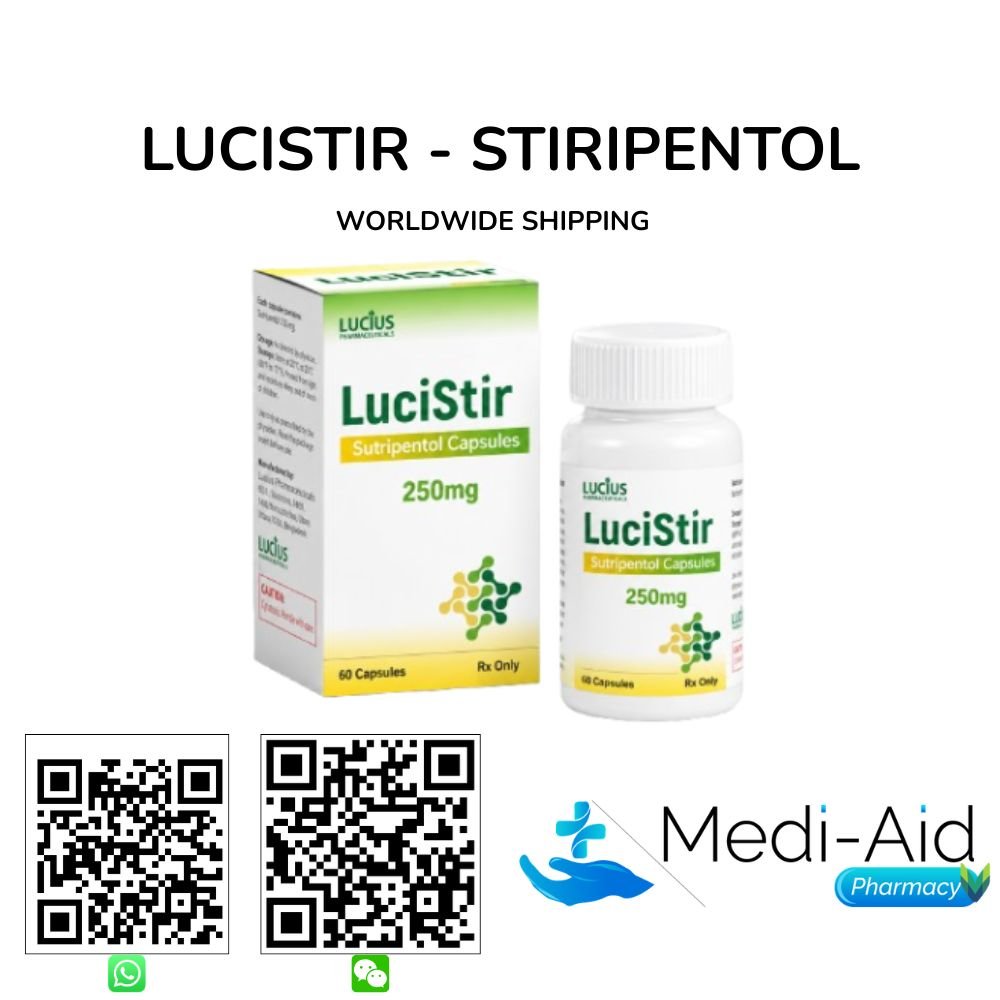
LuciStir 250 MG (Stiripentol) is an orally administered adjunctive antiepileptic agent and GABA-A receptor positive allosteric modulator a dual-mechanism anticonvulsant that enhances inhibitory GABAergic neurotransmission and concurrently inhibits cytochrome P450 enzymes CYP2C19 and CYP3A4 to potentiate the antiseizure activity of co-administered clobazam in patients with Dravet syndrome supplied as oral capsules in 250 mg strength in a 60-capsule pot and manufactured by Lucius Pharmaceuticals (Lao) Co., Ltd. in Laos.
Its active pharmaceutical ingredient, stiripentol INN, is indicated exclusively as adjunctive therapy with clobazam for the treatment of seizures associated with Dravet syndrome (DS) a rare, catastrophic, treatment-refractory childhood epilepsy syndrome caused by loss-of-function mutations of the SCN1A gene encoding the voltage-gated sodium channel Nav1.1 and is not indicated as monotherapy or for epilepsy syndromes other than Dravet syndrome.
LuciStir is formulated as oral capsules dosed at 50 mg/kg/day administered in 2 or 3 divided doses adjusting to the nearest achievable dose using 250 mg capsules and should be taken with food to optimise tolerability. In the pivotal Phase 3 STICLO France randomised, double-blind, placebo-controlled trial (42 paediatric patients with Dravet syndrome receiving clobazam and valproate), stiripentol achieved a responder rate of 71.4% versus 5.0% for placebo (defined as ≥50% reduction in clonic or tonic-clonic seizure frequency), with 43% of stiripentol-treated patients achieving complete seizure freedom versus 0% with placebo during the 2-month double-blind treatment period. The independent STICLO Italy trial (23 paediatric patients) replicated these findings, with a responder rate of 67% with stiripentol versus 9.1% with placebo.
In pooled STICLO data, 69.7% of stiripentol-treated patients achieved a ≥50% reduction in seizure frequency, confirming the magnitude and consistency of stiripentol’s antiseizure efficacy in Dravet syndrome across two independent randomised trials findings that supported EMA orphan drug approval in 2001, EU marketing authorisation in 2007, and FDA approval in August 2018. Searching for LuciStir 250 MG Stiripentol? Mediaid Pharmacy lists this product across its neurology medicines and Lucius Pharmaceuticals portfolios and ships it worldwide.
Basic Product Information of LuciStir 250 MG (Stiripentol)
| Brand Name | LuciStir 250 MG (Stiripentol) |
| Product Name | LuciStir |
| Generic Name | Stiripentol INN |
| Drug Class | Anticonvulsant / Antiseizure Agent; GABA-A Receptor Positive Allosteric Modulator; CYP2C19 and CYP3A4 Inhibitor; Adjunctive Antiepileptic Drug (AED); Dravet Syndrome Treatment Agent |
| Formulation | Oral Capsule |
| Available Strengths | 250 mg per capsule |
| Available Pack Size | 60 Capsules per pot |
| Dosing Schedule | Standard Dravet syndrome dosing: 50 mg/kg/day administered orally in 2 or 3 divided doses (i.e., 25 mg/kg twice daily or approximately 16.67 mg/kg three times daily). If the exact dose is not achievable, round to the nearest possible dose using available LuciStir 250 mg capsules, generally within 50–150 mg of the recommended daily dose. Administer each dose with food to improve gastrointestinal tolerability. LuciStir must be used as adjunctive therapy with clobazam it is not indicated for monotherapy. Consult the treating paediatric neurologist or epileptologist for individual weight-based dose calculation and dose adjustment schedules. |
| Primary Indication | Adjunctive treatment of seizures associated with Dravet syndrome (DS) in patients 2 years of age and older who are taking clobazam. Stiripentol is indicated exclusively as add-on therapy there are no clinical data to support its use as monotherapy for Dravet syndrome. LuciStir is not indicated for other epilepsy syndromes, focal-onset seizures, or generalised epilepsies other than Dravet syndrome. Confirm Dravet syndrome diagnosis by clinical criteria and, where available, genetic testing for SCN1A gene mutation before initiating LuciStir. |
| Manufacturer | Lucius Pharmaceuticals (Lao) Co., Ltd., Laos |
| Country of Origin | Laos |
| Originator Reference Brand | Diacomit® (stiripentol capsules and powder for oral suspension, 250 mg and 500 mg, by Biocodex / Laboratoires Biocodex approved in the European Union in 2007 and in the United States in August 2018 for adjunctive treatment of Dravet syndrome in patients aged 2 years and older taking clobazam). Both LuciStir and Diacomit® contain stiripentol INN as the active pharmaceutical ingredient in the same antiepileptic drug class. LuciStir is manufactured by Lucius Pharmaceuticals (Lao) Co., Ltd. in Laos and is supplied through Mediaid Pharmacy for international procurement. |
| Global Supplier | Mediaid Pharmacy, Worldwide Shipping Available |
| Storage Conditions | Store at room temperature (15°C to 30°C). Keep in the original packaging and protect from moisture. Keep out of the reach of children. |
How LuciStir (Stiripentol) Works: Dual-Mechanism GABAergic Enhancement and CYP Inhibition in Dravet Syndrome
Stiripentol INN is an orally administered antiepileptic agent whose anticonvulsant activity in Dravet syndrome is attributed to two pharmacologically distinct but clinically synergistic mechanisms operating simultaneously. The primary direct mechanism involves positive allosteric modulation of the gamma-aminobutyric acid type A (GABA-A) receptor the principal inhibitory ligand-gated ion channel in the central nervous system at a binding site distinct from the benzodiazepine recognition site.
Stiripentol enhances the inhibitory effect of GABA by increasing the frequency and duration of GABA-A receptor chloride channel opening, potentiating the hyperpolarisation of neuronal membranes that suppresses the generation and propagation of epileptiform discharges. Critically, stiripentol activates GABA-A receptors by binding to the barbiturate-like binding site on the receptor complex a mechanism of action that is pharmacologically and sterically independent of clobazam’s benzodiazepine-site activity thereby producing additive inhibitory effects when both agents are co-administered in the Dravet syndrome treatment regimen.
This neurophysiological basis for GABAergic potentiation is consistent with stiripentol’s demonstrated clinical activity in reducing the high-frequency clonic and tonic-clonic seizures that characterise Dravet syndrome and that arise as a consequence of haploinsufficiency of Nav1.1, the voltage-gated sodium channel subunit encoded by the SCN1A gene, which preferentially impairs inhibitory interneuron function and creates pathological cortical hyperexcitability in Dravet syndrome patients.
The second mechanism of stiripentol is pharmacokinetic rather than pharmacodynamic: stiripentol is a potent inhibitor of cytochrome P450 isoenzymes CYP2C19 and CYP3A4, the two primary enzymes responsible for the hepatic metabolism of clobazam (CYP2C19) and its pharmacologically active metabolite N-desmethylclobazam (N-CLB; CYP3A4). By inhibiting CYP2C19 and CYP3A4, stiripentol substantially increases plasma concentrations of both clobazam and N-CLB with some studies demonstrating 2 to 4-fold or greater elevations in N-CLB exposure during stiripentol co-administration effectively amplifying the antiseizure potency of clobazam without requiring an increase in the clobazam dose; in clinical practice, the treating physician will typically reduce the clobazam dose when initiating LuciStir to account for the pharmacokinetic interaction and minimise clobazam-associated adverse effects such as sedation.
Stiripentol also inhibits CYP1A2, CYP2C9, and CYP2D6 to varying degrees, necessitating caution and dose review for all co-administered drugs that are substrates of these enzymes and that have a narrow therapeutic index. This dual mechanism direct GABA-A allosteric modulation combined with pharmacokinetic amplification of clobazam is the pharmacological foundation for the clinically validated antiseizure efficacy of stiripentol in Dravet syndrome that both the STICLO France and STICLO Italy trials quantified. For the full range of antiepileptic and targeted neurology medicines at Mediaid Pharmacy, visit the neurology medicines collection.
LuciStir 250 MG (Stiripentol): Indications, Dosing, and Key Safety Information
| Approved Indication | Seizures Associated with Dravet Syndrome (DS): Adjunctive treatment of seizures associated with Dravet syndrome in patients 2 years of age and older taking clobazam (US FDA approval, August 2018, extended in September 2022 to patients as young as 6 months weighing at least 7 kg; EU EMA approval 2007). Stiripentol has no clinical data supporting use as monotherapy and must be prescribed as add-on therapy with clobazam. Confirm Dravet syndrome diagnosis ideally with SCN1A genetic testing before initiating LuciStir. LuciStir is not indicated for other epilepsy types or seizure disorders. |
| Recommended Dose | Patients ≥6 months (≥7 kg) and older: 50 mg/kg/day orally in 2 or 3 divided doses (25 mg/kg twice daily or approximately 16.67 mg/kg three times daily). Round each dose to the nearest achievable increment using LuciStir 250 mg capsules, generally within 50–150 mg of the recommended daily dose. Administer each dose with food. Initiate at a lower dose and titrate upward to 50 mg/kg/day over 3 days to improve tolerability. Reduce the co-administered clobazam dose upon initiating LuciStir to account for the CYP2C19/CYP3A4 inhibition-mediated increase in clobazam and N-CLB plasma concentrations. Consult the treating paediatric neurologist or epileptologist for individualised weight-based dose calculations. |
| Missed Dose | If a dose of LuciStir is missed, administer it as soon as remembered on the same day. If the next scheduled dose is due shortly, skip the missed dose and resume the regular divided-dose schedule. Do not double the next dose to compensate for a missed dose. Do not abruptly discontinue LuciStir see the gradual withdrawal guidance below. Maintain the prescribed clobazam dose schedule alongside LuciStir at all times. |
| Gradual Withdrawal | LuciStir must not be discontinued abruptly. If treatment discontinuation is clinically necessary, withdraw LuciStir gradually to minimise the risk of increased seizure frequency and status epilepticus. Abrupt withdrawal of antiepileptic agents in patients with Dravet syndrome carries a significant risk of prolonged seizures and potentially life-threatening seizure emergencies. Consult the treating epileptologist before initiating any dose reduction or treatment withdrawal. |
| Special Populations | Renal Impairment: Use with caution in severe renal impairment; consult the treating specialist. Hepatic Impairment: Stiripentol is hepatically metabolised; use with caution in hepatic impairment and monitor liver function tests throughout treatment. Patients Under 6 Months or Under 7 kg: Safety and efficacy not established in patients under 6 months of age or weighing less than 7 kg. Elderly Patients: Clinical experience in adults and elderly patients is limited; the approved indication in most markets specifically covers paediatric patients, though some jurisdictions extend coverage to adults. Consult current local prescribing information. Pregnancy: LuciStir may cause foetal harm; consult the treating specialist before initiating in patients of reproductive potential. |
| Key Warnings & Precautions | Not for Monotherapy: LuciStir has no clinical data supporting use as a standalone antiepileptic agent. It must always be co-administered with clobazam. Do not use LuciStir in patients not already receiving or being initiated on clobazam.
Confirm Dravet Syndrome Diagnosis: Prescribe LuciStir only in patients with a confirmed diagnosis of Dravet syndrome, ideally supported by SCN1A genetic testing. Do not use empirically for unclassified epilepsy or generalised seizure disorders other than Dravet syndrome. Clobazam Dose Reduction on Initiation: Because stiripentol markedly increases clobazam and N-CLB plasma concentrations through CYP2C19 and CYP3A4 inhibition, reduce the clobazam dose when initiating LuciStir to prevent clobazam toxicity including excessive sedation and respiratory depression. Neutropenia / Haematological Monitoring: Neutropenia has been reported during stiripentol treatment. Monitor complete blood count (CBC) periodically throughout treatment with LuciStir. Discontinue LuciStir if significant neutropenia develops. Hepatotoxicity / Liver Function Monitoring: Elevations in liver enzymes have been reported with stiripentol. Monitor liver function tests (LFTs) at baseline and regularly throughout treatment. Use with caution in patients with pre-existing hepatic impairment. Gradual Withdrawal: Abrupt discontinuation of LuciStir risks increased seizure frequency and status epilepticus in Dravet syndrome patients. Always taper LuciStir gradually under specialist supervision. |
| Common Adverse Reactions | Somnolence, decreased appetite, agitation, ataxia, hypotonia, nausea, tremor, dysarthria, insomnia, hyperexcitability, weight loss, and vomiting. Many adverse events particularly somnolence and sedation are attributable in part to the pharmacokinetic interaction between stiripentol and clobazam, which elevates clobazam and N-CLB plasma concentrations. Reducing the clobazam dose upon initiation of LuciStir typically mitigates the severity of CNS depressant adverse effects. The adverse reaction profile of stiripentol in the STICLO trials was generally manageable with dose adjustment of co-administered antiepileptics. Always discuss the complete adverse event profile and the monitoring plan with the treating paediatric neurologist or epileptologist before and throughout LuciStir treatment. |
| Drug Interactions | Stiripentol is a potent inhibitor of CYP2C19, CYP3A4, CYP1A2, CYP2C9, and CYP2D6. Clobazam and N-desmethylclobazam (N-CLB): Stiripentol substantially increases plasma concentrations of clobazam (CYP2C19 substrate) and N-CLB (CYP3A4 substrate) reduce the clobazam dose when initiating LuciStir. Valproate: Stiripentol may increase valproate plasma concentrations through CYP2C9 inhibition; monitor valproate levels and adjust dose if clinically indicated. Carbamazepine, phenytoin, phenobarbital: Stiripentol inhibits the metabolism of these narrow-therapeutic-index antiepileptics monitor drug levels and reduce doses as appropriate. Midazolam and other CYP3A4 substrates with a narrow therapeutic index: Avoid co-administration or monitor closely with dose reduction. Perform a full medication review for all co-administered drugs metabolised by CYP2C19, CYP3A4, CYP2D6, or CYP1A2 before initiating LuciStir. Disclose all concomitant medications to the treating epileptologist. |
| Pregnancy & Lactation | Adequate and well-controlled human studies of stiripentol in pregnant women are not available. Animal reproductive studies have suggested a potential risk of foetal harm; LuciStir should be used during pregnancy only when the potential clinical benefit to the mother outweighs the potential risk to the foetus, under close specialist supervision. Because Dravet syndrome primarily manifests in childhood and most of the treated population is paediatric, the reproductive risk is relevant principally for adolescent female patients and adult females with Dravet syndrome. Breastfeeding during LuciStir treatment is generally not recommended due to limited safety data; consult the treating neurologist to weigh the benefits of breastfeeding against potential exposure of the infant to stiripentol through breast milk. Discuss contraception, pregnancy planning, and breastfeeding intentions with the treating specialist before and during LuciStir treatment. |
Who Should Use LuciStir 250 MG (Stiripentol)?
LuciStir (Stiripentol) is indicated for patients with a confirmed diagnosis of Dravet syndrome (DS) formally known as severe myoclonic epilepsy of infancy (SMEI) whose seizures are not adequately controlled with clobazam alone or with clobazam in combination with valproate, and in whom adjunctive antiseizure therapy is clinically appropriate. Dravet syndrome is a rare, catastrophic developmental and epileptic encephalopathy caused in approximately 80% of cases by de novo loss-of-function mutations of the SCN1A gene encoding the Nav1.1 voltage-gated sodium channel subunit alpha, which preferentially impairs the function of inhibitory GABAergic interneurons and creates pathological cortical hyperexcitability that manifests as high-frequency, prolonged, and treatment-refractory seizures from infancy.
First, paediatric patients aged 2 years and older and, since the September 2022 FDA label expansion, patients as young as 6 months weighing at least 7 kg with a confirmed Dravet syndrome diagnosis who have not achieved adequate seizure control with clobazam (with or without valproate) constitute the primary LuciStir-indicated population: the STICLO France trial demonstrated that 71.4% of such patients achieved a ≥50% reduction in clonic and tonic-clonic seizure frequency when stiripentol was added to their clobazam-and-valproate regimen, compared with only 5.0% in the placebo group (p<0.0001), and 43% became completely seizure-free during the 2-month treatment period an outcome unprecedented in a condition characterised by its near-universal pharmacoresistance to conventional antiepileptic drugs.
Second, patients with Dravet syndrome experiencing frequent prolonged febrile seizures, status epilepticus episodes, and high seizure burden that substantially impairs developmental trajectory and quality of life represent the population most likely to derive the greatest clinical benefit from LuciStir’s dual mechanism of direct GABAergic potentiation and clobazam pharmacokinetic enhancement particularly because the combination of stiripentol, clobazam, and valproate targets the core pathophysiological mechanism of GABA-A inhibitory interneuron dysfunction in SCN1A-mutant Dravet syndrome at multiple complementary pharmacological sites.
Third, patients whose prescribing physicians have confirmed that first-line clobazam-based and valproate-based regimens have delivered inadequate seizure control as established in the STICLO France and STICLO Italy trial entry criteria are precisely the patients for whom the strength of stiripentol’s clinical evidence applies. LuciStir is not appropriate for patients with epilepsy syndromes other than Dravet syndrome; for patients whose Dravet syndrome diagnosis has not been clinically or genetically confirmed; for patients receiving antiepileptic regimens that do not include clobazam (as monotherapy use is not supported by clinical data); or for patients with significant, uncontrolled hepatic impairment in whom stiripentol’s hepatic metabolism and potential hepatotoxicity present an unacceptable risk.
Paediatric neurology centres, epilepsy specialist clinics, Dravet syndrome patient programmes, and hospital pharmacy teams sourcing LuciStir alongside complementary antiepileptic agents can browse the Mediaid Pharmacy neurology medicines portfolio and the Lucius Pharmaceuticals medicines collection for the full selection available for international delivery.
Global Supplier: Mediaid Pharmacy Worldwide Shipping for LuciStir 250 MG (Stiripentol)
Mediaid Pharmacy is a Dhaka-based supplier of specialty neurology, rare disease, and targeted-therapy medicines with worldwide shipping to patients, paediatric epilepsy and neurology clinics, Dravet syndrome specialist centres, hospital pharmacies, rare disease treatment programmes, and international distributors across all regions. LuciStir (Stiripentol), manufactured by Lucius Pharmaceuticals (Lao) Co., Ltd. in Laos, is supplied as 250 mg oral capsules in a 60-capsule pot with pricing quotations, stock confirmation, full product documentation, and end-to-end international delivery tracking for every order.
The 60-capsule-per-pot format provides approximately one month of continuous therapy for low-weight paediatric patients at standard dose, with supply quantity calculated against the patient’s weight-based daily dose of 50 mg/kg/day to determine monthly capsule requirements accurately; families and pharmacy teams should provide the patient’s current weight when requesting a supply quotation to ensure the correct number of pots is ordered to cover the full treatment period.
Paediatric neurology departments managing Dravet syndrome patients in children’s hospitals and tertiary epilepsy centres; paediatric epileptologists co-prescribing stiripentol with clobazam and valproate; hospital pharmacy teams managing rare paediatric epilepsy medicines; Dravet syndrome patient support organisations and advocacy networks; and individual families of children with Dravet syndrome seeking access to stiripentol in regions where Diacomit® may be unavailable or prohibitively expensive can contact the Mediaid Pharmacy team through WhatsApp, phone, or WeChat for all enquiries regarding LuciStir Stiripentol stock availability, current pricing, and international delivery timelines.
Procurement teams co-sourcing LuciStir with other antiepileptic or neurology agents can browse the complete Mediaid Pharmacy neurology medicines collection and the Lucius Pharmaceuticals medicines portfolio before requesting a consolidated quotation.
Why Choose LuciStir 250 MG (Stiripentol) from Mediaid Pharmacy?
LuciStir (Stiripentol) provides paediatric neurologists, epileptologists, Dravet syndrome specialist physicians, and hospital pharmacy and rare disease programme teams with a Phase 3-validated, dual-mechanism antiepileptic agent whose clinical evidence base in Dravet syndrome represents the most robust randomised controlled trial dataset for any adjunctive antiseizure therapy in this catastrophic, pharmacoresistant epilepsy syndrome a condition that affects approximately 1 in 15,000–40,000 individuals, causes lifelong seizure disability and neurodevelopmental impairment, and has historically been exceptionally difficult to control with conventional antiepileptic drugs.
The pivotal Phase 3 STICLO France trial (42 paediatric patients, randomised, double-blind, placebo-controlled, add-on to clobazam and valproate) established stiripentol’s landmark clinical efficacy in Dravet syndrome: a 71.4% responder rate (≥50% reduction in clonic or tonic-clonic seizure frequency) with stiripentol versus 5.0% with placebo a treatment difference of 66.4 percentage points demonstrating a magnitude of antiseizure effect that is extraordinary for any pharmacological intervention in a treatment-refractory epilepsy syndrome. In the same trial, 43% of stiripentol-treated patients achieved complete seizure freedom during the 2-month double-blind period versus 0% with placebo, and the STICLO Italy trial independently replicated the efficacy signal with a 67% responder rate versus 9.1% for placebo.
Pooled across both STICLO trials, 69.7% of stiripentol-treated patients achieved the ≥50% seizure frequency reduction responder threshold a level of clinical response that is both statistically and clinically remarkable in the context of Dravet syndrome’s known resistance to treatment. Extended analyses of STICLO data published subsequently in Neurology and Therapy confirmed rapid onset of antiseizure effect and clinically meaningful extension of seizure-free periods with stiripentol, reinforcing the durability of the treatment response beyond the controlled trial period. The pharmacological basis of LuciStir’s clinical differentiation simultaneous direct GABA-A receptor positive allosteric modulation and CYP2C19/CYP3A4-mediated amplification of clobazam’s pharmacokinetic and pharmacodynamic profile creates a synergistic antiseizure effect that exceeds what either stiripentol or clobazam achieves in isolation, targeting Dravet syndrome’s pathophysiological core of inhibitory interneuron dysfunction from two mechanistically complementary angles.
LuciStir is manufactured by Lucius Pharmaceuticals (Lao) Co., Ltd. in Laos and is available through Mediaid Pharmacy as 250 mg oral capsules in a 60-capsule pot with full product documentation, specialist supply coordination, and worldwide shipping from Dhaka. To source additional Lucius Pharmaceuticals neurology and rare disease medicines, visit the Mediaid Pharmacy Lucius Pharmaceuticals medicines section and the neurology medicines portfolio, and contact the team for a personalised quotation.
Frequently Asked Questions About LuciStir 250 MG (Stiripentol)
What is LuciStir 250 MG (Stiripentol) used for?
LuciStir 250 MG (Stiripentol) is a dual-mechanism adjunctive antiepileptic agent used for the treatment of seizures associated with Dravet syndrome (DS) in patients 2 years of age and older and in patients as young as 6 months weighing at least 7 kg per the 2022 FDA label update who are taking clobazam. Dravet syndrome is a rare, catastrophic, SCN1A-linked developmental and epileptic encephalopathy characterised by high-frequency, prolonged, febrile and afebrile seizures from early infancy that are highly resistant to conventional antiepileptic drug regimens. LuciStir works through two synergistic mechanisms: direct GABA-A receptor positive allosteric modulation and inhibition of CYP2C19/CYP3A4-mediated clobazam metabolism, which amplifies the antiseizure effect of co-administered clobazam. LuciStir must be used as add-on therapy with clobazam it is not indicated for monotherapy. The originator brand is Diacomit® (Biocodex). LuciStir, manufactured by Lucius Pharmaceuticals (Lao) Co., Ltd. in Laos, is available through Mediaid Pharmacy with worldwide shipping.
What is the generic name of LuciStir?
The generic name of LuciStir is stiripentol INN. LuciStir is the brand name registered by Lucius Pharmaceuticals (Lao) Co., Ltd. for stiripentol manufactured in Laos. LuciStir is formulated as oral capsules in 250 mg strength, supplied in a 60-capsule pot. The standard stiripentol dosing regimen for Dravet syndrome is 50 mg/kg/day administered in 2 or 3 divided doses, with each dose rounded to the nearest achievable amount using 250 mg LuciStir capsules. The originator reference brand for stiripentol is Diacomit® (manufactured by Biocodex / Laboratoires Biocodex and approved in the EU in 2007 and the US in 2018). Mediaid Pharmacy distributes LuciStir globally with worldwide shipping to patients, paediatric epilepsy centres, hospital pharmacies, and Dravet syndrome specialist programmes.
What is the difference between LuciStir (Stiripentol) and Diacomit® (Stiripentol)?
LuciStir and Diacomit® both contain stiripentol INN as the active pharmaceutical ingredient and share the same dual mechanism of action GABA-A receptor positive allosteric modulation and CYP2C19/CYP3A4 inhibition for the adjunctive treatment of Dravet syndrome seizures in patients taking clobazam. Diacomit® is the originator brand developed by Biocodex, approved in the European Union in 2007 and in the United States in August 2018, and available as 250 mg and 500 mg capsules and as a powder for oral suspension. LuciStir is manufactured by Lucius Pharmaceuticals (Lao) Co., Ltd. in Laos and is available through Mediaid Pharmacy for international procurement by epilepsy centres, hospital pharmacies, Dravet syndrome programmes, and patients in regions where Diacomit® may be unavailable or cost-prohibitive. For the full range of antiepileptic and neurology medicines at Mediaid Pharmacy, visit the neurology medicines collection.
How is LuciStir 250 MG (Stiripentol) administered?
LuciStir (Stiripentol) is administered orally as 250 mg capsules at a total daily dose of 50 mg/kg/day, divided into 2 or 3 doses (25 mg/kg twice daily or approximately 16.67 mg/kg three times daily). Round each dose to the nearest achievable increment using available 250 mg LuciStir capsules. Administer each dose of LuciStir with food taking stiripentol with food significantly improves gastrointestinal tolerability and is recommended throughout the treatment course. Swallow each LuciStir capsule whole with water. Take LuciStir at consistent, evenly spaced times each day to maintain steady plasma concentrations. Reduce the co-administered clobazam dose when initiating LuciStir to account for the CYP2C19/CYP3A4 inhibition that substantially increases clobazam and N-CLB plasma concentrations. Do not discontinue LuciStir abruptly taper gradually under the supervision of the treating epileptologist to avoid precipitating seizure worsening or status epilepticus.
What are the side effects of LuciStir 250 MG (Stiripentol)?
The most common adverse reactions of stiripentol reported in the STICLO clinical trials include somnolence, decreased appetite, agitation, ataxia, hypotonia, nausea, tremor, dysarthria, insomnia, hyperexcitability, weight loss, and vomiting. Many of these adverse effects particularly somnolence, sedation, and hypotonia are attributable in part to the pharmacokinetic interaction between stiripentol and clobazam, in which stiripentol inhibits CYP2C19 and CYP3A4 to elevate clobazam and its active metabolite N-CLB to higher plasma concentrations than clobazam alone would achieve. Reducing the clobazam dose upon LuciStir initiation typically reduces the severity of CNS depressant adverse effects substantially. Clinically important monitoring requirements include periodic complete blood count (CBC) for neutropenia and liver function tests (LFTs) for hepatotoxicity. Always establish a comprehensive monitoring plan with the treating paediatric neurologist or epileptologist before and during LuciStir treatment.
How effective is Stiripentol (LuciStir) for Dravet syndrome?
Stiripentol has demonstrated landmark clinical efficacy in two independent Phase 3, randomised, double-blind, placebo-controlled trials in Dravet syndrome. In STICLO France (42 paediatric patients on clobazam and valproate), stiripentol achieved a responder rate of 71.4% versus 5.0% for placebo a treatment difference of 66.4 percentage points with 43% of stiripentol-treated patients achieving complete seizure freedom during the 2-month double-blind period versus 0% with placebo. In STICLO Italy (23 paediatric patients), stiripentol achieved a responder rate of 67% versus 9.1% for placebo, independently replicating the STICLO France findings. In pooled STICLO data, 69.7% of stiripentol-treated patients achieved the ≥50% seizure reduction responder endpoint. Additional published STICLO data confirmed rapid onset of antiseizure efficacy and significantly extended seizure-free periods in stiripentol-treated patients. These results supported EMA approval in 2007 and FDA approval in 2018, and place stiripentol among the most robustly evidenced adjunctive antiepileptic agents for Dravet syndrome. LuciStir delivers the same active ingredient stiripentol INN in 250 mg oral capsules, sourced through Mediaid Pharmacy with worldwide shipping. Visit the neurology medicines collection for the full antiepileptic range.
Is LuciStir 250 MG (Stiripentol) safe during pregnancy or while breastfeeding?
Adequate and well-controlled studies of stiripentol in pregnant women are not available, and animal reproductive studies have indicated a potential risk of foetal harm. Because Dravet syndrome typically presents in infancy and most treated patients are children, the reproductive safety question is most relevant for adolescent females and adults with Dravet syndrome of childbearing potential. LuciStir should be used during pregnancy only when the clinical benefit to the patient clearly outweighs the potential risk to the foetus, under the supervision of the treating epileptologist in consultation with a maternal-foetal medicine specialist. Breastfeeding is generally not recommended during LuciStir treatment due to limited data on stiripentol’s passage into breast milk and potential adverse effects in the breastfed infant; however, the treating specialist should assess the individual risk-benefit balance. Discuss contraception needs, pregnancy intentions, and breastfeeding plans with the treating neurologist before initiating LuciStir in any patient of reproductive potential.
Can I order LuciStir 250 MG (Stiripentol) online with worldwide shipping?
Yes. Mediaid Pharmacy supplies LuciStir 250 MG (Stiripentol) 60 oral capsules per pot to patients and their families, paediatric neurology and epilepsy departments, Dravet syndrome specialist centres, hospital pharmacies, rare disease treatment networks, and healthcare providers globally. Contact Mediaid Pharmacy via WhatsApp, phone, or WeChat at +8801773428128, or email info@mediaidpharmacy.com for pricing, current stock availability, and international delivery details for your country.
Order LuciStir 250 MG (Stiripentol) with Worldwide Shipping
Phone / WhatsApp / WeChat: +8801773428128 | Email: info@mediaidpharmacy.com

Reviews
There are no reviews yet.