Description
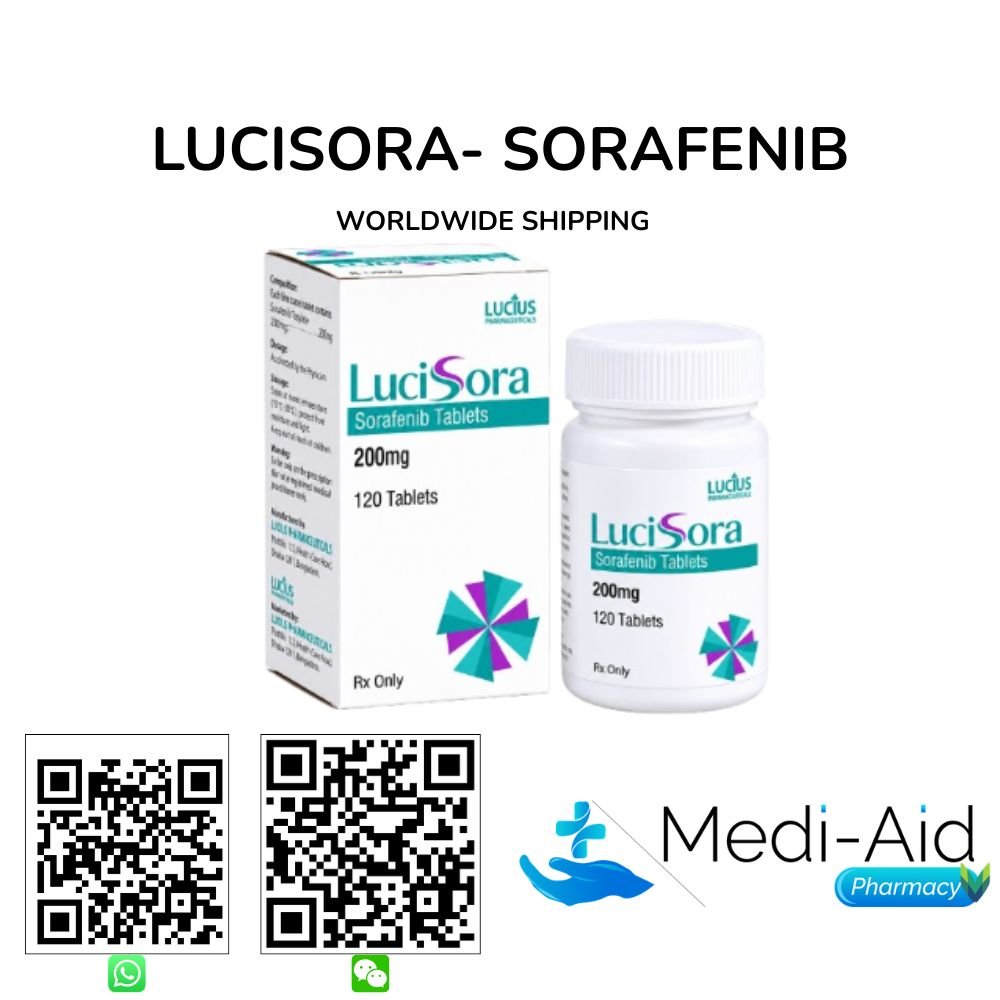
LuciSora 200 MG (Sorafenib) is an oral, multi-kinase inhibitor (MKI) film-coated tablet available in a 200 mg strength, supplied in a pack of 120 tablets per pot, manufactured by Lucius Pharmaceuticals (Lao) Co., Ltd. of Laos. The active ingredient, sorafenib, simultaneously inhibits RAF kinase family members (CRAF, BRAF, and mutant BRAF V600E), vascular endothelial growth factor receptors (VEGFR2, VEGFR3), platelet-derived growth factor receptor beta (PDGFR-β), rearranged during transfection (RET) kinase, FMS-like tyrosine kinase 3 (FLT3), and stem cell factor receptor (KIT) a mechanistically differentiated dual-pathway profile that suppresses both pathogenic tumour angiogenesis via VEGFR/PDGFR inhibition and direct tumour cell proliferation via RAF/MEK/ERK pathway blockade.
The reference-label starting dose of sorafenib is 400 mg twice daily (BID), achieved with 2 × LuciSora 200 MG tablets in the morning and 2 × LuciSora 200 MG tablets in the evening, totalling 4 tablets (800 mg) per day. In the pivotal Phase III SHARP trial, sorafenib 400 mg BID extended median overall survival (OS) to 10.7 months versus 7.9 months with placebo (HR 0.69; 95% CI 0.55–0.87; P<0.001) in patients with unresectable hepatocellular carcinoma (HCC), establishing sorafenib as a global standard of care for first-line HCC.
In the Phase III DECISION trial in radioiodine-refractory differentiated thyroid cancer (RAI-refractory DTC), sorafenib 400 mg BID delivered a median progression-free survival (PFS) of 10.8 months versus 5.8 months with placebo (HR 0.587; P<0.0001). Searching for LuciSora 200 MG Sorafenib? Mediaid Pharmacy stocks this product within its comprehensive oncology medicines portfolio and ships worldwide.
Basic Product Information of LuciSora 200 MG (Sorafenib)
| Brand Name | LuciSora 200 MG (Sorafenib) |
| Product Name | LuciSora |
| Generic Name | Sorafenib |
| Drug Class | Multi-Kinase Inhibitor (MKI); RAF/VEGFR/PDGFR-β/RET/FLT3/KIT Kinase Inhibitor; Antiangiogenic and Anti-Proliferative Targeted Oncology Agent |
| Formulation | Film-Coated Tablet |
| Available Strength | 200 mg per tablet |
| Available Pack Size | 120 Tablets per pot (30-day supply at the reference-label starting dose of 4 tablets/day) |
| Primary Indications | Unresectable Hepatocellular Carcinoma (HCC, first-line); Advanced Renal Cell Carcinoma (RCC, after prior systemic therapy); Radioiodine-Refractory Differentiated Thyroid Cancer (RAI-Refractory DTC) |
| Reference-Label Starting Dose | 400 mg twice daily (BID) = 2 × LuciSora 200 MG tablets in the morning + 2 × LuciSora 200 MG tablets in the evening (800 mg total per day); taken without food or with a low-fat meal |
| Manufacturer / Brand | Lucius Pharmaceuticals (Lao) Co., Ltd., Laos |
| Country of Origin | Laos |
| Categories | Kidney Cancer Medicines, Liver Cancer Medicines, Oncology Medicines, Thyroid Cancer Medicines |
| Storage Conditions | Store below 25°C in a dry place, protected from light and moisture. Keep out of the reach of children. |
| Global Supplier | Mediaid Pharmacy Worldwide Shipping Available |
How LuciSora 200 MG (Sorafenib) Works: Dual-Axis RAF Kinase Inhibition and Anti-Angiogenic VEGFR/PDGFR Blockade
Sorafenib, the active ingredient in LuciSora 200 MG, is an orally bioavailable, multi-kinase inhibitor (MKI) belonging to the bis-aryl urea chemical class. Sorafenib is mechanistically differentiated from other approved anti-angiogenic agents by its simultaneous inhibition of two distinct oncogenic axes: (1) the RAF/MEK/ERK intracellular proliferative signalling pathway via potent CRAF, BRAF wild-type, and mutant BRAF V600E kinase inhibition, and (2) the tumour angiogenesis axis via inhibition of VEGFR2, VEGFR3, PDGFR-β, RET, FLT3, and KIT. A multi-kinase inhibitor refers to a small-molecule drug that competitively occupies the ATP-binding domains of multiple kinase enzymes simultaneously, thereby preventing autophosphorylation and downstream propagation of pro-tumour signalling cascades.
Sorafenib achieves selective inhibitory activity across its target kinase panel, with reported IC₅₀ values of 6 nM (CRAF), 22 nM (BRAF), 90 nM (VEGFR2), 20 nM (VEGFR3), 57 nM (PDGFR-β), 3 nM (FLT3), 47 nM (RET), and 68 nM (KIT) confirming potent, broad-spectrum multi-receptor suppression that sustains both antiproliferative and antiangiogenic effects across all approved solid tumour indications. Each LuciSora 200 MG film-coated tablet contains sorafenib tosylate equivalent to 200 mg of sorafenib free base, with the standard reference-label dose of 400 mg BID delivered by taking 2 tablets in the morning and 2 tablets in the evening.
The oncological primacy of sorafenib’s concurrent RAF kinase and VEGFR/PDGFR inhibition lies in its mechanistic coverage of two independently oncogenic signalling axes simultaneously. The RAF/MEK/ERK pathway activated by BRAF/CRAF mutations or upstream RAS pathway dysregulation drives direct tumour cell proliferation, survival, and resistance to apoptosis in hepatocellular carcinoma, renal cell carcinoma, and thyroid cancer. By blocking RAF kinase at the level of CRAF and BRAF, sorafenib interrupts tumour cell-autonomous proliferative drive at a mechanistic level unavailable to pure anti-angiogenic agents such as lenvatinib or sunitinib.
Concurrently, VEGFR2 and VEGFR3 inhibition suppresses pathological tumour neo-angiogenesis the recruitment of new blood vessels required for tumour growth and metastatic spread while PDGFR-β inhibition disrupts pericyte-mediated vascular stabilisation, further destabilising the established tumour vasculature. In hepatocellular carcinoma (HCC), sorafenib’s dual mechanism is clinically decisive: HCC tumours are characteristically hypervascularised and dependent on VEGF-driven angiogenesis, while RAF pathway activation drives hepatocyte proliferative survival signalling. Oncologists managing patients with liver cancer can review the full range of liver cancer medicines at Mediaid Pharmacy, including LuciSora 200 MG Sorafenib, for first-line HCC therapy planning.
In the pivotal Phase III SHARP trial of unresectable hepatocellular carcinoma 602 patients across multiple centres sorafenib 400 mg BID (achievable as 4 × LuciSora 200 MG tablets per day) extended median overall survival to 10.7 months versus 7.9 months with placebo (HR 0.69; 95% CI 0.55–0.87; P<0.001) and significantly prolonged time to progression (TTP) to 5.5 months versus 2.8 months (HR 0.58; P<0.001). In the Phase III DECISION trial for radioiodine-refractory differentiated thyroid cancer 417 patients sorafenib 400 mg BID delivered a median PFS of 10.8 months versus 5.8 months with placebo (HR 0.587; 95% CI 0.454–0.758; P<0.0001) with an objective response rate (ORR) of 12.2% versus 0.5%. In the Phase III TARGET trial of advanced renal cell carcinoma 903 patients sorafenib 400 mg BID significantly improved PFS to 5.5 months versus 2.8 months (HR 0.44; P<0.01) compared to placebo after prior systemic therapy. The sorafenib dose for each patient and indication is determined and adjusted by the treating oncologist; LuciSora 200 MG tablets must be prescribed and taken under the supervision of a qualified oncology specialist.
Approved Indications of Sorafenib LuciSora 200 MG Reference Label
Sorafenib is approved in numerous countries across three primary oncology indications in adult patients. The 200 mg film-coated tablet formulation of LuciSora, with its 120-tablet pack size, supports all three indications at the reference-label 400 mg BID starting dose and all protocol dose reduction steps. Prescribers must confirm the exact locally approved indications on the sorafenib product label before initiating therapy, as specific label language varies by regulatory jurisdiction.
|
Unresectable Hepatocellular Carcinoma (HCC) First-Line Monotherapy Sorafenib is indicated as first-line monotherapy for adult patients with unresectable hepatocellular carcinoma. Reference-label starting dose: 400 mg twice daily (BID) = 4 × LuciSora 200 MG tablets per day (2 in the morning, 2 in the evening). The SHARP Phase III trial confirmed median OS of 10.7 vs 7.9 months (HR 0.69; P<0.001) and median TTP of 5.5 vs 2.8 months versus placebo. Oncologists can review the full range of liver cancer targeted therapy medicines at Mediaid Pharmacy alongside LuciSora for comprehensive HCC programme planning. |
Advanced Renal Cell Carcinoma (RCC) After Prior Systemic Therapy Sorafenib is indicated for adult patients with advanced renal cell carcinoma who have failed prior interferon-alfa– or interleukin-2–based therapy. Reference-label starting dose: 400 mg twice daily (BID) = 4 × LuciSora 200 MG tablets per day. TARGET Phase III data: median PFS 5.5 vs 2.8 months (HR 0.44; P<0.01). The complete selection of kidney cancer medicines at Mediaid Pharmacy supports comprehensive RCC programme planning including sorafenib-based regimens. |
Radioiodine-Refractory Differentiated Thyroid Cancer (RAI-Refractory DTC) Monotherapy Sorafenib is indicated as monotherapy for adult patients with locally advanced or metastatic progressive RAI-refractory differentiated thyroid cancer. Reference-label starting dose: 400 mg twice daily (BID) = 4 × LuciSora 200 MG tablets per day. DECISION Phase III data: median PFS 10.8 vs 5.8 months (HR 0.587; P<0.0001); ORR 12.2% vs 0.5%. Oncologists can review thyroid cancer kinase inhibitor medicines at Mediaid Pharmacy for RAI-refractory DTC treatment planning. |
Sorafenib Dose Modification Framework: How LuciSora 200 MG Tablets Cover Every Reference-Label Dose Level
The reference label for sorafenib mandates stepwise dose reductions to manage treatment-emergent adverse events including hand-foot skin reaction (HFSR/PPES), hypertension, diarrhoea, and hepatotoxicity across all approved indications. The LuciSora 200 MG film-coated tablet enables complete reference-label dose coverage from the standard 400 mg BID starting dose through all protocol reduction steps, using 2 tablets per dose as the fundamental unit. The table below maps each reference-label dose level to the precise LuciSora 200 MG tablet count required. All dose modifications must be directed and supervised by the treating oncologist; never alter the dose without an explicit clinical instruction.
| Indication & Regimen | Dose Level | Daily Dose | LuciSora 200 MG Tablet Count |
| Unresectable HCC First-Line Monotherapy | Starting Dose | 400 mg BID (800 mg/day) | 2 tablets in the morning + 2 tablets in the evening = 4 tablets/day |
| Reduction 1 | 400 mg once daily (400 mg/day) | 2 tablets once daily | |
| Reduction 2 | 400 mg every other day | 2 tablets every other day (per oncologist direction) | |
| Advanced RCC After Prior Systemic Therapy | Starting Dose | 400 mg BID (800 mg/day) | 2 tablets in the morning + 2 tablets in the evening = 4 tablets/day |
| Reduction 1 | 400 mg once daily (400 mg/day) | 2 tablets once daily | |
| Reduction 2 | 400 mg every other day | 2 tablets every other day (per oncologist direction) | |
| RAI-Refractory DTC Monotherapy | Starting Dose | 400 mg BID (800 mg/day) | 2 tablets in the morning + 2 tablets in the evening = 4 tablets/day |
| Reduction 1 | 400 mg once daily (400 mg/day) | 2 tablets once daily | |
| Reduction 2 | 400 mg every other day | 2 tablets every other day (per oncologist direction) |
Key Clinical Benefits of LuciSora 200 MG (Sorafenib)
|
SHARP Phase III: First-Line HCC Survival Advantage 10.7-Month Median OS and 31% Reduction in Mortality Risk The SHARP Phase III trial established sorafenib 400 mg BID as the reference standard for first-line unresectable HCC, confirming a 31% reduction in the risk of death versus placebo (median OS 10.7 vs 7.9 months; HR 0.69; P<0.001) and significant superiority in time to progression (5.5 vs 2.8 months; HR 0.58; P<0.001). LuciSora 200 MG delivers the full 400 mg BID starting dose with 4 tablets daily 2 in the morning and 2 in the evening from a convenient 120-tablet pot providing a complete 30-day supply at the reference starting dose. |
DECISION Phase III: RAI-Refractory DTC PFS Benefit 10.8 Months vs 5.8 Months and 41% Risk Reduction The DECISION Phase III trial confirmed that sorafenib 400 mg BID extended median PFS to 10.8 months versus 5.8 months with placebo in RAI-refractory differentiated thyroid cancer (HR 0.587; 95% CI 0.454–0.758; P<0.0001), representing a 41% reduction in the risk of progression or death, with an ORR of 12.2% versus 0.5%. Sorafenib is the only multi-kinase inhibitor to have demonstrated dual Phase III clinical trial efficacy across both HCC and DTC indications at the same 400 mg BID reference dose achievable with LuciSora 200 MG without strength adjustment. |
Unique RAF Kinase Inhibition Mechanistically Distinguished from VEGFR-Only Targeted Agents Across All Three Indications Sorafenib’s inhibition of CRAF and BRAF kinases at IC₅₀ values of 6 nM and 22 nM respectively delivers direct anti-proliferative tumour cell activity via RAF/MEK/ERK pathway blockade a mechanistic axis absent from VEGFR-selective agents. This dual RAF + VEGFR/PDGFR inhibitory profile means LuciSora 200 MG provides simultaneous anti-angiogenic and direct anti-tumour cell activity in a single oral tablet, supporting its efficacy across biologically distinct tumour types: hepatocellular carcinoma, renal cell carcinoma, and radioiodine-refractory thyroid cancer. |
Clinical Monitoring Requirements During LuciSora 200 MG (Sorafenib) Treatment
Blood pressure monitoring is a primary safety requirement throughout sorafenib therapy at all dose levels and across all approved indications. Hypertension occurs in approximately 17–28% of sorafenib-treated patients and is typically an early-onset adverse event, with most cases developing within the first 6 weeks of treatment. The reference label requires blood pressure measurement before initiating sorafenib and regular monitoring throughout treatment; anti-hypertensive therapy should be initiated or intensified promptly when hypertension develops. Grade 3 hypertension (systolic BP ≥160 mmHg or diastolic BP ≥100 mmHg, despite anti-hypertensive therapy) requires sorafenib dose interruption; Grade 4 hypertensive crisis requires permanent discontinuation. Using LuciSora 200 MG, the treating oncologist can implement precise dose reductions from 400 mg BID to 400 mg once daily using the standard 2-tablet dose unit as specified in the reference-label dose modification algorithm.
Hepatic function monitoring is mandatory at baseline and throughout treatment with sorafenib, with heightened monitoring frequency for HCC patients who have underlying liver impairment predisposing to drug-related hepatotoxicity. The reference label requires liver function test (LFT) assessment ALT, AST, alkaline phosphatase, and total bilirubin at baseline and periodically throughout treatment, with more frequent assessment when clinically indicated. Grade 3–4 hepatotoxicity or drug-induced liver injury (DILI) requires dose interruption or permanent discontinuation depending on severity and reversibility.
Hand-foot skin reaction (HFSR) and dermatological monitoring: sorafenib-associated HFSR (palmar-plantar erythrodysaesthesia syndrome, PPES) is the most distinctive dermatological toxicity of sorafenib, occurring in 21–30% of patients, and requires early dermatological assessment, preventive skin care, and dose modification as clinically required. Cardiac monitoring: sorafenib may prolong the QTc interval; ECG monitoring is recommended for patients with risk factors for cardiac electrophysiological disturbance, pre-existing cardiac disease, electrolyte abnormalities, or concurrent QTc-prolonging medications, and electrolyte correction (potassium, magnesium, calcium) must be maintained throughout therapy.
Thyroid function (TSH) must be assessed at baseline and periodically throughout sorafenib treatment, as sorafenib-associated hypothyroidism has been reported, particularly in patients receiving sorafenib for RAI-refractory DTC. Oncologists managing patients on sorafenib who also require supportive or combination agents can review the full selection of oncology medicines at Mediaid Pharmacy for comprehensive programme support.
Drug Interactions and Important Safety Information for LuciSora 200 MG (Sorafenib)
The most clinically significant pharmacokinetic drug interaction risk for sorafenib involves CYP3A4 inducers. Sorafenib is primarily metabolised by CYP3A4 (oxidative metabolism) and UGT1A9 (glucuronidation); strong CYP3A4 inducers including rifampicin, carbamazepine, phenytoin, phenobarbital, dexamethasone, and St. John’s Wort (Hypericum perforatum) significantly increase sorafenib metabolism and reduce systemic exposure, potentially compromising clinical efficacy. Rifampicin co-administration has been demonstrated to reduce sorafenib AUC by approximately 37%; avoidance of strong CYP3A4 inducers is preferred where clinically feasible. Strong CYP3A4 inhibitors (ketoconazole, itraconazole, ritonavir-boosted HIV medications, clarithromycin) may increase sorafenib systemic exposure and amplify toxicity risk; clinical vigilance is required when these combinations cannot be avoided.
UGT1A1 and UGT1A9 substrate interactions: sorafenib is a potent inhibitor of UGT1A1 and UGT1A9 glucuronidation enzymes. Co-administration of UGT1A1 substrates particularly irinotecan, whose active metabolite SN-38 is primarily glucuronidated by UGT1A1 can result in significant increases in SN-38 exposure, increasing the risk of irinotecan-associated toxicities (severe diarrhoea and neutropenia). Co-administration of sorafenib with docetaxel or doxorubicin has been shown to increase the AUC of these chemotherapy agents by approximately 36–80% via UGT1A1 inhibition; dose adjustment guidance for concurrent use must be followed per the treating oncologist’s protocol.
Warfarin anticoagulation: sorafenib increases both arterial thromboembolic event risk and haemorrhage risk; patients on warfarin require more frequent INR monitoring, as irregular INR elevations and bleeding events have been reported with concurrent sorafenib use. QT interval-prolonging agents: sorafenib may prolong the QTc interval; concurrent use of antiarrhythmics (amiodarone, sotalol), fluoroquinolone or macrolide antibiotics (moxifloxacin, azithromycin), antipsychotics, and other QTc-prolonging medications further amplifies this risk and requires electrolyte optimisation (potassium, magnesium, calcium) and ECG monitoring. Patients must disclose all concomitant medications including over-the-counter supplements and herbal preparations to their treating oncologist before and during LuciSora 200 MG therapy. Teams requiring concurrent oncology agents alongside sorafenib-based kidney cancer regimens at Mediaid Pharmacy can contact the team for multi-medicine sourcing support.
Side Effects and Precautions of LuciSora 200 MG (Sorafenib)
|
Common Side Effects Hand-foot skin reaction (HFSR) / Palmar-plantar erythrodysaesthesia syndrome (PPES) (approximately 21–30%; the most characteristic dermatological adverse event with sorafenib at all dose levels; presents as painful redness, blistering, and desquamation of the palms and soles; managed with preventive skin care, dose modification, and dermatological assessment) Diarrhoea (approximately 43–55%; typically mild to moderate; managed with anti-diarrhoeal agents, hydration, and dose modification as clinically required) Rash and skin toxicity (approximately 40%; includes maculopapular rash, desquamation, pruritus, and erythema; most common during the first 6 weeks of treatment) Fatigue and asthenia (approximately 37%; often multifactorial contributed to by anaemia, disease burden, reduced appetite, and direct drug-related effects) Alopecia (approximately 27%; commonly reported; not requiring dose modification but requiring patient counselling) Nausea (~23%) and anorexia / decreased appetite (~16–29%) Hypertension (approximately 17–28%; requires blood pressure monitoring before and throughout treatment; managed with anti-hypertensive therapy initiation or intensification) Weight loss (~15%); peripheral oedema (~13%); abdominal pain (~11%); constipation (~15%) Elevated serum lipase and amylase levels (frequently observed biochemically; clinical pancreatitis is uncommon but has been reported) |
Serious Warnings and Precautions Severe hypertension and hypertensive crisis: Grade 3 hypertension (≥160/100 mmHg despite anti-hypertensive therapy) requires sorafenib dose interruption using the reference-label dose modification algorithm. Grade 4 hypertensive crisis requires permanent discontinuation. Blood pressure must be optimised before initiating sorafenib and monitored regularly throughout treatment. Hepatotoxicity and drug-induced liver injury (DILI): Grade 3–4 liver enzyme elevations and cases of hepatic failure including fatal outcomes, particularly in HCC patients with underlying liver impairment have been reported with sorafenib. LFT monitoring at baseline and periodically throughout treatment is mandatory across all dose levels of LuciSora 200 MG. Arterial thromboembolic events (ATE): serious ATEs including myocardial infarction and cerebrovascular accident have been reported with sorafenib at all approved dose levels. Sorafenib must be permanently discontinued in patients who develop a Grade 3 or higher ATE during treatment. Haemorrhage: serious and potentially fatal haemorrhagic events including tumour-related haemorrhage in HCC have been reported with sorafenib. Grade 3–4 haemorrhage requires immediate treatment interruption; life-threatening haemorrhage requires permanent discontinuation. QT interval prolongation: sorafenib may prolong the QTc interval in a concentration-dependent manner. Electrolyte correction (potassium, magnesium, calcium) must be maintained throughout therapy; ECG monitoring is required for at-risk patients. Concurrent QTc-prolonging agents require heightened cardiovascular vigilance. Wound healing complications: sorafenib may impair wound healing. Sorafenib should be held for at least 10 days before elective surgery and resumed after adequate wound healing, as directed by the treating oncologist. Embryo-fetal toxicity: sorafenib can cause fetal harm based on its mechanism of action and confirmed animal reproductive toxicology data. Females of reproductive potential must use effective contraception during treatment and for at least 6 months after the final dose. Males with female partners of reproductive potential must use effective contraception during treatment and for at least 3 months after the last dose. Breastfeeding is not recommended during treatment or for at least 2 weeks after the final dose. |
Who Should Use LuciSora 200 MG (Sorafenib)?
LuciSora 200 MG (Sorafenib) is indicated for adult patients across three oncology settings: (1) unresectable hepatocellular carcinoma (HCC) as first-line monotherapy at 400 mg twice daily; (2) advanced renal cell carcinoma (RCC) at 400 mg twice daily in patients who have failed prior interferon-alfa– or interleukin-2–based systemic therapy; and (3) locally advanced or metastatic, progressive radioiodine-refractory differentiated thyroid cancer (RAI-refractory DTC) as monotherapy at 400 mg twice daily. The 200 mg film-coated tablet formulation with a 120-tablet pot is clinically appropriate for any patient requiring a sorafenib starting dose or any stepwise dose reduction across these three indications the dosing table in this content specifies the precise LuciSora 200 MG tablet counts for each dose level.
For RCC, sorafenib is specifically indicated after failure of prior systemic therapy; first-line RCC management requires evaluation by the treating oncologist against the current evidence base. For HCC, sorafenib’s indication applies to patients with preserved hepatic function; the SHARP trial enrolled patients with Child-Pugh A status, and patients with Child-Pugh B or C hepatic impairment require individualised benefit-risk assessment by the treating hepato-oncologist. Oncologists must assess baseline cardiovascular function, blood pressure, hepatic and renal function, dermatological status, electrolytes (potassium, magnesium, calcium), thyroid function (TSH), and all concomitant QTc-prolonging or CYP3A4-modifying medications before prescribing any sorafenib dose.
Patients who are pregnant, planning a pregnancy, or of reproductive potential without adequate contraception require mandatory pre-therapy counselling. Oncologists seeking comprehensive targeted agent support across liver, kidney, and thyroid cancer programmes can review the full range of thyroid cancer medicines at Mediaid Pharmacy, including LuciSora 200 MG Sorafenib for RAI-refractory DTC.
Global Supplier: Mediaid Pharmacy Worldwide Shipping for LuciSora 200 MG (Sorafenib)
Mediaid Pharmacy is a Dhaka-based supplier of oncology and specialty medicines with worldwide shipping capacity. LuciSora 200 MG (Sorafenib) manufactured by Lucius Pharmaceuticals (Lao) Co., Ltd. of Laos, formulated as film-coated tablets in 120-tablet pots is stocked and available for international supply. All orders are supported by pricing quotations, stock confirmation, and end-to-end delivery tracking. Hospitals, specialist oncology and hepatology clinics, cancer centres, distributors, and patients in countries where sorafenib is approved can contact the Mediaid Pharmacy team through WhatsApp, phone, or WeChat for all enquiries about oral sorafenib tablets for liver, kidney, and thyroid cancer including current stock availability, pricing, and international delivery timelines. Institutions and distributors sourcing multiple oncology medicines in a single consolidated shipment can request a combined quotation from the Mediaid Pharmacy team after browsing the full catalogue.
Why Choose LuciSora 200 MG (Sorafenib) from Mediaid Pharmacy?
LuciSora 200 MG is manufactured by Lucius Pharmaceuticals (Lao) Co., Ltd. of Laos and delivers sorafenib the multi-kinase inhibitor whose 400 mg BID dose anchored the SHARP Phase III trial (31% reduction in mortality risk; median OS 10.7 vs 7.9 months; HR 0.69; P<0.001 in unresectable HCC), the DECISION Phase III trial (41% reduction in progression or death risk; median PFS 10.8 vs 5.8 months; HR 0.587; P<0.0001; ORR 12.2% in RAI-refractory DTC), and the TARGET Phase III trial (56% reduction in progression risk; median PFS 5.5 vs 2.8 months; HR 0.44; P<0.01 in advanced RCC after prior systemic therapy).
The defining procurement advantage of sourcing LuciSora 200 MG from Mediaid Pharmacy is complete reference-label dosing coverage from a single generic sorafenib supplier: the 120-tablet pot provides a 30-day supply at the full 400 mg BID starting dose (4 tablets per day), a 60-day supply at the first dose reduction level (400 mg once daily, 2 tablets per day), and adequate supply for the every-other-day reduction schedule covering the complete reference-label dose modification pathway without supplementary sourcing. Mediaid Pharmacy supplies LuciSora 200 MG in its 120-tablet pot format with worldwide shipping, specialist supply support, and documentation for customs clearance as required.
Every order is initiated with a prescription-based enquiry to maintain supply aligned with the treating oncologist’s clinical plan. For oncology programmes requiring a broader panel of targeted and supportive agents, the full Mediaid Pharmacy oncology medicines catalogue is available to browse, and the team can be contacted directly for consolidated multi-medicine quotations.
Frequently Asked Questions About LuciSora 200 MG (Sorafenib)
What is LuciSora 200 MG and what is its generic name?
LuciSora 200 MG is a branded generic sorafenib film-coated tablet manufactured by Lucius Pharmaceuticals (Lao) Co., Ltd. of Laos. The generic name of LuciSora 200 MG is sorafenib the same active ingredient as the originator medicine Nexavar (sorafenib tosylate), originally developed by Bayer AG and approved by the FDA, EMA, and other major regulatory agencies for unresectable hepatocellular carcinoma (HCC), advanced renal cell carcinoma (RCC), and radioiodine-refractory differentiated thyroid cancer (RAI-refractory DTC). Each LuciSora 200 MG film-coated tablet contains sorafenib equivalent to 200 mg of sorafenib free base. The 120-tablet pot of LuciSora 200 MG provides a complete 30-day supply at the reference-label starting dose of 400 mg BID (4 tablets per day), making LuciSora 200 MG a clinically aligned, cost-accessible generic sorafenib option for oncology programmes treating HCC, RCC, and RAI-refractory DTC patients worldwide.
How should LuciSora 200 MG (Sorafenib) tablets be taken?
LuciSora 200 MG (Sorafenib) tablets are taken orally at the dose and schedule prescribed by the treating oncologist. The reference-label starting dose of sorafenib is 400 mg twice daily (BID) 2 LuciSora 200 MG tablets in the morning and 2 LuciSora 200 MG tablets in the evening, approximately 12 hours apart, totalling 4 tablets (800 mg) per day. Sorafenib should be taken without food or with a low-fat or moderate-fat meal; administration with a high-fat meal has been shown to reduce sorafenib bioavailability by approximately 29% compared to the fasted state, so high-fat meals should be avoided at the time of dosing. Tablets should be swallowed whole with a glass of water and must not be crushed, chewed, or split. If a dose is missed and the next scheduled dose is due within a few hours, the missed dose should be skipped; patients must not double the next dose to compensate for a missed dose. Any concerns about administration should be reported to the treating oncologist immediately.
What are the most common side effects of LuciSora 200 MG (Sorafenib)?
The most common side effects of sorafenib across all approved indications and dose levels include hand-foot skin reaction (HFSR/PPES; 21–30%, the most characteristic sorafenib-specific toxicity), diarrhoea (43–55%), rash and skin toxicity (approximately 40%), fatigue (approximately 37%), alopecia (approximately 27%), nausea (approximately 23%), hypertension (17–28%), decreased appetite and weight loss (approximately 16–29%), and abdominal pain (approximately 11%). Hand-foot skin reaction is a distinctive sorafenib-associated toxicity requiring early preventive skin care (emollients, avoidance of pressure on affected areas), and prompt dose modification when Grade 2 or higher toxicity develops. Adverse event frequency is generally related to sorafenib systemic exposure, which is why the reference-label dose modification algorithm permits stepwise reductions from 400 mg BID to 400 mg once daily and then to 400 mg every other day using LuciSora 200 MG tablets. Serious adverse events including severe hypertension, hepatic failure, arterial thromboembolic events, haemorrhage, and QT prolongation require immediate oncologist assessment and may necessitate dose interruption or permanent discontinuation. Consult your prescribing oncologist regarding your individual risk profile before and during treatment.
What is the evidence base for sorafenib in hepatocellular carcinoma (HCC)?
The pivotal evidence for sorafenib in hepatocellular carcinoma is derived from the Phase III SHARP trial (Sorafenib HCC Assessment Randomised Protocol), which enrolled 602 patients with unresectable HCC (Child-Pugh A, ECOG performance status 0–2, no prior systemic therapy) across Europe, North America, Australia, and New Zealand. Sorafenib 400 mg BID significantly extended median overall survival compared to placebo (10.7 months vs 7.9 months; HR 0.69; 95% CI 0.55–0.87; P<0.001) and significantly prolonged time to radiological progression (5.5 months vs 2.8 months; HR 0.58; P<0.001). Disease control rate was 43% with sorafenib versus 32% with placebo. The SHARP trial established sorafenib as the first systemic agent to demonstrate a significant survival benefit in unresectable HCC, defining the reference standard that subsequent agents including lenvatinib in the REFLECT trial are measured against. In the Asia-Pacific region, the complementary Phase III trial confirmed a consistent OS benefit (HR 0.68; P=0.0138) in an HBV-predominant patient population. LuciSora 200 MG delivers sorafenib 400 mg BID at the exact SHARP trial reference dose, with 4 tablets daily from a 120-tablet pot providing a clinically aligned 30-day supply.
Is LuciSora 200 MG (Sorafenib) safe during pregnancy or while breastfeeding?
No. Sorafenib including in the LuciSora 200 MG film-coated tablet formulation can cause fetal harm based on its mechanism of action and confirmed animal reproductive toxicology data, which demonstrated dose-dependent embryotoxicity, fetotoxicity, and teratogenicity at exposures within or below the human therapeutic range. Females of reproductive potential must use effective contraception during treatment with LuciSora 200 MG and for at least 6 months after the final dose; sorafenib may reduce the efficacy of hormonal contraceptives, so non-hormonal methods are preferred. Males with female partners of reproductive potential must use effective contraception during treatment and for at least 3 months after the last dose. Breastfeeding is not recommended during treatment and for at least 2 weeks after the final dose, as it has not been established whether sorafenib or its metabolites are excreted in human breast milk. Patients who are pregnant, planning a pregnancy, or breastfeeding must discuss their individual circumstances with their treating oncologist before initiating sorafenib therapy.
How is hand-foot skin reaction (HFSR) managed during LuciSora 200 MG (Sorafenib) treatment?
Hand-foot skin reaction (HFSR) also termed palmar-plantar erythrodysaesthesia syndrome (PPES) is the most distinctive and clinically important dermatological toxicity of sorafenib, occurring in approximately 21–30% of patients and typically developing within the first 6 weeks of treatment. HFSR is graded using the NCI-CTCAE scale: Grade 1 (minimal skin changes, no pain) requires no dose modification but warrants early preventive measures including emollient creams, urea-based moisturisers, avoidance of pressure and friction on palms and soles, and protective footwear. Grade 2 HFSR (painful skin changes, limiting instrumental activities of daily living) generally requires sorafenib dose reduction from 400 mg BID to 400 mg once daily using 2 × LuciSora 200 MG tablets once daily, in addition to intensive topical therapy; dose interruption may be warranted depending on severity. Grade 3 HFSR (severe skin changes, limiting self-care activities) requires sorafenib dose interruption and dermatological assessment; reintroduction at a reduced dose level (400 mg once daily) is considered only after recovery to Grade 0–1 and after oncologist assessment of the benefit-risk balance. Patients should be counselled about HFSR prevention before initiating sorafenib including pre-treatment removal of calluses, avoidance of tight-fitting footwear, and prophylactic use of thick-soled footwear and must report any skin changes promptly to their treating oncologist.
Can I order LuciSora 200 MG (Sorafenib) online with worldwide shipping?
Yes. Mediaid Pharmacy supplies LuciSora 200 MG (Sorafenib) manufactured by Lucius Pharmaceuticals (Lao) Co., Ltd. of Laos, film-coated tablets, 120 tablets per pot to oncology centres, hospitals, distributors, and patients globally. Contact Mediaid Pharmacy via WhatsApp, phone, or WeChat at +8801773428128, or email info@mediaidpharmacy.com, for pricing on LuciSora 200 MG, current stock availability, and international delivery details for your country. Oncology teams sourcing LuciSora 200 MG Sorafenib alongside other targeted agents can browse the complete range of oncology medicines at Mediaid Pharmacy and request a consolidated multi-medicine quotation. All orders are supported by prescription verification, pricing documentation, and customs clearance support as required for international shipments.
Order LuciSora 200 MG (Sorafenib) with Worldwide Shipping
Phone / WhatsApp / WeChat: +8801773428128 | Email: info@mediaidpharmacy.com
Reviews
There are no reviews yet.