
Description
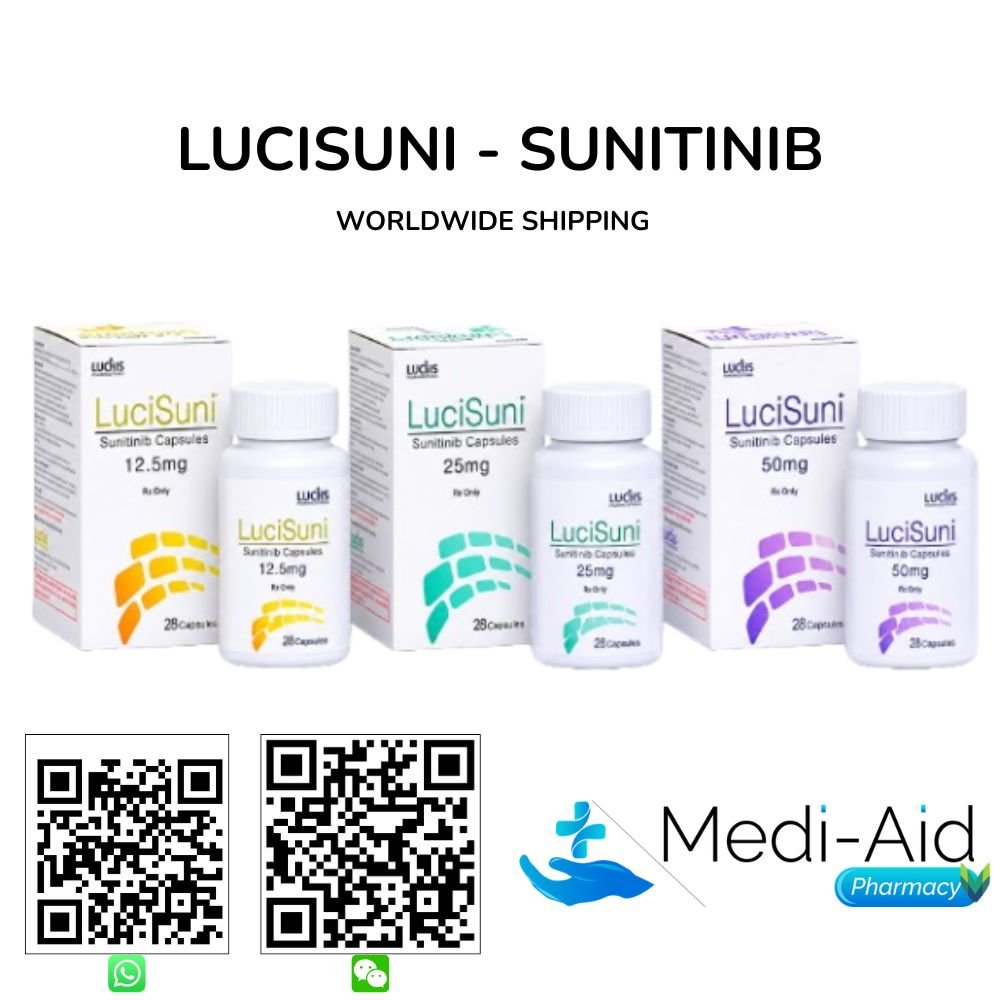
LuciSuni 12.5 MG / 25 MG / 50 MG (Sunitinib) is an oral multitargeted receptor tyrosine kinase inhibitor (TKI) that simultaneously inhibits VEGFR1, VEGFR2, VEGFR3, PDGFR-α, PDGFR-β, KIT, FLT3, RET, and CSF-1R a broad-spectrum antiangiogenic and antitumor oral agent whose simultaneous inhibition of multiple vascular endothelial growth factor receptors (VEGFRs) suppresses tumor-associated neovascularization and whose direct inhibition of KIT and PDGFR in tumor cells blocks constitutive kinase activation driving the growth and survival of gastrointestinal stromal tumor (GIST) and other receptor tyrosine kinase-dependent malignancies; sunitinib’s inhibition of VEGFR2 the principal mediator of VEGF-dependent tumor angiogenesis disrupts the vascular supply required for tumor growth and metastatic progression in advanced renal cell carcinoma (RCC) and other VEGF-dependent solid tumors; sunitinib’s inhibition of KIT directly targets the constitutively activated KIT kinase driving GIST tumor cell proliferation and survival, with meaningful activity in KIT exon 11 and exon 9 mutant GIST after imatinib failure; sunitinib’s inhibition of PDGFR-α and PDGFR-β and VEGFR provides additional mechanistic rationale for activity in pancreatic neuroendocrine tumors (pNET), where PDGFR and VEGFR pathways drive neuroendocrine tumor vascularity and stromal signaling; supplied as hard gelatin capsules in three strengths 12.5 mg, 25 mg, and 50 mg with 28 capsules per pot, and manufactured by Lucius Pharmaceuticals (Lao) Co., Ltd., Laos.
Sunitinib, the active pharmaceutical ingredient of LuciSuni, is a small-molecule multitargeted oral tyrosine kinase inhibitor originally developed by Pfizer Inc. and marketed globally as Sutent® with FDA initial approval granted on January 26, 2006, making sunitinib the first oncology agent in FDA regulatory history to receive simultaneous approval for two distinct cancer indications at the same time (advanced RCC and imatinib-resistant/-intolerant GIST); sunitinib subsequently received FDA approval for a third indication progressive, well-differentiated, unresectable locally advanced or metastatic pancreatic neuroendocrine tumors (pNET) on May 20, 2011, and for a fourth indication adjuvant treatment of adult patients at high risk of recurrent RCC following nephrectomy establishing the four-indication portfolio that defines sunitinib’s clinical utility across both solid tumor and neuroendocrine oncology: (1) unresectable and/or metastatic GIST in adults after failure of imatinib treatment due to resistance or intolerance; (2) advanced/metastatic renal cell carcinoma (mRCC) in adults first-line oral TKI standard of care; (3) adjuvant treatment of adults at high risk of recurrent RCC following nephrectomy; and (4) treatment of progressive, well-differentiated, unresectable locally advanced or metastatic pancreatic neuroendocrine tumors (pNET) in adults.
The recommended dosing of LuciSuni (Sunitinib) is 50 mg orally once daily for 4 consecutive weeks followed by a 2-week rest period (Schedule 4/2, 6-week cycle) for GIST and advanced/adjuvant RCC, and 37.5 mg orally once daily continuously without a scheduled rest period for pNET; LuciSuni is available in 12.5 mg, 25 mg, and 50 mg hard capsule strengths the three-strength range enables all approved doses and all dose reduction levels across all indications from a single product; sunitinib may be taken with or without food; dose modifications are made in 12.5 mg increments based on individual safety and tolerability; for GIST and RCC, the daily dose should not exceed 75 mg nor be decreased below 25 mg; avoid strong CYP3A4 inducers (rifampicin, carbamazepine, phenytoin, St. John’s Wort) as they significantly reduce sunitinib plasma concentrations if unavoidable, consider dose increase to a maximum of 87.5 mg daily for GIST/RCC or 62.5 mg daily for pNET with careful tolerability monitoring; avoid strong CYP3A4 inhibitors (ketoconazole, itraconazole, clarithromycin) as they significantly increase sunitinib plasma concentrations consider dose reduction to a minimum of 37.5 mg daily for GIST/RCC or 25 mg daily for pNET.
The pivotal Phase 3 GIST trial (randomized, double-blind, placebo-controlled; N=312; imatinib-resistant or -intolerant patients; sunitinib 50 mg Schedule 4/2) demonstrated that sunitinib statistically significantly improved the primary endpoint of median time to tumor progression to 27.3 weeks vs. 6.4 weeks for placebo (HR=0.33; 95% CI: 0.23, 0.47; p<0.0001), with a median PFS of 24.1 weeks vs. 6.0 weeks establishing sunitinib as the global standard of care for second-line KIT-mutated GIST after imatinib failure. For advanced RCC, the pivotal Phase 3 trial (randomized; N=750; treatment-naïve mRCC; sunitinib vs. interferon-alpha [IFN-α]) demonstrated median PFS of 11 months vs. 5 months with IFN-α (HR=0.42; 95% CI: 0.32, 0.54; p<0.000001) and ORR of 39% vs. 8% with IFN-α (p<0.001), establishing sunitinib as the first oral VEGFR-targeted agent to demonstrate superiority over cytokine therapy as first-line treatment for mRCC. For pNET (SUN 1111 Phase 3; randomized, double-blind, placebo-controlled; N=171), sunitinib improved median PFS to 10.2 months vs. 5.4 months for placebo (p=0.000146) with an ORR of 9.3% vs. 0% for placebo (p=0.0066).
Important: The boxed warning for sunitinib is hepatotoxicity, including fatal hepatic failure and death; monitor hepatic function before initiation of sunitinib, during each cycle of treatment, and as clinically indicated; withhold sunitinib for Grade 3 or 4 drug-related hepatic adverse events; permanently discontinue if patients do not recover from Grade 3 or 4 hepatic adverse events, have severe hepatic impairment (Child-Pugh C), or develop hepatic failure.
Additional serious risks include cardiovascular events (hypertension, cardiomyopathy, LVEF decline, myocardial ischemia/infarction some fatal), QT interval prolongation and Torsades de Pointes, hemorrhagic events (including tumor hemorrhage, some fatal), thrombotic microangiopathy, hypothyroidism, impaired wound healing, osteonecrosis of the jaw, pancreatitis, and embryo-fetal toxicity.
Monitor blood pressure regularly; treat hypertension with standard antihypertensive therapy; withhold sunitinib for severe hypertension not controlled with antihypertensives. Do not substitute LuciSuni (Sunitinib) for imatinib, avapritinib, regorafenib, ripretinib, or other KIT/PDGFR-targeted agents without confirmed indication-specific prescribing and clinical benefit-risk assessment by the treating oncologist.
Searching for LuciSuni 12.5 MG / 25 MG / 50 MG Sunitinib? Mediaid Pharmacy lists this product across its oncology medicines, GIST medicines, kidney cancer medicines, and Lucius Pharmaceuticals medicines portfolios and ships worldwide.
Basic Product Information of LuciSuni 12.5 MG / 25 MG / 50 MG (Sunitinib)
| Brand Name | LuciSuni manufactured and marketed by Lucius Pharmaceuticals (Lao) Co., Ltd., Laos; sunitinib is also marketed internationally as Sutent® by Pfizer Inc. (the original innovator company) in the United States (FDA initial dual approval January 26, 2006 for imatinib-resistant/-intolerant GIST and advanced/metastatic RCC; FDA pNET approval May 20, 2011; FDA adjuvant RCC approval 2017) and over 100 other global markets; LuciSuni by Lucius Pharmaceuticals (Lao) Co., Ltd. is a branded generic formulation of sunitinib hard gelatin capsules (12.5 mg, 25 mg, and 50 mg per capsule strengths; 28 capsules per pot), manufactured in Laos and supplied through authorized international pharmaceutical distribution channels, providing accessible oral multitargeted TKI therapy for imatinib-resistant/-intolerant GIST, advanced renal cell carcinoma, adjuvant RCC, and advanced pNET patients globally |
| Product Name | LuciSuni (branded sunitinib hard gelatin capsules, available in 12.5 mg, 25 mg, and 50 mg per capsule strengths; 28 capsules per pot; by Lucius Pharmaceuticals (Lao) Co., Ltd., Laos) |
| Generic Name | Sunitinib (INN; chemical name: N-(2-diethylaminoethyl)-5-[(Z)-(5-fluoro-2-oxo-1H-indol-3-ylidene)methyl]-2,4-dimethyl-1H-pyrrole-3-carboxamide; molecular formula: C22H27FN4O2; formulated as sunitinib malate salt; sunitinib is a highly potent, orally bioavailable, small-molecule multitargeted receptor tyrosine kinase (RTK) inhibitor that simultaneously inhibits multiple kinase receptors critical to tumor angiogenesis (VEGFR1, VEGFR2, VEGFR3), tumor cell proliferation (KIT, PDGFR-α, PDGFR-β), and immune regulation and hematopoiesis (FLT3, CSF-1R, RET); sunitinib’s simultaneous inhibition of VEGFR2 the principal signal transduction mediator of VEGF-induced endothelial cell proliferation, survival, and angiogenesis deprives solid tumors of their blood supply by disrupting tumor-associated angiogenesis; sunitinib’s direct inhibition of KIT targets the constitutively activated KIT kinase (commonly via KIT exon 11, exon 9, and other mutations) driving GIST tumor cell proliferation and survival, providing second-line antitumor activity in imatinib-resistant/-intolerant GIST; sunitinib’s inhibition of PDGFR and VEGFR provides mechanistic rationale for activity in pNET where both pathways contribute to tumor biology; sunitinib was developed by Pfizer Inc. and was approved by the FDA on January 26, 2006, becoming the first oncology agent in FDA regulatory history to receive simultaneous approval for two indications on the same day advanced RCC and imatinib-resistant/-intolerant GIST; sunitinib received additional FDA approvals for pNET (May 2011) and adjuvant RCC (2017); sunitinib is listed on the World Health Organization (WHO) Model List of Essential Medicines and is included in NCCN Clinical Practice Guidelines as a recommended therapy for mRCC (first-line), GIST (second-line after imatinib), adjuvant RCC, and advanced pNET) |
| Drug Class | Oral Multitargeted Receptor Tyrosine Kinase Inhibitor (TKI); VEGFR1/VEGFR2/VEGFR3 Inhibitor (Antiangiogenic Agent); KIT Inhibitor (Second-Line GIST after Imatinib Failure); PDGFR-α/PDGFR-β Inhibitor; FLT3, RET, and CSF-1R Inhibitor; Oral Antiangiogenic and Antitumor Small-Molecule Precision Oncology Agent; Second-Line Imatinib-Resistant/-Intolerant GIST Targeted Therapy; First-Line Metastatic RCC Oral Targeted Therapy; Adjuvant RCC Post-Nephrectomy Targeted Therapy; Anti-VEGF Oral Therapy for Progressive Advanced pNET; Multi-Kinase Inhibitor (MKI) |
| Formulation | Hard gelatin capsule for oral administration LuciSuni may be taken with or without food; swallow capsules whole without crushing or opening; take at approximately the same time each day; sunitinib is administered on the Schedule 4/2 dosing regimen for GIST and RCC (4 consecutive weeks of daily dosing followed by a 2-week rest period, completing a 6-week cycle) or continuously without a scheduled rest period for pNET (37.5 mg once daily); if a dose is missed, the patient should not take an additional dose on the same day take the usual prescribed dose on the following day; in the event of vomiting, do not take an additional dose resume at the next regularly scheduled time; store at room temperature as directed per product labeling; avoid concomitant use of strong CYP3A4 inducers (rifampicin, carbamazepine, phenobarbital, phenytoin, St. John’s Wort) which significantly reduce sunitinib plasma AUC if coadministration cannot be avoided, consider increasing sunitinib dose in 12.5 mg increments (up to 87.5 mg daily for GIST/RCC; up to 62.5 mg daily for pNET) with careful tolerability monitoring; avoid concomitant use of strong CYP3A4 inhibitors (ketoconazole, itraconazole, voriconazole, clarithromycin) which significantly increase sunitinib plasma AUC if coadministration cannot be avoided, consider reducing sunitinib dose (minimum 37.5 mg daily for GIST/RCC; minimum 25 mg daily for pNET) |
| Available Strengths | 12.5 mg, 25 mg, and 50 mg per hard gelatin capsule the three-strength range of LuciSuni enables all approved sunitinib doses and all dose reduction/escalation levels across all four approved indications from the same product range: Standard GIST and advanced RCC dose: 50 mg once daily (one 50 mg capsule/day) on Schedule 4/2; Standard adjuvant RCC dose: 50 mg once daily on Schedule 4/2 for 9 cycles; Standard pNET dose: 37.5 mg once daily continuously (one 25 mg capsule + one 12.5 mg capsule/day); First dose reduction from 50 mg 37.5 mg: one 25 mg + one 12.5 mg capsule/day; Second dose reduction 25 mg: one 25 mg capsule/day; Minimum dose (GIST/RCC): 25 mg once daily; Maximum standard dose (GIST/RCC): 75 mg once daily (one 50 mg + one 25 mg capsule/day); Maximum dose with CYP3A4 inducer (GIST/RCC): 87.5 mg daily (one 50 mg + one 25 mg + one 12.5 mg); Maximum pNET dose: 50 mg once daily (one 50 mg capsule/day); no body-weight-based dose adjustment is required sunitinib is administered as a fixed daily oral dose; special populations: no starting dose adjustment required for mild or moderate hepatic impairment (Child-Pugh A and B) or mild-to-severe renal impairment or end-stage renal disease on haemodialysis; sunitinib is not recommended in patients with severe hepatic impairment (Child-Pugh C); the safety and efficacy of sunitinib have not been established in pediatric patients |
| Available Pack Size | 28 capsules per pot at the standard GIST and advanced RCC dose of 50 mg once daily on Schedule 4/2 (28 days on, 14 days off per 42-day cycle), one pot of LuciSuni 50 MG (28 capsules) exactly covers the full 28-day active treatment period of one complete 6-week cycle; at the standard pNET dose of 37.5 mg once daily continuously (one 25 mg + one 12.5 mg capsule/day), a 28-day supply requires one pot of LuciSuni 25 MG (28 capsules) combined with one pot of LuciSuni 12.5 MG (28 capsules); at a dose reduction level of 25 mg daily, one pot of LuciSuni 25 MG provides a 28-day supply; hospital formulary procurement teams and oncology programs typically calculate monthly procurement on the basis of the patient’s indication, current active dose level, and strength combination required; for GIST/RCC patients on the standard 50 mg Schedule 4/2 dose, one pot of LuciSuni 50 MG per 6-week cycle is required; contact Mediaid Pharmacy for pack-size-specific stock availability confirmation and procurement guidance for LuciSuni 12.5 MG, 25 MG, and 50 MG |
| Dosing Schedule | Unresectable/Metastatic GIST (Second-Line; After Imatinib Failure) Standard Dosing: Sunitinib 50 mg orally once daily for 4 consecutive weeks (days 1–28 of each 6-week cycle), followed by 2 weeks off (days 29–42); administer until disease progression or unacceptable toxicity; KIT or PDGFR mutation testing is not required as a mandatory companion diagnostic prerequisite sunitinib is approved for imatinib-resistant/-intolerant GIST regardless of KIT mutation subtype; sunitinib demonstrates activity in KIT exon 9 and exon 11 mutant GIST and in PDGFRA mutations other than exon 18 D842V; sunitinib has minimal activity in PDGFRA D842V-mutant GIST, for which avapritinib is the standard of care.
Advanced/Metastatic Renal Cell Carcinoma (First-Line) Standard Dosing: Sunitinib 50 mg orally once daily for 4 consecutive weeks followed by 2 weeks off (Schedule 4/2); administer until disease progression or unacceptable toxicity; approved for treatment-naïve adult patients with advanced/metastatic clear-cell predominant RCC as a first-line option. Adjuvant RCC (High Risk of Recurrence After Nephrectomy) Standard Dosing: Sunitinib 50 mg orally once daily on Schedule 4/2 for 9 cycles (approximately 54 weeks); high-risk criteria for adjuvant therapy selection include T3/T4 disease, node-positive disease, and other factors defined per NCCN and ESMO guidelines. Progressive Advanced pNET (Unresectable, Locally Advanced or Metastatic) Standard Dosing: Sunitinib 37.5 mg orally once daily continuously without a scheduled rest period (achieved with LuciSuni as one 25 mg capsule + one 12.5 mg capsule daily); administer until disease progression or unacceptable toxicity; for pNET, dose modification in 12.5 mg steps may be applied based on individual safety and tolerability; maximum pNET dose administered in clinical trials: 50 mg daily; minimum pNET dose: 25 mg daily. Dose Reduction Schedule (GIST/RCC): From 50 mg → first reduction to 37.5 mg (one 25 mg + one 12.5 mg daily); second reduction to 25 mg (one 25 mg daily); maximum permitted dose 75 mg daily; minimum dose 25 mg daily. Dose Reduction Schedule (pNET): From 37.5 mg → first reduction to 25 mg; maximum pNET dose 50 mg daily; minimum pNET dose 25 mg daily. Dose Reduction Triggers: Grade 3 or 4 non-hematological toxicities not responding to supportive care; Grade 3 or 4 hematological toxicities; Grade 3 or 4 hepatic adverse events; hypertension not controlled with antihypertensive therapy; symptomatic heart failure or LVEF decline below lower limit of normal; QTc prolongation; Grade 3 hemorrhagic events; permanently discontinue for Grade 3 or 4 hepatic adverse events that do not recover, hepatic failure, or severe hepatic impairment. Mandatory Safety Monitoring: Liver function tests (LFTs) before initiation, during each treatment cycle, and as clinically indicated (boxed warning: hepatotoxicity); blood pressure monitoring before initiation and regularly throughout treatment; complete blood counts (CBC) at the beginning of each treatment cycle; baseline and periodic left ventricular ejection fraction (LVEF) assessment; thyroid function testing (TSH) before initiation and periodically; blood glucose monitoring in diabetic patients; pregnancy testing in females of reproductive potential before initiating sunitinib. |
| Primary Indication | INDICATION 1 UNRESECTABLE/METASTATIC GIST (SECOND-LINE; AFTER IMATINIB FAILURE):
Sunitinib Monotherapy Imatinib-Resistant/-Intolerant GIST (Phase 3; randomized, double-blind, placebo-controlled; N=312; sunitinib 50 mg Schedule 4/2 vs. placebo; primary endpoint: time to tumor progression [TTP] by blinded independent radiological review; treatment unblinded after interim analysis placebo patients crossed over to sunitinib upon progression): Median TTP: 27.3 weeks (sunitinib) vs. 6.4 weeks (placebo) (HR=0.33; 95% CI: 0.23, 0.47; p<0.0001); median PFS: 24.1 weeks vs. 6.0 weeks; FDA approval for imatinib-resistant/-intolerant GIST: January 26, 2006; sunitinib’s activity in GIST is concentrated in KIT-mutated tumors particularly KIT exon 9 mutations (which have lower imatinib sensitivity but higher sunitinib sensitivity) and selected exon 11 mutations with secondary resistance; sunitinib does not have clinically meaningful activity in PDGFRA D842V-mutant GIST, for which avapritinib is the designated standard of care at any line of therapy. INDICATION 2 ADVANCED/METASTATIC RENAL CELL CARCINOMA (FIRST-LINE ORAL TKI STANDARD OF CARE): Sunitinib vs. IFN-α First-Line mRCC (Phase 3; randomized; N=750; 375 sunitinib vs. 375 IFN-α; treatment-naïve; primary endpoint: PFS): Median PFS: 11 months (sunitinib) vs. 5 months (IFN-α) (HR=0.42; 95% CI: 0.32, 0.54; p<0.000001); ORR: 39% vs. 8% (p<0.001) in final analysis; FDA approval for first-line advanced RCC: January 26, 2006; sunitinib’s superiority over IFN-α established the VEGFR-targeted oral TKI class as the standard of care that redefined first-line mRCC treatment. INDICATION 3 ADJUVANT RCC (HIGH RISK OF RECURRENCE AFTER NEPHRECTOMY): S-TRAC (Phase 3; randomized, double-blind, placebo-controlled; N=615; high-risk RCC after nephrectomy; sunitinib 50 mg Schedule 4/2 for 9 cycles vs. placebo; primary endpoint: DFS): Median DFS: 6.8 years (sunitinib) vs. 5.6 years (placebo) (HR=0.761; 95% CI: 0.59, 0.98; p=0.03); FDA adjuvant RCC approval granted 2017. INDICATION 4 PROGRESSIVE ADVANCED PANCREATIC NEUROENDOCRINE TUMORS (pNET): SUN 1111 (Phase 3; randomized, double-blind, placebo-controlled; N=171; progressive well-differentiated advanced pNET; sunitinib 37.5 mg daily continuous vs. placebo; primary endpoint: PFS): Median PFS: 10.2 months (sunitinib) vs. 5.4 months (placebo) (p=0.000146); investigator-assessed median PFS: 11.4 months vs. 5.5 months (p<0.0001); ORR: 9.3% vs. 0% (p=0.0066); trial halted early by independent Data Monitoring Committee for patient safety given strong evidence of sunitinib benefit; FDA approval for pNET: May 20, 2011; sunitinib was the first anti-VEGF therapy approved by the FDA for the treatment of advanced pancreatic neuroendocrine tumors. |
| Manufacturer | Lucius Pharmaceuticals (Lao) Co., Ltd. Laos |
| Country of Origin | Laos (Lao People’s Democratic Republic) Lucius Pharmaceuticals (Lao) Co., Ltd. |
| Storage | Store at room temperature, 25°C (77°F); excursions permitted to 15°C–30°C (59°F–86°F); store in the original sealed pot; keep away from moisture, direct sunlight, and excessive heat; keep out of reach of children; standard ambient-temperature shipping is acceptable for LuciSuni (Sunitinib) hard gelatin capsules cold-chain shipping is not required; Mediaid Pharmacy ships LuciSuni 12.5 MG, 25 MG, and 50 MG internationally using validated ambient-temperature packaging methods appropriate for destination country transit times and regional climate conditions |
Global Supplier: Mediaid Pharmacy Worldwide Shipping for LuciSuni 12.5 MG / 25 MG / 50 MG (Sunitinib)
Mediaid Pharmacy is a Dhaka-based supplier of specialty oral precision oncology therapies, multitargeted kinase inhibitors, GIST medicines, kidney cancer medicines, and oral anti-cancer agents for rare and molecularly defined malignancies, with worldwide shipping to patients, oncology departments, imatinib-resistant GIST treatment programs, advanced RCC treatment centers, pNET treatment programs, adjuvant RCC patient programs, hospital pharmacies, oncology day units, patient access programs, and international distributors across all regions. LuciSuni 12.5 MG, 25 MG, and 50 MG (Sunitinib), manufactured by Lucius Pharmaceuticals (Lao) Co., Ltd., Laos, is supplied as hard gelatin capsules (28 capsules per pot), with pricing quotations, stock confirmation, full product documentation, and end-to-end international delivery tracking for every order.
LuciSuni (Sunitinib) is an orally administered, ambient-temperature-stable hard gelatin capsule formulation international shipping does not require cold-chain handling, enabling reliable worldwide supply to patients in diverse geographies. Imatinib-resistant/-intolerant GIST treatment programs procuring sunitinib for second-line KIT-targeted therapy; advanced RCC treatment centers sourcing sunitinib as first-line oral VEGFR-targeted therapy; adjuvant RCC programs; pNET treatment centers sourcing the first approved anti-VEGF therapy for advanced pancreatic neuroendocrine tumors; hospital formulary procurement departments sourcing LuciSuni as part of targeted oncology medicines portfolios; and individual patients and families sourcing sunitinib for advanced kidney cancer treatment and sunitinib for imatinib-resistant GIST can contact the Mediaid Pharmacy team through WhatsApp, phone, or email for LuciSuni stock availability, current pricing, shipping options, and international delivery timelines.
Why Choose LuciSuni 12.5 MG / 25 MG / 50 MG (Sunitinib) from Mediaid Pharmacy?
LuciSuni (Sunitinib) from Lucius Pharmaceuticals (Lao) Co., Ltd. delivers a clinically validated, broad-spectrum oral multitargeted TKI mechanism spanning antiangiogenic VEGFR inhibition and direct antitumor KIT/PDGFR inhibition across four FDA-approved oncology indications in three distinct cancer types supplied as convenient hard gelatin capsules in three strengths (12.5 mg, 25 mg, and 50 mg, 28 capsules per pot) with an established fixed once-daily oral dosing regimen, enabling outpatient administration without IV infusion requirements, cold-chain logistics, or institutional infusion suite access. Sunitinib is pharmacologically and clinically distinguished across the GIST, RCC, and pNET treatment landscapes by four evidence-based attributes.
First, sunitinib’s simultaneous multitarget kinase inhibition profile blocking VEGFR1/2/3, PDGFR-α/β, KIT, FLT3, RET, and CSF-1R in a single oral agent delivers dual antiangiogenic and direct antitumor activity across multiple cancer types that neither pure antiangiogenic agents nor single-targeted inhibitors can replicate. Tumor growth in GIST, RCC, and pNET depends on two complementary processes constitutive kinase activation in tumor cells (KIT in GIST; VEGFR and PDGFR in RCC and pNET) and tumor-associated angiogenesis mediated through VEGFR2; sunitinib simultaneously disrupts both processes by binding to the ATP-binding pocket of multiple RTKs with nanomolar potency; the resulting clinical profile meaningful activity in second-line KIT-mutated GIST, first-line mRCC, adjuvant RCC, and advanced pNET reflects the clinical consequence of this broad multi-targeted mechanism and explains why sunitinib remains a cornerstone of NCCN-recommended therapy across three cancer categories more than 15 years after its initial approval; its inclusion on the WHO Model List of Essential Medicines further confirms its foundational status in oncology worldwide.
Second, sunitinib’s Phase 3 mRCC trial results median PFS 11 months vs. 5 months for IFN-α (HR=0.42; p<0.000001); ORR 39% vs. 8% (p<0.001) represented the first demonstration that an oral VEGFR-targeted agent could more than double PFS and quintuple ORR versus cytokine-based therapy, establishing the oral TKI era in kidney cancer and setting the efficacy benchmark that subsequent agents were measured against. Prior to sunitinib’s 2006 approval, first-line mRCC treatment was limited to IFN-α and high-dose IL-2 with combined response rates of 5–20% and substantial toxicity; sunitinib’s superiority over IFN-α in a 750-patient Phase 3 trial, achieving 11 months median PFS more than double IFN-α’s 5 months transformed the standard of care for mRCC and established VEGFR-targeted oral TKI therapy as the foundation of the modern kidney cancer treatment paradigm, upon which subsequent checkpoint inhibitor and combination strategies were built; for patients outside the most resource-intensive healthcare systems, sunitinib monotherapy remains a guideline-endorsed first-line option supported by NCCN and ESMO, particularly in countries and programs where newer immunotherapy-based combinations are not accessible or reimbursed.
Third, sunitinib’s Phase 3 GIST efficacy TTP 27.3 weeks vs. 6.4 weeks (HR=0.33; p<0.0001); PFS 24.1 weeks vs. 6.0 weeks established the first evidence that a second oral TKI could meaningfully extend disease control in a cancer that had already progressed through the first-line standard of care, and demonstrated that KIT-driven GIST retains exploitable kinase dependency even after imatinib resistance development. The Phase 3 GIST trial’s primary endpoint of time to tumor progression with sunitinib providing over 4× longer median TTP than placebo in imatinib-resistant patients proved the concept of sequential targeted therapy in GIST and established the second-line treatment standard upon which the entire sequential GIST treatment algorithm (imatinib → sunitinib → regorafenib → ripretinib) is built; sunitinib’s particular activity in KIT exon 9-mutated GIST which has an inherently lower imatinib response rate and responds more favorably to sunitinib adds a molecularly targeted rationale for sunitinib selection in patients with known KIT exon 9 mutation at GIST diagnosis; this evidence established sunitinib as the global second-line standard for imatinib-resistant/-intolerant KIT-mutated GIST, a position it maintains across NCCN, ESMO, and ESMO-EURACAN GIST guidelines.
Fourth, the three-strength formulation of LuciSuni (12.5 mg, 25 mg, 50 mg hard capsules, 28 capsules per pot) provides complete dose management flexibility across all four approved indications and all dose reduction/escalation levels from a three-capsule product range, eliminating the need for separate products for dose adjustment and simplifying hospital formulary stocking, patient education, and international procurement logistics. The 50 mg capsule covers the standard GIST, RCC, and adjuvant RCC dose; the 25 mg + 12.5 mg combination achieves the standard 37.5 mg pNET dose and the first dose reduction level for GIST/RCC; the 25 mg capsule alone covers the second dose reduction level and the pNET minimum dose; the 12.5 mg capsule enables fine-dose titration, CYP3A4 interaction management, and pNET dosing precision; this systematic three-strength architecture means that programs managing patients across multiple sunitinib indications GIST, RCC, and pNET can manage every indication and dose level from the same LuciSuni product range; Mediaid Pharmacy maintains stock of LuciSuni 12.5 MG, 25 MG, and 50 MG with reliable supply continuity to prevent treatment gaps in ongoing patient regimens.
To source LuciSuni Sunitinib capsules by Lucius Pharmaceuticals and explore the complete portfolio of GIST-targeted medicines, kidney cancer medicines, and oncology drugs manufactured by Lucius Pharmaceuticals, visit the Mediaid Pharmacy GIST medicines portfolio, the kidney cancer medicines collection, and the oncology medicines collection, and contact the team for a personalized quotation and international shipping confirmation.
Frequently Asked Questions About LuciSuni 12.5 MG / 25 MG / 50 MG (Sunitinib)
What is LuciSuni (Sunitinib) used for?
LuciSuni (Sunitinib) is an oral multitargeted receptor tyrosine kinase inhibitor (TKI) with four FDA-approved oncology indications across three cancer types. Indication 1 Imatinib-Resistant/-Intolerant GIST: Sunitinib 50 mg once daily on Schedule 4/2 for adult patients with unresectable and/or metastatic GIST after failure of imatinib treatment due to resistance or intolerance; KIT mutation testing is not a mandatory companion diagnostic prerequisite for this indication; sunitinib demonstrates meaningful activity in KIT exon 11 and exon 9 mutant GIST and in PDGFRA mutations other than D842V; KIT exon 9-mutant GIST responds more favorably to sunitinib than to imatinib; pivotal Phase 3 trial: TTP 27.3 weeks vs. 6.4 weeks (HR=0.33; p<0.0001); FDA approval January 26, 2006. Indication 2 Advanced/Metastatic RCC (First-Line): Sunitinib 50 mg once daily on Schedule 4/2 for adult patients with advanced/metastatic renal cell carcinoma; pivotal Phase 3 trial vs. IFN-α: PFS 11 months vs. 5 months; ORR 39% vs. 8%; FDA approval January 26, 2006. Indication 3 Adjuvant RCC: Sunitinib 50 mg once daily on Schedule 4/2 for 9 cycles for adult patients at high risk of recurrent RCC following nephrectomy; S-TRAC trial: DFS 6.8 years vs. 5.6 years; FDA approval 2017. Indication 4 Progressive Advanced pNET: Sunitinib 37.5 mg once daily continuously for adult patients with progressive, well-differentiated, unresectable locally advanced or metastatic pNET; SUN 1111 trial: PFS 10.2 months vs. 5.4 months; FDA approval May 20, 2011. LuciSuni (Sunitinib) is available through Mediaid Pharmacy with worldwide shipping to patients and advanced kidney cancer treatment programs and imatinib-resistant GIST treatment programs globally.
What is the generic name of LuciSuni?
The generic name (International Nonproprietary Name, INN) of LuciSuni is sunitinib. Sunitinib is a highly potent, orally bioavailable, small-molecule multitargeted receptor tyrosine kinase inhibitor (TKI) that simultaneously inhibits VEGFR1, VEGFR2, VEGFR3, PDGFR-α, PDGFR-β, KIT, FLT3, RET, and CSF-1R combining antiangiogenic activity (through VEGFR inhibition) with direct antitumor activity (through KIT and PDGFR inhibition) in a single oral agent. Sunitinib’s inhibition of VEGFR2, the principal signal transduction mediator of VEGF-induced angiogenesis, deprives solid tumors of the new blood vessel formation required for growth and metastatic spread; its direct inhibition of KIT provides antitumor activity in KIT-mutated GIST; its inhibition of PDGFR and VEGFR provides mechanistic activity in pNET. Sunitinib is mechanistically distinct from imatinib (BCR-ABL/KIT single-target inhibitor), avapritinib (selective KIT D816V/PDGFRA D842V active-conformation inhibitor), regorafenib (oral multikinase inhibitor), and ripretinib (KIT/PDGFRA switch-control inhibitor). Sunitinib was developed by Pfizer Inc. and is marketed globally as Sutent®; LuciSuni is the branded generic formulation manufactured by Lucius Pharmaceuticals (Lao) Co., Ltd. in Laos. Mediaid Pharmacy distributes LuciSuni Sunitinib by Lucius Pharmaceuticals globally with worldwide shipping to patients, oncology programs, and hospital pharmacies.
What are the side effects of LuciSuni (Sunitinib)?
The most clinically significant adverse reactions of LuciSuni (Sunitinib) are hepatotoxicity (boxed warning, including fatal hepatic failure), cardiovascular events, hemorrhage, and embryo-fetal toxicity. Hepatotoxicity (Boxed Warning Most Serious): Sunitinib can cause hepatotoxicity, which may be severe and can result in liver failure and death; hepatic failure has been observed in clinical trials and postmarketing; monitor liver function tests (LFTs) before initiation, during each cycle, and as clinically indicated; withhold sunitinib for Grade 3 or 4 drug-related hepatic adverse events; permanently discontinue if patients do not recover, if severe hepatic impairment (Child-Pugh C) develops, or if hepatic failure occurs; do not initiate sunitinib in patients with severe hepatic impairment. Cardiovascular Adverse Reactions: Hypertension (all grades reported in up to 30–34% of patients; monitor blood pressure before initiation and regularly throughout treatment; treat with standard antihypertensive therapy; withhold sunitinib for severe hypertension not controlled with antihypertensives); sunitinib-associated cardiomyopathy and LVEF decline below the lower limit of normal; myocardial ischemia and myocardial infarction (some fatal); QT interval prolongation and Torsades de Pointes (avoid use with drugs known to prolong the QT interval). Most Common Adverse Reactions (≥20%; across GIST, RCC, and pNET clinical trials): Diarrhea, fatigue/asthenia, nausea, mucositis/stomatitis/oral pain, anorexia/decreased appetite, vomiting, neutropenia, hypertension, dyspepsia, abdominal pain, constipation, rash, hand-foot syndrome (palmar-plantar erythrodysaesthesia syndrome, HFSR/PPES), yellow skin discoloration (a characteristic sunitinib adverse effect due to its yellow pigment), hair depigmentation/color change, lacrimation increased, periorbital edema, and peripheral edema. Additional Notable Adverse Reactions: Hemorrhagic events (including tumor hemorrhage, epistaxis, and pulmonary hemorrhage some fatal); thrombotic microangiopathy (TMA) including thrombotic thrombocytopenic purpura (TTP); hypothyroidism (monitor TSH periodically occurs in a substantial proportion of patients with long-term use); pancreatitis (some fatal); osteonecrosis of the jaw (ONJ); impaired wound healing (withhold sunitinib for a minimum of 3 weeks prior to elective surgery; resume ≥2 weeks after surgery based on clinical judgment); severe cutaneous reactions including Stevens-Johnson syndrome (SJS) and toxic epidermal necrolysis (TEN) some fatal; anemia (monitor CBC at beginning of each treatment cycle). All patients initiating LuciSuni (Sunitinib) should have baseline hepatic function tests, blood pressure, CBC, LVEF assessment, and thyroid function tests documented before treatment begins, with treatment initiated under the supervision of a qualified oncologist experienced in managing multitargeted TKI toxicities.
How effective is LuciSuni (Sunitinib) for advanced kidney cancer (Renal Cell Carcinoma)?
Sunitinib demonstrated transformative first-line clinical activity in advanced renal cell carcinoma in the pivotal Phase 3 trial, achieving the first demonstration that an oral VEGFR-targeted agent could more than double progression-free survival and quintuple objective response rates compared with the prior cytokine-based standard of care, establishing sunitinib as the foundation of the modern kidney cancer treatment paradigm. Pivotal Phase 3 mRCC First-Line Trial (randomized; N=750; 375 sunitinib vs. 375 IFN-α; treatment-naïve advanced RCC; primary endpoint: PFS): Median PFS 11 months (sunitinib) vs. 5 months (IFN-α) (HR=0.42; 95% CI: 0.32, 0.54; p<0.000001); ORR 39% vs. 8% (p<0.001) in final analysis; FDA approval for first-line advanced RCC: January 26, 2006. Clinical Significance: Prior to sunitinib approval, first-line mRCC treatment was limited to cytokines (IFN-α, IL-2) with response rates of 5–20% and substantial toxicity; sunitinib’s doubling of median PFS from 5 months to 11 months, combined with a nearly fivefold increase in ORR (39% vs. 8%), represented the most significant improvement in first-line mRCC outcomes reported up to that point and established VEGFR-targeted TKI therapy as the foundation of the modern mRCC treatment landscape; for patients in settings where newer immunotherapy-based combinations are not accessible or reimbursed, sunitinib monotherapy remains a guideline-endorsed first-line option per NCCN and ESMO. Adjuvant RCC (S-TRAC Trial): Phase 3 randomized trial of sunitinib vs. placebo in 615 patients with high-risk RCC after nephrectomy; median DFS 6.8 years (sunitinib) vs. 5.6 years (placebo) (HR=0.761; p=0.03); FDA adjuvant RCC approval granted. LuciSuni 12.5 MG, 25 MG, and 50 MG (Sunitinib) is available through Mediaid Pharmacy; visit the kidney cancer medicines collection and oncology medicines collection for the complete kidney cancer and VEGFR-targeted therapy portfolio.
What is the difference between LuciSuni (Sunitinib) and other GIST/RCC therapies (Imatinib, Avapritinib, Regorafenib, Ripretinib)?
LuciSuni (Sunitinib), imatinib (Gleevec), avapritinib (Ayvakit/LuciAvap), regorafenib (Stivarga), and ripretinib (Qinlock) are all approved therapies for GIST but differ fundamentally in mechanism of action, mutation selectivity profile, approved patient populations, line of therapy, and clinical activity against specific GIST molecular subtypes making them non-interchangeable in molecularly selected patients. Mechanism: Sunitinib is a broad multitargeted TKI that simultaneously inhibits VEGFR1/2/3, KIT, PDGFR-α/β, FLT3, RET, and CSF-1R; imatinib inhibits BCR-ABL, KIT, PDGFR, and CSF-1R through DFG-out inactive conformation binding; avapritinib selectively inhibits KIT D816V and PDGFRA D842V/exon 18 mutations through binding the active DFG-in kinase conformation an entirely distinct mechanism enabling inhibition of activation-loop mutations that escape imatinib and sunitinib; regorafenib is an oral multikinase inhibitor of VEGFR1/2/3, KIT, PDGFR, RET, RAF, and other kinases; ripretinib is a KIT/PDGFRA switch-control inhibitor. Approved Indications and Line Positioning (GIST): Imatinib is first-line standard of care for KIT-mutated GIST and PDGFRA mutations other than D842V; sunitinib is second-line after imatinib failure (TTP 27.3 vs. 6.4 weeks; HR=0.33); regorafenib is third-line after imatinib and sunitinib failure; ripretinib is fourth-line or later; avapritinib is approved at any line for PDGFRA exon 18-mutant GIST (ORR 84–89%) and is not interchangeable with sunitinib in PDGFRA exon 18-mutant disease. Mutation Selectivity: Sunitinib has clinically meaningful activity in KIT exon 9-mutated GIST (more sensitive to sunitinib than to imatinib) and selected KIT exon 11 secondary resistance mutations; sunitinib does not have activity against PDGFRA D842V or KIT D816V mutations that require the active DFG-in conformation for inhibition avapritinib is required for those molecular subtypes. RCC Positioning: Sunitinib was the first oral VEGFR TKI approved for first-line mRCC; it remains used in patients who are not candidates for or have failed checkpoint inhibitor-based combinations, or as a first-line option in selected populations per NCCN/ESMO guidelines; none of the GIST-specific agents (avapritinib, regorafenib, ripretinib) are approved for RCC. Visit the Mediaid Pharmacy GIST medicines range and Lucius Pharmaceuticals medicines collection for the complete GIST and RCC targeted therapy portfolio.
Is LuciSuni (Sunitinib) safe during pregnancy or while breastfeeding?
LuciSuni (Sunitinib) can cause fetal harm based on its mechanism of action and nonclinical animal studies sunitinib should not be used during pregnancy. VEGFR and KIT/PDGFR kinase signaling plays essential roles in embryonic and fetal development including vasculogenesis, angiogenesis, and organogenesis; sunitinib’s inhibition of VEGFR2 and multiple other kinases critical to developmental processes is expected to disrupt critical developmental pathways; nonclinical animal reproductive and developmental toxicology studies demonstrated embryotoxicity, fetotoxicity, and teratogenicity with sunitinib, confirming its reproductive toxicity risk; no clinical data are available on sunitinib use in human pregnancy; based on its mechanism-of-action embryo-fetal toxicity risk, sunitinib must not be used during pregnancy. Contraception requirement: Females of reproductive potential should use effective contraception during sunitinib treatment and for at least 4 weeks after the last dose; males with female partners of reproductive potential should use effective contraception during treatment and for at least 7 weeks after the last dose; verify pregnancy status with a serum or urine pregnancy test before initiating LuciSuni in all females of reproductive potential. Breastfeeding: No data are available on the presence of sunitinib or its active metabolites in human breast milk, their effects on breastfed infants, or effects on milk production; because of the potential for serious adverse reactions from sunitinib in a breastfed infant, breastfeeding is not recommended during sunitinib treatment and for at least 4 weeks after the last dose. Fertility: Based on nonclinical data, sunitinib may impair female and male fertility; discuss fertility preservation options with the treating oncologist before initiating sunitinib therapy in patients of reproductive potential. All aspects of reproductive planning and contraceptive requirements should be discussed with the treating oncologist before starting LuciSuni therapy.
Can I order LuciSuni 12.5 MG / 25 MG / 50 MG (Sunitinib) online with worldwide shipping?
Yes. Mediaid Pharmacy supplies LuciSuni 12.5 MG, 25 MG, and 50 MG (Sunitinib), hard gelatin capsules, 28 capsules per pot, manufactured by Lucius Pharmaceuticals (Lao) Co., Ltd., Laos, to patients, imatinib-resistant GIST treatment programs, advanced RCC treatment centers, pNET treatment programs, adjuvant RCC patient programs, oncology departments, hospital pharmacies, oncology outpatient clinics, patient access programs, and healthcare providers globally. As an oral hard gelatin capsule formulation stored at room temperature, LuciSuni does not require cold-chain refrigerated shipping, allowing straightforward international logistics with standard secure pharmaceutical packaging appropriate for the destination country’s transit conditions and regulatory requirements. Contact Mediaid Pharmacy via WhatsApp, phone, or email at +8801773428128, or email info@mediaidpharmacy.com for pricing, current stock availability across all three strengths (12.5 mg, 25 mg, and 50 mg), international shipping options, and delivery details for your country. Prescription documentation is required for sunitinib dispensing in accordance with applicable regulatory requirements. For the complete portfolio of Lucius Pharmaceuticals medicines and oncology medicines available with worldwide shipping, visit the respective collection pages on the Mediaid Pharmacy website.
Order LuciSuni 12.5 MG / 25 MG / 50 MG (Sunitinib) with Worldwide Shipping
Phone / WhatsApp: +8801773428128 | Email: info@mediaidpharmacy.com
Reviews
There are no reviews yet.