
Description
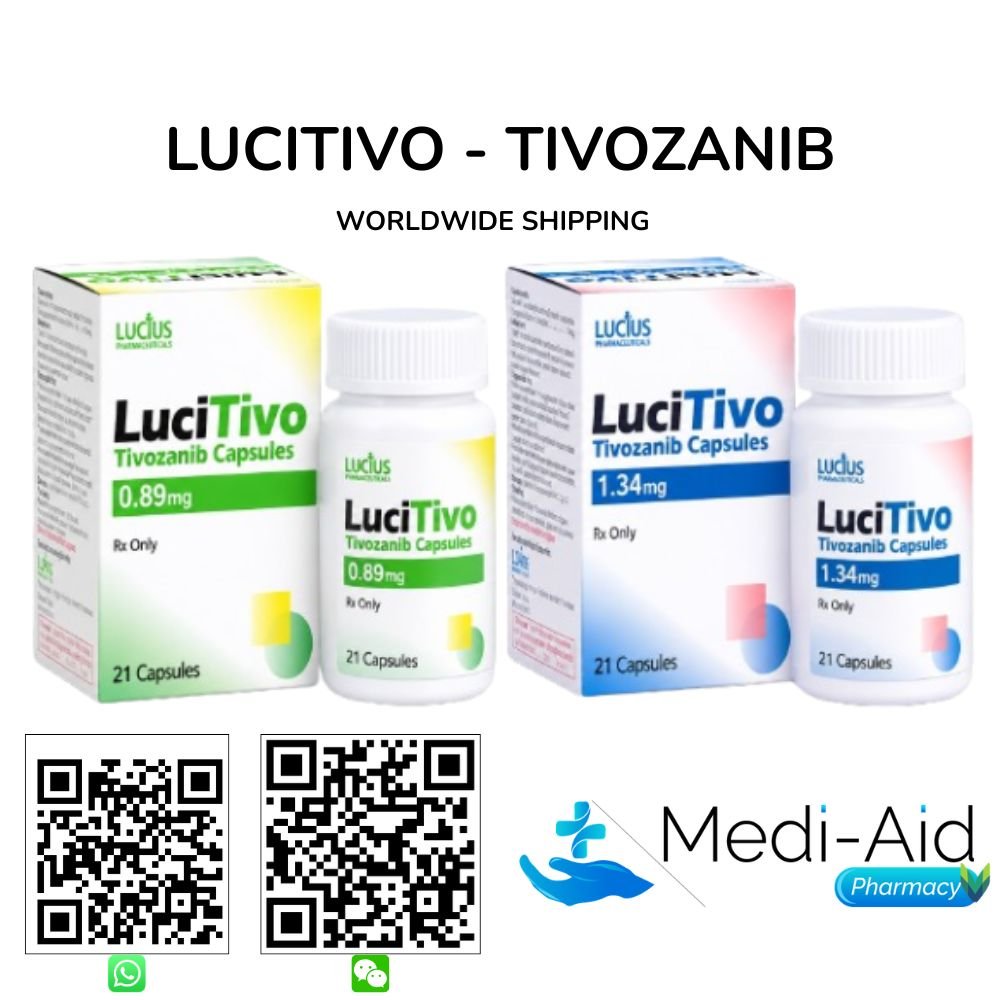
LuciTivo 0.89 MG & 1.34 MG (Tivozanib) are oral, highly selective vascular endothelial growth factor receptor (VEGFR) inhibitor hard capsules available in two complementary strengths 0.89 mg and 1.34 mg each supplied in a pack of 21 capsules per pot, manufactured by Lucius Pharmaceuticals (Lao) Co., Ltd. of Laos. The active ingredient, tivozanib, is the most potent and selective VEGFR inhibitor among approved renal cell carcinoma (RCC) agents: it simultaneously inhibits all three vascular endothelial growth factor receptors VEGFR1, VEGFR2, and VEGFR3 at sub-nanomolar concentrations (IC₅₀ values: VEGFR1 0.21 nM, VEGFR2 0.16 nM, VEGFR3 0.24 nM), delivering sustained, pan-VEGFR antiangiogenic suppression across the full spectrum of VEGF-driven tumour angiogenesis pathways.
Tivozanib’s high VEGFR selectivity it has minimal activity against off-target kinases at therapeutic concentrations translates into a mechanistically cleaner tolerability profile compared to less selective VEGFR inhibitors such as sorafenib or sunitinib, allowing the reference-label 1.34 mg starting dose to be maintained for longer before dose modification is required. The clinical significance of the dual 0.89 mg + 1.34 mg capsule range is precision dose titration within the standard 3 weeks on / 1 week off (21 days on, 7 days off) 28-day cycle: the two strengths enable oncologists to prescribe the reference starting dose of 1.34 mg once daily for 21 days and implement the protocol first dose reduction to 0.89 mg once daily for 21 days from a single generic source, with the 21-capsule pot sized precisely for one complete on-treatment period per cycle.
In the pivotal Phase III TIVO-3 trial, tivozanib 1.34 mg once daily demonstrated superior progression-free survival (PFS) versus sorafenib in heavily pre-treated advanced RCC, delivering a median PFS of 5.6 months versus 3.9 months (HR 0.73; 95% CI 0.56–0.94; P=0.016) with an objective response rate (ORR) of 18% versus 8% (P=0.02) establishing tivozanib as a standard-of-care option for relapsed or refractory advanced RCC after two or more prior systemic therapies.
Searching for LuciTivo 0.89 MG & 1.34 MG Tivozanib? Mediaid Pharmacy stocks both strengths within its comprehensive oncology medicines portfolio and ships worldwide.
Basic Product Information of LuciTivo 0.89 MG & 1.34 MG (Tivozanib)
| Brand Name | LuciTivo 0.89 MG & 1.34 MG (Tivozanib) |
| Product Name | LuciTivo |
| Generic Name | Tivozanib |
| Drug Class | Highly Selective Pan-VEGFR Kinase Inhibitor (VEGFR1, VEGFR2, VEGFR3); Antiangiogenic Targeted Oncology Agent; Vascular Endothelial Growth Factor Receptor Tyrosine Kinase Inhibitor (VEGFR-TKI) |
| Formulation | Hard Capsule |
| Available Strengths | 0.89 mg and 1.34 mg (two capsule strengths available; each in a separate pot) |
| Available Pack Size | 21 Capsules per pot (each strength in a separate pot; 21 capsules = one complete 21-day on-treatment period of a 28-day cycle) |
| Primary Indication | Advanced Renal Cell Carcinoma (RCC) relapsed or refractory after two or more prior systemic therapies (TIVO-3 basis); first-line advanced RCC in jurisdictions where EMA-based approval applies (TIVO-1 basis) |
| Dosing Schedule | 3 weeks on / 1 week off (28-day cycle): 1.34 mg once daily for Days 1–21, then 7 days off (Days 22–28); first dose reduction: 0.89 mg once daily for Days 1–21, then 7 days off |
| Dosing Advantage | Dual 0.89 mg + 1.34 mg capsule range covers the reference starting dose and the first protocol dose reduction from a single generic supplier; 21-capsule pot sized precisely for one complete on-treatment cycle period |
| Manufacturer / Brand | Lucius Pharmaceuticals (Lao) Co., Ltd., Laos |
| Country of Origin | Laos |
| Categories | Kidney Cancer Medicines, Oncology Medicines |
| Storage Conditions | Store below 25°C in a dry place, protected from light and moisture. Keep out of the reach of children. |
| Global Supplier | Mediaid Pharmacy Worldwide Shipping Available for Both Strengths |
How LuciTivo 0.89 MG & 1.34 MG (Tivozanib) Works: Sub-Nanomolar Pan-VEGFR Inhibition with Best-in-Class Receptor Selectivity
Tivozanib, the shared active ingredient in LuciTivo 0.89 MG and LuciTivo 1.34 MG, is a novel, orally bioavailable, highly selective pan-VEGFR kinase inhibitor belonging to the phenylurea chemical class. Tivozanib is mechanistically differentiated from all other approved VEGFR-TKI agents by its combination of sub-nanomolar inhibitory potency across all three VEGFR isoforms simultaneously and an exceptionally narrow off-target kinase inhibition profile. Tivozanib achieves IC₅₀ values of 0.21 nM (VEGFR1), 0.16 nM (VEGFR2), and 0.24 nM (VEGFR3) the most potent VEGFR1-3 inhibitory activity reported for any approved RCC agent compared to, for example, sunitinib’s IC₅₀ values of 1.5–28 nM for the same receptors and sorafenib’s 90 nM (VEGFR2) and 20 nM (VEGFR3).
A highly selective VEGFR kinase inhibitor refers to a small-molecule drug that competitively occupies the ATP-binding domains of VEGFR1, VEGFR2, and VEGFR3 with sub-nanomolar affinity, preventing ligand-induced receptor autophosphorylation and downstream propagation of pro-angiogenic VEGF signalling cascades, while having minimal inhibitory activity at off-target kinases such as KIT, FLT3, PDGFR-α, CSF1R, and RET at therapeutically relevant plasma concentrations. This selectivity profile means LuciTivo 0.89 MG and LuciTivo 1.34 MG deliver targeted antiangiogenic activity without the off-target kinase-mediated toxicities (myelosuppression from FLT3/CSF1R inhibition, hand-foot syndrome intensification from PDGFR/KIT inhibition, hypothyroidism from RET inhibition) that characterise less selective VEGFR-TKIs.
Tivozanib’s long plasma half-life of approximately 4.7 days supports once-daily dosing with consistent receptor occupancy throughout the 21-day on-treatment period of each 28-day cycle, without the peak-to-trough exposure fluctuations associated with shorter-half-life VEGFR inhibitors. Both LuciTivo capsule strengths 0.89 mg and 1.34 mg contain identical formulation compositions at their respective dose strengths, delivering the same pharmacokinetic profile per milligram, and the two pot sizes of 21 capsules each are engineered to cover precisely one complete 21-day on-treatment cycle period per strength.
The oncological primacy of tivozanib’s pan-VEGFR1-3 inhibition at sub-nanomolar potency lies in its mechanistic coverage of the complete VEGF angiogenic receptor family not simply VEGFR2, the primary angiogenic driver, but also VEGFR1 (the VEGF decoy receptor that modulates VEGFR2 signalling) and VEGFR3 (the primary lymphangiogenic receptor implicated in lymph node metastasis and vascular permeability regulation in advanced renal cell carcinoma). In clear cell renal cell carcinoma (ccRCC) the predominant RCC histology, accounting for approximately 75% of all advanced RCC cases constitutive activation of the VEGF signalling axis is the defining oncogenic driver: von Hippel-Lindau (VHL) tumour suppressor gene inactivation, present in approximately 80% of sporadic ccRCC tumours, leads to hypoxia-inducible factor (HIF) accumulation and massive upregulation of VEGF-A, VEGF-C, and their cognate VEGFR1-3 receptors.
By blocking all three VEGFR isoforms simultaneously at sub-nanomolar concentrations, tivozanib achieves complete VEGF-axis suppression including the VEGFR3-mediated lymphangiogenic escape pathway implicated in VEGFR2-selective therapy resistance that contributes to its superior PFS versus sorafenib in the TIVO-3 trial (5.6 vs 3.9 months; HR 0.73; P=0.016) despite patient selection favouring sorafenib-treated patients. Tivozanib’s high selectivity also preserves immune effector function more effectively than pan-kinase inhibitors that suppress FLT3 (a critical dendritic cell differentiation signal) and CSF1R (a macrophage polarisation signal), creating a pharmacological rationale for combination with immune checkpoint inhibitors such as nivolumab in the TiNivo programme. Oncologists building comprehensive kidney cancer programmes can review the full range of kidney cancer medicines at Mediaid Pharmacy, including LuciTivo 0.89 MG and 1.34 MG tivozanib hard capsules, for advanced RCC treatment planning.
In the pivotal Phase III TIVO-3 trial 350 patients with relapsed or refractory advanced RCC who had received at least two prior systemic therapies tivozanib 1.34 mg once daily (days 1–21 of a 28-day cycle, achievable with LuciTivo 1.34 MG capsules) delivered a median PFS of 5.6 months versus 3.9 months with sorafenib (HR 0.73; 95% CI 0.56–0.94; P=0.016) with significantly superior ORR (18% vs 8%; P=0.02). In the Phase III TIVO-1 trial 517 treatment-naive patients with advanced clear cell RCC tivozanib 1.34 mg once daily demonstrated significantly longer PFS compared to sorafenib (11.9 months vs 9.1 months; HR 0.797; P=0.042) with an ORR of 33% versus 23%, providing the evidence base for tivozanib’s EMA-based regulatory approvals in first-line and earlier-line advanced RCC.
In the Phase Ib/II TiNivo trial, tivozanib 1.34 mg in combination with nivolumab delivered a median PFS of 18.9 months in IO-naive advanced RCC patients, confirming the pharmacological rationale for tivozanib’s selectivity-driven immune preservation effect in combination strategies. The tivozanib dose for each patient is determined and adjusted by the treating oncologist; both LuciTivo 0.89 MG and LuciTivo 1.34 MG capsules must be prescribed and taken under the supervision of a qualified oncology specialist.
Approved Indications of Tivozanib LuciTivo 0.89 MG & 1.34 MG Reference Label
Tivozanib is approved in multiple jurisdictions for advanced renal cell carcinoma in adult patients, with indication scope varying by regulatory authority and the supporting clinical trial programme. The dual 0.89 mg + 1.34 mg LuciTivo capsule range supports all approved dose levels and all reference-label dose reduction steps. Prescribers must confirm the exact locally approved indication including line of therapy and prior treatment requirements on the tivozanib product label before initiating therapy, as specific label language varies by regulatory jurisdiction.
|
Advanced RCC After Two or More Prior Systemic Therapies Relapsed/Refractory Setting (TIVO-3) Tivozanib is approved for adult patients with relapsed or refractory advanced renal cell carcinoma following two or more prior systemic therapies, based on the Phase III TIVO-3 trial. Reference-label starting dose: 1.34 mg once daily × 21 days, then 7 days off (28-day cycle) = 1 × LuciTivo 1.34 MG capsule per day. TIVO-3 data: median PFS 5.6 vs 3.9 months vs sorafenib (HR 0.73; P=0.016); ORR 18% vs 8%. Oncologists managing relapsed RCC patients can contact Mediaid Pharmacy for LuciTivo 0.89 MG and 1.34 MG availability and worldwide kidney cancer TKI delivery timelines. |
Advanced RCC First-Line and Earlier Lines EMA-Based Jurisdictions (TIVO-1) In jurisdictions with EMA-aligned tivozanib approval, tivozanib is indicated for adult patients with advanced renal cell carcinoma who have not received prior VEGFR-targeted therapy, based on the Phase III TIVO-1 trial. Reference-label starting dose: 1.34 mg once daily × 21 days, then 7 days off. TIVO-1 data: median PFS 11.9 vs 9.1 months vs sorafenib (HR 0.797; P=0.042); ORR 33% vs 23%. Confirm local regulatory approval for the precise indication scope before prescribing LuciTivo 0.89 MG or 1.34 MG in treatment-naive patients. |
Tivozanib + Nivolumab Combination Emerging Clinical Evidence Supporting VEGFR-Selective Immunoncology Strategy The Phase Ib/II TiNivo trial evaluated tivozanib 1.34 mg (days 1–21 of 28-day cycle) combined with nivolumab 240 mg (Q2W) in advanced RCC. In IO-naive patients, the combination delivered a median PFS of 18.9 months the longest reported PFS for a VEGFR-TKI + checkpoint inhibitor combination in advanced RCC to date supporting the pharmacological hypothesis that tivozanib’s high VEGFR selectivity preserves immune effector function better than less selective VEGFR-TKIs. Prescribers should consult the treating oncologist for current combination therapy approval status. The full range of oncology medicines at Mediaid Pharmacy supports comprehensive RCC combination programme planning. |
Tivozanib Dose Titration Framework: How LuciTivo 0.89 MG & 1.34 MG Capsules Cover Every Reference-Label Dose and Cycle
The reference label for tivozanib mandates stepwise dose reductions to manage treatment-emergent adverse events including hypertension, fatigue, diarrhoea, dysphonia, and hypothyroidism across all approved advanced RCC settings. The dual LuciTivo 0.89 MG + 1.34 MG capsule range provides the complete two-strength matrix required to implement the reference starting dose and the protocol first dose reduction without supplementary capsule sources. The 21-capsule pot of each strength is sized to cover precisely one complete 21-day on-treatment period per 28-day cycle. The table below maps each reference-label dose level to the precise LuciTivo capsule strength and cycle schedule. All dose modifications must be directed and supervised by the treating oncologist; never alter the dose, strength, or cycle schedule without an explicit clinical instruction.
| Indication & Setting | Dose Level | Daily Dose & Cycle | LuciTivo Capsule Strength & Schedule |
| Advanced RCC All Approved Settings (Relapsed/Refractory; First-Line per Local Label) | Starting Dose | 1.34 mg once daily, Days 1–21; 7 days off (Days 22–28) | 1 × LuciTivo 1.34 MG capsule once daily × 21 days; 1 pot (21 capsules) = 1 complete on-treatment cycle period |
| Reduction 1 | 0.89 mg once daily, Days 1–21; 7 days off (Days 22–28) | 1 × LuciTivo 0.89 MG capsule once daily × 21 days; 1 pot (21 capsules) = 1 complete on-treatment cycle period | |
| Reduction 2 | 0.89 mg every other day, Days 1–21; 7 days off (Days 22–28) | 1 × LuciTivo 0.89 MG capsule every other day during the on-treatment period (per oncologist direction) | |
| If Further Reduction Required | Discontinue | Per oncologist direction; permanent discontinuation required if 0.89 mg every other day is not tolerated | |
| TiNivo Combination Setting: Tivozanib + Nivolumab (per institutional protocol and local approval) | Starting Dose | 1.34 mg once daily, Days 1–21; 7 days off (28-day cycle) | 1 × LuciTivo 1.34 MG capsule once daily × 21 days |
| Reduction 1 | 0.89 mg once daily, Days 1–21; 7 days off | 1 × LuciTivo 0.89 MG capsule once daily × 21 days | |
| Reduction 2 | 0.89 mg every other day, Days 1–21; 7 days off | 1 × LuciTivo 0.89 MG capsule every other day during on-treatment period |
Key Clinical Benefits of LuciTivo 0.89 MG & 1.34 MG (Tivozanib)
|
TIVO-3 Phase III: Superior PFS and ORR vs Sorafenib in Heavily Pre-Treated RCC 27% Reduction in Progression Risk The TIVO-3 Phase III trial confirmed tivozanib 1.34 mg (3 weeks on / 1 week off) as superior to sorafenib in relapsed/refractory advanced RCC after two or more prior systemic therapies, delivering a 27% reduction in the risk of progression or death (median PFS 5.6 vs 3.9 months; HR 0.73; P=0.016) and more than double the response rate (ORR 18% vs 8%; P=0.02). The 21-capsule pot of LuciTivo 1.34 MG provides precisely one complete on-treatment cycle period 21 days of daily capsules aligned to the TIVO-3 reference dosing schedule, without waste or over-supply. |
Sub-Nanomolar Pan-VEGFR Selectivity Cleaner Tolerability Profile Enabling Dose Maintenance Across Extended Treatment Cycles Tivozanib’s IC₅₀ values of 0.16–0.24 nM across VEGFR1-3 the highest pan-VEGFR potency among approved RCC agents combined with its narrow off-target kinase inhibition profile, deliver targeted antiangiogenic activity with significantly fewer off-target toxicities (reduced myelosuppression, hand-foot syndrome, and hypothyroidism incidence versus sunitinib or sorafenib at comparable antiangiogenic efficacy). This selectivity advantage means more patients remain on the LuciTivo 1.34 MG reference dose for longer before the first dose reduction to LuciTivo 0.89 MG is required, supporting sustained VEGFR1-3 suppression across treatment cycles. |
Cycle-Aligned 21-Capsule Pack: One Pot Per Treatment Period Complete Procurement Precision for 28-Day RCC Cycle Management The LuciTivo 0.89 MG and 1.34 MG 21-capsule pots are uniquely aligned to the tivozanib 3-weeks-on / 1-week-off schedule: each pot covers exactly one 21-day on-treatment period, with zero surplus capsules. This cycle-aligned pack design simplifies procurement planning for oncology programmes one pot of LuciTivo per strength per treatment cycle, with the 7-day off-period creating a natural resupply window between pots. Combined sourcing of both strengths from Mediaid Pharmacy eliminates multi-supplier logistics for the complete tivozanib dose modification pathway. |
Clinical Monitoring Requirements During LuciTivo 0.89 MG & 1.34 MG (Tivozanib) Treatment
Blood pressure monitoring is the primary and highest-priority safety requirement throughout tivozanib therapy, regardless of dose level (LuciTivo 1.34 MG or 0.89 MG) or clinical setting. Hypertension is the most frequently reported adverse event with tivozanib, occurring in approximately 44–46% of patients in the TIVO-3 and TIVO-1 trials, and is typically an early-onset event developing within the first weeks of treatment consistent with the drug’s potent VEGFR2 inhibitory activity reducing nitric oxide-mediated vasodilation.
The reference label requires blood pressure measurement before initiating tivozanib and regular monitoring throughout each treatment cycle; anti-hypertensive therapy should be initiated or intensified promptly when hypertension develops. Grade 3 hypertension (systolic BP ≥160 mmHg or diastolic BP ≥100 mmHg, despite anti-hypertensive therapy) requires tivozanib dose interruption and blood pressure management; Grade 4 hypertensive crisis requires permanent discontinuation. The structured 7-day off-period in each 28-day tivozanib cycle also provides an opportunity for blood pressure assessment and anti-hypertensive dose adjustment before resuming the next on-treatment period with LuciTivo capsules.
Thyroid function (TSH) monitoring is mandatory at baseline and periodically throughout tivozanib treatment, as hypothyroidism occurs in approximately 25% of tivozanib-treated patients in advanced RCC trials. VEGFR-TKI-associated hypothyroidism arises from VEGFR inhibition-mediated impairment of thyroid vascularity; thyroid hormone replacement should be initiated or titrated as clinically indicated when TSH is elevated. Hepatic function monitoring: liver function tests (LFTs) ALT, AST, alkaline phosphatase, and total bilirubin must be assessed at baseline and periodically throughout tivozanib treatment; Grade 3–4 hepatotoxicity requires dose interruption and benefit-risk assessment.
Cardiac and electrolyte monitoring: tivozanib may prolong the QTc interval; ECG monitoring is recommended at baseline and periodically for patients with risk factors for cardiac electrophysiological disturbance including pre-existing cardiac disease, electrolyte abnormalities (hypokalaemia, hypomagnesaemia), or concurrent QTc-prolonging medications and electrolyte levels (potassium, magnesium, calcium) must be corrected and maintained throughout therapy. Renal function monitoring: proteinuria and serum creatinine should be monitored periodically, as VEGFR2 inhibition can impair glomerular filtration pressure regulation and precipitate or worsen renal insufficiency in pre-existing or treatment-related renal dysfunction. Oncologists managing patients on tivozanib who also require combination systemic agents can review the complete range of renal cell carcinoma combination therapy medicines at Mediaid Pharmacy for multi-agent sourcing support.
Drug Interactions and Important Safety Information for LuciTivo 0.89 MG & 1.34 MG (Tivozanib)
The most clinically significant pharmacokinetic drug interaction risk for tivozanib involves CYP3A4 modulators. Tivozanib is primarily metabolised by CYP3A4; strong CYP3A4 inducers including rifampicin, carbamazepine, phenytoin, phenobarbital, and St. John’s Wort (Hypericum perforatum) significantly increase tivozanib clearance, reduce plasma AUC, and may compromise antiangiogenic efficacy by reducing VEGFR1-3 receptor occupancy below therapeutic thresholds. Avoidance of strong CYP3A4 inducers is recommended throughout tivozanib treatment; where unavoidable, clinical re-evaluation of response and tolerability is required. Strong CYP3A4 inhibitors (ketoconazole, itraconazole, ritonavir-boosted HIV medications, clarithromycin) may increase tivozanib systemic exposure and amplify toxicity risk particularly hypertension and QTc prolongation requiring enhanced clinical vigilance.
P-glycoprotein (P-gp) substrate interactions: tivozanib is a substrate of P-glycoprotein efflux transporter; concomitant use of strong P-gp inhibitors may increase tivozanib absorption and exposure, while strong P-gp inducers (rifampicin, dexamethasone at high doses) may reduce bioavailability beyond the CYP3A4-mediated effect alone. Food interactions: a high-fat meal reduces tivozanib AUC by approximately 26% and extends time to peak plasma concentration (Tmax) compared to the fasted state; tivozanib should therefore be taken at a consistent time relative to food intake each day either consistently fasted (at least 1 hour before or 2 hours after a meal) or consistently with a low-fat meal to minimise intra-patient pharmacokinetic variability across the 21-day on-treatment period. QT interval-prolonging agents: tivozanib may prolong the QTc interval; concurrent use of antiarrhythmics (amiodarone, sotalol, dronedarone), fluoroquinolone or macrolide antibiotics (moxifloxacin, azithromycin), antipsychotics, and other QTc-prolonging medications further amplifies this risk.
Nivolumab combination considerations: when tivozanib is used with nivolumab (TiNivo programme), clinicians must be alert to immune-related adverse events (irAEs) driven by PD-1 inhibition including immune-mediated hepatitis, nephritis, and pneumonitis which may overlap in presentation with tivozanib’s organ-specific toxicities, requiring concurrent monitoring protocols for both agents. Patients must disclose all concomitant medications including over-the-counter supplements and herbal preparations to their treating oncologist before and during LuciTivo 0.89 MG & 1.34 MG therapy. Teams requiring concurrent oncology agents alongside tivozanib can contact Mediaid Pharmacy for oncology multi-medicine sourcing support.
Side Effects and Precautions of LuciTivo 0.89 MG & 1.34 MG (Tivozanib)
|
Common Side Effects Hypertension (approximately 44–46%; the most frequently reported adverse event with tivozanib at both the 1.34 mg and 0.89 mg dose levels across all approved RCC settings; requires blood pressure monitoring before and throughout each treatment cycle; Grade 3 hypertension is managed with dose interruption and anti-hypertensive therapy intensification) Fatigue and asthenia (approximately 30%; often multifactorial contributed to by anaemia, disease burden, reduced appetite, and direct VEGFR inhibition-related effects on vascular endothelial physiology) Hypothyroidism (approximately 25%; requires TSH monitoring at baseline and periodically throughout treatment; thyroid hormone replacement initiated as clinically indicated; more commonly managed without dose interruption than cardiovascular or gastrointestinal toxicities) Diarrhoea (approximately 20–22%; typically mild to moderate in severity; managed with anti-diarrhoeal agents, dietary modification, and dose modification as clinically required; less frequent than with sunitinib or sorafenib at comparable doses) Dysphonia voice changes (approximately 18–22%; a characteristic class-effect of potent VEGFR2/VEGFR3 inhibition on laryngeal mucosal vascularity; usually mild, persistent, and does not require dose modification in most cases) Decreased appetite (approximately 18%); nausea (~15%); peripheral oedema (~16%) Stomatitis and oral mucositis (~15%); abdominal pain (~14%); constipation (~13%) Anaemia (~14%); headache (~12%); back pain (~12%); arthralgia (~10%) adverse event rates generally lower than sunitinib at comparable timepoints, consistent with tivozanib’s high VEGFR selectivity and reduced off-target kinase activity |
Serious Warnings and Precautions Severe hypertension and hypertensive crisis: Grade 3 hypertension (≥160/100 mmHg despite anti-hypertensive therapy) requires tivozanib dose interruption and return to the lower LuciTivo strength (from 1.34 MG to 0.89 MG) on resumption. Grade 4 hypertensive crisis requires permanent discontinuation. Blood pressure must be optimised before initiating tivozanib and monitored throughout the 21-day on-treatment period of each cycle; the 7-day off-period provides a structured blood pressure assessment window. Arterial thromboembolic events (ATE): serious ATEs including myocardial infarction, cerebrovascular accident, and transient ischaemic attack have been reported with tivozanib. Patients with a recent (within 6 months) ATE history were excluded from TIVO-3 and TIVO-1; tivozanib should be used with extreme caution in patients with pre-existing cardiovascular risk factors, and must be permanently discontinued if a Grade ≥3 ATE occurs during treatment. Haemorrhage: serious and potentially fatal haemorrhagic events including epistaxis, haemoptysis, and tumour-related haemorrhage have been reported with tivozanib. Grade 3–4 haemorrhage requires treatment interruption; life-threatening haemorrhage requires permanent discontinuation. VEGFR inhibition impairs platelet-derived growth factor signalling in vascular pericytes, increasing vascular fragility and haemorrhagic risk. QT interval prolongation: tivozanib may prolong the QTc interval; electrolyte correction (potassium, magnesium, calcium) must be maintained throughout therapy; ECG monitoring is required for at-risk patients. Concurrent QTc-prolonging agents require heightened cardiovascular vigilance and are preferably avoided. Hepatotoxicity: Grade 3–4 liver enzyme elevations and cases of hepatic failure have been reported with tivozanib. LFT monitoring at baseline and periodically throughout treatment is mandatory. Patients with pre-existing hepatic impairment require dose adjustment: in moderate hepatic impairment, the starting dose should be reduced to 0.89 mg (LuciTivo 0.89 MG); tivozanib is not recommended in severe hepatic impairment. Wound healing complications: tivozanib’s anti-VEGFR activity may impair wound healing. Tivozanib should be discontinued at least 24 days before elective surgery and resumed only after adequate wound healing, as directed by the treating oncologist. Embryo-fetal toxicity: tivozanib can cause fetal harm based on its mechanism of action and animal reproductive toxicology data demonstrating embryotoxicity and teratogenicity at exposures within the human therapeutic range. Females of reproductive potential must use effective contraception during treatment and for at least 1 month after the final dose. Males with female partners of reproductive potential must use effective contraception during treatment and for at least 1 month after the last dose. Breastfeeding is not recommended during treatment or for at least 1 month after the final dose. |
Who Should Use LuciTivo 0.89 MG & 1.34 MG (Tivozanib)?
LuciTivo 0.89 MG and LuciTivo 1.34 MG (Tivozanib) are indicated for adult patients with advanced renal cell carcinoma. In FDA-approval-aligned jurisdictions, tivozanib is specifically indicated for adult patients with relapsed or refractory advanced RCC who have received two or more prior systemic therapies, based on the Phase III TIVO-3 trial data (median PFS 5.6 vs 3.9 months; ORR 18% vs 8% vs sorafenib). In EMA-based regulatory jurisdictions, the indication scope may also include adult patients with advanced RCC who have not previously received VEGFR-targeted therapy, based on the Phase III TIVO-1 trial data (median PFS 11.9 vs 9.1 months; ORR 33% vs 23%).
The dual 0.89 mg + 1.34 mg LuciTivo capsule range is clinically appropriate for any patient requiring a tivozanib reference starting dose (1.34 mg, LuciTivo 1.34 MG) or the protocol first dose reduction (0.89 mg, LuciTivo 0.89 MG) on the standard 3-weeks-on / 1-week-off 28-day cycle. For patients with moderate hepatic impairment (Child-Pugh B), the reference label recommends a reduced starting dose of 0.89 mg once daily (LuciTivo 0.89 MG); tivozanib is not recommended in severe hepatic impairment (Child-Pugh C). No dose adjustment is required for mild hepatic impairment or for renal impairment, including patients on haemodialysis.
Oncologists must assess baseline cardiovascular function, blood pressure, hepatic and renal function, thyroid function (TSH), electrolytes (potassium, magnesium, calcium), and all concomitant QTc-prolonging or CYP3A4-modifying medications before prescribing any tivozanib dose. Patients who are pregnant, planning a pregnancy, or of reproductive potential without adequate contraception require mandatory pre-therapy counselling. Oncologists seeking comprehensive targeted agent support across kidney cancer programmes can review the full range of renal cell carcinoma VEGFR inhibitor medicines at Mediaid Pharmacy, including both LuciTivo strengths, for complete advanced RCC programme planning.
Global Supplier: Mediaid Pharmacy Worldwide Shipping for LuciTivo 0.89 MG & 1.34 MG (Tivozanib)
Mediaid Pharmacy is a Dhaka-based supplier of oncology and specialty medicines with worldwide shipping capacity. LuciTivo 0.89 MG and LuciTivo 1.34 MG (Tivozanib) both manufactured by Lucius Pharmaceuticals (Lao) Co., Ltd. of Laos, formulated as hard capsules in 21-capsule pots are stocked and available for international supply, individually or as a combined dual-strength order. All orders are supported by pricing quotations, stock confirmation, and end-to-end delivery tracking. Hospitals, specialist oncology and urology clinics, cancer centres, distributors, and patients in countries where tivozanib is approved can contact the Mediaid Pharmacy team through WhatsApp, phone, or WeChat for all enquiries about oral tivozanib capsules for advanced renal cell carcinoma including current stock availability for both 0.89 mg and 1.34 mg strengths, pricing, and international delivery timelines. Institutions and distributors sourcing multiple oncology medicines in a single consolidated shipment can request a combined quotation from the Mediaid Pharmacy team after browsing the full catalogue.
Why Choose LuciTivo 0.89 MG & 1.34 MG (Tivozanib) from Mediaid Pharmacy?
LuciTivo 0.89 MG and LuciTivo 1.34 MG are manufactured by Lucius Pharmaceuticals (Lao) Co., Ltd. of Laos and deliver tivozanib the highly selective pan-VEGFR kinase inhibitor whose 1.34 mg once-daily dose anchored the TIVO-3 Phase III trial (27% reduction in progression risk vs sorafenib in relapsed/refractory advanced RCC after ≥2 prior systemic therapies; median PFS 5.6 vs 3.9 months; HR 0.73; P=0.016; ORR 18% vs 8%) and the TIVO-1 Phase III trial (median PFS 11.9 vs 9.1 months vs sorafenib in treatment-naive advanced ccRCC; HR 0.797; P=0.042; ORR 33% vs 23%), and whose combination with nivolumab in the TiNivo programme delivered a 18.9-month median PFS in IO-naive advanced RCC patients. The defining procurement advantage of sourcing LuciTivo in both 0.89 mg and 1.34 MG capsule strengths from Mediaid Pharmacy is complete reference-label tivozanib dosing coverage from a single generic supplier: the two strengths cover the reference starting dose (LuciTivo 1.34 MG) and the protocol first dose reduction (LuciTivo 0.89 MG) without requiring supplementary sourcing from alternative suppliers.
The 21-capsule pot format for each strength is precisely sized for one complete 21-day on-treatment cycle period creating a clean, cycle-aligned procurement model where one pot of each required strength is ordered per cycle, with the built-in 7-day off-period serving as the natural resupply window. Mediaid Pharmacy supplies both LuciTivo strengths with worldwide shipping, specialist oncology supply support, and documentation for customs clearance as required. Every order is initiated with a prescription-based enquiry to maintain supply aligned with the treating oncologist’s clinical plan. For oncology programmes requiring a broader panel of targeted and supportive agents, the full Mediaid Pharmacy oncology medicines catalogue is available to browse, and the team can be contacted directly for consolidated multi-medicine quotations including LuciTivo and other Lucius Pharmaceuticals oncology products.
Frequently Asked Questions About LuciTivo 0.89 MG & 1.34 MG (Tivozanib)
What is the difference between LuciTivo 0.89 MG and LuciTivo 1.34 MG (Tivozanib)?
LuciTivo 0.89 MG and LuciTivo 1.34 MG are identical in their active ingredient (tivozanib), formulation type (hard capsule), manufacturer (Lucius Pharmaceuticals (Lao) Co., Ltd.), and pharmacokinetic profile per milligram the only difference is the capsule strength: 0.89 mg per capsule versus 1.34 mg per capsule. The clinical purpose of offering tivozanib in both strengths is precision dose management on the 3-weeks-on / 1-week-off 28-day cycle: the reference-label starting dose of 1.34 mg once daily for 21 days is delivered using LuciTivo 1.34 MG, while the protocol first dose reduction to 0.89 mg once daily for 21 days is delivered using LuciTivo 0.89 MG. Having both strengths available from a single supplier Mediaid Pharmacy eliminates the need to source separate tivozanib capsule sizes from different suppliers, simplifying procurement for advanced RCC programmes managing patients through the reference starting dose and dose reduction pathway.
What is the generic name of LuciTivo 0.89 MG & 1.34 MG, and what is the originator medicine?
The generic name of both LuciTivo 0.89 MG and LuciTivo 1.34 MG is tivozanib. LuciTivo is Lucius Pharmaceuticals (Lao) Co., Ltd.’s branded generic formulation of tivozanib the same active ingredient as the originator medicine FOTIVDA (tivozanib), originally developed by AVEO Pharmaceuticals and licensed to Otsuka Pharmaceutical for European and other markets. FOTIVDA is approved by the EMA for advanced renal cell carcinoma and was subsequently approved by the FDA in January 2021 for adult patients with relapsed or refractory advanced RCC who have received two or more prior systemic therapies (based on TIVO-3 data). LuciTivo 0.89 MG and 1.34 MG hard capsules, manufactured in Laos by Lucius Pharmaceuticals, provide oncology teams worldwide with a generic tivozanib source in both capsule strengths required for complete reference-label dose management of advanced RCC.
How should LuciTivo 0.89 MG & 1.34 MG (Tivozanib) capsules be taken?
LuciTivo 0.89 MG and LuciTivo 1.34 MG (Tivozanib) hard capsules are taken orally once daily at the same time each day for 21 consecutive days, followed by a 7-day treatment break a 3-weeks-on / 1-week-off schedule that constitutes one complete 28-day treatment cycle. The 21-capsule pot of each LuciTivo strength is precisely sized for one complete on-treatment cycle period. Tivozanib should be taken at a consistent time relative to food each day: ideally at least 1 hour before or 2 hours after a meal, as a high-fat meal reduces tivozanib AUC by approximately 26%. If a consistent meal-associated schedule is preferred for adherence, a low-fat meal at the time of dosing is acceptable; the key requirement is consistency across the 21-day treatment period. Capsules should be swallowed whole with a glass of water and must not be opened, crushed, or chewed. If a dose is missed, it should be taken as soon as remembered on the same day; if it is not possible to take the missed dose on the same day, it must be skipped and dosing resumed the following day at the usual time. Any concerns about administration should be reported to the treating oncologist promptly.
What is the evidence base for tivozanib in advanced renal cell carcinoma (RCC)?
The pivotal Phase III evidence base for tivozanib in advanced RCC derives from two trials. The TIVO-3 trial enrolled 350 patients with relapsed or refractory advanced RCC (clear cell and non-clear cell histologies) who had received at least two prior systemic therapies, including at least one VEGFR-TKI and at least one checkpoint inhibitor or mTOR inhibitor. Tivozanib 1.34 mg (3 weeks on / 1 week off) significantly improved PFS compared to sorafenib (5.6 vs 3.9 months; HR 0.73; 95% CI 0.56–0.94; P=0.016) with a significantly superior ORR (18% vs 8%; P=0.02) establishing tivozanib as a standard later-line option in heavily pre-treated advanced RCC. The TIVO-1 trial enrolled 517 treatment-naive patients with advanced clear cell RCC and confirmed that tivozanib 1.34 mg significantly extended median PFS compared to sorafenib (11.9 vs 9.1 months; HR 0.797; P=0.042) with a superior ORR (33% vs 23%) and a more favourable safety profile (fewer dose reductions and discontinuations). The TiNivo Phase Ib/II trial confirmed the safety and activity of tivozanib 1.34 mg + nivolumab in advanced RCC, delivering a median PFS of 18.9 months in IO-naive patients the longest reported median PFS for a VEGFR-TKI plus checkpoint inhibitor combination in advanced RCC to date.
What are the most common side effects of LuciTivo 0.89 MG & 1.34 MG (Tivozanib)?
The most common side effects of tivozanib across both LuciTivo 0.89 MG and 1.34 MG and all advanced RCC settings include hypertension (approximately 44–46%; the most frequently reported adverse event at all dose levels), fatigue (approximately 30%), hypothyroidism (approximately 25%), diarrhoea (approximately 20–22%), dysphonia or voice changes (approximately 18–22%), decreased appetite (approximately 18%), peripheral oedema (~16%), nausea (~15%), and stomatitis (~15%). Tivozanib’s high VEGFR selectivity confers a meaningfully different adverse event profile from less selective VEGFR-TKIs: hand-foot skin reaction (HFSR/PPES) which is the most common and distinctive toxicity of sorafenib (21–30%) and sunitinib (20–28%) occurs at substantially lower rates with tivozanib (approximately 5–8%), reflecting the absence of significant PDGFR-β and KIT off-target inhibition. Similarly, haematological toxicities (neutropenia, thrombocytopenia, anaemia) are less frequent with tivozanib than with sunitinib, consistent with tivozanib’s minimal FLT3 and CSF1R inhibitory activity at therapeutic concentrations. Consult your prescribing oncologist regarding your individual risk profile before and during treatment.
Is LuciTivo 0.89 MG & 1.34 MG (Tivozanib) safe during pregnancy or while breastfeeding?
No. Tivozanib in both the 0.89 mg and 1.34 mg hard capsule formulations can cause fetal harm based on its mechanism of action and confirmed animal reproductive toxicology data, which demonstrated embryotoxicity and teratogenicity at systemic exposures within the human therapeutic range, consistent with the established developmental toxicity of VEGFR inhibition during organogenesis. Females of reproductive potential must use effective contraception during treatment with LuciTivo and for at least 1 month after the final dose. Males with female partners of reproductive potential must use effective contraception during treatment and for at least 1 month after the last dose. Breastfeeding is not recommended during treatment and for at least 1 month after the final dose, as it has not been established whether tivozanib or its metabolites are excreted in human breast milk. Patients who are pregnant, planning a pregnancy, or breastfeeding must discuss their individual circumstances with their treating oncologist before initiating tivozanib therapy.
Can I order LuciTivo 0.89 MG & 1.34 MG (Tivozanib) online with worldwide shipping?
Yes. Mediaid Pharmacy supplies both LuciTivo 0.89 MG and LuciTivo 1.34 MG (Tivozanib) manufactured by Lucius Pharmaceuticals (Lao) Co., Ltd. of Laos, hard capsules, 21 capsules per pot for each strength to oncology centres, hospitals, distributors, and patients globally. Contact Mediaid Pharmacy via WhatsApp, phone, or WeChat at +8801773428128, or email info@mediaidpharmacy.com, for pricing on individual strengths or dual-strength combined orders, current stock availability for both 0.89 mg and 1.34 mg, and international delivery details for your country. Oncology teams sourcing LuciTivo alongside other targeted agents can browse the complete range of kidney cancer and renal cell carcinoma medicines at Mediaid Pharmacy and request a consolidated multi-medicine quotation. All orders are supported by prescription verification, pricing documentation, and customs clearance support as required for international shipments.
Order LuciTivo 0.89 MG & 1.34 MG (Tivozanib) with Worldwide Shipping
Phone / WhatsApp / WeChat: +8801773428128 | Email: info@mediaidpharmacy.com
Reviews
There are no reviews yet.