
Description
Important Regulatory and Safety Notice
Obeticholic acid, the active ingredient in Obeliva, was sold under the brand name Ocaliva in the United States for primary biliary cholangitis (PBC). On 11 September 2025, its manufacturer voluntarily withdrew Ocaliva from the US market at the FDA’s request, and the FDA placed all clinical trials of obeticholic acid on hold. On 24 November 2025, the FDA formally withdrew approval of the New Drug Application for Ocaliva (5mg and 10mg) and three generic applications for obeticholic acid.
The withdrawal followed results from the required postmarket confirmatory trial. Among patients for whom the drug was indicated under its approved label, 7 of 81 patients who received obeticholic acid needed a liver transplant, compared with 1 of 68 patients who received placebo. Both liver transplant and death occurred more often in the treatment group than in the placebo group, including in patients without cirrhosis, a population previously believed to be lower-risk.
Obeliva (Obeticholic Acid) 5mg is registered for export only and is not currently approved for marketing in the United States or by the FDA. Anyone considering this medicine should discuss the withdrawal and the underlying trial data directly with a hepatologist before making any treatment decision.
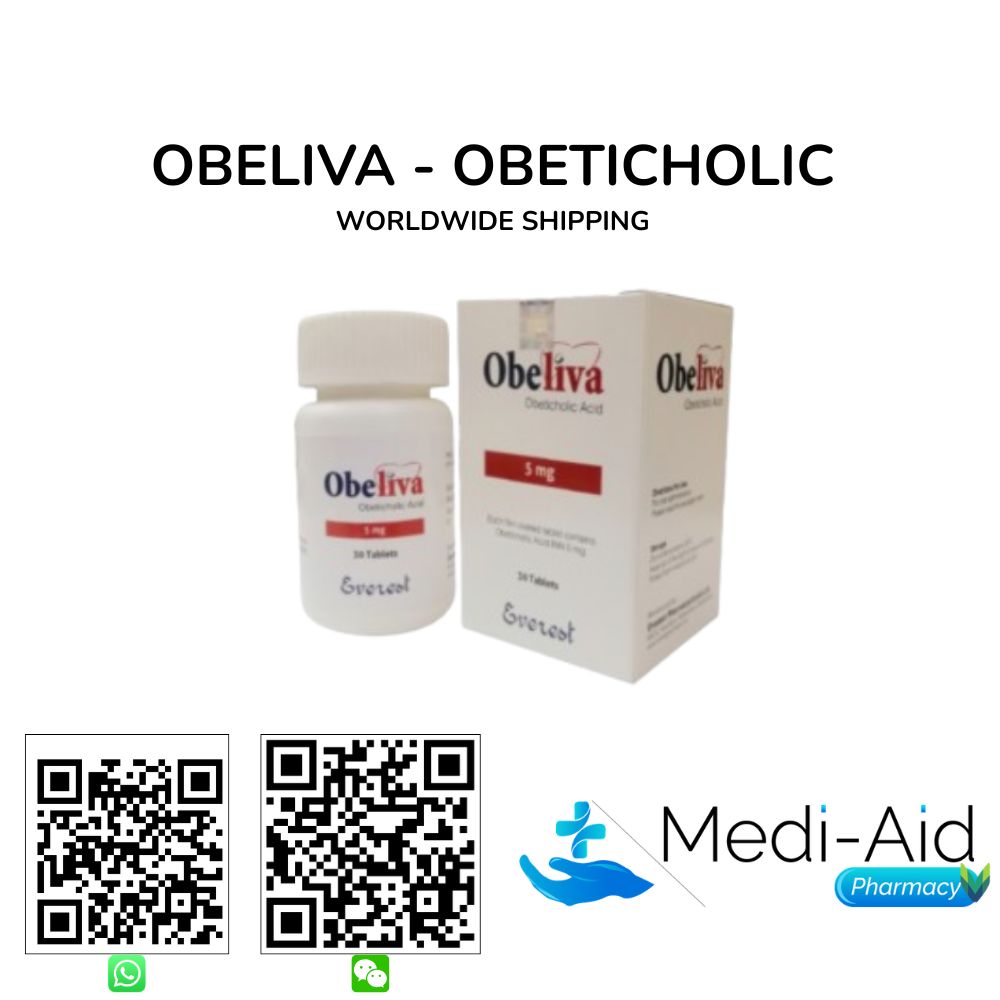
Obeliva (Obeticholic Acid) 5mg contains obeticholic acid, a farnesoid X receptor (FXR) agonist that was historically used to treat primary biliary cholangitis (PBC) in adults, in combination with ursodeoxycholic acid (UDCA) or as monotherapy in patients unable to tolerate UDCA. Manufactured by Beacon Pharmaceuticals Ltd., Bangladesh and supplied by Mediaid Pharmacy for export markets only. This medicine’s originator brand, Ocaliva, has had its US marketing approval withdrawn — see the safety notice above before reading further.
Basic Product Information of Obeliva (Obeticholic Acid) 5mg
| Brand Name | Obeliva (Obeticholic Acid) |
| Generic Name | Obeticholic Acid |
| Drug Class | Farnesoid X Receptor (FXR) Agonist |
| Available Strength | 5mg |
| Formulation | Film-Coated Tablet |
| Pack Size | 30 Tablets |
| Historical Indication | Primary Biliary Cholangitis (PBC) — indication and approval since withdrawn in the US; see safety notice above |
| Regulatory Status | US FDA approval withdrawn (24 November 2025). Originator voluntarily removed from the US market on 11 September 2025 following an FDA request. Not currently authorised for sale in the United States. |
| Originator Brand | Ocaliva by Intercept Pharmaceuticals / Alfasigma (approval withdrawn) |
| Manufacturer | Beacon Pharmaceuticals Ltd., Mymensingh, Bangladesh |
| Global Supplier | Mediaid Pharmacy |
| Registration | Export Only |
| Storage Conditions | Store below 30 degrees Celsius. Keep in a dry place away from light and moisture. Keep out of the reach of children. |
How Obeticholic Acid Works
Obeticholic acid is an agonist of the farnesoid X receptor (FXR), a nuclear receptor expressed in the liver and intestine that regulates bile acid synthesis and transport. By activating FXR, obeticholic acid was intended to increase bile flow out of the liver and suppress bile acid production, reducing the liver’s exposure to bile acids that accumulate and cause damage in PBC.
In earlier clinical trials, this mechanism produced a measurable reduction in the liver enzyme alkaline phosphatase (ALP), a biomarker FDA accepted for accelerated approval in 2016. However, the required follow-up trial measuring real clinical outcomes — liver transplant and death, rather than the ALP biomarker — did not support that the drug’s benefits outweighed its risks, which led to the 2025 withdrawal described above.
Why This Drug Was Withdrawn From the US Market
Obeticholic acid’s accelerated approval in 2016 was conditional on a postmarketing trial confirming real clinical benefit, since the original approval relied only on a biomarker (ALP reduction) rather than direct evidence of longer survival or fewer transplants. In 2021, after reports of liver failure in PBC patients with cirrhosis, the FDA restricted use to patients without advanced cirrhosis, believing the benefit-risk balance still favoured the drug in that narrower group.
The completed postmarketing trial changed that assessment. Even among patients for whom the drug was indicated — a lower-risk group without advanced cirrhosis — the rate of liver transplant and death was higher with obeticholic acid than with placebo. An FDA advisory committee subsequently voted against full approval, the agency declined to grant it, and in September 2025 the manufacturer withdrew the drug from the US market at the FDA’s request, with formal withdrawal of the approval following on 24 November 2025.
Serious Risks and Precautions
|
Serious Risks Identified Increased risk of liver transplant and death, confirmed in the postmarket trial that led to withdrawal Serious liver injury, including in patients without cirrhosis Liver failure, historically most severe in patients with advanced cirrhosis Not recommended in decompensated cirrhosis or prior decompensation events |
Previously Reported Common Side Effects Pruritus (itching), often severe Fatigue Abdominal pain and discomfort Reduced HDL cholesterol Constipation and joint pain |
Historical Label Dosing (Reference Only)
The information below reflects the dosing that appeared on the US label before withdrawal. It is provided for reference only and is not a recommendation to start or continue treatment. Any use of Obeliva requires direct, ongoing supervision by a hepatologist who is aware of the withdrawal and the trial findings described above.
Route: Oral, taken by mouth
Historical starting dose: 5mg once daily, with titration to 10mg once daily after three months based on response and tolerability, under a physician’s supervision.
Liver monitoring: Regular liver function testing was required throughout treatment, with more frequent monitoring in patients with any degree of hepatic impairment.
Manufacturer
Obeliva is manufactured by Beacon Pharmaceuticals Ltd., Mymensingh, Bangladesh, under WHO-GMP and cGMP standards, and is registered for export markets only. It is supplied internationally by Mediaid Pharmacy.
Frequently Asked Questions About Obeliva (Obeticholic Acid)
Is obeticholic acid still FDA approved?
No. The FDA formally withdrew approval of Ocaliva (obeticholic acid) on 24 November 2025, after the manufacturer had already voluntarily pulled it from the US market in September 2025. It is not currently authorised for sale in the United States.
Why was it withdrawn?
A postmarketing trial required as a condition of its original accelerated approval found that patients taking obeticholic acid needed liver transplants and died more often than patients on placebo, even among the lower-risk patients for whom the drug was indicated.
What was Obeliva used for before the withdrawal?
It was used to treat primary biliary cholangitis (PBC) in adults with an inadequate response to, or intolerance of, ursodeoxycholic acid (UDCA), either alongside UDCA or alone.
Is it safe to take?
Regulators concluded the risk of serious liver injury, transplant, and death outweighs the drug’s benefit for the population it was approved to treat. Anyone with PBC should discuss current, approved treatment options with their hepatologist rather than starting or continuing obeticholic acid without that conversation.
Who can I contact about this product?
Mediaid Pharmacy can be reached via WhatsApp, phone, or WeChat at +8801773428128, or by email at info@mediaidpharmacy.com, for questions about sourcing and export documentation.
Reviews
There are no reviews yet.