
Description
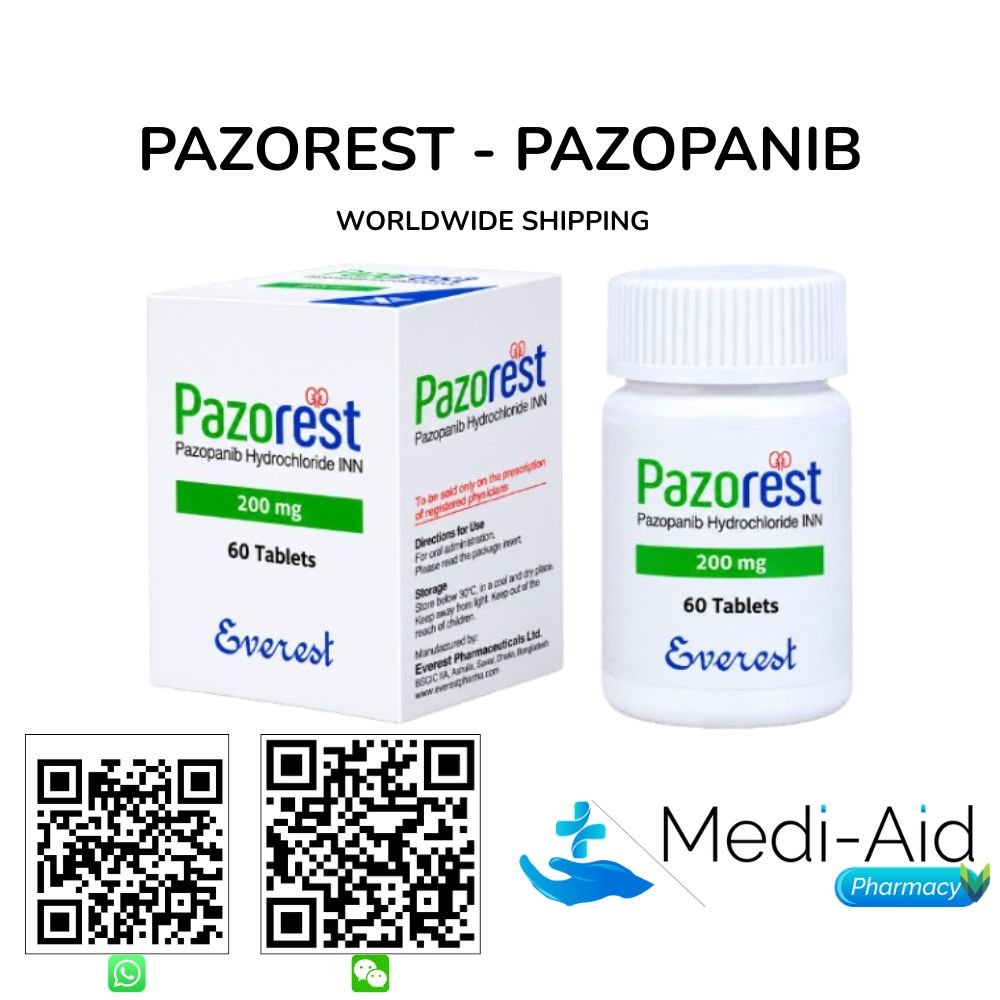
Pazorest 200 MG (Pazopanib) is an oral, multi-tyrosine kinase inhibitor (TKI) film-coated tablet available in a 200 mg strength, supplied in a pack of 60 tablets per pot, manufactured by Everest Pharmaceuticals Ltd. of Bangladesh. The active ingredient, pazopanib, simultaneously inhibits vascular endothelial growth factor receptors (VEGFR-1, VEGFR-2, VEGFR-3), platelet-derived growth factor receptors (PDGFR-α, PDGFR-β), fibroblast growth factor receptors (FGFR-1, FGFR-3), and stem cell factor receptor (c-Kit) a broad-spectrum multi-receptor anti-angiogenic profile that suppresses pathogenic tumour neovascularisation and disrupts pericyte-mediated vascular stabilisation across biologically distinct solid tumour microenvironments.
The reference-label starting dose of pazopanib is 800 mg once daily (QD), achieved with 4 × Pazorest 200 MG tablets taken together once daily, at least 1 hour before or 2 hours after a meal, totalling 800 mg per day. In the pivotal Phase III VEG105192 trial, pazopanib 800 mg QD extended median progression-free survival (PFS) to 9.2 months versus 4.2 months with placebo (HR 0.46; 95% CI 0.34–0.62; P<0.0001) in patients with advanced renal cell carcinoma (RCC), establishing pazopanib as a global standard of care for first-line and cytokine-pretreated advanced RCC.
In the Phase III PALETTE trial in advanced soft tissue sarcoma (STS), pazopanib 800 mg QD delivered a median PFS of 4.6 months versus 1.6 months with placebo (HR 0.31; 95% CI 0.24–0.40; P<0.0001) in patients who had received prior chemotherapy. Searching for Pazorest 200 MG Pazopanib? Mediaid Pharmacy stocks this product within its comprehensive oncology medicines portfolio and ships worldwide.
Basic Product Information of Pazorest 200 MG (Pazopanib)
| Brand Name | Pazorest 200 MG (Pazopanib) |
| Product Name | Pazorest |
| Generic Name | Pazopanib |
| Drug Class | Multi-Tyrosine Kinase Inhibitor (TKI); VEGFR-1/VEGFR-2/VEGFR-3/PDGFR-α/PDGFR-β/FGFR-1/FGFR-3/c-Kit Kinase Inhibitor; Antiangiogenic Targeted Oncology Agent |
| Formulation | Film-Coated Tablet |
| Available Strength | 200 mg per tablet |
| Available Pack Size | 60 Tablets per pot (15-day supply at the reference-label starting dose of 4 tablets/day) |
| Primary Indications | Advanced Renal Cell Carcinoma (RCC, first-line and after prior cytokine therapy); Advanced Soft Tissue Sarcoma (STS, after prior chemotherapy excluding adipocytic STS and GIST) |
| Reference-Label Starting Dose | 800 mg once daily (QD) = 4 × Pazorest 200 MG tablets taken together once daily, at least 1 hour before or 2 hours after a meal; swallowed whole with water |
| Manufacturer / Brand | Everest Pharmaceuticals Ltd., Bangladesh |
| Country of Origin | Bangladesh |
| Categories | Everest Pharmaceuticals Medicines, Kidney Cancer Medicines, Oncology Medicines, Soft Tissue Sarcoma Medicines |
| Storage Conditions | Store below 25°C in a dry place, protected from light and moisture. Keep out of the reach of children. |
| Global Supplier | Mediaid Pharmacy Worldwide Shipping Available |
How Pazorest 200 MG (Pazopanib) Works: Broad-Spectrum VEGFR/PDGFR/FGFR/c-Kit Multi-Tyrosine Kinase Inhibition and Anti-Angiogenic Tumour Suppression
Pazopanib, the active ingredient in Pazorest 200 MG, is an orally bioavailable, indazolylpyrimidine-class multi-tyrosine kinase inhibitor (TKI) that selectively targets and suppresses a panel of pro-angiogenic and pro-tumourigenic receptor tyrosine kinases simultaneously. Pazopanib achieves potent competitive inhibition of the ATP-binding domains of VEGFR-1, VEGFR-2, VEGFR-3, PDGFR-α, PDGFR-β, FGFR-1, FGFR-3, and c-Kit, thereby blocking receptor autophosphorylation and preventing downstream propagation of pro-angiogenic and tumour survival signalling cascades. A multi-tyrosine kinase inhibitor refers to a small-molecule drug that simultaneously occupies the catalytic ATP-binding pocket of multiple receptor tyrosine kinase enzymes, suppressing their activation and downstream oncogenic signalling.
Pazopanib’s reported IC₅₀ values across its primary target panel include VEGFR-1 at 10 nM, VEGFR-2 at 30 nM, VEGFR-3 at 47 nM, PDGFR-α at 71 nM, PDGFR-β at 84 nM, FGFR-1 at 74 nM, FGFR-3 at 138 nM, and c-Kit at 74 nM confirming potent, broad-spectrum multi-receptor suppression that sustains robust antiangiogenic effects across all approved solid tumour indications. Each Pazorest 200 MG film-coated tablet contains pazopanib equivalent to 200 mg, with the standard reference-label dose of 800 mg QD delivered by taking 4 tablets once daily, at least 1 hour before or 2 hours after a meal.
The oncological primacy of pazopanib’s concurrent VEGFR, PDGFR, FGFR, and c-Kit inhibition lies in its mechanistic coverage of the tumour angiogenesis axis at multiple non-redundant signalling nodes simultaneously. VEGFR-2 inhibition pazopanib’s highest-priority pharmacological target at IC₅₀ 30 nM directly suppresses VEGF-driven endothelial cell proliferation, migration, and survival, thereby disrupting the formation of new tumour blood vessels required for growth beyond 1–2 mm³. Concurrent VEGFR-3 inhibition (IC₅₀ 47 nM) extends anti-angiogenic activity to tumour lymphangiogenesis, suppressing lymphatic vessel formation and limiting lymphatic routes of metastatic dissemination. PDGFR-α/β inhibition disrupts pericyte-mediated vascular stabilisation and directly targets platelet-derived growth factor-driven stromal and tumour cell autocrine signalling loops that sustain tumour microenvironment survival signalling.
FGFR-1/FGFR-3 inhibition suppresses fibroblast growth factor-mediated angiogenic escape a key pathway through which tumours develop resistance to VEGFR-selective anti-angiogenic agents broadening pazopanib’s mechanistic durability beyond VEGFR-only targeted therapies. In advanced renal cell carcinoma (RCC), pazopanib’s multi-receptor profile is clinically decisive: RCC tumours characteristically overexpress VEGF and other pro-angiogenic drivers due to constitutive VHL tumour suppressor gene inactivation, rendering them exquisitely dependent on VEGFR-driven neovascularisation. Oncologists managing patients with kidney cancer can review the full range of kidney cancer medicines at Mediaid Pharmacy, including Pazorest 200 MG Pazopanib, for first-line and second-line RCC therapy planning.
In the pivotal Phase III VEG105192 trial of advanced renal cell carcinoma 435 patients across treatment-naive and cytokine-pretreated cohorts pazopanib 800 mg QD (achievable as 4 × Pazorest 200 MG tablets once daily) extended median PFS to 9.2 months versus 4.2 months with placebo (HR 0.46; 95% CI 0.34–0.62; P<0.0001), with an objective response rate (ORR) of 30% versus 3%. In treatment-naive patients, median PFS was extended to 11.1 months versus 2.8 months (HR 0.40; P<0.001), and in cytokine-pretreated patients to 7.4 months versus 4.2 months (HR 0.54; P<0.001).
In the Phase III PALETTE trial of advanced soft tissue sarcoma 369 patients who had received prior chemotherapy pazopanib 800 mg QD delivered a median PFS of 4.6 months versus 1.6 months with placebo (HR 0.31; 95% CI 0.24–0.40; P<0.0001), representing a 69% reduction in the risk of progression or death across histological STS subtypes. The pazopanib dose for each patient and indication is determined and adjusted by the treating oncologist; Pazorest 200 MG tablets must be prescribed and taken under the supervision of a qualified oncology specialist.
Approved Indications of Pazopanib Pazorest 200 MG Reference Label
Pazopanib is approved in numerous countries across two primary oncology indications in adult patients. The 200 mg film-coated tablet formulation of Pazorest, with its 60-tablet pack size, supports both indications at the reference-label 800 mg QD starting dose and all protocol dose reduction steps. Prescribers must confirm the exact locally approved indications on the pazopanib product label before initiating therapy, as specific label language varies by regulatory jurisdiction.
|
Advanced Renal Cell Carcinoma (RCC) First-Line and After Prior Cytokine Therapy Pazopanib is indicated as monotherapy for adult patients with advanced renal cell carcinoma in the first-line setting and for patients who have received prior cytokine-based therapy (interferon-alfa or interleukin-2). Reference-label starting dose: 800 mg once daily (QD) = 4 × Pazorest 200 MG tablets per day, taken together at least 1 hour before or 2 hours after a meal. The VEG105192 Phase III trial confirmed median PFS of 9.2 vs 4.2 months (HR 0.46; P<0.0001) and ORR of 30% vs 3% versus placebo across both patient populations. Oncologists can review the full range of kidney cancer targeted therapy medicines at Mediaid Pharmacy alongside Pazorest for comprehensive RCC programme planning. |
Advanced Soft Tissue Sarcoma (STS) After Prior Chemotherapy (Excluding Adipocytic STS and GIST) Pazopanib is indicated as monotherapy for adult patients with advanced soft tissue sarcoma who have received prior chemotherapy. This indication excludes patients with adipocytic soft tissue sarcoma (liposarcoma) and gastrointestinal stromal tumours (GIST). Reference-label starting dose: 800 mg once daily (QD) = 4 × Pazorest 200 MG tablets per day. PALETTE Phase III data: median PFS 4.6 vs 1.6 months (HR 0.31; 95% CI 0.24–0.40; P<0.0001). The complete selection of soft tissue sarcoma medicines at Mediaid Pharmacy supports comprehensive STS programme planning including pazopanib-based regimens. |
Pazopanib Dose Modification Framework: How Pazorest 200 MG Tablets Cover Every Reference-Label Dose Level
The reference label for pazopanib mandates stepwise dose reductions to manage treatment-emergent adverse events including hepatotoxicity, hypertension, diarrhoea, and hand-foot skin reaction across all approved indications. The Pazorest 200 MG film-coated tablet enables complete reference-label dose coverage from the standard 800 mg QD starting dose through all protocol reduction steps, using 200 mg per tablet as the fundamental dose unit. The table below maps each reference-label dose level to the precise Pazorest 200 MG tablet count required. All dose modifications must be directed and supervised by the treating oncologist; never alter the dose without an explicit clinical instruction.
| Indication & Regimen | Dose Level | Daily Dose | Pazorest 200 MG Tablet Count |
| Advanced RCC First-Line / After Prior Cytokine Therapy | Starting Dose | 800 mg QD (800 mg/day) | 4 tablets once daily (at least 1 hour before or 2 hours after a meal) |
| Reduction 1 | 600 mg once daily (600 mg/day) | 3 tablets once daily | |
| Reduction 2 | 400 mg once daily (400 mg/day) | 2 tablets once daily (per oncologist direction) | |
| Advanced STS After Prior Chemotherapy | Starting Dose | 800 mg QD (800 mg/day) | 4 tablets once daily (at least 1 hour before or 2 hours after a meal) |
| Reduction 1 | 600 mg once daily (600 mg/day) | 3 tablets once daily | |
| Reduction 2 | 400 mg once daily (400 mg/day) | 2 tablets once daily (per oncologist direction) |
Key Clinical Benefits of Pazorest 200 MG (Pazopanib)
|
VEG105192 Phase III: First-Line RCC PFS Advantage 9.2-Month Median PFS and 54% Reduction in Progression Risk The VEG105192 Phase III trial established pazopanib 800 mg QD as a reference standard for advanced RCC, confirming a 54% reduction in the risk of progression or death versus placebo (median PFS 9.2 vs 4.2 months; HR 0.46; P<0.0001) and a superior objective response rate of 30% versus 3%. In treatment-naive patients, the PFS advantage was even more pronounced at 11.1 months versus 2.8 months (HR 0.40; P<0.001). Pazorest 200 MG delivers the full 800 mg QD starting dose with 4 tablets once daily from a 60-tablet pot, providing a clinically aligned 15-day supply per pot. |
PALETTE Phase III: Soft Tissue Sarcoma PFS Benefit 4.6 Months vs 1.6 Months and 69% Risk Reduction The PALETTE Phase III trial confirmed that pazopanib 800 mg QD extended median PFS to 4.6 months versus 1.6 months with placebo in advanced soft tissue sarcoma after prior chemotherapy (HR 0.31; 95% CI 0.24–0.40; P<0.0001), representing a 69% reduction in the risk of progression or death across STS histological subtypes including leiomyosarcoma, synovial sarcoma, and other non-adipocytic subtypes. Pazopanib is the only multi-tyrosine kinase inhibitor to have demonstrated Phase III clinical trial efficacy across both advanced RCC and advanced STS at the same 800 mg QD reference dose, achievable with Pazorest 200 MG without strength adjustment. |
Once-Daily Oral Dosing and Complete Reference-Label Dose Coverage from a Single 200 MG Tablet Strength Pazopanib’s once-daily oral dosing regimen 4 × Pazorest 200 MG tablets QD at the 800 mg starting dose simplifies treatment administration compared to twice-daily TKI regimens. The 200 mg tablet strength enables precise stepwise dose reductions from 800 mg to 600 mg (3 tablets) and 400 mg (2 tablets) using the same Pazorest 200 MG product throughout the full dose modification pathway, eliminating the need for supplementary tablet strengths. FGFR-1 and FGFR-3 co-inhibition (IC₅₀ 74 nM and 138 nM) distinguishes pazopanib from VEGFR-selective agents by suppressing a key angiogenic escape pathway active in VEGFR-refractory tumour microenvironments. |
Clinical Monitoring Requirements During Pazorest 200 MG (Pazopanib) Treatment
Hepatic function monitoring is the primary safety requirement throughout pazopanib therapy, representing the most clinically significant toxicity risk across all approved indications. Liver enzyme elevations including ALT and AST occur in up to 53% of pazopanib-treated patients in clinical trials, with Grade 3 (ALT/AST >5× ULN) and Grade 4 (>20× ULN) elevations reported. The reference label requires liver function test (LFT) assessment at baseline, at weeks 3 and 5, then at months 3 and 4, and periodically thereafter throughout treatment; more frequent monitoring is required when clinically indicated.
Grade 3 hepatotoxicity requires pazopanib dose interruption; recurrence after restart requires permanent discontinuation. Grade 4 hepatotoxicity, drug-induced liver injury (DILI), or drug-induced liver failure requires immediate permanent discontinuation. Using Pazorest 200 MG, the treating oncologist can implement precise dose reductions from 800 mg QD to 600 mg QD or 400 mg QD using the standard 200 mg tablet unit as specified in the reference-label dose modification algorithm.
Blood pressure monitoring is a mandatory safety requirement throughout pazopanib therapy at all dose levels. Hypertension occurs in approximately 40% of pazopanib-treated patients and typically develops early in the course of treatment within the first 18 weeks. Blood pressure must be optimised before initiating pazopanib and must be monitored regularly throughout treatment; anti-hypertensive therapy should be initiated or intensified promptly when hypertension develops. Grade 3 hypertension (systolic BP ≥160 mmHg or diastolic BP ≥100 mmHg, despite anti-hypertensive therapy) requires pazopanib dose interruption; hypertensive crisis (Grade 4) requires permanent discontinuation. Cardiac monitoring: pazopanib may prolong the QTc interval and has been associated with cardiac dysfunction, including decreased left ventricular ejection fraction (LVEF).
Baseline cardiac function assessment (ECG, echocardiogram or MUGA scan) is recommended for patients at risk; ECG monitoring is required for patients with pre-existing cardiac disease, electrolyte abnormalities, or concurrent QTc-prolonging medications. Electrolyte correction (potassium, magnesium, calcium) must be maintained throughout therapy. Thyroid function (TSH) must be assessed at baseline and periodically during treatment, as pazopanib-associated hypothyroidism occurs in approximately 7% of patients. Urinalysis at baseline and periodically throughout treatment is recommended, as pazopanib-associated proteinuria has been reported, with Grade 3–4 proteinuria requiring dose modification. Oncologists managing patients on pazopanib who also require supportive or combination agents can review the full selection of oncology medicines at Mediaid Pharmacy for comprehensive programme support.
Drug Interactions and Important Safety Information for Pazorest 200 MG (Pazopanib)
The most clinically significant pharmacokinetic drug interaction risk for pazopanib involves CYP3A4 modulators and gastric pH-modifying agents. Pazopanib is primarily metabolised by CYP3A4, with minor contributions from CYP1A2 and CYP2C8; it is also a substrate and inhibitor of P-glycoprotein (P-gp) and breast cancer resistance protein (BCRP). Strong CYP3A4 inducers including rifampicin, carbamazepine, phenytoin, phenobarbital, and St. John’s Wort (Hypericum perforatum) significantly increase pazopanib metabolism and reduce systemic exposure, potentially compromising clinical efficacy; avoidance of strong CYP3A4 inducers is preferred where clinically feasible. Strong CYP3A4 inhibitors (ketoconazole, itraconazole, ritonavir-boosted HIV medications, clarithromycin) may substantially increase pazopanib systemic exposure and amplify toxicity risk; clinical vigilance and dose reduction to 400 mg QD are required when these combinations cannot be avoided.
Gastric acid-suppressing agents (proton pump inhibitors, PPIs) represent a critical and pazopanib-specific drug interaction: PPIs such as omeprazole, esomeprazole, pantoprazole, and lansoprazole significantly reduce pazopanib bioavailability by elevating gastric pH, which impairs the solubility and dissolution of pazopanib. Concomitant PPI use should be avoided; short-acting antacids or H2 receptor antagonists taken at least 10 hours before or 2 hours after pazopanib dosing are preferred when acid suppression is necessary. Simvastatin interaction: pazopanib increases simvastatin exposure by approximately 2-fold via CYP3A4 inhibition; patients on simvastatin require increased monitoring for statin-associated myopathy and rhabdomyolysis, and dose reduction of simvastatin may be required.
QT interval-prolonging agents: pazopanib may prolong the QTc interval in a concentration-dependent manner; concurrent use of antiarrhythmics (amiodarone, sotalol), fluoroquinolone or macrolide antibiotics (moxifloxacin, azithromycin), antipsychotics, and other QTc-prolonging medications further amplifies this risk and requires electrolyte optimisation and ECG monitoring. Warfarin anticoagulation: pazopanib increases haemorrhage risk; patients on warfarin require more frequent INR monitoring throughout therapy. Patients must disclose all concomitant medications including over-the-counter supplements, antacids, and herbal preparations to their treating oncologist before and during Pazorest 200 MG therapy. Teams requiring concurrent oncology agents alongside pazopanib-based soft tissue sarcoma regimens at Mediaid Pharmacy can contact the team for multi-medicine sourcing support.
Side Effects and Precautions of Pazorest 200 MG (Pazopanib)
|
Common Side Effects Diarrhoea (approximately 52%; the most frequently reported gastrointestinal adverse event with pazopanib across all approved indications; typically mild to moderate; managed with anti-diarrhoeal agents, hydration, dietary modification, and dose modification as clinically required) Hypertension (approximately 40%; typically early onset, most cases developing within the first 18 weeks; requires blood pressure monitoring before and throughout treatment and anti-hypertensive therapy initiation or intensification when clinically indicated) Hair colour changes and depigmentation (approximately 38%; a distinctive pazopanib-associated cosmetic adverse event resulting from c-Kit inhibition suppressing melanocyte function; not requiring dose modification but requiring patient counselling) Nausea (approximately 26%) and vomiting (approximately 21%); often manageable with anti-emetic agents and dietary adjustments Decreased appetite and anorexia (approximately 22%); weight loss reported in approximately 9–12% of patients across indications Fatigue and asthenia (approximately 19%); often multifactorial, contributed to by disease burden, anaemia, reduced appetite, and direct drug-related effects Liver enzyme elevations (ALT/AST elevation in up to 53% of patients; the most clinically important safety concern requiring mandatory LFT monitoring throughout treatment; Grade 3–4 hepatotoxicity occurs in approximately 10–12% of patients) Stomatitis and mucositis (~11%); peripheral oedema (~14%); headache (~10%); skin discolouration (~3–8%) |
Serious Warnings and Precautions Hepatotoxicity and drug-induced liver injury (DILI): Grade 3–4 liver enzyme elevations and cases of hepatic failure including fatal outcomes have been reported with pazopanib. LFT monitoring at baseline, weeks 3 and 5, months 3 and 4, and periodically thereafter is mandatory at all dose levels of Pazorest 200 MG. Grade 4 hepatotoxicity or any hepatic failure requires immediate permanent discontinuation. Severe hypertension and hypertensive crisis: Grade 3 hypertension (≥160/100 mmHg despite anti-hypertensive therapy) requires pazopanib dose interruption. Grade 4 hypertensive crisis requires permanent discontinuation. Blood pressure must be optimised before initiating pazopanib and monitored regularly throughout treatment. QT prolongation and cardiac dysfunction: pazopanib may prolong the QTc interval and has been associated with decreased LVEF. Electrolyte correction (potassium, magnesium, calcium) must be maintained throughout therapy; ECG and cardiac function monitoring are required for at-risk patients. Concurrent QTc-prolonging agents require heightened cardiovascular vigilance. Haemorrhage: serious and potentially fatal haemorrhagic events have been reported with pazopanib. Grade 3–4 haemorrhage requires immediate treatment interruption; life-threatening haemorrhage requires permanent discontinuation. Patients on concurrent anticoagulants require more frequent monitoring. Arterial and venous thromboembolic events (ATE/VTE): serious thromboembolic events including myocardial infarction, cerebrovascular accident, and pulmonary embolism have been reported with pazopanib. Pazopanib must be permanently discontinued in patients who develop a Grade 3 or higher thromboembolic event during treatment. Wound healing complications: pazopanib may impair wound healing. Pazopanib should be held for at least 7 days before elective surgery and resumed after adequate wound healing, as directed by the treating oncologist. Embryo-fetal toxicity: pazopanib can cause fetal harm based on its mechanism of action and confirmed animal reproductive toxicology data. Females of reproductive potential must use effective contraception during treatment and for at least 2 weeks after the final dose. Males with female partners of reproductive potential must use effective contraception during treatment and for at least 2 weeks after the last dose. Breastfeeding is not recommended during treatment or for at least 2 weeks after the final dose. |
Who Should Use Pazorest 200 MG (Pazopanib)?
Pazorest 200 MG (Pazopanib) is indicated for adult patients across two oncology settings: (1) advanced renal cell carcinoma (RCC) as first-line monotherapy at 800 mg once daily, and in patients who have received prior cytokine-based therapy (interferon-alfa or interleukin-2); and (2) advanced soft tissue sarcoma (STS) as monotherapy at 800 mg once daily in adult patients who have received prior chemotherapy this indication specifically excludes adipocytic soft tissue sarcoma (liposarcoma) and gastrointestinal stromal tumours (GIST), for which the evidence base does not support pazopanib use.
The 200 mg film-coated tablet formulation with a 60-tablet pot is clinically appropriate for any patient requiring a pazopanib starting dose or any stepwise dose reduction across these two indications the dosing table in this content specifies the precise Pazorest 200 MG tablet counts for each dose level. Oncologists must assess baseline hepatic function (ALT, AST, bilirubin), blood pressure, cardiac function (ECG, LVEF), renal function, thyroid function (TSH), urinalysis for baseline proteinuria, electrolytes (potassium, magnesium, calcium), and all concomitant medications including gastric acid-suppressing agents, QTc-prolonging drugs, CYP3A4 modulators, and anticoagulants before prescribing any pazopanib dose.
Patients who are pregnant, planning a pregnancy, or of reproductive potential without adequate contraception require mandatory pre-therapy counselling. Oncologists seeking comprehensive targeted agent support across kidney and soft tissue sarcoma cancer programmes can review the full range of soft tissue sarcoma medicines at Mediaid Pharmacy, including Pazorest 200 MG Pazopanib for STS after prior chemotherapy.
Global Supplier: Mediaid Pharmacy Worldwide Shipping for Pazorest 200 MG (Pazopanib)
Mediaid Pharmacy is a Dhaka-based supplier of oncology and specialty medicines with worldwide shipping capacity. Pazorest 200 MG (Pazopanib) manufactured by Everest Pharmaceuticals Ltd. of Bangladesh, formulated as film-coated tablets in 60-tablet pots is stocked and available for international supply. All orders are supported by pricing quotations, stock confirmation, and end-to-end delivery tracking. Hospitals, specialist oncology and urology clinics, cancer centres, sarcoma treatment programmes, distributors, and patients in countries where pazopanib is approved can contact the Mediaid Pharmacy team through WhatsApp, phone, or WeChat for all enquiries about oral pazopanib tablets for kidney cancer and soft tissue sarcoma including current stock availability, pricing, and international delivery timelines. Institutions and distributors sourcing multiple oncology medicines in a single consolidated shipment can request a combined quotation from the Mediaid Pharmacy team after browsing the full catalogue.
Why Choose Pazorest 200 MG (Pazopanib) from Mediaid Pharmacy?
Pazorest 200 MG is manufactured by Everest Pharmaceuticals Ltd. of Bangladesh and delivers pazopanib the multi-tyrosine kinase inhibitor whose 800 mg QD dose anchored the VEG105192 Phase III trial (54% reduction in progression risk; median PFS 9.2 vs 4.2 months; HR 0.46; P<0.0001; ORR 30% vs 3% in advanced RCC) and the PALETTE Phase III trial (69% reduction in progression or death risk; median PFS 4.6 vs 1.6 months; HR 0.31; 95% CI 0.24–0.40; P<0.0001 in advanced STS after prior chemotherapy).
The defining procurement advantage of sourcing Pazorest 200 MG from Mediaid Pharmacy is complete reference-label dosing coverage from a single generic pazopanib supplier: the 200 mg tablet enables the full 800 mg QD starting dose (4 tablets once daily), the first dose reduction to 600 mg QD (3 tablets once daily), and the second dose reduction to 400 mg QD (2 tablets once daily) covering the complete reference-label dose modification pathway without the need for supplementary tablet strengths.
Mediaid Pharmacy supplies Pazorest 200 MG in its 60-tablet pot format with worldwide shipping, specialist supply support, and documentation for customs clearance as required. Every order is initiated with a prescription-based enquiry to maintain supply aligned with the treating oncologist’s clinical plan. For oncology programmes requiring a broader panel of targeted and supportive agents, the full Mediaid Pharmacy oncology medicines catalogue is available to browse, and the team can be contacted directly for consolidated multi-medicine quotations.
Frequently Asked Questions About Pazorest 200 MG (Pazopanib)
What is Pazorest 200 MG and what is its generic name?
Pazorest 200 MG is a branded generic pazopanib film-coated tablet manufactured by Everest Pharmaceuticals Ltd. of Bangladesh. The generic name of Pazorest 200 MG is pazopanib the same active ingredient as the originator medicine Votrient (pazopanib hydrochloride), originally developed by GlaxoSmithKline (GSK) and approved by the FDA, EMA, and other major regulatory agencies for advanced renal cell carcinoma (RCC) and advanced soft tissue sarcoma (STS) after prior chemotherapy. Each Pazorest 200 MG film-coated tablet contains pazopanib equivalent to 200 mg of pazopanib free base. The 60-tablet pot of Pazorest 200 MG provides a complete 15-day supply at the reference-label starting dose of 800 mg QD (4 tablets per day), making Pazorest 200 MG a clinically aligned, cost-accessible generic pazopanib option for oncology programmes treating advanced RCC and advanced STS patients worldwide.
How should Pazorest 200 MG (Pazopanib) tablets be taken?
Pazorest 200 MG (Pazopanib) tablets are taken orally at the dose and schedule prescribed by the treating oncologist. The reference-label starting dose of pazopanib is 800 mg once daily (QD) 4 Pazorest 200 MG tablets taken together once daily. Critically, pazopanib must be taken at least 1 hour before or 2 hours after a meal; food particularly a high-fat or high-calorie meal significantly increases pazopanib systemic exposure and can amplify toxicity risk. This fasted-state administration requirement is a pazopanib-specific instruction that distinguishes it from many other oral oncology agents and must be followed consistently. Tablets should be swallowed whole with a glass of water and must not be crushed, chewed, or split, as crushing would substantially alter the pazopanib release and absorption profile. Proton pump inhibitors (PPIs) must be avoided as concomitant medication due to their significant reduction of pazopanib bioavailability; antacids or H2 blockers timed at least 10 hours before or 2 hours after pazopanib are preferred when acid suppression is necessary. If a dose is missed and more than 12 hours remain until the next scheduled dose, the missed dose should be taken; if less than 12 hours remain until the next dose, the missed dose should be skipped. Patients must not double the next dose to compensate for a missed dose. Any concerns about administration should be reported to the treating oncologist immediately.
What are the most common side effects of Pazorest 200 MG (Pazopanib)?
The most common side effects of pazopanib across all approved indications and dose levels include diarrhoea (approximately 52%), hypertension (approximately 40%), hair colour changes and depigmentation (approximately 38%; a distinctive pazopanib-associated effect resulting from c-Kit inhibition), liver enzyme elevations (ALT/AST elevation in up to 53% of patients; the most clinically significant safety concern), nausea (approximately 26%), vomiting (approximately 21%), decreased appetite (approximately 22%), fatigue (approximately 19%), and stomatitis/mucositis (approximately 11%). Hepatotoxicity is pazopanib’s most important and potentially life-threatening toxicity, requiring mandatory LFT monitoring throughout treatment. Hair depigmentation is a cosmetically distinctive but medically benign effect that is frequently observed during pazopanib treatment, often appearing as lighter or greyed hair roots. Adverse event frequency is generally related to pazopanib systemic exposure, which is why the reference-label dose modification algorithm permits stepwise reductions from 800 mg QD to 600 mg QD and then to 400 mg QD using Pazorest 200 MG tablets. Serious adverse events including severe hepatotoxicity, hypertensive crisis, QT prolongation, arterial thromboembolic events, and haemorrhage require immediate oncologist assessment and may necessitate dose interruption or permanent discontinuation. Consult your prescribing oncologist regarding your individual risk profile before and during treatment.
What is the evidence base for pazopanib in advanced renal cell carcinoma (RCC)?
The pivotal evidence for pazopanib in advanced renal cell carcinoma is derived from the Phase III VEG105192 trial, which enrolled 435 patients with clear-cell or predominantly clear-cell advanced RCC (ECOG performance status 0–1, no prior targeted therapy) in treatment-naive and cytokine-pretreated cohorts. Pazopanib 800 mg QD significantly extended median progression-free survival compared to placebo (9.2 months vs 4.2 months; HR 0.46; 95% CI 0.34–0.62; P<0.0001) with an objective response rate of 30% versus 3%. In treatment-naive patients specifically, the PFS benefit was pronounced at 11.1 months versus 2.8 months (HR 0.40; P<0.001). The subsequent Phase III COMPARZ non-inferiority trial (1,110 patients) demonstrated that pazopanib was non-inferior to sunitinib for PFS in first-line advanced RCC (8.4 months vs 9.5 months; HR 1.047; upper 95% CI 1.272), with a differentiated tolerability profile pazopanib was associated with significantly less fatigue, hand-foot syndrome, and thrombocytopaenia compared to sunitinib, while sunitinib was associated with less hepatotoxicity. These data collectively establish pazopanib as a first-line standard of care option for advanced RCC, with the specific choice between VEGFR TKIs guided by individual patient comorbidities, tolerability considerations, and oncologist judgement. Pazorest 200 MG delivers pazopanib 800 mg QD at the exact VEG105192 trial reference dose, with 4 tablets once daily from a 60-tablet pot.
Is Pazorest 200 MG (Pazopanib) safe during pregnancy or while breastfeeding?
No. Pazopanib including in the Pazorest 200 MG film-coated tablet formulation can cause fetal harm based on its mechanism of action (inhibition of VEGFR-driven angiogenesis is essential for normal fetal vascular development) and confirmed animal reproductive toxicology data, which demonstrated embryotoxicity, fetotoxicity, and teratogenicity at exposures within or below the human therapeutic range. Females of reproductive potential must use effective contraception during treatment with Pazorest 200 MG and for at least 2 weeks after the final dose. Males with female partners of reproductive potential must also use effective contraception during treatment and for at least 2 weeks after the last dose, as it has not been established whether pazopanib is present in semen. Breastfeeding is not recommended during treatment and for at least 2 weeks after the final dose, as it has not been established whether pazopanib or its metabolites are excreted in human breast milk. Patients who are pregnant, planning a pregnancy, or breastfeeding must discuss their individual circumstances with their treating oncologist before initiating pazopanib therapy.
What is the evidence base for pazopanib in advanced soft tissue sarcoma (STS)?
The pivotal evidence for pazopanib in advanced soft tissue sarcoma is derived from the Phase III PALETTE trial (VEG110727), which enrolled 369 patients with advanced non-adipocytic STS who had received prior chemotherapy (at least one prior anthracycline-containing regimen, with up to four prior lines of therapy). Pazopanib 800 mg QD significantly extended median progression-free survival compared to placebo (4.6 months vs 1.6 months; HR 0.31; 95% CI 0.24–0.40; P<0.0001), representing a 69% reduction in the risk of progression or death. The PFS benefit was consistent across the major histological STS subtypes enrolled, including leiomyosarcoma (the most common subtype in the trial), synovial sarcoma, and other non-adipocytic subtypes. Objective response rate was low at 6% (4 complete responses, 18 partial responses), consistent with the cytostatic mechanism of VEGFR inhibition in sarcoma. PALETTE data did not demonstrate a statistically significant overall survival benefit (HR 0.86; P=0.256), consistent with post-progression treatment effects in the control arm. The PALETTE trial established pazopanib as the only approved targeted therapy for advanced non-adipocytic, non-GIST soft tissue sarcoma after prior chemotherapy, defining the standard of care for this difficult-to-treat population.
Can I order Pazorest 200 MG (Pazopanib) online with worldwide shipping?
Yes. Mediaid Pharmacy supplies Pazorest 200 MG (Pazopanib) manufactured by Everest Pharmaceuticals Ltd. of Bangladesh, film-coated tablets, 60 tablets per pot to oncology centres, hospitals, distributors, and patients globally. Contact Mediaid Pharmacy via WhatsApp, phone, or WeChat at +8801773428128, or email info@mediaidpharmacy.com, for pricing on Pazorest 200 MG Pazopanib, current stock availability, and international delivery details for your country. Oncology teams sourcing Pazorest 200 MG Pazopanib alongside other targeted agents can browse the complete range of oncology medicines at Mediaid Pharmacy and request a consolidated multi-medicine quotation. All orders are supported by prescription verification, pricing documentation, and customs clearance support as required for international shipments.
Order Pazorest 200 MG (Pazopanib) with Worldwide Shipping
Phone / WhatsApp / WeChat: +8801773428128 | Email: info@mediaidpharmacy.com

Reviews
There are no reviews yet.