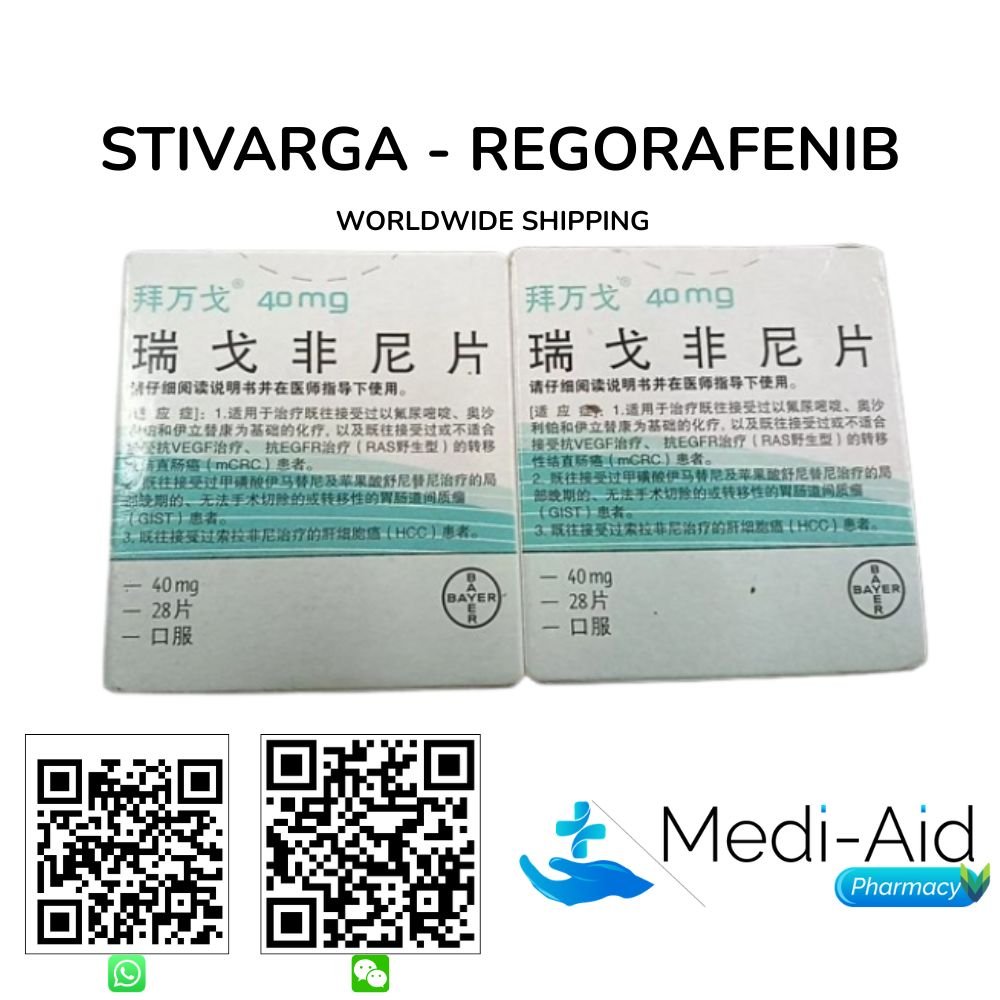
Description
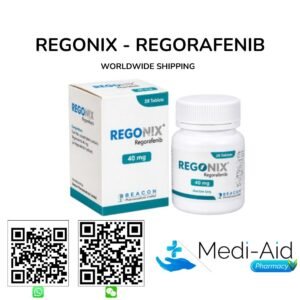
Stivarga 40 MG (Regorafenib) is an oral, small-molecule multikinase inhibitor that simultaneously blocks a broad spectrum of oncogenic, angiogenic, and tumor microenvironmental protein kinases including VEGFR1, VEGFR2, VEGFR3, TIE2, PDGFR-α, PDGFR-β, FGFR1, KIT, RET, RAF-1, and BRAF by competitively binding to the ATP-binding pocket of these kinases, thereby suppressing tumor neovascularization (via VEGFR and TIE2/PDGFR pathway blockade), oncogenic cell proliferation and survival (via RET/KIT/RAF-BRAF pathway suppression), and tumor stromal signaling (via CSF1R and related receptor pathways), supplied as a film-coated tablet in a strength of 40 mg, 28 tablets per pack, in China-market packaging, and developed and manufactured by Bayer AG, Germany, marketed in China as 拜万戈 (Stivarga).
Regorafenib, the active pharmaceutical ingredient of Stivarga, is a small-molecule multikinase inhibitor with regulatory approvals in three distinct solid tumor indications defined by prior treatment failure, establishing regorafenib as the standard later-line systemic therapy for adult patients with metastatic colorectal cancer (mCRC) who have been previously treated with fluoropyrimidine-, oxaliplatin-, and irinotecan-based chemotherapy, an anti-VEGF therapy, and anti-EGFR therapy (if RAS wild-type); for adult patients with locally advanced, unresectable, or metastatic gastrointestinal stromal tumor (GIST) who have been previously treated with imatinib and sunitinib; and for adult patients with hepatocellular carcinoma (HCC) who have been previously treated with sorafenib representing the only single oral agent approved across colorectal cancer, GIST, and hepatocellular carcinoma.
The recommended dose of Stivarga (Regorafenib) is 160 mg orally once daily (administered as four 40 mg film-coated tablets taken together) for the first 21 days of each 28-day treatment cycle (3 weeks on, 1 week off), with a low-fat breakfast (a meal containing less than 30% fat); dose reductions for adverse reactions are made in 40 mg (one tablet) decrements, with a minimum recommended daily dose of 80 mg; Stivarga should not be coadministered with strong CYP3A4 inducers (rifampin, carbamazepine, phenytoin, St. John’s Wort) or strong CYP3A4 inhibitors (ketoconazole, itraconazole, clarithromycin), which significantly alter regorafenib plasma exposure; regorafenib is a substrate of CYP3A4 and UGT1A9, and is an inhibitor of UGT1A1 and UGT1A9, requiring monitoring of drugs with narrow therapeutic indices eliminated via these pathways.
The pivotal Phase III CORRECT trial (NCT01103323; n=760) evaluated regorafenib 160 mg once daily (3 weeks on/1 week off) versus placebo in patients with refractory mCRC, achieving a statistically significant improvement in overall survival (OS) of 6.4 months versus 5.0 months (HR 0.77; 95% CI, 0.64–0.94; p=0.0052), and a disease control rate (DCR) of 41% versus 15%, representing the first survival benefit demonstrated by an oral targeted agent in the refractory mCRC setting. The confirmatory Phase III CONCUR trial (NCT01584830; n=204; Asian patients) confirmed a statistically significant OS improvement of 8.8 months versus 6.3 months (HR 0.55; 95% CI, 0.40–0.77; p=0.00016). In GIST, the Phase III GRID trial (n=199) demonstrated a landmark median PFS improvement of 4.8 months versus 0.9 months (HR 0.27; p<0.0001) after imatinib and sunitinib failure.
In HCC, the Phase III RESORCE trial (n=573) demonstrated a median OS improvement of 10.6 months versus 7.8 months (HR 0.63; p<0.0001) in sorafenib-pretreated patients. Important: Stivarga carries a Boxed Warning for severe and sometimes fatal hepatotoxicity. The most clinically significant adverse reactions are hepatotoxicity (ALT/AST/bilirubin elevations), hand-foot skin reaction (HFSR/palmar-plantar erythrodysesthesia), hypertension, hemorrhage, and wound healing complications. Monitor liver function tests (ALT, AST, total bilirubin, alkaline phosphatase) before initiating Stivarga, at least every 2 weeks during the first 2 months of treatment, then monthly or as clinically indicated; withhold Stivarga for Grade 2 hepatotoxicity; permanently discontinue for Grade 3 or 4 hepatotoxicity or any grade with concurrent bilirubin elevation exceeding 2× ULN.
Educate patients on HFSR recognition and management; consider prophylactic measures including dose-based footwear and skin emollients; withhold Stivarga for Grade 3 HFSR; reduce dose or discontinue based on severity and recurrence. Monitor blood pressure and manage hypertension proactively; withhold or discontinue Stivarga for hypertensive crisis. Withhold Stivarga for at least 2 weeks prior to elective surgery due to impaired wound healing risk. Do not use Stivarga in patients with Child-Pugh B or C hepatic impairment or in patients with severe baseline liver dysfunction.
Do not substitute Stivarga for other multikinase inhibitors (sorafenib, lenvatinib, cabozantinib) without confirmed indication-specific prescribing and benefit-risk assessment by the treating oncologist. Searching for Stivarga 40 MG Regorafenib? Mediaid Pharmacy lists this product across its oncology medicines, colorectal cancer medicines, liver cancer medicines, GIST medicines, and Bayer medicines portfolios and ships it worldwide.
Basic Product Information of Stivarga 40 MG (Regorafenib)
| Brand Name | Stivarga 40 MG (Regorafenib) China-market packaging (Chinese brand name: 拜万戈); Stivarga is the proprietary brand name owned by Bayer AG, Germany; regorafenib is marketed globally as Stivarga by Bayer HealthCare Pharmaceuticals Inc. across all three approved indications (mCRC, GIST, and HCC); the China-market Stivarga pack (拜万戈) is the original molecule formulation manufactured by Bayer to the same active pharmaceutical ingredient specification as globally marketed Stivarga and is supplied by Mediaid Pharmacy with worldwide shipping |
| Product Name | Stivarga (regorafenib film-coated tablet, 40 mg per tablet, 28 tablets per pack, China-market packaging [拜万戈], by Bayer AG, Germany) |
| Generic Name | Regorafenib (INN; oral small-molecule multikinase inhibitor; regorafenib is a diphenylurea compound that selectively inhibits multiple protein kinases involved in tumor angiogenesis, oncogenesis, and tumor microenvironmental signaling specifically VEGFR1, VEGFR2, VEGFR3, TIE2, PDGFR-α, PDGFR-β, FGFR1, KIT, RET, RAF-1, BRAF, and p38 MAPK by binding competitively to the ATP-binding pocket of these kinases; regorafenib’s simultaneous blockade of VEGFR/TIE2/PDGFR-mediated tumor neovascularization and RET/KIT/RAF-BRAF-mediated oncogenic cell signaling distinguishes it from single-target antiangiogenic agents (bevacizumab, ramucirumab) and single-pathway kinase inhibitors; KRAS mutation status does not predict regorafenib efficacy regorafenib is active regardless of RAS/BRAF/PIK3CA mutation status in mCRC; regorafenib was discovered by Bayer HealthCare AG, Germany, and is chemically a fluorinated analog of sorafenib that retains multikinase inhibitory activity with a broader target kinase profile; FDA initial approval for mCRC: September 27, 2012; GIST approval: February 25, 2013; HCC approval: April 27, 2017) |
| Drug Class | Oral Multikinase Inhibitor; Small-Molecule Antiangiogenic and Anti-Oncogenic Kinase Inhibitor; VEGFR1/2/3 Inhibitor; TIE2 (TEK) Inhibitor; PDGFR-α/β Inhibitor; FGFR1 Inhibitor; KIT (c-KIT) Inhibitor; RET Inhibitor; RAF-1 / BRAF Inhibitor; Tumor Microenvironment Kinase Inhibitor (CSF1R); Diphenylurea-Class Multikinase Inhibitor; Orally Bioavailable Anti-Cancer Targeted Therapy; Refractory mCRC Oral Systemic Therapy; Third-Line GIST Targeted Therapy (post-imatinib and post-sunitinib); Second-Line HCC Targeted Therapy (post-sorafenib) |
| Formulation | Film-coated tablet for oral administrati take 160 mg (four 40 mg tablets) orally once daily for the first 21 days of each 28-day treatment cycle (3 weeks on therapy, 1 week off therapy), with a low-fat breakfast (a meal containing less than 30% fat, e.g., approximately 319 kcal with 8.2 g fat); swallow tablets whole do not crush, split, or chew; if a dose is missed, take the missed dose on the same day as soon as possible, then resume normal once-daily schedule the next day do not take two doses on the same day to make up for a missed dose; in the event of vomiting after a dose, do not administer an additional dose on the same day take the next dose at the scheduled time the following day; avoid coadministration with strong CYP3A4 inducers (rifampin, carbamazepine, phenobarbital, phenytoin, St. John’s Wort), which reduce regorafenib plasma AUC by approximately 50%, and strong CYP3A4 inhibitors (ketoconazole, itraconazole, clarithromycin), which significantly increase regorafenib exposure; regorafenib is an inhibitor of UGT1A1 and UGT1A9 monitor for increased serum bilirubin when coadministering regorafenib with UGT1A1 substrates (e.g., irinotecan); regorafenib is a P-gp and BCRP inhibitor monitor for increased exposure of P-gp substrates (e.g., digoxin) or BCRP substrates (e.g., rosuvastatin); regorafenib is an inhibitor of CYP2C8 and CYP2C9 monitor drugs metabolized by these pathways with narrow therapeutic indices (e.g., warfarin monitor INR closely); store Stivarga tablets at room temperature, 20°C–25°C (68°F–77°F), excursions permitted to 15°C–30°C (59°F–86°F); store in original sealed pack; keep away from moisture; keep out of reach of children |
| Available Strengths | 40 mg per film-coated tablet the recommended daily dose for all approved Stivarga indications is 160 mg orally once daily (four 40 mg tablets taken together as a single daily dose on days 1–21 of each 28-day cycle); Stivarga dosing is non-weight-based at a fixed 160 mg once daily starting dose; dose reductions for toxicity are made in 40 mg (one tablet) decrements: first dose reduction to 120 mg (three 40 mg tablets) once daily; second dose reduction to 80 mg (two 40 mg tablets) once daily; permanently discontinue Stivarga for Grade 4 adverse reactions or if the patient cannot tolerate the 80 mg dose level; no dose adjustment is required for mild hepatic impairment (Child-Pugh A); use caution in patients with moderate hepatic impairment (Child-Pugh B) close monitoring of liver function tests is required; Stivarga is not recommended in patients with severe hepatic impairment (Child-Pugh C); no dose adjustment is required for mild or moderate renal impairment; no dose adjustment is required based on age, sex, or body weight; Stivarga has not been studied in pediatric patients |
| Available Pack Size | 28 tablets per pack (China-market packaging, 拜万戈) at the recommended dose of 160 mg once daily (4 tablets/day) on days 1–21 of each 28-day cycle (21 treatment days per cycle with 7 days off), one pack of Stivarga 40 MG (28 tablets) provides exactly 7 days of treatment at the full 160 mg dose; a complete 28-day treatment cycle requires 84 tablets (21 days × 4 tablets/day) dispensed as 3 packs per cycle; institutional oncology departments, outpatient oncology clinics, and hospital pharmacies typically procure Stivarga on a per-patient per-cycle basis calculated from the 3 weeks on/1 week off schedule; for patients in the CORRECT trial, median treatment duration was approximately 2.8 months (range: 0.03–17+ months) with continued dosing in responding patients until disease progression or unacceptable toxicity |
| Dosing Schedule | Metastatic Colorectal Cancer (mCRC) after prior fluoropyrimidine-, oxaliplatin-, and irinotecan-based chemotherapy; anti-VEGF therapy; and anti-EGFR therapy if RAS wild-type: Regorafenib 160 mg (four 40 mg tablets) orally once daily on days 1–21 of each 28-day cycle; continue until disease progression or unacceptable toxicity; no biomarker companion diagnostic is required regorafenib efficacy in mCRC is independent of RAS, BRAF, or MSI status.
Gastrointestinal Stromal Tumor (GIST) after prior treatment with imatinib and sunitinib: Regorafenib 160 mg orally once daily on days 1–21 of each 28-day cycle; continue until disease progression or unacceptable toxicity; KIT or PDGFRA mutation status confirmation is not required for regorafenib prescribing in GIST but is standard clinical practice for initial GIST diagnosis and first-line imatinib selection. Hepatocellular Carcinoma (HCC) after prior treatment with sorafenib: Regorafenib 160 mg orally once daily on days 1–21 of each 28-day cycle; patient selection requires documented prior sorafenib therapy with tolerability confirmed (patients who did not tolerate sorafenib were excluded from the RESORCE trial regorafenib is indicated in patients who tolerated sorafenib at a dose of ≥400 mg/day for ≥20 of the last 28 days of sorafenib treatment); Child-Pugh A hepatic function required; continue until disease progression or unacceptable toxicity. Dose Reduction Schedule for Adverse Reactions: First dose reduction: 120 mg (three 40 mg tablets) once daily; Second dose reduction: 80 mg (two 40 mg tablets) once daily; Permanently discontinue Stivarga if the patient cannot tolerate 80 mg daily. Mandatory Pre-Treatment Assessment: Assess baseline LFTs (ALT, AST, total bilirubin, alkaline phosphatase); assess blood pressure and initiate antihypertensive therapy if needed before starting Stivarga; assess ECOG performance status and wound healing status; conduct pregnancy test in females of reproductive potential; complete healing of recent wounds or surgical incisions before initiating Stivarga. On-Treatment Monitoring: Monitor LFTs every 2 weeks for the first 2 months, then monthly; monitor blood pressure weekly for the first 6 weeks, then monthly; monitor for HFSR and implement skin care management at first sign; monitor for hemorrhagic events and GI perforation symptoms throughout treatment. |
| Primary Indications | METASTATIC COLORECTAL CANCER (mCRC) AFTER PRIOR STANDARD THERAPIES:
Regorafenib Monotherapy Refractory mCRC (CORRECT; Phase III; NCT01103323; n=760; regorafenib 160 mg once daily days 1–21 of each 28-day cycle vs. placebo + best supportive care [BSC]): Statistically significant OS improvement: median OS 6.4 months vs. 5.0 months (HR 0.77; 95% CI, 0.64–0.94; one-sided p=0.0052); DCR 41% vs. 15%; median PFS 1.9 vs. 1.7 months (HR 0.49; p<0.0001) the CORRECT trial enrolled patients who had exhausted all standard therapies including fluoropyrimidine-, oxaliplatin-, and irinotecan-based regimens, anti-VEGF agents, and anti-EGFR agents (in KRAS wild-type patients); FDA approval granted September 27, 2012. The confirmatory Phase III CONCUR trial (NCT01584830; n=204; Asian patients with mCRC) confirmed OS benefit: median OS 8.8 vs. 6.3 months (HR 0.55; 95% CI, 0.40–0.77; p=0.00016). These two Phase III datasets collectively establish regorafenib as the standard later-line oral systemic therapy for refractory mCRC, providing clinically meaningful survival benefit in a population with no alternative approved targeted options. GASTROINTESTINAL STROMAL TUMOR (GIST) AFTER IMATINIB AND SUNITINIB FAILURE: Regorafenib Monotherapy Progressive GIST (GRID; Phase III; NCT01271712; n=199; regorafenib 160 mg once daily days 1–21 vs. placebo + BSC; crossover permitted at progression): Dramatic PFS improvement: median PFS 4.8 months vs. 0.9 months (HR 0.27; 95% CI, 0.19–0.39; p<0.0001); DCR 52.6% vs. 9.1%; overall survival was not statistically different due to 85% placebo-arm crossover to regorafenib at progression; FDA approval granted February 25, 2013. GIST harboring KIT exon 11, 13, 17, or PDGFRA mutations, as well as wild-type GIST, all benefit regorafenib targets KIT and PDGFRA directly alongside its angiogenic kinase targets, providing mechanistic rationale for activity across multiple GIST molecular subtypes after prior imatinib and sunitinib failure. HEPATOCELLULAR CARCINOMA (HCC) AFTER PRIOR SORAFENIB: Regorafenib Monotherapy Post-Sorafenib HCC (RESORCE; Phase III; NCT01774344; n=573; Child-Pugh A; regorafenib 160 mg once daily days 1–21 vs. placebo + BSC): Statistically significant OS improvement: median OS 10.6 months vs. 7.8 months (HR 0.63; 95% CI, 0.50–0.79; one-sided p<0.0001); median PFS 3.1 months vs. 1.5 months (HR 0.46; p<0.0001); FDA approval granted April 27, 2017. RESORCE enrolled only patients who tolerated sorafenib (≥400 mg/day for ≥20 of the last 28 days before enrollment) and whose HCC had progressed on or after sorafenib this design confirmed regorafenib’s sequential activity after sorafenib, establishing the first prospectively validated sorafenib→regorafenib sequential treatment strategy in HCC with a combined median OS of approximately 26 months from sorafenib start in RESORCE patients who responded to first-line sorafenib. |
| Manufacturer | Bayer AG Germany (original molecule developer and manufacturer; China-market packaging [拜万戈] by Bayer Healthcare Co., Ltd.) |
| Country of Origin | Germany (Bayer AG, original molecule developer and global manufacturer of Stivarga [Regorafenib]); China-market packaging |
| Storage | Store at room temperature, 20°C–25°C (68°F–77°F); excursions permitted to 15°C–30°C (59°F–86°F); store in the original pack; keep away from moisture, direct sunlight, and excessive heat; keep out of reach of children; standard ambient-temperature shipping is acceptable for Stivarga (Regorafenib) film-coated tablets cold-chain shipping is not required; Mediaid Pharmacy ships Stivarga internationally using validated ambient-temperature packaging methods appropriate for destination country transit times and regional climate conditions |
Global Supplier: Mediaid Pharmacy Worldwide Shipping for Stivarga 40 MG (Regorafenib)
Mediaid Pharmacy is a Dhaka-based supplier of specialty targeted oncology therapies, multikinase inhibitors, colorectal cancer medicines, GIST medicines, liver cancer medicines, and oral anti-cancer agents with worldwide shipping to patients, oncology departments, outpatient infusion units, colorectal cancer, GIST, and hepatocellular carcinoma treatment programs, hospital pharmacies, oncology day units, patient access programs, and international distributors across all regions.
Stivarga 40 MG (Regorafenib), China-market packaging (拜万戈), manufactured by Bayer AG, Germany, is supplied as film-coated tablets (40 mg per tablet, 28 tablets per pack), with pricing quotations, stock confirmation, full product documentation, and end-to-end international delivery tracking for every order. Stivarga (Regorafenib) is an orally administered, ambient-temperature-stable tablet formulation international shipping does not require cold-chain handling, enabling reliable worldwide supply to patients in diverse geographies.
mCRC treatment programs procuring regorafenib for refractory metastatic colorectal cancer; GIST oncology programs sourcing regorafenib as third-line therapy after imatinib and sunitinib failure; hepatocellular carcinoma programs prescribing regorafenib as second-line systemic therapy after sorafenib; hospital formulary procurement departments sourcing Stivarga as part of targeted oncology medicines portfolios; and individual patients and families sourcing regorafenib for refractory colorectal cancer treatment can contact the Mediaid Pharmacy team through WhatsApp, phone, or email for Stivarga 40 MG stock availability, current pricing, shipping options, and international delivery timelines.
Why Choose Stivarga 40 MG (Regorafenib) from Mediaid Pharmacy?
Stivarga (Regorafenib) from Bayer AG delivers a clinically validated oral multikinase inhibitor mechanism the first oral targeted agent approved across metastatic colorectal cancer, gastrointestinal stromal tumor, and hepatocellular carcinoma in a single drug supplied as a convenient film-coated tablet (40 mg, 28 tablets per China-market pack) with a fixed cyclic dosing regimen of 160 mg once daily on days 1–21 of each 28-day cycle, enabling outpatient oral administration without IV infusion requirements, cold-chain logistics, or institutional infusion suite access. Regorafenib is pharmacologically and clinically distinguished across the targeted oncology landscape by four evidence-based attributes.
First, regorafenib’s broad-spectrum multikinase inhibition profile targets both the tumor vasculature and the oncogenic signaling architecture simultaneously, achieving anti-tumor activity in tumor types that have exhausted all standard treatment options. By inhibiting VEGFR1/2/3 and TIE2 together (dual antiangiogenic receptor blockade), regorafenib disrupts tumor neovascularization more completely than single VEGFR agents; simultaneous KIT and PDGFRA inhibition provides direct anti-oncogenic activity in KIT/PDGFRA-driven GIST; RET and BRAF/RAF-1 co-inhibition provides additional anti-tumor pathway suppression across solid tumor types; this multi-target breadth enables regorafenib to overcome the single-target resistance mechanisms that typically limit the efficacy of more selective kinase inhibitors in heavily pretreated patients. The clinical consequence of this target breadth is activity across three molecularly heterogeneous tumor types mCRC (regardless of RAS/BRAF status), GIST (across KIT exon mutation subtypes), and HCC (independent of AFP level, BCLC stage, or viral etiology) in settings where no other approved oral targeted agent maintains activity after all prior therapies have failed.
Second, the three Phase III trials supporting Stivarga’s approvals collectively represent the most comprehensive randomized evidence base for any multikinase inhibitor in gastrointestinal oncology. The CORRECT (mCRC; n=760; OS HR 0.77; p=0.0052), GRID (GIST; n=199; PFS HR 0.27; p<0.0001), and RESORCE (HCC; n=573; OS HR 0.63; p<0.0001) trials each demonstrated statistically significant benefits on their primary endpoints with consistent tolerability profiles establishing regorafenib as an evidence-based standard of care in each setting and providing treating oncologists with a high level of clinical confidence when prescribing Stivarga in the appropriate later-line patient populations. The CONCUR trial (mCRC; n=204; Asian patients; OS HR 0.55; p=0.00016) further confirmed and extended the CORRECT OS benefit specifically in Asian patient populations, with the CONCUR data particularly relevant to the Chinese oncology patient population served by the Stivarga China-market packaging (拜万戈) supplied by Mediaid Pharmacy.
Third, the RESORCE trial’s prospective validation of sequential sorafenib-to-regorafenib therapy in HCC provides a uniquely actionable treatment sequencing strategy for hepatocellular carcinoma oncology teams. By enrolling only patients who had tolerated sorafenib (≥400 mg/day for ≥20 of the last 28 days), RESORCE defined the specific clinical subgroup sorafenib-tolerant, sorafenib-progressive HCC who derive the documented survival benefit (OS HR 0.63); the confirmed combined median OS of approximately 26 months from first-line sorafenib initiation in RESORCE-enrolled patients who had also responded to sorafenib establishes the sorafenib→regorafenib sequence as the evidence-based systemic treatment continuum for first-line sorafenib-treated HCC, enabling oncologists to plan sequential therapy at HCC diagnosis in Child-Pugh A patients who are candidates for sorafenib first-line treatment.
Fourth, Stivarga’s oral, cyclic, fixed-dose regimen and room-temperature stability provide practical treatment administration advantages critical for patients in diverse healthcare settings. Unlike IV-administered biologics (bevacizumab, ramucirumab) or antibody-drug conjugates requiring cold-chain logistics and infusion suite access, Stivarga 40 MG (Regorafenib) is taken orally at home without scheduled infusion visits; fixed dosing at 160 mg once daily eliminates weight-based dose calculation complexity; the 3-weeks-on/1-week-off cycle provides structured treatment breaks that may allow HFSR recovery and enable dose hold management without permanent therapy discontinuation; room-temperature storage and ambient-temperature shipping enable reliable international supply to patients in settings where cold-chain pharmaceutical logistics present access barriers; these practical attributes support treatment adherence and uninterrupted therapy continuity, which are critical for maintaining clinical outcomes in orally administered targeted oncology regimens.
To source the complete range of regorafenib (Stivarga), colorectal cancer targeted medicines, GIST medicines, liver cancer targeted therapies, and original molecule oncology products, visit the Mediaid Pharmacy colorectal cancer medicines portfolio, the GIST medicines collection, the liver cancer medicines collection, the oncology medicines collection, and the Bayer medicines range, and contact the team for a personalized quotation and international shipping confirmation.
Frequently Asked Questions About Stivarga 40 MG (Regorafenib)
What is Stivarga 40 MG (Regorafenib) used for?
Stivarga 40 MG (Regorafenib) is an oral multikinase inhibitor with approved oncology indications in three distinct solid tumor types defined by specific prior treatment histories. (1) Metastatic Colorectal Cancer (mCRC) Refractory Setting: Regorafenib 160 mg once daily (days 1–21 of each 28-day cycle) is indicated for adult patients with mCRC who have been previously treated with fluoropyrimidine-, oxaliplatin-, and irinotecan-based chemotherapy; anti-VEGF therapy; and anti-EGFR therapy (if RAS wild-type); in the CORRECT Phase III trial (n=760), regorafenib achieved a statistically significant OS improvement of 6.4 versus 5.0 months (HR 0.77; p=0.0052) and a DCR of 41% versus 15% versus placebo; importantly, regorafenib efficacy in mCRC is independent of KRAS, NRAS, BRAF, or MSI mutation status no companion diagnostic is required. (2) Gastrointestinal Stromal Tumor (GIST) After Imatinib and Sunitinib: Regorafenib 160 mg once daily is indicated for adult patients with locally advanced, unresectable, or metastatic GIST previously treated with imatinib and sunitinib; in the GRID Phase III trial (n=199), regorafenib improved median PFS from 0.9 months to 4.8 months (HR 0.27; p<0.0001) establishing regorafenib as the standard third-line GIST targeted therapy after exhaustion of all imatinib- and sunitinib-based options. (3) Hepatocellular Carcinoma (HCC) After Sorafenib: Regorafenib 160 mg once daily is indicated for adult patients with HCC (Child-Pugh A) who have been previously treated with sorafenib and who tolerated sorafenib; in the RESORCE Phase III trial (n=573), regorafenib improved median OS from 7.8 months to 10.6 months (HR 0.63; p<0.0001). Stivarga 40 MG (Regorafenib) is available through Mediaid Pharmacy with worldwide shipping to patients and refractory colorectal cancer treatment programs globally.
What is the generic name of Stivarga?
The generic name (International Nonproprietary Name, INN) of Stivarga is regorafenib. Regorafenib is an oral small-molecule multikinase inhibitor that simultaneously inhibits a broad spectrum of protein kinases including VEGFR1, VEGFR2, VEGFR3, TIE2, PDGFR-α, PDGFR-β, FGFR1, KIT, RET, RAF-1, and BRAF by competitively binding to the ATP-binding pocket of these kinases, thereby blocking tumor angiogenesis (via VEGFR and TIE2/PDGFR-β pathways), oncogenic cell signaling (via KIT, RET, RAF-1, and BRAF), and tumor microenvironmental signaling (via CSF1R and PDGFR-α). Regorafenib is chemically a diphenylurea compound and a fluorinated analog of sorafenib; its broader kinase inhibition profile relative to sorafenib is a function of additional fluorine substitution on the central phenyl ring, which modulates binding affinity across kinase targets beyond VEGFR and RAF-1. Regorafenib is mechanistically distinct from bevacizumab (anti-VEGF monoclonal antibody), ramucirumab (anti-VEGFR2 antibody), imatinib (BCR-ABL/KIT/PDGFR inhibitor without VEGFR activity), sunitinib (VEGFR/KIT/PDGFR inhibitor without RET/RAF activity), and immune checkpoint inhibitors (pembrolizumab, nivolumab) all of which target different kinases or immune checkpoints rather than the full multikinase spectrum blocked by regorafenib. Regorafenib was developed by Bayer HealthCare AG, Germany, and is marketed globally as Stivarga; in China, Stivarga is registered under the Chinese brand name 拜万戈. Mediaid Pharmacy distributes Stivarga 40 MG Regorafenib original molecule globally with worldwide shipping to patients, oncology programs, and hospital pharmacies.
What are the side effects of Stivarga (Regorafenib)?
The most clinically significant and characteristic adverse reactions of Stivarga (Regorafenib) are hepatotoxicity (Boxed Warning), hand-foot skin reaction (HFSR/palmar-plantar erythrodysesthesia), hypertension, hemorrhage, and wound healing complications, which collectively define the safety monitoring and dose modification framework for regorafenib therapy. Hepatotoxicity (Boxed Warning): Severe and sometimes fatal hepatotoxicity has occurred in regorafenib clinical trials Grade 3 or higher ALT/AST elevations occurred in approximately 5–10% of CORRECT trial patients; fatal hepatic failure was reported in <1% of patients; monitor LFTs (ALT, AST, total bilirubin, alkaline phosphatase) before initiating Stivarga, at least every 2 weeks during the first 2 months of treatment, then monthly or as clinically indicated; withhold Stivarga for Grade 2 hepatotoxicity until recovery, then resume at 120 mg once daily; permanently discontinue for Grade 3 or 4 hepatotoxicity, or any grade with concurrent bilirubin >2× ULN. Hand-Foot Skin Reaction (HFSR/PPE): HFSR is the most distinctive and clinically impactful quality-of-life toxicity of regorafenib all-grade HFSR occurred in approximately 47% of CORRECT patients; Grade 3 HFSR (painful blistering, ulceration, inability to work) occurred in approximately 17%; HFSR typically develops within the first 2–3 cycles and may require dose modification, dose hold, or dose reduction; prophylactic management (urea-based emollients, well-fitting footwear, avoidance of pressure and friction to affected skin) reduces severity. Hypertension: all-grade in approximately 30% of CORRECT patients; Grade 3 in approximately 8%; initiate or optimize antihypertensive therapy before starting Stivarga; monitor blood pressure weekly for the first 6 weeks; withhold Stivarga for hypertensive crisis. Hemorrhage: fatal hemorrhage occurred in approximately 0.5% of patients; Grade 3+ hemorrhagic events in approximately 3%; withhold Stivarga for Grade 3 or 4 hemorrhage; discontinue permanently for life-threatening hemorrhage. Most Common (≥20%) Adverse Reactions (CORRECT): Fatigue/asthenia (64%), HFSR (47%), diarrhea (43%), anorexia (30%), hypertension (30%), mucositis/stomatitis (33%), weight loss (32%), infection (31%), nausea (20%). Additional Notable Adverse Reactions: GI perforation, fistula, wound dehiscence, posterior reversible encephalopathy syndrome (PRES rare), QTc prolongation, myocardial ischemia. All patients initiating Stivarga (Regorafenib) should have baseline LFTs, blood pressure, wound healing status, and ECOG performance status documented, with treatment initiated under the supervision of a qualified oncologist experienced in managing targeted oncology therapy toxicities.
How effective is Stivarga (Regorafenib) for refractory colorectal cancer?
Regorafenib demonstrated statistically significant survival benefit in refractory metastatic colorectal cancer (mCRC) in both the global Phase III CORRECT trial and the Asia-focused Phase III CONCUR trial, establishing regorafenib as the standard-of-care later-line oral systemic therapy for heavily pretreated mCRC. CORRECT Phase III (NCT01103323; n=760; regorafenib 160 mg once daily days 1–21 vs. placebo + BSC; primary endpoint OS): Statistically significant OS improvement: 6.4 months versus 5.0 months (HR 0.77; 95% CI, 0.64–0.94; one-sided p=0.0052); DCR 41% versus 15%; median PFS 1.9 versus 1.7 months (HR 0.49; p<0.0001) the absolute OS benefit of 1.4 months, while numerically modest, is clinically meaningful in a population that had exhausted all standard treatment options (median of 3 prior treatment lines); approximately 83% of patients had received >3 prior treatment lines; the CORRECT data established regorafenib as the first oral small-molecule to demonstrate a survival benefit in refractory mCRC. CONCUR Phase III (NCT01584830; n=204; Asian patients with mCRC; regorafenib 160 mg once daily vs. placebo + BSC): Statistically significant OS improvement: 8.8 months versus 6.3 months (HR 0.55; 95% CI, 0.40–0.77; p=0.00016) the larger HR benefit in CONCUR relative to CORRECT likely reflects that CONCUR patients were less heavily pretreated (38% of CONCUR patients had received 1–2 prior treatment lines versus a heavily pretreated CORRECT population); all CONCUR patients were of Asian descent, making the CONCUR data directly applicable to Chinese oncology patients receiving Stivarga 拜万戈 China-market packaging. Biomarker Analysis RAS/BRAF/MSI Independence: Regorafenib demonstrated OS benefit in CORRECT regardless of KRAS mutation status (mutant or wild-type); subsequent biomarker analyses confirmed activity across RAS wild-type and mutant subgroups, BRAF V600E mutant subgroups, and MSI-H subgroups no negative predictive biomarker has been validated for regorafenib in mCRC, supporting its use in the refractory mCRC setting without biomarker-based patient selection. Stivarga 40 MG (Regorafenib) is available through Mediaid Pharmacy; visit the colorectal cancer medicines collection and oncology medicines collection for the complete later-line colorectal cancer portfolio.
What is the difference between Stivarga (Regorafenib) and Nexavar (Sorafenib)?
Stivarga (Regorafenib) and Nexavar (Sorafenib) are both oral multikinase inhibitors developed by Bayer AG that share structural and pharmacological similarities but differ in kinase target profiles, approved oncology indications, and clinical use settings. Structural and Pharmacological Relationship: Regorafenib is a fluorinated analog of sorafenib a fluorine atom replaces a hydrogen on the central phenyl ring; this modification broadens regorafenib’s kinase inhibition profile to include TIE2, KIT, RET, FGFR1, BRAF, and RAF-1 with higher potency than sorafenib against several targets; both agents share inhibition of VEGFR2/3, PDGFR-β, and RAF-1 as core pharmacological activities. Approved Indications Key Differences: Sorafenib is approved for renal cell carcinoma (RCC, first-line and later-line), HCC (first-line), and differentiated thyroid cancer (DTC, radioactive iodine-refractory); regorafenib is approved for mCRC (later-line), GIST (third-line), and HCC (second-line after sorafenib); regorafenib is not approved in RCC; sorafenib is not approved in mCRC or GIST. The sequential sorafenib-then-regorafenib strategy in HCC is validated by the RESORCE trial the two drugs are designed to be used in sequence, not interchangeably, in this indication. Clinical Use in HCC: Sorafenib (Nexavar) is the standard first-line systemic therapy for HCC; Stivarga (Regorafenib) is the standard second-line therapy after sorafenib failure, specifically in patients who tolerated sorafenib at ≥400 mg/day RESORCE excluded sorafenib-intolerant patients; the combined sequential OS from RESORCE of approximately 26 months from sorafenib start in sorafenib-responding patients represents the clinical benefit of this planned sequential approach. Tolerability Differences: Both agents share HFSR and hypertension as class toxicities; regorafenib carries a Boxed Warning for hepatotoxicity with more intensive liver function monitoring requirements than sorafenib; sorafenib is associated with hypothyroidism (relevant in RCC/DTC indications) and diarrhea; regorafenib has a more defined HFSR incidence (Grade 3 ~17% in CORRECT) with prophylactic management protocols. For Stivarga (Regorafenib) availability, visit the Mediaid Pharmacy liver cancer medicines range and Bayer medicines collection.
Is Stivarga (Regorafenib) safe during pregnancy or while breastfeeding?
Stivarga (Regorafenib) can cause embryo-fetal harm and is contraindicated during pregnancy. Regorafenib was embryolethal and teratogenic in rats and rabbits at plasma exposures lower than human exposures at the recommended 160 mg once daily dose fetal findings included cardiovascular, genitourinary, and skeletal malformations; in a single-dose distribution study in pregnant rats, regorafenib demonstrated increased penetration across the blood-brain barrier in fetuses compared to dams; daily regorafenib administration to pregnant rats during organogenesis produced fetal findings including delayed ossification and visceral and skeletal malformations at doses approximately 5% of the recommended human dose based on body surface area. No clinical data are available on regorafenib use in human pregnancy; based on its mechanism-of-action and nonclinical embryo-fetal toxicity data, Stivarga must not be used during pregnancy. Contraception requirement: Females of reproductive potential must use effective contraception during Stivarga treatment and for 2 months after the final dose; males with female partners of reproductive potential must use effective contraception during treatment and for 2 months after the last dose; verify pregnancy status with a serum or urine pregnancy test before initiating Stivarga in all females of reproductive potential. Breastfeeding: Regorafenib and its active metabolites (M-2 and M-5) have not been studied in human breast milk; because of the potential for serious adverse reactions from regorafenib in a breastfed infant, breastfeeding is not recommended during Stivarga treatment and for 2 weeks after the last dose. Fertility: Nonclinical studies have not been conducted specifically for regorafenib’s effects on fertility; based on mechanism-of-action considerations, potential effects on fertility in both males and females cannot be excluded; discuss fertility preservation options with the treating oncologist before initiating Stivarga therapy in patients of reproductive potential. All aspects of reproductive planning and contraceptive requirements should be discussed with the treating oncologist before initiating regorafenib therapy.
Can I order Stivarga 40 MG (Regorafenib) online with worldwide shipping?
Yes. Mediaid Pharmacy supplies Stivarga 40 MG (Regorafenib), film-coated tablets, 28 tablets per pack, China-market packaging (拜万戈), manufactured by Bayer AG, Germany, to patients, colorectal cancer and GIST and hepatocellular carcinoma oncology departments, multikinase inhibitor treatment programs, hospital pharmacies, oncology outpatient clinics, patient access programs, and healthcare providers globally. Stivarga (Regorafenib) is an oral tablet formulation with room-temperature stability international shipping is conducted using validated ambient-temperature packaging methods without cold-chain handling requirements, enabling reliable, cost-effective worldwide delivery across diverse geographies and climate conditions. Contact Mediaid Pharmacy via WhatsApp, phone, or email at +8801773428128, or email info@mediaidpharmacy.com for pricing, current stock availability, international shipping options, and delivery details for your country. Prescription documentation and applicable regulatory import/export requirements must be met for regorafenib dispensing in accordance with country-specific regulations governing oral anti-cancer agents. For the complete portfolio of Bayer oncology medicines available with worldwide shipping, visit the Mediaid Pharmacy Bayer medicines page.
Order Stivarga 40 MG (Regorafenib) with Worldwide Shipping
Phone / WhatsApp: +8801773428128 | Email: info@mediaidpharmacy.com