
Description
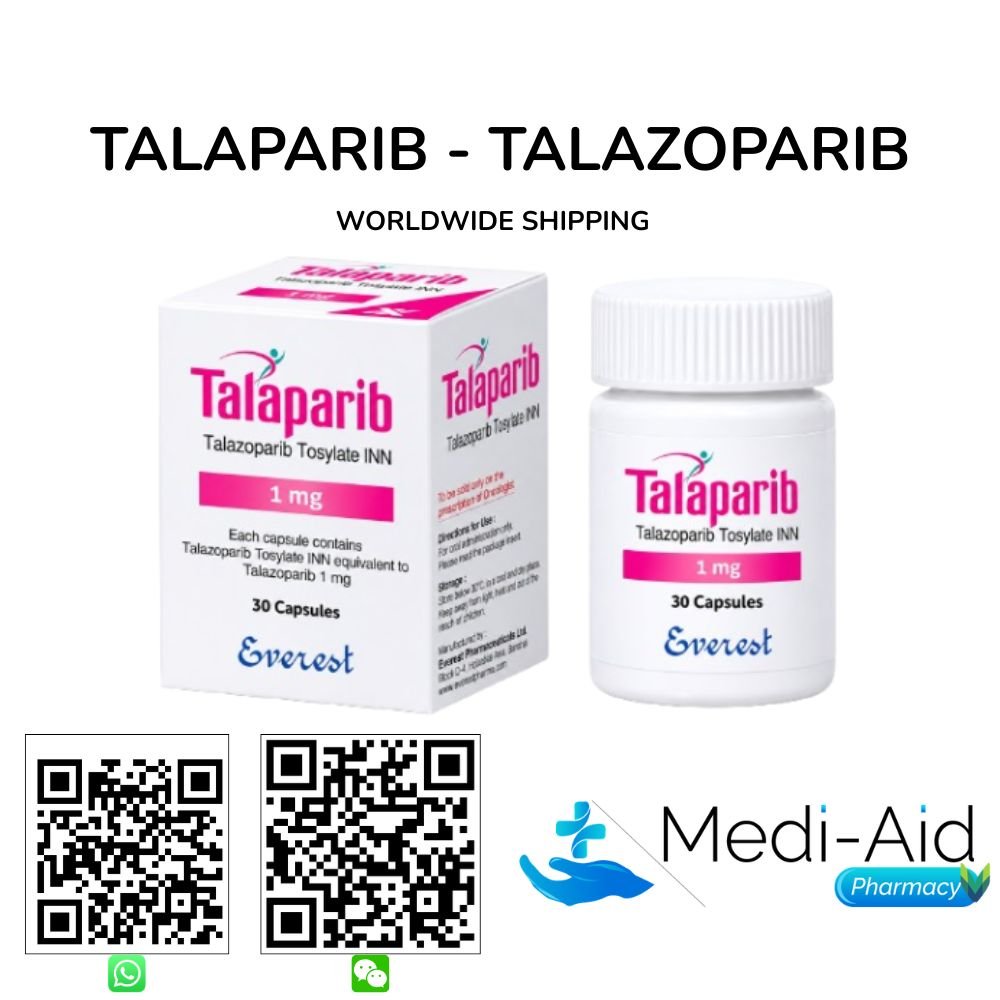
Talaparib 1 MG (Talazoparib) is a highly potent, orally bioavailable, small-molecule dual inhibitor of poly(ADP-ribose) polymerase 1 and 2 (PARP1 and PARP2) with among the highest PARP-DNA trapping potency of any approved PARP inhibitor a targeted antineoplastic agent that inhibits PARP1 and PARP2 catalytic activity by occupying the nicotinamide adenine dinucleotide (NAD⁺)-binding pocket, blocking poly(ADP-ribosyl)ation (PARylation) at single-strand DNA break (SSB) sites, and simultaneously trapping PARP1–DNA complexes on damaged chromatin with exceptional affinity an estimated 100-fold greater PARP trapping potency than olaparib thereby preventing SSB repair, stalling DNA replication forks, generating unrepaired double-strand DNA breaks (DSBs), and inducing synthetic lethality in tumor cells deficient in BRCA1/2-mediated homologous recombination (HR) DNA repair supplied as 1 mg hard capsules, 30 capsules per pot, and manufactured by Everest Pharmaceuticals Ltd., Bangladesh.
Talazoparib, the active pharmaceutical ingredient of Talaparib, is approved as a single agent for the treatment of adult patients with deleterious or suspected deleterious germline BRCA-mutated (gBRCAm), HER2-negative locally advanced or metastatic breast cancer, and in combination with enzalutamide for adult patients with homologous recombination repair (HRR) gene-mutated metastatic castration-resistant prostate cancer (mCRPC) establishing talazoparib as a mechanistically differentiated PARP inhibitor with dual oncology indications spanning both breast cancer and prostate cancer. The recommended dose of Talaparib (Talazoparib) is 1 mg orally once daily with or without food, taken as one 1 mg hard capsule per day continuously until disease progression or unacceptable toxicity; for HRR gene-mutated mCRPC, talazoparib 0.5 mg once daily is administered in combination with enzalutamide 160 mg once daily.
The pivotal Phase 3 EMBRACA trial (NCT01945775; n=431) established talazoparib as the standard of care for germline BRCA1/2-mutated HER2-negative locally advanced or metastatic breast cancer, achieving a median progression-free survival (PFS) of 8.6 months versus 5.6 months with physician’s choice chemotherapy (hazard ratio [HR] 0.54; 95% CI 0.41–0.71; p<0.0001; 46% reduction in the risk of disease progression or death) with a confirmed objective response rate (ORR) of 62.6% versus 27.2% the first Phase 3 trial to demonstrate a statistically significant PFS and ORR benefit with a PARP inhibitor versus chemotherapy in gBRCAm HER2-negative metastatic breast cancer.
Important: Germline BRCA1/2 mutation testing using an FDA-approved companion diagnostic is mandatory before initiating talazoparib in breast cancer; for mCRPC, HRR gene alteration testing using an approved assay is required; select patients based on confirmed mutation status. Talazoparib carries a risk of myelosuppression, including Grade 3–4 anemia (39% of patients in EMBRACA), Grade 3–4 neutropenia (21%), and Grade 3–4 thrombocytopenia (15%) monitor complete blood counts (CBC) at baseline, monthly for the first 6 months, and periodically thereafter; withhold talazoparib and manage hematologic toxicity with dose reductions or transfusions as clinically indicated.
Myelodysplastic syndrome/acute myeloid leukemia (MDS/AML) has been reported in patients receiving PARP inhibitors, including talazoparib; discontinue talazoparib if MDS or AML is confirmed. Embryo-fetal toxicity: talazoparib can cause fetal harm based on its mechanism of action; verify pregnancy status before initiating talazoparib in females of reproductive potential; advise use of effective contraception during treatment and for at least 7 months after the last dose in females, and 4 months after the last dose in males; advise males not to donate sperm during treatment and for 4 months after the last dose.
The most common adverse reactions (≥20%) with talazoparib in EMBRACA were fatigue/asthenia (62%), anemia (52%), nausea (49%), neutropenia (35%), headache (33%), thrombocytopenia (27%), vomiting (25%), alopecia (25%), diarrhea (22%), and decreased appetite (21%). Do not substitute talazoparib for other PARP inhibitors without confirmed indication-specific prescribing and appropriate biomarker testing.
Searching for Talaparib 1 MG Talazoparib? Mediaid Pharmacy lists this product across its oncology medicines, breast cancer medicines, prostate cancer medicines, and Everest Pharmaceuticals medicines portfolios and ships it worldwide.
Basic Product Information of Talaparib 1 MG (Talazoparib)
| Brand Name | Talaparib 1 MG (Talazoparib) Bangladesh-manufactured generic formulation by Everest Pharmaceuticals Ltd.; the originator brand of talazoparib is Talzenna (developed and commercialized globally by Pfizer), available as 0.25 mg and 1 mg capsules in international markets |
| Product Name | Talaparib (brand name used by Everest Pharmaceuticals Ltd. for their talazoparib 1 mg hard capsule formulation) |
| Generic Name | Talazoparib (INN; also designated MDV3800 and BMN 673 during development; a highly potent, orally bioavailable, small-molecule dual inhibitor of poly(ADP-ribose) polymerase 1 and 2 [PARP1 and PARP2] with exceptional PARP-DNA trapping activity; talazoparib inhibits PARP1 and PARP2 catalytic activity by binding to the NAD⁺-binding site of the PARP catalytic domain, blocking poly(ADP-ribosyl)ation at single-strand DNA break [SSB] sites required for base excision repair [BER], and simultaneously traps PARP–DNA complexes on damaged DNA with among the highest PARP trapping potency of any approved PARP inhibitor estimated ~100-fold more potent PARP trapping than olaparib in preclinical models; trapped PARP–DNA complexes block DNA replication fork progression, converting SSBs into double-strand DNA breaks [DSBs]; in tumor cells harboring germline BRCA1/2 mutations or other HRR pathway defects, the resulting DSBs cannot be repaired by high-fidelity homologous recombination [HR], forcing reliance on error-prone non-homologous end joining [NHEJ] and ultimately inducing chromosomal instability, mitotic catastrophe, and apoptosis through synthetic lethality a mechanism that selectively targets HRR-deficient cancer cells while sparing HRR-proficient normal cells; talazoparib’s IC₅₀ for PARP1 is approximately 0.57 nM and for PARP2 is 0.29 nM, reflecting subnanomolar potency at both target enzymes; FDA approval for gBRCAm HER2-negative locally advanced or metastatic breast cancer as a single agent: October 16, 2018; FDA approval for HRR gene-mutated mCRPC in combination with enzalutamide: June 20, 2023) |
| Drug Class | PARP Inhibitor (Poly ADP-Ribose Polymerase Inhibitor); PARP1 and PARP2 Dual Inhibitor; PARP Trapper (High-Potency PARP-DNA Complex Stabilizer); Oral Small-Molecule Targeted Antineoplastic Agent; Synthetic Lethality-Exploiting HRR Deficiency Targeted Therapy; Germline BRCA1/2-Mutated Breast Cancer Targeted Oral Medicine; HRR Gene-Mutated Metastatic Castration-Resistant Prostate Cancer Combination Therapy Partner; DNA Damage Response (DDR) Pathway Inhibitor; Homologous Recombination Repair (HRR) Deficiency Synthetic Lethal Agent; Companion Diagnostic-Required Precision Oncology Medicine; Post-Endocrine Therapy or Post-Platinum-Based Chemotherapy Metastatic Breast Cancer Therapy; Enzalutamide Combination Partner for mCRPC |
| Formulation | Hard capsules for oral administration take with or without food (food does not significantly affect talazoparib bioavailability); swallow capsules whole do not open, crush, dissolve, or chew; take at approximately the same time each day; if a dose is missed, take it as soon as possible on the same day do not take two doses on the same day to make up for a missed dose; if vomiting occurs after taking a dose, do not repeat the dose take the next dose at the scheduled time the following day; for mCRPC indication, administer talazoparib 0.5 mg once daily in combination with enzalutamide 160 mg once daily; for breast cancer indication, administer talazoparib 1 mg once daily as a single agent; handle with care if capsule contents contact skin or mucous membranes, wash thoroughly with soap and water; do not expose capsules to moisture |
| Available Strengths | 1 mg hard capsule per capsule the recommended daily dose for the gBRCAm HER2-negative breast cancer indication is 1 mg once daily (one 1 mg capsule per day); dose reductions for toxicity are implemented in the following sequence: first dose reduction to 0.75 mg once daily; second dose reduction to 0.5 mg once daily; third dose reduction to 0.25 mg once daily; permanently discontinue if patients are unable to tolerate 0.25 mg once daily; for the mCRPC indication in combination with enzalutamide, the starting dose of talazoparib is 0.5 mg once daily (using 0.5 mg or two 0.25 mg capsules where available); dose reductions for toxicity in the mCRPC combination setting follow the same step-wise reduction sequence; dose reductions are indicated for Grade 3 or 4 adverse reactions including severe anemia, neutropenia, thrombocytopenia, and other Grade 3–4 non-hematologic toxicities; renal impairment dose adjustment: reduce starting dose to 0.75 mg once daily for moderate renal impairment (CrCl 30–59 mL/min) and to 0.5 mg once daily for severe renal impairment (CrCl 15–29 mL/min); no dose adjustment required for mild renal impairment or mild-to-moderate hepatic impairment |
| Available Pack Size | 30 capsules per pot; at the recommended dose of 1 mg once daily for the breast cancer indication, one 30-capsule pot supplies 30 days (one complete treatment month) of therapy; for a continuous daily dosing regimen without dose reductions, one pot per 30-day period is required per patient simplifying monthly procurement planning for oncology departments, hospital pharmacies, and patient access programs; institutions managing multiple patients simultaneously on talazoparib calculate monthly procurement by multiplying the number of active patients by one 30-capsule pot per patient per month; procurement planning should account for potential dose reductions (which reduce per-capsule consumption at reduced dose levels) and treatment interruptions; the 30-capsule pot format directly aligns with oncology clinic monthly dispensing cycles and simplifies patient adherence tracking |
| Dosing Schedule | Breast Cancer Indication Recommended Dose: Talazoparib 1 mg (one 1 mg hard capsule) orally once daily with or without food, administered continuously until disease progression or unacceptable toxicity. mCRPC Indication (Combination): Talazoparib 0.5 mg once daily in combination with enzalutamide 160 mg once daily; patients should also receive a gonadotropin-releasing hormone (GnRH) analogue or have had a bilateral orchiectomy. Duration: Continue until disease progression or unacceptable toxicity in both indications. Dose Reductions for Toxicity: First dose reduction: 0.75 mg once daily; second dose reduction: 0.5 mg once daily; third dose reduction: 0.25 mg once daily; permanently discontinue if Grade 3 or 4 adverse reactions persist at 0.25 mg daily dose level. Renal Impairment Dose Adjustment: Moderate renal impairment (CrCl 30–59 mL/min): 0.75 mg once daily; severe renal impairment (CrCl 15–29 mL/min): 0.5 mg once daily. Mandatory Safety Assessments Before and During Treatment: Confirm germline BRCA1/2 mutation status (breast cancer) or HRR gene mutation status (mCRPC) using an approved companion diagnostic before initiating talazoparib; assess complete blood count (CBC) including hemoglobin, absolute neutrophil count (ANC), and platelet count at baseline; monitor CBC monthly for the first 6 months and periodically thereafter as clinically indicated; for Grade 3–4 anemia, neutropenia, or thrombocytopenia, withhold talazoparib until recovery to Grade 1 or baseline, then resume at the next lower dose level; transfusion support may be required for severe anemia; monitor for signs and symptoms of MDS/AML throughout treatment permanently discontinue talazoparib if MDS or AML is confirmed. P-glycoprotein (P-gp) Inhibitor Interaction: Avoid concomitant use of P-gp inhibitors (e.g., amiodarone, carvedilol, clarithromycin, itraconazole) with talazoparib if coadministration is unavoidable, reduce talazoparib dose to 0.75 mg once daily; resume the original dose after the P-gp inhibitor is discontinued. |
| Primary Indications | GERMLINE BRCA-MUTATED HER2-NEGATIVE LOCALLY ADVANCED OR METASTATIC BREAST CANCER: Talazoparib Single-Agent Therapy for gBRCAm HER2-Negative Locally Advanced or Metastatic Breast Cancer (EMBRACA): Talazoparib 1 mg once daily orally as a single agent for adult patients with deleterious or suspected deleterious germline BRCA1 or BRCA2 mutations whose breast cancer is HER2-negative (including triple-negative breast cancer [TNBC] and HR+/HER2-negative subtypes) and locally advanced or metastatic. Germline BRCA1/2 mutation status must be confirmed using an approved companion diagnostic test before initiating talazoparib. Based on Phase 3 EMBRACA (NCT01945775; n=431): median PFS 8.6 months (talazoparib) versus 5.6 months (physician’s choice chemotherapy); HR 0.54; 95% CI 0.41–0.71; p<0.0001 (46% reduction in risk of disease progression or death); confirmed ORR 62.6% versus 27.2%; median duration of response 5.4 months; FDA approval: October 16, 2018. The indication covers patients who have received no more than 3 prior chemotherapy regimens for locally advanced or metastatic disease; prior platinum therapy is allowed if not discontinued due to disease progression. HRR GENE-MUTATED METASTATIC CASTRATION-RESISTANT PROSTATE CANCER (mCRPC) IN COMBINATION WITH ENZALUTAMIDE: |
| Manufacturer / Brand | Everest Pharmaceuticals Ltd., Headquartered in Dhaka, Bangladesh; Everest Pharmaceuticals Ltd. is a licensed pharmaceutical manufacturer based in Bangladesh specializing in the production of generic oncology, specialty, and essential medicines; Talaparib 1 MG represents Everest Pharmaceuticals’ talazoparib formulation manufactured under applicable pharmaceutical standards; Everest Pharmaceuticals Ltd. supplies specialty oncology generics including PARP inhibitors, targeted therapies, and antineoplastic medicines to oncology programs, hospital pharmacies, and patients globally; the originator molecule talazoparib (Talzenna) was developed by Medivation and subsequently acquired and commercialized globally by Pfizer following the acquisition of Medivation in 2016 |
| Global Supplier | Mediaid Pharmacy, Worldwide Shipping Available |
| Storage Conditions | Store at controlled room temperature, 20°C to 25°C (68°F to 77°F); excursions permitted between 15°C and 30°C (59°F to 86°F). Store in the original tightly closed pot/container. Protect from light and moisture. Keep out of the reach of children. Talazoparib hard capsules do not require refrigerated cold-chain storage, which simplifies international shipping logistics compared to injectable biologic therapies; however, capsules must be protected from excessive heat, humidity, and moisture during transport and storage. Handle with care avoid contact of capsule contents with skin, eyes, or mucous membranes; wash thoroughly with soap and water if contact occurs. Do not use if the packaging is damaged, the security seal is broken, or the product appears tampered with. Discard any unused capsules after the expiry date printed on the pot. |
How Talaparib (Talazoparib) Works: Dual PARP1/PARP2 Inhibition, High-Potency PARP-DNA Trapping, Synthetic Lethality in BRCA-Mutated and HRR-Deficient Tumors, and Replication Fork Collapse in Germline BRCA1/2-Mutated Breast Cancer and HRR Gene-Mutated Prostate Cancer
Talazoparib (Talaparib) exerts its antitumor activity through two mechanistically synergistic actions targeting PARP1 and PARP2: catalytic inhibition of poly(ADP-ribosyl)ation (PARylation) and high-potency PARP-DNA trapping. PARP1 and PARP2 are nuclear enzymes that catalyze the covalent addition of poly(ADP-ribose) (PAR) chains to target proteins at sites of single-strand DNA breaks (SSBs), using NAD⁺ as the ADP-ribose donor substrate; PARylation serves as the primary molecular signal that recruits base excision repair (BER) scaffold proteins including XRCC1, DNA polymerase β, and DNA ligase III to SSB sites, enabling rapid, high-fidelity SSB repair and preventing SSB accumulation and replication fork stalling.
Talazoparib occupies the NAD⁺-binding (nicotinamide) pocket within the PARP catalytic domain with subnanomolar affinity (IC₅₀ ≈ 0.57 nM for PARP1; 0.29 nM for PARP2), blocking the PARylation reaction and preventing BER scaffold recruitment. Beyond catalytic inhibition the shared mechanism of all approved PARP inhibitors talazoparib uniquely stabilizes the PARP1–DNA complex in the trapped, closed conformation with estimated ~100-fold greater PARP-trapping potency than olaparib in preclinical models; trapped PARP–DNA complexes are more cytotoxic than unrepaired SSBs alone because they represent bulky protein–DNA adducts that physically obstruct advancing DNA replication forks, converting SSBs into double-strand DNA breaks (DSBs) at the fork junction a structurally distinct and more lethal class of DNA lesion that cannot be repaired by BER and instead requires high-fidelity DSB repair mechanisms, principally homologous recombination (HR).
The synthetic lethality mechanism that confers tumor selectivity to talazoparib depends on the status of BRCA1 and BRCA2 the two principal HR pathway tumor suppressor genes. BRCA1 and BRCA2 proteins are essential for high-fidelity HR-mediated DSB repair: BRCA2 recruits the RAD51 recombinase to DSB sites and facilitates RAD51 nucleoprotein filament formation required for homology-directed template strand invasion; BRCA1 functions upstream in HR pathway activation, end resection, and checkpoint coordination.
In tumor cells harboring deleterious germline BRCA1 or BRCA2 mutations (gBRCAm), functional BRCA protein is absent due to biallelic inactivation (germline pathogenic variant plus somatic loss of the wild-type allele), rendering the HR repair pathway non-functional; talazoparib-induced trapped PARP–DNA complexes and replication-fork-associated DSBs in these BRCA-deficient cells cannot be repaired by HR and are instead processed by error-prone non-homologous end joining (NHEJ) or single-strand annealing (SSA), causing chromosomal rearrangements, genomic instability, mitotic catastrophe, and ultimately apoptotic cell death a mechanism of selective synthetic lethality that exploits the pre-existing HR repair deficiency created by BRCA1/2 mutation while sparing HR-proficient normal cells that retain functional BRCA-mediated DSB repair capacity.
The same synthetic lethality mechanism extends to other genes in the HRR pathway including ATM, CDK12, CHEK2, FANCA, PALB2, RAD51C, RAD51D, and BRIP1 explaining talazoparib’s clinical activity in HRR gene-mutated mCRPC in combination with enzalutamide as demonstrated in the Phase 3 TALAPRO-2 trial. Enzalutamide’s androgen receptor (AR) blockade mechanism is synergistic with talazoparib’s PARP inhibition because AR signaling regulates transcription of HR pathway genes including BRCA1 and RAD51; androgen deprivation reduces HR gene expression, amplifying HRR deficiency in mCRPC cells and sensitizing them to PARP inhibitor-mediated synthetic lethality.
Visit the Mediaid Pharmacy breast cancer medicines collection for the complete PARP inhibitor and germline BRCA-mutated breast cancer therapy portfolio, and the prostate cancer medicines range for HRR gene-mutated mCRPC combination therapies.
Global Supplier: Mediaid Pharmacy Worldwide Shipping for Talaparib 1 MG (Talazoparib)
Mediaid Pharmacy is a Dhaka-based supplier of specialty targeted oncology, breast cancer, prostate cancer, and rare disease medicines with worldwide shipping to patients, oncology departments, infusion units, germline BRCA-mutated breast cancer treatment programs, hospital pharmacies, oncology day units, patient access programs, and international distributors across all regions. Talaparib 1 MG (Talazoparib), manufactured by Everest Pharmaceuticals Ltd. in Bangladesh, is supplied as 1 mg hard capsules, 30 capsules per pot, with pricing quotations, stock confirmation, full product documentation, shipping arrangements, and end-to-end international delivery tracking for every order.
The procurement planning significance of the 30-capsule pot format is directly tied to talazoparib’s continuous once-daily oral dosing architecture: at the recommended dose of 1 mg once daily for the breast cancer indication, one 30-capsule pot per patient per 30-day period is required; for institutions managing multiple patients simultaneously across different treatment cycles, monthly procurement is calculated by multiplying the number of active talazoparib-receiving patients by one pot per patient per month.
Germline BRCA1/2-mutated HER2-negative metastatic breast cancer programs managing long-duration talazoparib maintenance therapy until disease progression; triple-negative and HR-positive metastatic breast cancer centers sourcing talazoparib for gBRCAm patients post-chemotherapy; HRR gene-mutated mCRPC programs co-sourcing talazoparib with enzalutamide for the TALAPRO-2-validated combination regimen; hospital formulary procurement departments sourcing targeted oncology medicines including PARP inhibitors; and individual patients and families sourcing talazoparib for germline BRCA-mutated metastatic breast cancer treatment can contact the Mediaid Pharmacy team through WhatsApp, phone, or email for Talaparib 1 MG stock availability, current pricing, shipping options, and international delivery timelines.
Why Choose Talaparib 1 MG (Talazoparib) from Mediaid Pharmacy?
Talaparib (Talazoparib) from Everest Pharmaceuticals Ltd. delivers the validated dual PARP1/PARP2 catalytic inhibition and high-potency PARP-DNA trapping mechanism of one of the most potent PARP inhibitors available an FDA-approved targeted oral therapy with regulatory approval in gBRCAm HER2-negative metastatic breast cancer and HRR gene-mutated mCRPC, grounded in landmark Phase 3 clinical trial evidence (EMBRACA and TALAPRO-2) supplied as 1 mg hard capsules in a 30-capsule pot, enabling convenient once-daily oral self-administration without IV infusion infrastructure. Talazoparib is pharmacologically and clinically distinguished across the PARP inhibitor class and the broader targeted oncology landscape by four evidence-based attributes.
First, talazoparib carries among the highest PARP-DNA trapping potency of any approved PARP inhibitor with preclinical data estimating ~100-fold greater PARP trapping activity compared to olaparib a mechanistic differentiation that translates into dual cytotoxic mechanism: PARP catalytic inhibition (blocking BER and SSB repair) plus PARP-DNA complex stabilization (physically blocking DNA replication forks and generating DSBs), producing greater per-unit antitumor activity in BRCA-deficient preclinical models than catalytic inhibition alone; this high PARP trapping potency provides the mechanistic rationale for talazoparib’s clinical activity at the 1 mg once-daily dose and its demonstrated superiority to chemotherapy in the EMBRACA trial (median PFS 8.6 versus 5.6 months; HR 0.54; p<0.0001; 46% reduction in risk of disease progression or death; confirmed ORR 62.6% versus 27.2%).
Second, talazoparib has demonstrated statistically significant and clinically meaningful efficacy versus chemotherapy across both triple-negative (TNBC) and HR-positive/HER2-negative gBRCAm breast cancer subtypes the EMBRACA trial enrolled patients with gBRCAm breast cancer regardless of HR status, with TNBC comprising approximately 45% of the talazoparib arm establishing talazoparib as a subtype-agnostic targeted therapy for gBRCAm breast cancer applicable to both TNBC (a subtype with limited targeted therapy options) and HR-positive/HER2-negative disease (where talazoparib provides an alternative to endocrine therapy-based approaches for BRCA-mutated patients).
Third, talazoparib’s once-daily oral hard capsule formulation enables patient self-administration at home without IV infusion center visits, contrasting with chemotherapy regimens (capecitabine, eribulin, gemcitabine, vinorelbine) that require IV administration infrastructure or frequent clinic attendance the oral nature of talazoparib is particularly clinically meaningful in resource-limited settings, outpatient oncology programs, and patient populations where travel to infusion centers represents a treatment adherence barrier; in EMBRACA, patient-reported outcomes (PROs) on the EORTC QLQ-C30 and QLQ-BR23 instruments demonstrated that talazoparib produced statistically significant and clinically meaningful improvements in global health status/quality of life and time to clinically meaningful deterioration compared to chemotherapy.
Fourth, talazoparib’s dual FDA-approved indication spanning both breast cancer (gBRCAm, HER2-negative) and prostate cancer (HRR gene-mutated mCRPC in combination with enzalutamide) reflects the breadth of clinical evidence supporting talazoparib’s mechanism of synthetic lethality across BRCA-mutated and HRR-deficient solid tumors positioning talazoparib as a clinically versatile PARP inhibitor within oncology programs managing patients with germline BRCA1/2 mutations who may develop multiple BRCA-associated malignancies.
To source the complete range of PARP inhibitors, germline BRCA-mutated breast cancer therapies, and HRR-targeted prostate cancer medicines, visit the Mediaid Pharmacy breast cancer medicines portfolio, the oncology medicines collection, the prostate cancer medicines range, and the Everest Pharmaceuticals medicines portfolio, and contact the team for a personalized quotation and international shipping confirmation.
Frequently Asked Questions About Talaparib 1 MG (Talazoparib)
What is Talaparib 1 MG (Talazoparib) used for?
Talaparib 1 MG (Talazoparib) is an oral PARP inhibitor with two FDA-approved indications: (1) as a single agent for adult patients with deleterious or suspected deleterious germline BRCA1/2-mutated (gBRCAm), HER2-negative locally advanced or metastatic breast cancer (including both triple-negative and HR-positive/HER2-negative subtypes); and (2) in combination with enzalutamide for adult patients with homologous recombination repair (HRR) gene-mutated metastatic castration-resistant prostate cancer (mCRPC). EMBRACA (Phase 3, NCT01945775; n=431): talazoparib 1 mg once daily versus physician’s choice chemotherapy (capecitabine, eribulin, gemcitabine, or vinorelbine) in gBRCAm HER2-negative locally advanced or metastatic breast cancer; median PFS 8.6 months versus 5.6 months (HR 0.54; 95% CI 0.41–0.71; p<0.0001; 46% reduction in risk of disease progression or death); confirmed ORR 62.6% versus 27.2%; FDA approval October 16, 2018. TALAPRO-2 (Phase 3, NCT03395197; HRR-mutated subgroup n=399): talazoparib 0.5 mg + enzalutamide versus placebo + enzalutamide in HRR gene-mutated mCRPC; median rPFS not reached versus 13.8 months (HR 0.46; 95% CI 0.30–0.70); FDA approval June 20, 2023. Germline BRCA1/2 mutation testing (breast cancer) and HRR gene testing (mCRPC) using approved companion diagnostics are mandatory before initiating talazoparib. Talaparib 1 MG (Talazoparib), manufactured by Everest Pharmaceuticals Ltd., is available through Mediaid Pharmacy with worldwide shipping to patients and germline BRCA-mutated breast cancer treatment programs globally.
What is the generic name of Talaparib?
The generic name (International Nonproprietary Name, INN) of Talaparib is talazoparib (also designated BMN 673 and MDV3800 during preclinical and clinical development). Talazoparib is a highly potent, orally bioavailable, small-molecule dual inhibitor of PARP1 and PARP2 with the mechanistic distinction of high-potency PARP-DNA trapping talazoparib stabilizes the PARP-DNA complex with an estimated ~100-fold greater PARP trapping potency than olaparib in preclinical models, translating into dual antitumor mechanisms: catalytic PARP inhibition (blocking PARylation and SSB repair via BER) plus physical PARP-DNA complex trapping (blocking DNA replication fork progression and generating lethal DSBs). This dual mechanism of action catalytic inhibition plus PARP trapping produces synthetic lethality in tumor cells deficient in BRCA1- or BRCA2-mediated homologous recombination repair. Talazoparib is mechanistically distinct from other approved PARP inhibitors: olaparib (Lynparza, AstraZeneca/MSD) is a PARP1/2 inhibitor with lower PARP trapping potency and broader approved indications across breast, ovarian, prostate, pancreatic, and endometrial cancers; niraparib (Zejula, GSK) is a PARP1/2 inhibitor approved for ovarian, fallopian tube, and primary peritoneal cancer; rucaparib (Rubraca, Clovis) was a PARP1/2/3 inhibitor approved for ovarian cancer and mCRPC; olaparib has a longer half-life requiring twice-daily dosing whereas talazoparib achieves once-daily dosing at 1 mg. Talazoparib was initially developed by BioMarin Pharmaceutical, subsequently acquired by Medivation, and then commercialized globally by Pfizer (following its acquisition of Medivation in 2016) under the brand name Talzenna. Mediaid Pharmacy distributes Talaparib 1 MG Talazoparib by Everest Pharmaceuticals globally with worldwide shipping to patients, oncology programs, and hospital pharmacies.
What are the side effects of Talaparib (Talazoparib)?
The most clinically significant adverse effects of talazoparib are myelosuppression (anemia, neutropenia, thrombocytopenia), and rare but serious events including MDS/AML and embryo-fetal toxicity. Anemia is the most common and clinically significant hematologic toxicity: all-grade anemia occurred in 52% of patients receiving talazoparib in EMBRACA; Grade 3–4 anemia occurred in approximately 39% of patients the highest frequency of any single adverse reaction requiring CBC monitoring at baseline, monthly for the first 6 months, and periodically thereafter; management includes dose reductions, treatment interruptions, and red blood cell transfusions as clinically indicated. Neutropenia: 35% all-grade; Grade 3–4 in approximately 21% monitor ANC and manage with dose modifications; G-CSF use may be considered per institutional guidelines. Thrombocytopenia: 27% all-grade; Grade 3–4 in approximately 15% monitor platelet counts and manage with dose modifications. Nausea: 49% (predominantly Grade 1–2; taking talazoparib with food may reduce nausea). Fatigue/Asthenia: 62% (all-grade; Grade 3–4: approximately 3%) the most common adverse reaction overall; manage with supportive care and dose modifications for Grade 3–4. Headache: 33%. Vomiting: 25%. Alopecia: 25% (alopecia was more common with talazoparib than with physician’s choice chemotherapy in EMBRACA). Diarrhea: 22%. Decreased appetite: 21%. MDS/AML: myelodysplastic syndrome and acute myeloid leukemia have been reported in patients receiving PARP inhibitors; monitor for hematologic symptoms; permanently discontinue talazoparib if confirmed. Embryo-fetal toxicity: talazoparib can cause fetal harm based on its mechanism of action verify pregnancy status and ensure effective contraception as described in prescribing information. All patients initiating Talaparib (Talazoparib) should have baseline CBC, renal function, and germline BRCA/HRR mutation testing completed, and treatment initiated under the supervision of a qualified oncologist experienced in managing PARP inhibitor toxicities.
Do I need a BRCA mutation test before receiving Talaparib (Talazoparib) for breast cancer?
Yes. Germline BRCA1/2 mutation testing using an FDA-approved companion diagnostic is a mandatory prerequisite before initiating Talaparib (Talazoparib) for the breast cancer indication. Talazoparib is indicated exclusively for patients with gBRCAm HER2-negative locally advanced or metastatic breast cancer patients with BRCA-wild-type tumors did not benefit from PARP inhibition in the clinical trial data, as talazoparib’s synthetic lethality mechanism is specifically dependent on the absence of functional BRCA1/2-mediated HR repair. The FDA-approved companion diagnostic for talazoparib in breast cancer is the BRACAnalysis CDx (Myriad Genetics) a germline-based assay that tests blood or saliva samples for deleterious or suspected deleterious BRCA1 and BRCA2 mutations; this germline test reflects BRCA1/2 mutation status in constitutional DNA (blood or saliva) rather than somatic tumor DNA, making it appropriate for identifying hereditary BRCA1/2 mutation carriers regardless of tumor tissue availability. For patients with locally advanced or metastatic breast cancer who have not previously undergone germline BRCA testing, the BRACAnalysis CDx result provides both treatment selection guidance (talazoparib eligibility) and hereditary cancer risk information for the patient and family members. Germline BRCA1/2 testing is not optional for the breast cancer indication it is both a clinical requirement for talazoparib eligibility and a necessary step in hereditary breast and ovarian cancer (HBOC) syndrome evaluation. For the mCRPC indication, HRR gene alteration testing using an approved tissue or liquid biopsy assay is required. Contact Mediaid Pharmacy for Talaparib 1 MG availability; visit the breast cancer medicines collection for germline BRCA-mutated breast cancer treatment options including PARP inhibitors.
How effective is Talaparib (Talazoparib) for germline BRCA-mutated HER2-negative metastatic breast cancer?
Talazoparib demonstrated statistically significant and clinically meaningful superiority over physician’s choice chemotherapy across progression-free survival, objective response rate, and patient-reported quality of life outcomes in gBRCAm HER2-negative locally advanced or metastatic breast cancer in the Phase 3 EMBRACA trial (NCT01945775) the defining Phase 3 study establishing talazoparib as the standard of care single-agent targeted therapy for gBRCAm HER2-negative metastatic breast cancer. EMBRACA randomized 431 patients with gBRCAm HER2-negative locally advanced or metastatic breast cancer (287 to talazoparib 1 mg once daily; 144 to physician’s choice chemotherapy capecitabine, eribulin, gemcitabine, or vinorelbine) who had received up to 3 prior chemotherapy regimens for locally advanced or metastatic disease and had prior anthracycline and/or taxane exposure (unless contraindicated) in the neoadjuvant, adjuvant, or metastatic setting. The primary endpoint progression-free survival by blinded independent central review demonstrated a median PFS of 8.6 months (talazoparib) versus 5.6 months (chemotherapy) (HR 0.54; 95% CI 0.41–0.71; p<0.0001), representing a 46% reduction in the risk of disease progression or death and a 3.0-month absolute improvement in median PFS. The confirmed objective response rate (ORR) was 62.6% with talazoparib versus 27.2% with chemotherapy; median duration of response was 5.4 months in the talazoparib arm. Critically, in the patient-reported outcomes analysis, talazoparib produced a statistically significant and clinically meaningful delay in time to clinically meaningful deterioration in global health status/quality of life (8.0 months versus 4.5 months; HR 0.38) compared to chemotherapy on the EORTC QLQ-C30 a clinically important finding demonstrating that talazoparib’s superiority in efficacy was accompanied by better preservation of quality of life than chemotherapy. Talaparib 1 MG (Talazoparib) is available through Mediaid Pharmacy with worldwide shipping; visit the breast cancer medicines collection for the complete PARP inhibitor and gBRCAm breast cancer targeted therapy portfolio.
What is the difference between Talaparib (Talazoparib) and other PARP inhibitors for BRCA-mutated breast cancer?
Talaparib (Talazoparib) differs from other approved PARP inhibitors olaparib (Lynparza) and niraparib (Zejula) across mechanism, clinical evidence in breast cancer, indication scope, and adverse effect profile. Talazoparib versus olaparib (Lynparza, AstraZeneca/MSD): both are PARP1/2 inhibitors with gBRCAm HER2-negative metastatic breast cancer indications; olaparib was FDA-approved for gBRCAm HER2-negative metastatic breast cancer based on the Phase 3 OlympiAD trial (median PFS 7.0 versus 4.2 months; HR 0.58); talazoparib demonstrated a larger PFS benefit versus chemotherapy in EMBRACA (median PFS 8.6 versus 5.6 months; HR 0.54) and a substantially higher ORR (62.6% versus 27.2% for talazoparib; 59.9% versus 28.8% for olaparib in gBRCAm HER2-negative); the most critical mechanistic distinction is PARP trapping potency talazoparib exhibits estimated ~100-fold greater PARP-DNA complex trapping activity than olaparib in preclinical models, delivering dual cytotoxic mechanisms (catalytic inhibition + PARP trapping) versus primarily catalytic inhibition for olaparib; olaparib requires twice-daily dosing (300 mg twice daily), whereas talazoparib achieves efficacy with once-daily dosing (1 mg once daily); talazoparib’s hematologic toxicity (Grade 3–4 anemia 39%) is more pronounced than olaparib’s. Talazoparib versus niraparib (Zejula, GSK): niraparib is not currently FDA-approved for breast cancer (approved for ovarian, fallopian tube, and primary peritoneal cancer maintenance therapy); talazoparib is specifically approved in breast cancer. Key differentiating advantage of talazoparib: the highest PARP trapping potency among approved PARP inhibitors and once-daily oral dosing convenience. Visit the Mediaid Pharmacy oncology medicines collection for the complete PARP inhibitor portfolio and gBRCAm breast cancer targeted therapy options, including talazoparib and other oncology medicines available with worldwide shipping.
Is Talaparib (Talazoparib) safe during pregnancy or while breastfeeding?
Talaparib (Talazoparib) can cause fetal harm based on its mechanism of action and nonclinical reproductive toxicology findings talazoparib should not be used during pregnancy. PARP1 and PARP2 enzymes are essential for normal cell division, DNA repair, and embryonic development; inhibition of PARP activity by talazoparib is expected to disrupt normal fetal cell proliferation and survival through DNA repair pathway compromise. Nonclinical animal studies in rats demonstrated embryotoxicity, fetotoxicity, teratogenicity, and decreased fetal body weight at clinically relevant exposures. Contraception requirement for females: females of reproductive potential must use effective contraception during talazoparib treatment and for 7 months after the last dose, reflecting talazoparib’s terminal elimination half-life of approximately 90 hours and the standard reproductive safety margin; pregnancy testing is required before initiating talazoparib in females of reproductive potential. Talazoparib should be immediately discontinued if pregnancy is confirmed during treatment. Contraception requirement for males: males with female partners of reproductive potential or pregnant partners must use effective contraception during talazoparib treatment and for 4 months after the last dose. Sperm donation: males receiving talazoparib should not donate sperm during treatment and for 4 months after the last dose. Breastfeeding: there are no data on the presence of talazoparib in human breast milk, the effects on the breastfed infant, or the effects on milk production; because of the potential for serious adverse reactions (including myelosuppression and theoretical teratogenicity) in breastfed infants, breastfeeding is not recommended during talazoparib treatment and for 1 month after the last dose. Female and male fertility: nonclinical studies showed adverse effects on female and male reproductive organs at clinically relevant exposures; the potential effects on human fertility have not been fully characterized. All aspects of reproductive planning, contraceptive requirements, and fertility counseling should be discussed with the treating oncologist before initiating talazoparib.
Can I order Talaparib 1 MG (Talazoparib) online with worldwide shipping?
Yes. Mediaid Pharmacy supplies Talaparib 1 MG (Talazoparib), hard capsules, 30 capsules per pot, manufactured by Everest Pharmaceuticals Ltd. in Bangladesh, to patients, gBRCAm HER2-negative metastatic breast cancer oncology departments, HRR gene-mutated mCRPC treatment programs, hospital pharmacies, oncology day units, patient access programs, and healthcare providers globally. Talaparib 1 MG hard capsules do not require refrigerated cold-chain shipping (unlike injectable biologic therapies), which simplifies international logistics capsules are shipped with temperature-protective packaging appropriate for the destination country’s climate conditions. Contact Mediaid Pharmacy via WhatsApp, phone, or email at +8801773428128, or email info@mediaidpharmacy.com for pricing, current stock availability, shipping options, and international delivery details for your country. Germline BRCA1/2 mutation confirmation or HRR gene alteration documentation may be required for talazoparib dispensing in accordance with applicable regulatory requirements in your jurisdiction. For the complete portfolio of Everest Pharmaceuticals oncology medicines available with worldwide shipping, and for the full range of PARP inhibitors and targeted oncology medicines available from Mediaid Pharmacy, visit the respective collection pages or contact the team directly.
Order Talaparib 1 MG (Talazoparib) with Worldwide Shipping
Phone / WhatsApp: +8801773428128 | Email: info@mediaidpharmacy.com


Reviews
There are no reviews yet.