
Description
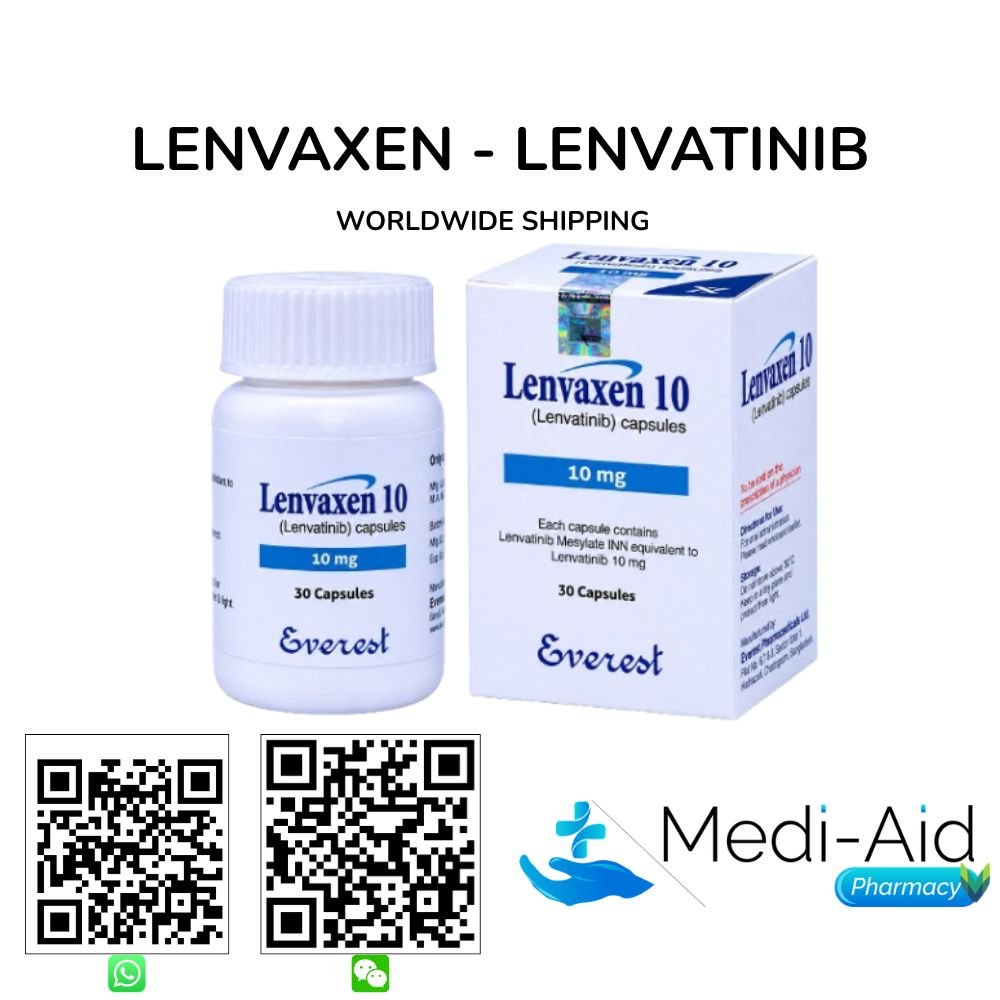
Lenvaxen 10 MG (Lenvatinib) is an oral, multi-targeted receptor tyrosine kinase inhibitor (TKI) supplied as a 10 mg hard capsule in a pack of 30 capsules per pot, manufactured by Everest Pharmaceuticals Ltd. of Bangladesh. Its active ingredient, lenvatinib, potently inhibits vascular endothelial growth factor receptors (VEGFR1, VEGFR2, VEGFR3), fibroblast growth factor receptors (FGFR1–4), platelet-derived growth factor receptor alpha (PDGFRα), RET, and KIT a unique multi-kinase inhibition profile that simultaneously suppresses pathogenic tumour angiogenesis, direct tumour cell proliferation, and immunomodulatory escape mechanisms driving cancer progression.
Lenvaxen 10 MG (Lenvatinib) is indicated for the treatment of adults with radioiodine-refractory differentiated thyroid cancer (DTC), unresectable hepatocellular carcinoma (HCC), and advanced renal cell carcinoma (RCC). In the pivotal Phase III SELECT trial the registration study for lenvatinib in radioiodine-refractory DTC lenvatinib 24 mg once daily delivered a median progression-free survival (PFS) of 18.3 months versus 3.6 months with placebo (HR 0.21; 99% CI 0.14–0.31; P<0.001), representing an 80% reduction in the risk of disease progression or death and establishing lenvatinib as a standard-of-care option in its approved oncology indications.
Searching for Lenvaxen 10 MG Lenvatinib? Mediaid Pharmacy lists this product within its comprehensive oncology medicines portfolio, and ships it worldwide.
Basic Product Information of Lenvaxen 10 MG (Lenvatinib)
| Brand Name | Lenvaxen 10 MG (Lenvatinib) |
| Product Name | Lenvaxen |
| Generic Name | Lenvatinib |
| Drug Class | Multi-Targeted Receptor Tyrosine Kinase Inhibitor (VEGFR1–3, FGFR1–4, PDGFRα, RET, KIT); Antiangiogenic Targeted Oncology Agent |
| Formulation | Hard Capsule |
| Available Strength | 10 mg |
| Available Pack Size | 30 Capsules per pot |
| Primary Indications | Radioiodine-refractory Differentiated Thyroid Cancer (DTC); Unresectable Hepatocellular Carcinoma (HCC, first-line); Advanced Renal Cell Carcinoma (RCC) |
| Manufacturer / Brand | Everest Pharmaceuticals Ltd. (Everest Pharma) |
| Country of Origin | Bangladesh |
| Categories | Everest Pharmaceuticals Medicines, Kidney Cancer Medicines, Liver Cancer Medicines, Oncology Medicines, Thyroid Cancer Medicines |
| Storage Conditions | Store below 25°C in a dry place, protected from light and moisture. Keep out of the reach of children. |
| Global Supplier | Mediaid Pharmacy, Worldwide Shipping Available |
How Lenvaxen 10 MG (Lenvatinib) Works: Multi-Kinase Inhibition of Tumour Angiogenesis and Proliferation
Lenvatinib, the active ingredient in Lenvaxen 10 MG, is a novel, orally bioavailable, multi-targeted receptor tyrosine kinase (RTK) inhibitor that simultaneously blocks vascular endothelial growth factor receptors (VEGFR1, VEGFR2, VEGFR3), fibroblast growth factor receptors (FGFR1, FGFR2, FGFR3, FGFR4), platelet-derived growth factor receptor alpha (PDGFRα), rearranged during transfection (RET) kinase, and stem cell factor receptor (KIT) a mechanistically differentiated inhibition profile that distinguishes lenvatinib from pure VEGFR-targeted agents such as sorafenib. A receptor tyrosine kinase inhibitor refers to a class of small-molecule targeted oncology drugs that competitively block the adenosine triphosphate (ATP)-binding domain of receptor kinases, preventing their autophosphorylation and downstream signal transduction.
By simultaneously suppressing VEGFR1-3 and FGFR1-4 both primary angiogenic signalling axes that tumours exploit to recruit and maintain a tumour vasculature supply lenvatinib delivers a dual-angiogenic blockade not achievable with VEGFR-selective agents alone. Lenvatinib inhibits VEGFR2 kinase with an IC₅₀ of 4.0 nM, VEGFR3 with IC₅₀ 2.3 nM, VEGFR1 with IC₅₀ 4.7 nM, and FGFR1–4 with IC₅₀ values of 61 nM, 27 nM, 52 nM, and 43 nM, respectively confirming potent, selective multi-receptor suppression across the full spectrum of pro-angiogenic targets.
The oncological significance of FGFR co-inhibition is particularly important in radioiodine-refractory differentiated thyroid cancer (DTC): FGFR-driven signalling represents a primary mechanism of acquired resistance to pure VEGFR inhibitors in DTC, and lenvatinib’s concurrent FGFR1–4 blockade directly addresses this resistance pathway, delivering durable disease control beyond the scope of single-axis angiogenesis inhibitors.
Lenvatinib’s inhibition of RET kinase which drives oncogenic signalling in RET-rearranged DTC subtypes adds a third mechanistic dimension to its antitumour activity in thyroid malignancies. In addition to its antiangiogenic effects, lenvatinib exerts direct antitumour activity by inhibiting tumour cell proliferation and survival signalling through FGFR- and KIT-dependent pathways in hepatocellular carcinoma (HCC) and renal cell carcinoma (RCC). Oncologists building comprehensive thyroid and liver cancer treatment programmes can review the complete range of thyroid cancer medicines at Mediaid Pharmacy for companion and supportive therapies.
In the pivotal Phase III SELECT trial the global registration study for lenvatinib in radioiodine-refractory DTC lenvatinib 24 mg once daily delivered a median progression-free survival of 18.3 months versus 3.6 months with placebo (HR 0.21; 99% CI 0.14–0.31; P<0.001), representing a 79% reduction in the risk of disease progression or death and an objective response rate (ORR) of 64.8% establishing lenvatinib as the global first-line standard of care in radioiodine-refractory progressive DTC. In the Phase III REFLECT trial in unresectable HCC, lenvatinib demonstrated non-inferiority to sorafenib for overall survival (median OS: 13.6 vs 12.3 months; HR 0.92; 95% CI 0.79–1.06) with significantly superior PFS (7.4 vs 3.7 months; HR 0.66; 95% CI 0.57–0.77; P<0.001) and ORR (40.6% vs 12.4%), establishing lenvatinib as the first approved first-line alternative to sorafenib in unresectable HCC in over a decade. The recommended daily dose calibrated to the capsule strength being used is determined and adjusted by the treating oncologist based on the patient’s indication, body weight, and tolerability profile.
Approved Indications of Lenvatinib (Reference Label for Lenvaxen 10 MG)
Lenvatinib, the active ingredient in Lenvaxen 10 MG, is approved internationally across three primary oncology indications in adult patients. Prescribers should confirm the exact locally approved indications on the lenvatinib product label before initiating therapy, as labelling specifics may vary by regulatory jurisdiction.
|
Radioiodine-Refractory Differentiated Thyroid Cancer (DTC) Monotherapy Lenvatinib is indicated as monotherapy for adult patients with locally recurrent or metastatic, progressive radioiodine-refractory differentiated thyroid cancer (RAI-refractory DTC). In the SELECT Phase III trial, lenvatinib 24 mg once daily reduced the risk of disease progression or death by 79% versus placebo (median PFS 18.3 vs 3.6 months; HR 0.21; 99% CI 0.14–0.31; P<0.001) with an ORR of 64.8% establishing lenvatinib as the global standard of care for progressive RAI-refractory DTC. Patients with thyroid cancer requiring targeted therapy can explore Mediaid Pharmacy’s full lenvatinib range. |
Unresectable Hepatocellular Carcinoma (HCC) First-Line Monotherapy Lenvatinib is indicated as first-line monotherapy for adults with unresectable hepatocellular carcinoma (HCC) who have not received prior systemic therapy. In the REFLECT Phase III trial, lenvatinib demonstrated non-inferiority to sorafenib for overall survival (median OS 13.6 vs 12.3 months; HR 0.92) with a statistically significant improvement in PFS (7.4 vs 3.7 months; HR 0.66; P<0.001) and ORR (40.6% vs 12.4%), making lenvatinib the first approved first-line systemic alternative to sorafenib for unresectable HCC in over ten years. Liver cancer medicines including lenvatinib are available at Mediaid Pharmacy with worldwide shipping. |
Advanced Renal Cell Carcinoma (RCC) Monotherapy or Combination Therapy Lenvatinib is indicated for adult patients with advanced renal cell carcinoma (RCC): as a first-line treatment in combination with pembrolizumab in patients with advanced RCC, and in combination with everolimus for adult patients following one prior anti-angiogenic therapy. In the Phase Ib/II study of lenvatinib plus everolimus in previously treated RCC, the combination delivered a median PFS of 14.6 months versus 5.5 months with everolimus alone (HR 0.40; 95% CI 0.24–0.68; P=0.0005). Oncologists can review the complete range of kidney cancer medicines at Mediaid Pharmacy for comprehensive RCC treatment support. |
Key Clinical Benefits of Lenvaxen 10 MG (Lenvatinib)
|
79% Reduction in Risk of Progression or Death vs Placebo in Radioiodine-Refractory DTC (SELECT Trial) The SELECT Phase III trial demonstrated that lenvatinib 24 mg once daily reduced the risk of disease progression or death by 79% versus placebo in progressive radioiodine-refractory DTC (median PFS 18.3 vs 3.6 months; HR 0.21; 99% CI 0.14–0.31; P<0.001) a more than five-fold improvement in median PFS with an ORR of 64.8%, establishing lenvatinib as the reference standard for multi-kinase inhibition in RAI-refractory thyroid malignancy. The SELECT trial enrolled 392 patients across 21 countries with progressive, radioiodine-refractory DTC, and the magnitude of PFS benefit was consistent across all pre-specified subgroups including histological DTC subtypes. |
Superior PFS and ORR vs Sorafenib as First-Line Therapy for Unresectable HCC (REFLECT Trial) In the REFLECT Phase III trial of unresectable HCC, lenvatinib demonstrated non-inferiority to sorafenib for overall survival (median OS 13.6 vs 12.3 months; HR 0.92; 95% CI 0.79–1.06) while achieving statistically significant improvements over sorafenib in PFS (7.4 vs 3.7 months; HR 0.66; P<0.001), time to progression (TTP: 7.4 vs 3.7 months; HR 0.60; P<0.001), and ORR (40.6% vs 12.4%), making lenvatinib the first active first-line HCC treatment to demonstrate superiority over sorafenib in secondary efficacy endpoints and the preferred first-line option for patients with unresectable HCC for whom tumour volume, vascular invasion, and clinical status permit its use. |
Dual VEGFR + FGFR Inhibition Mechanistically Differentiated Multi-Kinase Profile vs Sorafenib Lenvatinib’s concurrent inhibition of both VEGFR1–3 and FGFR1–4 distinguishes it mechanistically from sorafenib and other pure VEGFR-targeted agents: FGFR-mediated signalling is a primary resistance escape mechanism against VEGFR-only inhibitors in DTC and HCC, and dual VEGFR + FGFR blockade directly counters this pathway. Additionally, lenvatinib’s inhibition of RET kinase provides direct antitumour activity in RET-rearranged DTC subtypes. This multi-target mechanism drives the depth of response including partial and complete tumour shrinkage observed across SELECT, REFLECT, and RCC studies, achieving ORRs of 40–65% that substantially exceed those seen with sorafenib or sunitinib monotherapy in the same patient populations. |
Clinical Monitoring Requirements During Lenvaxen 10 MG (Lenvatinib) Treatment
Blood pressure monitoring is the primary ongoing safety requirement during lenvatinib therapy. Hypertension is the most frequently reported adverse effect of lenvatinib across all approved indications, occurring in approximately 42–73% of patients in clinical trials. The reference label requires blood pressure assessment prior to initiating lenvatinib and monitoring throughout treatment; anti-hypertensive therapy should be initiated or intensified promptly when hypertension develops, and lenvatinib dose reduction, interruption, or discontinuation implemented in accordance with the specified management algorithm for severe or uncontrolled hypertension (≥Grade 3). Systolic blood pressure ≥160 mmHg or diastolic ≥100 mmHg despite optimal anti-hypertensive therapy requires dose interruption; Grade 4 hypertension with life-threatening consequences requires permanent discontinuation.
Hepatic function monitoring is mandated throughout lenvatinib treatment, with particular vigilance required for patients with underlying hepatic impairment or pre-existing HCC, in whom lenvatinib’s hepatotoxic potential overlaps with ongoing liver disease. The reference label requires liver function test (LFT) assessment specifically ALT, AST, alkaline phosphatase, and total bilirubin at baseline, every 2 weeks during the first 2 months of treatment, and then monthly thereafter. Grade 3 or 4 hepatotoxicity requires treatment interruption and assessment; permanent discontinuation is required for Grade 4 hepatic failure.
Renal function and urinary protein monitoring are also required: proteinuria has been reported in approximately 34% of lenvatinib-treated patients and urine protein should be monitored regularly by urine dipstick; ≥2+ proteinuria on dipstick requires 24-hour urine protein assessment, and lenvatinib should be interrupted if 24-hour urine protein is ≥2 g. Thyroid function monitoring (TSH) is recommended for all patients at baseline and periodically during treatment, as lenvatinib-associated hypothyroidism occurs in 14–57% of patients depending on the indication most prominently in RCC patients who have intact thyroid glands prior to treatment.
ECG and cardiac function monitoring are indicated for patients with risk factors for QTc prolongation, pre-existing cardiac disease, or concurrent use of QTc-prolonging medications, as lenvatinib may prolong the QT interval. Oncologists managing patients receiving lenvatinib alongside other targeted agents or systemic therapies can review the full range of oncology medicines available at Mediaid Pharmacy for companion therapy support.
Drug Interactions and Important Safety Information for Lenvaxen 10 MG (Lenvatinib)
The most clinically relevant drug interactions for lenvatinib involve agents that prolong the QT interval. Lenvatinib itself may prolong QTc, and concurrent use of antiarrhythmic drugs (amiodarone, sotalol, dronedarone), fluoroquinolone or macrolide antibiotics, antipsychotics, or other QTc-prolonging agents further increases this risk; ECG monitoring and electrolyte correction (particularly potassium, magnesium, and calcium) are required before and during concurrent use.
Strong CYP3A4 inhibitors including ketoconazole, itraconazole, clarithromycin, and ritonavir-boosted antiretroviral regimens may increase lenvatinib systemic exposure; although no specific dose modification is mandated in the reference label, close monitoring for treatment-related toxicities including hypertension, proteinuria, and hepatotoxicity is required when these agents are co-administered. Strong CYP3A4 inducers including rifampicin, carbamazepine, phenytoin, and St John’s Wort may substantially reduce lenvatinib plasma concentrations, potentially compromising therapeutic drug levels; avoidance of strong inducers is preferred where clinically feasible.
Lenvatinib is primarily metabolised by aldehyde oxidase and CYP3A4, with elimination occurring mainly via the faecal route (approximately 64–69% of dose). Lenvatinib is a substrate of P-glycoprotein (P-gp) but is not a clinically significant inhibitor or inducer of major CYP enzymes at therapeutic doses, minimising direct pharmacokinetic interaction risk with co-administered substrates of CYP1A2, CYP2C9, CYP2D6, and CYP3A4. Anti-hypertensive drug interactions are particularly clinically relevant given lenvatinib’s high incidence of treatment-emergent hypertension (up to 73% of patients in some trials): dose adjustments of concomitant anti-hypertensive agents are frequently required during lenvatinib therapy, and certain anti-hypertensives particularly non-dihydropyridine calcium channel blockers also carry QTc prolongation risk, necessitating careful selection.
Anticoagulation interactions require clinical awareness: lenvatinib increases the risk of arterial thromboembolic events (grade 3–4 rate approximately 2–3%) and haemorrhage, and concurrent use of anticoagulants or antiplatelet agents must be monitored carefully; INR should be monitored more frequently in patients receiving warfarin. Patients must disclose all concomitant medications including herbal preparations and over-the-counter supplements to their treating oncologist before and during Lenvaxen 10 MG therapy. Those requiring supportive or concurrent oncology agents can contact the Mediaid Pharmacy team for sourcing; the full range of liver cancer medicines available for worldwide dispatch is listed on the Mediaid Pharmacy website.
Side Effects and Precautions of Lenvaxen 10 MG (Lenvatinib)
|
Common Side Effects Hypertension (approximately 42–73% of patients across all indications; the most frequently reported adverse event with lenvatinib; requires blood pressure monitoring before and throughout treatment) Diarrhoea (approximately 42–67% of patients; most common gastrointestinal adverse event; typically managed with anti-diarrhoeal agents and dose modification as required) Fatigue and asthenia (approximately 36–67% of patients, often associated with other adverse events including anaemia, hypothyroidism, and decreased appetite) Decreased appetite and weight loss (approximately 34–54%) Nausea (~24–47%) and vomiting (~16–36%) Proteinuria (approximately 34%; requires regular urine dipstick monitoring and 24-hour urine protein assessment if ≥2+ dipstick result) Stomatitis and oral mucositis (approximately 36–41%) Hypothyroidism (approximately 14–57% depending on indication; TSH monitoring throughout treatment required) Palmar-plantar erythrodysaesthesia syndrome (hand-foot skin reaction; ~27–32%) |
Serious Warnings and Precautions Severe hypertension and hypertensive crisis: Grade 3 hypertension (≥160/100 mmHg despite anti-hypertensive therapy) requires lenvatinib dose interruption. Grade 4 hypertensive crisis with life-threatening consequences requires permanent discontinuation. Mandatory baseline and ongoing blood pressure monitoring is required throughout treatment. Hepatotoxicity and hepatic failure: Grade 3–4 liver enzyme elevations and cases of hepatic failure including fatal outcomes have been reported, particularly in HCC patients with underlying hepatic impairment. LFT monitoring every 2 weeks for the first 2 months, then monthly, is mandatory. Permanent discontinuation is required for Grade 4 hepatic failure. Arterial thromboembolic events (ATE): serious ATEs including myocardial infarction and cerebrovascular accident (Grade 3–4 rate ~2–3%) have been reported with lenvatinib. Lenvatinib should be permanently discontinued in patients who develop ATEs during treatment. Prior history of ATE within the preceding 6 months was an exclusion criterion in pivotal trials. Haemorrhage: serious and potentially fatal haemorrhagic events have been reported across all lenvatinib-treated tumour types, including tumour-related haemorrhage in patients with HCC. Grade 3–4 haemorrhage requires immediate treatment interruption; Grade 4 or life-threatening haemorrhage requires permanent discontinuation. Renal failure and impairment: lenvatinib can cause renal failure, which may lead to death. Creatinine and renal function monitoring are required at baseline and periodically throughout treatment. Grade 3 or higher renal impairment requires dose interruption or discontinuation based on severity and reversibility. Gastrointestinal perforation and fistula formation: serious gastrointestinal perforation events and fistulae have been reported; lenvatinib should be permanently discontinued if gastrointestinal perforation or life-threatening fistula occurs. Embryo-fetal toxicity: lenvatinib can cause fetal harm based on its mechanism of action and animal study data. Females of reproductive potential must use effective contraception during treatment and for at least 30 days after the final dose. Males with female partners of reproductive potential must use contraception during treatment and for at least 30 days after the last dose. Breastfeeding is not recommended during treatment or for 1 week after the final dose. |
Who Should Use Lenvaxen 10 MG (Lenvatinib)?
Lenvaxen 10 MG (Lenvatinib) is indicated for adult patients across three oncology settings: (1) locally recurrent or metastatic, progressive radioiodine-refractory differentiated thyroid cancer (RAI-refractory DTC) as monotherapy; (2) unresectable hepatocellular carcinoma (HCC) as first-line monotherapy; and (3) advanced renal cell carcinoma (RCC) in combination with pembrolizumab as first-line therapy or in combination with everolimus following one prior anti-angiogenic therapy.
For DTC, lenvatinib must only be initiated in patients whose disease has been confirmed to be refractory to radioiodine (RAI) treatment defined as one or more of: measurable disease that does not concentrate RAI; RAI-avid metastatic lesions with disease progression within 12 months of RAI therapy; cumulative RAI dose >600 mCi; or prior RAI treatment with no clinical benefit. For HCC, lenvatinib must only be initiated in patients with Child-Pugh A hepatic function; patients with Child-Pugh B or C hepatic impairment were excluded from REFLECT and have insufficient efficacy and safety data to support use.
Oncologists and treating physicians assess baseline cardiovascular function, blood pressure, hepatic and renal function, urine protein, thyroid function (TSH), and all concomitant QTc-prolonging medications before initiating Lenvaxen 10 MG. Patients with a history of arterial thromboembolic events within 6 months, uncontrolled hypertension, significant active bleeding, poorly healed surgical wounds, active gastrointestinal conditions with high perforation risk, or who are pregnant, breastfeeding, or of reproductive potential without adequate contraception require individualised risk counselling before therapy begins. For patients requiring complementary targeted therapies or supportive oncology treatments alongside lenvatinib, Mediaid Pharmacy’s kidney cancer medicine range provides a broad selection of agents available for global delivery.
Global Supplier: Mediaid Pharmacy Worldwide Shipping for Lenvaxen 10 MG (Lenvatinib)
Mediaid Pharmacy is a Dhaka-based supplier of oncology and specialty medicines with worldwide shipping. Lenvaxen 10 MG (Lenvatinib) manufactured by Everest Pharmaceuticals Ltd. of Bangladesh, formulated as 10 mg hard capsules in a 30-capsule pot is stocked and available for international supply. All orders are supported by pricing quotations, stock confirmation, and end-to-end delivery tracking. Hospitals, specialist oncology clinics, distributors, and patients can contact the Mediaid Pharmacy team through WhatsApp, phone, or WeChat for all enquiries about lenvatinib capsules for thyroid, liver, and kidney cancer including current stock availability, pricing, and international delivery timelines. Buyers sourcing multiple oncology or cancer medicines in a single consolidated shipment can browse the complete Mediaid Pharmacy catalogue before requesting a combined quotation.
Why Choose Lenvaxen 10 MG (Lenvatinib) from Mediaid Pharmacy?
Lenvaxen 10 MG (Lenvatinib) is manufactured by Everest Pharmaceuticals Ltd., one of Bangladesh’s established pharmaceutical manufacturers, and delivers the active ingredient lenvatinib the same multi-kinase inhibitor whose 24 mg once-daily regimen anchored the SELECT Phase III trial (79% reduction in risk of disease progression or death versus placebo in RAI-refractory DTC; median PFS 18.3 vs 3.6 months; HR 0.21; P<0.001) and the REFLECT Phase III trial (superior PFS and ORR vs sorafenib as first-line HCC therapy; median PFS 7.4 vs 3.7 months; HR 0.66; P<0.001).
The 10 mg capsule format enables prescribing oncologists to titrate the daily lenvatinib dose precisely according to the indication-specific reference label recommendation and the patient’s body weight and tolerability particularly relevant for the 20 mg daily dose used in certain RCC combination regimens (2 × 10 mg capsules) and for stepwise dose reductions as required by treatment-emergent adverse events. Mediaid Pharmacy supplies Lenvaxen 10 MG in its 30-capsule pot format with specialist supply support and worldwide shipping from Dhaka. Every order begins with a prescription-based enquiry that maintains supply aligned with clinical need.
To compare lenvatinib with other targeted agents for thyroid, liver, or kidney cancer, or to source additional oncology medicines, visit the Mediaid Pharmacy oncology medicines section and contact the team for a personalised quotation.
Frequently Asked Questions About Lenvaxen 10 MG (Lenvatinib)
What is Lenvaxen 10 MG (Lenvatinib) used for?
Lenvaxen 10 MG (Lenvatinib) is an oral multi-targeted receptor tyrosine kinase inhibitor (TKI) used to treat adults with radioiodine-refractory differentiated thyroid cancer (RAI-refractory DTC), unresectable hepatocellular carcinoma (HCC) as first-line therapy, and advanced renal cell carcinoma (RCC) either in combination with pembrolizumab as first-line treatment or in combination with everolimus following one prior anti-angiogenic therapy. Lenvatinib works by simultaneously blocking VEGFR1–3, FGFR1–4, PDGFRα, RET, and KIT receptor tyrosine kinases disrupting tumour angiogenesis, direct tumour cell proliferation, and immune escape mechanisms across all three approved tumour types. The SELECT Phase III trial demonstrated an 18.3-month median PFS with lenvatinib versus 3.6 months with placebo in RAI-refractory DTC (HR 0.21; P<0.001), and the REFLECT Phase III trial confirmed lenvatinib’s superiority over sorafenib in PFS and ORR as first-line HCC therapy.
What is the generic name of Lenvaxen 10 MG?
The generic name of Lenvaxen 10 MG is lenvatinib. Lenvaxen 10 MG is a hard capsule formulation containing 10 mg of lenvatinib per capsule, available in a 30-capsule pot, manufactured by Everest Pharmaceuticals Ltd. of Bangladesh. Lenvaxen is Everest Pharma’s branded generic formulation of lenvatinib the same active ingredient found in the originator medicine Lenvima (lenvatinib), developed by Eisai Co., Ltd. and approved by the FDA, EMA, and other major regulatory agencies for radioiodine-refractory DTC, unresectable HCC, and advanced RCC. The 10 mg capsule strength of Lenvaxen enables oncologists to prescribe the full range of lenvatinib doses used in clinical practice, including 20 mg/day (2 capsules), through precise combination of capsule units as directed by the treating specialist.
What is the standard dosing of Lenvaxen 10 MG (Lenvatinib) across its approved indications?
The dose must always be determined and adjusted by the treating oncologist based on the patient’s indication, body weight, renal and hepatic function, and tolerability. The reference label for lenvatinib specifies the following indication-specific starting doses: 24 mg once daily as monotherapy for radioiodine-refractory DTC; 12 mg once daily (for body weight ≥60 kg) or 8 mg once daily (for body weight <60 kg) as monotherapy for first-line unresectable HCC; 20 mg once daily in combination with pembrolizumab for first-line advanced RCC; and 18 mg once daily in combination with everolimus 5 mg for previously treated advanced RCC. With Lenvaxen 10 MG capsules, the 20 mg dose (2 × 10 mg) is achievable as a single capsule combination per the treating oncologist’s direction; other dose levels may require supplementary capsule strengths. Lenvatinib is taken orally once daily at the same time each day, with or without food, as a continuous schedule. Stepwise dose reductions to manage treatment-related toxicities should follow the reference label dose modification guidelines; never reduce or stop the dose without explicit direction from the prescribing oncologist.
What are the side effects of Lenvaxen 10 MG (Lenvatinib)?
Common side effects of lenvatinib 10 mg include hypertension (the most frequent adverse event, occurring in approximately 42–73% of patients across indications), diarrhoea (~42–67%), fatigue and asthenia (~36–67%), decreased appetite and weight loss (~34–54%), nausea (~24–47%), stomatitis (~36–41%), proteinuria (~34%), hypothyroidism (~14–57% depending on indication), palmar-plantar erythrodysaesthesia syndrome (hand-foot skin reaction; ~27–32%), and voice changes (dysphonia). Serious but less frequent adverse effects include severe or life-threatening hypertension, hepatic failure (particularly in HCC patients with underlying liver impairment), arterial thromboembolic events (myocardial infarction, cerebrovascular accident; Grade 3–4 rate ~2–3%), haemorrhage (including tumour-related haemorrhage), renal failure, and gastrointestinal perforation or fistula formation. Mandatory blood pressure monitoring, LFT assessment, urine protein testing, TSH measurement, and cardiac function surveillance are required throughout the lenvatinib treatment period. Consult your prescribing oncologist regarding your individual risk profile before and during treatment.
Does Lenvaxen 10 MG (Lenvatinib) need to be taken with food?
Lenvatinib capsules (Lenvaxen 10 MG) may be taken with or without food, as food does not significantly alter the pharmacokinetic profile of lenvatinib. However, patients should take lenvatinib at the same time each day on a consistent schedule either consistently with food or consistently without to maintain stable daily drug exposure. If a dose is missed by 12 hours or more, it should be skipped and the next scheduled dose taken at the usual time; patients must not take two doses at the same time to compensate for a missed dose. Difficulty maintaining adequate oral intake due to treatment-related nausea, vomiting, stomatitis, diarrhoea, or reduced appetite should be reported to the treating oncologist promptly, as these may necessitate anti-emetic support, mucositis management, or dose modification to avoid cumulative under-dosing.
How is blood pressure managed during Lenvaxen 10 MG (Lenvatinib) treatment?
Hypertension is the most common treatment-emergent adverse event with lenvatinib, occurring in up to 73% of patients in some trials and requiring anti-hypertensive initiation or dose adjustment in the majority. The reference label mandates blood pressure measurement at baseline with optimisation of any pre-existing hypertension before initiating lenvatinib and regular monitoring throughout treatment. Grade 2 hypertension (140–159/90–99 mmHg) can be managed with initiation or intensification of anti-hypertensive therapy while continuing lenvatinib at the same dose. Grade 3 hypertension (≥160/100 mmHg despite anti-hypertensive therapy, or medically significant) requires lenvatinib dose interruption until hypertension is controlled to ≤Grade 2, followed by dose resumption at a reduced level. Grade 4 hypertensive crisis (systolic >180 or life-threatening consequences) requires permanent discontinuation of lenvatinib. Preferred anti-hypertensive agents during lenvatinib therapy include ACE inhibitors, ARBs, and amlodipine; non-dihydropyridine CCBs (verapamil, diltiazem) carry additional QTc prolongation risk and should be used with caution.
Is Lenvaxen 10 MG (Lenvatinib) safe during pregnancy or while breastfeeding?
No. Lenvatinib can cause fetal harm based on its mechanism of action combined inhibition of VEGFR, FGFR, PDGFRα, RET, and KIT disrupts developmental signalling pathways essential for normal fetal organogenesis and vascular development and animal reproduction studies have confirmed dose-dependent embryotoxicity, fetotoxicity, and teratogenicity at clinically relevant exposures. Females of reproductive potential must use effective contraception during lenvatinib treatment and for at least 30 days after the final dose. Males with female partners of reproductive potential must also use effective contraception during treatment and for at least 30 days after the last dose, as animal data indicate potential genotoxicity. Breastfeeding is not recommended during treatment and for at least 1 week after the final dose, as it is not known whether lenvatinib or its metabolites are present in human breast milk; however, lenvatinib is excreted in the milk of lactating rats. Patients who are pregnant, planning a pregnancy, or currently breastfeeding must discuss their individual risk with their treating oncologist before initiating therapy.
Can I order Lenvaxen 10 MG (Lenvatinib) online with worldwide shipping?
Yes. Mediaid Pharmacy supplies Lenvaxen 10 MG (Lenvatinib) manufactured by Everest Pharmaceuticals Ltd. of Bangladesh, 10 mg hard capsules, 30 capsules per pot to patients and healthcare providers globally. Contact Mediaid Pharmacy via WhatsApp, phone, or WeChat at +8801773428128, or email info@mediaidpharmacy.com for pricing, current stock availability, and international delivery details for your country. Oncology teams sourcing multiple targeted agents can browse the complete selection of Everest Pharmaceuticals and other oncology medicines at Mediaid Pharmacy.
Order Lenvaxen 10 MG (Lenvatinib) with Worldwide Shipping
Phone / WhatsApp / WeChat: +8801773428128 | Email: info@mediaidpharmacy.com
Reviews
There are no reviews yet.