
Description
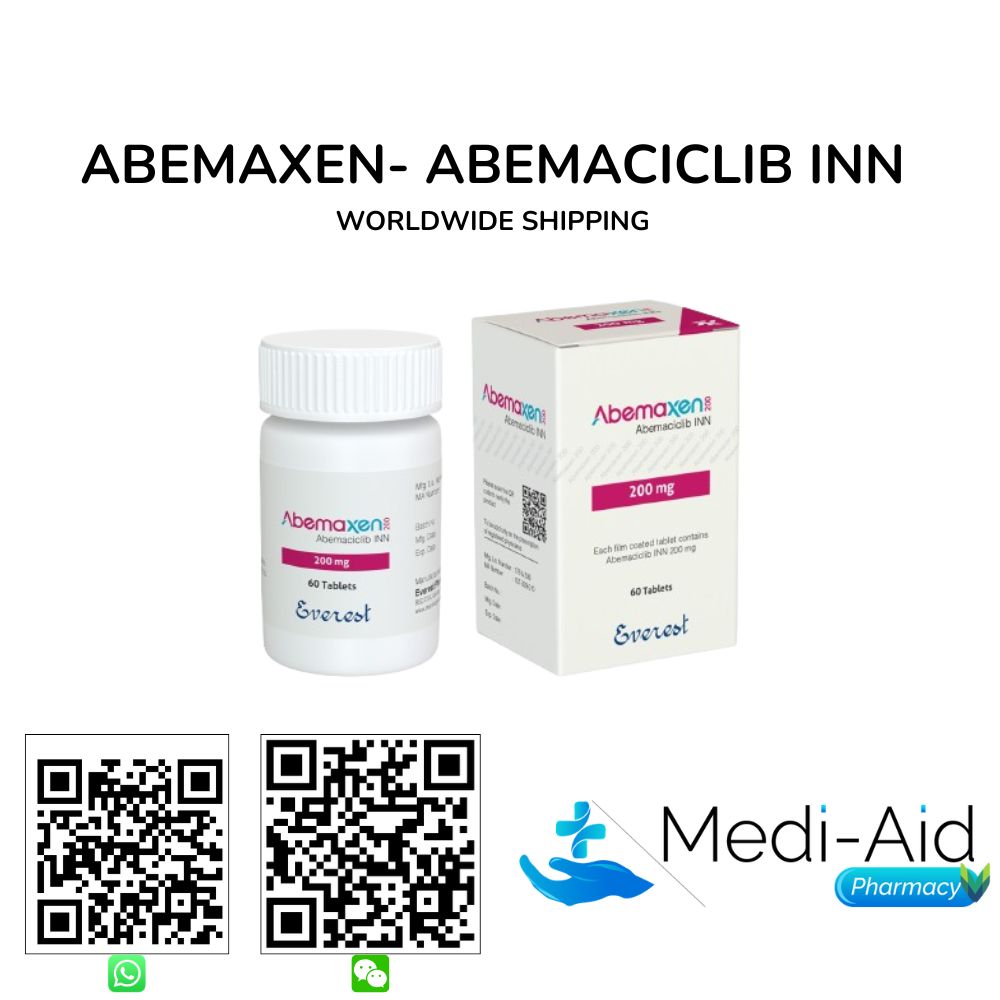
Abemaxen 200 MG (Abemaciclib) is an oral cyclin-dependent kinase 4 and 6 (CDK4/6) inhibitor supplied as a 200 mg tablet in a 60’s pot and manufactured by Everest Pharmaceuticals Ltd. in Bangladesh. Its active ingredient, abemaciclib, selectively blocks CDK4 and CDK6 the key enzymes that phosphorylate the retinoblastoma protein (Rb) and drive tumour cell progression through the G1-to-S phase transition arresting cancer cell proliferation, inducing cellular senescence, and triggering apoptosis. Abemaxen 200 MG (Abemaciclib) delivers the reference-label monotherapy starting dose of 200 mg twice daily on a continuous schedule, as approved for adults with hormone receptor-positive (HR+), human epidermal growth factor receptor 2-negative (HER2-) advanced or metastatic breast cancer whose disease has progressed after endocrine therapy and prior chemotherapy in the metastatic setting. In the pivotal MONARCH 1 Phase II trial, single-agent abemaciclib 200 mg twice daily produced an objective response rate (ORR) of 19.7% and a clinical benefit rate of 42.4% in heavily pre-treated patients establishing abemaciclib as the first CDK4/6 inhibitor approved as monotherapy. Searching for Abemaxen 200 MG Abemaciclib? Mediaid Pharmacy lists this product within its comprehensive breast cancer medicines portfolio, and ships it worldwide.
Basic Product Information of Abemaxen 200 MG (Abemaciclib)
| Brand Name | Abemaxen 200 MG (Abemaciclib) |
| Product Name | Abemaxen |
| Generic Name | Abemaciclib INN |
| Drug Class | Cyclin-Dependent Kinase 4 and 6 (CDK4/6) Inhibitor, Targeted Oncology Agent |
| Formulation | Tablet |
| Available Strength | 200 mg |
| Available Pack Size | 60’s Pot (60 tablets per pot) |
| Primary Indication | HR+, HER2- advanced or metastatic breast cancer as monotherapy in adults whose disease has progressed after endocrine therapy and prior chemotherapy in the metastatic setting (reference monotherapy dose: 200 mg twice daily continuous schedule) |
| Manufacturer | Everest Pharmaceuticals Ltd., Bangladesh |
| SKU | everest-abemaxen-200 |
| Originator Reference Brand | Verzenio / Verzenios (abemaciclib) by Eli Lilly and Company |
| Global Supplier | Mediaid Pharmacy, Worldwide Shipping Available |
| Storage Conditions | Store in a dry place away from light and moisture, at the temperature printed on the pack. Keep out of the reach of children. |
How Abemaxen 200 MG (Abemaciclib) Works: CDK4/6 Inhibition and Monotherapy Activity
Abemaciclib, the active ingredient in Abemaxen 200 MG, is a selective, orally bioavailable, ATP-competitive inhibitor of cyclin-dependent kinases 4 and 6 (CDK4/6) enzymes that form the CDK4/6–cyclin D complex, the central molecular switch controlling cancer cell entry into the DNA synthesis (S) phase of the cell cycle. A cyclin-dependent kinase 4 and 6 inhibitor (CDK4/6 inhibitor) is a targeted oncology drug class that prevents phosphorylation of the retinoblastoma protein (Rb), maintaining Rb in its active, tumour-suppressive hypophosphorylated state and blocking cell-cycle progression from G1 into S phase. Abemaciclib binds CDK4 and CDK6 in a reversible, ATP-competitive manner with high selectivity, producing durable suppression of phosphorylated Rb (pRb) and halting tumour cell division on a continuous, uninterrupted dosing schedule.
Abemaxen 200 MG delivers the reference-label monotherapy dose of abemaciclib. At the 200 mg twice-daily continuous dose, abemaciclib demonstrates intrinsic, single-agent anti-tumour activity that sets it apart from other approved CDK4/6 inhibitors: beyond G1 arrest, prolonged abemaciclib exposure at this dose drives cellular senescence a durable growth-arrested state marked by accumulation of β-galactosidase and senescence-associated heterochromatin foci and induces apoptosis through metabolic reprogramming of oestrogen receptor-positive (ER+) breast cancer cells. In preclinical xenograft models of ER+ breast cancer, abemaciclib monotherapy caused measurable tumour regression, providing the mechanistic rationale for single-agent clinical development. Oncologists building comprehensive programmes for pre-treated metastatic breast cancer patients can review the full range of breast cancer medicines at Mediaid Pharmacy for companion and supportive therapies.
In the pivotal MONARCH 1 Phase II trial, abemaciclib at 200 mg twice daily on a continuous schedule the dose delivered by Abemaxen 200 MG enrolled 132 women with HR+, HER2- metastatic breast cancer who had received a median of three prior therapies including chemotherapy. Single-agent abemaciclib produced an objective response rate (ORR) of 19.7%, a clinical benefit rate (CBR) of 42.4%, a median progression-free survival (PFS) of 6.0 months, and a median duration of response of 8.6 months. These results established abemaciclib as the first and only CDK4/6 inhibitor to receive approval as monotherapy, demonstrating that CDK4/6 inhibition at the 200 mg dose carries measurable anti-tumour activity independent of concurrent hormonal manipulation.
Approved Indications of Abemaciclib 200 MG (Reference Label for Abemaxen 200 MG (Abemaciclib))
Abemaciclib, the active ingredient in Abemaxen 200 MG, is approved for use across two distinct dosing contexts monotherapy at 200 mg twice daily and combination therapy at 150 mg twice daily. The 200 mg strength specifically supports the monotherapy indication and serves as the starting point for the dose-reduction ladder when initiating abemaciclib at the monotherapy dose level. Prescribers should confirm the exact locally approved indications on the Abemaxen product label before initiating therapy.
|
HR+, HER2- Advanced or Metastatic Breast Cancer Monotherapy (200 mg Twice Daily) Indicated as monotherapy for adults with HR+, HER2- advanced or metastatic breast cancer whose disease has progressed after endocrine therapy and prior chemotherapy in the metastatic setting. This approval, based on MONARCH 1 (ORR 19.7%, CBR 42.4%, median PFS 6.0 months, median duration of response 8.6 months in 132 heavily pre-treated patients), made abemaciclib the first CDK4/6 inhibitor approved for single-agent use in breast cancer demonstrating intrinsic anti-tumour activity at the 200 mg twice-daily continuous dose independent of concurrent endocrine therapy. |
HR+, HER2- Advanced or Metastatic Breast Cancer Combination Therapy and Dose-Reduction Context The reference label for abemaciclib in combination with an aromatase inhibitor (MONARCH 3: first-line, median PFS 28.2 vs 14.8 months) or with fulvestrant (MONARCH 2: second-line, PFS 16.4 vs 9.3 months) specifies a 150 mg twice-daily starting dose. When dose reductions are required from the 200 mg monotherapy starting dose due to toxicity, the first reduction is to 150 mg twice daily meaning the Abemaxen 200 MG pack is directly relevant to patients being down-titrated and to those whose oncologist determines monotherapy is clinically appropriate. For the 150 mg combination indication, see Abemaxen 150 MG. |
Key Clinical Benefits of Abemaxen 200 MG (Abemaciclib)
|
First CDK4/6 Inhibitor Approved as Single-Agent Monotherapy MONARCH 1 demonstrated that abemaciclib 200 mg twice daily produces a 19.7% ORR and 42.4% clinical benefit rate as a single agent in heavily pre-treated HR+, HER2- metastatic breast cancer an efficacy signal that no other CDK4/6 inhibitor has reproduced as monotherapy. This approval confirmed that abemaciclib’s CDK4/6 inhibition at the 200 mg dose carries direct anti-tumour activity beyond its role as an endocrine sensitiser. |
Durable Responses in Heavily Pre-Treated Patients In MONARCH 1, patients enrolled had received a median of three prior lines of therapy including chemotherapy in the metastatic setting. Despite this heavily pre-treated population, abemaciclib 200 mg twice daily achieved a median duration of response of 8.6 months among responders and a median PFS of 6.0 months across all 132 patients clinically meaningful activity in a setting where response rates to standard chemotherapy typically fall below 15%. |
Continuous Dosing Without Scheduled Treatment Breaks Abemaciclib 200 mg is administered twice daily on a continuous, uninterrupted schedule with no planned 7-day treatment-off periods. This continuous exposure strategy maintains sustained CDK4/6 inhibition and is the pharmacological basis for the drug’s single-agent activity, as uninterrupted Rb suppression prevents tumour cells from escaping G1 arrest during planned treatment gaps. Continuous twice-daily dosing also simplifies adherence for patients managing complex multi-drug regimens. |
Dosage and Administration of Abemaxen 200 MG (Abemaciclib)
Administration Rule Can Be Taken With or Without Food: Abemaciclib does not require fasting administration. Abemaxen 200 MG tablets may be taken with or without food. Swallow tablets whole with water do not crush, split, or chew. Doses should be taken at approximately the same times each day (e.g., morning and evening, approximately 12 hours apart) to maintain consistent plasma drug exposure. If a dose is missed or vomited, skip that dose entirely and take the next scheduled dose at the normal time. Never take two doses in a single dosing interval to compensate for a missed dose.
Monotherapy Starting Dose 200 mg Twice Daily (Continuous Schedule): The reference label recommends 200 mg twice daily (BID) on a continuous, uninterrupted schedule when abemaciclib is used as monotherapy for HR+, HER2- advanced or metastatic breast cancer that has progressed after endocrine therapy and prior chemotherapy in the metastatic setting. Two Abemaxen 200 MG tablets per day one in the morning and one in the evening deliver the full validated monotherapy dose. Abemaciclib monotherapy is continued until disease progression or unacceptable toxicity.
Important Dosing Distinction Monotherapy (200 mg) vs Combination Therapy (150 mg): The approved abemaciclib starting dose differs by indication. When abemaciclib is used in combination with an aromatase inhibitor or fulvestrant, the reference-label starting dose is 150 mg twice daily (see Abemaxen 150 MG). When abemaciclib is used as monotherapy, the starting dose is 200 mg twice daily. Prescribers must confirm the intended indication and corresponding dose before initiating treatment. Never substitute one strength for the other without explicit oncologist direction.
Dose Reduction Schedule for Toxicity Management (from 200 mg): If adverse events require dose modification, the reference label specifies the following stepwise reductions from the 200 mg monotherapy starting dose: first reduction to 150 mg twice daily; second reduction to 100 mg twice daily; third reduction to 50 mg twice daily if further modification is necessary. Dose modifications are determined by the treating oncologist based on the NCI Common Terminology Criteria for Adverse Events (CTCAE) grade of the adverse event (most commonly diarrhoea, neutropenia, or elevated liver enzymes). Abemaciclib must be permanently discontinued if the adverse event cannot be managed at the 50 mg twice-daily dose level.
Dose Adjustment for Strong CYP3A4 Inhibitors: When co-administration with a strong CYP3A4 inhibitor (e.g., ketoconazole, clarithromycin, itraconazole, or ritonavir-containing antiretroviral regimens) cannot be avoided, the reference label recommends reducing the abemaciclib dose from 200 mg to 100 mg twice daily. For patients already on a reduced dose of 100 mg or 50 mg twice daily, further reduction or temporary discontinuation should be guided by the treating oncologist. Strong and moderate CYP3A4 inducers including rifampicin, carbamazepine, phenytoin, and St John’s Wort substantially decrease abemaciclib plasma concentrations and should be avoided throughout treatment.
Clinical Monitoring Requirements During Abemaxen 200 MG (Abemaciclib) Treatment
Haematological monitoring is the primary ongoing safety requirement for abemaciclib monotherapy. The reference label mandates complete blood count (CBC) assessment before initiating treatment, every 2 weeks for the first 2 months, monthly for the following 2 months, and then as clinically indicated. Neutropenia a reduction in circulating neutrophil count is the most frequent high-grade adverse event associated with abemaciclib therapy. Grade 3 neutropenia (absolute neutrophil count <1.0 × 10⁹/L) requires withholding abemaciclib until recovery to Grade 1 or baseline, then restarting at the next lower dose level. Grade 4 neutropenia or febrile neutropenia requires immediate medical review and may necessitate permanent discontinuation. Patients receiving abemaciclib 200 mg as monotherapy should be counselled to report any signs of infection, fever, chills, or unusual bruising or bleeding immediately to their oncology team.
Liver function tests (ALT, AST, and total bilirubin) must be conducted at baseline, every 2 weeks for the first 2 months, monthly for the next 2 months, and as clinically warranted thereafter. If ALT or AST elevation reaches Grade 3 or higher without concurrent bilirubin elevation, abemaciclib should be withheld until recovery and resumed at the next lower dose level. Concurrent elevation of ALT or AST above 3× the upper limit of normal combined with total bilirubin elevation above 2× the upper limit of normal in the absence of cholestasis requires permanent discontinuation. Diarrhoea, the most commonly reported adverse event with abemaciclib at any dose, requires proactive management: loperamide must be initiated at the onset of the first loose stool, with adequate fluid replacement to prevent dehydration. Grade 2 diarrhoea persisting despite maximal loperamide use, or any Grade 3 or 4 diarrhoea, requires abemaciclib dose modification. Clinical evaluation for venous thromboembolic events (VTE) including pulmonary embolism (PE) and deep vein thrombosis (DVT) and for new or worsening respiratory symptoms consistent with interstitial lung disease (ILD) or pneumonitis must be incorporated into every scheduled oncology review during the treatment period.
Drug Interactions and Important Safety Information for Abemaxen 200 MG (Abemaciclib)
The most clinically consequential pharmacokinetic drug interaction for abemaciclib 200 mg involves inhibitors and inducers of CYP3A4 the primary cytochrome P450 enzyme responsible for abemaciclib hepatic metabolism. Strong CYP3A4 inhibitors including azole antifungals (ketoconazole, itraconazole, voriconazole), macrolide antibiotics (clarithromycin), and protease inhibitor antiretroviral regimens (ritonavir, cobicistat-containing regimens) significantly increase systemic abemaciclib exposure and associated toxicity risk. When co-administration of a strong CYP3A4 inhibitor with abemaciclib 200 mg monotherapy is clinically unavoidable, the reference label requires reducing the abemaciclib dose to 100 mg twice daily. Strong and moderate CYP3A4 inducers including rifampicin, rifabutin, carbamazepine, phenytoin, and the herbal supplement St John’s Wort substantially reduce abemaciclib plasma concentrations, potentially rendering monotherapy sub-therapeutic; these combinations should be avoided throughout the treatment course.
Abemaciclib and its active metabolites (M2, M20, and M18) inhibit the renal tubular transporters OCT1, OCT2, MATE1, and MATE2-K, which are responsible for the active secretion of several clinical drugs including metformin and certain antibiotics. Co-administration with metformin increases metformin plasma concentrations, which may affect glycaemic control in diabetic patients undergoing abemaciclib monotherapy; enhanced blood glucose monitoring is advisable. Unlike some other targeted agents, abemaciclib 200 mg does not require fasting and does not exhibit clinically relevant food–drug interactions a practical advantage for patients managing complex treatment schedules. Abemaciclib is also a P-glycoprotein (P-gp) substrate; strong P-gp inhibitors may further increase abemaciclib exposure, though this interaction has lower clinical significance than the CYP3A4 pathway. Patients must provide their oncologist with a complete medication list including all prescription drugs, over-the-counter products, vitamins, and herbal supplements before and throughout Abemaxen 200 MG treatment. Clinicians sourcing combination endocrine agents to accompany abemaciclib or other oncology medicines can browse the full oncology medicines range available at Mediaid Pharmacy.
Side Effects and Precautions of Abemaxen 200 MG (Abemaciclib)
|
Common Side Effects Diarrhoea (most common at the 200 mg monotherapy dose proactive loperamide management is required) Neutropenia and leukopenia (mandatory CBC monitoring throughout treatment) Fatigue and asthenia Nausea and vomiting Abdominal pain and decreased appetite Infections (upper respiratory tract, urinary tract) Anaemia Alopecia (hair thinning or loss) Elevated liver enzymes (ALT and AST) Headache and dizziness |
Serious Warnings and Precautions Neutropenia: CBC monitoring is mandatory before initiation and throughout treatment (every 2 weeks for the first 2 months, then monthly for 2 months). Grade 3 neutropenia requires withholding and dose reduction; febrile neutropenia requires immediate medical review and may necessitate permanent discontinuation. Hepatotoxicity: liver function tests at baseline, every 2 weeks for the first 2 months, then monthly. Concurrent Grade 3+ ALT/AST elevation with bilirubin elevation above 2× ULN requires permanent discontinuation in the absence of cholestasis. Venous thromboembolic events (VTE): DVT and pulmonary embolism have been reported. Evaluate for signs and symptoms of VTE at every clinical visit and initiate appropriate anticoagulation therapy promptly when confirmed. Interstitial lung disease (ILD) / pneumonitis: serious cases including fatal outcomes have been reported across CDK4/6 inhibitor therapy. Monitor for new or worsening dyspnoea, cough, or hypoxia; permanently discontinue for Grade 3 or 4 ILD or pneumonitis. Embryo-fetal toxicity: abemaciclib can cause fetal harm based on its mechanism of action. Females of reproductive potential must use effective contraception during treatment and for at least 3 weeks after the final dose. Males with female partners of reproductive potential must use contraception during treatment and for 3 months after the last dose. Breastfeeding is not recommended during treatment and for 3 weeks after the final dose. |
Who Should Use Abemaxen 200 MG (Abemaciclib)?
Abemaxen 200 MG (Abemaciclib) is indicated for adult patients with hormone receptor-positive (HR+), human epidermal growth factor receptor 2-negative (HER2-) advanced or metastatic breast cancer whose disease has progressed after endocrine therapy and prior chemotherapy in the metastatic setting, where abemaciclib monotherapy at 200 mg twice daily is the reference-label dose validated in the MONARCH 1 Phase II trial (ORR 19.7%, CBR 42.4%, median PFS 6.0 months). The 200 mg twice-daily continuous schedule is the dose at which abemaciclib’s single-agent anti-tumour activity including Rb suppression, cellular senescence induction, and apoptosis was established in clinical practice. Abemaxen 200 MG is also clinically relevant as the starting-dose reference pack for the monotherapy dose-reduction ladder: patients whose oncologist reduces abemaciclib from 200 mg to 150 mg, 100 mg, or 50 mg during toxicity management will require multiple tablet strengths across their treatment course. Oncologists assess baseline CBC, liver function, and clinical status for VTE and ILD risk before initiating Abemaxen 200 MG. For patients requiring companion endocrine therapies, supportive oncology medicines, or additional targeted agents alongside their abemaciclib regimen, the Mediaid Pharmacy Everest Pharmaceuticals medicines range and the broader oncology portfolio offer a comprehensive selection available for worldwide delivery.
Global Supplier: Mediaid Pharmacy Worldwide Shipping for Abemaxen 200 MG (Abemaciclib)
Mediaid Pharmacy is a Dhaka-based supplier of oncology and specialty medicines with worldwide shipping. Abemaxen 200 MG (Abemaciclib) manufactured by Everest Pharmaceuticals Ltd. in Bangladesh is available in 60’s pot tablet packs, and all orders are supported by pricing quotations, stock confirmation, regulatory documentation, and end-to-end delivery tracking. Hospitals, specialist oncology clinics, distributors, and patients can contact the Mediaid Pharmacy team through WhatsApp, phone, or WeChat for all enquiries about Abemaxen 200 MG Abemaciclib stock, pricing, and international delivery timelines. Buyers sourcing the complete abemaciclib dose range 200 mg for monotherapy initiation and 150 mg, 100 mg, or 50 mg for combination therapy or dose-reduction management or co-sourcing multiple oncology medicines in a single shipment can browse the complete breast cancer medicines collection before requesting a consolidated quotation.
Why Choose Abemaxen 200 MG (Abemaciclib) from Mediaid Pharmacy?
Abemaxen 200 MG (Abemaciclib) provides oncology teams with the reference-label monotherapy starting dose of abemaciclib the 200 mg twice-daily continuous dose that anchored the MONARCH 1 trial, producing a 19.7% ORR and 42.4% clinical benefit rate as a single agent in 132 heavily pre-treated HR+, HER2- metastatic breast cancer patients. Abemaxen 200 MG is manufactured by Everest Pharmaceuticals Ltd., a Bangladesh-based pharmaceutical manufacturer, and supplied in a 60’s pot tablet pack suited to the continuous, twice-daily monotherapy dosing schedule providing a 30-day supply per pot at one tablet per dose. The 200 mg strength is the reference starting dose for abemaciclib monotherapy and the anchor point for the full dose-reduction ladder (200 mg → 150 mg → 100 mg → 50 mg BID), making it the essential strength for initiating abemaciclib in patients with pre-treated metastatic breast cancer. Mediaid Pharmacy supplies Abemaxen 200 MG with full product documentation, specialist supply support, and worldwide shipping from Dhaka, with every order beginning from a prescription-based enquiry that aligns supply with clinical need. To source additional breast cancer or oncology medicines alongside Abemaxen 200 MG, visit the Mediaid Pharmacy oncology medicines section and contact the team for a personalised quotation.
Frequently Asked Questions About Abemaxen 200 MG (Abemaciclib)
What is Abemaxen 200 MG (Abemaciclib) used for?
Abemaxen 200 MG (Abemaciclib) is an oral CDK4/6 inhibitor used as monotherapy for adults with hormone receptor-positive (HR+), human epidermal growth factor receptor 2-negative (HER2-) advanced or metastatic breast cancer whose disease has progressed after endocrine therapy and prior chemotherapy in the metastatic setting. Abemaciclib 200 mg twice daily on a continuous schedule is the reference-label monotherapy dose, as validated in the MONARCH 1 Phase II trial (19.7% ORR, 42.4% clinical benefit rate, 6.0-month median PFS in 132 pre-treated patients). Abemaciclib blocks CDK4 and CDK6, preventing tumour cell progression through the G1-to-S phase transition, and at the 200 mg dose induces cellular senescence and apoptosis in hormone receptor-positive breast cancer cells.
What is the generic name of Abemaxen 200 MG?
The generic name of Abemaxen 200 MG is abemaciclib INN. Abemaxen 200 MG is a tablet formulation available in a 60’s pot (SKU: everest-abemaxen-200), manufactured by Everest Pharmaceuticals Ltd. in Bangladesh. The originator reference brand for abemaciclib is Verzenio in the United States and Verzenios in Europe, both developed and commercialised by Eli Lilly and Company.
What is the difference between Abemaxen 200 MG and Abemaxen 150 MG?
Abemaxen 200 MG (abemaciclib 200 mg twice daily) is the reference-label monotherapy starting dose for HR+, HER2- advanced or metastatic breast cancer that has progressed after endocrine therapy and prior chemotherapy. Abemaxen 150 MG (abemaciclib 150 mg twice daily) is the reference-label starting dose when abemaciclib is used in combination with an aromatase inhibitor (e.g., letrozole, anastrozole) or fulvestrant for advanced or metastatic breast cancer, and for the adjuvant treatment of high-risk HR+, HER2-, node-positive early breast cancer. The dose must be confirmed by your treating oncologist based on the intended indication. When abemaciclib monotherapy requires dose reduction from 200 mg, the first reduction step is to 150 mg twice daily.
What strengths and pack sizes is Abemaxen 200 MG available in?
Abemaxen 200 MG is available as a 200 mg abemaciclib tablet in a 60’s pot (60 tablets per pot; SKU: everest-abemaxen-200), manufactured by Everest Pharmaceuticals Ltd. in Bangladesh. At the standard monotherapy dose of 200 mg twice daily, one 60’s pot provides a 30-day supply. Contact Mediaid Pharmacy for current stock availability, pricing, and worldwide shipping details.
What are the side effects of Abemaxen 200 MG (Abemaciclib)?
Common side effects of abemaciclib 200 mg twice daily include diarrhoea (the most frequently reported adverse event at the monotherapy dose proactive loperamide management is required from the first loose stool), neutropenia, fatigue, nausea, abdominal pain, decreased appetite, infections, anaemia, vomiting, alopecia, elevated liver enzymes (ALT and AST), and headache. Serious adverse effects include Grade 3 or 4 neutropenia (requiring dose modification or discontinuation), clinically significant hepatotoxicity, venous thromboembolic events (DVT and pulmonary embolism), interstitial lung disease or pneumonitis (including fatal cases), and embryo-fetal toxicity. Mandatory CBC and liver function monitoring, and clinical evaluation for VTE and ILD, are required throughout the treatment period. Consult your prescribing oncologist about your individual risk profile before and during treatment.
Does Abemaxen 200 MG (Abemaciclib) need to be taken on an empty stomach?
No. Abemaxen 200 MG (Abemaciclib) may be taken with or without food there is no clinically significant food–drug interaction for abemaciclib. This is a practical advantage compared with several other targeted oncology medicines that require strict fasting. Abemaxen 200 MG tablets should be swallowed whole with water at approximately the same times each day (approximately 12 hours apart) to maintain consistent plasma drug exposure throughout the continuous twice-daily dosing schedule. Do not crush, split, or chew the tablets.
How often are blood tests required during Abemaxen 200 MG treatment?
The reference label requires a complete blood count (CBC) and liver function tests (ALT, AST, and bilirubin) before initiating abemaciclib, every 2 weeks for the first 2 months, monthly for the following 2 months, and then as clinically indicated. In addition, each scheduled oncology review should include clinical evaluation for signs and symptoms of venous thromboembolic events (VTE) and interstitial lung disease (ILD) or pneumonitis. Your oncology team will specify the exact monitoring schedule based on your individual clinical status and any dose modifications applied during treatment.
Is Abemaxen 200 MG (Abemaciclib) safe during pregnancy or while breastfeeding?
No. Abemaciclib can cause fetal harm based on its mechanism of action CDK4/6 inhibition disrupts normal cell-cycle progression in developing fetal tissues. Females of reproductive potential must use effective contraception during treatment with Abemaxen 200 MG and for at least 3 weeks after the final dose. Males with female partners of reproductive potential must use contraception during treatment and for 3 months after the last dose. Breastfeeding is not recommended during treatment and for 3 weeks after the final dose. Speak with your prescribing oncologist or specialist physician before starting treatment if you are pregnant, planning a pregnancy, or currently breastfeeding.
Can I order Abemaxen 200 MG (Abemaciclib) online with worldwide shipping?
Yes. Mediaid Pharmacy supplies Abemaxen 200 MG (Abemaciclib) to patients and healthcare providers globally. Contact Mediaid Pharmacy via WhatsApp, phone, or WeChat at +8801773428128, or email info@mediaidpharmacy.com for pricing, current stock availability, and international delivery details for your country.
Order Abemaxen 200 MG (Abemaciclib) with Worldwide Shipping
Phone / WhatsApp / WeChat: +8801773428128 | Email: info@mediaidpharmacy.com
Reviews
There are no reviews yet.