
Description
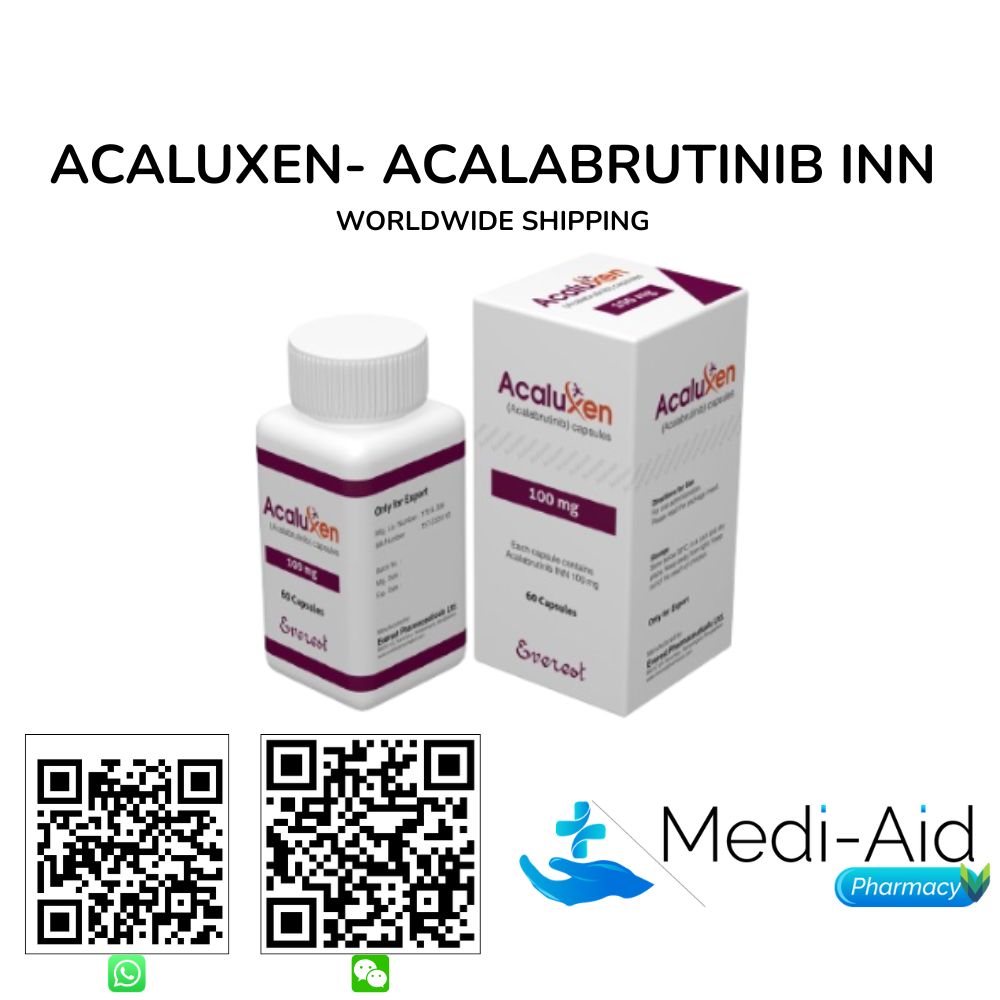
Acaluxen 100 MG (Acalabrutinib) is an oral, second-generation, selective Bruton’s tyrosine kinase (BTK) inhibitor supplied as a 100 mg capsule in a 60’s pot and manufactured by Everest Pharmaceuticals Ltd.. Its active ingredient, acalabrutinib, covalently and irreversibly binds to the Cys481 residue within the ATP-binding domain of BTK a non-receptor tyrosine kinase that is a critical driver of the B-cell receptor (BCR) signalling cascade sustaining malignant B-cell survival and proliferation. Acaluxen 100 MG (Acalabrutinib) is indicated for the treatment of adult patients with chronic lymphocytic leukaemia (CLL) or small lymphocytic lymphoma (SLL), both in the treatment-naïve and relapsed/refractory settings, and for adult patients with relapsed or refractory mantle cell lymphoma (MCL) after at least one prior therapy. In the head-to-head ELEVATE-RR Phase III trial, acalabrutinib demonstrated non-inferior progression-free survival (PFS) versus ibrutinib while delivering significantly fewer cardiac events atrial fibrillation 9.4% versus 16.0% (p=0.02) and hypertension 9.4% versus 23.2% (p<0.0001) establishing its differentiated tolerability profile among approved BTK inhibitors. Searching for Acaluxen 100 MG Acalabrutinib? Mediaid Pharmacy lists this product within its comprehensive leukemia medicines portfolio, and ships it worldwide.
Basic Product Information of Acaluxen 100 MG (Acalabrutinib)
| Brand Name | Acaluxen 100 MG (Acalabrutinib) |
| Product Name | Acaluxen |
| Generic Name | Acalabrutinib INN |
| Drug Class | Bruton’s Tyrosine Kinase (BTK) Inhibitor, Targeted B-Cell Malignancy Agent |
| Formulation | Capsule |
| Available Strength | 100 mg |
| Available Pack Size | 60’s Pot (60 capsules per pot) |
| Primary Indication | CLL/SLL in adults (treatment-naïve and relapsed/refractory); relapsed or refractory mantle cell lymphoma (MCL) in adults after at least one prior therapy |
| Manufacturer | Everest Pharmaceuticals Ltd., Bangladesh |
| Originator Reference Brand | Calquence (acalabrutinib) by AstraZeneca |
| Global Supplier | Mediaid Pharmacy, Worldwide Shipping Available |
| Storage Conditions | Store at room temperature (below 30°C) in a dry place, away from light and moisture. Keep out of the reach of children. |
How Acaluxen 100 MG (Acalabrutinib) Works: Selective BTK Inhibition in B-Cell Malignancies
Acalabrutinib, the active ingredient in Acaluxen 100 MG, is a second-generation, highly selective, orally bioavailable small-molecule inhibitor of Bruton’s tyrosine kinase (BTK) a non-receptor tyrosine kinase that functions as a central signal transducer within the B-cell receptor (BCR) signalling pathway. A Bruton’s tyrosine kinase inhibitor (BTK inhibitor) refers to a class of targeted oncology drugs that block BTK kinase activity, thereby disrupting the BCR signalling cascade that sustains the survival, proliferation, homing, and tissue retention of malignant B cells. Acalabrutinib forms a covalent, irreversible bond with the Cys481 residue located in the ATP-binding pocket of BTK, permanently inhibiting its kinase function and blocking downstream activation of PLCγ2, PI3K/AKT, and NF-κB the key intracellular survival pathways in B-cell malignancies including chronic lymphocytic leukaemia (CLL) and mantle cell lymphoma (MCL).
A defining pharmacological advantage of acalabrutinib over first-generation BTK inhibitor ibrutinib is its markedly higher kinase selectivity. Acalabrutinib demonstrates substantially less off-target inhibition of EGFR (associated with rash and diarrhoea), ITK (a regulator of platelet function and a contributor to haemorrhagic complications), and TEC (linked to atrial fibrillation risk). This enhanced kinase selectivity profile is the proposed mechanistic basis for acalabrutinib’s superior cardiovascular and bleeding tolerability a clinically meaningful difference that expands treatment eligibility to CLL patients with pre-existing cardiac comorbidities who would otherwise be poor candidates for BTK inhibitor therapy. Oncologists building comprehensive leukaemia treatment programmes can review the complete range of leukemia medicines at Mediaid Pharmacy for companion and supportive therapies.
In the pivotal head-to-head ELEVATE-RR trial the first randomised Phase III study to compare two BTK inhibitors directly in CLL acalabrutinib at 100 mg twice daily demonstrated non-inferior progression-free survival versus ibrutinib 420 mg once daily in patients with CLL harbouring del(17p) or del(11q) cytogenetic abnormalities (median PFS not reached in either arm; hazard ratio 1.00; 95% CI 0.79–1.27). Acalabrutinib was associated with significantly lower rates of atrial fibrillation or flutter (9.4% vs 16.0%; p=0.02), any-grade hypertension (9.4% vs 23.2%; p<0.0001), and grade ≥3 infections (30.0% vs 47.6%; p<0.0001), establishing the improved tolerability that now differentiates acalabrutinib as the preferred next-generation BTK inhibitor in patients with cardiovascular risk factors. The 100 mg twice-daily continuous dose is the reference-label standard for acalabrutinib across all approved indications, as validated in the ELEVATE-TN, ASCEND, ELEVATE-RR, and ACE-LY-004 Phase II/III trial programmes.
Approved Indications of Acalabrutinib (Reference Label for Acaluxen 100 MG (Acalabrutinib))
Acalabrutinib, the active ingredient in Acaluxen 100 MG, is approved internationally across two B-cell malignancy settings CLL/SLL (treatment-naïve and relapsed/refractory) and relapsed/refractory MCL in adult patients. Prescribers should confirm the exact locally approved indications on the Acaluxen product label before initiating therapy.
|
CLL / SLL Treatment-Naïve and Relapsed or Refractory Adult Patients Acalabrutinib is indicated for adult patients with CLL or SLL in both the previously untreated (first-line) and relapsed/refractory settings. In the ELEVATE-TN Phase III trial (treatment-naïve CLL), acalabrutinib plus obinutuzumab reduced the risk of disease progression or death by 90% versus chlorambucil plus obinutuzumab (HR 0.10; 95% CI 0.06–0.17; p<0.0001) at a 47-month median follow-up, with median PFS not reached in the acalabrutinib arm. In the ASCEND Phase III trial (relapsed/refractory CLL), acalabrutinib delivered a median PFS that was not reached versus 16.5 months on investigator’s choice of chemoimmunotherapy (HR 0.31; 95% CI 0.20–0.49; p<0.0001). |
Relapsed or Refractory Mantle Cell Lymphoma (MCL) After at Least One Prior Therapy Acalabrutinib is approved as monotherapy for adult patients with relapsed or refractory mantle cell lymphoma (MCL) who have received at least one prior line of therapy. In the Phase II ACE-LY-004 study (124 patients with R/R MCL), acalabrutinib monotherapy produced an overall response rate (ORR) of 81% comprising a 40% complete response (CR) rate and a 41% partial response (PR) rate with a median duration of response (DoR) of 26 months, establishing durable single-agent disease control in this historically aggressive B-cell lymphoma subtype. |
Key Clinical Benefits of Acaluxen 100 MG (Acalabrutinib)
|
90% Risk Reduction Versus Chlorambucil-Based Chemoimmunotherapy in First-Line CLL The ELEVATE-TN Phase III trial demonstrated that acalabrutinib 100 mg twice daily plus obinutuzumab reduced the risk of disease progression or death by 90% versus chlorambucil plus obinutuzumab (HR 0.10; 95% CI 0.06–0.17; p<0.0001) in treatment-naïve CLL, with median PFS not reached in the acalabrutinib arm at a 47-month median follow-up establishing overwhelming first-line superiority over standard alkylator-based chemoimmunotherapy regimens. |
Non-Inferior PFS vs Ibrutinib with a Significantly Better Cardiovascular and Tolerability Profile The ELEVATE-RR head-to-head Phase III trial confirmed non-inferior PFS versus ibrutinib (HR 1.00; 95% CI 0.79–1.27) in high-risk CLL while acalabrutinib delivered significantly lower rates of atrial fibrillation/flutter (9.4% vs 16.0%; p=0.02), hypertension (9.4% vs 23.2%; p<0.0001), and grade ≥3 infections (30.0% vs 47.6%; p<0.0001) equivalent oncological efficacy with a superior safety profile that broadens patient eligibility, particularly in those with pre-existing cardiac or vascular comorbidities. |
81% ORR in Relapsed/Refractory MCL with Durable 26-Month Median Duration of Response Acalabrutinib monotherapy produced an ORR of 81% (CR 40%, PR 41%) and a median duration of response of 26 months in the ACE-LY-004 Phase II study of relapsed/refractory MCL demonstrating deep and durable single-agent activity in a B-cell lymphoma subtype that typically requires aggressive multi-agent regimens and carries a historically poor prognosis in the relapsed/refractory setting. |
Dosage and Administration of Acaluxen 100 MG (Acalabrutinib)
Administration Rule Can Be Taken With or Without Food: Acalabrutinib may be taken with or without food. Swallow Acaluxen 100 MG capsules whole with water. Do not open, break, or chew the capsules. Doses should be taken approximately 12 hours apart, at the same times each day, to maintain consistent plasma drug levels. If a dose is missed and it is within 3 hours of the scheduled time, take the missed dose and resume the normal schedule; if more than 3 hours have elapsed, skip the missed dose and take the next scheduled dose at the usual time. Do not double the dose to compensate for a missed one.
CLL/SLL and Mantle Cell Lymphoma Standard Dose (100 mg Twice Daily, Continuous): The reference label recommends 100 mg twice daily (BID) on a continuous schedule for all approved indications, including treatment-naïve CLL/SLL, relapsed/refractory CLL/SLL, and relapsed/refractory MCL. Acaluxen 100 MG capsules administered twice daily approximately 12 hours apart provide the full 200 mg total daily dose validated across the ELEVATE-TN, ASCEND, ELEVATE-RR, and ACE-LY-004 Phase II/III trials. Acalabrutinib is continued until disease progression or unacceptable toxicity. There is no distinct loading dose or de-escalation schedule built into the approved dosing regimen.
Dose Reduction Schedule for Toxicity Management: If acalabrutinib-related adverse events (including haemorrhage, haematological toxicity, or significant infection) require dose modification, the reference label specifies a stepwise reduction: first to 100 mg once daily, then to 100 mg once every other day if further reduction is necessary. Dose modifications are guided by the treating haematologist or oncologist based on NCI Common Terminology Criteria for Adverse Events (CTCAE) grading. Permanent discontinuation is required for Grade 4 non-haematological toxicity or recurrent Grade 3 toxicity that does not recover to Grade 1 or baseline following two dose reduction steps.
Dose Adjustment for Strong CYP3A4 Inhibitors: When a strong CYP3A4 inhibitor (e.g., itraconazole, ketoconazole, voriconazole, clarithromycin, or ritonavir-based antiretroviral regimens) must be co-administered, the reference label recommends reducing the acalabrutinib dose to 100 mg once daily for the duration of co-administration. Strong and moderate CYP3A4 inducers (e.g., rifampicin, carbamazepine, phenytoin, St John’s Wort) significantly reduce acalabrutinib plasma concentrations and should be avoided. Consult the treating oncologist before initiating or discontinuing any concomitant medication.
Important Note on Gastric Acid-Reducing Agents (Proton Pump Inhibitors): Proton pump inhibitors (PPIs) substantially reduce acalabrutinib absorption pharmacokinetic studies showed that co-administration with omeprazole reduced acalabrutinib AUC by approximately 43%. The reference label advises avoiding concomitant PPI use and recommends substituting an H2-receptor antagonist (taken at least 2 hours before acalabrutinib) or a conventional antacid (taken at least 2 hours before or at least 2 hours after acalabrutinib) as alternative acid-suppression strategies. If a PPI cannot be avoided, discuss management with the prescribing oncologist or haematologist.
Clinical Monitoring Requirements During Acaluxen 100 MG (Acalabrutinib) Treatment
Haematological monitoring is the primary ongoing safety requirement for acalabrutinib therapy. The reference label mandates complete blood count (CBC) assessment monthly for the first year of treatment, then every 3 months thereafter, and as clinically indicated based on the patient’s clinical course. Neutropenia, anaemia, and thrombocytopenia are recognised haematological adverse effects of acalabrutinib; Grade 3 or 4 haematological toxicity requires treatment interruption until recovery to Grade 1 or baseline, followed by dose resumption according to the specified dose modification schedule. In CLL patients with high tumour burden, the risk of tumour lysis syndrome (TLS) must be assessed before initiating therapy; appropriate prophylactic hydration, electrolyte monitoring, and anti-hyperuricaemic measures must be implemented per institutional and guideline-based protocols, particularly in the first weeks of treatment.
Bleeding and haemorrhage surveillance is required throughout the treatment period. Minor bleeding events bruising, contusions, petechiae, and epistaxis are the most commonly reported haemorrhagic manifestations, occurring in approximately 62% of patients; major haemorrhage, including central nervous system (CNS) bleeding, has been reported in BTK inhibitor-treated patients. Acalabrutinib must be withheld for at least 3–7 days before and after planned surgical or invasive procedures; the exact perioperative withholding period should be determined by the treating haematologist based on procedure-specific bleeding risk. Patients receiving concurrent anticoagulants (warfarin, direct oral anticoagulants) or antiplatelet agents require close clinical surveillance for augmented haemorrhagic risk. Cardiac monitoring for atrial fibrillation and flutter should form part of every routine haematology review new-onset palpitations, dyspnoea, or dizziness should prompt electrocardiographic (ECG) evaluation. Infection monitoring, including surveillance for opportunistic infections such as Pneumocystis jirovecii pneumonia (PJP) and herpes viral reactivation including herpes zoster and hepatitis B virus (HBV) reactivation in at-risk patients should be integrated into each clinical assessment throughout the treatment course. Second primary malignancy (SPM) surveillance, including periodic dermatological review for non-melanoma skin cancers, is recommended throughout therapy.
Drug Interactions and Important Safety Information for Acaluxen 100 MG (Acalabrutinib)
The most clinically significant drug interactions for acalabrutinib involve inhibitors and inducers of CYP3A4, the primary cytochrome P450 enzyme responsible for acalabrutinib metabolism. Strong CYP3A4 inhibitors including ketoconazole, itraconazole, voriconazole, clarithromycin, and ritonavir-based antiretroviral regimens significantly increase acalabrutinib plasma exposure and systemic toxicity risk; when co-administration is unavoidable, the acalabrutinib dose must be reduced to 100 mg once daily and patients monitored closely for adverse events including bleeding, atrial fibrillation, and infection. Strong CYP3A4 inducers including rifampicin, carbamazepine, phenytoin, and St John’s Wort substantially decrease acalabrutinib plasma concentrations, potentially rendering therapy sub-therapeutic; the reference label recommends avoiding these combinations entirely where clinically feasible. Moderate CYP3A4 inducers should also be used with caution and exposure monitored clinically.
A second major interaction class unique to acalabrutinib among BTK inhibitors involves gastric acid-reducing agents. Proton pump inhibitors (PPIs) reduce gastric acidity and impair the solubility and absorption of acalabrutinib: pharmacokinetic data showed that co-administration with omeprazole reduced acalabrutinib AUC by approximately 43%, which could compromise treatment efficacy at the approved dose. The reference label advises avoiding concomitant PPI use; H2-receptor antagonists (administered at least 2 hours before acalabrutinib) or antacids (administered at least 2 hours before or after acalabrutinib) are the preferred acid-suppression alternatives. Patients receiving anticoagulants or antiplatelet agents concurrently with acalabrutinib carry an elevated haemorrhagic risk and require close clinical surveillance and periodic reassessment of the benefit-risk balance. Patients must inform their haematologist or oncologist of all concomitant medications including over-the-counter drugs, herbal supplements, antacids, and proton pump inhibitors before and during Acaluxen 100 MG treatment. Those requiring complementary haematological or lymphoma-directed agents alongside acalabrutinib can contact the Mediaid Pharmacy team for sourcing; the full range of lymphoma medicines available for worldwide dispatch is listed on the Mediaid Pharmacy website.
Side Effects and Precautions of Acaluxen 100 MG (Acalabrutinib)
|
Common Side Effects Headache (most common non-haematological adverse event; reported in approximately 37–40% of patients predominantly Grade 1–2 and typically resolving within the first weeks of treatment) Bruising and contusions (approximately 62%; a BTK inhibitor class-effect haemorrhagic manifestation reflecting reduced platelet aggregation) Diarrhoea (~35% of patients) Fatigue and asthenia Nausea (~22%) Neutropenia and anaemia (haematological toxicity; Grade 3/4 neutropenia in approximately 10–15% of patients) Thrombocytopenia (decreased platelet count) Myalgia and arthralgia (muscle and joint pain) Upper and lower respiratory tract infections |
Serious Warnings and Precautions Serious infections: bacterial, viral (herpes simplex/zoster reactivation, HBV reactivation, CMV), and fungal infections including Pneumocystis jirovecii pneumonia (PJP) and cases of progressive multifocal leukoencephalopathy (PML) have been reported. PJP and herpesvirus prophylaxis should be considered per institutional guidelines throughout the treatment period. Major haemorrhage: including CNS haemorrhage, has been reported with BTK inhibitors. Acalabrutinib must be withheld at least 3–7 days perioperatively. Concurrent anticoagulants or antiplatelet agents significantly elevate haemorrhagic risk and require close clinical oversight. Atrial fibrillation and flutter: new-onset AF/AFL has been reported. The rate with acalabrutinib (9.4%) is significantly lower than with ibrutinib (16.0%) in ELEVATE-RR; however, routine cardiac review for arrhythmia symptoms palpitations, dyspnoea, and presyncope remains mandatory throughout treatment. Second primary malignancies (SPMs): skin cancers (basal cell carcinoma, squamous cell carcinoma) and solid organ malignancies have been reported. Regular dermatological surveillance with sun-exposure precautions is recommended throughout the acalabrutinib treatment period. Embryo-fetal toxicity: acalabrutinib can cause fetal harm. Females of reproductive potential must use effective contraception during treatment and for at least 1 week after the final dose. Males with female partners of reproductive potential must use contraception during treatment and for 1 week after the last dose. Breastfeeding is not recommended during treatment and for 2 weeks after the final dose. |
Who Should Use Acaluxen 100 MG (Acalabrutinib)?
Acaluxen 100 MG (Acalabrutinib) is the reference-label standard dose for adult patients with chronic lymphocytic leukaemia (CLL) or small lymphocytic lymphoma (SLL) both treatment-naïve and relapsed/refractory and for adult patients with relapsed or refractory mantle cell lymphoma (MCL) who have received at least one prior line of therapy. The 100 mg twice-daily continuous dosing schedule is the dose validated across the ELEVATE-TN, ASCEND, ELEVATE-RR, and ACE-LY-004 Phase II/III programmes ensuring that every prescription initiated at this strength is grounded in Level 1 clinical evidence. Haematologists and oncologists assess baseline CBC, cardiac status, bleeding history, infection risk, TLS risk stratification (in CLL), and all relevant concomitant medications particularly PPIs, anticoagulants, and CYP3A4-interacting drugs before initiating Acaluxen 100 MG. Patients with pre-existing atrial fibrillation, a history of major haemorrhage, active uncontrolled infection, or those who are pregnant, breastfeeding, or of reproductive potential require individualised risk counselling before treatment begins. For patients requiring complementary targeted therapies or supportive oncology treatments alongside acalabrutinib, Mediaid Pharmacy’s oncology specialty medicines range provides a broad selection of approved agents available for global delivery.
Global Supplier: Mediaid Pharmacy Worldwide Shipping for Acaluxen 100 MG (Acalabrutinib)
Mediaid Pharmacy is a Dhaka-based supplier of oncology and specialty medicines with worldwide shipping. Acaluxen 100 MG (Acalabrutinib) is available in a 60’s pot capsule pack, and all orders are supported by pricing quotations, stock confirmation, regulatory documentation, and end-to-end delivery tracking. Hospitals, specialist haematology and oncology clinics, distributors, and patients can contact the Mediaid Pharmacy team through WhatsApp, phone, or WeChat for all enquiries about Acaluxen 100 MG Acalabrutinib stock, pricing, and international delivery timelines. Buyers sourcing multiple oncology, leukaemia, or lymphoma medicines in a single shipment can browse the complete lymphoma medicines collection before requesting a consolidated quotation.
Why Choose Acaluxen 100 MG (Acalabrutinib) from Mediaid Pharmacy?
Acaluxen 100 MG (Acalabrutinib) provides haematology and oncology teams with a 100 mg acalabrutinib capsule in a 60’s pot the dose strength that anchored the ELEVATE-TN trial (90% risk reduction vs chlorambucil-based chemoimmunotherapy; HR 0.10; p<0.0001), the ASCEND trial (median PFS not reached vs 16.5 months; HR 0.31; p<0.0001), the ELEVATE-RR head-to-head trial versus ibrutinib (non-inferior PFS; atrial fibrillation rate 9.4% vs 16.0%; p=0.02), and the ACE-LY-004 MCL study (ORR 81%; median DoR 26 months). The 100 mg twice-daily continuous schedule is the reference-label standard for acalabrutinib across CLL/SLL and MCL indications, ensuring every initiated prescription is grounded in validated, published Phase II/III evidence. Manufactured by Everest Pharmaceuticals Ltd. (Bangladesh), Acaluxen is an accessible oncology-grade capsule formulation suitable for patients requiring continuous, twice-daily BTK inhibition in both the inpatient and ambulatory outpatient setting. Mediaid Pharmacy supplies Acaluxen 100 MG in 60’s pot packs with full product documentation, specialist supply support, and worldwide shipping from Dhaka. Every order begins with a prescription-based enquiry that maintains supply aligned with clinical need. To compare acalabrutinib with other targeted haematology or oncology agents, or to source additional B-cell malignancy therapies, visit the Mediaid Pharmacy oncology medicines section and contact the team for a personalised quotation.
Frequently Asked Questions About Acaluxen 100 MG (Acalabrutinib)
What is Acaluxen 100 MG (Acalabrutinib) used for?
Acaluxen 100 MG (Acalabrutinib) is an oral, second-generation BTK inhibitor used to treat B-cell malignancies in adults. It is indicated for the treatment of chronic lymphocytic leukaemia (CLL) or small lymphocytic lymphoma (SLL) in both previously untreated and relapsed/refractory patients, and for relapsed or refractory mantle cell lymphoma (MCL) in adults who have received at least one prior line of therapy. Acalabrutinib works by covalently and irreversibly binding to the Cys481 residue in the ATP-binding pocket of Bruton’s tyrosine kinase (BTK), permanently blocking BTK kinase activity and disrupting the downstream B-cell receptor signalling cascade including PLCγ2, PI3K/AKT, and NF-κB pathways that sustains malignant B-cell survival and proliferation in CLL, SLL, and MCL.
What is the generic name of Acaluxen 100 MG?
The generic name of Acaluxen 100 MG is acalabrutinib INN. Acaluxen 100 MG is a capsule formulation available in a 60’s pot (60 capsules per pot), manufactured by Everest Pharmaceuticals Ltd., Bangladesh. The originator reference brand for acalabrutinib is Calquence, developed and commercialised by AstraZeneca, and approved in the United States, the European Union, and other major international markets for CLL/SLL and relapsed/refractory MCL.
What is the standard dosing of Acaluxen 100 MG (Acalabrutinib) for CLL and MCL?
The dose must always be determined by the treating haematologist or oncologist. The reference label recommends 100 mg twice daily (BID) on a continuous schedule for all approved indications of acalabrutinib including treatment-naïve CLL/SLL, relapsed/refractory CLL/SLL, and relapsed/refractory MCL. Doses should be taken approximately 12 hours apart, with or without food. If adverse events require dose modification, the reference label specifies stepwise reductions: first to 100 mg once daily, then to 100 mg once every other day if further reduction is necessary. Never change your dose without explicit direction from your prescribing haematologist or oncologist.
What strengths and pack sizes is Acaluxen (Acalabrutinib) available in?
Acaluxen is available as a 100 mg capsule in a 60’s pot (60 capsules per pot), manufactured by Everest Pharmaceuticals Ltd., Bangladesh. Contact Mediaid Pharmacy for current stock availability, pricing, and worldwide shipping details.
What are the side effects of Acaluxen 100 MG (Acalabrutinib)?
Common side effects of acalabrutinib 100 mg include headache (approximately 37–40% of patients, predominantly Grade 1–2 and frequently resolving within the first treatment month), bruising and contusions (~62%), diarrhoea (~35%), fatigue, nausea, anaemia, neutropenia, thrombocytopenia, myalgia, arthralgia, and respiratory tract infections. Serious but less frequent adverse effects include major haemorrhage (including CNS bleeding), serious opportunistic infections (including PML), atrial fibrillation and flutter (9.4% in ELEVATE-RR), second primary malignancies including skin cancers, tumour lysis syndrome at CLL treatment initiation, and embryo-fetal toxicity. Mandatory monthly complete blood count monitoring, clinical cardiac assessment, and infection and bleeding surveillance are required throughout the treatment period. Consult your prescribing haematologist or oncologist regarding your individual risk profile before and during treatment.
Can I take Acaluxen 100 MG (Acalabrutinib) with a proton pump inhibitor (PPI)?
The reference label advises against concomitant use of proton pump inhibitors (PPIs) with acalabrutinib where clinically feasible. PPIs by elevating gastric pH reduce the solubility and absorption of acalabrutinib: pharmacokinetic studies showed that co-administration with omeprazole reduced acalabrutinib exposure (AUC) by approximately 43%, which may compromise therapeutic efficacy at the approved dose. If acid suppression is clinically necessary, the reference label recommends substituting an H2-receptor antagonist taken at least 2 hours before acalabrutinib, or a conventional antacid taken at least 2 hours before or at least 2 hours after acalabrutinib. If a PPI cannot be avoided, discuss management options and potential dose monitoring with the prescribing haematologist or oncologist.
How often are blood tests required during Acaluxen 100 MG (Acalabrutinib) treatment?
The reference label requires complete blood count (CBC) assessment monthly for the first year of treatment, then every 3 months thereafter, and as clinically indicated based on the patient’s clinical course and haematological status. In CLL patients with high tumour burden, baseline TLS risk stratification is required prior to treatment initiation, with electrolyte monitoring and prophylactic hydration implemented per institutional protocols particularly during the first weeks of treatment when tumour lysis risk is highest. Clinical evaluation for signs and symptoms of infection, haemorrhage, atrial fibrillation, and second primary malignancies should be incorporated into every routine haematology review throughout the treatment course.
Is Acaluxen 100 MG (Acalabrutinib) safe during pregnancy or while breastfeeding?
No. Acalabrutinib can cause fetal harm based on its mechanism of action BTK inhibition disrupts normal B-lymphocyte development and haematopoiesis in developing fetal tissues and animal reproduction studies have confirmed embryo-fetal toxicity. Females of reproductive potential must use effective contraception during treatment with Acaluxen 100 MG and for at least 1 week after the final dose. Males with female partners of reproductive potential must use contraception during treatment and for at least 1 week after the last dose. Breastfeeding is not recommended during treatment and for 2 weeks after the final dose. Speak with your prescribing haematologist or oncologist before starting treatment if you are pregnant, planning a pregnancy, or currently breastfeeding.
Can I order Acaluxen 100 MG (Acalabrutinib) online with worldwide shipping?
Yes. Mediaid Pharmacy supplies Acaluxen 100 MG (Acalabrutinib) to patients and healthcare providers globally. Contact Mediaid Pharmacy via WhatsApp, phone, or WeChat at +8801773428128, or email info@mediaidpharmacy.com for pricing, current stock availability, and international delivery details for your country.
Order Acaluxen 100 MG (Acalabrutinib) with Worldwide Shipping
Phone / WhatsApp / WeChat: +8801773428128 | Email: info@mediaidpharmacy.com

Reviews
There are no reviews yet.