Description
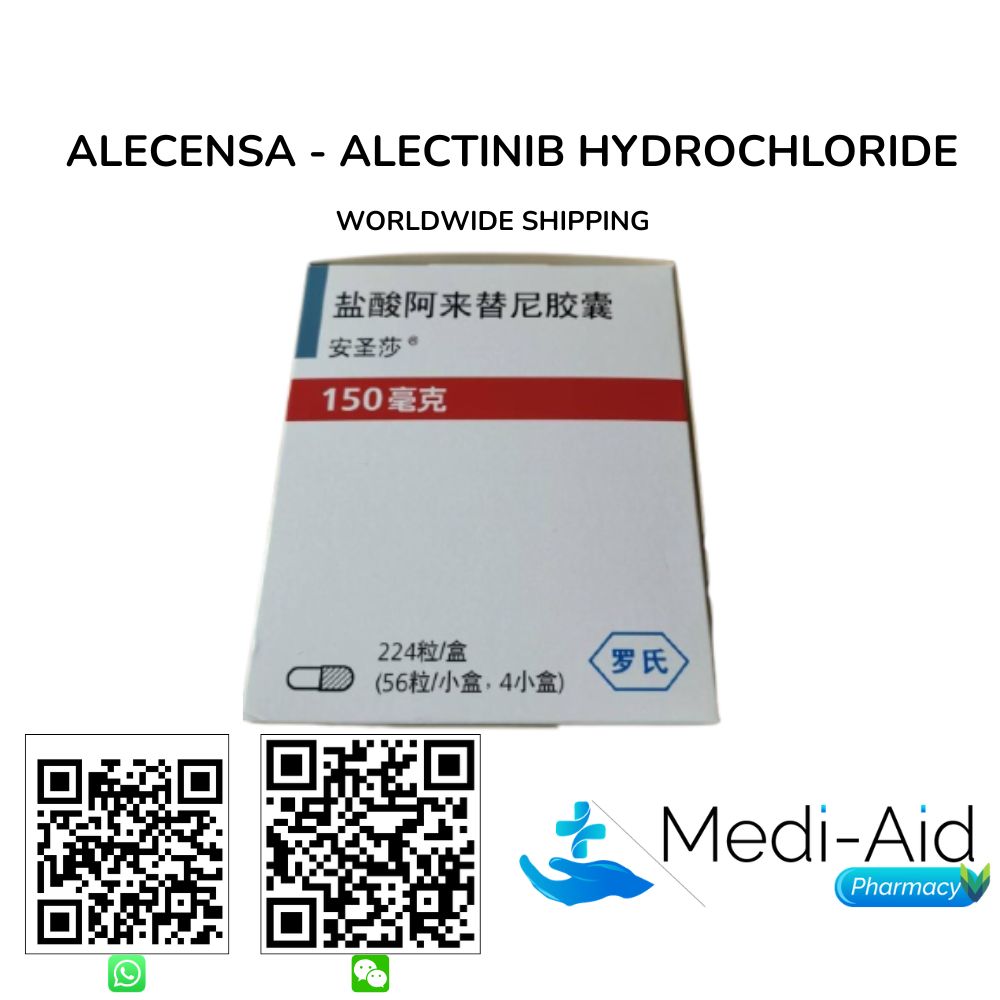
Alecensa 150 MG (Alectinib hydrochloride) also marketed in China under the Chinese package name 安圣莎 is an oral, second-generation, highly selective anaplastic lymphoma kinase (ALK) tyrosine kinase inhibitor (TKI) supplied as a 150 mg hard capsule in a pack of 224 capsules (4 packs of 56 capsules) and manufactured by Roche. Its active ingredient, alectinib hydrochloride, potently and selectively inhibits ALK and RET kinase activity, blocking constitutive ALK signalling driven by oncogenic EML4-ALK fusion proteins the key molecular driver of tumour growth and survival in ALK-positive non-small cell lung cancer (NSCLC).
Alecensa 150 MG (Alectinib hydrochloride) is indicated for the treatment of adult patients with ALK-positive, metastatic non-small cell lung cancer (NSCLC), both in the first-line setting and following disease progression on or intolerance to crizotinib. A defining pharmacological advantage of alectinib over first-generation ALK inhibitor crizotinib is its superior central nervous system (CNS) penetration: in the pivotal head-to-head ALEX Phase III trial, alectinib 600 mg twice daily delivered a median progression-free survival (PFS) of 34.8 months versus 10.9 months with crizotinib (hazard ratio [HR] 0.43; 95% CI 0.32–0.58; p<0.001), reducing the risk of disease progression or death by 57% establishing alectinib as the preferred first-line ALK-directed therapy for ALK-positive metastatic NSCLC. Searching for Alecensa 150 MG Alectinib hydrochloride? Mediaid Pharmacy lists this product within its comprehensive lung cancer medicines portfolio, and ships it worldwide.
Basic Product Information of Alecensa 150 MG (Alectinib hydrochloride)
| Brand Name | Alecensa 150 MG (Alectinib hydrochloride) |
| Product Name | Alecensa |
| Chinese Package Name | 安圣莎 |
| Generic Name | Alectinib hydrochloride INN |
| Drug Class | Second-Generation ALK (Anaplastic Lymphoma Kinase) Tyrosine Kinase Inhibitor; Targeted NSCLC Agent |
| Formulation | Hard Capsules |
| Available Strength | 150 mg |
| Available Pack Size | 224 Capsules (4 packs of 56 capsules) |
| Primary Indication | ALK-positive, metastatic non-small cell lung cancer (NSCLC) in adults first-line treatment and after progression on or intolerance to crizotinib |
| Manufacturer / Brand | Roche |
| Market Packaging | China |
| Categories | Lung Cancer Medicines, Oncology Medicines, Original Molecule Medicines |
| Storage Conditions | Store below 30°C in a dry place, protected from light and moisture. Keep out of the reach of children. |
| Global Supplier | Mediaid Pharmacy, Worldwide Shipping Available |
How Alecensa 150 MG (Alectinib hydrochloride) Works: Selective ALK Inhibition in ALK-Positive NSCLC
Alectinib hydrochloride, the active ingredient in Alecensa 150 MG, is a second-generation, highly potent, orally bioavailable small-molecule inhibitor of anaplastic lymphoma kinase (ALK) a receptor tyrosine kinase that, when rearranged or fused with partner genes such as EML4 (echinoderm microtubule-associated protein-like 4), generates constitutively active oncoproteins that drive uncontrolled tumour cell proliferation, survival, and metastasis in ALK-positive non-small cell lung cancer (NSCLC). An ALK tyrosine kinase inhibitor refers to a class of targeted oncology drugs that selectively block ALK kinase activity, thereby disrupting the downstream RAS/MAPK, PI3K/AKT/mTOR, and JAK/STAT3 signalling cascades that sustain malignant cell survival and proliferation in ALK-rearranged NSCLC.
Alectinib hydrochloride inhibits ALK with an inhibitory constant (IC₅₀) of approximately 1.9 nM, achieving highly selective target suppression that permanently halts EML4-ALK-driven oncogenic signalling within tumour cells. In addition to ALK, alectinib also potently inhibits RET kinase broadening its activity profile to include RET-rearranged cancers and demonstrates inhibitory activity against the secondary ALK resistance mutations L1196M and G1269A that frequently confer crizotinib resistance, establishing its utility in patients with acquired resistance to first-generation ALK inhibition.
A defining pharmacological advantage of alectinib over first-generation ALK inhibitor crizotinib is its superior central nervous system (CNS) penetration. Alectinib is a poor substrate of the P-glycoprotein (P-gp) efflux transporter expressed at the blood–brain barrier, allowing significantly higher CNS drug concentrations relative to plasma compared with crizotinib a property of direct clinical relevance given that CNS metastases develop in 25–50% of ALK-positive NSCLC patients and represent the primary site of crizotinib treatment failure.
In the pivotal ALEX Phase III trial, alectinib reduced the risk of CNS progression by 84% versus crizotinib (HR 0.16; 95% CI 0.10–0.28; p<0.001) and produced intracranial objective responses in patients with measurable CNS metastases at baseline, establishing its unique CNS-directed efficacy profile among approved ALK inhibitors. Oncologists building comprehensive lung cancer treatment programmes can review the complete range of lung cancer medicines at Mediaid Pharmacy for companion and supportive therapies.
In the pivotal head-to-head ALEX Phase III trial the first randomised, open-label, Phase III study to compare a second-generation ALK inhibitor with crizotinib in the first-line ALK-positive metastatic NSCLC setting alectinib at 600 mg twice daily (4 × 150 mg capsules BID) delivered a median progression-free survival of 34.8 months versus 10.9 months with crizotinib (HR 0.43; 95% CI 0.32–0.58; p<0.001), representing a 57% reduction in the risk of disease progression or death.
The 5-year overall survival (OS) data from ALEX confirmed a median OS of not reached in the alectinib arm versus 57.4 months with crizotinib (HR 0.67; 95% CI 0.46–0.98) establishing alectinib as the preferred first-line standard of care for ALK-positive metastatic NSCLC globally. The 600 mg twice-daily continuous dose delivered as four 150 mg alectinib hydrochloride capsules twice daily is the reference-label standard for alectinib across all approved indications, as validated across the ALEX, J-ALEX, ALUR, and NP28761/NP28673 Phase I/II/III clinical trial programmes.
Approved Indications of Alectinib hydrochloride (Reference Label for Alecensa 150 MG)
Alectinib hydrochloride, the active ingredient in Alecensa 150 MG, is approved internationally across two ALK-positive NSCLC clinical settings first-line metastatic disease and crizotinib-refractory metastatic disease in adult patients. Prescribers should confirm the exact locally approved indications on the Alecensa product label before initiating therapy, as labelling may vary by regulatory jurisdiction.
|
First-Line Treatment of ALK-Positive Metastatic NSCLC in Adults Alectinib hydrochloride is indicated as first-line therapy for adult patients with ALK-positive, metastatic non-small cell lung cancer (NSCLC). In the ALEX Phase III trial, alectinib 600 mg BID reduced the risk of progression or death by 57% versus crizotinib in treatment-naive ALK-positive metastatic NSCLC (median PFS 34.8 vs 10.9 months; HR 0.43; 95% CI 0.32–0.58; p<0.001). Five-year OS data confirmed a median OS of not reached in the alectinib arm versus 57.4 months with crizotinib (HR 0.67; 95% CI 0.46–0.98), establishing alectinib as the global first-line standard of care for ALK-positive metastatic NSCLC. |
ALK-Positive Metastatic NSCLC After Progression on or Intolerance to Crizotinib Alectinib hydrochloride is approved for adult patients with ALK-positive metastatic NSCLC who have progressed on or are intolerant to crizotinib. In the Phase III ALUR trial in patients with crizotinib-refractory ALK-positive NSCLC, alectinib reduced the risk of progression or death by 85% versus chemotherapy (HR 0.15; 95% CI 0.08–0.29; p<0.001), with a median PFS of 9.6 months versus 1.4 months. In the Phase II NP28761 and NP28673 studies, alectinib produced objective response rates (ORR) of 48–52% in patients who had progressed on crizotinib, including intracranial responses in patients with CNS metastases. |
Key Clinical Benefits of Alecensa 150 MG (Alectinib hydrochloride)
|
57% Reduction in Risk of Progression or Death Versus Crizotinib in First-Line ALK-Positive NSCLC The ALEX Phase III trial demonstrated that alectinib 600 mg twice daily (as four 150 mg capsules BID) reduced the risk of disease progression or death by 57% versus crizotinib in treatment-naive ALK-positive metastatic NSCLC (median PFS 34.8 vs 10.9 months; HR 0.43; 95% CI 0.32–0.58; p<0.001) a more than three-fold improvement in median PFS, establishing overwhelming first-line superiority over first-generation ALK-directed therapy in this molecularly defined NSCLC population. |
84% Reduction in CNS Progression Risk Superior Blood–Brain Barrier Penetration vs Crizotinib In the ALEX trial, alectinib reduced the risk of CNS progression by 84% versus crizotinib (HR 0.16; 95% CI 0.10–0.28; p<0.001) and produced an intracranial objective response rate (IC-ORR) of 81% in patients with measurable CNS disease at baseline versus 50% with crizotinib establishing alectinib as the preferred ALK inhibitor for ALK-positive NSCLC patients with existing or high-risk brain metastases, where CNS disease control is a primary therapeutic objective. |
85% Reduction in Progression Risk vs Chemotherapy in Crizotinib-Refractory NSCLC (ALUR Trial) In the Phase III ALUR trial of crizotinib-refractory ALK-positive metastatic NSCLC patients, alectinib reduced the risk of disease progression or death by 85% versus pemetrexed- or docetaxel-based chemotherapy (HR 0.15; 95% CI 0.08–0.29; p<0.001), with median PFS 9.6 months versus 1.4 months demonstrating durable, chemotherapy-free disease control in patients who had already failed first-generation ALK inhibitor therapy. |
Dosage and Administration of Alecensa 150 MG (Alectinib hydrochloride)
Administration Rule Must Be Taken With Food: Alecensa 150 MG (Alectinib hydrochloride) must be taken with food. Swallow Alecensa 150 MG hard capsules whole with water. Do not open, break, or chew the capsules. Doses should be taken approximately 12 hours apart, at the same times each day, with a meal each time, to maintain consistent plasma drug concentrations. If a dose is missed, it should be taken as soon as remembered on the same day; if the next scheduled dose is due within 6 hours, skip the missed dose and resume the normal schedule. Do not take two doses at the same time to compensate for a missed dose.
ALK-Positive Metastatic NSCLC Standard Dose (600 mg Twice Daily, Continuous): The reference label recommends 600 mg twice daily (BID) on a continuous schedule for all approved indications of alectinib hydrochloride including first-line ALK-positive metastatic NSCLC and ALK-positive metastatic NSCLC following progression on or intolerance to crizotinib. Each 600 mg dose is achieved by taking four (4) × 150 mg Alecensa capsules simultaneously, twice daily with food, providing a total daily dose of 1200 mg alectinib hydrochloride. Alectinib is continued until disease progression or unacceptable toxicity occurs. There is no distinct loading dose or planned de-escalation schedule built into the approved continuous dosing regimen.
Dose Reduction Schedule for Toxicity Management: If alectinib-related adverse events (including hepatotoxicity, interstitial lung disease/pneumonitis, myalgia/CPK elevation, bradycardia, or significant haematological toxicity) require dose modification, the reference label specifies a stepwise reduction: first to 450 mg twice daily (three 150 mg capsules BID), then to 300 mg twice daily (two 150 mg capsules BID) if further reduction is necessary. Dose modifications are guided by the treating oncologist based on NCI Common Terminology Criteria for Adverse Events (CTCAE) grading. Permanent discontinuation is required if the patient cannot tolerate a dose of 300 mg twice daily, or for Grade 3 or 4 interstitial lung disease/pneumonitis.
Dose Adjustment for Strong CYP3A4 Inhibitors: Alectinib is primarily metabolised by CYP3A4. While strong CYP3A4 inhibitors increase alectinib plasma concentrations, the reference label currently does not recommend a specific dose reduction due to the relatively modest pharmacokinetic impact observed in drug interaction studies. Nonetheless, strong CYP3A4 inhibitors (e.g., itraconazole, ketoconazole, ritonavir) should be co-administered with caution and patients monitored for alectinib-related adverse events. Strong and moderate CYP3A4 inducers (e.g., rifampicin, carbamazepine, phenytoin, St John’s Wort) substantially reduce alectinib plasma concentrations and should be avoided where clinically feasible. Consult the treating oncologist before initiating or discontinuing any concomitant medication during Alecensa therapy.
Administration With Food Critical Absorption Requirement: Unlike many targeted therapies that can be taken with or without food, alectinib bioavailability is substantially increased when taken with food. Administration of alectinib 600 mg with a high-fat, high-calorie meal increased the alectinib area under the curve (AUC) approximately 3-fold compared with fasted-state dosing. Consistently taking Alecensa 150 MG capsules with food at every dose is therefore a mandatory administration requirement to achieve the therapeutic drug exposures validated in the ALEX, J-ALEX, and ALUR pivotal trials. Patients who have difficulty eating due to nausea or treatment-related adverse effects must inform their oncologist immediately to ensure dose exposure is not unintentionally compromised.
Clinical Monitoring Requirements During Alecensa 150 MG (Alectinib hydrochloride) Treatment
Hepatic function monitoring is the primary ongoing laboratory safety requirement for alectinib therapy. The reference label mandates liver function test (LFT) assessment specifically ALT, AST, and total bilirubin every 2 weeks during the first 3 months of treatment, then monthly thereafter, and as clinically indicated based on the patient’s clinical course. Alanine aminotransferase (ALT) and aspartate aminotransferase (AST) elevations are among the most frequently reported laboratory abnormalities with alectinib; Grade 3 or 4 transaminase elevations (>5× upper limit of normal [ULN]) require treatment interruption until recovery to ≤Grade 1, followed by dose resumption at a reduced level according to the specified dose reduction schedule. Permanent discontinuation is required for Grade 3 ALT/AST elevation concurrent with Grade ≥2 bilirubin elevation (in the absence of haemolysis or Gilbert’s syndrome) or for recurrent Grade 3 or any Grade 4 hepatotoxicity.
Pulmonary monitoring for interstitial lung disease (ILD) and pneumonitis is required throughout the treatment period. Cases of severe, life-threatening, and fatal ILD/pneumonitis have been reported in alectinib-treated patients. Any patient presenting with new or worsening pulmonary symptoms including dyspnoea, cough, or fever must have alectinib withheld immediately and undergo urgent chest imaging and pulmonary assessment to exclude drug-related ILD or pneumonitis.
Creatine phosphokinase (CPK) monitoring is also required: CPK elevation and associated myalgia or musculoskeletal pain are reported in approximately 36–43% of alectinib-treated patients. CPK should be assessed every 2 weeks during the first month of treatment, then monthly, or as clinically indicated. Grade 4 CPK elevation (>10× ULN) or Grade 3 elevation (>5× ULN) with myalgia requires treatment interruption.
Cardiac monitoring for bradycardia including baseline resting heart rate assessment and periodic ECG evaluation in patients at risk is recommended throughout therapy, as symptomatic bradycardia has been reported in alectinib-treated patients. Photosensitivity surveillance should be integrated into each clinical review: patients must be advised to minimise sun exposure and use high-SPF broad-spectrum sunscreen during treatment and for at least 7 days after the final dose.
Embryo-fetal toxicity surveillance and contraception counselling are required for all females of reproductive potential throughout the treatment period and for at least 1 week after the final dose.
Drug Interactions and Important Safety Information for Alecensa 150 MG (Alectinib hydrochloride)
The most clinically significant drug interactions for alectinib involve inhibitors and inducers of CYP3A4, the primary cytochrome P450 enzyme responsible for alectinib metabolism to its pharmacologically active major circulating metabolite M4. Strong CYP3A4 inhibitors including ketoconazole, itraconazole, voriconazole, clarithromycin, and ritonavir-based antiretroviral regimens increase alectinib and M4 plasma exposure; while the reference label does not currently mandate a specific dose reduction, these combinations must be used with caution and patients monitored closely for adverse events including hepatotoxicity, CPK elevation, myalgia, bradycardia, and pulmonary events.
Strong CYP3A4 inducers including rifampicin, carbamazepine, phenytoin, and St John’s Wort substantially decrease alectinib and M4 plasma concentrations, potentially rendering therapy sub-therapeutic at the approved dose; the reference label recommends avoiding these combinations entirely where clinically feasible, as no validated dose escalation strategy has been established to compensate for inducer-mediated pharmacokinetic losses.
Alectinib is a substrate of P-glycoprotein (P-gp) and BCRP efflux transporters, though its poor CNS P-gp substrate status contributes to its superior blood–brain barrier penetration relative to crizotinib. Alectinib inhibits CYP3A4 in vitro, which may increase plasma concentrations of concurrently administered CYP3A4 substrates with a narrow therapeutic index including certain immunosuppressants, anticoagulants, and antiarrhythmics.
Alectinib also inhibits MATE1 and OCT2 transporters in vitro, potentially increasing the exposure of renally eliminated drugs that are substrates of these transporters (e.g., metformin). Patients receiving concurrent medications metabolised by CYP3A4 or eliminated via MATE1/OCT2 require pharmacokinetic awareness and appropriate dose monitoring under the direction of the treating oncologist.
Bradycardia risk increases with concomitant use of anti-arrhythmic agents or other medications known to lower heart rate (e.g., beta-blockers, non-dihydropyridine calcium channel blockers, digoxin); combined use requires close cardiac monitoring and prompt dose modification if symptomatic bradycardia develops. Patients must disclose all concomitant medications including herbal preparations, gastric acid-reducing agents, and over-the-counter drugs to their treating oncologist before and during Alecensa 150 MG therapy.
Those requiring complementary targeted therapies or supportive oncology agents alongside alectinib can contact the Mediaid Pharmacy team for sourcing; the full range of oncology medicines available for worldwide dispatch is listed on the Mediaid Pharmacy website.
Side Effects and Precautions of Alecensa 150 MG (Alectinib hydrochloride)
|
Common Side Effects Myalgia and musculoskeletal pain (approximately 29–43% of patients; associated with elevated creatine phosphokinase [CPK] levels in many cases) Constipation (~34% of patients; a class-related gastrointestinal effect distinct from the diarrhoea profile of earlier-generation ALK inhibitors) Peripheral oedema (~30%; typically mild-to-moderate and affecting the lower limbs) Nausea (~23%) Photosensitivity reactions (sun sensitivity; patients must use broad-spectrum SPF ≥50 sunscreen and protective clothing during treatment and for 7 days after the last dose) Elevated liver enzymes ALT and AST elevations (approximately 34–51%; typically Grade 1–2; Grade 3–4 in approximately 5–9%) Bradycardia (asymptomatic heart rate reduction; reported in approximately 19–26% of alectinib-treated patients) Fatigue and asthenia Anaemia and haematological abnormalities (decreased haemoglobin in approximately 56% of patients) |
Serious Warnings and Precautions Interstitial lung disease (ILD) and pneumonitis: severe, life-threatening, and fatal cases have been reported in alectinib-treated patients. Any new or worsening pulmonary symptoms require immediate treatment interruption and urgent pulmonary evaluation. Permanent discontinuation is required for Grade 3 or 4 ILD/pneumonitis. Hepatotoxicity: Grade 3–4 ALT/AST elevations have been reported. Liver function tests must be assessed every 2 weeks for the first 3 months, then monthly. Permanent discontinuation is required for recurrent Grade 3 or any Grade 4 hepatotoxicity, or Grade 3 transaminase elevation concurrent with Grade ≥2 bilirubin elevation. Creatine phosphokinase (CPK) elevation and rhabdomyolysis: CPK elevations, myalgia, and rare cases of rhabdomyolysis have been reported. CPK monitoring is required every 2 weeks during the first month of treatment and monthly thereafter. Grade 4 CPK elevation (>10× ULN) or Grade 3 elevation with myalgia requires treatment interruption. Symptomatic bradycardia: cases of symptomatic bradycardia including sinus bradycardia with haemodynamic compromise have been reported. Concurrent use of beta-blockers, non-dihydropyridine calcium channel blockers, or other bradycardia-inducing agents requires cardiac monitoring throughout treatment. Dose reduction, interruption, or discontinuation may be required based on the severity and persistence of bradycardia. Embryo-fetal toxicity: alectinib can cause fetal harm based on its mechanism of action. Females of reproductive potential must use effective contraception during treatment and for at least 1 week after the final dose. Males with female partners of reproductive potential must use contraception during treatment and for 3 months after the last dose. Breastfeeding is not recommended during treatment and for 1 week after the final dose. |
Who Should Use Alecensa 150 MG (Alectinib hydrochloride)?
Alecensa 150 MG (Alectinib hydrochloride) is the reference-label standard dose for adult patients with ALK-positive, metastatic non-small cell lung cancer (NSCLC) both treatment-naive and those who have progressed on or are intolerant to crizotinib. Alectinib must only be initiated in patients whose tumours have been confirmed to harbour an ALK gene rearrangement or fusion by a validated, regulatory-approved diagnostic test such as fluorescence in situ hybridisation (FISH), immunohistochemistry (IHC), or next-generation sequencing (NGS).
The 600 mg twice-daily continuous dosing schedule delivered as four 150 mg Alecensa hard capsules BID with food is the dose validated across the ALEX, J-ALEX, ALUR, NP28761, and NP28673 clinical trial programmes, ensuring that every prescription initiated at this strength is grounded in robust Phase II/III clinical evidence. Thoracic oncologists and oncologists assess baseline liver function tests (LFTs), CPK levels, heart rate, pulmonary function status, and all relevant concomitant medications particularly strong CYP3A4 inhibitors or inducers and bradycardia-inducing agents before initiating Alecensa 150 MG.
Patients with pre-existing severe hepatic impairment (Child-Pugh C), symptomatic bradycardia or significant cardiac conduction abnormalities, active uncontrolled ILD/pneumonitis, or those who are pregnant, breastfeeding, or of reproductive potential require individualised risk counselling before treatment begins. Alectinib is not indicated for patients with NSCLC that does not harbour an ALK rearrangement. For patients requiring complementary targeted therapies or supportive oncology treatments alongside alectinib, Mediaid Pharmacy’s oncology specialty medicines range provides a broad selection of approved agents available for global delivery.
Global Supplier: Mediaid Pharmacy Worldwide Shipping for Alecensa 150 MG (Alectinib hydrochloride)
Mediaid Pharmacy is a Dhaka-based supplier of oncology and specialty medicines with worldwide shipping. Alecensa 150 MG (Alectinib hydrochloride) the China-packaged Roche original molecule formulation available as a 224-capsule pack (4 packs of 56 capsules) is stocked and available for international supply, and all orders are supported by pricing quotations, stock confirmation, regulatory documentation, and end-to-end delivery tracking. Hospitals, specialist thoracic oncology and oncology clinics, distributors, and patients can contact the Mediaid Pharmacy team through WhatsApp, phone, or WeChat for all enquiries about Alectinib hydrochloride capsules for lung cancer including current stock availability, pricing, and international delivery timelines. Buyers sourcing multiple oncology or lung cancer medicines in a single consolidated shipment can browse the complete Mediaid Pharmacy catalogue before requesting a combined quotation.
Why Choose Alecensa 150 MG (Alectinib hydrochloride) from Mediaid Pharmacy?
Alecensa 150 MG (Alectinib hydrochloride) provides thoracic oncology and oncology teams with the Roche original molecule 150 mg alectinib hydrochloride hard capsule the dose unit that anchored the ALEX Phase III trial (57% reduction in disease progression or death versus crizotinib; median PFS 34.8 vs 10.9 months; HR 0.43; p<0.001), the ALUR Phase III trial (85% reduction in progression vs chemotherapy in crizotinib-refractory ALK+ NSCLC; HR 0.15; p<0.001), and the J-ALEX Phase III trial (HR 0.34; 95% CI 0.17–0.71; p<0.0001 in Japanese treatment-naive patients).
The 600 mg twice-daily continuous schedule four 150 mg capsules BID with food is the reference-label standard for alectinib across all approved first-line and post-crizotinib ALK-positive metastatic NSCLC indications, ensuring every initiated prescription is grounded in validated Phase II/III clinical evidence with long-term OS follow-up. As a Roche original molecule medicine, Alecensa carries the manufacturing quality standards and pharmacokinetic profile from which all global clinical efficacy and safety data were generated. Mediaid Pharmacy supplies Alecensa 150 MG in the China market 224-capsule pack (4 × 56 capsules) with full product documentation, specialist supply support, and worldwide shipping from Dhaka.
Every order begins with a prescription-based enquiry that maintains supply aligned with clinical need. To compare alectinib with other targeted thoracic oncology agents, or to source additional ALK-positive NSCLC or lung cancer medicines, visit the Mediaid Pharmacy lung cancer medicines section and contact the team for a personalised quotation.
Frequently Asked Questions About Alecensa 150 MG (Alectinib hydrochloride)
What is Alecensa 150 MG (Alectinib hydrochloride) used for?
Alecensa 150 MG (Alectinib hydrochloride) is an oral, second-generation ALK tyrosine kinase inhibitor (TKI) used to treat ALK-positive, metastatic non-small cell lung cancer (NSCLC) in adults. It is indicated as first-line therapy for previously untreated ALK-positive metastatic NSCLC, and as second-line therapy for adult patients who have progressed on or are intolerant to crizotinib. Alectinib hydrochloride works by potently and selectively inhibiting anaplastic lymphoma kinase (ALK) and RET kinase blocking the constitutively active EML4-ALK fusion oncoprotein signalling that drives tumour proliferation, survival, and metastasis in ALK-rearranged NSCLC while additionally demonstrating superior CNS penetration compared to first-generation ALK inhibitors, enabling effective control of brain metastases in ALK-positive NSCLC patients.
What is the generic name of Alecensa 150 MG?
The generic name of Alecensa 150 MG is alectinib hydrochloride INN. Alecensa 150 MG is a hard capsule formulation available in a 224-capsule pack (4 packs of 56 capsules), manufactured by Roche and marketed in China under the Chinese package name 安圣莎. Alecensa is the originator brand of alectinib hydrochloride, developed and commercialised by Roche/Genentech, and approved in the United States, the European Union, China, Japan, and other major international markets for ALK-positive metastatic NSCLC in the first-line and post-crizotinib settings.
What is the standard dosing of Alecensa 150 MG (Alectinib hydrochloride) for ALK-positive NSCLC?
The dose must always be determined by the treating oncologist or thoracic oncology specialist. The reference label recommends 600 mg twice daily (BID) on a continuous schedule for all approved indications of alectinib hydrochloride including first-line ALK-positive metastatic NSCLC and ALK-positive metastatic NSCLC following progression on crizotinib. Each 600 mg dose requires taking four (4) × 150 mg Alecensa hard capsules simultaneously. Doses must be taken with food and approximately 12 hours apart. If adverse events require dose modification, the reference label specifies stepwise reductions: first to 450 mg twice daily (three capsules BID), then to 300 mg twice daily (two capsules BID) if further reduction is needed. Never change your dose without explicit direction from your prescribing oncologist.
What strengths and pack sizes is Alecensa (Alectinib hydrochloride) available in?
Alecensa is available as a 150 mg alectinib hydrochloride hard capsule in a 224-capsule pack (4 packs of 56 capsules), manufactured by Roche and supplied in China market packaging (Chinese package name: 安圣莎). The 224-capsule pack supports approximately 28 days of treatment at the standard 600 mg twice-daily reference-label dose (4 capsules BID × 28 days = 224 capsules per treatment month). Contact Mediaid Pharmacy for current stock availability, pricing, and worldwide shipping details for Alecensa 150 MG Alectinib hydrochloride.
What are the side effects of Alecensa 150 MG (Alectinib hydrochloride)?
Common side effects of alectinib hydrochloride 150 mg include myalgia and musculoskeletal pain (~29–43% of patients, often associated with CPK elevation), constipation (~34%), peripheral oedema (~30%), nausea (~23%), photosensitivity reactions, elevated liver enzymes (ALT/AST elevations in approximately 34–51% of patients), asymptomatic bradycardia (~19–26%), fatigue, and anaemia (decreased haemoglobin in approximately 56%). Serious but less frequent adverse effects include interstitial lung disease (ILD) and pneumonitis (potentially fatal; requires immediate treatment interruption), severe hepatotoxicity (Grade 3–4 transaminase elevation), rhabdomyolysis associated with severe CPK elevation, symptomatic bradycardia with haemodynamic compromise, and embryo-fetal toxicity. Mandatory liver function monitoring, CPK assessment, heart rate evaluation, and pulmonary status surveillance are required throughout the treatment period. Consult your prescribing oncologist regarding your individual risk profile before and during treatment.
Does Alecensa 150 MG (Alectinib hydrochloride) need to be taken with food?
Yes. Taking Alecensa 150 MG (Alectinib hydrochloride) with food is a mandatory administration requirement, not merely a recommendation. Pharmacokinetic studies demonstrated that co-administration of alectinib with a high-fat, high-calorie meal increased alectinib AUC (systemic exposure) approximately 3-fold compared to fasted-state dosing meaning that consistently taking Alecensa capsules with food at every dose is essential to achieve the therapeutic drug concentrations validated in the pivotal ALEX, J-ALEX, ALUR, and NP28761/NP28673 clinical trials. Patients must take each 600 mg dose (four 150 mg capsules) with a meal, both morning and evening, every day of treatment. Any difficulty eating due to nausea or other treatment-related adverse events must be promptly reported to the treating oncologist to avoid unintentional sub-therapeutic drug exposure.
How often are liver function tests required during Alecensa 150 MG (Alectinib hydrochloride) treatment?
The reference label requires liver function test (LFT) assessment specifically ALT, AST, and total bilirubin every 2 weeks during the first 3 months of alectinib treatment, then monthly thereafter, and as clinically indicated based on the patient’s hepatic status and clinical course. CPK levels should also be assessed every 2 weeks during the first month of treatment, then monthly. Resting heart rate should be monitored at baseline and periodically throughout therapy to detect asymptomatic or symptomatic bradycardia. Pulmonary status should be evaluated at every clinical review and urgently in patients developing new respiratory symptoms. Clinical evaluation for photosensitivity, oedema, and signs of infection should also be incorporated into every routine oncology review throughout the alectinib treatment course.
Is Alecensa 150 MG (Alectinib hydrochloride) safe during pregnancy or while breastfeeding?
No. Alectinib hydrochloride can cause fetal harm based on its mechanism of action ALK inhibition disrupts normal developmental signalling pathways and animal reproduction studies have confirmed embryo-fetal toxicity and teratogenicity. Females of reproductive potential must use effective contraception during treatment with Alecensa 150 MG and for at least 1 week after the final dose. Males with female partners of reproductive potential must use effective contraception during treatment and for at least 3 months after the last dose. Breastfeeding is not recommended during treatment and for 1 week after the final dose, as it is not known whether alectinib or its metabolites are excreted in human breast milk. Speak with your prescribing oncologist before starting treatment if you are pregnant, planning a pregnancy, or currently breastfeeding.
Can I order Alecensa 150 MG (Alectinib hydrochloride) online with worldwide shipping?
Yes. Mediaid Pharmacy supplies Alecensa 150 MG (Alectinib hydrochloride) Roche original molecule, China packaging (安圣莎), 224 capsules per pack to patients and healthcare providers globally. Contact Mediaid Pharmacy via WhatsApp, phone, or WeChat at +8801773428128, or email info@mediaidpharmacy.com for pricing, current stock availability, and international delivery details for your country.
Order Alecensa 150 MG (Alectinib hydrochloride) with Worldwide Shipping
Phone / WhatsApp / WeChat: +8801773428128 | Email: info@mediaidpharmacy.com