
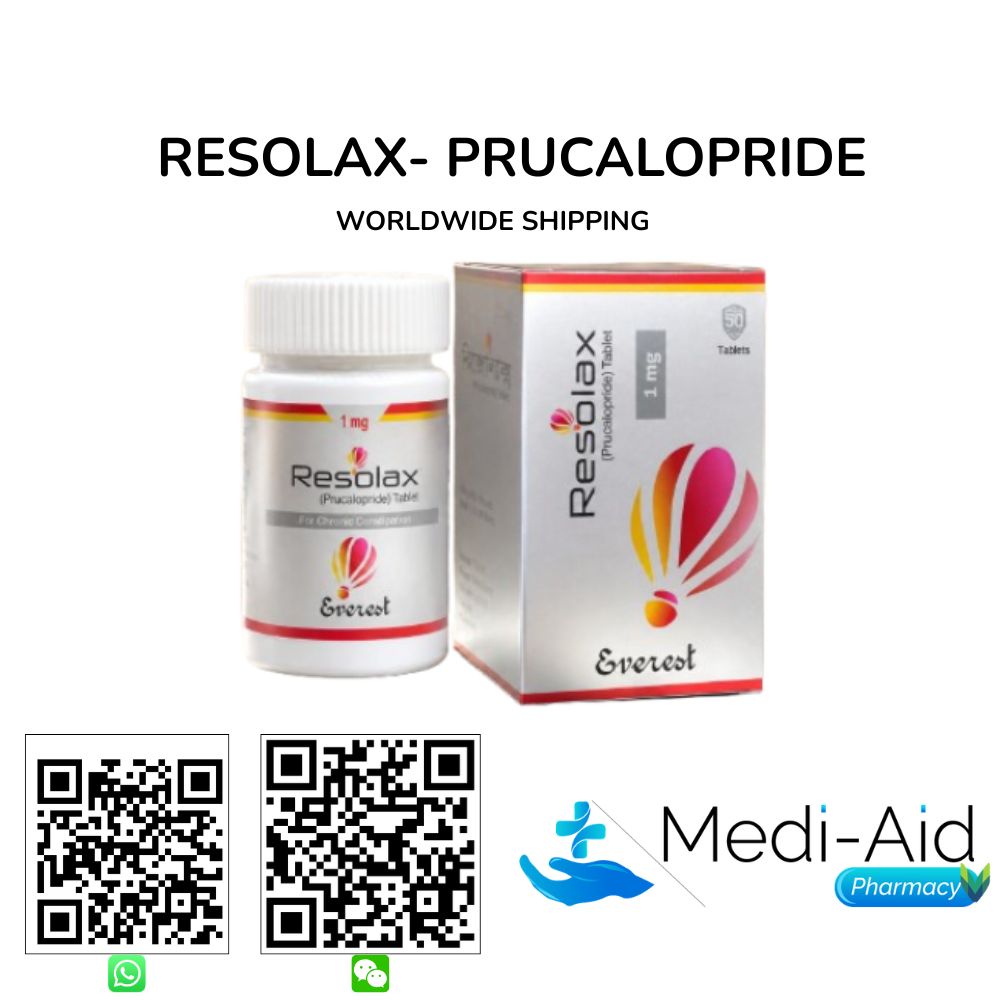
Description
Resolax 1 MG (Prucalopride) is a selective, high-affinity 5-hydroxytryptamine type 4 (5-HT4) serotonin receptor agonist, an enterokinetic prokinetic agent that activates 5-HT4 receptors on submucosal (Meissner’s plexus) and myenteric (Auerbach’s plexus) enteric neurons throughout the large intestine to stimulate the coordinated release of acetylcholine (ACh) and calcitonin gene-related peptide (CGRP), driving high-amplitude propagating contractions (HAPCs) across the ascending, transverse, and descending colon that accelerate colonic transit time, normalize defecation frequency, restore stool consistency, and eliminate the sensation of incomplete evacuation in adults with chronic idiopathic constipation (CIC).
Supplied as a film-coated tablet in 30 tablets per container, and available in 1 mg and 2 mg strengths, covering the recommended starting dose for elderly patients aged 65 years and above or patients with severe renal impairment (1 mg once daily), and the standard adult therapeutic maintenance dose for younger adults with CIC (2 mg once daily), manufactured by Everest Pharmaceuticals Ltd., Bangladesh. Its active ingredient, prucalopride, is a dihydrobenzofurancarboxamide derivative with greater than 290-fold receptor selectivity for the 5-HT4 receptor subtype over all other serotonin receptor subtypes (5-HT1, 5-HT2, 5-HT3) and dopamine, histamine, and muscarinic receptors, a selectivity profile that mechanistically eliminates the cardiac QTc-prolonging and extrapyramidal adverse effects produced by earlier non-selective prokinetic serotonergic agents including cisapride and metoclopramide that lacked 5-HT4 receptor exclusivity. In the pivotal PRU-USA-11 Phase 3 randomized controlled trial (641 patients, 12 weeks), prucalopride 2 mg achieved the primary endpoint of ≥3 spontaneous complete bowel movements (SCBMs) per week in 30.9% of patients versus 12.0% with placebo (p<0.001), representing a 2.6-fold advantage over placebo in the proportion of patients meeting the internationally validated therapeutic response threshold for CIC.
In PRU-INT-6 (620 patients, 12 weeks, prucalopride 2 mg), the responder rate for ≥3 SCBMs per week was 23.6% versus 11.3% with placebo (p<0.001), with statistically significant improvements in PAC-QoL total score, stool consistency on the Bristol Stool Form Scale, severity of straining, and sensation of incomplete evacuation across all three patient-reported constipation-related outcomes. Searching for Resolax 1 MG Prucalopride? Mediaid Pharmacy lists this product across its gastrointestinal medicines and Prucalopride Medicines portfolios and ships it worldwide.
Basic Product Information of Resolax 1 MG (Prucalopride)
| Brand Name | Resolax 1 MG (Prucalopride) |
| Product Name | Resolax |
| Generic Name | Prucalopride |
| Drug Class | Selective Serotonin 5-HT4 Receptor Agonist; Enterokinetic Prokinetic Agent; High-Amplitude Propagating Contraction (HAPC) Stimulant; Colonic Motility Enhancer; Gastrointestinal Prokinetic; Dihydrobenzofurancarboxamide Derivative; Chronic Idiopathic Constipation (CIC) Pharmacotherapy; Enteric Neuron Agonist; Acetylcholine Secretion Stimulant; Colonic Transit Accelerator |
| Formulation | Film-Coated Tablet |
| Available Strengths | 1 mg and 2 mg prucalopride per film-coated tablet. The 1 mg strength is the recommended starting dose for patients aged 65 years and above (elderly) and for adults with severe renal impairment (eGFR below 30 mL/min/1.73 m²), with dose escalation to 2 mg once daily permitted if the 1 mg dose does not produce an adequate therapeutic response after 4 weeks. The 2 mg strength is the standard adult therapeutic maintenance dose for patients under 65 years of age without severe renal impairment initiating prucalopride therapy for chronic idiopathic constipation (CIC). |
| Available Pack Size | 30 Tablets per container |
| Recommended Dose & Administration | Standard adult dose (patients under 65 years with normal or mild-to-moderate renal function): 2 mg prucalopride orally once daily. Resolax 2 mg is the primary therapeutic dose for adults under 65 years of age initiating prucalopride therapy for chronic idiopathic constipation; it is administered as a single film-coated tablet once daily, at any time of day, with or without food, at the same time each day to maintain consistent plasma concentrations. Elderly patients (aged 65 years and above) and patients with severe renal impairment (eGFR below 30 mL/min/1.73 m²): Begin at 1 mg prucalopride orally once daily (Resolax 1 MG). If the 1 mg dose does not produce a satisfactory bowel response, specifically fewer than 3 spontaneous complete bowel movements (SCBMs) per week, after a minimum of 4 weeks of continuous once-daily therapy, the prescribing gastroenterologist or physician may increase the dose to 2 mg once daily (Resolax 2 MG). Duration of therapy: Reassess the need for continued prucalopride therapy at 4 weeks. If adequate bowel movement frequency (≥3 SCBMs per week) has not been achieved after 4 weeks of treatment at the therapeutic dose (2 mg in adults under 65 or 2 mg following 1 mg dose escalation in elderly), reconsider the diagnosis and the appropriateness of continuing prucalopride. Administration: Swallow Resolax film-coated tablets whole with water; do not crush, break, or chew. May be taken without regard to meals. Missed dose: If a dose is missed, take it as soon as remembered on the same day. If the missed dose is only recalled the following day, skip the missed dose and resume the normal once-daily schedule; do not take two doses on the same day. Hepatic impairment: No dose adjustment is required for mild to moderate hepatic impairment. Use with caution in patients with severe hepatic impairment; limited pharmacokinetic data are available for this population. Always confirm the dose, strength selection, and duration of therapy with the prescribing gastroenterologist or physician before initiating or adjusting Resolax prucalopride treatment. |
| Primary Indications | Chronic Idiopathic Constipation (CIC) in Adults: Resolax (Prucalopride) is indicated for the symptomatic treatment of chronic idiopathic constipation in adults who have not experienced adequate relief from laxatives. Chronic idiopathic constipation refers to a functional bowel disorder defined by persistently fewer than 3 spontaneous complete bowel movements per week combined with one or more bothersome symptoms including hard or lumpy stools, excessive straining during defecation, a sensation of incomplete evacuation, or a sensation of anorectal obstruction, present for at least 3 months, with symptom onset at least 6 months prior to diagnosis, in the absence of an identifiable organic cause such as mechanical obstruction, structural colorectal disease, metabolic disorder, or constipating medication. Prucalopride is not indicated for secondary constipation caused by organic, neurological, or iatrogenic causes. Each treatment decision must account for prior laxative therapy history, symptom severity, renal function, patient age, and concomitant medications. Always consult the treating gastroenterologist or physician before initiating or adjusting Resolax therapy. |
| Manufacturer | Everest Pharmaceuticals Ltd., Bangladesh |
| Country of Origin | Bangladesh |
| SKU | prucalopride-resolax-1mg |
| Categories | Everest Pharmaceuticals Medicines; Gastrointestinal Medicines |
| Originator Reference Brand | Resolor® (prucalopride, developed by Janssen Pharmaceutica; approved by the European Medicines Agency (EMA) in 2009 for the symptomatic treatment of chronic constipation in women in whom laxatives fail to provide adequate relief, with the indication subsequently extended to adult men in 2015); Motegrity® (prucalopride succinate, approved by the U.S. Food and Drug Administration (FDA) on December 17, 2018, for the treatment of chronic idiopathic constipation in adults). Both originator brands contain prucalopride as the active pharmaceutical ingredient in the same selective 5-HT4 receptor agonist drug class. Resolax is manufactured by Everest Pharmaceuticals Ltd. in Bangladesh and is supplied through Mediaid Pharmacy for international procurement. |
| Storage Conditions | Store at room temperature below 30°C (86°F). Protect from moisture and direct sunlight. Keep in the original container with the lid tightly closed. Store out of the reach of children. Do not use after the expiry date printed on the container and product label. |
| Global Supplier | Mediaid Pharmacy, Worldwide Shipping Available |
How Resolax (Prucalopride) Works: Selective 5-HT4 Receptor Agonism, Enterokinetic Pharmacology, and Clinical Relevance in Chronic Idiopathic Constipation
Prucalopride, the active pharmaceutical ingredient in Resolax 1 MG, is a dihydrobenzofurancarboxamide compound that functions as the first approved highly selective, high-affinity 5-hydroxytryptamine type 4 (5-HT4) receptor agonist for the treatment of chronic idiopathic constipation. Prucalopride’s defining pharmacological property is its receptor selectivity: it binds the 5-HT4 receptor with greater than 290-fold selectivity over all other serotonin receptor subtypes including 5-HT1A, 5-HT1B, 5-HT2A, 5-HT2B, and 5-HT3 and produces no clinically meaningful binding at dopaminergic, histaminergic, muscarinic, or adrenergic receptors.
This selectivity profile is the pharmacological foundation distinguishing prucalopride from predecessors in the prokinetic class: cisapride, withdrawn globally due to fatal QTc-interval prolongation from combined 5-HT4/hERG potassium channel blockade, and metoclopramide, limited by dopamine D2 receptor blockade producing tardive dyskinesia and extrapyramidal adverse effects. Prucalopride’s 5-HT4 receptor exclusivity removes both mechanisms responsible for class toxicity while preserving the prokinetic efficacy of 5-HT4 agonism.
The 5-HT4 receptor in the gastrointestinal tract: 5-HT4 receptors are expressed on enteric neurons of the submucosal plexus (Meissner’s plexus) and myenteric plexus (Auerbach’s plexus) throughout the large intestine, on smooth muscle cells of the colonic wall, and on enterochromaffin cells of the colonic mucosa. In the healthy colon, serotonin (5-HT) released by enterochromaffin cells in response to mechanical distension binds 5-HT4 receptors on ascending limb intrinsic primary afferent neurons (IPANs) to initiate the peristaltic reflex a coordinated, ascending contraction and descending relaxation pattern that propels luminal contents toward the rectum. In chronic idiopathic constipation, the serotonergic signaling pathway driving this reflex is functionally impaired: enterochromaffin cell 5-HT content is reduced, mucosal 5-HT release following mechanical stimulation is attenuated, and the resulting deficiency in enteric 5-HT4 receptor activation produces the slow-transit, high-stool-consistency, low-frequency defecation pattern that defines CIC.
Prucalopride pharmacologically reconstitutes this deficient 5-HT4 signaling axis by directly binding and activating 5-HT4 receptors on enteric neurons independently of the attenuated mucosal 5-HT release, bypassing the upstream serotonin secretory deficit of CIC at the receptor level. Resolax (Prucalopride) mechanism at the myenteric plexus: 5-HT4 receptor activation on myenteric plexus interneurons and motor neurons stimulates the release of acetylcholine (ACh) onto the longitudinal and circular smooth muscle layers of the ascending colon, triggering high-amplitude propagating contractions (HAPCs) the phasic, high-force (>75 mmHg amplitude), long-distance (spanning 30 to 60 cm of colon per event) propulsive contractions that are the primary motor mechanism for bulk colonic transit in the human large intestine.
HAPCs typically occur 1 to 3 times per day in healthy individuals (most commonly in the morning and following meals), and their frequency, amplitude, and propagation velocity are reduced in patients with slow-transit chronic constipation. Prucalopride restores HAPC activity across all five regions of the colon (ascending, transverse, descending, sigmoid, and rectosigmoid) simultaneously, producing a pan-colonic acceleration of transit time rather than a segmental effect limited to one bowel region.
The molecular architecture enabling Resolax’s prokinetic selectivity is the dihydrobenzofurancarboxamide scaffold, a structural motif that achieves high-affinity 5-HT4 receptor binding (Ki = 2.5 nM at 5-HT4 receptors) while the steric and electronic characteristics of the carboxamide side chain prevent meaningful interaction with the 5-HT3 receptor (Ki >1,000 nM), the hERG cardiac potassium channel (IC50 >10,000 nM), and dopamine D2 receptors (Ki >10,000 nM). This multi-receptor separation 5-HT4 versus 5-HT3 separation removes the risk of serotonin syndrome-type activation; 5-HT4 versus hERG separation removes the QTc-prolongation risk of cisapride; 5-HT4 versus D2 separation removes metoclopramide’s movement disorder risk renders prucalopride the first 5-HT4 agonist whose clinical prokinetic efficacy is mechanistically separable from the class-defining safety liabilities of all prior prokinetic serotonergic agents.
Pharmacokinetically, prucalopride administered as a Resolax film-coated tablet is absorbed from the gastrointestinal tract with an oral bioavailability of approximately 90%, reaching peak plasma concentration (Tmax) at 2 to 3 hours post-dose. Food does not meaningfully alter prucalopride’s rate or extent of absorption, supporting once-daily dosing at any time of day, with or without meals, as specified in the Resolax 1 MG and 2 MG dosing schedule. The terminal elimination half-life of prucalopride is approximately 24 hours the precise pharmacokinetic basis for once-daily dosing enabling the 30-tablet-per-container pack format of Resolax to provide a complete 30-day treatment course per container.
Prucalopride undergoes minimal hepatic first-pass metabolism; less than 5% of the administered dose is metabolized, and the primary elimination route is unchanged renal excretion (approximately 60% of the dose is excreted unchanged in urine), with fecal excretion accounting for the remainder. The renal elimination route explains the dose-reduction requirement to 1 mg once daily (Resolax 1 MG) in patients with severe renal impairment (eGFR below 30 mL/min/1.73 m²), where reduced glomerular filtration decreases prucalopride clearance and increases steady-state plasma exposure. No CYP450 drug interactions exist for prucalopride, as negligible hepatic CYP metabolism eliminates the pharmacokinetic drug interaction risk associated with CYP3A4, CYP2D6, or CYP2C9 substrates, inhibitors, and inducers. For the full selection of gastrointestinal medicines available at Mediaid Pharmacy with worldwide shipping, browse the complete specialty portfolio.
Resolax (Prucalopride): Indications, Dosing Schedule, and Key Safety Information
| Approved Indications | Chronic Idiopathic Constipation (CIC) in Adults: Symptomatic treatment of chronic idiopathic constipation in adults who have not experienced adequate relief from laxative therapy. Prucalopride is indicated when one or more courses of conventional laxative therapy including osmotic laxatives (polyethylene glycol, lactulose), stimulant laxatives (senna, bisacodyl), or bulk-forming agents (psyllium, methylcellulose) have failed to restore satisfactory bowel movement frequency, stool consistency, and absence of straining and incomplete evacuation. Resolax (Prucalopride) is not indicated for constipation secondary to identified organic causes including mechanical intestinal obstruction, colonic structural disease (stricture, cancer), metabolic disorders (hypothyroidism, hypercalcemia, hypokalemia), neurological causes (Parkinson’s disease, spinal cord injury), or iatrogenic constipation attributable to opioids, calcium channel blockers, tricyclic antidepressants, or antacids; the underlying cause must be excluded or separately managed before initiating prucalopride. Prucalopride is not indicated for pediatric patients; its safety and efficacy in patients under 18 years of age have not been established. The treating gastroenterologist or physician determines candidacy, prescribes the appropriate strength (1 mg or 2 mg based on age and renal function), and evaluates therapeutic response at 4 weeks. |
| Dosing Schedule | Adults under 65 years with normal or mild-to-moderate renal function (eGFR ≥30 mL/min/1.73 m²): 2 mg prucalopride (Resolax 2 MG) orally once daily; standard adult therapeutic dose confirmed across the three pivotal Phase 3 trials (PRU-INT-6, PRU-INT-12, PRU-USA-11). Elderly patients (aged 65 years and above) or patients with severe renal impairment (eGFR <30 mL/min/1.73 m²): Start at 1 mg prucalopride (Resolax 1 MG) orally once daily. If 1 mg produces inadequate therapeutic response after 4 continuous weeks of therapy, increase to 2 mg once daily under prescriber supervision. Duration and reassessment: Reassess efficacy at 4 weeks. If the patient has not achieved ≥3 SCBMs per week at the appropriate therapeutic dose, reconsider the diagnosis and continuation of prucalopride. Administration: Swallow whole, once daily, at any time of day, with or without food. Do not crush or chew tablets. |
| Common Adverse Reactions | The most commonly reported adverse reactions with prucalopride across Phase 3 clinical trials are predominantly gastrointestinal and central nervous system in nature, and are typically concentrated in the first day or first week of therapy, resolving with continued once-daily dosing: Headache (24% at 2 mg versus 14% placebo in PRU-USA-11), the single most commonly reported adverse event across all three pivotal trials, predominantly on Day 1 of treatment and resolving within 24 to 48 hours in most patients; nausea (23% at 2 mg versus 8% placebo), most frequent on Days 1 to 3; diarrhea (12 to 17% at 2 mg), occurring during the first 2 to 4 days of dosing as the prokinetic effect of prucalopride on colonic transit is established, resolving spontaneously without dose reduction in most patients; abdominal pain (12 to 15%), including cramping or discomfort, predominantly in the first week. Additional commonly reported adverse events include flatulence, dizziness, and fatigue, all predominantly first-week phenomena. These adverse effects are dose-initiation events attributable to the initial acceleration of colonic transit by prucalopride, not hypersensitivity or toxicity phenomena, and are reduced in the elderly population using the 1 mg starting dose. No clinically significant QTc-interval prolongation has been observed with prucalopride in dedicated cardiovascular safety studies or any Phase 3 trial. |
| Drug Interactions | CYP450 interactions: Prucalopride is not metabolized by CYP450 enzymes; it does not inhibit or induce any CYP isozyme at clinically relevant concentrations. No CYP-mediated pharmacokinetic drug interactions exist for prucalopride, eliminating the interaction risk associated with statins, anticoagulants, antiepileptics, and immunosuppressants that are CYP substrates. P-glycoprotein (P-gp): Prucalopride is a substrate of P-glycoprotein. Co-administration with potent P-gp inhibitors (e.g., ketoconazole, verapamil, ciclosporin) may increase prucalopride plasma concentrations by reducing P-gp-mediated intestinal efflux and renal tubular secretion; clinical significance is generally low at approved doses but warrants monitoring for enhanced adverse effects in renally impaired patients. Erythromycin: Co-administration with erythromycin has been reported to increase prucalopride maximum plasma concentration (Cmax) by approximately 30%; no dose adjustment is currently mandated, but the interaction should be considered in elderly patients already receiving 1 mg prucalopride. Medications with QTc-prolongation potential: Prucalopride itself does not prolong the QTc interval; no additive QTc concern applies when prucalopride is co-prescribed with class I or III antiarrhythmics, antipsychotics, or macrolide antibiotics that do prolong QTc. Other oral medications: Prucalopride accelerates colonic transit but does not meaningfully alter gastric emptying rate or small intestinal transit at approved doses, minimizing absorption impact on most co-administered oral medications; no specific oral drug absorption interactions have been identified in clinical studies. |
| Contraindications | Resolax (Prucalopride) is contraindicated in: patients with known hypersensitivity to prucalopride or any excipient in the Resolax film-coated tablet formulation; patients with intestinal perforation or obstruction due to structural or functional disorders of the gut wall; patients with severe inflammatory conditions of the intestinal tract, including Crohn’s disease, ulcerative colitis, and toxic megacolon; patients with renal impairment requiring dialysis (eGFR below 15 mL/min/1.73 m²). Prucalopride is not indicated for pediatric patients under 18 years of age. |
| Renal Impairment | Prucalopride is eliminated predominantly unchanged via renal excretion (~60% of the dose); renal function directly determines prucalopride clearance and steady-state plasma exposure. Mild renal impairment (eGFR 60–89 mL/min/1.73 m²): No dose adjustment required. Moderate renal impairment (eGFR 30–59 mL/min/1.73 m²): No dose adjustment required; standard adult dosing (2 mg once daily or 1 mg once daily in patients ≥65 years) applies. Severe renal impairment (eGFR below 30 mL/min/1.73 m²): Dose reduction to 1 mg prucalopride (Resolax 1 MG) once daily is required for all patients regardless of age, due to significantly reduced prucalopride clearance and increased AUC at this eGFR level. End-stage renal disease requiring dialysis (eGFR below 15 mL/min/1.73 m²): Prucalopride is contraindicated; pharmacokinetic data in dialysis-dependent patients are unavailable. Confirm eGFR status before prescribing Resolax and select the 1 mg or 2 mg strength based on both patient age and renal function. Consult the treating physician or nephrologist for individualized guidance in patients with advanced chronic kidney disease. |
| Pregnancy & Lactation | Resolax (Prucalopride) is not recommended during pregnancy. Animal reproductive toxicity studies revealed no teratogenic effects, but adequate and well-controlled studies in pregnant women are unavailable; the potential risk to the developing fetus cannot be excluded. Women of childbearing age should use reliable contraception during Resolax therapy. If pregnancy is confirmed or planned during prucalopride treatment, discontinue Resolax and consult the treating gastroenterologist or obstetrician regarding alternative management of constipation during pregnancy (dietary fiber, osmotic laxatives such as polyethylene glycol, and adequate hydration are preferred first-line interventions). Prucalopride is excreted into breast milk in animal studies; the risk of exposure to the nursing infant cannot be excluded. Breastfeeding is not recommended during Resolax therapy. Consult the treating physician before making any decisions regarding pregnancy, breastfeeding, or contraception in the context of ongoing Resolax prucalopride treatment. |
Who Should Use Resolax (Prucalopride)?
Resolax (Prucalopride) is indicated for adults with chronic idiopathic constipation (CIC) who have not achieved adequate relief with laxative therapy, with its two-strength film-coated tablet format (1 mg and 2 mg, 30 tablets per container) specifically designed to serve four well-defined patient populations across the age and renal-function spectrum of adults with treatment-refractory CIC.
First, adults under 65 years with normal or mild-to-moderate renal function who have failed conventional laxatives represent the core Resolax 2 MG population. These patients have typically trialed one or more osmotic or stimulant laxatives without achieving the clinically meaningful therapeutic response defined as ≥3 spontaneous complete bowel movements (SCBMs) per week. In the pivotal PRU-USA-11 Phase 3 trial (641 patients, 12 weeks), prucalopride 2 mg achieved the ≥3 SCBM/week primary endpoint in 30.9% of patients versus 12.0% with placebo (p<0.001), with statistically significant improvements in PAC-QoL patient-reported quality of life scores, stool consistency, and severity of straining and incomplete evacuation outcomes confirming the therapeutic value of Resolax 2 MG in this primary adult CIC population.
Second, elderly patients aged 65 years and above with CIC represent the specific therapeutic population for Resolax 1 MG. The 1 mg starting dose for elderly patients is supported by pharmacokinetic data showing modestly increased prucalopride exposure in patients aged ≥65 years and the known increased sensitivity of this population to gastrointestinal and central nervous system adverse events (nausea, headache, diarrhea) that are the primary tolerability challenges during prucalopride initiation. The prescribing gastroenterologist may increase to 2 mg once daily after 4 weeks if the 1 mg dose does not achieve ≥3 SCBMs per week, maintaining therapeutic flexibility within the Resolax two-strength range.
Third, adults with severe renal impairment (eGFR below 30 mL/min/1.73 m²) who require prucalopride for CIC are exclusively managed with Resolax 1 MG once daily, as the reduced renal clearance of prucalopride at this eGFR level increases steady-state plasma exposure to levels approximating the exposure seen with 2 mg in patients with normal renal function. The 1 mg dose provides effective prokinetic therapy in this population while avoiding the adverse event profile attributable to suprapherapeutic prucalopride exposure. Gastroenterologists and nephrologists managing patients with concurrent CIC and chronic kidney disease (CKD stages 4–5) should confirm eGFR before prescribing Resolax and should select the 1 mg strength (Resolax 1 MG) for all patients with eGFR below 30 mL/min/1.73 m².
Fourth, gastroenterology clinics, hospital pharmacy departments, and primary care programs managing adult outpatient CIC populations across emerging markets benefit from sourcing Resolax as an Everest Pharmaceuticals Ltd.-manufactured prucalopride option with a competitive cost-access profile. Mediaid Pharmacy supplies the complete gastrointestinal medicines range for healthcare facilities requiring consolidated specialty medicine procurement with worldwide shipping and per-product availability confirmation.
Global Supplier: Mediaid Pharmacy Worldwide Shipping for Resolax 1 MG (Prucalopride)
Mediaid Pharmacy is a Dhaka-based specialty medicine supplier delivering to patients, gastroenterology clinics, hospital pharmacy departments, and international distributors across all global regions with worldwide shipping and end-to-end order tracking. Resolax (Prucalopride), manufactured by Everest Pharmaceuticals Ltd. in Bangladesh, is supplied as film-coated tablets in 1 mg and 2 mg strengths, 30 tablets per container, with per-strength pricing quotations, real-time stock confirmation, complete product documentation, and full international delivery management provided for every order. The film-coated tablet format of Resolax requires no special storage equipment, no device preparation, and no compounding, supporting simplified pharmacy dispensing and minimal patient handling requirements across both the 1 mg elderly and renally-adjusted dosing pathway and the 2 mg standard adult therapeutic dosing pathway.
Gastroenterology outpatient clinics managing adult CIC patient cohorts sourcing prucalopride tablets Bangladesh for treatment-refractory constipation programs, hospital pharmacy departments co-sourcing gastrointestinal prokinetic medicines for outpatient gastroenterology services, primary care programs sourcing prucalopride as a laxative-refractory CIC treatment option, and individual patients can reach the Mediaid Pharmacy team via WhatsApp, phone, or WeChat for current per-strength pricing, stock availability for both the 1 mg and 2 mg strengths of Resolax, and international delivery timelines by destination country. Healthcare facilities sourcing Resolax alongside a broader specialty gastrointestinal or general medicine range are encouraged to review the complete gastrointestinal medicines at Mediaid Pharmacy catalog before submitting a consolidated sourcing inquiry.
Why Choose Resolax (Prucalopride) from Mediaid Pharmacy?
Resolax (Prucalopride) provides access to the most clinically evidenced prokinetic active pharmaceutical ingredient currently approved for chronic idiopathic constipation prucalopride in the specific dose steps that span the full therapeutic population: the 1 mg dose for elderly patients (≥65 years) and those with severe renal impairment, and the 2 mg dose for standard adult patients, both available in 30-tablet-per-container packs providing a complete calendar month of once-daily therapy.
The clinical evidence base for prucalopride is established across three large, multicenter, double-blind, placebo-controlled Phase 3 randomized controlled trials. In PRU-USA-11 (641 patients, 12 weeks, prucalopride 2 mg), 30.9% of prucalopride-treated patients achieved ≥3 SCBMs per week versus 12.0% with placebo (p<0.001). In PRU-INT-6 (620 patients, 12 weeks), 23.6% of prucalopride 2 mg patients met the primary endpoint versus 11.3% with placebo (p<0.001). In PRU-INT-12 (641 patients, 12 weeks), 24.3% versus 11.3% with placebo (p<0.001). All three trials showed statistically significant and clinically meaningful improvements in patient-reported constipation severity (PAC-SYM), disease-specific quality of life (PAC-QoL), Bristol Stool Form Scale score, severity of straining, and sensation of incomplete evacuation, confirming that prucalopride addresses the complete symptom burden of CIC, not merely bowel frequency alone.
The receptor selectivity profile of prucalopride embedded in every Resolax tablet greater than 290-fold 5-HT4 selectivity over all other receptor subtypes is the mechanism eliminating the QTc-prolongation risk of cisapride and the extrapyramidal risk of metoclopramide, allowing prescribers to offer effective prokinetic therapy to patients with cardiac comorbidity, neurological comorbidity, and polypharmacy contexts where older prokinetics were contraindicated.
The once-daily oral film-coated tablet format of Resolax (30 tablets per container, delivering one complete month of therapy per pack) eliminates the multi-dose scheduling complexity of osmotic and stimulant laxatives, which typically require two to three daily doses at variable intervals relative to meals. The fixed once-daily schedule, at any time of day without regard to food, maximizes adherence in older patients and in those with complex comorbidity medication schedules.
The 1 mg strength of Resolax specifically enables the guideline-recommended elderly dose and the renally-adjusted dose within a single commercially available product, eliminating the need for tablet splitting or compounding for dose adjustment. Resolax, manufactured by Everest Pharmaceuticals Ltd. in Bangladesh, supplies prucalopride the identical active pharmaceutical ingredient as originator brands Resolor® (Janssen) and Motegrity® (Shire/Takeda) as film-coated tablets in 1 mg and 2 mg strengths, available through Mediaid Pharmacy with worldwide shipping. To view the complete Resolax Prucalopride range at Mediaid Pharmacy and explore the broader specialty gastrointestinal medicines catalog available for worldwide delivery, contact the team for a personalized procurement quotation.
Frequently Asked Questions About Resolax 1 MG (Prucalopride)
What is Resolax 1 MG (Prucalopride) used for?
Resolax 1 MG (Prucalopride) is a selective 5-HT4 receptor agonist used for the symptomatic treatment of chronic idiopathic constipation (CIC) in adults who have not experienced adequate relief from laxative therapy. Administered as a once-daily film-coated tablet, Resolax works by stimulating 5-HT4 receptors on enteric neurons to produce high-amplitude propagating contractions (HAPCs) in the large intestine, accelerating colonic transit and restoring normal bowel movement frequency. The 1 mg strength is the recommended starting dose for elderly patients aged 65 years and above and for adults with severe renal impairment (eGFR below 30 mL/min/1.73 m²). The originator reference brands for prucalopride are Resolor® (Janssen, EMA-approved 2009) and Motegrity® (Shire/Takeda, FDA-approved December 17, 2018). Resolax is manufactured by Everest Pharmaceuticals Ltd. in Bangladesh and is available through Mediaid Pharmacy with worldwide shipping to patients and gastroenterology specialist centers globally.
What is the generic name of Resolax?
The generic name of Resolax is prucalopride. Resolax is the brand name registered by Everest Pharmaceuticals Ltd. for prucalopride manufactured in Bangladesh. It is formulated as a film-coated tablet, available in 1 mg and 2 mg strengths, supplied in 30 tablets per container one container delivering a complete 30-day once-daily treatment course. The 1 mg tablet covers the elderly starting dose and the severe renal impairment dose-adjusted regimen. The 2 mg tablet is the standard adult therapeutic dose for patients under 65 years with normal or mild-to-moderate renal function. The originator reference brands are Resolor® (Janssen) in Europe and Motegrity® (Shire/Takeda) in the United States. Mediaid Pharmacy distributes Resolax globally with worldwide shipping.
What is the difference between Resolax 1 MG and Resolax 2 MG?
Resolax 1 MG and Resolax 2 MG both contain prucalopride as the active pharmaceutical ingredient in the same selective 5-HT4 receptor agonist (enterokinetic) drug class, with identical indication (chronic idiopathic constipation in adults who have failed laxatives), identical film-coated tablet formulation, and identical once-daily dosing schedule. The difference is purely one of dose strength, determined by patient age and renal function. Resolax 1 MG (prucalopride 1 mg) is the recommended dose for elderly patients aged ≥65 years and for adults with severe renal impairment (eGFR <30 mL/min/1.73 m²), whose reduced prucalopride clearance warrants the lower starting strength. Resolax 2 MG (prucalopride 2 mg) is the standard therapeutic dose for adults under 65 years with normal or mild-to-moderate renal function, the dose used as the primary arm in all three pivotal Phase 3 trials. Both strengths are supplied in 30 tablets per container and are available through Mediaid Pharmacy with worldwide shipping. For the full range of prucalopride tablets at Mediaid Pharmacy, browse the complete collection including both available strengths.
How quickly does Resolax (Prucalopride) work?
Resolax (Prucalopride) reaches peak plasma concentration (Tmax) at 2 to 3 hours after oral dosing, and its prokinetic effect on colonic transit begins within hours of the first dose. In clinical trials, some patients experienced their first spontaneous complete bowel movement within 24 hours of initiating prucalopride. The full therapeutic response defined as a sustained pattern of ≥3 SCBMs per week is typically established within the first 4 weeks of continuous once-daily dosing. Reassessment of efficacy is recommended at 4 weeks; if adequate bowel movement frequency has not been achieved at the appropriate dose (1 mg for patients ≥65 years or with severe renal impairment; 2 mg for adults under 65 years), the prescriber should reassess the diagnosis. Adverse events including headache and nausea, which are predominantly first-day phenomena in clinical trials, typically resolve within 24 to 48 hours of initiating therapy and do not indicate an absence of therapeutic efficacy.
What are the available strengths of Resolax (Prucalopride)?
Resolax (Prucalopride) manufactured by Everest Pharmaceuticals Ltd. is available in two strengths: 1 mg (Resolax 1 MG) and 2 mg (Resolax 2 MG), both supplied as film-coated tablets in 30 tablets per container. The 1 mg strength is the recommended starting dose for patients aged 65 years and above and for patients with severe renal impairment (eGFR below 30 mL/min/1.73 m²), with dose escalation to 2 mg permitted after 4 weeks if the 1 mg dose does not achieve adequate bowel movement frequency. The 2 mg strength is the standard adult therapeutic dose for patients under 65 years without severe renal impairment, and is the dose confirmed in the three pivotal Phase 3 randomized controlled trials (PRU-INT-6, PRU-INT-12, PRU-USA-11) as the primary efficacious therapeutic dose for chronic idiopathic constipation. Both strengths are available from Mediaid Pharmacy with worldwide shipping. For pricing and availability, contact +8801773428128 or email info@mediaidpharmacy.com.
What are the side effects of Resolax (Prucalopride)?
The most common side effects of Resolax (Prucalopride) are headache (approximately 24% at 2 mg versus 14% placebo), nausea (23% versus 8%), diarrhea (12–17%), and abdominal pain (12–15%), predominantly occurring on Day 1 or within the first week of therapy and resolving spontaneously with continued once-daily dosing. These adverse events are caused by the initial acceleration of colonic transit as prucalopride establishes its prokinetic effect, not by systemic toxicity. Elderly patients or those with severe renal impairment starting at 1 mg generally report lower rates of first-day adverse events compared to those initiating at 2 mg. Resolax (Prucalopride) does not prolong the QTc interval, does not cause extrapyramidal effects (tardive dyskinesia, acute dystonia), and does not cause hypoglycemia or cardiovascular adverse events at approved once-daily doses, a safety profile established across all three Phase 3 trials and confirmed in dedicated cardiac safety studies. Discuss the full safety and contraindication profile of Resolax with the treating gastroenterologist before initiating therapy.
Who manufactures Resolax Prucalopride?
Resolax (Prucalopride) is manufactured by Everest Pharmaceuticals Ltd., a pharmaceutical company based in Bangladesh. Everest Pharmaceuticals Ltd. produces Resolax as film-coated tablets in 1 mg and 2 mg strengths, 30 tablets per container, containing prucalopride as the active pharmaceutical ingredient. Mediaid Pharmacy, a Dhaka-based specialty medicine supplier, distributes Resolax by Everest Pharmaceuticals Ltd. globally with worldwide shipping to patients, gastroenterology clinics, and hospital pharmacy departments. The originator reference brands for prucalopride are Resolor® (Janssen/EMA-approved 2009) and Motegrity® (Shire/Takeda/FDA-approved December 2018).
Can I order Resolax 1 MG Prucalopride online with worldwide shipping?
Yes. Mediaid Pharmacy supplies Everest Pharmaceuticals Ltd. Resolax (Prucalopride) film-coated tablets in 1 mg and 2 mg strengths, 30 tablets per container, with worldwide shipping to patients, gastroenterology specialist centers, hospital pharmacy departments, and international healthcare providers. Contact Mediaid Pharmacy via WhatsApp, phone, or WeChat at +8801773428128, or by email at info@mediaidpharmacy.com for per-strength pricing, current stock availability, and international delivery timelines for your destination. Browse the complete prucalopride tablet range at Mediaid Pharmacy to view all available brands and strengths before placing your order.
Order Resolax 1 MG (Prucalopride) with Worldwide Shipping
Phone / WhatsApp / WeChat: +8801773428128 | Email: info@mediaidpharmacy.com

Reviews
There are no reviews yet.