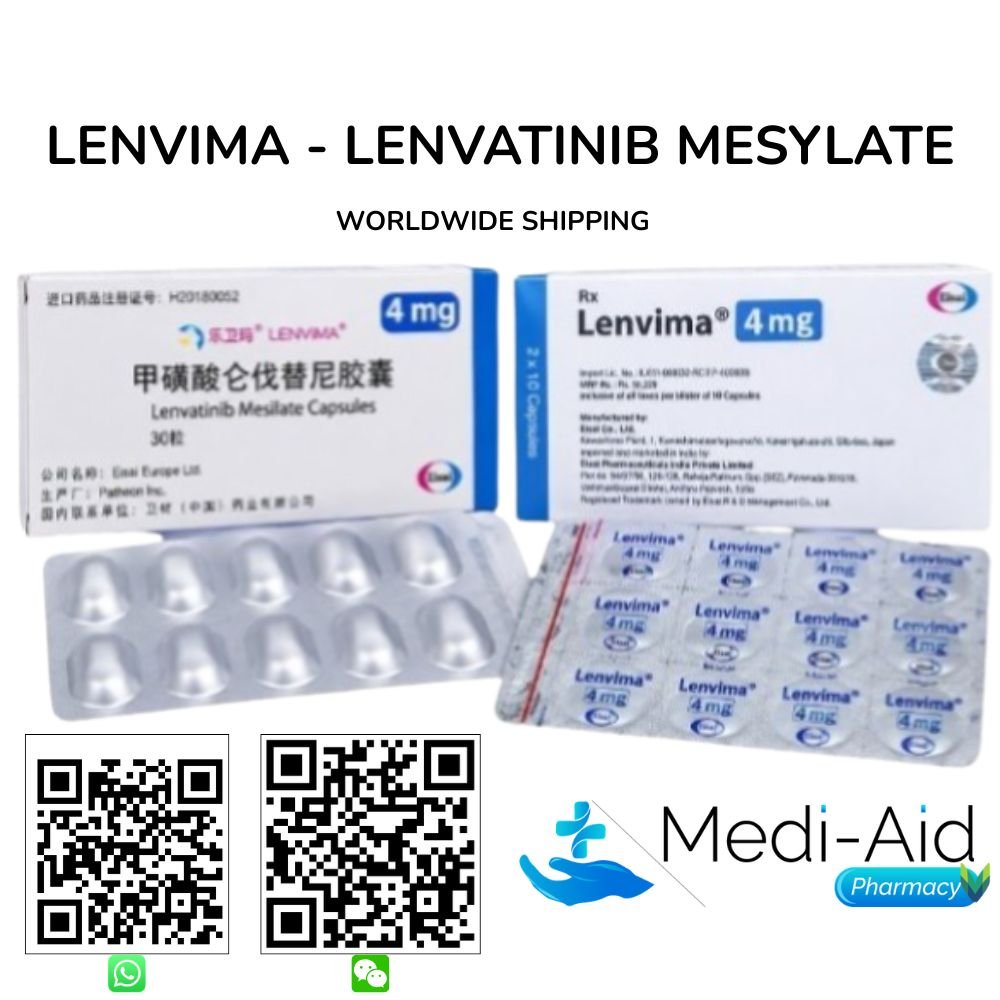
Description
Lenvima 4 MG (Lenvatinib mesylate) marketed in China under the Chinese package name 乐卫玛 is the originator, oral, multi-targeted receptor tyrosine kinase inhibitor (TKI) supplied as a 4 mg capsule in a pack of 30 capsules, developed, manufactured, and commercialised by Eisai Co., Ltd. Its active ingredient, lenvatinib mesylate, is the methanesulfonate (mesylate) salt form of lenvatinib the precise active moiety and salt specification used in every pivotal Phase III clinical trial that established lenvatinib’s global regulatory approvals: the SELECT trial in radioiodine-refractory differentiated thyroid cancer (DTC), the REFLECT trial in hepatocellular carcinoma (HCC), and the CLEAR trial in renal cell carcinoma (RCC).
Lenvatinib mesylate simultaneously inhibits VEGFR1, VEGFR2, VEGFR3, FGFR1–4, PDGFRα, RET, and KIT a structurally unique multi-kinase inhibition profile that delivers concurrent antiangiogenic, direct antitumour, and immunomodulatory effects not achievable with single-axis VEGFR inhibitors. As the original molecule medicine, Lenvima 4 MG (Lenvatinib mesylate) carries the manufacturing quality standard, pharmacokinetic characterisation, and regulatory approval dossier from which all global efficacy and safety data were generated confirming that every clinical outcome attributed to lenvatinib in the pivotal trials is directly attributable to this Eisai formulation.
In the pivotal Phase III SELECT trial, lenvatinib mesylate 24 mg once daily delivered a median progression-free survival (PFS) of 18.3 months versus 3.6 months with placebo (HR 0.21; 99% CI 0.14–0.31; P<0.001) in RAI-refractory DTC the most robust PFS improvement recorded in this disease to date. Searching for Lenvima 4 MG Lenvatinib mesylate? Mediaid Pharmacy stocks this Eisai original molecule product within its oncology medicines portfolio and ships it worldwide.
Basic Product Information of Lenvima 4 MG (Lenvatinib mesylate)
| Brand Name | Lenvima 4 MG (Lenvatinib mesylate) |
| Product Name | Lenvima |
| Chinese Package Name | 乐卫玛 |
| Active Ingredient | Lenvatinib mesylate (lenvatinib methanesulfonate INN) |
| Drug Class | Multi-Targeted Receptor Tyrosine Kinase Inhibitor (VEGFR1–3, FGFR1–4, PDGFRα, RET, KIT); Eisai Original Molecule Antiangiogenic Oncology Agent |
| Dosage Form | Capsules |
| Available Strength | 4 mg |
| Pack Size | 30 Capsules |
| Primary Indications | Radioiodine-refractory Differentiated Thyroid Cancer (DTC); Unresectable Hepatocellular Carcinoma (HCC, first-line); Advanced Renal Cell Carcinoma (RCC) monotherapy and combination regimens |
| Product Type | Original Molecule Medicine Eisai Innovator Product; same molecule and formulation as used in all pivotal Phase III clinical trials |
| Manufacturer / Brand | Eisai Co., Ltd. |
| Market Packaging | China (Chinese package name: 乐卫玛) |
| Categories | Kidney Cancer Medicines, Liver Cancer Medicines, Oncology Medicines, Original Molecule Medicines, Thyroid Cancer Medicines |
| Storage Conditions | Store below 25°C in a dry place, protected from light and moisture. Keep out of the reach of children. |
| Global Supplier | Mediaid Pharmacy Worldwide Shipping Available |
How Lenvima 4 MG (Lenvatinib mesylate) Works: Eisai’s Original Multi-Kinase Inhibition Platform
Lenvatinib mesylate, the active ingredient in Lenvima 4 MG, is the methanesulfonate (mesylate) salt form of lenvatinib the specific chemical entity developed by Eisai Co., Ltd. and selected for formulation development, clinical investigation, and regulatory approval based on its superior solubility, chemical stability, and oral bioavailability profile versus the lenvatinib free base. Lenvatinib mesylate is a novel, orally bioavailable, multi-targeted receptor tyrosine kinase (RTK) inhibitor belonging to the quinoline carboxamide structural class. As the original innovator formulation, every pharmacokinetic parameter, drug–receptor interaction constant, and clinical outcome associated with lenvatinib in the published literature including the SELECT, REFLECT, CLEAR, and all Phase I/II studies was generated using Eisai’s lenvatinib mesylate formulation.
Lenvatinib mesylate simultaneously inhibits the full VEGFR family (VEGFR1, VEGFR2, VEGFR3), the complete FGFR family (FGFR1, FGFR2, FGFR3, FGFR4), platelet-derived growth factor receptor alpha (PDGFRα), rearranged during transfection (RET) kinase, and stem cell factor receptor (KIT), achieving inhibitory concentration half-maxima (IC₅₀) of 4.0 nM (VEGFR2), 2.3 nM (VEGFR3), 4.7 nM (VEGFR1), 61 nM (FGFR1), 27 nM (FGFR2), 52 nM (FGFR3), 43 nM (FGFR4), 6.4 nM (RET), and 85 nM (KIT) in kinase activity assays. Lenvatinib mesylate is defined as a type V kinase inhibitor that binds to both the DFG-in conformation and the adjacent allosteric pocket, conferring a unique binding mode that distinguishes its receptor selectivity profile and potency characteristics from sorafenib and other classical multi-kinase inhibitors.
The therapeutic mechanism of lenvatinib mesylate is characterised by three concurrent biological effects: antiangiogenic activity (via VEGFR1–3 and FGFR1–4 inhibition suppressing tumour neovasculature formation and maintenance), direct antitumour activity (via FGFR1–4, RET, and KIT inhibition reducing tumour cell proliferation and survival signalling independent of the vasculature), and immunomodulatory activity (via VEGFR2 and FGFR inhibition counteracting VEGF- and FGF-driven immunosuppression within the tumour microenvironment, enhancing anti-tumour immune effector activity).
This triple-mechanism profile is the pharmacological basis for lenvatinib’s activity as both a monotherapy in RAI-refractory DTC and unresectable HCC and as a synergistic combination partner with pembrolizumab (anti-PD-1 immune checkpoint inhibitor) and everolimus (mTOR inhibitor) in advanced RCC, where lenvatinib’s immunomodulatory VEGFR2/FGFR blockade and pembrolizumab’s PD-1 blockade address distinct and complementary suppressive axes within the same tumour microenvironment. Oncologists building comprehensive thyroid cancer programmes can review the full selection of thyroid cancer medicines at Mediaid Pharmacy, including Lenvima 4 MG (Lenvatinib mesylate), for RAI-refractory DTC treatment planning.
The 4 mg capsule strength of Lenvima is the foundational dose unit of the Eisai originator lenvatinib prescribing platform. For unresectable HCC where lenvatinib is dosed based on body weight the 4 mg capsule enables both body-weight-adjusted starting doses specified in the REFLECT reference label: 12 mg once daily for patients with body weight ≥60 kg (3 × 4 mg capsules) and 8 mg once daily for patients with body weight <60 kg (2 × 4 mg capsules). The HCC 4 mg–only dosing framework covers all three dose reduction levels for HCC as well: from 12 mg to 8 mg (2 × 4 mg), from 8 mg to 4 mg (1 × 4 mg). The 4 mg capsule is equally integral as the precision adjustment component in DTC and RCC combination regimens, where it is combined with the 10 mg capsule to achieve the protocol-specified starting doses and dose-reduction steps. Prescribers evaluating both Lenvima capsule strengths for multi-indication lenvatinib programmes can review Mediaid Pharmacy’s full selection of liver cancer medicines, including Lenvima in both 4 mg and 10 mg, for comprehensive HCC programme procurement.
Approved Indications of Lenvima (Lenvatinib mesylate) Eisai Originator Reference Label
Lenvatinib mesylate (Lenvima) is approved in more than 70 countries across multiple oncology indications in adult patients, based on Eisai’s original Phase II/III clinical development programme. Prescribers should confirm the exact locally approved indications on the Lenvima product label for their regulatory jurisdiction before initiating therapy, as specific label language varies by country.
|
Radioiodine-Refractory Differentiated Thyroid Cancer (RAI-Refractory DTC) Monotherapy Lenvima (lenvatinib mesylate) is indicated as monotherapy for adult patients with locally recurrent or metastatic, progressive radioiodine-refractory DTC. This was the first approved indication for Lenvima globally (FDA approval: February 2015; EMA approval: May 2015; NMPA China approval: October 2018). Reference-label starting dose: 24 mg once daily. The SELECT Phase III trial confirmed median PFS 18.3 vs 3.6 months (HR 0.21; P<0.001) and ORR 64.8%. Oncologists managing patients with radioiodine-refractory thyroid cancer can contact Mediaid Pharmacy for Lenvima 4 MG stock and worldwide supply enquiries. |
Unresectable Hepatocellular Carcinoma (HCC) First-Line Monotherapy Lenvima (lenvatinib mesylate) is indicated as first-line monotherapy for adults with unresectable HCC (Child-Pugh A) without prior systemic therapy. This approval was driven by REFLECT Phase III data: median PFS 7.4 vs 3.7 months (HR 0.66; P<0.001); ORR 40.6% vs 12.4% vs sorafenib (mRECIST). The 4 mg capsule is the building block of both body-weight-adjusted HCC starting doses: 12 mg (≥60 kg) = 3 × Lenvima 4 MG capsules; 8 mg (<60 kg) = 2 × Lenvima 4 MG capsules. The full range of liver cancer medicines at Mediaid Pharmacy supports first-line HCC programme planning. |
Advanced Renal Cell Carcinoma (RCC) Combination Regimens Lenvima (lenvatinib mesylate) is indicated for advanced RCC: 20 mg once daily with pembrolizumab (first-line; CLEAR Phase III: median PFS 23.9 vs 9.2 months vs sunitinib; HR 0.39; P<0.001) and 18 mg once daily with everolimus (previously treated; Phase Ib/II: median PFS 14.6 vs 5.5 months vs everolimus alone; HR 0.40; P=0.0005). The 4 mg Lenvima capsule is an essential component of the 18 mg RCC + everolimus starting dose (1 × 10 mg + 2 × 4 mg) and multiple dose-reduction steps. Oncologists can review the complete kidney cancer medicines at Mediaid Pharmacy for RCC combination therapy support. |
Pivotal Clinical Trial Evidence for Lenvima (Lenvatinib mesylate) Eisai Phase III Programme
As the originator molecule, Lenvima (lenvatinib mesylate) is supported by the most comprehensive clinical evidence base of any lenvatinib formulation. The following table summarises the key efficacy outcomes from the pivotal Phase III trials that established Lenvima’s global regulatory approvals, all of which used Eisai’s lenvatinib mesylate capsule formulation as the investigational agent. All data are from published final or primary analyses of the respective trials; no surrogate or modelled outcomes are presented.
| Trial / Phase | Indication | Regimen | Primary Endpoint | Key Result |
| SELECT Phase III, randomised, double-blind, placebo-controlled (N=392) | RAI-refractory progressive DTC | Lenvatinib mesylate 24 mg once daily vs placebo | Progression-free survival (PFS) | Median PFS: 18.3 vs 3.6 months (HR 0.21; 99% CI 0.14–0.31; P<0.001); ORR 64.8%; 79% reduction in progression or death risk |
| REFLECT Phase III, randomised, open-label, non-inferiority (N=954) | Unresectable HCC (first-line, Child-Pugh A) | Lenvatinib mesylate 12 mg (≥60 kg) or 8 mg (<60 kg) once daily vs sorafenib 400 mg twice daily | Overall survival (OS) non-inferiority | Median OS: 13.6 vs 12.3 months (HR 0.92; 95% CI 0.79–1.06; non-inferiority confirmed); median PFS: 7.4 vs 3.7 months (HR 0.66; P<0.001); ORR (mRECIST): 40.6% vs 12.4% |
| CLEAR Phase III, randomised, open-label (N=1,069) | Advanced RCC (first-line) | Lenvatinib mesylate 20 mg once daily + pembrolizumab 200 mg Q3W vs sunitinib 50 mg 4/2 schedule | Progression-free survival (PFS) | Median PFS: 23.9 vs 9.2 months (HR 0.39; 95% CI 0.32–0.49; P<0.001); ORR 71.0% vs 36.1%; median OS: not reached vs 33.7 months (HR 0.66; P=0.0003) |
| Study 205 Phase Ib/II, randomised (N=153) | Previously treated advanced RCC | Lenvatinib mesylate 18 mg once daily + everolimus 5 mg once daily vs everolimus 10 mg alone vs lenvatinib 24 mg alone | Progression-free survival (PFS) | Median PFS: 14.6 vs 5.5 months (lenvatinib + everolimus vs everolimus alone; HR 0.40; 95% CI 0.24–0.68; P=0.0005); ORR 43% vs 6% |
Key Clinical Benefits of Lenvima 4 MG (Lenvatinib mesylate)
|
Original Molecule Assurance Every Published Clinical Outcome Attributed to Eisai’s Lenvatinib Mesylate Formulation Lenvima is the reference standard for lenvatinib globally: the FDA, EMA, NMPA (China), and all other major regulatory agencies based their lenvatinib approvals on dossiers submitted by Eisai using this specific lenvatinib mesylate formulation. The SELECT median PFS of 18.3 months in RAI-refractory DTC, the REFLECT HCC non-inferiority result, and the CLEAR trial 23.9-month median PFS in first-line RCC are all direct outcomes generated with Lenvima confirming that every prescribing decision based on these published trial data rests on Eisai’s original molecule and manufacturing quality. |
CLEAR Phase III: 61% Reduction in Progression Risk vs Sunitinib First-Line RCC with Pembrolizumab The CLEAR Phase III trial demonstrated that lenvatinib mesylate 20 mg once daily combined with pembrolizumab 200 mg Q3W reduced the risk of disease progression or death by 61% versus sunitinib in treatment-naive advanced RCC (median PFS 23.9 vs 9.2 months; HR 0.39; 95% CI 0.32–0.49; P<0.001) with an ORR of 71.0% versus 36.1% and a median OS benefit (HR 0.66; P=0.0003) establishing the lenvatinib mesylate + pembrolizumab combination as a first-line RCC standard of care and the highest ORR recorded for a first-line RCC combination regimen at the time of publication. |
China-Packaged Eisai Originator NMPA-Approved 乐卫玛 for Direct Supply to Chinese-Market Healthcare Institutions Lenvima 4 MG (乐卫玛) in China market packaging is approved by China’s National Medical Products Administration (NMPA) the same Eisai original molecule formulation as the FDA- and EMA-approved product, manufactured to Eisai’s global quality standards and labelled in accordance with Chinese regulatory requirements. The China market pack (乐卫玛) enables hospitals, oncology clinics, and procurement teams operating within or supplying to the Chinese healthcare system to source the original Eisai lenvatinib mesylate capsule in NMPA-compliant packaging, with full product documentation for customs and import clearance. |
Clinical Monitoring Requirements During Lenvima 4 MG (Lenvatinib mesylate) Treatment
Blood pressure monitoring is the primary safety requirement throughout Lenvima (lenvatinib mesylate) therapy at all dose levels and across all approved indications. Hypertension is the most frequently reported adverse event in the SELECT, REFLECT, and CLEAR trial programmes, occurring in 42–73% of patients, and was the leading cause of dose reduction in all three pivotal trial populations. The reference label mandates blood pressure measurement before initiating Lenvima and monitoring throughout treatment; anti-hypertensive therapy must be initiated or intensified promptly when treatment-emergent hypertension is detected, and lenvatinib dose interruption implemented for Grade 3 hypertension (≥160/100 mmHg despite anti-hypertensive therapy).
With the Lenvima 4 MG capsule, all three HCC dose reduction steps (12 mg → 8 mg → 4 mg → discontinue) are achievable using 4 mg capsule units alone; for DTC and RCC dose reductions that require dose levels of 20 mg, 18 mg, 14 mg, 10 mg, or 8 mg, the 10 mg Lenvima capsule is used in combination with the 4 mg capsule per the treating oncologist’s direction.
Hepatic function monitoring is mandatory throughout treatment with Lenvima, with enhanced frequency and vigilance required for HCC patients who have underlying hepatic cirrhosis or impairment that potentiates lenvatinib’s hepatotoxic risk. The Eisai reference label specifies liver function test (LFT) assessment ALT, AST, alkaline phosphatase, and total bilirubin at baseline, every 2 weeks during the first 2 months of treatment, and monthly thereafter. Grade 3–4 hepatotoxicity requires treatment interruption with assessment; Grade 4 hepatic failure requires permanent discontinuation. Proteinuria surveillance: urine protein must be monitored by dipstick regularly throughout treatment; ≥2+ on dipstick triggers a 24-hour urine protein collection, and lenvatinib must be interrupted if the 24-hour urine protein ≥2 g.
Thyroid function (TSH) must be assessed at baseline and periodically during treatment at all dose levels; lenvatinib-associated hypothyroidism occurs in 14–57% of patients depending on indication and prior thyroid status, with the highest rates in patients with intact thyroid function at baseline (most prominently in RCC). QTc and cardiac monitoring: ECG monitoring is required for patients with QTc prolongation risk factors, pre-existing cardiac disease, electrolyte disorders, or concurrent QTc-prolonging agents. Wound healing monitoring: Lenvima must be discontinued in patients undergoing major surgery lenvatinib should be held for at least 7 days before elective procedures and resumed only after adequate wound healing, as VEGFR inhibition impairs surgical wound healing. Oncologists managing Lenvima treatment across all three indications can review the full selection of oncology supportive and companion medicines at Mediaid Pharmacy.
Drug Interactions and Important Safety Information for Lenvima 4 MG (Lenvatinib mesylate)
The primary pharmacokinetic drug interaction risk for Lenvima (lenvatinib mesylate) involves modulators of aldehyde oxidase (AOX1) and CYP3A4, the two principal enzymes responsible for lenvatinib mesylate metabolism. Lenvatinib mesylate is metabolised predominantly by aldehyde oxidase (AOX1) and to a lesser extent by CYP3A4; these two pathways operate independently, reducing the net impact of CYP3A4-selective inhibition or induction on overall lenvatinib mesylate systemic exposure compared to agents relying solely on CYP3A4.
However, strong CYP3A4 inducers including rifampicin, carbamazepine, phenytoin, St John’s Wort (Hypericum perforatum) remain clinically relevant because CYP3A4 induction can substantially reduce lenvatinib mesylate plasma levels, potentially compromising therapeutic efficacy; avoidance of strong CYP3A4 inducers is preferred where clinically feasible, particularly at the 24 mg DTC dose where full plasma exposure is required to achieve SELECT-level clinical outcomes.
QTc-prolonging agents represent the most clinically urgent interaction category: lenvatinib mesylate prolongs the QTc interval in a concentration-dependent manner, and concurrent use of fluoroquinolones (moxifloxacin), macrolides (azithromycin, erythromycin), antipsychotics (haloperidol, quetiapine), antiarrhythmics (amiodarone, sotalol), or other QTc-prolonging agents demands baseline and on-treatment ECG monitoring with electrolyte correction (potassium, magnesium, calcium normalisation before initiating Lenvima).
Pembrolizumab combination-specific safety (CLEAR and endometrial regimens): lenvatinib mesylate + pembrolizumab regimens carry additive immune-related adverse event (irAE) risk. VEGFR inhibition by lenvatinib modulates the tumour microenvironment immune composition and can alter the presentation and severity of pembrolizumab-driven irAEs including immune-mediated hepatitis (overlapping with lenvatinib’s hepatotoxicity), immune-mediated nephritis (overlapping with lenvatinib-induced proteinuria and renal impairment), and immune-mediated pneumonitis; combined monitoring protocols for both agents’ organ-specific toxicities must be implemented simultaneously.
Everolimus combination-specific interactions: in the Study 205 lenvatinib + everolimus regimen, everolimus is a CYP3A4 substrate and P-gp substrate; concomitant CYP3A4 modulators affect both lenvatinib mesylate and everolimus exposure concurrently. The combined mTOR inhibition and VEGFR/FGFR inhibition of this regimen produces additive stomatitis, fatigue, diarrhoea, and metabolic effect burdens that require simultaneous monitoring. Anti-hypertensive and cardiac drug interactions: Lenvima-associated hypertension (up to 73% of patients) necessitates frequent anti-hypertensive initiations and dose adjustments during therapy; non-dihydropyridine calcium channel blockers (verapamil, diltiazem) carry additional QTc prolongation risk and require careful selection. All concomitant medications including herbal supplements must be disclosed to the treating oncologist. Those requiring concurrent targeted agents alongside Lenvima can review the complete kidney cancer and combination oncology medicines at Mediaid Pharmacy for sourcing support.
Side Effects and Precautions of Lenvima 4 MG (Lenvatinib mesylate)
|
Common Side Effects (from Lenvima Pivotal Trials SELECT, REFLECT, CLEAR) Hypertension (42–73% across indications; leading adverse event in SELECT [67.8%], REFLECT [42%], and CLEAR [71.9%]; Grade 3–4 rates ranged from 23–45% depending on indication) Diarrhoea (39–67%; most frequent GI event; SELECT 59.4%, REFLECT 39.5%, CLEAR 62.5%) Fatigue and asthenia (36–67%; SELECT 59.0%, REFLECT 44.2%, CLEAR 63.5%) Decreased appetite (34–54%; SELECT 54.2%, REFLECT 34.4%, CLEAR 53.5%) Nausea (24–47%; SELECT 47.1%, REFLECT 24.5%) Weight loss (34–51%; highly prevalent in DTC and HCC trial populations) Stomatitis and oral mucositis (36–62%; particularly prevalent in the lenvatinib + everolimus RCC regimen) Proteinuria (~34%; requires regular dipstick monitoring throughout treatment at all dose levels) Hypothyroidism (14–57%; TSH monitoring required; thyroid hormone replacement may be needed) Palmar-plantar erythrodysaesthesia syndrome PPES (~27–32%); dysphonia (~24–31%); peripheral oedema; arthralgia |
Serious Warnings and Precautions Severe hypertension and hypertensive crisis: Grade 3 hypertension (≥160/100 mmHg despite anti-hypertensive therapy) requires Lenvima dose interruption and resumption at a reduced level. Grade 4 hypertensive crisis (life-threatening consequences) requires permanent discontinuation. The 4 mg capsule enables the smallest clinically meaningful dose reductions in the HCC indication (12 mg → 8 mg → 4 mg). Hepatotoxicity and hepatic failure: Grade 3–4 liver enzyme elevations and fatal hepatic failure have been reported particularly in HCC patients with underlying cirrhosis or Child-Pugh A hepatic impairment. LFT monitoring every 2 weeks for 2 months then monthly is mandatory at all dose levels. Permanent discontinuation is required for Grade 4 hepatic failure. Arterial thromboembolic events (ATE): serious ATEs (myocardial infarction, cerebrovascular accident; Grade 3–4 rate ~2–3%) have been reported with Lenvima at all approved dose levels. Permanent discontinuation is required for ATEs occurring during treatment. Haemorrhage: serious and potentially fatal haemorrhagic events including tumour-related haemorrhage in HCC and pulmonary haemorrhage in DTC have been reported with Lenvima. Grade 3–4 haemorrhage requires immediate interruption; life-threatening haemorrhage requires permanent discontinuation. Renal failure and renal impairment: renal failure (potentially fatal) has been reported. Renal function and urine protein must be assessed before initiating and throughout all Lenvima dose levels. Grade ≥3 renal impairment requires dose interruption or permanent discontinuation based on severity and reversibility. Gastrointestinal perforation and fistula: GI perforation and fistulae have been reported across all Lenvima-treated tumour types; permanent discontinuation is required. Lenvatinib must not be initiated in patients with poorly healed wounds. Embryo-fetal toxicity: Lenvima can cause fetal harm. Females of reproductive potential must use effective contraception during treatment and for ≥30 days after the final dose. Males must use contraception during treatment and for ≥30 days after the last dose. Breastfeeding is not recommended during treatment or for ≥1 week after the final dose. |
Who Should Use Lenvima 4 MG (Lenvatinib mesylate)?
Lenvima 4 MG (Lenvatinib mesylate) is indicated for adult patients across three primary oncology settings: (1) locally recurrent or metastatic, progressive radioiodine-refractory differentiated thyroid cancer (RAI-refractory DTC) as monotherapy; (2) unresectable hepatocellular carcinoma (HCC, Child-Pugh A) as first-line monotherapy, dosed based on body weight (12 mg for ≥60 kg; 8 mg for <60 kg) both achievable with the 4 mg capsule strength; and (3) advanced renal cell carcinoma (RCC) at 20 mg with pembrolizumab (first-line) or at 18 mg with everolimus (after one prior anti-angiogenic therapy), where the 4 mg capsule provides the precision adjustment component for the 18 mg starting dose and all dose reduction steps. Lenvima is the original molecule medicine and carries the highest assurance of formulation-specific pharmacokinetic alignment with the SELECT, REFLECT, CLEAR, and Study 205 reference data.
Oncologists and treating physicians must assess baseline cardiovascular function, blood pressure, Child-Pugh hepatic function status (critical for HCC eligibility), renal function, urine protein (dipstick), thyroid function (TSH), electrolytes (potassium, magnesium, calcium), ECG (QTc interval), and all concomitant QTc-prolonging medications and CYP3A4 inducers before prescribing any dose of Lenvima. Patients with a confirmed ATE within 6 months, uncontrolled hypertension, significant active haemorrhage, poorly healed wounds, active GI conditions with perforation risk, Child-Pugh B or C hepatic impairment, or who are pregnant, breastfeeding, or of reproductive potential without adequate contraception require individualised clinical risk assessment and counselling before treatment begins. For comprehensive support in managing patients on Lenvima across thyroid, liver, and kidney cancer indications, Mediaid Pharmacy’s thyroid cancer medicine range and full oncology catalogue are available for worldwide supply enquiries.
Global Supplier: Mediaid Pharmacy Worldwide Shipping for Lenvima 4 MG (Lenvatinib mesylate)
Mediaid Pharmacy is a Dhaka-based supplier of originator oncology and specialty medicines with worldwide shipping capacity. Lenvima 4 MG (Lenvatinib mesylate) the Eisai original molecule formulation, China market packaging (乐卫玛), 30 capsules per pack is stocked and available for international supply to hospitals, specialist oncology and hepatology clinics, cancer centres, distributors, and patients. All orders are supported by pricing quotations, stock confirmation, product documentation for customs and import clearance, and end-to-end delivery tracking. Hospitals and oncology teams operating in or supplying to the Chinese healthcare system can source the NMPA-compliant China-packaged Lenvima 4 MG (乐卫玛) through Mediaid Pharmacy with full original Eisai product documentation. Contact Mediaid Pharmacy through WhatsApp, phone, or WeChat for all enquiries about Eisai original lenvatinib mesylate capsules for thyroid, liver, and kidney cancer including current stock availability, pricing, and international delivery timelines for your country.
Why Choose Lenvima 4 MG (Lenvatinib mesylate) from Mediaid Pharmacy?
Lenvima 4 MG (Lenvatinib mesylate) is the Eisai original molecule the specific lenvatinib mesylate capsule formulation that generated the SELECT Phase III trial data (79% reduction in progression or death vs placebo in RAI-refractory DTC; median PFS 18.3 months; ORR 64.8%), the REFLECT Phase III trial data (non-inferiority to sorafenib in OS; superior PFS 7.4 vs 3.7 months; ORR 40.6% vs 12.4% in first-line unresectable HCC), the CLEAR Phase III trial data (61% reduction in progression risk vs sunitinib in first-line advanced RCC; median PFS 23.9 months; ORR 71%), and the Study 205 Phase Ib/II data (median PFS 14.6 months with lenvatinib + everolimus in previously treated RCC).
Every regulatory approval, every prescribing guideline recommendation, and every clinical outcome benchmark cited for lenvatinib globally was established using Eisai’s lenvatinib mesylate formulation making Lenvima the reference standard that all lenvatinib prescribing decisions are grounded in. The 4 mg capsule strength is the foundational dose unit for the HCC indication (covering both body-weight-adjusted starting doses and all HCC dose reductions using 4 mg capsule units alone) and the precision-adjustment component for DTC and RCC dose titration when combined with the 10 mg capsule.
Mediaid Pharmacy supplies Lenvima 4 MG in China market packaging (乐卫玛) with worldwide shipping from Dhaka, full Eisai original product documentation, and end-to-end supply support. Every order begins with a prescription-based enquiry to ensure supply aligned with the treating oncologist’s clinical plan. Oncology teams requiring both Lenvima capsule strengths, or sourcing Lenvima alongside complementary targeted agents, can browse the full Eisai and original molecule oncology medicines catalogue at Mediaid Pharmacy and contact the team for a consolidated multi-medicine quotation.
Frequently Asked Questions About Lenvima 4 MG (Lenvatinib mesylate)
What is Lenvima 4 MG (Lenvatinib mesylate) and what is it used for?
Lenvima 4 MG (Lenvatinib mesylate), marketed in China as 乐卫玛, is Eisai’s originator oral multi-targeted receptor tyrosine kinase inhibitor (TKI) used in adult patients for three approved oncology indications: radioiodine-refractory differentiated thyroid cancer (RAI-refractory DTC) as monotherapy at 24 mg once daily; unresectable hepatocellular carcinoma (HCC, Child-Pugh A) as first-line monotherapy at 12 mg (≥60 kg) or 8 mg (<60 kg) once daily; and advanced renal cell carcinoma (RCC) at 20 mg once daily with pembrolizumab (first-line) or at 18 mg once daily with everolimus (previously treated). Lenvatinib mesylate blocks VEGFR1–3, FGFR1–4, PDGFRα, RET, and KIT simultaneously, suppressing tumour angiogenesis, direct tumour cell proliferation, and immunosuppressive signalling in the tumour microenvironment. Lenvima is the originator product the same lenvatinib mesylate formulation used in the SELECT, REFLECT, CLEAR, and Study 205 pivotal trials and is the global reference standard for lenvatinib prescribing across all three approved indications.
What is lenvatinib mesylate and how does it differ from lenvatinib?
Lenvatinib mesylate is the methanesulfonate salt form of lenvatinib the precise chemical entity selected by Eisai during early development for its superior solubility, physicochemical stability, and oral bioavailability characteristics versus the lenvatinib free base. Lenvatinib mesylate is the INN (International Nonproprietary Name) active moiety used in Lenvima and in all Eisai clinical trial materials; the mesylate counter-ion forms a stable crystalline salt with the lenvatinib free base, optimising drug dissolution and consistent gastrointestinal absorption at all approved dose levels (4–24 mg). When a product is described simply as “lenvatinib” without the mesylate specification, it may refer to the free base form or other salt formulations used in generic products; Lenvima 4 MG uses the original mesylate salt form that all pivotal clinical data are attributed to. For dosing and pharmacokinetic calculations, doses are expressed as lenvatinib equivalents (the free base molecular weight), so a 4 mg lenvatinib mesylate capsule delivers 4 mg lenvatinib activity.
What is the Chinese name for Lenvima and what does China market packaging mean?
The Chinese name for Lenvima is 乐卫玛 (lè wèi mǎ). Lenvima 4 MG (乐卫玛) in China market packaging refers to the Eisai original molecule lenvatinib mesylate 4 mg capsule product that has been reviewed and approved by China’s National Medical Products Administration (NMPA) and labelled, packaged, and documented in accordance with Chinese regulatory requirements. The China market packaging carries Chinese-language labelling on the outer carton and product insert, as required for NMPA registration. Mediaid Pharmacy supplies this China-packaged Eisai original molecule product to hospitals, clinics, and patients globally including those located outside China who specifically require the NMPA-approved Eisai product with Chinese-language labelling for supply chain, clinical protocol, or institutional procurement reasons.
What dose of Lenvima 4 MG is used for hepatocellular carcinoma (HCC)?
The reference-label starting dose of lenvatinib mesylate for unresectable first-line HCC (Child-Pugh A) is body-weight-adjusted: 12 mg once daily for patients with body weight ≥60 kg, achievable as 3 × Lenvima 4 MG capsules; and 8 mg once daily for patients with body weight <60 kg, achievable as 2 × Lenvima 4 MG capsules. The 4 mg capsule strength enables the complete HCC dose modification framework: Grade 3 hypertension, Grade 3 proteinuria, or other Grade ≥3 adverse events requiring a first dose reduction bring the dose from 12 mg to 8 mg (2 × 4 mg) or from 8 mg to 4 mg (1 × 4 mg); both steps are achievable using Lenvima 4 MG capsules alone. The body-weight-adjusted HCC dosing was validated in the REFLECT Phase III trial (N=954; first-line unresectable HCC; median PFS 7.4 vs 3.7 months vs sorafenib; HR 0.66; P<0.001; ORR 40.6% vs 12.4%), which used these 4 mg capsule-based dosing combinations as the protocol-specified investigational regimen. The treating oncologist determines the number of Lenvima 4 MG capsules per daily dose and must be consulted before any change to the prescribed dose.
What were the key results of the REFLECT trial supporting Lenvima for unresectable HCC?
The REFLECT Phase III trial (NCT01761266) was a multinational, randomised, open-label, non-inferiority study comparing lenvatinib mesylate (Lenvima) with sorafenib as first-line treatment in 954 adults with unresectable HCC (Child-Pugh A, ECOG PS 0–1). Lenvatinib mesylate was used at the body-weight-adjusted doses validated in the REFLECT protocol: 12 mg once daily for patients ≥60 kg (3 × 4 mg capsules) and 8 mg once daily for patients <60 kg (2 × 4 mg capsules). The primary endpoint was overall survival (OS) in a non-inferiority analysis. Lenvatinib demonstrated non-inferiority to sorafenib for OS (median OS 13.6 vs 12.3 months; HR 0.92; 95% CI 0.79–1.06), confirming the trial’s primary hypothesis. Secondary endpoints showed statistically significant superiority of lenvatinib over sorafenib for PFS (median 7.4 vs 3.7 months; HR 0.66; P<0.001), time to progression (TTP: 8.9 vs 3.7 months; HR 0.63; P<0.001), and ORR by mRECIST (40.6% vs 12.4%; odds ratio 5.01; P<0.001). REFLECT established lenvatinib mesylate as the first approved first-line alternative to sorafenib for unresectable HCC in over ten years.
What are the most common side effects of Lenvima 4 MG (Lenvatinib mesylate)?
The most common adverse events with Lenvima (lenvatinib mesylate) across the SELECT, REFLECT, and CLEAR pivotal trials include hypertension (the most frequent, 42–73% across indications; Grade 3–4 in 23–45%), diarrhoea (39–67%), fatigue and asthenia (36–67%), decreased appetite (34–54%), nausea (24–47%), weight loss (34–51%), stomatitis (36–62%, most prominent in the lenvatinib + everolimus regimen), proteinuria (~34%), hypothyroidism (14–57% depending on baseline thyroid status), palmar-plantar erythrodysaesthesia syndrome (~27–32%), and dysphonia (~24–31%). Serious adverse events requiring urgent clinical assessment include severe hypertension, hepatic failure (particularly in HCC patients with cirrhosis), arterial thromboembolic events, haemorrhage (including tumour-related haemorrhage), renal failure, and gastrointestinal perforation. Adverse event incidence, severity, and the need for dose modification are managed through the reference-label dose modification algorithm with the Lenvima 4 mg capsule enabling all HCC dose reductions and contributing to DTC and RCC dose-step adjustments. Consult your treating oncologist for individualised risk assessment and management guidance.
Is Lenvima 4 MG (Lenvatinib mesylate) safe during pregnancy or while breastfeeding?
No. Lenvima (lenvatinib mesylate) can cause fetal harm at all dose levels, including the 4 mg capsule strength. Lenvatinib mesylate inhibits VEGFR, FGFR, PDGFRα, RET, and KIT signalling pathways essential for normal fetal vascular development and organogenesis and animal reproduction studies with Eisai’s lenvatinib mesylate formulation confirmed dose-dependent embryotoxicity, fetotoxicity, and teratogenicity at systemic exposures within the human therapeutic range for all three approved indications. Females of reproductive potential must use effective non-hormonal contraception (lenvatinib mesylate may reduce the efficacy of hormonal contraceptives) during treatment and for at least 30 days after the final Lenvima dose. Males with female partners of reproductive potential must use contraception during treatment and for at least 30 days after the last dose. Breastfeeding is not recommended during treatment with Lenvima and for at least 1 week after the final dose, as it has not been established whether lenvatinib mesylate or its metabolites are excreted in human breast milk, though excretion occurs in lactating rats. All patients of reproductive potential must discuss contraception and reproductive planning with their treating oncologist before initiating therapy.
Can I order Lenvima 4 MG (Lenvatinib mesylate) online with worldwide shipping?
Yes. Mediaid Pharmacy supplies Lenvima 4 MG (Lenvatinib mesylate) Eisai original molecule, China market packaging (乐卫玛), 30 capsules per pack to oncology centres, hospitals, distributors, and patients globally. Contact Mediaid Pharmacy via WhatsApp, phone, or WeChat at +8801773428128, or email info@mediaidpharmacy.com, for pricing, current stock availability, and international delivery details for your country. Teams sourcing Lenvima 4 MG alongside the 10 mg strength or other Eisai original molecule oncology products can browse the complete selection of original molecule oncology medicines at Mediaid Pharmacy and request a consolidated multi-medicine quotation.
Order Lenvima 4 MG (Lenvatinib mesylate) Eisai Original Molecule with Worldwide Shipping
Phone / WhatsApp / WeChat: +8801773428128 | Email: info@mediaidpharmacy.com