
Description
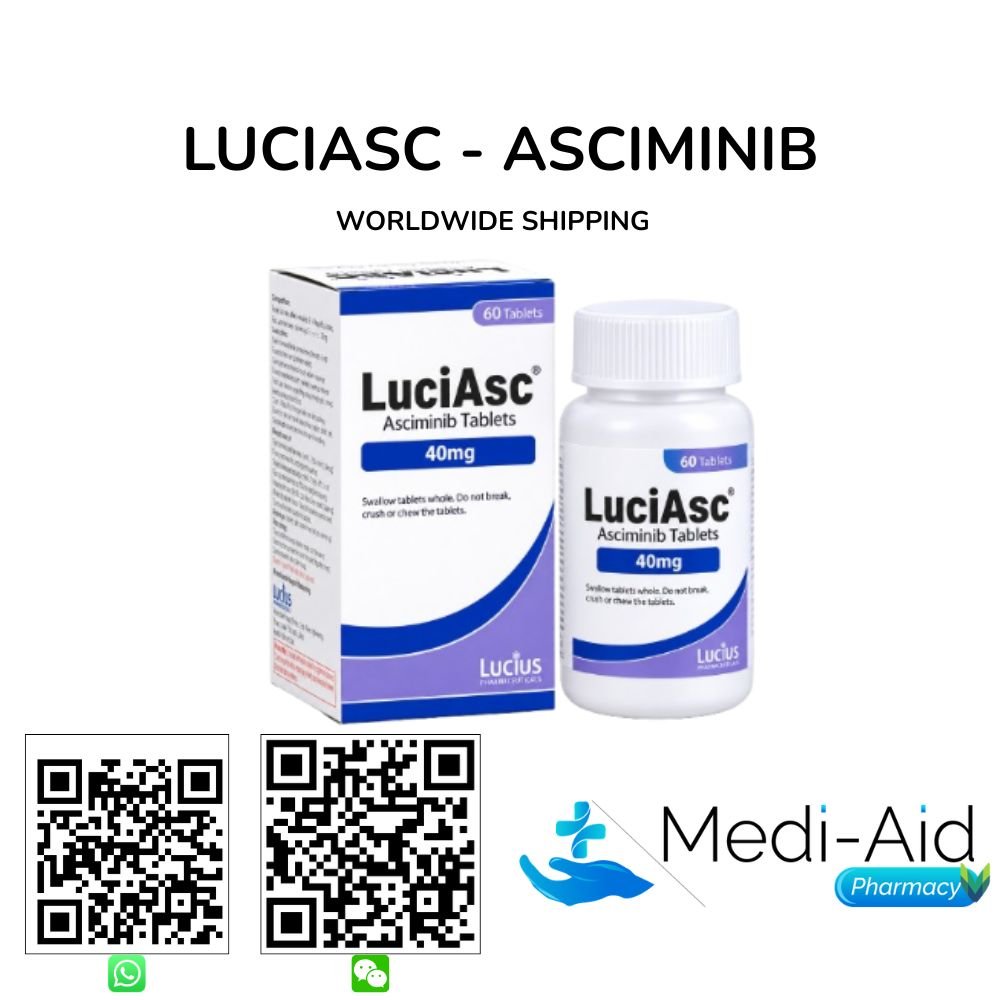
LuciAsc 40 MG (Asciminib) is an oral, first-in-class STAMP inhibitor (Specifically Targeting the ABL Myristoyl Pocket) film-coated tablet available in a 40 mg strength, supplied in a pack of 60 tablets per pot, manufactured by Lucius Pharmaceuticals (Lao) Co., Ltd. of Laos. The active ingredient, asciminib, is a highly selective, potent, allosteric BCR::ABL1 kinase inhibitor that binds to the myristoyl pocket of ABL1 a natural regulatory site distinct from the ATP-binding domain targeted by all prior-generation tyrosine kinase inhibitors (TKIs) thereby locking the ABL1 kinase in an inactive conformation through restoration of its intrinsic autoinhibitory mechanism, suppressing the constitutively active BCR::ABL1 oncoprotein that drives Philadelphia chromosome-positive (Ph+) chronic myeloid leukemia in chronic phase (CML-CP), including against most ATP-binding site resistance mutations.
The reference-label starting dose of asciminib for Ph+ CML-CP without the T315I mutation is 40 mg twice daily (BID), achieved with 1 × LuciAsc 40 MG tablet taken twice daily, administered in a fasted state (at least 2 hours before or 1 hour after a meal), providing a 30-day treatment supply from a single 60-tablet pot. An equivalent alternative dosing schedule of 80 mg once daily (QD) 2 × LuciAsc 40 MG tablets taken together once daily is also supported by pharmacokinetic and clinical equivalence data from the ASCEMBL programme. For Ph+ CML-CP harbouring the T315I mutation, the reference-label dose is 200 mg BID (5 × LuciAsc 40 MG tablets twice daily), taken with food. In the pivotal Phase III ASCEMBL trial (NCT03106779), asciminib 40 mg BID delivered a major molecular response (MMR) rate of 25.5% at 24 weeks versus 13.2% with bosutinib (p=0.029) in Ph+ CML-CP patients previously treated with ≥2 TKIs, nearly doubling the MMR rate and establishing asciminib as a next-generation standard of care in multiply pretreated CML-CP.
At the 96-week follow-up of ASCEMBL, the MMR rate further widened to 37.6% with asciminib versus 15.8% with bosutinib, with treatment ongoing in 53.5% of asciminib-treated patients versus only 19.7% of those on bosutinib, demonstrating superior long-term tolerability and durable molecular response. Searching for LuciAsc 40 MG Asciminib? Mediaid Pharmacy stocks this product within its comprehensive oncology medicines portfolio and ships worldwide.
Basic Product Information of LuciAsc 40 MG (Asciminib)
| Brand Name | LuciAsc 40 MG (Asciminib) |
| Product Name | LuciAsc |
| Generic Name | Asciminib |
| Drug Class | First-in-Class STAMP Inhibitor (Specifically Targeting the ABL Myristoyl Pocket); Allosteric BCR::ABL1 Kinase Inhibitor; Next-Generation Targeted Oncology Agent for Philadelphia Chromosome-Positive CML; Myristoyl Pocket Binder |
| Formulation | Film-Coated Tablet |
| Available Strength | 40 mg per tablet |
| Available Pack Size | 60 Tablets per pot (~30-day supply at the reference-label CML-CP dose of 40 mg BID [2 tablets/day]; 30-day supply at the 80 mg QD alternative schedule [2 tablets/day]) |
| Primary Indication | Philadelphia Chromosome-Positive Chronic Myeloid Leukemia in Chronic Phase (Ph+ CML-CP) in Adult Patients Previously Treated with ≥2 Tyrosine Kinase Inhibitors; Ph+ CML-CP with T315I Mutation (at 200 mg BID) |
| Reference-Label Starting Doses | CML-CP (without T315I): 40 mg BID = 1 × LuciAsc 40 MG tablet twice daily (fasted state; ≥2 hours before or ≥1 hour after a meal) | Alternative: 80 mg QD = 2 × LuciAsc 40 MG tablets once daily | CML-CP with T315I mutation: 200 mg BID = 5 × LuciAsc 40 MG tablets twice daily (taken with food) |
| Manufacturer / Brand | Lucius Pharmaceuticals (Lao) Co., Ltd., Laos |
| Country of Origin | Laos |
| Categories | Leukemia Medicines, Oncology Medicines |
| Storage Conditions | Store below 30°C in a dry place, protected from light and moisture. Keep out of the reach of children. |
| Global Supplier | Mediaid Pharmacy Worldwide Shipping Available |
How LuciAsc 40 MG (Asciminib) Works: Allosteric STAMP Inhibition and Myristoyl Pocket-Mediated BCR::ABL1 Kinase Inactivation in Ph+ CML
Asciminib, the active ingredient in LuciAsc 40 MG, is the world’s first-in-class orally bioavailable BCR::ABL1 inhibitor that Specifically Targets the ABL Myristoyl Pocket (STAMP). All prior-generation CML tyrosine kinase inhibitors imatinib, dasatinib, nilotinib, bosutinib, and ponatinib bind to the ATP-binding pocket of ABL1, competing with ATP for the catalytic site. Asciminib employs an entirely different allosteric mechanism: it binds to the myristoyl pocket of ABL1, a hydrophobic regulatory site located in the C-terminal lobe of the ABL1 kinase domain that normally accommodates the myristoylated N-terminal cap of ABL, stabilising the inactive conformation of the kinase through intramolecular autoinhibition. By occupying the myristoyl pocket, asciminib locks ABL1 in its inactive conformation, completely suppressing BCR::ABL1 kinase activity and downstream signalling through RAS/MAPK, PI3K/AKT, and JAK/STAT5 pathways that sustain Ph+ CML cell proliferation and survival.
A STAMP inhibitor refers to a small molecule that allosterically inactivates ABL1 by binding the myristoyl pocket in contrast to ATP-competitive TKIs, which must outcompete physiologically abundant intracellular ATP for kinase occupancy. This mechanistic distinction confers two critical pharmacological advantages: (1) asciminib maintains activity against the majority of ABL1 ATP-binding site mutations that confer resistance to ATP-competitive TKIs, because those mutations do not alter the myristoyl pocket; (2) asciminib can be combined with ATP-competitive TKIs in a mechanistically synergistic “STAMP + ATP-competitive” dual-site BCR::ABL1 blockade strategy. Asciminib’s IC₅₀ for BCR::ABL1 kinase activity is in the low nanomolar range, with high selectivity for ABL1 relative to the broader kinome, contributing to its improved tolerability profile versus multi-kinase inhibitors.
BCR::ABL1 constitutive kinase activity is the central oncogenic driver in Philadelphia chromosome-positive CML, arising from the t(9;22)(q34;q11) chromosomal translocation that fuses the BCR gene to the ABL1 gene. BCR::ABL1 constitutively activates RAS/MEK/ERK, PI3K/AKT/mTOR, and JAK2/STAT5 signalling cascades, driving uncontrolled myeloid cell proliferation, impaired apoptosis, and clonal expansion of the CML progenitor population. Asciminib’s myristoyl pocket binding directly restores ABL1 autoinhibitory tone, severing all three downstream signalling axes simultaneously. T315I mutation resistance the “gatekeeper” BCR::ABL1 mutation that confers resistance to all ATP-competitive TKIs except ponatinib does not involve the myristoyl pocket; accordingly, asciminib at the higher dose of 200 mg BID (5 × LuciAsc 40 MG tablets twice daily, taken with food) retains meaningful activity against T315I-mutated CML-CP, with MMR achieved in 42.4% of heavily pretreated T315I-positive patients in the phase 1 CABL001X2101 trial.
In the pivotal Phase III ASCEMBL trial 233 patients with Ph+ CML-CP previously treated with ≥2 TKIs randomised 2:1 to asciminib 40 mg BID (157 patients) or bosutinib 500 mg QD (76 patients) asciminib delivered a primary endpoint MMR rate at 24 weeks of 25.5% versus 13.2% with bosutinib (p=0.029), nearly doubling the response rate. At the 96-week follow-up, the MMR rate widened further to 37.6% (asciminib) versus 15.8% (bosutinib), with the probability of maintaining MMR for ≥72 weeks of 96.7% with asciminib confirming both superior and durable molecular response with asciminib. Oncologists managing patients with treatment-resistant CML can review the full range of leukemia medicines at Mediaid Pharmacy, including LuciAsc 40 MG Asciminib, for comprehensive CML treatment programme planning.
The discontinuation rate due to adverse events in ASCEMBL was markedly lower with asciminib at 5.8% versus 21.1% with bosutinib, and the median duration of treatment exposure was 23.7 months for asciminib versus 7.0 months for bosutinib at the 96-week data cutoff a clinically meaningful durability advantage that translates directly into sustained molecular response maintenance. The MR4.5 rate (BCR::ABL1IS ≤0.0032%, a deep molecular response milestone associated with treatment-free remission candidacy) was 10.8% with asciminib versus 5.3% with bosutinib at 96 weeks. The asciminib dose for each patient must be determined and adjusted by the treating haematologist or oncologist; LuciAsc 40 MG tablets must be prescribed and taken under the supervision of a qualified haematology-oncology specialist.
Approved Indications of Asciminib LuciAsc 40 MG Reference Label
Asciminib is approved in multiple jurisdictions for the treatment of Philadelphia chromosome-positive CML in chronic phase. The 40 mg film-coated tablet formulation of LuciAsc, with its 60-tablet pot, supports the reference-label standard dose of 40 mg BID (2 tablets/day, 30-day supply) and the equivalent 80 mg QD alternative schedule. The T315I mutation dose of 200 mg BID (10 tablets/day) requires correspondingly larger quantities from the 60-tablet pot. Prescribers must confirm the exact locally approved indication on the asciminib product label before initiating therapy, as specific label language and mutation testing requirements vary by regulatory jurisdiction.
|
Ph+ CML-CP After ≥2 Prior TKIs (Without T315I Mutation) Adult Patients Asciminib is indicated as monotherapy for adult patients with Philadelphia chromosome-positive CML in chronic phase who have been previously treated with two or more tyrosine kinase inhibitors and do not harbour the T315I mutation. Reference-label dose: 40 mg twice daily (BID) = 1 × LuciAsc 40 MG tablet twice daily, administered in a fasted state (at least 2 hours before or 1 hour after a meal). The ASCEMBL Phase III trial confirmed MMR at 24 weeks of 25.5% asciminib vs 13.2% bosutinib (p=0.029); at 96 weeks, MMR reached 37.6% vs 15.8%. Oncologists can review the full selection of CML targeted therapy medicines at Mediaid Pharmacy alongside LuciAsc for comprehensive treatment programme planning. |
Ph+ CML-CP with T315I Mutation Adult Patients Asciminib is indicated for adult patients with Ph+ CML in chronic phase harbouring the T315I gatekeeper mutation, regardless of prior TKI therapy lines. Reference-label dose: 200 mg BID = 5 × LuciAsc 40 MG tablets twice daily, administered with food. T315I mutation status must be confirmed by validated BCR::ABL1 kinase domain mutation testing before initiating the 200 mg BID dose. In the phase 1 CABL001X2101 trial, the MMR rate at 24 weeks was 42.4% in evaluable T315I-positive patients (n=52) a clinically meaningful response rate in a population with extremely limited therapeutic options. Prescribers must confirm local regulatory approval status of asciminib for the T315I indication in their jurisdiction. |
|
Ph+ CML-CP in Combination with ATP-Competitive TKIs Investigational / Emerging Asciminib’s distinct myristoyl pocket binding mechanism is mechanistically synergistic with ATP-competitive TKIs, enabling dual-site BCR::ABL1 blockade. Phase 1 combination cohorts have evaluated asciminib 40 mg BID or 80 mg QD plus dasatinib or nilotinib in patients resistant or intolerant to ≥2 prior TKIs, with promising early response data including BCR::ABL1IS ≤1% rates of 61.3% and MMR rates of 61.6% in a 4-year median follow-up analysis of the CABL001X2101 phase 1 trial. These combination strategies remain under regulatory evaluation in multiple jurisdictions; prescribers must confirm local approval status before use. Oncologists managing complex CML patients can browse oncology medicines at Mediaid Pharmacy for comprehensive programme support. |
Ph+ CML-CP First-Line Therapy Expanding Indication Clinical development of asciminib in the first-line Ph+ CML-CP setting is ongoing, with the global Phase III ASC4FIRST trial (NCT04971226) evaluating asciminib versus investigator-selected standard-of-care TKI (imatinib or a second-generation TKI) as frontline CML-CP therapy. First-line asciminib approval has been granted in certain jurisdictions based on this programme. Prescribers in countries where first-line asciminib approval has been granted should confirm the approved indication, dose (40 mg BID or 80 mg QD), and label requirements before prescribing LuciAsc 40 MG for treatment-naïve CML-CP patients. The LuciAsc 40 MG 60-tablet pot provides a full 30-day supply at 40 mg BID or 80 mg QD for first-line therapy where approved. |
LuciAsc 40 MG (Asciminib) Dosing: Reference-Label Dose Schedule and Modification Algorithm by Indication
The reference-label asciminib doses across approved indications are achievable using the LuciAsc 40 MG film-coated tablet without requiring other tablet strengths for the standard CML-CP indication. All doses are administered orally, with strict food-state requirements that differ by indication: the 40 mg BID and 80 mg QD doses for CML-CP without T315I must be taken in a fasted state (at least 2 hours before or at least 1 hour after a meal); the 200 mg BID dose for T315I-mutated CML-CP must be taken with food. Tablets must be swallowed whole with water and must not be crushed, broken, or chewed.
| Indication | Asciminib Dose | LuciAsc 40 MG Tablets Per Day | Days Supply from 60-Tablet Pot | Food State |
| CML-CP (≥2 prior TKIs; no T315I) | 40 mg BID (twice daily) | 2 tablets (1 BID) | 30 days | Fasted (≥2h before or ≥1h after meal) |
| CML-CP Alternative Schedule | 80 mg QD (once daily) | 2 tablets (together QD) | 30 days | Fasted (≥2h before or ≥1h after meal) |
| CML-CP with T315I mutation | 200 mg BID (twice daily) | 10 tablets (5 BID) | 6 days per pot | With food |
| Dose Reduction Step 1 (Grade 3–4 toxicity) | 40 mg BID → reduce per oncologist guidance | Per treating oncologist | Per dose prescribed | Per label per dose |
| Missed Dose Protocol | If a dose is missed, take it as soon as remembered on the same day. If it is the next day, skip the missed dose and resume the regular schedule. Never take two doses on the same day to compensate for a missed dose. | |||
Safety Monitoring Requirements for LuciAsc 40 MG (Asciminib) Therapy
Pancreatic enzyme monitoring is the most clinically distinctive safety requirement for asciminib therapy. Pancreatitis including elevations in serum lipase and/or amylase is a hallmark adverse event associated with asciminib that is uncommonly encountered with ATP-competitive CML TKIs. Asymptomatic lipase and/or amylase elevations (Grade 1–2) occurred in approximately 24–28% of asciminib-treated patients in ASCEMBL and phase 1 studies; clinical pancreatitis requiring dose interruption or reduction was observed in a smaller subset. All patients initiating LuciAsc 40 MG therapy must have serum lipase and amylase measured at baseline and must be monitored periodically throughout treatment. Patients should be counselled to report immediately any new-onset upper abdominal pain, nausea, vomiting, or back pain, which are symptoms of clinically significant pancreatitis requiring urgent evaluation. Asciminib must be interrupted for Grade 3 or higher lipase/amylase elevations or any clinical pancreatitis, with dose modification or permanent discontinuation based on resolution and clinical severity per the treating oncologist’s protocol.
Cardiovascular monitoring is required throughout asciminib therapy. Hypertension including treatment-emergent and worsening hypertension is reported in approximately 25–30% of asciminib-treated patients in clinical trials and must be monitored at baseline and periodically during treatment, with antihypertensive therapy initiated as clinically indicated. Arterial occlusive events (AOEs) including peripheral arterial disease, ischaemic stroke, myocardial infarction, and other ischaemic cardiovascular events have been reported with asciminib; although the incidence in ASCEMBL was not substantially elevated versus bosutinib, cardiovascular risk factor assessment and management are mandatory before and during asciminib therapy, particularly in patients with pre-existing atherosclerosis, diabetes mellitus, hypertension, or dyslipidaemia. Patients must undergo baseline cardiovascular assessment including blood pressure measurement, and high-risk patients require specialist cardiology evaluation prior to LuciAsc 40 MG initiation.
Haematological monitoring is mandatory throughout asciminib therapy. Myelosuppression including thrombocytopenia (approximately 21–24%), neutropenia (approximately 20%), and anaemia is observed with asciminib and may require dose interruption, dose reduction, or temporary growth factor support as directed by the treating oncologist. Complete blood count (CBC) with differential must be performed at baseline and monitored regularly throughout treatment typically every 2 weeks for the first 3 months and monthly thereafter, or as clinically indicated. Hepatic function monitoring: liver enzyme elevations (ALT, AST) occur in some asciminib-treated patients; LFT monitoring at baseline and periodically during treatment is recommended. Cytogenetic and molecular response monitoring: BCR::ABL1 quantitative PCR (qPCR) on the International Scale (BCR::ABL1IS) must be performed at baseline and at regular intervals (typically every 3 months) to assess molecular response depth and detect treatment failure or emerging resistance. Oncologists managing patients on asciminib who also require supportive agents can review the full selection of oncology medicines at Mediaid Pharmacy for comprehensive programme support.
Drug Interactions and Important Safety Information for LuciAsc 40 MG (Asciminib)
Asciminib is both a substrate and an inhibitor of key drug-metabolising enzymes and transporters, creating a bidirectional drug interaction profile that must be evaluated by the treating oncologist before initiating LuciAsc 40 MG therapy. As a CYP3A4 substrate, asciminib systemic exposure is significantly altered by strong CYP3A4 modulators. Strong CYP3A4 inducers including rifampicin, carbamazepine, phenytoin, phenobarbital, and St. John’s Wort markedly increase asciminib metabolism and reduce plasma exposure, potentially compromising antileukaemic efficacy. Avoidance of strong CYP3A4 inducers is recommended; if unavoidable, dose adjustment and intensified BCR::ABL1IS molecular monitoring are required under oncologist supervision.
Strong CYP3A4 inhibitors including ketoconazole, itraconazole, voriconazole, posaconazole, clarithromycin, and ritonavir-boosted HIV medications may increase asciminib systemic exposure and amplify toxicity risk including pancreatitis, hypertension, and myelosuppression. Where strong azole antifungals required for prophylaxis or treatment of fungal infections in immunocompromised haematology patients cannot be avoided, asciminib dose adjustment must be considered under oncologist supervision and with enhanced monitoring for adverse events, particularly pancreatic enzyme surveillance.
CYP2C9 inhibition by asciminib is clinically important: asciminib inhibits CYP2C9 at clinically relevant concentrations, increasing plasma exposure of CYP2C9-metabolised drugs including warfarin (anticoagulant), glipizide, glyburide, and phenytoin. Patients receiving warfarin require more frequent INR monitoring and warfarin dose adjustment when asciminib is initiated, modified, or discontinued, as asciminib-driven CYP2C9 inhibition can substantially increase anticoagulant effect and haemorrhagic risk. CYP2C8 inhibition: asciminib also inhibits CYP2C8, increasing exposure of CYP2C8-sensitive substrates including paclitaxel, repaglinide, and rosiglitazone.
P-glycoprotein (P-gp) inhibition: asciminib inhibits P-gp, potentially increasing plasma concentrations of P-gp substrates with narrow therapeutic windows including digoxin. Patients receiving digoxin or other narrow-therapeutic-index P-gp substrates require therapeutic drug level monitoring and dose adjustment when asciminib is added. ATP-competitive TKI combinations: when asciminib is used in combination with imatinib, dasatinib, or nilotinib an investigational dual-site STAMP + ATP-competitive BCR::ABL1 blockade strategy pharmacokinetic interactions between the agents must be characterised and monitored per the treating oncologist’s protocol; such combinations must only be used under specialist haematology-oncology supervision at experienced CML centres. Food interaction (critical): at the standard 40 mg BID dose, asciminib must be taken in a fasted state; food substantially increases asciminib exposure at this dose level and must be avoided. At the T315I mutation dose of 200 mg BID, food is required. Patients must disclose all concomitant medications, supplements, herbal preparations, and over-the-counter agents to their treating haematologist-oncologist. Teams requiring concurrent oncology agents alongside asciminib-based CML regimens at Mediaid Pharmacy can contact the team for multi-medicine sourcing support.
Side Effects and Precautions of LuciAsc 40 MG (Asciminib)
|
Common Side Effects Musculoskeletal pain including arthralgia and myalgia (approximately 59% across all grades in long-term phase 1 data); a distinctive and frequently reported asciminib-associated adverse event, particularly prominent in the first months of therapy; typically Grade 1–2 and managed with analgesics and dose modification when Grade 3 or higher Upper respiratory tract infection (approximately 42%); the most common infectious adverse event; predominantly Grade 1–2 viral respiratory infections; supportive management is usually sufficient; persistent or severe respiratory symptoms require evaluation for opportunistic infections in immunosuppressed patients Fatigue and asthenia (approximately 41%); often multifactorial, contributed to by disease burden, concurrent cytopenias, and direct drug-related effects; typically improves over the first months of continuous therapy Lipase elevation (approximately 24–28%); predominantly asymptomatic Grade 1–2 enzyme elevations; mandatory lipase and amylase monitoring throughout treatment; Grade 3–4 events require dose interruption and clinical evaluation for clinical pancreatitis Thrombocytopenia (approximately 21–24%); neutropenia (approximately 20%); anaemia; CBC with differential monitoring at baseline and periodically throughout treatment is mandatory Hypertension (approximately 25–30%); nausea (approximately 20%); headache (approximately 15%); diarrhoea (approximately 18%); rash and dermatological reactions; peripheral oedema; dizziness; constipation; abdominal pain |
Serious Warnings and Precautions Pancreatitis: Clinically significant pancreatitis, including Grade 3–4 events, has been reported with asciminib. Serum lipase and amylase must be monitored at baseline and throughout treatment. Asciminib must be interrupted for Grade 3 or higher lipase/amylase elevations and may be resumed with dose reduction or permanently discontinued based on clinical severity and resolution per the treating oncologist’s protocol. Patients must be counselled to report upper abdominal pain immediately. Arterial occlusive events (AOEs): Peripheral arterial disease, ischaemic stroke, myocardial infarction, and other AOEs have been reported with asciminib. Patients with pre-existing cardiovascular risk factors (hypertension, diabetes mellitus, dyslipidaemia, atherosclerosis, smoking) require intensified cardiovascular monitoring. Asciminib must be interrupted for any Grade 3 or higher AOE and permanently discontinued for any life-threatening AOE. Hypertension: Grade 3–4 hypertension has been reported with asciminib. Blood pressure must be monitored at baseline and throughout treatment. Antihypertensive therapy must be initiated for new or worsening hypertension as clinically indicated. Asciminib must be interrupted for Grade 4 hypertension or hypertensive crisis and may require permanent discontinuation in uncontrolled cases. Myelosuppression: Thrombocytopenia, neutropenia, and anaemia are reported with asciminib therapy; Grade 3–4 myelosuppression requires dose interruption per label guidelines. CBC monitoring at baseline and regular intervals is mandatory. Febrile neutropenia, while less common than with cytotoxic chemotherapy, requires urgent evaluation and management. Drug interactions CYP2C9 inhibition: Asciminib inhibits CYP2C9 and may significantly increase warfarin plasma exposure; warfarin dose monitoring and INR surveillance are mandatory. Asciminib also inhibits CYP2C8 and P-gp; narrow therapeutic window substrates of these enzymes require dose adjustment and enhanced monitoring. Embryo-fetal toxicity: Asciminib can cause fetal harm based on animal reproductive toxicology data and its mechanism of action. Females of reproductive potential must use effective contraception during treatment and for 3 days after the final dose. Males with female partners of reproductive potential must use contraception during treatment and for 3 days after the final dose. Breastfeeding should be avoided during treatment and for 3 days after the final dose. |
Who Should Use LuciAsc 40 MG (Asciminib)?
LuciAsc 40 MG (Asciminib) is indicated for adult patients with Philadelphia chromosome-positive CML in chronic phase: primarily patients who have been previously treated with two or more ATP-competitive tyrosine kinase inhibitors (such as imatinib, dasatinib, nilotinib, or bosutinib) and require a mechanistically distinct BCR::ABL1 inhibition strategy; and patients with the T315I gatekeeper mutation (at the 200 mg BID dose, requiring multiple LuciAsc 40 MG tablets per dose). The 40 mg film-coated tablet formulation with a 60-tablet pot is clinically appropriate for adult patients requiring the standard reference-label asciminib dose of 40 mg BID (1 tablet twice daily; 30-day supply) or its equivalent 80 mg QD alternative schedule (2 tablets once daily; 30-day supply). For T315I mutation dosing at 200 mg BID, the 60-tablet pot supports approximately 6 days of therapy per pot, requiring multi-pot supply planning.
Haematologists and oncologists must assess baseline cardiovascular status (blood pressure, cardiovascular risk factors), complete blood count (CBC), pancreatic enzymes (lipase, amylase), hepatic function (ALT, AST, bilirubin), renal function, BCR::ABL1 kinase domain mutation status (to identify T315I, V299L, and other mutations), and all concomitant medications particularly CYP3A4 inhibitors/inducers, CYP2C9 substrates (especially warfarin), P-gp substrates with narrow therapeutic windows, and antihypertensive agents before prescribing any asciminib dose. Oncologists seeking comprehensive targeted agent support across CML treatment programmes can review the full range of leukemia medicines at Mediaid Pharmacy, including LuciAsc 40 MG Asciminib for multiply pretreated Ph+ CML-CP.
Global Supplier: Mediaid Pharmacy Worldwide Shipping for LuciAsc 40 MG (Asciminib)
Mediaid Pharmacy is a Dhaka-based supplier of oncology and specialty medicines with worldwide shipping capacity. LuciAsc 40 MG (Asciminib) manufactured by Lucius Pharmaceuticals (Lao) Co., Ltd. of Laos, formulated as film-coated tablets in 60-tablet pots, is stocked and available for international supply. All orders are supported by pricing quotations, stock confirmation, and end-to-end delivery tracking. Hospitals, specialist haematology and oncology clinics, cancer centres, CML treatment programmes, distributors, and patients in countries where asciminib is approved can contact the Mediaid Pharmacy team through WhatsApp, phone, or WeChat for all enquiries about oral asciminib tablets for Ph+ CML-CP at Mediaid Pharmacy, including current stock availability, pricing, and international delivery timelines. Institutions and distributors sourcing multiple oncology medicines in a single consolidated shipment can request a combined quotation from the Mediaid Pharmacy team after browsing the full catalogue.
Why Choose LuciAsc 40 MG (Asciminib) from Mediaid Pharmacy?
LuciAsc 40 MG is manufactured by Lucius Pharmaceuticals (Lao) Co., Ltd. of Laos and delivers asciminib the world’s first-in-class STAMP inhibitor whose pivotal ASCEMBL Phase III data established MMR at 24 weeks of 25.5% versus 13.2% with bosutinib (p=0.029), expanding to 37.6% versus 15.8% at 96 weeks, with a 96.7% probability of maintaining MMR for ≥72 weeks and a treatment discontinuation rate due to adverse events of only 5.8% versus 21.1% with bosutinib. The defining therapeutic advantage of asciminib over prior-generation ATP-competitive TKIs is its mechanistically orthogonal allosteric STAMP inhibition: by binding the ABL1 myristoyl pocket rather than the ATP-binding site, LuciAsc 40 MG provides effective BCR::ABL1 suppression that is activity-independent of the ATP-binding site mutation landscape driving resistance to imatinib, dasatinib, nilotinib, and bosutinib positioning it as the standard next-line therapy after ≥2 prior TKI failures.
Mediaid Pharmacy supplies LuciAsc 40 MG in its 60-tablet pot format with worldwide shipping, specialist supply support, and documentation for customs clearance as required. Every order is initiated with a prescription-based enquiry to maintain supply aligned with the treating oncologist’s clinical plan. For oncology programmes requiring a broader panel of targeted and supportive agents, the full Mediaid Pharmacy oncology medicines catalogue is available to browse, and the team can be contacted directly for consolidated multi-medicine quotations.
Frequently Asked Questions About LuciAsc 40 MG (Asciminib)
What is LuciAsc 40 MG and what is its generic name?
LuciAsc 40 MG is a branded generic asciminib film-coated tablet manufactured by Lucius Pharmaceuticals (Lao) Co., Ltd. of Laos. The generic name of LuciAsc 40 MG is asciminib the same active ingredient as the originator medicine Scemblix (asciminib), originally developed by Novartis and first approved by the FDA on October 29, 2021, for adult patients with Ph+ CML-CP previously treated with ≥2 TKIs and for Ph+ CML-CP with the T315I mutation. Each LuciAsc 40 MG film-coated tablet contains asciminib equivalent to 40 mg. The 60-tablet pot of LuciAsc 40 MG provides a full 30-day supply at the reference-label CML-CP standard dose of 40 mg BID (2 tablets per day: 1 tablet twice daily, taken in a fasted state) or the equivalent 80 mg QD alternative schedule (2 tablets together once daily, taken in a fasted state), making LuciAsc 40 MG a clinically aligned, cost-accessible generic asciminib option for haematology-oncology programmes treating Ph+ CML-CP patients previously treated with two or more ATP-competitive TKIs worldwide.
How should LuciAsc 40 MG (Asciminib) tablets be taken?
LuciAsc 40 MG (Asciminib) tablets are taken orally at the dose and schedule prescribed by the treating haematologist or oncologist. The critical food-state requirement differs by dose: at the standard 40 mg BID or 80 mg QD dose for CML-CP without T315I mutation, asciminib must be taken in a fasted state at least 2 hours before or at least 1 hour after a meal because food significantly increases asciminib exposure at the 40 mg level, potentially amplifying toxicity. At the 200 mg BID dose for T315I-mutated CML-CP, asciminib must be taken with food. Patients must adhere strictly to the food-state instructions and avoid grapefruit, grapefruit juice, Seville oranges, and star fruit throughout therapy, as these contain CYP3A4 and P-gp inhibitors that may increase asciminib exposure. Tablets must be swallowed whole with water and must not be crushed, broken, or chewed, as altering tablet integrity would change asciminib absorption. Doses should be taken at approximately the same times each day. If a dose is missed, it should be taken as soon as remembered on the same day; if it is the next day, the missed dose must be skipped and the regular schedule resumed patients must never take two doses on the same day to compensate for a missed dose. Patients must inform their treating oncologist immediately about any new concomitant medications particularly azole antifungals, antiretrovirals, warfarin, or any P-gp or CYP3A4 modulators.
What are the most common side effects of LuciAsc 40 MG (Asciminib)?
The most common side effects of asciminib in clinical trials include musculoskeletal pain (approximately 59%), upper respiratory tract infection (approximately 42%), fatigue (approximately 41%), lipase elevation (approximately 24–28%), hypertension (approximately 25–30%), thrombocytopenia (approximately 21–24%), neutropenia (approximately 20%), nausea (approximately 20%), diarrhoea (approximately 18%), headache (approximately 15%), rash, peripheral oedema, dizziness, abdominal pain, and constipation. Pancreatitis including both asymptomatic lipase/amylase elevations and clinical pancreatitis is a clinically distinctive adverse event not commonly seen with ATP-competitive CML TKIs; mandatory pancreatic enzyme monitoring is required throughout treatment. Arterial occlusive events including peripheral arterial disease, ischaemic stroke, and myocardial infarction have been reported, requiring cardiovascular risk factor management throughout therapy. Grade 3–4 adverse events requiring dose interruption or modification include Grade 3–4 myelosuppression, Grade 3–4 lipase/amylase elevation, Grade 3–4 hypertension, and arterial occlusive events. Consult your prescribing haematologist-oncologist regarding your individual risk profile before and during treatment.
What is the evidence base for asciminib in Ph+ CML-CP?
The pivotal evidence for asciminib in Ph+ CML-CP after ≥2 prior TKIs is derived from two key trials. The ASCEMBL trial (NCT03106779) enrolled 233 patients with Ph+ CML-CP previously treated with ≥2 TKIs and randomised them 2:1 to asciminib 40 mg BID (157 patients) or bosutinib 500 mg QD (76 patients). The primary endpoint MMR at 24 weeks was met with statistical significance: 25.5% with asciminib versus 13.2% with bosutinib (p=0.029), with asciminib nearly doubling the MMR rate. At the key secondary endpoint of MMR at 96 weeks, asciminib demonstrated 37.6% versus 15.8% with bosutinib. The probability of maintaining MMR for ≥72 weeks was 96.7% with asciminib. Treatment was ongoing in 53.5% of asciminib patients versus only 19.7% with bosutinib at 96 weeks. The phase 1 CABL001X2101 trial (NCT02081378) provided supporting long-term data: at approximately 4-year median follow-up, 61.6% of evaluable CML-CP patients achieved MMR and 33.7% achieved MR4.5 (BCR::ABL1IS ≤0.0032%). For T315I-mutated CML-CP, the phase 1 T315I cohort demonstrated an MMR rate of 42.4% at 24 weeks with asciminib 200 mg BID. LuciAsc 40 MG delivers asciminib at the ASCEMBL reference dose of 40 mg BID, with 1 tablet twice daily from a 60-tablet pot providing a full 30-day treatment supply.
Is LuciAsc 40 MG (Asciminib) safe during pregnancy or while breastfeeding?
No. Asciminib including in the LuciAsc 40 MG film-coated tablet formulation can cause fetal harm based on its mechanism of action (BCR::ABL1 and ABL1 kinase inhibition suppresses signalling pathways essential for normal fetal vascular development and embryogenesis) and confirmed animal reproductive toxicology data, which demonstrated embryotoxicity, fetotoxicity, and reduced fertility (decreased spermatozoa count and motility by approximately 10% in male fertility studies) in multiple species. Females of reproductive potential must use effective contraception during treatment with LuciAsc 40 MG and for at least 3 days after the final dose. Males with female partners of reproductive potential must also use effective contraception during treatment and for at least 3 days after the final dose. Breastfeeding is not recommended during treatment and for at least 3 days after the final dose, as it has not been established whether asciminib or its metabolites are excreted in human breast milk. Patients who are pregnant, planning a pregnancy, or breastfeeding must discuss their individual circumstances with their treating haematologist-oncologist before initiating asciminib therapy.
What makes asciminib different from first- and second-generation CML TKIs like imatinib, dasatinib, or nilotinib?
All prior-generation CML TKIs imatinib (first-generation), dasatinib, nilotinib, bosutinib (second-generation), and ponatinib (third-generation) bind to the ATP-binding pocket of ABL1, competing with ATP for kinase occupancy and stabilising either the inactive (imatinib, nilotinib, ponatinib) or active (dasatinib, bosutinib) kinase conformation. BCR::ABL1 kinase domain mutations in the ATP-binding site most critically T315I (the gatekeeper mutation) directly impair ATP-competitive TKI binding, conferring resistance. Asciminib differs fundamentally: it binds to the myristoyl pocket, an allosteric regulatory site in the C-terminal lobe of ABL1 entirely separate from the ATP-binding domain. Because most resistance mutations in CML involve the ATP-binding site and not the myristoyl pocket, asciminib retains activity against the majority of mutations that cause resistance to imatinib, dasatinib, nilotinib, and bosutinib. Additionally, asciminib’s high selectivity for ABL1 relative to the broader kinome in contrast to the multi-kinase inhibition profile of dasatinib and bosutinib (which inhibit SRC family kinases) and ponatinib (a pan-TKI) contributes to its improved tolerability, particularly lower rates of pleural effusion (a dasatinib-associated toxicity), hepatotoxicity (a nilotinib-associated toxicity), and arterial occlusive events (a ponatinib-class toxicity, though monitored closely with asciminib as well). LuciAsc 40 MG provides access to asciminib’s mechanistically distinct STAMP inhibition through Mediaid Pharmacy’s international supply network.
Can I order LuciAsc 40 MG (Asciminib) online with worldwide shipping?
Yes. Mediaid Pharmacy supplies LuciAsc 40 MG (Asciminib) manufactured by Lucius Pharmaceuticals (Lao) Co., Ltd. of Laos film-coated tablets, 40 mg, 60 tablets per pot to oncology centres, hospitals, distributors, and patients globally. Contact Mediaid Pharmacy via WhatsApp, phone, or WeChat at +8801773428128, or email info@mediaidpharmacy.com, for pricing on LuciAsc 40 MG Asciminib, current stock availability, and international delivery details for your country. Oncology teams sourcing LuciAsc 40 MG Asciminib alongside other targeted agents for CML and leukemia treatment programmes can browse the complete range of oncology medicines at Mediaid Pharmacy and request a consolidated multi-medicine quotation. All orders are supported by prescription verification, pricing documentation, and customs clearance support as required for international shipments.
Order LuciAsc 40 MG (Asciminib) with Worldwide Shipping
Phone / WhatsApp / WeChat: +8801773428128 | Email: info@mediaidpharmacy.com
Reviews
There are no reviews yet.