
Description
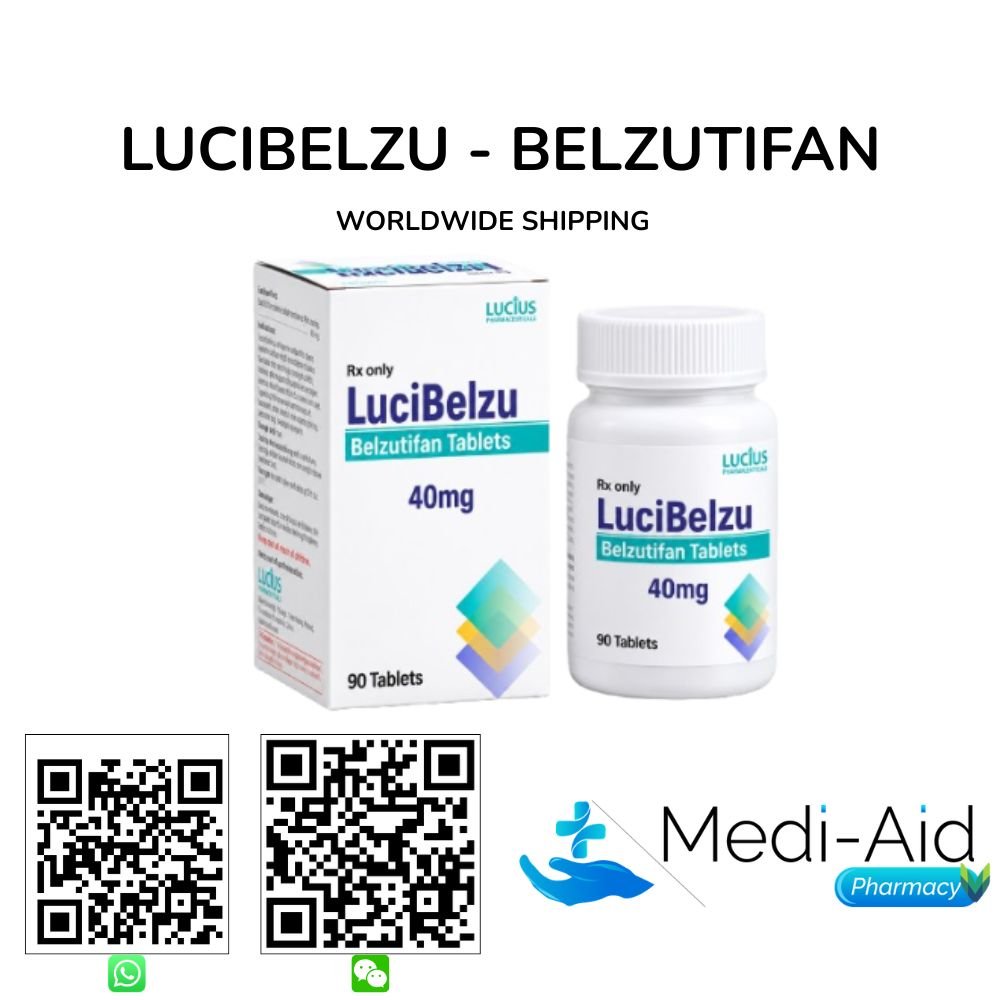
LuciBelzu 40 MG (Belzutifan) is an oral, first-in-class, selective hypoxia-inducible factor 2 alpha (HIF-2α) inhibitor supplied as a 40 mg film-coated tablet in a pack of 90 tablets per pot, manufactured by Lucius Pharmaceuticals (Lao) Co., Ltd. of Laos. Its active ingredient, belzutifan, binds directly to the PAS-B domain of HIF-2α a transcription factor that is aberrantly stabilised in VHL-deficient tumour cells preventing its heterodimerization with HIF-1β (ARNT) and blocking transcription of downstream oncogenic target genes including VEGF, EPO, TGF-α, and CCND1 that drive tumour angiogenesis, cell proliferation, and metabolic reprogramming.
LuciBelzu 40 MG (Belzutifan) is indicated for the treatment of adults with von Hippel-Lindau (VHL) disease who require therapy for associated renal cell carcinoma (RCC), central nervous system (CNS) hemangioblastomas, or pancreatic neuroendocrine tumours (pNET) not requiring immediate surgery, and for adults with advanced clear cell RCC following prior treatment with a PD-1 or PD-L1 inhibitor and a VEGF-targeted therapy.
In the pivotal Phase III LITESPARK-005 trial the registration study for belzutifan in previously treated advanced clear cell RCC belzutifan 120 mg once daily demonstrated a statistically significant reduction in the risk of disease progression or death versus everolimus (HR 0.75), with an objective response rate (ORR) of 22.7% versus 3.5% with everolimus, establishing belzutifan as a standard-of-care targeted agent in its approved oncology indications.
Searching for LuciBelzu 40 MG Belzutifan? Mediaid Pharmacy lists this product within its comprehensive oncology medicines portfolio, and ships it worldwide.
Basic Product Information of LuciBelzu 40 MG (Belzutifan)
| Brand Name | LuciBelzu 40 MG (Belzutifan) |
| Product Name | LuciBelzu |
| Generic Name | Belzutifan |
| Drug Class | First-in-Class Oral Hypoxia-Inducible Factor 2 Alpha (HIF-2α) Inhibitor; VHL Pathway Targeted Oncology Agent |
| Formulation | Film-Coated Tablet |
| Available Strength | 40 mg |
| Available Pack Size | 90 Tablets per pot |
| Primary Indications | VHL Disease-Associated Renal Cell Carcinoma (RCC), CNS Hemangioblastomas, and Pancreatic Neuroendocrine Tumours (pNET) Not Requiring Immediate Surgery; Advanced Clear Cell RCC After Prior PD-1/PD-L1 Inhibitor and VEGF-Targeted Therapy |
| Manufacturer / Brand | Lucius Pharmaceuticals (Lao) Co., Ltd. |
| Country of Origin | Laos |
| Categories | Kidney Cancer Medicines, Oncology Medicines |
| Storage Conditions | Store below 30°C in a dry place, protected from light and moisture. Keep out of the reach of children. |
| Global Supplier | Mediaid Pharmacy, Worldwide Shipping Available |
How LuciBelzu 40 MG (Belzutifan) Works: Selective HIF-2α Inhibition of the VHL Tumour Suppressor Pathway
Belzutifan, the active ingredient in LuciBelzu 40 MG, is a novel, orally bioavailable, first-in-class, selective hypoxia-inducible factor 2 alpha (HIF-2α) inhibitor that targets the PAS-B domain of the HIF-2α transcription factor, disrupting its heterodimerization with HIF-1β (aryl hydrocarbon receptor nuclear translocator; ARNT) and preventing binding to hypoxia response elements (HREs) in the promoters of downstream oncogenic target genes. A HIF-2α inhibitor refers to a class of small-molecule targeted oncology drugs that selectively bind to a lipophilic cavity on HIF-2α, preventing its dimerization with HIF-1β and thereby blocking HIF-2α–dependent transcription of pro-tumorigenic genes.
Under normal physiological conditions, the VHL (von Hippel-Lindau) tumour suppressor protein targets hydroxylated HIF-2α for proteasomal degradation; loss-of-function mutations or deletions in the VHL gene occurring in both VHL hereditary disease and in the majority of sporadic clear cell RCC prevent VHL-mediated HIF-2α ubiquitination, leading to constitutive HIF-2α stabilisation and uncontrolled transcription of VEGF, EPO, TGF-α, CCND1, and OCT4 target genes that collectively drive tumour angiogenesis, cell proliferation, erythropoiesis dysregulation, and immune escape.
The oncological significance of selective HIF-2α inhibition is mechanistically distinct from all prior kidney cancer targeted therapies. VEGF-targeted tyrosine kinase inhibitors (TKIs) such as sunitinib, cabozantinib, and axitinib block downstream effectors of the VEGF signalling cascade, but do not suppress the upstream HIF-2α-driven transcriptional programme that generates VEGF expression in VHL-deficient tumour cells. Belzutifan operates directly at the transcription factor level upstream of VEGF, EPO, and all other HIF-2α target gene products producing a mechanistically differentiated, non-angiogenesis-redundant blockade of the core oncogenic driver in both VHL-associated disease and sporadic clear cell RCC.
In VHL-associated RCC, belzutifan’s inhibition of HIF-2α-driven EPO transcription accounts for its clinically significant erythropoiesis suppression and high incidence of treatment-emergent anaemia, confirming on-target pharmacological activity. Oncologists building comprehensive kidney and renal cancer treatment programmes can review the complete range of kidney cancer medicines at Mediaid Pharmacy for companion and supportive therapies.
In the pivotal Phase III LITESPARK-005 trial the global registration study for belzutifan in previously treated advanced clear cell RCC belzutifan 120 mg once daily demonstrated a statistically significant reduction in the risk of disease progression or death versus everolimus (HR 0.75), with an objective response rate of 22.7% versus 3.5% with everolimus, including a complete response (CR) rate of 3.5% with belzutifan versus 0% with everolimus, confirming HIF-2α inhibition as an active and differentiated therapeutic mechanism in this post-immune checkpoint, post-anti-angiogenic treatment setting.
At final analysis of LITESPARK-005 (data cut-off April 2024), the median overall survival with belzutifan was 21.4 months versus 18.2 months with everolimus (HR 0.92; 95% CI 0.77–1.10), and fewer patients discontinued belzutifan (6.2%) versus everolimus (15.3%) due to adverse events, with a median treatment duration of 7.6 months on belzutifan versus 3.9 months on everolimus. The recommended daily dose 120 mg (3 × 40 mg tablets) once daily is taken orally with or without food and is adjusted by the treating oncologist based on the patient’s indication, tolerability, and haematologic and pulmonary function.
Approved Indications of Belzutifan (Reference Label for LuciBelzu 40 MG)
Belzutifan, the active ingredient in LuciBelzu 40 MG, is approved internationally across two primary oncology indications in adult patients, encompassing four distinct tumour types. Prescribers should confirm the exact locally approved indications on the belzutifan product label before initiating therapy, as labelling specifics may vary by regulatory jurisdiction.
|
VHL Disease-Associated Renal Cell Carcinoma (RCC) Monotherapy Belzutifan is indicated for adult patients with von Hippel-Lindau (VHL) disease who require therapy for associated RCC not requiring immediate surgery. In the Phase II LITESPARK-004 trial (n=61), belzutifan 120 mg once daily achieved an ORR of 49% (95% CI: 36–62) in patients with VHL-associated RCC; the median duration of response (DoR) was not reached, with 56% of responders maintaining a response for ≥12 months and a median time to response (TTR) of 8 months. Patients requiring kidney cancer targeted therapy can explore Mediaid Pharmacy’s full belzutifan range. |
VHL Disease-Associated CNS Hemangioblastomas and Pancreatic Neuroendocrine Tumours (pNET) Monotherapy Belzutifan is also indicated for adult patients with VHL disease requiring therapy for CNS hemangioblastomas or pNET not requiring immediate surgery. In LITESPARK-004, belzutifan achieved an ORR of 63% (95% CI: 41–81; CR 4%, PR 58%) in 24 patients with measurable VHL-associated CNS hemangioblastomas, and an ORR of 83% (95% CI: 52–98; CR 17%, PR 67%) in 12 patients with measurable VHL-associated pNET with median DoR not reached for either tumour type, confirming durable multi-tumour HIF-2α pathway suppression. Oncology medicines for rare hereditary tumours are available at Mediaid Pharmacy with worldwide shipping. |
Advanced Clear Cell Renal Cell Carcinoma (ccRCC) Following Prior PD-1/PD-L1 and VEGF-TKI Therapy Belzutifan is indicated for adult patients with advanced RCC whose disease progressed following a PD-1 or PD-L1 immune checkpoint inhibitor and a VEGF tyrosine kinase inhibitor. The Phase III LITESPARK-005 trial (n=746) demonstrated belzutifan’s statistically significant superiority over everolimus in PFS (HR 0.75) and ORR (22.7% vs 3.5%), with belzutifan receiving FDA approval in December 2023 based on these results. Oncologists can review the complete range of advanced renal cell carcinoma medicines at Mediaid Pharmacy. |
Key Clinical Benefits of LuciBelzu 40 MG (Belzutifan)
|
49% ORR in VHL-Associated RCC with Durable Responses Not Reaching Median DoR (LITESPARK-004) The Phase II LITESPARK-004 trial demonstrated that belzutifan 120 mg once daily achieved an ORR of 49% (95% CI: 36–62; n=30/61) in patients with VHL-associated RCC, with a median duration of response not reached at a median follow-up of 68 weeks, 56% of responders maintaining response for ≥12 months, and a median time to response of 8 months establishing belzutifan as the first-approved systemic therapy for VHL-associated tumours and introducing the HIF-2α inhibition mechanism to clinical practice. The ORR achieved with belzutifan in VHL-associated RCC is clinically meaningful in a disease where repeated surgical resections had previously been the only management option for localised RCC lesions. |
63% and 83% ORR in VHL-Associated CNS Hemangioblastomas and pNET Respectively (LITESPARK-004) In the LITESPARK-004 Phase II trial, belzutifan delivered an ORR of 63% (95% CI: 41–81) across 24 patients with VHL-associated CNS hemangioblastomas and an ORR of 83% (95% CI: 52–98) across 12 patients with VHL-associated pNET with the median DoR not reached for either tumour type. These results confirm belzutifan’s pan-tumour HIF-2α pathway activity across the full spectrum of VHL disease-associated neoplasms and represent the highest single-agent ORR data in VHL-associated CNS and pancreatic tumours reported for any systemic agent. For patients with complex, multi-tumour VHL disease, this concurrent multi-site activity reduces the cumulative surgical burden associated with repeated organ-specific resections. |
Statistically Significant PFS Benefit and 22.7% ORR vs 3.5% with Everolimus in Advanced ccRCC (LITESPARK-005) The Phase III LITESPARK-005 trial (n=746) demonstrated belzutifan’s statistically significant superiority over everolimus in PFS (HR 0.75; meeting the prespecified significance criterion) and ORR (22.7% vs 3.5%), with a complete response rate of 3.5% with belzutifan versus 0% with everolimus. At final analysis (data cut-off April 2024), fewer patients discontinued belzutifan (6.2%) versus everolimus (15.3%) due to adverse events, and the median treatment duration with belzutifan was 7.6 months versus 3.9 months with everolimus, confirming belzutifan’s favourable tolerability-adjusted benefit in this heavily pretreated, post-anti-PD-(L)1 and post-VEGF-TKI advanced ccRCC population. |
Required Monitoring During LuciBelzu 40 MG (Belzutifan) Treatment
Haematologic monitoring is mandatory throughout belzutifan treatment, given the drug’s mechanism-driven suppression of HIF-2α-dependent erythropoietin (EPO) transcription. The reference label requires complete blood count (CBC) with haemoglobin assessment before initiation and periodically throughout treatment. Belzutifan must not be initiated in patients with baseline haemoglobin <9 g/dL; the treating oncologist should optimise baseline anaemia before starting therapy. Grade 3 anaemia (Hgb <8 g/dL) requires belzutifan dose interruption until haemoglobin recovers to ≥9 g/dL, followed by resumption at a reduced dose (80 mg, i.e., 2 × 40 mg tablets).
Life-threatening anaemia or anaemia requiring urgent intervention necessitates withholding belzutifan until Hgb ≥9 g/dL and resumption at a reduced dose or permanent discontinuation. Erythropoiesis-stimulating agents (ESAs) are not recommended in patients receiving belzutifan, as belzutifan suppresses the HIF-2α-driven EPO pathway through which ESAs exert their effect, rendering ESA co-administration pharmacologically counterproductive.
Oxygen saturation (SpO&sub2;) monitoring is required before initiation and periodically throughout belzutifan treatment, as belzutifan can cause clinically significant hypoxia. Belzutifan should not be initiated in patients with resting oxygen saturation <92%. For hypoxia at rest (Grade 3: SpO&sub2; <88% on room air), belzutifan must be withheld, and can be resumed at a reduced dose once hypoxia resolves; life-threatening or recurrent symptomatic hypoxia requires permanent discontinuation.
Renal function monitoring is required at baseline and periodically throughout treatment: increased serum creatinine was reported in approximately 64% of patients in LITESPARK-004, reflecting belzutifan’s inhibition of HIF-2α-dependent creatinine tubular secretion pathways rather than nephrotoxic injury, but clinicians should monitor and differentiate from true renal impairment.
Pregnancy status must be verified before initiating belzutifan in females of reproductive potential, given the boxed warning for embryo-fetal toxicity; belzutifan can also render hormonal contraceptives ineffective, and patients must use effective non-hormonal contraception throughout treatment and for one week after the final dose. Oncologists managing patients receiving belzutifan alongside other targeted agents or systemic therapies can review the full range of oncology medicines available at Mediaid Pharmacy for companion therapy support.
Drug Interactions and Important Safety Information for LuciBelzu 40 MG (Belzutifan)
The most clinically relevant drug interaction for belzutifan involves its activity as a time-dependent inhibitor of CYP2C19. Belzutifan inhibits CYP2C19 metabolism, increasing plasma concentrations of co-administered CYP2C19 substrates; particular vigilance is required for narrow therapeutic index CYP2C19 substrates including clopidogrel (whose antiplatelet efficacy depends on CYP2C19-mediated bioactivation and may paradoxically be reduced rather than amplified by CYP2C19 inhibition), proton pump inhibitors (omeprazole, esomeprazole), and certain antidepressants (escitalopram, citalopram).
Oncologists should review all concurrent CYP2C19 substrate medications before initiating LuciBelzu 40 MG and monitor for evidence of altered drug exposure or reduced pharmacological efficacy throughout treatment. Strong CYP2C8 inhibitors principally gemfibrozil can substantially increase belzutifan systemic exposure, as belzutifan is a substrate of the CYP2C8 metabolic pathway; concomitant use of gemfibrozil with belzutifan should be avoided where clinically feasible, and close monitoring for belzutifan-related toxicities (anaemia, hypoxia) is required when co-administration cannot be avoided.
Strong CYP3A4 and CYP2C8 inducers including rifampicin, carbamazepine, phenytoin, and St John’s Wort may substantially reduce belzutifan plasma concentrations by accelerating its hepatic metabolism, potentially compromising therapeutic drug levels and clinical efficacy; avoidance of strong inducers is preferred where clinically feasible.
Hormonal contraceptives represent a unique and important interaction for belzutifan: belzutifan can render hormonal contraceptives (combined oral contraceptives, progestogen-only pills, contraceptive implants, hormonal intrauterine devices) ineffective, likely due to its effects on steroid hormone metabolism. Females of reproductive potential receiving belzutifan must use effective non-hormonal contraception during treatment and for one week after the final dose; this applies equally to male patients with female partners of reproductive potential, who must use contraception during treatment and for one week after the last dose.
Belzutifan is also a substrate of P-glycoprotein (P-gp); strong P-gp inhibitors may increase belzutifan exposure, warranting additional monitoring for treatment-emergent haematologic and pulmonary toxicities. Patients must disclose all concomitant medications, herbal preparations, and over-the-counter supplements to their treating oncologist before and during LuciBelzu 40 MG therapy.
Those requiring supportive or concurrent oncology agents can contact the Mediaid Pharmacy team for sourcing; the full range of kidney cancer medicines available for worldwide dispatch is listed on the Mediaid Pharmacy website.
Side Effects and Precautions of LuciBelzu 40 MG (Belzutifan)
|
Common Side Effects Decreased haemoglobin and anaemia (most frequent adverse event; decreased haemoglobin reported in approximately 93% of VHL patients in LITESPARK-004; anaemia in approximately 90%; Grade 3 anaemia in 7%; mechanism-driven EPO suppression via HIF-2α inhibition; requires CBC monitoring before and throughout treatment) Fatigue (approximately 64% of patients in VHL trial; most frequently reported adverse reaction requiring dose reduction) Increased serum creatinine (approximately 64%; reflects HIF-2α-mediated creatinine secretion pathway effects rather than direct nephrotoxicity; renal function monitoring required throughout treatment) Headache (approximately 39%) Dizziness (approximately 38%) Increased blood glucose (approximately 34%) Nausea (approximately 31%; typically mild-to-moderate; anti-emetic support as clinically indicated) |
Serious Warnings and Precautions Anaemia (Boxed Warning component): belzutifan can cause severe anaemia that may require blood transfusion. Grade 3 anaemia requires dose interruption until haemoglobin ≥9 g/dL, then resumption at reduced dose. Life-threatening or transfusion-requiring anaemia may necessitate permanent discontinuation. Erythropoiesis-stimulating agents are not recommended during belzutifan treatment. Hypoxia: belzutifan can cause severe hypoxia requiring supplemental oxygen, hospitalisation, or discontinuation. Oxygen saturation must be ≥92% at baseline; monitor SpO&sub2; before initiation and periodically throughout treatment. Grade 3 hypoxia (SpO&sub2; <88% at rest) requires withholding belzutifan; life-threatening or recurrent symptomatic hypoxia requires permanent discontinuation. Embryo-Fetal Toxicity (Boxed Warning): belzutifan can cause fetal harm based on its mechanism of action. Verify pregnancy status before initiation. Females of reproductive potential must use effective non-hormonal contraception during treatment and for 1 week after the final dose, as belzutifan renders hormonal contraceptives ineffective. Serious adverse reactions in LITESPARK-004 occurred in 15% of patients and included anaemia, hypoxia, anaphylaxis reaction, retinal detachment, and central retinal vein occlusion. Any new visual disturbances, respiratory symptoms, or profound fatigue should be reported immediately to the treating oncologist for prompt assessment and management. |
Who Should Use LuciBelzu 40 MG (Belzutifan)?
LuciBelzu 40 MG (Belzutifan) is indicated for adult patients across two oncology settings: (1) adults with von Hippel-Lindau (VHL) disease who require therapy for associated RCC, CNS hemangioblastomas, or pNET not requiring immediate surgery; and (2) adults with advanced RCC whose disease progressed following prior treatment with a PD-1 or PD-L1 immune checkpoint inhibitor and a VEGF-targeted tyrosine kinase inhibitor. For VHL-associated disease, eligibility requires molecular confirmation of a VHL germline alteration, at least one measurable solid tumour localized to the kidney (for the RCC indication) or confirmed measurable CNS or pancreatic lesion, and documentation that the VHL-associated tumours do not require immediate surgical intervention as patients with immediately surgically resectable lesions were excluded from LITESPARK-004. For advanced sporadic clear cell RCC, belzutifan is indicated in patients who have received both an anti-PD-1/PD-L1 agent and a VEGF-targeted TKI as prior lines of therapy, consistent with the LITESPARK-005 eligibility criteria.
The treating oncologist should assess baseline haemoglobin (≥9 g/dL required for initiation), resting oxygen saturation (≥92% required), renal function, pregnancy status in females of reproductive potential, and all concomitant medications (particularly CYP2C19 substrates, strong CYP2C8 inhibitors, and hormonal contraceptives) before initiating LuciBelzu 40 MG. Patients with severe baseline anaemia, baseline hypoxia, a history of serious thromboembolic or haemorrhagic events, or who are pregnant, breastfeeding, or of reproductive potential without adequate non-hormonal contraception require individualised risk counselling before therapy begins. For patients requiring complementary targeted therapies or supportive oncology treatments alongside belzutifan, Mediaid Pharmacy’s kidney cancer medicine range provides a broad selection of agents available for global delivery.
Global Supplier: Mediaid Pharmacy Worldwide Shipping for LuciBelzu 40 MG (Belzutifan)
Mediaid Pharmacy is a Dhaka-based supplier of oncology and specialty medicines with worldwide shipping. LuciBelzu 40 MG (Belzutifan) manufactured by Lucius Pharmaceuticals (Lao) Co., Ltd. of Laos, formulated as 40 mg film-coated tablets in a 90-tablet pot is stocked and available for international supply. All orders are supported by pricing quotations, stock confirmation, and end-to-end delivery tracking. Hospitals, specialist oncology clinics, distributors, and patients can contact the Mediaid Pharmacy team through WhatsApp, phone, or WeChat for all enquiries about belzutifan tablets for VHL disease and advanced kidney cancer including current stock availability, pricing, and international delivery timelines. Buyers sourcing multiple oncology or cancer medicines in a single consolidated shipment can browse the complete Mediaid Pharmacy catalogue before requesting a combined quotation.
Why Choose LuciBelzu 40 MG (Belzutifan) from Mediaid Pharmacy?
LuciBelzu 40 MG (Belzutifan) is manufactured by Lucius Pharmaceuticals (Lao) Co., Ltd. and delivers the active ingredient belzutifan the world’s first-in-class HIF-2α inhibitor whose 120 mg once-daily regimen anchored the LITESPARK-004 Phase II trial (49% ORR in VHL-associated RCC with median DoR not reached; 63% ORR in CNS hemangioblastomas; 83% ORR in pNET) and the LITESPARK-005 Phase III trial (statistically significant PFS benefit over everolimus; HR 0.75; ORR 22.7% vs 3.5%; complete response rate 3.5% vs 0% in advanced ccRCC). The 40 mg film-coated tablet format enables oncologists to administer the standard 120 mg once-daily belzutifan dose as a convenient three-tablet daily regimen, with a clear and clinically validated dose-reduction ladder from 120 mg (3 tablets) to 80 mg (2 tablets) to 40 mg (1 tablet) supporting stepwise management of treatment-emergent anaemia, hypoxia, or other adverse events per the reference label dose modification guidelines.
Mediaid Pharmacy supplies LuciBelzu 40 MG in its 90-tablet pot format with specialist supply support and worldwide shipping. Every order begins with a prescription-based enquiry that maintains supply aligned with clinical need. To compare belzutifan with other targeted agents for VHL disease or kidney cancer, or to source additional oncology medicines, visit the Mediaid Pharmacy oncology medicines section and contact the team for a personalised quotation.
Frequently Asked Questions About LuciBelzu 40 MG (Belzutifan)
What is LuciBelzu 40 MG (Belzutifan) used for?
LuciBelzu 40 MG (Belzutifan) is an oral first-in-class HIF-2α inhibitor used to treat two distinct patient populations: adults with von Hippel-Lindau (VHL) disease who require therapy for associated renal cell carcinoma (RCC), CNS hemangioblastomas, or pancreatic neuroendocrine tumours (pNET) not requiring immediate surgery; and adults with advanced clear cell RCC (ccRCC) whose disease progressed following both a PD-1 or PD-L1 immune checkpoint inhibitor and a VEGF-targeted therapy. Belzutifan works by binding to the PAS-B domain of HIF-2α, preventing heterodimerization with HIF-1β and blocking downstream transcription of VEGF, EPO, TGF-α, and CCND1 genes that drive tumour angiogenesis and cell proliferation in VHL-deficient tumours. The Phase II LITESPARK-004 trial demonstrated an ORR of 49% in VHL-associated RCC, 63% in CNS hemangioblastomas, and 83% in pNET; the Phase III LITESPARK-005 trial confirmed belzutifan’s statistically significant PFS benefit over everolimus (HR 0.75) and superior ORR (22.7% vs 3.5%) in previously treated advanced ccRCC.
What is the generic name of LuciBelzu 40 MG?
The generic name of LuciBelzu 40 MG is belzutifan. LuciBelzu 40 MG is a film-coated tablet formulation containing 40 mg of belzutifan per tablet, available in a 90-tablet pot, manufactured by Lucius Pharmaceuticals (Lao) Co., Ltd. of Laos. LuciBelzu is Lucius Pharmaceuticals’ branded formulation of belzutifan the same first-in-class HIF-2α inhibitor found in the originator medicine Welireg (belzutifan), developed by Merck (MSD outside the United States and Canada) and approved by the FDA in August 2021 for VHL disease-associated tumours and in December 2023 for previously treated advanced RCC. The 40 mg tablet strength of LuciBelzu enables the standard belzutifan dose of 120 mg once daily (3 × 40 mg tablets) and supports the full dose-reduction ladder (120 mg → 80 mg → 40 mg) required by the reference label for management of treatment-emergent anaemia, hypoxia, and other adverse reactions.
What is the standard dosing of LuciBelzu 40 MG (Belzutifan)?
The recommended dose of belzutifan is 120 mg (3 × 40 mg film-coated tablets of LuciBelzu) administered orally once daily with or without food, taken at the same time each day, until disease progression or unacceptable toxicity. The dose must always be determined and adjusted by the treating oncologist based on the patient’s indication, tolerability, and results of mandatory haematologic and pulmonary function monitoring throughout treatment. The reference label specifies the following dose-reduction steps for management of treatment-emergent adverse reactions: first dose reduction to 80 mg (2 × 40 mg tablets) once daily; second dose reduction to 40 mg (1 × 40 mg tablet) once daily; with permanent discontinuation required for adverse reactions that cannot be managed at the 40 mg dose level. If a dose is missed, it can be taken as soon as possible on the same day; the regular daily schedule resumes the next day. If vomiting occurs after taking belzutifan, the dose should not be retaken; the next dose is taken on the following day. Tablets must be swallowed whole never chewed, crushed, or split. Never reduce or stop the dose without explicit direction from the prescribing oncologist.
What are the most common side effects of LuciBelzu 40 MG (Belzutifan)?
The most common adverse reactions to belzutifan (occurring in ≥20% of patients in LITESPARK-004) include decreased haemoglobin (~93%), anaemia (~90%), fatigue (~64%), increased serum creatinine (~64%), headache (~39%), dizziness (~38%), increased blood glucose (~34%), and nausea (~31%). Anaemia is the most clinically significant adverse event, arising from belzutifan’s on-target mechanism-driven suppression of HIF-2α-dependent erythropoietin (EPO) production; Grade 3 anaemia occurred in approximately 7% of patients in the VHL trial and in approximately 30% of patients in the LITESPARK-005 advanced RCC trial. Hypoxia, while less frequent (∼1.6% in VHL patients), can be severe and requires oxygen saturation monitoring throughout treatment. Fatigue was the most frequently reported adverse reaction requiring dose reduction (7% in LITESPARK-004). All adverse events should be reported to and managed by the treating oncologist; never adjust or stop the belzutifan dose without explicit clinical direction.
Why can belzutifan cause anaemia and how is it managed?
Belzutifan causes anaemia through its mechanism of action: HIF-2α is the primary transcriptional activator of the erythropoietin (EPO) gene in the kidney, and belzutifan’s inhibition of HIF-2α directly suppresses EPO production, reducing red blood cell synthesis and causing a predictable, mechanism-driven anaemia. This is considered an on-target pharmacological effect confirming HIF-2α pathway engagement rather than a toxic off-target effect. Management follows the reference label dose modification guidelines: belzutifan must not be initiated if baseline haemoglobin is <9 g/dL; Grade 3 anaemia (Hgb <8 g/dL) requires dose interruption until Hgb recovers to ≥9 g/dL, then resumption at a reduced dose (80 mg); life-threatening anaemia requires permanent discontinuation or resumption at a further-reduced dose. Erythropoiesis-stimulating agents are not recommended during belzutifan treatment because belzutifan’s suppression of the HIF-2α/EPO transcription axis limits the pharmacological effectiveness of EPO-based interventions. Blood transfusions should be administered as clinically indicated based on the patient’s symptoms and haematologic status, per the treating oncologist’s judgement.
Is LuciBelzu 40 MG (Belzutifan) safe during pregnancy or while breastfeeding?
No. Belzutifan carries a Boxed Warning for embryo-fetal toxicity: belzutifan can cause fetal harm based on its mechanism of action, as HIF-2α signalling is essential for normal vascular development during fetal organogenesis. Pregnancy status must be verified in females of reproductive potential before initiating LuciBelzu 40 MG. Females of reproductive potential must use effective non-hormonal contraception during treatment and for one week after the final dose; hormonal contraceptives (oral contraceptive pills, implants, hormonal IUDs) are not acceptable because belzutifan can render them ineffective by altering steroid hormone metabolism. Male patients with female partners of reproductive potential must also use effective contraception during treatment and for one week after the last dose. Breastfeeding is not recommended during belzutifan treatment and for one week after the final dose, as it is unknown whether belzutifan or its metabolites are present in human breast milk. Patients who are pregnant, planning a pregnancy, or currently breastfeeding must discuss their individual risk with their treating oncologist before initiating therapy.
Can I order LuciBelzu 40 MG (Belzutifan) online with worldwide shipping?
Yes. Mediaid Pharmacy supplies LuciBelzu 40 MG (Belzutifan) manufactured by Lucius Pharmaceuticals (Lao) Co., Ltd. of Laos, 40 mg film-coated tablets, 90 tablets per pot to patients and healthcare providers globally. Contact Mediaid Pharmacy via WhatsApp, phone, or WeChat at +8801773428128, or email info@mediaidpharmacy.com for pricing, current stock availability, and international delivery details for your country. Oncology teams sourcing multiple targeted agents can browse the complete selection of oncology and kidney cancer medicines at Mediaid Pharmacy.
Order LuciBelzu 40 MG (Belzutifan) with Worldwide Shipping
Phone / WhatsApp / WeChat: +8801773428128 | Email: info@mediaidpharmacy.com
Reviews
There are no reviews yet.