Description
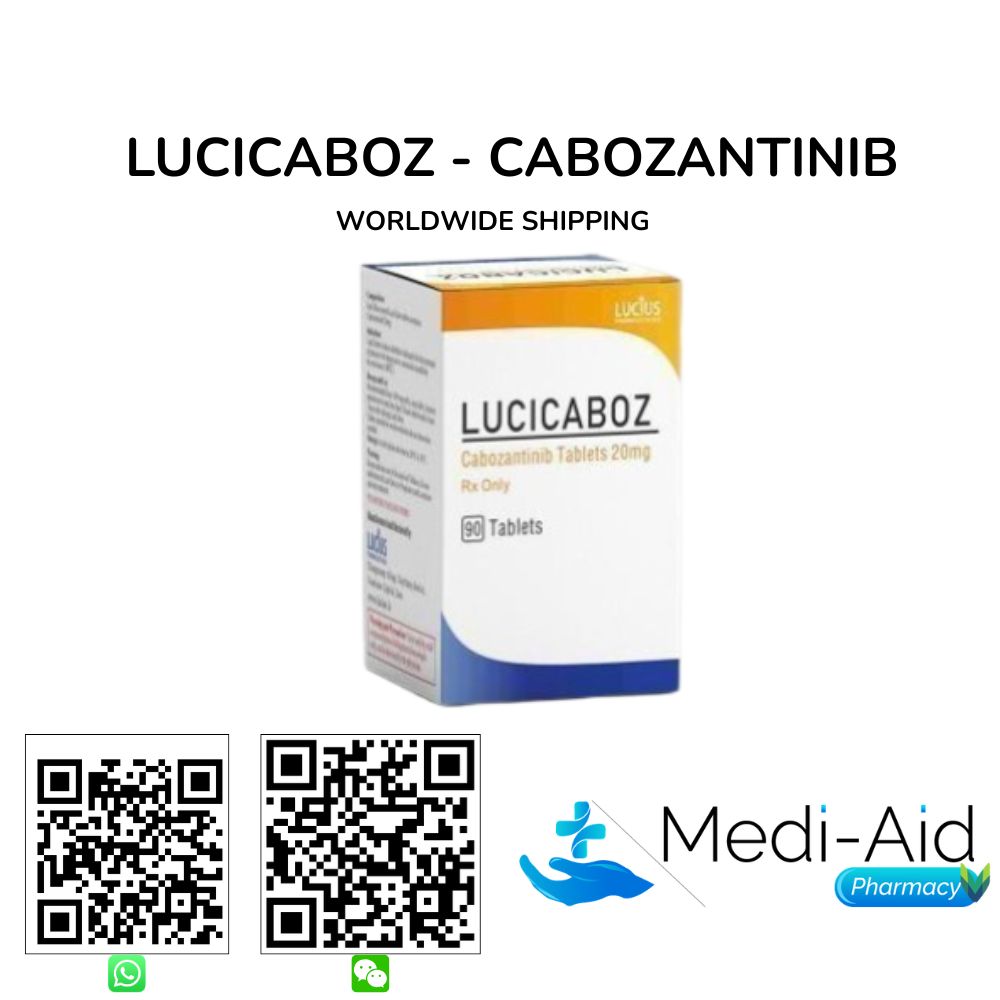
LuciCaboz 20 MG (Cabozantinib) is a multitargeted receptor tyrosine kinase inhibitor (TKI) a broad-spectrum oral precision oncology agent that simultaneously inhibits MET, VEGFR-1, VEGFR-2, VEGFR-3, RET, AXL, KIT, TRKB, FLT-3, and TIE-2 supplied as 20 mg film-coated tablets in a 90-tablet pack and manufactured by Lucius Pharmaceuticals (Lao) Co., Ltd. in Laos. Its active ingredient, cabozantinib INN, blocks multiple receptor tyrosine kinases that drive tumor growth, angiogenesis, invasiveness, and resistance to prior anti-VEGF therapies across a spectrum of solid malignancies.
LuciCaboz 20 MG is aligned to the approved reference-label dosing of 60 mg once daily three 20 mg tablets taken orally once daily which is the standard therapeutic dose of cabozantinib tablets for adults with advanced renal cell carcinoma (RCC) and hepatocellular carcinoma (HCC), with dose reductions structured in 20 mg decrements (to 40 mg and then 20 mg once daily) enabling precise tolerability management. Each 90-tablet pack supplies a full 30-day treatment course at the standard 60 mg once-daily dose.
In the pivotal Phase 3 METEOR trial in previously treated advanced RCC, cabozantinib delivered a median progression-free survival (PFS) of 7.4 months versus 3.8 months with everolimus (HR 0.58; p<0.0001) a 42% reduction in the risk of disease progression or death while in the Phase 3 CELESTIAL trial in advanced HCC previously treated with sorafenib, cabozantinib demonstrated a median overall survival (OS) of 10.2 months versus 8.0 months with placebo (HR 0.76; p=0.0049) and more than doubled median PFS at 5.2 months versus 1.9 months. Searching for LuciCaboz 20 MG Cabozantinib? Mediaid Pharmacy lists this product across its kidney cancer medicines, liver cancer medicines, and thyroid cancer medicines portfolios and ships it worldwide.
Basic Product Information of LuciCaboz 20 MG (Cabozantinib)
| Brand Name | LuciCaboz 20 MG (Cabozantinib) |
| Product Name | LuciCaboz |
| Generic Name | Cabozantinib INN |
| Drug Class | Multitargeted Receptor Tyrosine Kinase Inhibitor (TKI); c-MET Inhibitor; VEGFR Inhibitor (VEGFR-1, -2, -3); RET Inhibitor; AXL Inhibitor; Antineoplastic Agent; Targeted Oncology Agent |
| Formulation | Film-Coated Tablet (Oral) |
| Available Strength | 20 mg per tablet |
| Available Pack Size | 90 Tablets per Pack (30-day supply at the standard 60 mg once-daily dose of three tablets per day) |
| Therapeutic Dose & Dose Reduction Steps | Starting dose: 60 mg once daily (3 × LuciCaboz 20 MG tablets). First reduction: 40 mg once daily (2 × LuciCaboz 20 MG tablets). Second reduction: 20 mg once daily (1 × LuciCaboz 20 MG tablet). The 20 mg tablet format enables all three approved dose levels 60 mg, 40 mg, and 20 mg to be dispensed from a single product pack without changing formulation. Permanently discontinue if 20 mg once daily is not tolerated. |
| Primary Indications | Advanced renal cell carcinoma (RCC) first-line (in combination with nivolumab) and previously treated; hepatocellular carcinoma (HCC) previously treated with sorafenib; medullary thyroid cancer (MTC) progressive, metastatic; differentiated thyroid cancer (DTC) radioactive iodine-refractory, locally advanced or metastatic. Each indication carries its own approved starting dose; consult the full prescribing information and the treating oncologist for indication-specific dosing. |
| Manufacturer | Lucius Pharmaceuticals (Lao) Co., Ltd., Laos |
| Country of Origin | Laos |
| Originator Reference Brands | Cabometyx® (cabozantinib tablets, by Exelixis / Ipsen) approved for RCC, HCC, DTC; Cometriq® (cabozantinib capsules, by Exelixis / Ipsen) approved for MTC. Note: Cabometyx tablets and Cometriq capsules are not interchangeable; LuciCaboz 20 MG is a tablet formulation aligned to the Cabometyx tablet reference. |
| Global Supplier | Mediaid Pharmacy, Worldwide Shipping Available |
| Storage Conditions | Store between 15°C and 25°C. Keep in the original packaging to protect from moisture. Keep out of the reach of children. |
How LuciCaboz 20 MG (Cabozantinib) Works: Multitargeted Kinase Inhibition Across MET, VEGFR, RET, AXL, and Multiple Oncogenic Drivers
Cabozantinib INN is an orally bioavailable small-molecule inhibitor of multiple receptor tyrosine kinases (RTKs) that function as critical oncogenic drivers across kidney, liver, thyroid, and other solid malignancies. Unlike single-target kinase inhibitors, cabozantinib simultaneously blocks the ATP-binding kinase domains of MET (hepatocyte growth factor receptor; HGFR), VEGFR-1, VEGFR-2, VEGFR-3, RET, AXL, KIT, TRKB, FLT-3, TYRO3, MER, ROS1, and TIE-2 a portfolio of targets spanning tumor angiogenesis, tumor cell proliferation, invasiveness, immune evasion, and the primary resistance mechanisms that emerge after first-line anti-VEGF therapies.
By inhibiting all three VEGF receptors simultaneously, cabozantinib blocks the full complement of vascular endothelial growth factor (VEGF)-driven neovascularization that tumors require for oxygen and nutrient supply, suppressing tumor angiogenesis more completely than agents targeting VEGFR-2 alone. Concurrent MET inhibition is clinically critical because MET pathway activation is the dominant adaptive resistance mechanism that tumor cells deploy when VEGFR signaling is blocked by first-line anti-VEGF therapies meaning that patients who have progressed on prior VEGFR-targeted drugs frequently harbor tumors with upregulated MET signaling, which cabozantinib addresses directly alongside its continued anti-VEGFR activity.
AXL inhibition adds a further mechanistic dimension that distinguishes cabozantinib from earlier-generation TKIs: AXL is a receptor tyrosine kinase overexpressed in multiple solid tumors and implicated in epithelial-to-mesenchymal transition (EMT), tumor immune evasion (through suppression of NK cell and dendritic cell function), and acquired resistance to VEGFR-targeted drugs and immune checkpoint inhibitors. By blocking AXL alongside MET and VEGFR, cabozantinib disrupts three mechanistically distinct but clinically convergent resistance pathways simultaneously.
RET inhibition is the defining mechanism of cabozantinib’s activity in thyroid cancers: activating mutations and rearrangements in the RET proto-oncogene are the primary oncogenic drivers in medullary thyroid cancer (MTC), occurring in approximately 60% of sporadic MTC and nearly all hereditary MTC cases, and RET rearrangements also drive a subset of papillary and differentiated thyroid cancers. Cabozantinib’s RET kinase inhibition directly targets the driver mutation in these tumors, blocking constitutive RET signaling that would otherwise drive continuous tumor cell proliferation.
In renal cell carcinoma, the combination of MET, VEGFR, and AXL inhibition all three pathways simultaneously active in the post-anti-VEGF progressed tumor microenvironment accounts for cabozantinib’s superiority over everolimus (an mTOR inhibitor) in the METEOR Phase 3 trial, where cabozantinib addressed resistance mechanisms that everolimus does not target. For a comprehensive range of targeted oncology medicines across tumor types, visit the Mediaid Pharmacy oncology medicines collection.
Cabozantinib is extensively bound to plasma proteins (≥99.7%) and has a long plasma half-life of approximately 55 hours, which supports once-daily oral dosing and maintains sustained target inhibition throughout the 24-hour dosing interval. Cabozantinib is metabolized primarily through CYP3A4; co-administration with strong CYP3A4 inhibitors (e.g., ketoconazole, itraconazole, clarithromycin, grapefruit and grapefruit juice) increases cabozantinib plasma exposure and requires a 20 mg dose reduction, while co-administration with strong CYP3A4 inducers (e.g., rifampin, phenytoin, carbamazepine, St. John’s Wort) reduces cabozantinib exposure and requires a 20 mg dose increase if the combination cannot be avoided the precise 20 mg tablet format of LuciCaboz 20 MG enables both of these structured adjustments from the standard 60 mg dose without requiring a separate tablet strength.
LuciCaboz 20 MG (Cabozantinib): Indications, Dosing, and Key Safety Information
Dose Reduction StepsStarting dose 60 mg → First reduction 40 mg → Second reduction 20 mg → Permanently discontinue if 20 mg once daily is not tolerated.Pregnancy & LactationCabozantinib may cause embryo-fetal harm and is not recommended during pregnancy.
| Approved Indications | Renal Cell Carcinoma (RCC): Advanced RCC in adult patients who have received prior anti-angiogenic therapy; first-line advanced RCC in combination with nivolumab.
Hepatocellular Carcinoma (HCC): Advanced HCC in adult patients previously treated with sorafenib. Medullary Thyroid Cancer (MTC): Progressive, metastatic MTC in adult patients who require systemic therapy. Differentiated Thyroid Cancer (DTC): Locally advanced or metastatic DTC that is refractory to radioactive iodine (RAI) treatment, in adult patients who have progressed following prior VEGFR-targeted therapy. |
| Recommended Dose | RCC (monotherapy) and HCC: 60 mg orally once daily (three LuciCaboz 20 MG tablets). RCC (in combination with nivolumab): 40 mg orally once daily (two LuciCaboz 20 MG tablets). MTC and DTC: Refer to the applicable prescribing information and treating oncologist for indication-specific starting dose. Administer at the same time each day on an empty stomach do not eat for at least 2 hours before and at least 1 hour after taking LuciCaboz 20 MG. Swallow tablets whole; do not crush, split, or chew. |
| All three approved dose levels (60 mg, 40 mg, 20 mg) are achievable using LuciCaboz 20 MG tablets alone, eliminating the need for multiple tablet strengths across dose modifications. | |
| Missed Dose | Do not take a missed dose within 12 hours of the next scheduled dose. Resume at the next regularly scheduled dose time. Never double-dose to compensate for a missed dose. LuciCaboz 20 MG must be taken on an empty stomach; adhere to the 2-hour pre-dose and 1-hour post-dose fasting requirements with each administration. |
| Key Warnings & Precautions | Hypertension and Hypertensive Crisis: Hypertension occurred in 37% of patients (16% Grade 3). Do not initiate LuciCaboz 20 MG in patients with uncontrolled hypertension. Withhold for inadequately controlled hypertension and resume at a reduced dose; permanently discontinue for severe uncontrolled hypertension or hypertensive crisis.
Gastrointestinal Perforations and Fistulas: Fatal gastrointestinal perforations and fistulas have occurred. Permanently discontinue LuciCaboz 20 MG if a GI perforation or grade 4 fistula occurs. Thrombotic Events: Arterial and venous thromboembolic events, including pulmonary embolism and deep vein thrombosis, have been reported. Withhold for acute MI, cerebrovascular accident, or other serious arterial thromboembolic events. Hepatotoxicity: AST and ALT elevations have occurred, particularly when combined with nivolumab. Monitor liver function tests (LFTs) prior to initiation and periodically during treatment. Withhold or permanently discontinue based on severity and combination regimen. Palmar-Plantar Erythrodysesthesia (PPE / Hand-Foot Syndrome): PPE is among the most frequent adverse reactions requiring dose reduction. Manage with supportive care and structured dose modification per treating oncologist guidance. Embryo-Fetal Toxicity: Cabozantinib may cause fetal harm. Females of reproductive potential must use effective contraception during LuciCaboz 20 MG treatment and for 4 months after the final dose. Males with female partners of reproductive potential must use effective contraception during treatment and for 3 months after the final dose. |
| Common Adverse Reactions (≥25%) | Diarrhea (62%), fatigue, palmar-plantar erythrodysesthesia (hand-foot syndrome), decreased appetite, hypertension, nausea, vomiting, weight loss, and constipation. Diarrhea and PPE are the most frequent adverse reactions requiring dose reduction in clinical practice and are typically managed with proactive supportive care, dietary modification, and structured dose holds and reductions as directed by the treating oncologist. |
| Drug Interactions | Cabozantinib is a CYP3A4 substrate. Strong CYP3A4 inhibitors (ketoconazole, itraconazole, clarithromycin, grapefruit juice) increase cabozantinib exposure reduce LuciCaboz 20 MG dose by 20 mg (one tablet) during co-administration; resume the prior dose 2–3 days after discontinuation. Strong CYP3A4 inducers (rifampin, phenytoin, carbamazepine, St. John’s Wort) decrease cabozantinib exposure increase LuciCaboz 20 MG dose by 20 mg as tolerated during co-administration; resume the prior dose 2–3 days after discontinuation. Avoid grapefruit and grapefruit juice throughout treatment. Cabozantinib is also a P-gp substrate and a weak CYP2C8 inhibitor. Disclose all medications and supplements to the treating oncologist before initiating LuciCaboz 20 MG. |
| Hepatic Impairment | Reduce the LuciCaboz 20 MG starting dose in patients with mild or moderate hepatic impairment. Cabozantinib is not recommended in patients with severe hepatic impairment. For HCC patients with Child-Pugh B hepatic impairment, refer to the treating hepatologist and oncologist for individualized dose guidance given the dual impact of hepatic impairment on both drug metabolism and underlying disease severity. |
| Females of reproductive potential must use effective contraception during LuciCaboz 20 MG treatment and for 4 months after the final dose. Males must use effective contraception during treatment and for 3 months after the final dose. Breastfeeding is not recommended during treatment and for 4 months after the final dose. Consult the treating oncologist before initiating LuciCaboz 20 MG if pregnant, planning a pregnancy, or breastfeeding. |
Who Should Use LuciCaboz 20 MG (Cabozantinib)?
LuciCaboz 20 MG (Cabozantinib) is indicated across four distinct oncology patient populations, each defined by a specific cancer type and prior treatment history making cabozantinib one of the most broadly indicated targeted oncology agents across multiple tumor types. First, adult patients with advanced renal cell carcinoma (RCC) who have received prior anti-angiogenic therapy constitute the primary established indication specifically patients who have progressed on a prior VEGFR-targeted therapy (such as sunitinib, pazopanib, or axitinib) and for whom cabozantinib demonstrated a 42% reduction in the risk of disease progression or death and a near-doubling of median PFS (7.4 months vs. 3.8 months with everolimus) in the METEOR Phase 3 trial.
Cabozantinib is also approved in combination with nivolumab as a first-line option for treatment-naïve advanced RCC in selected patients. Second, adult patients with advanced hepatocellular carcinoma (HCC) who have been previously treated with sorafenib the HCC second-line indication established by the CELESTIAL Phase 3 trial, where cabozantinib extended median OS to 10.2 months versus 8.0 months with placebo, and more than doubled median PFS to 5.2 months versus 1.9 months. Third, adult patients with progressive metastatic medullary thyroid cancer (MTC) the RET-driven thyroid malignancy for which cabozantinib’s simultaneous RET and MET inhibition provides targeted blockade of the primary oncogenic driver, particularly in patients with sporadic or hereditary MTC harboring RET mutations. Fourth, adult patients with radioactive iodine-refractory differentiated thyroid cancer (DTC) who have progressed following prior VEGFR-targeted therapy, for whom cabozantinib provides a second-line targeted option.
LuciCaboz 20 MG is contraindicated or requires careful benefit-risk assessment in patients with uncontrolled hypertension, recent major surgery (within 3 months, due to wound healing complications), active GI bleeding or fistulas, severe hepatic impairment, or confirmed hypersensitivity to cabozantinib or any excipient. Thyroid function monitoring is recommended prior to and during treatment, particularly in MTC and DTC patients. The treating oncologist must conduct a full medication review before initiating LuciCaboz 20 MG to identify strong CYP3A4 inhibitors or inducers requiring dose adjustment. Oncology centers sourcing LuciCaboz 20 MG alongside complementary targeted therapies for RCC, HCC, or thyroid cancers can browse the Mediaid Pharmacy kidney cancer medicines and liver cancer medicines portfolios for a comprehensive selection of agents available for international delivery.
Global Supplier: Mediaid Pharmacy Worldwide Shipping for LuciCaboz 20 MG (Cabozantinib)
Mediaid Pharmacy is a Dhaka-based supplier of specialty oncology and precision medicine products with worldwide shipping to patients, oncology clinics, cancer hospitals, and international distributors across all regions. LuciCaboz 20 MG (Cabozantinib), manufactured by Lucius Pharmaceuticals (Lao) Co., Ltd. in Laos, is supplied as 90 film-coated tablets of 20 mg per pack a complete 30-day treatment supply at the standard 60 mg once-daily dose with pricing quotations, stock confirmation, full product documentation, and end-to-end international delivery tracking for every order.
The 20 mg tablet format covers all three approved dose levels of the cabozantinib tablet reference label (60 mg, 40 mg, and 20 mg), allowing oncology programs to manage dose modifications from a single pack without requiring multiple product SKUs. Urological oncology centers treating advanced RCC, gastrointestinal oncology programs treating advanced HCC, endocrinology and thyroid oncology clinics treating MTC and DTC, hospital formulary teams, international distributors, and individual patients can contact the Mediaid Pharmacy team through WhatsApp, phone, or WeChat for all inquiries regarding LuciCaboz 20 MG Cabozantinib stock availability, current pricing, and international delivery timelines.
Procurement teams co-sourcing LuciCaboz 20 MG with other targeted oncology agents including combination partners for first-line advanced RCC protocols, or a comprehensive solid-tumor oncology formulary can browse the complete Mediaid Pharmacy oncology medicines collection and the Lucius Pharmaceuticals medicines portfolio before requesting a consolidated quotation.
Why Choose LuciCaboz 20 MG (Cabozantinib) from Mediaid Pharmacy?
LuciCaboz 20 MG (Cabozantinib) provides medical oncologists, urological oncologists, gastrointestinal oncologists, and endocrine oncologists with a multi-indication, multitargeted TKI that has demonstrated Phase 3-level efficacy across four distinct solid tumor types a clinical breadth that is uncommon among approved targeted oncology agents and that reflects cabozantinib’s mechanism of simultaneously blocking the convergent resistance pathways (MET, AXL) alongside the primary angiogenic drivers (VEGFR-1, -2, -3) that single-target anti-VEGF agents fail to address after first-line treatment.
The pivotal Phase 3 data a 42% reduction in disease progression risk versus everolimus in previously treated advanced RCC (METEOR), and a statistically significant OS benefit of 10.2 versus 8.0 months in sorafenib-pretreated HCC (CELESTIAL) establish LuciCaboz 20 MG as a clinically validated option in precisely defined second-line patient populations where outcomes with prior standard therapies are poor. The 20 mg tablet design of LuciCaboz 20 MG is a clinically rational formulation choice: because cabozantinib’s dose modification schedule reduces the starting 60 mg dose in 20 mg decrements (to 40 mg and then 20 mg), the 20 mg tablet unit enables oncology pharmacists to implement all three approved dose levels from a single product pack three tablets for the starting dose, two tablets for the first reduction, and one tablet for the maximum reduction without dispensing multiple tablet strengths or repackaging.
The 90-tablet pack size aligns precisely to a 30-day supply at the 60 mg starting dose, simplifying monthly procurement planning for oncology centers and international patients receiving LuciCaboz 20 MG outside the originator brand’s distribution network. LuciCaboz 20 MG is manufactured by Lucius Pharmaceuticals (Lao) Co., Ltd. in Laos and is available through Mediaid Pharmacy with full product documentation, specialist supply coordination, and worldwide shipping from Dhaka. To source Lucius Pharmaceuticals oncology medicines, additional kidney cancer, liver cancer, or thyroid cancer targeted agents, visit the Mediaid Pharmacy Lucius Pharmaceuticals medicines section and the thyroid cancer medicines portfolio, and contact the team for a personalized quotation.
Frequently Asked Questions About LuciCaboz 20 MG (Cabozantinib)
What is LuciCaboz 20 MG (Cabozantinib) used for?
LuciCaboz 20 MG (Cabozantinib) is a multitargeted receptor tyrosine kinase inhibitor used for the treatment of advanced renal cell carcinoma (RCC), hepatocellular carcinoma (HCC) previously treated with sorafenib, progressive metastatic medullary thyroid cancer (MTC), and radioactive iodine-refractory differentiated thyroid cancer (DTC) following prior VEGFR-targeted therapy. Cabozantinib simultaneously inhibits MET, VEGFR-1, VEGFR-2, VEGFR-3, RET, AXL, and multiple other receptor tyrosine kinases involved in tumor growth, angiogenesis, and resistance to anti-VEGF therapies. The originator brands for cabozantinib tablets are Cabometyx® (for RCC, HCC, and DTC, by Exelixis/Ipsen) and Cometriq® (for MTC, capsule formulation). LuciCaboz 20 MG, manufactured by Lucius Pharmaceuticals (Lao) Co., Ltd. in Laos, is available through Mediaid Pharmacy with worldwide shipping.
What is the generic name of LuciCaboz 20 MG?
The generic name of LuciCaboz 20 MG is cabozantinib INN. LuciCaboz is the brand name registered by Lucius Pharmaceuticals (Lao) Co., Ltd. for cabozantinib manufactured in Laos. LuciCaboz 20 MG is formulated as 20 mg film-coated tablets in a 90-tablet pack, taken at the approved therapeutic dose of 60 mg once daily (three 20 mg tablets) for RCC and HCC monotherapy a 90-tablet pack provides a full 30-day treatment supply at this dose. The originator reference brand for cabozantinib tablets is Cabometyx® by Exelixis/Ipsen, approved by the FDA for advanced RCC, HCC previously treated with sorafenib, and RAI-refractory DTC. Mediaid Pharmacy distributes LuciCaboz 20 MG globally with worldwide shipping to patients, oncology centers, cancer hospitals, and specialist clinics.
What is the difference between LuciCaboz 20 MG and Cabometyx (Cabozantinib)?
LuciCaboz 20 MG and Cabometyx® both contain cabozantinib INN as the active pharmaceutical ingredient and share the same multitargeted TKI mechanism of action across MET, VEGFR, RET, AXL, and related kinase targets. Cabometyx® is the originator tablet brand by Exelixis and Ipsen, marketed primarily in the United States, Europe, Japan, and other major regulated markets in 20 mg, 40 mg, and 60 mg tablet strengths. LuciCaboz 20 MG is manufactured by Lucius Pharmaceuticals (Lao) Co., Ltd. in Laos and is supplied exclusively in the 20 mg tablet format enabling oncology centers to achieve all three approved dose levels (60 mg, 40 mg, and 20 mg) from a single tablet strength. LuciCaboz 20 MG’s 90-tablet pack delivers a 30-day supply at the standard 60 mg dose, available through Mediaid Pharmacy for international procurement by oncology institutions and patients in regions where Cabometyx® may be unavailable or cost-prohibitive. For the full range of kidney cancer and liver cancer targeted therapies available from Mediaid Pharmacy, visit the kidney cancer medicines collection.
How is LuciCaboz 20 MG (Cabozantinib) administered?
LuciCaboz 20 MG (Cabozantinib) is administered orally once daily at a dose of 60 mg three 20 mg tablets taken together at the same time each day on an empty stomach. Do not eat for at least 2 hours before and at least 1 hour after taking LuciCaboz 20 MG. Swallow tablets whole with water; do not crush, split, dissolve, or chew the tablets. Avoid grapefruit and grapefruit juice throughout treatment due to CYP3A4 inhibition. Do not take a missed dose within 12 hours of the next scheduled dose skip the missed dose and resume at the next regular time. Dose modifications are structured in 20 mg decrements: if the 60 mg starting dose requires reduction, reduce to 40 mg (two tablets) once daily; if further reduction is needed, reduce to 20 mg (one tablet) once daily. Permanently discontinue LuciCaboz 20 MG if 20 mg once daily is not tolerated. Strong CYP3A4 inhibitors require a dose reduction of one tablet (20 mg); strong CYP3A4 inducers require a dose increase of one tablet (20 mg) if combination cannot be avoided the 20 mg tablet format enables both adjustments precisely.
What are the side effects of LuciCaboz 20 MG (Cabozantinib)?
The most common adverse reactions of cabozantinib occurring in 25% or more of patients in clinical trials include diarrhea (62%, with 10% Grade 3), fatigue, palmar-plantar erythrodysesthesia (PPE, also called hand-foot syndrome), decreased appetite, hypertension (37%, with 16% Grade 3), nausea, vomiting, weight loss, and constipation. Diarrhea and PPE typically emerge within the first 5 weeks of treatment and are the most frequent causes of dose reduction, managed with proactive antidiarrheal therapy, skin barrier measures, and structured dose holds per oncologist guidance. Serious but less common adverse reactions include GI perforations and fistulas (which may be fatal permanently discontinue LuciCaboz 20 MG if these occur), arterial and venous thromboembolic events, hepatotoxicity (particularly in combination with nivolumab), osteonecrosis of the jaw (ONJ), wound healing complications, and posterior reversible encephalopathy syndrome (PRES). Hypertension requires active monitoring and antihypertensive management during treatment. Embryo-fetal toxicity is an established reproductive risk. Always discuss the complete safety profile, individual risk factors (including cardiovascular history, prior surgery, and co-medications), and dose management strategies with the treating oncologist before and throughout LuciCaboz 20 MG treatment.
How effective is Cabozantinib (LuciCaboz 20 MG) for kidney cancer and liver cancer?
Cabozantinib has demonstrated statistically significant and clinically meaningful efficacy in both advanced RCC and advanced HCC in landmark Phase 3 trials. In previously treated advanced RCC, the METEOR Phase 3 trial (658 patients) showed that cabozantinib achieved a median PFS of 7.4 months versus 3.8 months with everolimus a 42% reduction in the risk of disease progression or death (HR 0.58; p<0.0001) and statistically significant improvements in all three key efficacy parameters of PFS, overall survival, and objective response rate (ORR), making cabozantinib the only second-line RCC therapy at the time to demonstrate superiority to an active comparator across all three endpoints simultaneously. In previously treated advanced HCC, the CELESTIAL Phase 3 trial demonstrated a median OS of 10.2 months with cabozantinib versus 8.0 months with placebo (HR 0.76; p=0.0049) and a median PFS of 5.2 months versus 1.9 months (HR 0.44; p<0.0001). LuciCaboz 20 MG delivers the same active ingredient cabozantinib INN at the same reference tablet dose, sourced through Mediaid Pharmacy with worldwide shipping. For the complete liver cancer medicines range at Mediaid Pharmacy, visit the liver cancer medicines collection.
Is LuciCaboz 20 MG (Cabozantinib) safe during pregnancy or while breastfeeding?
No. Cabozantinib may cause embryo-fetal harm based on its mechanism of action as a VEGFR and MET tyrosine kinase inhibitor vascular endothelial growth factor and MET signaling are essential for normal embryonic vascular development and organogenesis, making inhibition during pregnancy a risk for serious fetal toxicity. LuciCaboz 20 MG is not recommended during pregnancy. Females of reproductive potential must use effective contraception during treatment and for at least 4 months after the final dose. Males with female partners of reproductive potential must use effective contraception during treatment and for at least 3 months after the final dose. Breastfeeding is not recommended during LuciCaboz 20 MG treatment and for 4 months after the final dose. If pregnancy occurs during cabozantinib treatment, the treating oncologist should be notified immediately. Consult the treating oncologist or oncology pharmacist before starting LuciCaboz 20 MG if pregnant, planning a pregnancy, or breastfeeding.
Can I order LuciCaboz 20 MG (Cabozantinib) online with worldwide shipping?
Yes. Mediaid Pharmacy supplies LuciCaboz 20 MG (Cabozantinib) to patients, oncology centers, cancer hospitals, and healthcare providers globally. Contact Mediaid Pharmacy via WhatsApp, phone, or WeChat at +8801773428128, or email info@mediaidpharmacy.com for pricing, current stock availability, and international delivery details for your country.
Order LuciCaboz 20 MG (Cabozantinib) with Worldwide Shipping
Phone / WhatsApp / WeChat: +8801773428128 | Email: info@mediaidpharmacy.com
Reviews
There are no reviews yet.