
Description
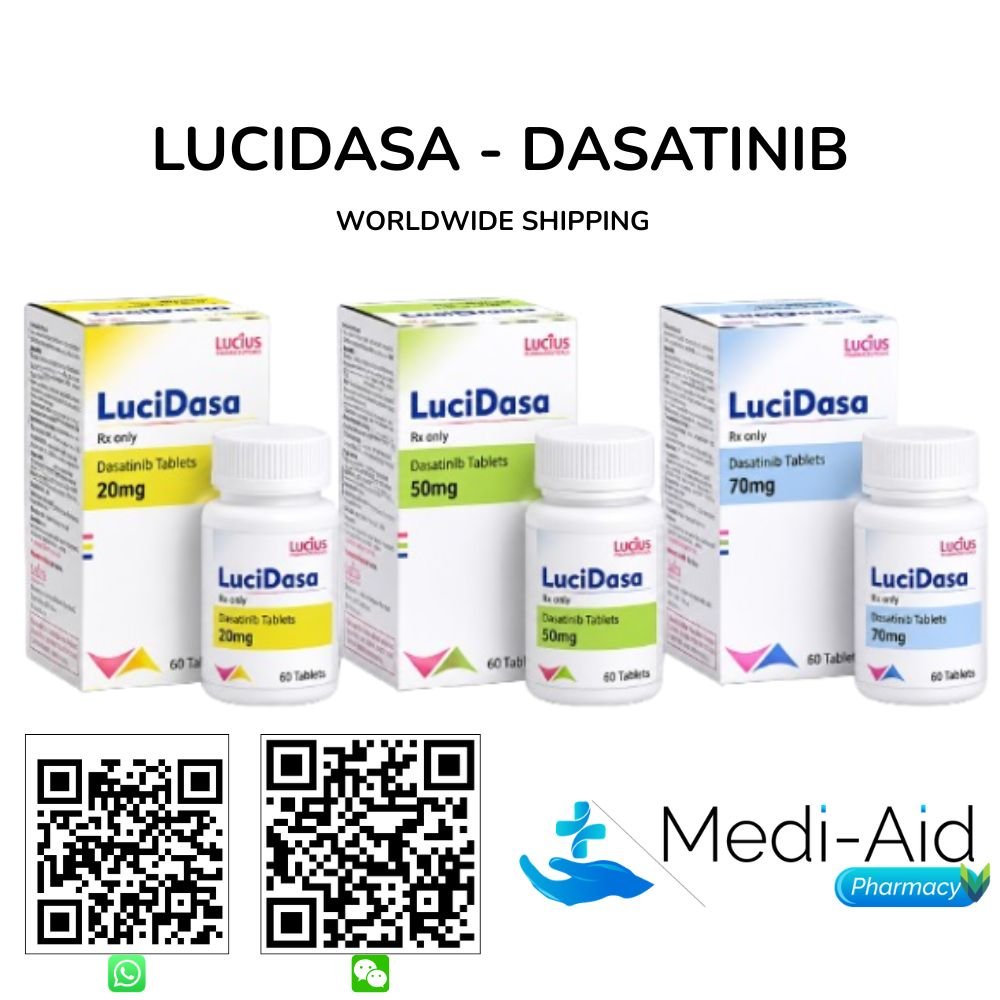
LuciDasa 20 MG, 50 MG & 70 MG (Dasatinib) is an oral, second-generation multi-targeted BCR::ABL1 and SRC-family tyrosine kinase inhibitor (TKI) film-coated tablet available in 20 mg, 50 mg, and 70 mg strengths, each supplied in a pack of 60 tablets per pot, manufactured by Lucius Pharmaceuticals (Lao) Co., Ltd. of Laos. The active ingredient, dasatinib, is a highly potent, orally bioavailable second-generation TKI that inhibits BCR::ABL1 constitutive kinase activity by binding to both the active and inactive conformations of the ABL1 kinase domain a dual-conformation binding capability that distinguishes dasatinib from first-generation imatinib and underpins its retention of efficacy across the majority of clinically relevant imatinib-resistant BCR::ABL1 kinase domain mutations.
Dasatinib additionally inhibits a broad panel of structurally related kinases including the SRC-family kinases (SRC, LCK, HCK, YES, FYN, FGR, BLK, LYN, FRK), c-KIT, PDGFR-β, EPHA2, and TEC-family kinases at clinically achieved plasma concentrations, delivering antitumour activity across Philadelphia chromosome-positive (Ph+) chronic myeloid leukaemia (CML) in chronic phase (CP), accelerated phase (AP), and blast phase (BP), and in Philadelphia chromosome-positive acute lymphoblastic leukaemia (Ph+ ALL).
The reference-label starting dose of dasatinib for newly diagnosed and resistant/intolerant chronic-phase CML (CP-CML) in adults is 100 mg once daily (QD), achievable with 2 × LuciDasa 50 MG tablets taken together once daily, providing a full 30-day supply per 60-tablet pot. For accelerated-phase CML, blast-phase CML, and Ph+ ALL in adults, the reference-label dose is 140 mg once daily (QD), achieved with 2 × LuciDasa 70 MG tablets once daily, delivering a complete 30-day supply from a single 60-tablet pot.
In the pivotal Phase III DASISION trial (Dasatinib Versus Imatinib Study In Treatment-Naïve CML Patients, NCT00481247) in 519 patients with newly diagnosed CP-CML, dasatinib 100 mg QD achieved a cumulative complete cytogenetic response (CCyR) rate of 86% by 24 months versus 82% with imatinib, and a cumulative major molecular response (MMR) rate of 64% versus 46% with imatinib at 24 months (p<0.0001), confirming dasatinib’s superior depth and speed of molecular response as a frontline TKI in CML-CP.
The 5-year estimated overall survival (OS) in the DASISION trial reached 91.0% with dasatinib versus 90.0% with imatinib, with progression-free survival (PFS) of 85.0% versus 86.0% respectively at 5 years; cumulative 5-year MMR and MR4.5 rates remained statistically significantly higher for dasatinib at 76% versus 64%, confirming sustained long-term molecular response depth across years of continuous therapy.
Transformation to accelerated or blast phase occurred in only 5% of dasatinib-treated patients versus 7% of imatinib-treated patients, confirming dasatinib’s disease-control superiority at the most clinically important endpoint. Searching for LuciDasa 20 MG 50 MG 70 MG Dasatinib? Mediaid Pharmacy stocks this product within its comprehensive leukemia medicines catalogue and ships worldwide.
Basic Product Information of LuciDasa 20 MG, 50 MG & 70 MG (Dasatinib)
| Brand Name | LuciDasa 20 MG / 50 MG / 70 MG (Dasatinib) |
| Product Name | LuciDasa |
| Generic Name | Dasatinib |
| Drug Class | Second-Generation Multi-Targeted BCR::ABL1 and SRC-Family Tyrosine Kinase Inhibitor (TKI); Philadelphia Chromosome-Positive (Ph+) CML and ALL Targeted Oncology Agent; Dual Active/Inactive Conformation BCR::ABL1 Inhibitor |
| Formulation | Film-Coated Tablet |
| Available Strengths | 20 mg, 50 mg, and 70 mg per film-coated tablet |
| Available Pack Size | 60 Tablets per pot (30-day supply at 100 mg QD [2 × 50 MG tablets/day] for CP-CML; 30-day supply at 140 mg QD [2 × 70 MG tablets/day] for advanced-phase CML and Ph+ ALL; flexible dosing across all strengths supports adult and paediatric dose titration) |
| Primary Indications | Newly Diagnosed Chronic-Phase CML (CP-CML); Resistant or Intolerant Chronic-Phase CML; Accelerated-Phase CML (AP-CML); Myeloid and Lymphoid Blast-Phase CML (BP-CML); Philadelphia Chromosome-Positive Acute Lymphoblastic Leukaemia (Ph+ ALL) in Adult and Paediatric Patients |
| Reference-Label Starting Doses | CP-CML (adult, newly diagnosed or resistant/intolerant): 100 mg QD = 2 × LuciDasa 50 MG tablets once daily | AP-CML, BP-CML, Ph+ ALL (adult): 140 mg QD = 2 × LuciDasa 70 MG tablets once daily | Paediatric Ph+ CML and Ph+ ALL: weight-based dosing using LuciDasa 20 MG tablets; taken with or without food; swallowed whole with water (tablets must not be crushed or cut) |
| Manufacturer / Brand | Lucius Pharmaceuticals (Lao) Co., Ltd. Lucius Pharmaceuticals |
| Country of Origin | Laos |
| Categories | Leukemia Medicines, Oncology Medicines |
| Storage Conditions | Store below 30°C in a dry place, protected from light and moisture. Keep out of the reach of children. |
| Global Supplier | Mediaid Pharmacy Worldwide Shipping Available |
How LuciDasa (Dasatinib) Works: Dual-Conformation BCR::ABL1 Inhibition, SRC-Family Kinase Suppression, and Philadelphia Chromosome-Positive Leukaemia Pathway Extinction
Dasatinib, the active ingredient in LuciDasa 20 MG, 50 MG, and 70 MG film-coated tablets, is an orally bioavailable, second-generation multi-targeted tyrosine kinase inhibitor (TKI) with potent and broad kinase-inhibitory activity centred on BCR::ABL1 the constitutively active, oncogenic non-receptor tyrosine kinase produced by the Philadelphia chromosome (Ph) translocation t(9;22)(q34;q11), in which the ABL1 proto-oncogene on chromosome 9q34 fuses with the BCR gene on chromosome 22q11.2 to generate the chimeric BCR::ABL1 fusion oncogene.
The resulting BCR::ABL1 fusion protein is a constitutively active tyrosine kinase that is entirely independent of normal upstream growth factor or cytokine receptor activation, driving uncontrolled myeloid and lymphoid progenitor cell proliferation, survival, and apoptosis resistance that is the defining oncogenic mechanism of Ph+ CML and Ph+ ALL. Dasatinib inhibits BCR::ABL1 kinase activity by competitive occupation of the ATP-binding pocket of the ABL1 kinase domain, blocking phosphate transfer from ATP to substrate tyrosine residues and completely abolishing downstream BCR::ABL1-dependent activation of the RAS/MAPK, PI3K/AKT/mTOR, and JAK/STAT5 pro-survival and pro-proliferative signalling cascades.
The defining structural pharmacological advantage of dasatinib over first-generation imatinib is its ability to bind to both the active (open/DFG-in) and inactive (closed/DFG-out) conformations of the BCR::ABL1 kinase domain. Imatinib exclusively binds the inactive DFG-out conformation, making it vulnerable to BCR::ABL1 kinase domain point mutations particularly those in the activation loop or the P-loop that stabilise the active DFG-in conformation and prevent imatinib binding. Dasatinib’s conformation-independent binding overcomes the majority of these imatinib-resistance mutations, with the notable exception of the T315I gatekeeper mutation, which prevents binding of dasatinib, nilotinib, and imatinib by eliminating the hydrogen bond with the threonine residue and introducing steric clashing.
Dasatinib’s biochemical BCR::ABL1 inhibitory potency (IC₅₀ approximately 0.6–1 nM) is approximately 325-fold greater than imatinib against unmutated BCR::ABL1, reflecting its superior kinase-domain occupancy efficiency and providing a substantial pharmacodynamic advantage at clinical dosing levels. Each LuciDasa film-coated tablet available from Lucius Pharmaceuticals (Lao) Co., Ltd. in 20 mg, 50 mg, and 70 mg strengths delivers dasatinib at the prescribed dose for the relevant indication and patient weight category.
SRC-family kinase (SFK) co-inhibition is a clinically relevant second mechanism of dasatinib that distinguishes it from both imatinib and nilotinib. Dasatinib inhibits all eleven members of the SRC-family SRC, LCK, HCK, FYN, YES, FGR, BLK, LYN, FRK, TXK, and ITK at concentrations achieved at the reference-label dose of 100 mg QD. SFK co-inhibition contributes to dasatinib’s antitumour activity in Ph+ ALL, where SFK-mediated BCR::ABL1-independent signalling pathways (particularly LCK- and FYN-driven pre-BCR signalling in lymphoid progenitors) contribute to leukaemia cell survival independently of BCR::ABL1 kinase activity, and in imatinib-resistant CML where pathological SFK activation particularly HCK and LYN overexpression mediates BCR::ABL1-independent imatinib resistance.
Additionally, dasatinib inhibits c-KIT (IC₅₀ approximately 1–5 nM), PDGFR-β, DDR1/DDR2, and EPHA2 receptor tyrosine kinases, contributing to antitumour activity in KIT-driven subclones and in the bone marrow microenvironment-mediated adhesion and survival mechanisms that sustain CML stem cells in their niche. Oncologists managing Ph+ leukaemia patients can review the full range of CML and leukaemia treatment medicines at Mediaid Pharmacy, including LuciDasa 20 MG, 50 MG, and 70 MG Dasatinib by Lucius Pharmaceuticals.
Pharmacokinetics of dasatinib in LuciDasa film-coated tablets: following oral administration, dasatinib is absorbed with a mean time to peak plasma concentration (Tmax) of 0.5–3 hours. Dasatinib undergoes extensive hepatic metabolism primarily via CYP3A4 (with a minor contribution from FMO3 and UGT enzymes), generating a pharmacologically active metabolite (M5) that contributes approximately 5% of the total pharmacological activity. The mean terminal plasma half-life of dasatinib is 3–5 hours; despite this relatively short plasma half-life, dasatinib’s cellular pharmacokinetics demonstrate prolonged intracellular retention in BCR::ABL1-expressing haematopoietic cells with dasatinib-bound BCR::ABL1 kinase inhibition persisting for 16–24 hours beyond plasma clearance supporting the efficacy of once-daily dosing.
Oral bioavailability is moderate (approximately 14–34%) and is increased by high-fat meals (up to 14% increase in AUC) but decreased by antacids via pH-dependent solubility reduction. The dasatinib dose for each individual patient must be determined by the treating haematologist or oncologist, and LuciDasa tablets must be prescribed and administered under the supervision of a qualified haematology-oncology specialist.
Approved Indications of Dasatinib LuciDasa 20 MG, 50 MG & 70 MG Reference Label
Dasatinib holds regulatory approval across all phases of CML and in Ph+ ALL in adult patients, as well as in paediatric Ph+ CML and Ph+ ALL, in the United States (FDA), European Union (EMA), and numerous other countries globally. The three-strength LuciDasa range 20 mg, 50 mg, and 70 mg film-coated tablets, each in 60-tablet pots supports the full reference-label dose range for all approved adult and paediatric indications without requiring supplementary product strengths. Prescribers must confirm the exact locally approved indication and dose on the dasatinib product label before initiating LuciDasa therapy, as label language and approved combinations may vary by regulatory jurisdiction.
|
Newly Diagnosed Chronic-Phase CML (CP-CML) Adult First-Line Therapy Dasatinib is approved for adult patients with newly diagnosed Philadelphia chromosome-positive CML in chronic phase as first-line TKI therapy. Reference-label dose: 100 mg QD = 2 × LuciDasa 50 MG tablets once daily; 60-tablet pot provides a full 30-day supply. The pivotal Phase III DASISION trial demonstrated superior depth of molecular response versus imatinib: cumulative MMR rate 64% versus 46% at 24 months (p<0.0001); 5-year MMR rate 76% versus 64%; transformation to accelerated/blast phase 5% versus 7%. Oncologists managing newly diagnosed CML patients can review generic dasatinib tablets for CML at Mediaid Pharmacy. |
Resistant or Intolerant Chronic-Phase CML After Prior TKI Therapy Dasatinib is approved for adult patients with CP-CML who are resistant or intolerant to imatinib or other prior BCR::ABL1 TKI therapy, including patients harbouring the majority of imatinib-resistance BCR::ABL1 kinase domain mutations (excluding T315I). Reference-label dose: 100 mg QD = 2 × LuciDasa 50 MG tablets once daily. In Phase II CA180-034 trial data, dasatinib 100 mg QD achieved CCyR in 50% and MCyR in 63% of imatinib-resistant/intolerant CP-CML patients, with 24-month PFS of 80%. LuciDasa 50 MG (60 tablets per pot) provides a complete 30-day supply at this dose. Haematologists can browse oncology medicines at Mediaid Pharmacy for comprehensive CML programme support. |
|
Accelerated-Phase and Blast-Phase CML Adult Patients Dasatinib is approved for adult patients with CML in accelerated phase (AP-CML), myeloid blast phase (MBP-CML), or lymphoid blast phase (LBP-CML), including those resistant or intolerant to imatinib. Reference-label dose: 140 mg QD = 2 × LuciDasa 70 MG tablets once daily; each 60-tablet pot provides a 30-day supply. Phase II START-A and START-B trials confirmed haematologic response rates of 45–64% in AP-CML and 24–35% in BP-CML, with cytogenetic responses in 32–39% of evaluable patients. The LuciDasa 70 MG strength (60 tablets per pot) is specifically designed to deliver the 140 mg advanced-phase reference dose as 2 tablets daily, simplifying procurement and administration for advanced-stage CML programmes. |
Philadelphia Chromosome-Positive ALL (Ph+ ALL) Adult and Paediatric Patients Dasatinib is approved for adult patients with relapsed or refractory Ph+ ALL (reference-label dose: 140 mg QD = 2 × LuciDasa 70 MG tablets once daily), and for paediatric patients with Ph+ CML-CP and Ph+ ALL in combination with chemotherapy using weight-based dasatinib dosing. The LuciDasa 20 MG tablet strength specifically enables precise paediatric weight-based dosing where calculated doses typically range from 40–120 mg/day according to body weight bands without requiring tablet cutting or splitting. For paediatric Ph+ ALL in combination with chemotherapy, dasatinib demonstrated superior event-free survival and molecular response versus imatinib-based chemotherapy combinations. Haematologists can review dasatinib for Ph+ ALL at Mediaid Pharmacy for full programme support. |
Drug Interactions and Important Safety Information for LuciDasa 20 MG, 50 MG & 70 MG (Dasatinib)
The dominant pharmacokinetic drug interaction risk for dasatinib in LuciDasa film-coated tablets centres on its metabolism as a major CYP3A4 substrate. Strong CYP3A4 inhibitors including ketoconazole, itraconazole, voriconazole, posaconazole, clarithromycin, telithromycin, ritonavir, atazanavir, indinavir, nefazodone, nelfinavir, and saquinavir substantially increase dasatinib systemic exposure (AUC increases of approximately 5-fold with ketoconazole) and amplify the risk of dasatinib-related toxicity including myelosuppression, haemorrhage, pleural effusion, and fluid retention. Co-administration of strong CYP3A4 inhibitors with LuciDasa Dasatinib should be avoided wherever clinically possible; if unavoidable, dose reduction and intensified clinical monitoring are mandatory under oncologist supervision.
Strong CYP3A4 inducers including rifampicin, rifabutin, carbamazepine, phenobarbital, phenytoin, and St. John’s Wort markedly accelerate dasatinib hepatic clearance, reducing dasatinib AUC by approximately 82% (rifampicin) and potentially abrogating BCR::ABL1 inhibitory efficacy at the prescribed dose. Concurrent use of strong CYP3A4 inducers with LuciDasa Dasatinib must be avoided; where antiepileptic coverage or antimycobacterial therapy is required, non-CYP3A4-inducing alternatives (e.g., levetiracetam or valproate for seizure prophylaxis; azithromycin for Mycobacterium avium complex prophylaxis) should be selected in consultation with the treating haematologist.
Gastric acid suppressants represent a clinically important interaction class unique to dasatinib among BCR::ABL1 TKIs: antacids, H2-receptor antagonists (famotidine, ranitidine), and proton pump inhibitors (PPIs: omeprazole, pantoprazole, esomeprazole) reduce gastric pH and substantially decrease dasatinib dissolution and absorption concurrent PPI use reduces dasatinib AUC by approximately 43%, while antacids reduce Cmax by approximately 58%. The reference label recommends that antacids be taken at least 2 hours before or 2 hours after LuciDasa Dasatinib; concurrent PPI or H2-blocker use should be avoided throughout therapy unless clinically unavoidable.
QTc interval prolongation: dasatinib prolongs the QTc interval in a dose-dependent manner; a mean QTcF prolongation of approximately 3–6 ms was observed at the reference-label doses in clinical trials. Co-administration of dasatinib with other QTc-prolonging agents including antiarrhythmics (amiodarone, sotalol, quinidine), fluoroquinolone antibiotics (moxifloxacin, ciprofloxacin), macrolide antibiotics (azithromycin, clarithromycin), antipsychotics (haloperidol, quetiapine), and certain antiemetics (ondansetron, domperidone) requires baseline ECG and periodic ECG monitoring throughout co-administration. Hypokalaemia and hypomagnesaemia, which are common in oncology patients receiving emetogenic chemotherapy or diuretics, amplify QTc prolongation risk and must be corrected before initiating or continuing LuciDasa Dasatinib therapy.
Anticoagulant and antiplatelet interactions: dasatinib’s off-target inhibition of TEC-family kinases impairs collagen-induced platelet aggregation, amplifying haemorrhagic risk when co-administered with anticoagulants (warfarin, DOACs) or antiplatelet agents (aspirin, clopidogrel). All patients must disclose their complete medication list including over-the-counter medicines, herbal supplements, and vitamins to their haematologist-oncologist before and throughout LuciDasa Dasatinib therapy. Oncology teams sourcing concurrent medicines alongside dasatinib-based CML and Ph+ ALL treatment programmes at Mediaid Pharmacy can contact the team for multi-medicine consolidated supply.
Side Effects and Precautions of LuciDasa 20 MG, 50 MG & 70 MG (Dasatinib)
|
Common Side Effects Fluid retention and oedema (approximately 32–46%): includes peripheral oedema, periorbital oedema, generalised fluid retention, ascites, and pericardial effusion; typically Grade 1–2 and managed with diuretics and fluid restriction; Grade 3–4 fluid retention events reported in approximately 10–19% of patients in advanced-phase disease Pleural effusion (approximately 14–28% at 100 mg QD in CP-CML; higher in advanced-phase settings): the most clinically distinctive dasatinib-class adverse event; Grade 3–4 pleural effusion in approximately 2–5%; requires monitoring with chest X-ray or CT; managed with temporary dasatinib dose interruption, diuretics, and in severe cases thoracocentesis or corticosteroids; risk is higher in patients with twice-daily dosing (now non-preferred), prior cardiac or pulmonary disease, and age >65 years Diarrhoea (approximately 27–31%); nausea (approximately 22–24%); headache (approximately 12–33%); fatigue and asthenia (approximately 20–26%); musculoskeletal pain including myalgia, arthralgia, and bone pain (approximately 13–22%); rash and dermatological reactions (approximately 11–21%) Haematological toxicity: neutropenia (Grade 3–4 in approximately 23–34%), thrombocytopenia (Grade 3–4 in approximately 19–36%), and anaemia (Grade 3–4 in approximately 10–13%) are the most clinically significant haematological adverse events; CBC with differential monitoring at baseline and at least every 2 weeks for the first 3 months and monthly thereafter is mandatory throughout LuciDasa Dasatinib therapy Dyspnoea (approximately 20%); upper respiratory infections (approximately 10–14%); haemorrhage and contusion (approximately 11–26%); abdominal pain (approximately 11–12%); infection (approximately 12%); dose reduction using LuciDasa 20 MG tablets (4 × 20 MG = 80 mg) or LuciDasa 50 MG tablets (80 mg may also require combination of strengths) is the standard reference-label management pathway for Grade ≥3 haematological and non-haematological adverse events |
Serious Warnings and Precautions Pleural and pericardial effusion: Grade 3–4 pleural effusion requiring thoracocentesis or hospitalisation reported in up to 5% of CP-CML patients receiving dasatinib 100 mg QD. Baseline respiratory assessment, monitoring for new dyspnoea or cough throughout therapy, and prompt chest imaging on respiratory symptom development are required. Dasatinib must be dose-interrupted and fluid managed before reinitiation at a reduced dose; in recurrent severe effusions, permanent discontinuation must be considered. Once-daily dosing (the preferred schedule) is associated with lower pleural effusion rates than twice-daily schedules. Pulmonary arterial hypertension (PAH): dasatinib-associated PAH including pre-capillary PAH confirmed on right heart catheterisation has been reported in approximately 0.5–5% of dasatinib-treated patients, sometimes after more than 1 year of therapy. PAH requires permanent dasatinib discontinuation; clinical improvement and reversal of haemodynamic changes occurs in some but not all patients after stopping therapy. Any patient developing new dyspnoea, fatigue, or signs of right heart failure must be evaluated for PAH promptly. Severe myelosuppression: Grade 3–4 neutropenia, thrombocytopenia, and anaemia are common, particularly in advanced-phase CML and Ph+ ALL. Dasatinib dose interruption, reduction, and in some cases G-CSF support or platelet transfusion are required. The reference-label dose modification algorithm for LuciDasa Dasatinib permits reduction from 100 mg QD to 80 mg QD (4 × LuciDasa 20 MG tablets once daily) for CP-CML, and from 140 mg QD to 100 mg QD (2 × LuciDasa 50 MG tablets once daily) for advanced-phase disease. QTc prolongation: dasatinib prolongs the QTc interval; baseline ECG before initiation and monitoring for symptoms of arrhythmia throughout therapy required; correct hypokalaemia and hypomagnesaemia before and during therapy; avoid concurrent QTc-prolonging medications where possible. Serious ventricular arrhythmias have been rarely reported. Embryo-fetal toxicity: dasatinib can cause fetal harm based on its mechanism of action and nonclinical developmental toxicology data. Females of reproductive potential must use highly effective contraception during LuciDasa Dasatinib treatment and for 30 days after the final dose. Males with female partners of reproductive potential must also use contraception during treatment and for 30 days after the final dose. Breastfeeding is not recommended during treatment and for the period thereafter specified by the treating oncologist. Any patient who is pregnant, planning a pregnancy, or currently breastfeeding must discuss their individual circumstances with their treating haematologist before initiating LuciDasa Dasatinib. |
Who Should Use LuciDasa 20 MG, 50 MG & 70 MG (Dasatinib)?
LuciDasa Dasatinib film-coated tablets are indicated for adult and paediatric patients with the following Philadelphia chromosome-positive haematological malignancies: newly diagnosed CP-CML in adult patients for whom dasatinib is the treating haematologist’s preferred first-line TKI based on individual patient characteristics, molecular goals, comorbidity profile, or tolerability considerations; CP-CML, AP-CML, MBP-CML, and LBP-CML in adult patients who are resistant or intolerant to imatinib or other prior BCR::ABL1 TKI therapy particularly those harbouring non-T315I BCR::ABL1 kinase domain mutations conferring imatinib resistance where dasatinib retains inhibitory activity; Ph+ ALL in adult patients who are resistant or intolerant to prior therapy; and Ph+ CML and Ph+ ALL in paediatric patients in combination with chemotherapy using weight-based dasatinib dosing derived from the LuciDasa 20 MG tablet strength.
The three available LuciDasa strengths 20 mg, 50 mg, and 70 mg in a 60-tablet pot format provide comprehensive dose range coverage: 100 mg QD (2 × 50 MG tablets) for CP-CML; 140 mg QD (2 × 70 MG tablets) for advanced-phase CML and Ph+ ALL; and 80 mg QD (4 × 20 MG tablets) for the first-step dose reduction from 100 mg QD making LuciDasa a procurement-efficient generic dasatinib formulation for multi-indication haematology programmes.
Before initiating LuciDasa Dasatinib, treating haematologists and oncologists must assess: baseline haematological status (CBC with differential); hepatic function panel (ALT, AST, bilirubin, alkaline phosphatase) given dasatinib’s hepatic metabolism via CYP3A4; baseline ECG with QTc interval measurement and cardiac history including pre-existing arrhythmia; baseline respiratory assessment (chest X-ray or CT if clinically indicated) to establish pre-treatment pleural status; baseline echocardiogram or pulmonary haemodynamic assessment in patients with known cardiopulmonary disease or dyspnoea; and the complete concomitant medication list (CYP3A4 inhibitors and inducers, QTc-prolonging agents, gastric acid suppressants, anticoagulants).
BCR::ABL1 kinase domain mutation analysis should be performed in all patients with a suboptimal molecular response or progression on prior TKI therapy to identify T315I or other resistance mutations that determine second-line TKI selection. Oncologists seeking comprehensive targeted agent support across leukaemia treatment programmes can review the complete range of oncology medicines at Mediaid Pharmacy, including LuciDasa 20 MG, 50 MG & 70 MG Dasatinib by Lucius Pharmaceuticals (Lao) Co., Ltd.
Global Supplier: Mediaid Pharmacy Worldwide Shipping for LuciDasa 20 MG, 50 MG & 70 MG (Dasatinib)
Mediaid Pharmacy is a Dhaka-based supplier of oncology and specialty medicines with established worldwide shipping capacity. LuciDasa 20 MG, 50 MG & 70 MG (Dasatinib) manufactured by Lucius Pharmaceuticals (Lao) Co., Ltd. of Laos formulated as film-coated tablets in 60-tablet pots across all three strengths is stocked and available for international supply. All orders are supported by stock confirmation, pricing quotations, and end-to-end delivery tracking for international shipments.
Hospitals, specialist haematology-oncology centres, CML and Ph+ ALL treatment programmes, wholesale distributors, and patients in countries where dasatinib is approved can contact Mediaid Pharmacy through WhatsApp, phone, or WeChat for all enquiries about LuciDasa Dasatinib for CML and leukaemia at Mediaid Pharmacy, including current stock availability across all three strengths (20 mg, 50 mg, 70 mg), per-unit pricing, and international freight timelines for your destination. Institutions and distributors sourcing multiple oncology medicines in a consolidated shipment can request a combined multi-product quotation directly from the Mediaid Pharmacy team.
Why Choose LuciDasa 20 MG, 50 MG & 70 MG (Dasatinib) from Mediaid Pharmacy?
LuciDasa is manufactured by Lucius Pharmaceuticals (Lao) Co., Ltd. of Laos and delivers dasatinib the second-generation dual-conformation BCR::ABL1 and SRC-family TKI whose 100 mg QD dose is validated by the definitive Phase III DASISION trial 5-year final data: 5-year OS of 91.0% versus 90.0% with imatinib, 5-year cumulative MMR rate of 76% versus 64%, and transformation to accelerated/blast phase in only 5% versus 7% of imatinib-treated patients confirming sustained deep molecular response durability across years of continuous dasatinib therapy in treatment-naïve CML-CP.
The defining procurement advantage of sourcing LuciDasa from Mediaid Pharmacy is complete reference-label dose coverage across all adult and paediatric indications from a single three-strength Lucius Pharmaceuticals generic dasatinib formulation: LuciDasa 50 MG delivers 100 mg QD (2 tablets) for CP-CML; LuciDasa 70 MG delivers 140 mg QD (2 tablets) for advanced-phase CML and Ph+ ALL; LuciDasa 20 MG enables 80 mg QD (4 tablets) dose reduction for CP-CML and precise weight-based paediatric dosing covering the entire reference-label prescribing and dose modification range from a single generic product range without requiring a supplementary TKI formulation.
Mediaid Pharmacy supplies LuciDasa Dasatinib in all three strength formats (20 mg, 50 mg, 70 mg film-coated tablets; 60 tablets per pot) with worldwide shipping, prescription-verified order processing, and customs and importation documentation as required for international oncology medicine delivery. Every order is initiated with a prescription confirmation to ensure supply aligns with the treating oncologist’s clinical plan and local regulatory requirements. For oncology programmes requiring a broader panel of targeted, haematological, and supportive agents, the full Mediaid Pharmacy oncology medicines catalogue is available to browse, and the team can be contacted directly for consolidated multi-medicine quotations and volume supply arrangements.
Frequently Asked Questions About LuciDasa 20 MG, 50 MG & 70 MG (Dasatinib)
What is LuciDasa 20 MG, 50 MG & 70 MG and what is its generic name?
LuciDasa 20 MG, 50 MG & 70 MG is a branded generic dasatinib film-coated tablet manufactured by Lucius Pharmaceuticals (Lao) Co., Ltd. of Laos. The generic name of LuciDasa is dasatinib the same active ingredient as the originator medicine Sprycel (dasatinib), developed by Bristol-Myers Squibb Company and first approved by the US FDA in June 2006 for the treatment of CML and Ph+ ALL in patients resistant or intolerant to imatinib. Dasatinib subsequently received FDA approval for first-line newly diagnosed CP-CML in October 2010 (DASISION trial), and additional approvals for paediatric Ph+ CML-CP and Ph+ ALL in 2017. Each LuciDasa film-coated tablet contains dasatinib in one of three strengths: 20 mg, 50 mg, or 70 mg. The 60-tablet pot of LuciDasa provides a complete 30-day supply at the reference-label CP-CML dose of 100 mg QD (2 × LuciDasa 50 MG tablets per day) and at the reference-label advanced-phase CML and Ph+ ALL dose of 140 mg QD (2 × LuciDasa 70 MG tablets per day), making LuciDasa a clinically aligned, cost-accessible generic dasatinib option for haematology-oncology programmes worldwide. The LuciDasa 20 MG strength additionally supports the 80 mg QD dose reduction schedule (4 tablets per day) and precise weight-based paediatric dosing.
How should LuciDasa 20 MG, 50 MG & 70 MG (Dasatinib) tablets be taken?
LuciDasa (Dasatinib) film-coated tablets are taken orally once daily at the dose prescribed by the treating haematologist or oncologist. The reference-label dose for newly diagnosed and resistant/intolerant CP-CML in adults is 100 mg QD 2 × LuciDasa 50 MG tablets taken together once daily. The reference-label dose for AP-CML, BP-CML, and adult Ph+ ALL is 140 mg QD 2 × LuciDasa 70 MG tablets once daily. Dasatinib can be administered with or without food; however, patients should avoid antacids within 2 hours before and 2 hours after taking LuciDasa, and should avoid proton pump inhibitors (omeprazole, esomeprazole, pantoprazole) and H2-receptor antagonists (famotidine, ranitidine) throughout the course of LuciDasa Dasatinib therapy wherever clinically possible, as these agents substantially reduce dasatinib absorption by increasing gastric pH. LuciDasa film-coated tablets must be swallowed whole with a full glass of water crushing, breaking, or dissolving the tablet must be strictly avoided due to cytotoxic handling safety requirements and because crushing disrupts the film-coat intended to protect the tablet from moisture and pH-dependent degradation. If a dose is missed and remembered on the same day it was due, the missed dose should be taken as soon as remembered on that day; if it is not remembered until the following day, the missed dose must be skipped entirely and the regular schedule resumed doubling up doses is not permitted. Patients must inform their oncologist of all concomitant medications particularly antifungals, antivirals, antiepileptics, herbal preparations, supplements, antacids, and over-the-counter medicines before and throughout LuciDasa Dasatinib therapy.
What are the most common side effects of LuciDasa (Dasatinib) and how are they managed?
The most common and clinically significant side effects of dasatinib reported across Phase II and Phase III trials in CP-CML, advanced-phase CML, and Ph+ ALL include fluid retention and oedema (approximately 32–46%, including peripheral oedema, pericardial effusion, and ascites), pleural effusion (approximately 14–28% at 100 mg QD in CP-CML; the most distinctive dasatinib-class adverse event, managed with dose interruption, diuretics, and in severe cases thoracocentesis or corticosteroids), diarrhoea (approximately 27–31%), headache (approximately 12–33%), fatigue (approximately 20–26%), musculoskeletal pain (approximately 13–22%), rash (approximately 11–21%), nausea (approximately 22–24%), and haemorrhage or bruising (approximately 11–26%). Haematological toxicity Grade 3–4 neutropenia (approximately 23–34%), Grade 3–4 thrombocytopenia (approximately 19–36%), and Grade 3–4 anaemia (approximately 10–13%) requires mandatory CBC monitoring throughout therapy. Pulmonary arterial hypertension (approximately 0.5–5%) requires immediate investigation and permanent dasatinib discontinuation upon confirmed diagnosis. The reference-label dose reduction pathway for CP-CML uses LuciDasa 20 MG tablets (4 tablets = 80 mg QD); for advanced-phase CML and Ph+ ALL, dose reduction uses LuciDasa 50 MG tablets (2 tablets = 100 mg QD). Any concerns about side effects must be reported immediately to the treating haematologist-oncologist.
What is the pivotal evidence base for dasatinib in newly diagnosed chronic-phase CML?
The pivotal evidence base for dasatinib in newly diagnosed CP-CML rests on the Phase III DASISION trial (NCT00481247), in which 519 patients with newly diagnosed CP-CML were randomised 1:1 to receive dasatinib 100 mg QD (n=259) or imatinib 400 mg QD (n=260). At 24 months, cumulative rates of CCyR (86% vs 82%), MMR (64% vs 46%, p<0.0001), and 4.5-log molecular response MR4.5 (17% vs 8%) were all statistically significantly superior with dasatinib. By 12 months, 84% of dasatinib-treated patients achieved BCR-ABL1 ≤10% the validated 3-month early molecular response milestone strongly predictive of superior long-term PFS and OS compared with 64% of imatinib-treated patients, confirming dasatinib’s faster and deeper early molecular response profile. At the final 5-year analysis, 5-year estimated OS was 91.0% with dasatinib versus 90.0% with imatinib; 5-year PFS was 85.0% versus 86.0%; cumulative 5-year MMR rate was 76% versus 64%; cumulative MR4.5 rate was 42% versus 33%; and transformation to accelerated or blast phase occurred in 5% versus 7% of patients. These data confirm that first-line dasatinib 100 mg QD achievable as 2 × LuciDasa 50 MG tablets once daily with a full 30-day supply per 60-tablet pot delivers statistically superior and clinically meaningful depth of molecular response compared with imatinib in treatment-naïve CML-CP, while maintaining comparable long-term OS and PFS.
Is LuciDasa 20 MG, 50 MG & 70 MG (Dasatinib) safe during pregnancy or while breastfeeding?
No. Dasatinib including in the LuciDasa film-coated tablet formulation manufactured by Lucius Pharmaceuticals (Lao) Co., Ltd. can cause fetal harm based on its mechanism of action and confirmed nonclinical developmental toxicology data demonstrating embryotoxicity, fetotoxicity, and skeletal malformations in animal species at systemic exposures at or below the human therapeutic range. The BCR::ABL1 and SRC-family kinase signalling pathways inhibited by dasatinib play important roles in normal embryonic and fetal development, particularly in haematopoiesis, vasculogenesis, and bone morphogenesis. Females of reproductive potential must use highly effective contraception during treatment with LuciDasa Dasatinib and for at least 30 days after the final dose. Males with female partners of reproductive potential must also use reliable contraception during treatment and for 30 days after the final dose. Breastfeeding is not recommended during LuciDasa Dasatinib treatment, as it has not been established whether dasatinib or its active metabolite are excreted in human breast milk, though animal studies indicate milk excretion occurs. Any patient who is pregnant, planning a pregnancy, or currently breastfeeding must discuss their individual clinical circumstances with their treating haematologist-oncologist before initiating or continuing LuciDasa Dasatinib therapy.
Can I order LuciDasa 20 MG, 50 MG & 70 MG (Dasatinib) online with worldwide shipping?
Yes. Mediaid Pharmacy supplies LuciDasa 20 MG, 50 MG & 70 MG (Dasatinib) manufactured by Lucius Pharmaceuticals (Lao) Co., Ltd. of Laos film-coated tablets in 60-tablet pots across all three strengths to oncology centres, hospitals, wholesale distributors, and patients globally. Contact Mediaid Pharmacy via WhatsApp, phone, or WeChat at +8801773428128, or by email at info@mediaidpharmacy.com, for pricing on LuciDasa Dasatinib across all three strengths, current stock confirmation, and international delivery timelines for your destination country. Oncology teams sourcing LuciDasa Dasatinib alongside other targeted agents for CML, Ph+ ALL, and haematological malignancy programmes can browse the complete range of oncology medicines at Mediaid Pharmacy and request a consolidated multi-medicine quotation. All international orders are supported by prescription verification, export documentation, and customs clearance assistance as required.
Order LuciDasa 20 MG, 50 MG & 70 MG (Dasatinib) with Worldwide Shipping
Phone / WhatsApp / WeChat: +8801773428128 | Email: info@mediaidpharmacy.com
Reviews
There are no reviews yet.