
Description
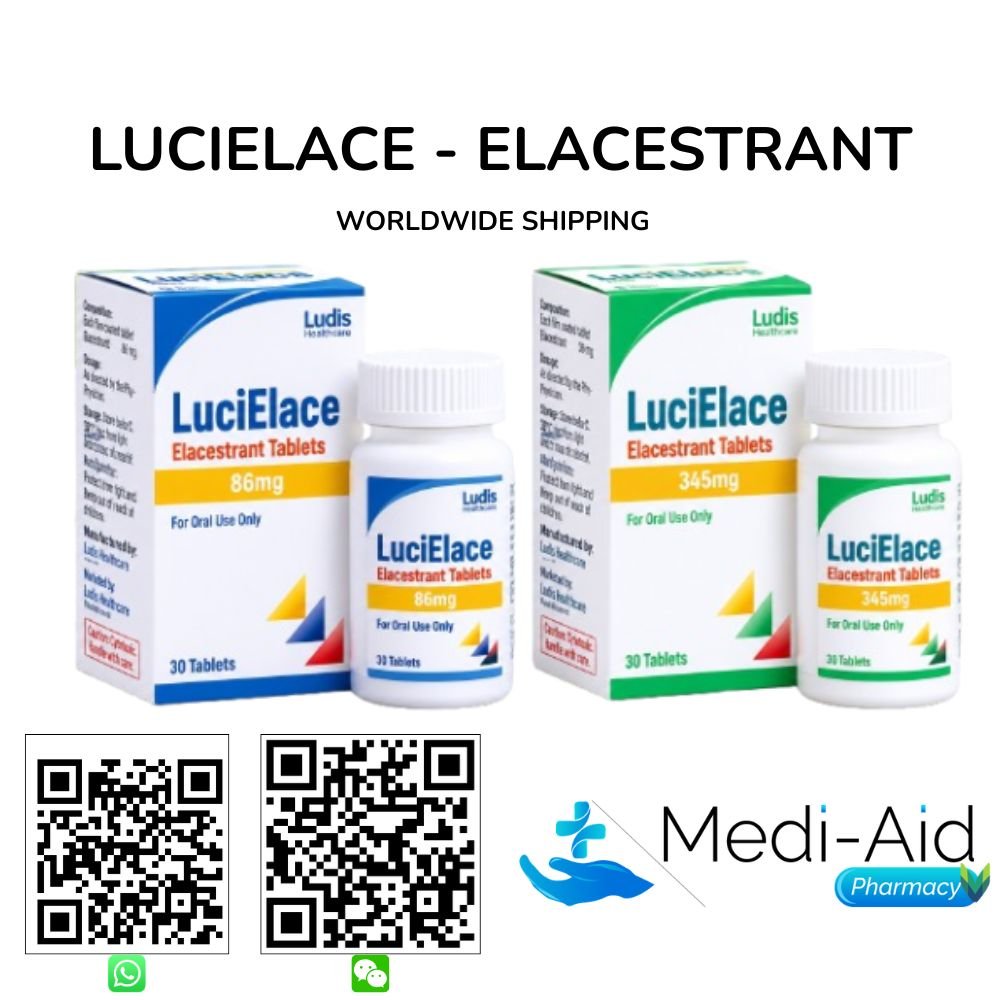
LuciElace 86 MG & 345 MG (Elacestrant) is a first-in-class, orally bioavailable selective estrogen receptor degrader (SERD) and estrogen receptor (ER) antagonist a small-molecule, non-steroidal ER inhibitor that binds with high affinity to estrogen receptor alpha (ERα), induces a conformational change in the ligand-binding domain (LBD) of the receptor, and promotes accelerated ER degradation and turnover, thereby eliminating both wild-type ER signalling and the constitutively active signalling driven by ESR1 ligand-binding domain mutations (including the most clinically prevalent variants Y537S, D538G, Y537C, and Y537N) that arise under selective pressure of prior endocrine therapy in hormone receptor-positive (HR+) advanced breast cancer making elacestrant the first and only oral SERD approved by the United States Food and Drug Administration (FDA) for the treatment of ER-positive (ER+), HER2-negative (HER2−), ESR1-mutated advanced or metastatic breast cancer, supplied as film-coated tablets in two strengths 86 mg and 345 mg in 30 tablets per pot, and manufactured by Lucius Pharmaceuticals (Lao) Co., Ltd. in Laos.
Elacestrant, the active pharmaceutical ingredient (API) of LuciElace, is indicated as monotherapy for postmenopausal women or adult men with ER-positive, HER2-negative, ESR1-mutated advanced or metastatic breast cancer with disease progression following at least one prior line of endocrine therapy. The ESR1 gene encodes ERα, and activating mutations in the ESR1 LBD detectable in approximately 25–40% of patients after prior endocrine therapy, particularly aromatase inhibitor therapy confer ligand-independent ER transcriptional activity and resistance to oestrogen deprivation and aromatase inhibition; elacestrant retains full anti-tumour activity in ESR1-mutated tumours, addressing a resistance mechanism that limits the effectiveness of aromatase inhibitors, CDK4/6 inhibitors, and fulvestrant.
The Phase 3 EMERALD trial (NCT03778931) demonstrated that elacestrant versus standard-of-care (SoC) endocrine therapy achieved a median progression-free survival (PFS) of 3.8 months versus 1.9 months (HR 0.55; 95% CI 0.39–0.77; p=0.0005) in the pre-specified ESR1-mutated subgroup (n=228), and in a post-hoc analysis of patients with ESR1 mutations treated with a prior CDK4/6 inhibitor for at least 12 months, median PFS was 8.6 months versus 1.9 months a clinically meaningful, statistically significant PFS benefit establishing elacestrant as a new standard-of-care monotherapy endocrine sequencing option in this biomarker-selected population.
Important: Elacestrant can cause embryo-foetal harm based on its mechanism of action and animal study findings; it is contraindicated in pregnancy. Elacestrant is a CYP3A4 substrate concomitant use with strong or moderate CYP3A4 inhibitors increases elacestrant exposure and the risk of adverse reactions; concomitant use with strong or moderate CYP3A4 inducers decreases elacestrant exposure and may reduce efficacy avoid both combinations. Elacestrant should not be used in patients with severe hepatic impairment and dose reduction is required for moderate hepatic impairment.
The most common adverse reactions (≥10%) are musculoskeletal pain, nausea, increased cholesterol, fatigue, vomiting, decreased appetite, constipation, abdominal pain, dyspepsia, diarrhoea, hot flush, and headache. Searching for LuciElace 86 MG & 345 MG Elacestrant? Mediaid Pharmacy lists this product across its oncology medicines, breast cancer medicines, and Lucius Pharmaceuticals medicines portfolios and ships it worldwide.
Basic Product Information of LuciElace 86 MG & 345 MG (Elacestrant)
| Brand Name | LuciElace 86 MG & 345 MG (Elacestrant) |
| Product Name | LuciElace |
| Generic Name | Elacestrant (also referred to by its developmental code RAD1901; originally discovered by Eisai, licensed to Radius Health, and currently commercialised by Stemline Therapeutics, a subsidiary of Menarini Group; the originator brand is Orserdu™, developed by Stemline Therapeutics / Menarini Group; FDA approval: 27 January 2023) |
| Drug Class | Selective Estrogen Receptor Degrader (SERD); Estrogen Receptor (ER) Antagonist; ER Alpha (ERα) Inhibitor; Oral SERD; Small-Molecule Targeted Kinase Inhibitor; Antineoplastic Agent; Endocrine Therapy Agent; Oral Breast Cancer Medicine; ESR1-Targeted Agent |
| Formulation | Film-Coated Tablet (oral administration; taken with food; swallow whole do not crush, chew, or split; must be taken with a meal to ensure consistent absorption) |
| Available Strengths | 86 mg per tablet (LuciElace 86 MG; used for first dose reduction to 258 mg [three 86 mg tablets] and second dose reduction to 172 mg [two 86 mg tablets] when required for toxicity management) and 345 mg per tablet (LuciElace 345 MG; the starting/recommended dose one 345 mg tablet once daily with food) |
| Available Pack Size | 30 tablets per pot (for the 345 mg strength, a 30-day supply at the recommended once-daily dosing schedule; for the 86 mg strength, a 10-day supply at the first dose-reduction level of 258 mg [3 tablets/day] or a 15-day supply at the second dose-reduction level of 172 mg [2 tablets/day]) |
| Dosing Schedule | Recommended Starting Dose: Elacestrant 345 mg (one LuciElace 345 MG tablet) orally, once daily, with food taken at the same time each day. Must be taken with food; administration without food results in reduced and variable absorption. First Dose Reduction for Toxicity: 258 mg once daily (three LuciElace 86 MG tablets). Second Dose Reduction for Toxicity: 172 mg once daily (two LuciElace 86 MG tablets). If further dose reduction below 172 mg once daily is required, permanently discontinue elacestrant. Dose Modification for Moderate Hepatic Impairment: Reduce dose to 258 mg once daily. Dose Modification for Strong/Moderate CYP3A4 Inhibitors (if co-administration unavoidable): Reduce elacestrant dose according to prescribing guidance; avoid concurrent use where possible. If a dose is missed by more than 6 hours, or vomiting occurs after a dose, skip that dose and resume the next scheduled dose the following day do not take an additional dose to compensate. Consult the treating oncologist for all dose modification decisions. |
| Primary Indications | ER+/HER2-Negative, ESR1-Mutated Advanced or Metastatic Breast Cancer (Monotherapy, Second-Line or Later): Elacestrant as single-agent monotherapy for postmenopausal women or adult men with ER-positive, HER2-negative, ESR1-mutated (as detected by an FDA-approved companion diagnostic test, such as the Guardant360 CDx assay) advanced or metastatic breast cancer with disease progression following at least one prior line of endocrine therapy. FDA approval granted 27 January 2023. Based on the Phase 3 EMERALD trial: ESR1-mutated subgroup mPFS 3.8 months vs 1.9 months (HR 0.55; p=0.0005); ITT population PFS HR 0.697 (p=0.0018).
Note on ESR1 Mutation Testing: Patients must be confirmed ESR1-mutated by a validated plasma-based companion diagnostic test before initiating elacestrant therapy. ESR1 LBD mutations develop in approximately 25–40% of patients after prior aromatase inhibitor therapy and confer resistance to endocrine deprivation agents; elacestrant’s mechanism of action retains activity against these mutations. |
| Manufacturer / Brand | Lucius Pharmaceuticals (Lao) Co., Ltd., Country of Origin: Laos (originator molecule originally discovered by Eisai; developed and commercialised by Stemline Therapeutics, a subsidiary of Menarini Group; originator brand: Orserdu™; first FDA approval for elacestrant: 27 January 2023, for ER+/HER2-negative, ESR1-mutated advanced or metastatic breast cancer) |
| Global Supplier | Mediaid Pharmacy, Worldwide Shipping Available |
| Storage Conditions | Store at room temperature, 20°C to 25°C (68°F to 77°F); excursions permitted to 15°C to 30°C (59°F to 86°F). Store in the original pot with the lid tightly closed. Keep away from moisture and light. Keep out of the reach of children. |
How LuciElace (Elacestrant) Works: SERD Mechanism, ESR1 Mutation Targeting, and ER Degradation in HR+/HER2-Negative Breast Cancer
Elacestrant (LuciElace) is an orally bioavailable, non-steroidal, small-molecule selective estrogen receptor degrader (SERD) that binds with high affinity and selectivity to the ligand-binding domain (LBD) of estrogen receptor alpha (ERα), the nuclear transcription factor encoded by the ESR1 gene and the primary oncogenic driver in approximately 70% of all breast cancers classified as hormone receptor-positive (HR+). In normal ERα physiology, oestrogen binding to the LBD induces a conformational change that allows ERα to dimerise, bind to oestrogen response elements (EREs) in DNA, and recruit co-activator complexes that transcriptionally activate proliferative target genes including cyclin D1, c-Myc, and progesterone receptor (PgR) driving G1-phase cell cycle entry and tumour cell proliferation in HR+ breast cancer.
Under sustained exposure to aromatase inhibitors (AIs) that deplete circulating oestrogen, HR+ breast cancers frequently acquire activating point mutations in the ESR1 LBD most commonly at residues Y537 (Y537S, Y537C, Y537N) and D538 (D538G) that render ERα constitutively active in a ligand-independent manner: mutant ERα adopts the active agonist conformation without oestrogen binding, sustaining ER-dependent gene transcription and tumour proliferation even under conditions of profound oestrogen suppression by aromatase inhibitors, explaining why ESR1 LBD mutations are the dominant mechanism of acquired resistance to aromatase inhibitor therapy in HR+ advanced breast cancer, occurring in approximately 25–40% of patients after prior endocrine therapy.
Elacestrant occupies the ERα LBD pocket the same site targeted by oestrogen and by fulvestrant but induces a distinct and unique conformational change compared with classical oestrogen binding or fulvestrant antagonism: elacestrant binding forces helix 12 (H12) of the LBD into a non-canonical conformation that prevents co-activator recruitment, blocks ER-dependent transcriptional activation, and critically, promotes accelerated ubiquitin-proteasome-mediated degradation of the ERα protein itself, reducing total cellular ERα protein levels a defining pharmacological property of the SERD class.
Preclinical data characterise elacestrant as a potent ERα degrader with full anti-proliferative activity in ESR1 wild-type ER+ breast cancer cell lines and, crucially, retained activity in cell line models and patient-derived xenograft (PDX) models bearing ESR1 LBD mutations including Y537S and D538G variants against which fulvestrant, the only previously available SERD (administered by intramuscular injection), shows substantially reduced activity. Elacestrant has also demonstrated anti-tumour activity in preclinical PDX models of ER+ breast cancer resistant to CDK4/6 inhibitors, reflecting its capacity to address post-CDK4/6 inhibitor resistance driven by ongoing ER signalling in the subset of tumours retaining ER pathway dependence after CDK4/6 inhibitor progression.
Pharmacokinetically, elacestrant exhibits an elimination half-life of 30–50 hours supporting once-daily oral dosing, and Cmax and AUC increase more than dose-proportionally over the clinical dosing range; oral bioavailability is significantly affected by food administration with food is therefore mandatory, and patients must take elacestrant with a meal at every dose.
Elacestrant’s oral route of administration represents a clinically and practically important advance over fulvestrant the only previously available SERD in clinical practice which requires intramuscular injection administered by a healthcare professional. The oral, once-daily formulation of elacestrant enables self-administration by patients, eliminates injection-site reactions (a known adverse effect of fulvestrant), and facilitates outpatient-only treatment without scheduled clinic visits solely for drug administration, collectively improving treatment adherence, patient experience, and quality of life during chronic maintenance therapy for metastatic breast cancer.
The companion diagnostic requirement for ESR1 mutation testing using a validated plasma-based liquid biopsy assay (such as the Guardant360 CDx assay, which was co-approved by the FDA alongside elacestrant on 27 January 2023) means that elacestrant represents a precision oncology approach: therapy is directed specifically to the biomarker-defined patient population most likely to derive benefit, aligning with modern personalised medicine principles in breast oncology. LuciElace (Elacestrant) 86 MG and 345 MG film-coated tablets provide both the recommended starting dose and the dose-reduction strengths required throughout the elacestrant treatment continuum, ensuring complete dose management flexibility for oncology teams managing patients on elacestrant-based therapy.
Clinical Data, Safety Profile, and Drug Interactions of LuciElace (Elacestrant 86 MG & 345 MG)
| Key Clinical Trials | EMERALD Phase 3 Trial (NCT03778931 Registrational): Randomised, open-label, active-controlled, multicentre Phase 3 trial. n=478 patients (elacestrant n=239 vs SoC endocrine therapy n=239) with ER+/HER2-negative advanced or metastatic breast cancer who had progressed after 1–2 prior lines of endocrine therapy including at least 1 CDK4/6 inhibitor. SoC: investigator’s choice of fulvestrant, letrozole, anastrozole, or exemestane. 228/478 patients (48%) had ESR1 mutations detected by the Guardant360 CDx assay.
Co-Primary Endpoint 1 ESR1-Mutated Subgroup (n=228): Median PFS 3.8 months (95% CI 2.2–7.3) for elacestrant vs 1.9 months (95% CI 1.9–2.1) for SoC; HR 0.55 (95% CI 0.39–0.77); p=0.0005 statistically significant, pre-specified primary endpoint. Co-Primary Endpoint 2 Intention-to-Treat (ITT) Population (n=478): PFS HR 0.697 (95% CI 0.552–0.880); p=0.0018 statistically significant in the overall population regardless of ESR1 mutation status. Post-Hoc Subgroup ESR1-Mutated + Prior CDK4/6 Inhibitor ≥12 Months: Median PFS 8.6 months for elacestrant vs 1.9 months for SoC (presented at SABCS 2022 and 2023), indicating that elacestrant’s benefit is greatest when tumours remain endocrine-sensitive after prolonged prior CDK4/6 inhibitor exposure. Subgroup Consistency (SABCS 2023 Analysis): PFS benefit for elacestrant vs SoC was consistent across all clinically relevant ESR1-mutated subgroups including: liver/lung metastases (mPFS 7.26 vs 1.87 months; HR 0.354); HER2-low expression (mPFS 9.03 vs 1.87 months; HR 0.301); PIK3CA mutation (mPFS 5.45 vs 1.94 months; HR 0.423); TP53 mutation (mPFS 8.61 vs 1.87 months; HR 0.300). |
| Common Adverse Reactions | The most common adverse reactions across the EMERALD Phase 3 trial (all grades, ≥10%) are: musculoskeletal pain (41%); nausea (35%); increased cholesterol (hypercholesterolaemia) (30%); increased AST (29%); fatigue (26%); decreased haemoglobin (anaemia) (26%); vomiting (19%); increased ALT (18%); dyspepsia (13%); diarrhoea (13%); constipation (12%); abdominal pain (11%); decreased appetite (11%); hot flush (11%); headache (11%); and increased triglycerides (10%). In the ESR1-mutated population specifically, the most common all-grade adverse reactions were musculoskeletal pain (50%), nausea (38.5%), and fatigue (25.6%). No Grade 4 treatment-related adverse events were reported in EMERALD, and no significant QTc prolongation was observed. Key warnings: embryo-foetal toxicity (contraindicated in pregnancy see Pregnancy & Lactation); hepatotoxicity (monitor liver function tests); hyperlipidaemia (monitor lipid panel). Elacestrant does not carry significant myelosuppression (neutropenia/anaemia) risk at the level seen with CDK4/6 inhibitors, and does not require mandatory CBC monitoring. Severe hepatic impairment: avoid use. Moderate hepatic impairment: reduce dose to 258 mg once daily. |
| Drug Interactions | Elacestrant is primarily metabolised by CYP3A4 and is a CYP3A4 substrate. Strong or moderate CYP3A4 inhibitors (ketoconazole, itraconazole, clarithromycin, ritonavir, cobicistat, grapefruit/grapefruit juice): increase elacestrant plasma exposure and may increase the risk of adverse reactions avoid concomitant use; if unavoidable, monitor closely and consider dose reduction per prescribing guidance. Strong or moderate CYP3A4 inducers (rifampicin, carbamazepine, phenytoin, phenobarbital, efavirenz, St John’s Wort): decrease elacestrant exposure and may reduce anti-tumour efficacy avoid concomitant use. P-glycoprotein (P-gp) substrates: Elacestrant is a P-gp inhibitor; reduce the dosage of co-administered P-gp substrates where minimal concentration changes may lead to serious or life-threatening adverse reactions, per those agents’ prescribing information. Elacestrant does not cause clinically significant QT interval prolongation, which distinguishes it from some ER antagonists requiring ECG monitoring. Disclose all concomitant medications, herbal supplements, and grapefruit-containing foods to the treating oncologist before initiating elacestrant therapy. |
| Pregnancy & Lactation | Elacestrant can cause embryo-foetal harm based on its mechanism of action as an ER antagonist and on animal reproductive toxicology studies. Administration of elacestrant to pregnant rats during organogenesis resulted in adverse developmental outcomes including embryo-foetal mortality and structural abnormalities at maternal exposures below the recommended human clinical dose based on AUC. LuciElace (Elacestrant) is contraindicated in pregnancy. Females of reproductive potential must use effective contraception during elacestrant treatment and for at least 1 week after the last dose. Males with female partners of reproductive potential should use effective contraception during elacestrant treatment and for at least 1 week after the last dose. There are no data on the presence of elacestrant or its metabolites in human breast milk; because of the potential for serious adverse reactions in the breastfed infant, breastfeeding is not recommended during elacestrant treatment. Verify pregnancy status with a serum or urine pregnancy test before initiating LuciElace in females of reproductive potential. Discuss all aspects of reproductive planning, fertility preservation, and contraceptive requirements with the treating oncologist before starting elacestrant therapy. |
Who Should Use LuciElace 86 MG & 345 MG (Elacestrant)?
LuciElace 345 MG (Elacestrant) is the starting-dose tablet intended for postmenopausal women and adult men with ER-positive, HER2-negative, ESR1-mutated advanced or metastatic breast cancer whose disease has progressed following at least one prior line of endocrine therapy, where ESR1 mutation status has been confirmed by a validated plasma-based companion diagnostic test. The ESR1-mutation selection criterion is not merely a regulatory requirement but a clinically essential precision oncology criterion: the exploratory analysis of PFS in EMERALD patients without ESR1 mutations showed a hazard ratio of 0.86 (95% CI 0.63–1.19), indicating that the statistically significant PFS benefit observed in the ITT population was driven primarily by benefit in ESR1-mutated tumours underscoring that elacestrant should be used specifically in this biomarker-confirmed subpopulation.
LuciElace 86 MG is the dose-reduction tablet, indicated for patients currently receiving elacestrant 345 mg once daily whose treating oncologist has determined that a downward dose adjustment to 258 mg once daily (three 86 mg tablets) as the first dose reduction, or to 172 mg once daily (two 86 mg tablets) as the second dose reduction is required to manage treatment-related toxicity such as Grade 3 nausea, vomiting, musculoskeletal pain, hepatotoxicity, or other adverse reactions, while maintaining the once-daily oral dosing schedule that defines elacestrant’s clinical administration regimen.
The target patient population for elacestrant spans several distinct clinical scenarios commonly encountered in the management of advanced HR+ breast cancer.
First, postmenopausal women or adult men with HR+/HER2-negative advanced or metastatic breast cancer who have progressed on a CDK4/6 inhibitor-based regimen and are confirmed ESR1-mutated represent the primary EMERALD-defined population: the EMERALD trial required all enrolled patients to have received at least one prior CDK4/6 inhibitor, and all patients in the EMERALD subgroup showing the most compelling benefit (ESR1-mutated, prior CDK4/6 inhibitor ≥12 months; median PFS 8.6 months vs 1.9 months) had received prolonged prior CDK4/6 inhibitor therapy, establishing elacestrant as a post-CDK4/6 inhibitor option in ESR1-mutated disease.
Second, patients with ESR1-mutated HR+/HER2-negative advanced breast cancer who have progressed on fulvestrant-based endocrine therapy notably, the EMERALD trial permitted prior fulvestrant exposure and randomisation was stratified by prior fulvestrant use, meaning elacestrant’s benefit in ESR1-mutated disease was demonstrated even in patients who had received fulvestrant as a prior therapy.
Third, oncology clinicians and healthcare teams managing patients across second-line and later-line HR+ advanced breast cancer settings who require an oral, once-daily endocrine sequencing option in ESR1-mutated disease the first and only FDA-approved oral SERD in this space prior to transitioning patients to combination or cytotoxic chemotherapy approaches.
LuciElace is not intended for patients without ESR1 mutation confirmation, patients with severe hepatic impairment (contraindicated), pregnant or breastfeeding individuals (contraindicated), or as first-line treatment before any prior endocrine therapy. ER+ breast cancer clinical teams, medical oncologists managing post-CDK4/6 inhibitor HR+ breast cancer, hospital formulary procurement departments, and individual patients confirmed ESR1-mutated seeking access to oral elacestrant therapy can browse the Mediaid Pharmacy breast cancer medicines portfolio, the oncology medicines collection, and the Lucius Pharmaceuticals medicines range for the complete selection available with worldwide delivery.
Global Supplier: Mediaid Pharmacy Worldwide Shipping for LuciElace 86 MG & 345 MG (Elacestrant)
Mediaid Pharmacy is a Dhaka-based supplier of specialty targeted oncology, breast cancer, and rare disease medicines with worldwide shipping to patients, breast oncology departments, ESR1-mutated HR+/HER2-negative metastatic breast cancer treatment programmes, hospital pharmacies, oncology day units, and international distributors across all regions. LuciElace (Elacestrant) 86 MG and 345 MG, manufactured by Lucius Pharmaceuticals (Lao) Co., Ltd. in Laos, are supplied as film-coated tablets in 30-tablet pots, with pricing quotations, stock confirmation, full product documentation, and end-to-end international delivery tracking for every order.
The availability of both the 345 mg starting-dose strength and the 86 mg dose-reduction strength is clinically critical: elacestrant’s prescribing information defines a two-step oral dose-reduction pathway from the recommended starting dose of 345 mg once daily to 258 mg once daily (three 86 mg tablets; first reduction) and then to 172 mg once daily (two 86 mg tablets; second reduction), and LuciElace 86 MG provides the specific tablet strength required for both dose-reduction levels without the need to split or manipulate the 345 mg starting-dose tablet.
Oncology departments managing patients across ESR1-mutated HR+/HER2-negative post-CDK4/6 inhibitor metastatic breast cancer treatment protocols; hospital oncology formulary and procurement teams sourcing the complete range of elacestrant tablet strengths; and individual patients and families accessing elacestrant for breast cancer treatment in regions where availability or cost presents barriers can contact the Mediaid Pharmacy team through WhatsApp, phone, or WeChat for all enquiries regarding LuciElace stock availability, current pricing, and international delivery timelines. Procurement teams co-sourcing LuciElace with other oral targeted oncology medicines can browse the complete Mediaid Pharmacy portfolio before requesting a consolidated quotation.
Why Choose LuciElace 86 MG & 345 MG (Elacestrant) from Mediaid Pharmacy?
LuciElace (Elacestrant) from Lucius Pharmaceuticals (Lao) Co., Ltd. delivers the validated SERD mechanism of elacestrant the first oral selective estrogen receptor degrader to receive FDA approval, and the only endocrine therapy specifically designed to address and overcome ESR1 ligand-binding domain mutation-driven resistance in HR+/HER2-negative advanced breast cancer in precisely formulated 86 mg and 345 mg film-coated tablets that together cover the complete dosing continuum from starting dose to second-step dose reduction. Elacestrant is pharmacologically distinctive within the endocrine therapy landscape for three evidence-based, clinically important reasons.
First, elacestrant is the first and only oral SERD approved for clinical use a distinction that separates it fundamentally from fulvestrant, the only other FDA-approved SERD, which requires intramuscular injection every 4 weeks (with an additional injection at 2 weeks for the first cycle) administered by a healthcare professional at a clinical facility. Elacestrant’s oral, once-daily, self-administered formulation eliminates the need for clinic visits solely for drug administration, removes injection-site reactions (a common adverse effect of fulvestrant), and enables treatment to be maintained entirely in the outpatient setting improving patient quality of life and adherence during long-term metastatic treatment.
Second, elacestrant is the only endocrine therapy with demonstrated efficacy specifically in ESR1-mutated tumours following prior CDK4/6 inhibitor therapy the predominant clinical sequence encountered in current HR+/HER2-negative advanced breast cancer practice (CDK4/6 inhibitor plus AI or fulvestrant as first-line, followed by the post-CDK4/6 inhibitor progression setting where ESR1 mutations have typically emerged). Aromatase inhibitors lack activity against ESR1 LBD mutations; fulvestrant has substantially reduced activity against the most common ESR1 mutations (Y537S, D538G) due to steric effects at the mutant LBD; elacestrant’s distinct binding mode and full ESR1-degrading activity in the context of these mutations is the mechanistic basis for its superiority over SoC endocrine therapy in the EMERALD ESR1-mutated subgroup (mPFS 3.8 months vs 1.9 months; HR 0.55; p=0.0005), and for the dramatically improved PFS seen in endocrine-sensitive ESR1-mutated patients with prior CDK4/6 inhibitor ≥12 months (mPFS 8.6 months vs 1.9 months).
Third, elacestrant does not cause significant myelosuppression unlike CDK4/6 inhibitors (palbociclib, ribociclib, abemaciclib), which require mandatory complete blood count (CBC) monitoring for neutropenia, elacestrant’s adverse reaction profile is dominated by gastrointestinal symptoms and musculoskeletal pain rather than haematologic toxicity, meaning elacestrant can be used without the intensive CBC monitoring burden associated with CDK4/6 inhibitor therapy and without the risk of grade 3/4 neutropenia that frequently drives dose interruption in CDK4/6 inhibitor regimens.
LuciElace 86 MG and 345 MG are manufactured by Lucius Pharmaceuticals (Lao) Co., Ltd. and are available through Mediaid Pharmacy as 30-tablet film-coated tablet pots. To source the complete range of ESR1-targeted endocrine therapies and HR+ breast cancer medicines, visit the Mediaid Pharmacy breast cancer medicines portfolio and the Lucius Pharmaceuticals medicines collection, and contact the team for a personalised quotation.
Frequently Asked Questions About LuciElace 86 MG & 345 MG (Elacestrant)
What is LuciElace 86 MG & 345 MG (Elacestrant) used for?
LuciElace (Elacestrant) is an oral selective estrogen receptor degrader (SERD) indicated as monotherapy for postmenopausal women or adult men with estrogen receptor-positive (ER+), HER2-negative, ESR1-mutated advanced or metastatic breast cancer with disease progression following at least one prior line of endocrine therapy. The approved indication is biomarker-specific: patients must be confirmed ESR1-mutated by a validated companion diagnostic test before initiating elacestrant. ESR1 ligand-binding domain mutations (most commonly Y537S, D538G, Y537C, Y537N) emerge in approximately 25–40% of HR+ advanced breast cancer patients after prior aromatase inhibitor therapy, conferring ligand-independent ER activity and resistance to endocrine deprivation elacestrant is specifically designed to retain full anti-tumour activity against these mutations. The LuciElace 345 MG tablet is the starting/recommended dose (345 mg once daily with food); the LuciElace 86 MG tablet provides the dose-reduction strengths (258 mg = 3 × 86 mg; 172 mg = 2 × 86 mg) needed for toxicity management during ongoing therapy. Both strengths are supplied in 30-tablet pots by Lucius Pharmaceuticals (Lao) Co., Ltd. and are available through Mediaid Pharmacy with worldwide shipping.
What is the generic name of LuciElace?
The generic name of LuciElace is elacestrant, also referred to by its developmental code RAD1901. Elacestrant is an orally bioavailable, non-steroidal, small-molecule selective estrogen receptor degrader (SERD) belonging to the ER antagonist class of antineoplastic agents. Elacestrant was originally discovered by Eisai Co., Ltd. and subsequently licensed to Radius Health, before being acquired and commercialised by Stemline Therapeutics (a subsidiary of Menarini Group). The originator brand of elacestrant is Orserdu™, developed and commercialised by Stemline Therapeutics/Menarini Group, which received first FDA approval on 27 January 2023 for ER+/HER2-negative, ESR1-mutated advanced or metastatic breast cancer. LuciElace is manufactured by Lucius Pharmaceuticals (Lao) Co., Ltd. in Laos, and is available as 86 mg and 345 mg film-coated tablets in 30-tablet pots. Mediaid Pharmacy distributes LuciElace (Elacestrant) globally with worldwide shipping to patients, breast oncology departments, hospital pharmacies, and HR+ breast cancer treatment programmes.
What is the difference between elacestrant and fulvestrant?
Elacestrant (LuciElace) and fulvestrant (Faslodex) are both selective estrogen receptor degraders (SERDs) that degrade ERα protein, but they differ in route of administration, ESR1 mutation activity, dosing schedule, and companion diagnostic requirements in several clinically critical ways. Elacestrant is orally administered (once daily, with food) and self-administered at home; fulvestrant requires intramuscular injection (500 mg on days 1, 15, and 29, then every 28 days) administered by a healthcare professional at a clinical facility making elacestrant significantly more convenient and accessible for patients. Elacestrant retains full anti-tumour activity against the most clinically prevalent ESR1 LBD mutations (Y537S, D538G); fulvestrant shows substantially reduced binding affinity and reduced ERα degradation efficacy against these same mutations which is the molecular rationale for elacestrant’s superior PFS versus fulvestrant as one component of the SoC arm in the EMERALD trial in ESR1-mutated patients (mPFS 3.8 months vs 1.9 months; HR 0.55; p=0.0005). Elacestrant requires pre-treatment ESR1 mutation confirmation by a validated companion diagnostic; fulvestrant does not require biomarker testing and is approved regardless of ESR1 status. Elacestrant is approved as a post-CDK4/6 inhibitor endocrine therapy for ESR1-mutated disease; fulvestrant is used across multiple HR+ breast cancer lines and combinations. Visit the Mediaid Pharmacy breast cancer medicines collection for the full range of HR+ breast cancer treatment options.
How is LuciElace 345 MG (Elacestrant) administered?
Elacestrant film-coated tablets are administered orally, with food, once daily at approximately the same time each day. Food is mandatory elacestrant must always be taken with a meal to ensure consistent bioavailability; administration without food results in reduced and variable drug exposure. The approved recommended starting dose of elacestrant is 345 mg orally once daily with food (one LuciElace 345 MG tablet). Dose reductions are applied in the following sequence when toxicity requires: from 345 mg once daily to 258 mg once daily (first reduction three LuciElace 86 MG tablets), then from 258 mg once daily to 172 mg once daily (second reduction two LuciElace 86 MG tablets). If further dose reduction below 172 mg once daily is required, permanently discontinue elacestrant. Do not re-escalate after dose reduction. Swallow tablets whole do not crush, chew, or split. If a dose is missed by more than 6 hours, or vomiting occurs after a dose, do not take an additional dose for that scheduled time; resume the next dose at the next scheduled time the following day. Unlike CDK4/6 inhibitors that use cyclic on/off dosing schedules, elacestrant is taken as a continuous, uninterrupted once-daily regimen. For patients with moderate hepatic impairment, the dose should be reduced to 258 mg once daily from the start of therapy. All dose modification decisions must be directed by the treating oncologist.
What are the side effects of LuciElace (Elacestrant)?
The most clinically important adverse effects of elacestrant as reported in the EMERALD Phase 3 trial are musculoskeletal pain, nausea, hyperlipidaemia, fatigue, vomiting, hepatic enzyme elevation, and embryo-foetal toxicity. Musculoskeletal pain was the most frequently reported adverse effect, occurring in 41% of patients overall and 50% of ESR1-mutated patients; Grade 3 events were infrequent. Nausea occurred in 35% of patients; most events were Grade 1–2 and managed conservatively without dose modification. Hypercholesterolaemia (30%) and hypertriglyceridaemia (10%) were observed; monitoring of a fasting lipid panel at baseline and periodically during therapy is recommended. Hepatotoxicity (elevated AST in 29%; elevated ALT in 18%) was reported; Grade 3 events were uncommon; monitor liver function tests. Fatigue (26%) and vomiting (19%) occurred at modest frequencies with predominantly low grades. Critically, no Grade 4 treatment-related adverse events were reported across the EMERALD trial, and no significant QTc prolongation was observed elacestrant does not require ECG monitoring for cardiac arrhythmia risk. Elacestrant does not cause significant myelosuppression: neutropenia, anaemia, and thrombocytopenia at the severity seen with CDK4/6 inhibitors were not observed in EMERALD, and mandatory CBC monitoring is not required. Embryo-foetal toxicity is a major warning: elacestrant is contraindicated in pregnancy; effective contraception is required during treatment and for 1 week after the last dose. For patients with moderate hepatic impairment, reduce dose to 258 mg; avoid elacestrant entirely in severe hepatic impairment. Always establish baseline liver function tests and lipid panel before initiating elacestrant and monitor throughout treatment under supervision of an experienced oncologist.
How effective is elacestrant for ESR1-mutated HR+/HER2-negative breast cancer?
Elacestrant demonstrated statistically significant and clinically meaningful PFS benefit versus standard-of-care endocrine therapy in the Phase 3 EMERALD trial in both the pre-specified ESR1-mutated subgroup and the intention-to-treat (ITT) population. In the 228 ESR1-mutated patients (48% of total), elacestrant achieved a median PFS of 3.8 months versus 1.9 months with SoC endocrine therapy (HR 0.55; 95% CI 0.39–0.77; p=0.0005) a 45% reduction in the risk of disease progression or death compared with fulvestrant or an aromatase inhibitor. In the full ITT population (n=478), the PFS hazard ratio was 0.697 (95% CI 0.552–0.880; p=0.0018), confirming statistically significant benefit across the overall population. In a clinically important post-hoc subgroup ESR1-mutated patients whose prior CDK4/6 inhibitor was administered for at least 12 months elacestrant achieved a median PFS of 8.6 months versus 1.9 months for SoC, indicating that endocrine-sensitive ESR1-mutated tumours derive the greatest benefit from elacestrant and that the ER pathway remains a primary therapeutic target in these patients even after prolonged CDK4/6 inhibitor plus endocrine therapy. Elacestrant’s PFS benefit in ESR1-mutated disease was consistent across all clinically relevant subgroups at SABCS 2023 analyses, including patients with liver/lung metastases, HER2-low expression, co-existing PIK3CA mutation, and TP53 mutation. LuciElace (Elacestrant) is available through Mediaid Pharmacy with worldwide shipping; visit the oncology medicines collection for the full targeted therapy portfolio.
Is LuciElace (Elacestrant) safe during pregnancy or while breastfeeding?
LuciElace (Elacestrant) can cause embryo-foetal harm and is contraindicated during pregnancy. Animal reproductive toxicology studies in which elacestrant was administered to pregnant rats during organogenesis resulted in adverse developmental outcomes including embryo-foetal mortality and structural abnormalities at maternal exposures below the recommended human dose based on AUC indicating that elacestrant poses significant foetal risk even at sub-clinical exposures. The ER antagonist and ERα degradation mechanism of elacestrant directly disrupts oestrogenic signalling that is essential for normal foetal development, particularly for the developing reproductive system and foetal tissues dependent on ER signalling. Females of reproductive potential must use effective contraception during elacestrant treatment and for at least 1 week after the last dose. Males with female partners of reproductive potential should use effective contraception during elacestrant treatment and for at least 1 week after the last dose. There are no data on the presence of elacestrant or its metabolites in human breast milk; because of the potential for serious adverse reactions in the breastfed infant through breast milk exposure, breastfeeding is not recommended during elacestrant treatment. Verify pregnancy status with a serum or urine pregnancy test before initiating LuciElace in females of reproductive potential. Discuss all aspects of reproductive planning, fertility counselling, and contraceptive requirements with the treating oncologist before starting elacestrant therapy.
Can I order LuciElace 86 MG & 345 MG (Elacestrant) online with worldwide shipping?
Yes. Mediaid Pharmacy supplies LuciElace 86 MG and 345 MG (Elacestrant), film-coated tablets, 30 tablets per pot, manufactured by Lucius Pharmaceuticals (Lao) Co., Ltd. in Laos, to patients, ESR1-mutated HR+/HER2-negative advanced and metastatic breast cancer treatment centres, medical oncology departments, hospital pharmacies, oncology day units, patient access programmes, and healthcare providers globally. Contact Mediaid Pharmacy via WhatsApp, phone, or WeChat at +8801773428128, or email info@mediaidpharmacy.com for pricing, current stock availability for both 86 mg and 345 mg strengths, shipping options, and international delivery details for your country.
Order LuciElace 86 MG & 345 MG (Elacestrant) with Worldwide Shipping
Phone / WhatsApp / WeChat: +8801773428128 | Email: info@mediaidpharmacy.com
Reviews
There are no reviews yet.