
Description
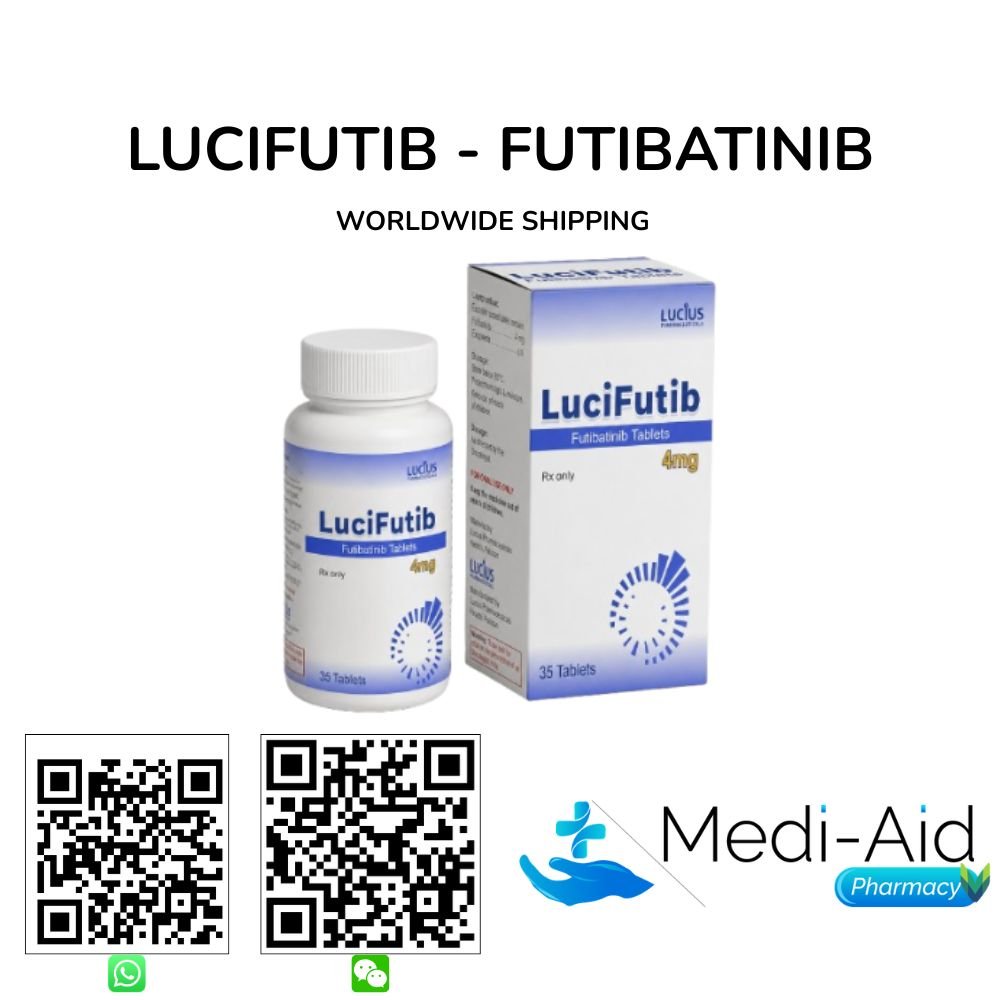
LuciFutib 4 MG (Futibatinib) is a first-in-class irreversible covalent pan-FGFR1-4 inhibitor film-coated tablet manufactured by Lucius Pharmaceuticals (Lao) Co., Ltd. in Laos, supplied as 35 tablets per pot. Futibatinib is indicated for previously treated, unresectable, locally advanced or metastatic intrahepatic cholangiocarcinoma (iCCA) with FGFR2 gene fusions or rearrangements. The recommended dose is 20 mg orally once daily (5 × LuciFutib 4 mg tablets) in a fasting state. Available globally through Mediaid Pharmacy with worldwide shipping. Contact: +8801773428128 (WhatsApp/Phone/WeChat) | info@mediaidpharmacy.com.
| Brand Name | LuciFutib 4 MG (Futibatinib) |
| Product Name | LuciFutib |
| Generic Name | Futibatinib (International Nonproprietary Name, INN); also referred to by the investigational designations TAS-120 and ASP5878 in preclinical and early-phase clinical literature |
| Drug Class | First-in-Class Irreversible (Covalent) Pan-FGFR1-4 Inhibitor; Targeted Oral Oncology Agent; FGFR2 Fusion-Directed Biliary Tract Cancer Therapy; Covalent Kinase Inhibitor |
| Formulation | Film-Coated Tablet (Oral; taken fasting at least 1 hour before or at least 2 hours after a meal for continuous daily administration until disease progression or unacceptable toxicity) |
| Available Strength | 4 mg Futibatinib per film-coated tablet |
| Available Pack Size | 35 Tablets per Pot (7-day supply at the standard 20 mg once-daily dose of 5 × 4 mg tablets per day) |
| Therapeutic Category | Bile Duct Cancer Medicines; Oncology Medicines; FGFR Inhibitors; Targeted Biliary Tract Cancer Therapies; Lucius Pharmaceuticals Medicines |
| Approved Indication | Intrahepatic Cholangiocarcinoma (iCCA) with FGFR2 Gene Fusions or Rearrangements: Treatment of adults with previously treated, unresectable, locally advanced or metastatic intrahepatic cholangiocarcinoma harboring FGFR2 gene fusions or other rearrangements, as detected by an FDA-approved companion diagnostic test. Futibatinib requires prior FGFR2 biomarker testing and at least one prior line of systemic therapy (typically gemcitabine + cisplatin). Futibatinib is the only approved irreversible covalent FGFR inhibitor for this indication and retains activity against secondary FGFR2 kinase domain resistance mutations that cause resistance to reversible FGFR inhibitors. |
| Recommended Dose | Standard Dose: 20 mg orally once daily (5 × LuciFutib 4 mg tablets simultaneously), taken in a fasting state (at least 1 hour before or 2 hours after a meal) at approximately the same time each day. First Dose Reduction: 16 mg once daily (4 × LuciFutib 4 mg tablets). Second Dose Reduction: 12 mg once daily (3 × LuciFutib 4 mg tablets). Permanently discontinue if 12 mg is not tolerated. |
| Manufacturer | Lucius Pharmaceuticals (Lao) Co., Ltd., Laos |
| Country of Origin | Laos (Lao People’s Democratic Republic) |
| Originator Reference Brand | Lytgobi (Futibatinib tablets, Taiho Oncology / Taiho Pharmaceutical Co., Ltd.), approved by the U.S. FDA on September 30, 2022, as the first and only irreversible covalent pan-FGFR1-4 inhibitor for previously treated FGFR2 fusion/rearrangement-positive intrahepatic cholangiocarcinoma. LuciFutib contains Futibatinib INN at the same 4 mg oral tablet strength as the Lytgobi originator formulation, manufactured by Lucius Pharmaceuticals (Lao) Co., Ltd. in Laos and supplied through Mediaid Pharmacy for international procurement. |
| Global Supplier | Mediaid Pharmacy, Worldwide Shipping Available |
| Storage Conditions | Store at controlled room temperature (20°C to 25°C); excursions permitted between 15°C and 30°C. Keep in the original pot with the lid tightly closed. Protect from moisture and light. Keep out of the reach of children. |
What Is LuciFutib 4 MG (Futibatinib)?
LuciFutib 4 MG (Futibatinib) is a first-in-class irreversible (covalent) pan-FGFR1-4 (fibroblast growth factor receptor 1 through 4) inhibitor film-coated tablet for the treatment of adults with previously treated, unresectable, locally advanced or metastatic intrahepatic cholangiocarcinoma (iCCA) harboring FGFR2 gene fusions or other rearrangements, manufactured by Lucius Pharmaceuticals (Lao) Co., Ltd. in Laos. Each LuciFutib tablet contains 4 mg of Futibatinib a potent, selective, small-molecule covalent kinase inhibitor that forms a permanent covalent bond with a conserved cysteine residue (Cys477) in the P-loop of the FGFR kinase domain, irreversibly suppressing FGFR1, FGFR2, FGFR3, and FGFR4 kinase activity and preventing downstream oncogenic signaling in FGFR2-altered cholangiocarcinoma cells.
The irreversible covalent binding mechanism is the defining pharmacological property that distinguishes futibatinib from all reversible FGFR inhibitors (pemigatinib, infigratinib, erdafitinib) and confers its unique ability to suppress FGFR kinase activity even after the drug has been cleared from the binding site and, critically, to retain activity against acquired secondary FGFR2 kinase domain resistance mutations (V565F, L617V, E566A, K659M, N550S, N550H) that are the primary mechanism of clinical resistance to reversible FGFR inhibitors in patients with FGFR2 fusion-positive iCCA.
LuciFutib 4 MG tablets represent the Lucius Pharmaceuticals (Lao) formulation of futibatinib the same active ingredient as the originator brand Lytgobi (Taiho Oncology / Taiho Pharmaceutical Co., Ltd., U.S. FDA approved September 30, 2022) at the same approved 4 mg oral tablet strength. The recommended therapeutic dose is 20 mg orally once daily (5 × LuciFutib 4 mg tablets, taken simultaneously) in a fasting state at least 1 hour before or at least 2 hours after a meal at approximately the same time each day. The fasting requirement is pharmacokinetically critical: administering futibatinib with a high-fat meal reduces futibatinib area under the curve (AUC) by approximately 40% and maximum plasma concentration (Cmax) by 56%, substantially reducing therapeutic drug exposure below the target therapeutic range. Each 35-tablet pot provides a 7-day supply at the 20 mg daily dose (5 tablets × 7 days = 35 tablets).
In the pivotal Phase 2 FOENIX-CCA2 trial, futibatinib achieved an objective response rate (ORR) of 41.7% in previously treated FGFR2 fusion/rearrangement-positive iCCA patients, a disease control rate (DCR) of 82.5%, a median duration of response of 9.7 months, a median progression-free survival of 8.9 months, and a median overall survival of 20.0 months results that established futibatinib as the first irreversible FGFR inhibitor approved for biliary tract cancer. LuciFutib is available globally through Mediaid Pharmacy’s bile duct cancer medicines portfolio with worldwide shipping.
Mechanism of Action of LuciFutib: First-in-Class Irreversible Covalent Pan-FGFR1-4 Inhibition
LuciFutib 4 MG (Futibatinib) exerts its antitumor activity through irreversible (covalent) pan-inhibition of all four fibroblast growth factor receptor (FGFR1, FGFR2, FGFR3, FGFR4) kinase isoforms with particular clinical relevance in intrahepatic cholangiocarcinoma driven by constitutively activating FGFR2 gene fusions or rearrangements. No approved oncology agent with a reversible FGFR inhibitory mechanism can reliably overcome the acquired secondary FGFR2 kinase domain mutations that drive clinical resistance in FGFR2 fusion-positive iCCA; futibatinib’s irreversible covalent mechanism is the molecular basis for its differentiated activity in this resistance context.
FGFR Signaling Biology The Oncogenic Pathway Targeted by Futibatinib: The four fibroblast growth factor receptors (FGFR1–4) are receptor tyrosine kinases (RTKs) that, upon ligand (FGF1–23) binding and receptor dimerization, activate intracellular kinase domains through autophosphorylation and initiate downstream signal transduction through the RAS–MEK–ERK (MAPK) cascade, the PI3K–AKT–mTOR pathway, the STAT3 pathway, and the PLC-γ pathway collectively promoting tumor cell proliferation, survival, angiogenesis, invasion, and epithelial-to-mesenchymal transition.
In FGFR2 gene fusion-positive intrahepatic cholangiocarcinoma, chromosomal rearrangements fuse the FGFR2 kinase domain-encoding sequence to a partner gene (the most common partner is BICC1; over 100 distinct partners have been identified), producing a chimeric FGFR2 fusion oncoprotein that dimerizes constitutively through its fusion partner domain activating FGFR2 kinase independently of FGF ligand binding and driving continuous, unrestrained oncogenic RAS-MAPK and PI3K-AKT-mTOR signaling in iCCA cells. FGFR2 fusions occur in approximately 10–16% of intrahepatic cholangiocarcinoma cases, making FGFR2 the most common actionable oncogenic driver in iCCA and the defining molecular target for futibatinib therapy.
Futibatinib’s Irreversible Covalent Binding Mechanism How It Differs from Reversible FGFR Inhibitors: Conventional (reversible) FGFR inhibitors pemigatinib, infigratinib, erdafitinib, derazantinib occupy the ATP-binding pocket of the FGFR kinase domain through non-covalent hydrogen bonding and hydrophobic interactions that are inherently reversible; when the inhibitor dissociates from the kinase, the kinase resumes catalytic activity. Futibatinib is structurally engineered with a Michael acceptor electrophilic warhead (an acrylamide moiety) that reacts with the nucleophilic sulfhydryl group of Cys477, a conserved cysteine residue uniquely present in the P-loop of the FGFR kinase domain (not found in most other kinase families), forming a permanent irreversible covalent thioether bond.
Once futibatinib is covalently bound to Cys477 of a given FGFR molecule, that FGFR molecule is permanently inactivated regardless of futibatinib plasma concentration fluctuations after the binding event a pharmacodynamic property that extends the kinase-suppressive effect beyond the drug’s pharmacokinetic half-life and means that restoration of FGFR kinase activity requires de novo synthesis of new FGFR protein. This irreversible mechanism produces sustained, more complete FGFR signaling suppression compared to reversible inhibitors at equivalent plasma exposures.
Overcoming Acquired Resistance to Reversible FGFR Inhibitors The Key Clinical Advantage of Futibatinib: A major limitation of reversible FGFR inhibitors in FGFR2 fusion-positive iCCA is the development of acquired resistance through secondary FGFR2 kinase domain point mutations most commonly V565F, L617V, E566A, K659M, N550S, and N550H that reduce the binding affinity of reversible inhibitors for the FGFR2 ATP pocket without abrogating FGFR2 kinase catalytic activity. Because futibatinib’s covalent bond with Cys477 does not depend on ATP-competitive binding kinetics at the same sites where these resistance mutations reduce reversible inhibitor affinity, futibatinib retains biochemical inhibitory activity against the most common secondary FGFR2 resistance mutations in cell-based and biochemical assays. In the FOENIX-CCA2 trial, 8 of 10 patients (80%) with documented FGFR2 inhibitor pre-treatment (including prior pemigatinib) who received futibatinib achieved disease control, suggesting potential utility in patients who have progressed on prior reversible FGFR inhibitor therapy. This sequential FGFR inhibitor strategy reversible inhibitor followed by futibatinib upon resistance represents an emerging clinical practice in FGFR2 fusion-positive iCCA management that requires consultation with a hepatobiliary oncology specialist.
LuciFutib 4 MG (Futibatinib): Dosing by Patient Setting and Clinical Situation
| Patient Setting / Clinical Situation | LuciFutib (Futibatinib) Dosing Regimen |
|---|---|
| Previously Treated FGFR2 Fusion/Rearrangement-Positive iCCA Standard Dose | LuciFutib (Futibatinib) 20 mg orally once daily (5 × LuciFutib 4 mg tablets simultaneously), taken in a fasting state at least 1 hour before or at least 2 hours after a meal at approximately the same time each day. Continue until disease progression or unacceptable toxicity. The 35-tablet pot provides a 7-day supply (5 tablets/day × 7 days). |
| First Dose Reduction (Grade 3+ Adverse Reaction or Intolerable Grade 2) | Reduce to 16 mg orally once daily (4 × LuciFutib 4 mg tablets) in a fasting state. Triggers for first dose reduction include: Grade 3 or higher hyperphosphatemia (serum phosphate >5.5 mg/dL Grade 3 = 5.5–7.0 mg/dL; Grade 4 = >7.0 mg/dL) not controlled with dietary phosphate restriction and phosphate binders; Grade 3+ AST/ALT elevation; Grade 3+ retinal pigment epithelial detachment (RPED); or Grade 3+ cutaneous/nail toxicity not responsive to supportive care. |
| Second Dose Reduction (Recurrent Grade 3+ Toxicity at 16 mg) | Reduce to 12 mg orally once daily (3 × LuciFutib 4 mg tablets) in a fasting state. This is the minimum recommended dose level. Permanently discontinue LuciFutib if Grade 3 or higher toxicity recurs or persists at the 12 mg dose level, or if the patient cannot tolerate 12 mg. |
| Hyperphosphatemia Management (Most Common Toxicity) | Hyperphosphatemia occurs in approximately 85% of futibatinib-treated patients and is a direct pharmacological consequence of FGFR inhibition of FGF23-mediated renal phosphate excretion. Grade 1–2 hyperphosphatemia: initiate low-phosphate diet (target dietary phosphate intake <800 mg/day; restrict high-phosphate foods: dairy products, processed meats, dark colas, nuts, whole grains); add phosphate binders (sevelamer hydrochloride, lanthanum carbonate, or calcium carbonate with meals) and continue LuciFutib at the current dose. Grade 3 hyperphosphatemia (serum phosphate 5.5–7.0 mg/dL): withhold LuciFutib until serum phosphate returns to ≤Grade 2 (≤5.5 mg/dL), then resume at the same dose or one reduced dose level. Grade 4 hyperphosphatemia (serum phosphate >7.0 mg/dL): withhold LuciFutib and manage as Grade 3; resume at one reduced dose level after resolution to ≤Grade 1. Monitor serum phosphate at baseline, at 1 week, at 2 weeks, at 1 month, and monthly thereafter throughout LuciFutib treatment. |
| FGFR2 Biomarker Testing Requirement | FGFR2 gene fusion or rearrangement status must be confirmed by an FDA-approved companion diagnostic test before initiating LuciFutib. Approved testing platforms include FoundationOne CDx (Foundation Medicine; a comprehensive genomic profiling NGS panel), and QIAGEN therascreen FGFR RGQ RT-PCR Kit (for RNA-based FGFR2 fusion detection). Testing may be performed on archival (formalin-fixed paraffin-embedded, FFPE) or fresh tumor tissue biopsy from the primary tumor or a metastatic site. Futibatinib has no demonstrated activity against FGFR2 point mutations or amplifications without a confirmed fusion/rearrangement; confirm specifically for gene fusions or rearrangements, not FGFR2 amplification or non-rearrangement alterations. |
| Administration Instructions (Fasting Requirement) | LuciFutib 4 mg tablets must be taken in a fasting state at least 1 hour before the first food or drink (other than water) of the day, or at least 2 hours after eating. Food (particularly a high-fat meal) reduces futibatinib AUC by approximately 40% and Cmax by 56%. If a dose is missed and it is less than 12 hours until the next scheduled dose, skip the missed dose and take the next dose at the regular scheduled time. Do not take a double dose to make up for a missed dose. Do not crush, split, or chew LuciFutib film-coated tablets; swallow whole with water. |
LuciFutib 4 MG (Futibatinib): Safety Considerations, Special Populations, and Drug Interactions
| Hyperphosphatemia Most Common Adverse Reaction (Class Effect) | Hyperphosphatemia occurred in 85% of futibatinib-treated patients in the FOENIX-CCA2 trial, with Grade 3 hyperphosphatemia in approximately 30% of patients. The mechanism is a direct pharmacological class effect of FGFR inhibition: FGF23, a hormone produced by osteocytes, normally acts via FGFR1 and its co-receptor Klotho in renal tubular epithelial cells to suppress NaPi2a and NaPi2c sodium-phosphate cotransporters, promoting renal phosphate excretion. Inhibition of FGFR1 signaling in renal tubular cells by futibatinib impairs FGF23-mediated phosphate excretion, causing serum phosphate accumulation. Hyperphosphatemia management requires three coordinated interventions throughout LuciFutib therapy: (1) low-phosphate diet restrict dietary phosphate to <800 mg/day (avoid dairy, processed meats, dark colas, nuts, whole grains); (2) phosphate binders sevelamer hydrochloride 800–1600 mg three times daily with meals (non-calcium-based, preferred to avoid hypercalcemia), or lanthanum carbonate or calcium carbonate alternatives; (3) dose modification withhold LuciFutib for Grade 3–4 hyperphosphatemia until resolution to ≤Grade 2, then resume at same or reduced dose. Chronic severe hyperphosphatemia poses risks of ectopic calcification, vascular calcification, and renal dysfunction if inadequately controlled; proactive phosphate monitoring and management from the first week of LuciFutib therapy is essential. |
| Retinal Pigment Epithelial Detachment (RPED) and Ocular Toxicity | Retinal pigment epithelial detachment (RPED), also termed central serous retinopathy (CSR) in the context of FGFR inhibitor toxicity, is a recognized ocular adverse reaction of FGFR inhibitors including futibatinib, caused by accumulation of subretinal fluid beneath the retinal pigment epithelium (RPE) due to FGFR-mediated disruption of RPE cell tight junction integrity and fluid homeostasis. RPED occurred in approximately 9% of futibatinib-treated patients in clinical studies. Most RPED cases are asymptomatic or mildly symptomatic (mild blurred vision, visual field defect, metamorphopsia) and resolve or stabilize with dose modification; severe irreversible vision loss is uncommon but has been reported. Ophthalmologic assessment (dilated fundus examination and optical coherence tomography, OCT) is required at baseline before initiating LuciFutib, monthly during the first 3 months of treatment, and every 3 months thereafter. For asymptomatic Grade 1 RPED: continue LuciFutib at the same dose with monthly ophthalmologic monitoring. For symptomatic or Grade 2+ RPED: withhold LuciFutib, perform urgent ophthalmologic evaluation, and resume at a reduced dose level upon improvement to ≤Grade 1. For Grade 4 RPED (best corrected visual acuity worse than 20/200 in the affected eye): permanently discontinue LuciFutib. Dry eye syndrome, a distinct and more common ocular adverse reaction, occurs in approximately 36% of futibatinib-treated patients and is managed with preservative-free artificial tear eye drops and ophthalmologic lubricants; contact lens wear should be avoided during LuciFutib therapy. |
| Drug Interactions PPIs, CYP3A4 Inducers, and P-gp Inhibitors | Proton pump inhibitors (PPIs omeprazole, pantoprazole, esomeprazole, lansoprazole, rabeprazole) are not recommended for co-administration with LuciFutib: PPIs raise gastric pH above the threshold for futibatinib solubility, reducing futibatinib absorption (approximately 28% AUC reduction at steady state with repeated PPI dosing). If acid suppression is medically required, substitute an H2 receptor antagonist (famotidine) and administer LuciFutib at least 2 hours before the H2 blocker dose. If a short-acting antacid is required, administer LuciFutib at least 2 hours before or at least 2 hours after the antacid. Moderate and strong CYP3A4 inducers (rifampin, carbamazepine, phenytoin, phenobarbital, St. John’s Wort) may substantially reduce futibatinib plasma exposure by accelerating CYP3A4-mediated oxidative metabolism of futibatinib avoid co-administration; substitute a non-CYP3A4-inducing agent where clinically feasible. P-glycoprotein (P-gp) inhibitors may increase futibatinib systemic plasma concentrations by inhibiting P-gp-mediated intestinal efflux use with caution and monitor for futibatinib-related adverse events, particularly hyperphosphatemia and hepatotoxicity. Strong CYP3A4 inhibitors (azole antifungals, clarithromycin, ritonavir) may also increase futibatinib exposure monitor for increased adverse reaction frequency. Disclose all medications, acid-suppression products, herbal supplements, and over-the-counter products to the treating oncologist before initiating LuciFutib. |
| Hepatotoxicity and Liver Function Monitoring | Hepatotoxicity elevations of ALT, AST, alkaline phosphatase (ALP), and total bilirubin has been reported in patients receiving LuciFutib (Futibatinib), including Grade 3+ transaminase elevations in a subset of patients. In patients with FGFR2 fusion-positive intrahepatic cholangiocarcinoma, distinguishing futibatinib-induced hepatotoxicity from disease progression-related hepatic involvement or concurrent biliary obstruction requires careful clinical assessment and imaging. Monitor hepatic function (ALT, AST, total bilirubin, ALP) at baseline and periodically during LuciFutib treatment; more frequent monitoring is warranted in patients with pre-existing hepatic dysfunction, concurrent biliary disease, or co-administration of hepatotoxic medications. No dose adjustment of LuciFutib is required for mild (Child-Pugh A) hepatic impairment. In patients with moderate (Child-Pugh B) or severe (Child-Pugh C) hepatic impairment, futibatinib pharmacokinetics are not fully established; use with caution and intensified hepatic monitoring under the supervision of the treating hepatobiliary oncologist. For Grade 3+ ALT/AST elevation: withhold LuciFutib until resolution to ≤Grade 1, then resume at a reduced dose level. |
| Nail and Cutaneous Toxicity | Nail toxicity (onycholysis detachment of the nail plate from the nail bed and paronychia periungual inflammation with or without secondary infection) occurred in approximately 30% of futibatinib-treated patients in the FOENIX-CCA2 trial and is a class effect of FGFR inhibition on nail matrix keratinocyte proliferation and differentiation. Preventive nail care includes daily nail soaks in dilute white vinegar solution, regular gentle nail trimming, moisture protection with petroleum jelly (Vaseline) to nail folds, and avoidance of pressure trauma, tight footwear, and nail cosmetics. Grade 1–2 nail toxicity: continue LuciFutib at the same dose with supportive nail care; for paronychia with secondary bacterial or fungal superinfection, add appropriate topical or oral antimicrobial or antifungal therapy. Grade 3 nail toxicity (limiting self-care activities or secondary infection requiring IV antibiotics): withhold LuciFutib until improvement to ≤Grade 2, then resume at a reduced dose level. Alopecia (hair loss) occurred in approximately 33% of patients and is managed with supportive counseling and scalp care; it does not require LuciFutib dose modification. |
| Pregnancy and Contraception | Futibatinib (LuciFutib) can cause fetal harm when administered to a pregnant person. Animal reproductive toxicology studies demonstrated embryotoxicity (embryolethality and reduced fetal weights) and teratogenicity (skeletal malformations) at futibatinib exposures below the human clinical therapeutic dose in pregnant rats. Verify pregnancy status by serum or urine pregnancy test before initiating LuciFutib in patients of reproductive potential. Advise patients of reproductive potential to use effective non-hormonal contraception (futibatinib’s effects on hormonal contraceptive metabolism have not been fully characterized; non-hormonal methods are preferred for certainty) during LuciFutib treatment and for 1 week after the last dose. Male patients with female partners of reproductive potential should use condoms during LuciFutib treatment and for 1 week after the last dose. Whether futibatinib or its metabolites are present in human breast milk is unknown; given the potential for serious adverse reactions in nursing infants, advise patients not to breastfeed during LuciFutib treatment and for 1 week after the last dose. Consult the treating oncologist and obstetrician before initiating LuciFutib in patients of reproductive potential or those who are breastfeeding. |
Who Should Use LuciFutib 4 MG (Futibatinib)?
LuciFutib 4 MG (Futibatinib) is indicated for adults with previously treated, unresectable, locally advanced or metastatic intrahepatic cholangiocarcinoma (iCCA) harboring FGFR2 gene fusions or other rearrangements, as confirmed by an FDA-approved companion diagnostic test. FGFR2 gene fusions occur in approximately 10–16% of intrahepatic cholangiocarcinoma cases representing the most common targetable oncogenic driver in iCCA and are highly enriched in younger patients, those with no alcohol-related liver disease risk factors, and those with well-differentiated iCCA histology. Globally, cholangiocarcinoma affects approximately 215,000 patients annually, with intrahepatic cholangiocarcinoma representing approximately 20% of all cholangiocarcinoma cases; the FGFR2 fusion-positive subset constitutes a well-defined biomarker-selected population of approximately 3,000–7,000 new patients annually across major oncology markets a population for whom futibatinib is uniquely positioned as the first and only approved irreversible FGFR inhibitor.
Adults with previously treated FGFR2 fusion-positive iCCA who have received at least one prior systemic therapy most commonly gemcitabine plus cisplatin (GemCis) as the standard first-line regimen represent the primary LuciFutib target population. This is the indication validated in the FOENIX-CCA2 pivotal trial, in which 91% of enrolled patients had received prior gemcitabine-based chemotherapy; futibatinib delivered an ORR of 41.7% and a median OS of 20.0 months in this post-chemotherapy setting, compared to historical second-line chemotherapy response rates of 5–10% and median OS of 7–10 months.
Adults with FGFR2 fusion-positive iCCA who have progressed on or are intolerant of a reversible FGFR inhibitor (pemigatinib, infigratinib) represent a second important LuciFutib candidate population: because futibatinib’s irreversible covalent mechanism retains in vitro and early clinical evidence of activity against the secondary FGFR2 kinase domain resistance mutations (V565F, L617V, E566A, K659M, N550S/H) that drive acquired resistance to reversible FGFR inhibitors, sequential futibatinib after reversible FGFR inhibitor failure is an emerging clinical strategy in FGFR2 fusion-positive iCCA. In the FOENIX-CCA2 safety run-in cohort, among patients with prior FGFR inhibitor exposure, a disease control rate of 80% was observed with futibatinib suggesting clinically meaningful activity in the post-reversible FGFR inhibitor setting.
Patients who are NOT appropriate for LuciFutib include: those whose iCCA does not harbor a confirmed FGFR2 gene fusion or rearrangement on an FDA-approved test (FGFR2 amplification or non-rearrangement mutations without a fusion do not qualify); those with inadequately controlled severe hyperphosphatemia at baseline; those requiring mandatory co-administration of proton pump inhibitors that cannot be substituted with H2 receptor antagonists; pregnant patients; and those with severe hepatic impairment (Child-Pugh C) where futibatinib pharmacokinetics and safety are not established. Oncology centers and procurement programs sourcing LuciFutib for their patient population can explore the complete bile duct cancer medicines portfolio and the full Lucius Pharmaceuticals medicines collection at Mediaid Pharmacy before requesting a consolidated supply quotation.
Global Supplier: Mediaid Pharmacy Worldwide Shipping for LuciFutib 4 MG (Futibatinib)
Mediaid Pharmacy is a Dhaka-based specialty oncology medicines supplier with worldwide shipping capability, serving patients, hepatobiliary oncology centers, gastrointestinal cancer programs, hospitals, NGO treatment programs, and international healthcare providers across all regions. LuciFutib 4 MG (Futibatinib), manufactured by Lucius Pharmaceuticals (Lao) Co., Ltd. in Laos, is supplied as film-coated tablets in a 35-tablet pot providing a 7-day supply at the standard 20 mg once-daily dose (5 tablets × 7 days = 35 tablets) with pricing quotations, stock availability confirmation, full product documentation, certificate of analysis, and end-to-end international delivery tracking for every order.
Individual patients with FGFR2 fusion-positive intrahepatic cholangiocarcinoma, hepatobiliary oncologists and gastrointestinal cancer specialists managing FGFR2-altered iCCA caseloads, hospital formulary and pharmacy departments managing futibatinib access programs, NGO oncology program procurement coordinators, and international distributors can contact Mediaid Pharmacy through WhatsApp, phone, or WeChat for all inquiries regarding LuciFutib 4 MG Futibatinib stock availability, current pricing, and international delivery timelines to specific destination countries. Procurement teams co-sourcing LuciFutib with other oncology medicines or the full range of Lucius Pharmaceuticals medicines can browse both portfolios at Mediaid Pharmacy before requesting a combined quotation.
Why Choose LuciFutib 4 MG (Futibatinib) from Mediaid Pharmacy?
LuciFutib 4 MG (Futibatinib) gives hepatobiliary oncologists, gastrointestinal cancer specialists, and FGFR2 fusion-positive intrahepatic cholangiocarcinoma patients access to the first and only approved irreversible covalent pan-FGFR1-4 inhibitor for bile duct cancer an agent that permanently suppresses FGFR kinase activity through a covalent binding mechanism that is mechanistically distinct from all reversible FGFR inhibitors and retains activity against the acquired secondary resistance mutations that limit reversible FGFR inhibitor durability manufactured by Lucius Pharmaceuticals (Lao) Co., Ltd. in Laos and available globally through Mediaid Pharmacy. The four clinical attributes that distinguish LuciFutib (Futibatinib) from all other treatment options in FGFR2 fusion-positive iCCA are its irreversible covalent FGFR1-4 mechanism of action, its Phase 2 validated efficacy (41.7% ORR, 82.5% DCR, 20.0-month median OS) in the FOENIX-CCA2 pivotal trial, its established activity against acquired secondary FGFR2 resistance mutations, and its once-daily oral tablet administration enabling outpatient management.
First-in-class irreversible covalent pan-FGFR1-4 mechanism is the defining clinical attribute of futibatinib (LuciFutib). By permanently forming a covalent bond with Cys477 in the FGFR kinase P-loop a conserved cysteine not present in the vast majority of other human kinases futibatinib achieves sustained FGFR kinase suppression that persists beyond the drug’s plasma pharmacokinetic half-life, producing more complete inhibition of the RAS-MAPK and PI3K-AKT-mTOR oncogenic signaling cascades in FGFR2 fusion-driven iCCA cells than a reversible inhibitor at equivalent plasma exposures. This mechanistic irreversibility is not merely a pharmacological distinction it is the direct molecular basis for futibatinib’s ability to suppress the V565F, L617V, E566A, K659M, and N550S/H secondary FGFR2 resistance mutations that emerge in patients whose iCCA progresses on pemigatinib or infigratinib, opening a clinically validated sequential FGFR inhibitor strategy that extends the therapeutic utility of FGFR-targeted therapy across multiple lines in FGFR2 fusion-positive iCCA.
Clinically validated efficacy in the FOENIX-CCA2 pivotal trial ORR 41.7% (95% CI: 32.1–51.9%), DCR 82.5%, median DoR 9.7 months, median PFS 8.9 months, and median OS 20.0 months in previously treated FGFR2 fusion/rearrangement-positive iCCA represents the most robust single-agent efficacy dataset for any FGFR inhibitor in a post-gemcitabine iCCA population published to date, and was the pivotal evidence package that supported U.S. FDA approval of futibatinib on September 30, 2022. The 41.7% ORR is more than four times the approximately 10% response rate historically reported for second-line chemotherapy (FOLFOX, FOLFIRI, gemcitabine plus nab-paclitaxel) in unselected iCCA, and the 20.0-month median OS approaches the survival outcomes historically observed with first-line chemotherapy in unselected cholangiocarcinoma demonstrating the potency of futibatinib in biomarker-selected patients.
Oral once-daily tablet administration at 20 mg (5 × LuciFutib 4 mg film-coated tablets) allows fully outpatient management of FGFR2 fusion-positive iCCA without IV infusion center visits, enabling patients with cholangiocarcinoma who frequently have impaired hepatic function, biliary obstruction, and comorbidities that reduce tolerance for frequent hospital attendance to receive effective targeted oncology therapy from home. Lucius Pharmaceuticals (Lao) Co., Ltd. manufactures LuciFutib in Laos at the same 4 mg oral tablet strength as the originator Lytgobi formulation, and LuciFutib is available through Mediaid Pharmacy with full product documentation, specialist supply coordination, and worldwide shipping. To source additional Lucius Pharmaceuticals oncology medicines or to review the complete range of bile duct cancer treatment medicines at Mediaid Pharmacy, visit the Lucius Pharmaceuticals antiretroviral and oncology medicines section and contact the Mediaid Pharmacy team for a personalized quotation.
Frequently Asked Questions About LuciFutib 4 MG (Futibatinib)
What is LuciFutib 4 MG (Futibatinib) used for?
LuciFutib 4 MG (Futibatinib) is a first-in-class irreversible covalent pan-FGFR1-4 inhibitor indicated for the treatment of adults with previously treated, unresectable, locally advanced or metastatic intrahepatic cholangiocarcinoma (iCCA) harboring FGFR2 gene fusions or other rearrangements, as confirmed by an FDA-approved companion diagnostic. Futibatinib permanently suppresses FGFR1-4 kinase activity by covalently binding to Cys477 in the FGFR kinase P-loop, eliminating constitutive FGFR2 fusion-driven RAS-MAPK and PI3K-AKT-mTOR oncogenic signaling in iCCA cells. In the pivotal Phase 2 FOENIX-CCA2 trial (N=103), futibatinib achieved an ORR of 41.7% (95% CI: 32.1–51.9%), a disease control rate of 82.5%, a median PFS of 8.9 months, and a median OS of 20.0 months in previously treated FGFR2 fusion/rearrangement-positive iCCA. The recommended dose is 20 mg orally once daily (5 × LuciFutib 4 mg tablets) in a fasting state. LuciFutib is manufactured by Lucius Pharmaceuticals (Lao) Co., Ltd. in Laos and is available through Mediaid Pharmacy with worldwide shipping to patients, oncology centers, hospitals, and healthcare providers globally.
What is the generic name of LuciFutib?
The generic name of LuciFutib is Futibatinib (International Nonproprietary Name, INN). LuciFutib is the brand name registered by Lucius Pharmaceuticals (Lao) Co., Ltd. for the Futibatinib 4 mg film-coated tablet manufactured in Laos, supplied as 35 tablets per pot. The originator reference brand is Lytgobi (Futibatinib, Taiho Oncology / Taiho Pharmaceutical Co., Ltd.), approved by the U.S. FDA on September 30, 2022, as the first and only irreversible covalent pan-FGFR1-4 inhibitor for previously treated FGFR2 fusion/rearrangement-positive intrahepatic cholangiocarcinoma. LuciFutib contains Futibatinib INN at the same approved 4 mg oral tablet strength as the Lytgobi originator formulation. For the complete range of Lucius Pharmaceuticals medicines available at Mediaid Pharmacy, explore the Lucius Pharmaceuticals product collection.
What is the recommended dose of LuciFutib 4 MG (Futibatinib)?
The recommended dose of LuciFutib (Futibatinib) is 20 mg orally once daily taken as 5 × LuciFutib 4 mg film-coated tablets simultaneously in a fasting state (at least 1 hour before or 2 hours after a meal) at approximately the same time each day. The fasting requirement is pharmacokinetically mandatory: food reduces futibatinib AUC by approximately 40% and Cmax by 56%, substantially lowering therapeutic drug exposure. The 35-tablet pot provides a 7-day supply at the 20 mg daily dose (5 tablets/day × 7 days = 35 tablets). Dose reductions: 16 mg once daily (4 × LuciFutib 4 mg tablets) for first reduction; 12 mg once daily (3 × LuciFutib 4 mg tablets) for second reduction; permanently discontinue if 12 mg is not tolerated. Always confirm the complete Futibatinib dosing and management schedule including phosphate monitoring and ophthalmologic assessment timelines with the treating oncologist before initiating LuciFutib. For the full range of bile duct cancer medicines at Mediaid Pharmacy, explore the complete biliary tract cancer medicines collection.
What are the side effects of LuciFutib 4 MG (Futibatinib)?
The most common adverse reactions with Futibatinib (LuciFutib) from the FOENIX-CCA2 trial include: hyperphosphatemia (85%; the most frequent, requiring proactive dietary phosphate restriction and phosphate binders throughout treatment), dry eye (36%), diarrhea (35%), fatigue (34%), dry mouth (34%), alopecia (33%), nail toxicity onycholysis and paronychia (approximately 30%), nausea, abdominal pain, musculoskeletal pain, and constipation. The two most clinically significant safety concerns requiring active proactive monitoring are: (1) Hyperphosphatemia (30% Grade 3) managed with low-phosphate diet, sevelamer/lanthanum/calcium carbonate phosphate binders, and dose modification; (2) Retinal Pigment Epithelial Detachment (RPED) requiring baseline and periodic ophthalmologic assessment (OCT) at baseline, monthly for 3 months, then every 3 months. Hepatotoxicity (ALT/AST elevations) and cutaneous/nail toxicity also require monitoring and management. For the full range of oncology medicines available at Mediaid Pharmacy, explore the complete oncology medicines collection.
What is FGFR2 gene fusion and why is it required for LuciFutib (Futibatinib) eligibility?
FGFR2 (fibroblast growth factor receptor 2) gene fusions are somatic chromosomal rearrangements that fuse the FGFR2 kinase domain-encoding sequence to a partner gene (most commonly BICC1; over 100 distinct partners identified), producing a constitutively active FGFR2 fusion oncoprotein that drives continuous, ligand-independent FGFR2 kinase activity and downstream RAS-MAPK and PI3K-AKT-mTOR oncogenic signaling in intrahepatic cholangiocarcinoma (iCCA) cells. FGFR2 fusions occur in approximately 10–16% of iCCA cases and are the most common targetable oncogenic alteration in this cancer type. FGFR2 gene fusion testing by an FDA-approved companion diagnostic (FoundationOne CDx NGS panel or QIAGEN therascreen FGFR RGQ RT-PCR Kit) on archival or fresh tumor tissue is mandatory before initiating LuciFutib. Futibatinib is not indicated for FGFR2 amplification or non-rearrangement point mutations without a confirmed fusion; only FGFR2 gene fusions and rearrangements qualify a patient for LuciFutib therapy. For FGFR2 fusion-positive intrahepatic cholangiocarcinoma treatment options, explore bile duct cancer medicines available at Mediaid Pharmacy.
What drugs interact with LuciFutib 4 MG (Futibatinib)?
Proton pump inhibitors (PPIs omeprazole, pantoprazole, esomeprazole, lansoprazole) are not recommended with LuciFutib: PPIs raise gastric pH and reduce futibatinib absorption (approximately 28% AUC reduction); substitute with an H2 receptor antagonist (famotidine) administered at least 2 hours after LuciFutib if acid suppression is required, or a short-acting antacid taken at least 2 hours before or after LuciFutib. Moderate and strong CYP3A4 inducers (rifampin, carbamazepine, phenytoin, St. John’s Wort) reduce futibatinib plasma exposure avoid co-administration. P-glycoprotein (P-gp) inhibitors may increase futibatinib plasma concentrations use with caution and monitor for adverse reactions. Strong CYP3A4 inhibitors (azole antifungals, clarithromycin, ritonavir) may also increase futibatinib exposure monitor closely. Food (especially high-fat meals) reduces futibatinib AUC by approximately 40% LuciFutib must be taken strictly fasting. Disclose all medications, supplements, and acid-suppression products to the treating oncologist before initiating LuciFutib. For additional Lucius Pharmaceuticals oncology products, visit the Lucius Pharmaceuticals medicines collection.
Can I order LuciFutib 4 MG (Futibatinib) online with worldwide shipping?
Yes. Mediaid Pharmacy supplies LuciFutib 4 MG (Futibatinib) by Lucius Pharmaceuticals (Lao) Co., Ltd. to patients, hepatobiliary oncology centers, gastrointestinal cancer programs, hospitals, NGO treatment programs, and healthcare providers globally. Contact Mediaid Pharmacy via WhatsApp, phone, or WeChat at +8801773428128, or email info@mediaidpharmacy.com for pricing, current stock availability, and international delivery details for your country.
Order LuciFutib 4 MG (Futibatinib) with Worldwide Shipping
Phone / WhatsApp / WeChat: +8801773428128 | Email: info@mediaidpharmacy.com
Reviews
There are no reviews yet.