
Description
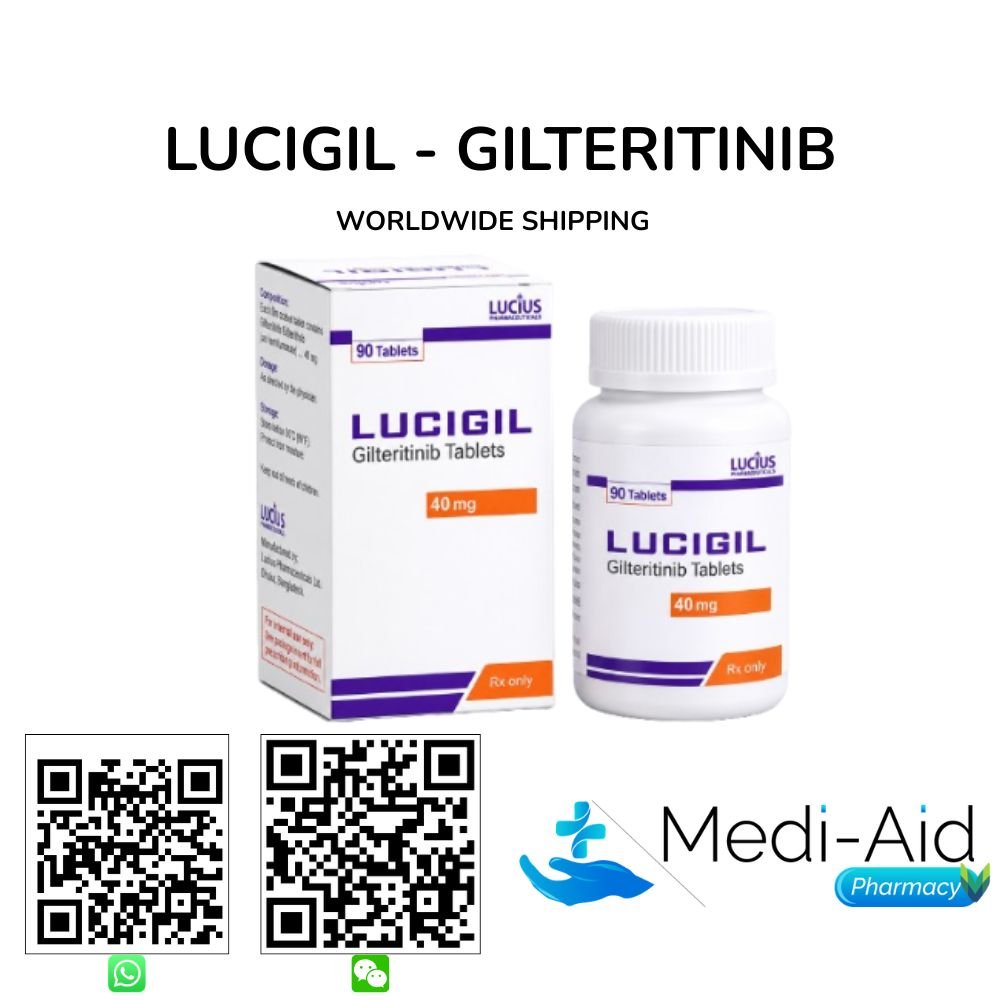
LuciGil 40 MG (Gilteritinib) is an oral, selective FMS-like tyrosine kinase-3 (FLT3) and AXL receptor tyrosine kinase inhibitor film-coated tablet available in a 40 mg strength, supplied in a pack of 90 tablets per pot, manufactured by Lucius Pharmaceuticals (Lao) Co., Ltd. of Laos. The active ingredient, gilteritinib, is a highly potent, orally bioavailable, next-generation FLT3 inhibitor that targets both the FLT3 internal tandem duplication (FLT3-ITD) and the FLT3 tyrosine kinase domain point mutations (FLT3-TKD, including D835Y, D835H, and I836 variants) the two major classes of oncogenic FLT3 mutations present in approximately 25–30% of all acute myeloid leukaemia (AML) cases with an in vitro IC₅₀ of approximately 0.29 nM against FLT3-ITD and approximately 0.33 nM against FLT3-D835Y, conferring sub-nanomolar potency against the full spectrum of clinically relevant FLT3-activating mutations at therapeutically achieved plasma concentrations.
Gilteritinib additionally inhibits AXL receptor tyrosine kinase (IC₅₀ approximately 0.73 nM) an oncogenic receptor that is overexpressed in FLT3-ITD-mutant AML blasts and is mechanistically implicated in mediating acquired resistance to first-generation FLT3 inhibitors (midostaurin and quizartinib) through AXL-driven FLT3-independent survival signalling. AXL co-inhibition by gilteritinib at clinically achieved concentrations suppresses AXL-mediated gas6/AXL-driven PI3K/AKT and MEK/ERK activation in FLT3-ITD-mutant AML blasts, delivering antileukaemic activity that is active across the resistance landscape of prior FLT3 inhibitor exposure a mechanistic advantage that distinguishes gilteritinib from first-generation FLT3 inhibitors and positions it as the preferred agent in the relapsed or refractory FLT3-mutant AML setting.
The reference-label dose of gilteritinib for its approved adult indication is 120 mg once daily (QD), administered orally with or without food. Each 90-tablet pot of LuciGil 40 MG provides a complete 30-day supply at this dose: 3 × LuciGil 40 MG tablets administered together once daily (3 tablets per day × 30 days = 90 tablets), enabling a single pot to deliver a full monthly treatment cycle without requiring supplementary product strengths. LuciGil 40 MG is classified across Leukemia Medicines and Oncology Medicines categories, reflecting gilteritinib’s approved clinical use in relapsed or refractory FLT3-mutant AML.
In the definitive Phase III ADMIRAL trial (Gilteritinib versus Salvage Chemotherapy, NCT02421939) in 371 adult patients with relapsed or refractory FLT3-mutant AML, gilteritinib 120 mg QD achieved a median overall survival (OS) of 9.3 months versus 5.6 months with salvage chemotherapy (hazard ratio [HR] 0.64; 95% CI, 0.49–0.83; p<0.001) a 36% reduction in the risk of death versus the best available salvage chemotherapy regimen. The 1-year OS rate was 37.1% with gilteritinib versus 16.7% with salvage chemotherapy, confirming that gilteritinib delivered a clinically and statistically superior survival benefit across all evaluated FLT3 mutation subtypes including FLT3-ITD and FLT3-TKD.
The composite complete remission rate (CR + CRh: complete remission with partial haematologic recovery) in the ADMIRAL trial was 21.1% with gilteritinib versus 10.5% with salvage chemotherapy, and the overall response rate (ORR) was 67.5% versus 26.7%, with a median duration of response of 11.0 months in gilteritinib-treated patients who achieved CR or CRh. These data established gilteritinib as the first approved, survival-improving FLT3 inhibitor monotherapy in relapsed or refractory FLT3-mutant AML and underpinned FDA approval in November 2018, delivering a targeted treatment option for a molecularly defined AML population with historically poor prognosis.
Searching for LuciGil 40 MG Gilteritinib? Mediaid Pharmacy stocks this product within its comprehensive leukemia medicines catalogue and ships worldwide.
Basic Product Information of LuciGil 40 MG (Gilteritinib)
| Brand Name | LuciGil 40 MG (Gilteritinib) |
| Product Name | LuciGil |
| Generic Name | Gilteritinib |
| Drug Class | Selective FMS-Like Tyrosine Kinase-3 (FLT3) and AXL Receptor Tyrosine Kinase Inhibitor; FLT3-ITD and FLT3-TKD Dual-Mutation-Class Kinase Inhibitor; Next-Generation FLT3 Inhibitor; AML-Targeted Differentiation and Anti-Proliferative Oncology Agent |
| Formulation | Film-Coated Tablet |
| Available Strengths | 40 mg per film-coated tablet |
| Available Pack Size | 90 Tablets per pot (complete 30-day supply at the reference-label dose of 120 mg QD [3 × LuciGil 40 MG tablets once daily × 30 days = 90 tablets]; one pot per month covers the full approved adult dose without requiring supplementary product strengths) |
| Primary Indication | Relapsed or Refractory Acute Myeloid Leukaemia (AML) in Adult Patients with a FLT3 Mutation (FLT3-ITD or FLT3-TKD) as Detected by an FDA-Approved or Locally Approved Companion Diagnostic Test |
| Reference-Label Starting Dose | 120 mg QD (once daily) = 3 × LuciGil 40 MG tablets administered together once daily; taken with or without food; swallowed whole with water (tablets must not be crushed, chewed, dissolved, or split); therapy continued until disease progression or unacceptable toxicity under haematologist-oncologist supervision; prior FLT3 mutation testing by an approved molecular diagnostic is mandatory before initiating therapy |
| Manufacturer / Brand | Lucius Pharmaceuticals (Lao) Co., Ltd. / Lucius Pharmaceuticals |
| Country of Origin | Laos |
| Categories | Leukemia Medicines, Oncology Medicines |
| Storage Conditions | Store below 30°C in a dry place, protected from light and moisture. Keep out of the reach of children. |
| Global Supplier | Mediaid Pharmacy Worldwide Shipping Available |
How LuciGil (Gilteritinib) Works: Dual FLT3-ITD/TKD Inhibition, AXL Co-Suppression, and FLT3-Mutant AML Blast Pathway Extinction
Gilteritinib, the active ingredient in LuciGil 40 MG film-coated tablets, is an orally bioavailable, next-generation, highly selective inhibitor of FMS-like tyrosine kinase-3 (FLT3) and AXL receptor tyrosine kinase that targets the full spectrum of oncogenic FLT3 mutations driving acute myeloid leukaemia (AML) pathogenesis. FLT3 is a class III receptor tyrosine kinase (RTK) expressed on haematopoietic stem and progenitor cells that, upon binding its ligand FLT3-L, undergoes homodimerisation, autophosphorylation, and activation of downstream RAS/MAPK, PI3K/AKT/mTOR, and STAT5 signalling cascades governing normal myeloid progenitor proliferation, survival, and differentiation. Oncogenic FLT3 mutations abolish ligand dependency and generate constitutively activated FLT3 signalling the most frequent targetable kinase mutation in AML, present in approximately 25–30% of all AML cases.
Two mechanistically distinct FLT3 mutation classes drive AML pathogenesis: FLT3 internal tandem duplication (FLT3-ITD) mutations in-frame duplications of 3–400 base pairs within the juxtamembrane domain-coding sequence of exon 14/15 are present in approximately 20–25% of AML cases and produce a constitutively dimerised, ligand-independent, fully active FLT3 kinase by relieving autoinhibitory juxtamembrane-domain constraints. FLT3 tyrosine kinase domain (FLT3-TKD) point mutations predominantly at the activation loop codon D835 (D835Y, D835H, D835del) and I836 are present in approximately 7–10% of AML cases and generate ligand-independent FLT3 kinase activation through direct constitutive activation-loop phosphorylation. FLT3-ITD mutations confer a significantly worse prognosis in newly diagnosed AML: FLT3-ITD-high allelic ratio (AR ≥0.5) is an independent adverse prognostic factor associated with high relapse rates and reduced overall survival versus FLT3 wild-type AML even after intensive induction chemotherapy.
Gilteritinib inhibits mutant FLT3 kinase activity with sub-nanomolar potency: IC₅₀ of approximately 0.29 nM against FLT3-ITD, approximately 0.33 nM against FLT3-D835Y, and approximately 0.45 nM against FLT3-ITD/D835Y compound mutations the double mutation conferring resistance to first-generation FLT3 inhibitors midostaurin and quizartinib. By binding the ATP-binding pocket of the FLT3 kinase domain, gilteritinib prevents ATP phosphate transfer to FLT3 substrate tyrosine residues, abolishing constitutive FLT3 autophosphorylation at Y589/Y591 (juxtamembrane domain) and Y842 (activation loop) and completely suppressing downstream STAT5, RAS/ERK, and PI3K/AKT activation in FLT3-mutant AML blasts. The net cellular consequence of FLT3 inhibition by gilteritinib is G₁ cell cycle arrest, induction of apoptosis through BIM upregulation and MCL-1/BCL-2 downregulation, and promotion of terminal myeloid differentiation of FLT3-mutant leukaemic blast cells.
AXL receptor tyrosine kinase co-inhibition is a clinically critical second mechanism of gilteritinib that directly addresses the dominant acquired resistance mechanism of first-generation FLT3 inhibitors. AXL is a TAM-family receptor tyrosine kinase (subfamily: TYRO3, AXL, MER) that is pathologically overexpressed in FLT3-ITD-mutant AML blasts and in AML bone marrow stromal cells. AXL activation by its ligand Gas6 (growth arrest-specific 6) drives FLT3-independent PI3K/AKT and MEK/ERK survival signalling in AML blasts that have acquired resistance to FLT3-selective inhibitors through bypass pathway activation. Gilteritinib inhibits AXL with an IC₅₀ of approximately 0.73 nM, suppressing Gas6/AXL-driven survival signalling in FLT3-ITD-mutant AML cells at concentrations achievable at the reference-label dose of 120 mg QD restoring FLT3-inhibitor sensitivity in AXL-overexpressing, prior-FLT3-inhibitor-resistant AML clones and providing antileukaemic activity in the bone marrow stromal microenvironment that sustains drug-tolerant AML stem cells.
In the ADMIRAL trial, plasma FLT3 phosphorylation inhibition (assessed by FLT3 pY591 inhibition assay) was essentially complete (>99%) within 24 hours of initiating gilteritinib at 120 mg QD in patients with FLT3-ITD and FLT3-TKD mutations, confirming deep and durable on-target FLT3 inhibition at the reference-label dose corresponding to 3 × LuciGil 40 MG tablets once daily. FLT3 inhibition correlated directly with clinical response: patients achieving ≥99% plasma FLT3 phosphorylation inhibition had significantly higher composite remission rates and longer OS versus those with <99% inhibition, validating the pharmacodynamic rationale for the 120 mg QD dose selection. Oncologists managing FLT3-mutant AML patients can review the full range of AML and leukaemia treatment medicines at Mediaid Pharmacy, including LuciGil 40 MG Gilteritinib by Lucius Pharmaceuticals.
Pharmacokinetics of gilteritinib in LuciGil 40 MG film-coated tablets: following oral administration at 120 mg QD (3 × LuciGil 40 MG tablets), gilteritinib is absorbed with a median time to peak plasma concentration (Tmax) of approximately 6 hours. Oral bioavailability is estimated at approximately 64%; a high-fat meal increases AUC by approximately 26% and Cmax by 48%, though the label permits dosing with or without food. Gilteritinib is extensively protein-bound (approximately 90%, primarily to albumin and alpha-1-acid glycoprotein) and is widely distributed into tissues with a large volume of distribution. Gilteritinib undergoes hepatic metabolism primarily via CYP3A4 to generate the active metabolite M17 (erbumine oxide) and additional minor metabolites (M16, M19). The mean terminal plasma elimination half-life of gilteritinib at steady state is approximately 113 hours, consistent with once-daily dosing and providing highly stable sustained FLT3 inhibition throughout the 24-hour dosing interval. Steady-state plasma concentrations are reached within approximately 15 days of continuous once-daily dosing. The dose of LuciGil for each individual patient must be determined and monitored by the treating haematologist or oncologist, and gilteritinib therapy must be prescribed and administered under the supervision of a qualified haematology-oncology specialist experienced in the management of AML.
Approved Indication of Gilteritinib (LuciGil 40 MG) Reference Label
Gilteritinib holds regulatory approval for adult patients with relapsed or refractory acute myeloid leukaemia (AML) with a FLT3 mutation in the United States (FDA, approved November 28, 2018 the first FLT3 inhibitor monotherapy approved with a demonstrated overall survival benefit in AML), Japan (PMDA, approved September 2018 as the global first approval of gilteritinib), the European Union (EMA), and numerous other regulatory jurisdictions globally. The LuciGil 40 MG film-coated tablet in a 90-tablet pot by Lucius Pharmaceuticals (Lao) Co., Ltd. provides a complete 30-day supply at the reference-label dose of 120 mg QD across the approved relapsed or refractory FLT3-mutant AML indication from a single procurement unit. FLT3 mutation testing by an approved diagnostic assay is mandatory before initiating LuciGil therapy; prescribers must confirm the exact locally approved indication and companion diagnostic requirement on the gilteritinib product label before initiating LuciGil therapy, as label language and approved companion diagnostics may vary by regulatory jurisdiction.
|
Relapsed or Refractory FLT3-ITD-Mutant AML Gilteritinib is approved for adult patients with relapsed or refractory AML harbouring FLT3 internal tandem duplication (FLT3-ITD) mutations the most prevalent oncogenic FLT3 mutation subtype, present in approximately 20–25% of AML cases and associated with high relapse rates after chemotherapy and significantly worse OS versus FLT3 wild-type AML. Reference-label dose: 120 mg QD = 3 × LuciGil 40 MG tablets once daily; each 90-tablet pot provides a complete 30-day supply. In the ADMIRAL Phase III trial, gilteritinib achieved median OS of 9.3 months versus 5.6 months with salvage chemotherapy (HR 0.64; p<0.001) across both FLT3-ITD and FLT3-TKD mutation subtypes. Oncologists managing relapsed FLT3-ITD AML can review gilteritinib tablets for FLT3-mutant AML at Mediaid Pharmacy. |
Relapsed or Refractory FLT3-TKD-Mutant AML Gilteritinib is equally approved for adult patients with relapsed or refractory AML harbouring FLT3 tyrosine kinase domain (FLT3-TKD) point mutations primarily D835Y, D835H, D835del, and I836 variants which are present in approximately 7–10% of AML cases. FLT3-TKD mutations confer intrinsic resistance to first-generation FLT3 inhibitors midostaurin and quizartinib but are potently inhibited by gilteritinib (IC₅₀ ~0.33 nM against D835Y). Reference-label dose: 120 mg QD = 3 × LuciGil 40 MG tablets once daily; 90-tablet pot provides a 30-day supply at this dose. In ADMIRAL, gilteritinib demonstrated consistent OS benefit across both FLT3-ITD and FLT3-TKD mutation subtypes. Haematologists can browse oncology medicines at Mediaid Pharmacy for full AML programme support. |
|
Mandatory Companion Diagnostic: FLT3 Mutation Testing LuciGil Gilteritinib must only be initiated in patients with confirmed FLT3 mutations as detected by an approved molecular diagnostic assay. In the United States, the FDA-approved companion diagnostic for gilteritinib patient selection is the LeukoStrat CDx FLT3 Mutation Assay (Invivoscribe Technologies, Inc.), which detects both FLT3-ITD and FLT3-TKD mutations from bone marrow aspirate or peripheral blood samples. Next-generation sequencing (NGS) AML panels incorporating FLT3-ITD allelic ratio and FLT3-TKD mutation detection are also routinely used for gilteritinib patient selection in clinical practice, alongside the FDA-approved companion diagnostic. FLT3 mutation testing must be performed before initiating LuciGil Gilteritinib; treatment of AML without confirmed FLT3 mutation is outside the approved indication. FLT3 allelic ratio (high AR ≥0.5 vs low AR <0.5) may also be assessed to inform prognostic stratification and allogeneic stem cell transplant planning discussions during gilteritinib therapy. |
Prescribing Considerations and Indication Eligibility LuciGil 40 MG Gilteritinib is approved exclusively for adult patients (≥18 years) with relapsed or refractory FLT3-mutant AML; it is not approved for paediatric use, for newly diagnosed FLT3-mutant AML as monotherapy, or for AML without confirmed FLT3 mutation testing. Gilteritinib is a targeted single agent and does not substitute for induction chemotherapy in FLT3-mutant AML patients fit for intensive therapy; it is specifically positioned in the relapsed or refractory setting. In the ADMIRAL trial, gilteritinib demonstrated consistent OS benefit regardless of prior midostaurin exposure, number of prior AML treatment lines (1 or 2), or FLT3 mutation subtype, confirming its broad applicability across the relapsed/refractory FLT3-mutant AML population. Patients achieving composite remission on gilteritinib may proceed to allogeneic haematopoietic stem cell transplantation (allo-HSCT), which remains the preferred consolidation strategy in eligible patients. Haematologists seeking broader AML medicine support can review the complete range of oncology medicines at Mediaid Pharmacy. |
Drug Interactions and Important Safety Information for LuciGil 40 MG (Gilteritinib)
The dominant pharmacokinetic drug interaction risk for gilteritinib in LuciGil 40 MG film-coated tablets centres on its metabolism as a major CYP3A4 substrate. Strong CYP3A4 inhibitors including ketoconazole, itraconazole, voriconazole, posaconazole, clarithromycin, telithromycin, ritonavir, atazanavir, lopinavir, nelfinavir, cobicistat, and grapefruit or grapefruit juice substantially increase gilteritinib systemic exposure (co-administration with strong CYP3A4 inhibitors increases gilteritinib AUC approximately 2-fold) and amplify the risk of gilteritinib-related toxicity, particularly QTc prolongation, hepatotoxicity, Differentiation Syndrome, and myelosuppression. Co-administration of strong CYP3A4 inhibitors with LuciGil Gilteritinib should be avoided wherever clinically possible; if unavoidable, dose reduction and intensified clinical monitoring are mandatory under oncologist supervision.
Strong CYP3A4 inducers including rifampicin, rifabutin, carbamazepine, phenobarbital, phenytoin, enzalutamide, and St. John’s Wort markedly accelerate gilteritinib CYP3A4-mediated hepatic clearance, reducing gilteritinib AUC by approximately 70% (rifampicin co-administration) and potentially abrogating FLT3 inhibitory efficacy at the reference-label 120 mg QD dose. Concurrent use of strong CYP3A4 inducers with LuciGil Gilteritinib must be avoided; where antiepileptic coverage is clinically essential, non-CYP3A4-inducing anticonvulsants (levetiracetam, lacosamide, or valproate) should be substituted in consultation with the treating haematologist and pharmacist.
P-glycoprotein (P-gp) and CYP3A4 inhibition by gilteritinib: gilteritinib is itself a moderate inhibitor of CYP3A4 and a P-glycoprotein (P-gp / ABCB1) efflux transporter inhibitor at clinically achieved plasma concentrations. Co-administration of LuciGil Gilteritinib with P-gp substrates with narrow therapeutic indices including digoxin, dabigatran, colchicine, and certain immunosuppressants may increase their plasma concentrations and produce dose-dependent toxicity. The treating oncologist must review all co-administered medications for CYP3A4 and P-gp substrate interactions, and must consult current drug interaction databases when introducing new medicines during gilteritinib therapy.
QTc interval prolongation: gilteritinib prolongs the QTc interval in a concentration-dependent manner; a mean QTcF increase of approximately 4–5 ms was observed at the reference-label dose of 120 mg QD in clinical pharmacology studies. Co-administration of LuciGil Gilteritinib with QTc-prolonging agents including antiarrhythmics (amiodarone, sotalol, quinidine, dofetilide), fluoroquinolone antibiotics (moxifloxacin, ciprofloxacin), macrolide antibiotics (azithromycin, clarithromycin), antipsychotics (haloperidol, quetiapine, ziprasidone), and antiemetics (ondansetron, domperidone) requires baseline ECG and periodic ECG monitoring throughout co-administration. Hypokalaemia and hypomagnesaemia, which are common in AML patients receiving emetogenic chemotherapy, loop diuretics, or amphotericin-B-based antifungal prophylaxis, amplify QTc prolongation risk and must be corrected before initiating or continuing LuciGil Gilteritinib therapy. All patients must disclose their complete medication list to their haematologist-oncologist before and throughout LuciGil therapy. Oncology teams sourcing concurrent medicines alongside gilteritinib-based FLT3-mutant AML treatment programmes at Mediaid Pharmacy can contact the team for multi-medicine consolidated supply.
Side Effects and Precautions of LuciGil 40 MG (Gilteritinib)
|
Common Side Effects Elevated liver transaminases ALT and AST elevation (all grades in approximately 79% and 58% respectively; Grade 3–4 in approximately 10–13%): the most frequently reported laboratory adverse events; LFT monitoring every 2 weeks for the first month, then monthly thereafter is mandatory; Grade ≥3 elevation requires dose interruption per the reference-label dose modification algorithm; patients with pre-existing hepatic impairment require more frequent monitoring Febrile neutropenia (approximately 45%): the most frequently reported haematological serious adverse event in the relapsed/refractory AML population; CBC monitoring at baseline and throughout therapy is mandatory; febrile neutropenia events require immediate clinical evaluation, empirical broad-spectrum antibiotic therapy, and haematological assessment to distinguish disease-related versus treatment-related cytopenias; growth factor support (G-CSF) may be used at the treating oncologist’s discretion for severe or prolonged neutropenia Anaemia (all grades approximately 83%; Grade 3–4 approximately 43%) and thrombocytopenia (all grades approximately 69%; Grade 3–4 approximately 22%): common in the relapsed/refractory AML population with pre-existing cytopenias; transfusion support, platelet transfusions, and dose modification per the reference-label algorithm are the standard management pathways for Grade ≥3 haematological events under oncologist supervision Nausea (approximately 30%); diarrhoea (approximately 29%); fatigue (approximately 28%); dyspnoea (approximately 28%); hypotension (approximately 25%); peripheral oedema (approximately 24%); constipation (approximately 23%); arthralgia and myalgia; mucositis; rash and dermatological reactions (approximately 25%); elevated alkaline phosphatase (approximately 58%); hyponatraemia; hypocalcaemia; hypomagnesaemia Elevated creatinine and reduced eGFR (monitor renal function throughout therapy); QTc prolongation (see Drug Interactions section; baseline and periodic ECG monitoring is required); increased amylase and lipase; dose interruption, reduction from 120 mg to 80 mg QD (2 × LuciGil 40 MG tablets), or further reduction to 40 mg QD (1 × LuciGil 40 MG tablet) per the reference-label modification algorithm is the standard management pathway for Grade ≥3 non-haematological adverse events under oncologist supervision |
Serious Warnings and Precautions Fatal and/or Serious Differentiation Syndrome: Differentiation Syndrome a potentially fatal systemic inflammatory complication arising from the rapid, coordinated terminal myeloid differentiation of FLT3-mutant leukaemic blast cells induced by gilteritinib has been reported in approximately 3% of gilteritinib-treated patients in the ADMIRAL trial and can be fatal if unrecognised. Presenting features include fever (≥38.5°C), new dyspnoea or worsening respiratory symptoms, hypoxia requiring supplemental oxygen, bilateral pulmonary infiltrates or pleural effusions, rapid unexplained weight gain (≥10% from baseline), peripheral or generalised oedema, haemodynamic instability, or acute renal failure, occurring most commonly within the first 1–8 weeks of LuciGil Gilteritinib initiation. Any patient developing signs or symptoms consistent with Differentiation Syndrome during LuciGil therapy must receive immediate clinical evaluation and high-dose systemic corticosteroids (dexamethasone 10 mg intravenously twice daily or equivalent); LuciGil must be interrupted if Grade ≥3 signs or symptoms persist for more than 48 hours despite corticosteroids. Corticosteroids must be continued until symptom resolution; gilteritinib may be restarted at the treating oncologist’s discretion once symptoms resolve to Grade ≤2. Posterior Reversible Encephalopathy Syndrome (PRES): Cases of posterior reversible encephalopathy syndrome (PRES) a neurological disorder presenting with headache, seizures, lethargy, confusion, visual disturbances, and characteristic posterior white matter abnormalities on MRI have been reported in gilteritinib-treated patients. Any patient developing new or unexplained neurological symptoms during LuciGil therapy requires immediate clinical assessment and brain MRI; LuciGil must be permanently discontinued upon confirmed PRES diagnosis. Patients with pre-existing seizure disorders, uncontrolled hypertension, or renal impairment are at potentially higher risk for PRES. QTc Prolongation and Cardiac Toxicity: Gilteritinib prolongs the QTcF interval at the reference-label dose. Baseline ECG with QTcF interval measurement must be performed before initiating LuciGil Gilteritinib and after one week, one month, and periodically throughout therapy. LuciGil must be withheld in patients with QTcF >500 ms and must be permanently discontinued in patients with QTcF >500 ms and signs or symptoms of a life-threatening arrhythmia. Hypokalaemia and hypomagnesaemia must be corrected before and throughout LuciGil therapy. Concurrent QTc-prolonging medications must be reviewed and avoided wherever clinically possible. Embryo-Fetal Toxicity and Reproductive Precautions: Gilteritinib including in the LuciGil 40 MG film-coated tablet formulation by Lucius Pharmaceuticals (Lao) Co., Ltd. can cause fetal harm based on its mechanism of action and nonclinical reproductive toxicology data demonstrating embryotoxicity and fetotoxicity in animal reproductive studies. Females of reproductive potential must use highly effective contraception during LuciGil Gilteritinib treatment and for at least 6 months after the final dose. Males with female partners of reproductive potential must use reliable contraception during treatment and for at least 4 months after the final dose. Breastfeeding must be discontinued before initiating LuciGil Gilteritinib therapy and must not be resumed until at least 2 months after the final dose. Any patient who is pregnant, planning a pregnancy, or currently breastfeeding must discuss their individual circumstances urgently with their treating haematologist-oncologist before initiating therapy. |
Who Should Use LuciGil 40 MG (Gilteritinib)?
LuciGil Gilteritinib film-coated tablets are indicated for adult patients (aged 18 years and over) with relapsed or refractory acute myeloid leukaemia (AML) who have a FLT3 mutation either FLT3 internal tandem duplication (FLT3-ITD) or FLT3 tyrosine kinase domain point mutation (FLT3-TKD: D835Y, D835H, D835del, I836) as confirmed by an FDA-approved or locally approved molecular diagnostic assay. LuciGil is not indicated for paediatric patients, for patients with AML without confirmed FLT3 mutation testing, or for newly diagnosed FLT3-mutant AML patients who are candidates for intensive induction chemotherapy as monotherapy. Gilteritinib is a targeted, differentiation-inducing and anti-proliferative FLT3 inhibitor and is not a substitute for cytotoxic induction regimens in fit AML patients; it is specifically positioned in the relapsed or refractory IDH2-mutant AML treatment continuum after at least one prior line of therapy has failed including patients previously treated with midostaurin-containing regimens, hypomethylating agents, or intensive induction chemotherapy.
The 90-tablet pot of LuciGil 40 MG provides a complete 30-day supply at the reference-label dose of 120 mg QD (3 × LuciGil 40 MG tablets once daily × 30 days = 90 tablets), enabling a single pot procurement unit to cover a full monthly treatment cycle without splitting tablets or requiring a supplementary product strength. The 40 mg tablet strength also supports the reference-label first-level dose reduction to 80 mg QD (2 × LuciGil 40 MG tablets once daily) and the second-level reduction to 40 mg QD (1 × LuciGil 40 MG tablet once daily) covering the complete reference-label dose modification algorithm from a single LuciGil product, simplifying pharmacy dispensing and clinical dose management for haematology-oncology programmes.
Before initiating LuciGil Gilteritinib, treating haematologists and oncologists must assess: confirmed FLT3 mutation status (FLT3-ITD and/or FLT3-TKD) by approved companion diagnostic mandatory; gilteritinib must not be initiated without FLT3 mutation confirmation; baseline hepatic function panel (ALT, AST, total bilirubin, alkaline phosphatase) given gilteritinib’s hepatotoxicity risk; baseline haematological status (CBC with differential, platelet count) in the relapsed/refractory AML context; baseline ECG with QTcF interval measurement; baseline renal function (serum creatinine, eGFR) for dose management; baseline electrolytes (potassium, magnesium, calcium) for QTc safety; baseline neurological history and assessment for PRES risk stratification; and the complete concomitant medication list (CYP3A4 inhibitors and inducers, P-gp substrates, QTc-prolonging agents, anticoagulants, antifungals, antiepileptics).
Patients and healthcare providers must be informed of the serious warnings for Differentiation Syndrome and PRES before initiating LuciGil Gilteritinib, and must be instructed to report new or worsening fever, respiratory symptoms, rapid weight gain, generalised oedema, neurological symptoms (headache, seizures, visual disturbances, confusion), or haemodynamic instability immediately to their haematologist. Oncologists seeking comprehensive targeted agent support across AML and leukaemia treatment programmes can review the complete range of oncology medicines at Mediaid Pharmacy, including LuciGil 40 MG Gilteritinib by Lucius Pharmaceuticals (Lao) Co., Ltd.
Global Supplier: Mediaid Pharmacy Worldwide Shipping for LuciGil 40 MG (Gilteritinib)
Mediaid Pharmacy is a Dhaka-based supplier of oncology and specialty medicines with established worldwide shipping capacity. LuciGil 40 MG (Gilteritinib) manufactured by Lucius Pharmaceuticals (Lao) Co., Ltd. of Laos formulated as film-coated tablets in a 90-tablet pot at 40 mg strength is stocked and available for international supply. All orders are supported by stock confirmation, pricing quotations, and end-to-end delivery tracking for international shipments.
Hospitals, specialist haematology-oncology centres, AML treatment programmes, FLT3 inhibitor therapy units, wholesale distributors, and patients in countries where gilteritinib is approved can contact Mediaid Pharmacy through WhatsApp, phone, or WeChat for all enquiries about LuciGil Gilteritinib for FLT3-mutant AML and leukaemia at Mediaid Pharmacy, including current stock availability, per-pot pricing, and international freight timelines for your destination country. Institutions and distributors sourcing multiple oncology medicines in a consolidated shipment can request a combined multi-product quotation directly from the Mediaid Pharmacy team.
Why Choose LuciGil 40 MG (Gilteritinib) from Mediaid Pharmacy?
LuciGil is manufactured by Lucius Pharmaceuticals (Lao) Co., Ltd. of Laos and delivers gilteritinib the first-in-class, next-generation FLT3 and AXL inhibitor whose 120 mg QD dose is validated by the definitive Phase III ADMIRAL trial: median OS 9.3 months versus 5.6 months with salvage chemotherapy (HR 0.64; 95% CI, 0.49–0.83; p<0.001); 1-year OS 37.1% versus 16.7%; composite CR/CRh rate 21.1% versus 10.5%; ORR 67.5% versus 26.7% confirming gilteritinib as the first FLT3 inhibitor monotherapy to deliver a statistically and clinically superior overall survival benefit versus the best available salvage chemotherapy in relapsed or refractory FLT3-mutant AML, across both FLT3-ITD and FLT3-TKD mutation subtypes and regardless of prior midostaurin exposure.
The defining procurement and clinical advantage of sourcing LuciGil from Mediaid Pharmacy is the complete 30-day reference-label supply in a single 90-tablet pot: 3 × LuciGil 40 MG tablets once daily × 30 days = 90 tablets per pot, delivering the full approved 120 mg QD dose without requiring a supplementary product strength or additional procurement unit. The 40 mg tablet strength additionally covers both reference-label dose reduction levels 80 mg QD (2 tablets) and 40 mg QD (1 tablet) from the same LuciGil product, enabling complete dose management across the full gilteritinib prescribing and modification range from a single generic formulation, simplifying haematology pharmacy operations for multi-patient AML treatment programmes.
Mediaid Pharmacy supplies LuciGil Gilteritinib in the 40 mg film-coated tablet format (90 tablets per pot) with worldwide shipping, prescription-verified order processing, and customs and importation documentation as required for international oncology medicine delivery. Every order is initiated with a prescription confirmation to ensure supply aligns with the treating oncologist’s clinical plan and local regulatory requirements. For oncology programmes requiring a broader panel of targeted, haematological, and supportive agents, the full Mediaid Pharmacy oncology medicines catalogue and leukaemia medicines catalogue are available to browse, and the team can be contacted directly for consolidated multi-medicine quotations and volume supply arrangements.
Frequently Asked Questions About LuciGil 40 MG (Gilteritinib)
What is LuciGil 40 MG and what is its generic name?
LuciGil 40 MG is a branded gilteritinib film-coated tablet manufactured by Lucius Pharmaceuticals (Lao) Co., Ltd. of Laos. The generic name of LuciGil is gilteritinib the same active ingredient as the originator medicine Xospata (gilteritinib), developed by Astellas Pharma Inc. and first approved by the US FDA on November 28, 2018 as the first FLT3 inhibitor monotherapy to demonstrate superior overall survival versus salvage chemotherapy in relapsed or refractory FLT3-mutant AML. Gilteritinib was initially approved in Japan (PMDA) in September 2018 as the global first approval, and subsequently received approvals in the EU, US, and additional jurisdictions. Each LuciGil film-coated tablet contains 40 mg of gilteritinib. The reference-label dose for gilteritinib in relapsed or refractory FLT3-mutant AML is 120 mg once daily (3 × LuciGil 40 MG tablets administered together once daily), with the 90-tablet pot providing a complete 30-day supply at this dose (3 tablets per day × 30 days = 90 tablets). The 40 mg tablet strength additionally supports dose reductions to 80 mg QD (2 × LuciGil 40 MG tablets) and 40 mg QD (1 × LuciGil 40 MG tablet) under the reference-label dose modification algorithm covering the full approved gilteritinib dosing range from a single product strength. All dosing decisions for each patient are made exclusively by the treating haematologist or oncologist on the basis of the individual patient’s FLT3 mutation status, tolerability profile, and clinical response.
How should LuciGil 40 MG (Gilteritinib) tablets be taken?
LuciGil (Gilteritinib) 40 MG film-coated tablets are taken orally once daily at the dose prescribed by the treating haematologist or oncologist. At the reference-label dose of 120 mg once daily, 3 × LuciGil 40 MG tablets are taken together at the same time each day. Gilteritinib can be administered with or without food; a high-fat meal modestly increases systemic exposure but does not require dose adjustment. LuciGil film-coated tablets must be swallowed whole with a full glass of water crushing, chewing, dissolving, or splitting tablets is strictly prohibited due to cytotoxic handling safety requirements. If a dose is missed, the missed dose should be taken as soon as it is remembered, provided it is at least 12 hours before the next scheduled dose; if fewer than 12 hours remain until the next scheduled dose, the missed dose must be skipped and the regular once-daily schedule resumed doubling up doses is not permitted under any circumstances. Patients must avoid grapefruit and grapefruit juice throughout LuciGil Gilteritinib therapy, as these are CYP3A4 inhibitors that increase gilteritinib plasma exposure. Patients must inform their oncologist of all concomitant medications including antifungals, antivirals, antiepileptics, herbal preparations, supplements, and over-the-counter medicines before and throughout LuciGil therapy.
What are the most important side effects of LuciGil (Gilteritinib) and how are they managed?
The most clinically significant and potentially fatal adverse effects of gilteritinib are Differentiation Syndrome and Posterior Reversible Encephalopathy Syndrome (PRES). Differentiation Syndrome presenting with fever, dyspnoea, hypoxia, bilateral pulmonary infiltrates, rapid weight gain, peripheral oedema, haemodynamic instability, or acute renal failure, typically within the first 1–8 weeks requires immediate high-dose corticosteroids (dexamethasone 10 mg IV BID or equivalent) and LuciGil dose interruption for Grade ≥3 events persisting beyond 48 hours despite corticosteroids. PRES presenting with headache, seizures, lethargy, confusion, or visual disturbances requires immediate brain MRI and permanent gilteritinib discontinuation upon confirmed diagnosis. Additional important adverse effects include QTc prolongation (baseline and periodic ECG monitoring required; correct electrolytes before and throughout therapy), hepatotoxicity with elevated ALT/AST (LFT monitoring every 2 weeks for the first month, then monthly; dose modification for Grade ≥3 elevation), febrile neutropenia (approximately 45%; immediate clinical evaluation, empirical antibiotics), severe anaemia (Grade 3–4 approximately 43%; transfusion support), and severe thrombocytopenia (Grade 3–4 approximately 22%). The reference-label dose modification algorithm permits first reduction from 120 mg to 80 mg QD (2 × LuciGil 40 MG tablets) and second reduction to 40 mg QD (1 × LuciGil 40 MG tablet) for Grade ≥3 non-haematological toxicity under oncologist supervision. Any concerns about adverse effects must be reported immediately to the treating haematologist-oncologist.
What is the pivotal evidence base for gilteritinib in relapsed or refractory FLT3-mutant AML?
The pivotal evidence base for gilteritinib in relapsed or refractory FLT3-mutant AML is the Phase III ADMIRAL trial (NCT02421939), a randomised, open-label, multicentre trial in 371 adult patients with relapsed or refractory FLT3-mutant AML who had received 1 or 2 prior lines of AML therapy. Patients were randomised 2:1 to receive gilteritinib 120 mg QD (n=247) the dose corresponding to 3 × LuciGil 40 MG tablets once daily, with the 90-tablet pot providing a complete 30-day supply or investigator-selected salvage chemotherapy (n=124; LoDAC, azacitidine, MEC, or FLAG-IDA regimens). The primary endpoint, overall survival, was significantly superior in the gilteritinib arm: median OS 9.3 months versus 5.6 months (HR 0.64; 95% CI, 0.49–0.83; p<0.001), representing a 36% reduction in the risk of death. The 1-year OS rate was 37.1% with gilteritinib versus 16.7% with salvage chemotherapy. The composite CR/CRh rate was 21.1% versus 10.5% (p=0.0085); ORR was 67.5% versus 26.7%. OS benefit was consistent across FLT3-ITD (HR 0.64) and FLT3-TKD (HR 0.60) mutation subtypes, number of prior therapy lines (1 or 2), and prior midostaurin exposure status. These data established gilteritinib 120 mg QD as the reference standard of care for relapsed or refractory FLT3-mutant AML and underpinned FDA approval in November 2018 making gilteritinib the first and only FLT3 inhibitor to demonstrate superior OS versus salvage chemotherapy in a Phase III trial in this indication.
Is LuciGil 40 MG (Gilteritinib) safe during pregnancy or while breastfeeding?
No. Gilteritinib including in the LuciGil 40 MG film-coated tablet formulation manufactured by Lucius Pharmaceuticals (Lao) Co., Ltd. can cause fetal harm based on its mechanism of action and nonclinical developmental toxicology data demonstrating embryotoxicity and fetotoxicity in animal reproductive studies. The FLT3 and AXL kinase signalling pathways inhibited by gilteritinib play important roles in normal haematopoietic and vascular development during embryogenesis. Females of reproductive potential must use highly effective contraception during LuciGil Gilteritinib treatment and for at least 6 months after the final dose. Males with female partners of reproductive potential must use reliable contraception during treatment and for at least 4 months after the final dose. Breastfeeding must be discontinued before initiating LuciGil Gilteritinib therapy and must not be resumed until at least 2 months after the final dose, as it is not established whether gilteritinib or its metabolites are excreted in human breast milk. Any patient who is pregnant, planning a pregnancy, or currently breastfeeding must discuss their individual clinical circumstances urgently with their treating haematologist-oncologist before initiating or continuing LuciGil Gilteritinib therapy.
Can I order LuciGil 40 MG (Gilteritinib) online with worldwide shipping?
Yes. Mediaid Pharmacy supplies LuciGil 40 MG (Gilteritinib) manufactured by Lucius Pharmaceuticals (Lao) Co., Ltd. of Laos film-coated tablets in 90-tablet pots at 40 mg strength to oncology centres, hospitals, wholesale distributors, and patients globally. Contact Mediaid Pharmacy via WhatsApp, phone, or WeChat at +8801773428128, or by email at info@mediaidpharmacy.com, for pricing on LuciGil Gilteritinib 40 MG, current stock confirmation, and international delivery timelines for your destination country. Oncology teams sourcing LuciGil Gilteritinib alongside other targeted agents for FLT3-mutant AML, IDH-mutant AML, and broader haematological malignancy programmes can browse the complete range of oncology medicines at Mediaid Pharmacy and request a consolidated multi-medicine quotation. All international orders are supported by prescription verification, export documentation, and customs clearance assistance as required.
Order LuciGil 40 MG (Gilteritinib) with Worldwide Shipping
Phone / WhatsApp / WeChat: +8801773428128 | Email: info@mediaidpharmacy.com
Reviews
There are no reviews yet.