
Description
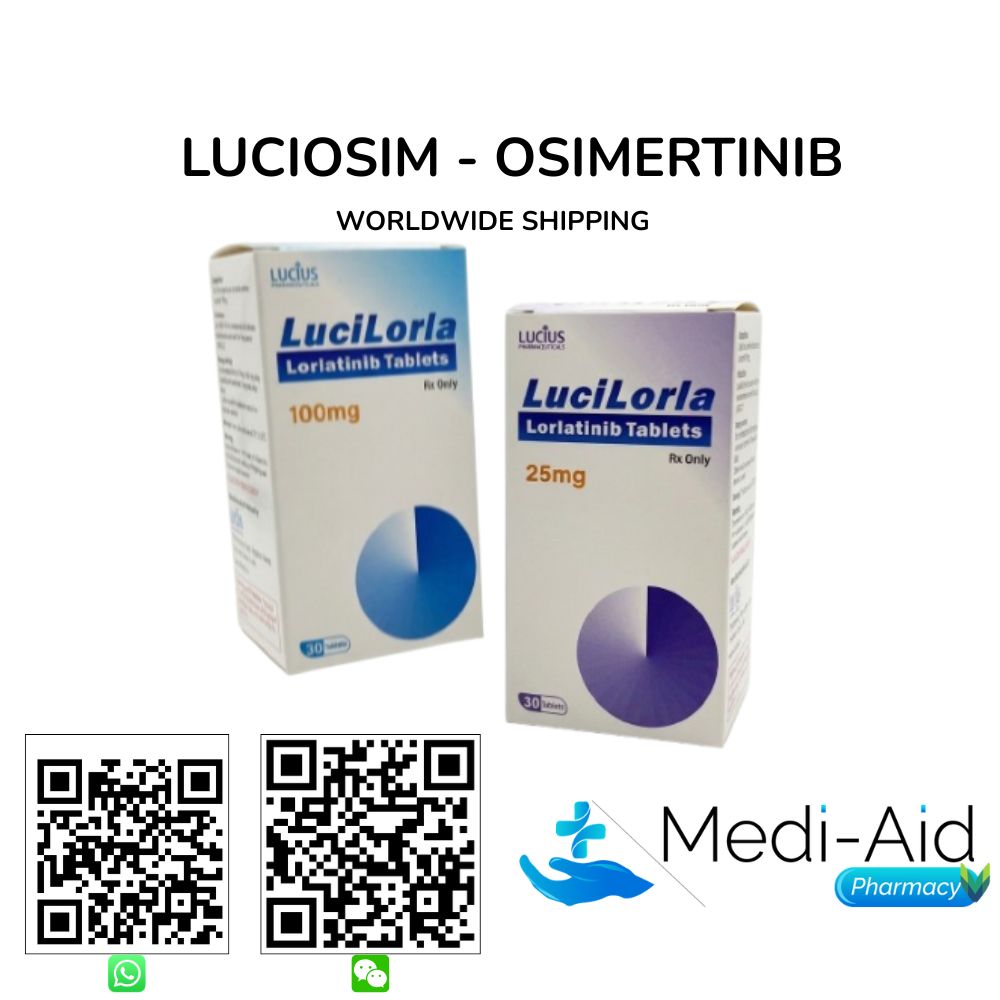
LuciLorla 25 MG & 100 MG (Lorlatinib) is a third-generation, macrocyclic ALK (anaplastic lymphoma kinase) and ROS1 (ROS proto-oncogene 1, receptor tyrosine kinase) tyrosine kinase inhibitor (TKI) formulated as oral tablets in two strengths – 25 mg and 100 mg, supplied in packs of 30 tablets per box – and manufactured by Lucius Pharmaceuticals (Lao) Co., Ltd. in Laos. Its active ingredient, lorlatinib INN, covalently inhibits ALK and ROS1 kinase activity through a unique macrocyclic molecular scaffold that simultaneously confers CNS penetration across the blood-brain barrier (BBB) and broad coverage of resistance mutations that cause disease progression on all first-generation (crizotinib) and second-generation (alectinib, ceritinib, brigatinib) ALK TKIs, including the most clinically challenging G1202R solvent-front mutation.
LuciLorla 100 MG is the standard therapeutic dose administered once daily for all approved lorlatinib indications; LuciLorla 25 MG provides the dose-reduction unit for the structured 75 mg (3 tablets) and 50 mg (2 tablets) dose reduction levels required in patients with toxicity necessitating dose modification from the 100 mg standard dose.
LuciLorla 25 MG and 100 MG are indicated for adults with locally advanced or metastatic ALK-positive non-small cell lung cancer (NSCLC) as first-line treatment and in previously ALK TKI-treated patients. In the pivotal CROWN Phase 3 trial, lorlatinib 100 mg produced a median progression-free survival (PFS) that was not reached versus 9.3 months for crizotinib (hazard ratio 0.28; 95% CI 0.19-0.41), with 60-month (5-year) data showing approximately 60% of lorlatinib-treated patients remaining progression-free versus 8% for crizotinib – the most durable first-line PFS ever reported for any ALK TKI in a Phase 3 trial. Intracranial objective response rate (iORR) in patients with baseline brain metastases was 82% for lorlatinib versus 23% for crizotinib in CROWN. Searching for LuciLorla 25 MG & 100 MG Lorlatinib? Mediaid Pharmacy lists this product within its comprehensive lung cancer medicines portfolio and ships it worldwide.
Basic Product Information of LuciLorla 25 MG & 100 MG (Lorlatinib)
| Brand Name | LuciLorla 25 MG & LuciLorla 100 MG (Lorlatinib) |
| Product Name | LuciLorla |
| Generic Name | Lorlatinib INN |
| Drug Class | Third-Generation Macrocyclic ALK (Anaplastic Lymphoma Kinase) and ROS1 Tyrosine Kinase Inhibitor (TKI); Broad-Spectrum ALK Resistance Mutation Inhibitor; CNS-Penetrant Kinase Inhibitor; Antineoplastic Agent; Targeted Therapy for ALK-Positive NSCLC |
| Formulation | Oral Tablet |
| Available Strengths | 25 mg (dose reduction unit) and 100 mg (standard therapeutic dose) |
| Available Pack Size | 30 Tablets per Box (both strengths) |
| Standard Dose and Dose Reduction Framework | Standard dose: LuciLorla 100 MG (1 x 100 mg tablet) once daily orally with or without food.
First dose reduction: 75 mg once daily = 3 x LuciLorla 25 MG tablets once daily – used for Grade 3 or greater adverse reactions requiring dose modification per prescribing information guidelines. Second dose reduction: 50 mg once daily = 2 x LuciLorla 25 MG tablets once daily – for patients unable to tolerate the 75 mg dose level. Discontinue LuciLorla if the patient is unable to tolerate 50 mg once daily. LuciLorla 25 MG tablets are the clinical foundation for all structured dose reductions from the 100 mg standard dose across both reduction levels. |
| Primary Indications | (1) First-line treatment of locally advanced or metastatic NSCLC in adults whose tumors are ALK-positive as detected by an approved or validated companion diagnostic.
(2) Treatment of locally advanced or metastatic ALK-positive NSCLC in adults who have progressed on: alectinib or ceritinib as first-line therapy; or crizotinib and at least one other ALK inhibitor. |
| Manufacturer | Lucius Pharmaceuticals (Lao) Co., Ltd., Laos |
| Country of Origin | Laos |
| Originator Reference Brand | Lorbrena (lorlatinib) by Pfizer – approved globally for first-line and previously treated ALK-positive NSCLC in adult patients |
| Product Categories | Lung Cancer Medicines; Oncology Medicines |
| Global Supplier | Mediaid Pharmacy, Worldwide Shipping Available |
| Storage Conditions | Store below 30 degrees C. Keep out of the reach of children. Protect from moisture. |
How LuciLorla 25 MG & 100 MG (Lorlatinib) Works: Third-Generation Macrocyclic ALK/ROS1 TKI with CNS Penetration and Broad Resistance Mutation Coverage
Lorlatinib, the active ingredient in LuciLorla 25 MG and LuciLorla 100 MG, is the world’s first approved third-generation macrocyclic ALK and ROS1 tyrosine kinase inhibitor (TKI) – a precision oncology drug class engineered to overcome the two principal limitations of first-generation (crizotinib) and second-generation (alectinib, ceritinib, brigatinib) ALK TKIs: acquired resistance driven by ALK kinase domain mutations, and inadequate CNS drug penetration resulting in disease progression within the brain and leptomeninges.
ALK (anaplastic lymphoma kinase) is a receptor tyrosine kinase encoded by the ALK gene on chromosome 2p23. In ALK-positive NSCLC, chromosomal rearrangements, most commonly the EML4-ALK fusion (occurring in multiple fusion variants), constitutively activate ALK kinase signaling through the RAS/MAPK, PI3K/AKT, and JAK/STAT pathways, driving tumor cell proliferation, survival, and metastasis in a manner that is exquisitely sensitive to ALK TKI inhibition.
ALK rearrangements are detected in approximately 3 to 7% of all NSCLC patients – in absolute terms, the annual global incidence is substantial given the overall volume of lung cancer cases worldwide, and ALK-positive NSCLC disproportionately affects younger patients, never-smokers, and patients with adenocarcinoma histology, amplifying the clinical importance of achieving maximal durable disease control.
At the molecular level, lorlatinib in LuciLorla 100 MG engages the ALK kinase domain through a unique macrocyclic ring structure that is pharmacologically and structurally distinct from the acyclic scaffolds used by all first- and second-generation ALK TKIs. This macrocyclic conformation locks lorlatinib into a three-dimensional shape that precisely fits the ALK ATP-binding pocket even when resistance mutations have altered the binding site geometry in ways that render crizotinib, alectinib, ceritinib, and brigatinib ineffective.
Lorlatinib covers the broadest spectrum of clinically validated ALK resistance mutations of any approved ALK TKI, including L1196M (gatekeeper), G1202R (solvent-front), C1156Y, I1171S, I1171T, I1171N, F1174L, F1174C, L1152R, L1152P, V1180L, G1202del, S1206F, S1206Y, D1203N, E1210K, and the compound 1151T ins mutation. The G1202R solvent-front mutation is particularly clinically important because it confers resistance to all first-generation and most second-generation ALK TKIs; lorlatinib retains potent inhibitory activity against G1202R at the 100 mg therapeutic dose achieved in LuciLorla 100 MG, making it the preferred sequential agent after second-generation ALK TKI failure in patients with documented G1202R-mediated resistance.
The most clinically consequential pharmacological attribute of LuciLorla 100 MG is lorlatinib’s confirmed CNS penetration and superior intracranial antitumor activity. CNS metastases develop in approximately 30 to 50% of ALK-positive NSCLC patients over the course of their disease, representing the most frequent and impactful site of disease progression in patients on first- and second-generation ALK TKIs whose CNS drug concentrations are insufficient for durable intracranial disease control.
Lorlatinib’s macrocyclic structure produces a low molecular weight, moderate lipophilicity, and low P-glycoprotein (P-gp) substrate affinity profile that together enable it to cross the blood-brain barrier (BBB) at pharmacologically active concentrations in the CNS compartment. In the CROWN Phase 3 trial, lorlatinib 100 mg achieved a confirmed intracranial objective response rate (iORR) of 82% versus 23% for crizotinib in patients with brain metastases at baseline – with 71% achieving complete intracranial responses (iCR), meaning full resolution of all measurable brain metastases.
Among all patients in CROWN regardless of baseline CNS involvement, the risk of intracranial progression was reduced by 94% with lorlatinib versus crizotinib (CNS PFS HR 0.06). This degree of intracranial activity is without precedent among any approved first-line NSCLC treatment in any molecular subtype, and it defines lorlatinib as the definitive choice for ALK-positive NSCLC regardless of whether CNS metastases are present at diagnosis.
Lorlatinib is metabolized primarily by CYP3A4 and aldehyde oxidase (AO) in the liver. The elimination half-life of lorlatinib is approximately 24 hours, supporting once-daily oral dosing in LuciLorla 100 MG. Lorlatinib is itself a strong CYP3A4 inducer and moderate CYP2C9 inducer, meaning it reduces plasma concentrations of concomitant medications that are CYP3A4 or CYP2C9 substrates, including certain hormonal contraceptives, statins, midazolam, and warfarin; these interactions require clinical management through dose adjustments or alternative medication selection.
Rifampin (rifampicin) and other strong CYP3A4 inducers are contraindicated during LuciLorla treatment because co-administration with rifampin produced hepatotoxicity signals in nonclinical studies; all strong CYP3A4 inducers must be replaced with non-inducing alternatives before starting lorlatinib therapy. Strong CYP3A4 inhibitors increase lorlatinib exposure and require dose adjustment or avoidance. Oncologists managing patients on LuciLorla 100 MG across the complete ALK-positive NSCLC treatment continuum can review the full selection of targeted lung cancer therapies available at Mediaid Pharmacy’s lorlatinib medicines range.
Approved Indications of Lorlatinib (Reference Label for LuciLorla 25 MG & 100 MG)
Lorlatinib, the active ingredient in LuciLorla 25 MG and LuciLorla 100 MG, carries reference-label indications across two approved clinical settings in ALK-positive NSCLC, each requiring confirmed ALK-positive status by an FDA-approved or validated companion diagnostic test on tumor tissue or plasma circulating tumor DNA (ctDNA) before treatment initiation. Across both settings, the standard recommended dose is LuciLorla 100 MG (100 mg once daily orally), with structured dose reductions to 75 mg (3 x LuciLorla 25 MG tablets once daily) and 50 mg (2 x LuciLorla 25 MG tablets once daily) available per the prescribing information dose modification guidelines. Prescribers should confirm locally approved indications on the LuciLorla product label and current national and international NSCLC treatment guidelines before initiating treatment.
|
First-Line Treatment of ALK-Positive NSCLC LuciLorla 100 MG (lorlatinib 100 mg once daily) is indicated as first-line treatment for adults with locally advanced (stage IIIB/IIIC not amenable to definitive concurrent chemoradiotherapy) or metastatic (stage IV) NSCLC whose tumors are ALK-positive confirmed by an approved or validated companion diagnostic on tumor tissue or plasma ctDNA. No prior systemic therapy for locally advanced or metastatic NSCLC is required for first-line eligibility. CROWN Phase 3 trial results (lorlatinib 100 mg vs. crizotinib 250 mg BID, n=296): Median PFS: not reached vs. 9.3 months (HR 0.28; 95% CI 0.19-0.41; p less than 0.001); ORR: 76% vs. 58%; 60-month PFS rate: approximately 60% vs. 8%; 5-year OS: 82% vs. 72%. Intracranial CNS subgroup in CROWN (patients with baseline brain metastases): iORR 82% vs. 23% for crizotinib; complete intracranial response (iCR) rate 71% vs. 8%; CNS PFS HR 0.06 across all patients regardless of baseline CNS involvement, representing a 94% reduction in intracranial progression risk. |
Previously Treated ALK-Positive NSCLC and Dose Modification Framework LuciLorla 100 MG is indicated for adults with locally advanced or metastatic ALK-positive NSCLC who have progressed on: (a) alectinib or ceritinib as first-line therapy; or (b) crizotinib AND at least one other ALK TKI. ALK mutation testing at progression on prior ALK TKI is recommended to document resistance mechanisms, particularly G1202R status, and guide treatment sequencing. ORR in ALK TKI-pretreated patients: 47% after crizotinib pre-treatment; 39.6% after second-generation ALK TKI pre-treatment; intracranial ORR 56% in previously treated CNS-metastatic patients. Dose modification framework using LuciLorla 25 MG: Standard 100 mg once daily (1 x LuciLorla 100 MG); First dose reduction 75 mg once daily (3 x LuciLorla 25 MG); Second dose reduction 50 mg once daily (2 x LuciLorla 25 MG). Discontinue if unable to tolerate 50 mg. Triggers for dose reduction include Grade 3 or 4 CNS effects, Grade 3 or 4 hyperlipidemia unresponsive to lipid-lowering therapy, Grade 3 peripheral neuropathy, Grade 3 hypertension, or QTc prolongation greater than 500 ms. |
Safety Profile, Side Effects, and Precautions for LuciLorla 25 MG & 100 MG (Lorlatinib)
The safety profile of lorlatinib 100 mg is well-characterized across the CROWN Phase 3 trial and earlier CROWN registrational studies. Lorlatinib’s toxicity profile differs meaningfully from first- and second-generation ALK TKIs: hyperlipidemia (occurring in approximately 88% of patients) is the most characteristic and nearly universal adverse effect of lorlatinib and is not shared with any first- or second-generation ALK TKI at comparable rates, while CNS-related effects (cognitive effects, mood effects, speech effects) reflect lorlatinib’s unique CNS penetration and represent a class-specific toxicity of third-generation CNS-penetrant ALK TKIs at therapeutically active CNS concentrations. Dose modification using LuciLorla 25 MG tablets (for the 75 mg and 50 mg reduction levels) is an important clinical management tool for patients experiencing significant lorlatinib-related toxicity at the 100 mg standard dose.
|
Common Adverse Reactions (Greater Than or Equal to 10% in CROWN) Hyperlipidemia (88%): the most prevalent and pharmacologically characteristic toxicity of lorlatinib; elevated total cholesterol and triglycerides occur in the vast majority of patients at the 100 mg dose and require lipid-lowering therapy (statins, fibrates, or combination) in most patients; lipid panel assessment at baseline, 4 to 8 weeks after initiation, and periodically thereafter is mandatory throughout LuciLorla 100 MG treatment Peripheral edema (55%): dependent and peripheral edema managed with compression stockings, dose modification for Grade 3 or greater; assess for cardiac or renal causes if edema is severe or unexpected Peripheral neuropathy (38%): sensory more common than motor; managed with dose reduction to LuciLorla 75 mg (3x25mg) for Grade 3; gabapentin or pregabalin for symptomatic relief; dose reduction is the primary management tool for Grade 3 or greater neuropathy CNS effects (27-35%): cognitive effects (memory impairment, concentration difficulty), mood effects (depression, anxiety, irritability, euphoria), speech effects (dysarthria, word-finding difficulty), and rarely hallucinations or psychosis; represent lorlatinib’s CNS penetration at therapeutic concentrations; Grade 3 or 4 CNS effects require dose reduction to LuciLorla 75 mg or temporary interruption; patients must be counselled to report new or worsening CNS symptoms promptly Weight gain (20%), fatigue (19%), arthralgia (18%), hypertension (18%), upper respiratory infection (17%), headache (14%): individually manageable with supportive care; hypertension requires antihypertensive therapy if Grade 2 or greater; dose reduction for Grade 3 hypertension uncontrolled with maximal antihypertensive therapy |
Serious Warnings and Precautions Requiring Active Monitoring Severe and life-threatening CNS effects: Grade 4 CNS toxicity (psychosis, hallucinations, severe cognitive impairment, encephalopathy) is rare but has been reported; permanently discontinue LuciLorla 100 MG if Grade 4 CNS effects occur; pre-treatment neuropsychological baseline assessment and caregiver education about CNS symptom recognition are recommended for all patients Cardiovascular effects – hypertension and QTc prolongation: assess baseline blood pressure and ECG before LuciLorla initiation; lorlatinib increases blood pressure and QTc interval; avoid concurrent use of QTc-prolonging medications; avoid LuciLorla in patients with baseline QTc greater than 470 ms; monitor ECG and electrolytes periodically during treatment Interstitial lung disease (ILD) and pneumonitis: reported with lorlatinib; permanently discontinue LuciLorla 100 MG if Grade 3 or 4 ILD or pneumonitis is confirmed; assess any new or worsening pulmonary symptoms (dyspnea, dry cough, fever) promptly with high-resolution CT chest imaging CYP3A4 drug interaction risk: lorlatinib is a strong CYP3A4 and moderate CYP2C9 inducer; co-administration with rifampin and other strong CYP3A4 inducers is CONTRAINDICATED due to hepatotoxicity risk in nonclinical studies; lorlatinib reduces concentrations of CYP3A4 substrates including hormonal contraceptives, certain statins, and immunosuppressants; comprehensive medication review before LuciLorla initiation is mandatory Embryo-fetal toxicity: lorlatinib can cause fetal harm; females of reproductive potential must use non-hormonal effective contraception (lorlatinib reduces hormonal contraceptive efficacy through CYP3A4 induction) during treatment and for 6 months after the final dose; males with female partners of reproductive potential must use effective contraception during treatment and for 3 months after the final dose |
Who Should Use LuciLorla 25 MG & 100 MG (Lorlatinib)?
LuciLorla 25 MG and LuciLorla 100 MG are prescribed for two precisely defined patient populations in adult ALK-positive NSCLC, both requiring confirmed ALK-positive status by a validated companion diagnostic before treatment initiation.
First, LuciLorla 100 MG is indicated as first-line therapy for adults with locally advanced or metastatic NSCLC whose tumors are ALK-positive confirmed by a validated companion diagnostic on tumor tissue (preferred; highest sensitivity) or plasma ctDNA. First-line patients must have received no prior systemic therapy for locally advanced or metastatic disease; prior adjuvant or neoadjuvant chemotherapy or targeted therapy for earlier-stage resected disease does not preclude first-line LuciLorla 100 MG use. The first-line population includes ALK-positive NSCLC patients with and without CNS metastases at diagnosis, where lorlatinib’s 94% reduction in intracranial progression risk versus crizotinib (CNS PFS HR 0.06 in CROWN) and 82% intracranial response rate in patients with brain metastases make it the preferred treatment regardless of CNS involvement status at presentation. This population also includes patients with the common EML4-ALK fusion variants (V1, V2, V3, and others), where lorlatinib demonstrates activity across all major fusion variant subtypes.
Second, LuciLorla 100 MG is indicated for adults with locally advanced or metastatic ALK-positive NSCLC who have progressed on alectinib or ceritinib as first-line therapy, or who have progressed on crizotinib plus at least one other ALK TKI. For patients progressing on second-generation ALK TKIs, ALK resistance mutation analysis at progression is strongly recommended to document whether lorlatinib-sensitive mutations such as G1202R (lorlatinib active) or potentially lorlatinib-resistant compound mutations are present, enabling the most informed treatment selection. Contraindications include confirmed hypersensitivity to lorlatinib or any LuciLorla excipient; co-administration with strong CYP3A4 inducers (particularly rifampin/rifampicin, which is explicitly contraindicated); and severe pre-existing CNS conditions where additional CNS effects would be clinically unacceptable. Relative contraindications requiring specialist risk-benefit assessment include: baseline QTc greater than 470 ms; pre-existing uncontrolled hypertension; active severe psychiatric disorders; and significant hepatic impairment.
LuciLorla 25 MG is specifically indicated for patients requiring dose reduction from the 100 mg standard dose – providing the 25 mg unit needed to achieve both the 75 mg first reduction level (3 tablets) and the 50 mg second reduction level (2 tablets) per the lorlatinib dose modification framework. For oncologists establishing comprehensive ALK-positive NSCLC treatment programs or sourcing lorlatinib alongside other targeted lung cancer and oncology therapies, the Mediaid Pharmacy oncology medicines collection and the dedicated lung cancer medicines portfolio offer a comprehensive selection with worldwide shipping.
Global Supplier: Mediaid Pharmacy Worldwide Shipping for LuciLorla 25 MG & 100 MG (Lorlatinib)
Mediaid Pharmacy is a specialty oncology and pharmaceutical supplier with worldwide shipping to patients, oncology clinics, hospitals, and distributors across all global regions. LuciLorla 25 MG and LuciLorla 100 MG (Lorlatinib), manufactured by Lucius Pharmaceuticals (Lao) Co., Ltd. in Laos, are each available as 30 tablets per box and supplied with current pricing quotations, stock confirmation, full product documentation, and end-to-end international delivery tracking for every order.
Thoracic oncology centers, ALK-positive NSCLC programs, pulmonology clinics, hospital formulary teams, international distributors, and individual patients can contact the Mediaid Pharmacy team through WhatsApp, phone, or WeChat for all inquiries regarding LuciLorla 25 MG and LuciLorla 100 MG stock availability, current pricing, and international delivery timelines to their country. Buyers sourcing lorlatinib 100 mg for first-line or previously treated ALK-positive NSCLC patients, establishing complete ALK TKI treatment programs across the lorlatinib dose modification range (100 mg, 75 mg, 50 mg), or co-sourcing LuciLorla with other targeted oncology therapies or lung cancer medicines in a consolidated international shipment can browse the complete lorlatinib medicines range and the broader oncology medicines portfolio at Mediaid Pharmacy before requesting a consolidated quotation covering all required products and quantities.
Why Choose LuciLorla 25 MG & 100 MG (Lorlatinib) from Mediaid Pharmacy?
LuciLorla 25 MG and LuciLorla 100 MG (Lorlatinib) together provide oncologists and thoracic oncology specialists with the definitive third-generation ALK TKI standard of care for ALK-positive NSCLC – the drug class that redefined first-line ALK-positive NSCLC treatment through the CROWN trial (5-year PFS rate of approximately 60% versus 8% for crizotinib; CNS PFS HR 0.06 representing a 94% reduction in intracranial progression risk) and established lorlatinib as the preferred first-line ALK TKI across NCCN, ESMO, and ASCO guidelines based on the most durable PFS data ever reported in first-line ALK-positive NSCLC.
LuciLorla 100 MG delivers three simultaneous clinical advantages that no first- or second-generation ALK TKI can match: (1) broad ALK resistance mutation coverage spanning all 17 documented clinically validated ALK kinase domain mutations including the G1202R solvent-front mutation that confers resistance to all first- and second-generation ALK TKIs; (2) confirmed CNS penetration with demonstrated intracranial efficacy producing 82% intracranial objective response rates and 71% complete intracranial response rates in brain-metastatic patients, and a 94% reduction in intracranial progression risk versus crizotinib across the entire CROWN population; and (3) a macrocyclic structural scaffold that locks the molecule in a conformation capable of inhibiting resistance-mutated ALK kinase domains inaccessible to all acyclic first- and second-generation ALK TKI scaffolds. LuciLorla 25 MG completes the clinical package by providing the precisely calibrated 25 mg unit dose needed to implement both structured dose reduction levels (75 mg = 3 x LuciLorla 25 MG; 50 mg = 2 x LuciLorla 25 MG), enabling effective toxicity management while maintaining therapeutic lorlatinib concentrations – a clinical necessity given lorlatinib’s hyperlipidemia and CNS-effect profile, where dose reduction preserves treatment rather than requiring discontinuation.
LuciLorla 25 MG and LuciLorla 100 MG are both manufactured by Lucius Pharmaceuticals (Lao) Co., Ltd. in Laos and supplied in 30-tablet boxes as convenient once-daily oral treatments requiring no injection, reconstitution, or clinic administration. Mediaid Pharmacy supplies both LuciLorla strengths with full product documentation, specialist supply coordination, and worldwide shipping. To source additional Lucius Pharmaceuticals-branded oncology products or build a comprehensive ALK-positive NSCLC and oncology formulary alongside LuciLorla, visit the Mediaid Pharmacy Lucius Pharmaceuticals medicines section and the oncology medicines collection and contact the team for a personalized quotation covering all required products and quantities.
Frequently Asked Questions About LuciLorla 25 MG & 100 MG (Lorlatinib)
What is LuciLorla 25 MG & 100 MG (Lorlatinib) used for?
LuciLorla 25 MG and LuciLorla 100 MG (Lorlatinib) are a third-generation macrocyclic ALK and ROS1 tyrosine kinase inhibitor (TKI) used in two approved settings: (1) first-line treatment of locally advanced or metastatic NSCLC in adults whose tumors are ALK-positive, as confirmed by a validated companion diagnostic; and (2) treatment of locally advanced or metastatic ALK-positive NSCLC in adults who have progressed on alectinib or ceritinib as first-line therapy, or on crizotinib plus at least one other ALK TKI. LuciLorla 100 MG (100 mg once daily) is the standard therapeutic dose; LuciLorla 25 MG provides the dose-reduction unit for structured reduction to 75 mg (3 tablets) or 50 mg (2 tablets) in patients requiring dose modification. Both LuciLorla strengths are available at Mediaid Pharmacy with worldwide shipping to patients, oncology centers, hospitals, and distributors globally.
What is the generic name of LuciLorla?
The generic name of LuciLorla is lorlatinib INN. LuciLorla is the brand name registered by Lucius Pharmaceuticals (Lao) Co., Ltd. for lorlatinib in Laos. LuciLorla is available as oral tablets in two strengths: 25 mg and 100 mg, each supplied in packs of 30 tablets per box, both administered as part of the once-daily oral lorlatinib regimen with or without food. The originator reference brand for lorlatinib is Lorbrena (lorlatinib) by Pfizer, approved globally for ALK-positive NSCLC across first-line and previously treated settings. Mediaid Pharmacy distributes LuciLorla 25 MG and LuciLorla 100 MG globally with worldwide shipping to patients, healthcare providers, hospitals, and specialist oncology clinics.
What is the difference between LuciLorla 25 MG and LuciLorla 100 MG?
LuciLorla 100 MG and LuciLorla 25 MG both contain lorlatinib INN manufactured by Lucius Pharmaceuticals, but they serve distinct clinical roles within the lorlatinib treatment framework. LuciLorla 100 MG (100 mg once daily) is the standard recommended therapeutic dose for all approved lorlatinib indications – first-line ALK-positive NSCLC and previously treated ALK-positive NSCLC – as established by the CROWN Phase 3 trial. LuciLorla 25 MG (25 mg tablet) is the dose-reduction unit that enables the two structured dose reduction levels: 75 mg once daily (3 x LuciLorla 25 MG tablets) as the first dose reduction for Grade 3 or greater toxicity, and 50 mg once daily (2 x LuciLorla 25 MG tablets) as the second dose reduction for patients who cannot tolerate 75 mg. This dual-strength availability means a complete LuciLorla prescribing program requires both strengths to manage the full therapeutic dose range. For the complete range of lorlatinib strengths at Mediaid Pharmacy, visit the lorlatinib medicines range.
How is LuciLorla 100 MG (Lorlatinib) taken?
LuciLorla 100 MG is taken orally, once daily, with or without food. Each tablet should be swallowed whole with water. Do not chew, crush, or split LuciLorla 100 MG tablets. Administer LuciLorla at approximately the same time each day. If a dose is missed, take it as soon as remembered unless the next scheduled dose is within 4 hours; if fewer than 4 hours remain before the next dose, skip the missed dose and resume the regular daily schedule. Do not take two doses on the same day. LuciLorla 25 MG tablets are taken using the same administration guidelines, with 3 tablets (75 mg dose reduction) or 2 tablets (50 mg dose reduction) once daily. Strong CYP3A4 inducers including rifampin, carbamazepine, phenytoin, and St. John’s Wort are contraindicated during LuciLorla treatment and must be replaced with non-inducing alternatives before starting lorlatinib therapy. Because lorlatinib itself is a strong CYP3A4 inducer, the plasma concentrations of multiple concomitant medications including hormonal contraceptives (requiring alternative non-hormonal contraception), certain statins, and immunosuppressants will be reduced during LuciLorla treatment; a comprehensive medication review before initiation is required.
What are the side effects of LuciLorla 25 MG & 100 MG (Lorlatinib)?
The most common side effects of LuciLorla 100 MG (Lorlatinib) include hyperlipidemia (88%, the most characteristic lorlatinib toxicity requiring lipid-lowering therapy in most patients), peripheral edema (55%), peripheral neuropathy (38%), CNS effects including cognitive effects and mood effects (27-35%), weight gain (20%), fatigue (19%), arthralgia (18%), and hypertension (18%). Hyperlipidemia requires baseline lipid panel assessment and regular monitoring throughout treatment, with lipid-lowering therapy initiated promptly when cholesterol or triglyceride thresholds are exceeded. CNS effects are unique to lorlatinib’s CNS penetration and require structured monitoring, patient and caregiver education, and dose reduction to LuciLorla 75 mg or 50 mg for Grade 3 or 4 CNS toxicity. Serious adverse events requiring monitoring include Grade 4 CNS effects (rare; requires permanent discontinuation), ILD or pneumonitis, QTc prolongation, and severe hypertension. Lorlatinib is embryo-fetotoxic; females of reproductive potential must use non-hormonal effective contraception during LuciLorla treatment and for 6 months after the final dose (hormonal contraceptives are rendered ineffective by lorlatinib’s CYP3A4 induction). Always discuss the complete individual risk-benefit profile with your prescribing oncologist before initiating and throughout LuciLorla treatment.
Is LuciLorla 100 MG (Lorlatinib) effective against brain metastases in ALK-positive NSCLC?
Yes. LuciLorla 100 MG (Lorlatinib) has demonstrated the highest intracranial activity of any approved ALK TKI, making it the preferred treatment for ALK-positive NSCLC patients with brain metastases or leptomeningeal disease. In the CROWN Phase 3 trial, lorlatinib 100 mg achieved an intracranial objective response rate (iORR) of 82% versus 23% for crizotinib in patients with brain metastases at baseline, with complete intracranial responses (iCR) in 71% of lorlatinib-treated patients with measurable brain lesions versus 8% for crizotinib. Across all patients in CROWN regardless of baseline CNS involvement, lorlatinib reduced the risk of intracranial progression by 94% versus crizotinib (CNS PFS HR 0.06). This intracranial efficacy is directly attributable to lorlatinib’s macrocyclic structure enabling CNS penetration at pharmacologically active concentrations, a property that no approved first- or second-generation ALK TKI achieves to the same degree. Lorlatinib’s CNS activity in the previously treated setting has been confirmed in patients with leptomeningeal disease, where objective intracranial responses have been documented even after failure of multiple prior ALK TKIs that lack equivalent CNS penetration.
Can I order LuciLorla 25 MG & 100 MG (Lorlatinib) online with worldwide shipping?
Yes. Mediaid Pharmacy supplies LuciLorla 25 MG and LuciLorla 100 MG Lorlatinib to patients and healthcare providers globally. Contact Mediaid Pharmacy via WhatsApp, phone, or WeChat at +8801773428128, or email info@mediaidpharmacy.com for pricing, current stock availability, and international delivery details for your country.
Order LuciLorla 25 MG & 100 MG (Lorlatinib) with Worldwide Shipping
Phone / WhatsApp / WeChat: +8801773428128 | Email: info@mediaidpharmacy.com

Reviews
There are no reviews yet.