
Description
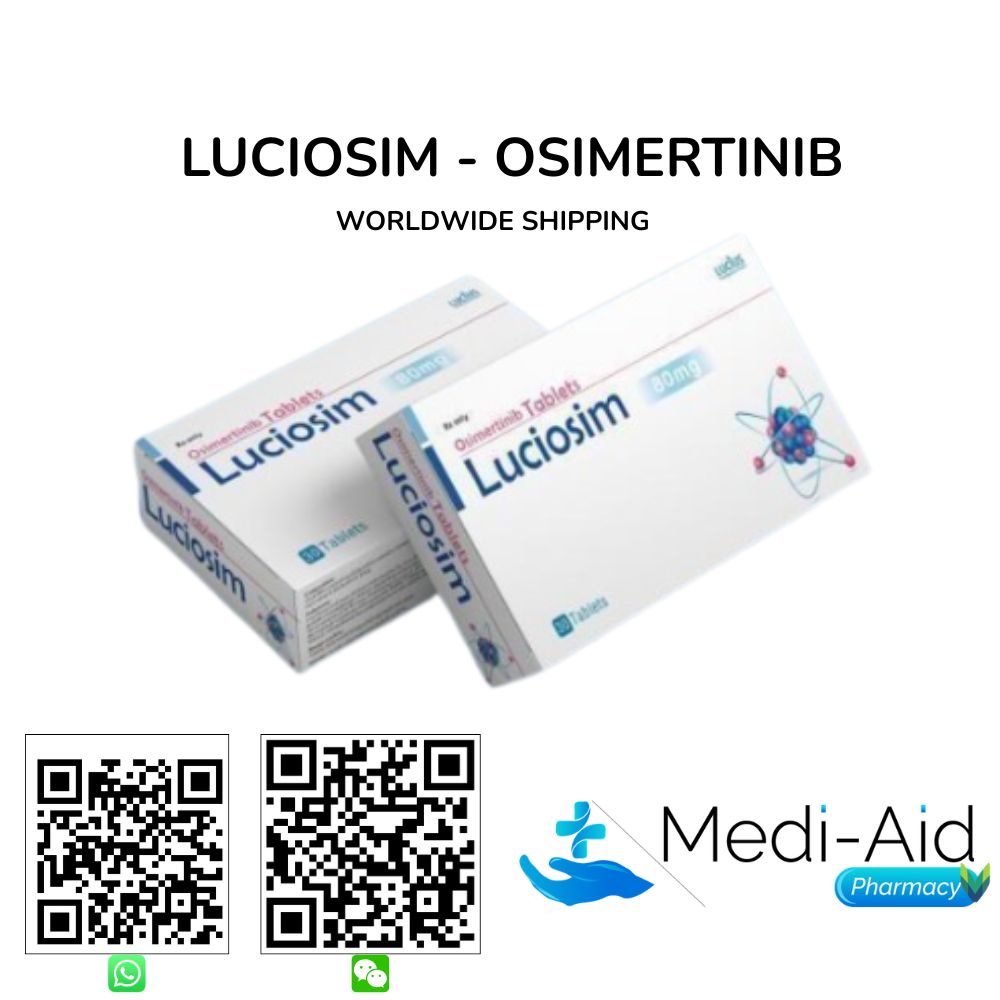
LuciOsim 80 MG (Osimertinib) is a third-generation, selective, irreversible EGFR (epidermal growth factor receptor) tyrosine kinase inhibitor (TKI) formulated as an 80 mg oral tablet supplied in packs of 30 tablets per box and manufactured by Lucius Pharmaceuticals (Lao) Co., Ltd. in Laos. Its active ingredient, osimertinib INN, covalently binds to and permanently inactivates mutant EGFR kinase domains, including the EGFR sensitizing mutations exon 19 deletion and exon 21 L858R substitution, and the T790M resistance mutation that drives acquired resistance to first- and second-generation EGFR TKIs, all with approximately 200-fold greater selectivity for mutant EGFR over wild-type EGFR.
LuciOsim 80 MG is indicated across three distinct clinical settings: as first-line treatment of locally advanced or metastatic non-small cell lung cancer (NSCLC) harboring EGFR exon 19 deletions or exon 21 L858R mutations; as second-line treatment of locally advanced or metastatic NSCLC with the T790M resistance mutation after disease progression on prior EGFR TKI therapy; and as adjuvant therapy after complete tumor resection in adults with stage IB to IIIA NSCLC whose tumors harbor EGFR exon 19 deletions or exon 21 L858R substitution mutations. In the pivotal Phase 3 FLAURA trial, first-line osimertinib 80 mg achieved a median progression-free survival (PFS) of 18.9 months versus 10.2 months for standard EGFR TKI therapy and a median overall survival (OS) of 38.6 months, the longest OS ever reported in a first-line EGFR-mutant NSCLC Phase 3 trial. Searching for LuciOsim 80 MG Osimertinib? Mediaid Pharmacy lists this product within its comprehensive lung cancer medicines portfolio and ships it worldwide.
Basic Product Information of LuciOsim 80 MG (Osimertinib)
| Brand Name | LuciOsim 80 MG (Osimertinib) |
| Product Name | LuciOsim |
| Generic Name | Osimertinib INN |
| Drug Class | Third-Generation Selective Irreversible EGFR (Epidermal Growth Factor Receptor) Tyrosine Kinase Inhibitor (TKI); EGFR Mutant-Selective Inhibitor; Antineoplastic Agent; Targeted Kinase Inhibitor for NSCLC |
| Formulation | Oral Tablet |
| Available Strength | 80 mg |
| Available Pack Size | 30 Tablets per Box |
| Primary Indications | (1) First-line treatment of locally advanced or metastatic NSCLC with EGFR exon 19 deletion or exon 21 L858R substitution mutations in adults; standard dose 80 mg once daily orally with or without food.
(2) Treatment of locally advanced or metastatic NSCLC with T790M resistance mutation in adults after progression on prior EGFR TKI therapy; same 80 mg once daily oral dose. (3) Adjuvant treatment of adults with stage IB to IIIA NSCLC whose tumors have EGFR exon 19 deletions or exon 21 L858R mutations following complete tumor resection with or without prior adjuvant chemotherapy; 80 mg once daily for up to 3 years or until disease recurrence or unacceptable toxicity. Dose reduction to 40 mg once daily is available for adverse reaction management. |
| Manufacturer | Lucius Pharmaceuticals (Lao) Co., Ltd., Laos |
| Country of Origin | Laos |
| Originator Reference Brand | Tagrisso (osimertinib) by AstraZeneca – approved globally for first-line and second-line EGFR-mutant NSCLC and adjuvant EGFR-mutant NSCLC treatment |
| Product Categories | Lung Cancer Medicines; Oncology Medicines |
| Global Supplier | Mediaid Pharmacy, Worldwide Shipping Available |
| Storage Conditions | Store below 30 degrees C. Keep out of the reach of children. Protect from moisture. |
How LuciOsim 80 MG (Osimertinib) Works: Third-Generation Irreversible EGFR TKI Targeting Sensitizing Mutations and T790M Resistance
Osimertinib, the active ingredient in LuciOsim 80 MG, is the world’s first approved third-generation selective irreversible EGFR tyrosine kinase inhibitor (TKI) – a precision oncology drug class engineered to overcome the central limitation of all first- and second-generation EGFR TKIs by targeting not only the activating EGFR mutations that drive NSCLC tumor growth, but also the T790M gatekeeper resistance mutation (threonine-to-methionine substitution at amino acid position 790) responsible for approximately 50 to 60% of all acquired resistance events in NSCLC patients treated with first-generation EGFR TKIs such as gefitinib and erlotinib, or second-generation EGFR TKIs such as afatinib and dacomitinib.
The EGFR (epidermal growth factor receptor) protein is a receptor tyrosine kinase encoded by the EGFR gene on chromosome 7p11.2. When activated by epidermal growth factor (EGF) or transforming growth factor-alpha (TGF-alpha), EGFR triggers intracellular signaling cascades, including the RAS/MAPK pathway and the PI3K/AKT/mTOR pathway, that drive cell proliferation, survival, and metastasis. In NSCLC, activating mutations in the EGFR kinase domain – most commonly exon 19 deletions (accounting for approximately 45% of EGFR-mutant NSCLC) and exon 21 L858R substitutions (approximately 40%) – constitutively activate EGFR signaling independent of ligand binding, creating a state of continuous tumor cell proliferation that is exquisitely sensitive to EGFR TKI inhibition.
At the molecular level, osimertinib in LuciOsim 80 MG operates through a covalent, irreversible binding mechanism that fundamentally distinguishes it from the reversible competitive inhibition employed by all first- and second-generation EGFR TKIs. Osimertinib forms a covalent bond with Cys797 – the cysteine residue in the ATP-binding site of the EGFR kinase domain – permanently inactivating both mutant EGFR and T790M-mutant EGFR while preserving approximately 200-fold selectivity for mutant EGFR variants over wild-type EGFR (WT-EGFR). This mutant-selectivity over WT-EGFR is the pharmacological property that defines the third-generation TKI class and explains why osimertinib at 80 mg produces a substantially more favorable skin and gastrointestinal toxicity profile than first- and second-generation EGFR TKIs, which inhibit both WT-EGFR and mutant EGFR without meaningful selectivity, producing on-target skin rash, diarrhea, and paronychia at rates that frequently require dose reductions or treatment interruptions.
A defining clinical attribute of LuciOsim 80 MG is osimertinib’s demonstrated CNS penetration and intracranial antitumor activity. CNS metastases develop in approximately 25 to 40% of EGFR-mutant NSCLC patients over the course of their disease, and leptomeningeal disease is among the most clinically challenging and life-limiting manifestations of advanced NSCLC. Osimertinib’s lipophilic chemical structure enables it to cross the blood-brain barrier (BBB) at pharmacologically meaningful concentrations, delivering intracranial drug exposure sufficient to produce objective tumor responses in brain metastases and leptomeningeal disease.
In the FLAURA Phase 3 trial, osimertinib 80 mg reduced the risk of CNS progression by 52% compared to first-generation EGFR TKIs (CNS PFS hazard ratio of 0.48). Among the subset of patients with CNS metastases at baseline in FLAURA, osimertinib achieved a CNS objective response rate of 66% versus 43% for first-generation comparators. This intracranial efficacy is a pharmacologically unique property of osimertinib that no approved first- or second-generation EGFR TKI replicates at equivalent systemic doses, and it is a primary driver of osimertinib’s preferred first-line status across NCCN, ESMO, and ASCO guidelines for EGFR-mutant NSCLC regardless of baseline CNS involvement.
Osimertinib is metabolized primarily by CYP3A4 and to a lesser extent CYP3A5 in the liver, generating two active metabolites (AZ5104 and AZ7550) that contribute additional EGFR inhibitory activity. The plasma elimination half-life of osimertinib is approximately 48 hours, supporting once-daily oral dosing in LuciOsim 80 MG. Strong CYP3A4 inducers including rifampicin, phenytoin, carbamazepine, and St. John’s Wort reduce osimertinib plasma area under the curve (AUC) by approximately 78% and must be avoided during LuciOsim 80 MG treatment or replaced with non-inducing alternatives. Strong CYP3A4 inhibitors produce a clinically limited effect on osimertinib exposure at 80 mg and do not require dose adjustment in the majority of patients.
Osimertinib is a substrate for P-glycoprotein (P-gp) and BCRP efflux transporters; concurrent administration of strong P-gp inhibitors may increase systemic osimertinib exposure and warrants clinical monitoring. Healthcare providers establishing comprehensive EGFR-mutant NSCLC treatment programs can review the complete range of targeted oncology medicines at Mediaid Pharmacy’s osimertinib medicines range.
Approved Indications and Clinical Setting for LuciOsim 80 MG (Osimertinib)
Osimertinib, the active ingredient in LuciOsim 80 MG, carries reference-label indications across three approved clinical settings in NSCLC, each requiring confirmed EGFR mutation status by tissue or liquid biopsy companion diagnostic testing before treatment initiation. Across all three settings, the standard recommended dose is 80 mg once daily orally, with a dose reduction option to 40 mg once daily for adverse reaction management and a documented dose-response that makes the 80 mg standard dose the established efficacy benchmark across the FLAURA, AURA3, and ADAURA Phase 3 programs. Prescribers should confirm locally approved indications on the LuciOsim product label and current national and international NSCLC treatment guidelines before initiating treatment at 80 mg.
|
First-Line Treatment of Advanced EGFR-Mutant NSCLC LuciOsim 80 MG (Osimertinib 80 mg once daily) is indicated as first-line treatment for adults with locally advanced (stage IIIB/IIIC not amenable to definitive concurrent chemoradiotherapy) or metastatic (stage IV) NSCLC confirmed to harbor EGFR exon 19 deletions or exon 21 L858R substitution mutations by a validated companion diagnostic on tumor tissue or circulating tumor DNA (ctDNA) plasma biopsy. FLAURA Phase 3 results (osimertinib 80 mg vs. gefitinib or erlotinib, n=556): median PFS 18.9 months vs. 10.2 months (HR 0.46; 95% CI 0.37-0.57; p less than 0.001); median OS 38.6 months vs. 31.8 months (HR 0.80; 95% CI 0.64-1.00; p=0.046); ORR 80% vs. 76%. CNS subgroup in FLAURA: CNS PFS HR 0.48; CNS ORR 66% vs. 43% in patients with CNS metastases at baseline. Prior adjuvant or neoadjuvant therapy completed at least 12 months before advanced disease does not preclude first-line LuciOsim 80 MG use. |
Second-Line T790M-Positive NSCLC and Adjuvant NSCLC Settings LuciOsim 80 MG is indicated for adults with locally advanced or metastatic NSCLC harboring the T790M resistance mutation confirmed by a validated T790M companion diagnostic in tumor tissue or plasma ctDNA, who have progressed on or after prior EGFR TKI therapy (first- or second-generation). AURA3 Phase 3 results: median PFS 10.1 months vs. 4.4 months for platinum-based chemotherapy (HR 0.30; p less than 0.001); ORR 71% vs. 31%. LuciOsim 80 MG is indicated as adjuvant treatment for adults with stage IB, II, or IIIA NSCLC whose tumors harbor EGFR exon 19 deletions or exon 21 L858R mutations following complete tumor resection with or without prior adjuvant chemotherapy, administered for up to 3 years. ADAURA Phase 3 results: 4-year DFS rate 70% vs. 29% for placebo in stage II-IIIA patients (HR 0.17; 95% CI 0.12-0.23; p less than 0.001). |
Safety Profile, Side Effects, and Precautions for LuciOsim 80 MG (Osimertinib)
The safety profile of osimertinib 80 mg in LuciOsim is well-characterized across the FLAURA, AURA3, and ADAURA Phase 3 trials involving more than 1,500 osimertinib-treated patients. Osimertinib’s mutant-EGFR selectivity (approximately 200-fold greater affinity for mutant vs. wild-type EGFR) produces a more favorable dermatological and gastrointestinal toxicity profile than first- and second-generation EGFR TKIs; however, the irreversible covalent binding mechanism introduces distinct risks – particularly interstitial lung disease (ILD) and QTc interval prolongation – that require proactive baseline assessment and ongoing monitoring throughout treatment with LuciOsim 80 MG. Grade 3 or higher adverse events occurred in approximately 23% of osimertinib-treated patients at the 80 mg dose in FLAURA, substantially lower than historical rates reported with afatinib and dacomitinib at full approved doses.
|
Common Adverse Reactions (Greater Than or Equal to 10% in Clinical Trials) Diarrhea (58%): generally Grade 1 to 2; managed with antidiarrheal agents (loperamide), dietary modification, and adequate hydration; dose reduction to 40 mg required for persistent Grade 3 diarrhea Rash, acneiform dermatitis, and maculopapular rash (41%): predominantly facial, truncal, and upper extremity distribution; managed with topical corticosteroids, oral tetracyclines, and moisturizers; significantly milder than first-generation EGFR TKI rash due to mutant selectivity Dry skin and xerosis (31%): managed with emollients; proactive moisturizer use from treatment initiation is recommended Stomatitis and oral mucositis (29%): managed with saline rinses, topical analgesics, and avoidance of irritants; dose reduction for Grade 3 or higher Paronychia and nail toxicity (25%): lateral nail fold inflammation and onycholysis managed with antiseptic soaks and topical antibiotics; rotate footwear; avoid tight nail cutting Decreased appetite (19%), fatigue (17%), nausea (17%), headache (12%), constipation (12%): supportive care and dietary adjustments; dose modification rarely required for isolated Grade 1 to 2 occurrences |
Serious Warnings and Precautions Requiring Active Monitoring Interstitial lung disease (ILD) and pneumonitis (3.9% in FLAURA; fatal cases reported): permanently discontinue LuciOsim 80 MG if ILD or pneumonitis is confirmed by imaging and clinical evaluation; any new or worsening pulmonary symptoms (dyspnea, cough, fever) must be assessed urgently with high-resolution CT chest imaging QTc interval prolongation (mean 14 ms at 80 mg): osimertinib inhibits hERG potassium channels; assess baseline ECG and electrolytes before treatment; avoid LuciOsim 80 MG in patients with baseline QTc greater than 470 ms or congenital long QT syndrome; monitor ECG periodically and after each dose modification; avoid concurrent QTc-prolonging medications Cardiomyopathy and left ventricular ejection fraction (LVEF) decrease (4% in clinical trials): assess LVEF by echocardiography or MUGA scan before LuciOsim 80 MG initiation and periodically during treatment; permanently discontinue for symptomatic congestive heart failure Keratitis (0.7%): refer to ophthalmology promptly for eye pain, lacrimation, light sensitivity, or blurred vision; manage based on grade severity Embryo-fetal toxicity: osimertinib can cause fetal harm; females of reproductive potential must use effective contraception during and for 6 weeks after the final LuciOsim 80 MG dose; males with female partners of reproductive potential must use contraception for 4 months after the final dose |
Who Should Use LuciOsim 80 MG (Osimertinib)?
LuciOsim 80 MG (Osimertinib) is prescribed for three precisely defined patient populations in adult NSCLC, each requiring confirmed EGFR mutation status before treatment initiation.
First, LuciOsim 80 MG is indicated as first-line therapy for adults with locally advanced or metastatic NSCLC whose tumors harbor EGFR exon 19 deletions or exon 21 L858R substitution mutations confirmed by an approved or validated companion diagnostic test on either tumor tissue (preferred for highest sensitivity) or circulating tumor DNA (ctDNA) plasma biopsy. Patients in this first-line setting must have received no prior systemic therapy for locally advanced or metastatic disease, though prior adjuvant or neoadjuvant chemotherapy or EGFR TKI therapy for earlier-stage resected disease completed at least 12 months before advanced disease diagnosis does not exclude first-line LuciOsim 80 MG use. This patient group includes NSCLC patients with and without CNS metastases at diagnosis, given osimertinib’s confirmed blood-brain barrier penetration and intracranial activity.
Second, LuciOsim 80 MG is indicated for adults with locally advanced or metastatic NSCLC with confirmed T790M resistance mutation detected in tumor tissue or plasma ctDNA by a validated T790M companion diagnostic, who have progressed on or after first- or second-generation EGFR TKI therapy. T790M testing should be performed at the time of progressive disease on EGFR TKI therapy; patients with T790M-negative results on plasma ctDNA should undergo tumor tissue T790M testing before concluding T790M negativity, given the higher sensitivity of tissue biopsy.
Third, LuciOsim 80 MG is indicated as adjuvant treatment for adults with stage IB, II, or IIIA NSCLC with EGFR exon 19 deletion or exon 21 L858R mutation following complete tumor resection with or without prior adjuvant chemotherapy, administered for up to 3 years or until disease recurrence or unacceptable toxicity. Contraindications include confirmed hypersensitivity to osimertinib INN or any LuciOsim excipient. Relative contraindications requiring specialist benefit-risk evaluation before LuciOsim 80 MG initiation include: baseline QTc greater than 500 ms; baseline LVEF below 50%; active or prior ILD or pneumonitis; concurrent use of strong QTc-prolonging agents; and concurrent use of strong CYP3A4 inducers. For oncologists establishing EGFR-mutant NSCLC treatment programs or sourcing osimertinib alongside other targeted lung cancer therapies, the Mediaid Pharmacy oncology medicines collection and the dedicated lung cancer medicines portfolio offer a comprehensive selection with worldwide shipping.
Global Supplier: Mediaid Pharmacy Worldwide Shipping for LuciOsim 80 MG (Osimertinib)
Mediaid Pharmacy is a specialty oncology and pharmaceutical supplier with worldwide shipping to patients, oncology clinics, hospitals, and distributors across all global regions. LuciOsim 80 MG (Osimertinib), manufactured by Lucius Pharmaceuticals (Lao) Co., Ltd. in Laos, is available as 30 tablets per box and supplied with current pricing quotations, stock confirmation, full product documentation, and end-to-end international delivery tracking for every order. Thoracic oncology centers, lung cancer programs, pulmonology and oncology clinics, hospital formulary teams, international distributors, and individual patients can contact the Mediaid Pharmacy team through WhatsApp, phone, or WeChat for all inquiries regarding LuciOsim 80 MG Osimertinib stock availability, current pricing, and international delivery timelines to their country.
Buyers sourcing osimertinib 80 mg for EGFR-mutant NSCLC patients across first-line, second-line T790M-positive, or adjuvant treatment settings – or co-sourcing LuciOsim 80 MG with other targeted oncology therapies or lung cancer medicines in a single consolidated international shipment – can browse the complete lung cancer medicines collection and the broader oncology medicines portfolio at Mediaid Pharmacy before requesting a consolidated quotation covering all required products and quantities.
Why Choose LuciOsim 80 MG (Osimertinib) from Mediaid Pharmacy?
LuciOsim 80 MG (Osimertinib) provides oncologists, thoracic oncology specialists, and pulmonologists with the definitive third-generation EGFR TKI standard of care for EGFR-mutant NSCLC – the drug class that redefined the first-line treatment landscape through the FLAURA trial (median OS 38.6 months, the longest ever reported in a first-line EGFR-mutant NSCLC Phase 3 trial) and established osimertinib as the preferred single-agent EGFR TKI across all major global oncology guidelines, including NCCN, ESMO, and ASCO, for the first-line and T790M-positive second-line settings. LuciOsim 80 MG delivers three simultaneous clinical advantages that no first- or second-generation EGFR TKI can match: (1) mutant-EGFR selectivity approximately 200-fold greater than wild-type EGFR, producing a more favorable dermatological and GI tolerability profile; (2) T790M resistance mutation inhibition, the most common mechanism of acquired resistance to first- and second-generation EGFR TKIs, which affects approximately 50 to 60% of progressing patients on prior EGFR TKI therapy; and (3) confirmed CNS penetration and intracranial antitumor activity against brain metastases and leptomeningeal disease, with a 52% reduction in CNS progression risk versus first-generation comparators in FLAURA. These three properties together define osimertinib’s position as the preferred single-agent EGFR TKI in all settings where EGFR-targeted therapy is clinically appropriate, and they represent properties that the osimertinib 80 mg dose in LuciOsim fully delivers as a once-daily oral tablet requiring no injection, reconstitution, or clinic administration.
LuciOsim 80 MG is manufactured by Lucius Pharmaceuticals (Lao) Co., Ltd. in Laos and supplied in convenient 30-tablet packs. Mediaid Pharmacy supplies LuciOsim 80 MG with full product documentation, specialist supply coordination, and worldwide shipping. To source additional Lucius Pharmaceuticals-branded medicines or build a comprehensive NSCLC and oncology formulary alongside LuciOsim 80 MG, visit the Mediaid Pharmacy Lucius Pharmaceuticals medicines section and the oncology medicines collection and contact the team for a personalized quotation covering all required products and quantities.
Frequently Asked Questions About LuciOsim 80 MG (Osimertinib)
What is LuciOsim 80 MG (Osimertinib) used for?
LuciOsim 80 MG (Osimertinib) is a third-generation selective irreversible EGFR tyrosine kinase inhibitor (TKI) used in three approved clinical settings: (1) first-line treatment of locally advanced or metastatic non-small cell lung cancer (NSCLC) in adults whose tumors harbor EGFR exon 19 deletions or exon 21 L858R substitution mutations confirmed by a validated companion diagnostic; (2) treatment of locally advanced or metastatic NSCLC with T790M resistance mutation in adults after progression on prior EGFR TKI therapy; and (3) adjuvant treatment of adults with stage IB to IIIA NSCLC with EGFR exon 19 deletions or exon 21 L858R mutations after complete tumor resection, administered for up to 3 years. The recommended dose is 80 mg once daily orally with or without food. LuciOsim 80 MG is available at Mediaid Pharmacy with worldwide shipping to patients, oncology centers, hospitals, and distributors globally.
What is the generic name of LuciOsim 80 MG?
The generic name of LuciOsim 80 MG is osimertinib INN. LuciOsim is the brand name registered by Lucius Pharmaceuticals (Lao) Co., Ltd. for osimertinib in Laos. LuciOsim 80 MG is formulated as an oral tablet delivering 80 mg of osimertinib per tablet, supplied in packs of 30 tablets per box, administered once daily with or without food. The originator reference brand for osimertinib is Tagrisso (osimertinib) by AstraZeneca, approved globally for EGFR-mutant NSCLC across first-line, second-line T790M-positive, and adjuvant settings. Mediaid Pharmacy distributes LuciOsim 80 MG globally with worldwide shipping to patients, healthcare providers, hospitals, and specialist oncology clinics.
What is the difference between LuciOsim 80 MG and LuciOsim 40 MG?
LuciOsim 80 MG and LuciOsim 40 MG both contain osimertinib INN manufactured by Lucius Pharmaceuticals, but they represent different dose levels within the osimertinib prescribing framework. LuciOsim 80 MG (80 mg once daily) is the standard recommended starting and maintenance dose for all approved osimertinib indications – first-line advanced NSCLC, second-line T790M-positive NSCLC, and adjuvant NSCLC – established by the FLAURA, AURA3, and ADAURA Phase 3 trials. LuciOsim 40 MG (40 mg once daily) is the dose-reduced formulation used when the 80 mg standard dose produces Grade 3 or greater adverse reactions requiring dose modification per the prescribing information’s dose management guidelines, including QTc prolongation greater than 500 ms, confirmed ILD/pneumonitis at any grade, Grade 3 or higher skin toxicity, or other Grade 3 or greater non-hematologic toxicity. For the complete range of osimertinib strengths available at Mediaid Pharmacy, visit the osimertinib medicines range.
How is LuciOsim 80 MG (Osimertinib) taken?
LuciOsim 80 MG is taken orally, once daily, with or without food. The tablet should be swallowed whole with water at approximately the same time each day. For patients who are unable to swallow tablets, each LuciOsim 80 MG tablet may be dispersed in 50 mL of non-carbonated, non-sparkling water by stirring until the tablet is dispersed (it will not fully dissolve); the dispersion should be swallowed immediately, and the container rinsed with an additional 100 mL of water that is also consumed. Do not crush, heat, or add the tablet to carbonated liquids. If a dose is missed, take it as soon as the patient remembers, unless the next scheduled dose is within 12 hours. If fewer than 12 hours remain before the next dose, skip the missed dose and resume the regular daily schedule. Do not take two doses within the same day. Strong CYP3A4 inducers including rifampicin, phenytoin, carbamazepine, and St. John’s Wort reduce osimertinib plasma AUC by approximately 78% and must be avoided or replaced with non-inducing alternatives during LuciOsim 80 MG treatment.
What are the side effects of LuciOsim 80 MG (Osimertinib)?
The most common side effects of LuciOsim 80 MG (Osimertinib) reported in Phase 3 trials include diarrhea (58%), rash (41%), dry skin (31%), stomatitis (29%), paronychia and nail toxicity (25%), and decreased appetite (19%). These are generally Grade 1 to 2 in severity and manageable with supportive care. Serious adverse events requiring active clinical monitoring include interstitial lung disease (ILD) or pneumonitis (3.9% in FLAURA; requires permanent discontinuation if confirmed), QTc interval prolongation (mean 14 ms at 80 mg; requires baseline and periodic ECG monitoring), cardiomyopathy with LVEF decrease (4%; requires baseline and periodic echocardiographic assessment), keratitis, and venous thromboembolism. Osimertinib is embryo-fetotoxic; females of reproductive potential must use effective contraception during LuciOsim 80 MG treatment and for 6 weeks after the final dose, and males with female partners of reproductive potential must use contraception for 4 months after the final dose. Always discuss the complete individual risk-benefit profile with your prescribing oncologist before initiating and throughout LuciOsim 80 MG treatment.
Is LuciOsim 80 MG (Osimertinib) effective against brain metastases in NSCLC?
Yes. LuciOsim 80 MG (Osimertinib) has demonstrated clinically meaningful CNS activity and is the only approved EGFR TKI with confirmed blood-brain barrier (BBB) penetration at pharmacologically active concentrations, making it the preferred EGFR TKI for EGFR-mutant NSCLC patients with brain metastases or leptomeningeal disease. In the FLAURA Phase 3 trial, osimertinib 80 mg reduced the risk of CNS progression by 52% compared to first-generation EGFR TKIs (CNS PFS HR 0.48), and achieved a CNS objective response rate of 66% in patients with CNS metastases at baseline versus 43% for gefitinib or erlotinib. Osimertinib’s CNS activity is a defining clinical attribute of the 80 mg dose that no first- or second-generation EGFR TKI can reproduce at equivalent systemic exposures, and it is a primary reason osimertinib is uniformly recommended first-line by NCCN, ESMO, and ASCO for EGFR-mutant NSCLC regardless of baseline CNS involvement. For patients with leptomeningeal disease, dedicated prospective studies have documented objective intracranial responses with osimertinib 160 mg (double dose) after failure at 80 mg, a setting where specialist oncologic input is required.
Is LuciOsim 80 MG (Osimertinib) safe to use during pregnancy or while breastfeeding?
No. Osimertinib can cause fetal harm based on animal reproduction studies and the mechanism of action of EGFR inhibition on fetal development. LuciOsim 80 MG is not recommended during pregnancy. Females of reproductive potential must use effective contraception during treatment and for at least 6 weeks after the final dose of LuciOsim 80 MG, and males with female partners of reproductive potential must use effective contraception for at least 4 months after the final dose. Breastfeeding is not recommended during LuciOsim 80 MG treatment. Consult your prescribing oncologist or obstetrician before starting, continuing, or discontinuing LuciOsim 80 MG if pregnant, planning a pregnancy, or breastfeeding.
Can I order LuciOsim 80 MG (Osimertinib) online with worldwide shipping?
Yes. Mediaid Pharmacy supplies LuciOsim 80 MG Osimertinib to patients and healthcare providers globally. Contact Mediaid Pharmacy via WhatsApp, phone, or WeChat at +8801773428128, or email info@mediaidpharmacy.com for pricing, current stock availability, and international delivery details for your country.
Order LuciOsim 80 MG (Osimertinib) with Worldwide Shipping
Phone / WhatsApp / WeChat: +8801773428128 | Email: info@mediaidpharmacy.com

Reviews
There are no reviews yet.