
Description
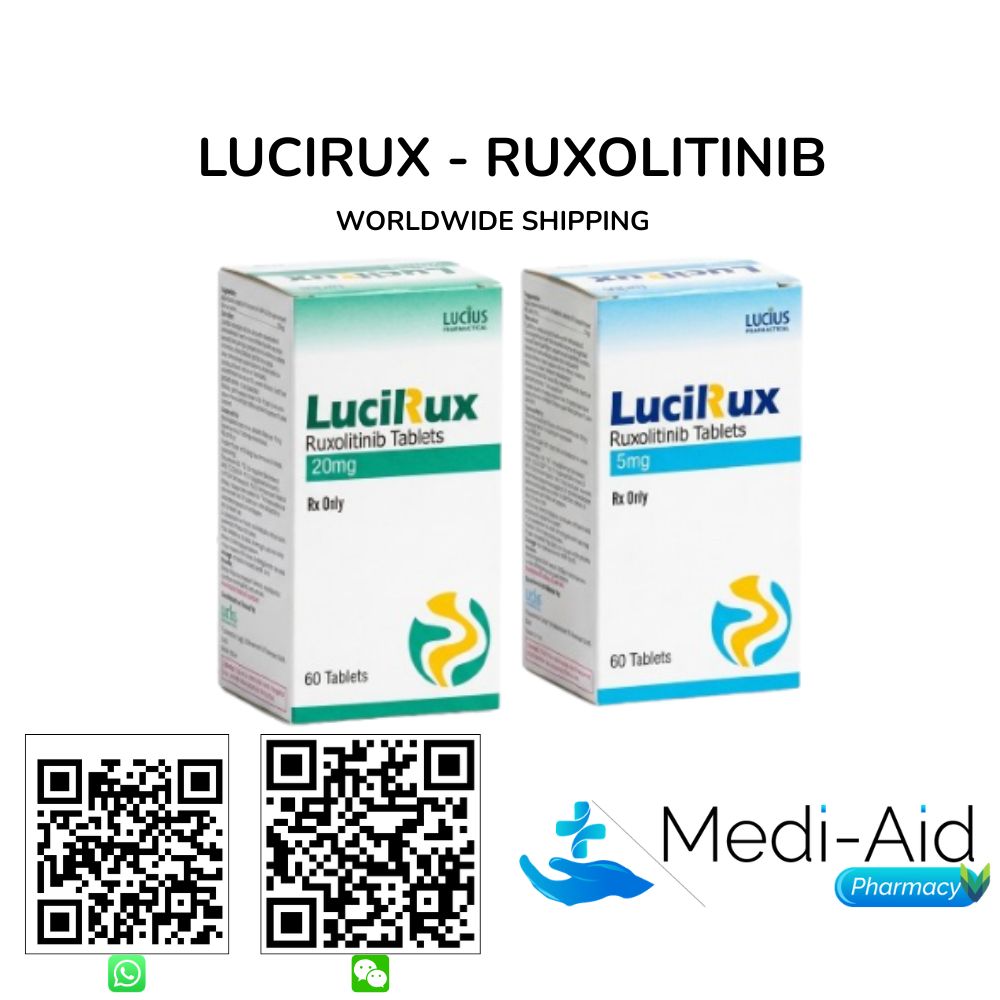
LuciRux 5 MG & 20 MG (Ruxolitinib) is a selective Janus kinase 1 and 2 inhibitor (JAK1/JAK2 inhibitor) an orally bioavailable, small-molecule targeted agent that blocks dysregulated JAK-STAT signaling driving clonal hematopoiesis across myeloproliferative neoplasms (MPNs) supplied as tablets in 5 mg and 20 mg strengths in a 60-tablet pack and manufactured by Lucius Pharmaceuticals (Lao) Co., Ltd. in Laos. Its active ingredient, ruxolitinib INN, competitively inhibits JAK1 and JAK2 kinase activity, blocking cytokine-stimulated STAT phosphorylation that fuels splenomegaly, constitutional symptoms, pathological myeloproliferation, and immune dysregulation in myelofibrosis (MF), polycythemia vera (PV), and graft-versus-host disease (GvHD).
LuciRux is supplied in two strengths 5 mg and 20 mg enabling oncologists and hematologists to precisely implement all platelet-count-based starting dose tiers (5 mg, 10 mg, 15 mg, and 20 mg twice daily) and structured dose modifications from a single formulary without multiple tablet strength SKUs. In the pivotal Phase 3 COMFORT-I trial in intermediate-2 or high-risk myelofibrosis, ruxolitinib achieved a ≥35% reduction in spleen volume in 41.9% of patients versus 0.7% with placebo (p<0.0001) at week 24, with a 46% symptom response rate on total symptom score. In the RESPONSE Phase 3 trial in hydroxyurea-resistant or intolerant polycythemia vera, 22.7% of ruxolitinib-treated patients met the composite primary endpoint (hematocrit control plus ≥35% spleen volume reduction) versus 0.9% with best available therapy (p<0.0001), with 40% achieving ≥35% spleen volume reduction at week 32. Searching for LuciRux 5 MG & 20 MG Ruxolitinib? Mediaid Pharmacy lists this product across its oncology medicines, myeloproliferative disorders medicines, and Lucius Pharmaceuticals portfolios and ships it worldwide.
Basic Product Information of LuciRux 5 MG & 20 MG (Ruxolitinib)
| Brand Name | LuciRux 5 MG & 20 MG (Ruxolitinib) |
| Product Name | LuciRux |
| Generic Name | Ruxolitinib INN |
| Drug Class | Selective Janus Kinase 1 and 2 Inhibitor (JAK1/JAK2 Inhibitor); Myeloproliferative Neoplasm (MPN) Agent; JAK-STAT Pathway Inhibitor; Antineoplastic Agent; Targeted Hematology/Oncology Agent; GvHD Treatment Agent |
| Formulation | Tablet (Oral) |
| Available Strengths | 5 mg per tablet and 20 mg per tablet |
| Available Pack Size | 60 Tablets per Pack |
| Dosing & Dose Modification | Myelofibrosis starting dose (platelet-count-based): Platelets >200×10⁹/L 20 mg twice daily; Platelets 100–200×10⁹/L 15 mg twice daily; Platelets 50–100×10⁹/L 5 mg twice daily. Polycythemia vera: 10 mg twice daily. Acute and chronic GvHD: 10 mg twice daily. The dual-strength supply of LuciRux (5 mg and 20 mg tablets) enables all four approved MF dose tiers 20 mg, 15 mg, 10 mg, and 5 mg twice daily without stocking multiple separate products. Doses are titrated based on individual safety and efficacy. Strong CYP3A4 inhibitors require a 50% reduction in total daily dose. Permanently discontinue if 5 mg twice daily is not tolerated in MF. |
| Primary Indications | Intermediate-2 or high-risk primary myelofibrosis (PMF), post-polycythemia vera MF (PPV-MF), and post-essential thrombocythemia MF (PET-MF); polycythemia vera (PV) in adults with inadequate response to or intolerance of hydroxyurea; steroid-refractory acute graft-versus-host disease (SR-aGvHD) in adults and pediatric patients ≥12 years; chronic graft-versus-host disease (cGvHD) after failure of one or two lines of systemic therapy in adults and pediatric patients ≥12 years. Each indication carries a distinct approved starting dose always consult the full prescribing information and treating hematologist/oncologist for indication-specific dosing. |
| Manufacturer | Lucius Pharmaceuticals (Lao) Co., Ltd., Laos |
| Country of Origin | Laos |
| Originator Reference Brands | Jakafi® (ruxolitinib tablets, by Incyte Corporation approved in the United States); Jakavi® (ruxolitinib tablets, by Novartis approved outside the United States). Both originator brands contain ruxolitinib INN as the active pharmaceutical ingredient in the same JAK1/JAK2 inhibitor drug class. LuciRux is manufactured by Lucius Pharmaceuticals (Lao) Co., Ltd. in Laos and is supplied through Mediaid Pharmacy for international procurement. |
| Global Supplier | Mediaid Pharmacy, Worldwide Shipping Available |
| Storage Conditions | Store at room temperature (15°C to 30°C). Keep in the original packaging and protect from moisture. Keep out of the reach of children. |
How LuciRux (Ruxolitinib) Works: Selective JAK1 and JAK2 Inhibition Across the JAK-STAT Signaling Pathway in Myeloproliferative Neoplasms
Ruxolitinib INN is an orally bioavailable, ATP-competitive, small-molecule inhibitor selective for Janus kinase 1 (JAK1) and Janus kinase 2 (JAK2) two non-receptor tyrosine kinases that function as critical signal transducers downstream of hematopoietic cytokine receptors. JAK1 primarily mediates proinflammatory cytokine signaling (including interleukin-6 [IL-6], interferon-γ, and other immunomodulatory cytokines), while JAK2 is the dominant mediator of hematopoietic growth factor signaling (including erythropoietin [EPO], thrombopoietin [TPO], and granulocyte colony-stimulating factor [G-CSF]).
In myeloproliferative neoplasms such as myelofibrosis (MF), polycythemia vera (PV), and essential thrombocythemia (ET), constitutive JAK-STAT pathway activation driven primarily by somatic JAK2 V617F mutations (present in approximately 50–60% of MF cases and over 95% of PV cases), CALR mutations, or MPL mutations produces uncontrolled clonal myeloproliferation, splenomegaly from extramedullary hematopoiesis, and debilitating constitutional symptoms including fatigue, night sweats, pruritus, bone pain, and cachexia.
By competitively blocking the kinase domains of both JAK1 and JAK2, ruxolitinib suppresses cytokine-stimulated phosphorylation of signal transducer and activator of transcription (STAT) proteins, interrupting constitutive JAK-STAT signaling irrespective of the underlying driver mutation. Pre-clinical characterization demonstrated ruxolitinib inhibiting JAK1 and JAK2 with half-maximal inhibitory concentration (IC50) values of 3.3 nM and 2.8 nM respectively, confirming potent, balanced dual-kinase inhibition.
The clinical consequence of JAK1/JAK2 inhibition in myelofibrosis is a measurable and durable reduction in spleen volume a direct marker of suppressed extramedullary hematopoiesis alongside reductions in circulating pro-inflammatory cytokines and significant improvements in constitutional symptoms and quality of life. In polycythemia vera, JAK2 inhibition directly suppresses the pathological erythrocytosis, leukocytosis, and splenomegaly driven by hyperactive JAK2 V617F signaling, achieving hematocrit control without the need for phlebotomy in a substantial proportion of hydroxyurea-resistant or intolerant patients.
In graft-versus-host disease (GvHD), ruxolitinib’s JAK1 inhibition modulates the donor-derived T-cell and cytokine-mediated immune response that drives acute and chronic GvHD after allogeneic stem cell transplantation, with the REACH2 and REACH3 Phase 3 trials demonstrating superior overall response rates versus best available therapy (BAT) in both corticosteroid-refractory acute and chronic GvHD. Pharmacokinetically, ruxolitinib exhibits dose-proportional, linear pharmacokinetics across the 5 mg to 200 mg dose range, with a mean terminal elimination half-life (t½) of approximately 3 hours that supports twice-daily oral dosing without appreciable drug accumulation.
Ruxolitinib is metabolized predominantly via cytochrome P450 3A4 (CYP3A4) and CYP2C9; co-administration with strong CYP3A4 inhibitors (such as ketoconazole, itraconazole, or clarithromycin) increases ruxolitinib exposure and requires a 50% reduction in total daily dose, while no dose adjustment is required for strong CYP3A4 inducers. Ruxolitinib shows no QT/QTc prolongation effect at supratherapeutic doses. For the complete range of targeted hematology-oncology medicines available at Mediaid Pharmacy, visit the oncology medicines collection.
LuciRux 5 MG & 20 MG (Ruxolitinib): Indications, Dosing, and Key Safety Information
| Approved Indications | Myelofibrosis (MF): Intermediate-2 or high-risk primary myelofibrosis (PMF), post-polycythemia vera MF (PPV-MF), and post-essential thrombocythemia MF (PET-MF) in adult patients.
Polycythemia Vera (PV): Adults with PV who have had an inadequate response to or are intolerant of hydroxyurea. Steroid-Refractory Acute GvHD (SR-aGvHD): Adult and pediatric patients aged 12 years and older with SR-aGvHD after allogeneic stem cell transplantation. Chronic GvHD (cGvHD): Adult and pediatric patients aged 12 years and older with cGvHD after failure of one or two lines of systemic therapy. |
| Recommended Starting Dose | Myelofibrosis (platelet-count-based): Platelets >200×10⁹/L → 20 mg twice daily (1× LuciRux 20 MG tablet twice daily); Platelets 100–200×10⁹/L → 15 mg twice daily (1× LuciRux 20 MG + 1× LuciRux 5 MG tablet twice daily); Platelets 50–100×10⁹/L → 5 mg twice daily (1× LuciRux 5 MG tablet twice daily). Polycythemia vera: 10 mg twice daily (2× LuciRux 5 MG tablets twice daily). SR-aGvHD and cGvHD: 10 mg twice daily. Administer LuciRux orally with or without food. Swallow tablets whole with water. |
| Dose Titration & Modification | Ruxolitinib doses are titrated based on individual safety and efficacy. In myelofibrosis, dose escalation requires evidence of suboptimal efficacy; doses may be increased in 5 mg increments to a maximum of 25 mg twice daily. Dose reductions are required for thrombocytopenia: interrupt for platelets <50×10⁹/L; restart at 5 mg twice daily when platelets recover to ≥35×10⁹/L; permanently discontinue if the patient cannot tolerate 5 mg twice daily. In polycythemia vera, doses may be increased by 5 mg twice daily to a maximum of 25 mg twice daily based on response and tolerability. The dual-strength LuciRux supply (5 mg and 20 mg tablets) allows oncology pharmacists to dispense all four key MF dose tiers (5 mg, 10 mg, 15 mg, 20 mg twice daily) and the PV/GvHD starting dose (10 mg twice daily) without multiple product SKUs. |
| Missed Dose | If a dose is missed, the patient should resume dosing at the next regularly scheduled time. Do not double the next dose to compensate for a missed dose. LuciRux (ruxolitinib) may be taken with or without food; take it at the same times each day to maintain consistent plasma levels. |
| Key Warnings & Precautions | Thrombocytopenia and Anemia: Dose-dependent hematologic toxicity including thrombocytopenia and anemia are the most common adverse reactions requiring dose reduction or interruption. Monitor complete blood counts (CBCs) prior to initiating LuciRux and every 2–4 weeks until doses are stabilized. Manage by dose reduction, interruption, or transfusion per the treating hematologist’s guidance.
Risk of Infection Serious and Opportunistic: Serious bacterial, mycobacterial, fungal, and viral infections have occurred with ruxolitinib. Herpes zoster reactivation is particularly frequent; assess and treat before or during LuciRux therapy. Progressive multifocal leukoencephalopathy (PML) has been reported. Screen for active tuberculosis (TB) before initiating LuciRux. Use prophylactic antibiotics per institutional guidelines, especially in GvHD patients. Non-Melanoma Skin Cancers: Basal cell carcinoma and squamous cell carcinoma have been reported in patients treated with ruxolitinib. Perform periodic skin examinations throughout treatment. Lipid Elevations: Increases in total cholesterol, LDL cholesterol, and triglycerides have been observed. Monitor lipid profiles at baseline and approximately 8–12 weeks after initiating LuciRux; manage lipid elevations per clinical guidelines. Symptom Exacerbation on Discontinuation: Abrupt interruption or discontinuation of ruxolitinib may cause rapid return of MF symptoms, including splenomegaly, constitutional symptoms, and in rare cases, a rapid clinical deterioration resembling a withdrawal syndrome. Taper LuciRux gradually under oncologist supervision when discontinuation is required. Embryo-Fetal Toxicity: Ruxolitinib may cause fetal harm based on mechanism of action. Females of reproductive potential must use effective contraception during LuciRux treatment and for at least 4 weeks after the final dose. Breastfeeding is not recommended during treatment. |
| Common Adverse Reactions (≥15%) | Anemia (requiring transfusion in a subset), thrombocytopenia, bruising, dizziness, headache, and diarrhea. In GvHD patients, anemia and thrombocytopenia are the most common hematologic adverse reactions (incidence >35%). Herpes zoster infection is a notable infection risk requiring active monitoring and prophylactic antiviral therapy per institutional protocol throughout LuciRux treatment. |
| Drug Interactions | Ruxolitinib is a CYP3A4 and CYP2C9 substrate. Strong CYP3A4 inhibitors (ketoconazole, itraconazole, clarithromycin, indinavir, and grapefruit or grapefruit juice) increase ruxolitinib exposure reduce the total daily LuciRux dose by approximately 50% during co-administration; resume the prior dose 2–3 days after discontinuation of the inhibitor. Strong CYP3A4 inducers (rifampin, phenytoin, carbamazepine, St. John’s Wort) decrease ruxolitinib exposure no dose adjustment is required per current labeling, but monitor for loss of efficacy. Ruxolitinib does not inhibit CYP3A4 and does not reduce exposure of concomitant CYP3A4-metabolized drugs. Disclose all medications, herbal supplements, and antifungal agents to the treating hematologist or oncologist before initiating LuciRux. |
| Hepatic Impairment | In patients with any degree of hepatic impairment and a platelet count between 50–150×10⁹/L, the LuciRux starting dose should be reduced by approximately 50% and administered twice daily. For patients with hepatic impairment and platelets >150×10⁹/L, no dose adjustment is required. Consult the full prescribing information and the treating hepatologist and hematologist for individualized dose guidance. |
| Pregnancy & Lactation | Ruxolitinib may cause embryo-fetal harm based on its mechanism of action as a JAK1/JAK2 inhibitor JAK-STAT signaling is essential for normal hematopoiesis and fetal immune development. LuciRux is not recommended during pregnancy. Females of reproductive potential must use effective contraception during treatment and for at least 4 weeks after the final dose. Breastfeeding is not recommended during LuciRux treatment and for at least 2 weeks after the final dose. Consult the treating oncologist or hematologist before initiating LuciRux in patients who are pregnant, planning a pregnancy, or breastfeeding. |
Who Should Use LuciRux 5 MG & 20 MG (Ruxolitinib)?
LuciRux 5 MG & 20 MG (Ruxolitinib) is indicated across four distinct hematology and oncology patient populations, making ruxolitinib one of the most broadly indicated targeted agents in hematologic malignancies.
First, adult patients with intermediate-2 or high-risk myelofibrosis (MF) including primary MF (PMF), post-polycythemia vera MF (PPV-MF), and post-essential thrombocythemia MF (PET-MF) constitute the foundational indication established by the pivotal COMFORT-I and COMFORT-II Phase 3 trials. Ruxolitinib is appropriate for MF patients with symptomatic splenomegaly, debilitating constitutional symptoms (fatigue, night sweats, unintentional weight loss, bone pain, pruritus), and MF-related cytopenias, with the starting dose precisely calibrated to baseline platelet count 20 mg twice daily for platelets >200×10⁹/L, 15 mg twice daily for platelets 100–200×10⁹/L, and 5 mg twice daily for platelets 50–100×10⁹/L.
Second, adult patients with polycythemia vera (PV) who have demonstrated an inadequate response to hydroxyurea (including persistent uncontrolled hematocrit, thrombocytosis, leukocytosis, or symptomatic splenomegaly) or who are intolerant of hydroxyurea, as established by the RESPONSE Phase 3 trial where ruxolitinib achieved primary composite endpoint response in 22.7% of patients versus 0.9% with BAT, with 80% of initial responders maintaining their response for at least 48 weeks.
Third, adult and pediatric patients (aged ≥12 years) with steroid-refractory acute GvHD (SR-aGvHD) following allogeneic stem cell transplantation, for whom ruxolitinib’s JAK1-mediated T-cell immunomodulation provides an approved second-line option when corticosteroids have failed.
Fourth, adult and pediatric patients (aged ≥12 years) with chronic GvHD (cGvHD) after failure of one or two prior systemic therapy lines, based on the REACH3 Phase 3 trial which demonstrated an overall response rate (ORR) of 70% with ruxolitinib versus 57% with BAT and a median duration of response of 25 months versus 5.6 months for BAT. LuciRux is contraindicated or requires careful benefit-risk assessment in patients with active serious infections, severe thrombocytopenia (platelets <50×10⁹/L at MF initiation), active tuberculosis, or known hypersensitivity to ruxolitinib or any excipient.
The treating hematologist must review all concomitant medications particularly antifungal agents (CYP3A4 inhibitors) commonly used in transplant patients before initiating LuciRux. Hematology centers sourcing LuciRux alongside complementary agents for MPN management can browse the Mediaid Pharmacy myeloproliferative disorders medicines and oncology medicines portfolios for the full selection available for international delivery.
Global Supplier: Mediaid Pharmacy Worldwide Shipping for LuciRux 5 MG & 20 MG (Ruxolitinib)
Mediaid Pharmacy is a Dhaka-based supplier of specialty oncology and targeted hematology medicines with worldwide shipping to patients, hematology clinics, cancer hospitals, bone marrow transplant programs, and international distributors across all regions. LuciRux 5 MG & 20 MG (Ruxolitinib), manufactured by Lucius Pharmaceuticals (Lao) Co., Ltd. in Laos, is supplied as 60 tablets per pack available in both 5 mg and 20 mg strengths with pricing quotations, stock confirmation, full product documentation, and end-to-end international delivery tracking for every order. The dual-strength supply format covers all approved dose levels of ruxolitinib across its four indications (MF, PV, SR-aGvHD, cGvHD), enabling hematology programs to implement all platelet-count-based MF starting doses and all titration tiers from a single supplier relationship.
Hematology-oncology centers treating myelofibrosis, PV, and GvHD patients; hospital formulary teams; bone marrow transplant programs; international distributors; and individual patients can contact the Mediaid Pharmacy team through WhatsApp, phone, or WeChat for all inquiries regarding LuciRux Ruxolitinib stock availability, current pricing, and international delivery timelines. Procurement teams co-sourcing LuciRux with other targeted hematology or oncology agents can browse the complete Mediaid Pharmacy oncology medicines collection and the Lucius Pharmaceuticals medicines portfolio before requesting a consolidated quotation.
Why Choose LuciRux 5 MG & 20 MG (Ruxolitinib) from Mediaid Pharmacy?
LuciRux 5 MG & 20 MG (Ruxolitinib) provides hematologists, oncologists, and bone marrow transplant specialists with a multi-indication, mechanistically validated JAK1/JAK2 inhibitor backed by four approved indications and five Phase 3 trials (COMFORT-I, COMFORT-II, RESPONSE, REACH2, REACH3) a clinical evidence base that is exceptional among targeted hematology agents and that spans myelofibrosis, polycythemia vera, acute GvHD, and chronic GvHD. The COMFORT-I Phase 3 trial demonstrated that ruxolitinib achieved ≥35% spleen volume reduction in 41.9% of MF patients versus 0.7% with placebo at week 24 (p<0.0001), with mean spleen volume reductions of 31.6% at week 24 sustained to 34.9% at week 96 confirming durability of response over two-year follow-up.
COMFORT-II demonstrated ≥35% spleen volume reduction in 28.5% of patients on ruxolitinib versus 0% with BAT at week 48 (p<0.0001), with long-term follow-up suggesting a survival advantage for ruxolitinib compared with BAT. The RESPONSE trial established ruxolitinib as the standard second-line treatment for hydroxyurea-resistant PV, with 40% of ruxolitinib patients achieving ≥35% spleen volume reduction versus 0.9% on BAT and 80% of primary responders maintaining their response for at least 48 weeks. The dual-strength design of LuciRux supplied as both 5 mg and 20 mg tablets in a 60-tablet pack is a clinically rational formulary solution: because ruxolitinib’s MF dosing is stratified by baseline platelet count (20 mg, 15 mg, or 5 mg twice daily at initiation) and subject to ongoing titration in 5 mg increments based on efficacy and tolerability, the combination of 5 mg and 20 mg tablet strengths enables oncology pharmacists to dispense all four key dose tiers without dispensing multiple products.
LuciRux is manufactured by Lucius Pharmaceuticals (Lao) Co., Ltd. in Laos and is available through Mediaid Pharmacy with full product documentation, specialist supply coordination, and worldwide shipping from Dhaka. To source additional Lucius Pharmaceuticals oncology and hematology medicines, visit the Mediaid Pharmacy Lucius Pharmaceuticals medicines section and the myeloproliferative disorders medicines portfolio, and contact the team for a personalized quotation.
Frequently Asked Questions About LuciRux 5 MG & 20 MG (Ruxolitinib)
What is LuciRux 5 MG & 20 MG (Ruxolitinib) used for?
LuciRux 5 MG & 20 MG (Ruxolitinib) is a selective JAK1/JAK2 inhibitor used for the treatment of intermediate-2 or high-risk myelofibrosis (primary MF, post-PV MF, and post-ET MF); polycythemia vera (PV) in adults with inadequate response to or intolerance of hydroxyurea; steroid-refractory acute graft-versus-host disease (SR-aGvHD); and chronic graft-versus-host disease (cGvHD) after failure of one or two lines of systemic therapy in adult and pediatric patients aged 12 years and older. Ruxolitinib blocks dysregulated JAK1 and JAK2 kinase activity that drives clonal hematopoiesis, splenomegaly, constitutional symptoms, and immune dysregulation across these diseases. The originator brands for ruxolitinib are Jakafi® (Incyte Corporation, United States) and Jakavi® (Novartis, outside the United States). LuciRux, manufactured by Lucius Pharmaceuticals (Lao) Co., Ltd. in Laos, is available through Mediaid Pharmacy with worldwide shipping.
What is the generic name of LuciRux?
The generic name of LuciRux is ruxolitinib INN. LuciRux is the brand name registered by Lucius Pharmaceuticals (Lao) Co., Ltd. for ruxolitinib manufactured in Laos. LuciRux is formulated as oral tablets in two strengths 5 mg and 20 mg supplied in a 60-tablet pack. The dual-strength format allows hematology pharmacists to cover all platelet-count-based myelofibrosis starting dose tiers (20 mg, 15 mg, and 5 mg twice daily) and the standard polycythemia vera and GvHD starting dose (10 mg twice daily) from a single supplier. The originator reference brands are Jakafi® (Incyte) and Jakavi® (Novartis). Mediaid Pharmacy distributes LuciRux globally with worldwide shipping to patients, hematology centers, cancer hospitals, and specialist clinics.
What is the difference between LuciRux (Ruxolitinib) and Jakafi / Jakavi (Ruxolitinib)?
LuciRux and Jakafi® / Jakavi® all contain ruxolitinib INN as the active pharmaceutical ingredient and share the same JAK1/JAK2 inhibitor mechanism of action across myelofibrosis, polycythemia vera, and graft-versus-host disease indications. Jakafi® is the originator brand by Incyte Corporation marketed in the United States; Jakavi® is the same molecule marketed by Novartis outside the United States both are available in 5 mg, 10 mg, 15 mg, 20 mg, and 25 mg tablet strengths. LuciRux is manufactured by Lucius Pharmaceuticals (Lao) Co., Ltd. in Laos and is supplied in 5 mg and 20 mg tablet strengths covering all key dose levels in the MF, PV, and GvHD dosing schedules available through Mediaid Pharmacy for international procurement by hematology institutions and patients in regions where Jakafi® or Jakavi® may be unavailable or cost-prohibitive. For the full range of myeloproliferative disorder medicines at Mediaid Pharmacy, visit the myeloproliferative disorders medicines collection.
How is LuciRux 5 MG & 20 MG (Ruxolitinib) administered?
LuciRux (Ruxolitinib) is administered orally twice daily (morning and evening) with or without food. In myelofibrosis, the starting dose depends on baseline platelet count: 20 mg twice daily for platelets >200×10⁹/L; 15 mg twice daily for platelets 100–200×10⁹/L; and 5 mg twice daily for platelets 50–100×10⁹/L. In polycythemia vera and GvHD, the standard starting dose is 10 mg twice daily. Swallow tablets whole with water. Take LuciRux at the same times each day to maintain consistent drug exposure. If a dose is missed, resume at the next regularly scheduled time do not double doses. Avoid or manage grapefruit juice and strong CYP3A4 inhibitors throughout treatment, as these increase ruxolitinib exposure and require a 50% total daily dose reduction. Do not abruptly discontinue LuciRux in myelofibrosis patients taper under oncologist supervision to prevent symptom exacerbation.
What are the side effects of LuciRux 5 MG & 20 MG (Ruxolitinib)?
The most common adverse reactions of ruxolitinib occurring in 15% or more of patients in clinical trials include anemia (requiring transfusion in a subset of MF patients), thrombocytopenia, bruising, dizziness, headache, and diarrhea. Anemia and thrombocytopenia are the primary reasons for dose modification; they are dose-dependent, typically emerge within the first 8 weeks of treatment, and are manageable through structured dose holds and reductions per the treating hematologist’s guidance. Herpes zoster reactivation is a notable infection risk antiviral prophylaxis (acyclovir or valacyclovir) is recommended at many institutions throughout LuciRux treatment. Serious and opportunistic infections including bacterial, fungal, and viral infections, and progressive multifocal leukoencephalopathy (PML) require active surveillance. Non-melanoma skin cancers (basal cell and squamous cell carcinoma) and lipid elevations (cholesterol, triglycerides) have also been reported. Abrupt discontinuation of ruxolitinib in MF patients may cause rapid symptom return, including splenomegaly and constitutional symptoms; gradual tapering is recommended. Always discuss the complete safety profile, individual risk factors, and dose management strategies with the treating hematologist before and throughout LuciRux treatment.
How effective is Ruxolitinib (LuciRux) for myelofibrosis and polycythemia vera?
Ruxolitinib has demonstrated statistically significant and clinically meaningful efficacy across its four approved indications in landmark Phase 3 trials. In intermediate-2 or high-risk myelofibrosis, the COMFORT-I Phase 3 trial (309 patients) showed ruxolitinib achieved ≥35% spleen volume reduction in 41.9% of patients versus 0.7% with placebo at week 24 (p<0.0001), with spleen response maintained for ≥48 weeks in 67% of responders and a sustained mean spleen volume reduction of 34.9% at week 96 of follow-up. COMFORT-II (219 patients) demonstrated ≥35% spleen volume reduction in 28.5% of ruxolitinib patients versus 0% with BAT at week 48 (p<0.0001), with long-term follow-up suggesting a survival advantage compared with BAT. In polycythemia vera, the RESPONSE trial showed that 22.7% of ruxolitinib patients met the composite primary endpoint (hematocrit control plus ≥35% spleen volume reduction) versus 0.9% with BAT (p<0.0001), with 80% of initial responders maintaining response for at least 48 weeks. LuciRux delivers the same active ingredient ruxolitinib INN at the same reference tablet doses, sourced through Mediaid Pharmacy with worldwide shipping. For the complete oncology medicines range at Mediaid Pharmacy, visit the oncology medicines collection.
Is LuciRux 5 MG & 20 MG (Ruxolitinib) safe during pregnancy or while breastfeeding?
No. Ruxolitinib may cause embryo-fetal harm based on its mechanism of action as a JAK1/JAK2 inhibitor JAK-STAT signaling plays a critical role in normal fetal immune development and hematopoiesis, making inhibition during pregnancy a risk for serious developmental toxicity. LuciRux is not recommended during pregnancy. Females of reproductive potential must use effective contraception during LuciRux treatment and for at least 4 weeks after the final dose. Breastfeeding is not recommended during LuciRux treatment and for at least 2 weeks after the final dose. If pregnancy occurs during ruxolitinib treatment, the treating hematologist or oncologist should be notified immediately. Consult the treating specialist before starting LuciRux if pregnant, planning a pregnancy, or breastfeeding.
Can I order LuciRux 5 MG & 20 MG (Ruxolitinib) online with worldwide shipping?
Yes. Mediaid Pharmacy supplies LuciRux 5 MG & 20 MG (Ruxolitinib) to patients, hematology centers, cancer hospitals, bone marrow transplant programs, and healthcare providers globally. Contact Mediaid Pharmacy via WhatsApp, phone, or WeChat at +8801773428128, or email info@mediaidpharmacy.com for pricing, current stock availability, and international delivery details for your country.
Order LuciRux 5 MG & 20 MG (Ruxolitinib) with Worldwide Shipping
Phone / WhatsApp / WeChat: +8801773428128 | Email: info@mediaidpharmacy.com

Reviews
There are no reviews yet.