Description
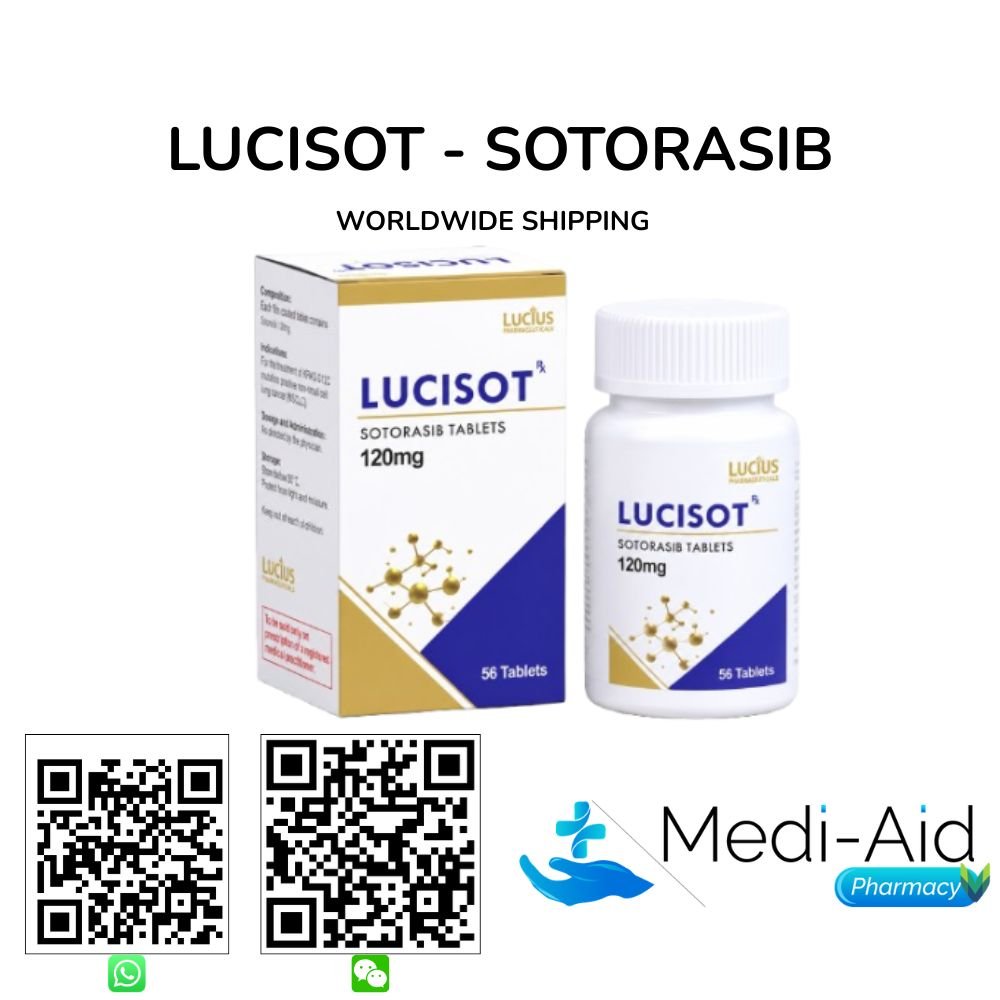
Lucisot 120 MG (Sotorasib) is a first-in-class, orally bioavailable, small-molecule covalent KRAS G12C inhibitor that selectively and irreversibly binds to the mutant cysteine-12 (Cys12) residue of the KRAS G12C oncoprotein a targeted RAS pathway inhibitor that locks the KRAS G12C protein in its inactive GDP-bound conformation, preventing guanine nucleotide exchange factor (GEF)-mediated GTP loading and thereby abolishing constitutive downstream RAS effector signaling through the RAF-MEK-ERK (MAPK) pathway and the PI3K-AKT-mTOR pathway, which are the primary oncogenic survival, proliferation, and anti-apoptotic signaling cascades driven by the KRAS G12C gain-of-function mutation supplied as a film-coated tablet in a strength of 120 mg, 56 tablets per pot, and manufactured by Lucius Pharmaceuticals (Lao) Co., Ltd., Laos.
Sotorasib, the active pharmaceutical ingredient of Lucisot, is a KRAS G12C-targeted therapy indicated for adult patients with locally advanced or metastatic non-small cell lung cancer (NSCLC) harboring the KRAS G12C mutation who have received at least one prior systemic therapy establishing sotorasib as the first KRAS-targeted therapy approved in oncology history, addressing a mutation previously considered undruggable for over three decades and for adult patients with KRAS G12C-mutated colorectal cancer (CRC) in combination with panitumumab following prior fluoropyrimidine-, oxaliplatin-, and irinotecan-based chemotherapy.
The recommended dose of Lucisot (Sotorasib) is 960 mg orally once daily (administered as eight 120 mg film-coated tablets taken together), with or without food, until disease progression or unacceptable toxicity; sotorasib should not be coadministered with proton pump inhibitors (PPIs) if acid-reducing therapy is required, use a locally acting antacid or an H2 receptor antagonist, with sotorasib taken 10 hours after the H2 blocker and at least 2 hours before the next H2 blocker dose; sotorasib is a substrate of CYP3A4 and P-gp avoid coadministration with strong CYP3A4 inducers (rifampin, carbamazepine, phenytoin, St. John’s Wort) and strong P-gp inducers, as these agents significantly reduce sotorasib plasma exposure.
The pivotal Phase II CodeBreaK 100 study (NCT03600883) evaluated sotorasib 960 mg once daily in 126 patients with KRAS G12C-mutated locally advanced or metastatic NSCLC who had received at least one prior systemic therapy, achieving a confirmed objective response rate (ORR) of 37.1% (all partial responses) by blinded independent central review (BICR) per RECIST v1.1, a disease control rate (DCR) of 80.6%, a median duration of response (DOR) of 11.1 months, and a median progression-free survival (PFS) of 6.3 months, representing the first clinically meaningful activity ever demonstrated by a KRAS-targeted agent in solid tumors and establishing sotorasib as the standard second-line targeted therapy for KRAS G12C-mutated NSCLC.
The Phase III CodeBreaK 200 study (NCT04303780) subsequently confirmed a statistically significant PFS improvement of 5.6 months vs. 4.5 months (HR 0.66; 95% CI, 0.51–0.86; p=0.0017) versus docetaxel in previously treated KRAS G12C-mutated NSCLC. Important: The most clinically significant adverse reactions of sotorasib are hepatotoxicity (ALT/AST elevations), interstitial lung disease (ILD)/pneumonitis, and severe diarrhea. Monitor liver function tests (ALT, AST, total bilirubin, alkaline phosphatase) before initiating sotorasib, every 3 weeks during the first 3 months of treatment, and as clinically indicated thereafter; withhold sotorasib for Grade 2 hepatotoxicity; permanently discontinue for Grade 3 or 4 hepatotoxicity.
Monitor for new or worsening respiratory symptoms; withhold sotorasib for Grade 2 ILD/pneumonitis; permanently discontinue for Grade 3 or 4 ILD/pneumonitis. Manage diarrhea proactively with antidiarrheal agents; withhold sotorasib for Grade 3 diarrhea not controlled with antidiarrheal therapy; permanently discontinue for Grade 4 diarrhea. Avoid sotorasib in patients with active hepatic impairment or severe pre-existing liver dysfunction.
Do not substitute Lucisot for adagrasib or other KRAS-targeted therapies without confirmed indication-specific prescribing and clinical benefit-risk assessment by the treating oncologist. Searching for Lucisot 120 MG Sotorasib? Mediaid Pharmacy lists this product across its oncology medicines, lung cancer medicines, colorectal cancer medicines, and Lucius Pharmaceuticals medicines portfolios and ships it worldwide.
Basic Product Information of Lucisot 120 MG (Sotorasib)
| Brand Name | Lucisot 120 MG (Sotorasib) Laos-manufactured by Lucius Pharmaceuticals (Lao) Co., Ltd.; sotorasib is also marketed internationally as Lumakras (sotorasib) by Amgen in the United States and global markets; Lucisot is the branded generic formulation of sotorasib film-coated tablet manufactured by Lucius Pharmaceuticals (Lao) Co., Ltd. for the domestic and international oncology market |
| Product Name | Lucisot (branded sotorasib film-coated tablet, 120 mg per tablet, 56 tablets per pot, by Lucius Pharmaceuticals (Lao) Co., Ltd., Laos) |
| Generic Name | Sotorasib (INN; first-in-class covalent small-molecule KRAS G12C inhibitor; sotorasib selectively and irreversibly binds to the mutant cysteine-12 (Cys12) residue unique to the KRAS G12C variant a residue absent in wild-type KRAS locking KRAS G12C in its inactive GDP-bound conformation; this covalent occupancy of the allosteric switch II pocket (SIIP) prevents GEF-mediated GDP-to-GTP nucleotide exchange, thereby blocking constitutive downstream RAS effector signaling through the RAF-MEK-ERK/MAPK pathway and the PI3K-AKT-mTOR pathway; sotorasib’s selectivity for the mutant cysteine-12 confers tumor-selective activity without meaningful inhibition of wild-type KRAS or other RAS family members (HRAS, NRAS); KRAS G12C mutation is present in approximately 13% of non-small cell lung cancer (NSCLC), 3–4% of colorectal cancer (CRC), and 2–3% of pancreatic ductal adenocarcinoma (PDAC); sotorasib was developed by Amgen; FDA initial approval for KRAS G12C-mutated NSCLC: May 28, 2021; subsequently approved for KRAS G12C-mutated colorectal cancer in combination with panitumumab: January 2024) |
| Drug Class | KRAS G12C Inhibitor (First-in-Class Covalent KRAS-Targeted Therapy); Small-Molecule RAS Pathway Inhibitor; Irreversible Covalent GDP-State KRAS G12C Binder; Switch II Pocket (SIIP) Allosteric Inhibitor; RAF-MEK-ERK/MAPK Pathway Suppressor (via KRAS G12C Blockade); PI3K-AKT-mTOR Pathway Suppressor (via KRAS G12C Blockade); NSCLC KRAS G12C Targeted Oral Therapy; Colorectal Cancer KRAS G12C Targeted Oral Therapy; Orally Bioavailable Oncology Kinase Pathway Inhibitor; RAS Oncogene-Targeted Anti-Cancer Agent; Mutation-Selective Tumor-Targeted Small Molecule |
| Formulation | Film-coated tablet for oral administration take 960 mg (eight 120 mg tablets) orally once daily with or without food; swallow tablets whole do not crush, split, or chew; if a dose is missed, take the missed dose on the same day as soon as possible, then resume normal once-daily schedule the next day do not take two doses on the same day to make up for a missed dose; in the event of vomiting after a dose, do not administer an additional dose on the same day take the next dose at the scheduled time; avoid coadministration with proton pump inhibitors (PPIs), which significantly reduce sotorasib AUC by up to 65% by increasing gastric pH if acid suppression is required, use a locally-acting antacid or an H2 receptor antagonist, with sotorasib taken 10 hours after the H2 blocker dose and at least 2 hours before the next H2 blocker dose; sotorasib is a substrate of CYP3A4 and P-glycoprotein (P-gp) avoid coadministration with strong CYP3A4 inducers (rifampin, carbamazepine, phenobarbital, phenytoin, St. John’s Wort) and strong P-gp inducers; sotorasib is a CYP3A4 inducer monitor for reduced efficacy of CYP3A4 substrate drugs with narrow therapeutic indices (immunosuppressants, warfarin); store Lucisot tablets at room temperature, 20°C–25°C (68°F–77°F), excursions permitted to 15°C–30°C (59°F–86°F); keep in original sealed pot away from moisture; keep out of reach of children |
| Available Strengths | 120 mg per film-coated tablet the recommended daily dose for all approved sotorasib indications is 960 mg orally once daily, administered as eight 120 mg film-coated tablets taken together as a single daily dose; sotorasib dosing is fixed (non-weight-based) at 960 mg once daily for both NSCLC and colorectal cancer indications; dose reductions for toxicity are permitted at two levels: first dose reduction to 720 mg (six 120 mg tablets) once daily; second dose reduction to 480 mg (four 120 mg tablets) once daily; permanently discontinue sotorasib for Grade 4 adverse reactions or if the patient cannot tolerate the 480 mg dose level; no dose adjustment is recommended for mild or moderate renal impairment (eGFR ≥30 mL/min/1.73 m²) or mild to moderate hepatic impairment (Child-Pugh A or B); sotorasib has not been studied in patients with severe hepatic impairment (Child-Pugh C) use with caution; sotorasib has not been studied in pediatric patients |
| Available Pack Size | 56 tablets per pot at the recommended dose of 960 mg once daily (8 tablets/day), one pot of Lucisot 120 MG (56 tablets) provides 7 days of sotorasib therapy; a standard 28-day treatment cycle requires 4 pots (224 tablets); a standard 30-day monthly supply requires approximately 4–5 pots depending on dispensing practice; pots are sealed for moisture protection and child safety; institutional oncology departments, outpatient oncology clinics, and hospital pharmacies typically procure Lucisot on a per-patient per-month basis calculated from the continuous once-daily dosing schedule until disease progression or unacceptable toxicity; for KRAS G12C-mutated NSCLC patients receiving sotorasib as second-line therapy, treatment duration in the CodeBreaK 100 study ranged from 1.1 to 32+ months (median 6.3 months treatment duration) with continued dosing beyond confirmed radiologic response in responding patients |
| Dosing Schedule | KRAS G12C-Mutated Locally Advanced or Metastatic NSCLC (Second-Line or Later, following at least one prior systemic therapy): Sotorasib 960 mg (eight 120 mg tablets) orally once daily; continue until disease progression or unacceptable toxicity; patient selection requires documented KRAS G12C mutation status confirmed by an FDA-approved companion diagnostic or validated molecular testing (next-generation sequencing [NGS] or allele-specific PCR). KRAS G12C-Mutated Colorectal Cancer (after prior fluoropyrimidine-, oxaliplatin-, and irinotecan-based chemotherapy): Sotorasib 960 mg orally once daily in combination with panitumumab 6 mg/kg IV every 2 weeks; sotorasib is taken on the same days as panitumumab infusions as well as the days between; patient selection requires KRAS G12C mutation confirmed by an approved companion diagnostic, with wild-type RAS confirmed in the same tumor sample. Dose Reduction Schedule for Adverse Reactions: First dose reduction: 720 mg (six 120 mg tablets) once daily; Second dose reduction: 480 mg (four 120 mg tablets) once daily; Permanently discontinue sotorasib if the patient cannot tolerate 480 mg daily. Mandatory Pre-Treatment Assessment: Confirm KRAS G12C mutation status; assess baseline LFTs (ALT, AST, total bilirubin, alkaline phosphatase); assess baseline pulmonary function and chest imaging; conduct pregnancy test in females of reproductive potential. On-Treatment Monitoring: Monitor LFTs every 3 weeks for the first 3 months, then as clinically indicated; monitor for respiratory symptoms suggestive of ILD/pneumonitis at every clinical encounter; monitor for diarrhea severity and hydration status throughout treatment. Drug Interaction Precaution: Do not administer sotorasib with PPIs; use H2 blockers or antacids only with timing separation as described above; avoid strong CYP3A4/P-gp inducers. |
| Primary Indications | KRAS G12C-MUTATED NON-SMALL CELL LUNG CANCER (NSCLC) SECOND-LINE OR LATER:
Sotorasib Monotherapy KRAS G12C-Mutated NSCLC (CodeBreaK 100; Phase II; NCT03600883; n=126): Sotorasib 960 mg orally once daily in adult patients with locally advanced or metastatic KRAS G12C-mutated NSCLC who had received at least one prior systemic therapy (platinum-based chemotherapy and/or anti-PD-1/PD-L1 immunotherapy): confirmed ORR 37.1% by BICR per RECIST v1.1 (all partial responses); DCR 80.6%; median DOR 11.1 months (95% CI, 6.9–NE); median PFS 6.3 months (95% CI, 4.1–8.6); median OS 12.5 months (95% CI, 10.0–NE); FDA accelerated approval May 28, 2021. The CodeBreaK 100 data established sotorasib as the first RAS/MAPK-targeted therapy to demonstrate clinically meaningful, durable anti-tumor activity in solid tumors translating decades of KRAS biology research into the first approved KRAS-directed therapy. The confirmatory Phase III CodeBreaK 200 study (NCT04303780; n=345; sotorasib 960 mg vs. docetaxel 75 mg/m² IV every 3 weeks) confirmed superior PFS: median PFS 5.6 months vs. 4.5 months (HR 0.66; 95% CI, 0.51–0.86; p=0.0017); ORR 28.1% vs. 13.2%; improved patient-reported outcomes (PROs) for lung cancer symptoms and quality of life (QoL) versus docetaxel confirming the clinical advantage of sotorasib over standard second-line chemotherapy in KRAS G12C-mutated NSCLC. KRAS G12C-MUTATED COLORECTAL CANCER (CRC) AFTER PRIOR FLUOROPYRIMIDINE-, OXALIPLATIN-, AND IRINOTECAN-BASED CHEMOTHERAPY: Sotorasib + Panitumumab KRAS G12C-Mutated CRC (CodeBreaK 300; Phase III; NCT04793958; n=160; sotorasib 960 mg + panitumumab vs. investigator’s choice [TAS-102 or regorafenib]): Median PFS 5.6 months vs. 2.2 months (HR 0.49; 95% CI, 0.30–0.80; p=0.0029); ORR 26.4% vs. 0.6%; median OS 13.0 months vs. 11.0 months (HR 0.80; 95% CI, 0.56–1.13; p=0.21) the sotorasib + panitumumab combination represents the first targeted therapy combination approved for KRAS G12C-mutated CRC, addressing a population with no previously approved targeted treatment option; patient selection requires confirmation of both KRAS G12C mutation and wild-type RAS status (no additional RAS mutations in the same tumor sample) by an approved companion diagnostic before initiating sotorasib + panitumumab. The rationale for EGFR inhibition with sotorasib is mechanistic: KRAS G12C inhibition creates adaptive feedback reactivation through upstream EGFR signaling in CRC coadministration of panitumumab (anti-EGFR) blocks this adaptive bypass, restoring durable KRAS G12C pathway suppression and preventing acquired resistance mediated through EGFR-dependent RAS reactivation. |
| Manufacturer | Lucius Pharmaceuticals (Lao) Co., Ltd. Laos |
| Country of Origin | Laos (Lao People’s Democratic Republic) |
| Storage | Store at room temperature, 20°C–25°C (68°F–77°F); excursions permitted to 15°C–30°C (59°F–86°F); store in original sealed pot; keep away from moisture, direct sunlight, and excessive heat; keep out of reach of children; standard ambient-temperature shipping is acceptable for Lucisot (Sotorasib) film-coated tablets cold-chain shipping is not required, unlike IV biologics; Mediaid Pharmacy ships Lucisot internationally using validated ambient-temperature packaging methods appropriate for destination country transit times and regional climate conditions |
Global Supplier: Mediaid Pharmacy Worldwide Shipping for Lucisot 120 MG (Sotorasib)
Mediaid Pharmacy is a Dhaka-based supplier of specialty targeted oncology therapies, KRAS-directed cancer medicines, lung cancer medicines, colorectal cancer medicines, and oral anti-cancer agents with worldwide shipping to patients, oncology departments, outpatient infusion units, lung cancer and colorectal cancer treatment programs, hospital pharmacies, oncology day units, patient access programs, and international distributors across all regions. Lucisot 120 MG (Sotorasib), manufactured by Lucius Pharmaceuticals (Lao) Co., Ltd. in Laos, is supplied as a film-coated tablet (120 mg per tablet, 56 tablets per pot), with pricing quotations, stock confirmation, full product documentation, and end-to-end international delivery tracking for every order.
Lucisot (Sotorasib) is an orally administered, ambient-temperature-stable tablet formulation international shipping does not require cold-chain handling, enabling reliable worldwide supply to patients in diverse geographies. Lung cancer treatment programs procuring sotorasib for second-line KRAS G12C-mutated NSCLC; colorectal cancer programs co-sourcing sotorasib with panitumumab for KRAS G12C-mutated CRC combination regimens; hospital formulary procurement departments sourcing Lucisot as part of targeted oncology medicines portfolios; and individual patients and families sourcing sotorasib for KRAS G12C-mutated NSCLC treatment can contact the Mediaid Pharmacy team through WhatsApp, phone, or email for Lucisot 120 MG stock availability, current pricing, shipping options, and international delivery timelines.
Why Choose Lucisot 120 MG (Sotorasib) from Mediaid Pharmacy?
Lucisot (Sotorasib) from Lucius Pharmaceuticals (Lao) Co., Ltd. delivers the validated first-in-class covalent KRAS G12C inhibitor mechanism the first approved KRAS-targeted therapy in the history of oncology, addressing a mutation previously labeled as undruggable for over 30 years supplied as a convenient oral film-coated tablet (120 mg, 56 tablets per pot) with a fixed daily dosing regimen of 960 mg once daily, enabling outpatient administration without IV infusion requirements, cold-chain logistics, or institutional infusion suite access. Sotorasib is pharmacologically and clinically distinguished across the targeted oncology landscape by four evidence-based attributes.
First, sotorasib’s irreversible covalent mechanism confers pharmacodynamic advantages not achievable by reversible inhibitors the covalent bond formed between sotorasib and the mutant Cys12 residue of KRAS G12C is permanent, providing sustained pathway suppression that is not dependent on continuous free drug concentration exceeding the IC50; this covalent pharmacology means that sotorasib’s duration of KRAS G12C inhibition outlasts its plasma half-life (approximately 5 hours), with new KRAS G12C protein synthesis required to restore pathway activity; the selectivity of the covalent bond for the mutant cysteine absent from wild-type KRAS, HRAS, and NRAS provides tumor-selective KRAS suppression without meaningful on-target toxicity to normal tissues expressing wild-type RAS; this mechanistic selectivity is clinically reflected in sotorasib’s favorable tolerability profile relative to upstream RAF or MEK inhibitors, which suppress RAS signaling in both tumor and normal cells.
Second, sotorasib demonstrated durable clinical responses in a historically chemotherapy-refractory KRAS G12C-mutated NSCLC population in the CodeBreaK 100 Phase II study, the median DOR of 11.1 months in NSCLC responders significantly exceeded historical docetaxel DOR benchmarks (approximately 3–4 months) in the same second-line NSCLC setting; the confirmed Phase III CodeBreaK 200 superiority over docetaxel (PFS HR 0.66; p=0.0017) established sotorasib as the standard-of-care second-line targeted therapy for KRAS G12C-mutated NSCLC with a superior PFS and tolerability profile compared with cytotoxic chemotherapy; sotorasib’s DCR of 80.6% in CodeBreaK 100 meaning four in five patients achieved disease control demonstrates meaningful clinical benefit beyond objective response rate alone, particularly relevant in a lung cancer population where disease stabilization prevents symptomatic progression and maintains performance status.
Third, sotorasib + panitumumab represents the first targeted therapy combination to demonstrate a randomized Phase III PFS benefit in KRAS G12C-mutated colorectal cancer the CodeBreaK 300 study achieved a 2.5-fold improvement in median PFS (5.6 vs. 2.2 months; HR 0.49; p=0.0029) and a dramatic improvement in ORR (26.4% vs. 0.6%) versus standard third-line/fourth-line chemotherapy options (TAS-102 or regorafenib), transforming a population with previously no targeted treatment option into one with an approved KRAS-directed regimen; the mechanistic rationale for EGFR co-inhibition is biologically sound sotorasib-induced KRAS G12C suppression triggers adaptive feedback through EGFR in colorectal cancer (unlike NSCLC), and panitumumab disrupts this bypass mechanism, achieving sustained RAS pathway suppression that neither agent achieves alone in CRC; this synergistic combination biology validates the importance of biomarker-selected combination approaches in KRAS G12C-mutated colorectal cancer.
Fourth, sotorasib’s oral, once-daily, fixed-dose regimen and room-temperature stability provide practical treatment administration advantages unlike IV-administered biologics or antibody-drug conjugates requiring cold-chain logistics and infusion suite access, Lucisot 120 MG (Sotorasib) is taken orally at home without scheduled infusion visits; fixed dosing at 960 mg once daily eliminates weight-based dose calculation complexity; room-temperature storage and ambient-temperature shipping enable reliable international supply to patients in settings where cold-chain pharmaceutical logistics present access barriers; these practical attributes support treatment adherence and uninterrupted therapy continuity, which are critical for maintaining PFS in orally administered targeted oncology regimens.
To source the complete range of KRAS G12C-targeted therapies, lung cancer targeted medicines, colorectal cancer targeted therapies, and Lucius Pharmaceuticals oncology portfolio, visit the Mediaid Pharmacy lung cancer medicines portfolio, the colorectal cancer medicines collection, the oncology medicines collection, and the Lucius Pharmaceuticals medicines range, and contact the team for a personalized quotation and international shipping confirmation.
Frequently Asked Questions About Lucisot 120 MG (Sotorasib)
What is Lucisot 120 MG (Sotorasib) used for?
Lucisot 120 MG (Sotorasib) is an oral KRAS G12C inhibitor with approved oncology indications in two solid tumor types defined by the presence of the KRAS G12C mutation. (1) KRAS G12C-Mutated Non-Small Cell Lung Cancer (NSCLC) sotorasib 960 mg once daily is indicated for adult patients with locally advanced or metastatic NSCLC harboring the KRAS G12C mutation who have received at least one prior systemic therapy; in CodeBreaK 100 (Phase II; n=126), sotorasib achieved a confirmed ORR of 37.1%, a DCR of 80.6%, a median DOR of 11.1 months, and a median PFS of 6.3 months; in CodeBreaK 200 (Phase III; n=345 vs. docetaxel), sotorasib demonstrated superior PFS (5.6 vs. 4.5 months; HR 0.66; p=0.0017); KRAS G12C mutation occurs in approximately 13% of all NSCLC cases, translating to approximately 25,000–30,000 new KRAS G12C-mutated NSCLC cases annually in the United States alone. (2) KRAS G12C-Mutated Colorectal Cancer (CRC) sotorasib 960 mg once daily in combination with panitumumab (anti-EGFR) is indicated for adult patients with KRAS G12C-mutated CRC following prior fluoropyrimidine-, oxaliplatin-, and irinotecan-based chemotherapy; in CodeBreaK 300 (Phase III; n=160 vs. TAS-102 or regorafenib), the combination achieved median PFS 5.6 vs. 2.2 months (HR 0.49; p=0.0029) and ORR 26.4% vs. 0.6%; a mandatory pre-treatment companion diagnostic test confirming KRAS G12C mutation status (and wild-type RAS for the CRC indication) is required before initiating sotorasib in either indication. Lucisot 120 MG (Sotorasib) is available through Mediaid Pharmacy with worldwide shipping to patients and KRAS G12C-mutated NSCLC treatment programs globally.
What is the generic name of Lucisot?
The generic name (International Nonproprietary Name, INN) of Lucisot is sotorasib. Sotorasib is a first-in-class covalent small-molecule KRAS G12C inhibitor that selectively and irreversibly binds to the mutant cysteine-12 (Cys12) residue unique to the KRAS G12C variant a residue that is absent from wild-type KRAS and other RAS family members (HRAS, NRAS) locking KRAS G12C in its inactive GDP-bound state and permanently suppressing downstream RAF-MEK-ERK/MAPK and PI3K-AKT-mTOR oncogenic signaling until new KRAS G12C protein is synthesized. Its mechanism of action irreversible covalent occupancy of the allosteric switch II pocket (SIIP) on KRAS G12C that prevents GEF-mediated GDP-to-GTP nucleotide exchange and constitutive RAS pathway activation targets the KRAS G12C gain-of-function point mutation (glycine-to-cysteine substitution at codon 12) present in approximately 13% of NSCLC, 3–4% of CRC, and 2–3% of pancreatic ductal adenocarcinoma (PDAC). Sotorasib is mechanistically distinct from anti-VEGF biologics (bevacizumab, ramucirumab), EGFR inhibitors (erlotinib, osimertinib), ALK inhibitors (crizotinib, alectinib), PARP inhibitors (olaparib, niraparib), and immune checkpoint inhibitors (pembrolizumab, nivolumab) all of which target different oncogenic drivers or immune checkpoints rather than the KRAS G12C oncoprotein directly. Sotorasib was developed by Amgen and is commercialized globally as Lumakras; Lucisot is the branded generic formulation manufactured by Lucius Pharmaceuticals (Lao) Co., Ltd. in Laos. Mediaid Pharmacy distributes Lucisot 120 MG Sotorasib globally with worldwide shipping to patients, oncology programs, and hospital pharmacies.
What are the side effects of Lucisot (Sotorasib)?
The most clinically significant adverse reactions of sotorasib are hepatotoxicity (ALT/AST/bilirubin elevations), interstitial lung disease (ILD)/pneumonitis, and severe diarrhea, which collectively define the toxicity monitoring and dose modification framework for sotorasib therapy. Hepatotoxicity: drug-induced liver injury (DILI) is the most critical safety concern for sotorasib Grade 3 or higher ALT or AST elevations occurred in approximately 15% of patients in clinical trials; monitor LFTs (ALT, AST, total bilirubin, alkaline phosphatase) before initiating sotorasib, every 3 weeks during the first 3 months of treatment, and as clinically indicated thereafter; withhold sotorasib for Grade 2 hepatotoxicity until recovery to Grade ≤1, then resume at the same or reduced dose depending on severity and time to recovery; permanently discontinue for Grade 3 (ALT/AST >5× ULN) or Grade 4 (ALT/AST >20× ULN) hepatotoxicity. Interstitial Lung Disease (ILD)/Pneumonitis: ILD/pneumonitis occurred in approximately 7% of sotorasib-treated patients (Grade 3+ in approximately 1%); new or worsening respiratory symptoms (dyspnea, cough, fever, hypoxia) should prompt immediate clinical evaluation and consideration of holding sotorasib pending diagnostic workup; withhold for Grade 2; permanently discontinue for Grade 3 or 4 ILD/pneumonitis. Diarrhea: all-grade diarrhea in approximately 33% of patients; Grade 3 in approximately 4%; initiate antidiarrheal therapy (loperamide) at first onset; ensure adequate hydration; withhold for Grade 3 diarrhea not controlled within 48 hours of antidiarrheal treatment; permanently discontinue for Grade 4 diarrhea. Most Common (≥20%) Adverse Reactions: diarrhea (33%), musculoskeletal pain (29%), nausea (23%), fatigue (22%), hepatotoxicity (ALT/AST elevation, 20%), and cough (20%). Additional Notable Adverse Reactions: decreased appetite, constipation, abdominal pain, peripheral edema, arthralgia, dyspnea, and rash. All patients initiating Lucisot (Sotorasib) should have baseline LFTs, pulmonary assessment, and ECOG performance status documented, with treatment initiated under the supervision of a qualified oncologist experienced in managing targeted oncology therapy toxicities.
How effective is Lucisot (Sotorasib) for KRAS G12C-mutated NSCLC?
Sotorasib demonstrated clinically meaningful and statistically significant anti-tumor activity in KRAS G12C-mutated NSCLC across the Phase II CodeBreaK 100 registration study and the confirmatory Phase III CodeBreaK 200 study, establishing sotorasib as the standard second-line targeted therapy for this molecularly defined NSCLC subgroup. CodeBreaK 100 Phase II (NCT03600883; n=126 NSCLC patients; sotorasib 960 mg once daily; primary endpoint confirmed ORR by BICR): confirmed ORR 37.1% (all partial responses); DCR 80.6%; median DOR 11.1 months (95% CI, 6.9–NE); median PFS 6.3 months (95% CI, 4.1–8.6); median OS 12.5 months (95% CI, 10.0–NE); 1-year OS rate 50.8% representing the first clinically meaningful activity ever demonstrated for a KRAS-targeted therapy in solid tumors, translating over 30 years of KRAS biology research into clinical benefit for a patient population with previously no approved targeted therapy option. CodeBreaK 200 Phase III (NCT04303780; n=345; sotorasib 960 mg once daily vs. docetaxel 75 mg/m² IV every 3 weeks; primary endpoint PFS): superior median PFS 5.6 months vs. 4.5 months (HR 0.66; 95% CI, 0.51–0.86; p=0.0017); ORR 28.1% vs. 13.2%; patient-reported outcomes showed statistically significant improvement in time to deterioration of lung cancer symptoms (cough, dyspnea, chest pain) with sotorasib vs. docetaxel; Grade ≥3 treatment-related adverse events 32.9% with sotorasib vs. 42.9% with docetaxel confirming superior tolerability alongside superior efficacy versus standard second-line chemotherapy. Biomarker Analysis STK11/KEAP1 Co-Mutations: patients with co-occurring STK11 and/or KEAP1 mutations demonstrated numerically lower ORR and shorter PFS with sotorasib (ORR approximately 23–26% in STK11-mutant and 16–20% in KEAP1-mutant NSCLC subgroups) compared to KRAS G12C-only patients these co-mutations represent emerging predictive biomarkers under prospective investigation in ongoing sotorasib combination trials. Lucisot 120 MG (Sotorasib) is available through Mediaid Pharmacy; visit the lung cancer medicines collection and oncology medicines collection for the complete KRAS G12C-targeted therapy portfolio.
What is the difference between Sotorasib (Lucisot) and Adagrasib for KRAS G12C-mutated cancer?
Sotorasib (Lucisot) and adagrasib (Krazati/Razavi) are both covalent KRAS G12C inhibitors approved for KRAS G12C-mutated NSCLC, but differ in key pharmacological, clinical, and practical attributes relevant to patient selection and treatment planning. Mechanism and Binding Kinetics: both agents covalently bind to Cys12 of KRAS G12C in the GDP-bound state via the switch II pocket (SIIP), irreversibly inhibiting GTP loading; sotorasib has a shorter plasma half-life (approximately 5 hours) and achieves rapid, high peak tissue exposure; adagrasib has a substantially longer plasma half-life (approximately 23 hours), enabling once-daily dosing with more sustained plasma drug concentrations that may confer activity against acquired resistance mutations at the KRAS G12C binding site. NSCLC Clinical Efficacy: sotorasib CodeBreaK 200 Phase III: PFS HR 0.66 vs. docetaxel; ORR 28.1%; adagrasib KRYSTAL-1 Phase II: ORR 42.9%, median PFS 6.5 months; adagrasib KRYSTAL-12 Phase III: PFS HR 0.68 vs. docetaxel broadly similar anti-tumor activity in the second-line NSCLC setting. CNS Penetration: adagrasib demonstrates meaningful CNS penetration and clinical activity in NSCLC patients with brain metastases (confirmed ORR for intracranial disease approximately 32–42% in CNS-involved cohorts); sotorasib has limited CNS penetration data adagrasib may be preferred for patients with active, untreated brain metastases from KRAS G12C-mutated NSCLC. Tolerability Differences: sotorasib’s most clinically significant toxicities are hepatotoxicity and ILD; adagrasib’s most common toxicities are nausea, diarrhea, vomiting, and QTc prolongation adagrasib requires baseline and periodic ECG monitoring and is contraindicated with strong QTc-prolonging agents; sotorasib does not carry a QTc prolongation risk. CRC Indication: sotorasib + panitumumab is approved for KRAS G12C-mutated CRC (CodeBreaK 300); adagrasib + cetuximab is also approved for KRAS G12C-mutated CRC (KRYSTAL-10) both represent valid KRAS G12C-targeted options for CRC with differing anti-EGFR partners. For sotorasib availability, visit the Mediaid Pharmacy lung cancer medicines range and Lucius Pharmaceuticals medicines collection.
Is Lucisot (Sotorasib) safe during pregnancy or while breastfeeding?
Lucisot (Sotorasib) can cause embryo-fetal harm based on its mechanism of action constitutive RAS pathway signaling is essential for normal embryonic and fetal development, including cellular proliferation, differentiation, organogenesis, and placentation; suppression of KRAS G12C-driven RAS/MAPK and PI3K-AKT signaling by sotorasib is expected to disrupt developmental processes dependent on physiologic RAS activity in embryonic and fetal tissues. No clinical data are available on sotorasib use in pregnancy; based on mechanism-of-action embryo-fetal toxicity risk, sotorasib should not be used during pregnancy. Contraception requirement: females of reproductive potential must use effective non-hormonal contraception (sotorasib’s CYP3A4 induction activity reduces plasma concentrations of hormonal contraceptives, rendering them unreliable) during sotorasib treatment and for 7 days after the last dose; males with female partners of reproductive potential must use effective contraception during treatment and for 7 days after the last dose; verify pregnancy status with a serum or urine pregnancy test before initiating Lucisot in all females of reproductive potential. Breastfeeding: no data are available on the presence of sotorasib or its metabolites in human breast milk, their effects on breastfed infants, or effects on milk production; because of the potential for serious adverse reactions from sotorasib in a breastfed infant, breastfeeding is not recommended during sotorasib treatment and for 7 days after the last dose. Fertility: no specific clinical or nonclinical fertility studies have been conducted for sotorasib; based on mechanism-of-action considerations, potential effects on fertility in both males and females cannot be excluded; discuss fertility preservation options with the treating oncologist before initiating sotorasib therapy in patients of reproductive potential. All aspects of reproductive planning and contraceptive requirements should be discussed with the treating oncologist before initiating sotorasib therapy.
Can I order Lucisot 120 MG (Sotorasib) online with worldwide shipping?
Yes. Mediaid Pharmacy supplies Lucisot 120 MG (Sotorasib), film-coated tablets, 56 tablets per pot, manufactured by Lucius Pharmaceuticals (Lao) Co., Ltd. in Laos, to patients, lung cancer and colorectal cancer oncology departments, KRAS G12C-targeted therapy treatment programs, hospital pharmacies, oncology outpatient clinics, patient access programs, and healthcare providers globally. Lucisot (Sotorasib) is an oral tablet formulation with room-temperature stability international shipping is conducted using validated ambient-temperature packaging methods without cold-chain handling requirements, enabling reliable, cost-effective worldwide delivery across diverse geographies and climate conditions. Contact Mediaid Pharmacy via WhatsApp, phone, or email at +8801773428128, or email info@mediaidpharmacy.com for pricing, current stock availability, international shipping options, and delivery details for your country. Prescription documentation and applicable regulatory import/export requirements must be met for sotorasib dispensing in accordance with country-specific regulations governing oral anti-cancer agents. For the complete portfolio of Lucius Pharmaceuticals medicines available with worldwide shipping, visit the Mediaid Pharmacy Lucius Pharmaceuticals medicines page.
Order Lucisot 120 MG (Sotorasib) with Worldwide Shipping
Phone / WhatsApp: +8801773428128 | Email: info@mediaidpharmacy.com
Reviews
There are no reviews yet.