
Description
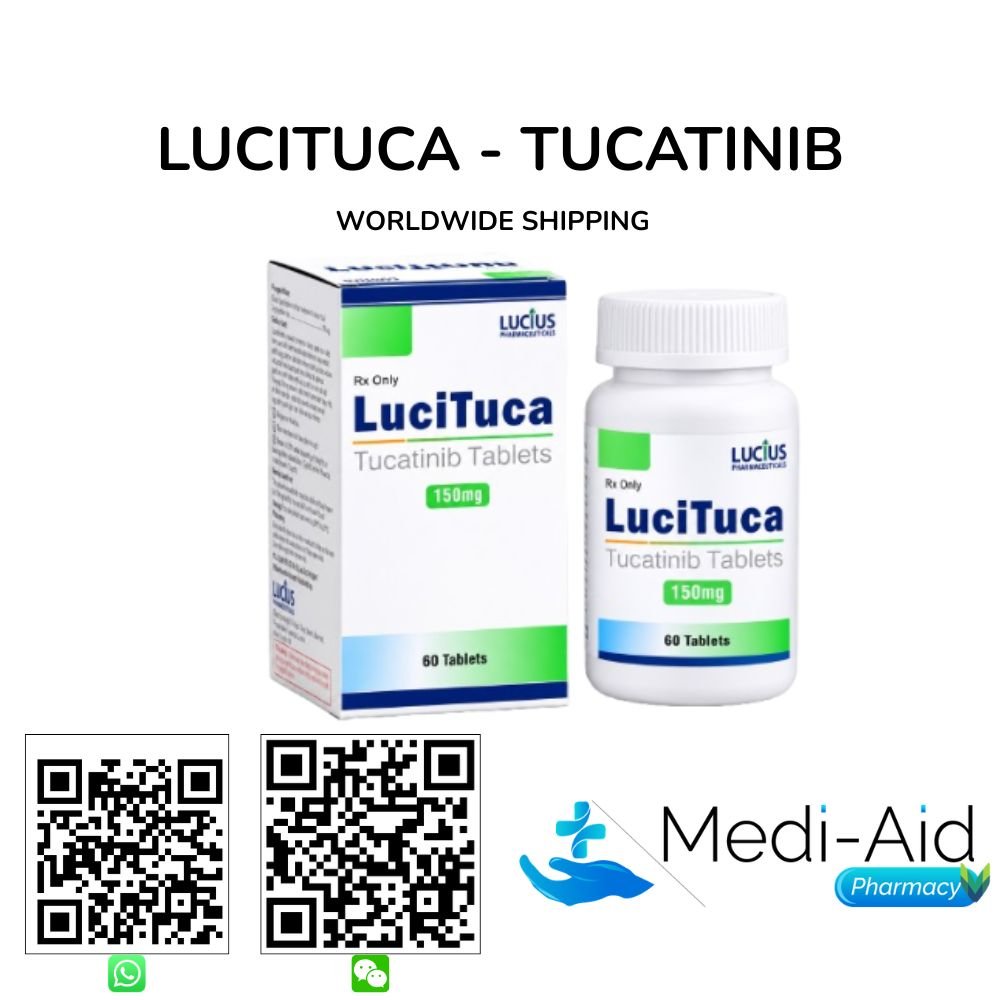
LuciTuca 150 MG (Tucatinib) is a highly selective, orally bioavailable, small-molecule HER2 (human epidermal growth factor receptor 2) tyrosine kinase inhibitor (TKI) a reversible, ATP-competitive kinase inhibitor that binds with exceptional selectivity to the kinase domain of HER2, exhibiting greater than 1,000-fold selectivity for HER2 over HER1 (EGFR, epidermal growth factor receptor), and potently suppressing HER2 and HER3 autophosphorylation and downstream oncogenic signaling through the mitogen-activated protein kinase (MAPK/RAS/RAF/MEK/ERK) and phosphoinositide 3-kinase/AKT/mTOR (PI3K/AKT/mTOR) pathways, thereby blocking proliferation, survival signaling, and tumor progression in HER2-overexpressing and HER2-amplified breast cancer cells supplied as film-coated tablets, 150 mg strength, 60 tablets per pot, and manufactured by Lucius Pharmaceuticals (Lao) Co., Ltd. in Laos.
Tucatinib, the active pharmaceutical ingredient (API) of LuciTuca, holds two FDA-approved indications for HER2-positive breast cancer: (1) in combination with trastuzumab and capecitabine for adults with advanced unresectable or metastatic HER2-positive breast cancer, including patients with brain metastases, who have received one or more prior anti-HER2-based regimens in the metastatic setting the foundational second-line and beyond indication established by the pivotal HER2CLIMB trial and (2) in combination with trastuzumab and pertuzumab for the maintenance treatment of adult patients with unresectable locally advanced or metastatic HER2-positive breast cancer following induction treatment the front-line maintenance indication approved on 7 October 2026, based on the Phase 3 HER2CLIMB-05 trial.
The pivotal Phase 3 HER2CLIMB trial (NCT02614794) demonstrated that tucatinib added to trastuzumab and capecitabine achieved a median progression-free survival (PFS) of 7.8 months versus 5.6 months with placebo plus trastuzumab and capecitabine (HR 0.54; 95% CI 0.42–0.71; p<0.001) a 46% reduction in the risk of disease progression or death and a median overall survival (OS) of 21.9 months versus 17.4 months (HR 0.66; 95% CI 0.50–0.88; p=0.005), with clinically meaningful and statistically significant intracranial activity in the 48% of patients who had brain metastases at baseline (median CNS-PFS 9.9 months versus 4.2 months; HR 0.32; 68% risk reduction in intracranial progression or death; p<0.0001; intracranial objective response rate [ORR-IC] 47.3% versus 20.0%; p=0.03), establishing the tucatinib-trastuzumab-capecitabine triplet as the first regimen to demonstrate improved antitumor activity against brain metastases in a randomized, controlled trial in HER2-positive breast cancer.
The recommended dose of tucatinib is 300 mg (two LuciTuca 150 MG film-coated tablets) orally twice daily (BID) on a continuous daily schedule; at this dose, one 60-tablet pot of LuciTuca provides a 15-day supply, and two pots are required per 28-day treatment month. Important: Diarrhea is the most common adverse reaction to tucatinib, occurring in up to 81% of patients in combination with trastuzumab and capecitabine; however, tucatinib’s hallmark high HER2 selectivity over HER1 (EGFR) substantially limits the diarrhea severity compared to non-selective HER2 TKIs, with Grade 3 diarrhea occurring in approximately 12% of patients, and diarrhea management with antidiarrheal agents (loperamide) and dietary modifications is recommended but loperamide prophylaxis is not mandated as a universal requirement.
Hepatotoxicity is a clinically significant risk: Grade 3 or higher AST elevation occurred in approximately 24% of patients and Grade 3 or higher ALT elevation in approximately 15%; liver function tests (LFTs) must be monitored at baseline, every 3 weeks for the first 12 weeks, and then as clinically indicated. Palmar-plantar erythrodysesthesia (PPE, hand-foot syndrome) reflects capecitabine toxicity in the triplet regimen. Tucatinib is a potent CYP2C8 inhibitor and may substantially increase plasma exposure of concomitant CYP2C8 substrates with a narrow therapeutic index (paclitaxel, repaglinide, rosiglitazone); avoid or monitor carefully.
Tucatinib is a P-glycoprotein (P-gp) inhibitor; avoid concomitant use with P-gp substrates with a narrow therapeutic index (digoxin). Strong CYP3A4 inhibitors increase tucatinib exposure and must be avoided; strong CYP3A4 inducers decrease tucatinib exposure and must be avoided. Tucatinib can cause embryo-fetal toxicity and is contraindicated in pregnancy; effective contraception is required during treatment and for 1 week after the last dose in females and for 1 week after the last dose in males with female partners of reproductive potential. Searching for LuciTuca 150 MG Tucatinib? Mediaid Pharmacy lists this product across its oncology medicines, breast cancer medicines, and Lucius Pharmaceuticals medicines portfolios and ships it worldwide.
Basic Product Information of LuciTuca 150 MG (Tucatinib)
| Brand Name | LuciTuca 150 MG (Tucatinib) |
| Product Name | LuciTuca |
| Generic Name | Tucatinib (developmental code ONT-380, also known as ARRY-380; a highly selective, reversible, orally bioavailable, small-molecule HER2 tyrosine kinase inhibitor with >1,000-fold selectivity for HER2 over HER1/EGFR, distinguishing it mechanistically from non-selective pan-HER TKIs such as lapatinib and neratinib which co-inhibit HER1 and produce markedly higher rates of EGFR-driven diarrhea and rash; originally developed by Array BioPharma, subsequently acquired by Seattle Genetics [now Seagen, acquired by Pfizer in 2023]; the originator brand is Tukysa, commercialized by Pfizer; initial FDA approval for previously treated HER2-positive metastatic breast cancer including patients with brain metastases in combination with trastuzumab and capecitabine: 17 April 2020; second FDA approval for front-line maintenance therapy in combination with trastuzumab and pertuzumab: 7 October 2026) |
| Drug Class | Highly Selective HER2 Tyrosine Kinase Inhibitor (TKI); Reversible HER2 Kinase Inhibitor; Small-Molecule HER2-Directed Agent; HER2/HER3 Phosphorylation Inhibitor; Antineoplastic Agent; Targeted Oncology Agent; Oral Cancer Medicine; HER2-Positive Breast Cancer Therapy; CNS-Active HER2 TKI; Second-Generation HER2 Kinase Inhibitor; ErbB2 Inhibitor |
| Formulation | Film-Coated Tablet (oral administration; may be taken with or without food consistent administration with or without food is recommended; swallow tablets whole, do not crush, split, or chew; two 150 mg tablets are taken together as a single BID dose of 300 mg, administered twice daily approximately 12 hours apart; dosing is continuous unlike CDK4/6 inhibitors, tucatinib has no scheduled rest days within each cycle; if vomiting occurs after a dose, do not take an additional dose resume the next scheduled dose at the next regular dosing time) |
| Available Strengths | 150 mg per film-coated tablet (LuciTuca 150 MG; the recommended starting dose of 300 mg twice daily [BID] requires two 150 mg tablets per dose, taken twice daily approximately 12 hours apart; dose reductions for toxicity are made as directed by the treating oncologist in accordance with the prescribing information dose modification guidelines) |
| Available Pack Size | 60 tablets per pot (at the recommended starting dose of 300 mg twice daily [two 150 mg tablets BID = four tablets per day on a continuous schedule], one pot of LuciTuca 150 MG provides a 15-day supply; two pots are therefore required for each 28-day month of continuous therapy at the starting dose; tucatinib is dosed continuously without scheduled rest days, so procurement planning requires a steady two-pots-per-month supply cycle at the full 300 mg BID starting dose throughout the treatment course) |
| Dosing Schedule | Recommended Starting Dose: Tucatinib 300 mg (two LuciTuca 150 MG film-coated tablets) orally twice daily (BID), taken approximately 12 hours apart, with or without food, on a continuous daily schedule with no scheduled rest days. Combination Partners HER2CLIMB Indication (Metastatic): Trastuzumab per standard IV dosing (8 mg/kg loading dose, then 6 mg/kg IV every 21 days) plus capecitabine 1,000 mg/m² orally twice daily on Days 1–14 of each 21-day cycle. Combination Partners HER2CLIMB-05 Indication (Front-Line Maintenance): Trastuzumab per standard dosing plus pertuzumab 420 mg IV every 21 days (after 840 mg loading dose). Mandatory Safety Monitoring: LFTs (ALT, AST, bilirubin) at baseline, every 3 weeks for the first 12 weeks, then as clinically indicated; CBC with differential as clinically indicated; pregnancy test before initiating therapy in all females of reproductive potential. Dose Reduction for Toxicity: Dose modifications for tucatinib-related toxicity should follow the treating oncologist’s guidance per the full prescribing information; general direction involves reducing the daily dose in a stepwise fashion as clinically directed; permanently discontinue tucatinib for Grade 3 or higher ALT/AST elevation with concurrent total bilirubin elevation greater than 2× ULN with no other cause, or for Grade 4 ALT/AST elevation. Duration: Until disease progression or unacceptable toxicity for all indications. Important Drug Interaction Guidance: Avoid concomitant strong CYP3A4 inhibitors and inducers; avoid concomitant CYP2C8 substrates with narrow therapeutic index (paclitaxel); avoid P-gp substrates with narrow therapeutic index (digoxin); consult the treating oncologist for all dose modification decisions. |
| Primary Indications | (1) Previously Treated HER2-Positive Advanced Unresectable or Metastatic Breast Cancer Including Brain Metastases in Combination with Trastuzumab and Capecitabine (HER2CLIMB): Tucatinib 300 mg BID plus trastuzumab plus capecitabine 1,000 mg/m² BID on Days 1–14 of a 21-day cycle for adults with advanced unresectable or metastatic HER2-positive breast cancer, including patients with brain metastases, who have received one or more prior anti-HER2-based regimens in the metastatic setting. Based on the Phase 3 HER2CLIMB trial (NCT02614794; n=612): median PFS 7.8 months versus 5.6 months with placebo (HR 0.54; 95% CI 0.42–0.71; p<0.001); median OS 21.9 months versus 17.4 months (HR 0.66; 95% CI 0.50–0.88; p=0.005); in brain metastases subgroup (n=291): CNS-PFS 9.9 months versus 4.2 months (HR 0.32; 68% risk reduction; p<0.0001); OS HR 0.58 (p=0.005); ORR-IC 47.3% versus 20.0% (p=0.03) the first regimen to demonstrate improved intracranial antitumor activity in a randomized controlled trial in HER2-positive breast cancer. FDA approval: 17 April 2020.
(2) Front-Line Maintenance Treatment of Unresectable Locally Advanced or Metastatic HER2-Positive Breast Cancer Following Induction Treatment in Combination with Trastuzumab and Pertuzumab (HER2CLIMB-05): Tucatinib 300 mg BID plus trastuzumab plus pertuzumab for maintenance therapy for adult patients with unresectable locally advanced or metastatic HER2-positive breast cancer who have completed induction treatment (4–8 cycles of chemotherapy plus trastuzumab and pertuzumab) without disease progression. Based on the Phase 3 HER2CLIMB-05 trial (NCT05132582; n=654): median PFS 24.9 months versus 16.3 months with placebo (HR approximately 0.64; 35.9% reduction in risk of progression or death). FDA approval: 7 October 2026. |
| Manufacturer / Brand | Lucius Pharmaceuticals (Lao) Co., Ltd., Country of Origin: Laos (originator molecule and brand Tukysa developed by Array BioPharma, acquired by Seattle Genetics [now Seagen, acquired by Pfizer in 2023], and commercialized globally by Pfizer; initial FDA approval for previously treated HER2-positive metastatic breast cancer including brain metastases in combination with trastuzumab and capecitabine: 17 April 2020; second FDA approval for front-line maintenance therapy in combination with trastuzumab and pertuzumab: 7 October 2026) |
| Global Supplier | Mediaid Pharmacy, Worldwide Shipping Available |
| Storage Conditions | Store below 30°C (86°F). Store in the original container with the lid tightly closed. Protect from moisture. Keep out of the reach of children. |
How LuciTuca (Tucatinib) Works: Highly Selective HER2 Kinase Inhibition, HER2/HER3 Downstream Pathway Blockade, and CNS-Active Antitumor Mechanism in HER2-Positive Breast Cancer
Tucatinib (LuciTuca) is a reversible, ATP-competitive inhibitor of the HER2 (ErbB2, HER2/neu) receptor tyrosine kinase the central oncogenic driver in HER2-overexpressing and HER2-amplified breast cancers. HER2 is a transmembrane receptor tyrosine kinase belonging to the ErbB (HER) receptor family, which includes HER1 (EGFR), HER2, HER3, and HER4. HER2 lacks a known high-affinity endogenous ligand but constitutively adopts an open conformation that enables preferential heterodimerization with the other ErbB family members particularly with HER3, which carries a potent PI3K-binding domain in its intracellular tail.
HER2 gene amplification (defined as HER2/CEP17 ratio ≥2.0 by fluorescence in situ hybridization [FISH] or HER2 gene copy number ≥6 by FISH) or HER2 protein overexpression (IHC 3+ by immunohistochemistry) drives the formation of constitutively active HER2 homodimers and HER2–HER3 heterodimers, which autophosphorylate HER2 and HER3 intracellular tyrosine residues and potently activate downstream oncogenic signaling cascades particularly the MAPK/RAS/RAF/MEK/ERK pathway driving cell proliferation and the PI3K/AKT/mTOR pathway driving survival, apoptosis evasion, and treatment resistance in approximately 17% of all breast cancer cases.
Tucatinib achieves its antitumor effect by occupying the ATP-binding pocket of the HER2 kinase domain in a reversible, non-covalent manner, competitively displacing ATP and preventing the phosphotransfer reaction by which HER2 phosphorylates itself (HER2 autophosphorylation at Tyr1221/Tyr1222, Tyr1248) and its dimerization partners. The critical pharmacological distinction of tucatinib from all other approved HER2 small-molecule TKIs lapatinib (Tykerb) and neratinib (Nerlynx) is its extraordinary selectivity for HER2 over HER1 (EGFR): tucatinib demonstrates greater than 1,000-fold selectivity for HER2 kinase inhibition over HER1/EGFR kinase inhibition in cellular assays, whereas lapatinib inhibits HER1 and HER2 with roughly comparable potency (dual HER1/HER2 inhibitor) and neratinib irreversibly inhibits HER1, HER2, and HER4 as a covalent pan-HER inhibitor.
This selectivity profile has direct, clinically validated consequences for the tolerability of tucatinib: inhibition of HER1/EGFR is the primary driver of the severe diarrhea and dermatological toxicity (rash, paronychia) associated with non-selective HER2 TKIs, because HER1/EGFR signaling maintains intestinal epithelial barrier function and skin homeostasis. By avoiding HER1/EGFR inhibition, tucatinib dramatically reduces the incidence and severity of these on-target, non-tumor toxicities Grade 3 diarrhea occurred in approximately 12% of tucatinib-treated patients in HER2CLIMB, compared to approximately 40% with neratinib without prophylaxis and approximately 10% with lapatinib (though Grade 1–2 diarrhea remains common).
The consequence of tucatinib’s HER2 selectivity is a substantially improved tolerability profile that allows continuous twice-daily dosing without the mandatory prophylactic antidiarrheal regimens required for pan-HER inhibition. Downstream of HER2 kinase inhibition, tucatinib blocks phosphorylation of both HER2 and HER3, the two ErbB family members whose heterodimer (HER2–HER3) is the most potently oncogenic signaling complex in HER2-amplified breast cancer; HER3 phosphorylation provides the primary PI3K/AKT pathway input in HER2-amplified tumors, and dual suppression of both HER2 autophosphorylation and HER2–HER3 heterodimer-driven HER3 phosphorylation produces broader downstream signal extinction than inhibition of HER2 alone.
A defining and clinically transformative feature of tucatinib’s pharmacological profile is its ability to penetrate the blood-brain barrier (BBB) and produce measurable intracranial antitumor activity in patients with HER2-positive brain metastases. Brain metastases develop in an estimated 25–50% of patients with HER2-positive metastatic breast cancer throughout their disease course and represent a major driver of morbidity, neurocognitive decline, and mortality. The majority of systemic HER2-directed therapies including the monoclonal antibodies trastuzumab and pertuzumab have limited CNS penetration due to their large molecular weight (approximately 148 kDa), restricting their direct intracranial activity.
The antibody-drug conjugate trastuzumab deruxtecan (T-DXd) has shown intracranial activity in HER2-positive breast cancer, but as a large-molecule ADC its BBB penetration is considered limited and likely depends on BBB disruption by brain metastases rather than active CNS transport. Tucatinib, as a small-molecule TKI (molecular weight approximately 480 Da) with appropriate lipophilicity and efflux transporter resistance characteristics, achieves CNS concentrations sufficient to suppress HER2 signaling in brain metastasis tumor cells, producing the intracranial PFS and OS benefits demonstrated in the HER2CLIMB brain metastases subgroup: CNS-PFS 9.9 months versus 4.2 months (HR 0.32; 68% risk reduction; p<0.0001), OS 18.1 months versus 12.0 months (HR 0.58; 42% risk reduction; p=0.005), and ORR-IC 47.3% versus 20.0% results that have made the tucatinib-trastuzumab-capecitabine triplet the standard-of-care reference regimen for patients with HER2-positive metastatic breast cancer who have brain metastases.
The HER2CLIMB-05 trial extended tucatinib’s clinical utility to the front-line maintenance setting, where addition of tucatinib to the dual anti-HER2 antibody maintenance backbone of trastuzumab and pertuzumab (the established post-chemotherapy maintenance standard from the CLEOPATRA trial) achieved a median PFS of 24.9 months versus 16.3 months a clinically meaningful extension of the chemotherapy-free maintenance interval in first-line HER2-positive MBC.
Who Should Use LuciTuca 150 MG (Tucatinib)?
LuciTuca 150 MG (Tucatinib) is indicated for adult patients across two distinct HER2-positive breast cancer clinical settings previously treated advanced or metastatic disease (including patients with brain metastases) in the HER2CLIMB-defined tucatinib-trastuzumab-capecitabine triplet, and front-line maintenance therapy in the HER2CLIMB-05-defined tucatinib-trastuzumab-pertuzumab triplet following induction chemotherapy. Both indications require confirmed HER2 overexpression (IHC 3+) or HER2 gene amplification (FISH HER2/CEP17 ratio ≥2.0 or HER2 gene copy number ≥6) by an FDA-approved companion diagnostic before initiating LuciTuca therapy.
First, adult patients with confirmed HER2-positive advanced unresectable or metastatic breast cancer who have received one or more prior anti-HER2-based regimens in the metastatic setting including patients with active or stable brain metastases represent the HER2CLIMB-defined second-line and beyond indication for LuciTuca. The Phase 3 HER2CLIMB trial (NCT02614794) enrolled 612 patients with HER2-positive advanced or metastatic breast cancer who had received prior treatment with trastuzumab, pertuzumab, and ado-trastuzumab emtansine (T-DM1) and randomized them 2:1 to tucatinib 300 mg BID plus trastuzumab plus capecitabine versus placebo plus trastuzumab plus capecitabine.
All 612 patients underwent baseline brain magnetic resonance imaging (MRI) regardless of symptoms a design feature that enabled the first rigorous prospective characterization of an HER2-directed TKI’s intracranial activity in a randomized controlled trial. At the primary analysis, tucatinib met its primary endpoint (1-year PFS rate: 33.1% vs 12.3%; HR 0.54; p<0.001) and both key secondary endpoints (median OS 21.9 months vs 17.4 months; HR 0.66; p=0.005; and PFS in patients with brain metastases).
For the 48% of patients who had brain metastases at baseline (n=198 in tucatinib arm, n=93 in control arm) including both patients with active/untreated brain metastases and those with previously treated, stable brain metastases tucatinib produced a 68% reduction in the risk of intracranial progression or death (CNS-PFS HR 0.32; p<0.0001), a median CNS-PFS of 9.9 months versus 4.2 months, a median OS of 18.1 months versus 12.0 months (HR 0.58; p=0.005), and an ORR-IC of 47.3% versus 20.0% (p=0.03) in patients with measurable intracranial disease results that established tucatinib as the first systemic HER2-directed therapy to demonstrate meaningful, randomized controlled intracranial antitumor activity in HER2-positive breast cancer.
The NCCN Clinical Practice Guidelines in Oncology (NCCN Guidelines®) for Breast Cancer designate the tucatinib-trastuzumab-capecitabine triplet as a Category 1 Preferred recommendation for third-line metastatic HER2-positive breast cancer the highest evidence rating within the NCCN framework for this clinical setting.
Second, adult patients with unresectable locally advanced or metastatic HER2-positive breast cancer who have completed 4 to 8 cycles of induction chemotherapy plus trastuzumab and pertuzumab without disease progression are candidates for the HER2CLIMB-05-defined front-line maintenance indication. The Phase 3 HER2CLIMB-05 trial (NCT05132582) enrolled 654 patients with HER2-positive advanced breast cancer who had completed induction treatment (docetaxel or paclitaxel plus trastuzumab plus pertuzumab, based on the CLEOPATRA-established front-line standard of care) without disease progression and randomized them to tucatinib 300 mg BID plus trastuzumab plus pertuzumab versus placebo plus trastuzumab plus pertuzumab as maintenance therapy.
The primary endpoint of investigator-assessed PFS was met with a median PFS of 24.9 months in the tucatinib arm versus 16.3 months in the placebo arm a 35.9% reduction in the risk of disease progression or death extending the maintenance phase of first-line HER2-positive MBC treatment by approximately 8.6 months over the established trastuzumab-pertuzumab dual-antibody maintenance standard and offering patients a chemotherapy-free maintenance option with meaningful prolongation of time to next-line chemotherapy.
LuciTuca is not indicated for: patients with HER2-negative breast cancer (tucatinib has no established efficacy in HER2-negative tumors); patients who cannot tolerate the combination partner agents required by the respective indications (trastuzumab or capecitabine or pertuzumab); patients with dihydropyrimidine dehydrogenase (DPD) deficiency (absolute contraindication to capecitabine in the HER2CLIMB regimen); and patients who are pregnant or who are unable to use effective contraception.
HER2-positive metastatic breast cancer oncology departments, brain metastases management programs, hospital pharmacies managing HER2-positive breast cancer treatment protocols, and individual patients and families accessing oral targeted oncology medicines can contact Mediaid Pharmacy directly for LuciTuca 150 MG availability, pricing, and worldwide delivery.
Global Supplier: Mediaid Pharmacy Worldwide Shipping for LuciTuca 150 MG (Tucatinib)
Mediaid Pharmacy is a Dhaka-based supplier of specialty targeted oncology, breast cancer, and rare disease medicines with worldwide shipping to patients, HER2-positive breast cancer oncology departments, brain metastases management programs, metastatic breast cancer treatment units, hospital pharmacies, oncology day units, patient access programs, and international distributors across all regions. LuciTuca 150 MG (Tucatinib), manufactured by Lucius Pharmaceuticals (Lao) Co., Ltd. in Laos, is supplied as 150 mg film-coated tablets in 60-tablet pots, with pricing quotations, stock confirmation, full product documentation, and end-to-end international delivery tracking for every order.
The clinical and procurement significance of the 60-tablet pot format is directly tied to tucatinib’s continuous twice-daily dosing architecture: at the recommended starting dose of 300 mg twice daily (two 150 mg tablets per dose, twice daily = four tablets per day on a continuous schedule with no rest days), one pot of LuciTuca 150 MG provides exactly a 15-day supply, and procurement teams should plan orders on a two-pots-per-28-day-month basis to maintain uninterrupted continuous dosing an operational requirement distinct from the cyclic CDK4/6 inhibitor or the monthly aromatase inhibitor supply models used in hormone receptor-positive breast cancer. Oncology pharmacies and procurement departments managing patients on the HER2CLIMB tucatinib-trastuzumab-capecitabine triplet can align LuciTuca supply with the 21-day trastuzumab-capecitabine cycle schedule while maintaining continuous tucatinib supply across cycle boundaries.
HER2-positive metastatic breast cancer oncology departments managing second-line or later tucatinib programs; front-line maintenance programs incorporating the HER2CLIMB-05 tucatinib-trastuzumab-pertuzumab regimen; hospital formulary procurement departments co-sourcing LuciTuca with other oral targeted oncology medicines; and individual patients and families accessing tucatinib for HER2-positive breast cancer treatment can contact the Mediaid Pharmacy team through WhatsApp, phone, or WeChat for LuciTuca 150 MG stock availability, current pricing, and international delivery timelines.
Why Choose LuciTuca 150 MG (Tucatinib) from Mediaid Pharmacy?
LuciTuca (Tucatinib) from Lucius Pharmaceuticals (Lao) Co., Ltd. delivers the validated, highly selective HER2 tyrosine kinase inhibition mechanism of tucatinib a molecule with two distinct FDA-approved indications spanning previously treated HER2-positive advanced or metastatic breast cancer including brain metastases in combination with trastuzumab and capecitabine (HER2CLIMB; FDA 17 April 2020) and front-line maintenance treatment in combination with trastuzumab and pertuzumab (HER2CLIMB-05; FDA 7 October 2026) as a precisely formulated 150 mg oral film-coated tablet in a 60-tablet pot providing a 15-day continuous-dosing supply at the recommended 300 mg BID starting dose. Tucatinib is pharmacologically and clinically distinguished within the HER2-targeted TKI landscape by four evidence-based attributes.
First, tucatinib is the only oral HER2 TKI that has demonstrated statistically significant overall survival benefit in a randomized Phase 3 trial in heavily pretreated HER2-positive metastatic breast cancer the HER2CLIMB trial (median OS 21.9 months vs 17.4 months; HR 0.66; p=0.005; 34% risk reduction in death) in a population who had received prior trastuzumab, pertuzumab, and T-DM1, the three most efficacious HER2-directed systemic therapies currently available, and for whom prognosis was historically poor. This OS benefit was achieved on top of the trastuzumab-capecitabine backbone without the severe gastrointestinal and cutaneous toxicity that limits non-selective HER2 TKIs, because tucatinib’s >1,000-fold selectivity for HER2 over HER1 avoids EGFR inhibition and its associated diarrhea, stomatitis, and rash toxicity.
Second, tucatinib is the first and only systemic HER2-directed therapy to demonstrate randomized controlled intracranial activity in HER2-positive breast cancer with brain metastases a patient population representing the most urgent unmet clinical need in HER2-positive MBC, given that up to 50% of all HER2-positive metastatic breast cancer patients develop brain metastases throughout their disease course and that existing large-molecule HER2-directed agents (trastuzumab, pertuzumab, T-DXd) achieve limited or uncertain CNS penetration. The 68% reduction in the risk of intracranial progression or death (CNS-PFS HR 0.32; p<0.0001), 42% reduction in the risk of death (OS HR 0.58; p=0.005), and 47.3% intracranial objective response rate in the HER2CLIMB brain metastases subgroup have established tucatinib as the cornerstone of systemic therapy for HER2-positive breast cancer with brain involvement and have fundamentally changed the clinical approach to this high-risk patient population.
Third, tucatinib’s front-line maintenance FDA approval (October 2026) based on HER2CLIMB-05 extends its clinical utility to the earliest phase of metastatic disease management, offering the first approved chemotherapy-free intensification of the established trastuzumab-pertuzumab maintenance standard (median PFS 24.9 months vs 16.3 months), thereby addressing the major unmet need of disease progression within two years of starting first-line treatment after which patients typically transition to chemotherapy regimens by providing an oral, outpatient, chemotherapy-free mechanism to extend the progression-free interval and preserve quality of life before next-line treatment escalation.
Fourth, tucatinib is an orally self-administered, twice-daily tablet taken on a continuous schedule without scheduled rest days, enabling complete outpatient management with predictable supply planning (two 60-tablet pots per 28-day month at the 300 mg BID starting dose), no infusion clinic visits for tucatinib administration, and straightforward adherence to the continuous dosing schedule with morning and evening doses approximately 12 hours apart.
LuciTuca 150 MG is manufactured by Lucius Pharmaceuticals (Lao) Co., Ltd. and is available through Mediaid Pharmacy in 60-tablet pots. To source the complete range of HER2-directed therapies, breast cancer medicines, and oncology medicines, visit the Mediaid Pharmacy breast cancer medicines portfolio, the oncology medicines collection, and the Lucius Pharmaceuticals medicines range, and contact the team for a personalized quotation.
Frequently Asked Questions About LuciTuca 150 MG (Tucatinib)
What is LuciTuca 150 MG (Tucatinib) used for?
LuciTuca 150 MG (Tucatinib) is an oral highly selective HER2 tyrosine kinase inhibitor with two FDA-approved indications in HER2-positive breast cancer: (1) in combination with trastuzumab and capecitabine for adults with advanced unresectable or metastatic HER2-positive breast cancer, including patients with brain metastases, who have received one or more prior anti-HER2-based regimens in the metastatic setting based on the Phase 3 HER2CLIMB trial (NCT02614794; n=612): median PFS 7.8 months versus 5.6 months (HR 0.54; p<0.001); median OS 21.9 months versus 17.4 months (HR 0.66; p=0.005); CNS-PFS in brain metastases patients 9.9 months versus 4.2 months (HR 0.32; 68% risk reduction; p<0.0001); ORR-IC 47.3% versus 20.0% FDA approval 17 April 2020; and (2) in combination with trastuzumab and pertuzumab as front-line maintenance therapy for adults with unresectable locally advanced or metastatic HER2-positive breast cancer following induction treatment based on the Phase 3 HER2CLIMB-05 trial (NCT05132582; n=654): median PFS 24.9 months versus 16.3 months (35.9% risk reduction) FDA approval 7 October 2026. The recommended dose is 300 mg (two LuciTuca 150 MG tablets) twice daily (BID) on a continuous schedule. LuciTuca 150 MG, 60 tablets per pot, is manufactured by Lucius Pharmaceuticals (Lao) Co., Ltd. in Laos and is available through Mediaid Pharmacy with worldwide shipping.
What is the generic name of LuciTuca?
The generic name of LuciTuca is tucatinib (developmental code ONT-380 / ARRY-380). Tucatinib is an orally bioavailable, reversible, highly selective small-molecule HER2 (ErbB2) tyrosine kinase inhibitor demonstrating greater than 1,000-fold selectivity for HER2 over HER1 (EGFR) in cellular kinase assays. This HER2 selectivity is the defining pharmacological feature that distinguishes tucatinib from all other approved HER2 small-molecule TKIs: lapatinib (Tykerb/Tyverb) is a dual reversible HER1/HER2 inhibitor with comparable potency at both kinases, and neratinib (Nerlynx) is an irreversible covalent pan-HER inhibitor of HER1, HER2, and HER4. Tucatinib’s exceptional HER2 selectivity avoids on-target HER1/EGFR inhibition in intestinal epithelium and skin, markedly reducing the severe diarrhea and dermatological toxicity associated with non-selective HER2 TKIs while preserving full HER2-directed antitumor activity. Additionally, tucatinib’s small molecular weight and favorable CNS pharmacokinetics allow blood-brain barrier (BBB) penetration and intracranial activity in HER2-positive brain metastases an activity not reliably achieved by large-molecule HER2-directed antibodies. The originator brand of tucatinib is Tukysa, developed by Array BioPharma, acquired by Seattle Genetics (now Seagen/Pfizer), with the first FDA approval on 17 April 2020. LuciTuca is manufactured by Lucius Pharmaceuticals (Lao) Co., Ltd. in Laos and is available as 150 mg film-coated tablets in 60-tablet pots. Mediaid Pharmacy distributes LuciTuca (Tucatinib) globally with worldwide shipping to patients, HER2-positive breast cancer oncology departments, hospital pharmacies, and brain metastases treatment programs worldwide.
What is the difference between tucatinib, lapatinib, and neratinib for HER2-positive breast cancer?
Tucatinib (LuciTuca), lapatinib (Tykerb), and neratinib (Nerlynx/LuciNera) are all oral HER2 tyrosine kinase inhibitors but differ fundamentally in kinase selectivity, binding mechanism, CNS penetration, clinical indications, and tolerability. Tucatinib is a highly selective, reversible HER2-only TKI (>1,000-fold selectivity for HER2 over HER1) with proven CNS-penetrant activity, FDA-approved in combination with trastuzumab and capecitabine for previously treated HER2-positive MBC including brain metastases, and in combination with trastuzumab and pertuzumab for front-line HER2-positive MBC maintenance; its high HER2 selectivity produces significantly lower rates of diarrhea (Grade 3: ~12%) and rash versus non-selective TKIs. Lapatinib is a reversible dual HER1/HER2 inhibitor without the selectivity advantage of tucatinib; FDA-approved in combination with capecitabine for HER2-positive MBC after prior therapy and with letrozole for HR+/HER2+ MBC; its co-inhibition of HER1/EGFR drives a clinically significant diarrhea and rash burden compared to tucatinib, and lapatinib has not demonstrated randomized CNS-PFS benefit equivalent to tucatinib’s HER2CLIMB intracranial data. Neratinib is an irreversible covalent pan-HER inhibitor of HER1, HER2, and HER4; FDA-approved for early-stage extended adjuvant HER2+ breast cancer after trastuzumab (ExteNET) and for metastatic HER2+ breast cancer in combination with capecitabine (NALA); its irreversible pan-HER inhibition drives the highest diarrhea rates of any HER2 TKI (up to 95%, mandating loperamide prophylaxis), without the selective CNS intracranial activity data demonstrated by tucatinib in a randomized controlled brain metastases population. Visit the Mediaid Pharmacy breast cancer medicines collection for the complete HER2-targeted therapy portfolio.
What are the side effects of LuciTuca (Tucatinib)?
The most clinically significant adverse effects of tucatinib in the HER2CLIMB regimen (tucatinib plus trastuzumab plus capecitabine) are diarrhea, hepatotoxicity, palmar-plantar erythrodysesthesia (PPE), and nausea. Diarrhea is the most common adverse reaction, occurring in approximately 81% of patients; however, because tucatinib does not inhibit HER1/EGFR, diarrhea severity is substantially lower than with non-selective HER2 TKIs Grade 3 diarrhea occurred in approximately 12% of patients in HER2CLIMB (versus ~40% with neratinib without prophylaxis); antidiarrheal agents (loperamide) and dietary modification are recommended and typically effective for managing tucatinib-associated diarrhea. Hepatotoxicity is a clinically significant and monitoring-requiring toxicity: Grade 3 or higher AST elevation occurred in approximately 24% and Grade 3 or higher ALT elevation in approximately 15% of patients; LFTs must be monitored at baseline, every 3 weeks for the first 12 weeks, and as clinically indicated. Withhold tucatinib for Grade 3 AST/ALT elevation and permanently discontinue for Grade 3 AST/ALT elevation with concurrent total bilirubin elevation greater than 2× ULN without other cause, or for Grade 4 elevation. Palmar-plantar erythrodysesthesia (PPE, hand-foot syndrome) occurred in approximately 63% of patients and reflects capecitabine toxicity in the triplet; topical emollients, dose modification of capecitabine, and patient education are standard management. Nausea (58%), fatigue (45%), vomiting (36%), stomatitis (32%), and decreased appetite (25%) are common and typically manageable with supportive care. Rash: unlike non-selective HER2/EGFR dual inhibitors, tucatinib’s minimal HER1 inhibition results in markedly lower rates of acneiform papulopustular rash (approximately 20%) compared to lapatinib or neratinib. Always establish baseline LFTs, CBC, and pregnancy status in all females of reproductive potential before initiating LuciTuca under the supervision of an experienced oncologist.
How effective is tucatinib for HER2-positive breast cancer with brain metastases?
Tucatinib demonstrated clinically transformative and statistically significant intracranial activity in patients with HER2-positive breast cancer and brain metastases in the Phase 3 HER2CLIMB trial (NCT02614794) the first randomized controlled trial to demonstrate an antitumor effect specifically within the CNS using an oral HER2-directed TKI. Among the 291 patients with brain metastases at baseline (198 in the tucatinib arm; 93 in the control arm), tucatinib added to trastuzumab and capecitabine produced a 68% reduction in the risk of intracranial progression or death (CNS-PFS HR 0.32; 95% CI 0.22–0.48; p<0.0001) with a median CNS-PFS of 9.9 months versus 4.2 months. For overall survival in the brain metastases population, tucatinib reduced the risk of death by 42% (OS HR 0.58; 95% CI 0.40–0.85; p=0.005) with a median OS of 18.1 months versus 12.0 months. The intracranial objective response rate (ORR-IC) in patients with measurable intracranial disease was 47.3% with tucatinib versus 20.0% with control (p=0.03) more than doubling the rate of measurable brain metastasis shrinkage. These intracranial benefits were consistent across both patients with active/untreated brain metastases and those with previously treated, stable brain metastases. Tucatinib’s CNS activity is attributable to its small molecular weight and physicochemical properties that enable blood-brain barrier penetration, allowing direct HER2 kinase inhibition within brain metastasis tumor cells. These results established the tucatinib-trastuzumab-capecitabine triplet as the standard-of-care systemic treatment for HER2-positive metastatic breast cancer with brain metastases and represented the first time a randomized controlled trial had demonstrated improved intracranial antitumor activity in this disease setting. LuciTuca 150 MG (Tucatinib) is available through Mediaid Pharmacy with worldwide shipping; visit the breast cancer medicines collection for the complete HER2-targeted therapy portfolio.
Is LuciTuca (Tucatinib) safe during pregnancy or while breastfeeding?
LuciTuca (Tucatinib) can cause fetal harm and is contraindicated during pregnancy based on its mechanism of action and animal reproductive toxicology findings. Inhibition of HER2 signaling by tucatinib disrupts HER2-dependent pathways essential for normal cardiac organogenesis, placental vasculogenesis, and embryonic development; animal reproductive toxicology studies demonstrated embryo-fetal lethality, fetal growth retardation, and malformations at exposures below the recommended human dose, consistent with the established roles of HER2 and HER3 signaling in normal cardiac septal formation and fetal organ development. Females of reproductive potential must use effective contraception during tucatinib treatment and for at least 1 week after the last dose. Males with female partners of reproductive potential should use effective contraception during tucatinib treatment and for at least 1 week after the last dose. There are no data on the presence of tucatinib or its metabolites in human breast milk; because of the potential for serious adverse reactions in the breastfed infant, breastfeeding is not recommended during tucatinib treatment and for 1 week after the last dose. Verify pregnancy status with a serum or urine pregnancy test before initiating LuciTuca in all females of reproductive potential. Discuss all aspects of reproductive planning, contraceptive requirements, and fertility counseling with the treating oncologist before starting tucatinib therapy. Note that capecitabine (the combination partner in the HER2CLIMB regimen) carries its own contraindications in pregnancy, and trastuzumab can cause oligohydramnios and fetal pulmonary hypoplasia; the full reproductive risk of the triplet regimen reflects the toxicity profiles of all three agents.
Can I order LuciTuca 150 MG (Tucatinib) online with worldwide shipping?
Yes. Mediaid Pharmacy supplies LuciTuca 150 MG (Tucatinib), film-coated tablets, 60 tablets per pot, manufactured by Lucius Pharmaceuticals (Lao) Co., Ltd. in Laos, to patients, HER2-positive breast cancer oncology departments, brain metastases treatment programs, front-line and second-line HER2-positive MBC treatment units, hospital pharmacies, oncology day units, patient access programs, and healthcare providers globally. Contact Mediaid Pharmacy via WhatsApp, phone, or WeChat at +8801773428128, or email info@mediaidpharmacy.com for pricing, current stock availability, shipping options, and international delivery details for your country.
Order LuciTuca 150 MG (Tucatinib) with Worldwide Shipping
Phone / WhatsApp / WeChat: +8801773428128 | Email: info@mediaidpharmacy.com



Reviews
There are no reviews yet.