
Description
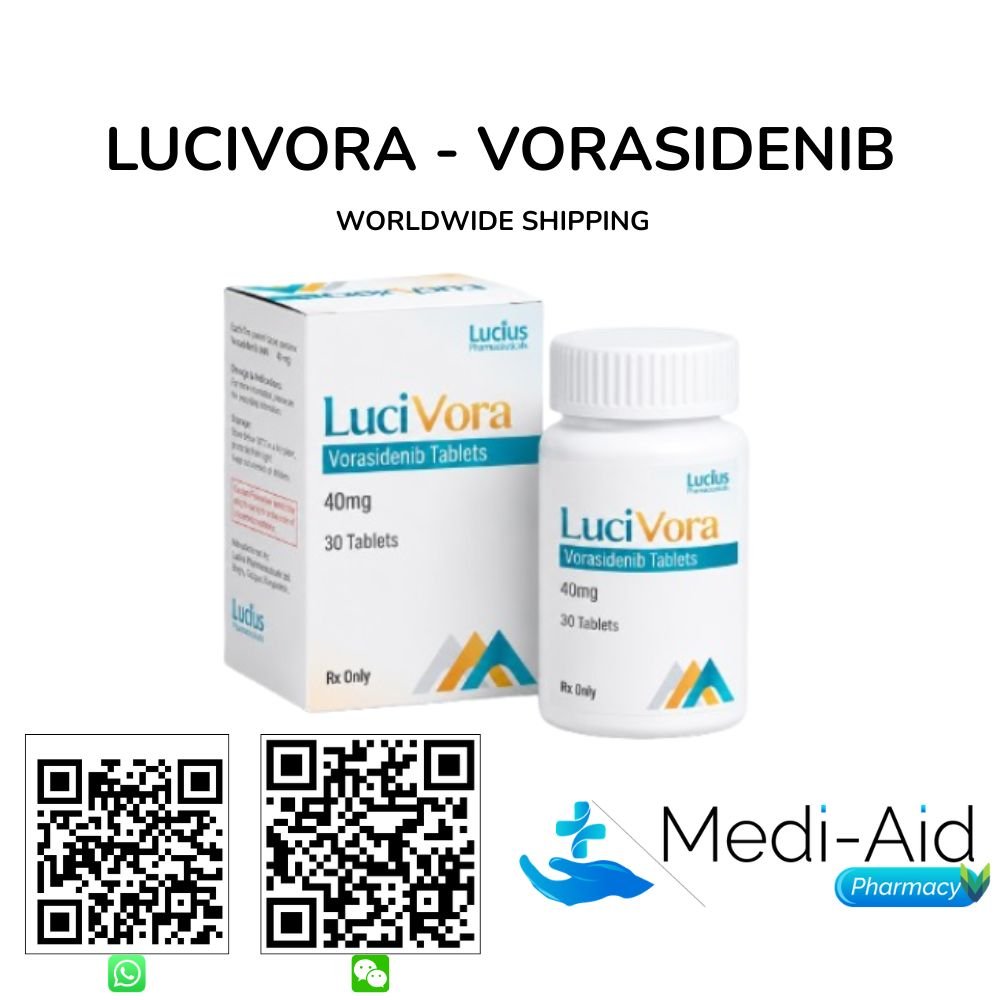
LuciVora 40 MG (Vorasidenib) is an orally bioavailable, brain-penetrant dual IDH1/IDH2 inhibitor that selectively targets mutant isocitrate dehydrogenase 1 and isocitrate dehydrogenase 2 (IDH1/IDH2) enzymes to suppress oncometabolite 2-hydroxyglutarate (2-HG) production in adults and pediatric patients aged 12 years and older with grade 2 astrocytoma or oligodendroglioma harboring a susceptible IDH1 or IDH2 mutation who have undergone prior surgery, supplied as film-coated tablets of 40 mg strength in 30-tablet pots and manufactured by Lucius Pharmaceuticals (Lao) Co., Ltd. in Laos.
Its active pharmaceutical ingredient, vorasidenib INN, inhibits both IDH1 and IDH2 mutant enzyme isoforms, blocking the aberrant production of 2-HG an oncometabolite that drives histone and DNA hypermethylation, epigenetic dysregulation, and impaired cellular differentiation in IDH-mutant diffuse glioma and enabling re-differentiation of malignant glioma cells toward a more normal phenotype. LuciVora is formulated as film-coated tablets in a single strength of 40 mg, each supplied in a 30-tablet pot, supporting the approved continuous once-daily 40 mg oral dosing regimen with no tablet splitting or complex dose construction required.
In the pivotal Phase 3 INDIGO trial (NCT04164901) the landmark randomized, double-blind, placebo-controlled study that supported FDA approval of vorasidenib vorasidenib 40 mg once daily reduced the risk of disease progression or death by 61% compared to placebo, achieving a median progression-free survival of 27.7 months versus 11.1 months (hazard ratio 0.39; P<0.001), establishing vorasidenib as the first FDA-approved oral targeted therapy for IDH-mutant grade 2 diffuse glioma (August 6, 2024) and the first brain-penetrant IDH inhibitor to demonstrate superior progression-free survival in a randomized Phase 3 trial in this patient population. Searching for LuciVora 40 MG Vorasidenib? Mediaid Pharmacy lists this product across its brain cancer medicines and Lucius Pharmaceuticals portfolios and ships it worldwide.
Basic Product Information of LuciVora 40 MG (Vorasidenib)
| Brand Name | LuciVora 40 MG (Vorasidenib) |
| Product Name | LuciVora |
| Generic Name | Vorasidenib INN |
| Drug Class | Isocitrate Dehydrogenase Inhibitor; Dual IDH1 and IDH2 Mutant Enzyme Inhibitor; Brain-Penetrant Oral Targeted Therapy; 2-Hydroxyglutarate (2-HG) Production Inhibitor; CNS-Active Precision Oncology Agent; Epigenetic Pathway Inhibitor in IDH-Mutant Glioma; Biomarker-Selected IDH-Directed Antineoplastic |
| Formulation | Film-Coated Tablet (Oral) |
| Available Strengths | 40 mg per tablet |
| Available Pack Size | 30 Tablets per pot (each pot delivers a full 30-day continuous treatment supply at the standard approved once-daily dosing regimen of 40 mg; no tablet splitting, preparation, or complex dose combination required) |
| Dosing Schedule | Standard IDH-mutant grade 2 glioma dosing: 40 mg (one LuciVora 40 mg tablet) orally once daily, taken continuously without planned breaks between cycles. LuciVora may be taken with or without food. Swallow each LuciVora tablet whole with water; do not crush, break, or chew the tablet, as this may alter the release profile and systemic bioavailability. Take LuciVora at approximately the same time each day to maintain consistent plasma drug levels and continuous IDH enzyme inhibition throughout each 24-hour dosing interval. Dose modifications for hepatotoxicity (ALT or AST elevation) are managed through structured dose interruption and reduction schedules withholding or reducing to 20 mg once daily based on severity grade rather than immediate discontinuation where clinically feasible; consult the treating neuro-oncologist for individualized dose adjustment guidance. Continue treatment until disease progression or unacceptable toxicity as determined by the treating physician. |
| Primary Indication | Treatment of adults and pediatric patients aged 12 years and older with grade 2 astrocytoma or oligodendroglioma with a susceptible IDH1 or IDH2 mutation who have undergone surgery (including biopsy, sub-total resection, or gross total resection). Patient selection requires confirmed susceptible IDH1 or IDH2 mutation status using an FDA-approved companion diagnostic test or validated laboratory assay before initiating LuciVora. Vorasidenib is not indicated for grade 3 or grade 4 glioma, for IDH-wildtype gliomas, for glioblastoma, or for other CNS or solid tumor types regardless of IDH alteration status. |
| Manufacturer | Lucius Pharmaceuticals (Lao) Co., Ltd., Laos |
| Country of Origin | Laos |
| Originator Reference Brand | Voranigo (vorasidenib tablets, 10 mg and 40 mg, by Servier Pharmaceuticals LLC approved by the FDA on August 6, 2024 for adults and pediatric patients aged 12 years and older with grade 2 astrocytoma or oligodendroglioma with a susceptible IDH1 or IDH2 mutation who have undergone surgery). Both LuciVora and Voranigo contain vorasidenib INN as the active pharmaceutical ingredient in the same dual IDH1/IDH2 inhibitor drug class. LuciVora is manufactured by Lucius Pharmaceuticals (Lao) Co., Ltd. in Laos in the 40 mg tablet strength (30 tablets per pot) and is supplied through Mediaid Pharmacy for international procurement. |
| Global Supplier | Mediaid Pharmacy, Worldwide Shipping Available |
| Storage Conditions | Store at room temperature (20 degrees C to 25 degrees C / 68 degrees F to 77 degrees F). Keep in the original pot with packaging sealed. Protect from moisture and light. Keep out of the reach of children. |
How LuciVora (Vorasidenib) Works: Brain-Penetrant Dual IDH1/IDH2 Inhibition and 2-HG Suppression in Diffuse Glioma
Vorasidenib INN is an orally bioavailable, brain-penetrant, selective inhibitor of mutant isocitrate dehydrogenase 1 (IDH1) and isocitrate dehydrogenase 2 (IDH2) enzymes the two isoforms most frequently altered by oncogenic gain-of-function point mutations in diffuse glioma. In healthy tissue, IDH1 and IDH2 catalyze the oxidative decarboxylation of isocitrate to alpha-ketoglutarate (alpha-KG) as part of the Krebs cycle. In IDH-mutant glioma, gain-of-function mutations at IDH1 R132 (most commonly R132H, accounting for approximately 70–80% of IDH-mutant gliomas) and IDH2 R172 redirect the catalytic activity of these enzymes to produce 2-hydroxyglutarate (2-HG), a structural analogue of alpha-KG that accumulates to millimolar concentrations intracellularly.
Elevated 2-HG competitively inhibits alpha-KG-dependent dioxygenases including the TET family of DNA demethylases and Jumonji C domain-containing histone demethylases driving a CpG island methylator phenotype (G-CIMP) and global histone hypermethylation that epigenetically silences differentiation genes, reprograms the glioma epigenome toward a stem-like state, and promotes gliomagenesis, tumor progression, and treatment resistance. Vorasidenib binds within the active sites of mutant IDH1 and IDH2 enzymes with high potency and selectivity, competitively blocking 2-HG synthesis at both isoforms simultaneously and reducing intratumoral 2-HG concentrations, thereby restoring alpha-KG-dependent epigenetic regulation and enabling re-differentiation of IDH-mutant glioma cells toward a more normally differentiated cellular phenotype.
A defining pharmacological feature of vorasidenib that distinguishes it from earlier IDH inhibitors (such as olutasidenib and enasidenib, which are approved for IDH-mutant acute myeloid leukemia) is its engineered brain penetrance. Vorasidenib is designed with physicochemical properties including molecular weight, lipophilicity, and reduced P-glycoprotein (P-gp) efflux transporter affinity optimized for penetration across the blood-brain barrier (BBB) to achieve therapeutically active concentrations within CNS tumor tissue. This CNS penetration is clinically essential for targeting IDH-mutant diffuse glioma, which resides within the BBB-protected intracranial compartment where systemically active but BBB-impermeable IDH inhibitors deliver insufficient intratumoral drug exposure.
Vorasidenib achieves a cerebrospinal fluid (CSF)-to-plasma ratio that supports continuous intratumoral IDH inhibition at the standard 40 mg once-daily oral dose. The pharmacokinetic profile of vorasidenib supports once-daily dosing with no clinically meaningful food effect on bioavailability, so LuciVora may be taken with or without food. Vorasidenib is metabolized primarily by cytochrome P450 enzyme CYP3A4 and is itself a moderate inhibitor of CYP3A4; co-administration with strong CYP3A4 inducers decreases vorasidenib exposure and should be avoided. For the complete range of targeted brain cancer medicines at Mediaid Pharmacy, visit the brain cancer medicines collection.
LuciVora (Vorasidenib): Indications, Dosing, and Key Safety Information
| Approved Indication | Grade 2 Astrocytoma or Oligodendroglioma with Susceptible IDH1 or IDH2 Mutation (Post-Surgical): Treatment of adults and pediatric patients aged 12 years and older with grade 2 astrocytoma or oligodendroglioma harboring a susceptible IDH1 or IDH2 mutation (including IDH1 R132H, R132C, R132S, R132G, R132L, R132V; IDH2 R172K, R172M, R172S, R172G, R172W) who have undergone surgery including biopsy, sub-total resection, or gross total resection. Patient selection requires confirmed susceptible IDH1 or IDH2 mutation status using a validated companion diagnostic assay before initiating LuciVora. Vorasidenib is not indicated for grade 3 or grade 4 glioma, IDH-wildtype glioma, glioblastoma, or other solid tumor types regardless of IDH alteration status. |
| Approved Dosing | 40 mg orally once daily (one LuciVora 40 mg film-coated tablet), taken continuously. LuciVora may be taken with or without food. Swallow tablets whole; do not crush, break, or chew. If a dose is missed and it is within 12 hours of the scheduled time, take the missed dose; if more than 12 hours have elapsed, skip the missed dose and resume at the next scheduled time. Dose reduction to 20 mg once daily for hepatotoxicity and other toxicity management per the structured dose modification algorithm directed by the treating neuro-oncologist. Continue until disease progression or unacceptable toxicity. |
| Warnings and Precautions | Hepatotoxicity: Clinically significant ALT and AST elevations have been reported with vorasidenib. In the INDIGO Phase 3 trial, Grade 3 or higher ALT elevations occurred in approximately 9% of vorasidenib-treated patients. Monitor liver function tests including ALT, AST, and total bilirubin before initiating LuciVora, every two weeks for the first two months, monthly for the following four months, and as clinically indicated thereafter. Withhold, dose-reduce, or permanently discontinue LuciVora based on severity grade per the prescribing information dose modification algorithm.
Embryo-Fetal Toxicity: Based on its mechanism of action inhibiting IDH1 and IDH2 enzymes essential for normal fetal development and epigenetic regulation, vorasidenib can cause fetal harm. Females of reproductive potential must use effective contraception during LuciVora treatment and for three months after the final dose. Males with female partners of reproductive potential should use contraception during LuciVora treatment and for three months after the final dose. Seizure Risk: Seizures are a known risk in glioma patients. In the INDIGO trial, seizure-related adverse events were reported in 18% of vorasidenib-treated patients, consistent with the background seizure risk in grade 2 glioma. Patients initiating LuciVora should be counseled on seizure precautions, and established anti-seizure medications should not be discontinued without neuro-oncology consultation. Wound Healing: As a precaution for patients undergoing elective surgery, consult the treating neuro-oncologist regarding appropriate LuciVora management in the perioperative period, as inhibition of IDH enzymatic function may affect cellular metabolic pathways relevant to normal tissue repair. |
| Common Adverse Reactions (Most Frequent) | ALT increased (38%), fatigue (30%), headache (24%), AST increased (27%), nausea (21%), seizure (18%), musculoskeletal pain (17%), diarrhea (14%), constipation (13%), COVID-19 (13%), and decreased appetite. The most clinically important serious adverse reaction is hepatotoxicity (Grade 3+ transaminase elevation in approximately 9% of patients), requiring structured liver function monitoring and dose modification per prescribing information. Always establish a comprehensive monitoring plan with the treating neuro-oncologist including baseline and interval liver function testing before and throughout LuciVora treatment. |
| Drug Interactions | Vorasidenib is metabolized primarily by CYP3A4 and is itself a moderate CYP3A4 inhibitor. Strong CYP3A4 inducers (e.g., rifampin, carbamazepine, phenytoin, St. John’s Wort, enzalutamide) substantially reduce vorasidenib plasma exposure and should be avoided throughout treatment with LuciVora; when co-administration is unavoidable, the treating physician should assess alternative agents. Vorasidenib may increase plasma concentrations of sensitive CYP3A4 substrates with a narrow therapeutic index (e.g., certain immunosuppressants, benzodiazepines, and statins metabolized by CYP3A4); monitor for substrate-related adverse effects or adjust substrate doses as clinically directed. Strong CYP3A4 inhibitors (e.g., azole antifungals including ketoconazole, itraconazole) may increase vorasidenib exposure; use with caution and monitor for vorasidenib-related adverse reactions. Disclose all concurrent medications including antiepileptics, antifungals, corticosteroids, and herbal supplements to the treating neuro-oncologist before initiating LuciVora. |
| Pregnancy and Lactation | LuciVora (Vorasidenib) can cause fetal harm based on its mechanism of action inhibiting IDH1 and IDH2 enzymes essential for normal fetal development, epigenetic regulation, and organogenesis, and based on findings in animal reproductive toxicology studies. No adequate and well-controlled studies of vorasidenib in pregnant women are available. Females of reproductive potential must use effective contraception during LuciVora treatment and for three months after the final dose. Males with female partners of reproductive potential should use contraception during LuciVora treatment and for three months after the final dose. Breastfeeding is not recommended during LuciVora treatment and for three months after the final dose, as the potential for serious adverse reactions in the breastfed infant cannot be excluded. The decision to administer LuciVora in patients of reproductive potential requires a careful individualized benefit-risk assessment by the treating neuro-oncologist, who should counsel patients on the potential fetal risk. Consult the treating neuro-oncologist or specialist before starting LuciVora in any patient of childbearing or reproductive potential. |
Who Should Use LuciVora 40 MG (Vorasidenib)?
LuciVora (Vorasidenib) is indicated for adults and pediatric patients aged 12 years and older with grade 2 astrocytoma or oligodendroglioma (diffuse low-grade glioma) whose tumors harbor a susceptible IDH1 or IDH2 mutation confirmed by a validated companion diagnostic assay, and who have already undergone surgical intervention whether a diagnostic biopsy, sub-total resection, or gross total resection as the initial treatment for their glioma.
First, adult patients with IDH1-mutant grade 2 astrocytoma representing the primary eligible population: in the pivotal INDIGO Phase 3 trial (NCT04164901; 331 patients with IDH-mutant grade 2 astrocytoma or oligodendroglioma who had received surgery only and no prior radiotherapy or chemotherapy), vorasidenib reduced the risk of disease progression or death by 61% versus placebo (hazard ratio 0.39; 95% CI 0.27–0.56; P<0.001), delivering a median progression-free survival of 27.7 months compared to 11.1 months for placebo a clinically landmark difference against the historical expectant management background in post-surgical low-grade glioma, in which the natural history without adjuvant treatment carries a median progression-free survival of approximately 3 to 4 years in favorable-risk patients but substantially shorter intervals in those with residual disease or unfavorable molecular profiles.
Second, patients with IDH2-mutant grade 2 oligodendroglioma represent a molecularly defined eligible population in whom vorasidenib’s dual IDH1/IDH2 inhibition delivers the precision oncology rationale of matched-target therapy based on confirmed molecular tumor characterization ensuring LuciVora is prescribed to patients most likely to derive clinically meaningful benefit from IDH enzyme blockade.
Third, pediatric patients aged 12 years and older with grade 2 IDH-mutant astrocytoma or oligodendroglioma are included within the eligible population: the FDA approval of vorasidenib encompasses this age group, making LuciVora one of the very few targeted oncology agents with an approved pediatric indication in brain tumors, and the treating pediatric neuro-oncologist should confirm eligibility based on confirmed IDH mutation status and tumor grade classification per the 2021 WHO Classification of CNS Tumors.
LuciVora is not appropriate for patients with IDH-wildtype gliomas (including IDH-wildtype glioblastoma); for patients with grade 3 or grade 4 glioma regardless of IDH status; for pediatric patients under 12 years of age (safety and efficacy not established in this age group); for patients with known hypersensitivity to vorasidenib or any component of the LuciVora formulation; or for patients with other CNS or solid tumor histologies regardless of IDH alteration status. Neuro-oncology departments, cancer centers, hospital pharmacy programs, and oncology procurement teams sourcing LuciVora alongside complementary targeted agents can browse the Mediaid Pharmacy oncology medicines portfolio and the Lucius Pharmaceuticals medicines collection for the full selection available for international delivery.
Global Supplier: Mediaid Pharmacy Worldwide Shipping for LuciVora 40 MG (Vorasidenib)
Mediaid Pharmacy is a Dhaka-based supplier of specialty oncology, neuro-oncology, and targeted-therapy medicines with worldwide shipping to patients, neuro-oncology clinics, neurosurgery-oncology departments, hospital pharmacies, cancer centers, and international distributors across all regions. LuciVora (Vorasidenib), manufactured by Lucius Pharmaceuticals (Lao) Co., Ltd. in Laos, is supplied as film-coated tablets in 40 mg strength 30 tablets per pot with pricing quotations, current stock confirmation, full product documentation, and end-to-end international delivery tracking for every order. The 30-tablet pot of LuciVora directly supports the approved continuous once-daily 40 mg dosing regimen for one full month of treatment without any requirement for tablet splitting or complex dose construction, ensuring that neuro-oncology pharmacy teams and patients can manage the treatment regimen with maximum simplicity and clinical accuracy.
Neuro-oncology departments managing IDH-mutant grade 2 astrocytoma and oligodendroglioma in adults and adolescents; cancer centers coordinating biomarker-selected targeted therapy for post-surgical low-grade glioma patients; hospital pharmacy neuro-oncology programs; and individual patients and families navigating access to brain cancer treatment options in regions where Voranigo may be unavailable or cost-prohibitive can contact the Mediaid Pharmacy team through WhatsApp, phone, or WeChat for all inquiries regarding LuciVora Vorasidenib 40 mg stock availability, current pricing, and international delivery timelines. Procurement teams co-sourcing LuciVora with other oncology or targeted therapy agents can browse the complete Mediaid Pharmacy brain cancer medicines collection and the Lucius Pharmaceuticals medicines portfolio before requesting a consolidated quotation.
Why Choose LuciVora 40 MG (Vorasidenib) from Mediaid Pharmacy?
LuciVora (Vorasidenib) provides neuro-oncologists, precision medicine teams, hospital oncology pharmacy programs, and patients with a first-in-class, Phase 3 INDIGO-validated brain-penetrant dual IDH1/IDH2 inhibitor whose clinical evidence base in IDH-mutant grade 2 diffuse glioma represents the first oral targeted therapy approved for this patient population addressing a disease group in which watchful waiting after surgery historically offered a median progression-free survival of 11 months or fewer in symptomatic or residual-disease patients, and in which conventional radiotherapy and chemotherapy carry substantial neurocognitive toxicity risks when deployed in the post-surgical setting.
The pivotal INDIGO Phase 3 trial (NCT04164901; 331 patients with IDH-mutant grade 2 astrocytoma or oligodendroglioma who had received surgery only) established vorasidenib’s clinical landmark: a 61% reduction in the risk of disease progression or death (hazard ratio 0.39; 95% CI 0.27–0.56; P<0.001) versus placebo, delivering a median progression-free survival of 27.7 months versus 11.1 months the most significant improvement in progression-free survival demonstrated by any systemic agent in a randomized Phase 3 trial in post-surgical grade 2 IDH-mutant diffuse glioma, and the data set that directly supported FDA approval on August 6, 2024, establishing vorasidenib as the standard-of-care first-line systemic option in this biomarker-selected population.
The INDIGO trial also demonstrated a statistically significant improvement in time to next intervention the key secondary endpoint measuring when patients required subsequent radiotherapy, chemotherapy, or surgery with vorasidenib reducing the risk of requiring next intervention by 74% versus placebo (hazard ratio 0.26; 95% CI 0.15–0.43), confirming that IDH inhibition with vorasidenib substantially delays disease evolution and the need for neurotoxic adjuvant therapies in post-surgical low-grade glioma management. A key clinical differentiator of LuciVora compared to other IDH inhibitors (such as olutasidenib and ivosidenib, which are indicated for IDH-mutant acute myeloid leukemia but lack demonstrated CNS penetration for brain tumor use) is vorasidenib’s engineered brain-penetrant pharmacology the single property that makes it clinically viable as a systemic oral therapy for intracranial IDH-mutant glioma where BBB penetration is a non-negotiable prerequisite for antitumor efficacy.
The 40 mg once-daily continuous oral tablet format of LuciVora avoids the scheduling burden of intravenous infusion-based regimens, supports outpatient neuro-oncology administration, and enables patients to maintain quality of life while receiving continuous IDH enzyme blockade throughout each treatment cycle. LuciVora is manufactured by Lucius Pharmaceuticals (Lao) Co., Ltd. in Laos and is available through Mediaid Pharmacy in 40 mg film-coated tablets (30 tablets per pot) with full product documentation, specialist supply coordination, and worldwide shipping. To source additional Lucius Pharmaceuticals oncology and specialty medicines, visit the Mediaid Pharmacy Lucius Pharmaceuticals medicines section and the oncology medicines portfolio, and contact the team for a personalized quotation.
Frequently Asked Questions About LuciVora 40 MG (Vorasidenib)
What is LuciVora (Vorasidenib) used for?
LuciVora (Vorasidenib) is an orally bioavailable, brain-penetrant dual IDH1 and IDH2 inhibitor used for the treatment of adults and pediatric patients aged 12 years and older with grade 2 astrocytoma or oligodendroglioma harboring a susceptible IDH1 or IDH2 mutation who have undergone prior surgery (biopsy, sub-total resection, or gross total resection). IDH1 and IDH2 gain-of-function mutations are detected in approximately 70–80% of grade 2 diffuse astrocytomas and in essentially all oligodendrogliomas (as part of the 1p/19q co-deletion molecular profile that defines the oligodendroglioma entity in the 2021 WHO CNS5 classification), making IDH mutation status the defining biomarker for patient selection in vorasidenib therapy. LuciVora, manufactured by Lucius Pharmaceuticals (Lao) Co., Ltd. in Laos, is available through Mediaid Pharmacy in 40 mg film-coated tablets (30 tablets per pot) with worldwide shipping.
What is the generic name of LuciVora?
The generic name of LuciVora is vorasidenib INN. LuciVora is the brand name registered by Lucius Pharmaceuticals (Lao) Co., Ltd. for vorasidenib manufactured in Laos. LuciVora is formulated as film-coated tablets in a single strength of 40 mg, supplied in 30-tablet pots, supporting the approved continuous once-daily 40 mg oral dosing regimen. The originator reference brand is Voranigo (Servier Pharmaceuticals LLC). Mediaid Pharmacy distributes LuciVora globally with worldwide shipping to patients, neuro-oncologists, hospital pharmacies, cancer center pharmacy programs, and international healthcare distributors.
What is the difference between LuciVora (Vorasidenib) and Voranigo (Vorasidenib)?
LuciVora and Voranigo both contain vorasidenib INN as the active pharmaceutical ingredient and share the same dual IDH1/IDH2 inhibitor mechanism of action targeting mutant IDH1 and IDH2 enzymes in grade 2 IDH-mutant astrocytoma and oligodendroglioma. Voranigo is the originator brand developed by Servier Pharmaceuticals LLC, approved by the FDA on August 6, 2024 for adults and pediatric patients aged 12 years and older with grade 2 astrocytoma or oligodendroglioma with a susceptible IDH1 or IDH2 mutation who have undergone surgery, and is available in 10 mg and 40 mg tablet strengths. LuciVora is manufactured by Lucius Pharmaceuticals (Lao) Co., Ltd. in Laos in the 40 mg tablet strength (30 tablets per pot) and is available through Mediaid Pharmacy for international procurement by neuro-oncology departments, cancer centers, hospital pharmacies, and patients in regions where Voranigo may be unavailable or cost-prohibitive. For the full range of brain cancer medicines at Mediaid Pharmacy, visit the brain cancer medicines collection.
How is LuciVora 40 MG (Vorasidenib) administered?
LuciVora (Vorasidenib) is administered orally as one 40 mg film-coated tablet once daily, taken continuously. LuciVora may be taken with or without food, as food does not clinically meaningfully alter vorasidenib bioavailability. Swallow each LuciVora tablet whole with water; do not crush, break, or chew the tablet, as this may alter the release profile and bioavailability. Take LuciVora at approximately the same time each day to maintain consistent plasma drug levels and continuous IDH enzyme inhibition. If a dose is missed and it is within 12 hours of the scheduled dosing time, take the missed dose as soon as possible; if more than 12 hours have elapsed since the scheduled time, skip the missed dose entirely and resume at the next regularly scheduled time do not double up doses. Do not discontinue LuciVora without consulting the treating neuro-oncologist; dose modifications for hepatotoxicity and other adverse events are managed through structured dose interruption and reduction schedules (withholding or reducing to 20 mg once daily) rather than permanent discontinuation where clinically feasible.
What are the side effects of LuciVora (Vorasidenib)?
The most common adverse reactions of vorasidenib reported in the INDIGO Phase 3 trial include ALT increased (38%), AST increased (27%), fatigue (30%), headache (24%), nausea (21%), seizure (18%), musculoskeletal pain (17%), diarrhea (14%), constipation (13%), COVID-19 (13%), and decreased appetite. The most clinically important safety signal requiring active monitoring is hepatotoxicity: Grade 3 or higher ALT elevations occurred in approximately 9% of vorasidenib-treated patients in INDIGO, requiring liver function monitoring before treatment initiation, every two weeks for the first two months, monthly for the following four months, and as clinically indicated thereafter. Seizure-related adverse events occurring against the background risk of seizures inherent to grade 2 glioma were reported in 18% of patients and require appropriate anti-seizure medication management in coordination with the treating neuro-oncologist. LuciVora can also cause embryo-fetal toxicity, necessitating effective contraception in patients of reproductive potential during treatment and for three months after the final dose. Each adverse event is managed through structured dose modification algorithms per prescribing information. Always establish a comprehensive monitoring plan with the treating neuro-oncologist before and throughout LuciVora treatment.
How effective is Vorasidenib (LuciVora) for brain cancer?
Vorasidenib demonstrated landmark clinical efficacy in the INDIGO Phase 3 trial the pivotal study supporting its FDA approval as the first oral targeted therapy for IDH-mutant grade 2 diffuse glioma and the first brain-penetrant IDH inhibitor to achieve superior progression-free survival in a randomized controlled trial in this patient population. Among 331 patients with IDH1 or IDH2 mutation-positive grade 2 astrocytoma or oligodendroglioma who had undergone surgery and received no prior adjuvant therapy, vorasidenib 40 mg once daily achieved a median progression-free survival of 27.7 months compared to 11.1 months for placebo (hazard ratio 0.39; 95% CI 0.27–0.56; P<0.001) a 61% reduction in the risk of disease progression or death. Vorasidenib also demonstrated a 74% reduction in the risk of requiring next therapeutic intervention (radiotherapy, chemotherapy, or additional surgery) compared to placebo (hazard ratio 0.26; 95% CI 0.15–0.43), the key secondary endpoint confirming that vorasidenib substantially delays disease evolution and the need for neurotoxic adjuvant treatments. LuciVora delivers the same active ingredient vorasidenib INN in 40 mg film-coated tablets (30 tablets per pot), sourced through Mediaid Pharmacy with worldwide shipping. For the complete oncology medicines range at Mediaid Pharmacy, visit the oncology medicines collection.
Is LuciVora (Vorasidenib) safe during pregnancy or while breastfeeding?
LuciVora (Vorasidenib) can cause fetal harm based on its mechanism of action inhibiting IDH1 and IDH2 enzymes essential for normal fetal development, epigenetic regulation, and organogenesis, and based on findings in animal reproductive toxicology studies. No adequate and well-controlled studies of vorasidenib in pregnant women are available. Females of reproductive potential must use effective contraception during LuciVora treatment and for three months after the final dose. Males with female partners of reproductive potential should also use contraception during LuciVora treatment and for three months after the final dose. Breastfeeding is not recommended during LuciVora treatment and for three months after the final dose, as the potential for serious adverse reactions in the breastfed infant cannot be excluded. The decision to administer LuciVora during pregnancy or in patients of reproductive potential requires a careful individualized benefit-risk assessment by the treating neuro-oncologist, who should counsel patients on the potential fetal risk. Consult the treating neuro-oncologist or specialist before starting LuciVora in any patient of childbearing or reproductive potential.
Can I order LuciVora 40 MG (Vorasidenib) online with worldwide shipping?
Yes. Mediaid Pharmacy supplies vorasidenib tablets for brain cancer in the form of LuciVora 40 mg film-coated tablets (30 tablets per pot) to patients, neuro-oncology departments, cancer centers, hospital pharmacy programs, and healthcare providers globally. Contact Mediaid Pharmacy via WhatsApp, phone, or WeChat at +8801773428128, or email info@mediaidpharmacy.com for pricing, current stock availability, and international delivery details for your country.
Order LuciVora 40 MG (Vorasidenib) with Worldwide Shipping
Phone / WhatsApp / WeChat: +8801773428128 | Email: info@mediaidpharmacy.com

Reviews
There are no reviews yet.