Description
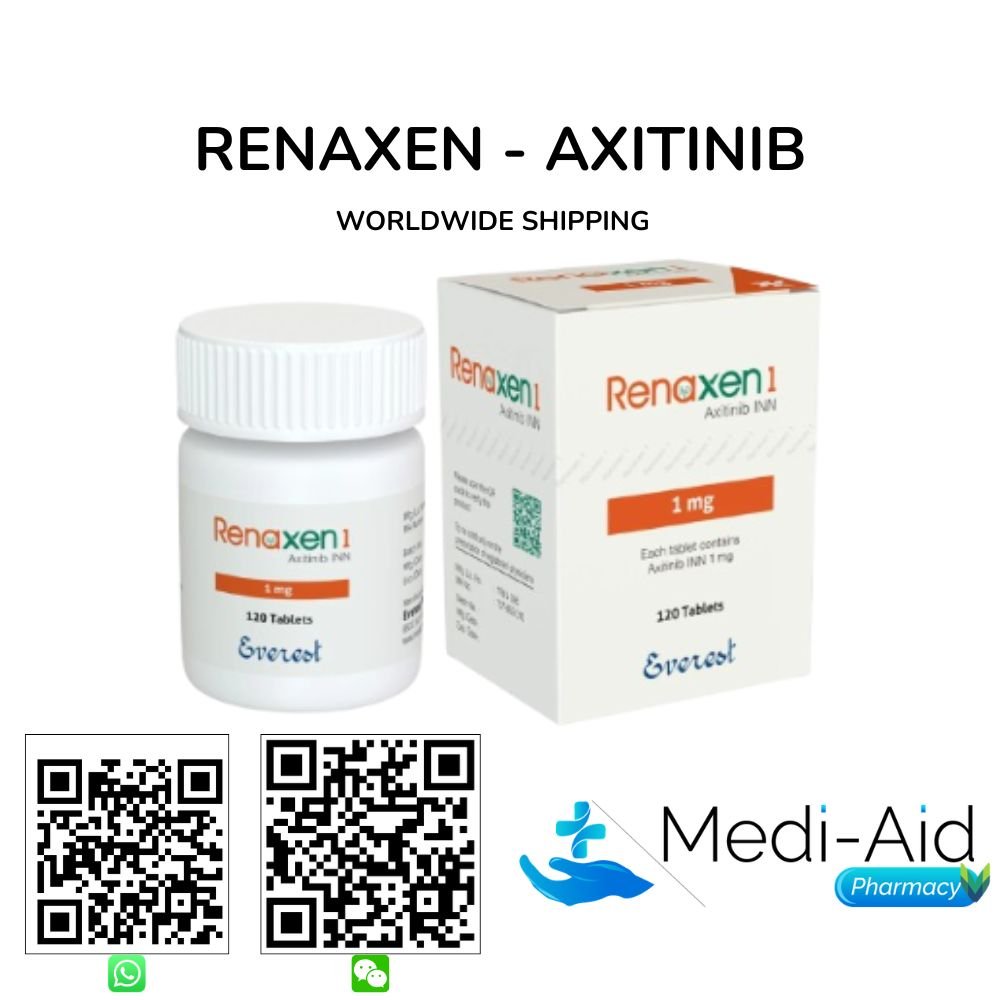
Renaxen 1 MG (Axitinib) is an oral, selective vascular endothelial growth factor receptor (VEGFR) tyrosine kinase inhibitor (TKI) film-coated tablet available in a 1 mg strength, supplied in a pack of 120 tablets per pot, manufactured by Everest Pharmaceuticals Ltd. of Bangladesh. The active ingredient, axitinib, is a potent second-generation, selective inhibitor of VEGFR-1, VEGFR-2, and VEGFR-3 with reported IC₅₀ values of 0.1 nM (VEGFR-1), 0.2 nM (VEGFR-2), and 0.1–0.3 nM (VEGFR-3) establishing axitinib as one of the most potent VEGFR-selective inhibitors in clinical oncology. Axitinib additionally inhibits platelet-derived growth factor receptors (PDGFR-α and PDGFR-β) and stem cell factor receptor (c-Kit), conferring complementary anti-angiogenic activity.
The reference-label starting dose of axitinib is 5 mg twice daily (BID); with demonstrated tolerability and no adverse events exceeding Grade 2 for two consecutive weeks, the dose may be titrated upward to 7 mg BID and subsequently to 10 mg BID. The 1 mg film-coated tablet formulation of Renaxen is clinically essential for the complete reference-label axitinib dose modification pathway, enabling precise stepwise reductions from 5 mg BID to 3 mg BID (3 × Renaxen 1 MG twice daily), then to 2 mg BID (2 × Renaxen 1 MG twice daily), and finally to 1 mg BID (1 × Renaxen 1 MG twice daily) dose levels that are not achievable using the 5 mg tablet strength alone. In the pivotal Phase III AXIS trial, axitinib 5 mg BID significantly extended median progression-free survival (PFS) to 6.7 months versus 4.7 months with sorafenib (HR 0.665; 95% CI 0.544–0.812; P<0.0001) in second-line advanced renal cell carcinoma (RCC), with an objective response rate (ORR) of 19% versus 9% (P=0.0001).
In the Phase III KEYNOTE-426 trial, axitinib 5 mg BID combined with pembrolizumab demonstrated a 12-month overall survival (OS) rate of 89.9% versus 78.3% with sunitinib (HR 0.53; 95% CI 0.38–0.74; P<0.0001) and median PFS of 15.1 months versus 11.1 months (HR 0.69; P<0.001) in treatment-naive advanced RCC, with an ORR of 59.3% versus 35.7%. Searching for Renaxen 1 MG Axitinib? Mediaid Pharmacy stocks this product within its comprehensive kidney cancer medicines portfolio and ships worldwide.
Basic Product Information of Renaxen 1 MG (Axitinib)
| Brand Name | Renaxen 1 MG (Axitinib) |
| Product Name | Renaxen |
| Generic Name | Axitinib |
| Drug Class | Selective VEGFR Tyrosine Kinase Inhibitor (TKI); VEGFR-1 / VEGFR-2 / VEGFR-3 Inhibitor; Anti-Angiogenic Targeted Oncology Agent; Indazole-Class Small-Molecule Kinase Inhibitor |
| Formulation | Film-Coated Tablet |
| Available Strength | 1 mg per tablet (also available as Renaxen 5 MG axitinib 5 mg per tablet) |
| Available Pack Size | 120 Tablets per pot (60-day supply at 1 mg BID; 30-day supply at 2 mg BID; 20-day supply at 3 mg BID) |
| Primary Indications | Advanced Renal Cell Carcinoma (RCC) Monotherapy after Failure of One Prior Systemic Therapy; Advanced RCC First-Line in Combination with Pembrolizumab (KEYNOTE-426); Advanced RCC First-Line in Combination with Avelumab (JAVELIN Renal 101) |
| Reference-Label Starting Dose | 5 mg twice daily (BID) = 5 × Renaxen 1 MG per dose (morning + evening, ~12 hours apart); dose reductions: 3 mg BID (3 × Renaxen 1 MG BID) → 2 mg BID (2 × Renaxen 1 MG BID) → 1 mg BID (1 × Renaxen 1 MG BID) |
| Manufacturer / Brand | Everest Pharmaceuticals Ltd. (Everest Pharma), Bangladesh |
| Country of Origin | Bangladesh |
| SKU | everest-renaxen-1 |
| Categories | Everest Pharmaceuticals Medicines, Kidney Cancer Medicines, Oncology Medicines |
| Storage Conditions | Store below 30°C in a dry place, protected from light and moisture. Keep out of the reach of children. |
| Global Supplier | Mediaid Pharmacy Worldwide Shipping Available |
How Renaxen 1 MG (Axitinib) Works: Selective VEGFR Kinase Inhibition and Anti-Angiogenic Tumour Vascular Starvation
Axitinib, the active ingredient in Renaxen 1 MG, is an orally bioavailable, second-generation selective tyrosine kinase inhibitor (TKI) belonging to the indazole chemical class. Axitinib is mechanistically differentiated from first-generation multi-kinase inhibitors such as sorafenib and sunitinib by its exceptional selectivity and sub-nanomolar potency at all three vascular endothelial growth factor receptors: VEGFR-1 (IC₅₀ = 0.1 nM), VEGFR-2 (IC₅₀ = 0.2 nM), and VEGFR-3 (IC₅₀ = 0.1–0.3 nM). A selective VEGFR tyrosine kinase inhibitor refers to a small-molecule compound that competitively occupies the ATP-binding domain of VEGFR kinases with high selectivity and inhibitory potency, thereby preventing autophosphorylation and downstream propagation of pro-angiogenic VEGF signalling cascades that drive tumour vascularisation, growth, and metastatic spread.
Axitinib achieves clinically relevant inhibitory concentrations at VEGFR-1, VEGFR-2, and VEGFR-3 at doses achievable in patients, while also inhibiting PDGFR-β (IC₅₀ = 1.6 nM) and c-Kit (IC₅₀ = 1.7 nM) at similar sub-nanomolar to low-nanomolar concentrations, conferring complementary disruption of pericyte-mediated vascular stabilisation. This selectivity profile means axitinib targets the pro-angiogenic VEGF/VEGFR signalling axis with greater precision and potency than broader multi-kinase inhibitors VEGFR-2 inhibition by axitinib at IC₅₀ = 0.2 nM represents approximately 10-fold greater potency than sorafenib’s IC₅₀ of approximately 90 nM at the same receptor. Each Renaxen 1 MG film-coated tablet contains axitinib 1 mg, formulated by Everest Pharmaceuticals Ltd. of Bangladesh; the reference-label starting dose of 5 mg BID is achievable using 5 × Renaxen 1 MG tablets or 1 × Renaxen 5 MG tablet twice daily.
The oncological primacy of axitinib’s VEGFR-selective inhibition in advanced renal cell carcinoma (RCC) exploits the unique biology of clear cell RCC, in which inactivation of the von Hippel-Lindau (VHL) tumour suppressor gene leads to constitutive overexpression of hypoxia-inducible factor (HIF)-1α and HIF-2α, driving pathological upregulation of VEGF-A, VEGF-C, and PDGF the primary ligands for the VEGFR/PDGFR axis. By potently blocking VEGFR-1, VEGFR-2, and VEGFR-3 at sub-nanomolar concentrations, axitinib achieves tumour vascular starvation: suppression of new blood vessel formation (angiogenesis) essential for tumour oxygenation and nutrient supply, regression of existing immature tumour neovasculature, and disruption of lymphangiogenesis via VEGFR-3 blockade that impairs metastatic lymphatic spread.
VEGFR-2 is the dominant functional receptor mediating VEGF-induced endothelial cell proliferation, survival, and vascular permeability; axitinib’s IC₅₀ of 0.2 nM at VEGFR-2 defines the mechanistic potency advantage that underpins its superior PFS in the pivotal AXIS trial versus sorafenib. Axitinib oral bioavailability is approximately 58%, with peak plasma concentrations (Tᴰᵀᵀ) achieved within 2.5–4.1 hours of dosing and a plasma half-life of approximately 2.5–6.1 hours a relatively short half-life that necessitates strict BID dosing compliance for sustained VEGFR inhibition. Oncologists managing patients with kidney cancer can review the full range of kidney cancer targeted therapy medicines at Mediaid Pharmacy, including Renaxen 1 MG and Renaxen 5 MG Axitinib, for second-line and combination RCC therapy planning.
In the pivotal Phase III AXIS trial 723 patients with advanced RCC who had failed one prior systemic therapy (sunitinib in 54%, cytokine therapy in 35%, bevacizumab in 8%, or temsirolimus in 3% of patients) axitinib 5 mg BID significantly extended median PFS to 6.7 months versus 4.7 months with sorafenib (HR 0.665; 95% CI 0.544–0.812; P<0.0001), with an ORR of 19% versus 9% (P=0.0001). In the prior-cytokine subgroup, the PFS benefit with axitinib was more pronounced: 12.1 months versus 6.5 months (HR 0.464), establishing axitinib as a preferred second-line option after cytokine-based first-line treatment.
In the Phase III KEYNOTE-426 trial of treatment-naive advanced RCC 861 patients axitinib 5 mg BID combined with pembrolizumab demonstrated significantly superior overall survival (OS: HR 0.53; 95% CI 0.38–0.74; P<0.0001; 12-month OS rate 89.9% vs 78.3%), PFS (median 15.1 vs 11.1 months; HR 0.69; P<0.001), and ORR (59.3% vs 35.7%) versus sunitinib monotherapy across all IMDC risk groups. The dose for each patient is determined and adjusted by the treating oncologist; Renaxen 1 MG tablets must be prescribed and taken under the supervision of a qualified oncology specialist.
Approved Indications of Axitinib Renaxen 1 MG Reference Label
Axitinib is approved in numerous countries for advanced renal cell carcinoma (RCC) across multiple clinical settings. The 1 mg film-coated tablet formulation of Renaxen, with its 120-tablet pack size, is clinically indispensable for the complete reference-label dose titration and reduction pathway of axitinib. Prescribers must confirm the exact locally approved indications on the axitinib product label before initiating therapy, as specific label language varies by regulatory jurisdiction.
|
Advanced Renal Cell Carcinoma (RCC) Second-Line Monotherapy After Failure of One Prior Systemic Therapy Axitinib is indicated as monotherapy for adult patients with advanced RCC after failure of one prior systemic therapy (cytokine therapy, sunitinib, bevacizumab, or temsirolimus). Reference-label starting dose: 5 mg twice daily (BID). Pivotal AXIS Phase III trial: median PFS 6.7 months (axitinib) vs 4.7 months (sorafenib); HR 0.665; P<0.0001. ORR 19% vs 9%. Oncologists can review the full range of second-line kidney cancer TKI medicines at Mediaid Pharmacy alongside Renaxen for comprehensive RCC programme planning. |
Advanced RCC First-Line in Combination with Pembrolizumab (KEYNOTE-426) Axitinib 5 mg BID in combination with pembrolizumab 200 mg IV every 3 weeks is approved for first-line treatment of adult patients with advanced RCC across all IMDC risk groups. KEYNOTE-426 Phase III data: OS HR 0.53; P<0.0001; 12-month OS 89.9% vs 78.3%; median PFS 15.1 vs 11.1 months; ORR 59.3% vs 35.7% versus sunitinib. Renaxen 1 MG is essential for all protocol dose reductions from the 5 mg BID starting dose in the combination setting. |
Advanced RCC First-Line in Combination with Avelumab (JAVELIN Renal 101) Axitinib 5 mg BID in combination with avelumab 800 mg IV every 2 weeks is approved for first-line treatment of adult patients with advanced RCC. JAVELIN Renal 101 Phase III data: median PFS 13.8 vs 7.2 months (HR 0.69; P<0.0001) in PD-L1-positive patients; median PFS 13.3 vs 8.0 months overall versus sunitinib. The oncology medicines catalogue at Mediaid Pharmacy supports combination immuno-oncology and axitinib procurement planning. |
Renaxen 1 MG (Axitinib) Dosing Table: Reference-Label Starting Dose, Titration, and Dose Reduction Schedule
The reference-label starting dose of axitinib is 5 mg twice daily (BID), taken approximately 12 hours apart with or without food. The unique dose titration paradigm of axitinib encompassing both upward titration in patients with demonstrated tolerability and stepwise downward reductions in patients experiencing adverse events requires precise milligram-level dosing flexibility. The Renaxen 1 MG film-coated tablet is clinically essential for the complete reference-label dose modification spectrum. All dose modifications must be directed by the treating oncologist. The 120-tablet pot of Renaxen 1 MG provides a 60-day supply at 1 mg BID (2 tablets/day) and a 30-day supply at 2 mg BID (4 tablets/day) the two most clinically utilised dose reduction levels.
| Dose Level | Axitinib Dose | Renaxen 1 MG Tablet Count per Dose (BID) | Total Daily Dose | 120-Tablet Pot Supply Duration |
| Dose Titration Level 2 (Maximum) | 10 mg BID | 10 × Renaxen 1 MG per dose | 20 mg/day | 6 days |
| Dose Titration Level 1 | 7 mg BID | 7 × Renaxen 1 MG per dose | 14 mg/day | 8–9 days |
| Starting Dose (Reference Label) | 5 mg BID | 5 × Renaxen 1 MG per dose (or 1 × Renaxen 5 MG per dose) | 10 mg/day | 12 days |
| Dose Reduction Level 1 | 3 mg BID | 3 × Renaxen 1 MG per dose | 6 mg/day | 20 days |
| Dose Reduction Level 2 | 2 mg BID | 2 × Renaxen 1 MG per dose | 4 mg/day | 30 days |
| Dose Reduction Level 3 (Minimum) | 1 mg BID | 1 × Renaxen 1 MG per dose | 2 mg/day | 60 days |
Dose titration upward from 5 mg BID to 7 mg BID and subsequently to 10 mg BID is permitted only when the patient has demonstrated no adverse events exceeding Grade 2 severity for two consecutive weeks and maintains blood pressure ≤150/90 mmHg without antihypertensive dose intensification, and is not receiving a concurrent strong CYP3A4/5 inhibitor. In patients who require a strong CYP3A4/5 inhibitor that cannot be stopped, the axitinib dose must be reduced to approximately 2 mg BID (2 × Renaxen 1 MG BID). If a dose is missed or vomited, the next scheduled dose should be taken at the prescribed time the missed or vomited dose must not be replaced or doubled. All dose modifications are directed by the treating oncologist.
Drug Interactions and Important Safety Information for Renaxen 1 MG (Axitinib)
The most clinically significant pharmacokinetic drug interaction risk for axitinib involves CYP3A4/5 inhibitors and inducers. Axitinib is primarily metabolised by CYP3A4/5 (accounting for approximately 40% of clearance) and secondarily by CYP1A2, CYP2C19, and UGT1A1. Strong CYP3A4/5 inhibitors including ketoconazole, itraconazole, clarithromycin, ritonavir-boosted HIV medications (ritonavir, cobicistat), nefazodone, and grapefruit juice significantly increase axitinib systemic exposure and amplify toxicity risk.
In a clinical pharmacokinetic study, ketoconazole 400 mg once daily increased axitinib AUC by approximately 2-fold; avoidance of strong CYP3A4/5 inhibitors is recommended, and when unavoidable, the axitinib dose must be reduced from 5 mg BID to approximately 2 mg BID as directed by the oncologist achievable using 2 × Renaxen 1 MG tablets twice daily. Strong CYP3A4/5 inducers including rifampicin, carbamazepine, phenytoin, phenobarbital, and St. John’s Wort (Hypericum perforatum) markedly reduce axitinib systemic exposure and may compromise clinical efficacy; rifampicin co-administration reduced axitinib AUC by approximately 79%. Avoidance of strong CYP3A4/5 inducers is preferred where clinically feasible.
CYP1A2 inhibitors (fluvoxamine, mexiletine) may also increase axitinib exposure via secondary metabolic pathway inhibition; clinical vigilance is required when these agents are co-administered. Antihypertensive agents: axitinib induces clinically significant hypertension in 40–45% of patients via VEGFR-2 inhibition; patients initiating or intensifying antihypertensive therapy during axitinib treatment require more frequent blood pressure monitoring, as axitinib-associated hypertension may partially reverse upon dose reduction, potentially creating a risk of hypotension if antihypertensive doses are not adjusted accordingly.
Thyroid hormone replacement: axitinib may impair thyroid function, resulting in hypothyroidism requiring initiation or intensification of thyroid hormone replacement therapy; regular TSH monitoring is mandatory throughout axitinib treatment. Anticoagulation and antiplatelet agents: axitinib increases the risk of both thromboembolic events (arterial and venous) and haemorrhagic events; patients on warfarin, low-molecular-weight heparin (LMWH), or antiplatelet therapy require heightened clinical vigilance, more frequent INR monitoring (for warfarin), and prompt reporting of any bleeding signs. Patients must disclose all concomitant medications including over-the-counter supplements and herbal preparations to their treating oncologist before and during Renaxen 1 MG therapy. Teams requiring concurrent oncology agents alongside axitinib-based kidney cancer regimens at Mediaid Pharmacy can contact the team for multi-medicine sourcing support.
Side Effects and Precautions of Renaxen 1 MG (Axitinib)
|
Common Side Effects Diarrhoea (approximately 55–65%; the most frequently reported adverse event with axitinib at 5 mg BID; typically mild to moderate; managed with anti-diarrhoeal agents, hydration, dietary modification, and dose modification as clinically required) Hypertension (approximately 40–45%; a pharmacodynamic effect of VEGFR-2 inhibition on systemic endothelial function; requires blood pressure monitoring before initiation and throughout treatment; managed with antihypertensive therapy initiation or intensification as directed by the oncologist) Fatigue and asthenia (approximately 39–44%; often multifactorial contributed to by anaemia, disease burden, reduced appetite, hypothyroidism, and direct drug-related effects) Decreased appetite and anorexia (approximately 34%); nausea (approximately 32%); vomiting (approximately 24%) Dysphonia or hoarseness (approximately 31%; a characteristic axitinib-associated toxicity attributed to laryngeal mucosal changes from VEGFR-1/VEGFR-2 inhibition; does not typically require dose modification) Palmar-plantar erythrodysaesthesia syndrome (PPES) / Hand-foot syndrome (approximately 27%; managed with emollient creams, urea-based moisturisers, avoidance of pressure and friction on palms and soles, and axitinib dose modification when Grade 2 or higher) Weight decrease (approximately 25%); constipation (approximately 20%); headache (approximately 14%); peripheral oedema (approximately 15%) Hypothyroidism (approximately 19%; regular TSH monitoring required throughout axitinib treatment; managed with initiation or dose adjustment of thyroid hormone replacement therapy as clinically indicated) |
Serious Warnings and Precautions Hypertension and hypertensive crisis: Grade 3 hypertension (≥160/100 mmHg despite antihypertensive therapy) requires axitinib dose reduction to 3 mg BID (3 × Renaxen 1 MG BID) or dose interruption. Grade 4 hypertensive crisis requires permanent discontinuation. Blood pressure must be optimised to <150/90 mmHg before initiating axitinib and monitored at least weekly during the first month and periodically thereafter. Arterial thromboembolic events (ATE): serious ATEs including myocardial infarction, cerebrovascular accident, transient ischaemic attack, and retinal artery occlusion have been reported with axitinib. Patients with recent ATE history (<12 months) or significant cardiovascular risk factors require pre-treatment evaluation. Grade 3 or higher ATE requires permanent axitinib discontinuation. Venous thromboembolic events (VTE): deep vein thrombosis (DVT), pulmonary embolism (PE), and other VTEs have been reported with axitinib. Grade 3 VTE may require dose modification; Grade 4 or life-threatening VTE (including massive PE) requires permanent discontinuation. Haemorrhage: serious and potentially fatal haemorrhagic events including cerebral haemorrhage have been reported with axitinib. Grade 3–4 haemorrhage requires permanent axitinib discontinuation. Patients on concurrent anticoagulation or antiplatelet therapy require heightened monitoring. Cardiac failure and cardiac dysfunction: cardiac failure, including fatal cases, has been reported with axitinib. Cardiac function must be assessed at baseline and monitored throughout treatment; dose modification or permanent discontinuation may be required based on severity of cardiac dysfunction. Reversible posterior leukoencephalopathy syndrome (RPLS): RPLS has been confirmed with axitinib. Symptoms include seizures, headache, lethargy, confusion, blindness, and other visual or neurological disturbances associated with hypertension. Confirmed RPLS requires permanent axitinib discontinuation. Wound healing complications: axitinib may impair wound healing. Axitinib should be held for at least 24 hours before elective surgery; resumption after surgery requires oncologist assessment of adequate wound healing and benefit-risk evaluation. Embryo-fetal toxicity: axitinib can cause fetal harm based on its mechanism of action and confirmed animal reproductive toxicology data demonstrating embryotoxicity, fetotoxicity, and teratogenicity. Females of reproductive potential must use effective contraception during treatment and for at least 1 week after the final dose. Males with female partners of reproductive potential must use effective contraception during treatment and for at least 1 week after the final dose. Breastfeeding must be discontinued during axitinib treatment. |
Who Should Use Renaxen 1 MG (Axitinib)?
Renaxen 1 MG (Axitinib) is indicated for adult patients with advanced renal cell carcinoma (RCC) across three clinical settings: (1) as monotherapy in patients with advanced RCC after failure of one prior systemic therapy, including prior cytokine therapy (interferon-alfa or interleukin-2), anti-VEGFR TKI therapy (sunitinib), anti-VEGF therapy (bevacizumab), or mTOR inhibitor therapy (temsirolimus); (2) in combination with pembrolizumab as first-line treatment of advanced RCC across all IMDC risk groups (favourable, intermediate, and poor risk); and (3) in combination with avelumab as first-line treatment of advanced RCC.
The Renaxen 1 MG tablet strength is specifically and indispensably required for the reference-label axitinib dose modification pathway: the 1 mg tablet enables precise reductions from the 5 mg BID starting dose to 3 mg BID (first reduction: 3 × Renaxen 1 MG BID), 2 mg BID (second reduction: 2 × Renaxen 1 MG BID), and 1 mg BID (third reduction: 1 × Renaxen 1 MG BID) dose steps not achievable using the 5 mg tablet strength alone. In patients who require a concurrent strong CYP3A4/5 inhibitor, the mandatory dose reduction to approximately 2 mg BID requires 2 × Renaxen 1 MG per dose. Oncologists must assess baseline cardiovascular function, blood pressure, thyroid function (TSH), hepatic function (LFTs), and all concomitant CYP3A4/5-modifying medications before prescribing any axitinib dose level.
Patients who are pregnant, planning a pregnancy, or of reproductive potential without adequate contraception require mandatory pre-therapy counselling. Oncologists seeking comprehensive targeted agent support across kidney cancer programmes can review the full range of kidney cancer medicines at Mediaid Pharmacy, including Renaxen 1 MG Axitinib for second-line RCC therapy and combination immuno-oncology regimens.
Global Supplier: Mediaid Pharmacy Worldwide Shipping for Renaxen 1 MG (Axitinib)
Mediaid Pharmacy is a Dhaka-based supplier of oncology and specialty medicines with worldwide shipping capacity. Renaxen 1 MG (Axitinib) manufactured by Everest Pharmaceuticals Ltd. of Bangladesh, formulated as film-coated tablets in 120-tablet pots is stocked and available for international supply. All orders are supported by pricing quotations, stock confirmation, and end-to-end delivery tracking. Hospitals, specialist oncology and urology clinics, cancer centres, distributors, and patients in countries where axitinib is approved can contact the Mediaid Pharmacy team through WhatsApp, phone, or WeChat for all enquiries about generic axitinib tablets for kidney cancer at Mediaid Pharmacy including current stock availability, pricing, and international delivery timelines. Institutions and distributors sourcing multiple oncology medicines in a single consolidated shipment can request a combined quotation from the Mediaid Pharmacy team after browsing the full catalogue.
Why Choose Renaxen 1 MG (Axitinib) from Mediaid Pharmacy?
Renaxen 1 MG is manufactured by Everest Pharmaceuticals Ltd. of Bangladesh and delivers axitinib the selective VEGFR TKI whose 5 mg BID dose anchored the AXIS Phase III trial (33.5% improvement in median PFS: 6.7 vs 4.7 months; HR 0.665; P<0.0001; ORR 19% vs 9%; P=0.0001 versus sorafenib in second-line advanced RCC), underpins the KEYNOTE-426 combination regimen (pembrolizumab + axitinib: OS HR 0.53; P<0.0001; ORR 59.3% vs 35.7%; median PFS 15.1 vs 11.1 months versus sunitinib in first-line advanced RCC), and anchors the JAVELIN Renal 101 combination regimen (avelumab + axitinib: PFS HR 0.69; P<0.0001 in PD-L1-positive first-line advanced RCC; HR 0.69 overall).
The defining procurement advantage of sourcing Renaxen 1 MG from Mediaid Pharmacy is complete reference-label dose modification coverage from a single axitinib supplier: the 1 mg film-coated tablet is the only Renaxen strength that enables the full three-step downward titration pathway 3 mg BID, 2 mg BID, and 1 mg BID required when managing axitinib-associated toxicities such as Grade 3 hypertension, diarrhoea, or palmar-plantar erythrodysaesthesia. The 120-tablet pot of Renaxen 1 MG provides a 30-day supply at 2 mg BID (the mandatory dose level for concurrent strong CYP3A4/5 inhibitor co-administration) and a 60-day supply at the minimum reference-label dose of 1 mg BID, covering the complete dose reduction spectrum from a single procurement without supplementary sourcing.
Mediaid Pharmacy supplies Renaxen 1 MG in its 120-tablet pot format with worldwide shipping, specialist supply support, and documentation for customs clearance as required. For oncology programmes requiring a broader panel of targeted and supportive agents, the full Mediaid Pharmacy oncology medicines catalogue is available to browse, and the team can be contacted directly for consolidated multi-medicine quotations.
Frequently Asked Questions About Renaxen 1 MG (Axitinib)
What is Renaxen 1 MG and what is its generic name?
Renaxen 1 MG is a branded generic axitinib film-coated tablet manufactured by Everest Pharmaceuticals Ltd. (Everest Pharma) of Bangladesh. The generic name of Renaxen 1 MG is axitinib the same active ingredient as the originator medicine Inlyta (axitinib), originally developed by Pfizer and approved by the FDA in January 2012, the EMA, and other major regulatory agencies for advanced renal cell carcinoma (RCC). Each Renaxen 1 MG film-coated tablet contains axitinib 1 mg. Renaxen is also available as Renaxen 5 MG (axitinib 5 mg); together, the two strengths cover the complete reference-label axitinib dose titration spectrum from 1 mg BID to 10 mg BID. The 120-tablet pot of Renaxen 1 MG provides a 60-day supply at the minimum reference-label dose of 1 mg BID (2 tablets/day), a 30-day supply at 2 mg BID (4 tablets/day), and a 20-day supply at 3 mg BID (6 tablets/day) making Renaxen 1 MG a clinically essential, cost-accessible generic axitinib option for oncology programmes managing advanced RCC patients worldwide.
How should Renaxen 1 MG (Axitinib) tablets be taken?
Renaxen 1 MG (Axitinib) tablets are taken orally at the dose and schedule prescribed by the treating oncologist. The reference-label starting dose of axitinib is 5 mg twice daily (BID) either 5 × Renaxen 1 MG tablets per dose or 1 × Renaxen 5 MG tablet per dose, taken in the morning and evening approximately 12 hours apart. Axitinib can be taken with or without food; tablets should be swallowed whole with a glass of water and must not be crushed, chewed, or split. Patients should maintain consistent timing of dosing to sustain therapeutic VEGFR inhibition given axitinib’s relatively short plasma half-life of 2.5–6.1 hours. Grapefruit and grapefruit juice must be avoided during axitinib treatment, as grapefruit acts as a CYP3A4/5 inhibitor that may increase axitinib systemic exposure and amplify toxicity risk. If a dose is missed or vomited, the next dose should be taken at the regularly scheduled time the missed or vomited dose must not be replaced or doubled. Any concerns about administration, dose adjustments, or side effects should be reported to the treating oncologist immediately.
What are the most common side effects of Renaxen 1 MG (Axitinib)?
The most common side effects of axitinib across all approved indications and dose levels include diarrhoea (approximately 55–65%; the most frequently reported adverse event), hypertension (approximately 40–45%; requiring blood pressure monitoring and antihypertensive management), fatigue (approximately 39–44%), decreased appetite and anorexia (approximately 34%), nausea (approximately 32%), dysphonia or hoarseness (approximately 31%; a characteristic axitinib-associated toxicity), palmar-plantar erythrodysaesthesia syndrome (approximately 27%), weight decrease (approximately 25%), vomiting (approximately 24%), hypothyroidism (approximately 19%; requiring regular TSH monitoring and thyroid hormone replacement as indicated), constipation (approximately 20%), and headache (approximately 14%). Adverse event severity is a key driver of the axitinib dose titration paradigm: patients experiencing Grade 2 or higher toxicities require stepwise dose reductions using Renaxen 1 MG tablets to 3 mg BID, 2 mg BID, and then 1 mg BID as directed by the oncologist. Serious adverse events including severe hypertension, arterial or venous thromboembolic events, haemorrhage, cardiac failure, and reversible posterior leukoencephalopathy syndrome (RPLS) require immediate oncologist assessment and may necessitate dose interruption or permanent discontinuation. Consult your prescribing oncologist regarding your individual risk profile before and during axitinib treatment.
What is the evidence base for axitinib (Renaxen) in advanced renal cell carcinoma (RCC)?
The pivotal evidence for axitinib monotherapy in second-line advanced RCC is derived from the Phase III AXIS trial, which enrolled 723 patients with advanced RCC who had failed one prior systemic therapy (sunitinib in 54%, cytokine therapy in 35%, bevacizumab in 8%, or temsirolimus in 3% of patients). Axitinib 5 mg BID significantly extended median PFS compared to sorafenib (6.7 months vs 4.7 months; HR 0.665; 95% CI 0.544–0.812; P<0.0001) and demonstrated a superior ORR of 19% versus 9% (P=0.0001). In the prior-cytokine subgroup, the PFS benefit was more pronounced: 12.1 months versus 6.5 months (HR 0.464), establishing axitinib as a preferred second-line option after cytokine-based first-line treatment. For first-line advanced RCC, the Phase III KEYNOTE-426 trial (861 patients) demonstrated that pembrolizumab combined with axitinib 5 mg BID significantly improved OS (HR 0.53; P<0.0001; 12-month OS 89.9% vs 78.3%), PFS (median 15.1 vs 11.1 months; HR 0.69; P<0.001), and ORR (59.3% vs 35.7%) versus sunitinib across all IMDC risk groups. Renaxen 1 MG delivers the axitinib dose reduction levels required by the reference-label AXIS and KEYNOTE-426 dose modification algorithms, with the 120-tablet pot providing clinically aligned supply for the most utilised dose reduction levels (2 mg BID: 30 days; 1 mg BID: 60 days).
Is Renaxen 1 MG (Axitinib) safe during pregnancy or while breastfeeding?
No. Axitinib including in the Renaxen 1 MG film-coated tablet formulation can cause fetal harm based on its mechanism of action (VEGFR inhibition is essential to normal embryonic vascular development) and confirmed animal reproductive toxicology data demonstrating embryotoxicity, fetotoxicity, and teratogenicity at exposures within or below the human therapeutic range. Females of reproductive potential must use effective contraception during treatment with Renaxen 1 MG and for at least 1 week after the final dose. Males with female partners of reproductive potential must use effective contraception during treatment and for at least 1 week after the last dose. Breastfeeding must be discontinued during axitinib treatment; it is unknown whether axitinib or its metabolites are excreted in human breast milk, and the potential for serious adverse reactions in a breastfed infant is considered clinically significant based on axitinib’s pharmacology. Patients who are pregnant, planning a pregnancy, or breastfeeding must discuss their individual circumstances with their treating oncologist before initiating any axitinib dose level.
Why is the Renaxen 1 MG strength specifically important for axitinib dose management?
The Renaxen 1 MG strength is clinically indispensable because the reference-label axitinib dose modification algorithm approved by the FDA, EMA, and other major regulatory agencies specifies three downward dose reduction steps from the 5 mg BID starting dose: 3 mg BID, then 2 mg BID, then 1 mg BID. These reduction levels cannot be achieved using the 5 mg tablet strength alone and require the 1 mg tablet. Specifically: (a) patients who develop Grade 3 hypertension, Grade 2 hand-foot syndrome, Grade 2 diarrhoea, or other Grade 2 toxicities at 5 mg BID require a first reduction to 3 mg BID (3 × Renaxen 1 MG twice daily); (b) patients who experience toxicity persistence or recurrence at 3 mg BID require a further reduction to 2 mg BID (2 × Renaxen 1 MG twice daily); (c) in patients receiving a concurrent strong CYP3A4/5 inhibitor that cannot be stopped, the mandatory dose reduction to approximately 2 mg BID requires 2 × Renaxen 1 MG twice daily; (d) further toxicity at 2 mg BID warrants reduction to 1 mg BID (1 × Renaxen 1 MG twice daily). Additionally, dose titration upward from 5 mg BID to 7 mg BID is achievable using 7 × Renaxen 1 MG per dose, offering maximal dose flexibility from a single Renaxen 1 MG procurement. Oncology teams requiring both Renaxen 1 MG and Renaxen 5 MG to cover the complete axitinib dose range can contact Mediaid Pharmacy’s kidney cancer medicines team for a consolidated supply quotation.
Can I order Renaxen 1 MG (Axitinib) online with worldwide shipping?
Yes. Mediaid Pharmacy supplies Renaxen 1 MG (Axitinib) manufactured by Everest Pharmaceuticals Ltd. of Bangladesh, film-coated tablets, 120 tablets per pot to oncology centres, hospitals, distributors, and patients globally. Contact Mediaid Pharmacy via WhatsApp, phone, or WeChat at +8801773428128, or email info@mediaidpharmacy.com, for pricing on Renaxen 1 MG Axitinib, current stock availability, and international delivery details for your country. Oncology teams sourcing Renaxen 1 MG Axitinib alongside other targeted agents can browse the complete range of oncology medicines at Mediaid Pharmacy and request a consolidated multi-medicine quotation. All orders are supported by prescription verification, pricing documentation, and customs clearance support as required for international shipments.
Order Renaxen 1 MG (Axitinib) with Worldwide Shipping
Phone / WhatsApp / WeChat: +8801773428128 | Email: info@mediaidpharmacy.com
Reviews
There are no reviews yet.