
Description
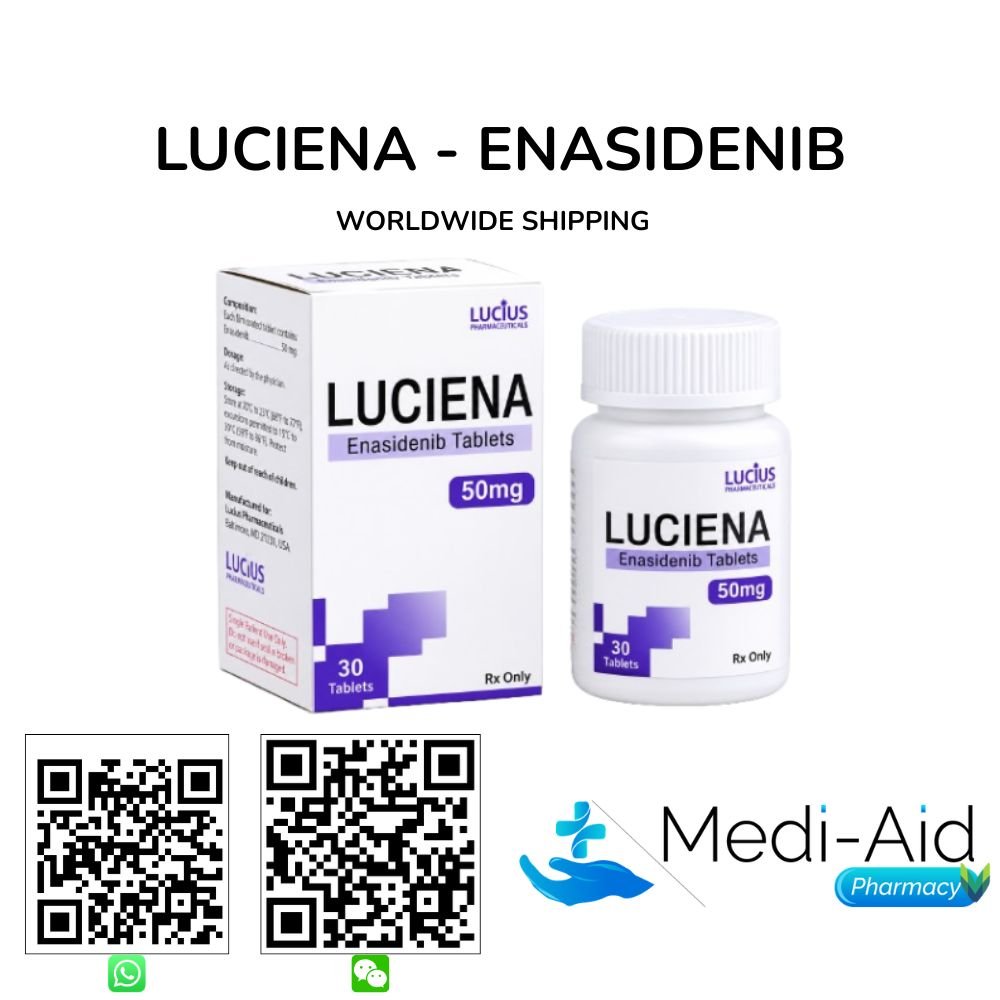
LuciEna 50 MG (Enasidenib) is an oral, selective isocitrate dehydrogenase-2 (IDH2) inhibitor film-coated tablet available in a 50 mg strength, supplied in a pack of 30 tablets per pot, manufactured by Lucius Pharmaceuticals (Lao) Co., Ltd. of Laos. The active ingredient, enasidenib, is the first-in-class, orally bioavailable, highly selective inhibitor of mutant IDH2 enzymes specifically the IDH2 R140Q and IDH2 R172K oncogenic gain-of-function mutations that occur in approximately 8–19% of acute myeloid leukaemia (AML) cases with an in vitro IC₅₀ of approximately 20 nM against IDH2 R140Q and approximately 10 nM against IDH2 R172K, conferring potent and durable suppression of the oncometabolite 2-hydroxyglutarate (2-HG) in IDH2-mutant leukaemic blasts at clinically achieved plasma concentrations.
Enasidenib achieves its antileukaemic effect by blocking the neomorphic enzymatic activity of mutant IDH2 protein, thereby suppressing the pathological overproduction of 2-hydroxyglutarate (2-HG) an oncometabolite that competitively inhibits alpha-ketoglutarate (α-KG)-dependent dioxygenases including TET2 methylcytosine dioxygenases and Jumonji-domain histone demethylases. By restoring α-KG-dependent epigenetic enzyme activity, enasidenib reverses IDH2-mutation-driven hypermethylation of haematopoietic differentiation loci, enabling terminal myeloid differentiation of leukaemic blast cells rather than inducing direct cytotoxic cell death a mechanism of action entirely distinct from conventional cytotoxic chemotherapy, hypomethylating agents, and BCL-2 or FLT3 inhibitors, positioning enasidenib as a first-in-class differentiation-inducing targeted agent in IDH2-mutant AML.
The reference-label dose of enasidenib for its approved adult indication is 100 mg once daily (QD), administered orally with or without food. LuciEna 50 MG is formulated as a 50 mg film-coated tablet: at the reference-label dose of 100 mg once daily, 2 × LuciEna 50 MG tablets are administered per day. At the standard first-level dose reduction of 50 mg once daily (applied for Grade ≥3 non-haematological toxicity under the treating oncologist’s direction), 1 × LuciEna 50 MG tablet is administered daily, with 30 tablets per pot providing a complete 30-day supply at that reduced dose level. All enasidenib dosing decisions including which dose level and schedule applies for each individual patient must be made by the treating haematologist or oncologist, and must be preceded by confirmed detection of a susceptible IDH2 mutation using an approved molecular diagnostic assay. LuciEna 50 MG is classified across Leukemia Medicines and Oncology Medicines categories, reflecting enasidenib’s approved clinical use in relapsed or refractory IDH2-mutant AML.
In the pivotal Phase 1/2 Study AG221-C-001 in adult patients with relapsed or refractory AML harbouring susceptible IDH2 mutations, enasidenib at 100 mg once daily achieved an overall response rate (ORR) of 40.3% (95% CI, 33.6–47.3%), including a complete remission (CR) rate of 19.3% and a complete remission with partial haematologic recovery (CRh) rate of 4.1%, with a median duration of response (DOR) of 5.8 months across all responders and a median overall survival (OS) of 9.3 months for all 214 evaluable patients including 19.7 months for patients who achieved CR or CRh. These data established enasidenib as the first approved IDH2-targeted therapy in AML and underpinned FDA approval in August 2017, delivering a clinically meaningful differentiation-based treatment option for a molecularly defined relapsed or refractory AML population.
Searching for LuciEna 50 MG Enasidenib? Mediaid Pharmacy stocks this product within its comprehensive leukemia medicines catalogue and ships worldwide.
Basic Product Information of LuciEna 50 MG (Enasidenib)
| Brand Name | LuciEna 50 MG (Enasidenib) |
| Product Name | LuciEna |
| Generic Name | Enasidenib |
| Drug Class | Selective Isocitrate Dehydrogenase-2 (IDH2) Inhibitor; Mutant IDH2 (mIDH2) Enzymatic Activity Inhibitor; 2-Hydroxyglutarate (2-HG) Oncometabolite Suppressor; First-in-Class Differentiation-Inducing Targeted Agent in IDH2-Mutant AML |
| Formulation | Film-Coated Tablet |
| Available Strengths | 50 mg per film-coated tablet |
| Available Pack Size | 30 Tablets per pot (at the standard first-level dose reduction of 50 mg QD [1 tablet per day × 30 days], one pot provides a complete 30-day supply; at the reference-label dose of 100 mg QD [2 × 50 mg tablets per day], 2 pots provide a 30-day supply; dose level for each patient is determined exclusively by the treating haematologist or oncologist) |
| Primary Indication | Relapsed or Refractory Acute Myeloid Leukaemia (AML) in Adult Patients with a Susceptible Isocitrate Dehydrogenase-2 (IDH2) Mutation as Detected by an FDA-Approved Test |
| Reference-Label Starting Dose | 100 mg once daily (QD) orally, with or without food; swallowed whole with water (tablets must not be crushed, dissolved, chewed, or split); therapy continued until disease progression or unacceptable toxicity under haematologist-oncologist supervision; prior IDH2 mutation testing by an approved molecular diagnostic assay is mandatory before initiating therapy |
| Manufacturer / Brand | Lucius Pharmaceuticals (Lao) Co., Ltd. / Lucius Pharmaceuticals |
| Country of Origin | Laos |
| Categories | Leukemia Medicines, Oncology Medicines |
| Storage Conditions | Store below 30°C in a dry place, protected from light and moisture. Keep out of the reach of children. |
| Global Supplier | Mediaid Pharmacy Worldwide Shipping Available |
How LuciEna (Enasidenib) Works: Selective Mutant IDH2 Inhibition, 2-Hydroxyglutarate Suppression, and Leukaemic Blast Differentiation Induction
Enasidenib, the active ingredient in LuciEna 50 MG film-coated tablets, is an orally bioavailable, first-in-class, highly selective inhibitor of mutant isocitrate dehydrogenase-2 (IDH2) that targets the neomorphic enzymatic gain-of-function introduced by the IDH2 R140Q and IDH2 R172K somatic point mutations the two most prevalent oncogenic IDH2 mutations in acute myeloid leukaemia (AML), collectively present in approximately 8–19% of AML cases. Wild-type IDH2 (isocitrate dehydrogenase-2) is a homodimeric enzyme of the tricarboxylic acid (TCA) cycle located in the mitochondrial matrix, where it catalyses the NADP⁺-dependent oxidative decarboxylation of isocitrate to alpha-ketoglutarate (α-KG) and CO₂. Oncogenic IDH2 mutations at codon R140 and R172 confer a neomorphic enzymatic activity the reduction of α-KG to the oncometabolite 2-hydroxyglutarate (2-HG) using NADPH as the reductant a reaction absent in normal IDH2 function.
2-Hydroxyglutarate (2-HG) accumulates to supraphysiological concentrations (10–100-fold above normal) in IDH2-mutant leukaemic blasts and competitively inhibits alpha-ketoglutarate (α-KG)-dependent dioxygenases specifically the TET1/TET2/TET3 family of 5-methylcytosine DNA dioxygenases and the KDM family of Jumonji-domain-containing histone lysine demethylases that are essential regulators of haematopoietic stem cell differentiation. 2-HG-mediated inhibition of TET2 blocks the conversion of 5-methylcytosine (5mC) to 5-hydroxymethylcytosine (5hmC) at haematopoietic differentiation gene loci, producing a hypermethylated epigenetic landscape that locks haematopoietic progenitor cells in a self-renewing, undifferentiated blast state. This epigenetic differentiation block is the fundamental oncogenic mechanism by which IDH2 mutations drive AML pathogenesis.
Enasidenib inhibits mutant IDH2 enzymatic activity with an in vitro IC₅₀ of approximately 20 nM against IDH2 R140Q and approximately 10 nM against IDH2 R172K, and does not substantially inhibit wild-type IDH2 or the structurally related IDH1 enzyme at therapeutically achieved plasma concentrations conferring mutation-selective oncological activity while sparing normal TCA cycle IDH2 function. By blocking mutant IDH2 protein, enasidenib suppresses 2-HG production in IDH2-mutant leukaemic blasts: in Study AG221-C-001, plasma 2-HG levels decreased from a median baseline of approximately 1,756 ng/mL to below 100 ng/mL within 1 week of initiating enasidenib at 100 mg once daily a 95%+ reduction confirming deep and rapid on-target mutant IDH2 inhibition at the reference-label dose.
2-HG suppression by enasidenib restores the activity of TET2 and KDM-family histone demethylases at haematopoietic differentiation loci, reversing the IDH2-mutation-driven hypermethylation that blocked myeloid maturation. The restored epigenetic landscape enables terminal myeloid differentiation of IDH2-mutant leukaemic blast cells along the granulocytic and monocytic lineages a mechanism of antileukaemic action fundamentally distinct from cytotoxic cell death. This differentiation-inducing mechanism produces a characteristic clinical phenomenon: differentiation syndrome a potentially fatal inflammatory complication arising from the rapid, coordinated differentiation and cytokine release from maturing leukaemic blasts which occurs in approximately 12% of enasidenib-treated patients and requires prompt recognition, immediate corticosteroid therapy, and in severe cases enasidenib dose interruption.
Pharmacokinetics of enasidenib in LuciEna 50 MG film-coated tablets: following oral administration at 100 mg once daily, enasidenib is absorbed with a median time to peak plasma concentration (Tmax) of approximately 4 hours. Oral bioavailability data indicate high systemic exposure; a high-fat meal increases Cmax by approximately 36% and AUC by approximately 11% a modest food effect consistent with the label recommendation that enasidenib can be taken with or without food. Enasidenib is extensively protein-bound (greater than 98.5%, primarily to albumin) and undergoes hepatic metabolism through multiple CYP and UGT enzyme pathways specifically CYP1A2, CYP2B6, CYP2C8, CYP2C9, CYP2C19, CYP2D6, CYP3A4, UGT1A1, UGT1A3, and UGT1A9. The mean terminal plasma elimination half-life of enasidenib at steady state is approximately 137 hours, reflecting accumulation over approximately 29 days at the once-daily dosing schedule. Oncologists managing AML patients can review the full range of AML and leukaemia treatment medicines at Mediaid Pharmacy, including LuciEna 50 MG Enasidenib by Lucius Pharmaceuticals.
Enasidenib is eliminated primarily via faecal excretion (approximately 89%) with minimal urinary excretion (approximately 11%), consistent with its extensive hepatic metabolism. Notably, enasidenib is itself a moderate inhibitor of UGT1A1 the primary bilirubin glucuronidation enzyme which produces a pharmacodynamic elevation of indirect (unconjugated) serum bilirubin in the majority of patients, most commonly Grade 1–2, that does not reflect hepatocellular injury and must be distinguished from true hepatotoxicity during routine monitoring. No dose adjustment is required for patients with mild-to-moderate renal impairment; hepatic impairment data are limited and intensified liver function monitoring is recommended. The dose of LuciEna for each individual patient must be determined and monitored by the treating haematologist or oncologist, and enasidenib therapy must be prescribed and administered under the supervision of a qualified haematology-oncology specialist experienced in the management of AML.
Approved Indication of Enasidenib (LuciEna 50 MG) Reference Label
Enasidenib holds regulatory approval in adult patients with relapsed or refractory acute myeloid leukaemia (AML) with a susceptible IDH2 mutation in the United States (FDA, approved August 1, 2017 the first IDH2 inhibitor approved for any indication) and other regulatory jurisdictions globally. The LuciEna 50 MG film-coated tablet is the 50 mg strength of enasidenib manufactured by Lucius Pharmaceuticals (Lao) Co., Ltd. of Laos. All prescribers must confirm the exact locally approved indication and dose modification schedule on the enasidenib product label before initiating LuciEna therapy, as label language and approved indications may vary by regulatory jurisdiction. IDH2 mutation testing using an approved molecular diagnostic assay is a mandatory prerequisite to enasidenib prescribing across all jurisdictions where enasidenib is approved.
|
Relapsed or Refractory AML with Susceptible IDH2 Mutation Enasidenib is approved as monotherapy for adult patients with relapsed or refractory acute myeloid leukaemia (AML) who have a susceptible IDH2 mutation (IDH2 R140Q, IDH2 R172K, or other susceptible variants as listed in the product label) as detected by an FDA-approved or locally approved companion diagnostic test. The reference-label dose is 100 mg once daily (2 × LuciEna 50 MG tablets per day). The pivotal Phase 1/2 Study AG221-C-001 in 214 evaluable relapsed/refractory IDH2-mutant AML patients demonstrated an ORR of 40.3% (95% CI, 33.6–47.3%), CR rate of 19.3%, median DOR of 5.8 months across all responders, and median OS of 9.3 months overall and 19.7 months in patients achieving CR or CRh. Oncologists managing relapsed AML can review IDH2 inhibitor tablets for AML at Mediaid Pharmacy. |
Mandatory Companion Diagnostic: IDH2 Mutation Testing Enasidenib including LuciEna 50 MG by Lucius Pharmaceuticals must only be initiated in patients with confirmed susceptible IDH2 mutations as detected by an approved molecular diagnostic assay. In the United States, the FDA-approved companion diagnostic for enasidenib selection is the Abbott RealTime IDH2 Assay. IDH2 mutation testing from bone marrow aspirate or peripheral blood is performed using PCR-based allele-specific testing, next-generation sequencing (NGS) panels, or the approved companion diagnostic. Patients must have IDH2 R140Q, IDH2 R172K, or another listed susceptible IDH2 variant confirmed before the first dose of LuciEna Enasidenib is prescribed. Haematologists seeking broader AML programme support can review oncology medicines at Mediaid Pharmacy for comprehensive AML treatment agent availability. |
|
IDH2 Mutation Subtypes and Clinical Context The IDH2 R140Q mutation is the most prevalent IDH2 AML mutation (approximately 70–80% of IDH2-mutant AML cases) and is located at the active site of the IDH2 homodimer interface; enasidenib inhibits IDH2 R140Q with an IC₅₀ of approximately 20 nM. The IDH2 R172K mutation is less common (approximately 10–20% of IDH2-mutant AML) and represents a structurally distinct mutation at the substrate-binding pocket of IDH2; enasidenib inhibits IDH2 R172K with an IC₅₀ of approximately 10 nM. Both mutations produce pathological 2-HG overproduction. In Study AG221-C-001, IDH2 R140Q-mutant patients achieved an ORR of 36.9%; IDH2 R172K-mutant patients achieved an ORR of 51.9%, reflecting strong clinical activity of enasidenib across both mutation subtypes in the relapsed or refractory AML setting. |
Prescribing Considerations and Indication Eligibility LuciEna 50 MG Enasidenib is approved exclusively for adult patients (≥18 years) with relapsed or refractory AML harbouring a susceptible IDH2 mutation; it is not approved for paediatric use, for newly diagnosed AML as monotherapy, or for AML without a confirmed IDH2 mutation. IDH2 inhibitor therapy with enasidenib is not a substitute for induction chemotherapy in IDH2-mutant AML patients who are fit for intensive therapy; it is specifically indicated in the relapsed or refractory setting after at least one prior AML therapy. Prescribers must assess each patient for Differentiation Syndrome risk before and during LuciEna Enasidenib therapy; mandatory baseline and ongoing monitoring is required. Haematologists seeking targeted AML medicine support can review the complete range of oncology medicines available at Mediaid Pharmacy. |
Drug Interactions and Important Safety Information for LuciEna 50 MG (Enasidenib)
The pharmacokinetic drug interaction profile of enasidenib in LuciEna 50 MG film-coated tablets is shaped by its metabolism across multiple CYP isoforms (CYP1A2, CYP2B6, CYP2C8, CYP2C9, CYP2C19, CYP2D6, and CYP3A4) and UGT enzymes (UGT1A1, UGT1A3, and UGT1A9), and by its activity as a moderate inhibitor of CYP3A4 and a UGT1A1 inhibitor. The involvement of multiple CYP pathways means that single-enzyme inhibition or induction produces a less dramatic net change in enasidenib systemic exposure than observed with single-CYP-pathway drugs; however, strong inducers of multiple CYP isoforms simultaneously (such as rifampicin and certain anticonvulsants) may meaningfully reduce enasidenib plasma concentrations. Prescribers must review all concomitant medications before initiating LuciEna Enasidenib therapy.
CYP3A4 substrate interactions (enasidenib as moderate CYP3A4 inhibitor): enasidenib moderately inhibits CYP3A4 and may increase plasma concentrations of co-administered CYP3A4-sensitive substrates with narrow therapeutic indices including certain immunosuppressants (cyclosporine, tacrolimus, sirolimus), benzodiazepines (midazolam, triazolam), ergot alkaloids, pimozide, and certain HMG-CoA reductase inhibitors (simvastatin, lovastatin). Clinically significant increases in CYP3A4-sensitive substrate concentrations may produce dose-dependent toxicity. The treating oncologist must review all co-administered CYP3A4-sensitive medications and consult current drug interaction databases when introducing new medicines during LuciEna Enasidenib therapy.
UGT1A1 inhibition and hyperbilirubinaemia: enasidenib inhibits UGT1A1 the primary hepatic enzyme responsible for bilirubin glucuronidation producing pharmacodynamic elevation of indirect (unconjugated) serum bilirubin in approximately 15–21% of patients. This hyperbilirubinaemia is an on-target UGT1A1 inhibition effect distinct from hepatotoxic direct bilirubin elevation: total bilirubin elevation in LuciEna-treated patients is predominantly unconjugated, without accompanying direct bilirubin elevation, transaminase elevation, or liver injury pattern, and must not be misclassified as cholestatic or hepatocellular toxicity. Patients with known Gilbert’s syndrome (UGT1A1*28 polymorphism) may experience more pronounced indirect bilirubin elevation. Clinicians must distinguish bilirubin fractions (direct vs. indirect) before interpreting hyperbilirubinaemia as grounds for enasidenib dose modification. Patients with pre-existing hepatic impairment should be monitored more frequently.
Strong CYP inducers (multi-pathway): agents that strongly induce multiple CYP isoforms simultaneously including rifampicin (CYP1A2, CYP2C9, CYP3A4 inducer), carbamazepine, phenytoin, and St. John’s Wort may reduce enasidenib plasma AUC and compromise IDH2 inhibitory efficacy at the reference-label 100 mg once-daily dose. Co-administration of potent broad-spectrum CYP inducers with LuciEna Enasidenib should be avoided; where antiepileptic coverage or antimycobacterial therapy is clinically essential, non-CYP-inducing alternatives should be selected in consultation with the treating haematologist and clinical pharmacist. All patients must disclose their complete medication list including over-the-counter medicines, herbal supplements, and vitamins to their haematologist-oncologist before and throughout LuciEna therapy. Oncology teams sourcing concurrent medicines alongside enasidenib-based AML treatment programmes at Mediaid Pharmacy can contact the team for multi-medicine consolidated supply.
Side Effects and Precautions of LuciEna 50 MG (Enasidenib)
|
Common Side Effects Nausea (approximately 50%): the most frequently reported gastrointestinal adverse event; typically mild-to-moderate (Grade 1–2); managed with antiemetic prophylaxis or as-needed antiemetics; patients should report Grade ≥3 nausea or inability to maintain oral intake to their haematologist promptly Hyperbilirubinaemia elevated indirect (unconjugated) bilirubin (approximately 40–81% all grades; Grade 3 in approximately 15%): predominantly pharmacodynamic UGT1A1 inhibition; clinicians must confirm indirect vs. direct bilirubin fractionation before attributing to hepatotoxicity; Gilbert’s syndrome carriers are at heightened risk; direct bilirubin elevation or concurrent transaminase rise warrants hepatotoxicity evaluation and dose modification per the treating oncologist’s judgement Vomiting (approximately 34%), diarrhoea (approximately 29%), and decreased appetite (approximately 34%): gastrointestinal adverse events typically managed with symptomatic treatment and dietary modification; Grade ≥3 events require dose interruption and assessment per the structured dose modification algorithm under oncologist supervision Fatigue (approximately 40%); oedema and fluid retention including peripheral oedema (approximately 24%), pleural effusion, and ascites; dysgeusia (taste disturbance, approximately 11%); arthralgia; pruritus and rash (approximately 15%); febrile neutropenia (approximately 22% in the relapsed/refractory AML population with baseline cytopenia) Elevated alkaline phosphatase (ALP), elevated aspartate aminotransferase (AST), and elevated alanine aminotransferase (ALT) (various grades; monitoring with LFT panels every 2 weeks for the first 3 months is required); tumour lysis syndrome (TLS) has been reported; baseline and periodic uric acid monitoring is recommended in patients at TLS risk |
Serious Warnings and Precautions (Black Box Warning) Fatal and/or Serious Differentiation Syndrome (Black Box Warning): Differentiation Syndrome a potentially fatal systemic inflammatory response arising from the rapid myeloid maturation of IDH2-mutant leukaemic blast cells has been reported in approximately 12% of enasidenib-treated patients in clinical studies and can be fatal if unrecognised. Differentiation Syndrome typically presents within the first 1–8 weeks of LuciEna Enasidenib initiation with one or more of the following: fever (≥38.5°C), dyspnoea, hypoxia, bilateral pulmonary infiltrates or pleural effusions on chest imaging, rapid weight gain (≥10% from baseline), peripheral oedema, haemodynamic instability, or acute renal failure. Any patient developing signs or symptoms consistent with Differentiation Syndrome during LuciEna therapy must receive immediate high-dose systemic corticosteroids (dexamethasone 10 mg IV twice daily or equivalent) and haemodynamic support; LuciEna Enasidenib must be interrupted if Grade ≥3 signs or symptoms persist for more than 48 hours despite corticosteroids. Corticosteroids must be continued until symptom resolution; enasidenib may be restarted at the discretion of the treating haematologist once symptoms resolve to Grade ≤2 and corticosteroids have been tapered. Hepatotoxicity and Liver Function Monitoring: Elevated transaminases (ALT, AST) and elevated total bilirubin have been reported during LuciEna Enasidenib therapy. Liver function tests (ALT, AST, total bilirubin with direct and indirect fractions, alkaline phosphatase) must be monitored every 2 weeks for the first 3 months of therapy and monthly thereafter. Grade ≥3 ALT/AST elevation (>5× ULN) requires dose interruption; Grade 4 or persistent Grade 3 transaminase elevation requires permanent discontinuation. Clinicians must distinguish UGT1A1-inhibition-driven indirect hyperbilirubinaemia (expected, non-hepatotoxic pharmacodynamic effect) from true hepatocellular injury (elevated direct bilirubin + transaminases). Tumour Lysis Syndrome (TLS): TLS has been reported in enasidenib-treated patients. Patients at risk those with high blast burden, elevated baseline serum uric acid, or impaired renal function require pre-treatment hydration, allopurinol prophylaxis, and baseline and periodic monitoring of uric acid, creatinine, electrolytes (potassium, phosphate, calcium), and CBC. Any patient developing symptoms of TLS (oliguria, haematuria, cardiac arrhythmia, muscle cramps) during LuciEna therapy requires urgent clinical and laboratory evaluation. Embryo-Fetal Toxicity and Reproductive Precautions: Enasidenib including in the LuciEna 50 MG film-coated tablet formulation by Lucius Pharmaceuticals (Lao) Co., Ltd. can cause fetal harm based on its mechanism of action and nonclinical reproductive toxicology data. Females of reproductive potential must use highly effective contraception during LuciEna Enasidenib therapy and for at least 2 months after the final dose. Males with female partners of reproductive potential must use reliable contraception during treatment and for at least 2 months after the final dose. Breastfeeding must be discontinued before initiating LuciEna Enasidenib therapy and must not be resumed until at least 1 month after the final dose. Any patient who is pregnant, planning a pregnancy, or currently breastfeeding must discuss their individual circumstances urgently with their treating haematologist-oncologist before initiating therapy. |
Who Should Use LuciEna 50 MG (Enasidenib)?
LuciEna Enasidenib film-coated tablets are indicated for adult patients (aged 18 years and over) with relapsed or refractory acute myeloid leukaemia (AML) who have a susceptible IDH2 mutation specifically IDH2 R140Q, IDH2 R172K, or another susceptible IDH2 variant as listed in the approved product label as confirmed by an FDA-approved or locally approved molecular diagnostic test. LuciEna is not indicated for paediatric patients, for patients with AML without confirmed IDH2 mutation testing, or for newly diagnosed IDH2-mutant AML patients who are candidates for intensive induction chemotherapy. Enasidenib is a targeted, differentiation-inducing single agent and is not a substitute for cytotoxic induction regimens in fit AML patients; it is specifically positioned in the relapsed or refractory IDH2-mutant AML treatment continuum after at least one prior line of therapy has failed.
LuciEna 50 MG is the 50 mg film-coated tablet strength of enasidenib by Lucius Pharmaceuticals (Lao) Co., Ltd., packaged in a 30-tablet pot. At the reference-label dose of 100 mg once daily (2 × 50 mg tablets), the 30-tablet pot provides a 15-day supply, and 2 pots provide a complete 30-day treatment cycle. At the first-level dose reduction of 50 mg once daily (1 × 50 mg tablet) applied by the treating oncologist for Grade ≥3 non-haematological toxicity under the structured dose modification algorithm the 30-tablet pot provides a complete 30-day supply. All dose level decisions for each individual patient are the exclusive clinical responsibility of the treating haematologist or oncologist.
Before initiating LuciEna Enasidenib, treating haematologists and oncologists must assess: confirmed IDH2 mutation status by approved companion diagnostic (mandatory; enasidenib must not be initiated without IDH2 mutation confirmation); baseline hepatic function panel (ALT, AST, total bilirubin with direct and indirect fractionation, alkaline phosphatase) given enasidenib’s UGT1A1 inhibition-driven indirect hyperbilirubinaemia and hepatotoxicity risk; baseline haematological status (CBC with differential, platelet count) given the AML disease context and treatment-related cytopenia risk; baseline renal function (serum creatinine, eGFR) for TLS risk stratification; baseline serum uric acid for TLS monitoring; complete concomitant medication list (CYP3A4-sensitive substrates, UGT1A1 substrates, anticoagulants, immunosuppressants); and reproductive status for contraception counselling and embryo-fetal toxicity risk management.
Patients and healthcare providers must be informed of the Black Box Warning for Differentiation Syndrome before initiating LuciEna Enasidenib, and must be instructed to report new or worsening fever, respiratory symptoms, rapid weight gain, peripheral oedema, pleural effusion, or haemodynamic instability immediately. Oncologists seeking comprehensive targeted agent support across AML and leukaemia treatment programmes can review the complete range of oncology medicines at Mediaid Pharmacy, including LuciEna 50 MG Enasidenib by Lucius Pharmaceuticals (Lao) Co., Ltd.
Global Supplier: Mediaid Pharmacy Worldwide Shipping for LuciEna 50 MG (Enasidenib)
Mediaid Pharmacy is a Dhaka-based supplier of oncology and specialty medicines with established worldwide shipping capacity. LuciEna 50 MG (Enasidenib) manufactured by Lucius Pharmaceuticals (Lao) Co., Ltd. of Laos formulated as film-coated tablets in a 30-tablet pot at 50 mg strength is stocked and available for international supply. All orders are supported by stock confirmation, pricing quotations, and end-to-end delivery tracking for international shipments.
Hospitals, specialist haematology-oncology centres, AML treatment programmes, IDH2-inhibitor therapy units, wholesale distributors, and patients in countries where enasidenib is approved can contact Mediaid Pharmacy through WhatsApp, phone, or WeChat for all enquiries about LuciEna Enasidenib for AML and leukaemia at Mediaid Pharmacy, including current stock availability, per-unit and per-pot pricing, and international freight timelines for your destination country. Institutions and distributors sourcing multiple oncology medicines in a consolidated shipment can request a combined multi-product quotation directly from the Mediaid Pharmacy team.
Why Choose LuciEna 50 MG (Enasidenib) from Mediaid Pharmacy?
LuciEna is manufactured by Lucius Pharmaceuticals (Lao) Co., Ltd. of Laos and delivers enasidenib the first-in-class, selective mutant IDH2 inhibitor whose 100 mg once-daily dose is validated by the pivotal Phase 1/2 Study AG221-C-001 in relapsed or refractory IDH2-mutant AML: ORR 40.3% (95% CI, 33.6–47.3%); CR rate 19.3%; median DOR 5.8 months; median OS 9.3 months overall and 19.7 months in patients achieving CR or CRh confirming enasidenib as a clinically and statistically meaningful, differentiation-inducing targeted therapy for a molecularly defined relapsed or refractory AML population with limited prior treatment options.
The 50 mg film-coated tablet formulation of LuciEna provides clinically versatile dose management for IDH2-mutant AML patients: at the reference-label dose of 100 mg once daily, 2 × LuciEna 50 MG tablets deliver the full approved dose; at the structured dose reduction level of 50 mg once daily, 1 × LuciEna 50 MG tablet enables the treating oncologist to maintain continuous IDH2 inhibition at the reduced dose level without requiring a separate product strength or formulation change simplifying dose management for haematology programmes administering enasidenib-based IDH2 inhibitor therapy across diverse patient populations with varying tolerability profiles.
Mediaid Pharmacy supplies LuciEna Enasidenib in the 50 mg film-coated tablet format (30 tablets per pot) with worldwide shipping, prescription-verified order processing, and customs and importation documentation as required for international oncology medicine delivery. Every order is initiated with a prescription confirmation to ensure supply aligns with the treating oncologist’s clinical plan and local regulatory requirements. For oncology programmes requiring a broader panel of targeted, haematological, and supportive agents, the full Mediaid Pharmacy oncology medicines catalogue and leukaemia medicines catalogue are available to browse, and the team can be contacted directly for consolidated multi-medicine quotations and volume supply arrangements.
Frequently Asked Questions About LuciEna 50 MG (Enasidenib)
What is LuciEna 50 MG and what is its generic name?
LuciEna 50 MG is a branded enasidenib film-coated tablet manufactured by Lucius Pharmaceuticals (Lao) Co., Ltd. of Laos. The generic name of LuciEna is enasidenib the same active ingredient as the originator medicine Idhifa (enasidenib), developed by Agios Pharmaceuticals and Celgene (now Bristol Myers Squibb) and first approved by the US FDA on August 1, 2017 as the first-in-class IDH2 inhibitor for relapsed or refractory AML with a susceptible IDH2 mutation. Each LuciEna film-coated tablet contains 50 mg of enasidenib. The reference-label dose for enasidenib in relapsed or refractory IDH2-mutant AML is 100 mg once daily (2 × LuciEna 50 MG tablets per day). At the standard first-level dose reduction of 50 mg once daily, 1 × LuciEna 50 MG tablet is taken per day, with the 30-tablet pot providing a complete 30-day supply at that dose level. All dosing decisions for each patient are made exclusively by the treating haematologist or oncologist on the basis of the individual patient’s IDH2 mutation status, tolerability profile, and clinical response.
How should LuciEna 50 MG (Enasidenib) tablets be taken?
LuciEna (Enasidenib) 50 MG film-coated tablets are taken orally once daily at the dose prescribed by the treating haematologist or oncologist. At the reference-label dose of 100 mg once daily, 2 × LuciEna 50 MG tablets are taken at the same time each day. At the dose reduction level of 50 mg once daily, 1 × LuciEna 50 MG tablet is taken daily. Enasidenib can be administered with or without food; a high-fat meal modestly increases systemic exposure but does not require dose adjustment. LuciEna film-coated tablets must be swallowed whole with a full glass of water crushing, chewing, dissolving, or splitting tablets is strictly prohibited due to cytotoxic handling safety requirements. If a dose is missed, the missed dose should be taken as soon as it is remembered on the same day; if it is not remembered until the following day, the missed dose must be skipped and the regular once-daily schedule resumed doubling up doses is not permitted under any circumstances. Patients must inform their oncologist of all concomitant medications including antifungals, antivirals, antiepileptics, herbal preparations, supplements, and over-the-counter medicines before and throughout LuciEna therapy.
What is Differentiation Syndrome and how is it managed in patients taking LuciEna (Enasidenib)?
Differentiation Syndrome is a potentially fatal systemic inflammatory complication arising from the rapid, coordinated terminal myeloid maturation of IDH2-mutant leukaemic blast cells induced by enasidenib analogous to the differentiation syndrome observed with all-trans retinoic acid (ATRA) therapy in acute promyelocytic leukaemia (APL). Differentiation Syndrome carries a FDA Black Box Warning for LuciEna Enasidenib. It occurs in approximately 12% of enasidenib-treated patients, most commonly within the first 1–8 weeks of therapy initiation. Presenting features include fever (≥38.5°C), new dyspnoea or worsening respiratory symptoms, hypoxia requiring supplemental oxygen, bilateral pulmonary infiltrates or pleural effusions on chest imaging, rapid unexplained weight gain (≥10% above baseline), peripheral or periorbital oedema, haemodynamic instability, and acute renal impairment. Any patient developing these signs or symptoms during LuciEna therapy must receive immediate evaluation by their haematologist-oncologist, and high-dose systemic corticosteroids (dexamethasone 10 mg intravenously twice daily or equivalent) must be initiated without delay. LuciEna Enasidenib must be interrupted if Grade ≥3 signs or symptoms persist for more than 48 hours despite corticosteroid therapy. Corticosteroids must be continued until symptoms resolve to Grade ≤2, then tapered; enasidenib may be restarted at the treating oncologist’s discretion. Patients must report any new fever, shortness of breath, or rapid weight gain during LuciEna therapy to their haematologist immediately.
What is the pivotal evidence base for enasidenib in relapsed or refractory AML?
The pivotal evidence base for enasidenib in relapsed or refractory AML is the Phase 1/2 Study AG221-C-001, an open-label, dose-escalation and expansion trial in adult patients with advanced haematological malignancies harbouring IDH2 mutations. The efficacy population included 214 patients with relapsed or refractory IDH2-mutant AML who received enasidenib at the recommended Phase 2 dose of 100 mg once daily the dose corresponding to 2 × LuciEna 50 MG tablets per day. The enasidenib 100 mg once-daily dose rapidly suppressed plasma 2-HG levels by greater than 95% from median baseline concentrations of approximately 1,756 ng/mL within 1 week of initiation, confirming deep on-target mutant IDH2 inhibition. The ORR in 214 evaluable patients was 40.3% (95% CI, 33.6–47.3%), comprising CR in 19.3%, CRh in 4.1%, CRi (complete remission with incomplete haematologic recovery) in 4.2%, morphologic leukaemia-free state (MLFS) in 2.8%, and partial remission (PR) in 10.3%; median DOR was 5.8 months across all responders; median OS was 9.3 months for all 214 patients and 19.7 months for patients achieving CR or CRh. These data established enasidenib 100 mg once daily as a clinically active, differentiation-inducing targeted therapy for relapsed or refractory IDH2-mutant AML and formed the basis for FDA approval in August 2017 the first IDH2 inhibitor approved for any indication globally.
Is LuciEna 50 MG (Enasidenib) safe during pregnancy or while breastfeeding?
No. Enasidenib including in the LuciEna 50 MG film-coated tablet formulation manufactured by Lucius Pharmaceuticals (Lao) Co., Ltd. can cause fetal harm based on its mechanism of action and nonclinical developmental toxicology data. The IDH2-mediated alpha-ketoglutarate-dependent dioxygenase pathways inhibited by enasidenib play important roles in normal embryonic haematopoietic development, DNA demethylation, and histone remodelling during organogenesis. Females of reproductive potential must use highly effective contraception during LuciEna Enasidenib treatment and for at least 2 months after the final dose. Males with female partners of reproductive potential must use reliable contraception during treatment and for at least 2 months after the final dose. Breastfeeding must be discontinued before initiating LuciEna Enasidenib therapy, and must not be resumed until at least 1 month after the final dose, as it is not established whether enasidenib or its metabolites are excreted in human breast milk. Any patient who is pregnant, planning a pregnancy, or currently breastfeeding must discuss their individual clinical circumstances urgently with their treating haematologist-oncologist before initiating or continuing LuciEna Enasidenib therapy.
Can I order LuciEna 50 MG (Enasidenib) online with worldwide shipping?
Yes. Mediaid Pharmacy supplies LuciEna 50 MG (Enasidenib) manufactured by Lucius Pharmaceuticals (Lao) Co., Ltd. of Laos film-coated tablets in 30-tablet pots at 50 mg strength to oncology centres, hospitals, wholesale distributors, and patients globally. Contact Mediaid Pharmacy via WhatsApp, phone, or WeChat at +8801773428128, or by email at info@mediaidpharmacy.com, for pricing on LuciEna Enasidenib 50 MG, current stock confirmation, and international delivery timelines for your destination country. Oncology teams sourcing LuciEna Enasidenib alongside other targeted agents for AML, IDH2-mutant haematological malignancy programmes, and broader oncology protocols can browse the complete range of oncology medicines at Mediaid Pharmacy and request a consolidated multi-medicine quotation. All international orders are supported by prescription verification, export documentation, and customs clearance assistance as required.
Order LuciEna 50 MG (Enasidenib) with Worldwide Shipping
Phone / WhatsApp / WeChat: +8801773428128 | Email: info@mediaidpharmacy.com
Reviews
There are no reviews yet.